
12 Q
10th - Uni
25 Q
9th - 12th
10 Q
8th - Uni
20 Q
10th - Uni
10 Q
9th - 12th
15 Q
7th - Uni
11 Q
9th - 12th
55 Q
9th - 12th
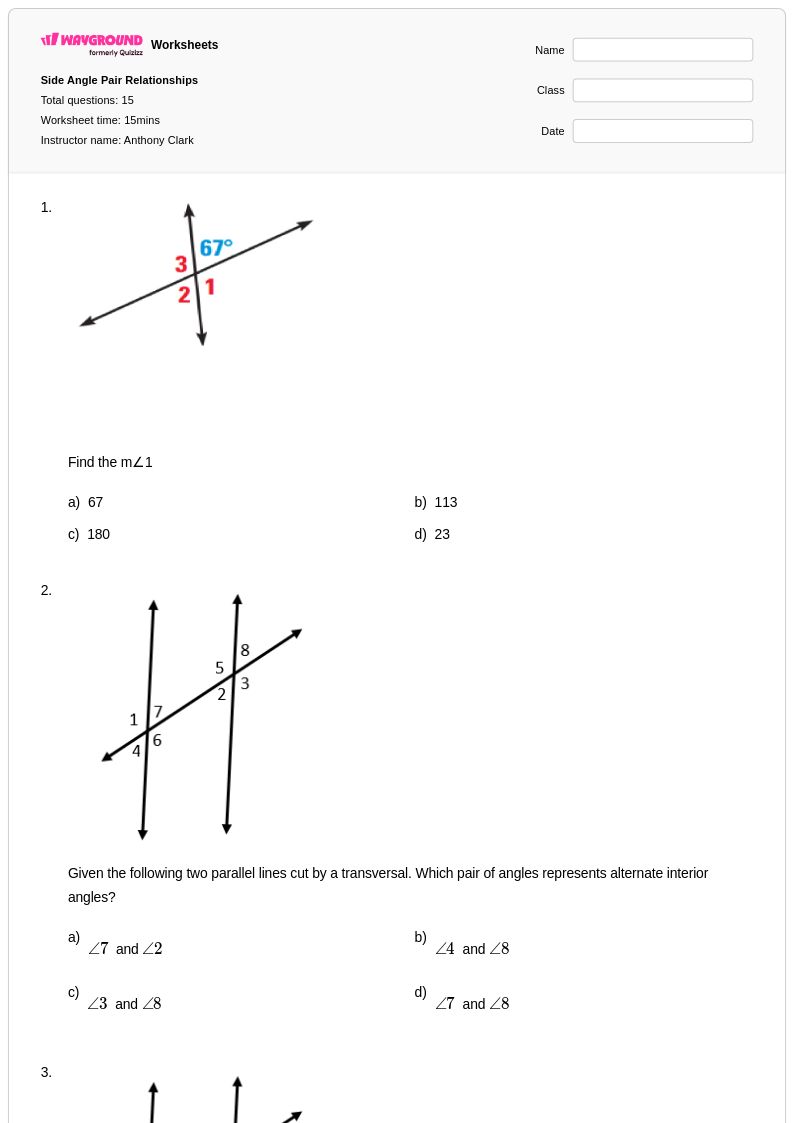
15 Q
10th - Uni
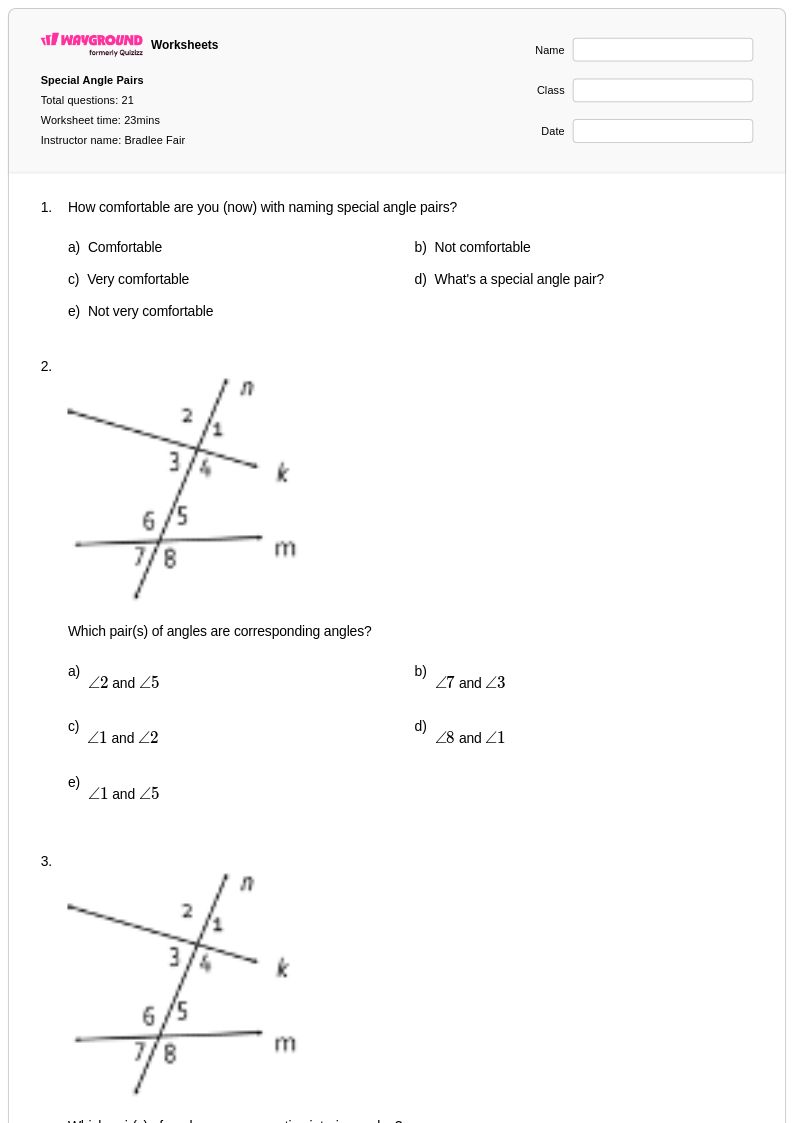
21 Q
9th - 12th
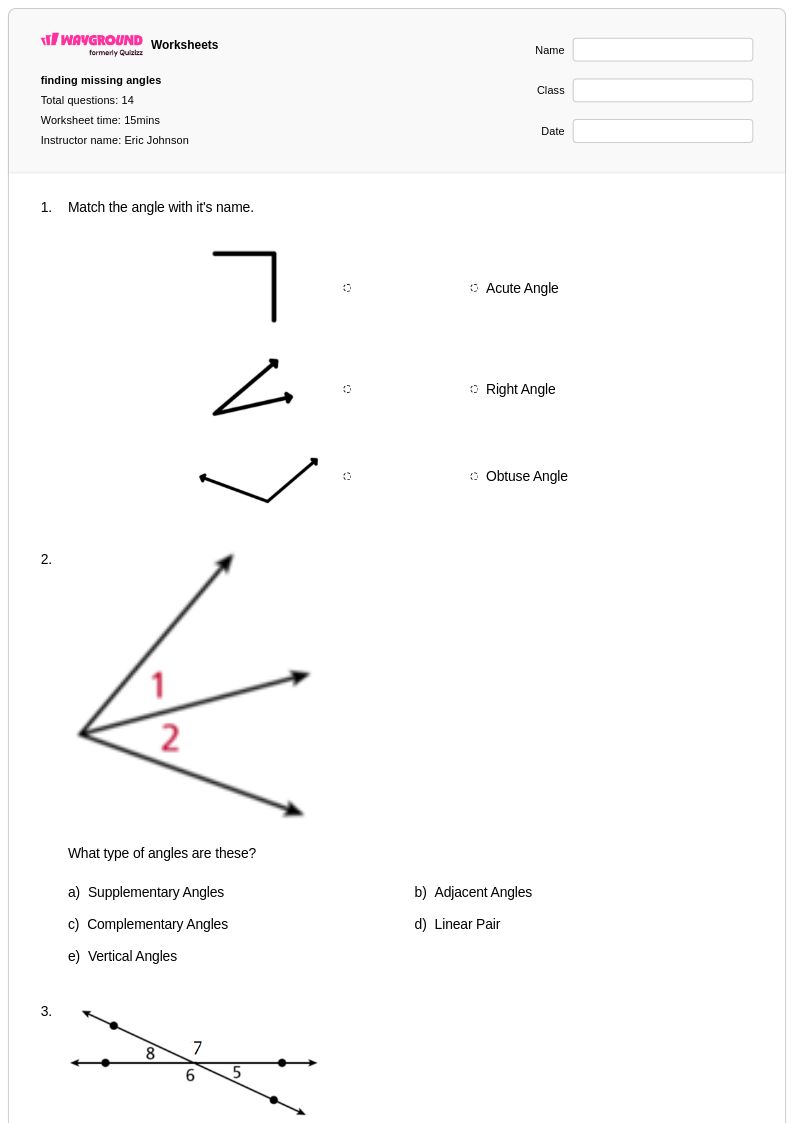
14 Q
8th - Uni
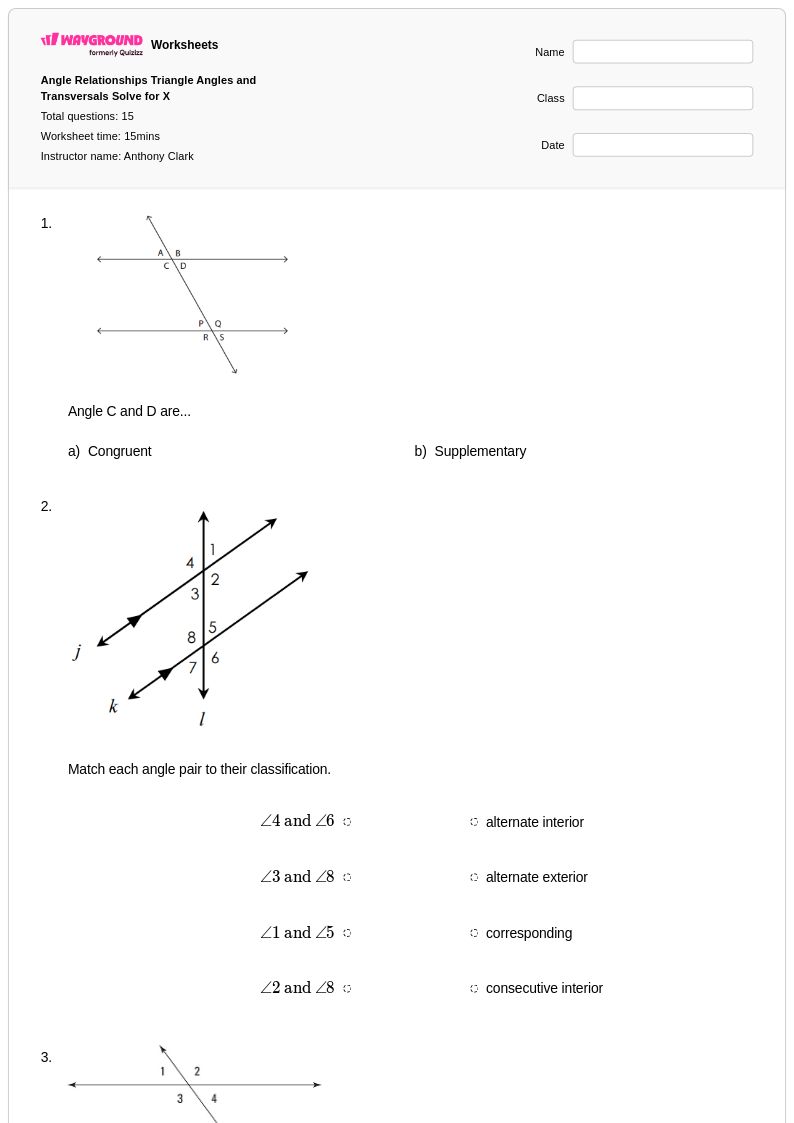
15 Q
8th - Uni
20 Q
8th - Uni
13 Q
9th - 12th
15 Q
9th - 12th
20 Q
10th - Uni
11 Q
10th - 12th
14 Q
8th - Uni
20 Q
10th - Uni
15 Q
8th - Uni
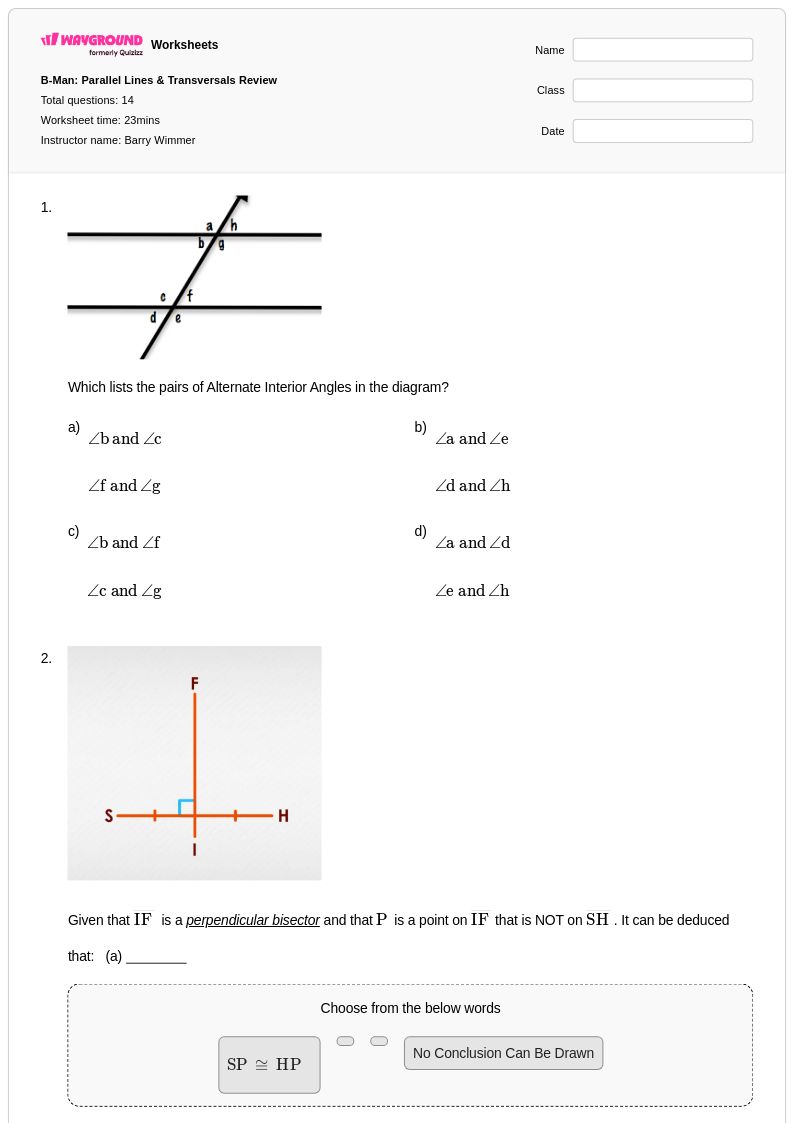
14 Q
9th - 12th
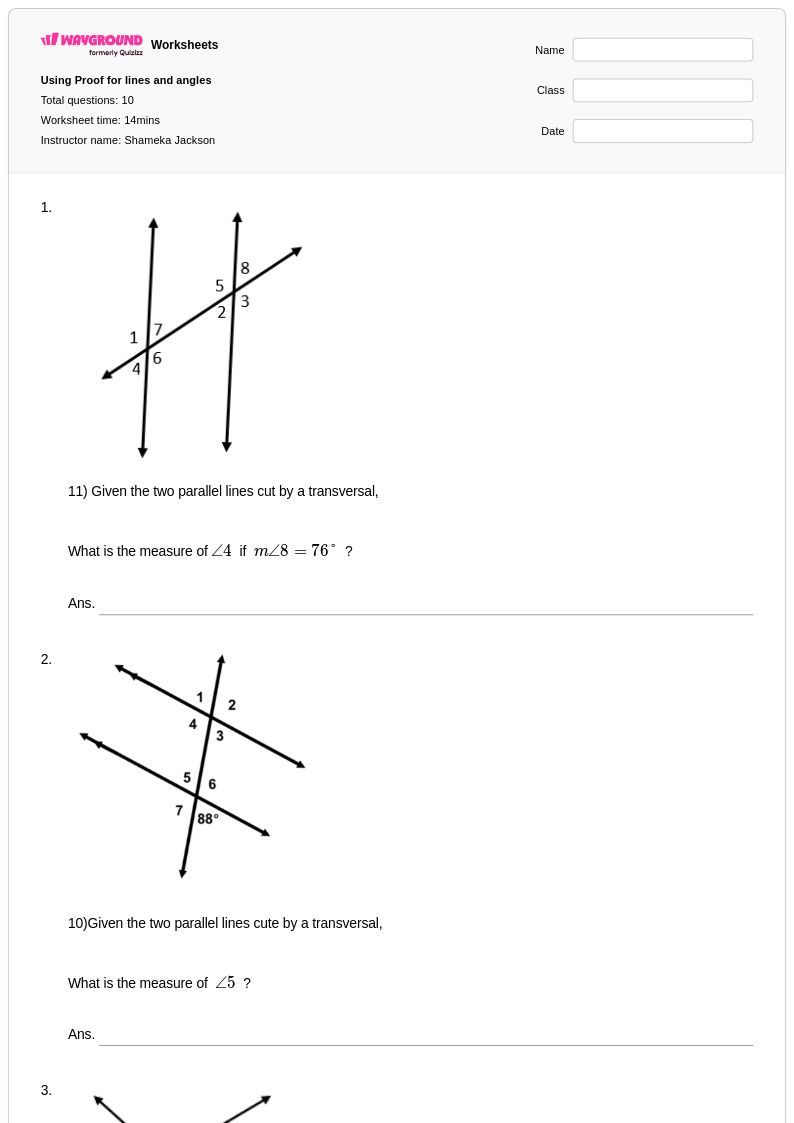
10 Q
10th - 11th
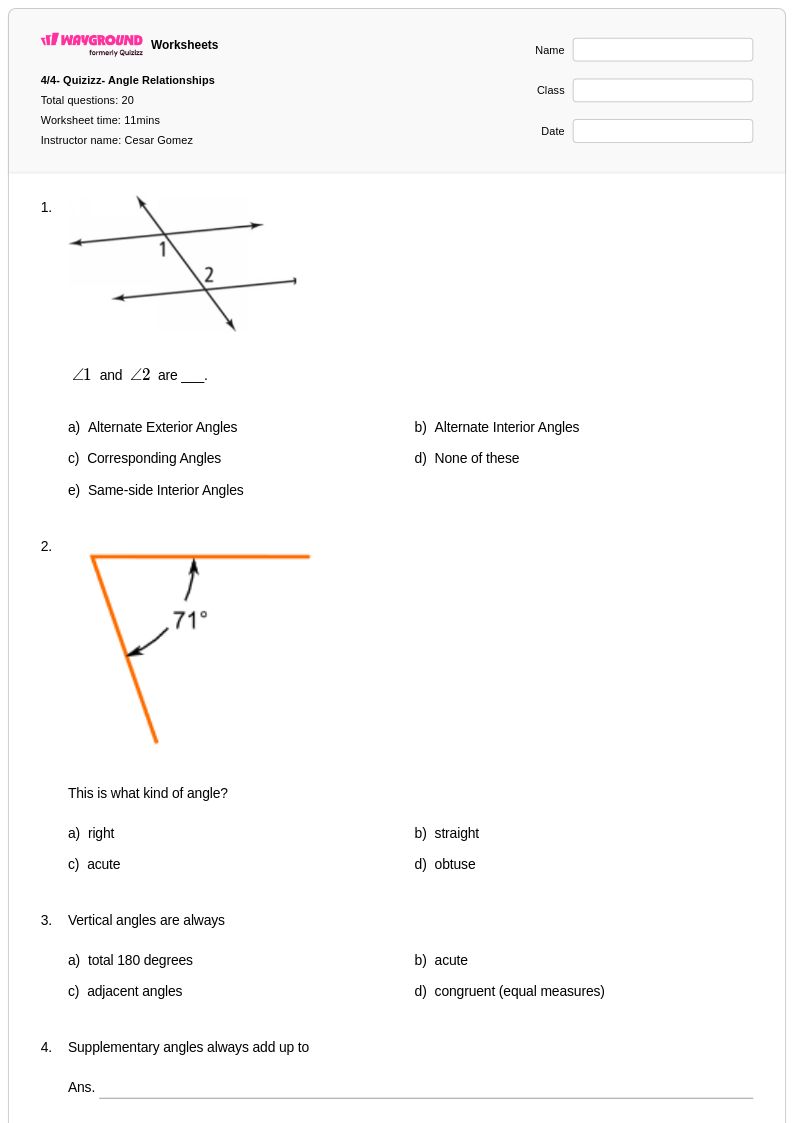
20 Q
9th - 12th
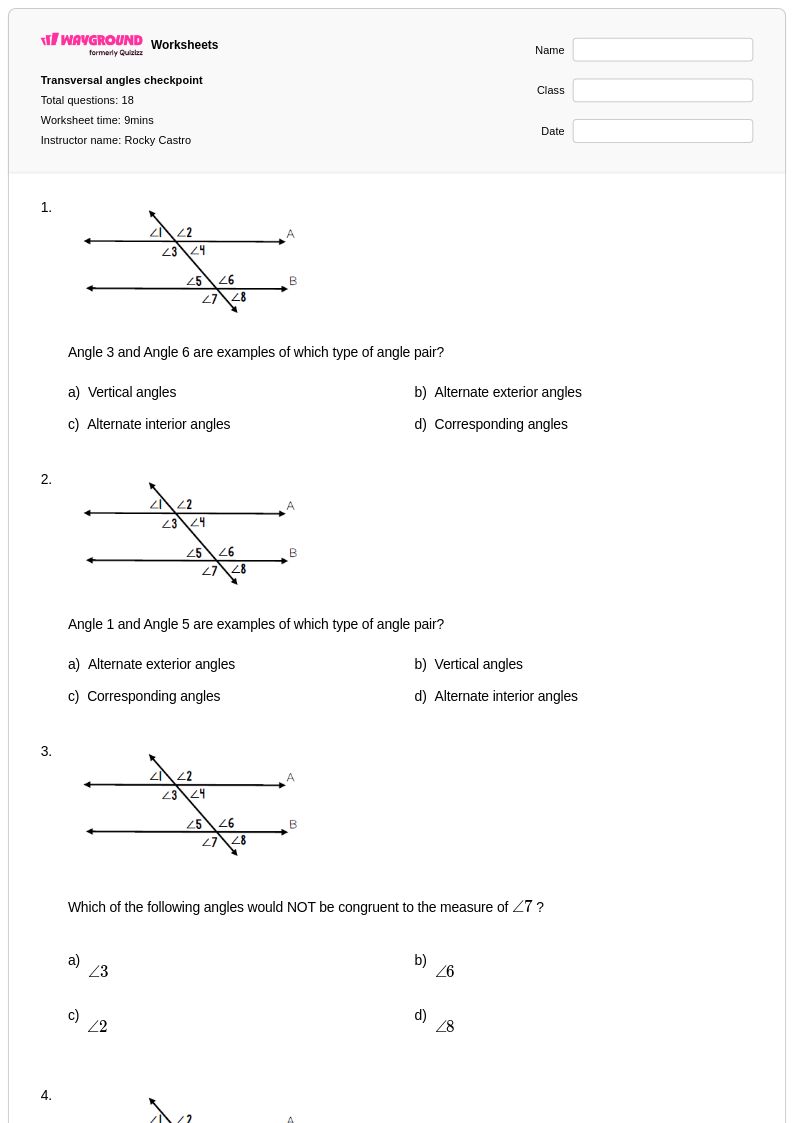
18 Q
9th - 12th
Explore Angle Pair Relationships Worksheets by Grades
Explore Other Subject Worksheets for grade 11
Explore printable Angle Pair Relationships worksheets for Grade 11
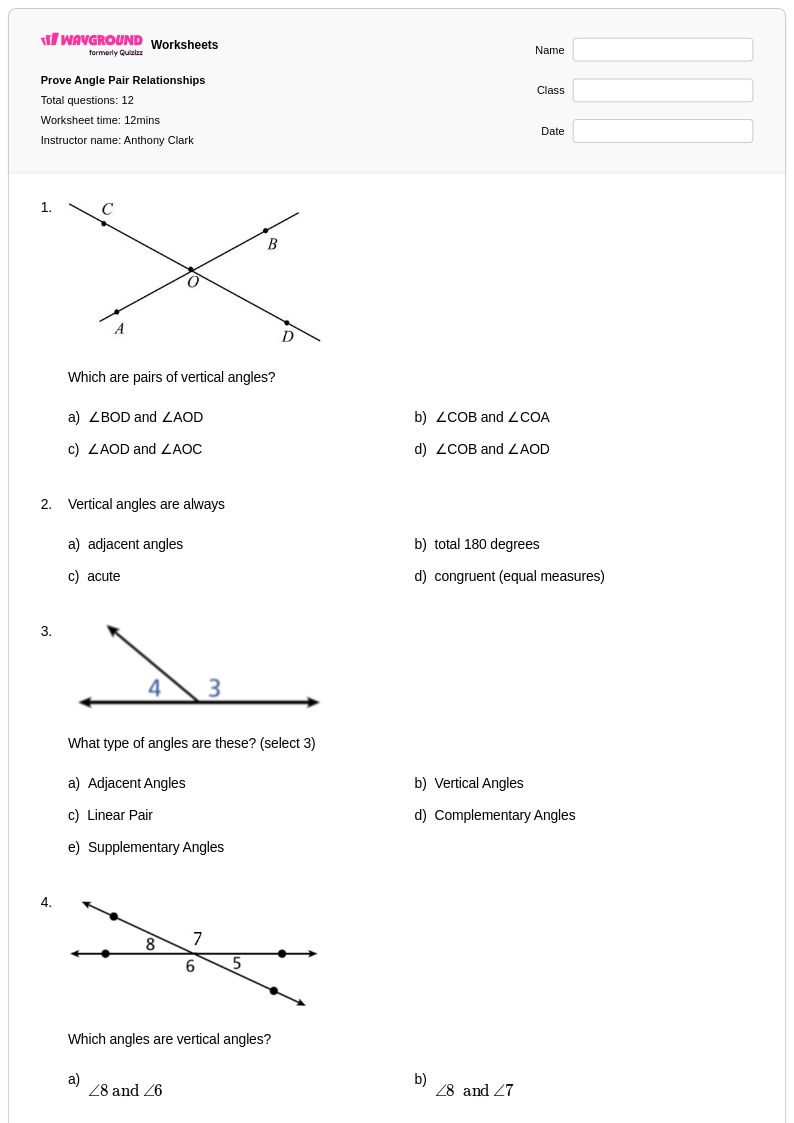
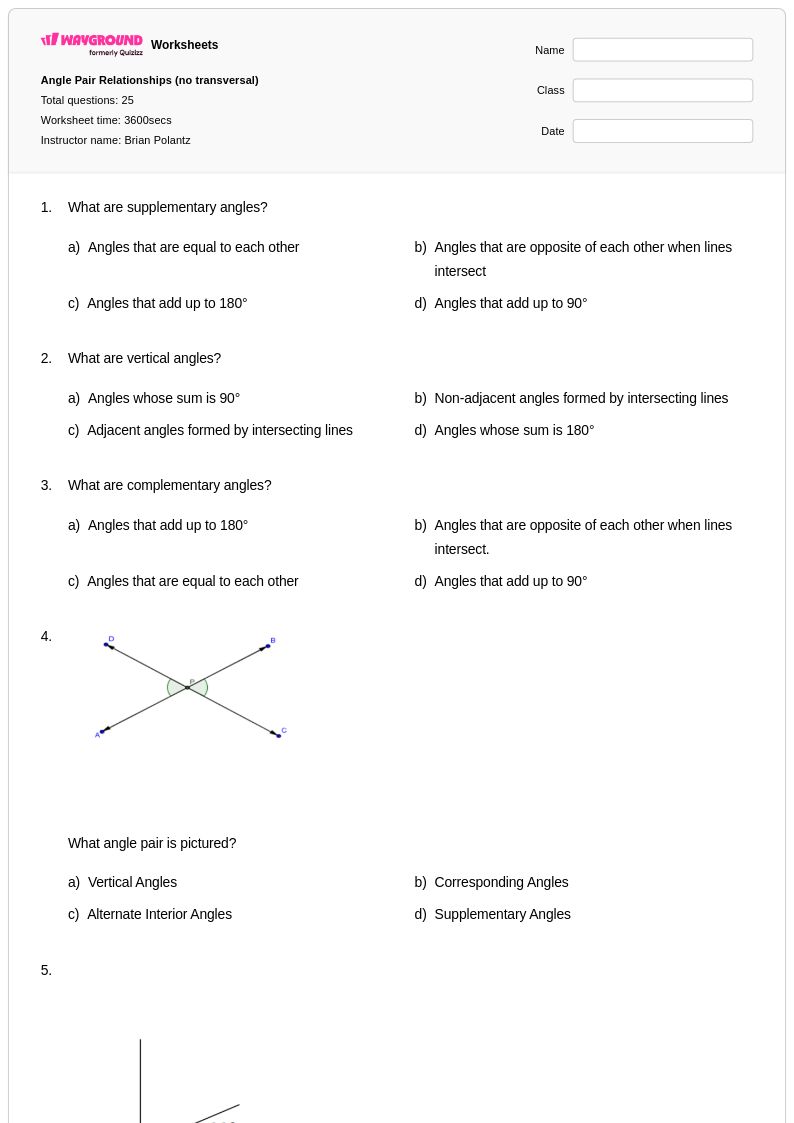
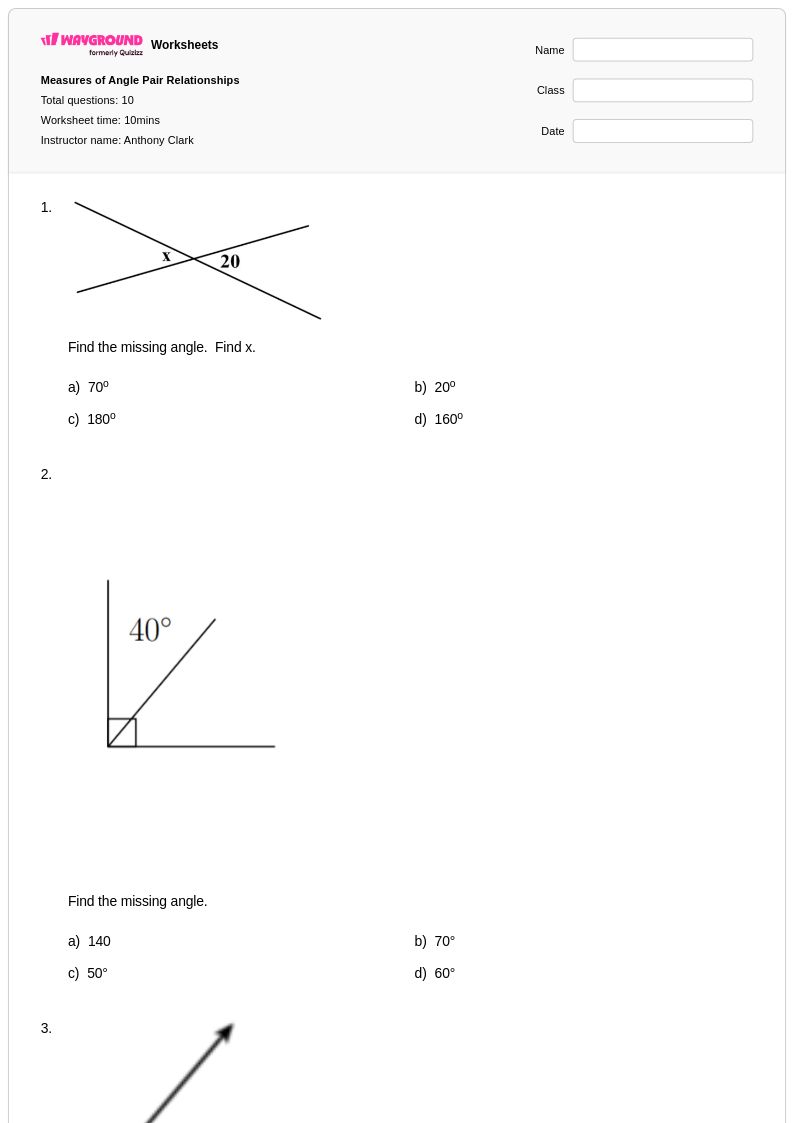
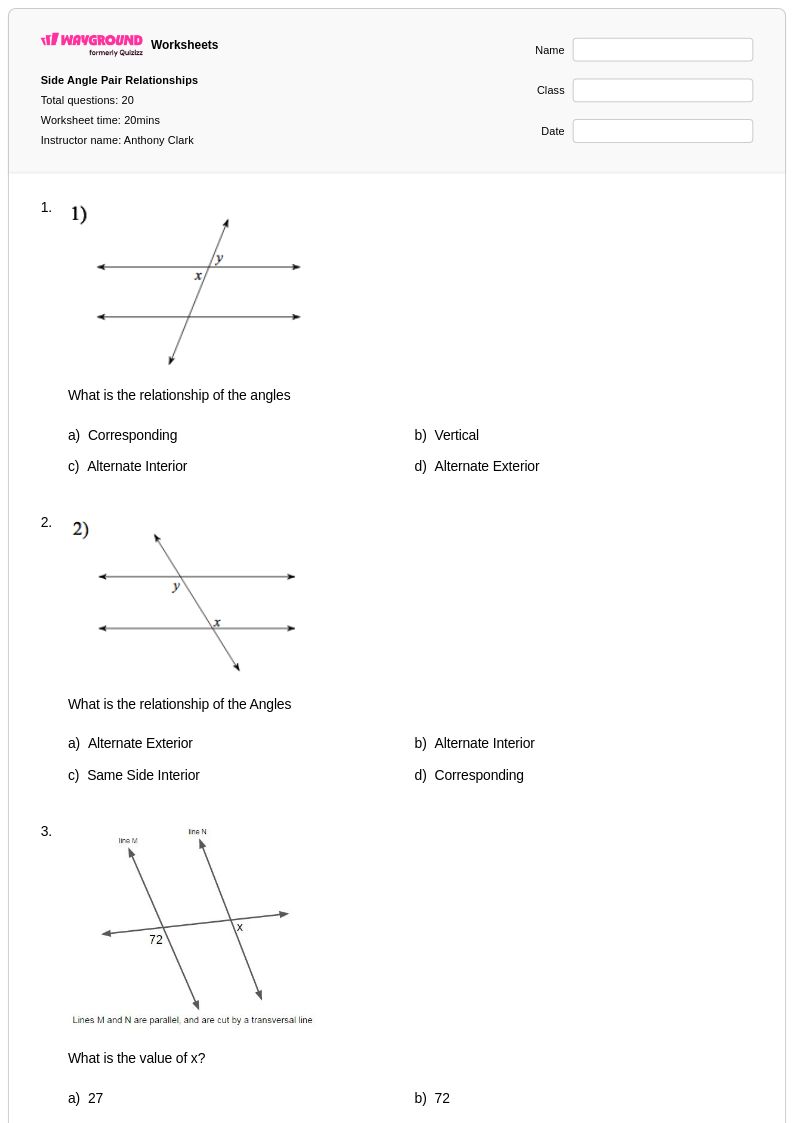
Angle pair relationships form a fundamental component of Grade 11 geometry, requiring students to master the intricate connections between adjacent, vertical, complementary, supplementary, and linear pair angles. Wayground's comprehensive collection of angle pair relationship worksheets provides targeted practice problems that strengthen students' ability to identify, classify, and calculate missing angle measures using established geometric theorems and properties. These expertly crafted printables include detailed answer keys and systematic progressions from basic angle identification to complex multi-step problems involving parallel lines cut by transversals, helping students build confidence in applying angle relationship rules. The free pdf resources emphasize both conceptual understanding and computational fluency, ensuring students can recognize angle patterns in diagrams while developing the analytical skills necessary for advanced geometric proofs and real-world applications.
Wayground's extensive mathematics worksheet library, formerly known as Quizizz, empowers teachers with millions of educator-created resources specifically designed for Grade 11 geometry instruction. The platform's sophisticated search and filtering capabilities allow instructors to locate angle pair relationship materials aligned with state and national mathematics standards, while built-in differentiation tools enable seamless customization for diverse learning needs and ability levels. Teachers can access these resources in both printable pdf format for traditional classroom use and digital formats for interactive learning environments, making lesson planning more efficient and responsive to individual student requirements. This flexible approach supports targeted remediation for struggling learners, enrichment opportunities for advanced students, and consistent skill practice across varied instructional settings, ultimately helping educators deliver more effective and personalized geometry instruction.
FAQs
How should I teach angle pair relationships in Grade 11 geometry?
What exercises help Grade 11 students practice angle pair relationships?
What mistakes do students make when solving angle pair problems?
How can I use an angle pair relationships worksheet from Wayground?
How do angle pair relationships fit into the Common Core geometry progression?
How can I differentiate angle pair relationship practice for a mixed-ability class?
Are angle pair relationships appropriate for Grade 11?