Free Printable Animal Habitat Worksheets for Kindergarten
Explore Wayground's free kindergarten animal habitat worksheets and printables that help young learners discover where different animals live through engaging practice problems, colorful PDFs, and complete answer keys.
Explore printable Animal Habitat worksheets for Kindergarten
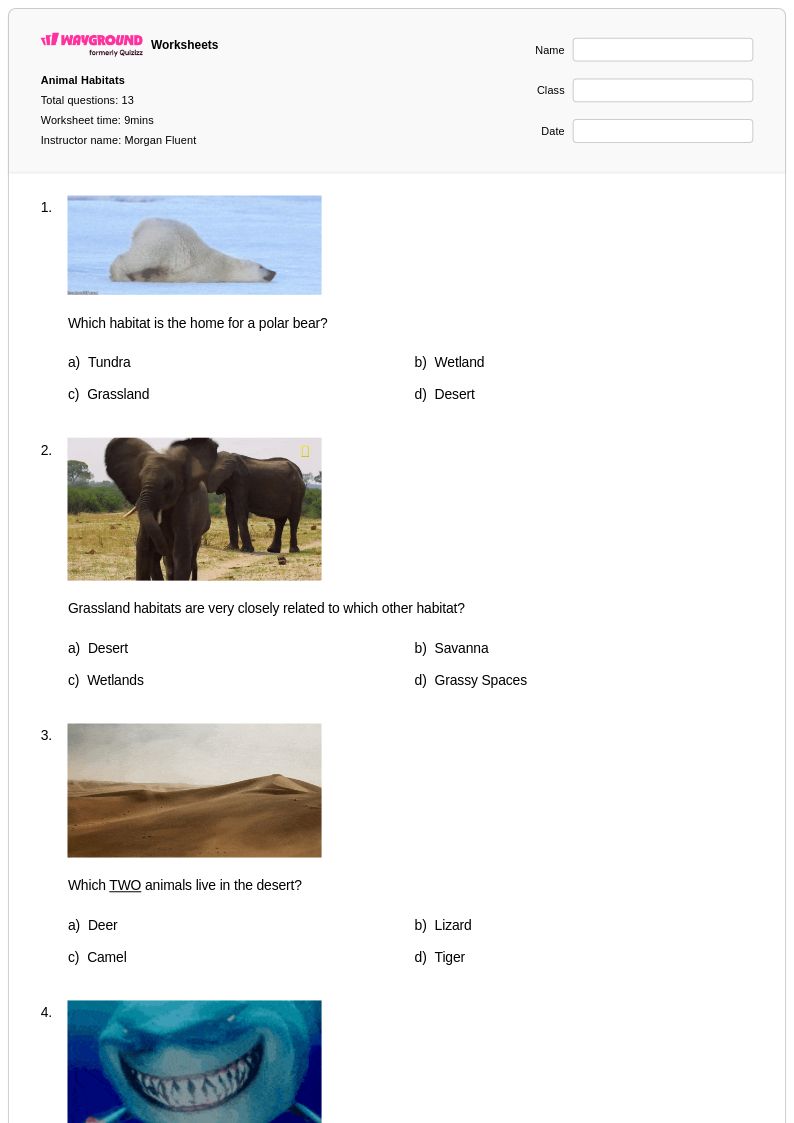
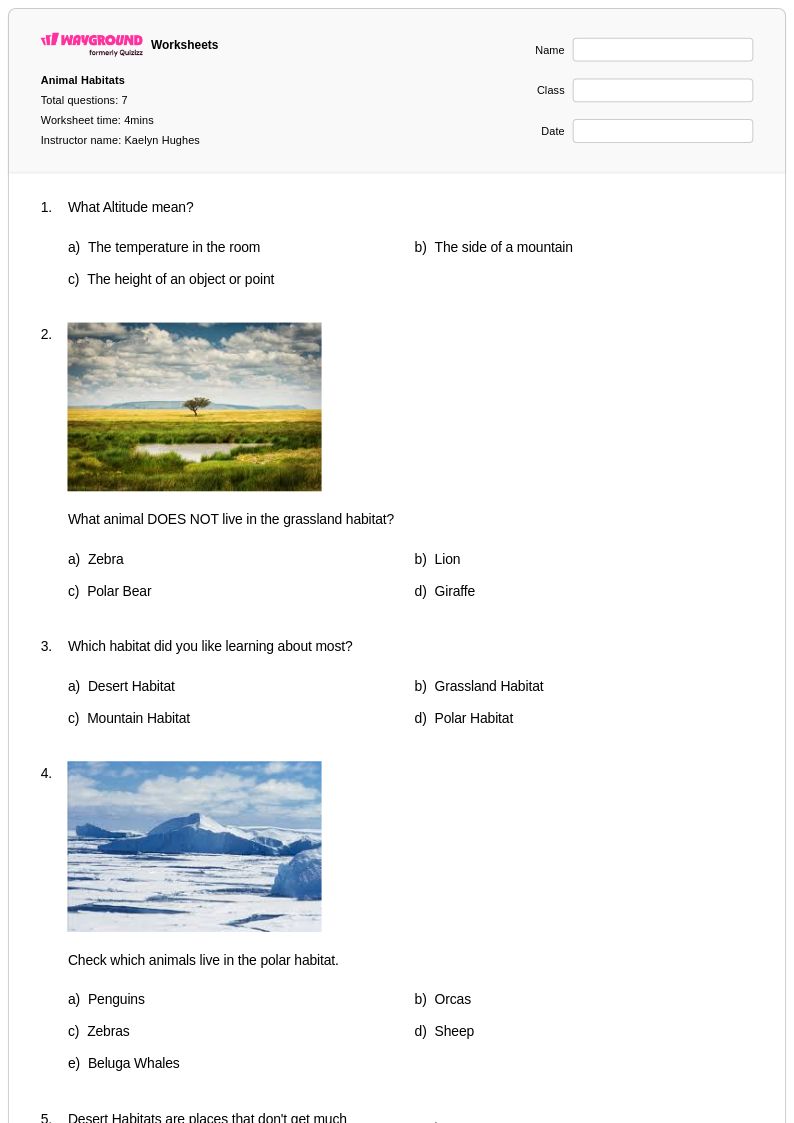
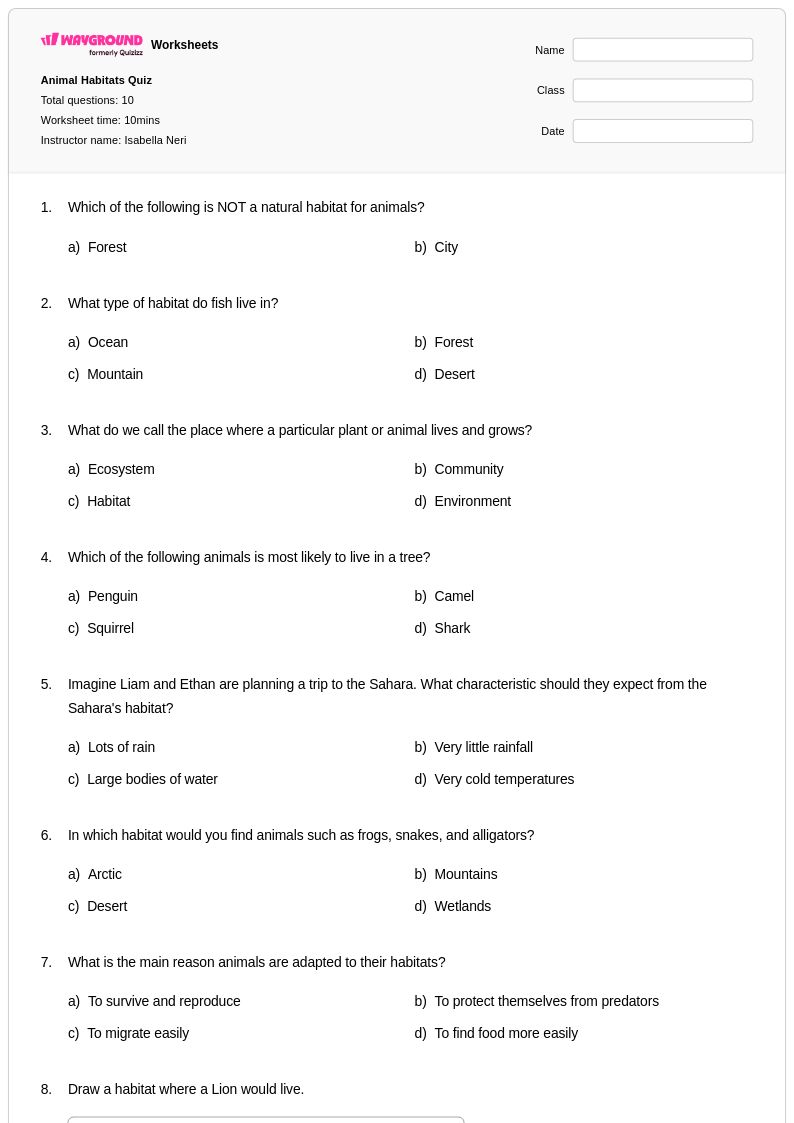
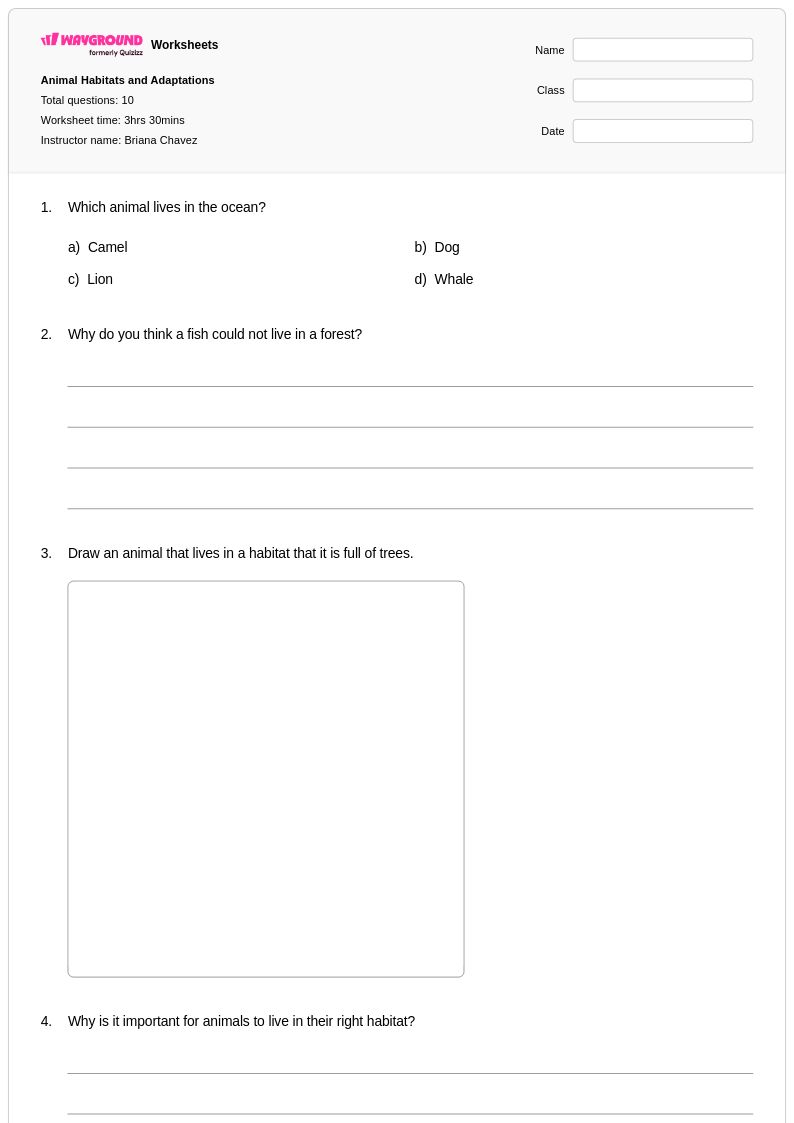
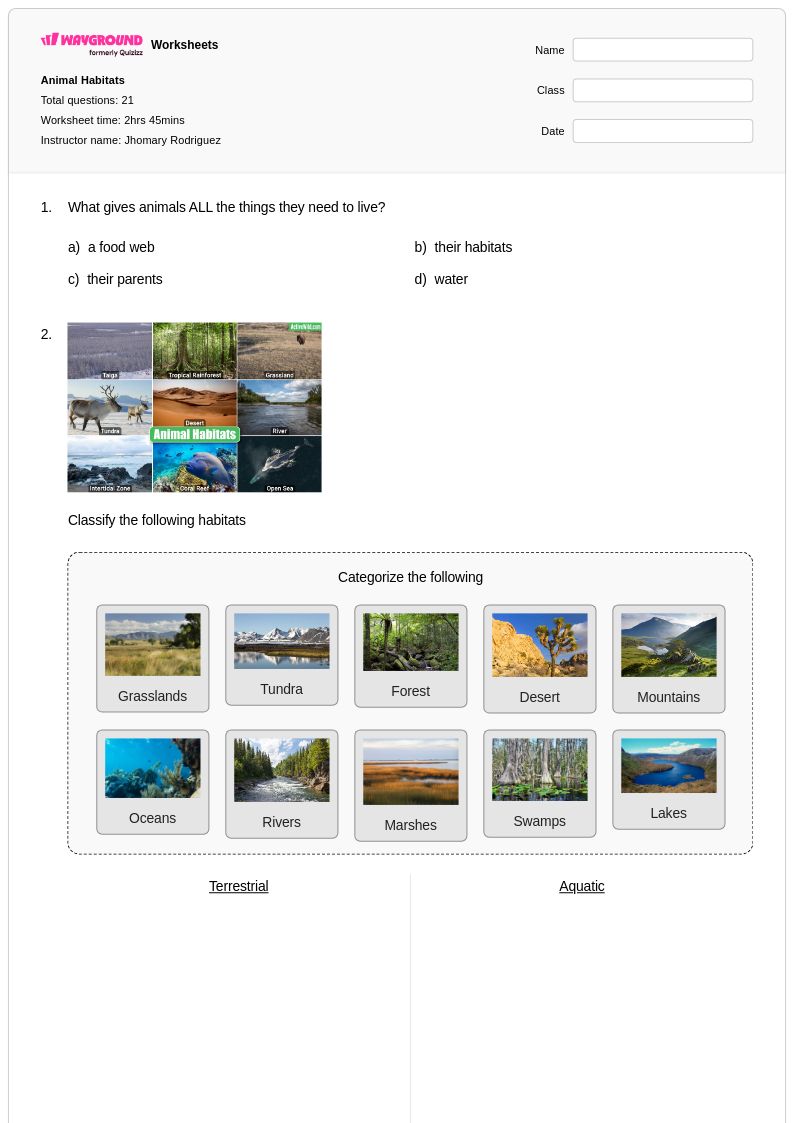
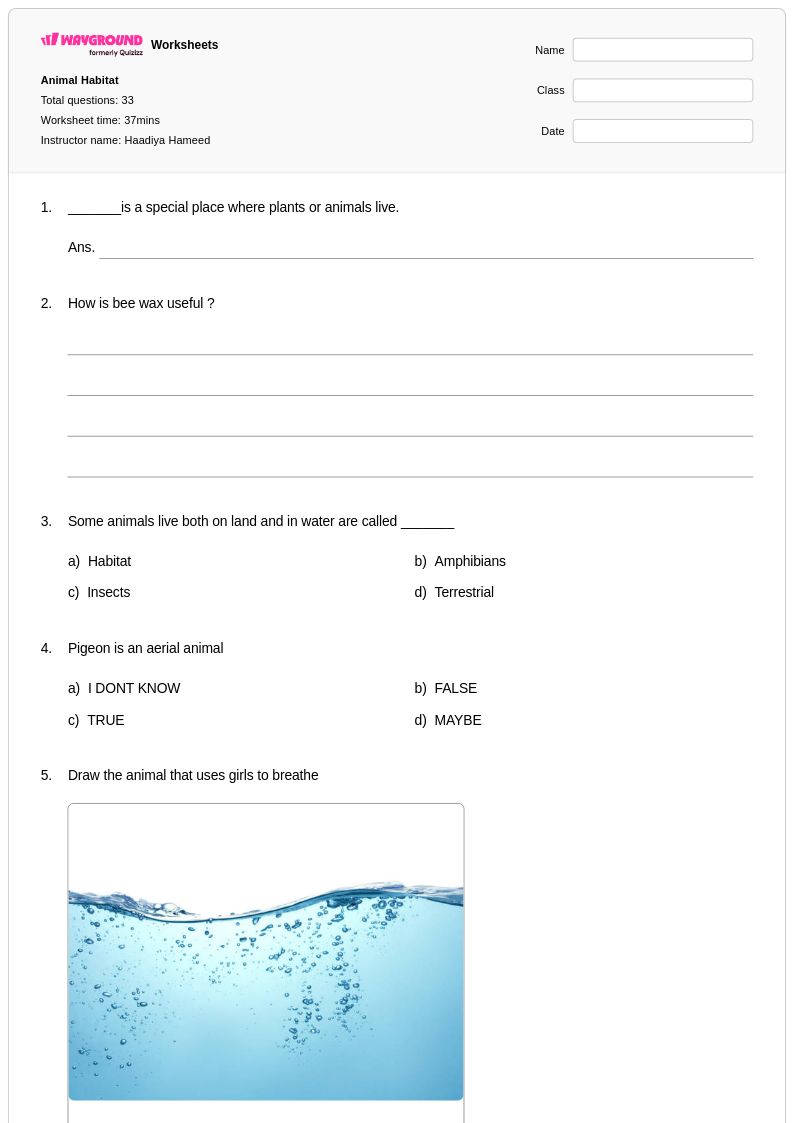
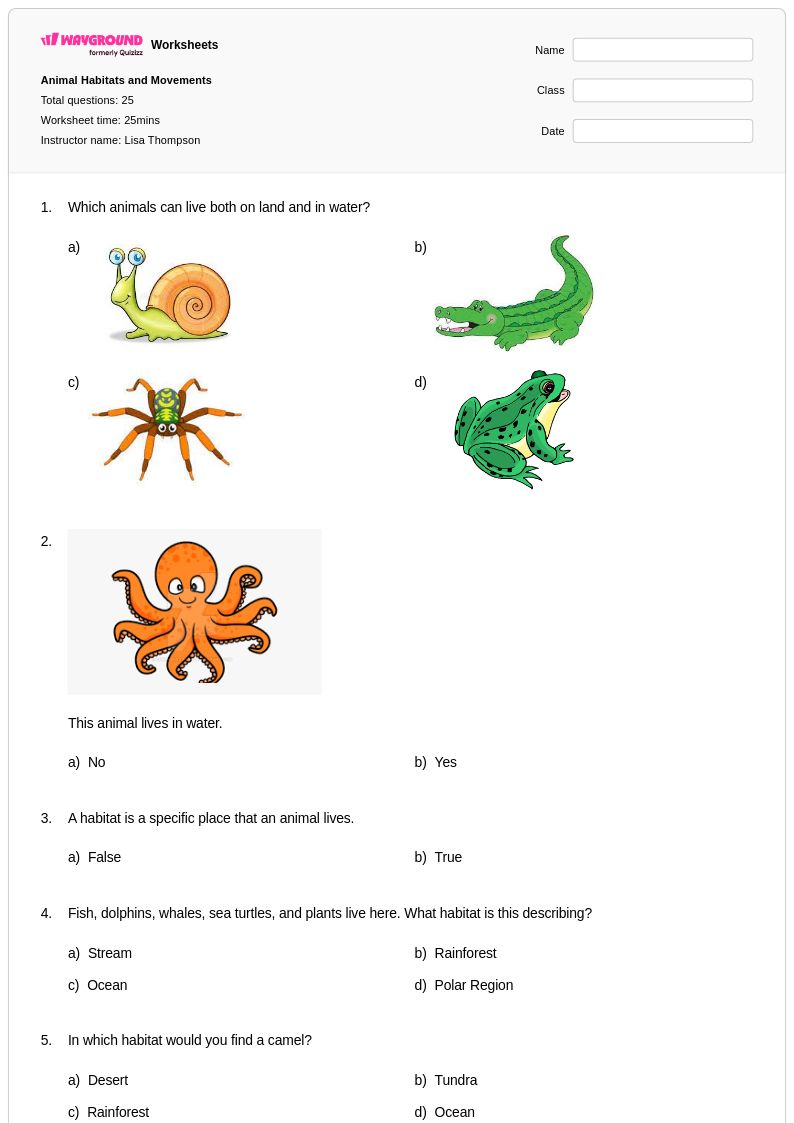
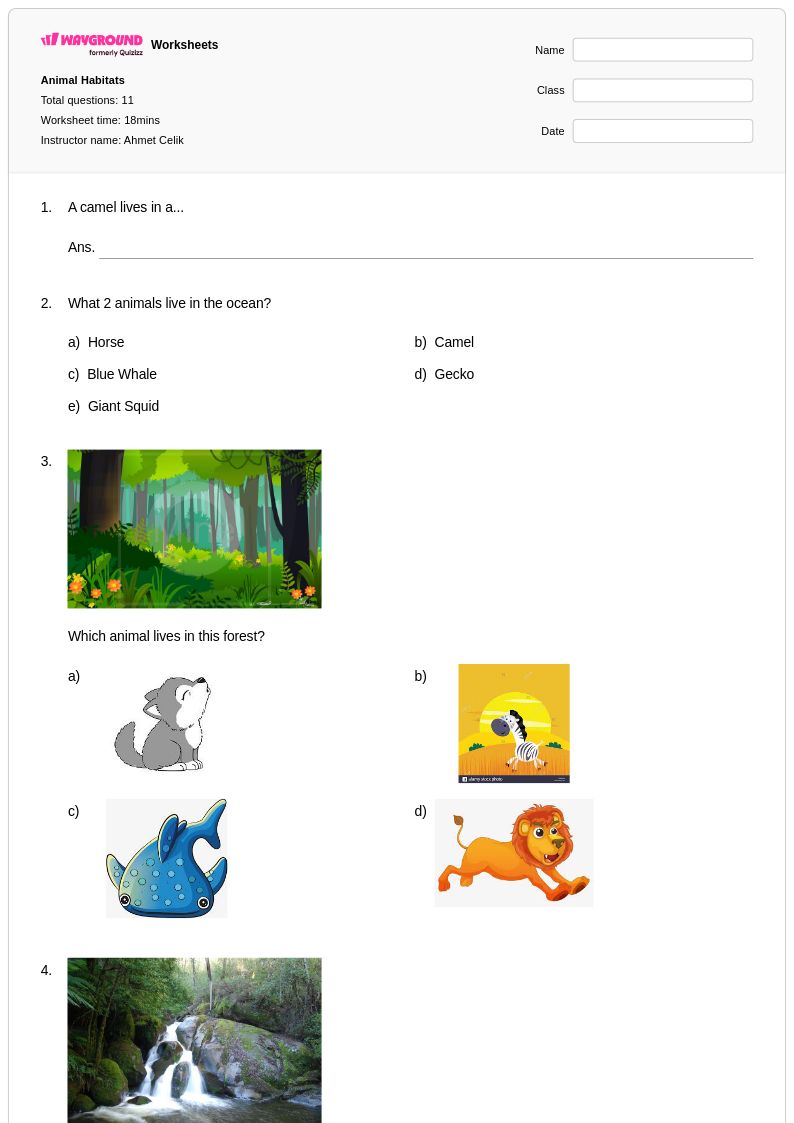
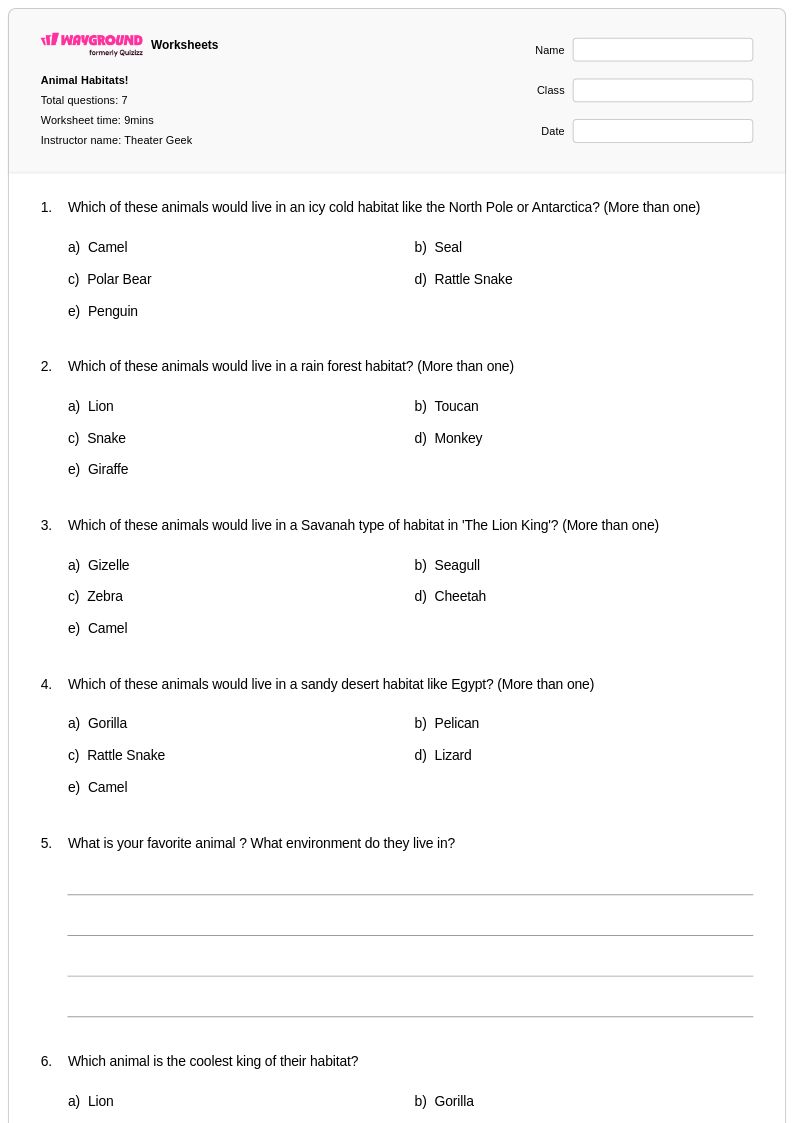
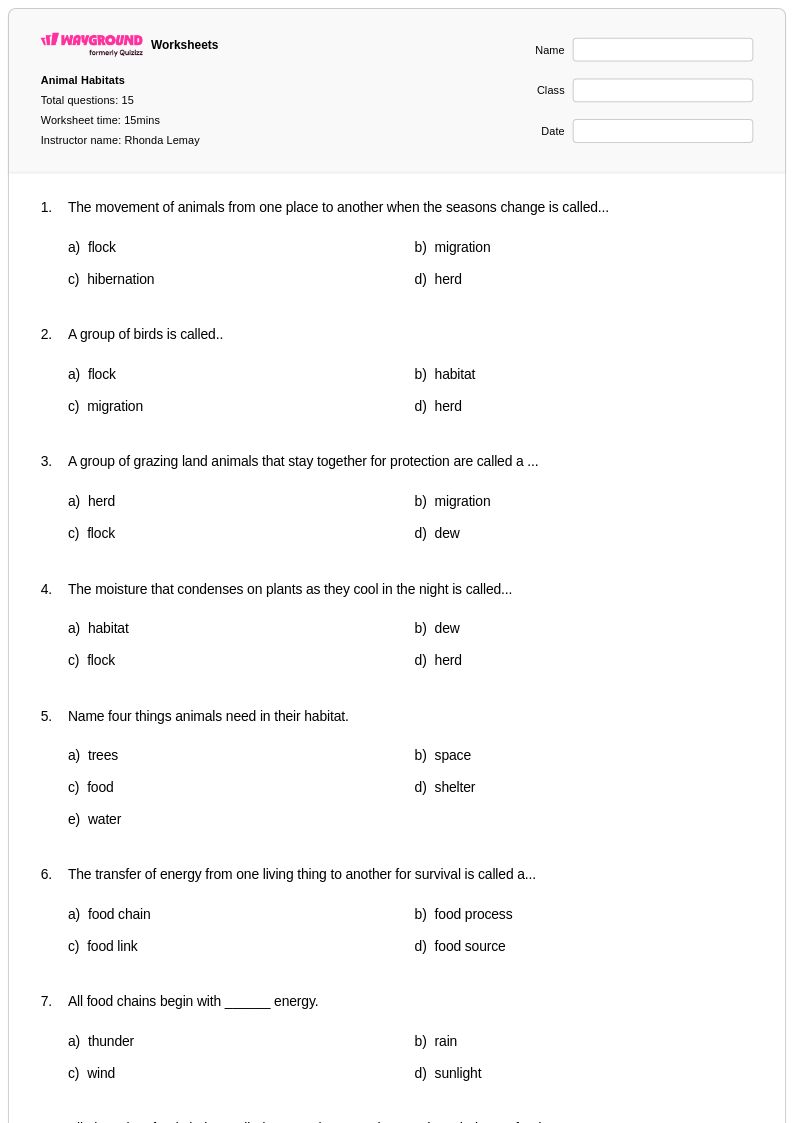
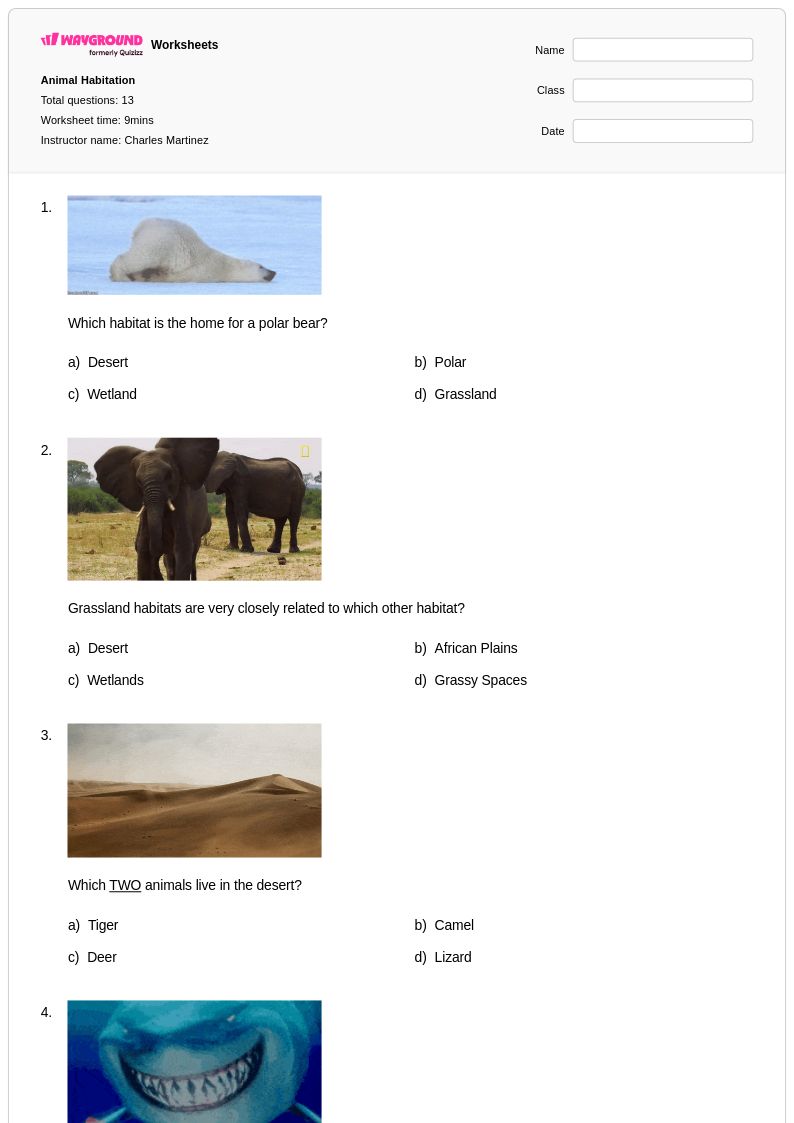
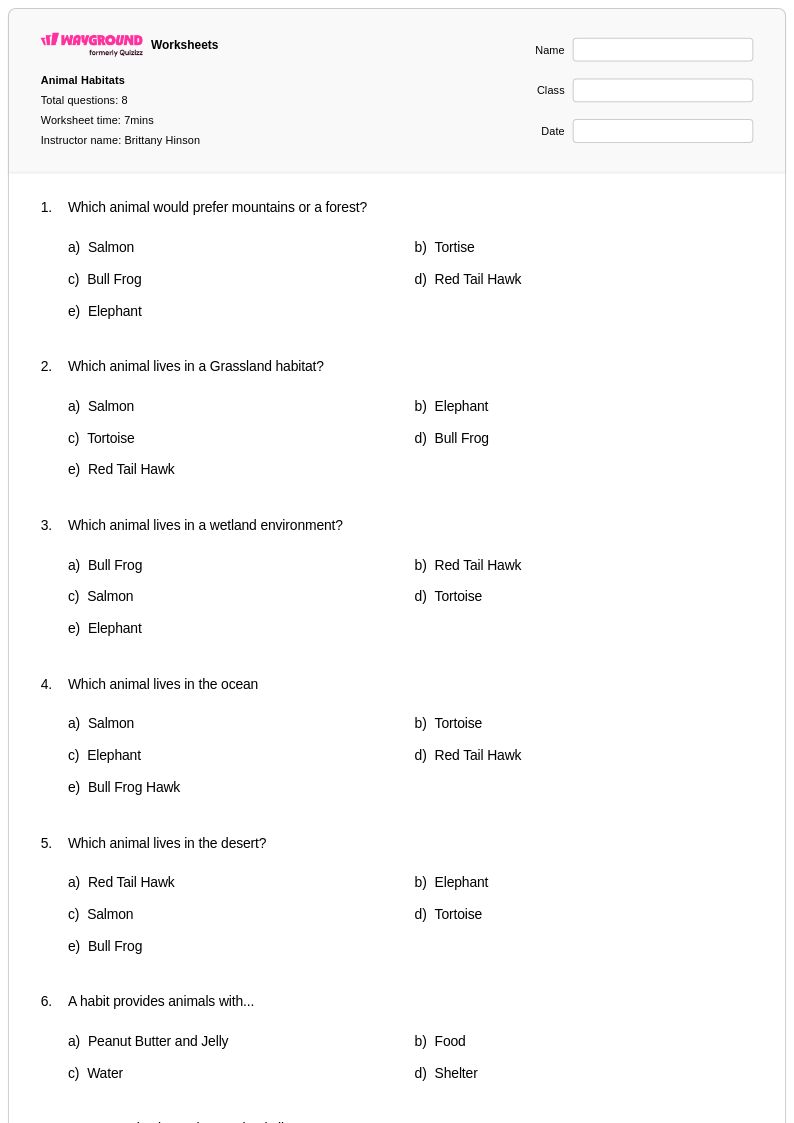
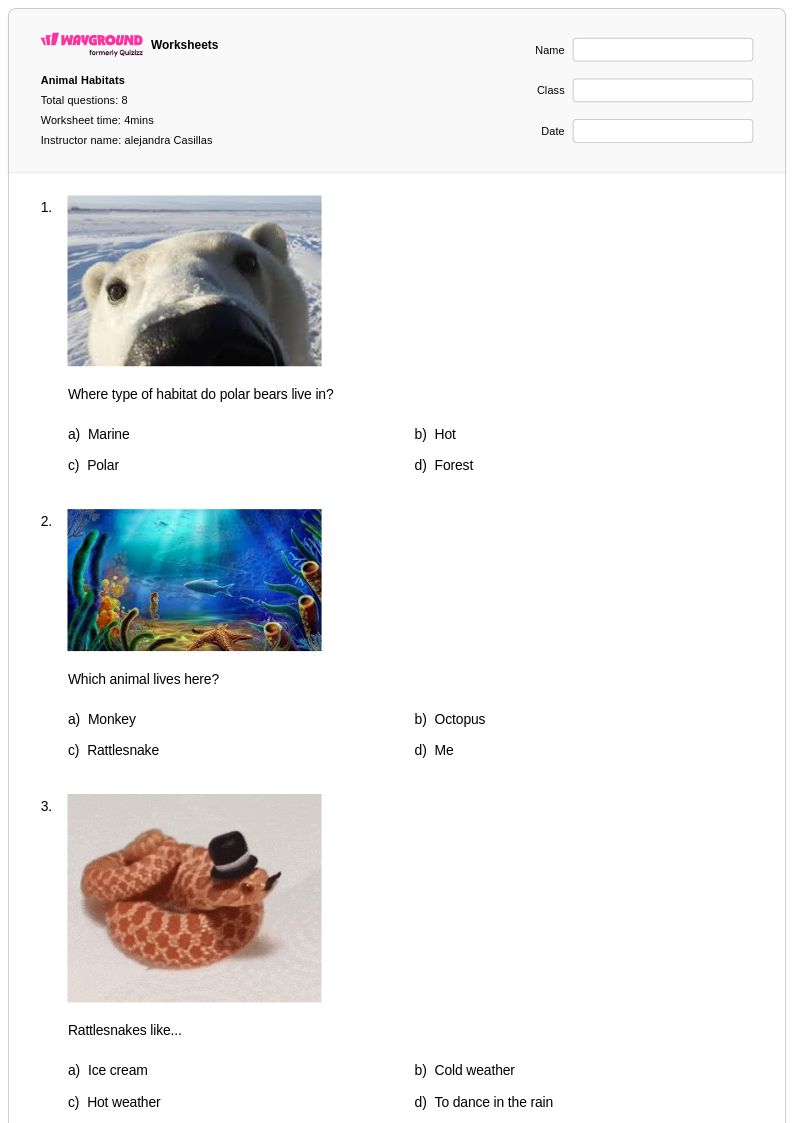
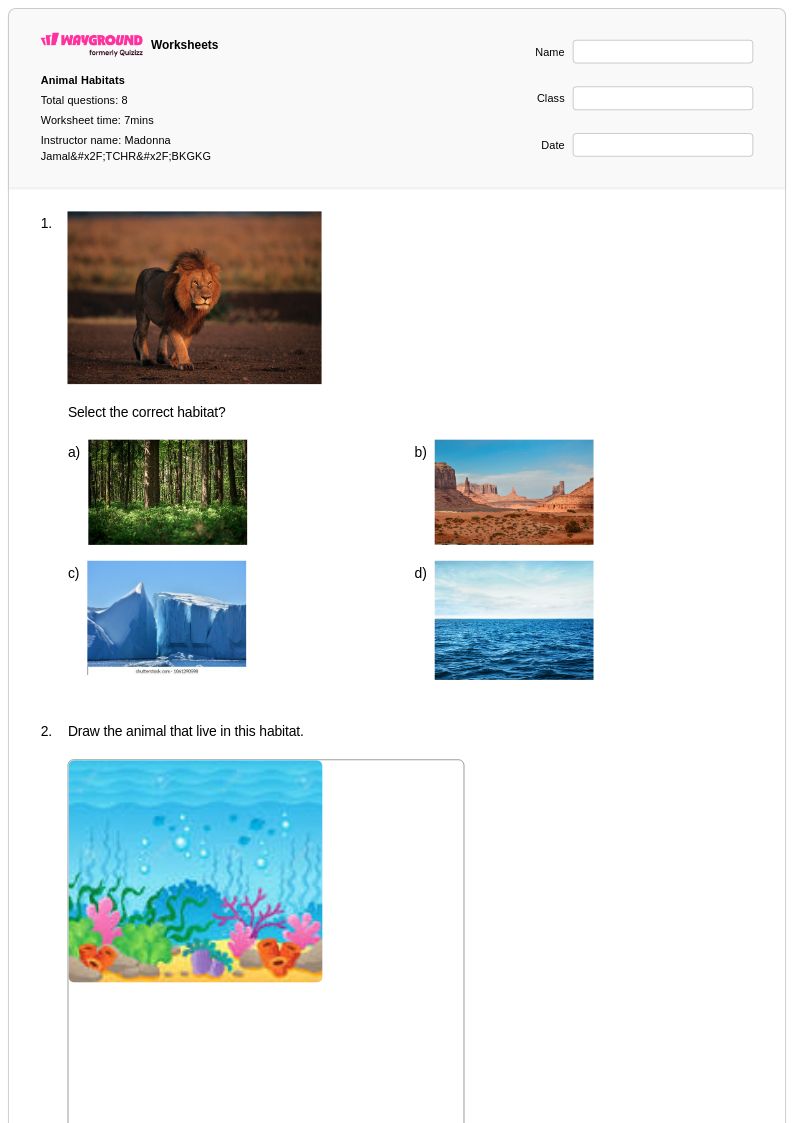
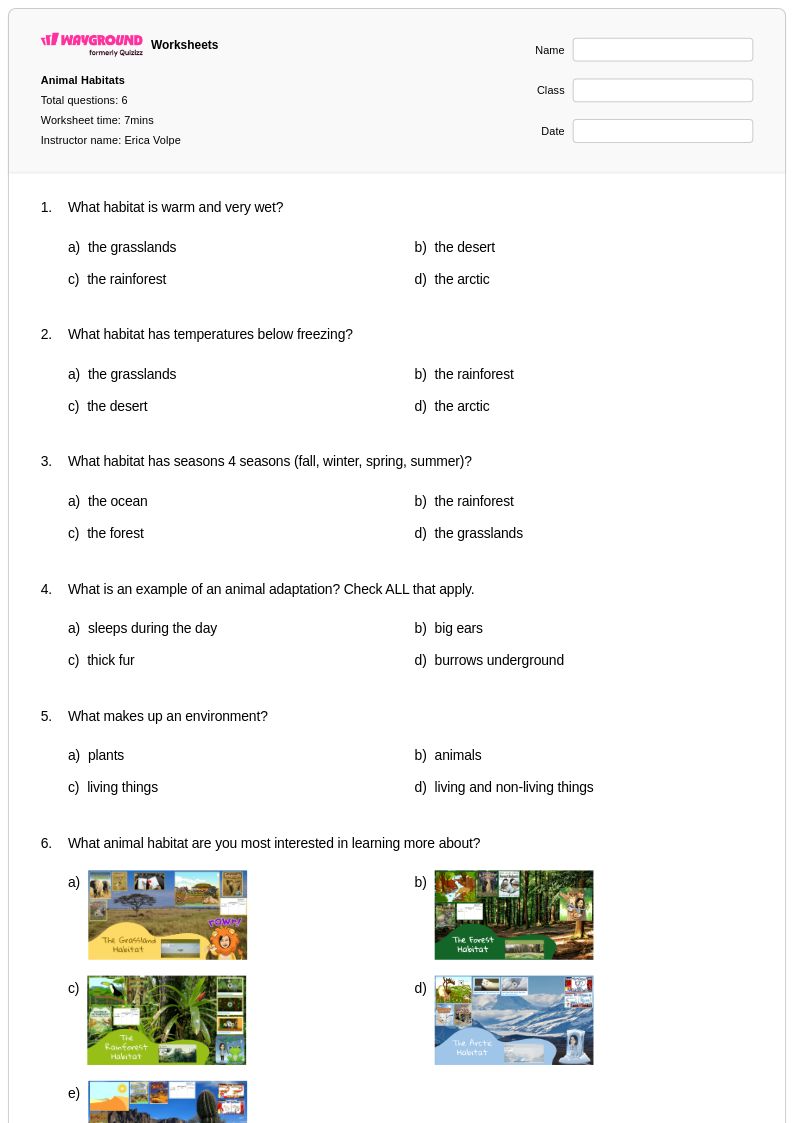
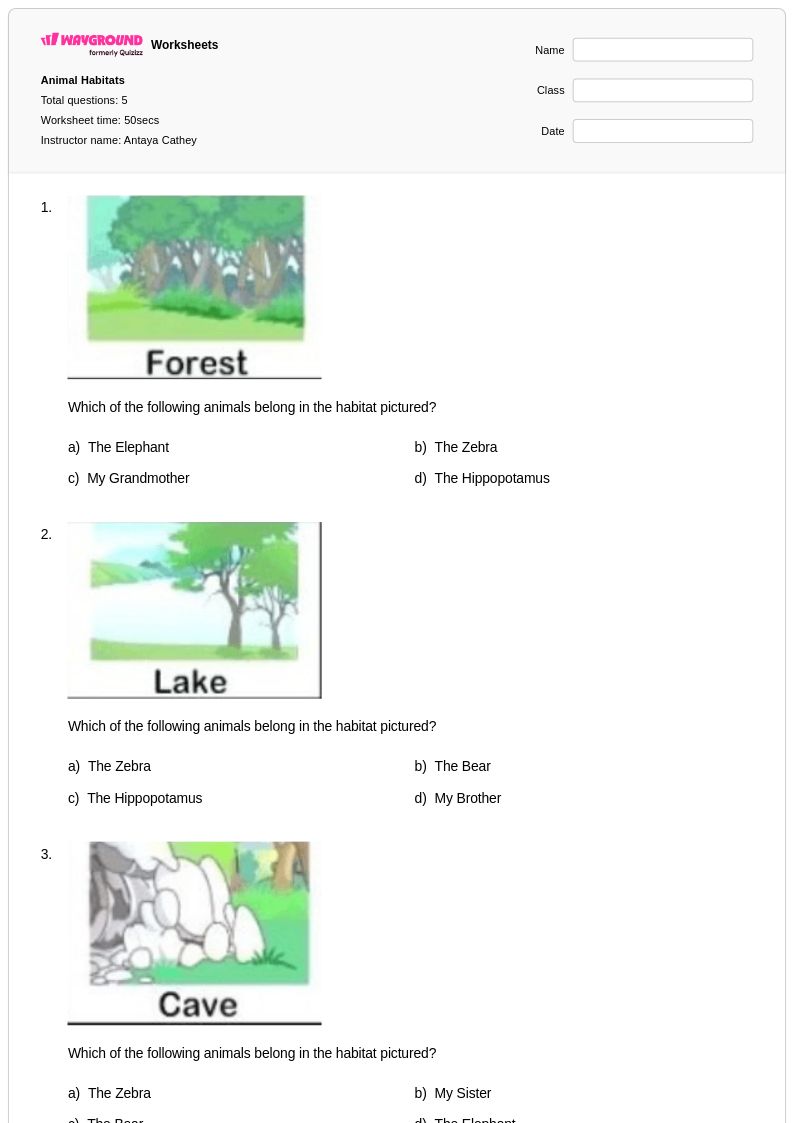
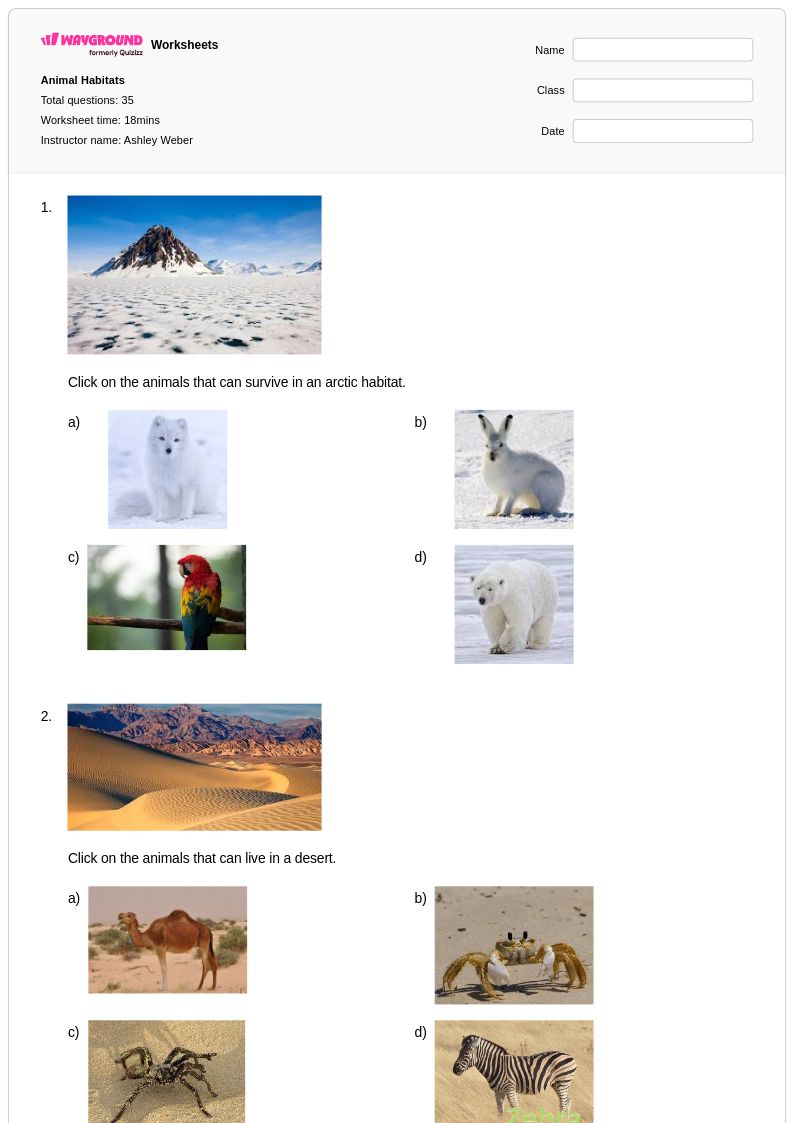
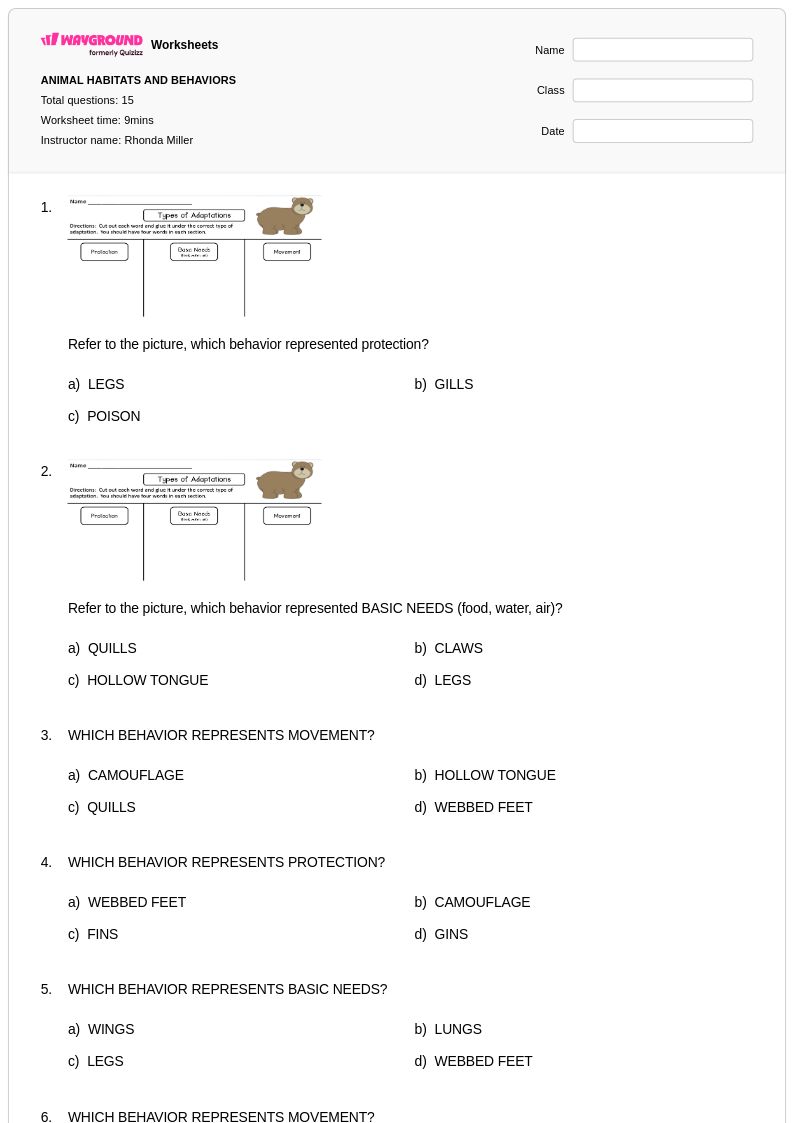
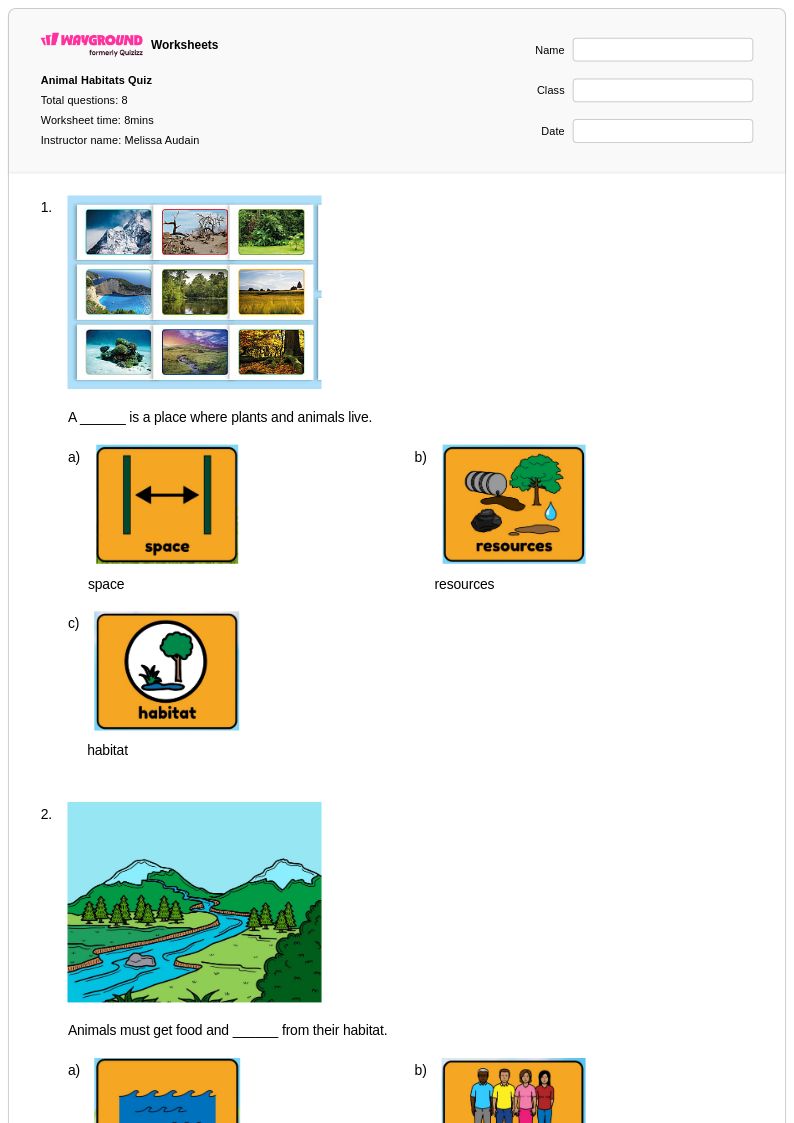
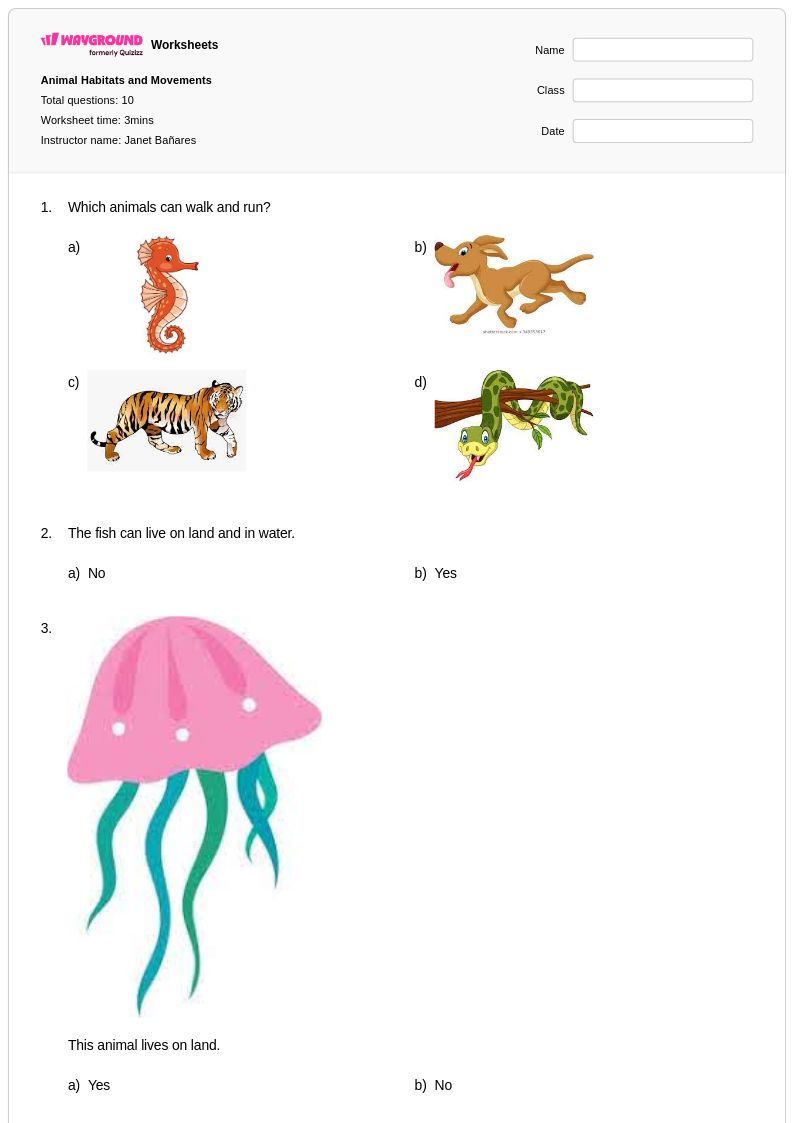
Animal habitat worksheets for kindergarten students available through Wayground (formerly Quizizz) introduce young learners to the fascinating world of where animals live and why they choose specific environments. These educational resources strengthen foundational science skills by helping students identify different habitats such as forests, oceans, deserts, and grasslands while matching animals to their appropriate homes. The worksheets feature age-appropriate activities including picture matching, simple sorting exercises, and basic observation tasks that develop critical thinking and classification skills essential for early scientific learning. Each printable resource includes comprehensive answer keys to support accurate assessment, and the free pdf format ensures teachers can easily distribute practice problems both digitally and as physical handouts for classroom or home use.
Wayground's extensive collection of animal habitat worksheets supports kindergarten teachers with millions of teacher-created resources specifically designed to meet early childhood science education needs. The platform's robust search and filtering capabilities allow educators to quickly locate materials aligned with kindergarten science standards, while built-in differentiation tools enable customization for varying skill levels within the classroom. Teachers can access these materials in both printable pdf formats and interactive digital versions, providing flexibility for different learning environments and technological capabilities. This comprehensive approach facilitates effective lesson planning by offering resources suitable for initial instruction, targeted remediation for struggling students, and enrichment activities for advanced learners, ensuring all kindergarten students can develop strong foundational knowledge about animal habitats through engaging skill practice opportunities.
FAQs
How do I teach animal habitats to elementary students?
Start by anchoring the concept to familiar environments — a backyard, a pond, a forest — before introducing biomes like tundra or rainforest. Use sorting activities where students match animals to their habitats based on physical features and survival needs. Connecting adaptation (why a polar bear has thick fur) to habitat (where that animal lives) helps students understand the relationship rather than memorizing isolated facts.
What exercises help students practice identifying animal habitats?
Habitat identification exercises work well when students must justify their answers, not just label them. Effective practice includes matching animals to biomes, analyzing how physical features like camouflage or webbed feet signal habitat type, and predicting whether an animal could survive in a different environment. Scenarios that require students to apply reasoning — rather than recall — build the deeper understanding that transfers to assessments.
What are common mistakes students make when learning about animal habitats?
A frequent misconception is that animals choose their habitat based on preference rather than biological necessity. Students also tend to confuse habitat with biome, treating them as interchangeable when habitat refers specifically to where a species lives within a larger ecosystem. Another common error is assuming that animals can easily adapt to new habitats, which leads to misunderstanding extinction risk and conservation issues.
How can I use animal habitat worksheets to support differentiated instruction?
Animal habitat worksheets can be tiered by complexity — introductory sheets might ask students to identify basic needs like food and shelter, while advanced versions require analyzing food webs or predicting survival outcomes under environmental change. On Wayground, teachers can apply accommodations such as read aloud, reduced answer choices, and extended time on a per-student basis, so struggling learners receive targeted support without disrupting the rest of the class.
How do I use Wayground's animal habitat worksheets in my classroom?
Wayground's animal habitat worksheets are available as printable PDFs for traditional classroom use and in digital formats for technology-integrated settings, including the option to host them as a live quiz on Wayground. Teachers can filter by habitat type, animal group, or complexity level to find materials that match their lesson objectives. Complete answer keys are included with each worksheet, making them practical for both instruction and assessment.
How do animal habitats connect to food webs and ecosystems?
A habitat provides not just shelter but also the specific food sources, climate conditions, and biological community an animal depends on, making it inseparable from food web dynamics. When students map food webs within a specific habitat — such as a wetland or a grassland — they see how the removal of one species or resource disrupts the entire system. This connection makes habitat loss a concrete concept rather than an abstract environmental concern.