Free Printable Endangered Animals Worksheets for Kindergarten
Explore free kindergarten endangered animals worksheets and printables that help young learners discover threatened species through engaging activities, practice problems, and comprehensive answer keys for effective science education.
Explore printable Endangered Animals worksheets for Kindergarten
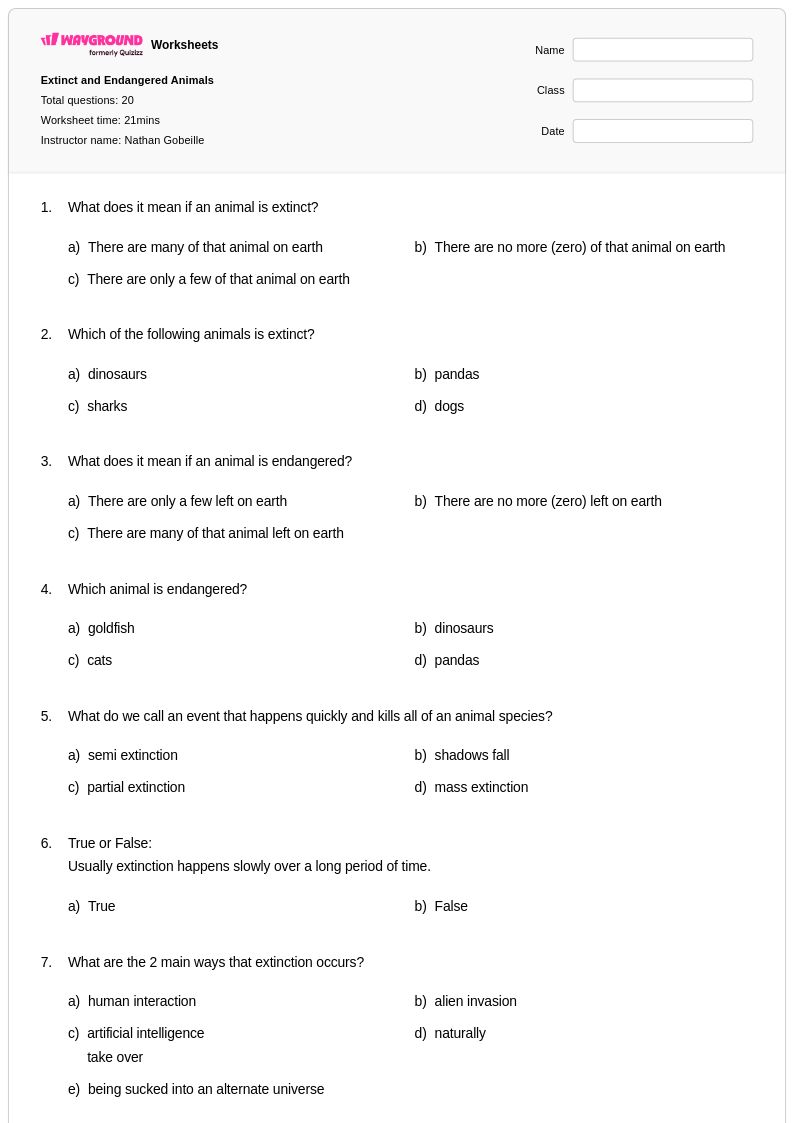
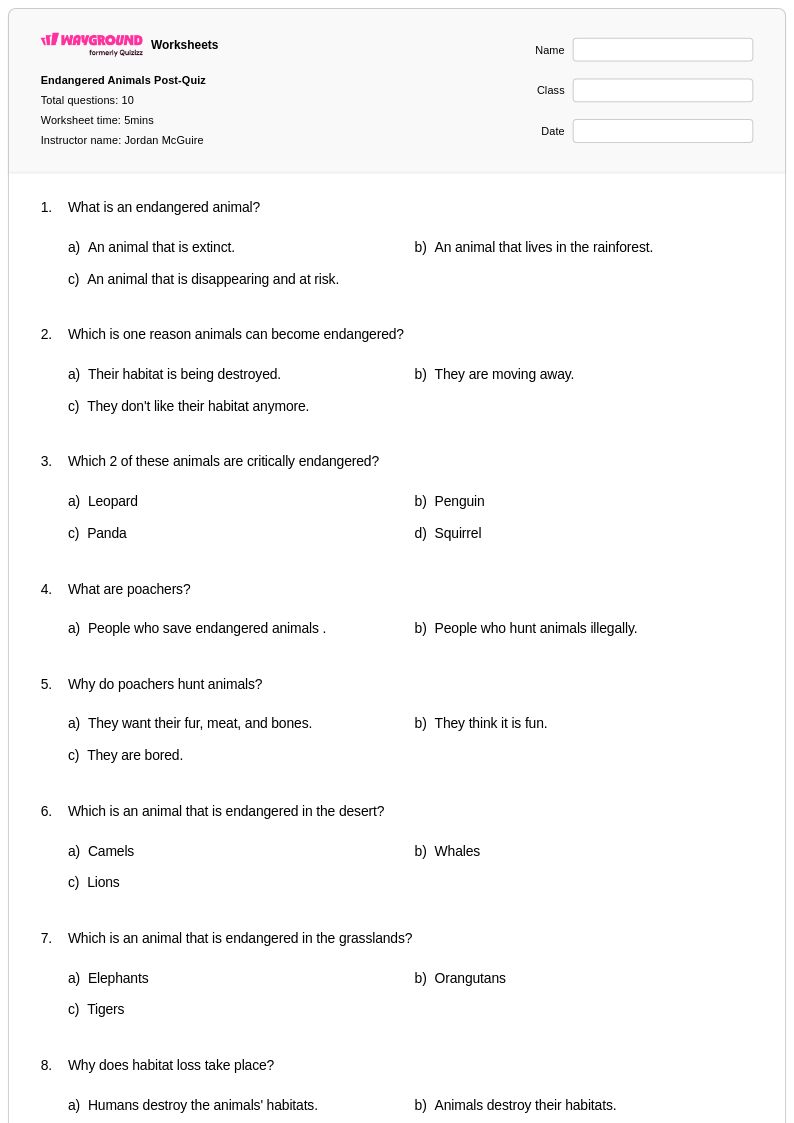
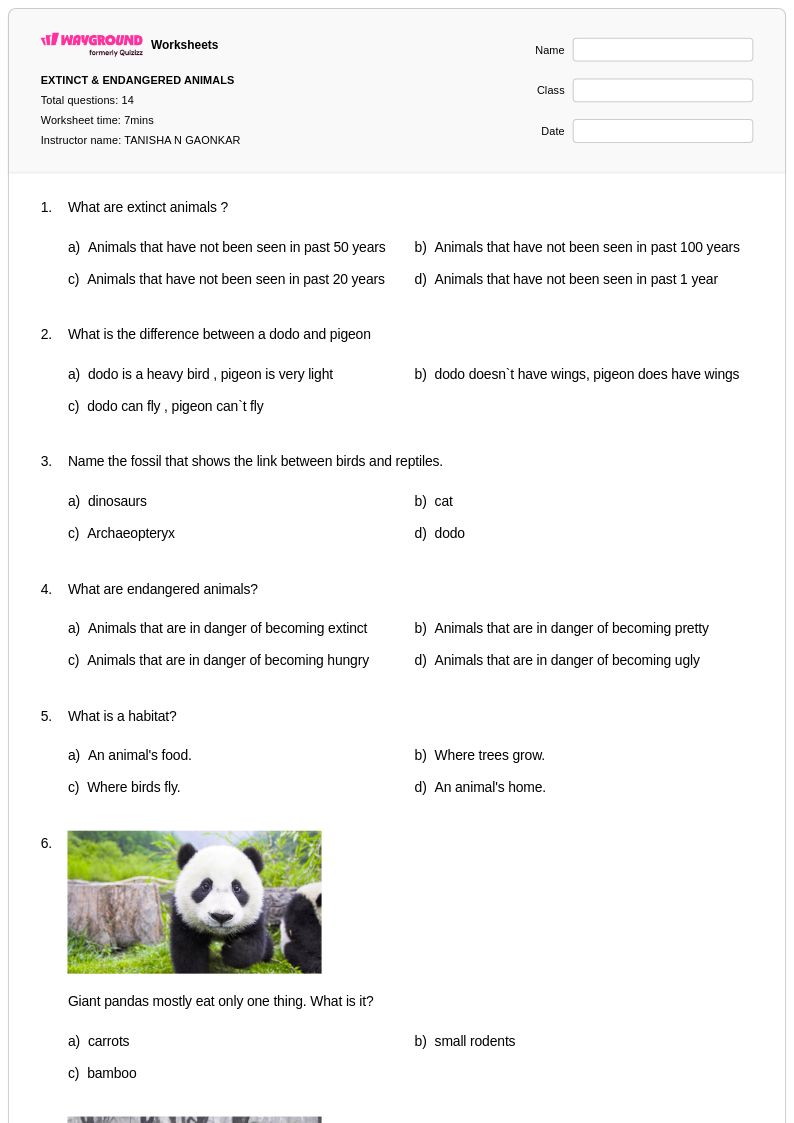
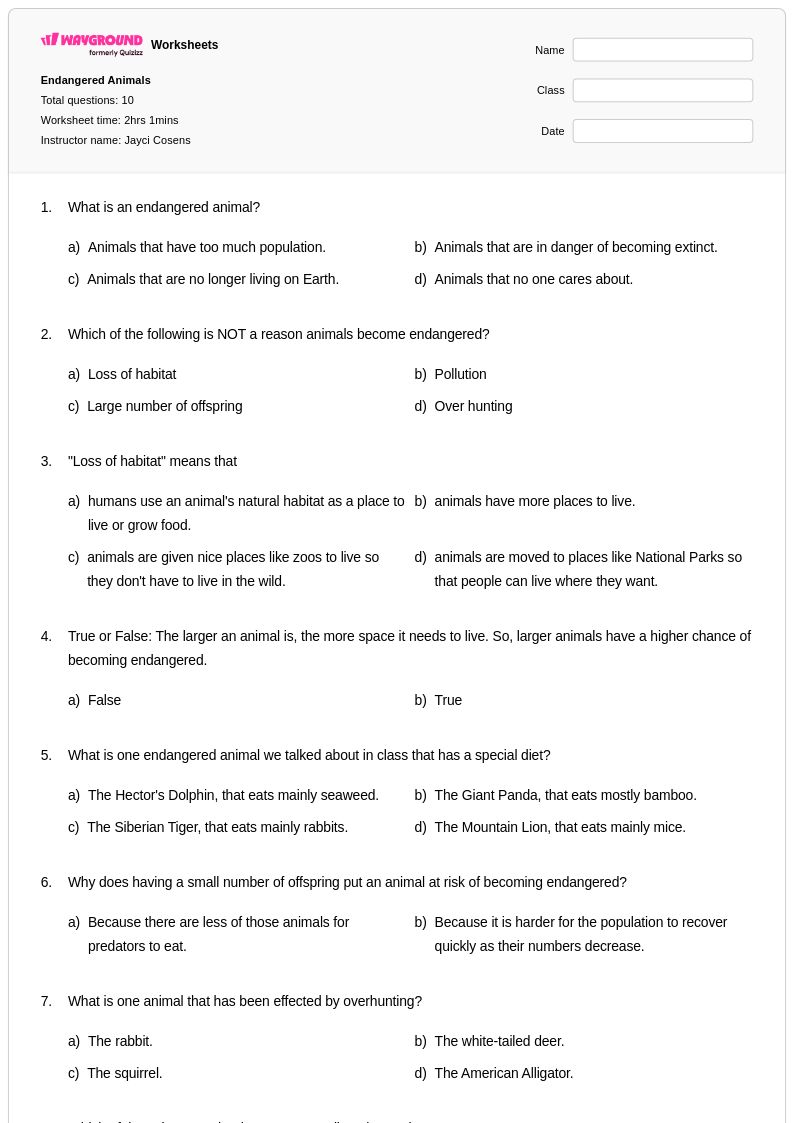
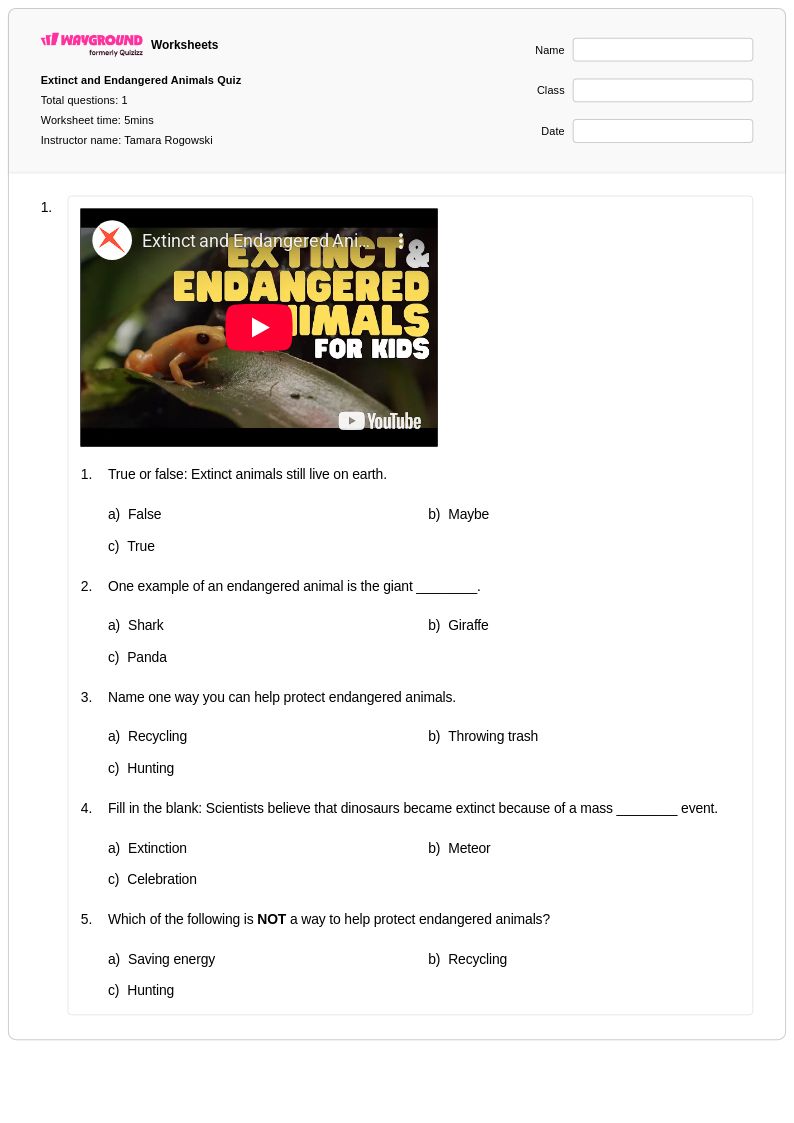
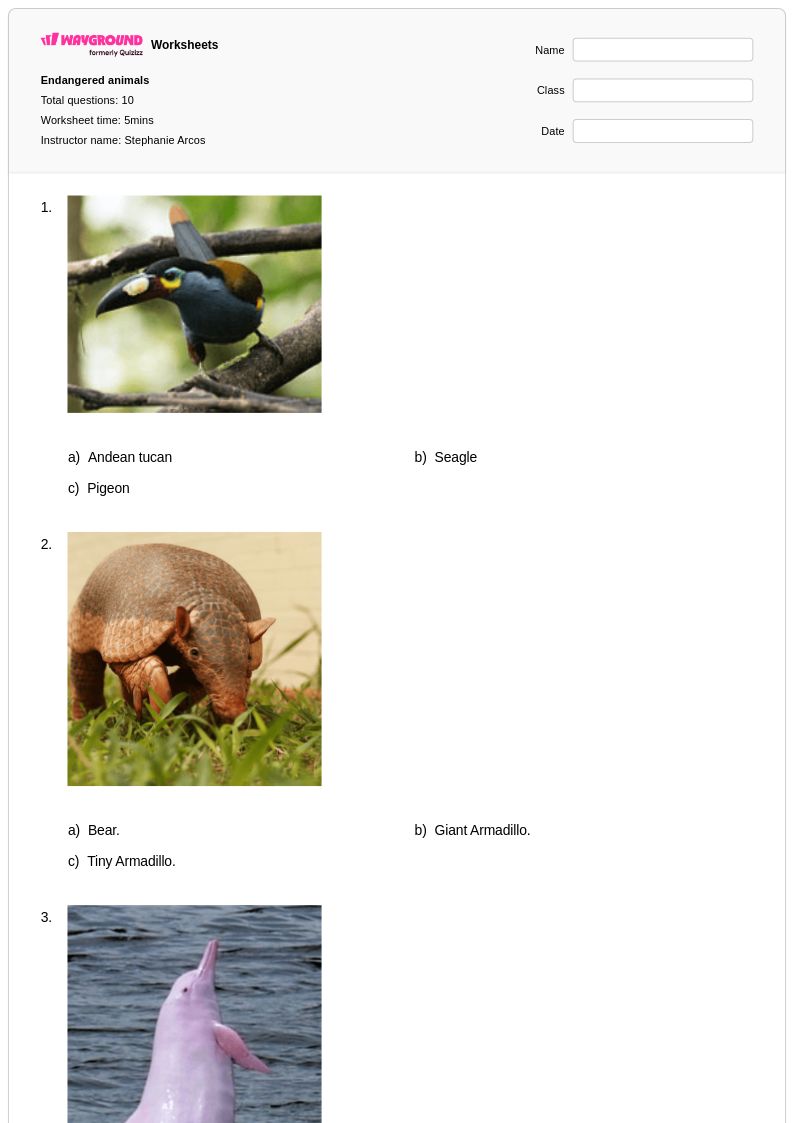
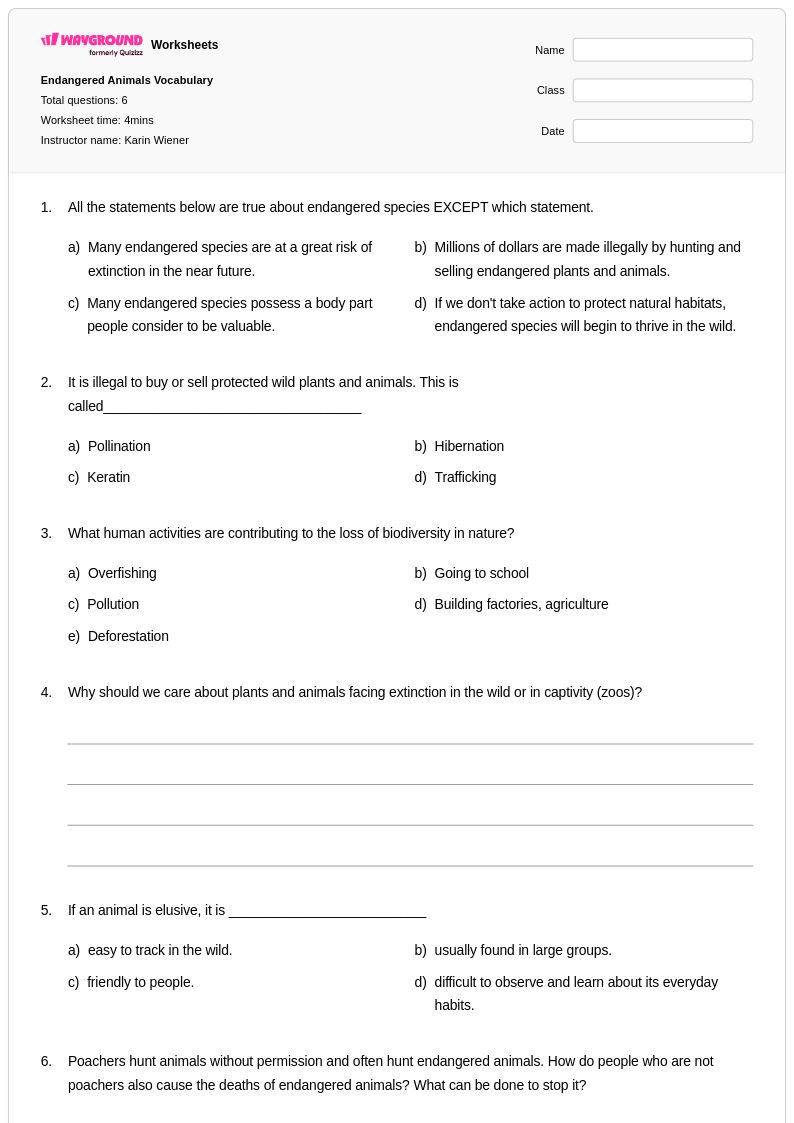
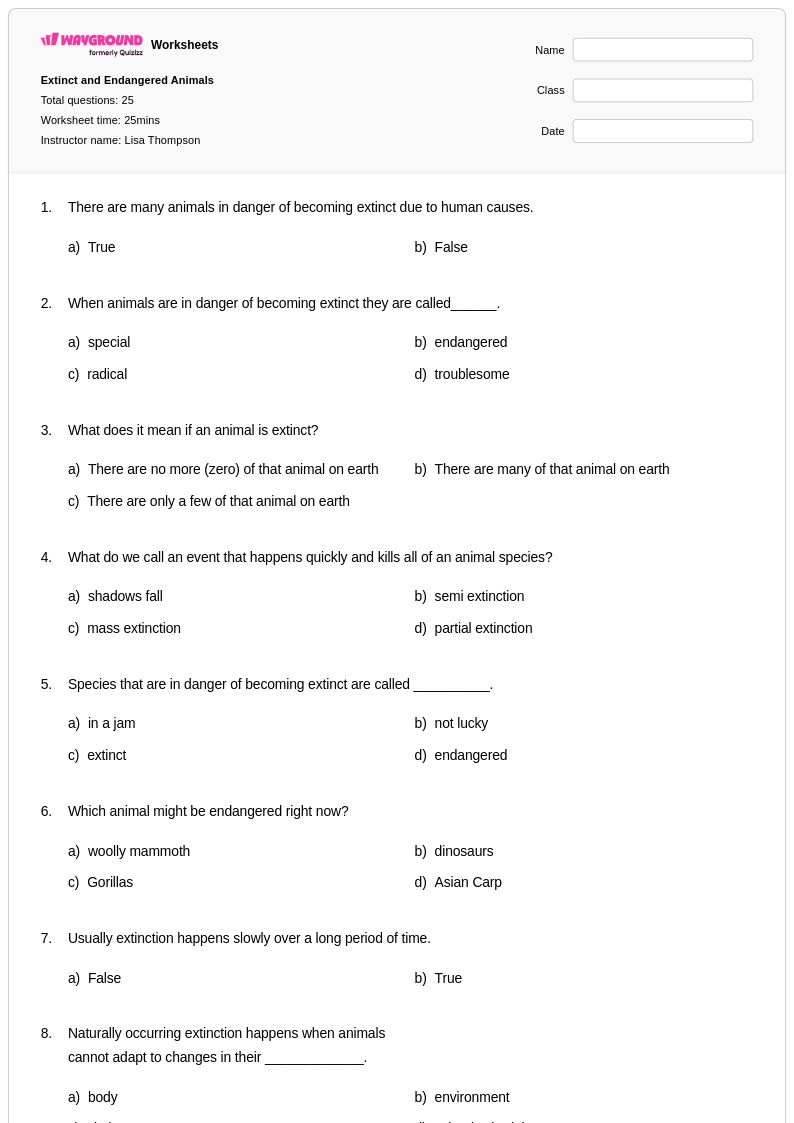
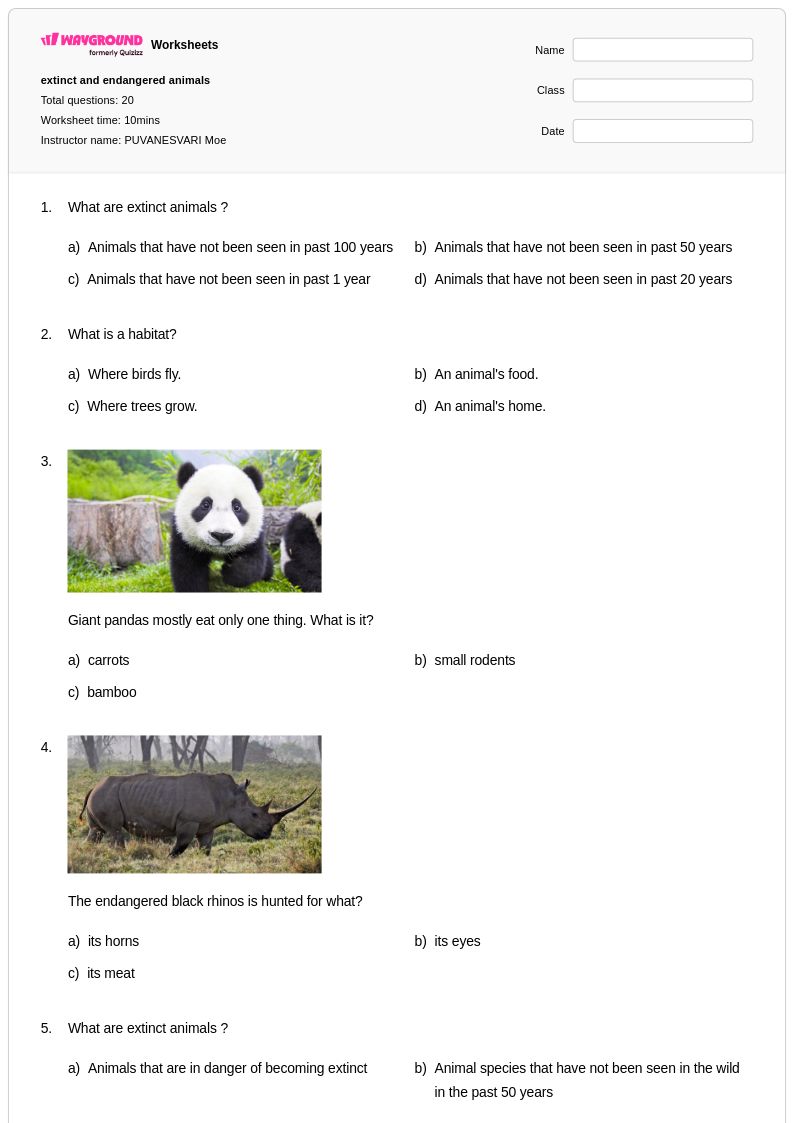
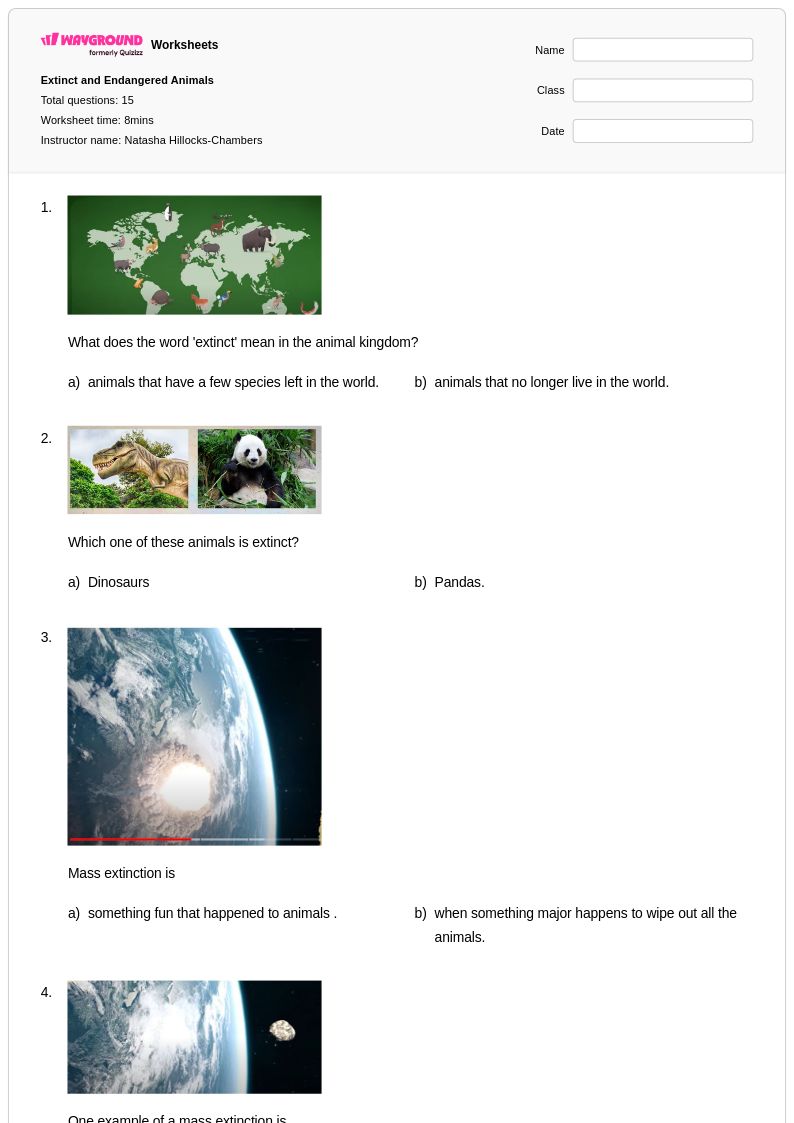
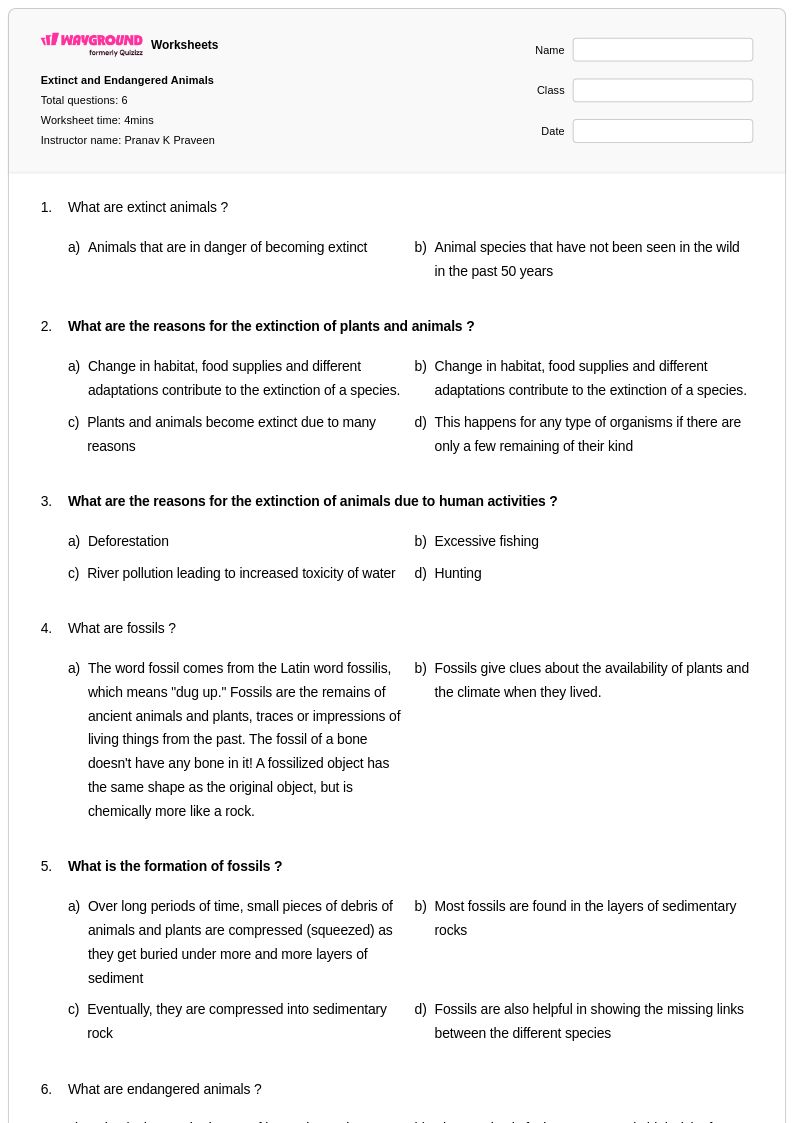
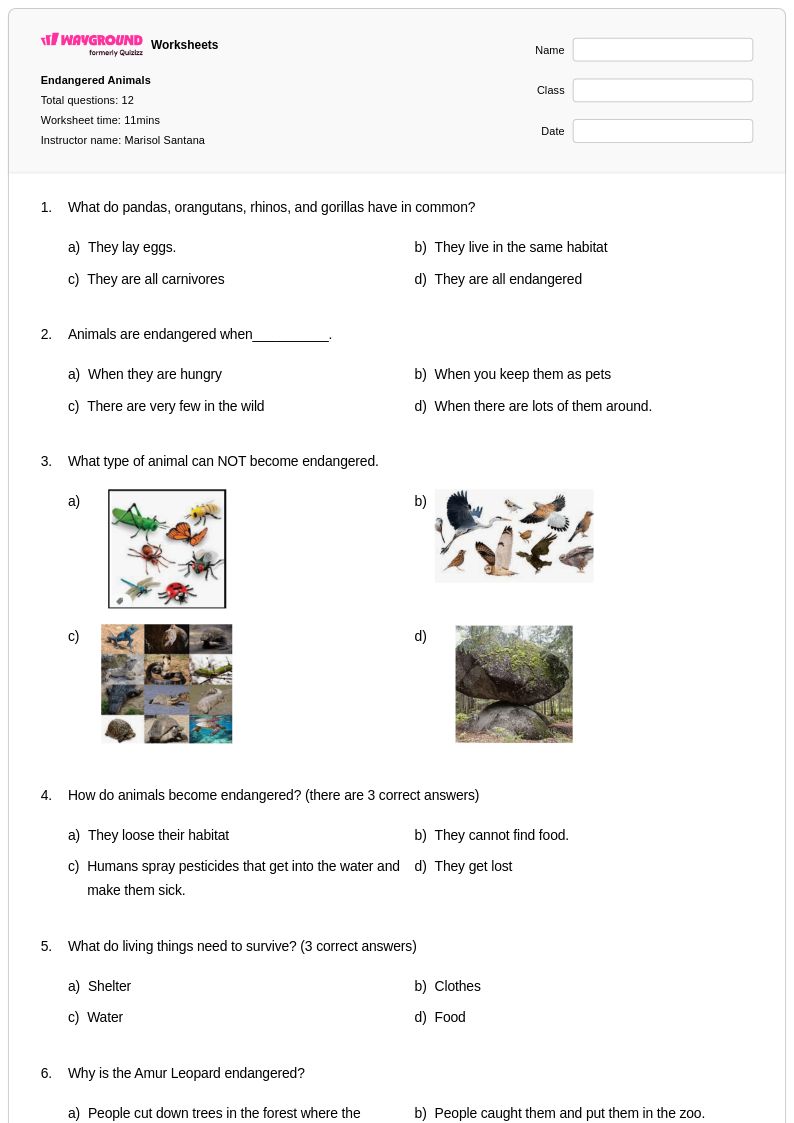
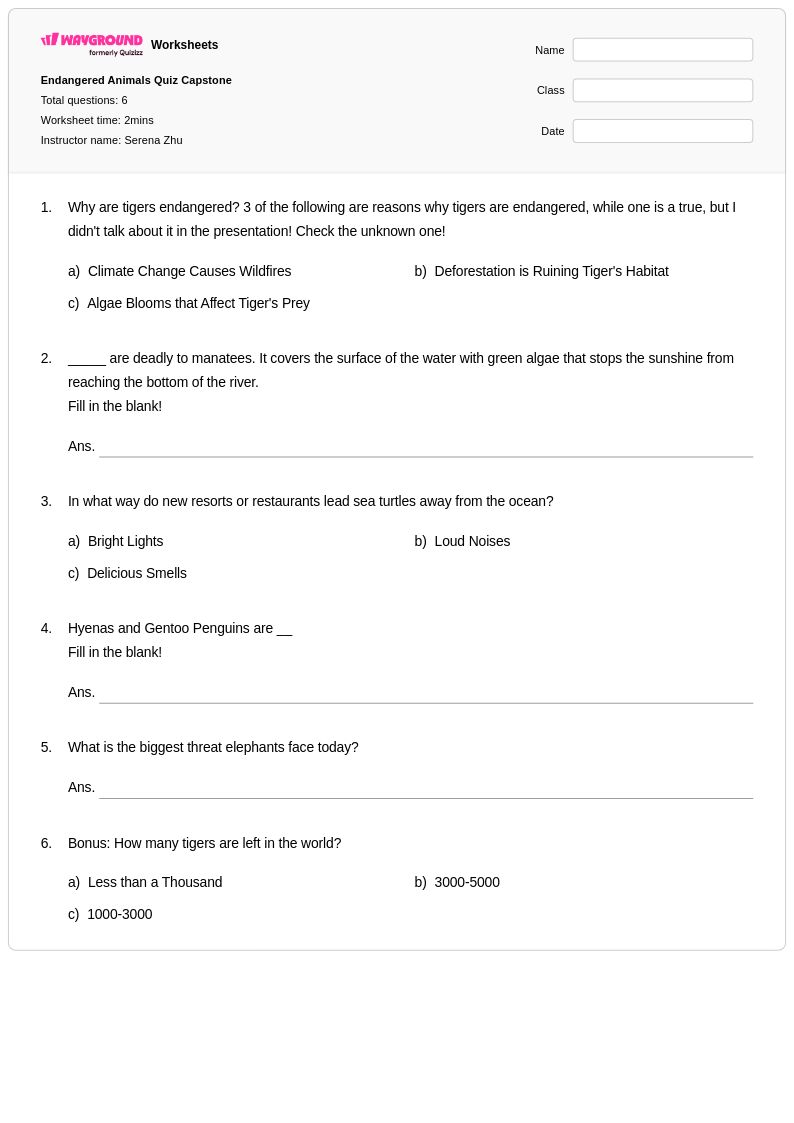
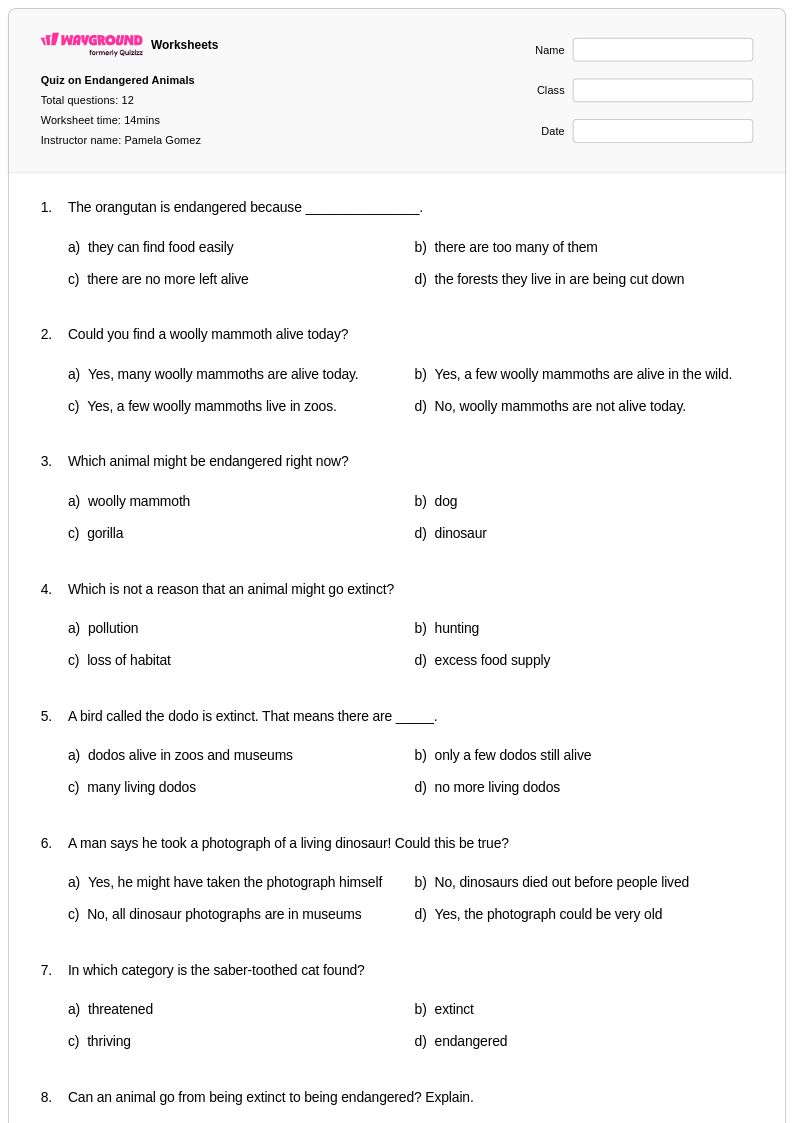
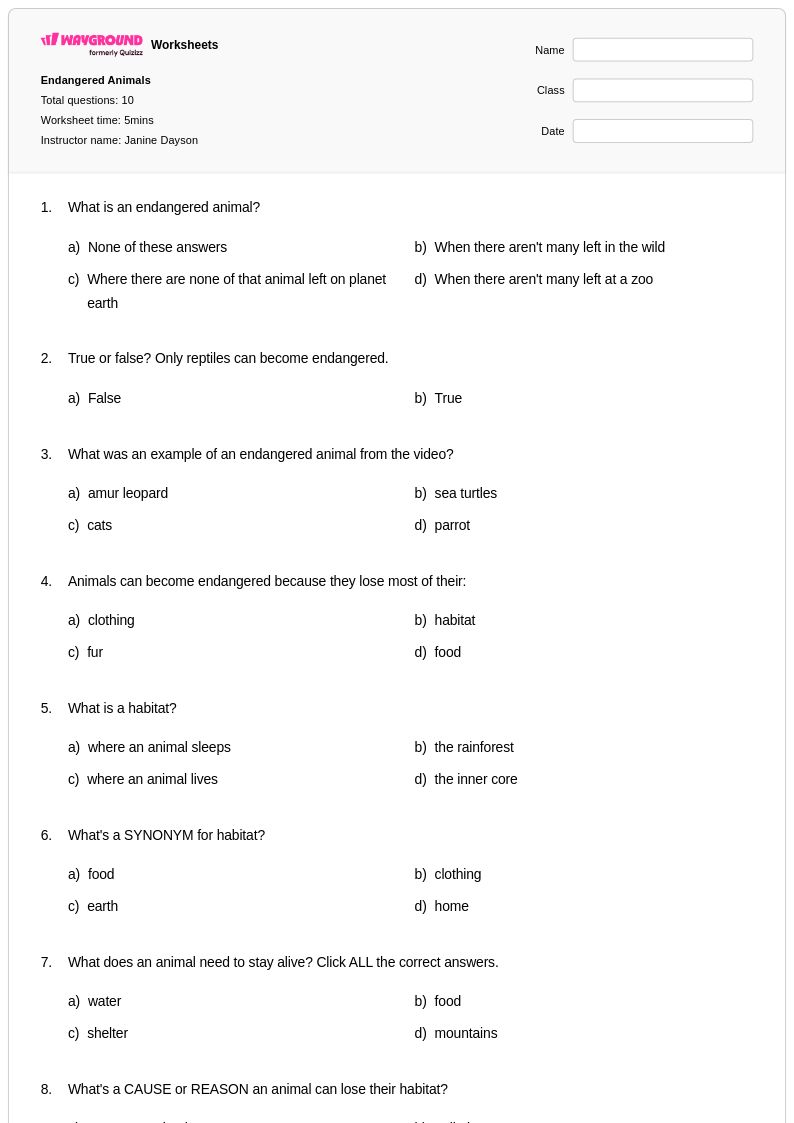
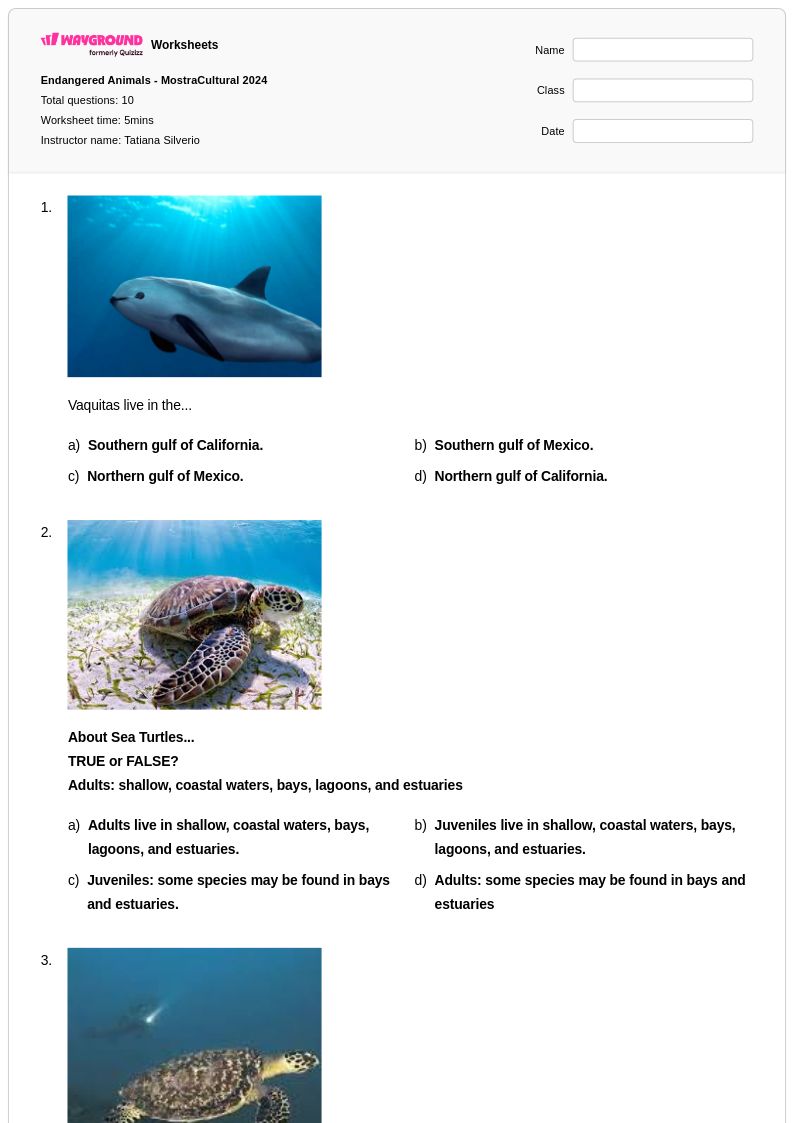
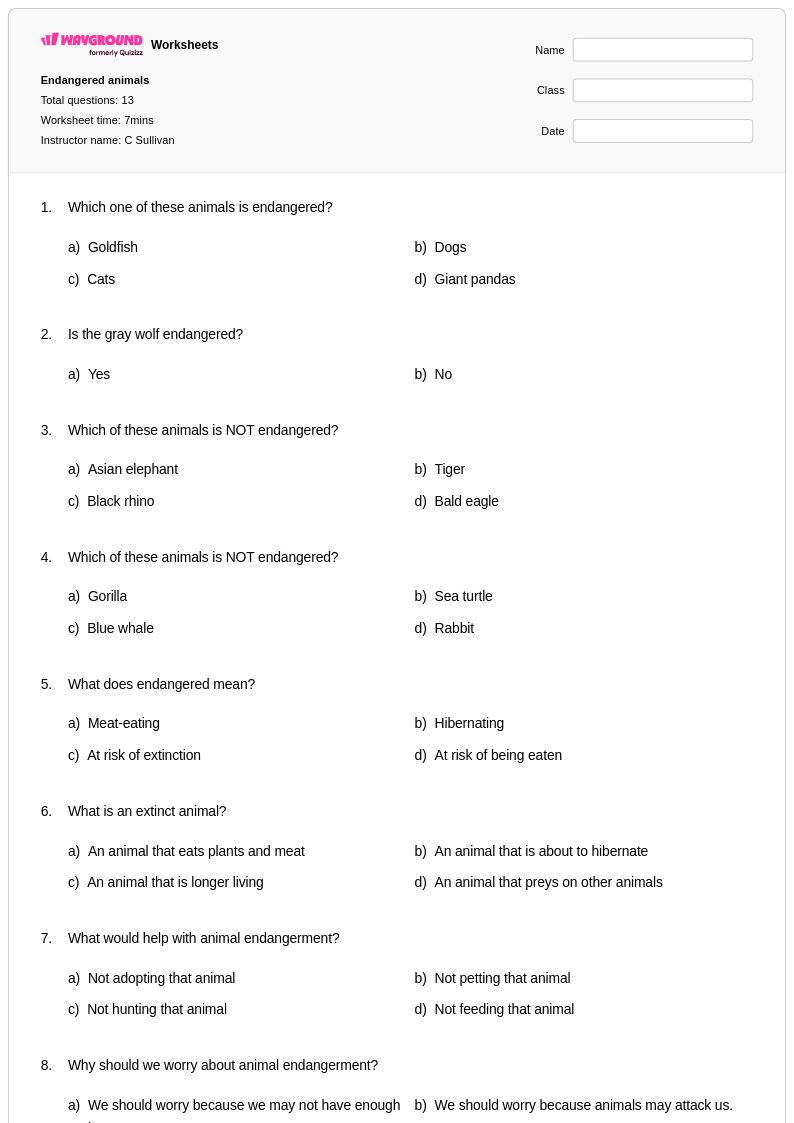
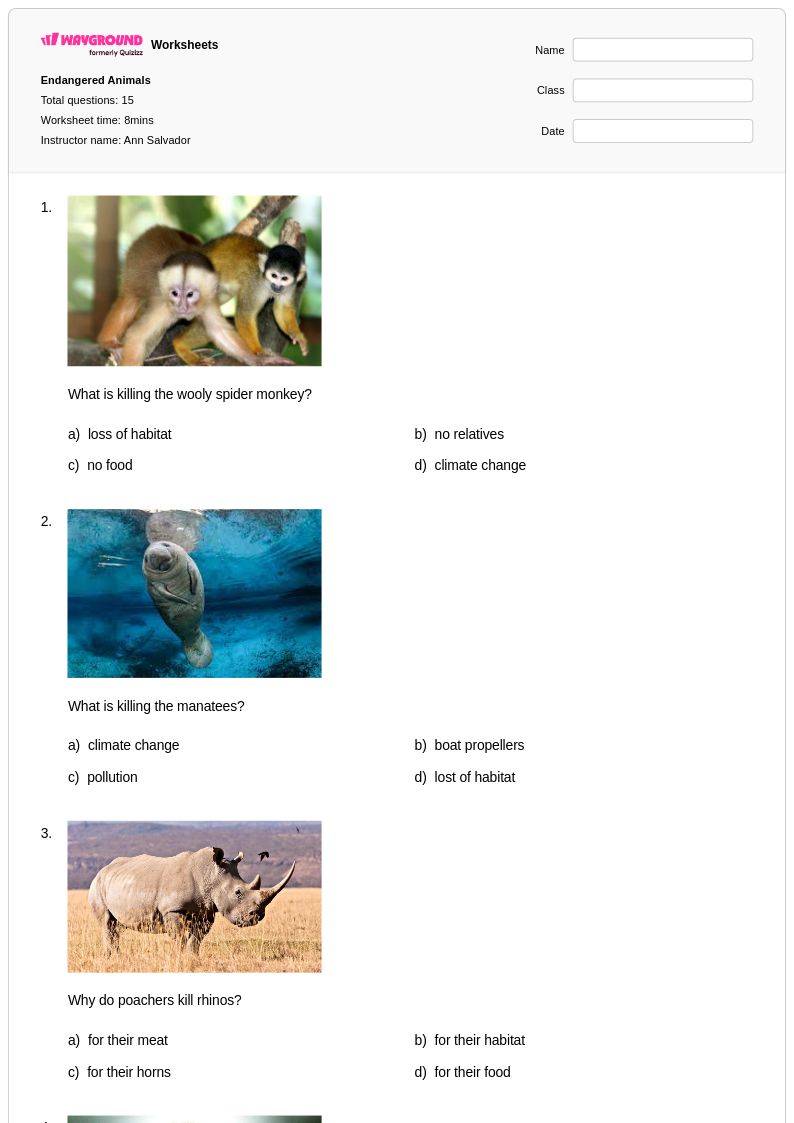
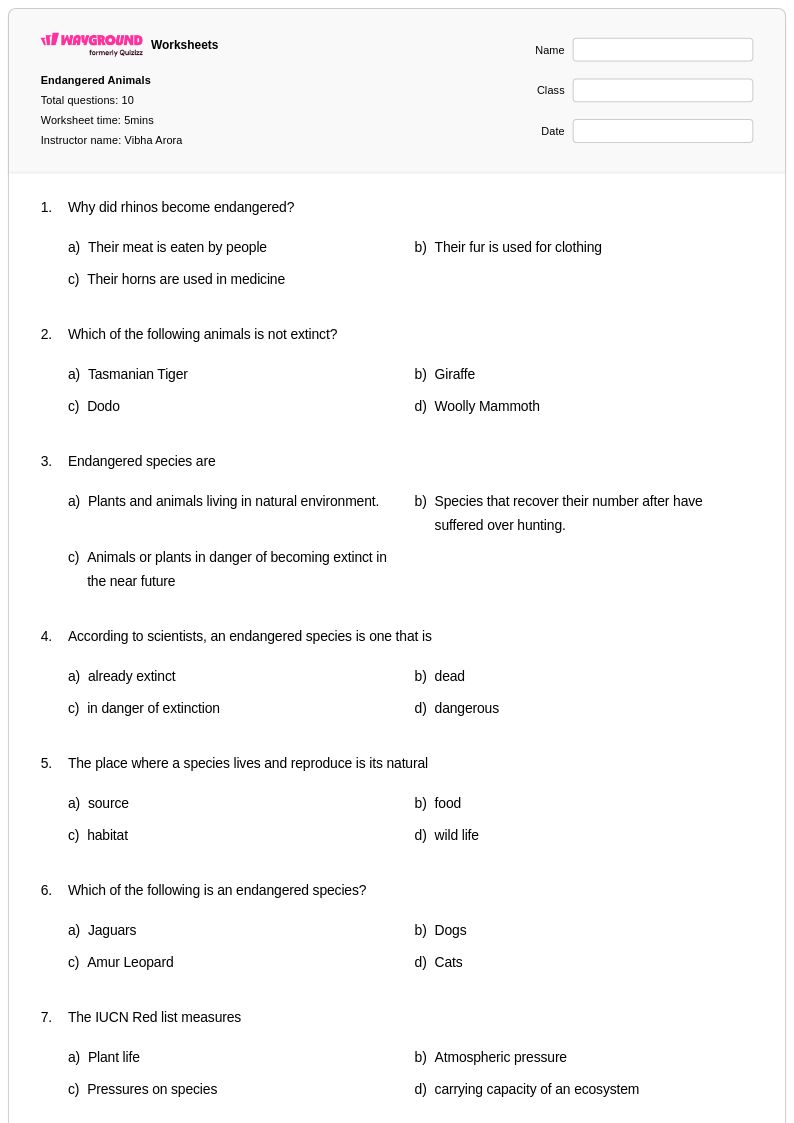
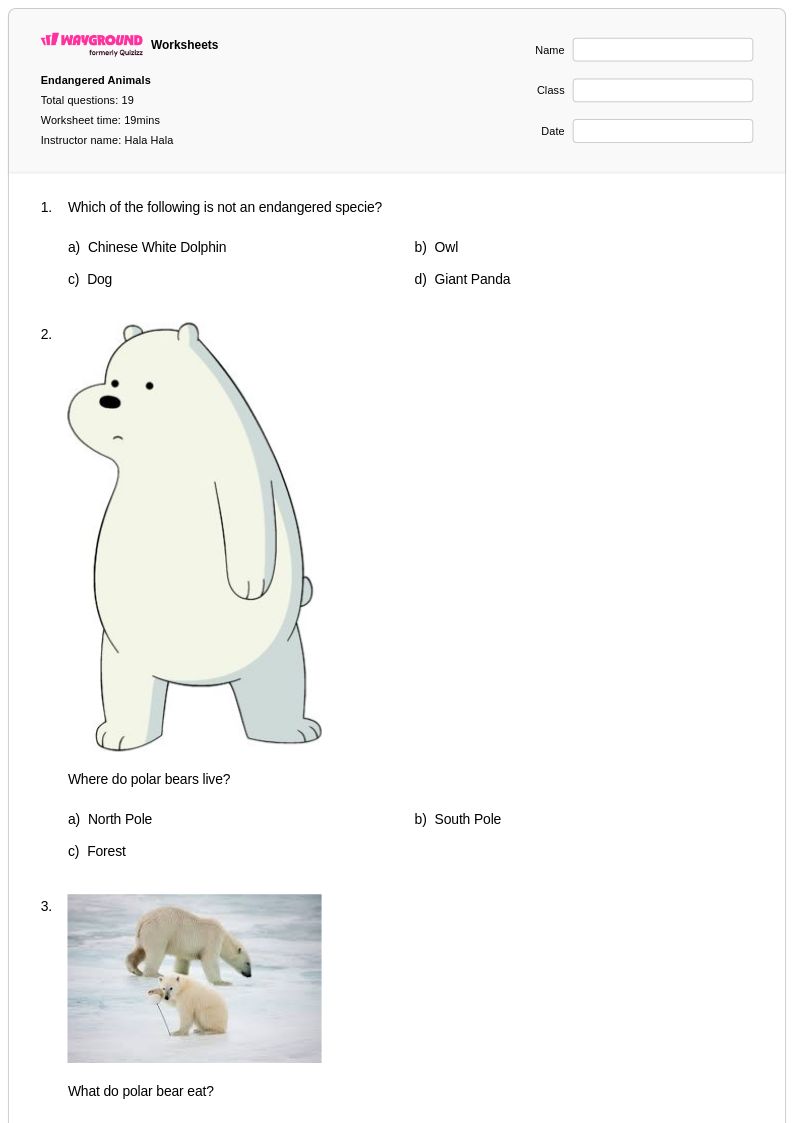
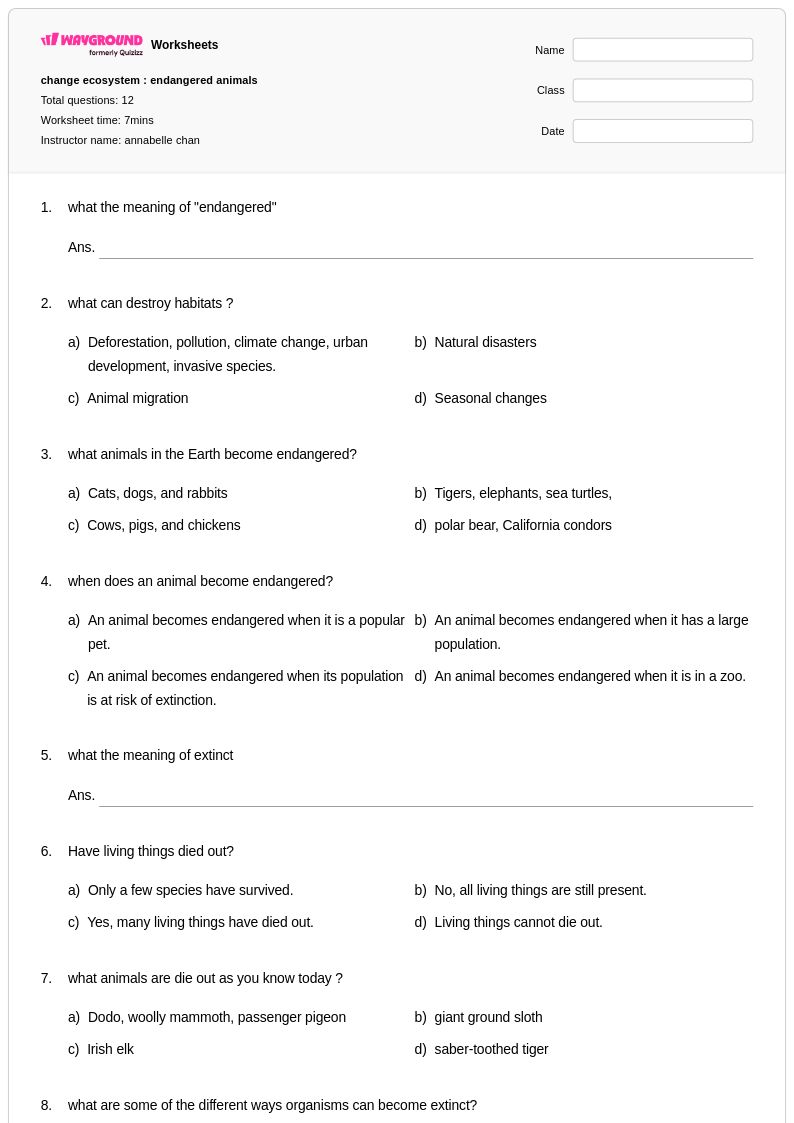
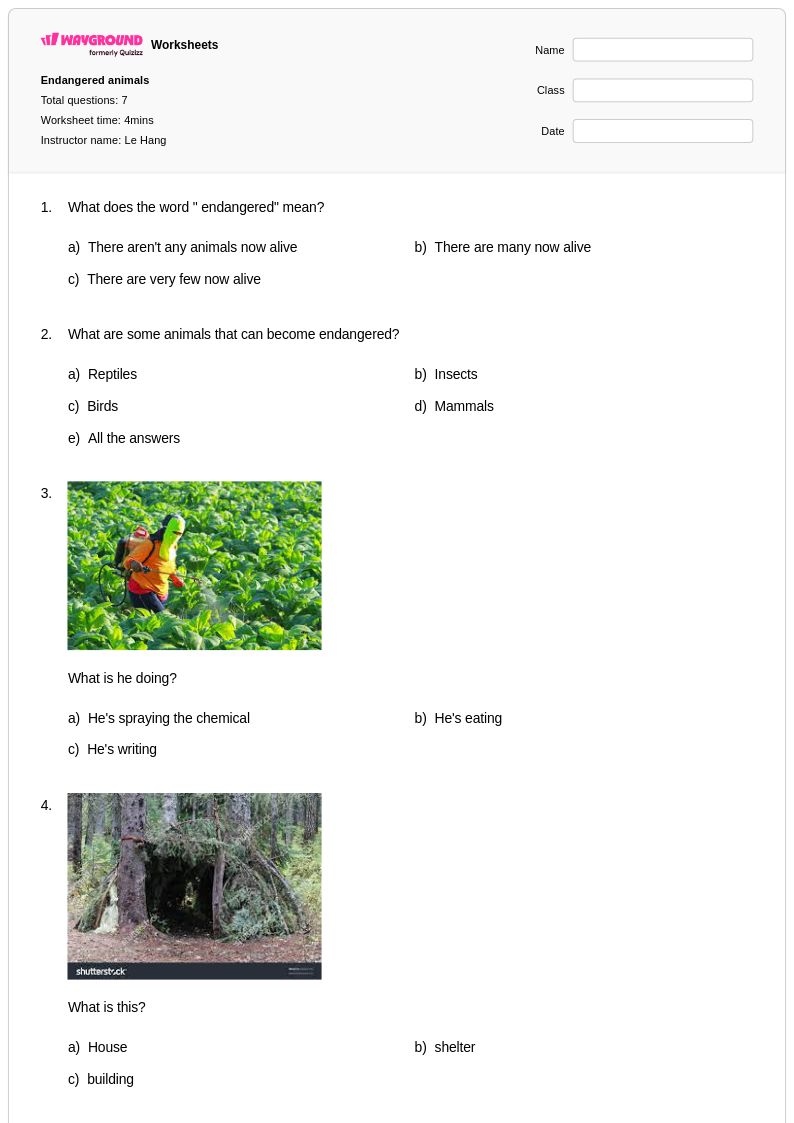
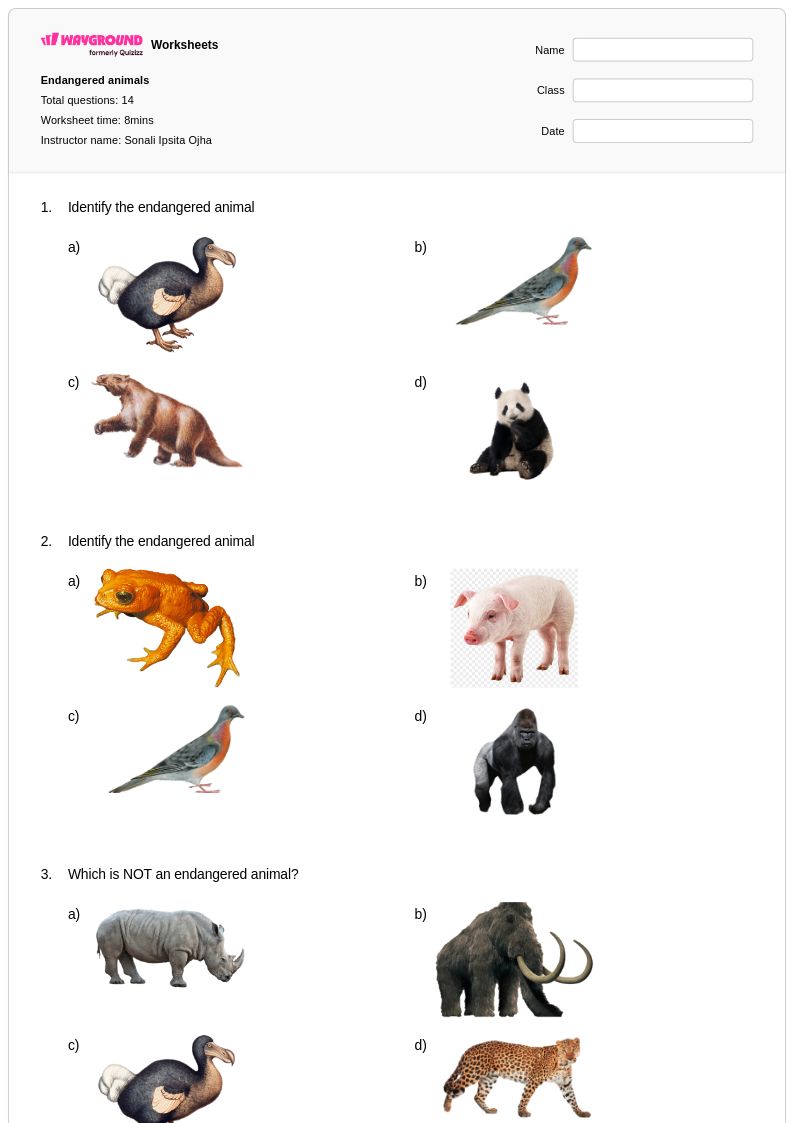
Endangered animals worksheets for kindergarten students available through Wayground (formerly Quizizz) introduce young learners to the important concept of wildlife conservation through age-appropriate activities and engaging visual content. These educational materials help kindergarten students develop early science observation skills, basic vocabulary related to animal habitats, and foundational understanding of how human actions affect wildlife populations. The worksheets feature colorful illustrations of endangered species like pandas, tigers, and polar bears, allowing children to practice identification skills while learning simple facts about why these animals need protection. Each printable resource includes clear instructions and an answer key to support both classroom instruction and home learning, with free pdf downloads making these materials easily accessible for teachers and parents seeking quality practice problems that combine science learning with environmental awareness.
Wayground's extensive collection of teacher-created endangered animals worksheets provides kindergarten educators with millions of carefully curated resources that align with early childhood science standards and support diverse learning needs in the classroom. The platform's robust search and filtering capabilities allow teachers to quickly locate materials that match specific learning objectives, whether focusing on animal characteristics, habitat preservation, or simple conservation concepts appropriate for young learners. These differentiation tools enable educators to customize worksheets for various skill levels within their kindergarten classrooms, while the availability of both printable and digital formats including pdf downloads offers flexibility for different teaching environments and learning preferences. Teachers can effectively use these resources for lesson planning, skill practice sessions, and enrichment activities that help kindergarten students build meaningful connections between science learning and real-world environmental stewardship.
FAQs
How do I teach endangered animals and wildlife conservation in a science class?
Effective instruction on endangered animals begins with grounding students in the specific causes of species decline: habitat loss, poaching, invasive species, climate change, and pollution. From there, teachers can build toward ecosystem interdependence by showing how the loss of one species creates ripple effects throughout a food web. Using real-world case studies of threatened species, such as the Amur leopard or vaquita porpoise, makes abstract conservation concepts concrete and emotionally engaging for students.
What worksheet activities help students practice understanding endangered species concepts?
Structured practice problems that ask students to analyze population data, identify habitat threats, and evaluate conservation strategies are among the most effective activities for building content mastery. Research-based tasks where students investigate a specific threatened species, examine contributing factors to its decline, and propose protective measures develop both scientific reasoning and environmental literacy. Worksheets that incorporate data analysis align well with science standards and prepare students to engage critically with real conservation challenges.
What common misconceptions do students have about endangered animals?
A frequent misconception is that endangered status means a species is nearly extinct, when in fact it refers to a specific classification within a broader threat category system, such as the IUCN Red List. Students also often underestimate the role of habitat loss relative to direct hunting, when in reality habitat destruction is the leading driver of species decline globally. Another common error is treating conservation as separate from human activity, rather than understanding that biodiversity loss is directly connected to land use, agriculture, and economic decisions.
How can I differentiate endangered animals lessons for students at different ability levels?
For struggling students, simplified case studies with guided reading supports and visual aids help build baseline vocabulary around terms like biodiversity, extinction, and endemic species. Advanced learners benefit from more complex tasks such as analyzing population viability models or comparing conservation policy approaches across countries. On Wayground, teachers can apply individual accommodations including read aloud, reduced answer choices, and extended time to specific students, while the rest of the class receives standard settings without any disruption to the learning environment.
How do I use Wayground's endangered animals worksheets in my classroom?
Wayground's endangered animals worksheets are available as printable PDFs for traditional classroom use and in digital formats for technology-integrated environments, giving teachers flexibility regardless of their setup. Digital versions can be hosted directly as a quiz on Wayground, allowing for real-time monitoring of student responses. Each worksheet includes a complete answer key, so teachers can use them for independent practice, guided instruction, or formative assessment without additional prep.
How do I connect endangered animals content to broader science standards?
Endangered animals topics connect directly to NGSS performance expectations around ecosystems, natural selection, and human impacts on Earth's systems. Teachers can use species decline data to address standards related to analyzing and interpreting data, while habitat and biodiversity discussions align with disciplinary core ideas about ecosystem dynamics. Framing lessons around conservation also supports cross-cutting concepts like cause and effect, stability and change, and the relationship between structure and function in ecosystems.