Discover free kindergarten bones worksheets and printables that help young learners explore the human body through engaging practice problems, colorful activities, and complete answer keys available as downloadable PDFs.
Explore printable Bones worksheets for Kindergarten
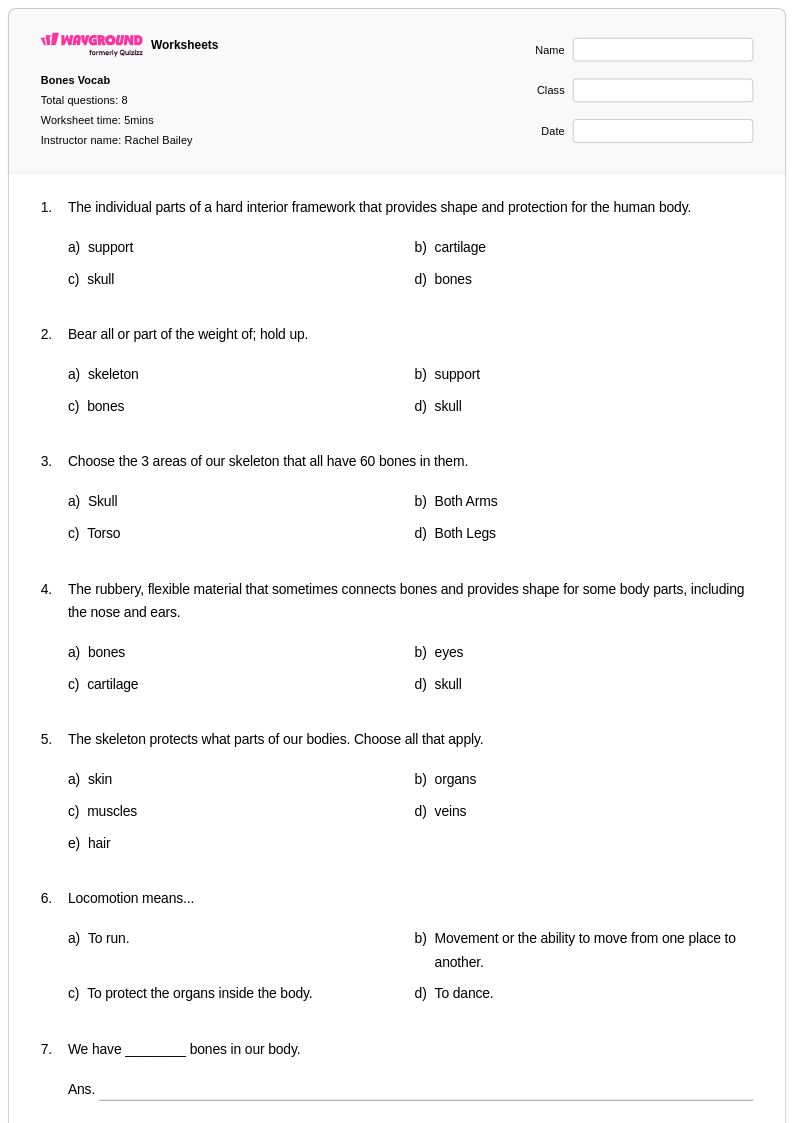
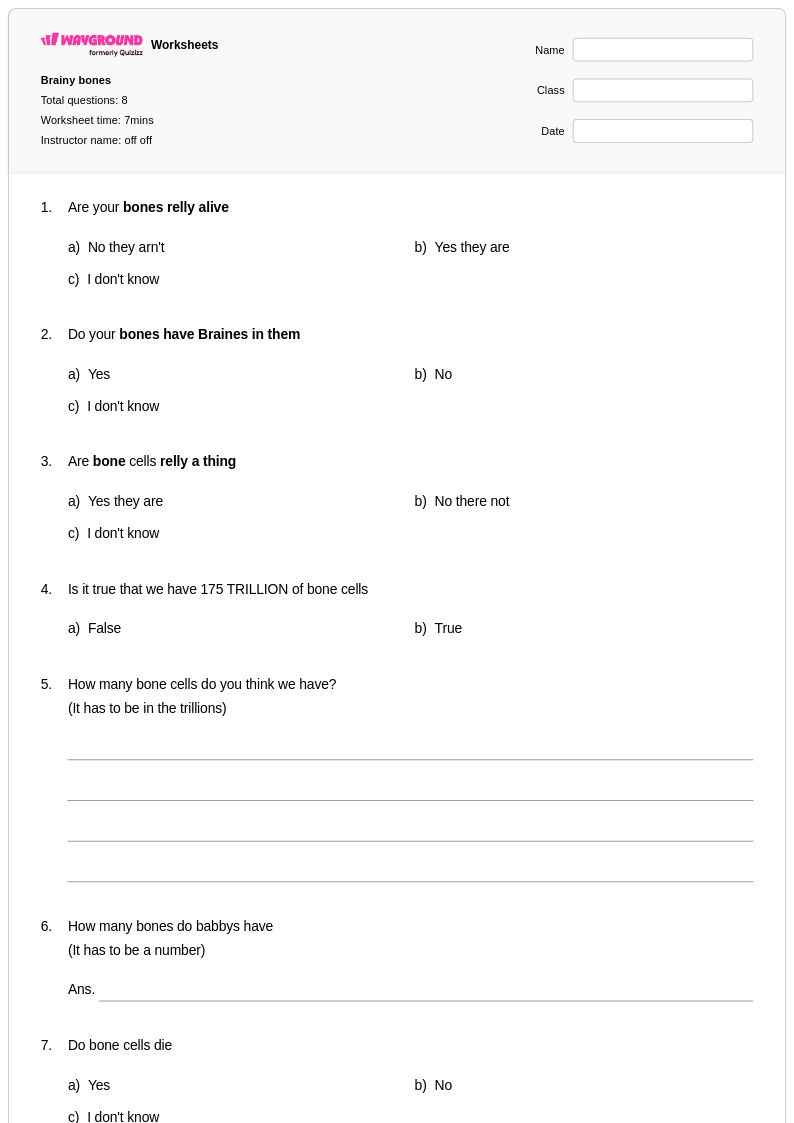
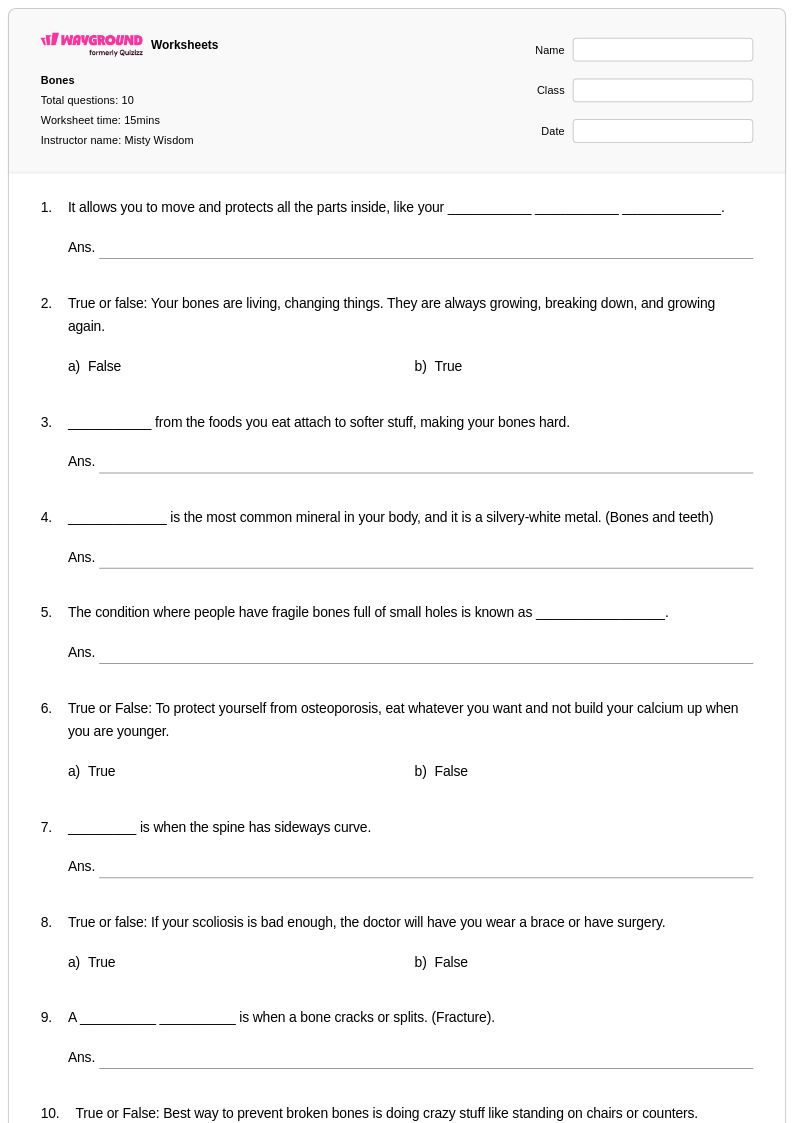
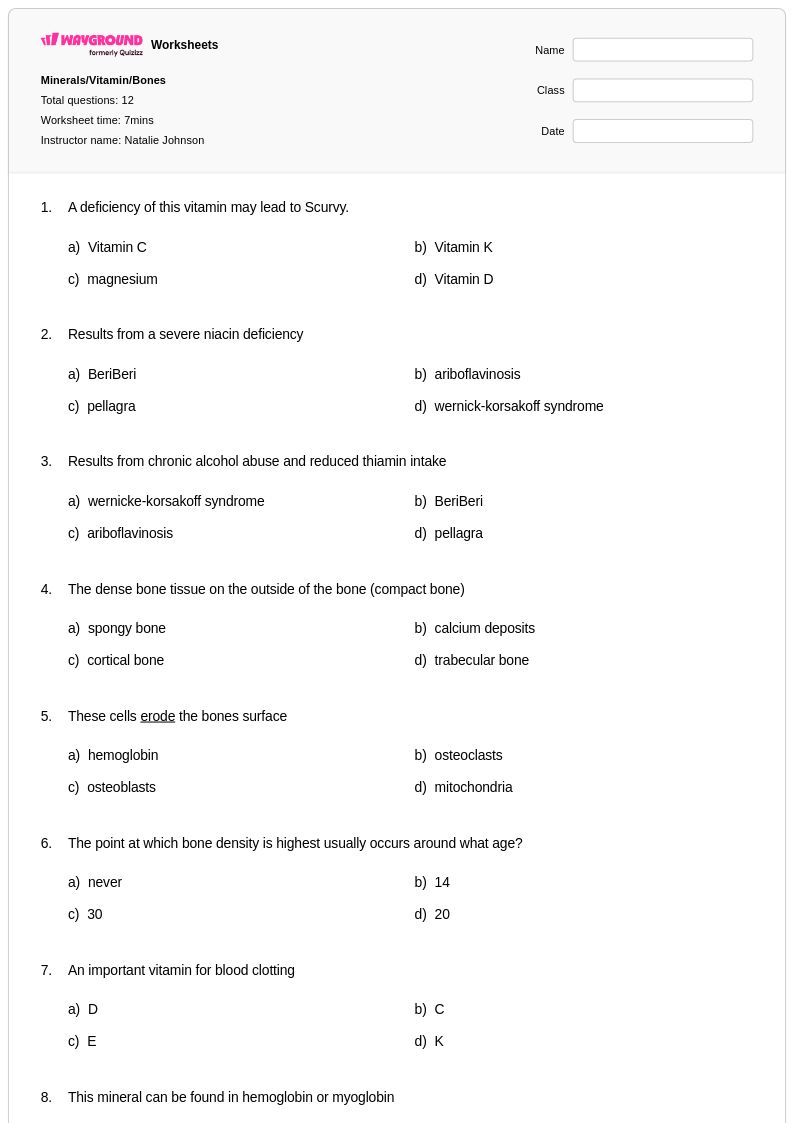
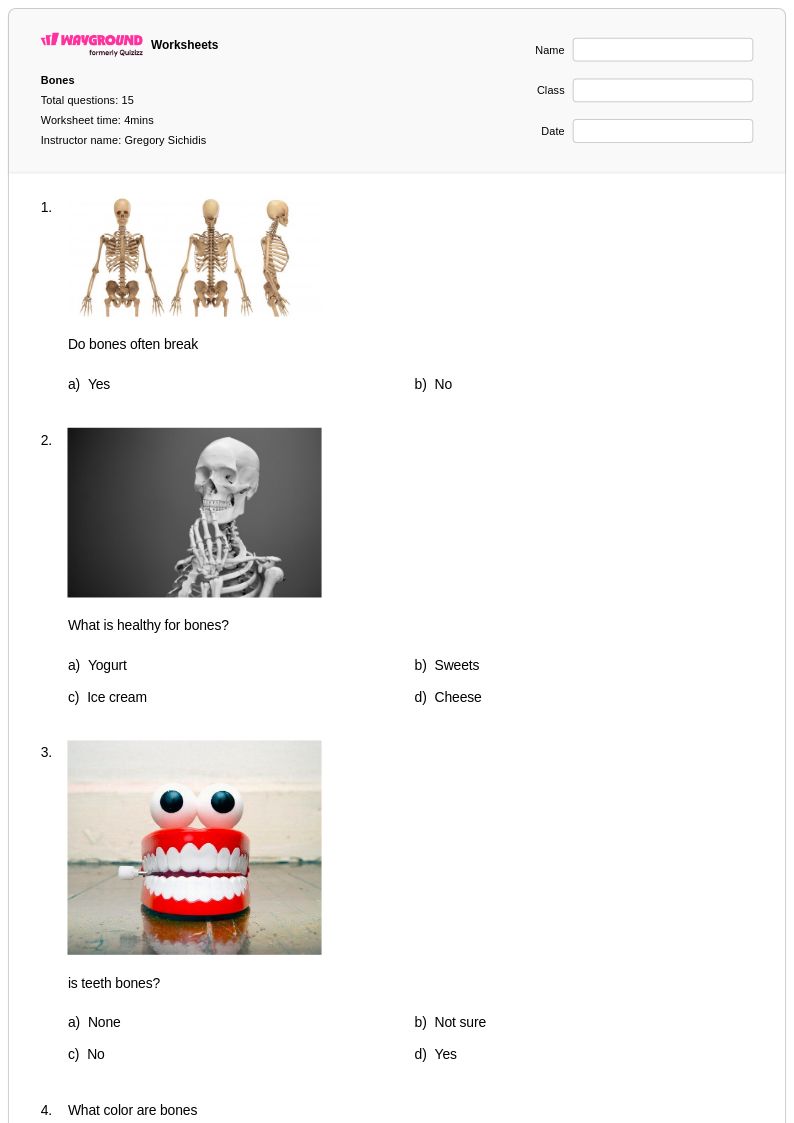
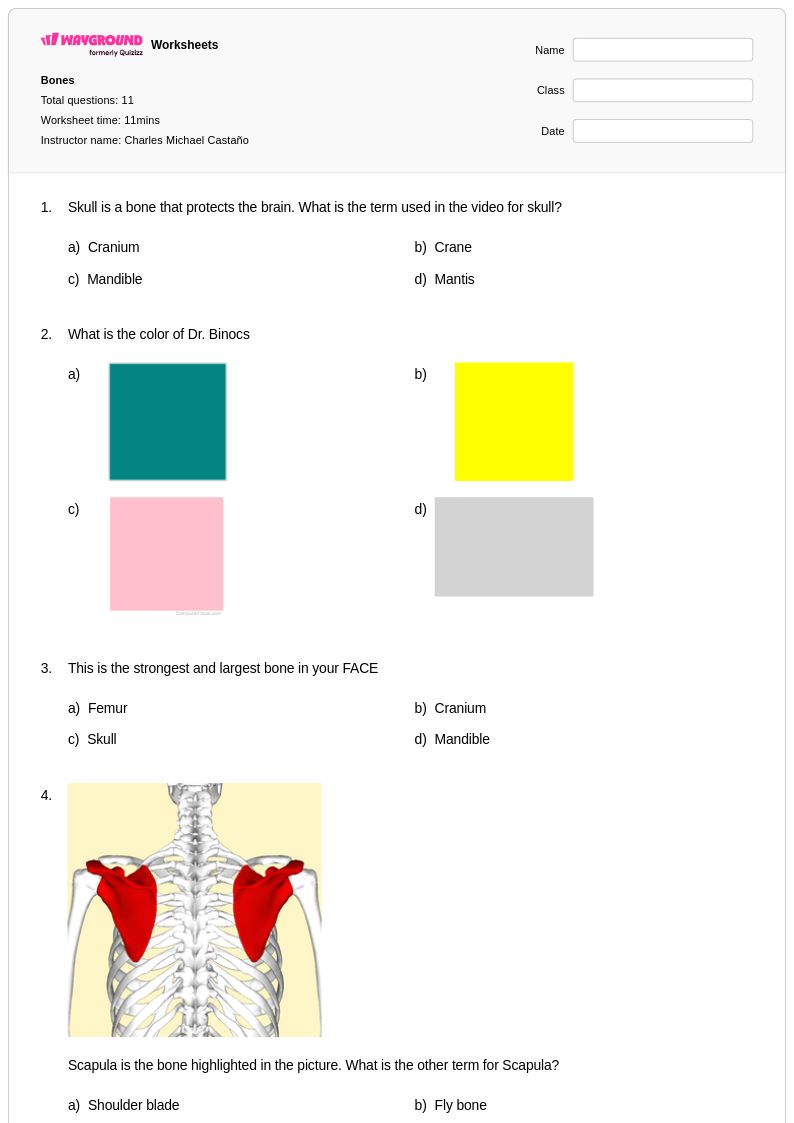
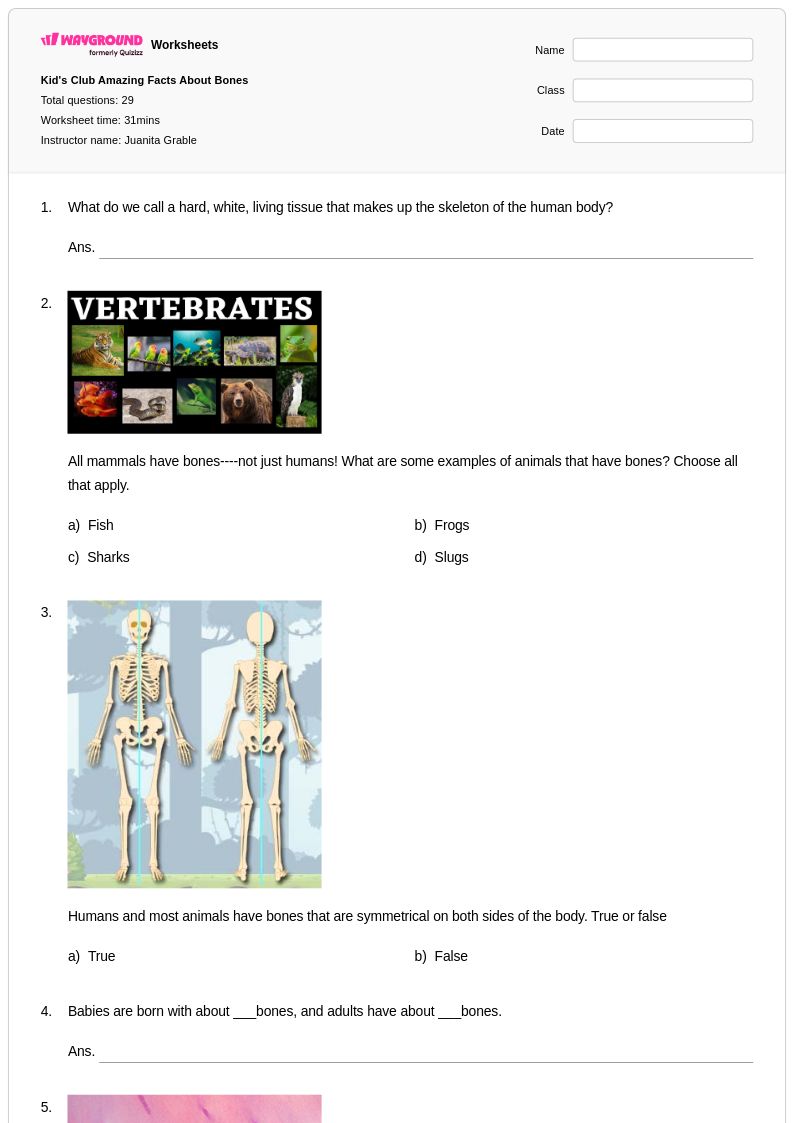
Bones worksheets for kindergarten students through Wayground (formerly Quizizz) introduce young learners to fundamental concepts about the human skeletal system through age-appropriate activities and visual learning opportunities. These carefully designed educational materials help kindergarteners develop early scientific observation skills while building vocabulary related to basic bone structure and function. The collection includes engaging practice problems that encourage students to identify major bones, understand how bones help our bodies move and stay strong, and recognize the protective role bones play in keeping us healthy. Each worksheet comes with a comprehensive answer key to support accurate assessment, and the free printables are available in convenient pdf format for easy classroom distribution and home learning support.
Wayground (formerly Quizizz) empowers educators with access to millions of teacher-created resources specifically designed to make kindergarten bone studies both educational and enjoyable. The platform's robust search and filtering capabilities allow teachers to quickly locate worksheets that align with early childhood science standards and match their students' developmental needs. Advanced differentiation tools enable instructors to customize content for varying skill levels within the classroom, ensuring that each child can engage meaningfully with bone-related concepts regardless of their current ability. The flexible format options, including both printable and digital pdf versions, provide teachers with versatile tools for lesson planning, targeted remediation for students who need additional support, enrichment activities for advanced learners, and regular skill practice that reinforces essential scientific thinking patterns in young minds.
FAQs
How do I teach students about bone structure and function?
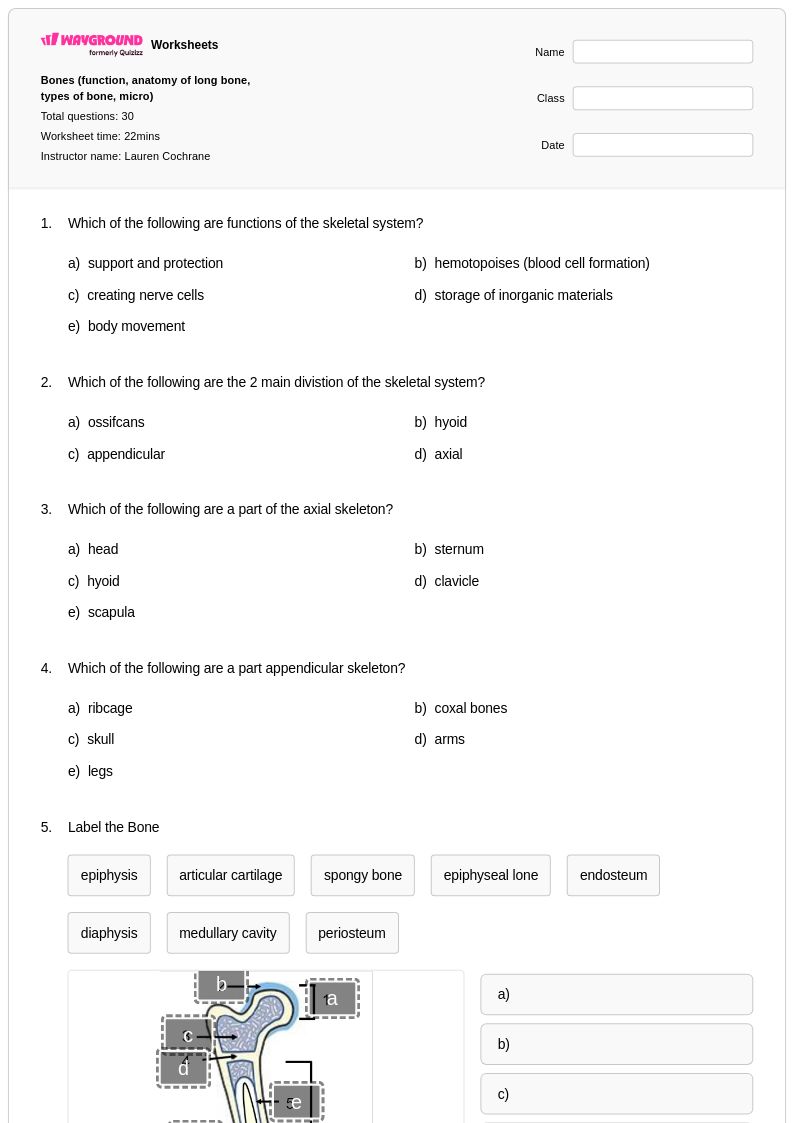
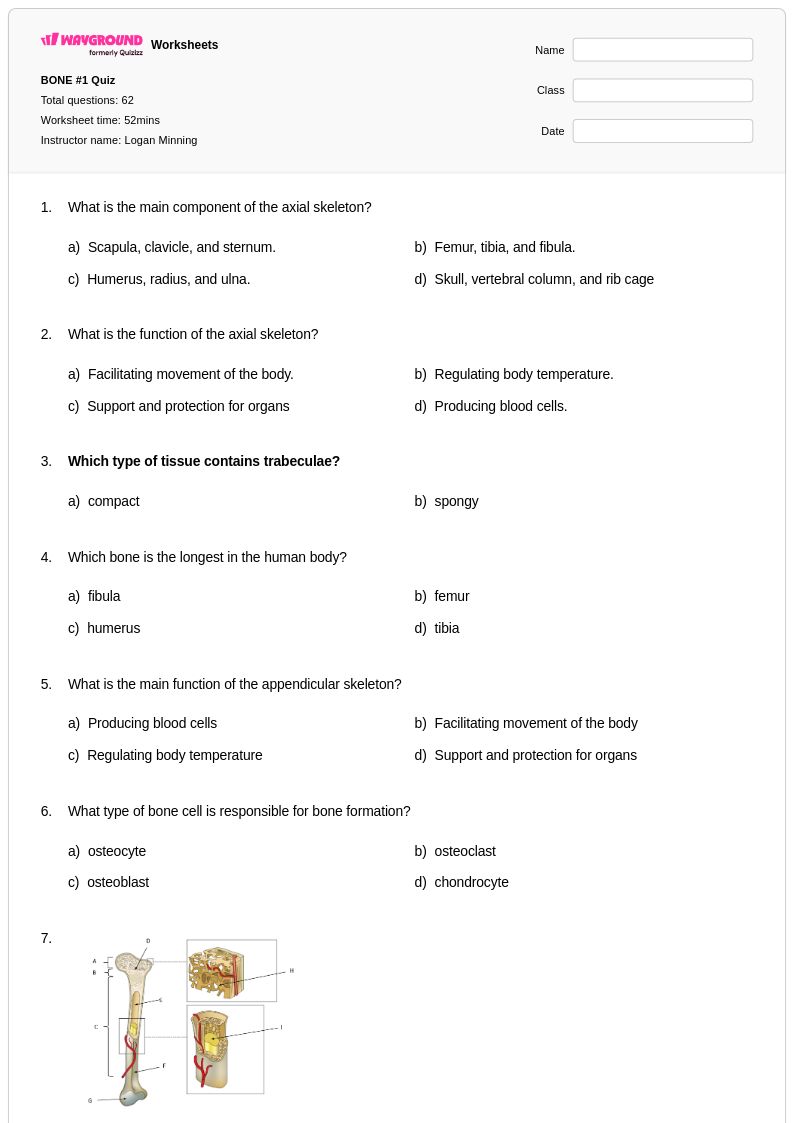
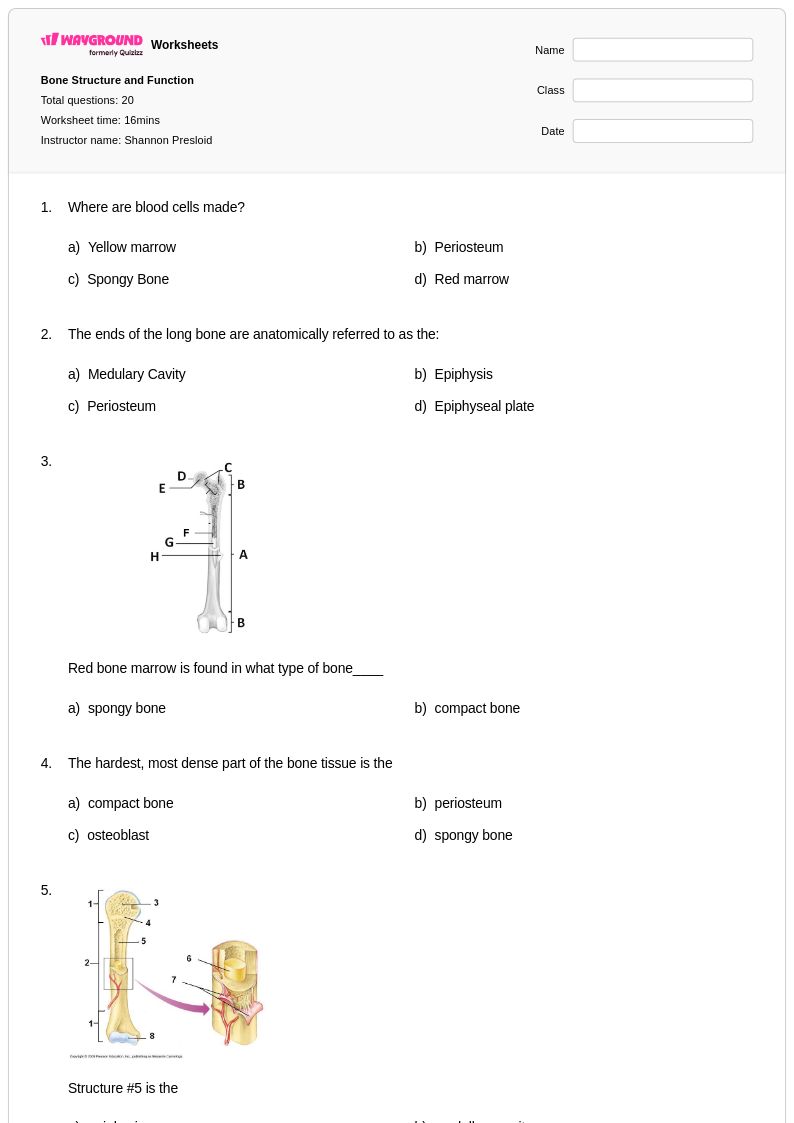
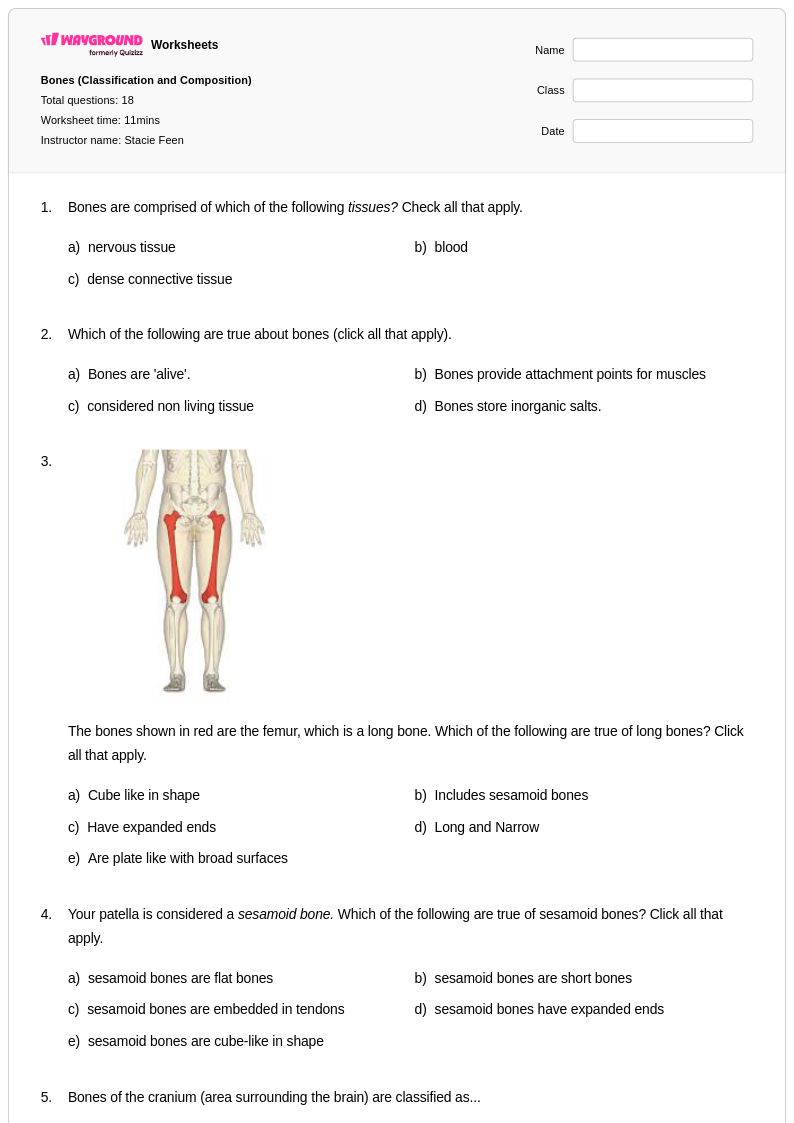
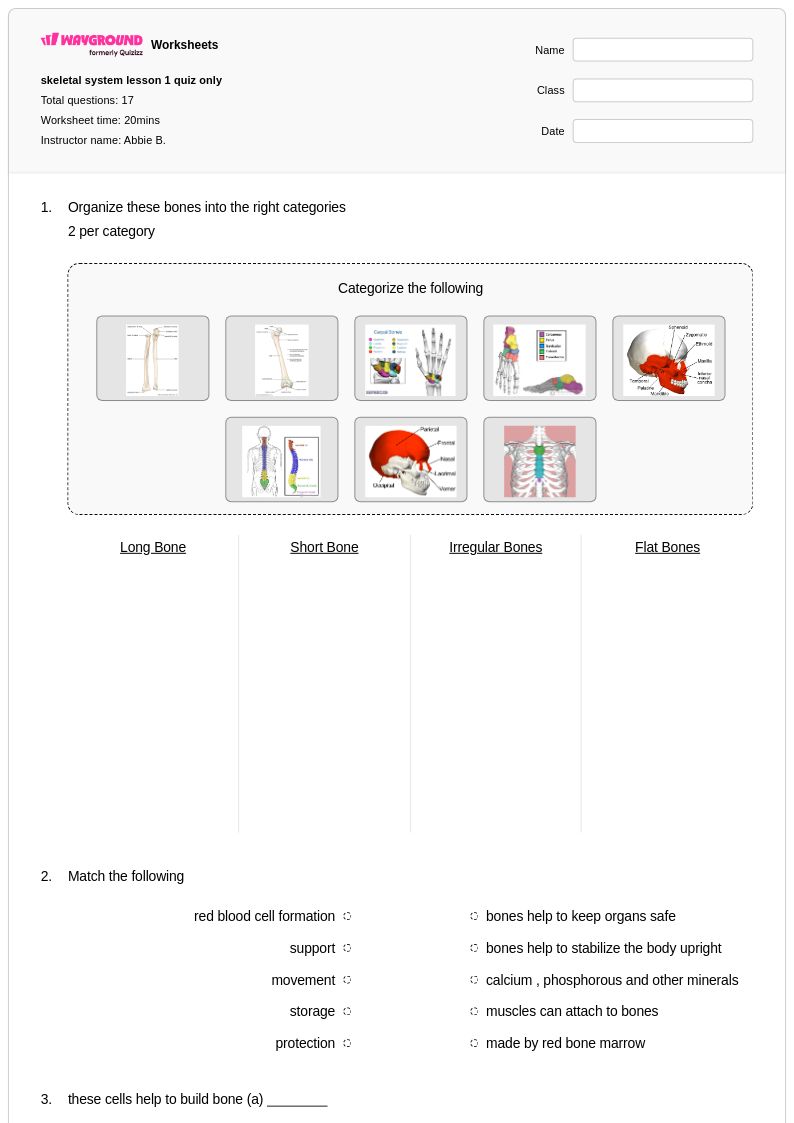
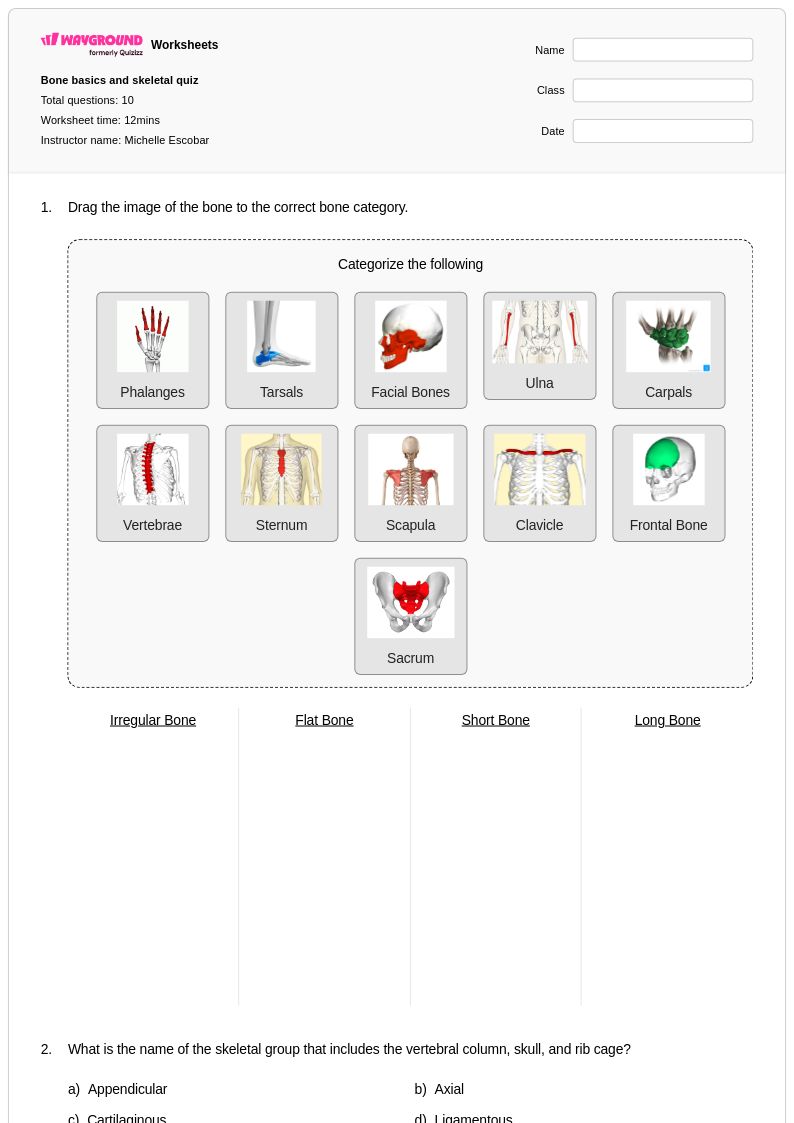
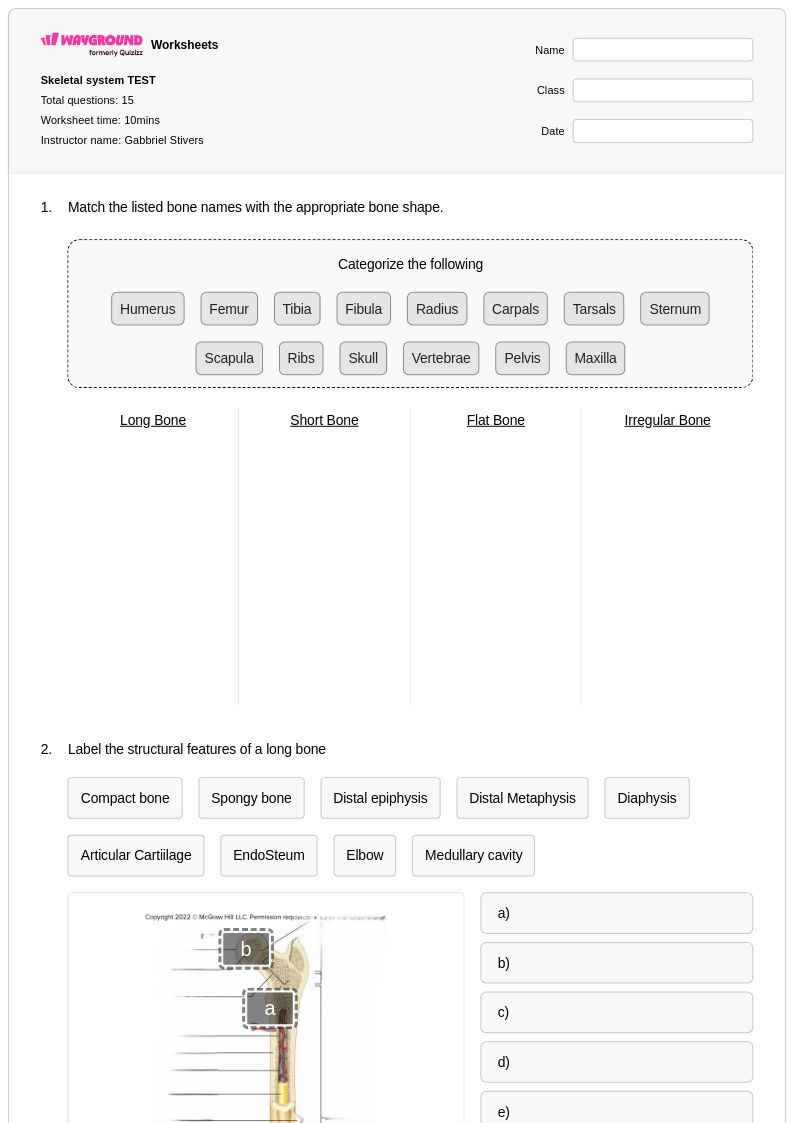
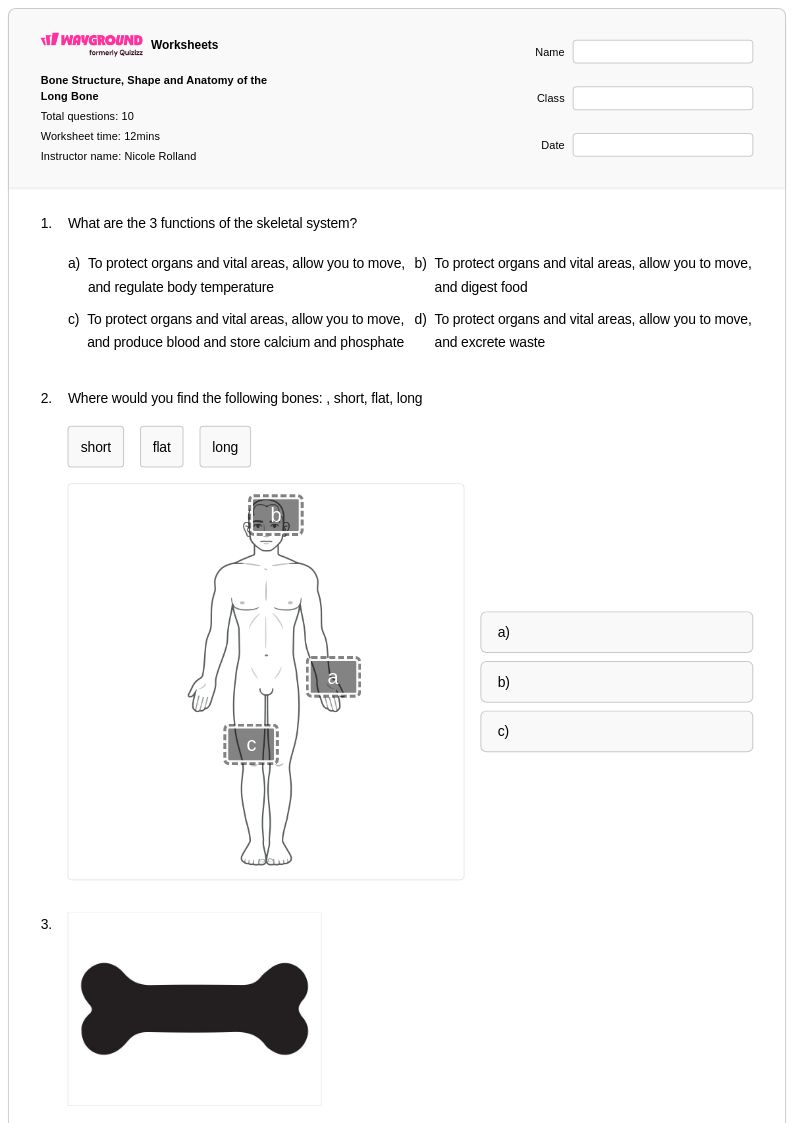
Start by distinguishing the four main bone types (long, short, flat, and irregular) and connecting each type to its function in the body, such as how long bones support movement and flat bones protect vital organs. Labeling diagrams of bone anatomy, including compact bone, spongy bone, periosteum, and marrow cavities, helps students build accurate mental models before moving into function-based analysis. Pairing structural diagrams with real-world examples, such as the femur for weight-bearing or the skull for protection, reinforces why bone shape is tied directly to its role in the musculoskeletal system.
What exercises help students practice identifying bones in the skeletal system?
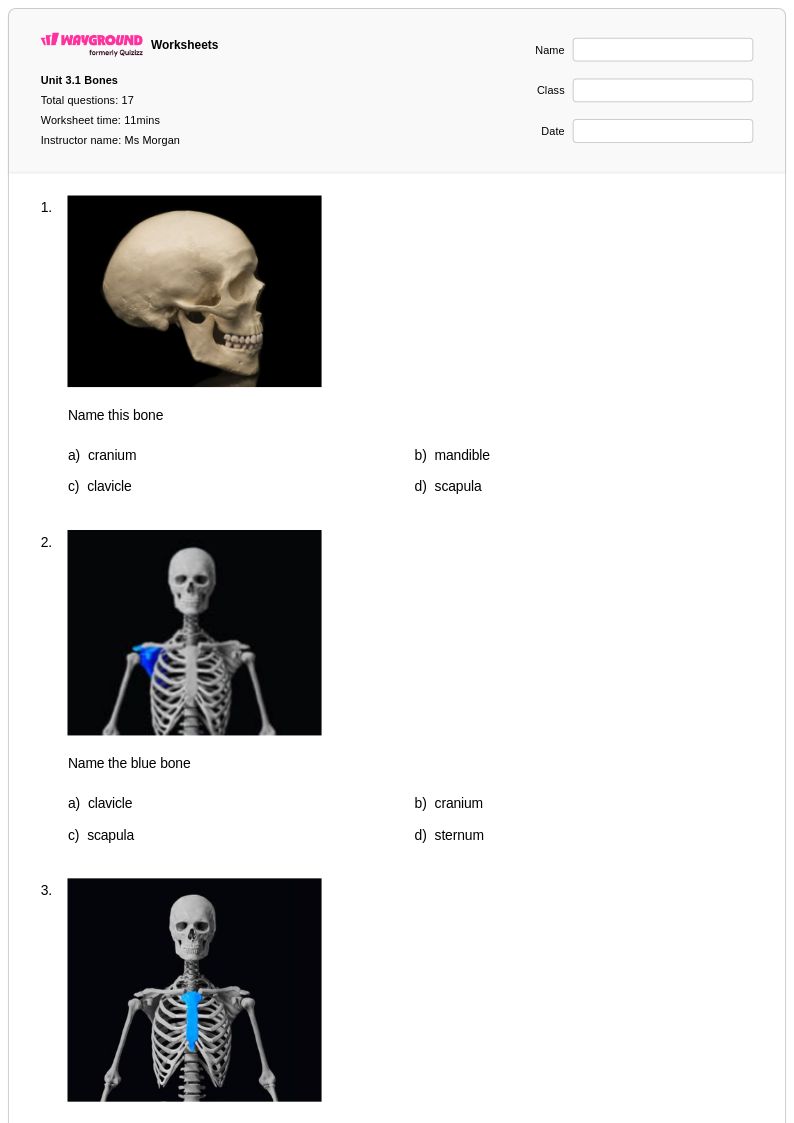
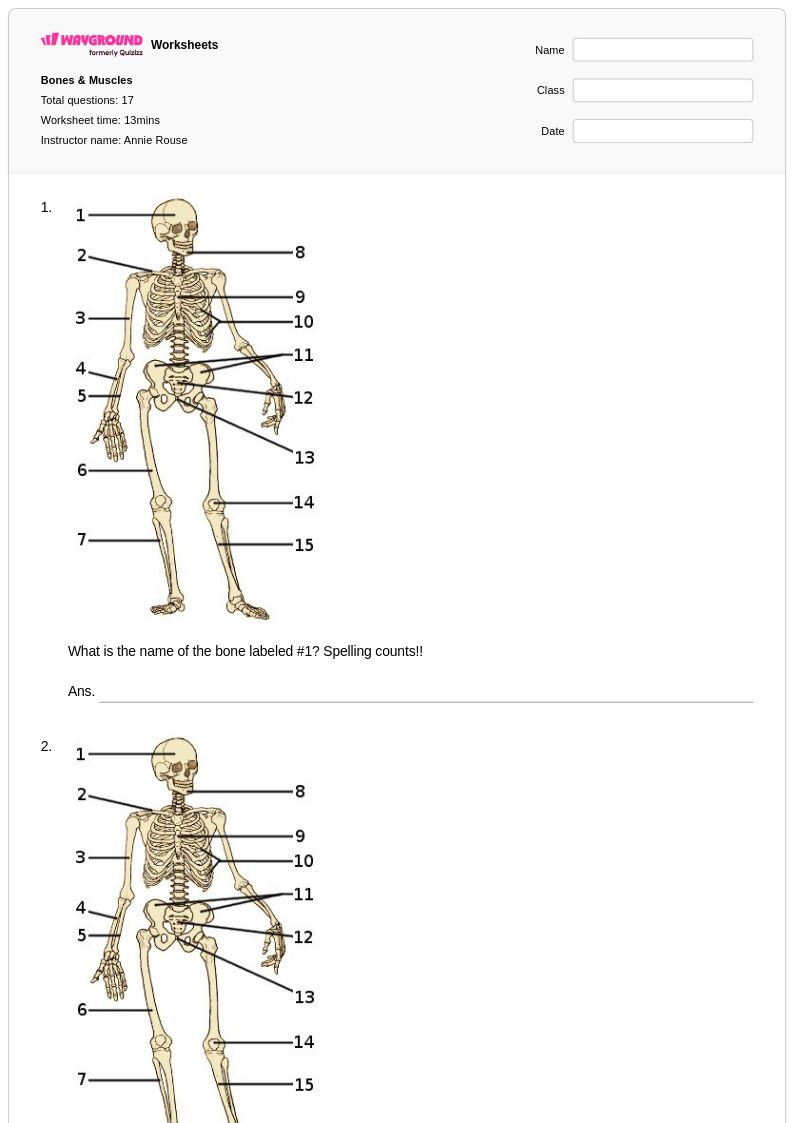
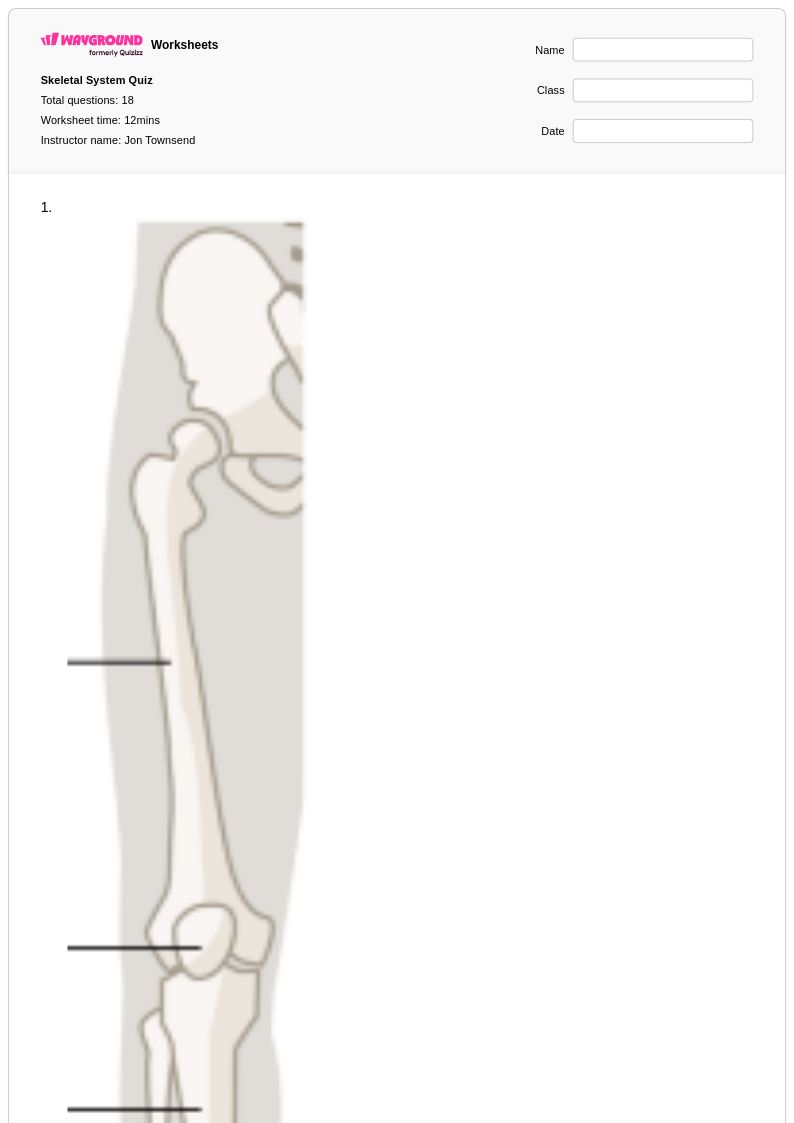
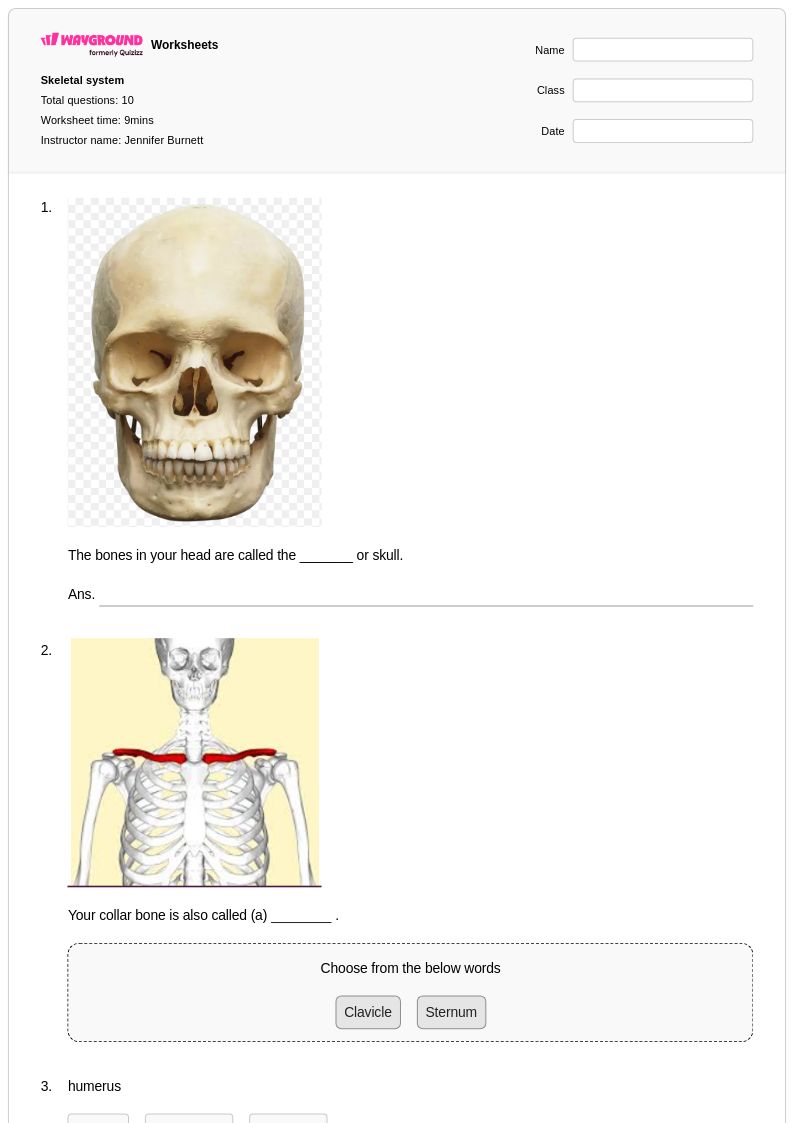
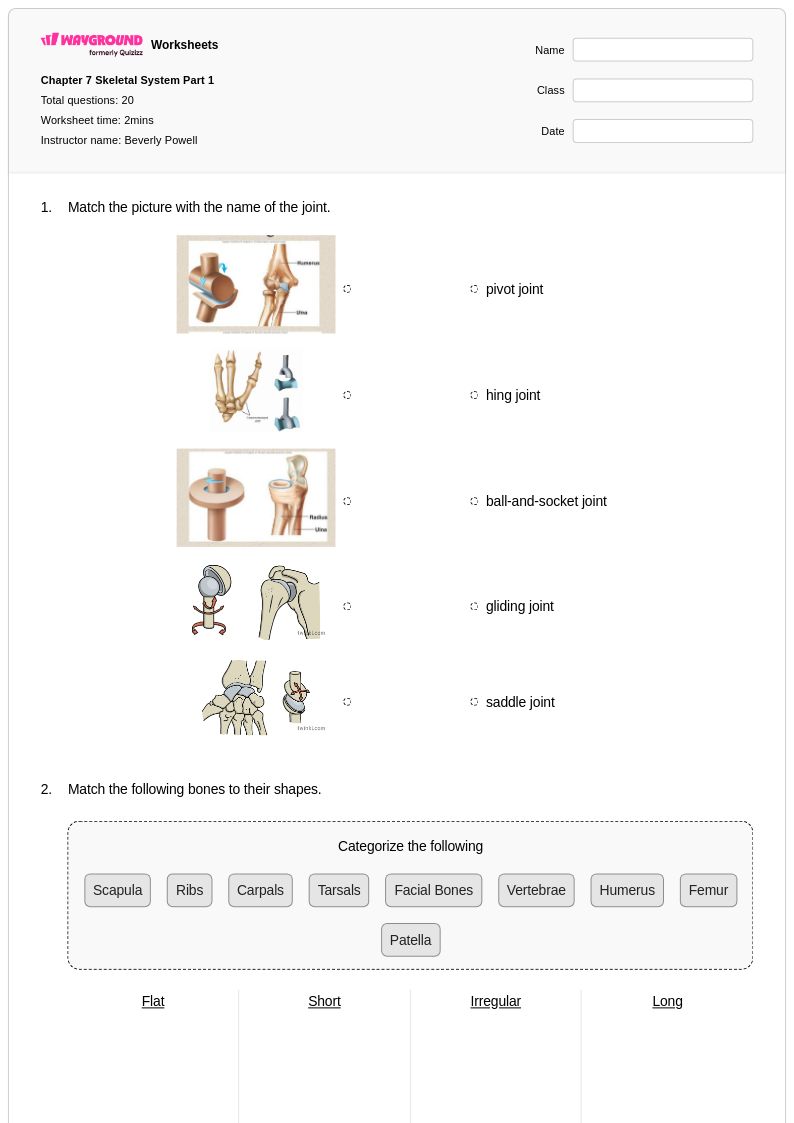
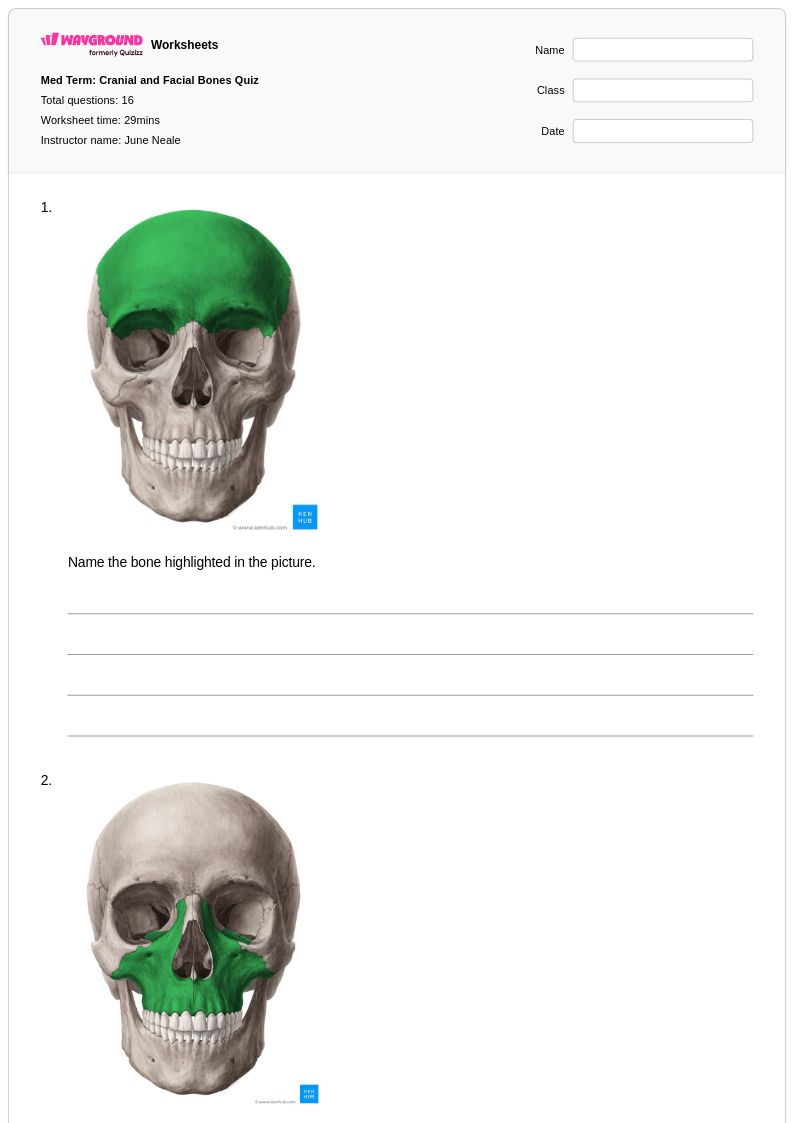
Labeling exercises on full skeletal diagrams are the most effective way to build bone identification fluency, requiring students to name and locate major bones such as the clavicle, sternum, vertebrae, tibia, and femur. Matching activities that pair bone names with their anatomical regions or functions extend this practice beyond simple recall. Repeated low-stakes practice with varied diagram orientations, such as anterior versus posterior views, helps students retain spatial knowledge of the skeletal system.
What misconceptions do students commonly have about bones?
A frequent misconception is that bones are inert, non-living structures, when in fact they are dynamic living tissue that constantly undergoes remodeling through the activity of osteoblasts and osteoclasts. Students also often confuse cartilage with bone, not recognizing that cartilage lacks the mineralized matrix that gives bone its rigidity. Another common error is assuming all bones are solid, overlooking the spongy (cancellous) bone tissue present in many bones, particularly at the ends of long bones.
How do I use Wayground's bones worksheets in my classroom?
Wayground's bones worksheets are available as printable PDFs for traditional classroom use and in digital formats for technology-integrated environments, giving teachers flexibility regardless of their classroom setup. Teachers can also host worksheets as interactive quizzes directly on Wayground, which allows for immediate student feedback and easy progress monitoring. Each worksheet includes a complete answer key, reducing prep time and making them practical for independent practice, homework, or guided review sessions.
How can I differentiate bones worksheets for students with different learning needs?
On Wayground, teachers can apply individual accommodations including extended time per question, read-aloud support for students who benefit from audio delivery, and reduced answer choices to lower cognitive load for struggling learners. Font size and display themes can also be adjusted through reading mode to improve accessibility. These settings are saved per student and reapply automatically in future sessions, so differentiation does not require repeated setup.
At what grade level should students learn about the skeletal system and bone anatomy?
Basic bone identification and skeletal system functions are typically introduced in upper elementary grades (4–6) as part of life science units on the human body. More detailed instruction on bone composition, growth processes such as ossification, and the role of bones in the musculoskeletal system is generally covered in middle and high school biology or anatomy and physiology courses. The complexity of the worksheet selected should match whether students are building initial familiarity or developing deeper anatomical and physiological understanding.