Free Printable Seed Germination Worksheets for Kindergarten
Discover free kindergarten seed germination worksheets and printables that help young learners explore how plants grow from seeds through engaging practice problems with complete answer keys.
Explore printable Seed Germination worksheets for Kindergarten
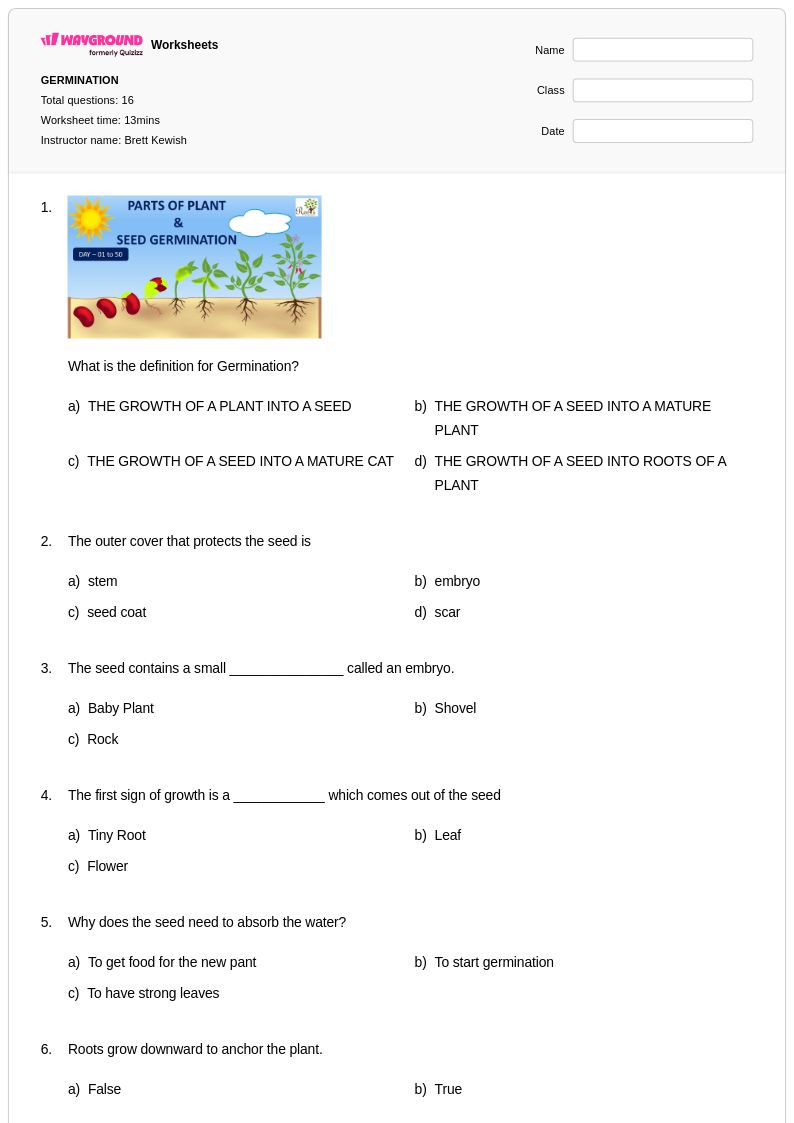
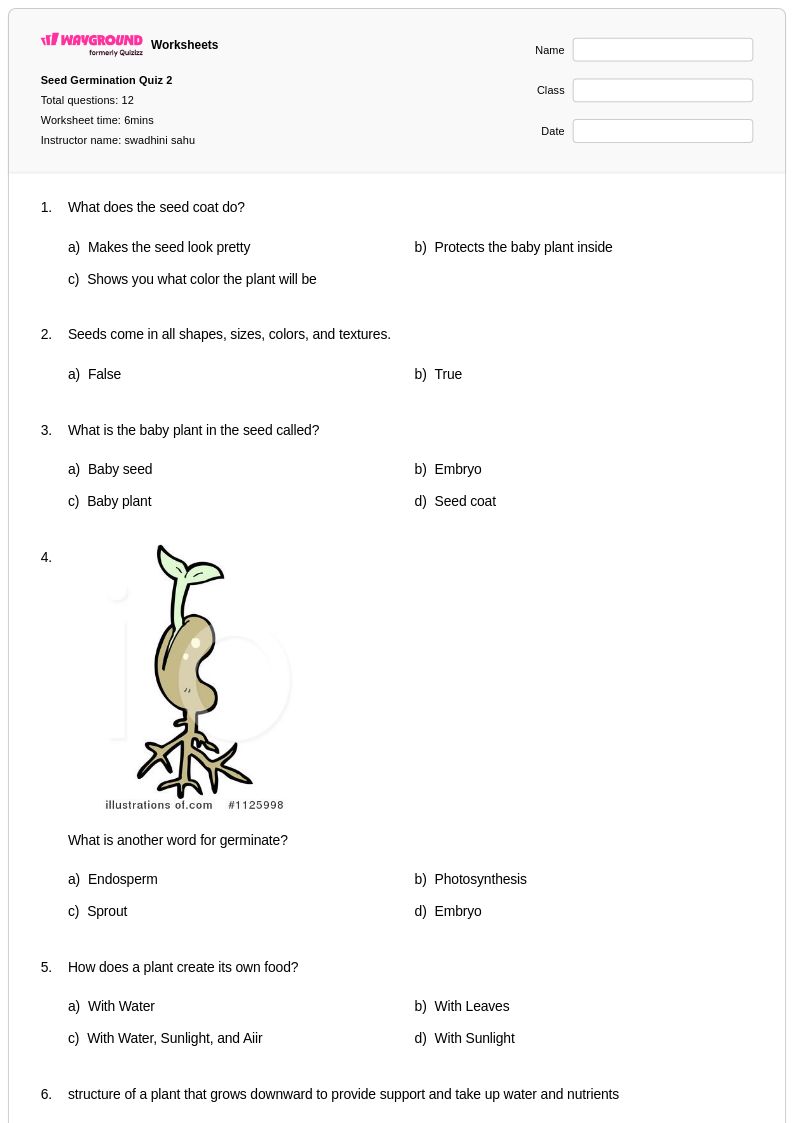
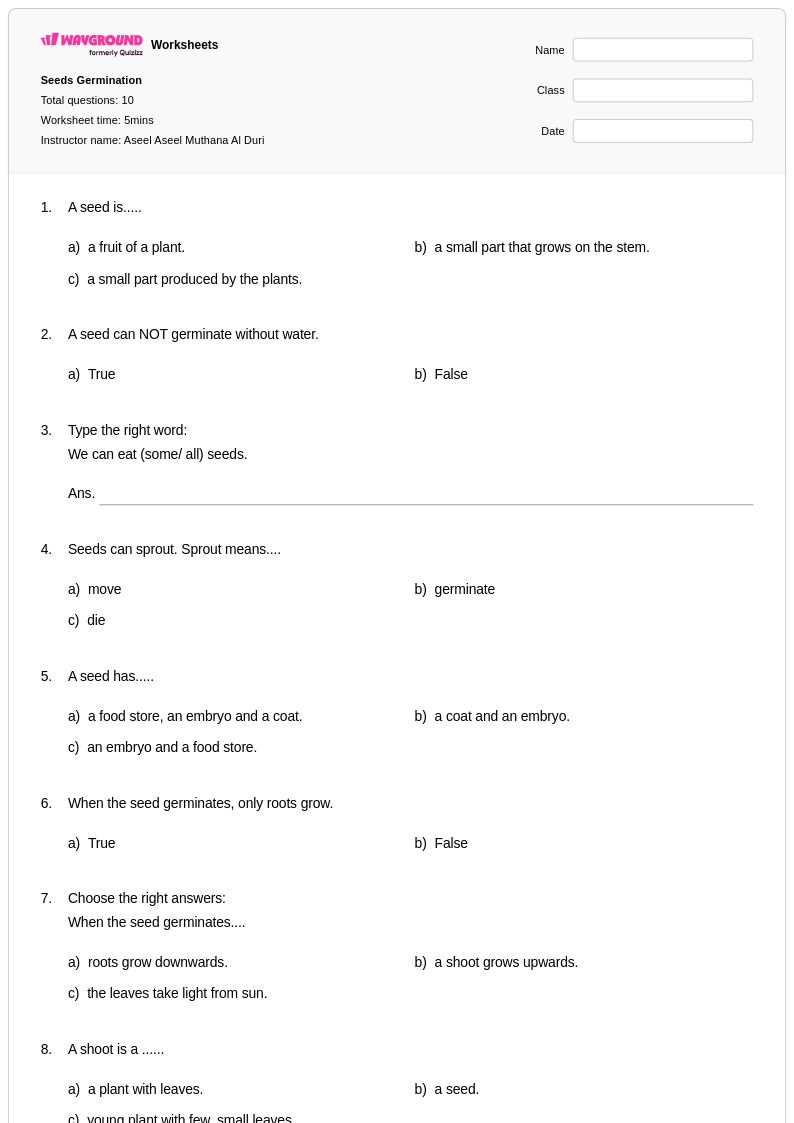
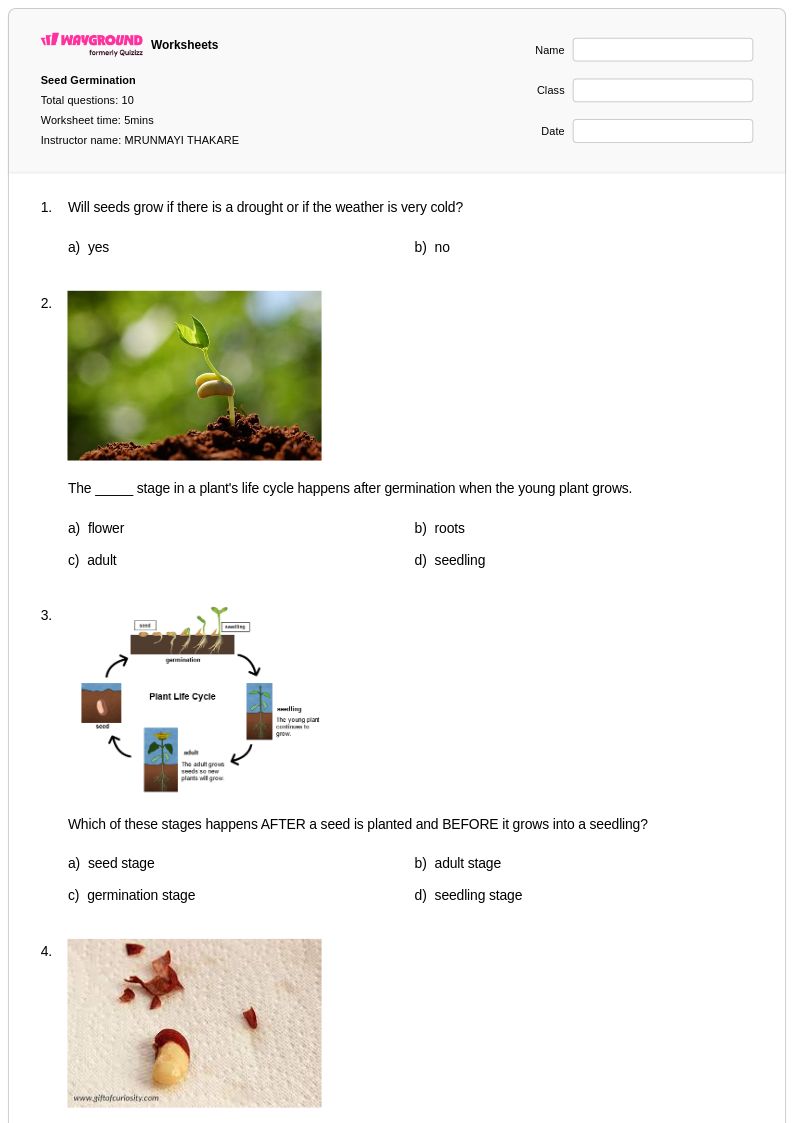
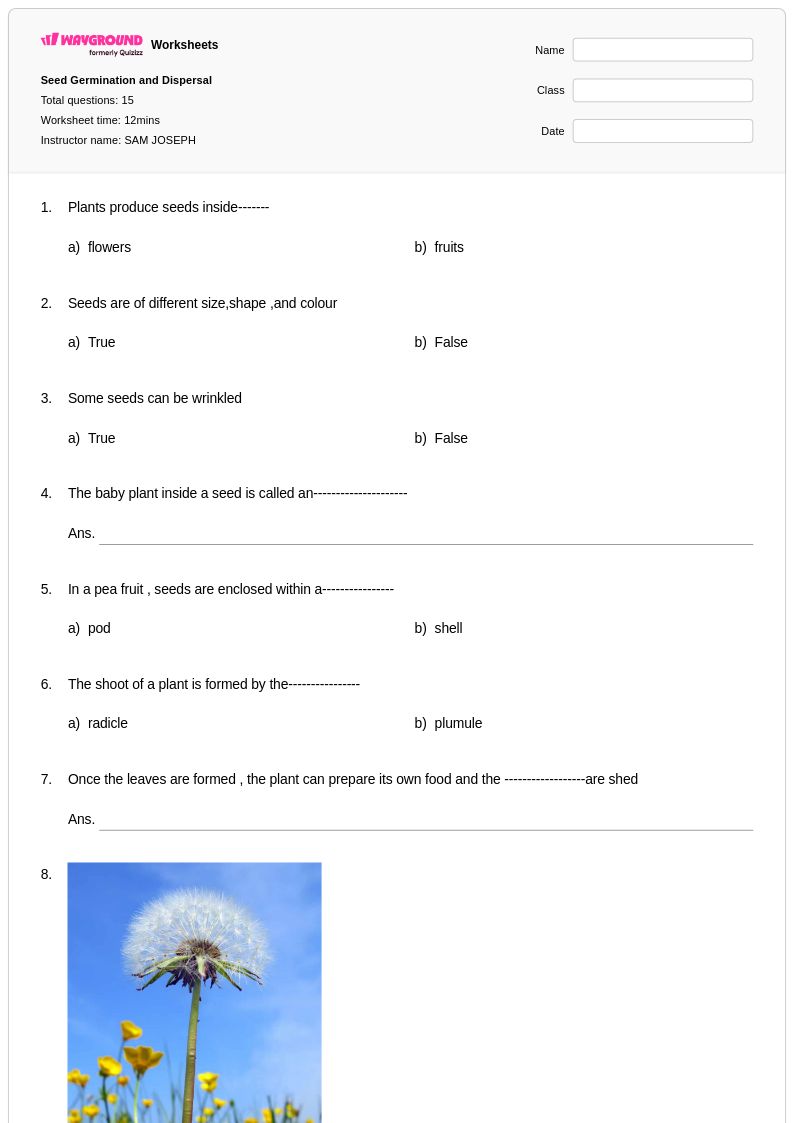
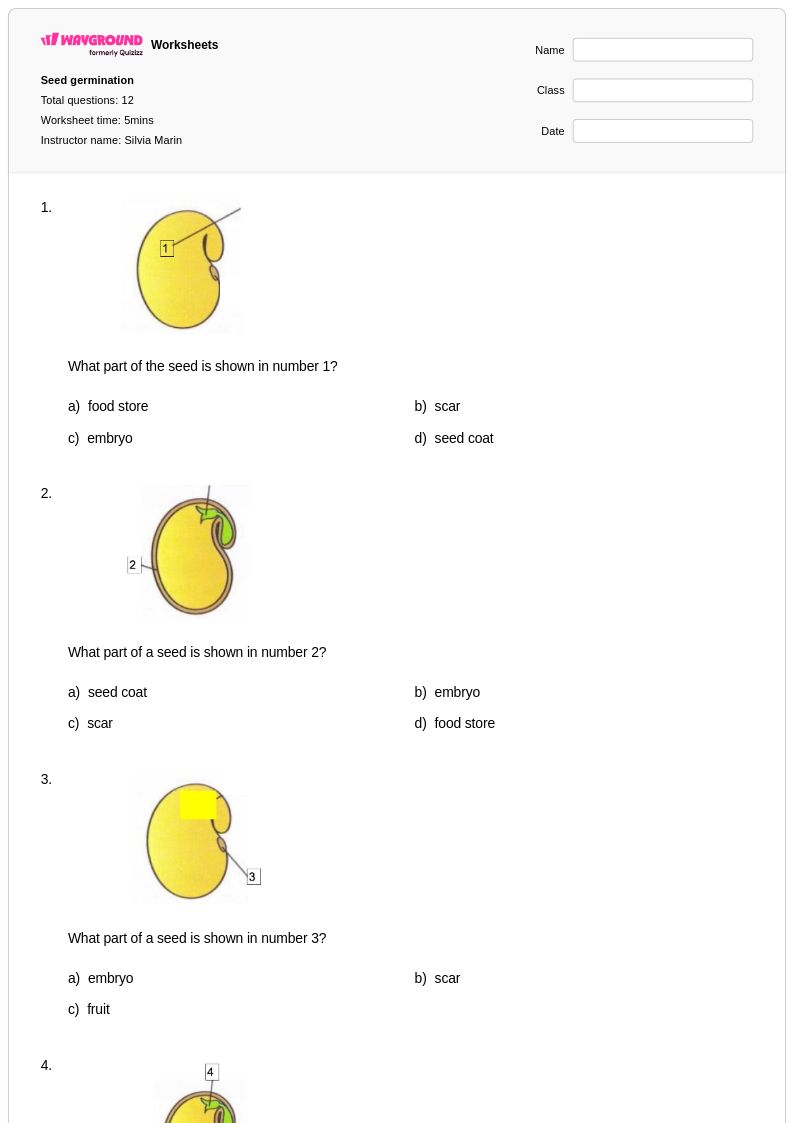
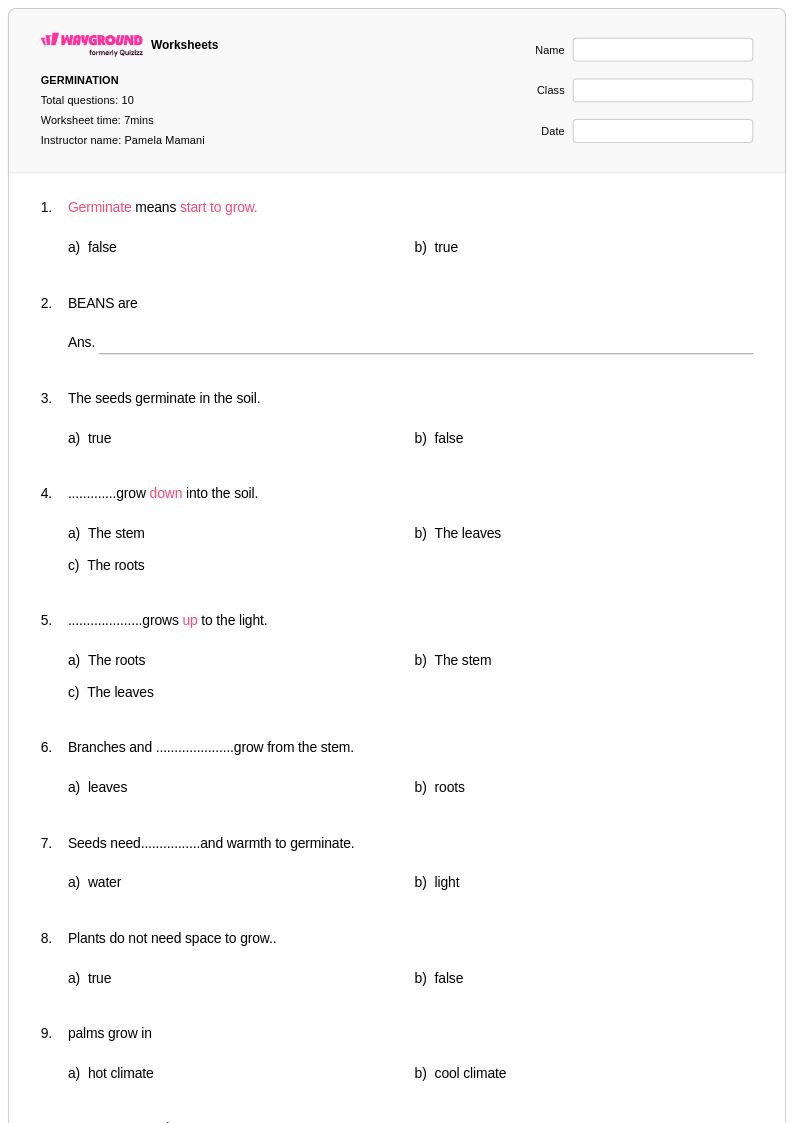
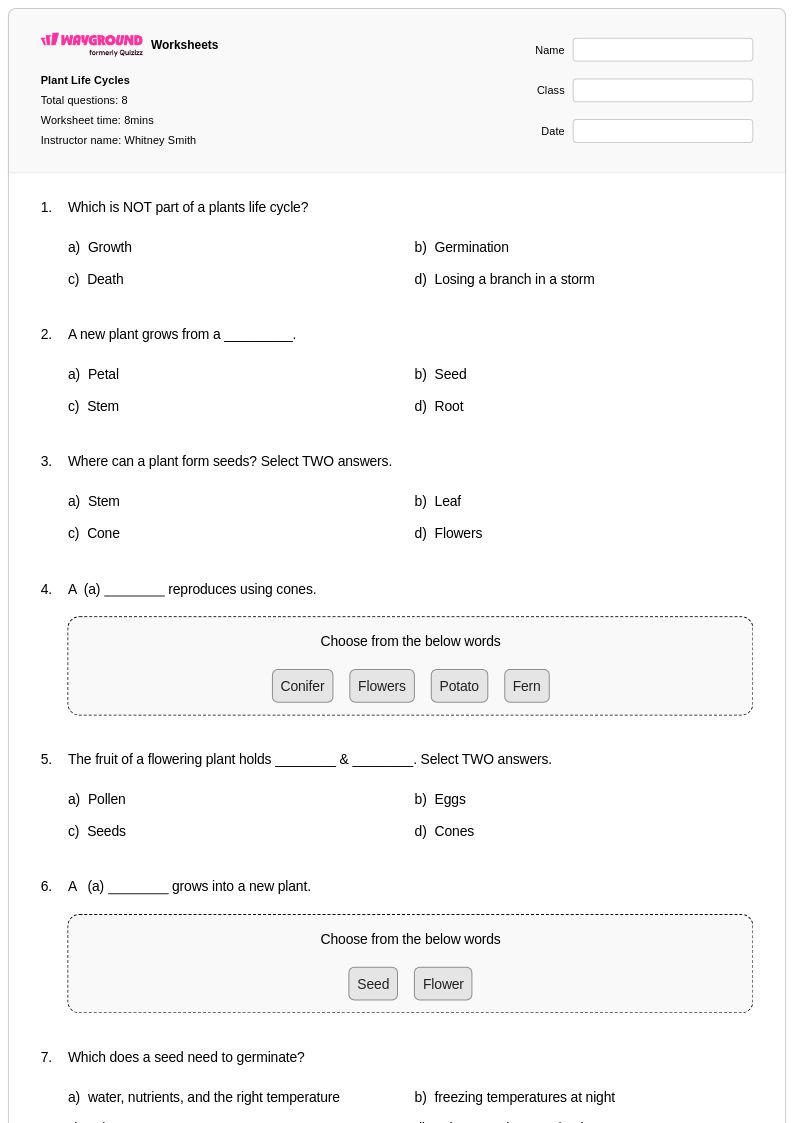
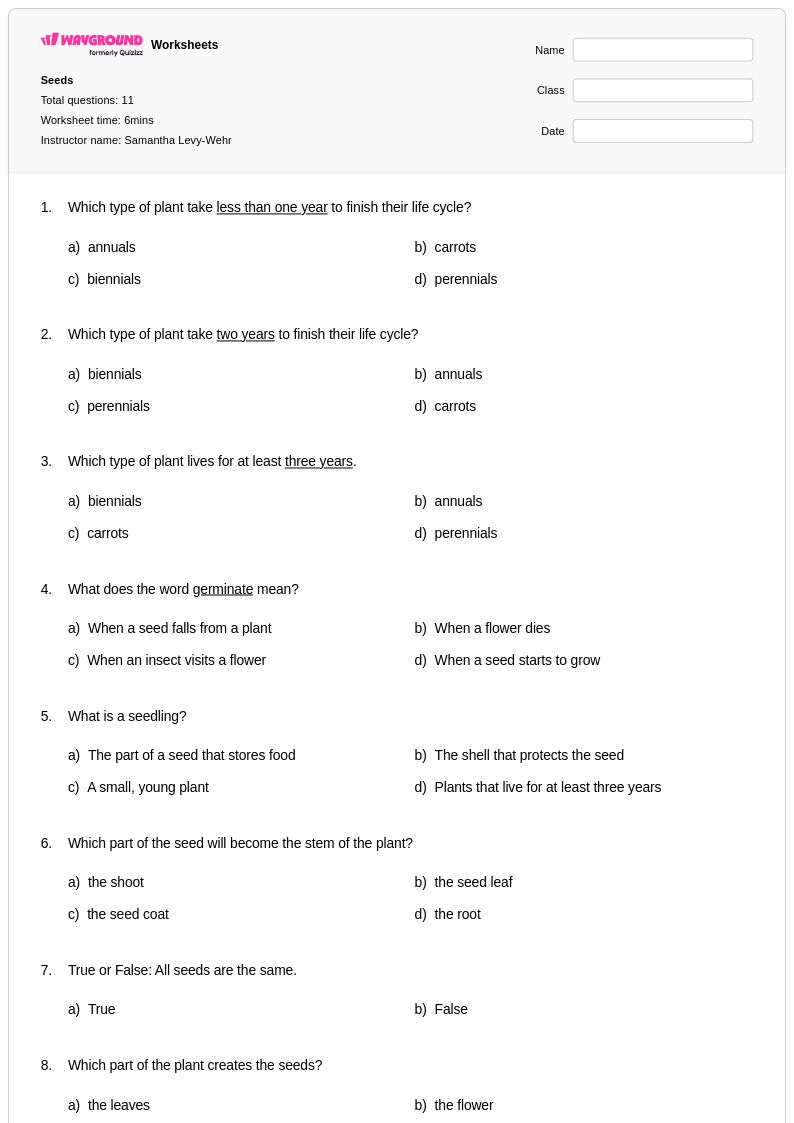
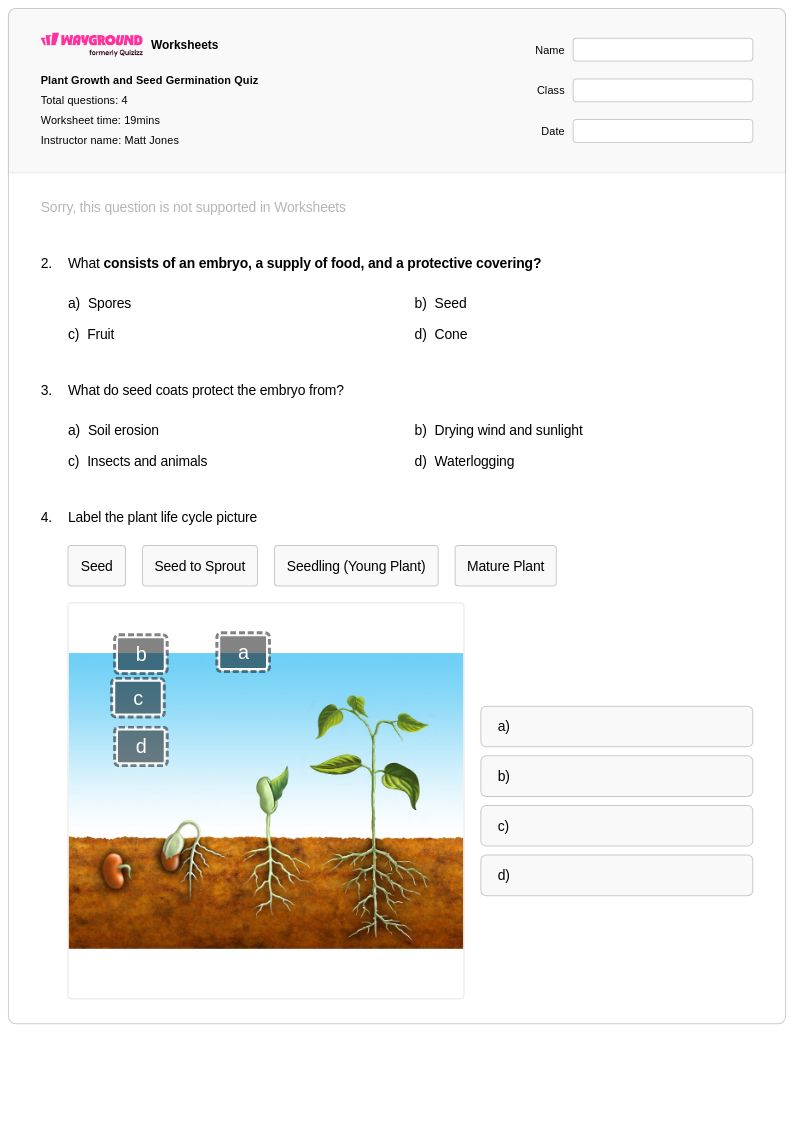
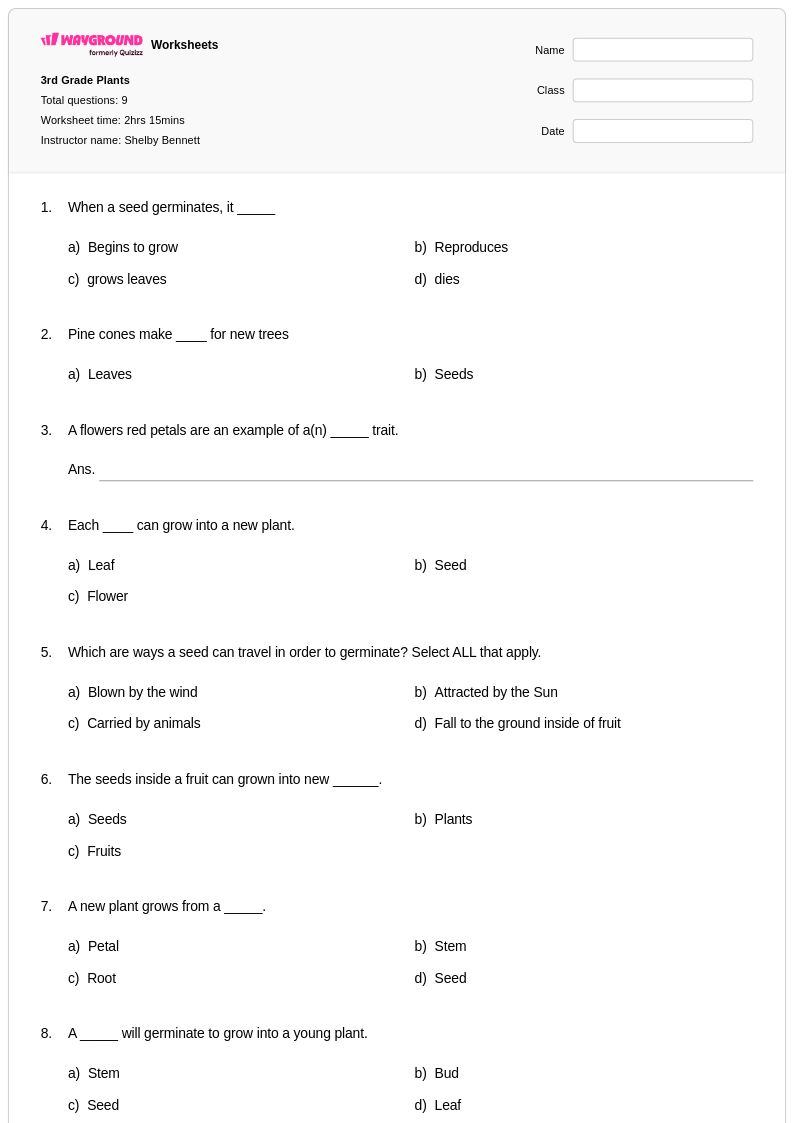
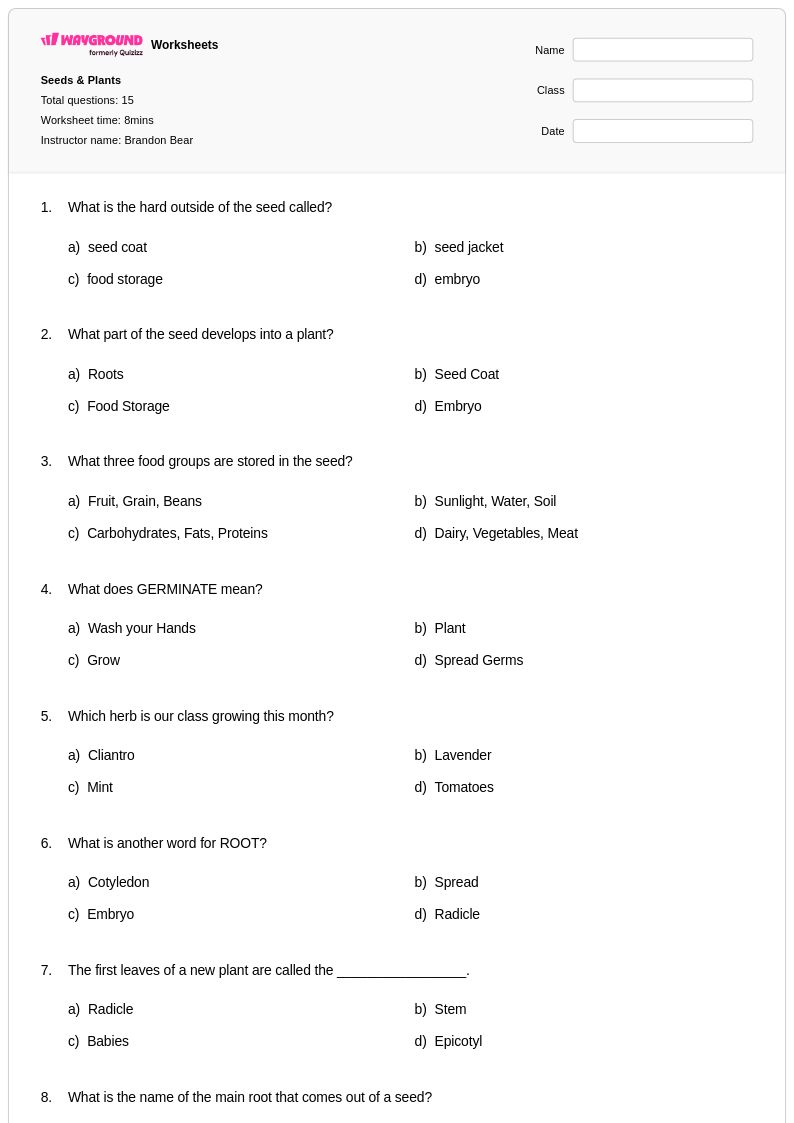
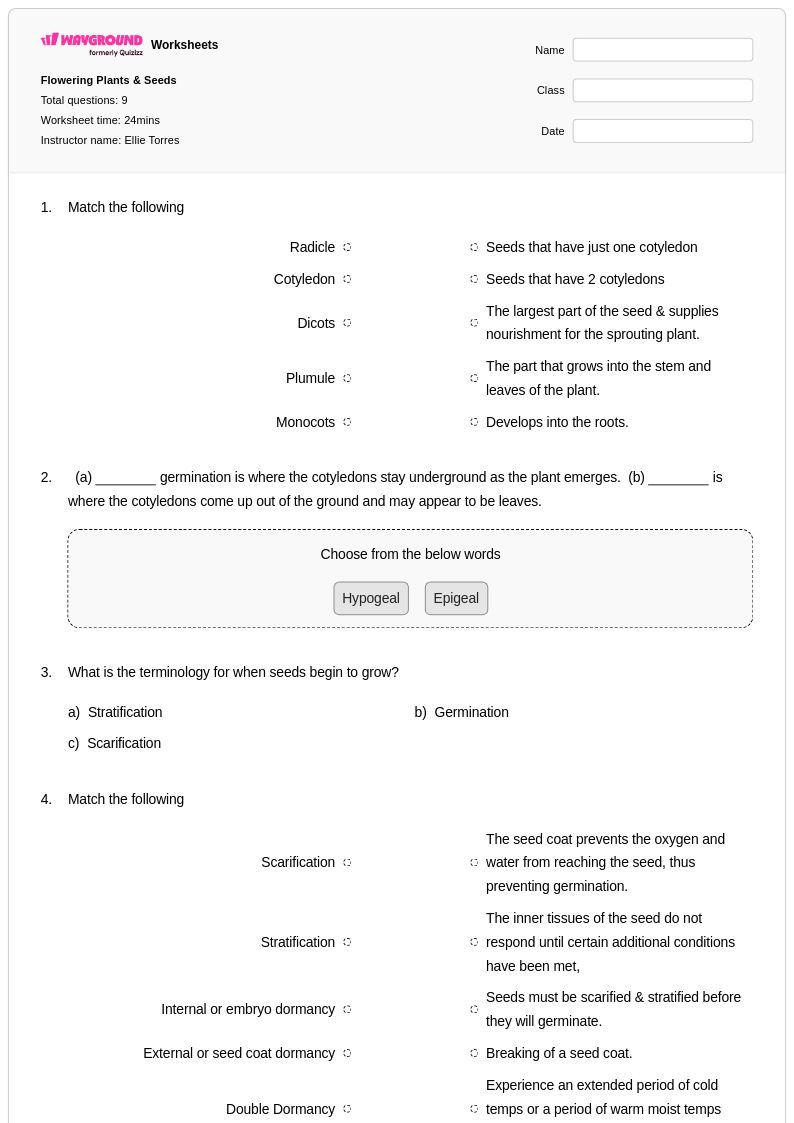
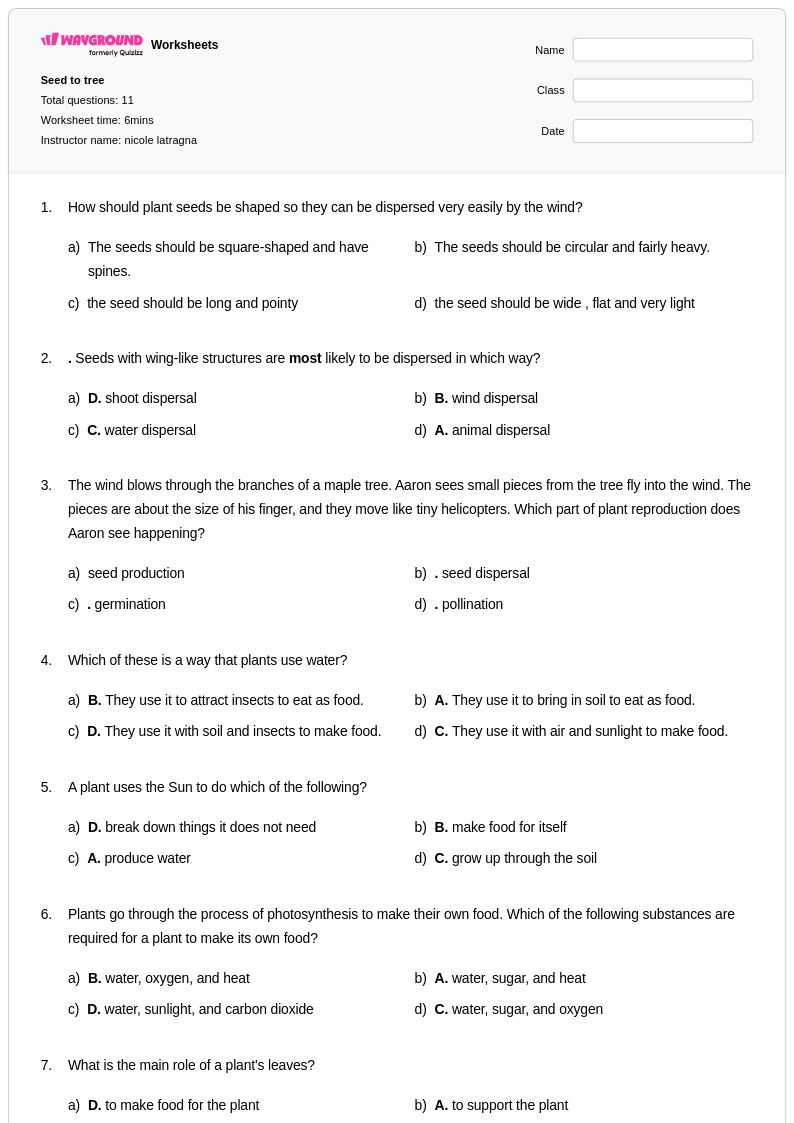
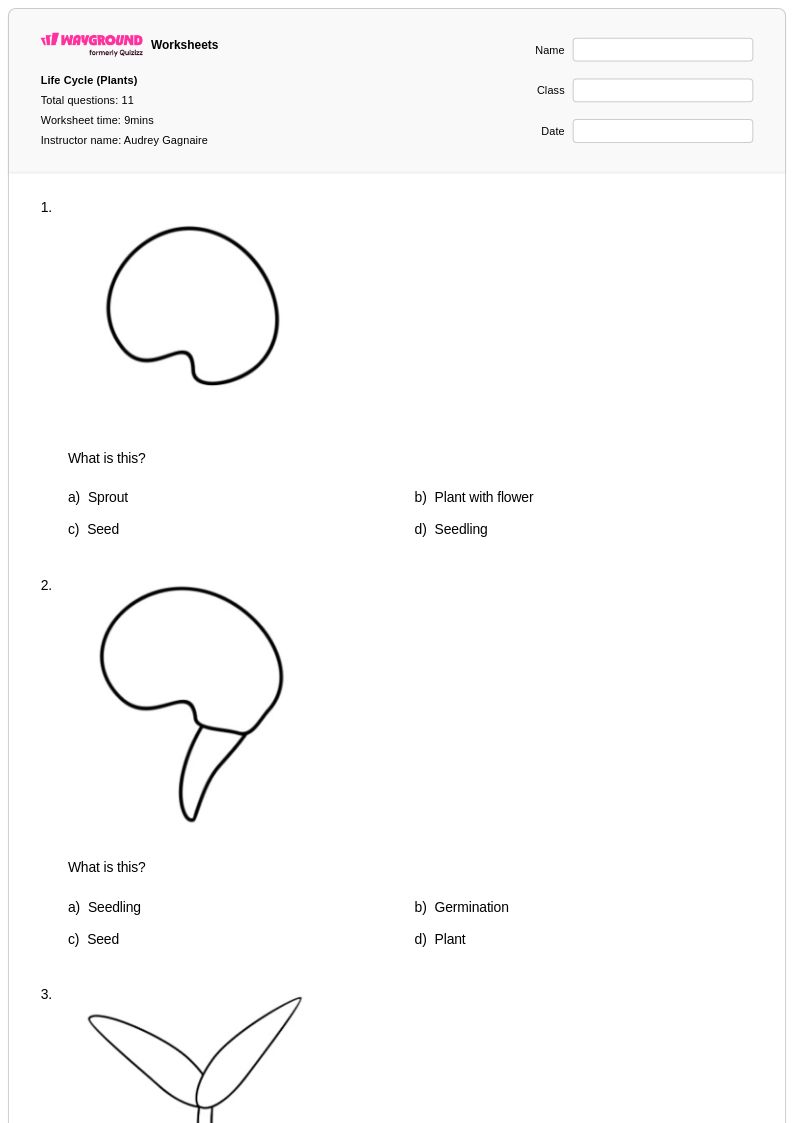
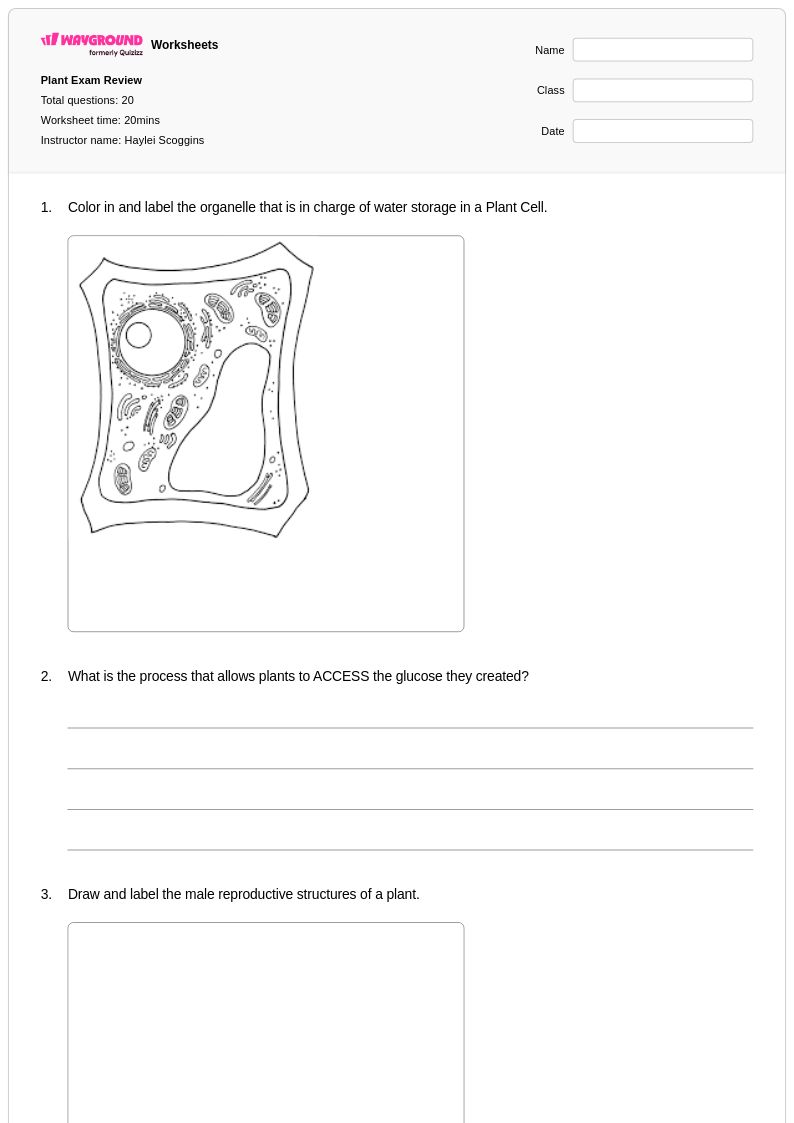
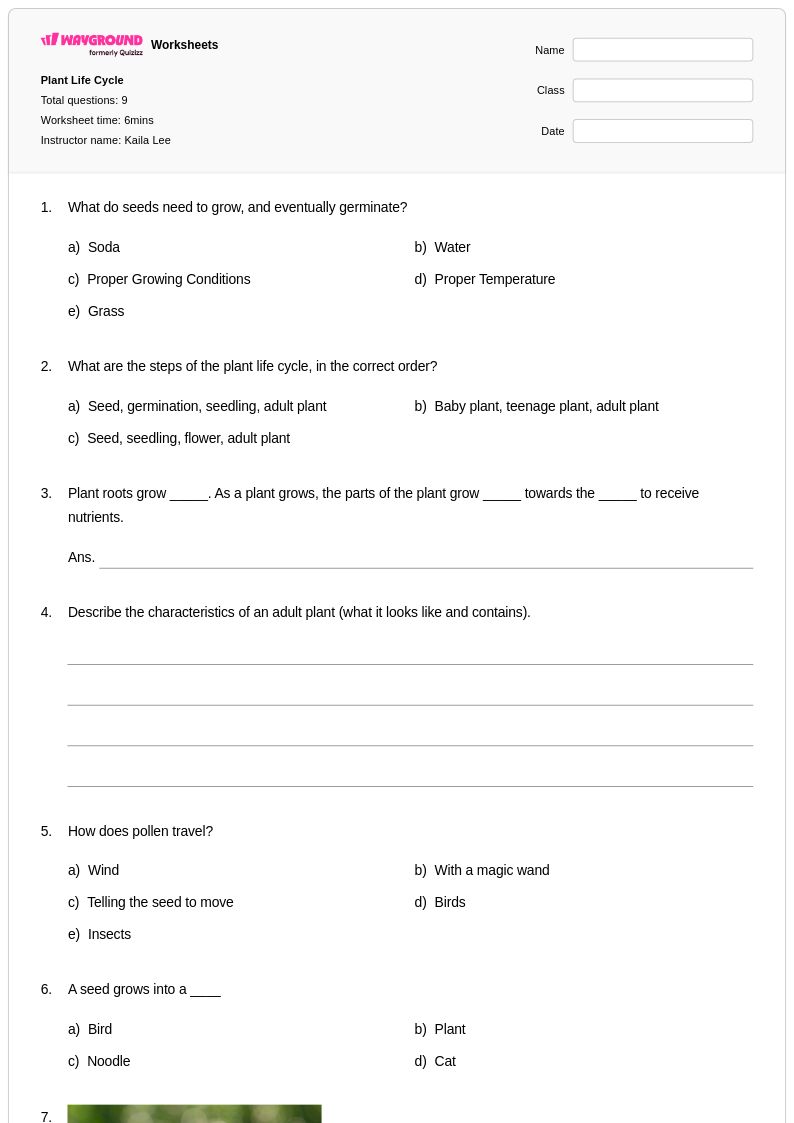
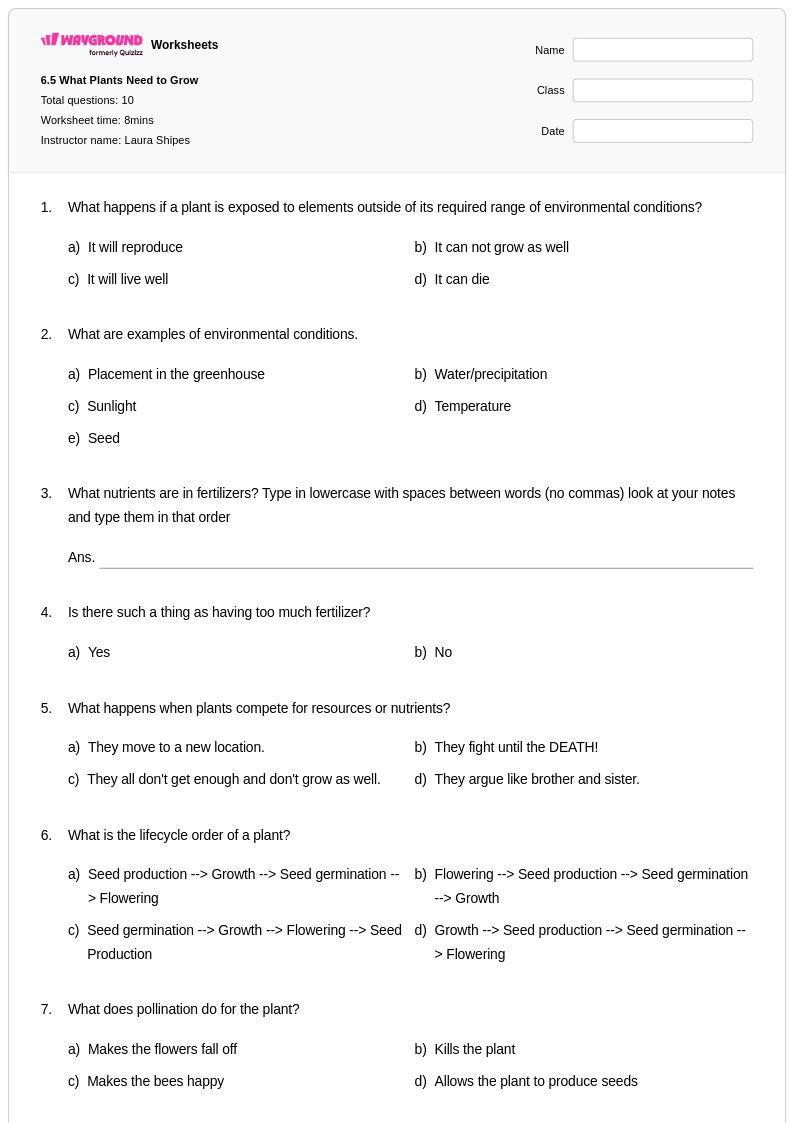
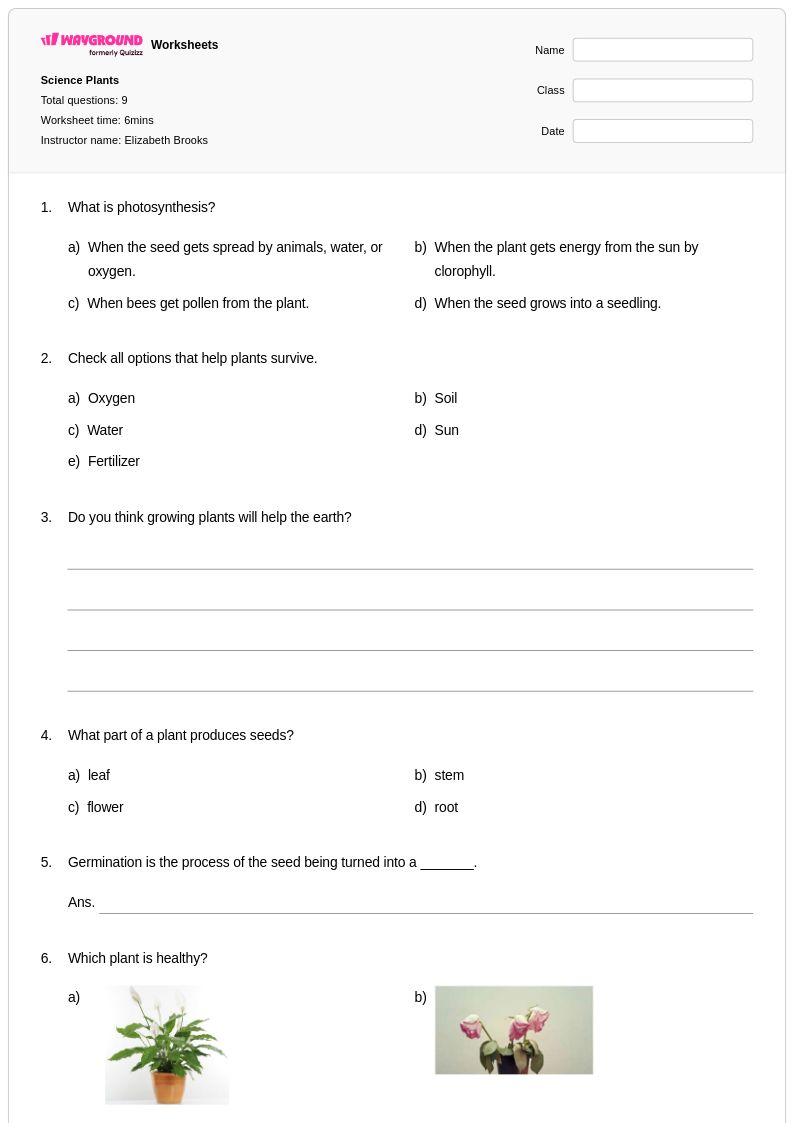
Seed germination worksheets for kindergarten students through Wayground provide an engaging introduction to one of biology's most fundamental processes. These carefully designed printables help young learners observe and understand how seeds transform into plants, building essential scientific observation skills and vocabulary development. The worksheet collection includes hands-on activities where students can track seed growth over time, identify different parts of sprouting seeds, and compare various types of seeds and their germination requirements. Each resource comes with a comprehensive answer key to support both independent practice and guided instruction, while free pdf formats ensure easy classroom distribution and home learning support.
Wayground's extensive library draws from millions of teacher-created resources specifically focused on kindergarten seed germination concepts, offering educators powerful search and filtering tools to locate materials that align with early childhood science standards. The platform's differentiation capabilities allow teachers to customize worksheets based on individual student needs, whether providing additional visual supports for emerging readers or extending activities for advanced learners. These versatile resources are available in both printable and digital formats, enabling seamless integration into various instructional settings while supporting lesson planning, skill remediation, and enrichment activities that make abstract biological concepts accessible to kindergarten students through concrete, hands-on experiences.
FAQs
How do I teach seed germination to my students?
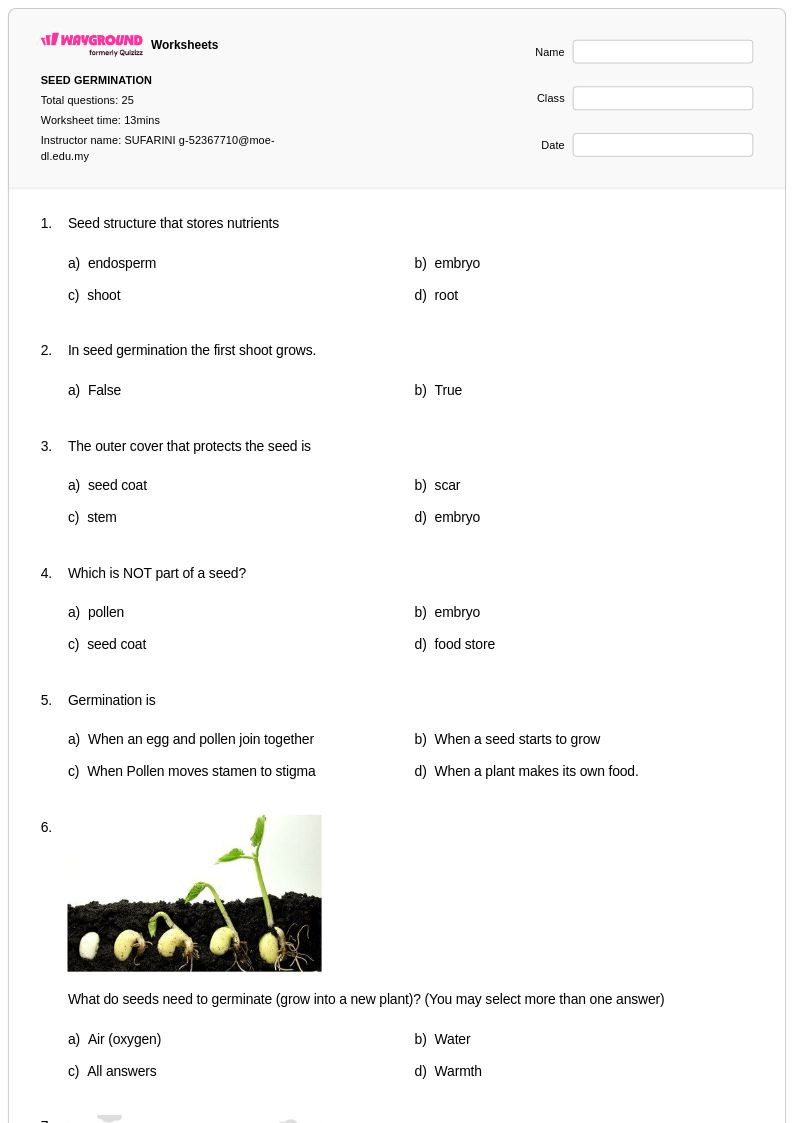
Start by grounding students in the three essential conditions for germination: adequate water, appropriate temperature, and oxygen. Walk through each stage sequentially, from imbibition (water uptake) and enzyme activation to radicle emergence and cotyledon development, using labeled diagrams to make abstract processes visible. Pairing direct instruction with a simple bean germination observation activity gives students a concrete reference point when working through more complex concepts like dormancy and environmental triggers.
What exercises help students practice seed germination concepts?
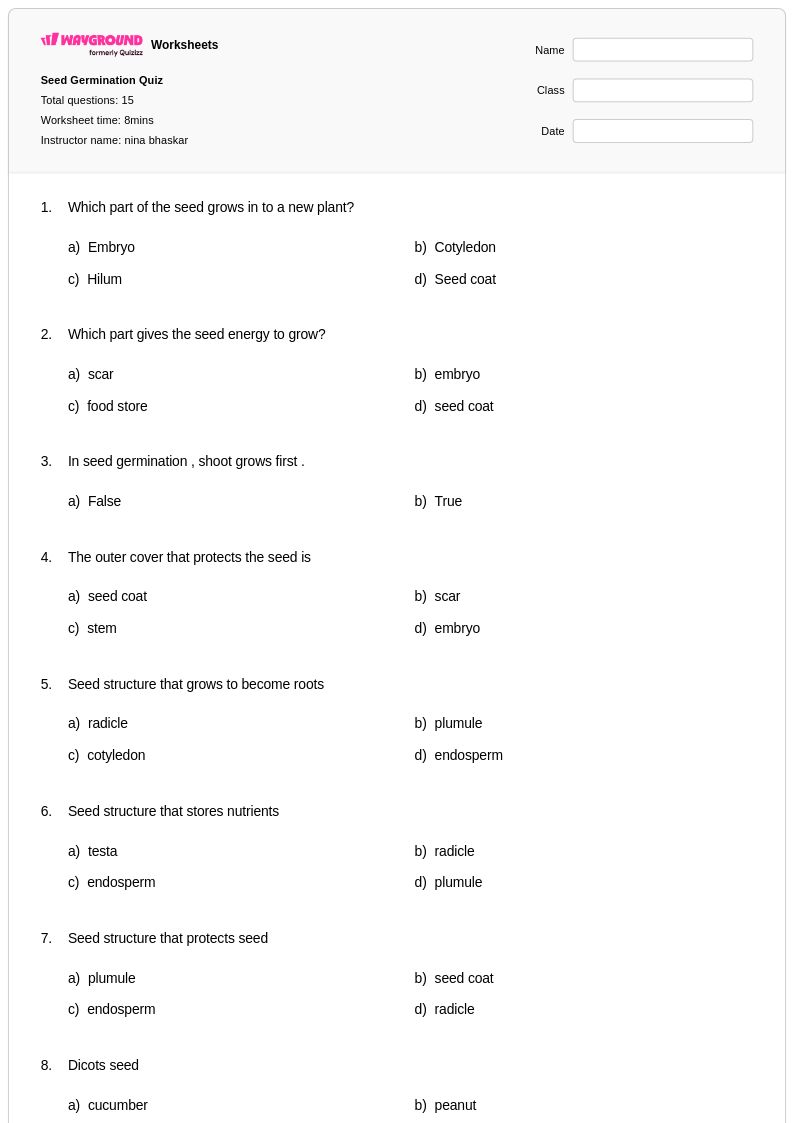
Effective practice activities include sequencing exercises where students order the stages of germination, data analysis tasks that ask students to interpret germination rate graphs under varying temperature or moisture conditions, and labeling diagrams of a germinating seed. Fill-in-the-blank and short-answer questions targeting vocabulary such as imbibition, radicle, hypocotyl, and cotyledon help reinforce precise scientific language, which is often a weak point for students at this stage.
What mistakes do students commonly make when learning about seed germination?
A frequent misconception is that seeds need light to germinate — most seeds require darkness or are light-neutral at the germination stage, unlike the seedling growth phase that follows. Students also commonly confuse germination with plant growth broadly, failing to distinguish the germination process itself from subsequent seedling development. Another common error is conflating the roles of the cotyledon and the radicle, misidentifying which structure emerges first and which provides initial nutrient storage.
How do I differentiate seed germination instruction for students with different learning needs?
For students who struggle with dense scientific text, reduce cognitive load by breaking multi-step germination processes into single-concept questions and using visual diagrams alongside written content. On Wayground, teachers can enable the Read Aloud accommodation so questions are read to students who need audio support, and Reduced Answer Choices can be applied to individual students to lower the difficulty of multiple-choice questions without altering the content for the rest of the class. Extended time settings can also be assigned per student, ensuring learners who need additional processing time are supported without disrupting the broader class workflow.
How can I use Wayground's seed germination worksheets in my classroom?
Wayground's seed germination worksheets are available as printable PDFs for traditional classroom use and in digital formats for technology-integrated or remote learning environments. Teachers can assign them as in-class practice, homework, or quiz-style assessments by hosting them directly on Wayground's platform. The included answer keys make grading straightforward, and the digital format allows teachers to monitor student responses in real time, making these materials equally effective for formative checks and summative review.
What environmental factors should students understand when studying seed germination?
Students should be able to explain the role of four key environmental factors: temperature (which affects enzyme activity and metabolic rate), moisture (required for imbibition and enzyme activation), oxygen (needed for aerobic respiration to fuel cell growth), and in some species, light or darkness as a dormancy-breaking trigger. Understanding how each factor independently and collectively influences germination rates is essential for interpreting experimental data and answering application-level questions on assessments.