Free Printable Microscope Worksheets for Kindergarten
Explore free kindergarten microscope worksheets and printables that help young students discover the fascinating world of tiny objects through engaging practice problems and activities with complete answer keys.
Explore printable Microscope worksheets for Kindergarten
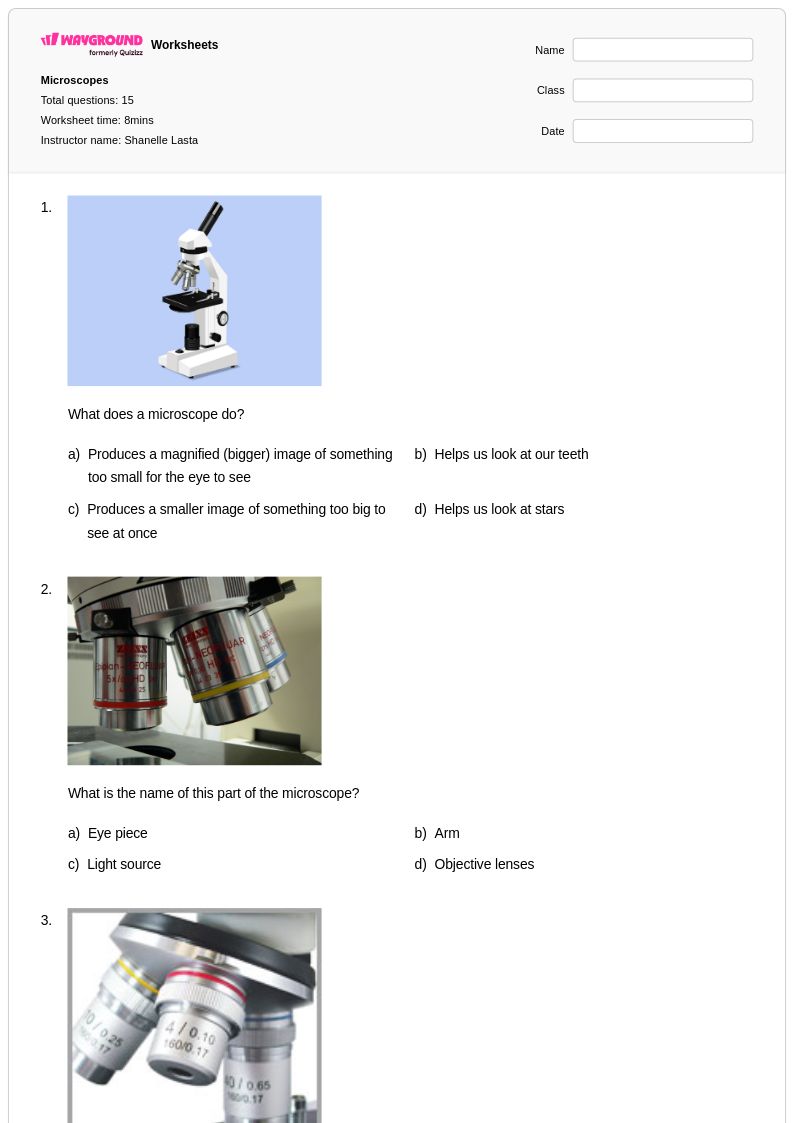
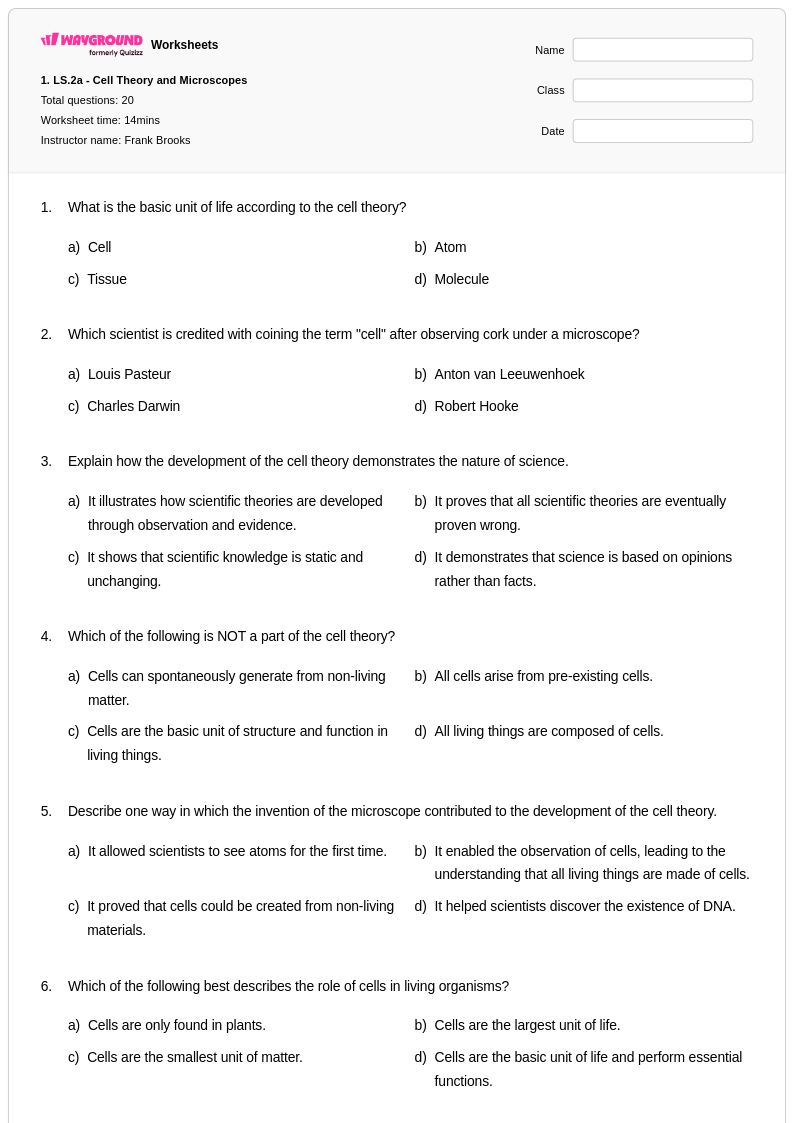
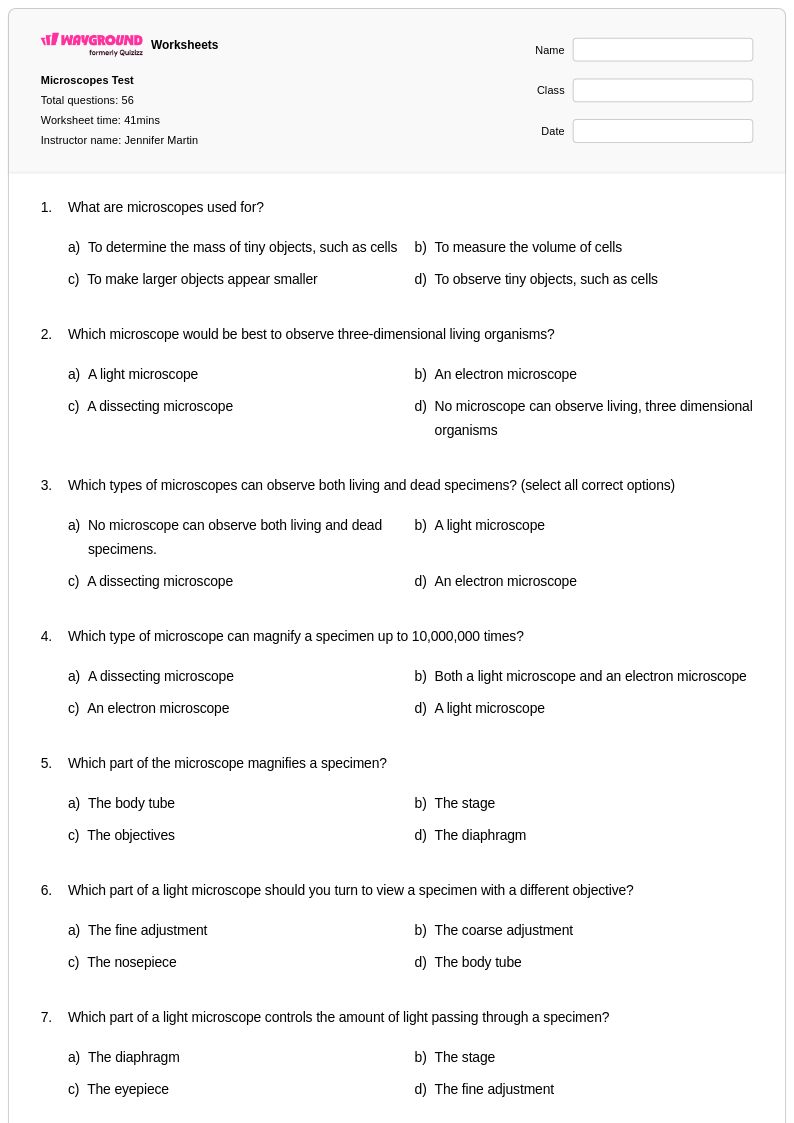
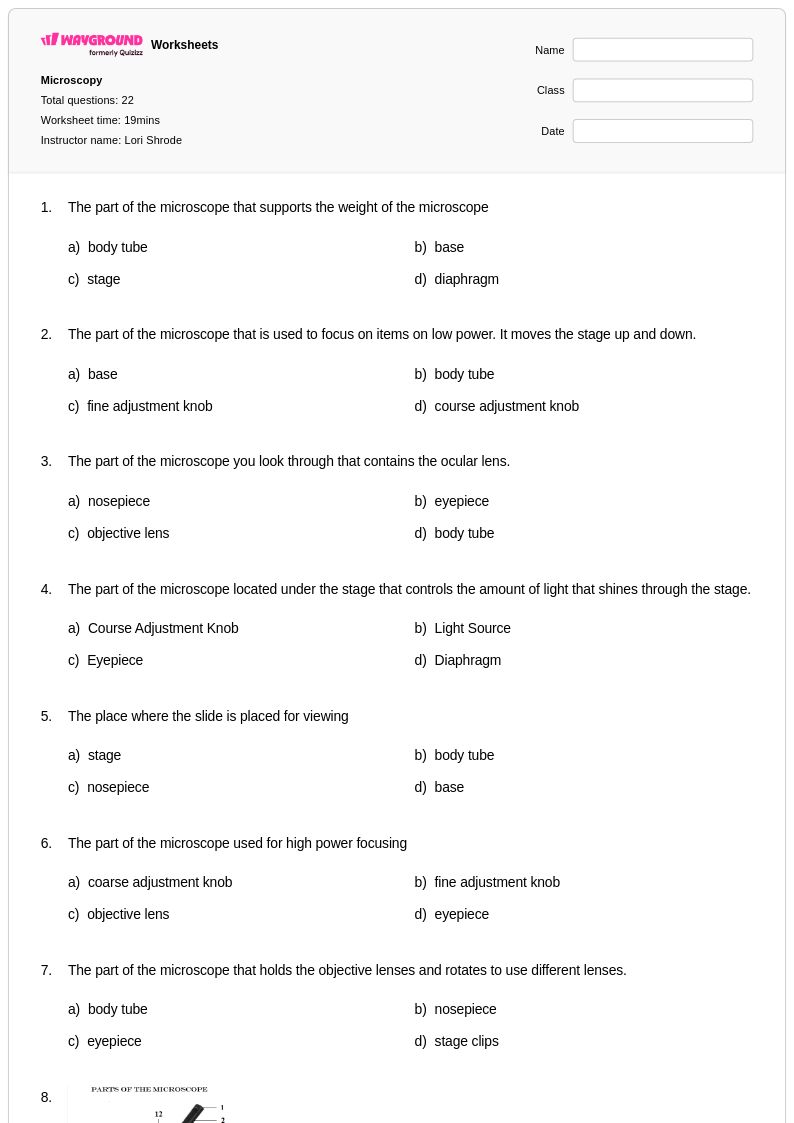
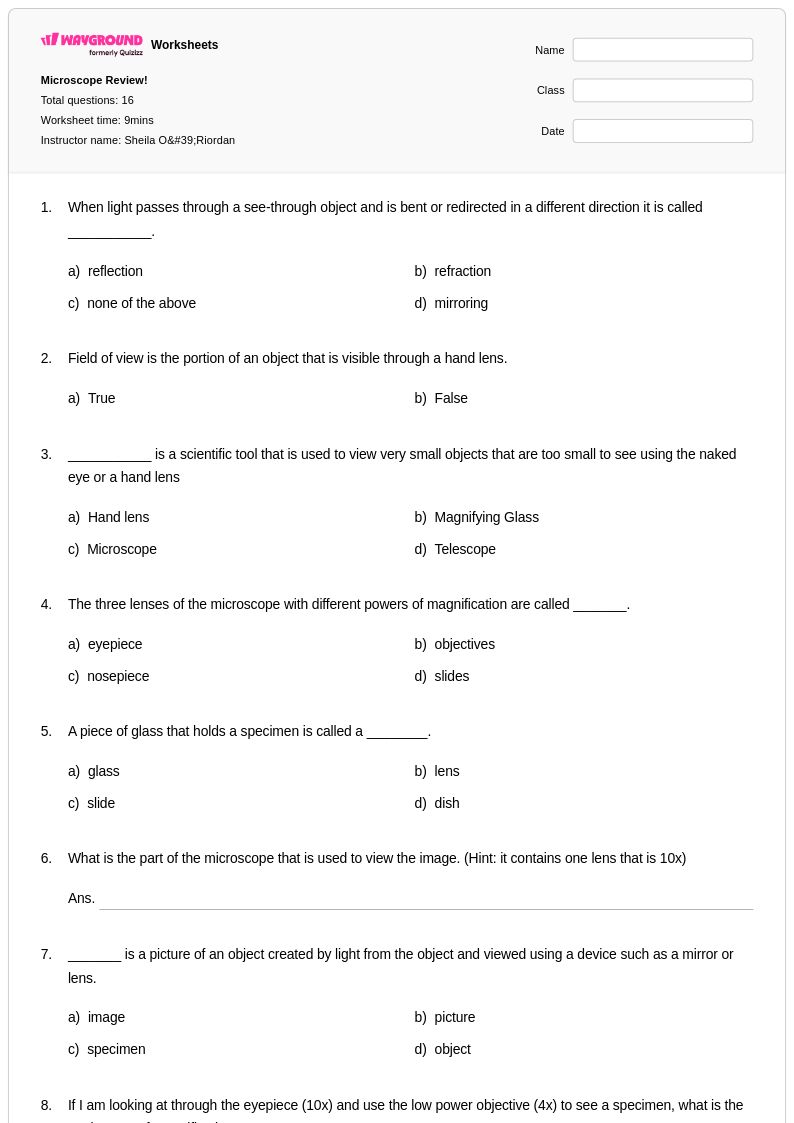
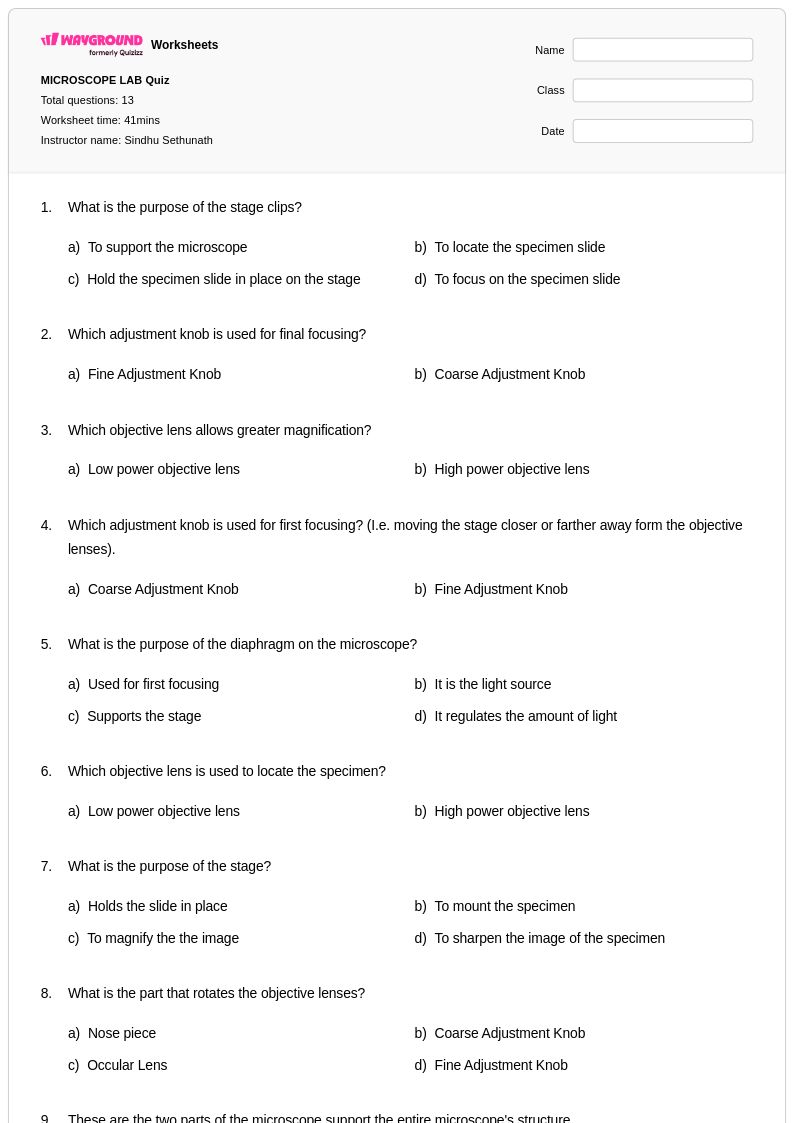
Microscope worksheets for kindergarten students available through Wayground (formerly Quizizz) introduce young learners to the fascinating world of scientific observation and discovery. These carefully designed educational resources help kindergarteners develop foundational science skills by exploring basic concepts about microscopes, magnification, and how scientists use tools to see things up close. The worksheets strengthen essential skills including visual discrimination, scientific vocabulary development, and critical thinking through age-appropriate activities that make learning about microscopes engaging and accessible. Teachers can access comprehensive materials that include detailed answer keys, free printable options, and practice problems specifically tailored to kindergarten developmental levels, ensuring students build confidence while exploring scientific instruments.
Wayground (formerly Quizizz) supports educators with an extensive collection of teacher-created microscope resources, drawing from millions of high-quality worksheets and activities developed by experienced classroom professionals. The platform's robust search and filtering capabilities allow teachers to quickly locate materials that align with kindergarten science standards and match their specific instructional needs. Advanced differentiation tools enable educators to customize worksheets for diverse learning styles and abilities, while flexible formatting options provide both printable pdf versions and interactive digital alternatives. These comprehensive features streamline lesson planning and provide teachers with versatile resources for skill practice, remediation activities, and enrichment opportunities that help kindergarten students develop a strong foundation in scientific observation and tool recognition.
FAQs
How do I teach students to use a microscope for the first time?
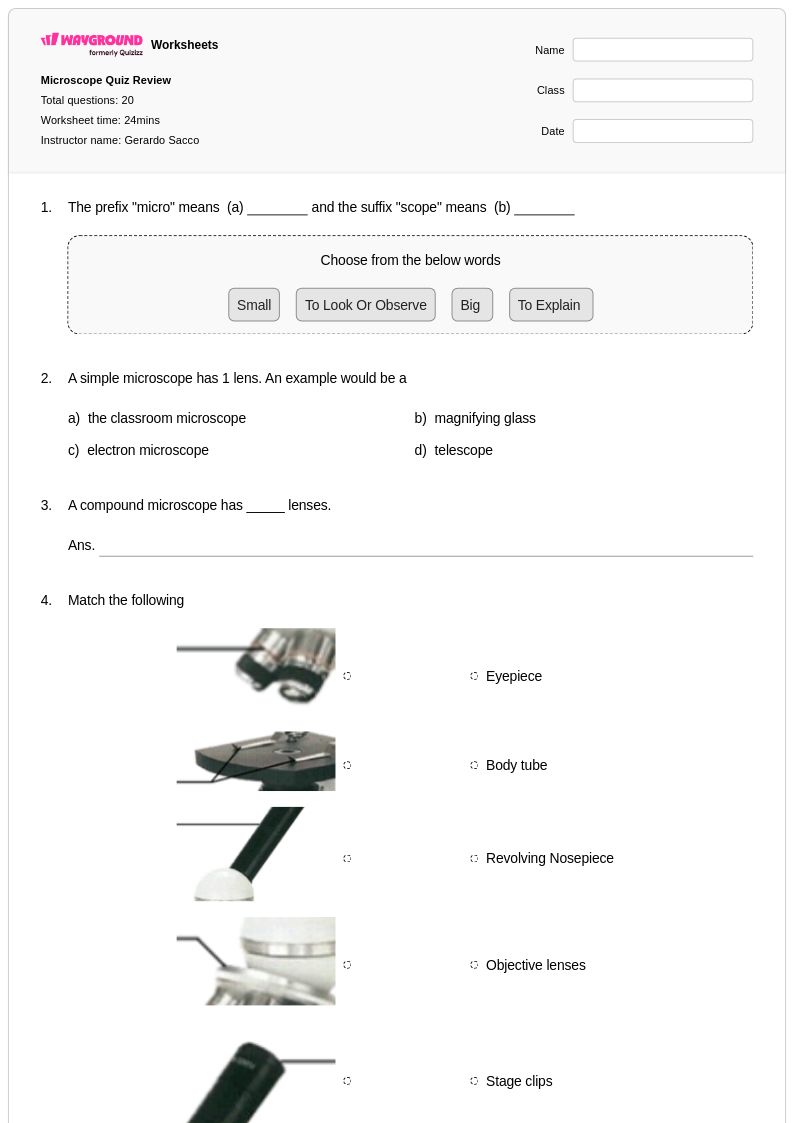
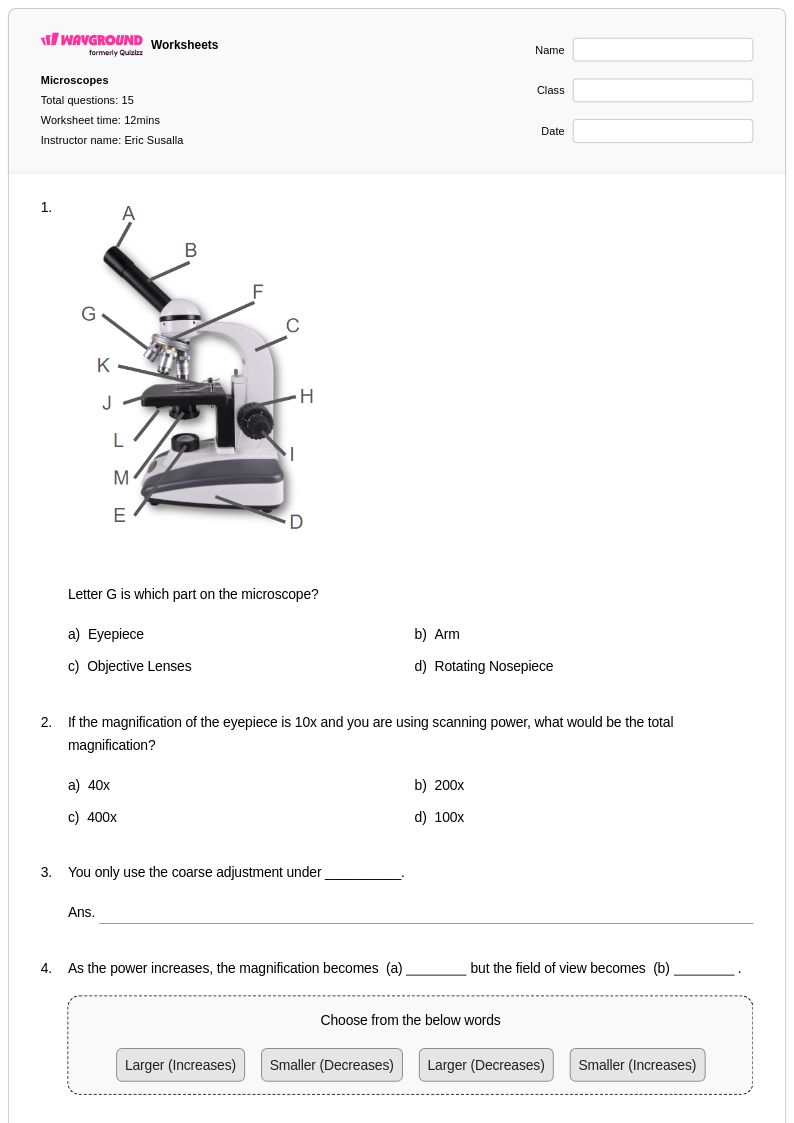
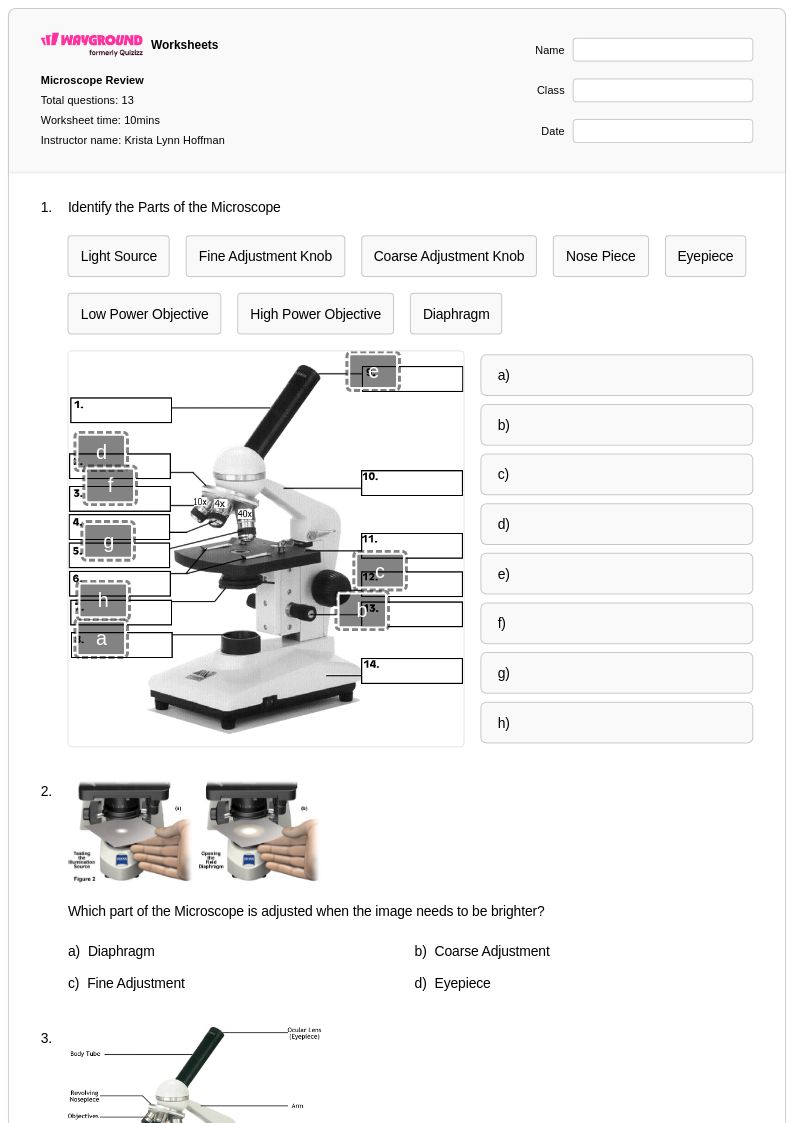
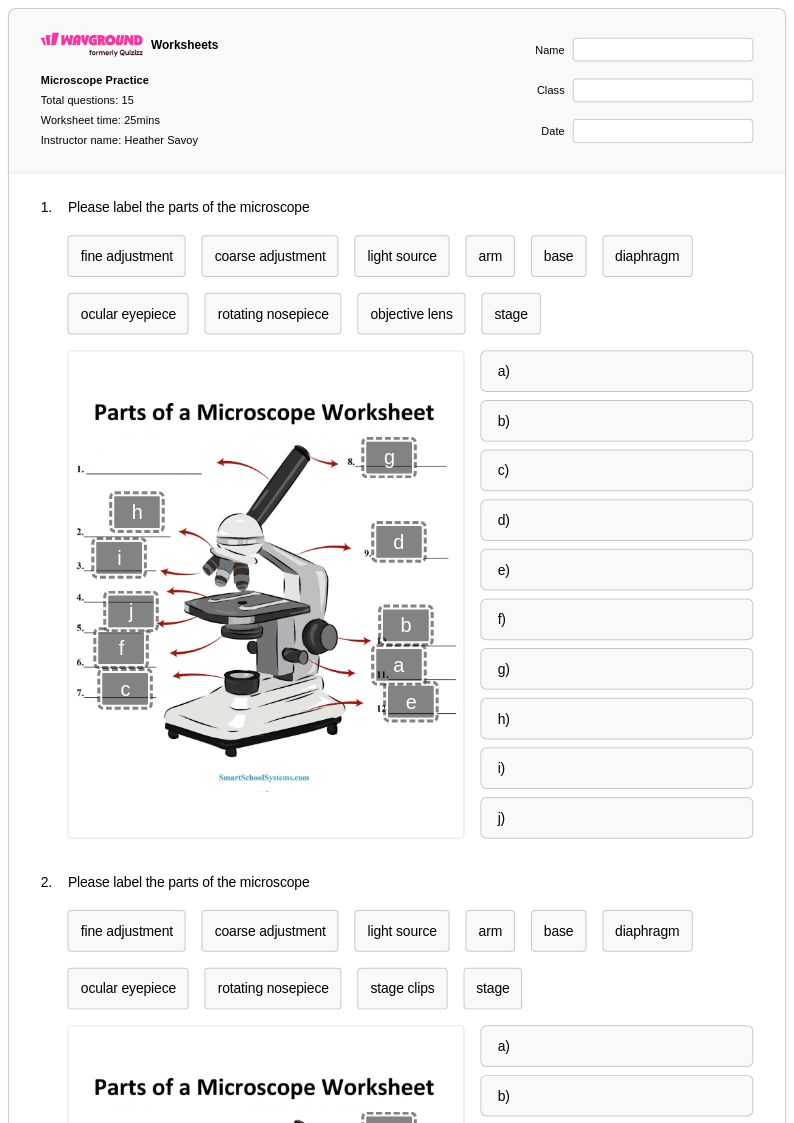
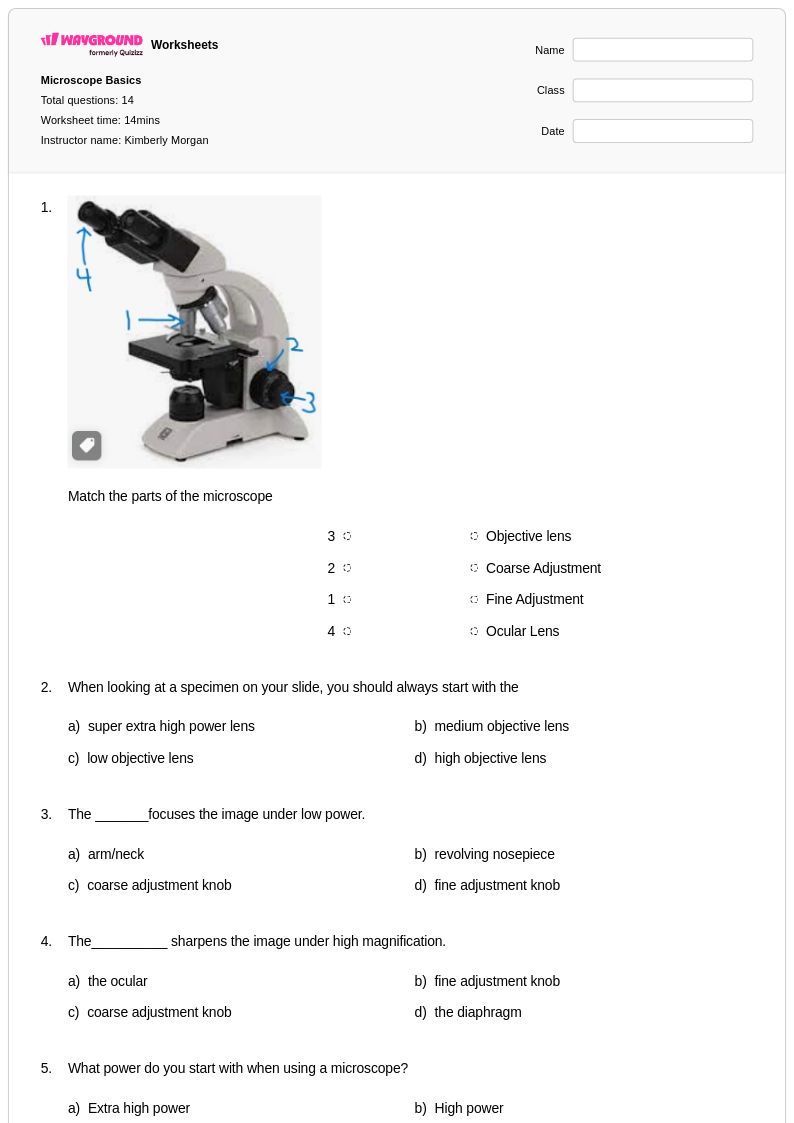
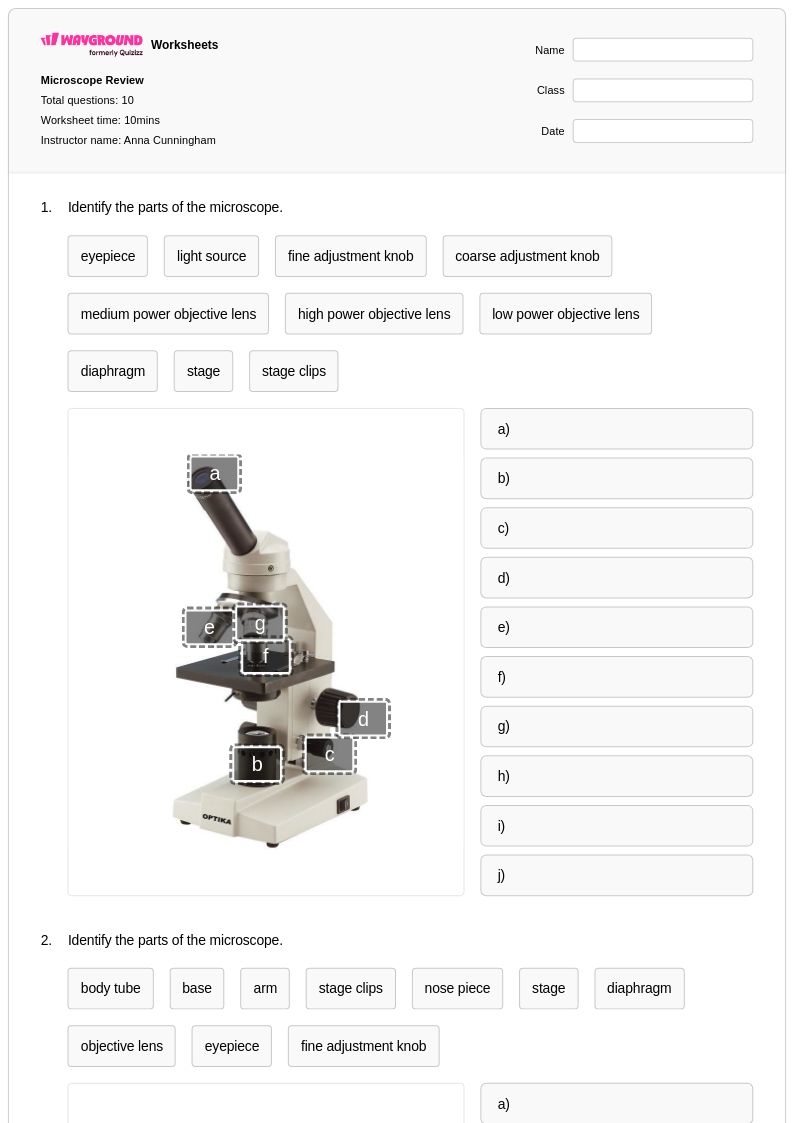
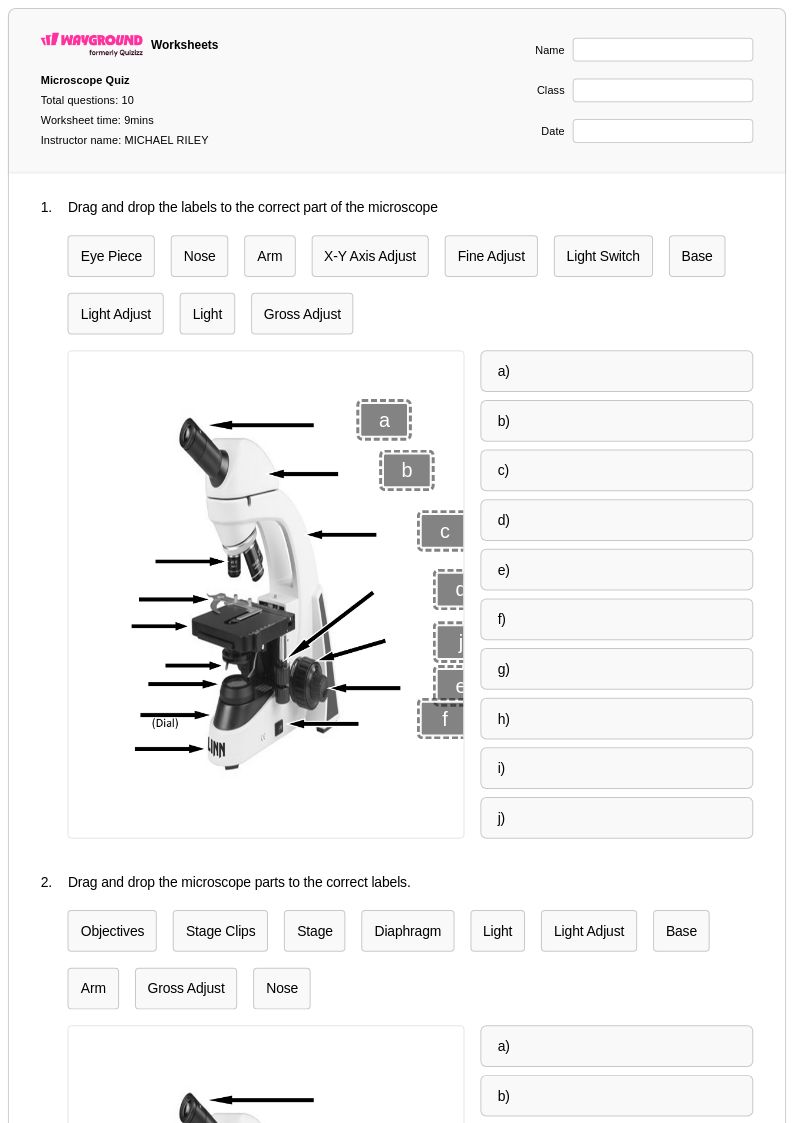
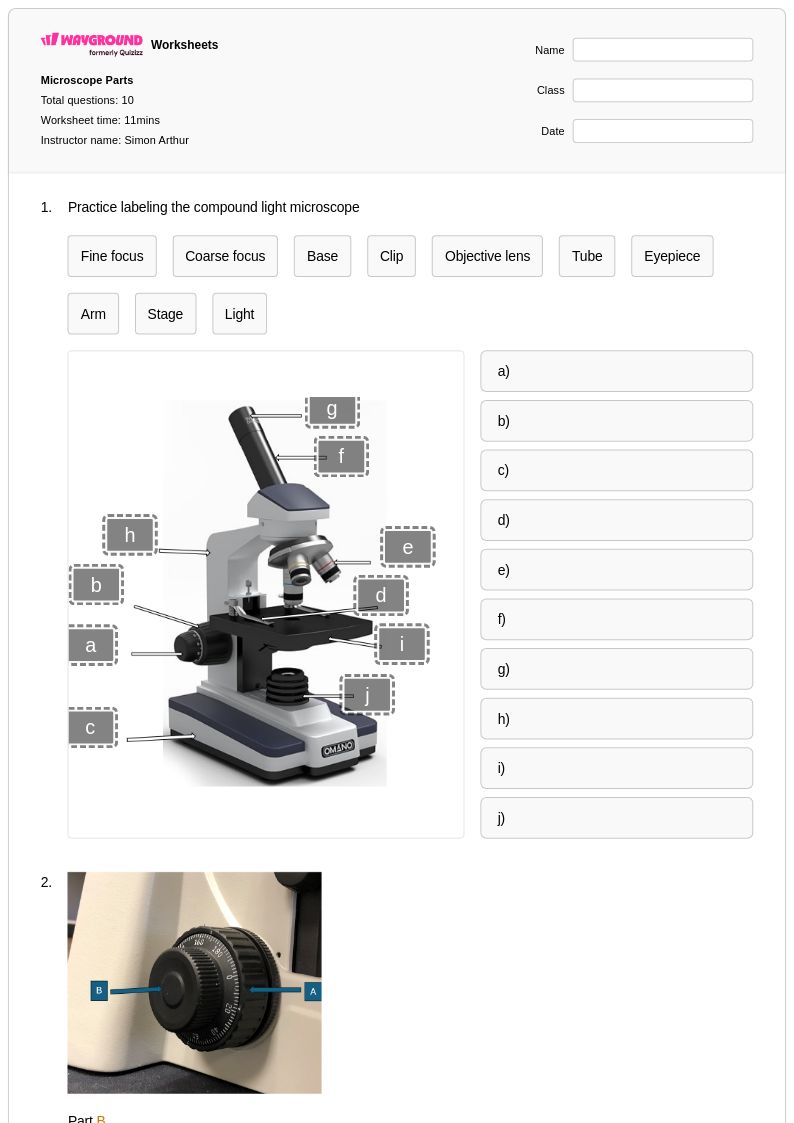
Start by introducing the major parts of the microscope and their functions before students ever touch the equipment, so they understand what each component does rather than just where it is. Then walk students through the correct startup sequence: always begin on the lowest objective lens, use coarse focus first, then fine focus, and never look through the eyepiece while lowering the stage. Reinforcing this sequence through labeled diagram worksheets and step-by-step procedure practice helps students internalize safe handling before they work independently in lab.
What exercises help students practice microscope magnification calculations?
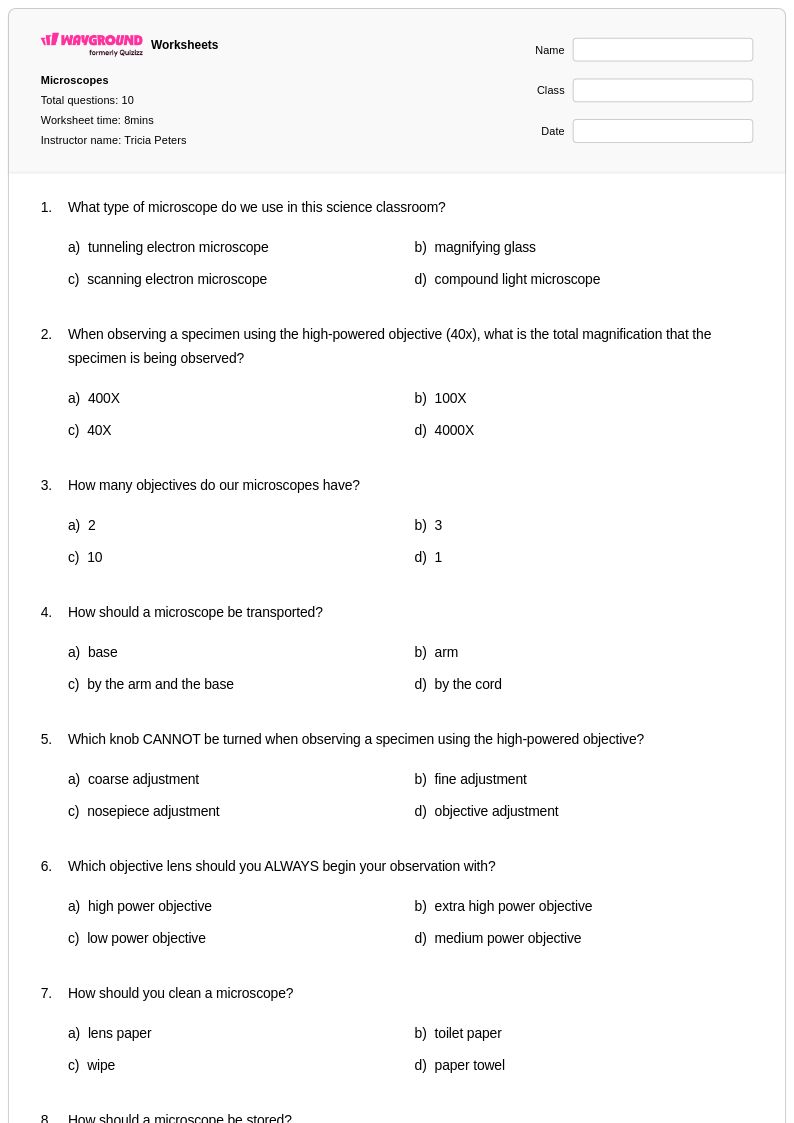
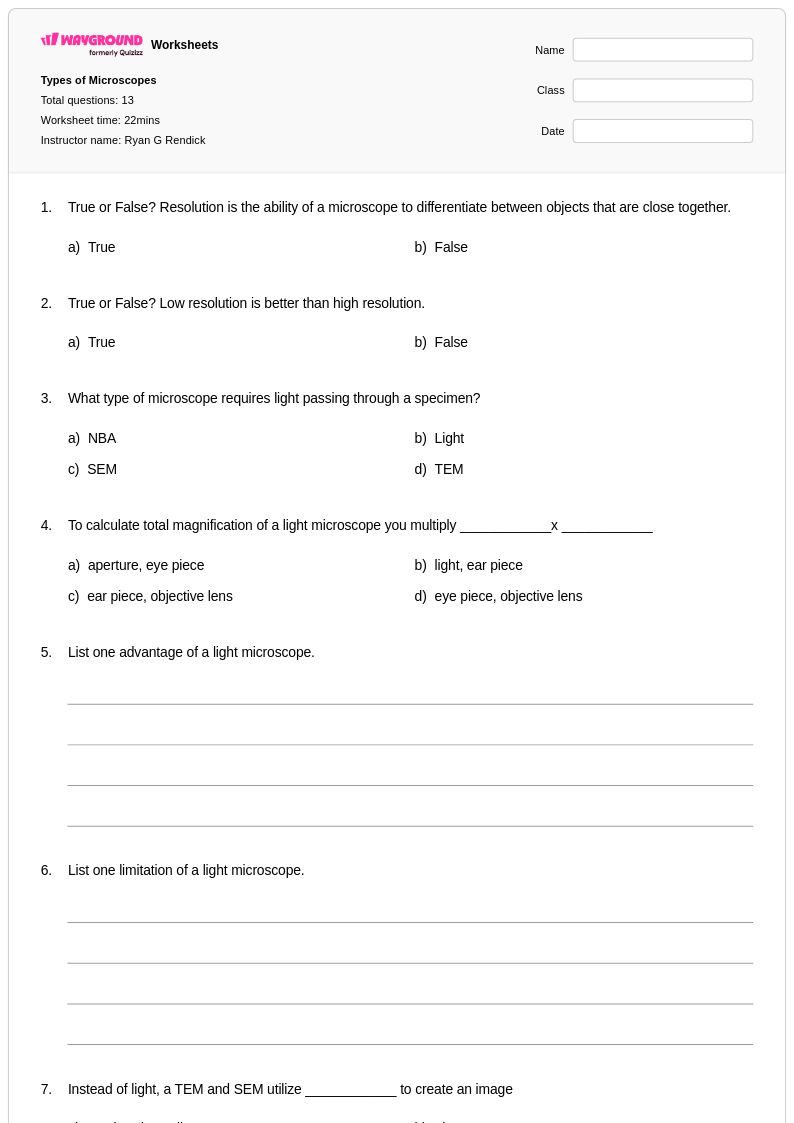
The most effective practice involves having students calculate total magnification by multiplying the eyepiece power (typically 10x) by the objective lens power (4x, 10x, 40x, or 100x). Worksheets that present a mix of given values and require students to solve for the unknown variable, including scenarios where one component is unknown, build stronger procedural fluency. Pairing calculation problems with microscopic image analysis, where students estimate actual specimen size based on magnification, extends the skill into applied scientific reasoning.
What are the most common mistakes students make when identifying microscope parts?
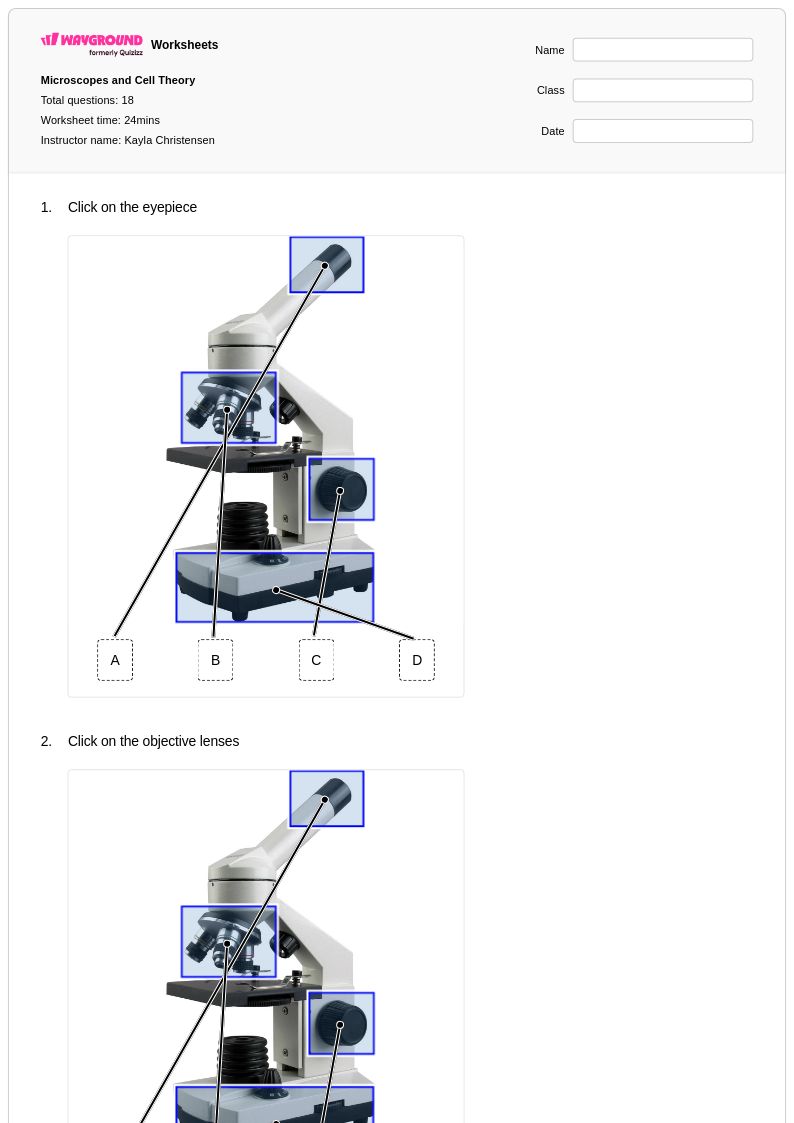
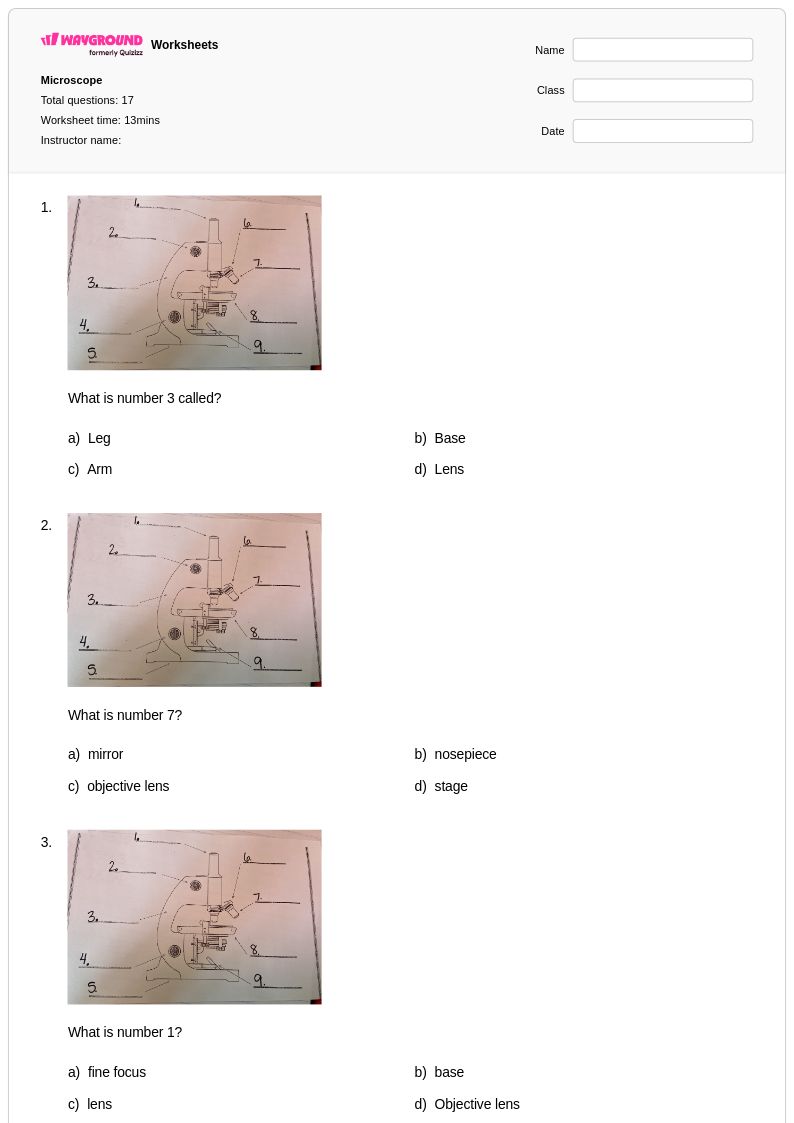
Students frequently confuse the coarse adjustment knob and fine adjustment knob, either labeling them incorrectly or misunderstanding their function during focusing. Another common error is conflating the objective lens with the eyepiece when asked to identify which component determines a specific magnification level. Students also often mislabel the diaphragm or condenser because these parts are less visually prominent, so worksheets that isolate these components in diagram labeling tasks are particularly useful for targeted remediation.
How do I help students understand the difference between compound and dissecting microscopes?
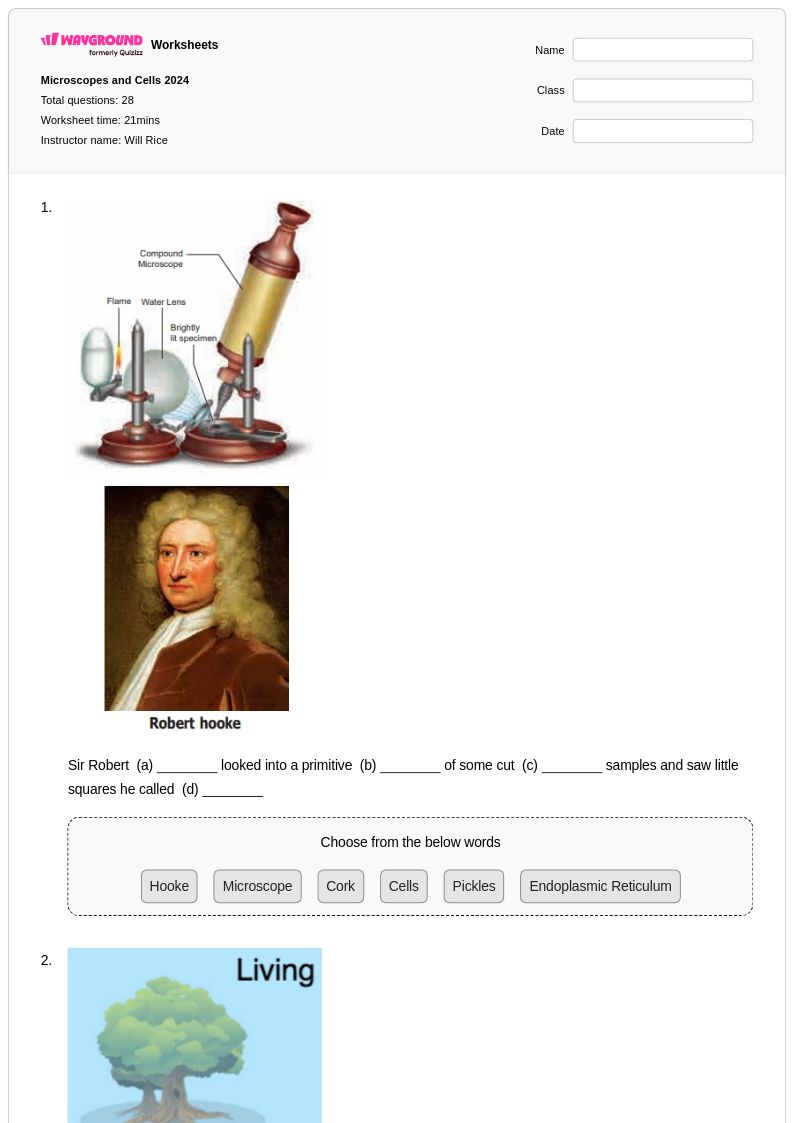
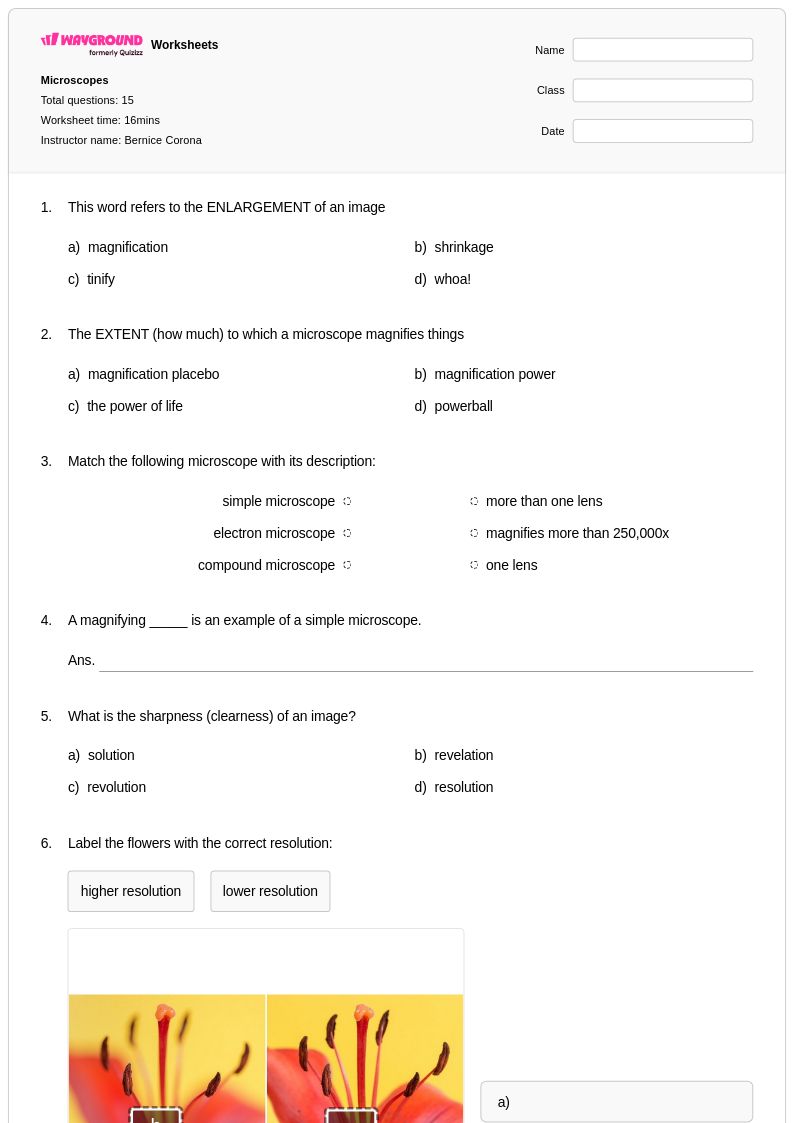
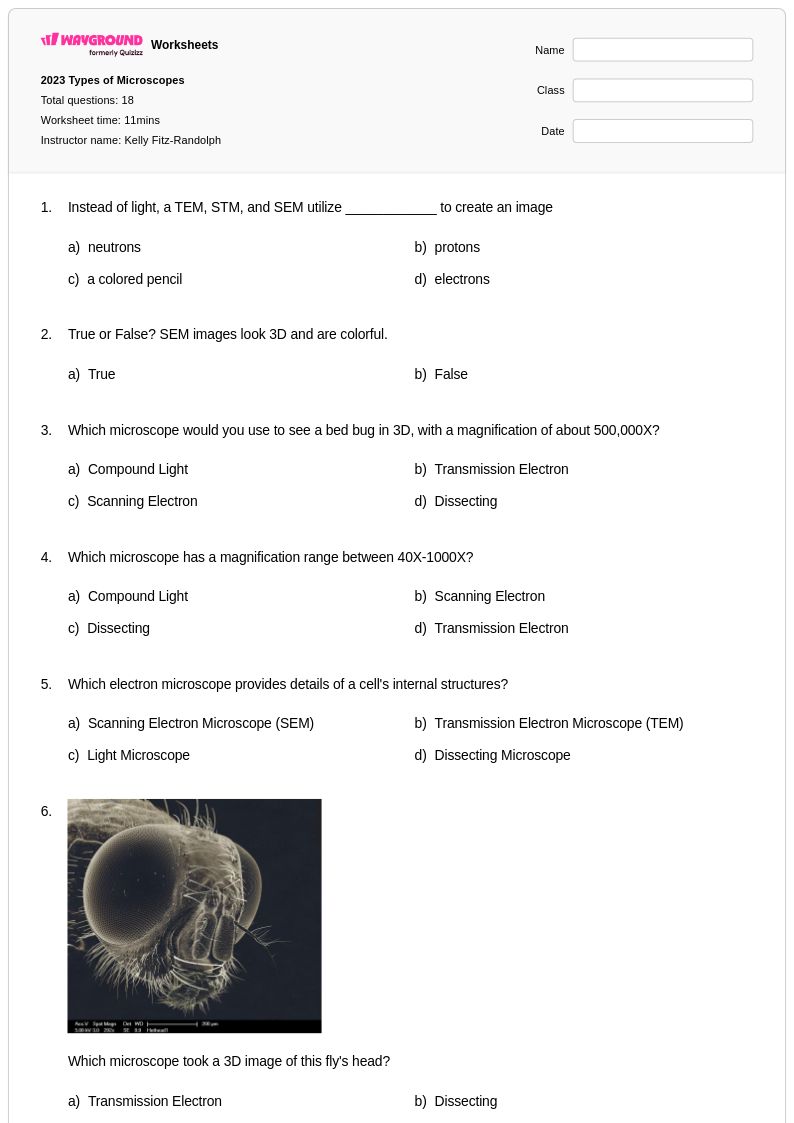
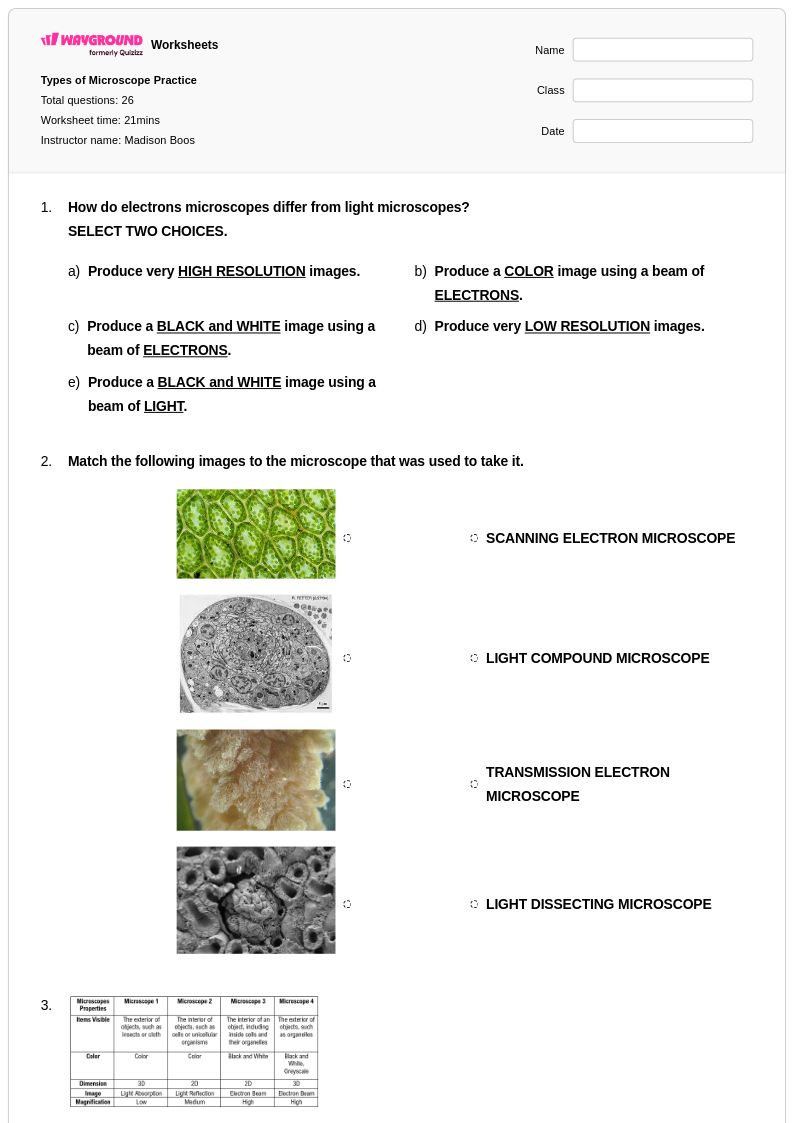
Students need to understand that compound microscopes use two lens systems to achieve high magnification of thin, prepared slides, while dissecting microscopes provide lower magnification of three-dimensional, intact specimens. The key distinction to reinforce is that these tools serve different scientific purposes, not just different magnification ranges. Comparison worksheets that ask students to match specimen types to the appropriate microscope, or to identify which instrument would be used in a given lab scenario, are effective for building this conceptual distinction.
How can I use Wayground's microscope worksheets in my classroom?
Wayground's microscope worksheets are available as printable PDFs for traditional classroom and lab settings, as well as in digital formats for technology-integrated or remote learning environments. Teachers can host any worksheet as a live quiz on Wayground, enabling real-time student response tracking without requiring printed materials. Each worksheet includes a complete answer key, supporting both teacher-led instruction and independent student practice or self-assessment.
How do I differentiate microscope instruction for students with different ability levels?
For students who need additional support, reduce the complexity of diagram labeling tasks by providing a word bank or pre-labeled reference image alongside the blank diagram. For advanced learners, extend microscopy practice to include specimen preparation procedures, light pathway diagrams, or multi-step magnification problems involving unknown variables. On Wayground, teachers can apply individual accommodations such as reduced answer choices or read-aloud settings for specific students, ensuring that differentiation happens at the platform level without singling anyone out in the classroom.