Free Printable Arctic Animals Worksheets for Grade 4
Explore Grade 4 Arctic Animals life science worksheets and printables that help students discover polar wildlife adaptations, habitats, and survival strategies through engaging practice problems with answer keys.
Explore printable Arctic Animals worksheets for Grade 4
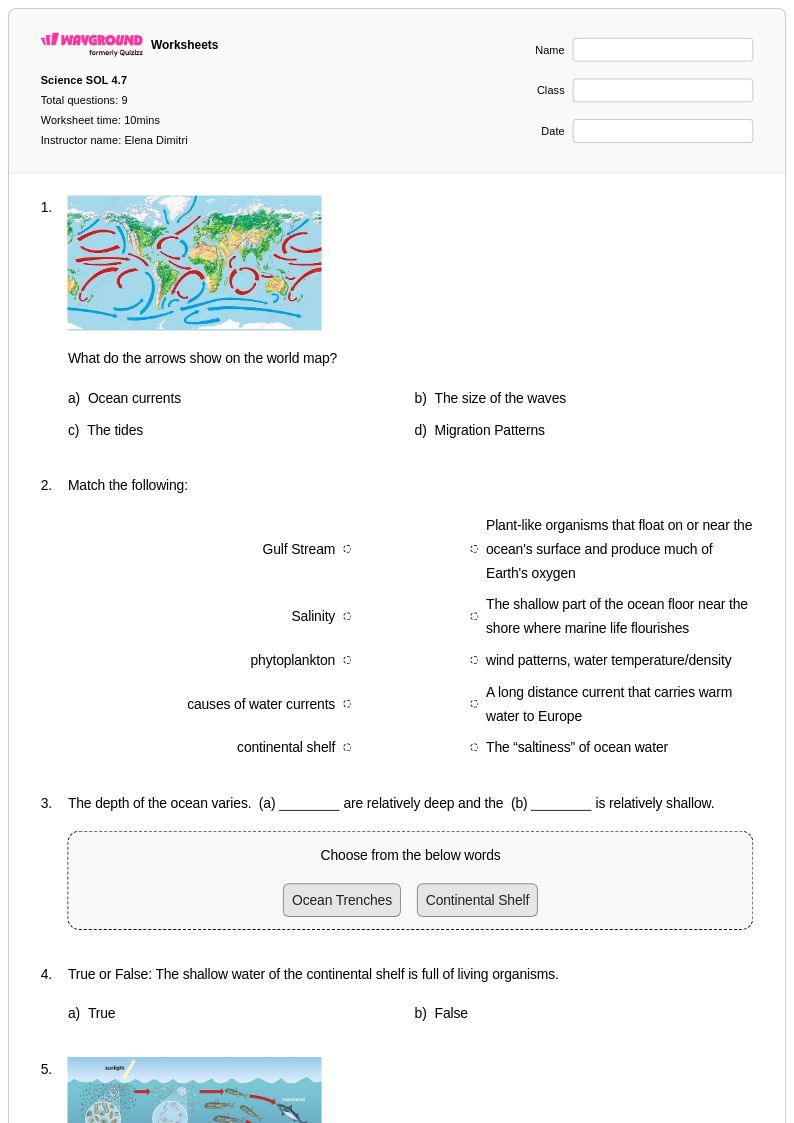
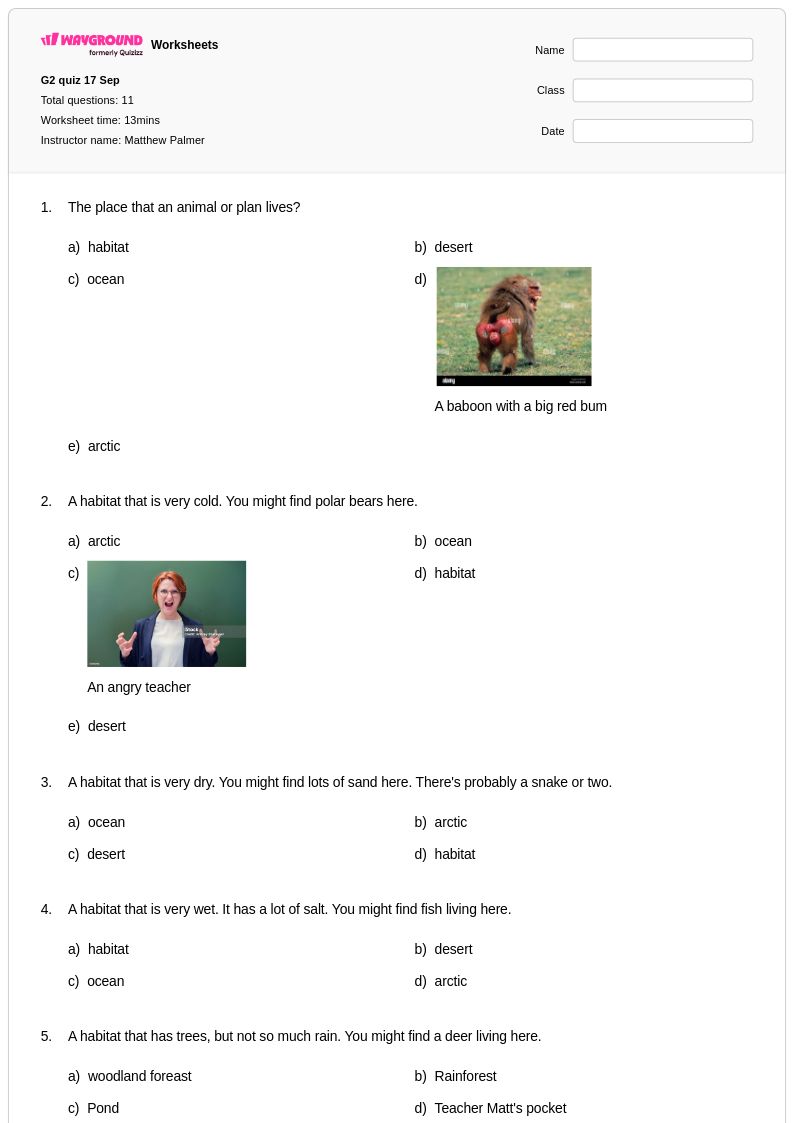
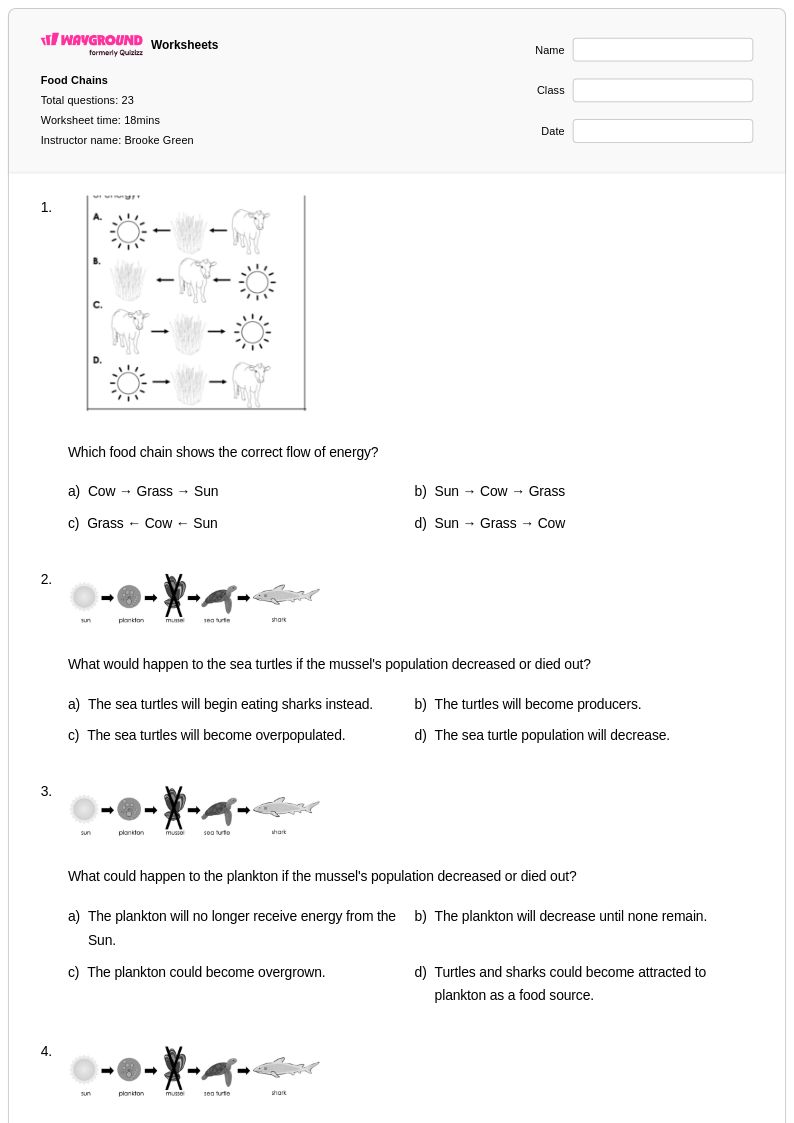
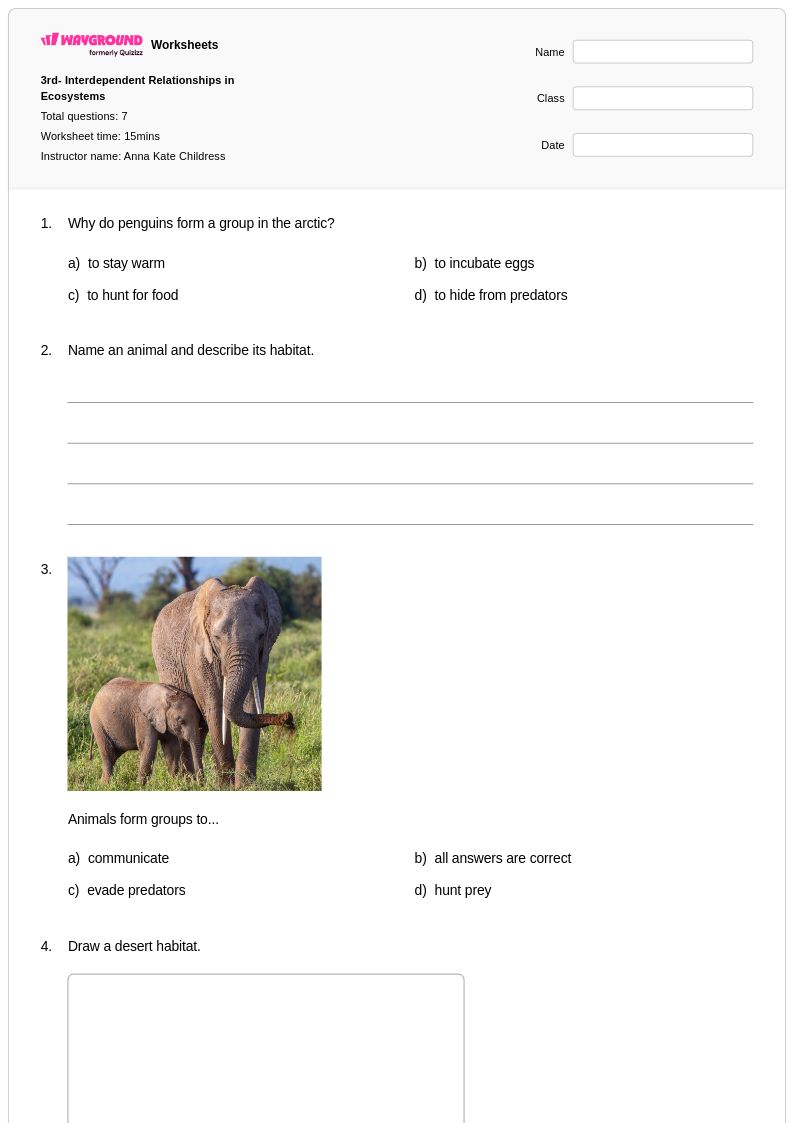
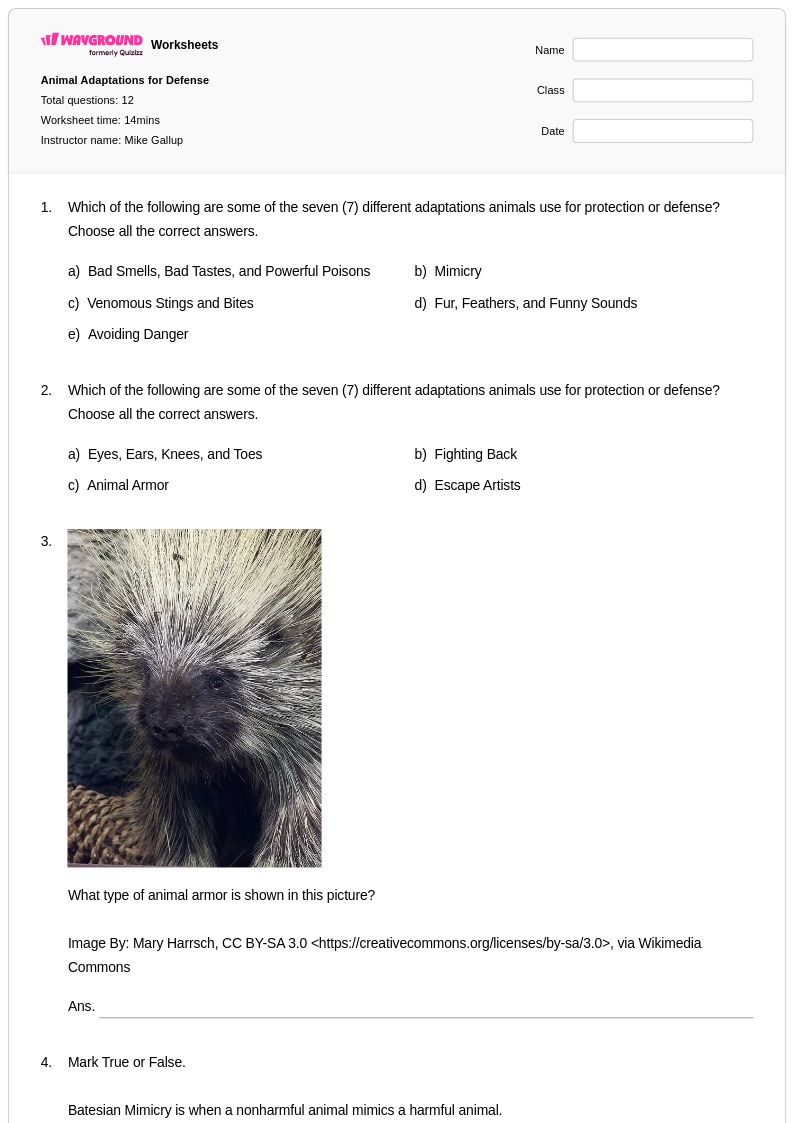
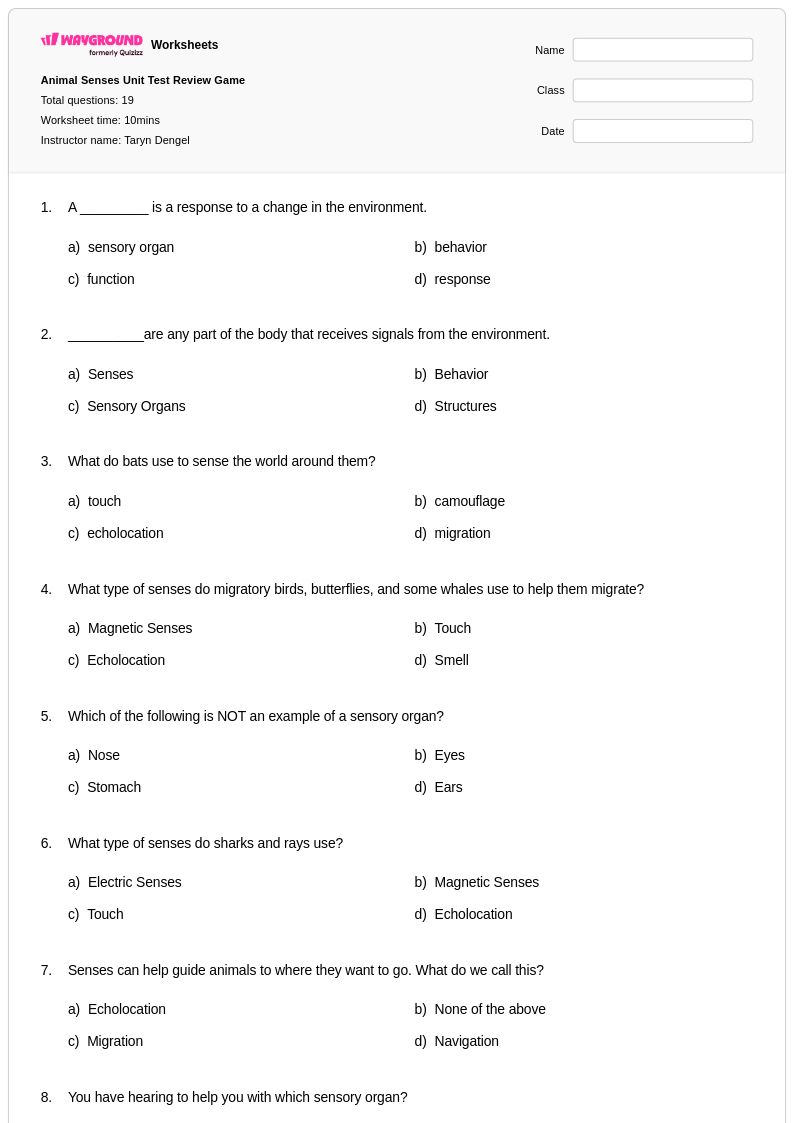
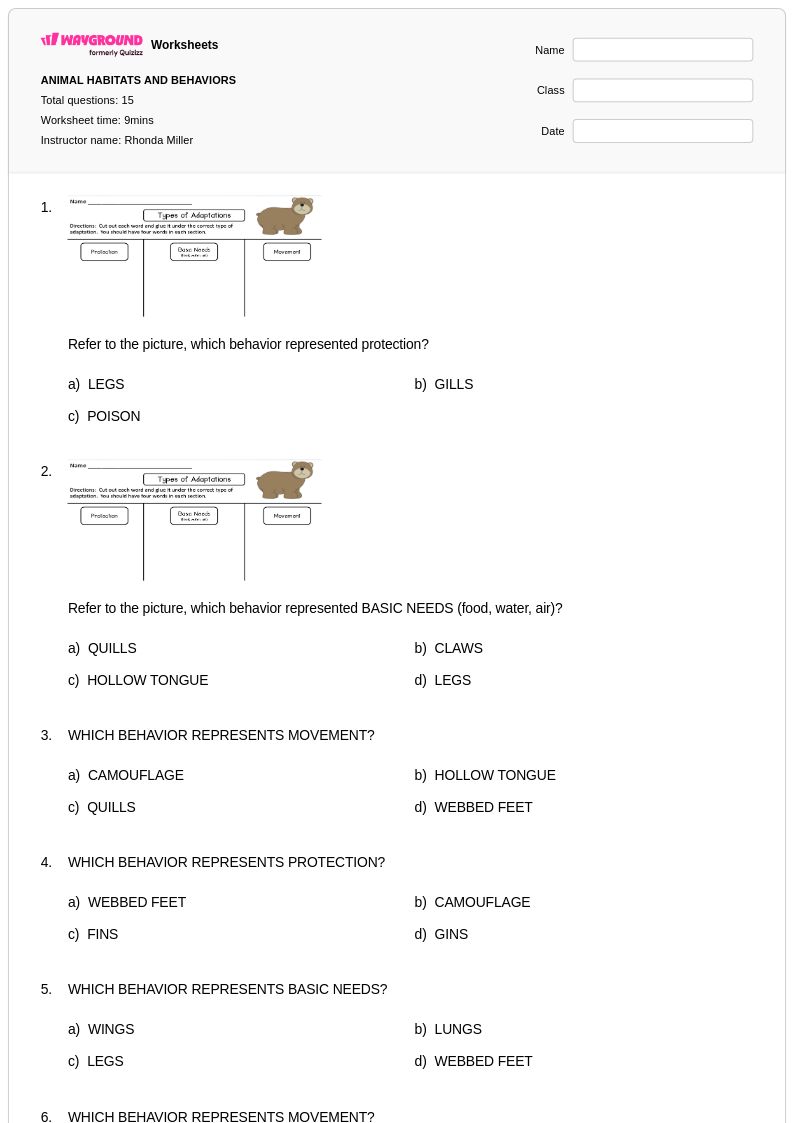
Arctic animals worksheets for Grade 4 students available through Wayground (formerly Quizizz) provide comprehensive learning experiences that explore the fascinating adaptations and survival strategies of polar wildlife. These educational resources strengthen critical thinking skills as students investigate how animals like polar bears, arctic foxes, seals, and penguins have evolved specialized features to thrive in extreme cold environments. The practice problems guide learners through concepts such as physical adaptations, behavioral patterns, food webs, and habitat characteristics while building scientific vocabulary and observation skills. Each worksheet comes with a complete answer key and is available as free printable pdf downloads, making them accessible resources for both classroom instruction and independent study.
Wayground (formerly Quizizz) supports educators with an extensive collection of teacher-created arctic animals resources that streamline lesson planning and enhance student engagement in Grade 4 life science curricula. The platform's millions of worksheets feature robust search and filtering capabilities that allow teachers to quickly locate materials aligned with specific learning standards and differentiate instruction based on individual student needs. These customizable resources are available in both printable and digital pdf formats, enabling flexible implementation across various teaching environments and learning modalities. Teachers can utilize these comprehensive worksheet collections for targeted skill practice, remediation support for struggling learners, and enrichment activities for advanced students, ensuring that all Grade 4 students develop a thorough understanding of arctic animal adaptations and ecosystem relationships.
FAQs
How do I teach arctic animals and their adaptations to elementary students?
Start by grounding students in what makes the Arctic extreme: near-freezing temperatures, ice-covered terrain, and seasonal darkness. From there, introduce specific animals like polar bears, arctic foxes, and walruses, focusing on how each animal's physical traits (blubber, thick fur, white coloring) and behaviors (hibernation, migration, huddling) are direct responses to those conditions. Using visual worksheets that pair animal images with labeled adaptation features helps students build the connection between environment and biology concretely before moving to abstract reasoning.
What exercises help students practice identifying animal adaptations in arctic environments?
Matching activities that pair specific animals with their adaptations are highly effective because they require students to distinguish between structural and behavioral traits rather than memorize isolated facts. Comparative exercises, such as asking students to explain why a polar bear and an arctic fox both have white fur but for slightly different survival reasons, push deeper analysis. Practice problems that ask students to apply adaptation logic to unfamiliar arctic species further reinforce the concept.
What misconceptions do students commonly have about arctic animals?
A frequent misconception is that all arctic animals hibernate through winter, when in fact most, including polar bears (except pregnant females), remain active year-round. Students also often confuse the Arctic with the Antarctic, incorrectly placing penguins in the Arctic. Another common error is assuming white coloring is purely camouflage, without recognizing its role in temperature regulation and UV protection.
How can I use arctic animals worksheets to support differentiated instruction?
Arctic animals worksheets on Wayground can be used digitally, which allows teachers to apply individual student accommodations directly through the platform. Features like Read Aloud support students who struggle with text-heavy science content, while reduced answer choices can lower cognitive load for students who need scaffolding. Extended time settings can be configured per student so that all learners engage with the same content at an appropriate pace, without singling out individuals in front of the class.
How do I use Wayground's arctic animals worksheets in my classroom?
Wayground's arctic animals worksheets are available as printable PDFs for traditional classroom use and in digital formats for technology-integrated learning environments, including the option to host them as a quiz directly on Wayground. Printable versions work well for independent seat work or homework, while digital formats support interactive whole-class or small-group sessions. All worksheets include complete answer keys, so teachers can use them for instruction, self-checking, or formative assessment without additional prep.
How do arctic animals worksheets connect to life science standards?
Arctic animals worksheets directly support life science standards related to ecosystems, organism adaptations, and environmental interdependence, which appear in curricula from early elementary through middle school. Students practice core scientific reasoning skills by analyzing how specific traits enable survival under specific environmental pressures, which aligns with NGSS disciplinary core ideas around natural selection and ecosystems. Teachers can use these worksheets as direct instruction supplements, review tools, or performance task components within a broader life science unit.