Free Printable Bacteria Transformation Worksheets for Grade 9
Explore Grade 9 bacteria transformation worksheets and printables that help students master genetic engineering concepts through engaging practice problems, free PDF downloads, and comprehensive answer keys.
Explore printable Bacteria Transformation worksheets for Grade 9
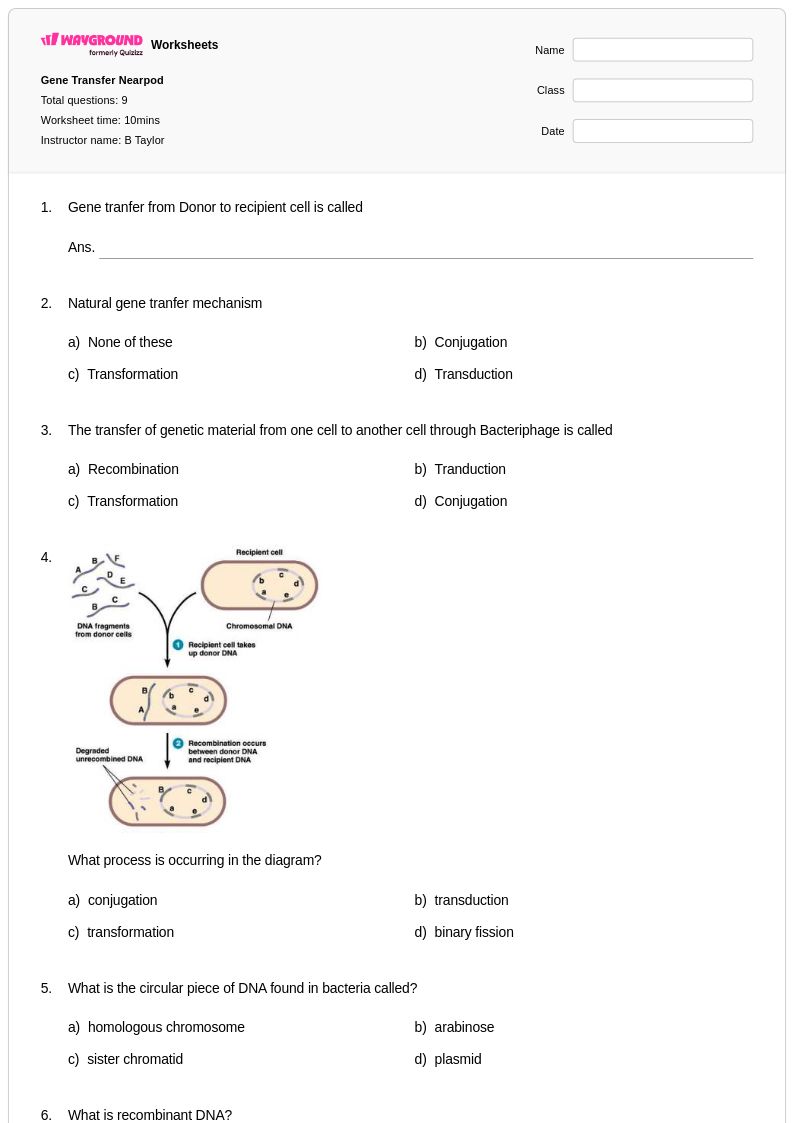
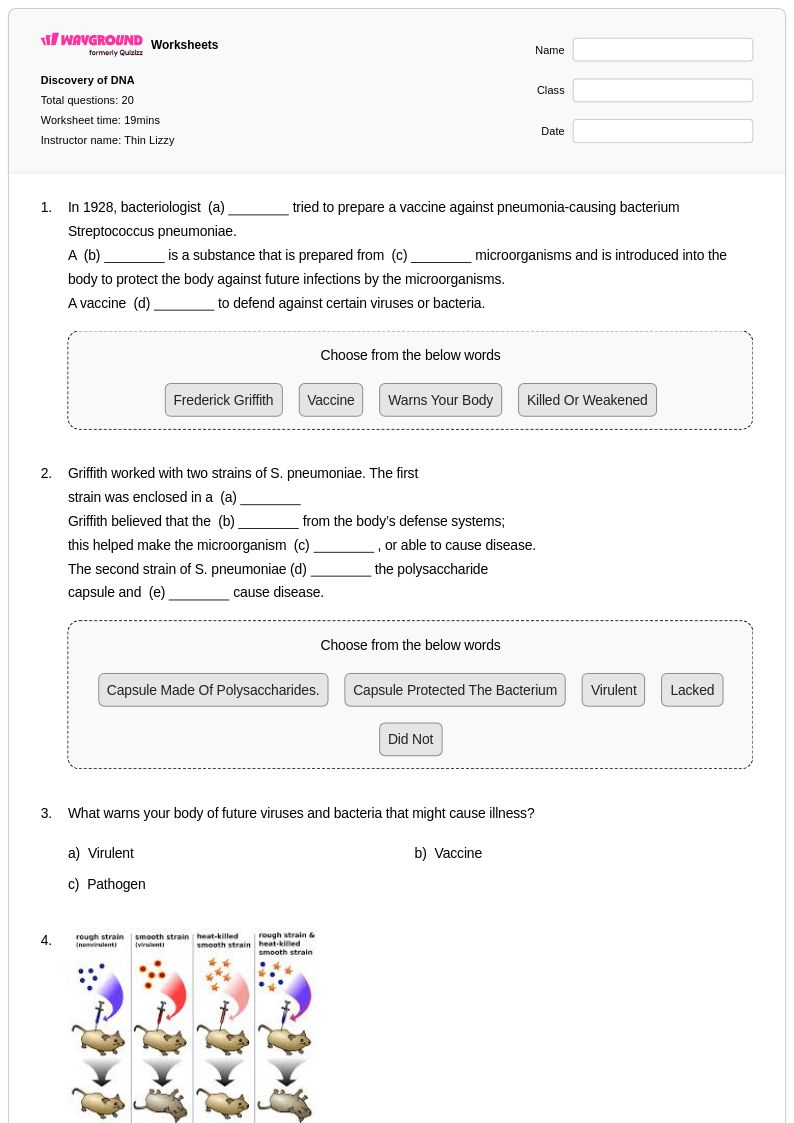
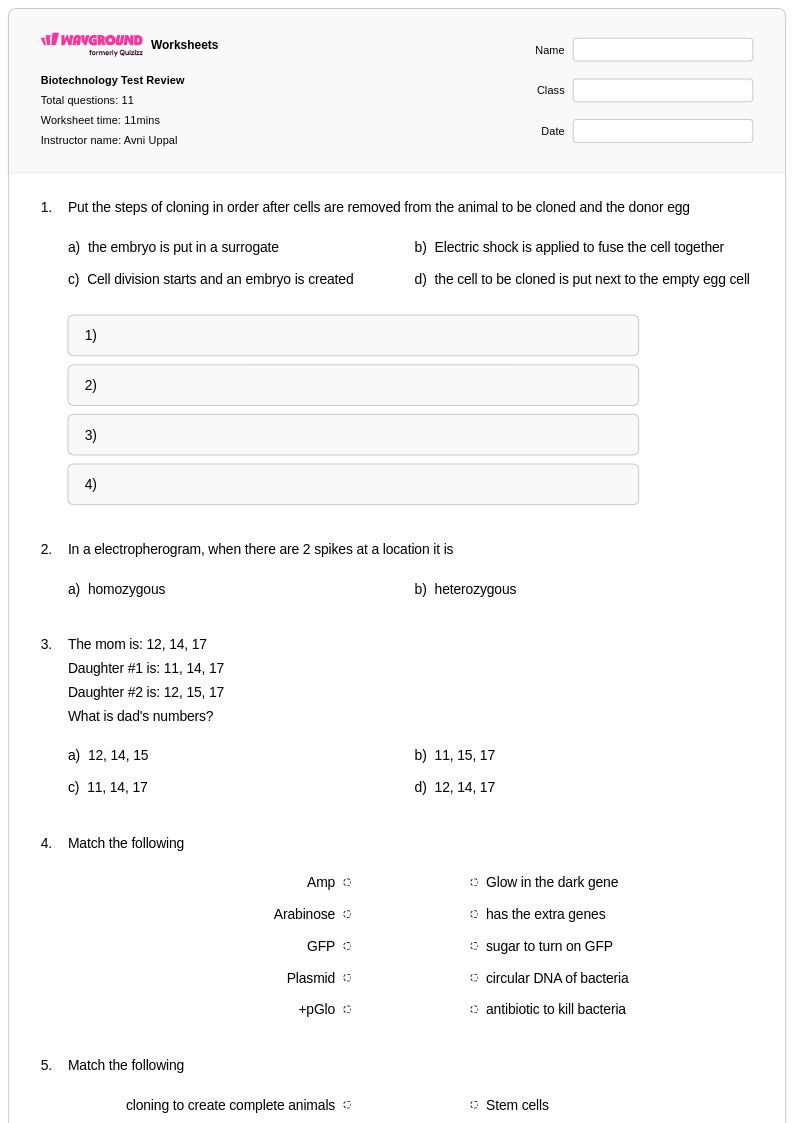
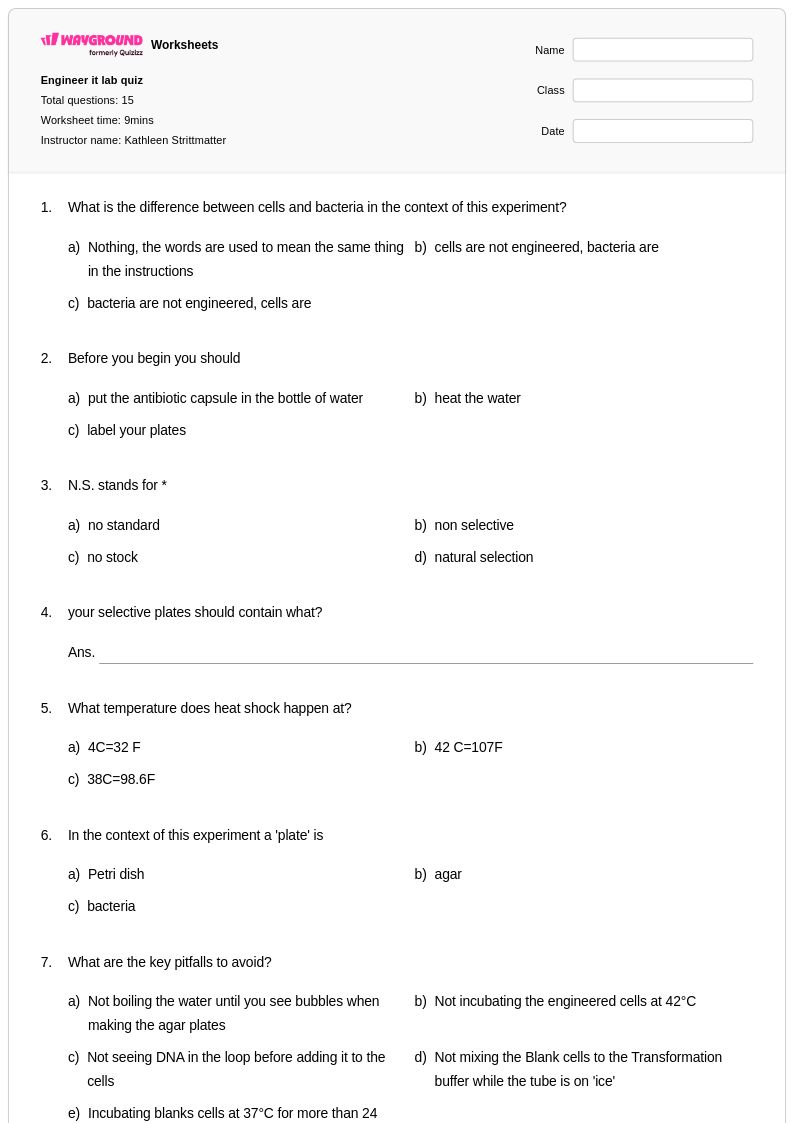
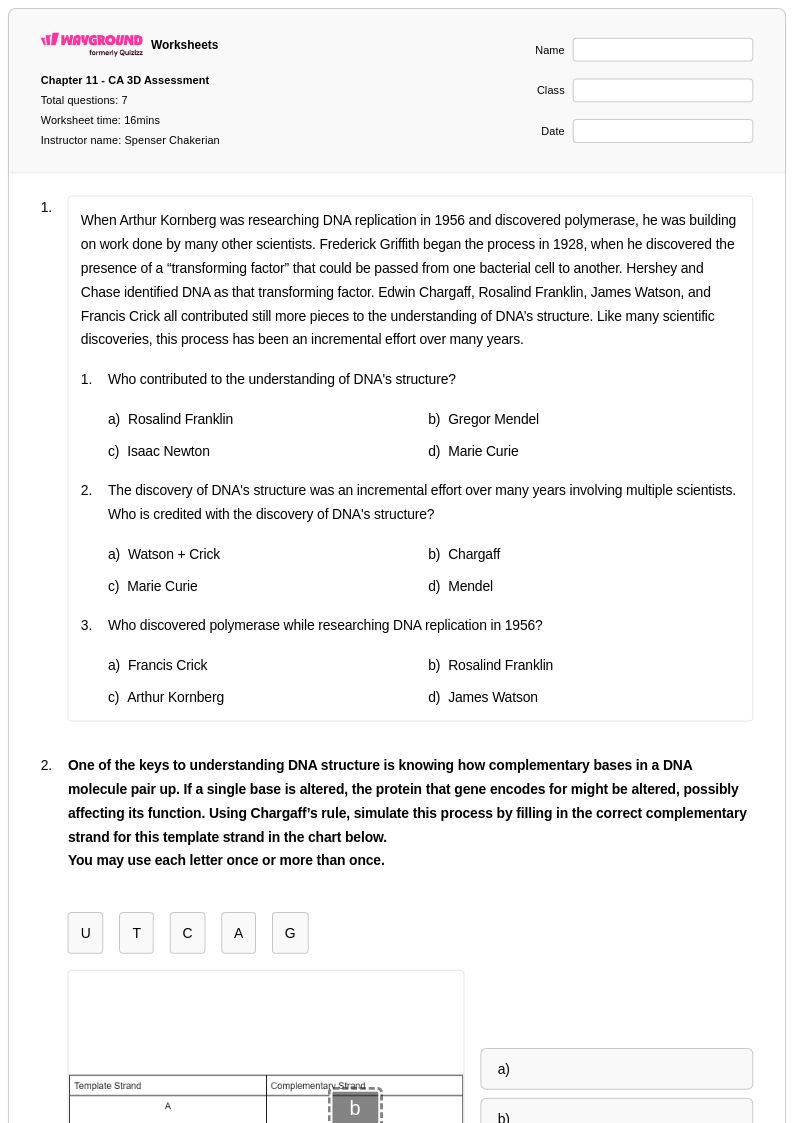
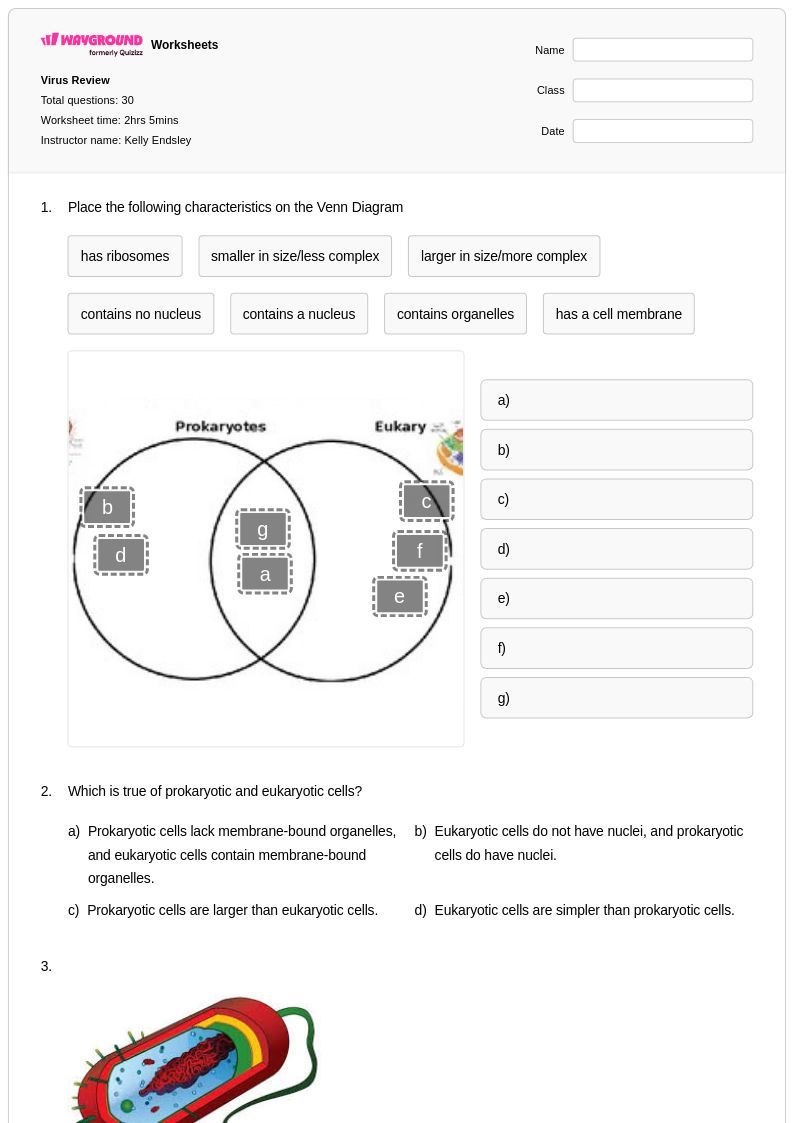
Grade 9 bacteria transformation worksheets available through Wayground (formerly Quizizz) provide comprehensive coverage of this fundamental genetic engineering process that introduces foreign DNA into bacterial cells. These expertly designed resources help students master the molecular mechanisms behind transformation, including the role of competent cells, plasmid uptake, and antibiotic resistance markers used in selection processes. The worksheets strengthen critical thinking skills through detailed practice problems that require students to analyze transformation efficiency, interpret experimental results, and predict outcomes of various transformation protocols. Each resource includes comprehensive answer keys and is available as free printable PDFs, making it easy for educators to assess student understanding of concepts like heat shock treatment, calcium chloride preparation, and the practical applications of bacterial transformation in biotechnology and research.
Wayground (formerly Quizizz) supports biology teachers with an extensive collection of millions of teacher-created resources specifically focused on bacterial transformation and related molecular biology concepts. The platform's advanced search and filtering capabilities allow educators to quickly locate materials aligned with state and national science standards, while differentiation tools enable customization for varying student ability levels within Grade 9 classrooms. Teachers can access these worksheets in both printable and digital PDF formats, providing flexibility for in-person and remote learning environments. These comprehensive resources prove invaluable for lesson planning, targeted remediation of challenging transformation concepts, enrichment activities for advanced learners, and regular skill practice that reinforces understanding of how bacterial cells can be genetically modified to produce useful proteins and serve as model organisms in scientific research.
FAQs
How do I teach bacterial transformation to high school biology students?
Start by grounding students in the concept of competent cells and why bacteria must be chemically or electrically treated before they can take up foreign DNA. From there, walk through the full transformation sequence: plasmid introduction, heat shock, recovery in growth media, and selection on antibiotic plates. Using a step-by-step protocol diagram alongside a real or simulated pGLO-style experiment helps students connect the molecular logic to observable outcomes like colony color and antibiotic resistance.
What practice problems help students understand transformation efficiency calculations?
Transformation efficiency is best practiced through problems that give students colony counts, volume plated, and DNA concentration, then ask them to calculate transformants per microgram of DNA. Students should also work through scenarios comparing different experimental conditions, such as heat shock duration or competent cell preparation methods, to understand what drives efficiency differences. These calculation-based exercises build both quantitative reasoning and conceptual understanding of how transformation success is measured in real lab settings.
What common mistakes do students make when learning about bacterial transformation?
A frequent misconception is that all bacteria in a transformation reaction successfully take up the plasmid, when in reality transformation efficiency is always less than 100% and often quite low. Students also commonly confuse the role of antibiotic resistance markers, misunderstanding that the antibiotic selects for transformed cells rather than causing the transformation. Another common error is conflating transformation with transduction or conjugation, so explicitly comparing all three horizontal gene transfer mechanisms helps clarify the distinctions.
How do plasmid structure and antibiotic resistance markers connect in a transformation experiment?
Plasmids used in transformation carry selectable markers, most commonly antibiotic resistance genes, that allow researchers to identify which bacterial cells successfully incorporated the foreign DNA. When transformed cells are plated on antibiotic-containing media, only those that took up the plasmid survive and form colonies, making the resistance marker the mechanism of selection. Teaching students to read a plasmid map and trace which gene confers resistance is a foundational skill for understanding both transformation design and broader genetic engineering workflows.
How can I use Wayground's bacteria transformation worksheets in my classroom?
Wayground's bacteria transformation worksheets are available as printable PDFs for traditional lab or classroom use and in digital formats for technology-integrated environments, including the option to host them as an interactive quiz on Wayground. The worksheets include complete answer keys, making them practical for independent practice, homework, or formative assessment following a transformation lab. Digital delivery also supports differentiation through features like read aloud, extended time, and reduced answer choices, which can be assigned to individual students without disrupting the rest of the class.
How do I differentiate bacterial transformation instruction for students at different skill levels?
For students who are still developing foundational genetics knowledge, focus practice on vocabulary and sequencing the transformation steps before introducing efficiency calculations. Advanced learners can be challenged with experimental design problems, such as identifying controls, predicting outcomes under modified conditions, or analyzing error sources in transformation data. On Wayground, teachers can apply accommodations like reduced answer choices or read aloud to specific students, allowing the same worksheet to serve the full range of learners in one classroom without creating separate assignments.