Free Printable Brain Anatomy Worksheets for Grade 9
Grade 9 brain anatomy worksheets from Wayground provide comprehensive printables and practice problems to help students master neurological structures, with detailed answer keys and free PDF resources for effective biology learning.
Explore printable Brain Anatomy worksheets for Grade 9
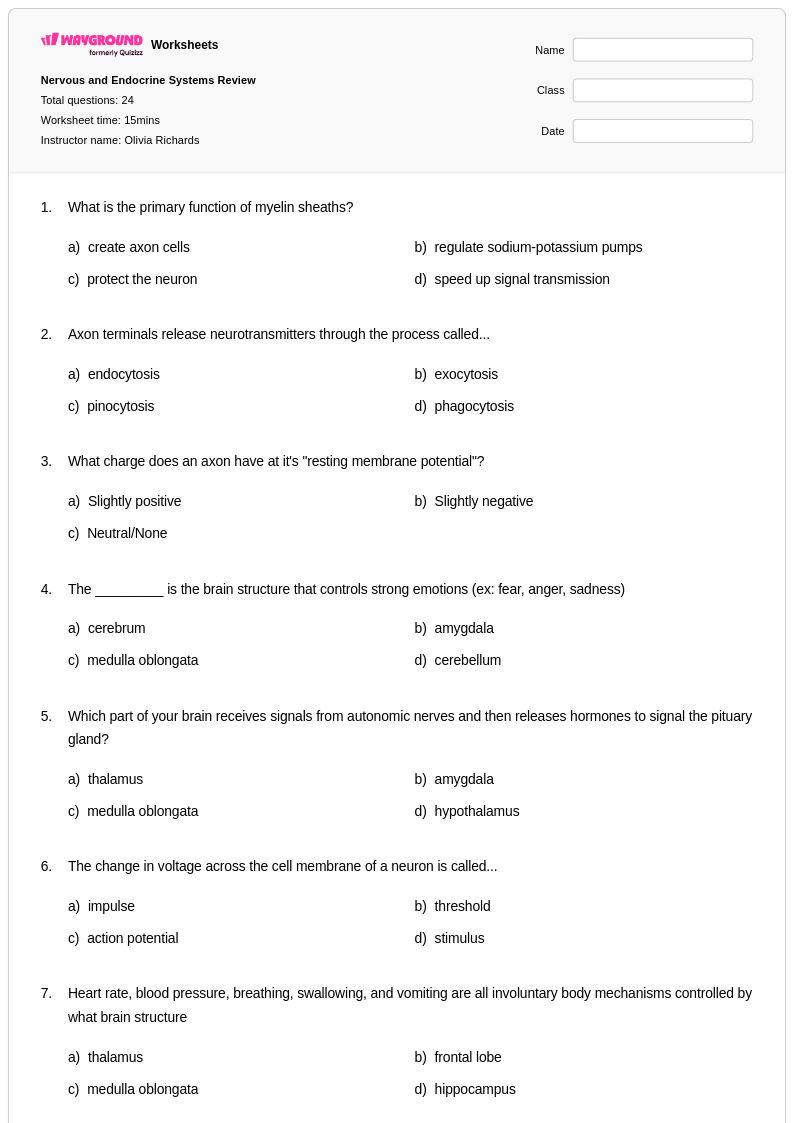
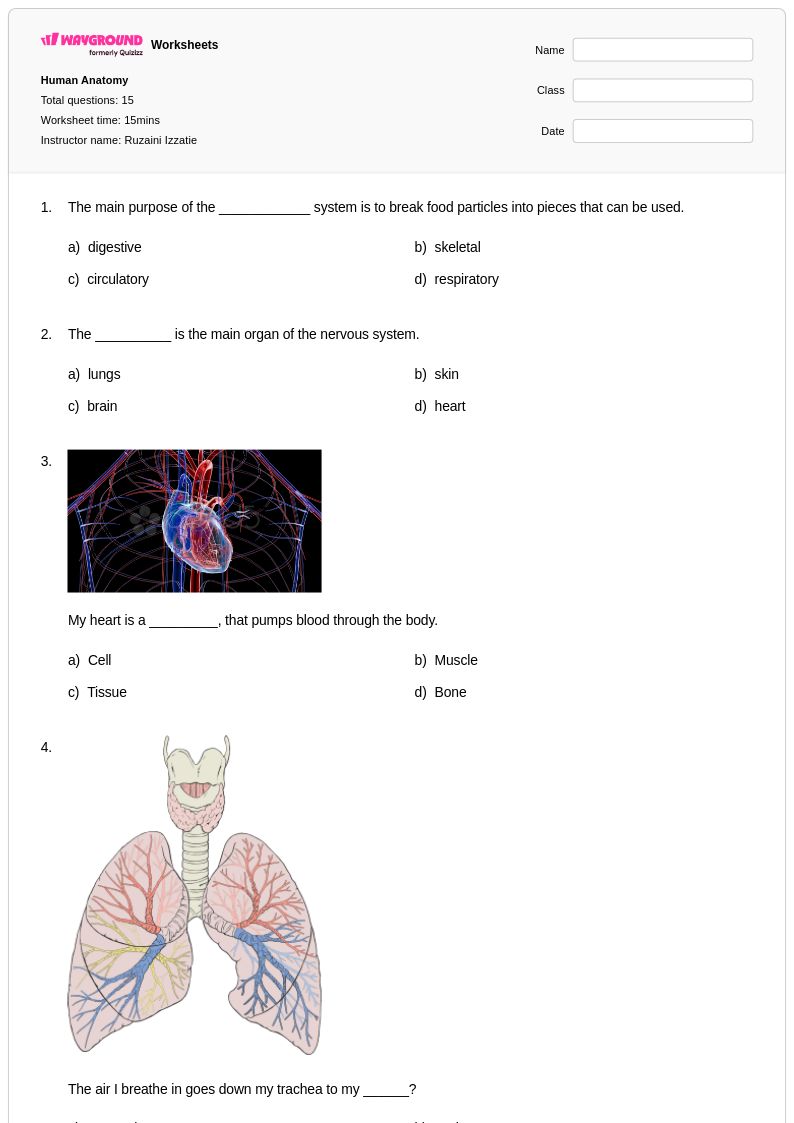
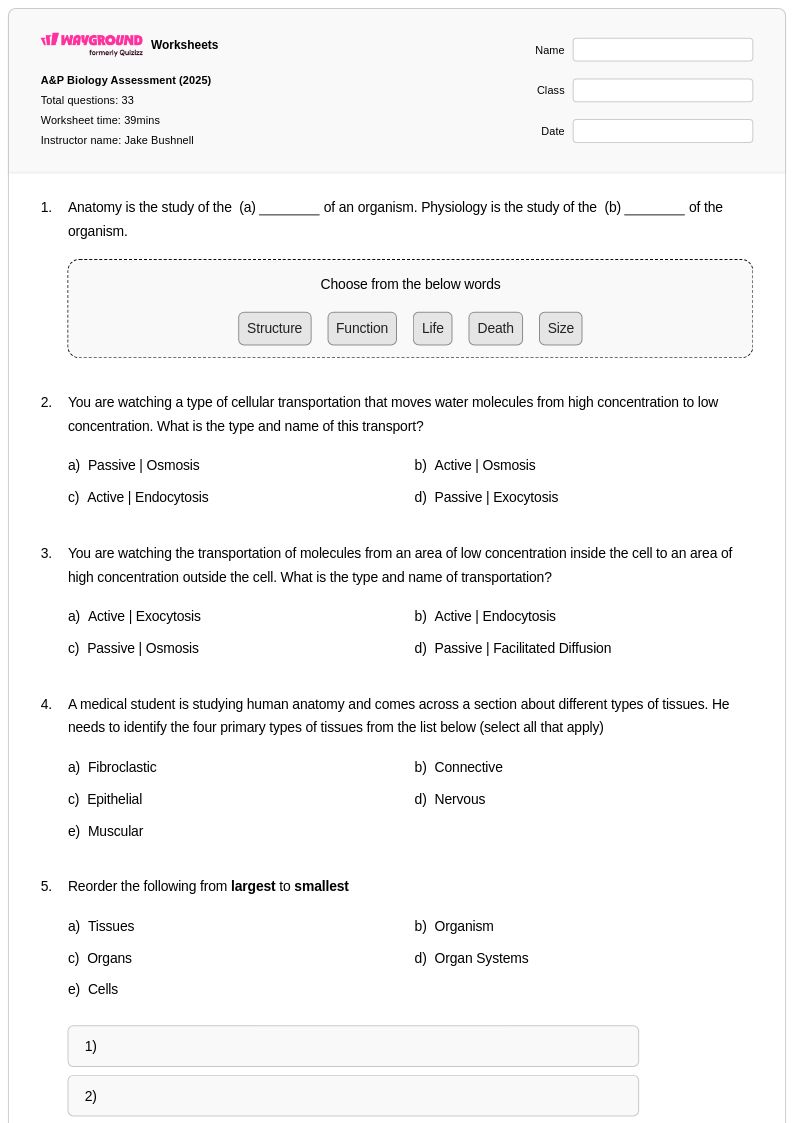
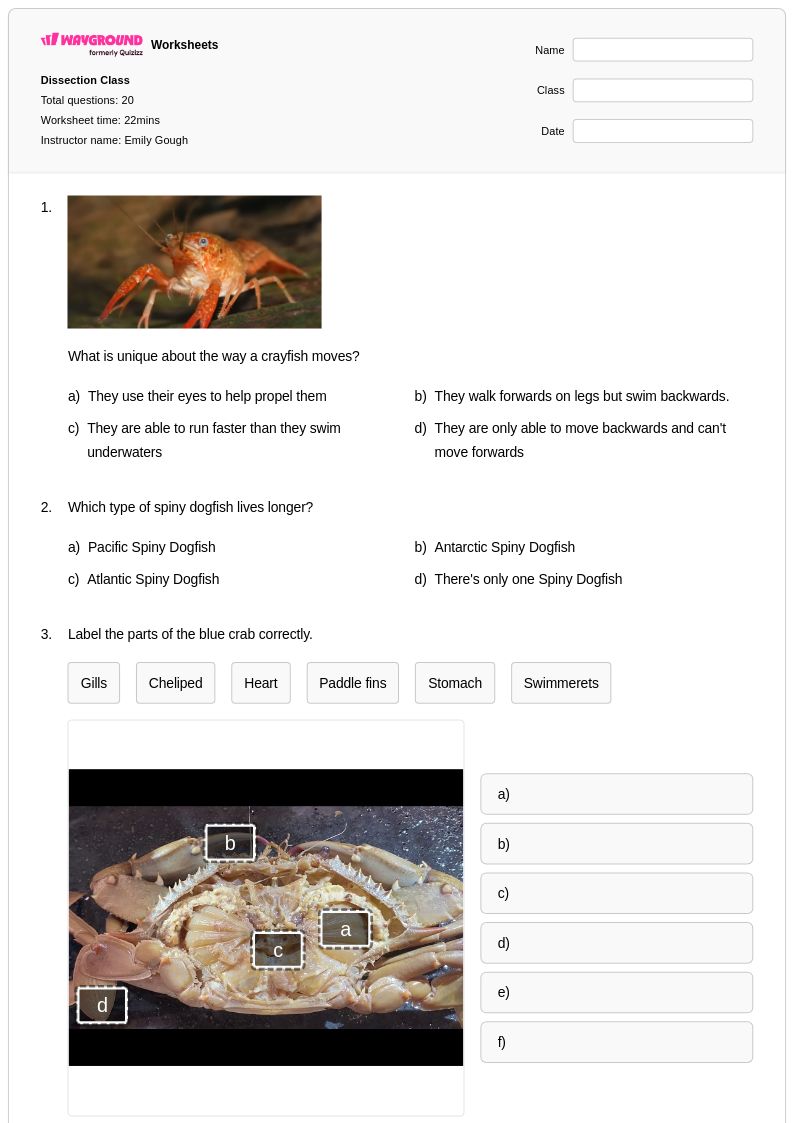
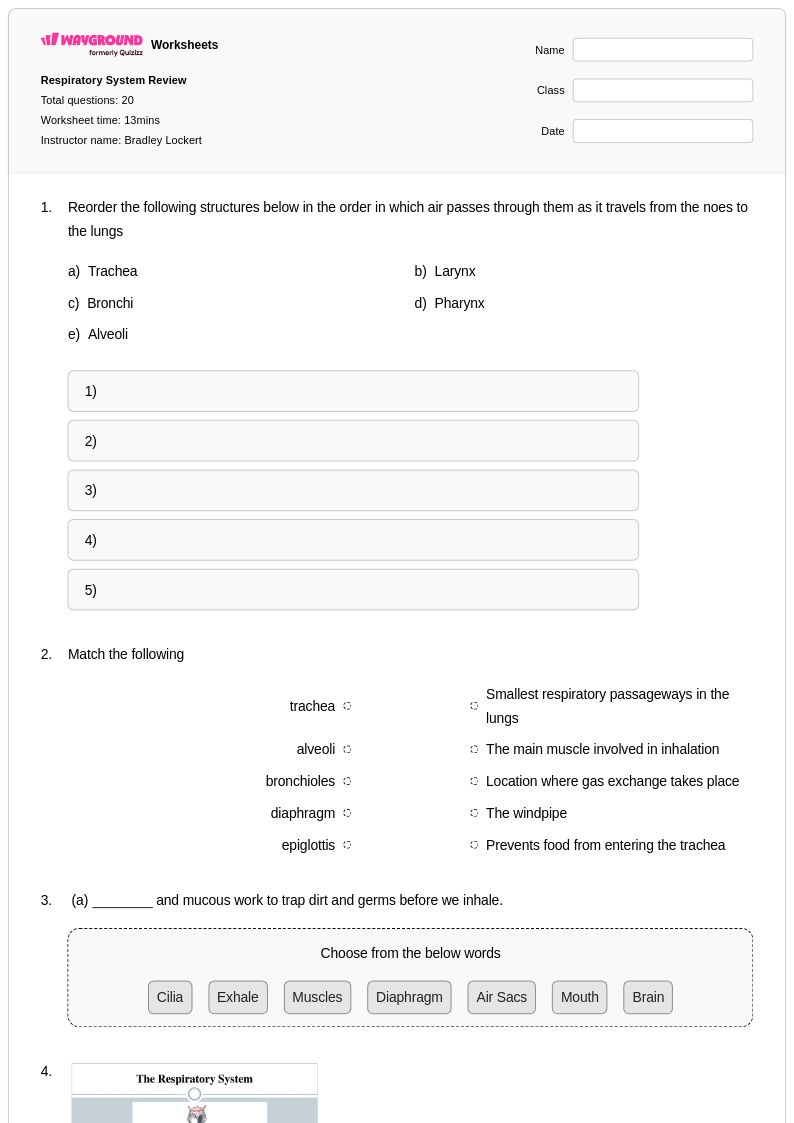
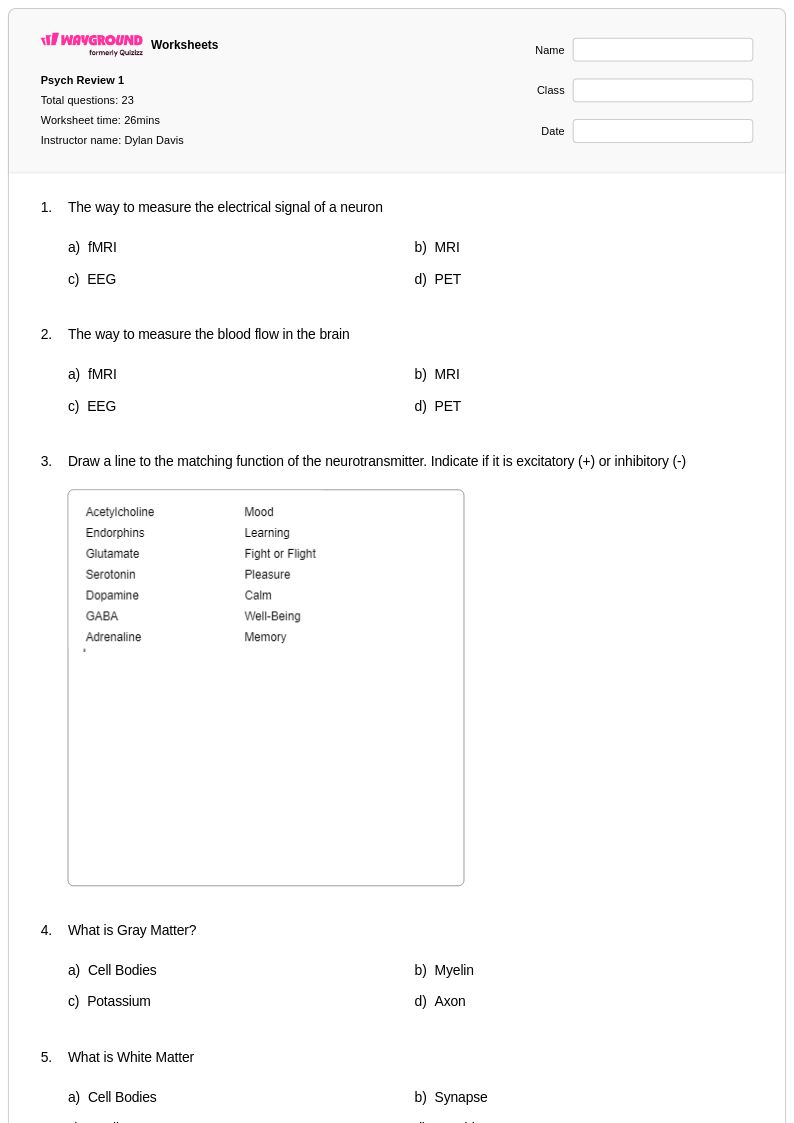
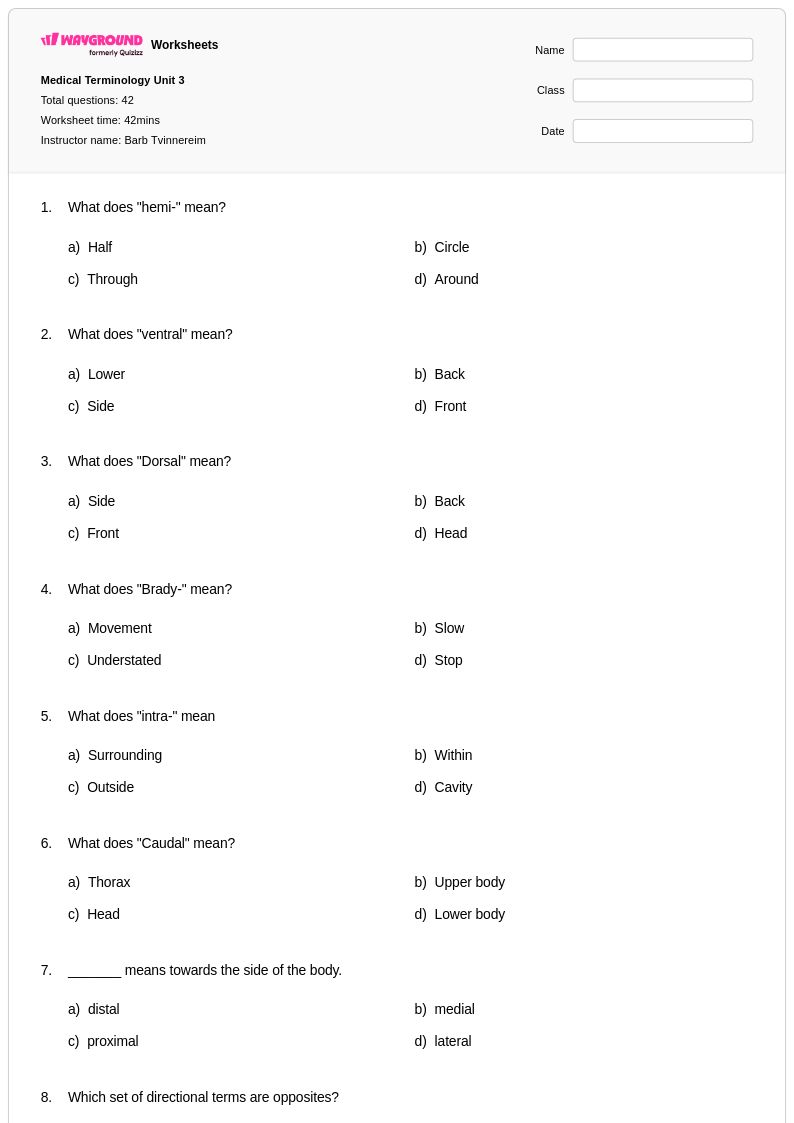
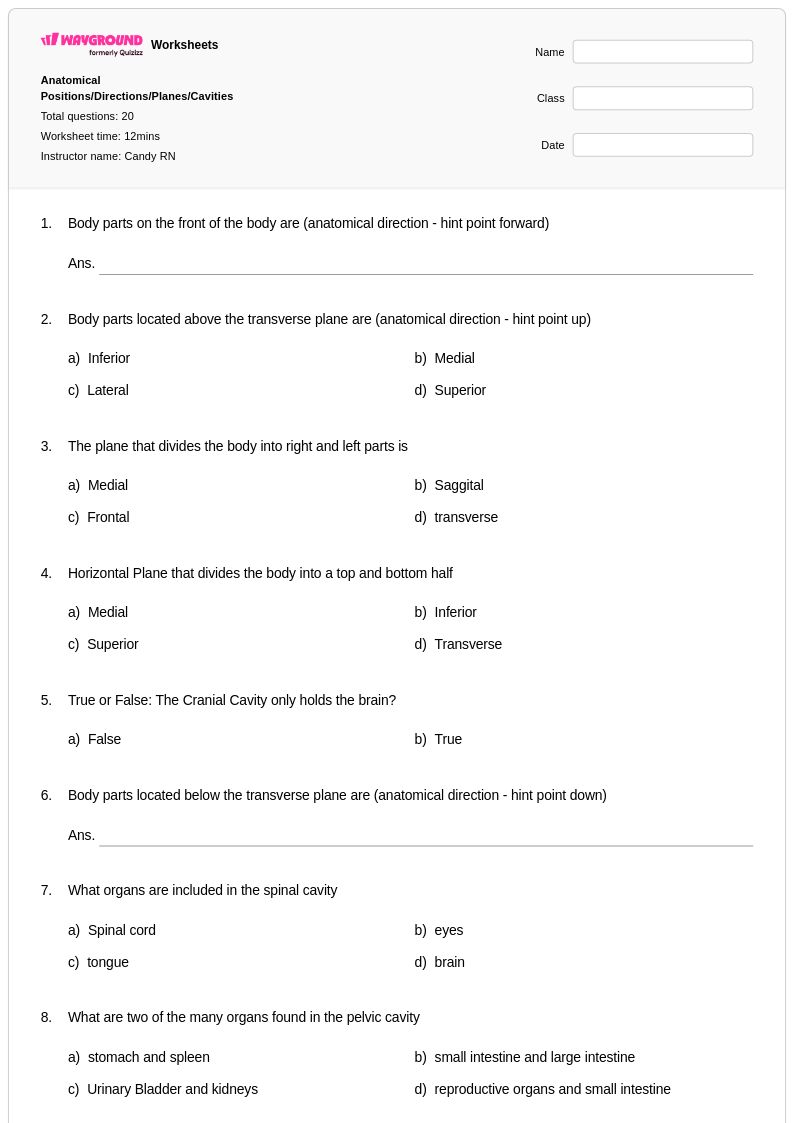
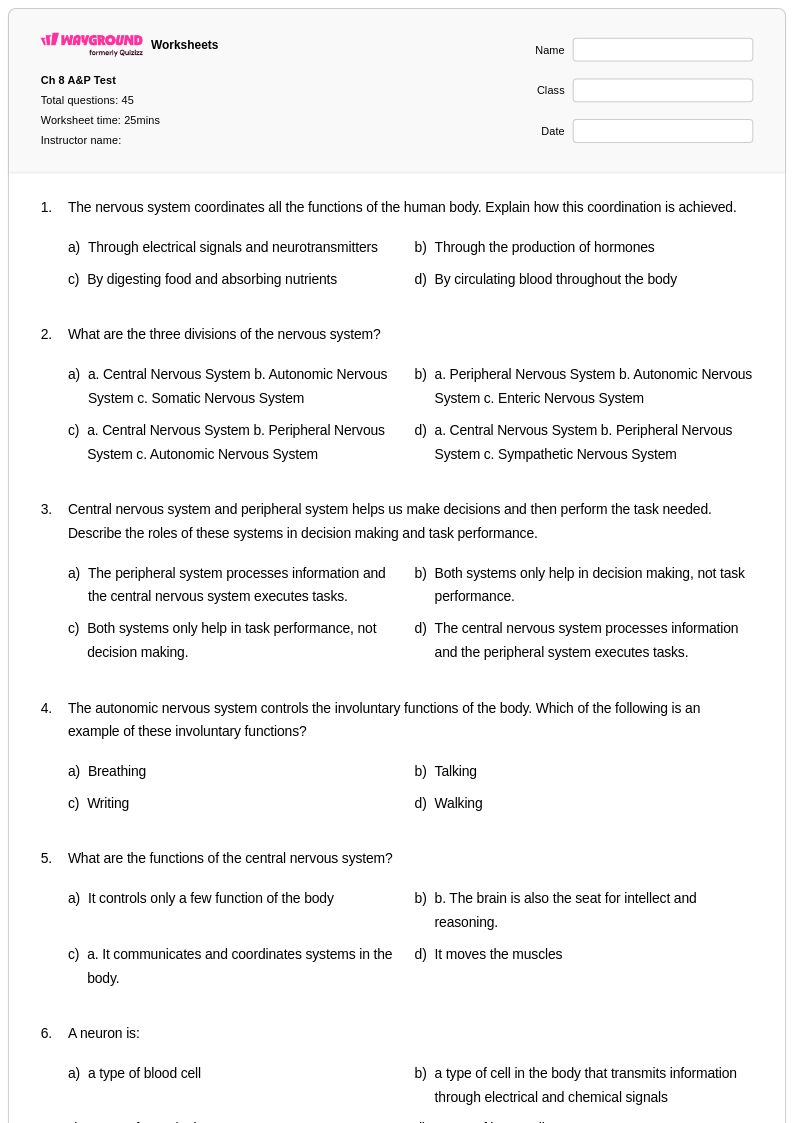
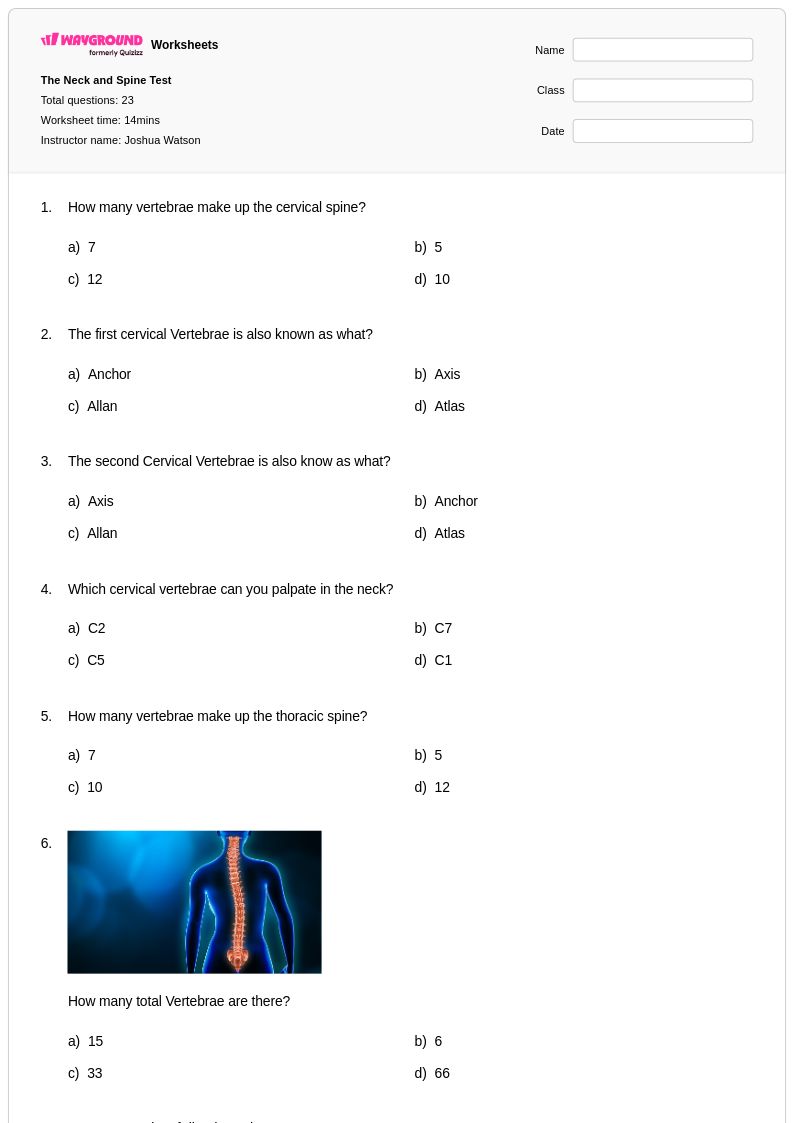
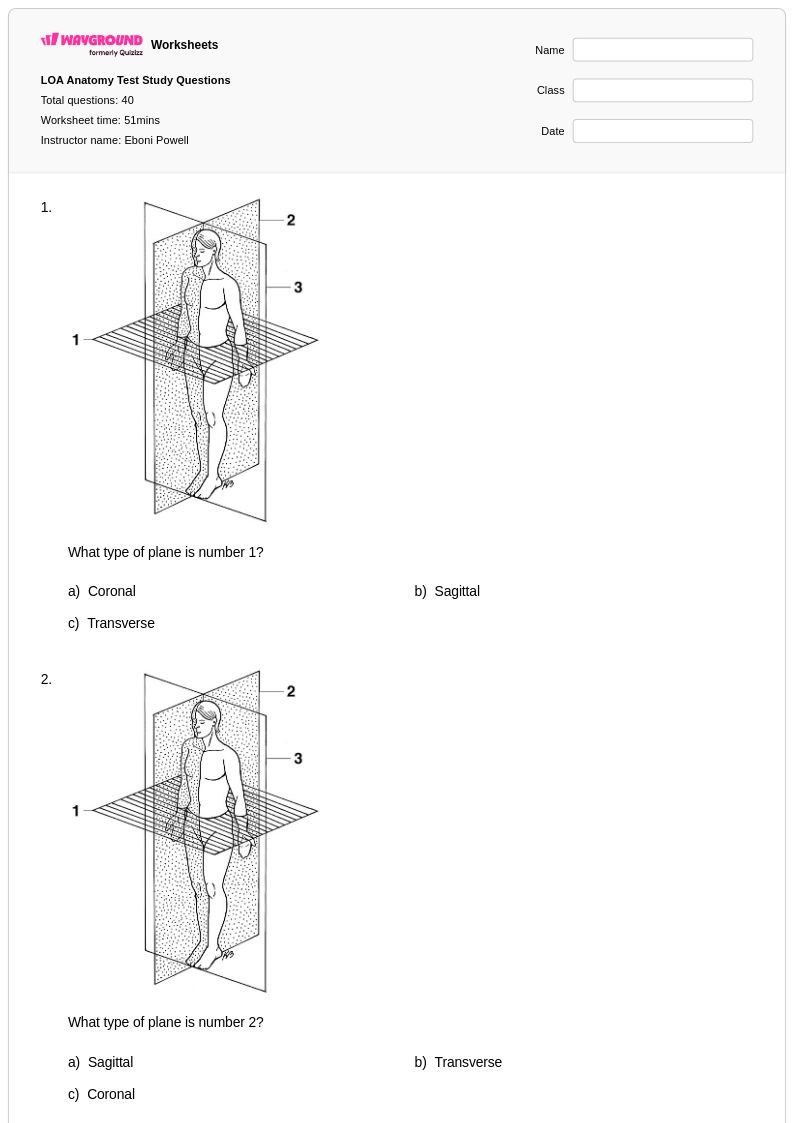
Grade 9 brain anatomy worksheets available through Wayground (formerly Quizizz) provide comprehensive coverage of the central nervous system's structure and function, enabling students to master critical neurobiological concepts through systematic practice. These expertly designed resources guide ninth-grade learners through detailed exploration of brain regions including the cerebrum, cerebellum, brainstem, and limbic system, while strengthening essential skills in anatomical identification, structural analysis, and physiological understanding. The collection includes diverse practice problems that challenge students to label brain diagrams, analyze neural pathways, and explain the relationship between brain structure and cognitive function, with each worksheet featuring a complete answer key to support independent learning and self-assessment. Available as free printables in convenient pdf format, these resources ensure students develop both foundational knowledge and advanced analytical skills necessary for success in high school biology and future neuroscience studies.
Wayground (formerly Quizizz) empowers educators with millions of teacher-created brain anatomy resources specifically designed to meet diverse Grade 9 classroom needs through robust search and filtering capabilities that align with state and national science standards. The platform's differentiation tools enable teachers to customize worksheets for varying ability levels, ensuring both struggling learners and advanced students receive appropriate challenge and support for skill development. These comprehensive collections are available in both printable and digital pdf formats, providing flexible implementation options that accommodate different teaching environments and learning preferences. Teachers utilize these resources for strategic lesson planning, targeted remediation of misconceptions about neurological structures, enrichment activities for accelerated learners, and ongoing skill practice that reinforces complex brain anatomy concepts through repeated exposure and varied question formats.
FAQs
How do I teach brain anatomy to students?
Teaching brain anatomy is most effective when you combine visual learning with active recall. Start by introducing the major regions — cerebrum, cerebellum, and brainstem — and their primary functions before moving into sub-structures. Labeled diagram activities, where students identify and annotate brain regions, help anchor terminology to spatial understanding. Building from broad structures to finer detail prevents cognitive overload and gives students a mental framework before they tackle more complex neuroanatomy.
What worksheets or exercises help students practice brain anatomy?
Labeling exercises are the most effective practice format for brain anatomy because they require students to actively retrieve structure names and locations rather than passively recognizing them. Cross-sectional diagram worksheets and functional mapping activities — where students match regions to their roles — extend practice beyond simple identification toward deeper comprehension. Varying the format across sessions, such as alternating blank diagrams with multiple-choice identification tasks, strengthens retention and prepares students for both written and visual assessments.
What mistakes do students commonly make when learning brain anatomy?
One of the most common errors is confusing the cerebrum and cerebellum — students often swap their names or misattribute their functions, particularly around motor coordination versus higher cognition. Students also frequently struggle to distinguish the lobes of the cerebrum (frontal, parietal, temporal, occipital) and their associated functions. Another recurring misconception is treating the brainstem as a single undifferentiated structure rather than recognizing its distinct components: the midbrain, pons, and medulla oblongata. Targeted labeling practice that explicitly addresses these common confusions helps correct them before they become fixed errors.
How do I use Wayground's brain anatomy worksheets in my classroom?
Wayground's brain anatomy worksheets are available as printable PDFs for traditional classroom use and in digital formats for technology-integrated environments, so they work whether you are teaching in person, in a hybrid model, or fully remote. You can distribute printed copies for individual or group work, or assign the digital version for students to complete on their devices. Wayground also allows you to host worksheets as a live quiz, giving you real-time insight into student performance. Each worksheet includes a complete answer key, making it straightforward to provide immediate feedback or use the material for self-directed review.
How can I differentiate brain anatomy instruction for students at different ability levels?
For students who need additional support, start with simplified diagrams that label only the major regions before introducing sub-structures. Wayground's platform supports individual accommodations including Read Aloud, which can help students who struggle with technical neuroanatomy vocabulary, and reduced answer choices to lower cognitive load during identification tasks. For advanced learners, functional analysis problems — where students explain how damage to a specific brain region would affect behavior — push beyond memorization into applied neuroscience thinking. These accommodation settings can be assigned per student and carry over across sessions without disrupting the rest of the class.
At what grade level is brain anatomy typically taught?
Brain anatomy is introduced at various points across K-12 education depending on the curriculum. Basic overviews of brain regions and their functions commonly appear in middle school life science or health courses, while more detailed neuroanatomy — including lobes, cross-sections, and functional mapping — is typically taught in high school biology, anatomy and physiology, or psychology courses. College-preparatory and AP-level courses require the deepest level of structural and functional detail, making comprehensive labeling and diagram worksheets especially valuable at those levels.