Free Printable Cerebrospinal Fluid Worksheets for Grade 9
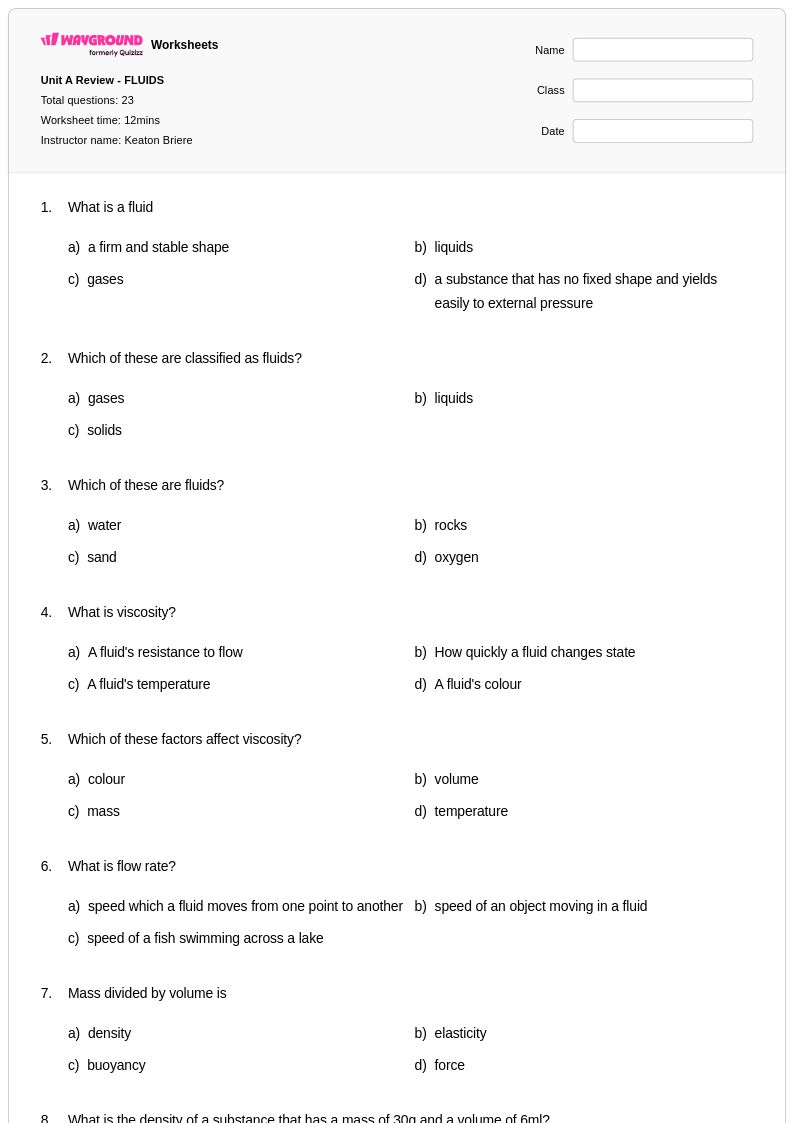
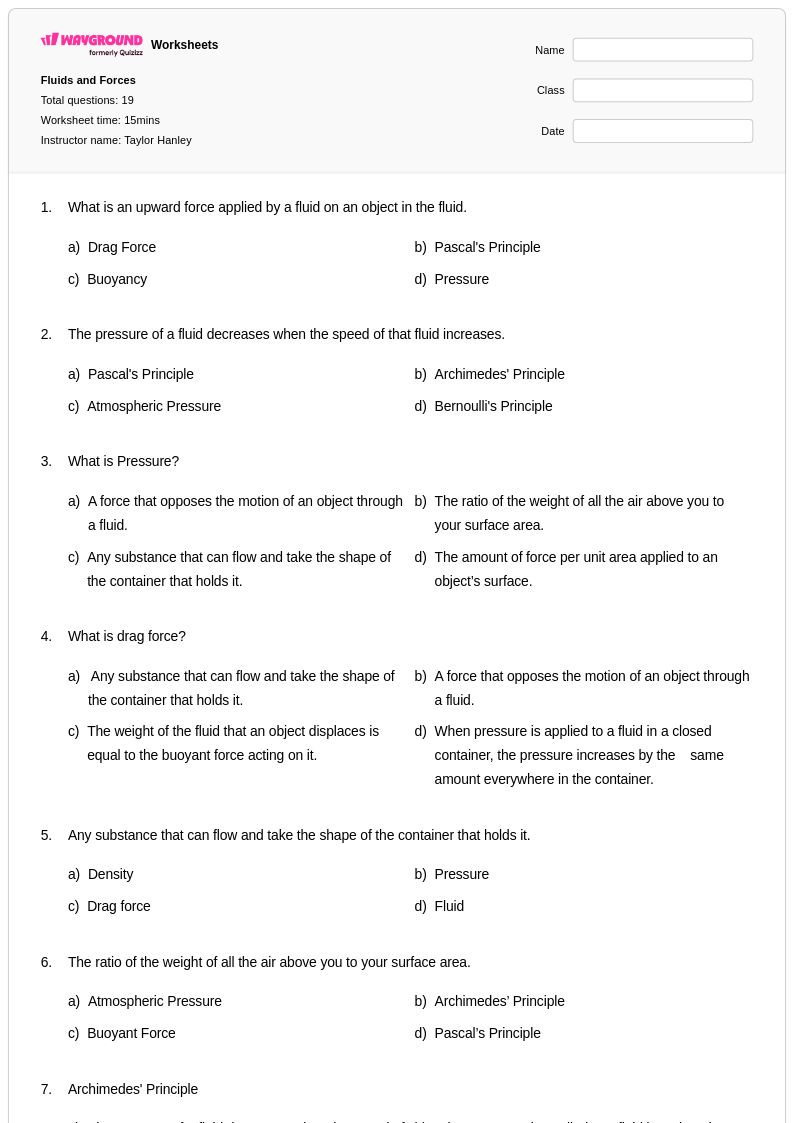
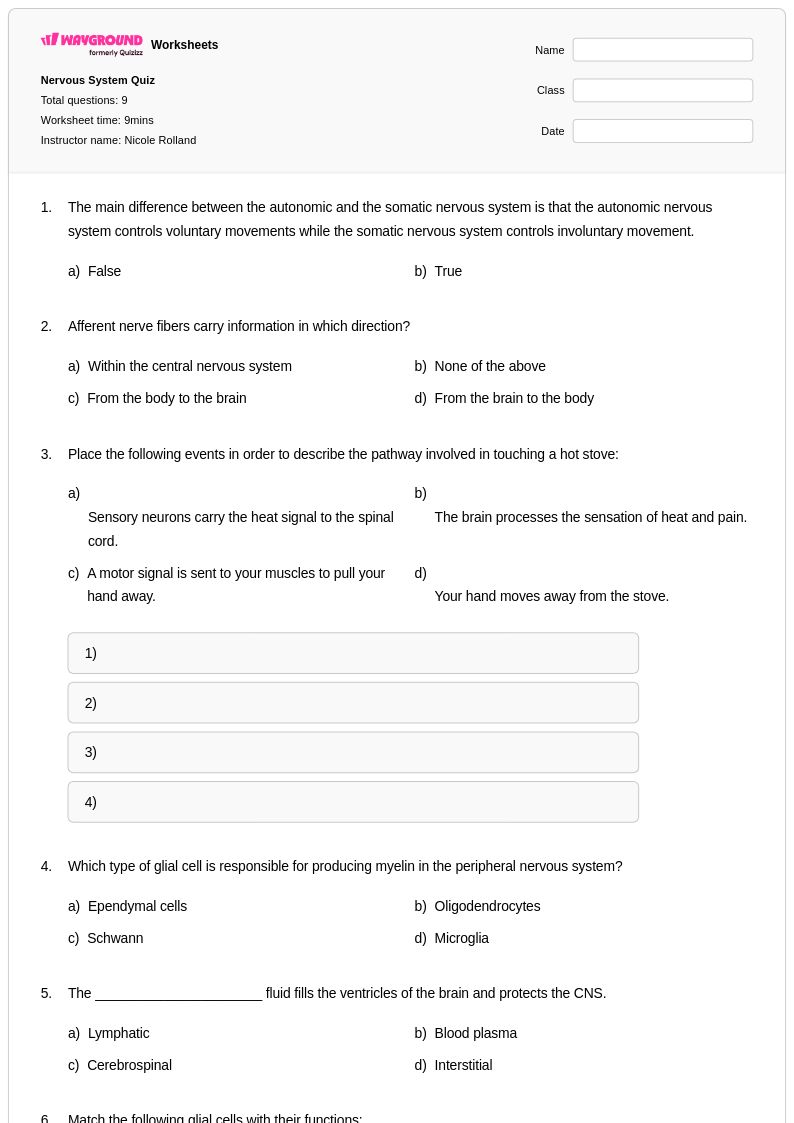
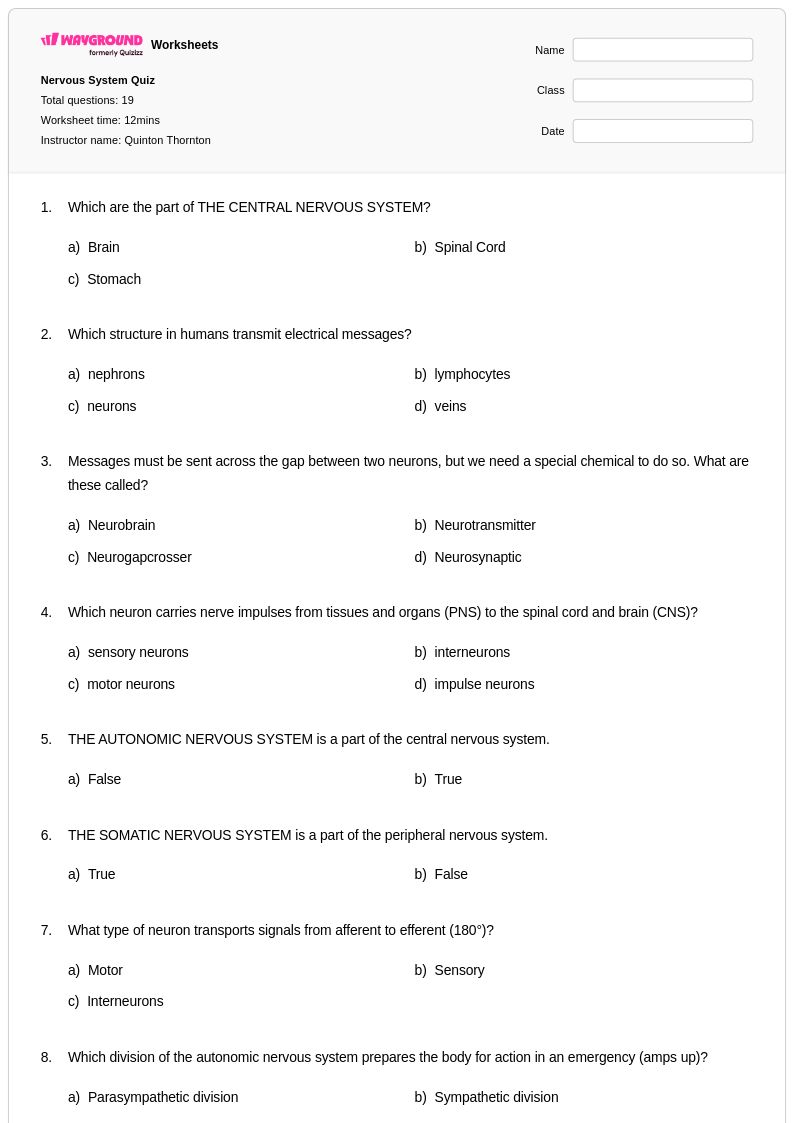
Grade 9 cerebrospinal fluid worksheets provide comprehensive printables and practice problems to help students understand the functions, composition, and circulation of CSF in the human nervous system, complete with answer keys and free PDF downloads.
Explore printable Cerebrospinal Fluid worksheets for Grade 9
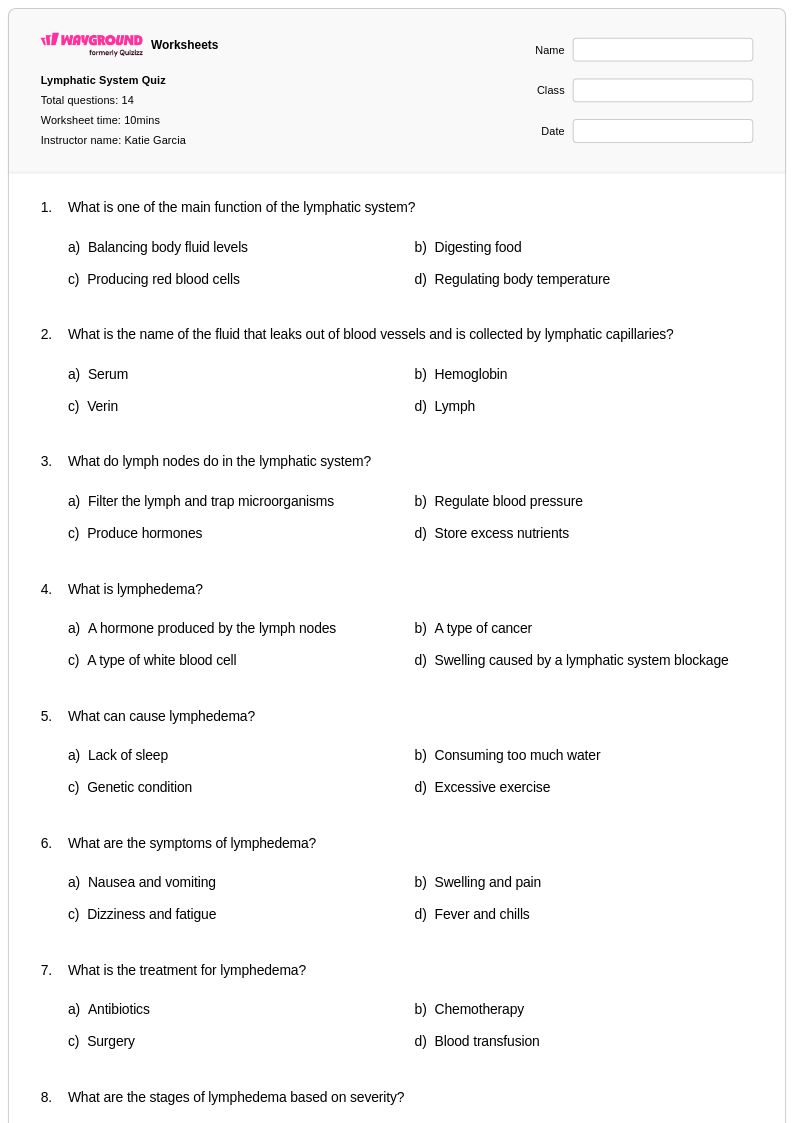
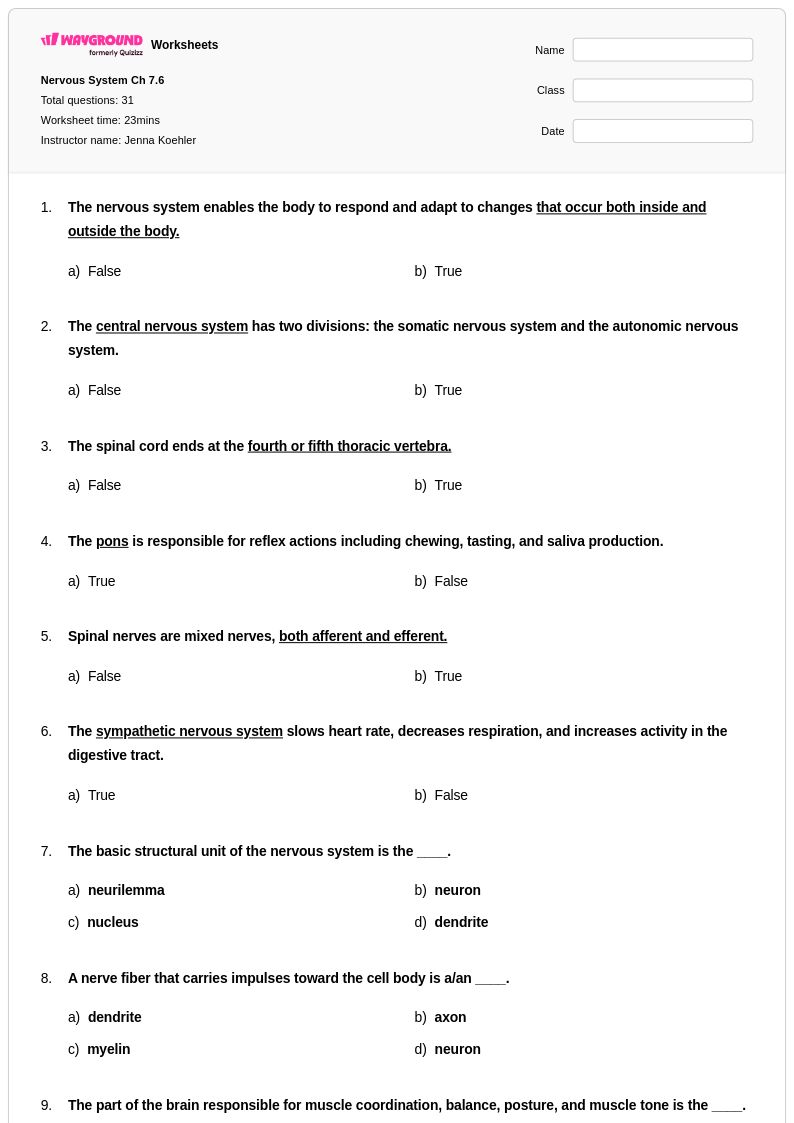
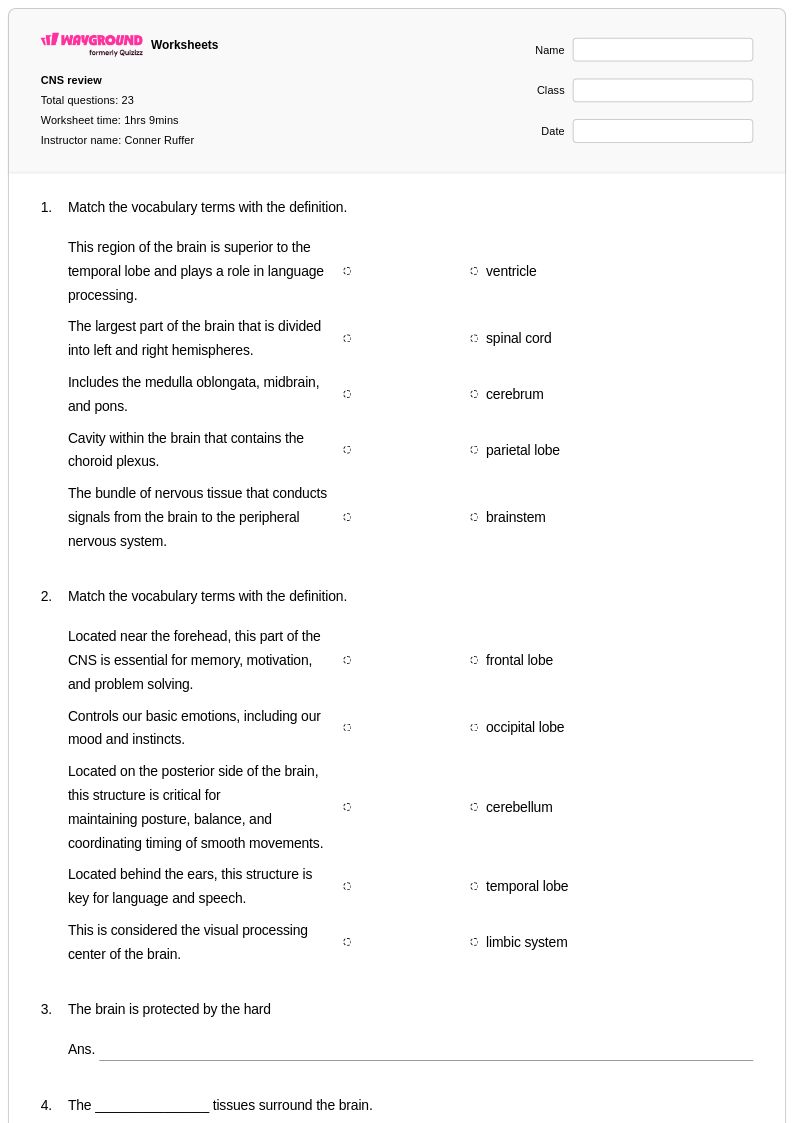
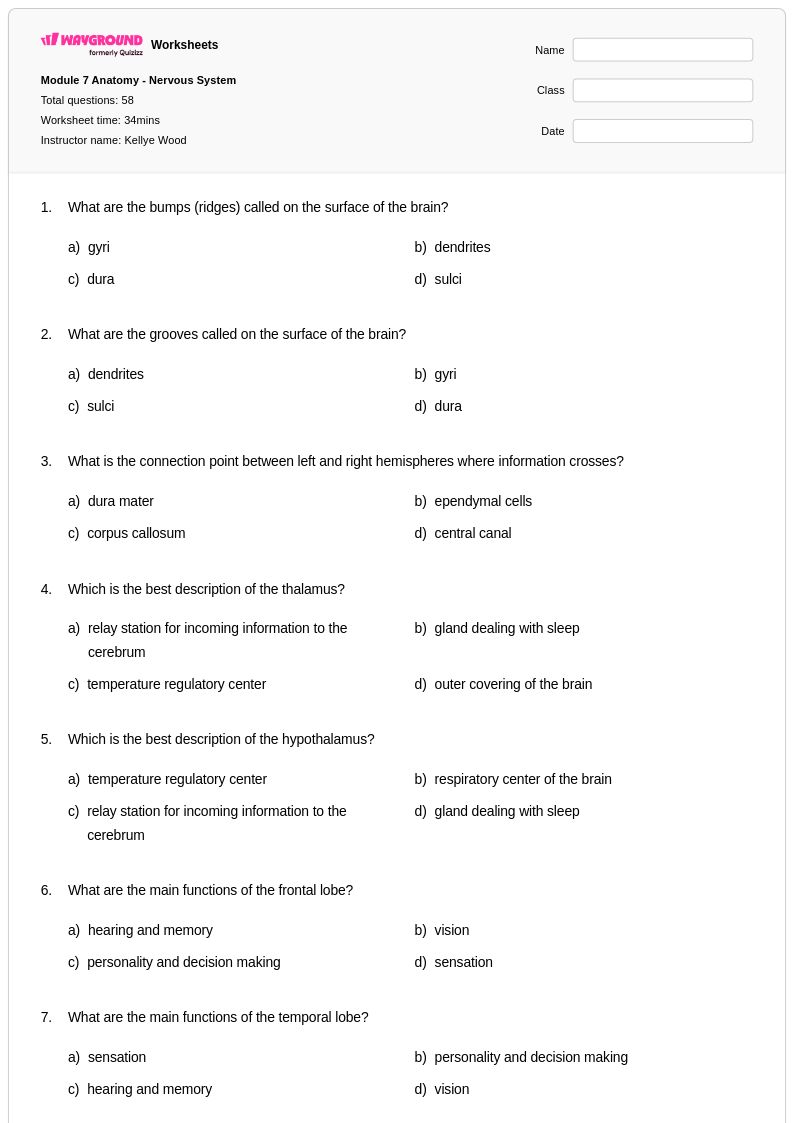
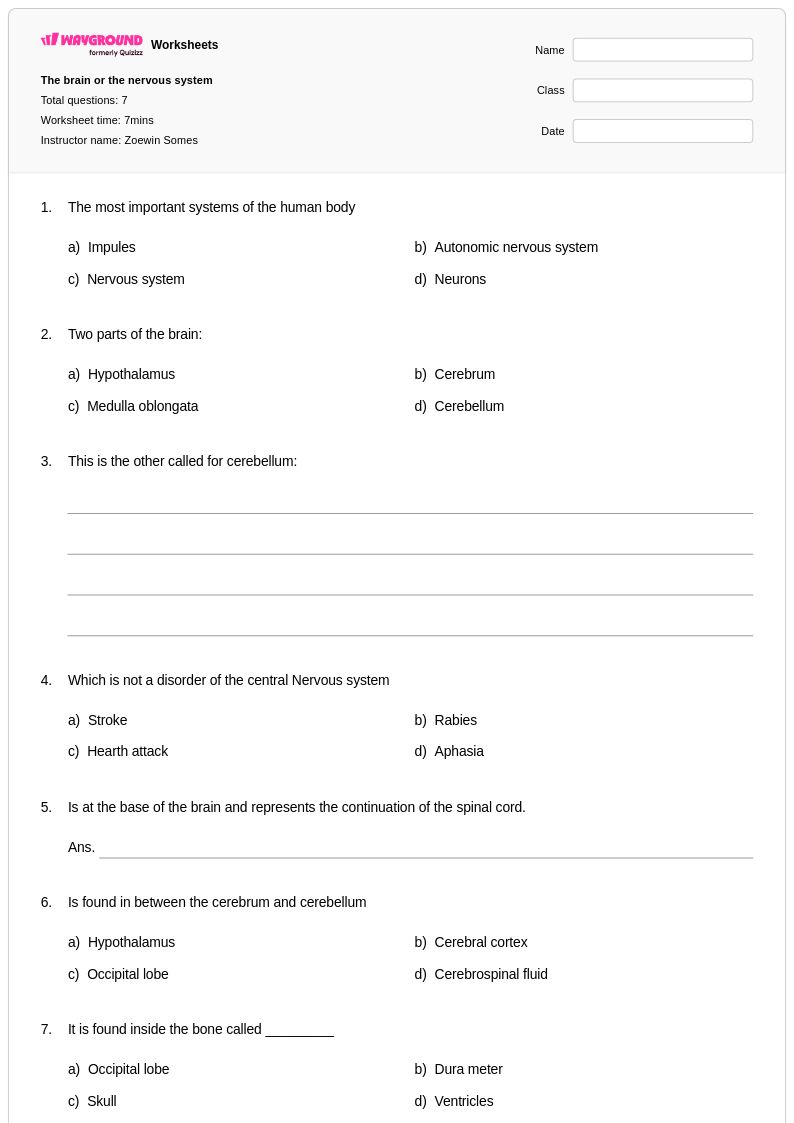
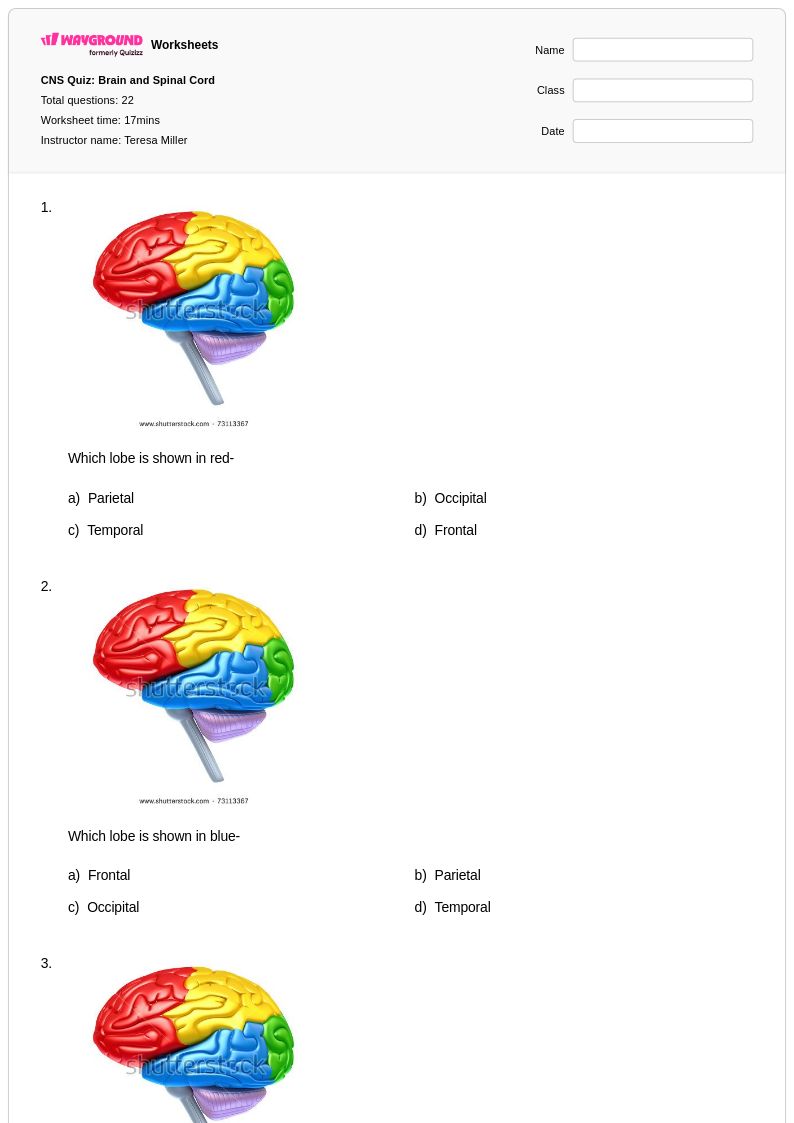
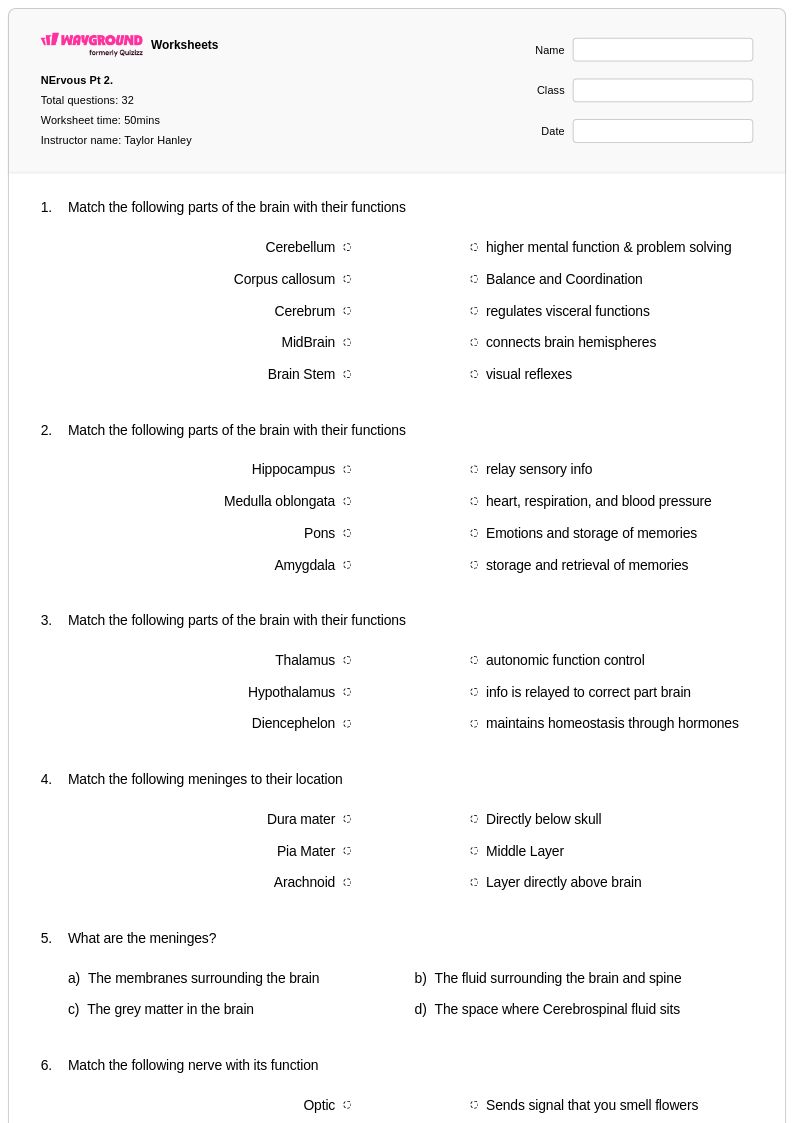
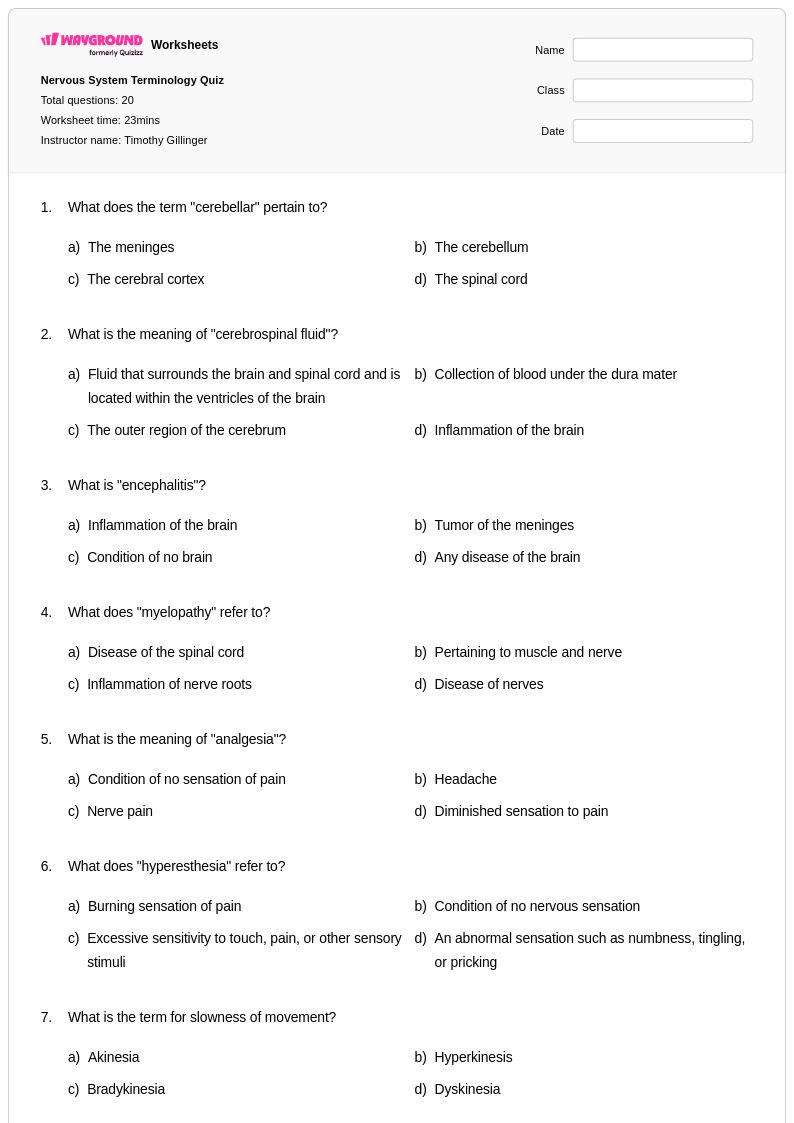
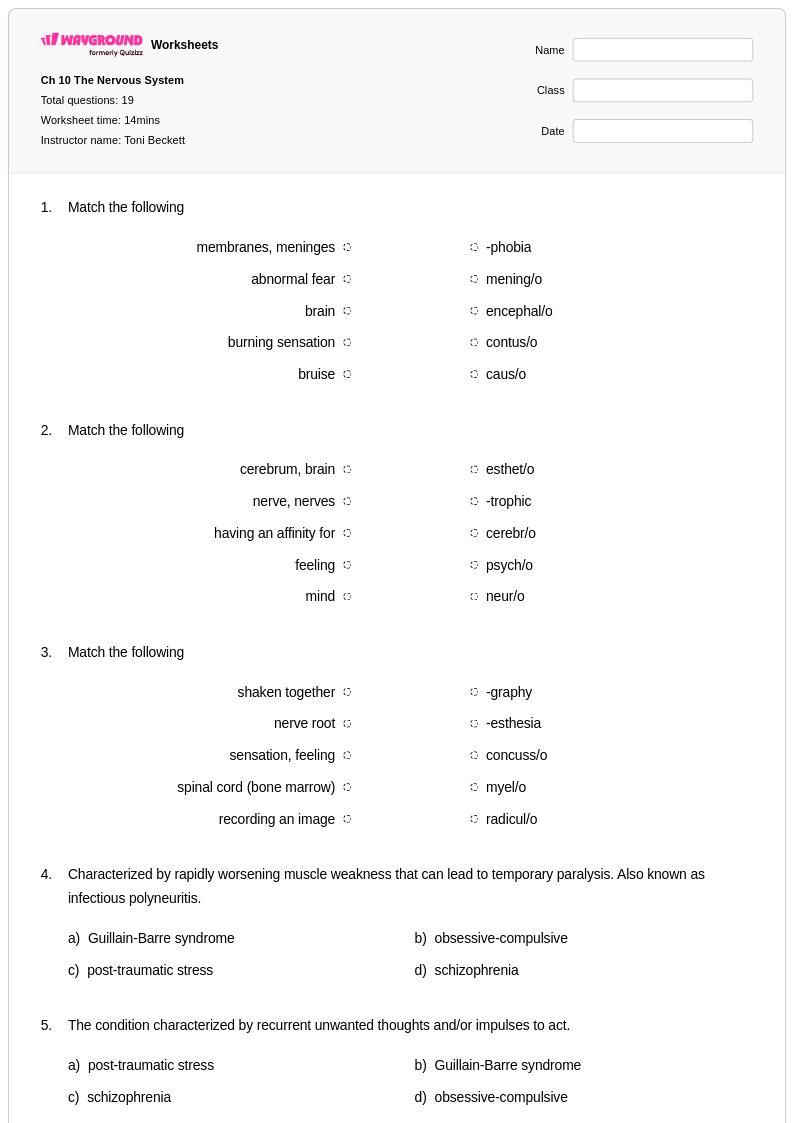
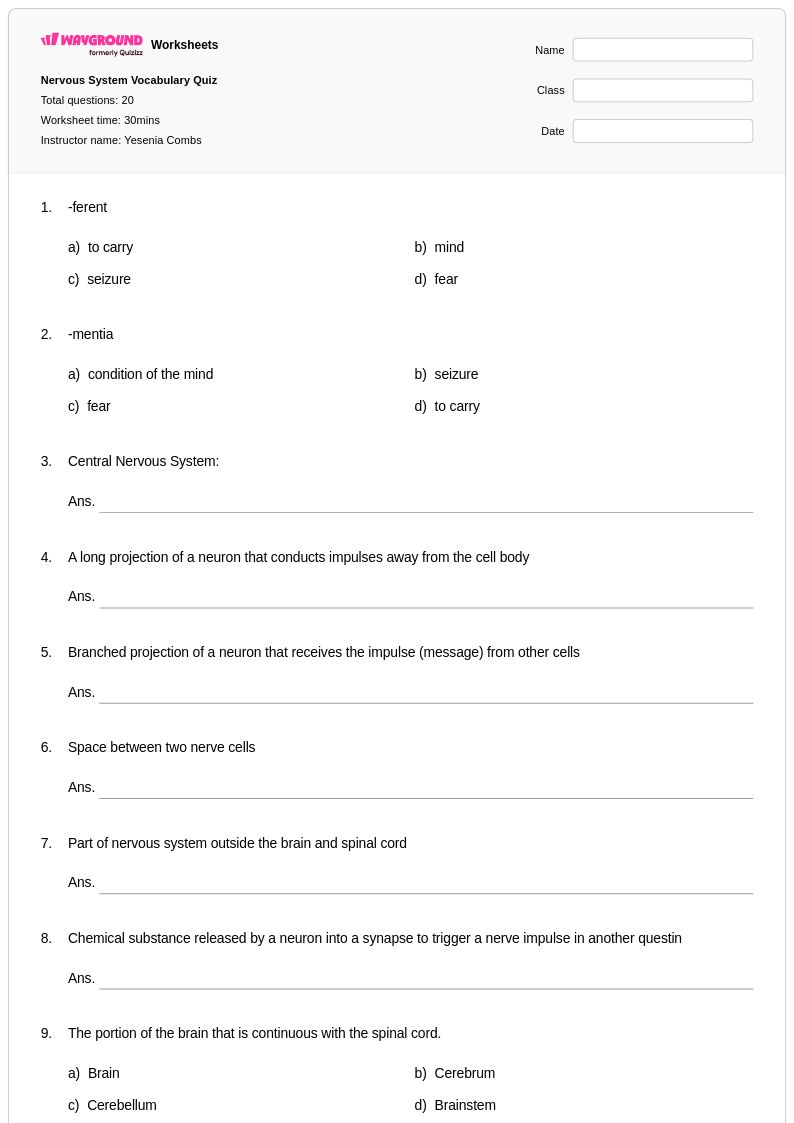
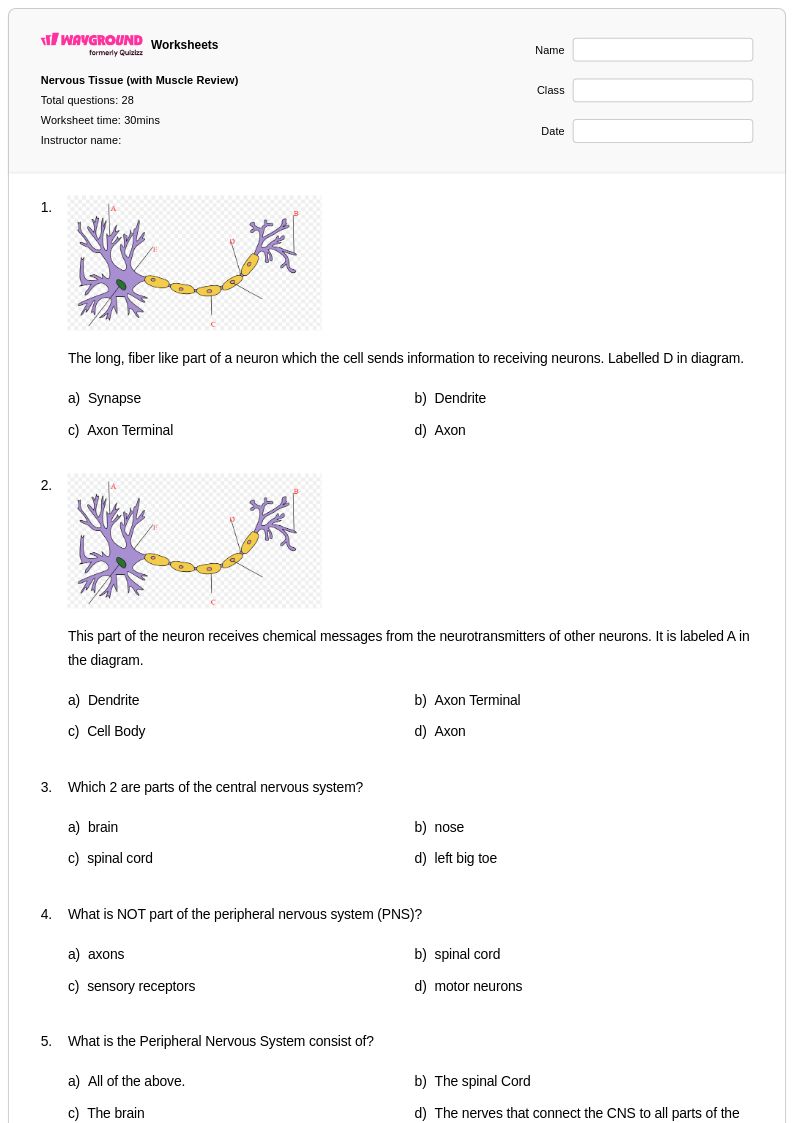
Cerebrospinal fluid worksheets for Grade 9 students available through Wayground (formerly Quizizz) provide comprehensive coverage of this essential component of the central nervous system. These educational resources help students master the complex concepts surrounding CSF production, circulation, and function within the brain and spinal cord. Students develop critical thinking skills as they work through practice problems that explore how cerebrospinal fluid protects neural tissue, maintains intracranial pressure, and facilitates nutrient transport and waste removal. The worksheets include detailed answer keys that support independent learning and self-assessment, while the free printable pdf format ensures accessibility for both classroom instruction and home study. These materials strengthen students' understanding of neuroanatomy and physiology through carefully designed exercises that connect cerebrospinal fluid function to broader human biology concepts.
Wayground (formerly Quizizz) empowers educators with an extensive collection of millions of teacher-created cerebrospinal fluid worksheets specifically designed for Grade 9 human biology instruction. The platform's robust search and filtering capabilities allow teachers to quickly locate materials that align with curriculum standards and match their students' specific learning needs. Differentiation tools enable instructors to modify worksheet complexity and content focus, supporting both remediation for struggling learners and enrichment opportunities for advanced students. Teachers can access these resources in multiple formats, including printable pdfs and interactive digital versions, providing flexibility for diverse classroom environments and teaching styles. This comprehensive worksheet collection streamlines lesson planning while offering targeted skill practice that helps students build confidence in understanding the intricate relationships between cerebrospinal fluid and overall nervous system health.
FAQs
How do I teach cerebrospinal fluid to students?
Teaching cerebrospinal fluid (CSF) effectively starts with grounding students in the anatomy of the meninges and ventricular system before introducing CSF's three core functions: mechanical protection, pressure regulation, and metabolic waste removal. Using labeled diagrams of CSF circulation pathways helps students visualize how fluid moves from production in the choroid plexus through the subarachnoid space and into venous drainage. Connecting these structures to clinical scenarios like lumbar punctures and hydrocephalus gives students a practical frame for understanding why CSF matters beyond memorization.
What are good practice exercises for students learning about cerebrospinal fluid?
Effective CSF practice exercises include labeling the ventricles and circulation pathway, matching physiological functions to anatomical structures, and interpreting CSF analysis data from simulated lumbar puncture results. Sequencing activities that ask students to order the steps of CSF production, circulation, and reabsorption reinforce process understanding rather than isolated fact recall. Case-based problems involving abnormal CSF findings, such as elevated protein or cloudy appearance, push students toward clinical reasoning and deepen retention.
What mistakes do students commonly make when learning about cerebrospinal fluid?
A frequent misconception is that CSF is simply a passive cushion rather than a dynamic fluid with active production, circulation, and reabsorption cycles. Students often confuse the choroid plexus as the sole site of CSF reabsorption rather than correctly identifying the arachnoid granulations. Another common error is conflating the blood-brain barrier with the blood-CSF barrier, which leads to inaccurate reasoning about drug delivery and infection pathways in the central nervous system.
How do I use cerebrospinal fluid worksheets in my classroom?
Cerebrospinal fluid worksheets on Wayground are available as printable PDFs for traditional classroom use and in digital formats for technology-integrated or hybrid learning environments, including the option to host them as a quiz directly on Wayground. Printable versions work well as structured note-taking guides during direct instruction or as independent review activities, while digital formats allow for real-time feedback when assigned as formative assessments. Teachers can also use the included answer keys to facilitate peer correction or self-assessment, reinforcing metacognitive habits alongside content knowledge.
How does cerebrospinal fluid relate to clinical conditions students need to know?
CSF is directly implicated in several high-yield clinical conditions, including meningitis, hydrocephalus, and idiopathic intracranial hypertension, making it a foundational topic for students in anatomy, physiology, and pre-health courses. Understanding CSF production and drainage helps students reason through why blockages in the ventricular system cause hydrocephalus, or why lumbar puncture is used to detect pathogens and measure opening pressure. Embedding clinical context into CSF instruction improves both recall and the ability to apply knowledge in exam and real-world scenarios.
How can I differentiate cerebrospinal fluid instruction for students at different levels?
For foundational learners, CSF instruction should focus on the three primary functions and the basic circulation pathway using visual diagrams with fill-in-the-blank labeling. Advanced students can engage with higher-order tasks such as analyzing mock CSF lab reports, evaluating differential diagnoses, or explaining the consequences of impaired arachnoid granulation reabsorption. On Wayground, teachers can apply accommodations such as read aloud support, reduced answer choices, and extended time on a per-student basis, allowing differentiation without singling out individual students in front of the class.