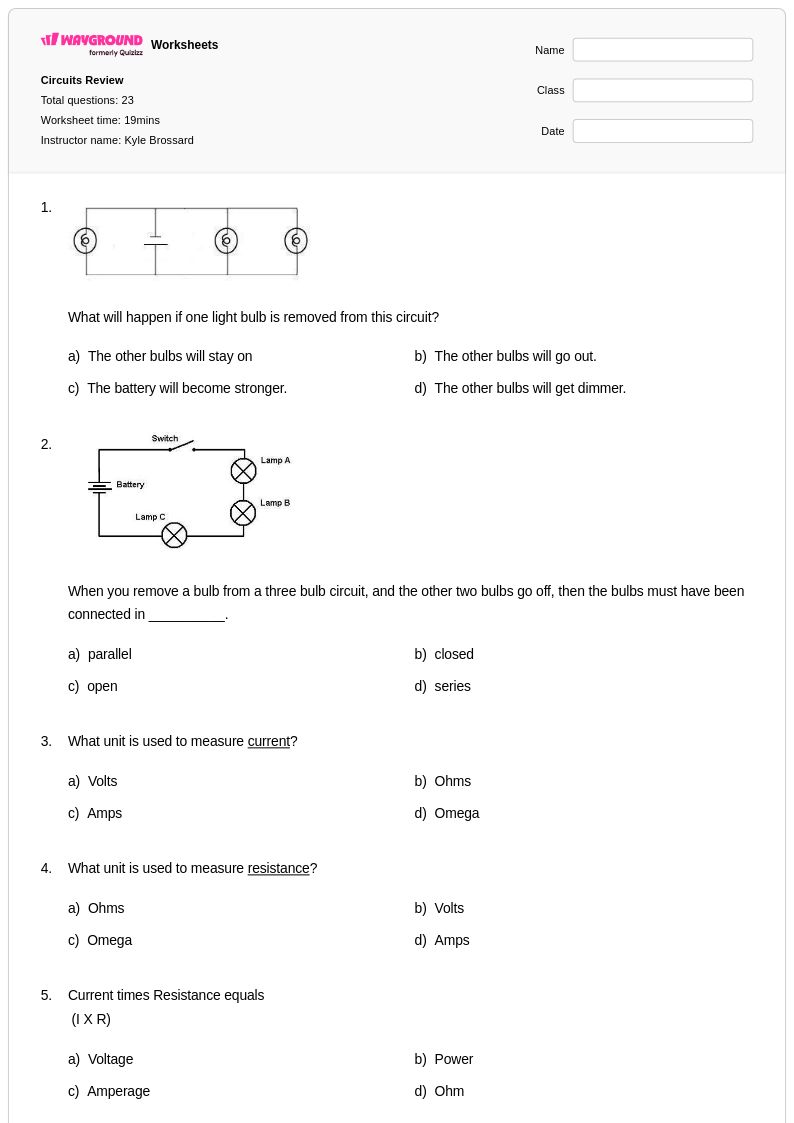
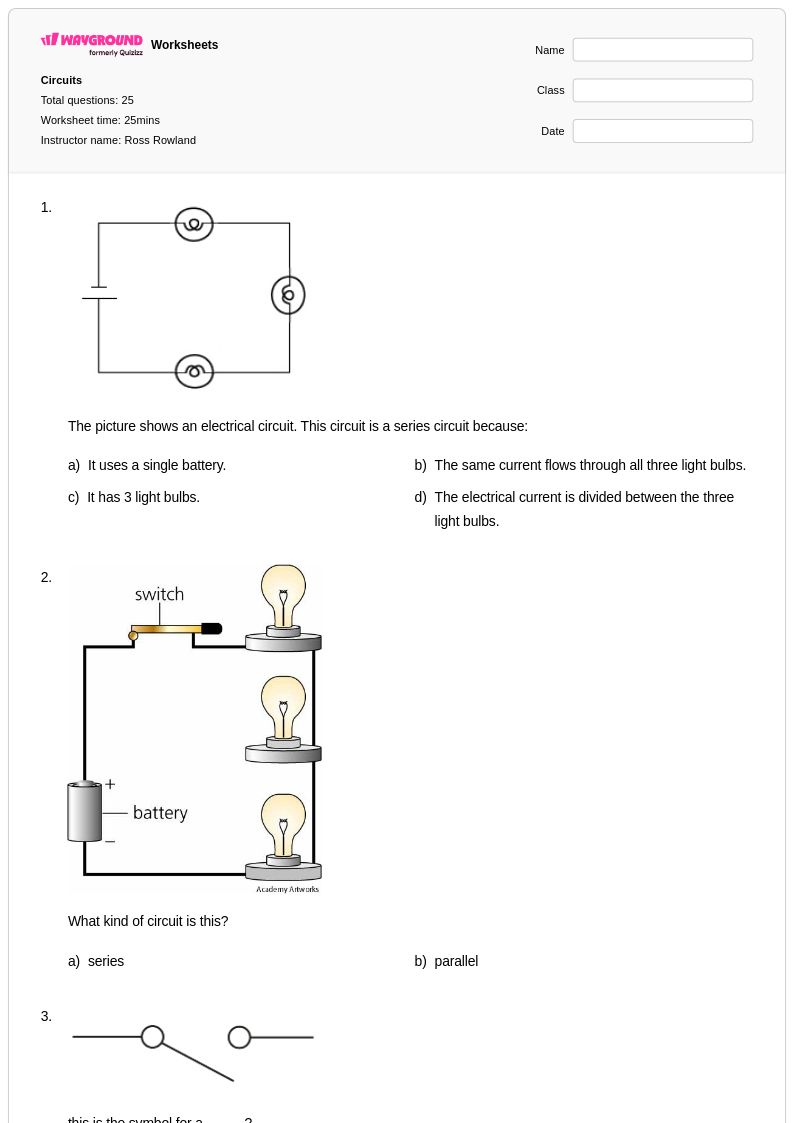
Grade 9 circuits worksheets from Wayground offer comprehensive printables and practice problems to help students master electrical circuits, complete with answer keys and free PDF resources for effective physics learning.
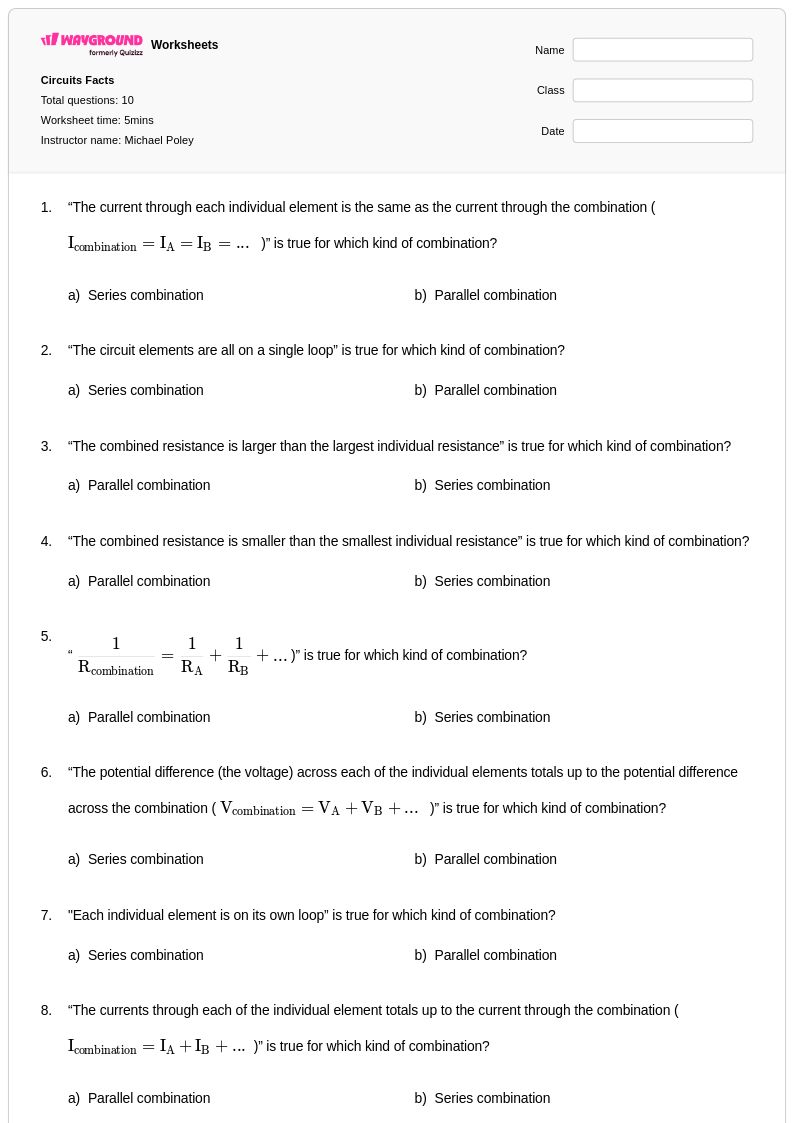
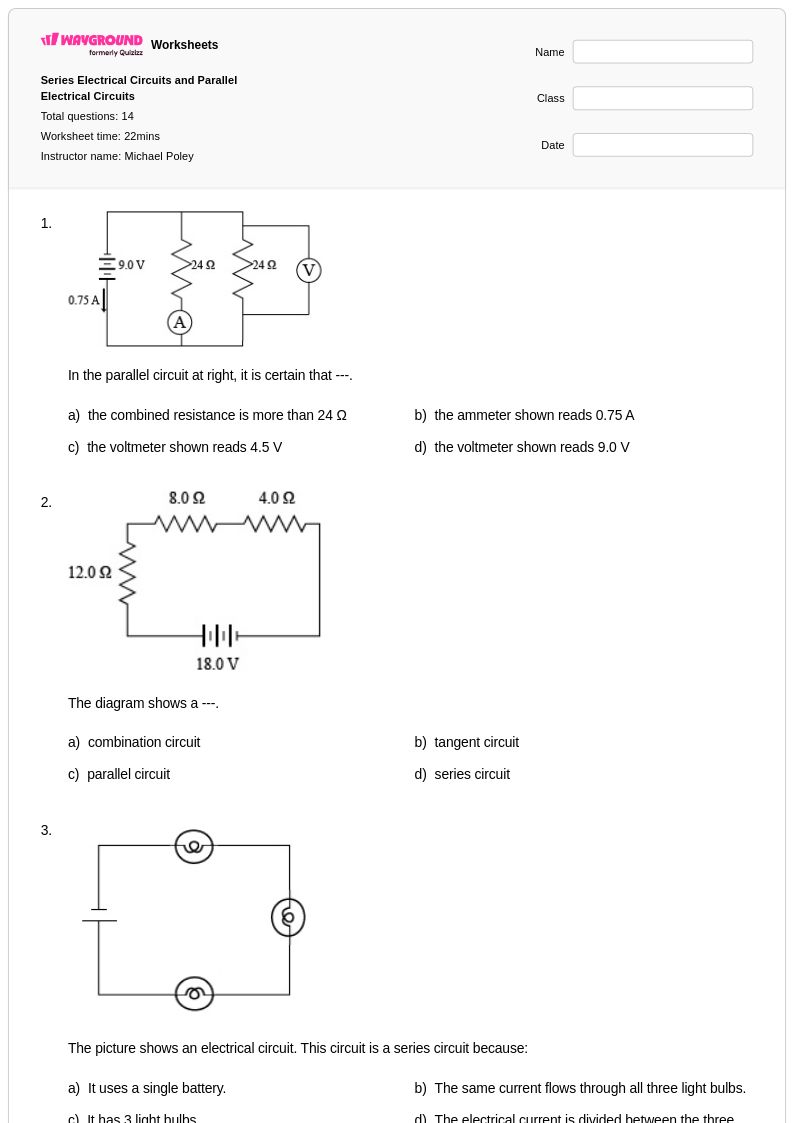
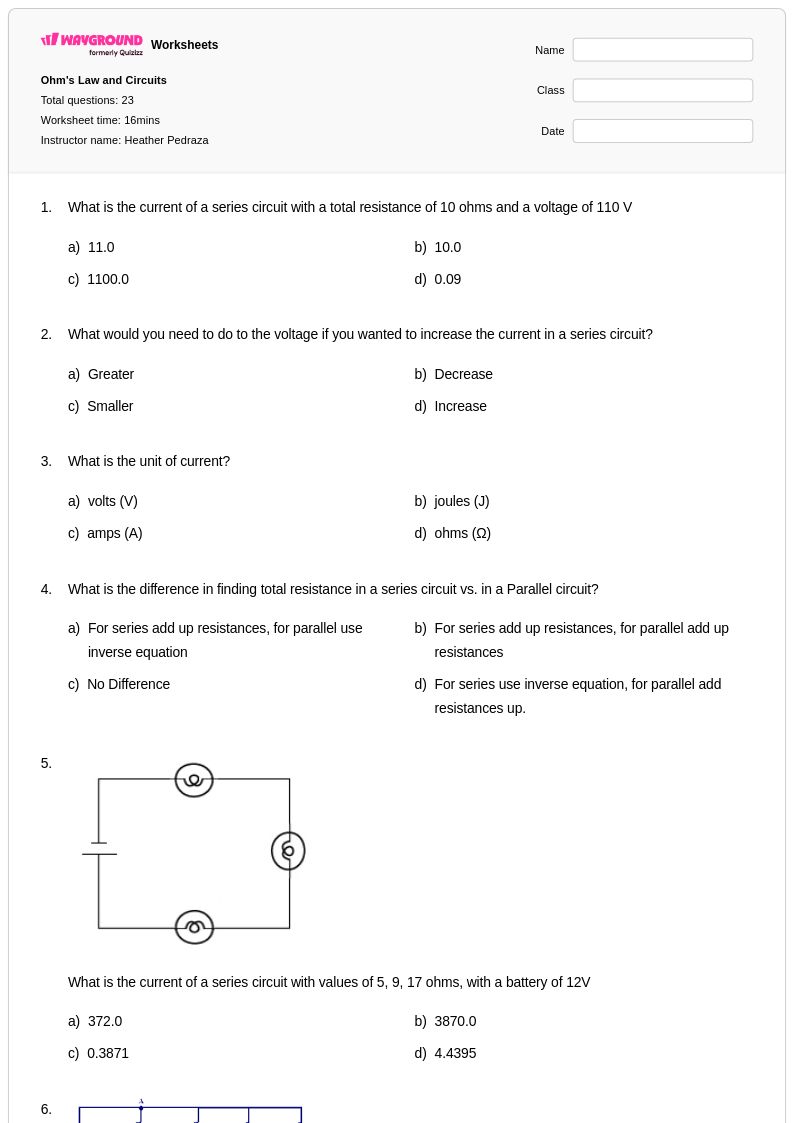
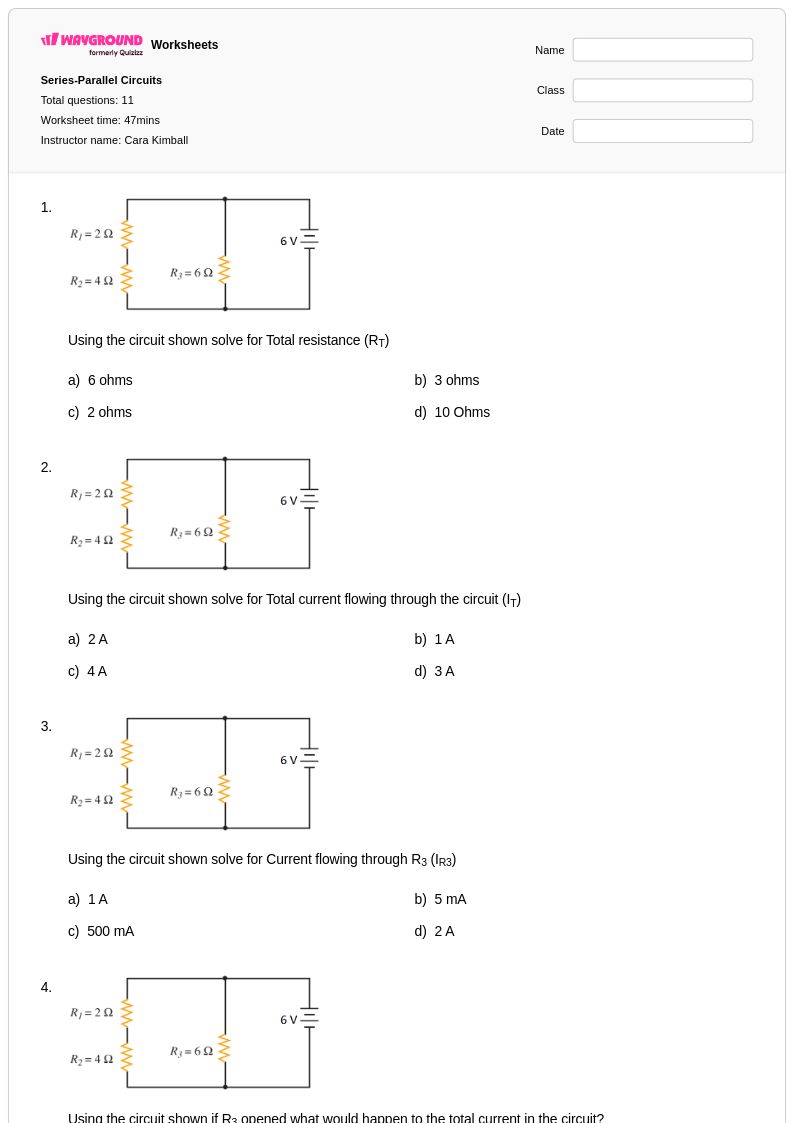
Grade 9 circuits worksheets available through Wayground (formerly Quizizz) provide comprehensive coverage of fundamental electrical concepts that form the foundation of high school physics education. These expertly designed resources strengthen students' understanding of series and parallel circuits, Ohm's law applications, voltage and current calculations, and circuit analysis techniques. The practice problems systematically build proficiency in reading circuit diagrams, calculating electrical quantities, and predicting circuit behavior under various conditions. Each worksheet collection includes detailed answer keys that support both independent learning and classroom instruction, with printable pdf formats ensuring easy distribution and accessibility. These free educational materials emphasize hands-on problem-solving skills while reinforcing theoretical concepts through practical circuit scenarios that Grade 9 students encounter in their physics curriculum.
Wayground (formerly Quizizz) empowers educators with millions of teacher-created circuit worksheets that can be seamlessly integrated into any Grade 9 physics program. The platform's robust search and filtering capabilities allow teachers to quickly locate resources aligned with specific learning standards and curriculum objectives, while differentiation tools enable customization for diverse learning needs and skill levels. These circuit worksheet collections are available in both printable and digital formats, including downloadable pdfs that facilitate flexible classroom implementation and remote learning scenarios. Teachers can efficiently plan comprehensive circuit units, provide targeted remediation for struggling students, offer enrichment opportunities for advanced learners, and deliver focused skill practice that reinforces essential electrical concepts. The platform's extensive resource library ensures that educators have access to high-quality materials that support effective instruction and promote deep understanding of circuit principles across all learning environments.
FAQs
How do I teach electrical circuits to middle and high school students?
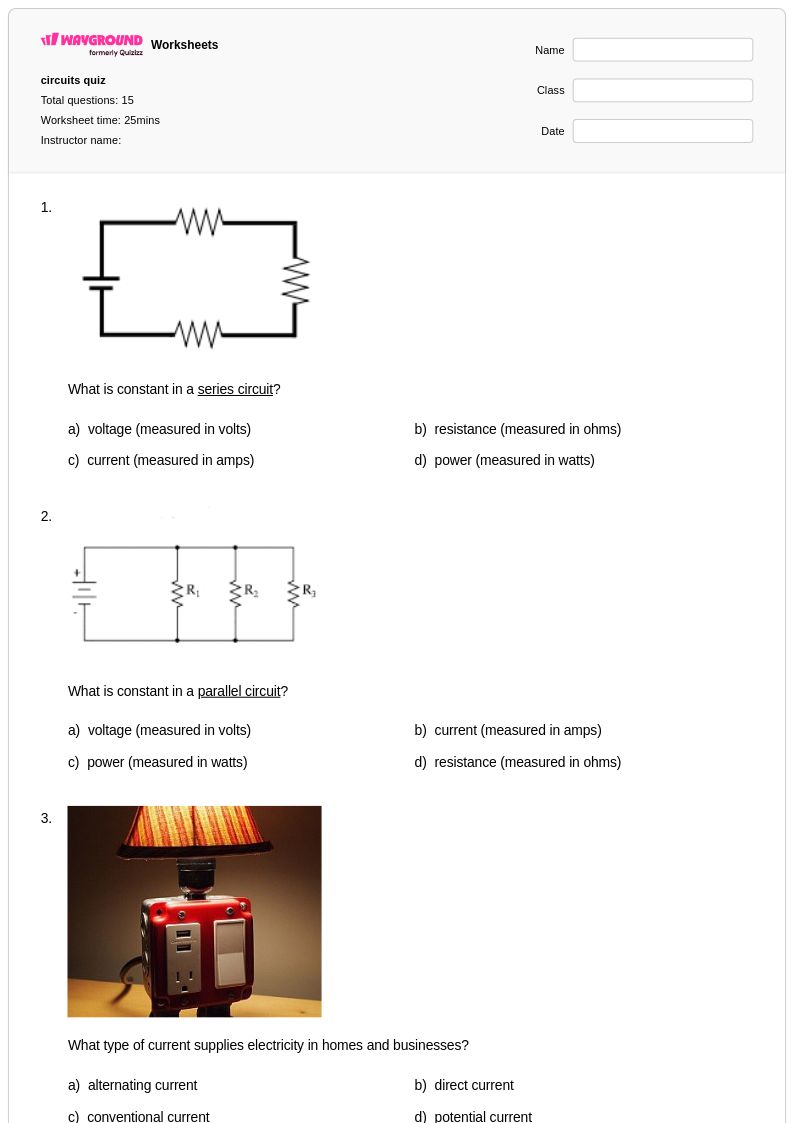
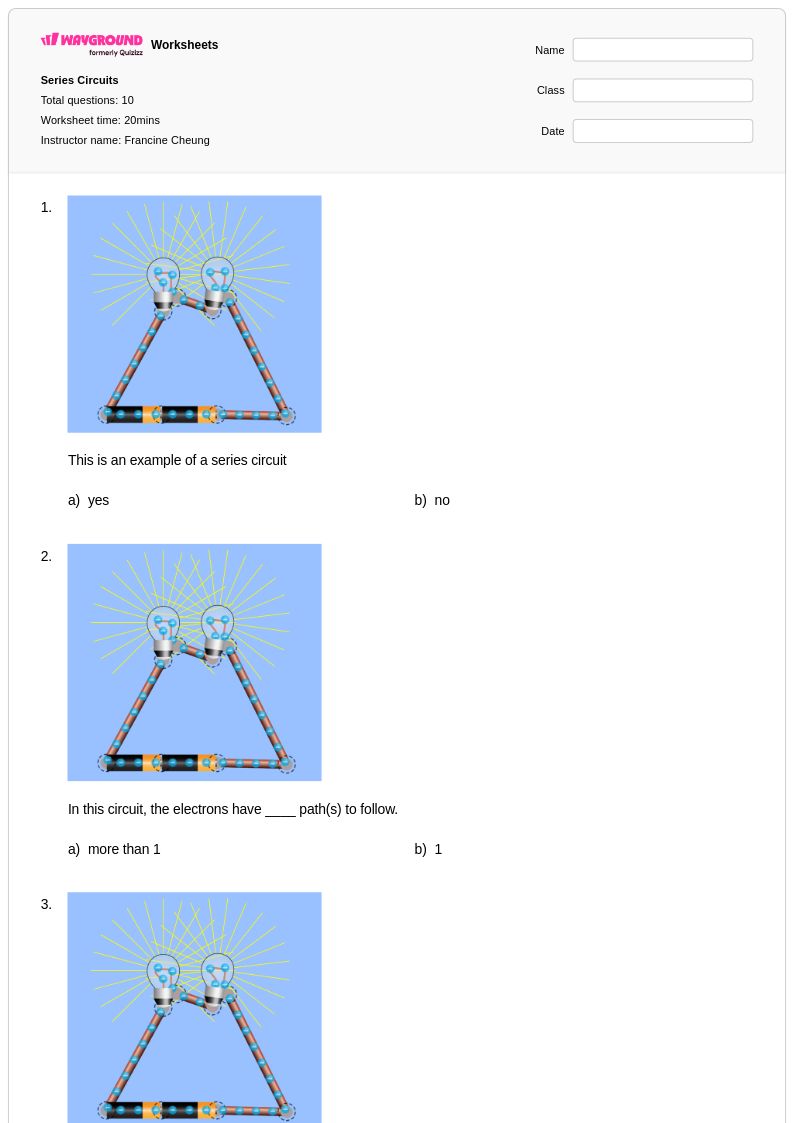
Start with series circuits where students trace a single current path, then introduce parallel circuits to contrast how current divides across branches. Use circuit diagram worksheets alongside physical or virtual lab activities so students connect schematic symbols to real components. Once students can analyze series and parallel circuits independently, introduce combination circuits that require applying both sets of rules within one problem.
What exercises help students practice circuit calculations and Ohm's Law?
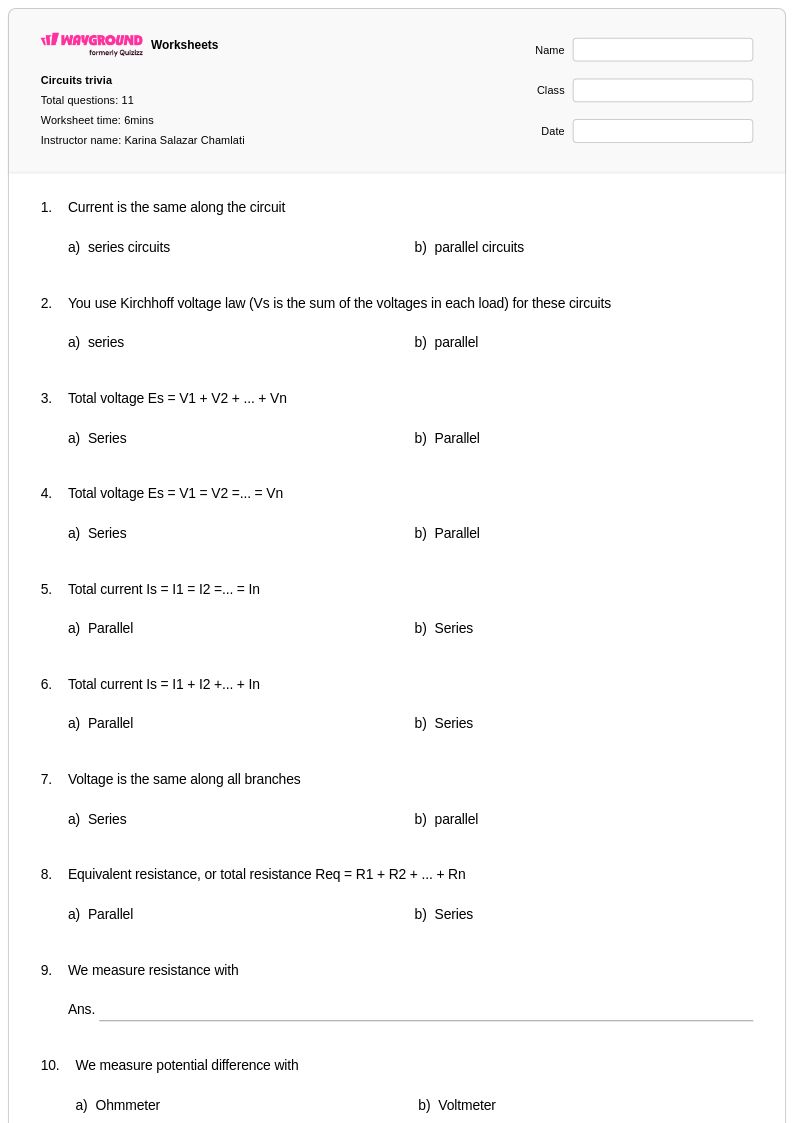
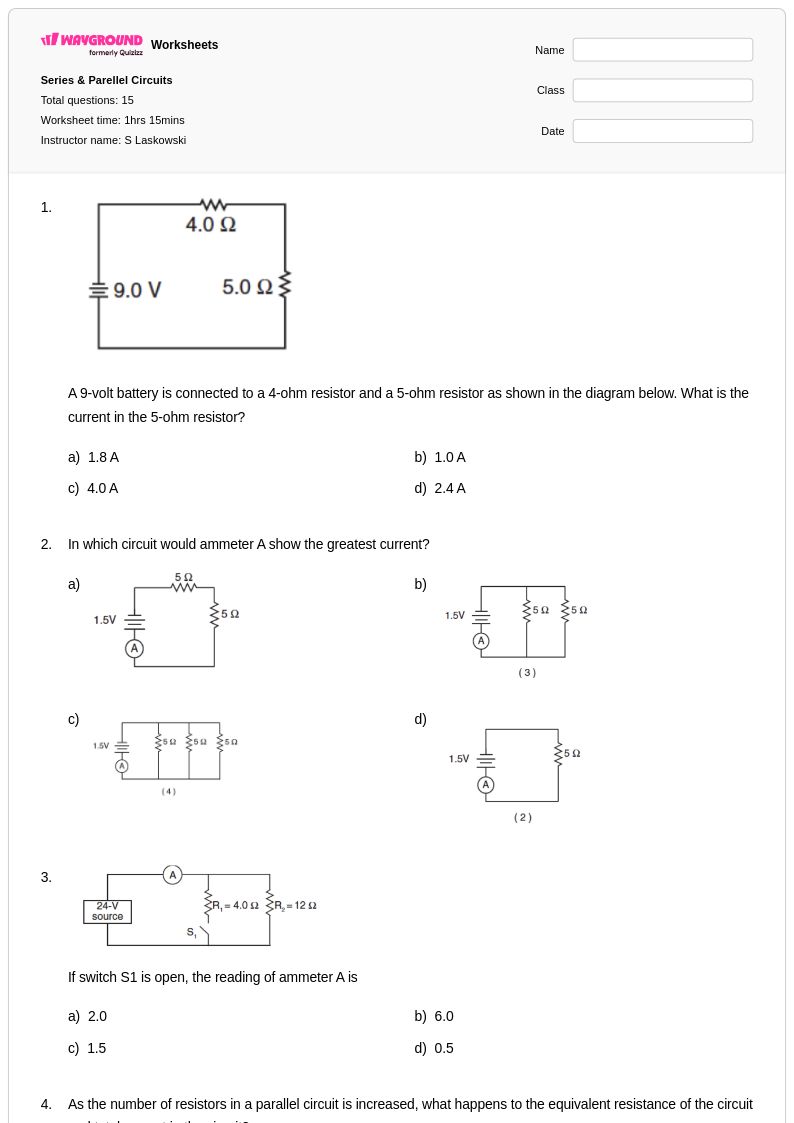
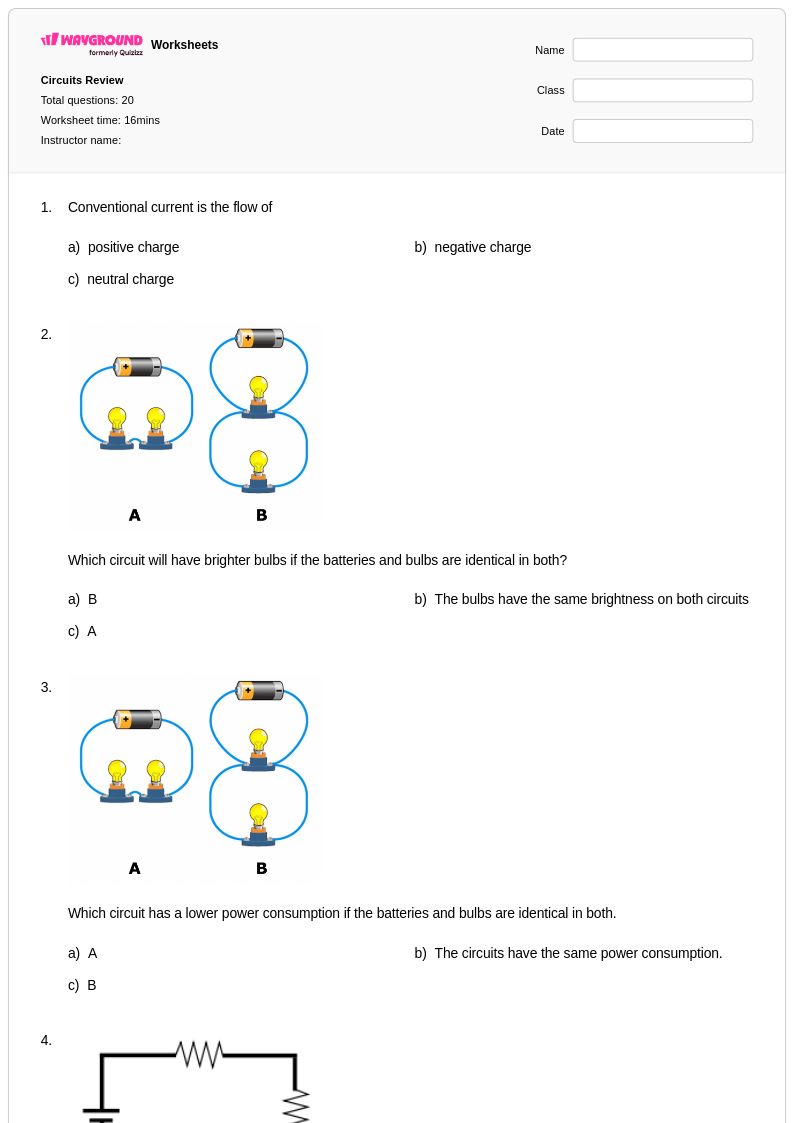
Begin with single-resistor problems where students apply V=IR to solve for one unknown variable, then progress to multi-resistor series and parallel circuits requiring equivalent resistance calculations. Worksheets that present circuit diagrams and ask students to calculate voltage drops across each component build systematic problem-solving skills. Problems that require students to compare total current in series vs. parallel configurations reinforce conceptual understanding alongside mathematical fluency.
What common mistakes do students make when solving circuit problems?
The most frequent error is applying series circuit rules to parallel circuits, particularly adding resistances directly instead of using the reciprocal formula for parallel resistance. Students also commonly confuse voltage and current, assuming current is "used up" as it passes through resistors rather than understanding that voltage drops while current is conserved in series circuits. Misreading circuit diagrams by failing to identify which components are in series versus parallel is another persistent problem.
How do I assess student understanding of series and parallel circuits?
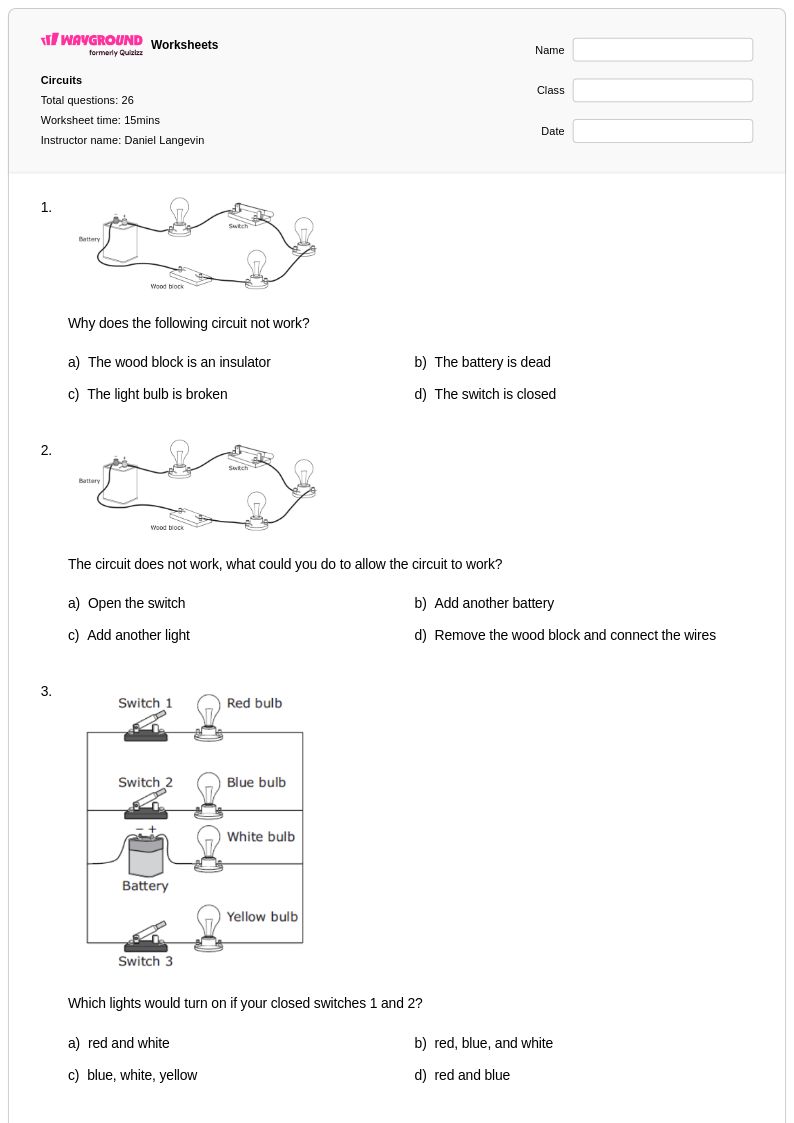
Use worksheets that present a circuit diagram and require students to identify series and parallel sections, calculate equivalent resistance, and determine voltage and current at specific points. Questions that ask students to predict what happens when a component is removed -- such as a bulb burning out in a series vs. parallel circuit -- test conceptual understanding beyond formula application. Including problems where students must draw a circuit from a written description assesses their ability to translate between representations.
How do I use circuits worksheets alongside lab activities?
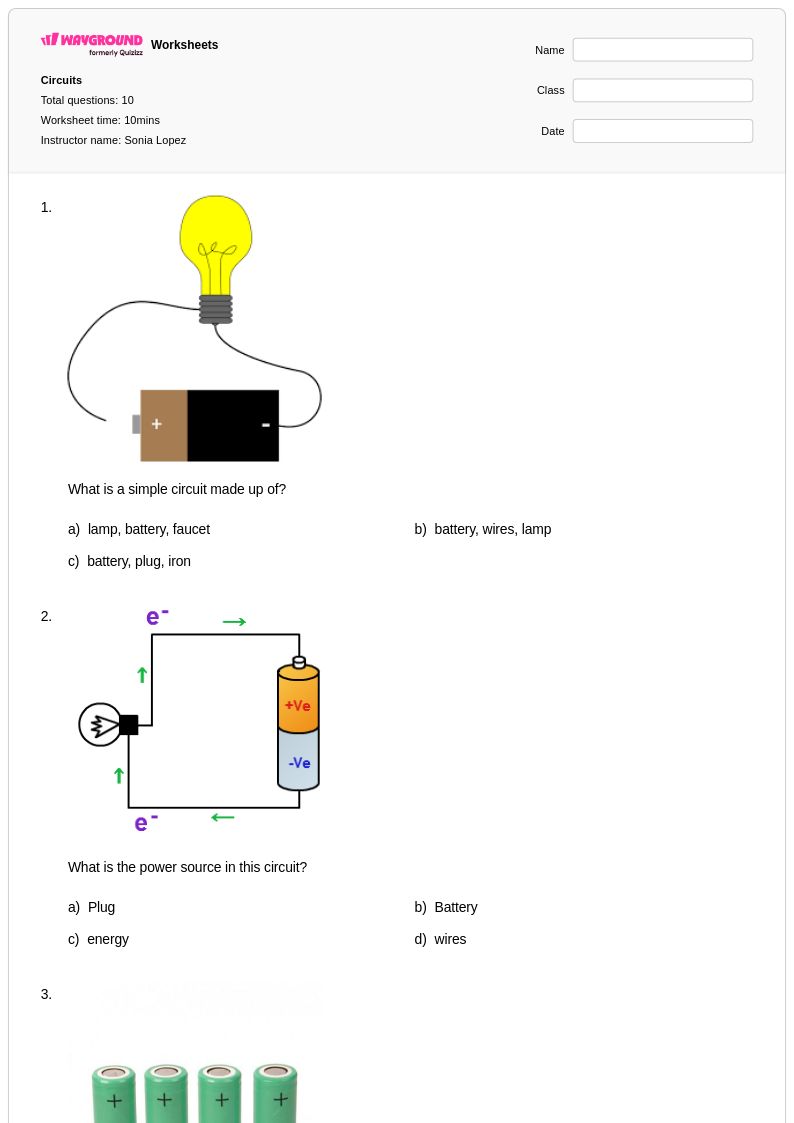
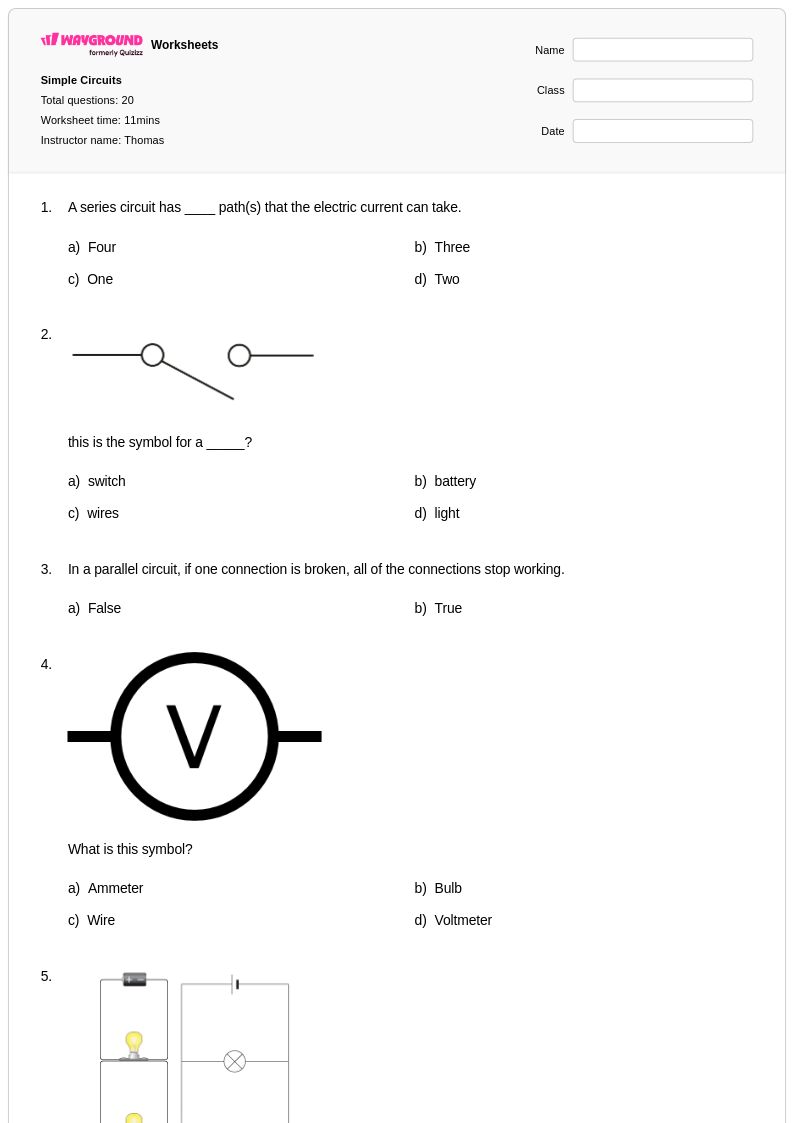
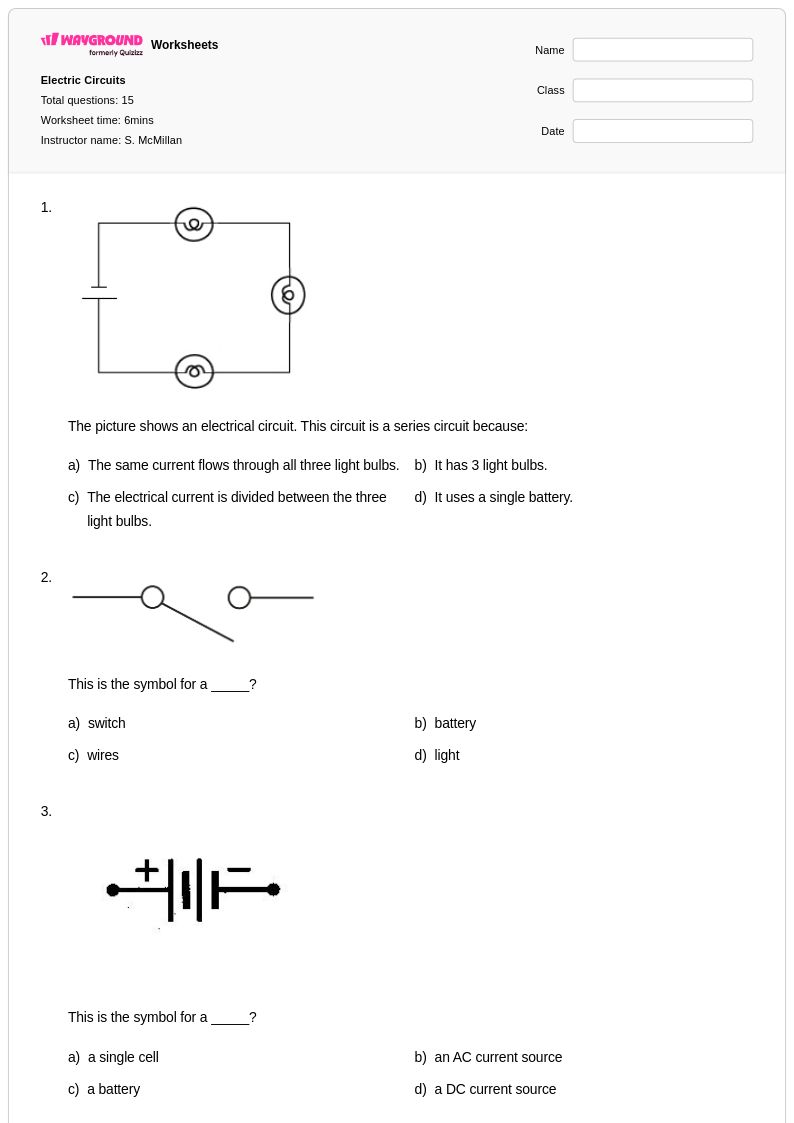
These worksheets are available as printable PDFs for traditional classroom use and in digital formats for technology-integrated learning environments. Assign diagram-labeling and component-identification worksheets as pre-lab preparation so students enter the lab familiar with schematic symbols. Use calculation-based worksheets as post-lab follow-ups where students apply Ohm's Law to the circuit configurations they built, connecting hands-on observations to mathematical analysis.
How do I differentiate circuits instruction for students at different levels?
For students who need additional support, start with worksheets that provide labeled diagrams and partially completed calculations, allowing them to focus on one variable at a time. For advanced students, assign combination circuit problems that require multi-step analysis or open-ended design challenges where they must create a circuit meeting specific voltage and current requirements. Wayground's customizable worksheets allow teachers to adjust complexity within the same topic to match individual student readiness.
What grade levels are circuits worksheets appropriate for?
Circuits worksheets cover grades 5 through 12, with content scaled from introductory to advanced. Grades 5-6 focus on identifying basic electrical components, open vs. closed circuits, and conductors vs. insulators. Grades 7-8 introduce series and parallel circuit concepts with qualitative analysis, and grades 9-12 require quantitative problem-solving using Ohm's Law, Kirchhoff's rules, and equivalent resistance calculations for combination circuits.