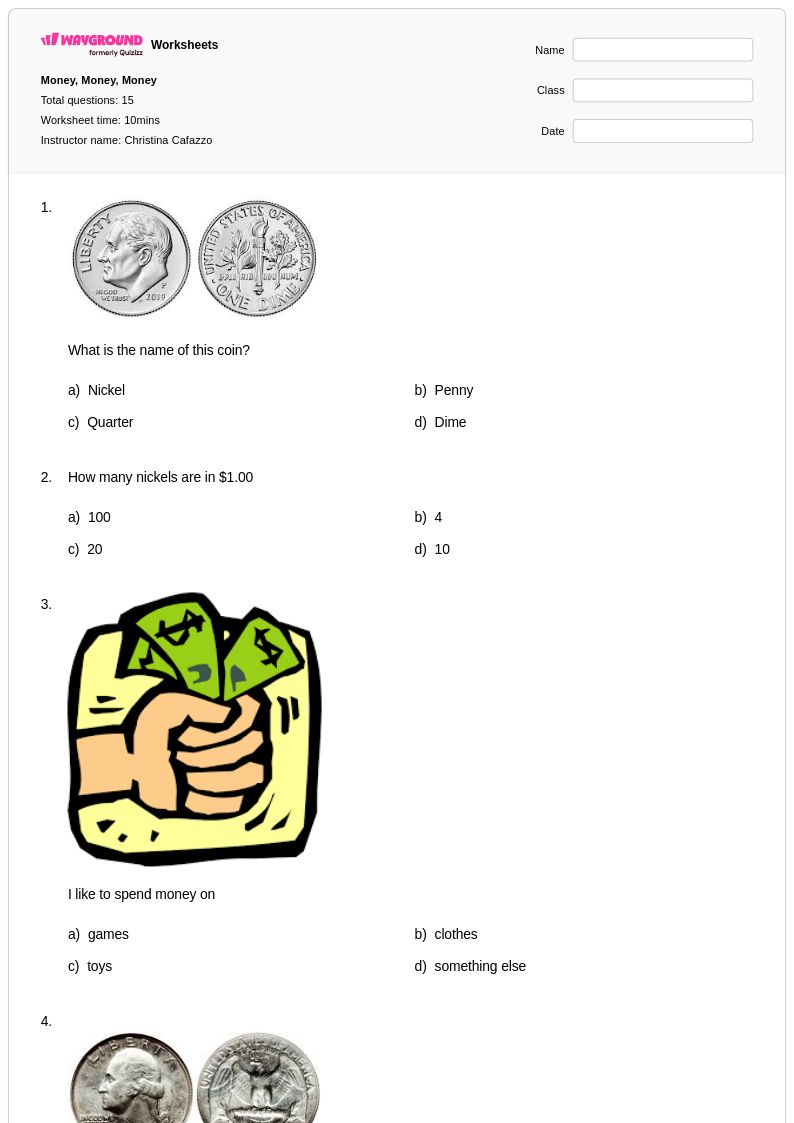
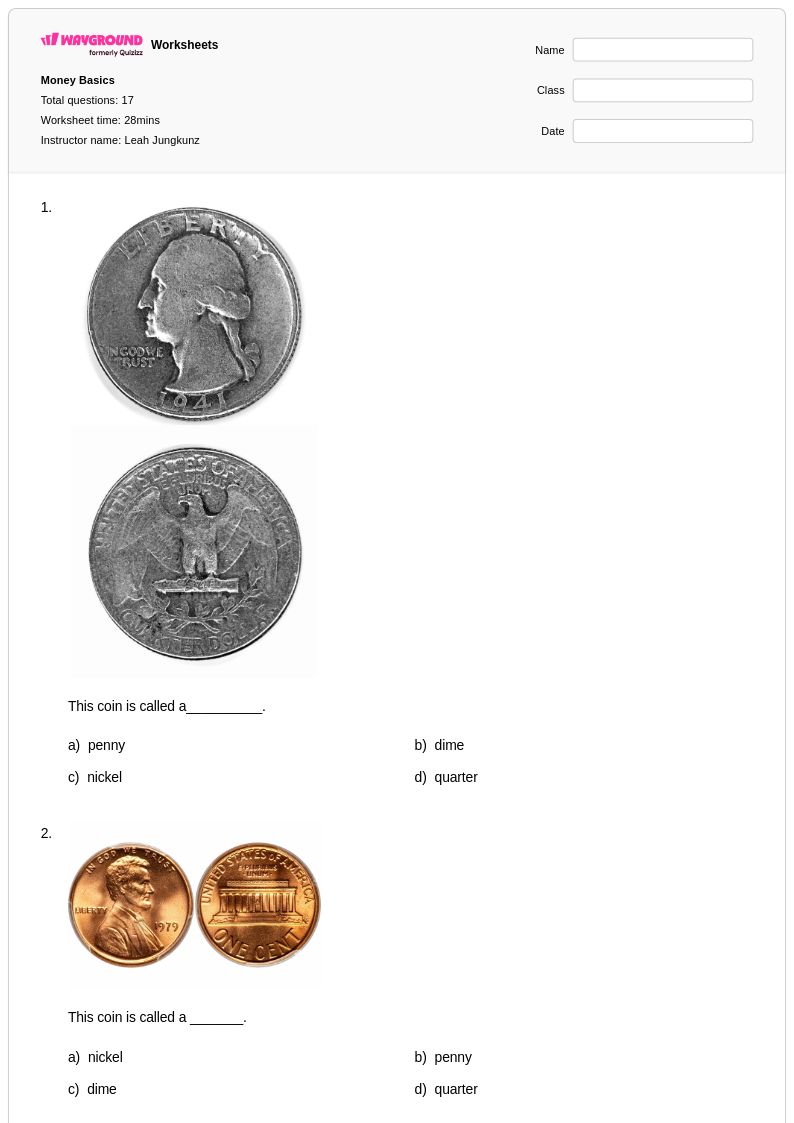
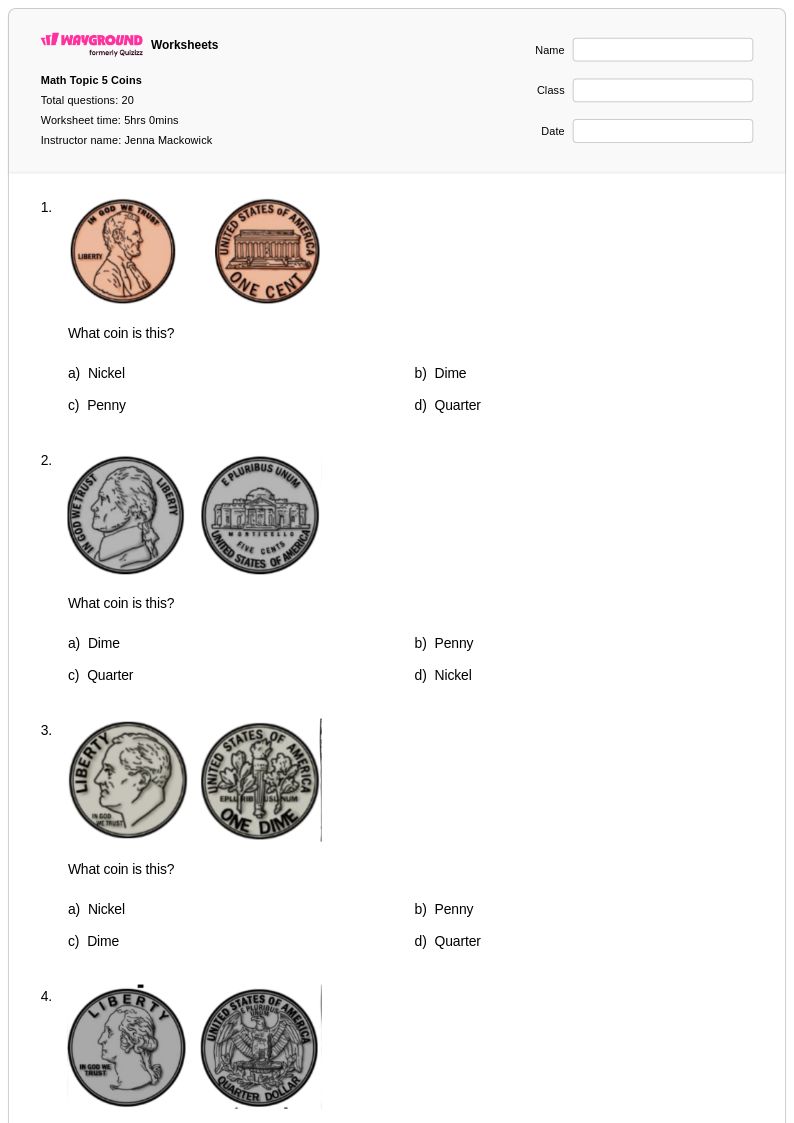
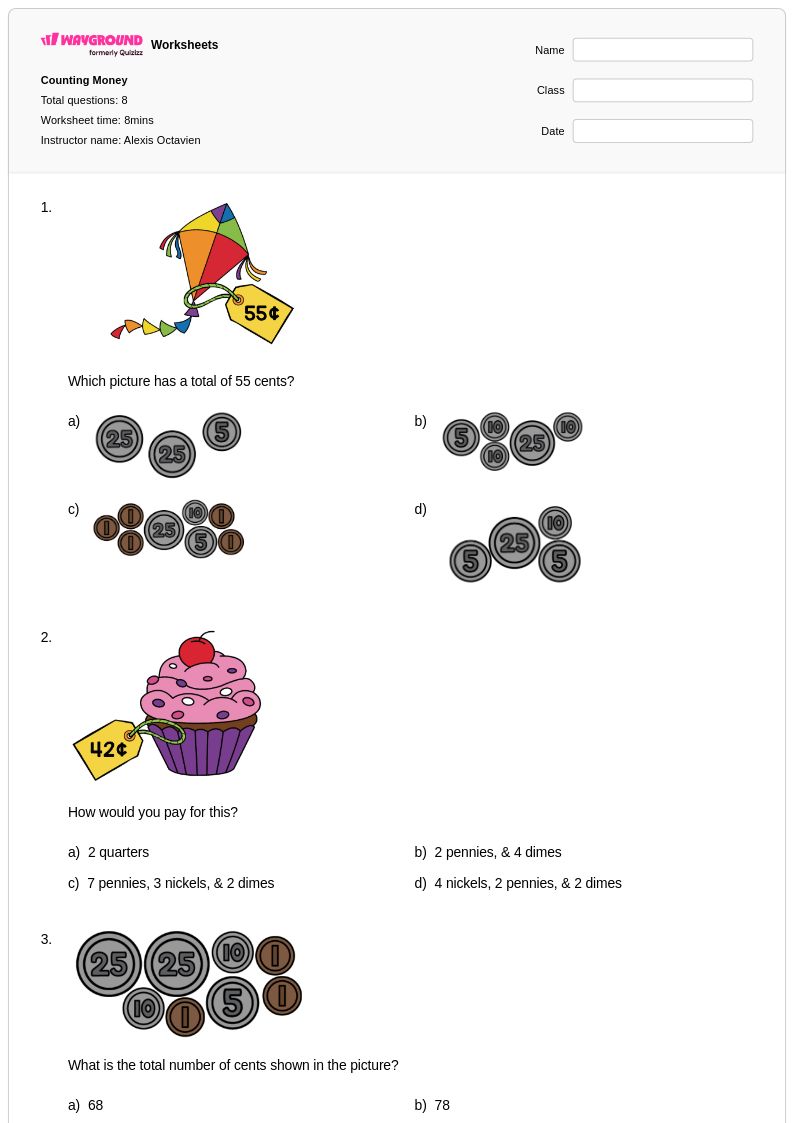
Free Printable Coin Recognition Worksheets for Grade 2
Enhance Grade 2 students' coin recognition skills with our comprehensive collection of free printable worksheets and practice problems, complete with answer keys to support effective money math learning.
Explore printable Coin Recognition worksheets for Grade 2
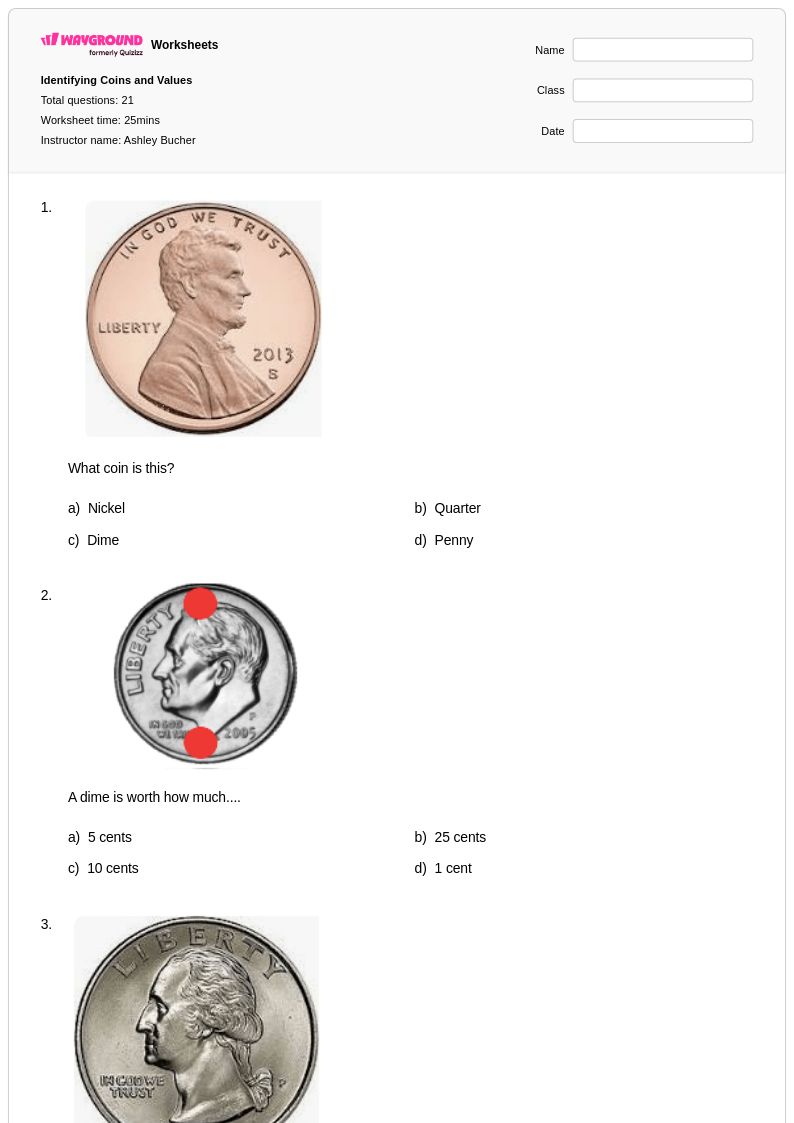
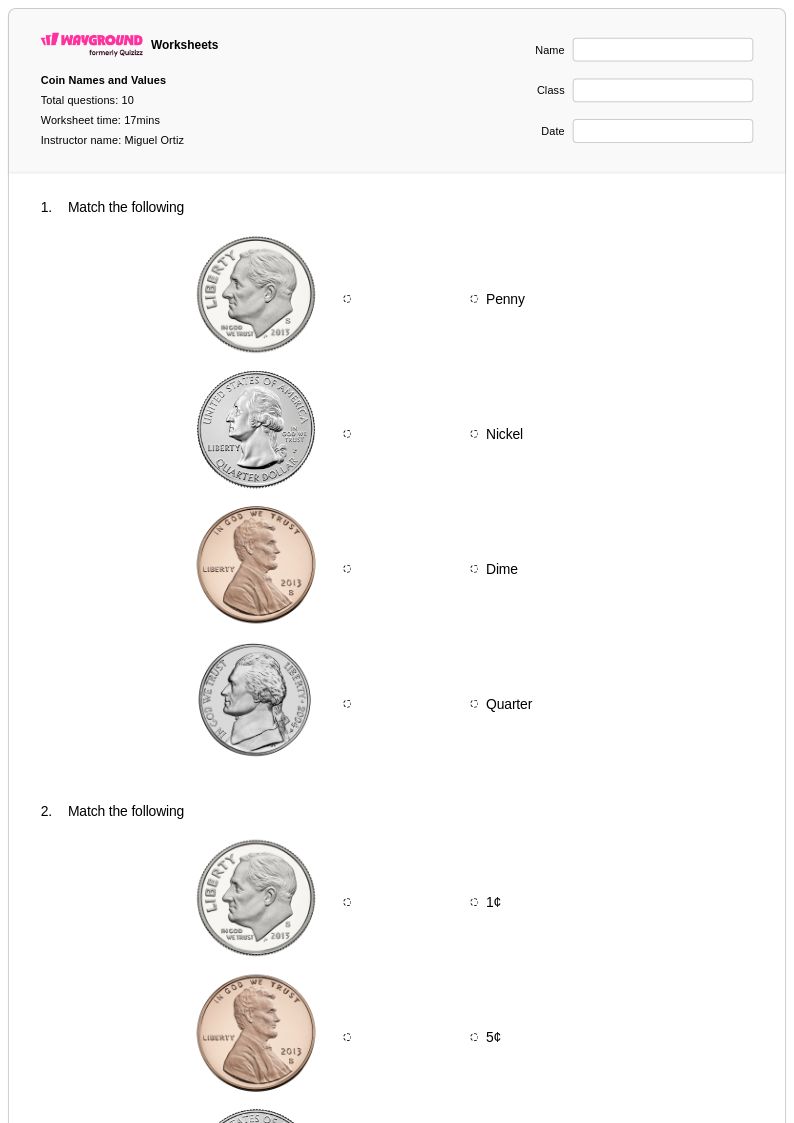
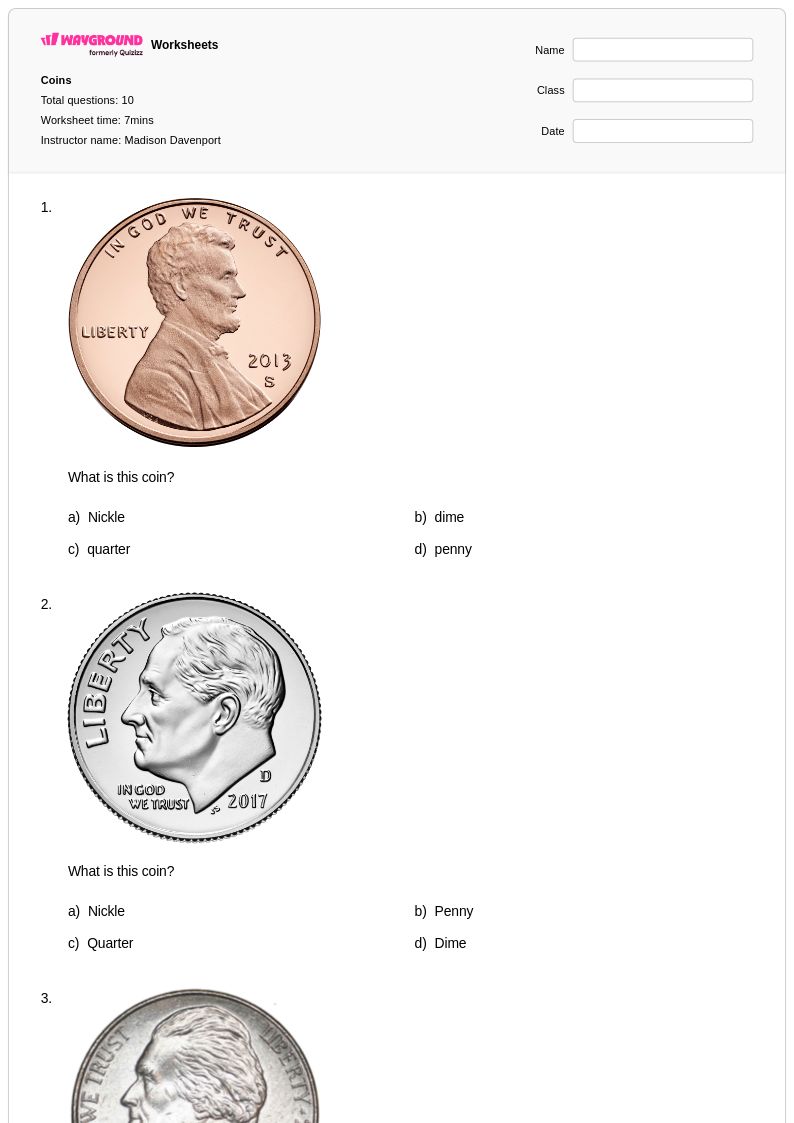
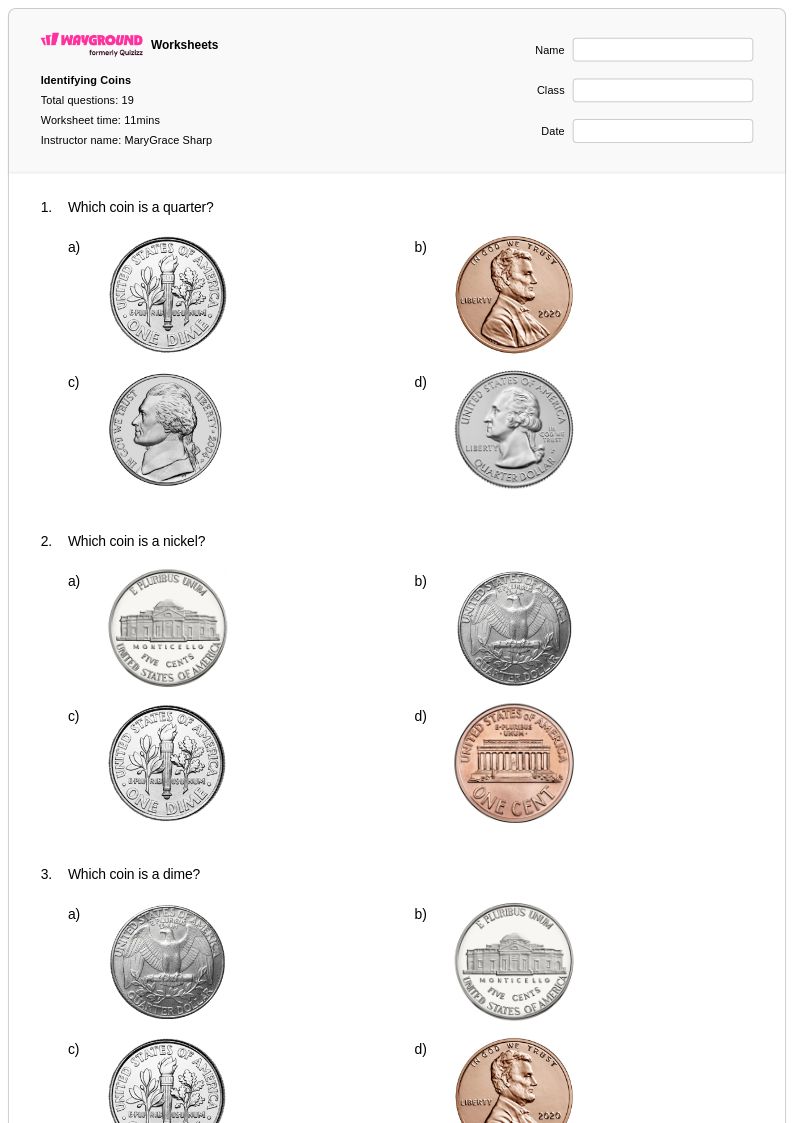
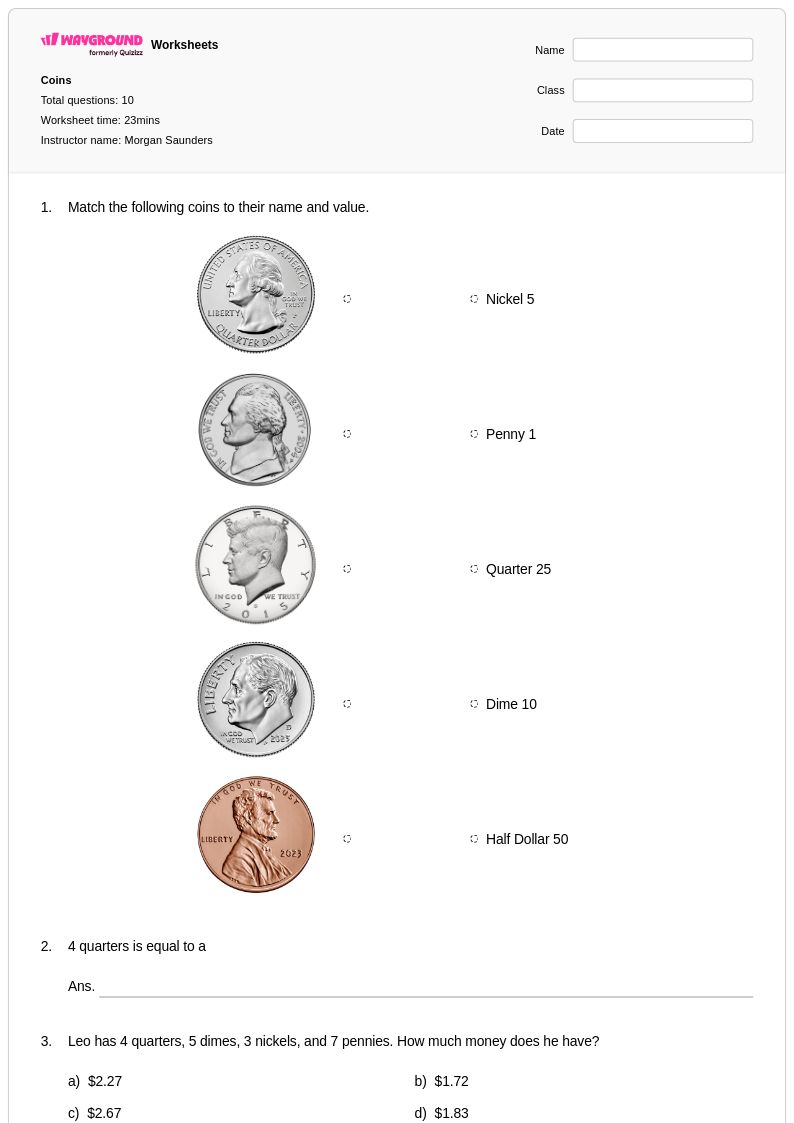
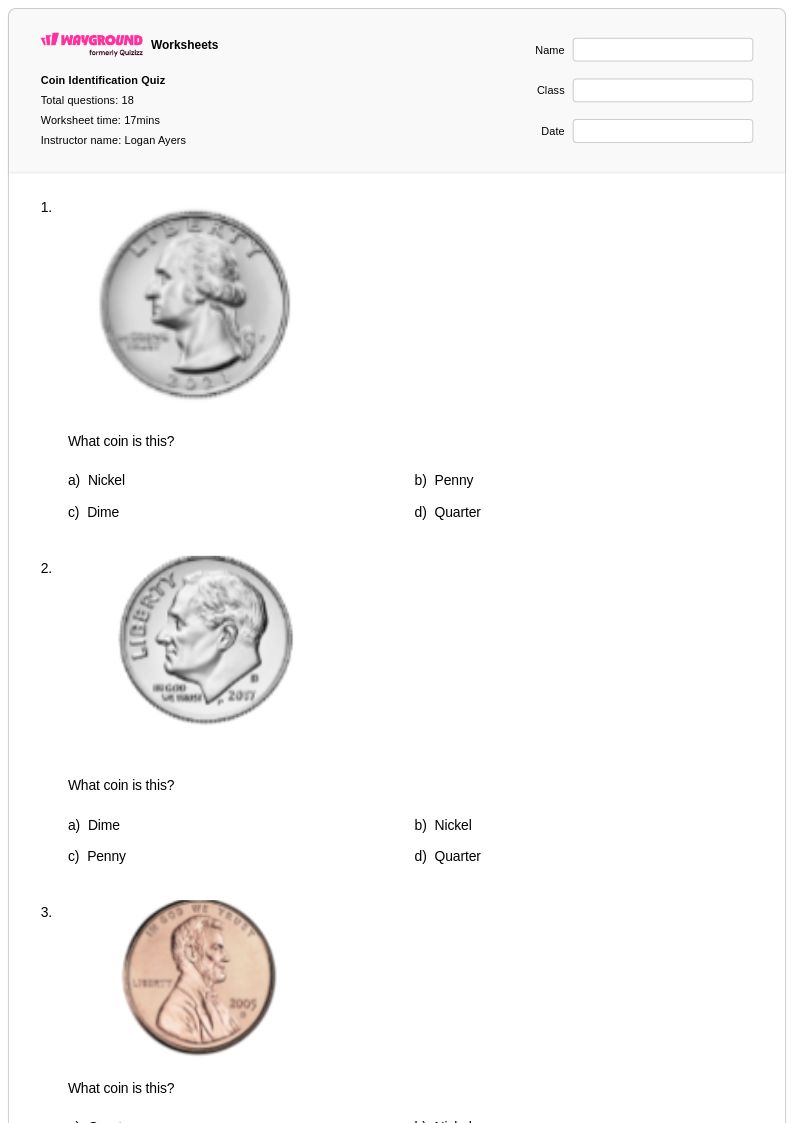
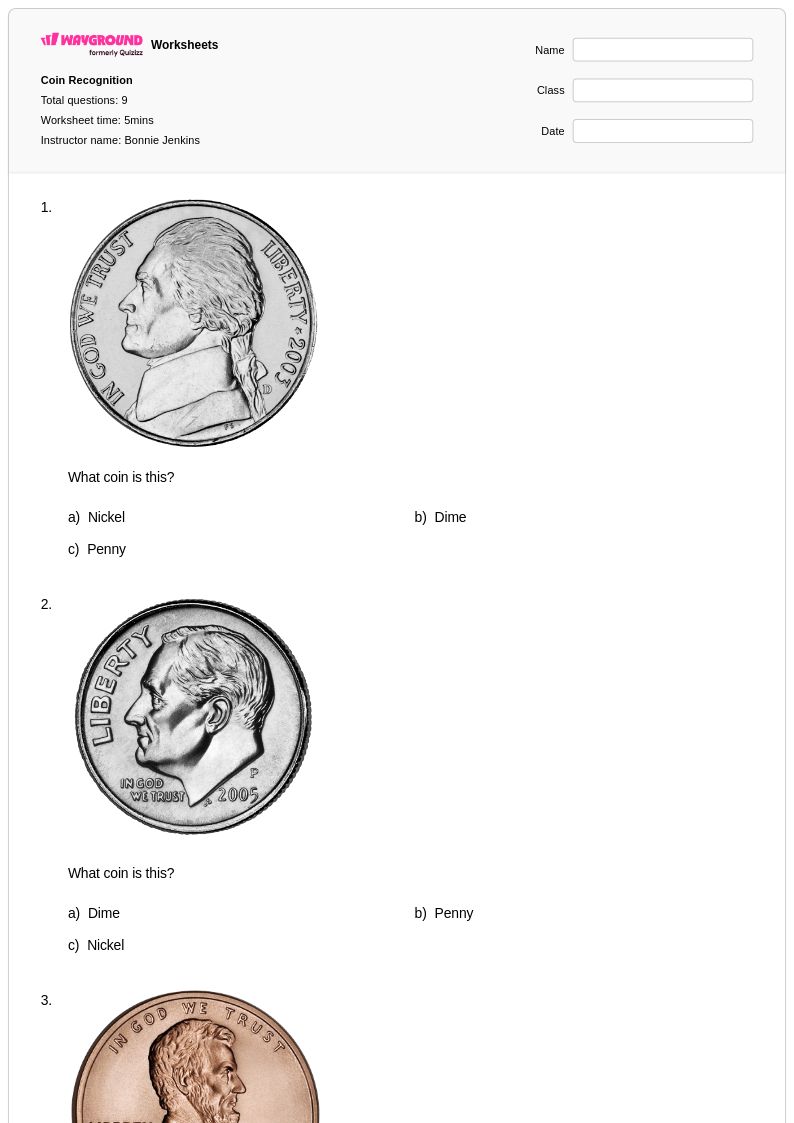
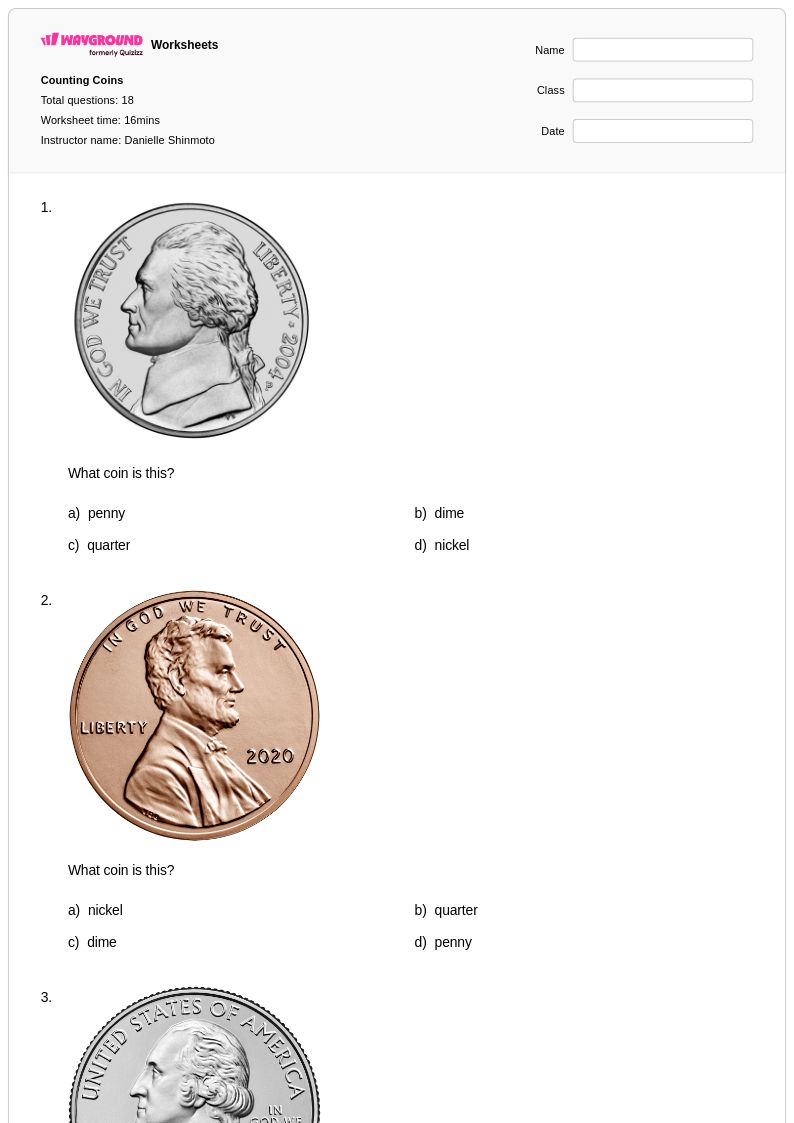
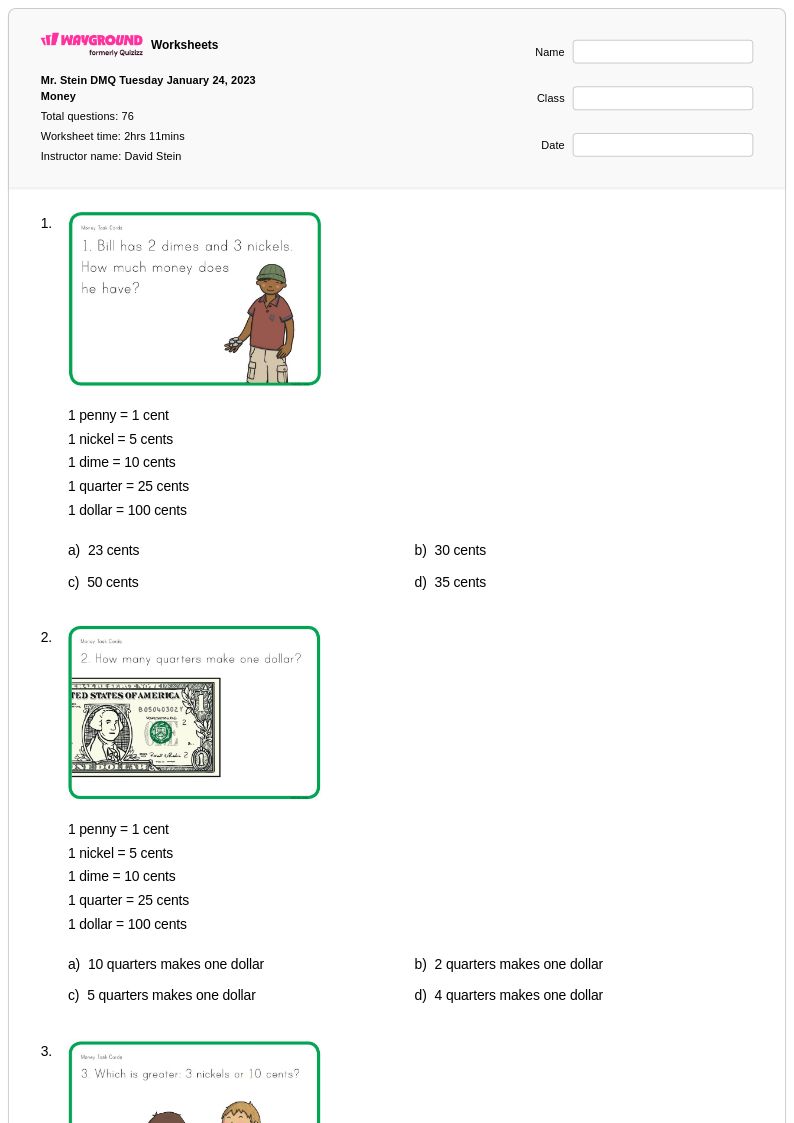
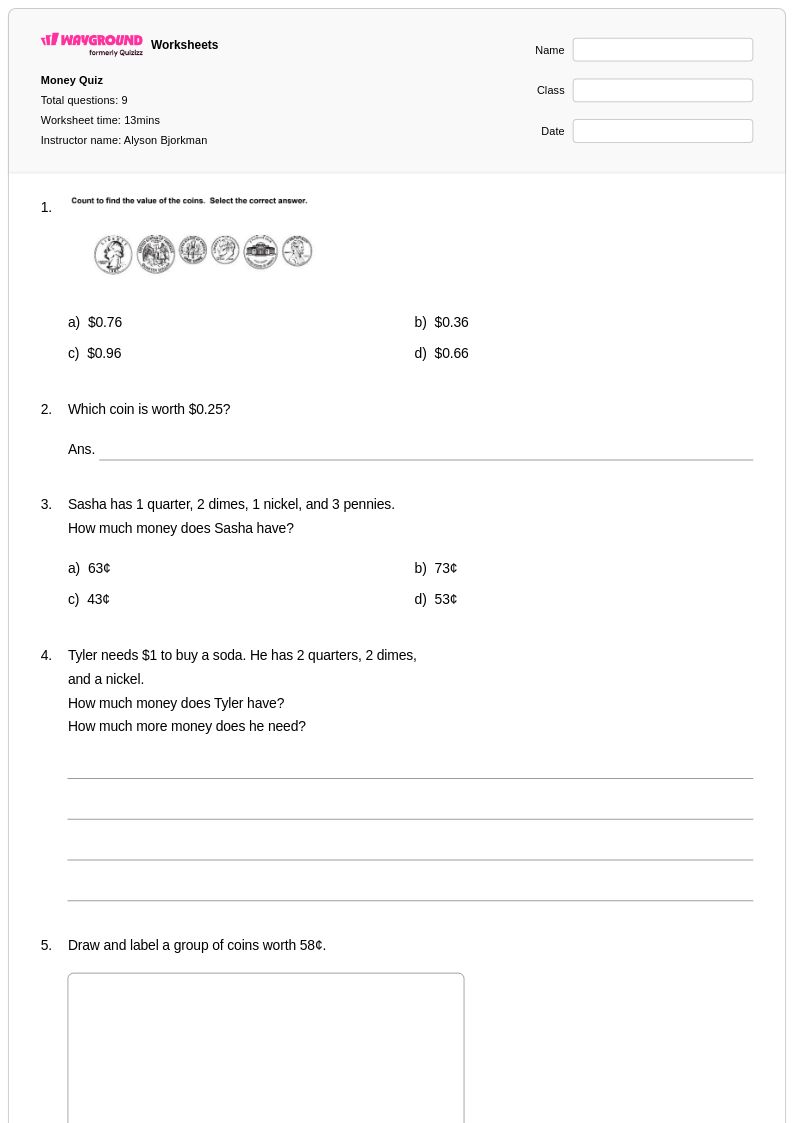
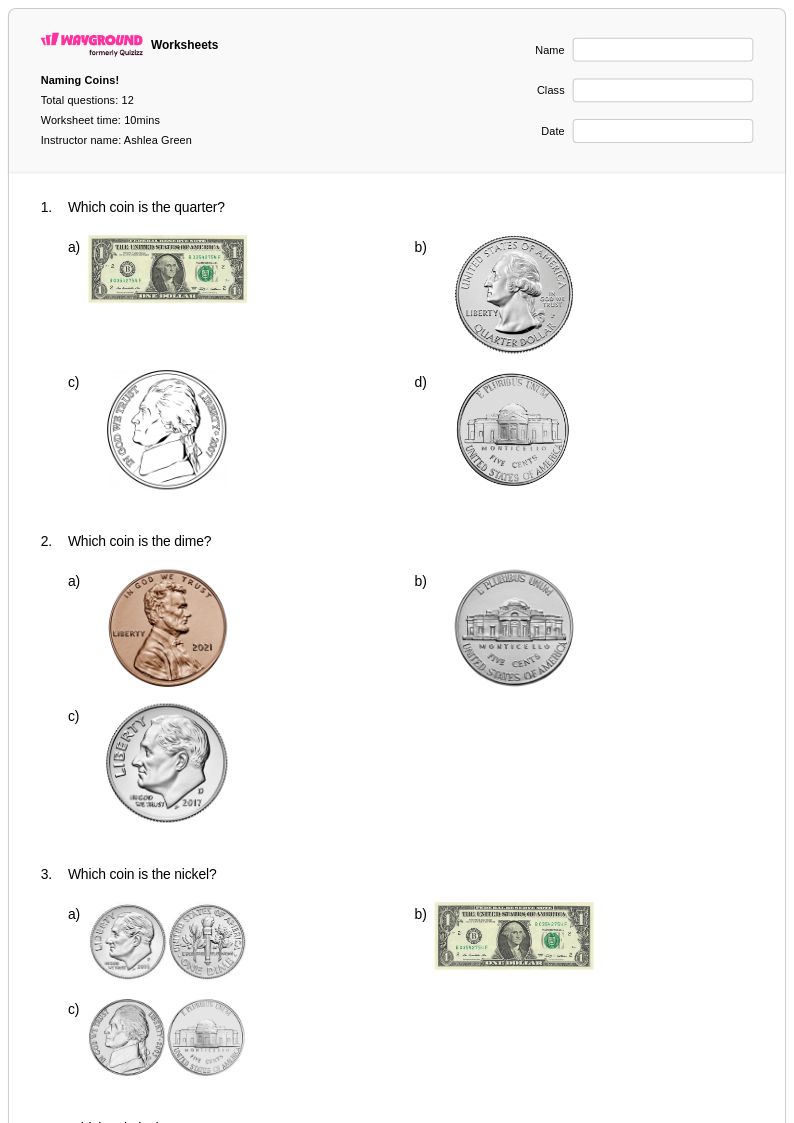
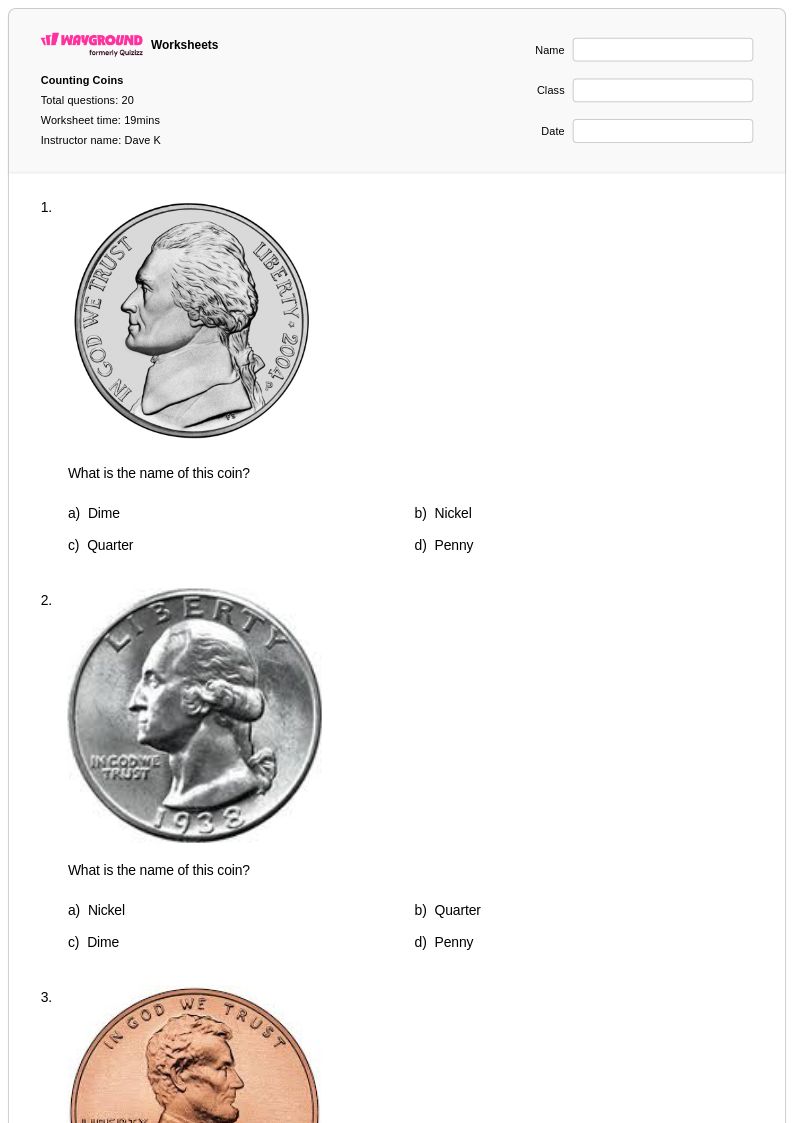
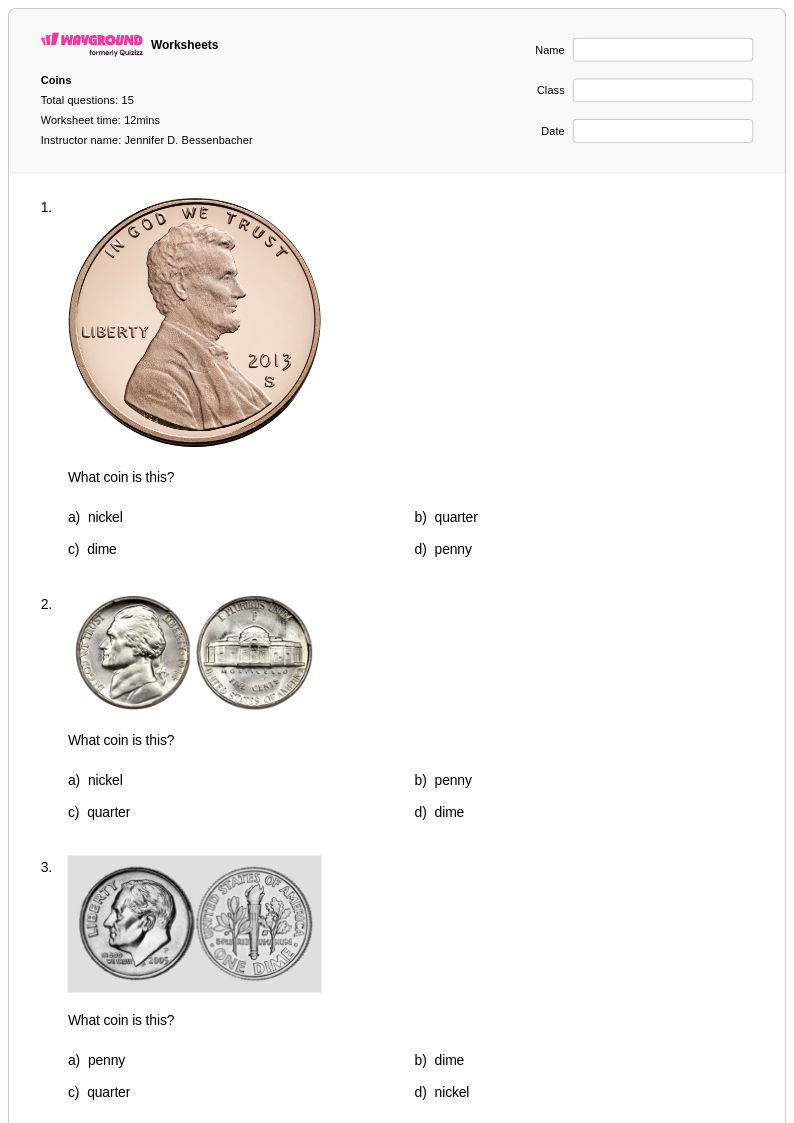
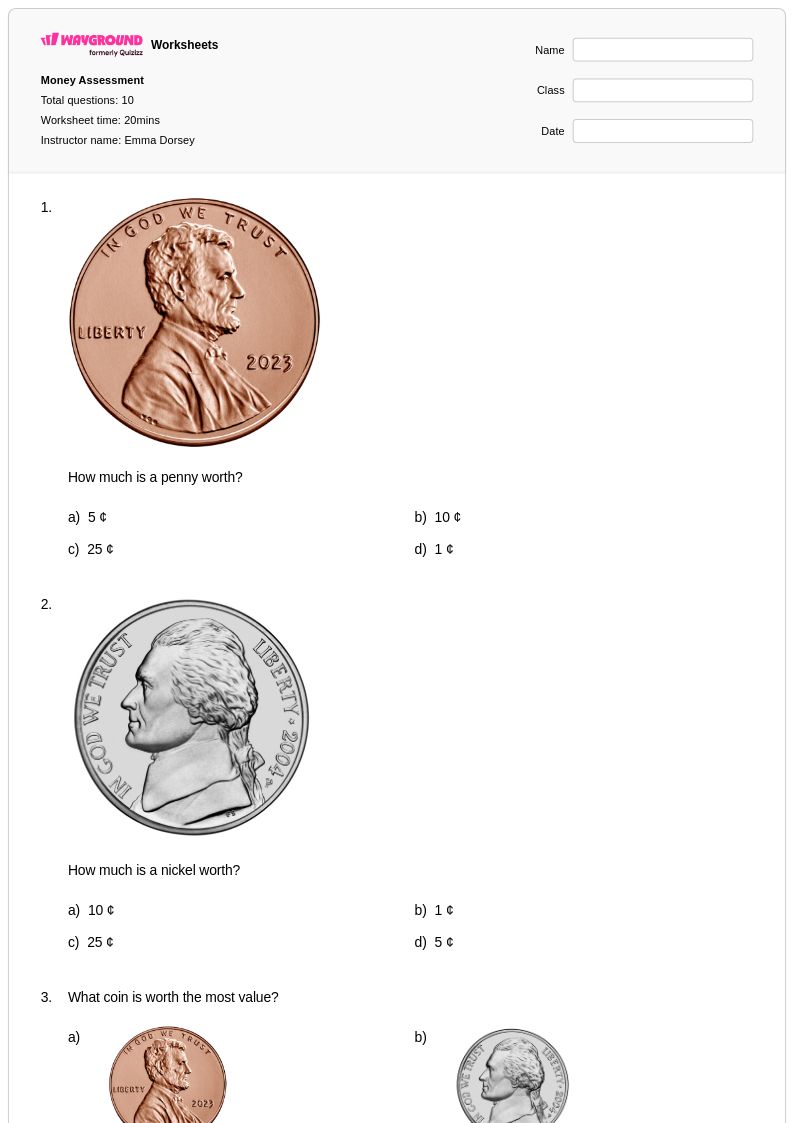
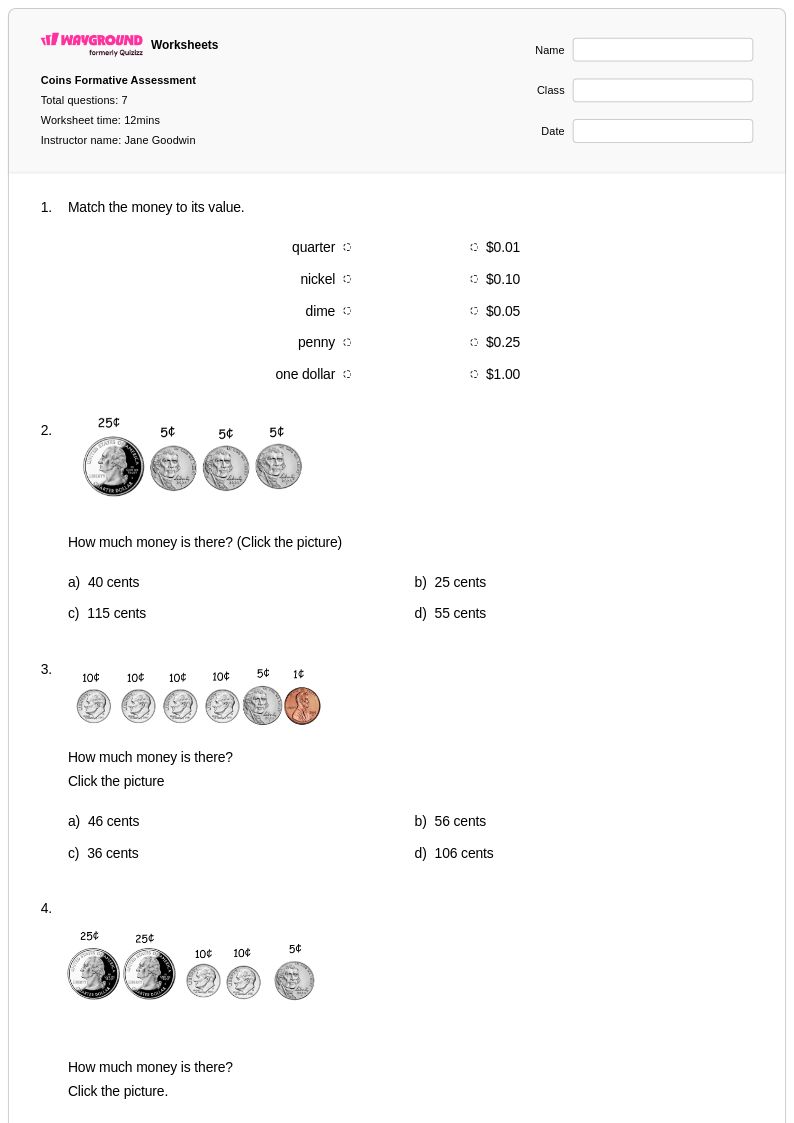
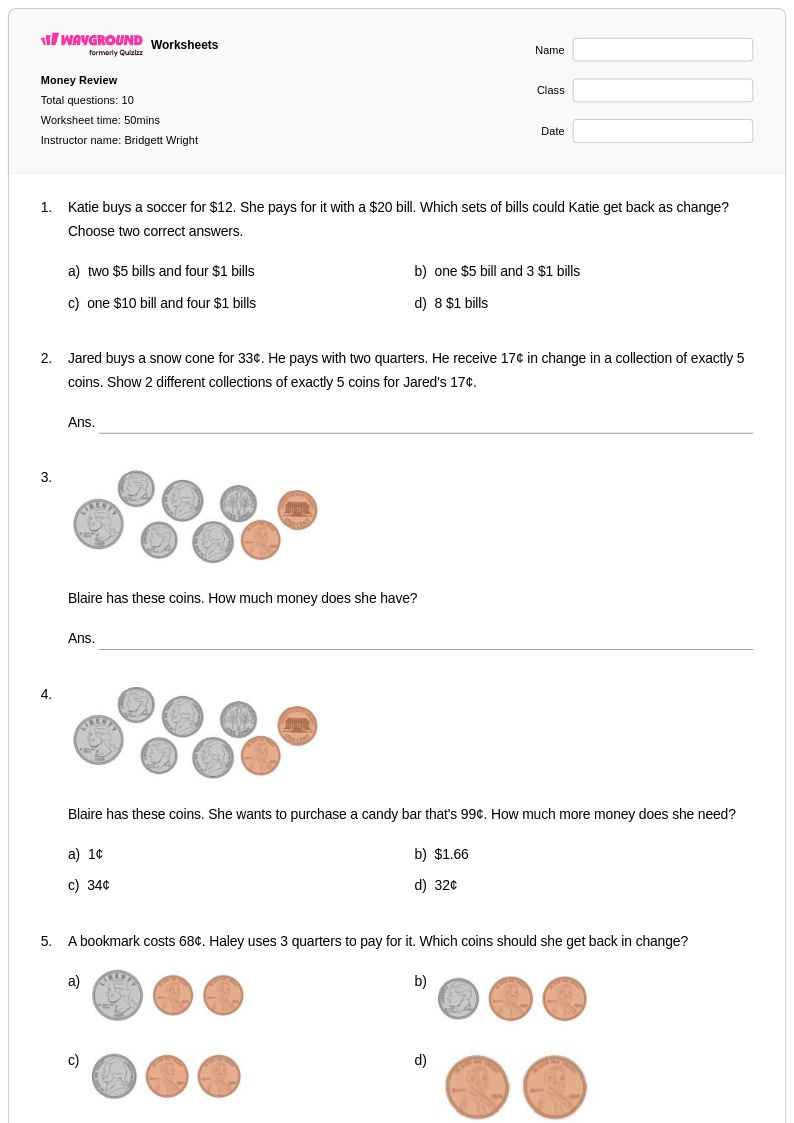
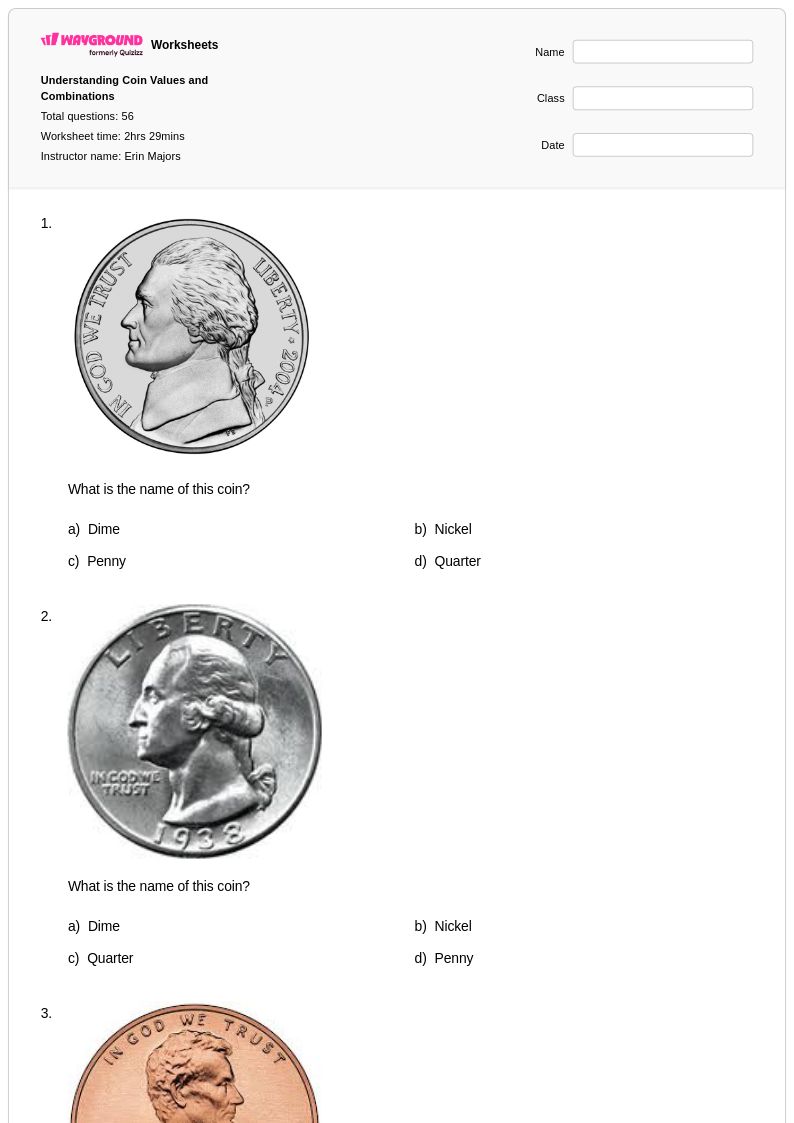
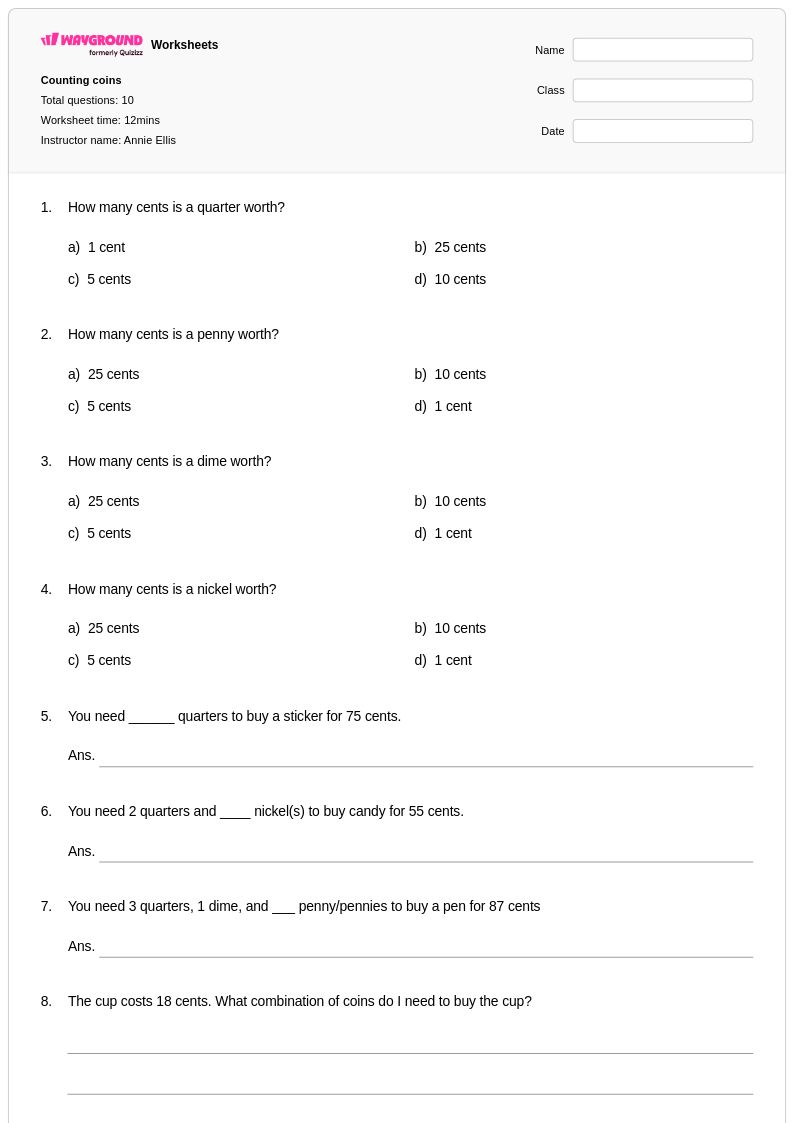
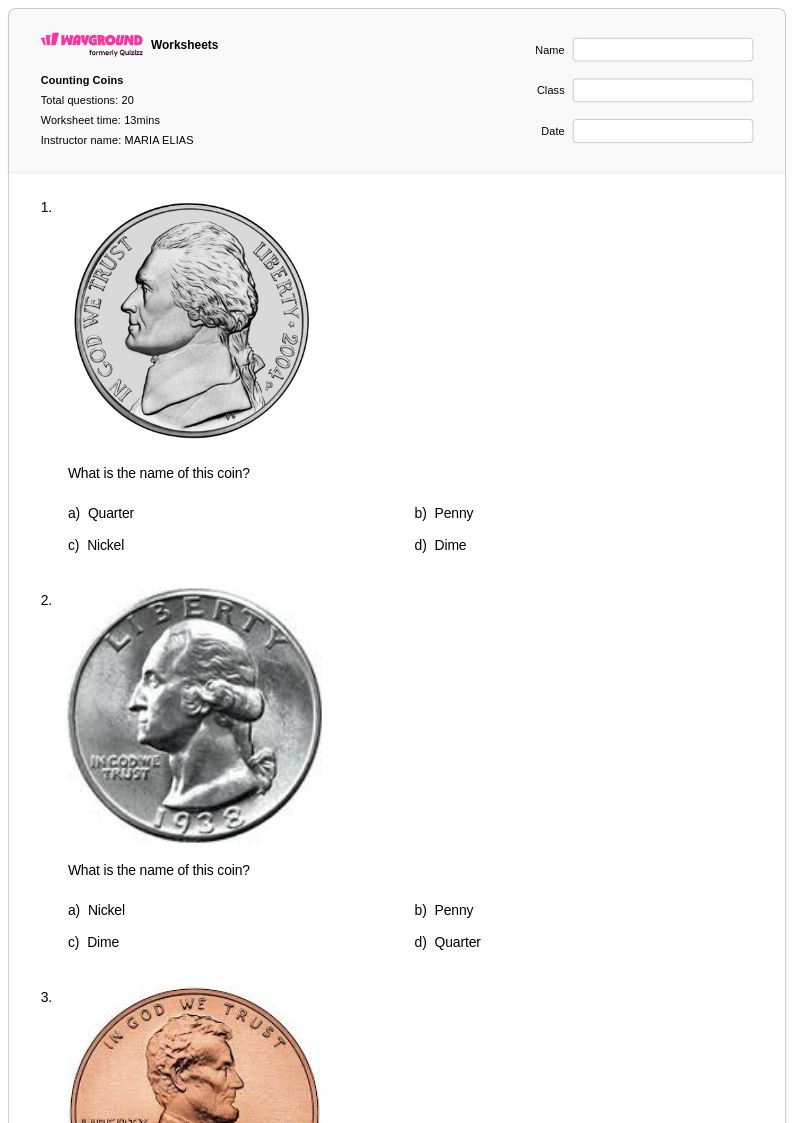
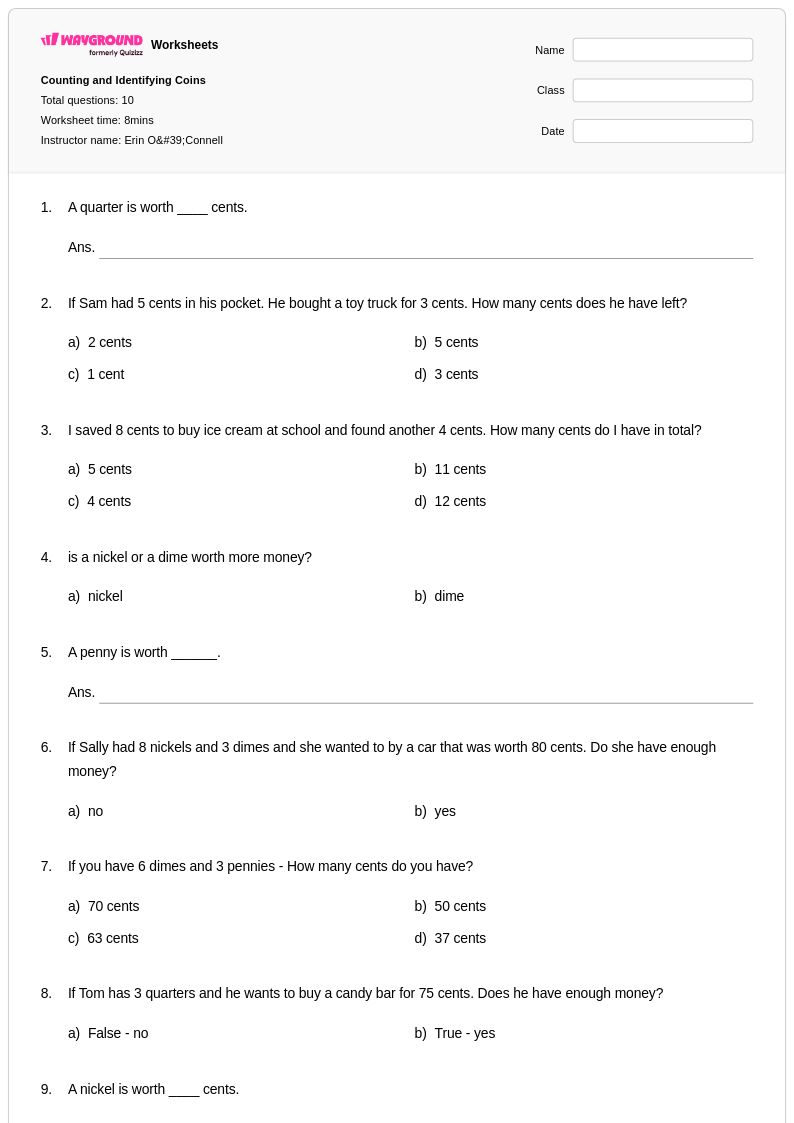
Coin recognition worksheets for Grade 2 students available through Wayground (formerly Quizizz) provide essential foundational practice for young learners developing money math skills. These comprehensive printables focus on helping second graders identify pennies, nickels, dimes, and quarters through engaging visual exercises and hands-on practice problems. Students strengthen critical mathematical abilities including visual discrimination, pattern recognition, and basic financial literacy concepts that serve as building blocks for more advanced money calculations. Each worksheet includes detailed answer keys and comes in convenient PDF format, making them ideal free resources for both classroom instruction and home practice sessions.
Wayground (formerly Quizizz) empowers educators with access to millions of teacher-created coin recognition resources specifically designed for Grade 2 mathematics instruction. The platform's robust search and filtering capabilities allow teachers to quickly locate standards-aligned materials that match their specific curriculum requirements and student needs. These differentiation tools enable seamless customization of worksheets to accommodate various learning levels within the classroom, supporting both remediation efforts for struggling students and enrichment opportunities for advanced learners. Available in both printable and digital formats including downloadable PDFs, these coin recognition materials streamline lesson planning while providing flexible options for skill practice, assessment preparation, and targeted mathematical intervention strategies.
FAQs
How do I teach coin recognition to second graders?
Review pennies, nickels, dimes, and quarters by asking students to name each coin, state its value, and cite distinguishing features. Then connect recognition to money math through sorting, counting by denomination, comparing collections, and explaining how different coin combinations can represent the same amount.
What exercises help Grade 2 students practice coin recognition?
Grade 2 practice should combine visual identification with matching, sorting, counting groups of like coins, and working with mixed collections. Problems that ask students to build or compare the same amount in different ways strengthen both coin recognition and flexible number sense.
What coin recognition mistakes are common in second grade?
Second graders may correctly name individual coins but miscount mixed sets, count every coin by ones, or assume a larger coin always has greater value. Have students sort by denomination first, count each group using its value, and then combine the subtotals to make their reasoning easier to check.
How can I use a Grade 2 coin recognition worksheet on Wayground?
Wayground Grade 2 coin recognition worksheets are available as printable PDFs and digital formats, accommodating whole-class instruction, independent practice, and targeted intervention. A teacher can host the worksheet as a digital quiz on Wayground or print and assign it on paper; every worksheet includes a complete answer key, and completed physical worksheets can be scanned or captured for grading with the Wayground for Teachers app.
What coin skills should Grade 2 students learn?
Grade 2 students should quickly identify pennies, nickels, dimes, and quarters and recall each coin’s value. They should use that knowledge to count like and mixed coins, compare totals, represent an amount with different combinations, and solve introductory real-world money problems.
How does Grade 2 coin recognition fit into the Common Core math progression?
Coin recognition supports the Common Core Grade 2 emphasis on solving practical problems with dollars and cents using appropriate symbols and arithmetic reasoning. It follows foundational identification and skip-counting work and prepares students to calculate totals, compare monetary amounts, and reason about equivalent coin combinations.
How can I differentiate coin recognition practice in a Grade 2 class?
Students needing support can sort coins before counting and use a denomination-value reference, while advanced learners can compare mixed collections or find multiple combinations for a target amount. Wayground supports extended time, Read Aloud, reduced answer choices, and reading mode, and teachers can generate alternate worksheets with different spacing, text sizes, a dyslexia-friendly font, or translated content.