
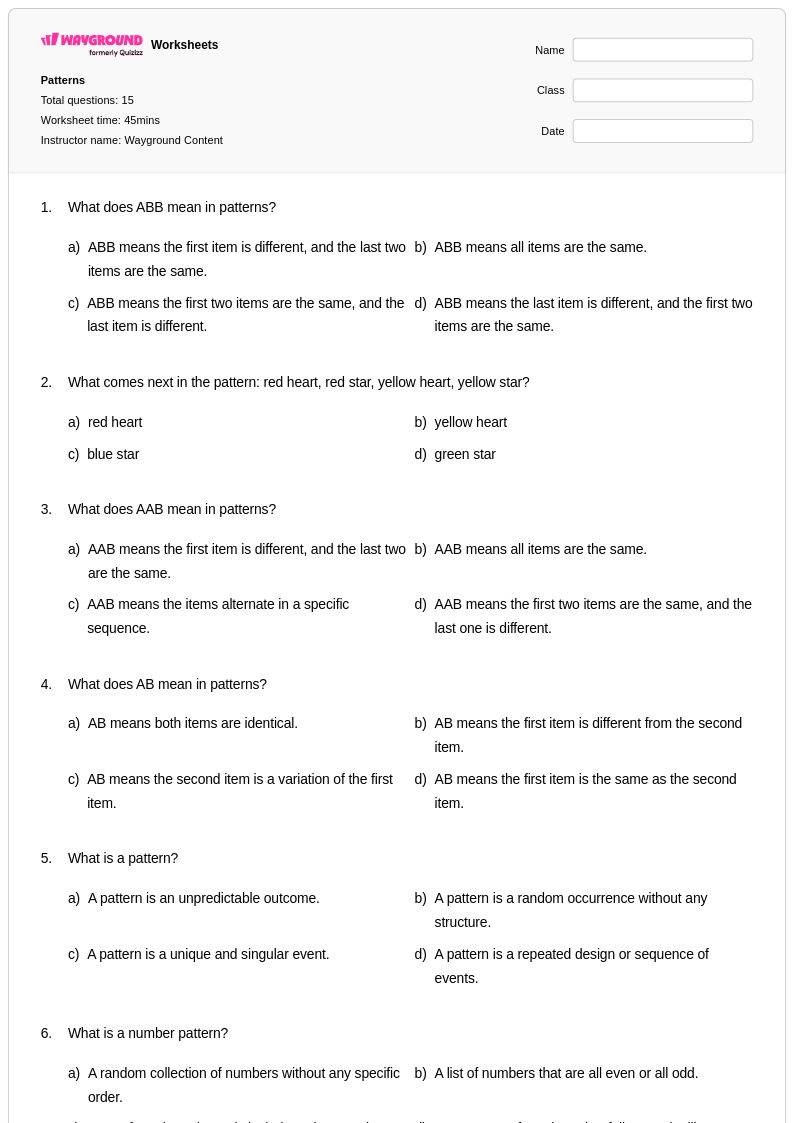
15 Q
1st
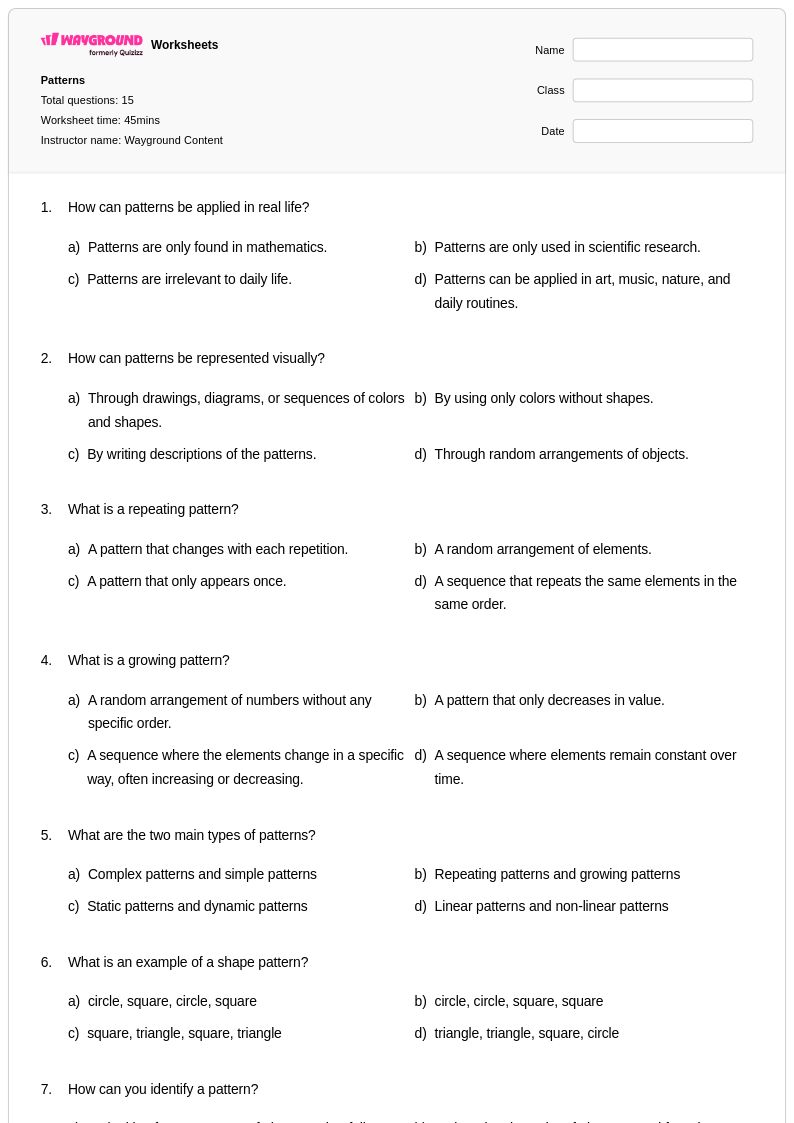
15 Q
1st
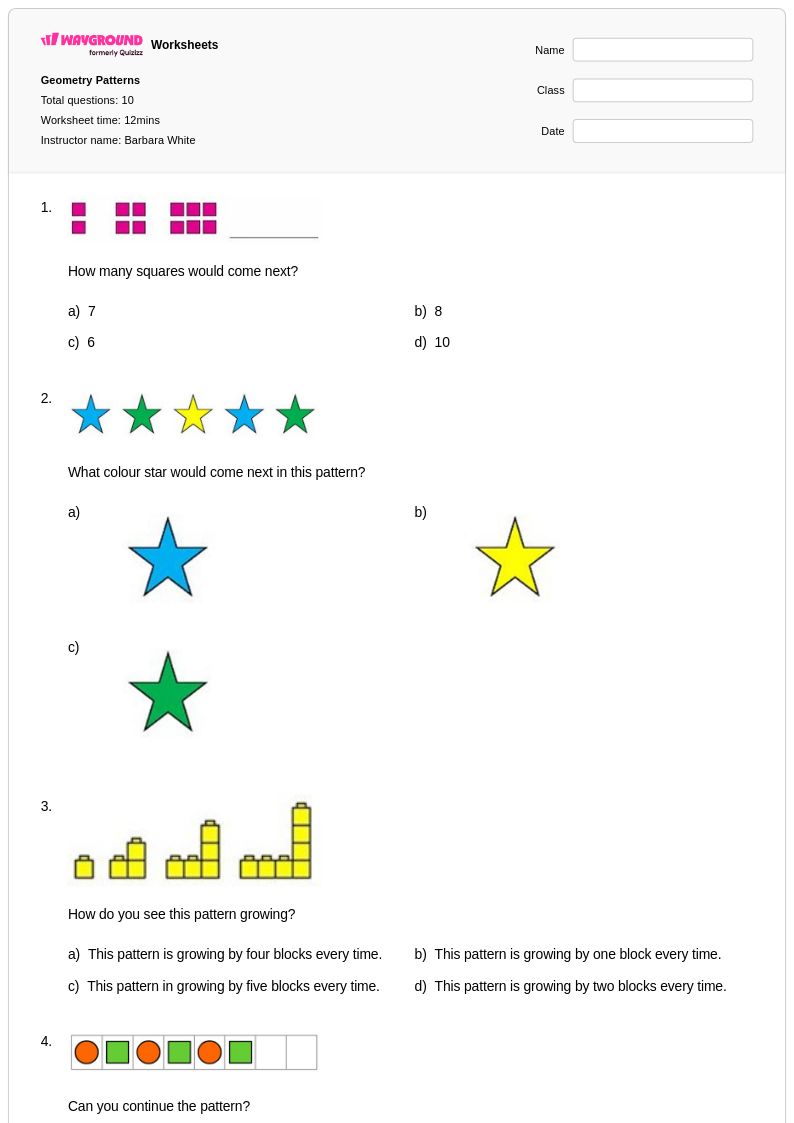
10 Q
1st
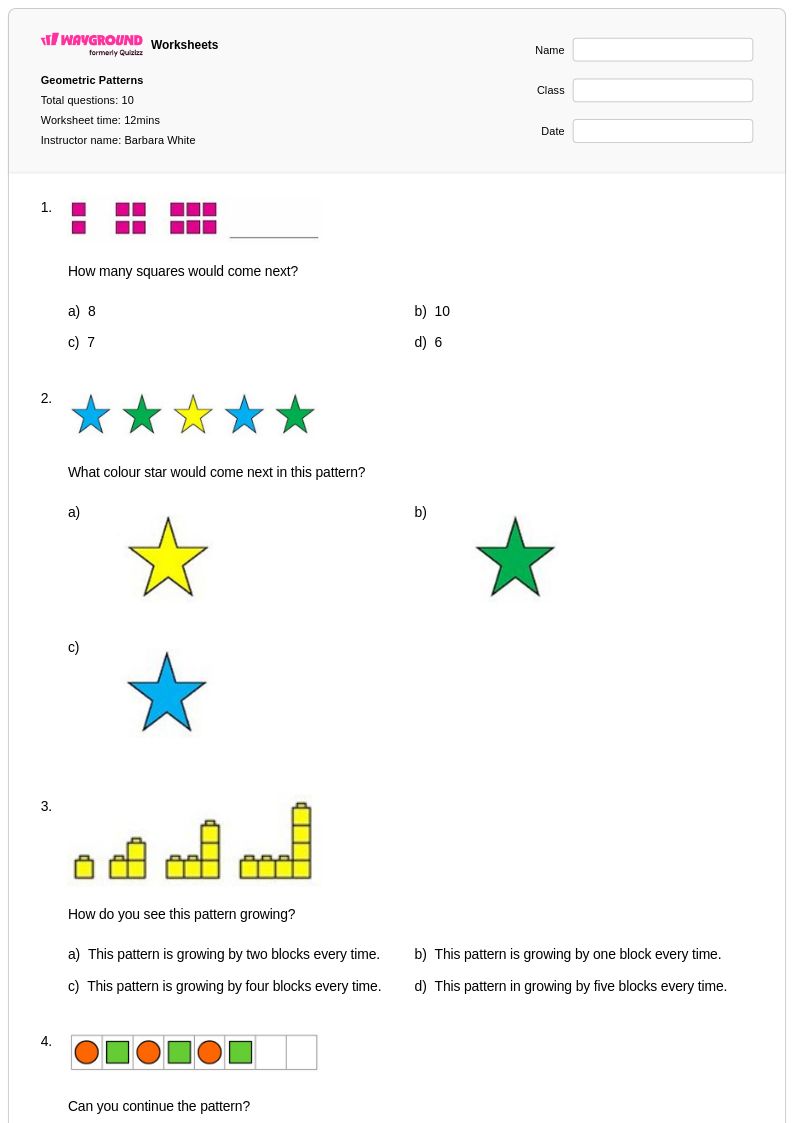
10 Q
1st
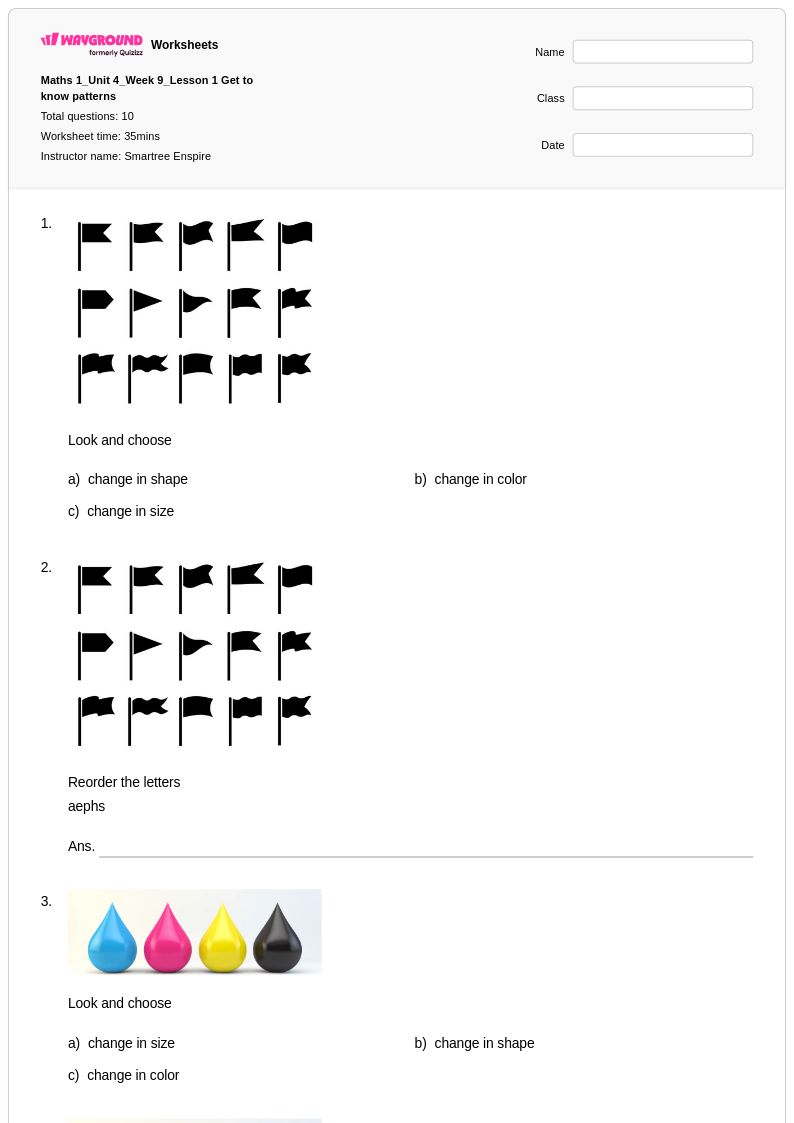
10 Q
1st
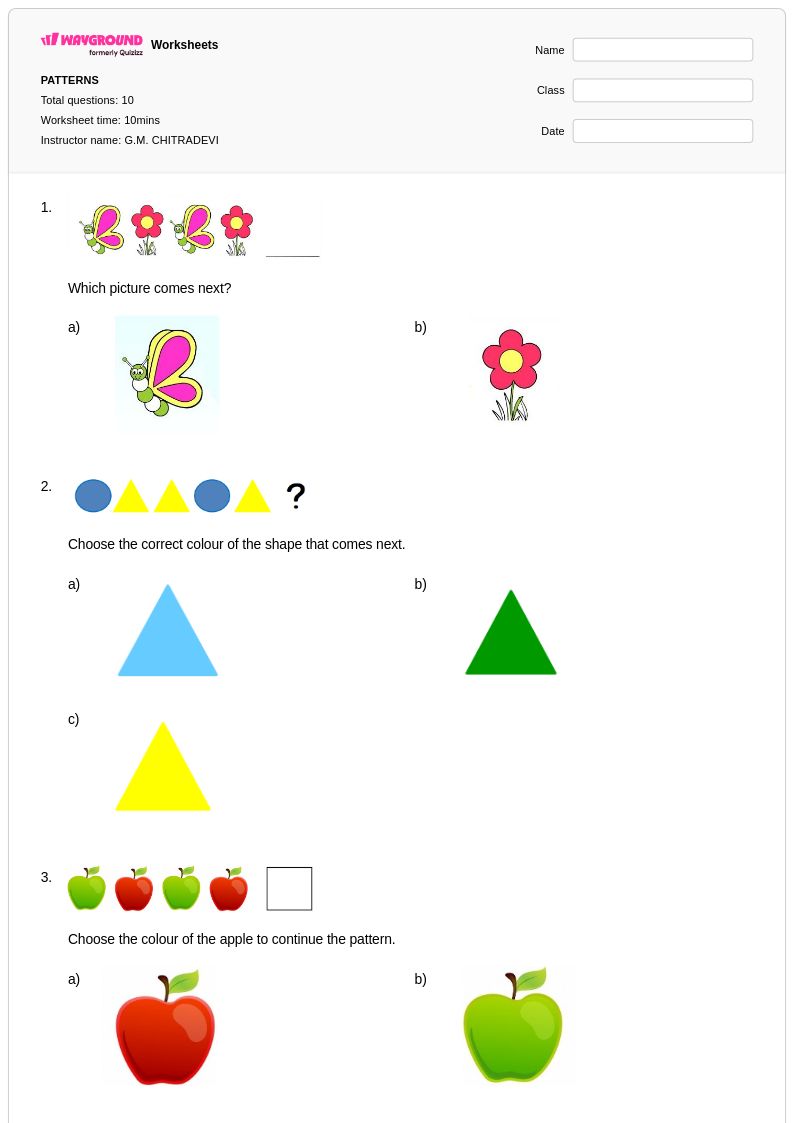
10 Q
KG - 1st
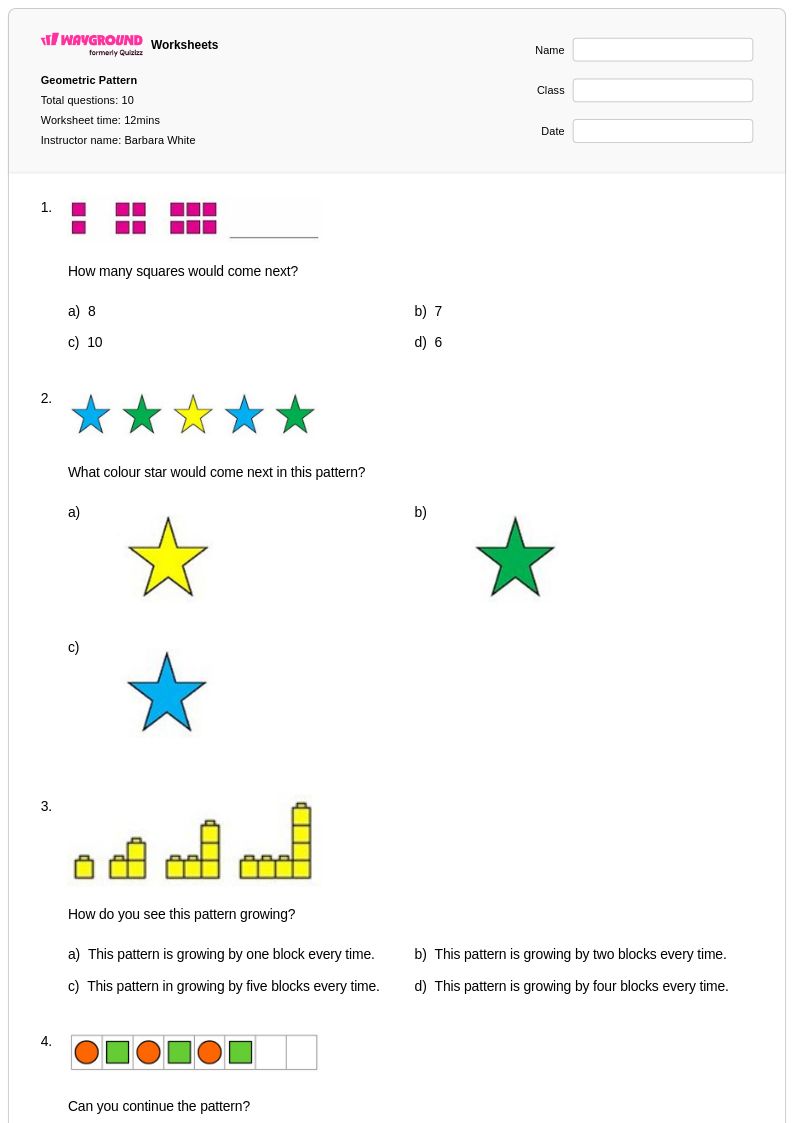
10 Q
1st
10 Q
1st
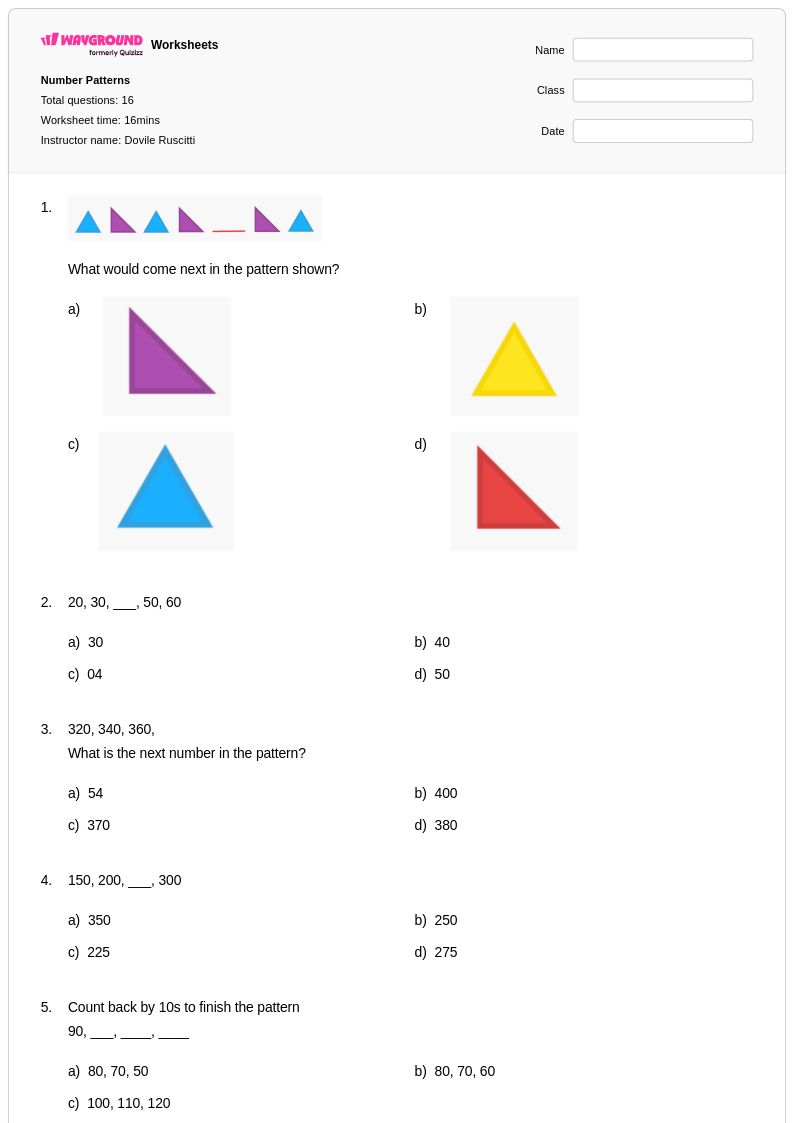
16 Q
1st - 4th
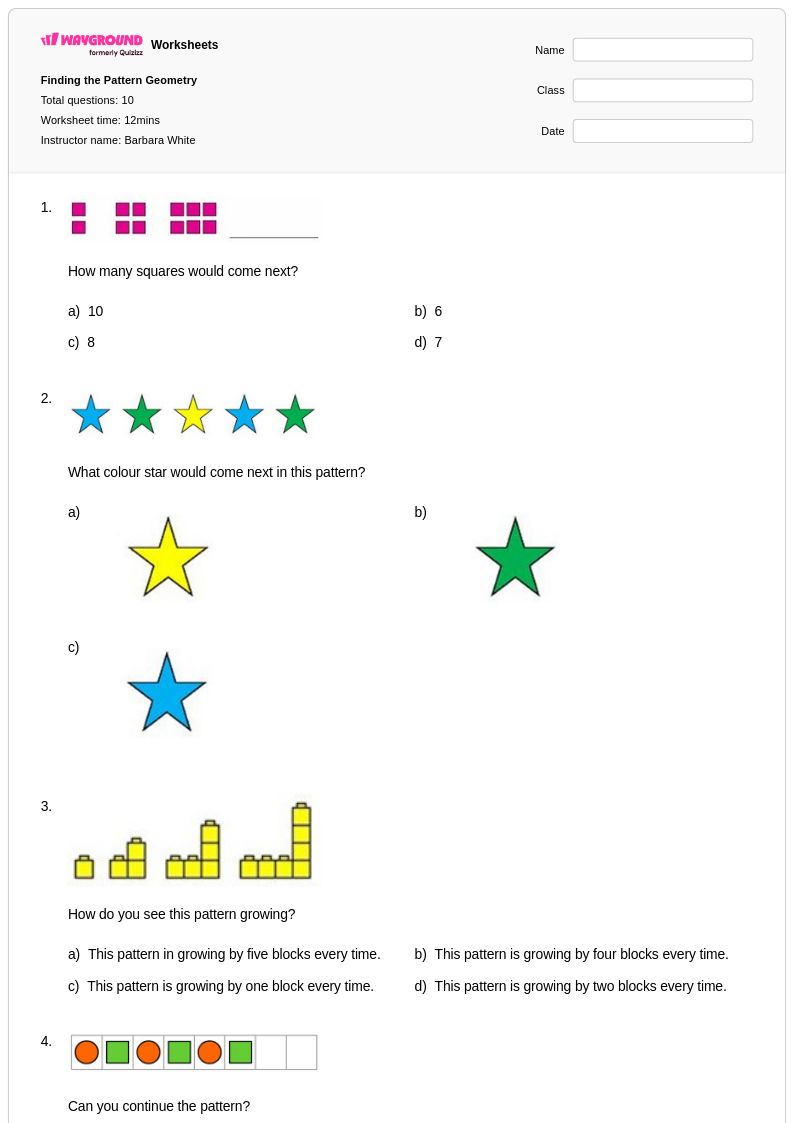
10 Q
1st
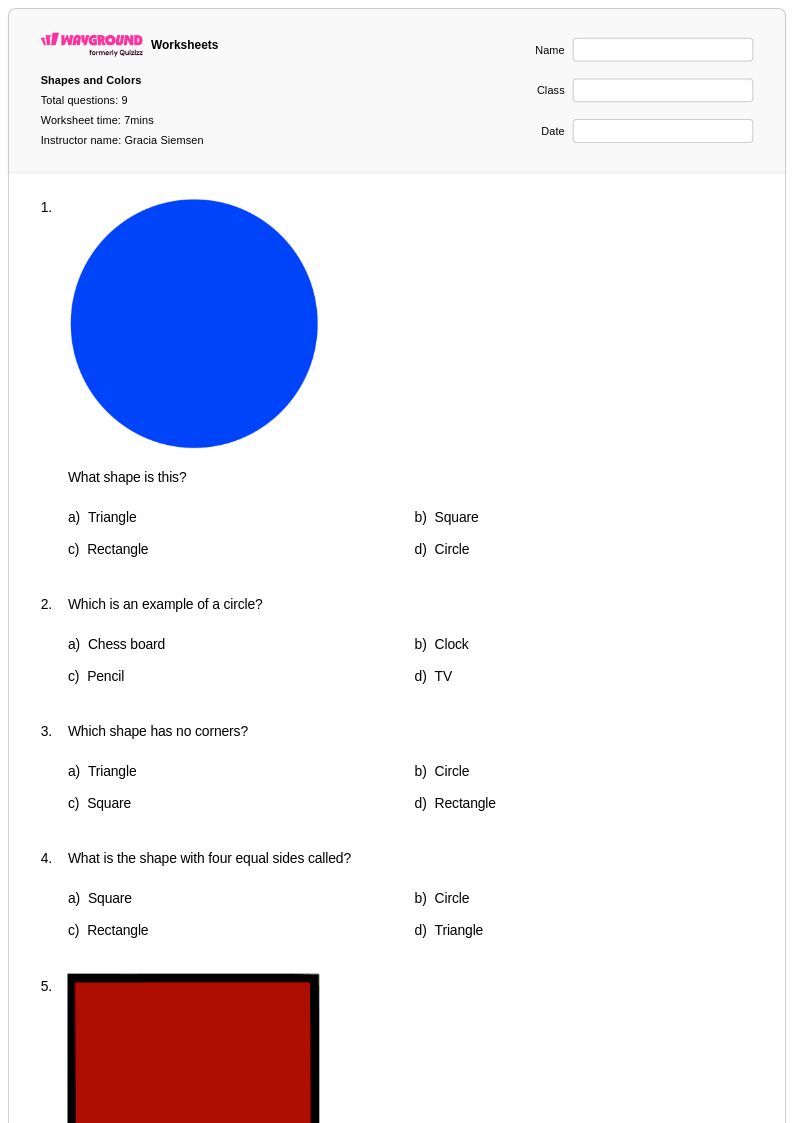
9 Q
1st
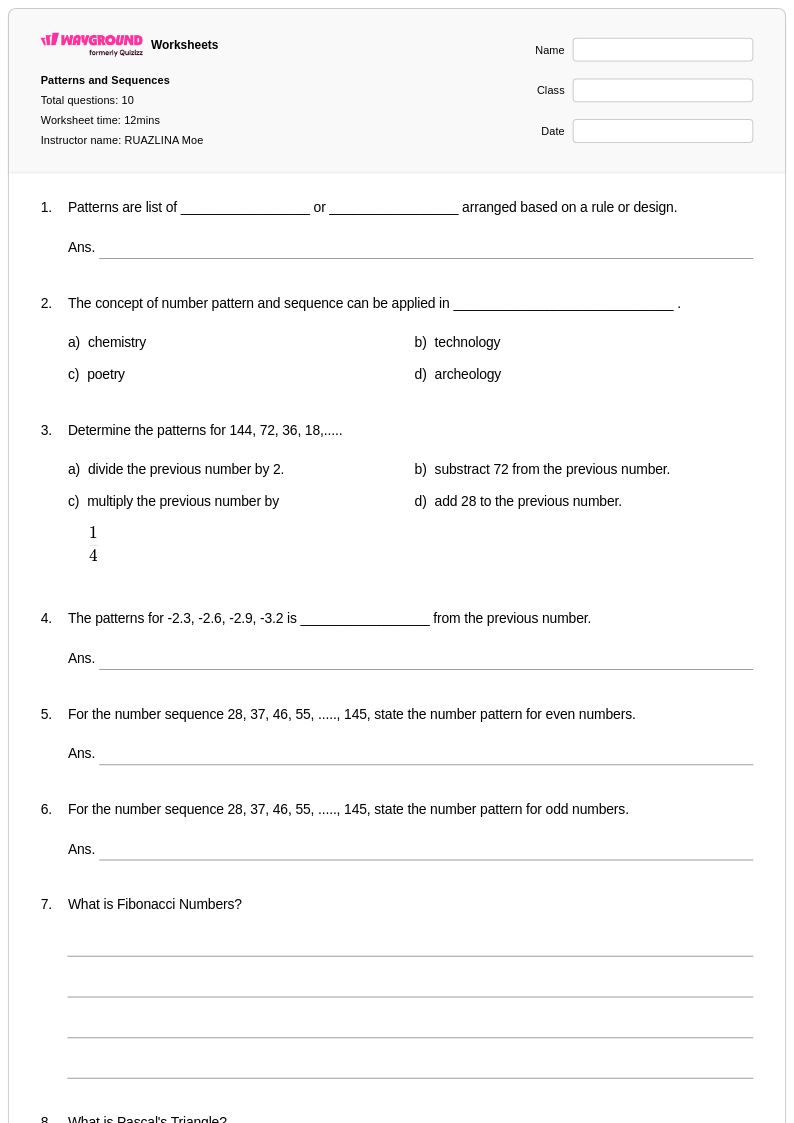
10 Q
1st - 12th
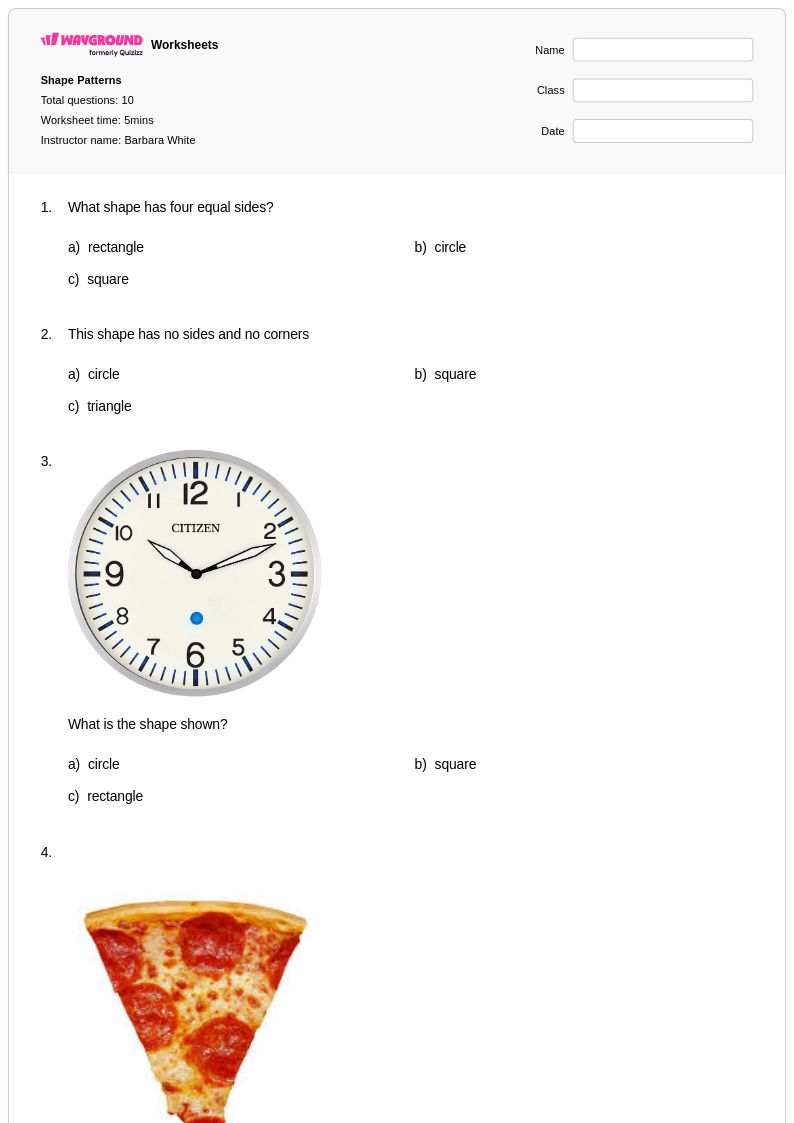
10 Q
1st
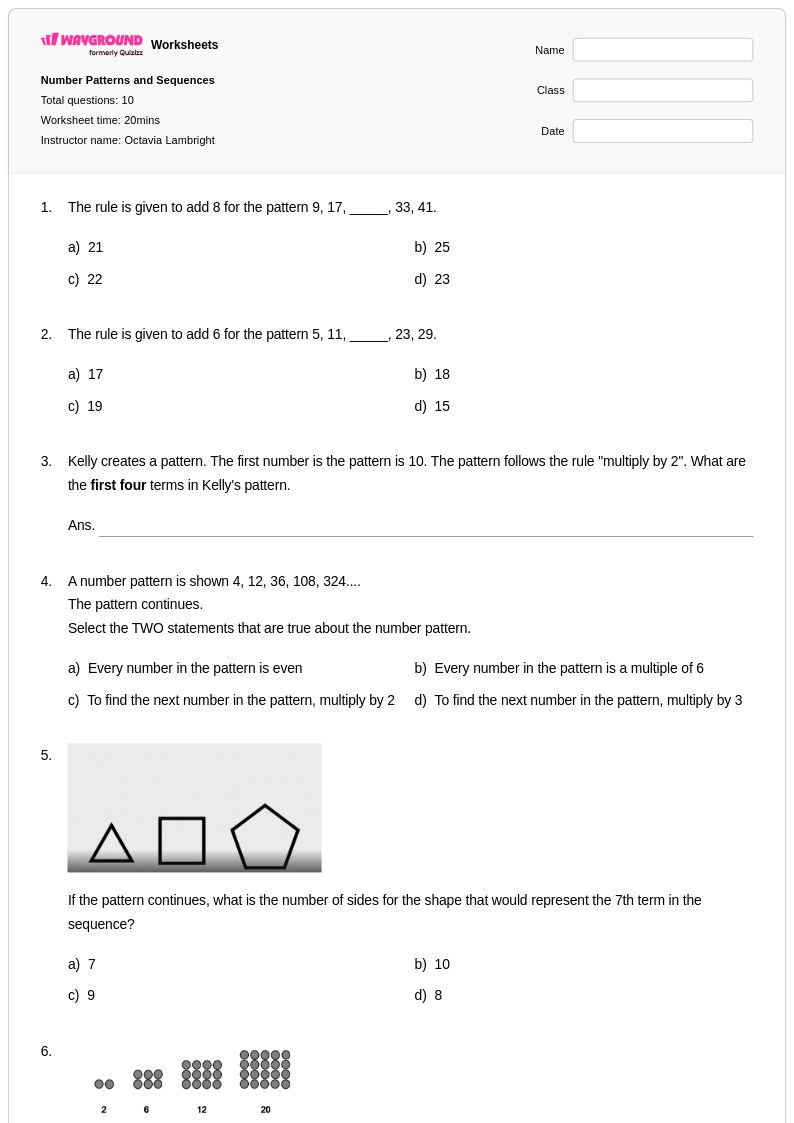
10 Q
1st - 5th
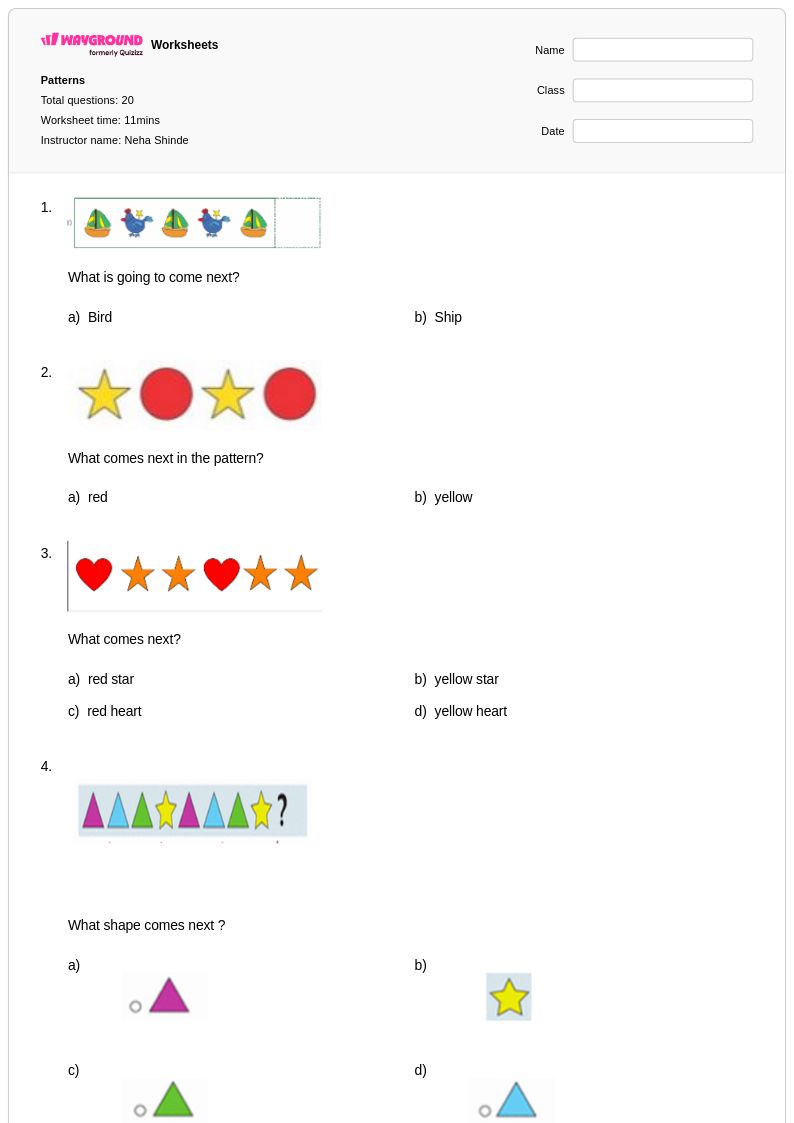
20 Q
KG - 2nd
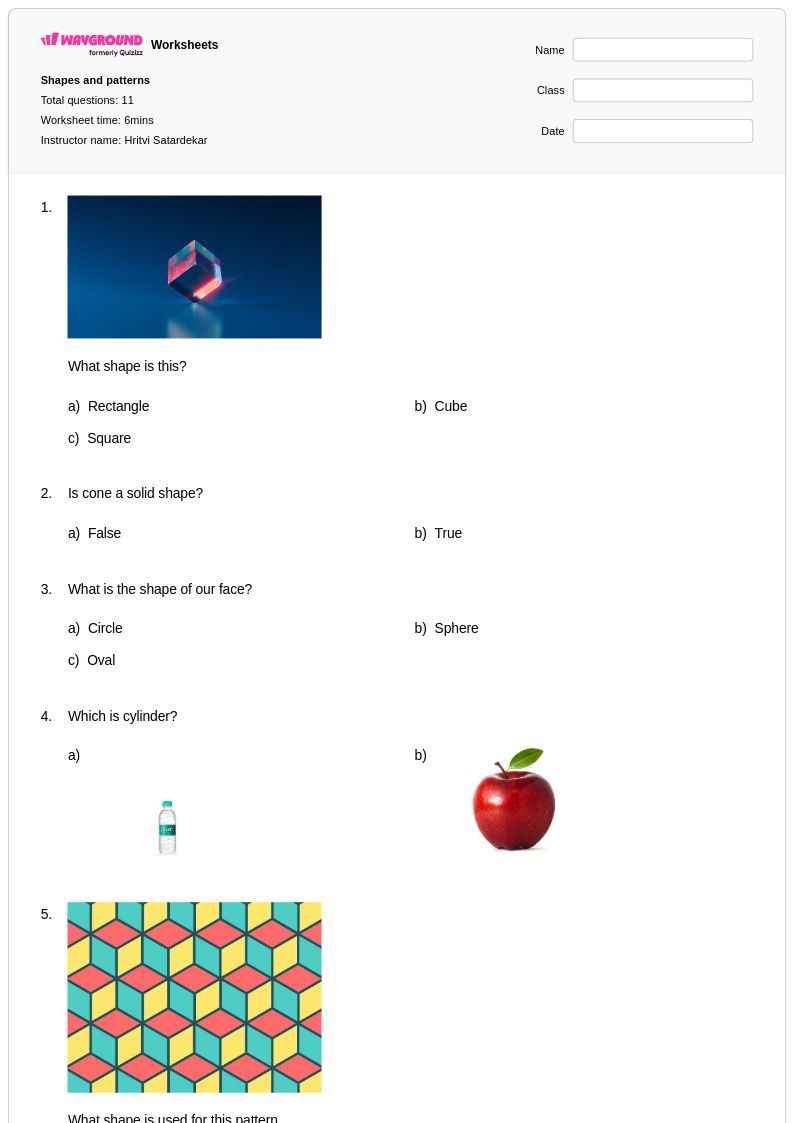
11 Q
1st
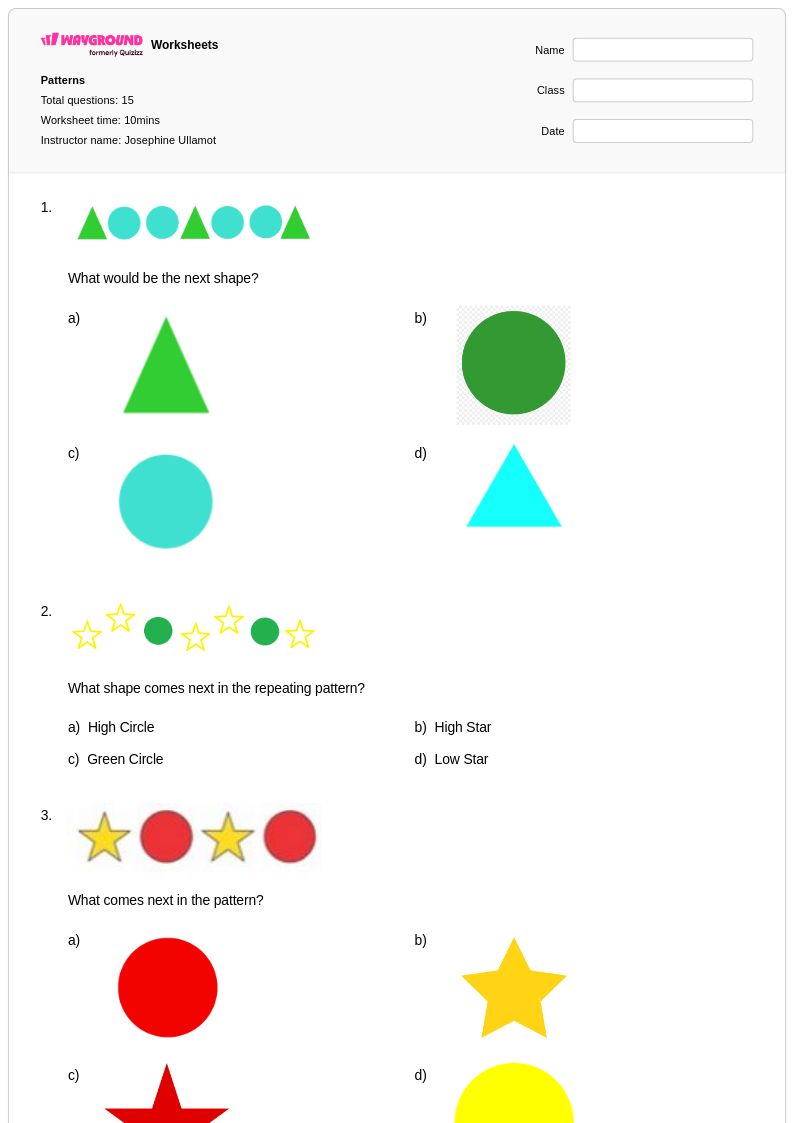
15 Q
1st
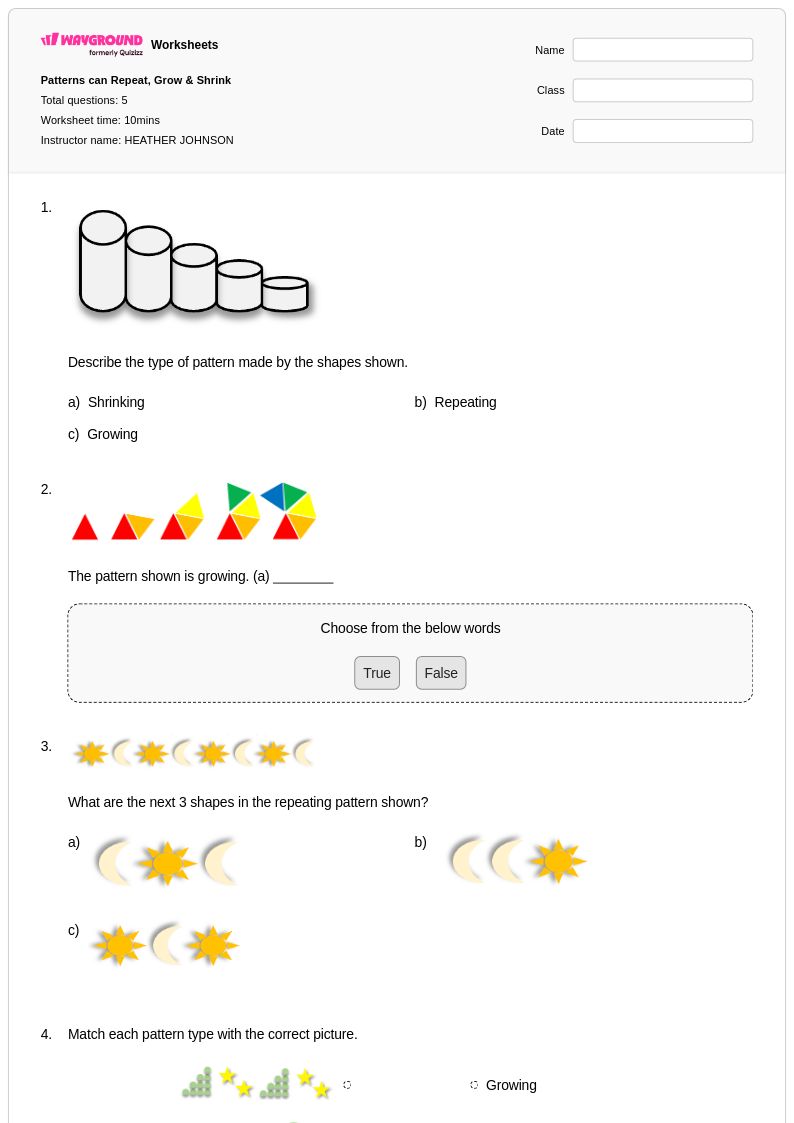
5 Q
1st
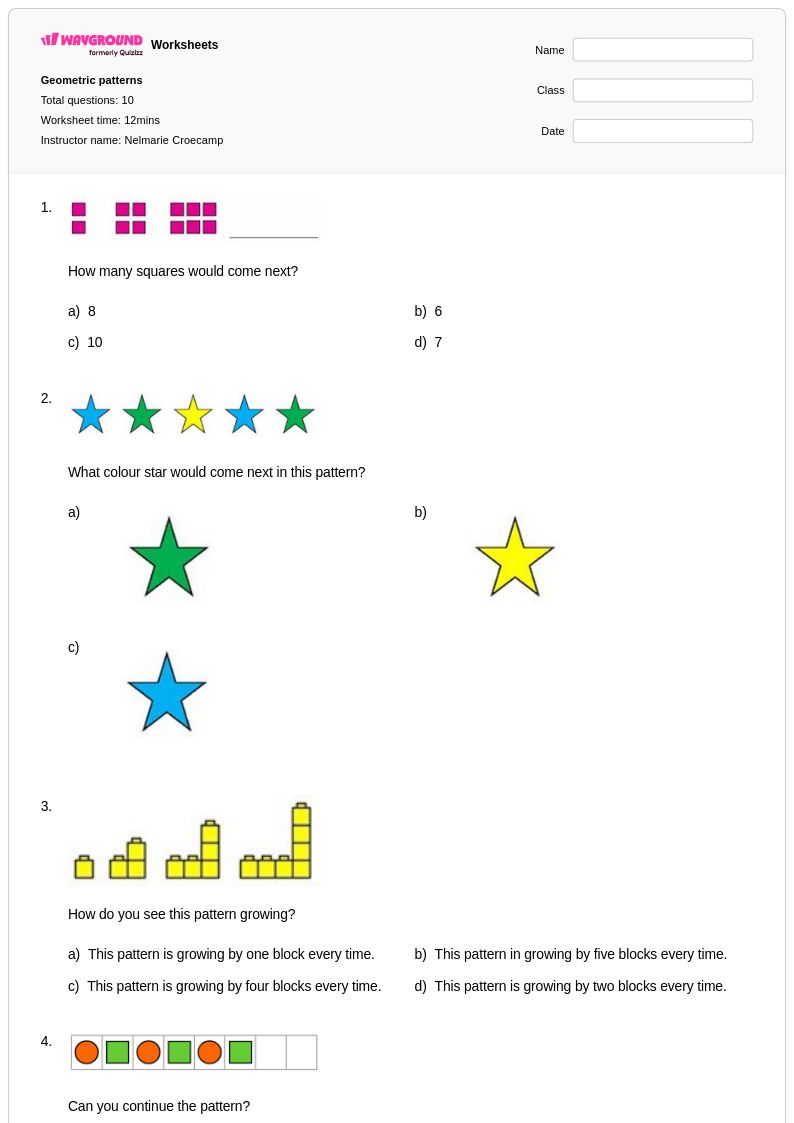
10 Q
1st
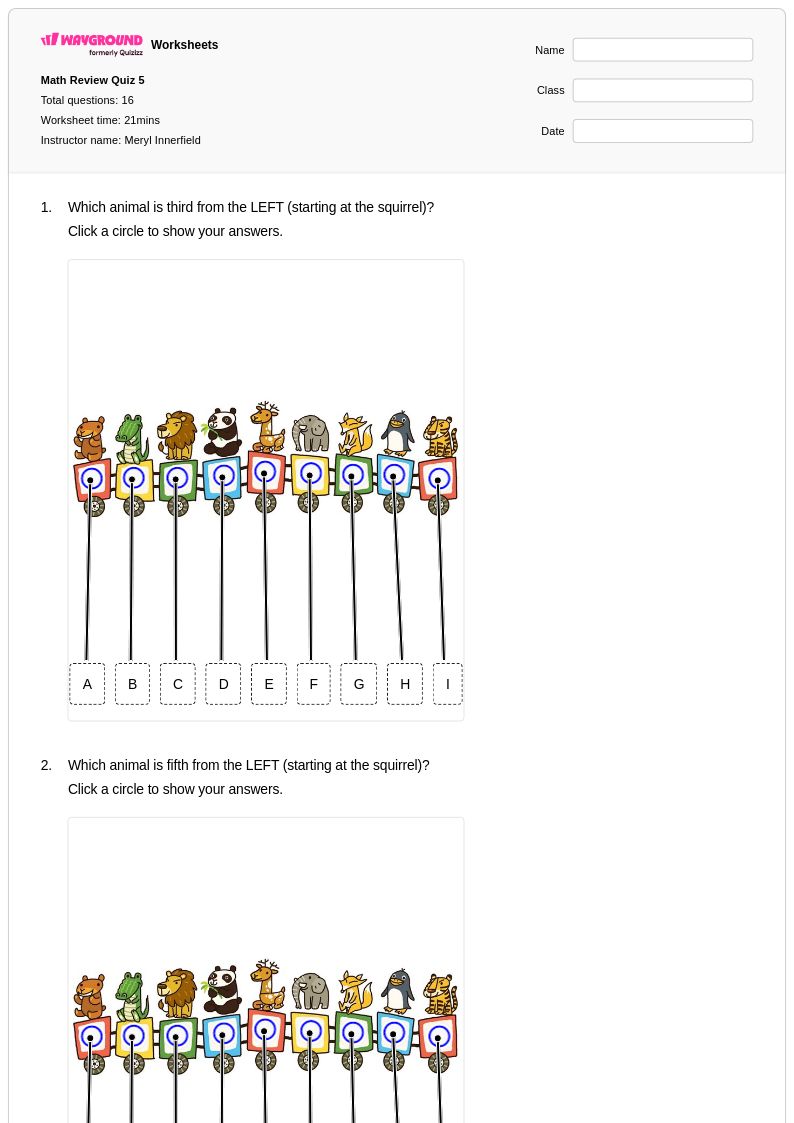
16 Q
1st
20 Q
1st
9 Q
1st
16 Q
1st
15 Q
1st
Explore Color Patterns Worksheets by Grades
Explore Other Subject Worksheets for grade 1
Explore printable Color Patterns worksheets for Grade 1
Color patterns worksheets for Grade 1 through Wayground (formerly Quizizz) provide young learners with essential foundational experiences in recognizing, extending, and creating visual sequences that strengthen mathematical thinking. These carefully designed printables focus on helping first-grade students identify repeating color sequences, predict what comes next in established patterns, and create their own colorful arrangements using systematic rules. The practice problems featured in these free resources develop critical number sense skills by teaching children to recognize mathematical relationships through visual elements, building the cognitive framework necessary for understanding more complex mathematical concepts like skip counting, addition patterns, and algebraic thinking. Each worksheet includes comprehensive answer keys that allow teachers and parents to quickly assess student understanding while providing immediate feedback on pattern recognition accuracy.
Wayground (formerly Quizizz) empowers educators with millions of teacher-created color pattern resources specifically designed for Grade 1 mathematics instruction, offering robust search and filtering capabilities that help teachers locate materials perfectly aligned with their curriculum standards and student needs. The platform's differentiation tools enable instructors to customize worksheets for various learning levels within their classrooms, providing both remediation support for struggling students and enrichment opportunities for advanced learners who have mastered basic color pattern concepts. These versatile resources are available in both printable PDF formats for traditional classroom use and digital formats for interactive learning experiences, giving teachers the flexibility to adapt their instruction for different teaching environments while maintaining consistent focus on developing strong pattern recognition skills that serve as building blocks for future mathematical success.
FAQs
How do I teach color patterns to first graders?
What color pattern exercises work well in Grade 1?
What mistakes do first graders make with color patterns?
How can I use Wayground Grade 1 color patterns worksheets?
How do Grade 1 color patterns support the Common Core math progression?
How can I differentiate Grade 1 color pattern worksheets?
What grade level are color pattern worksheets designed for?