
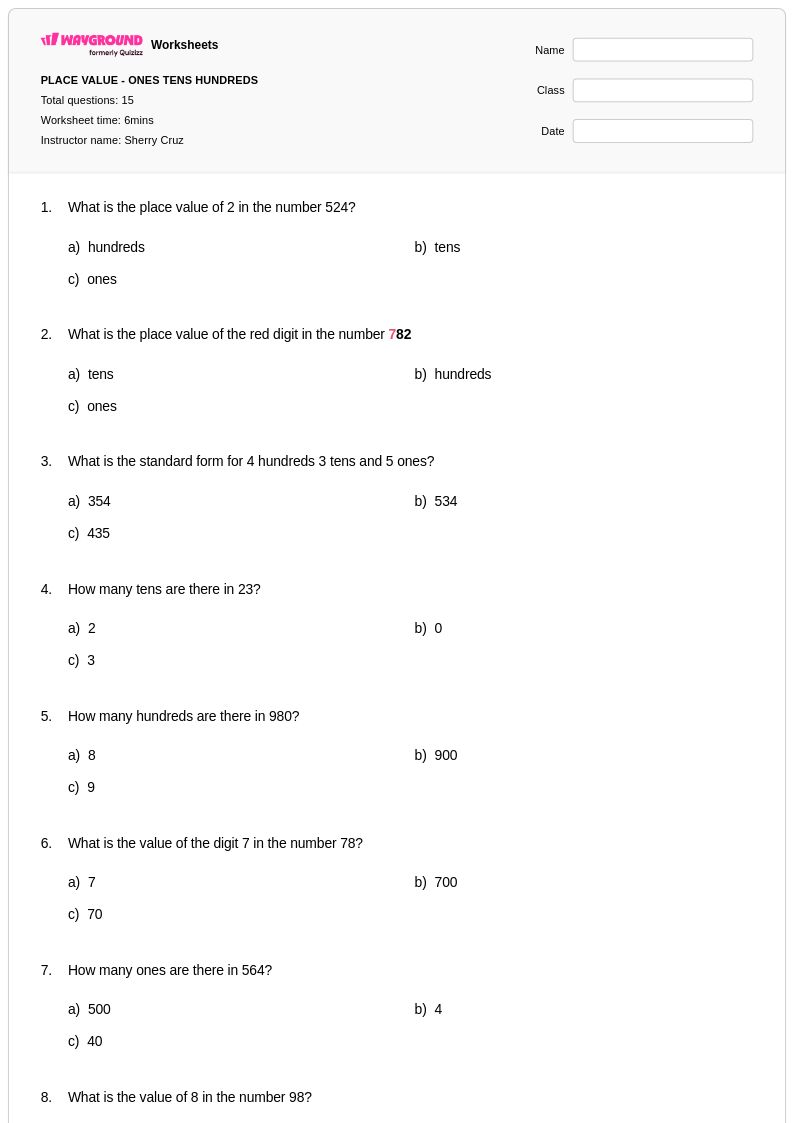
15 P
1st - 2nd
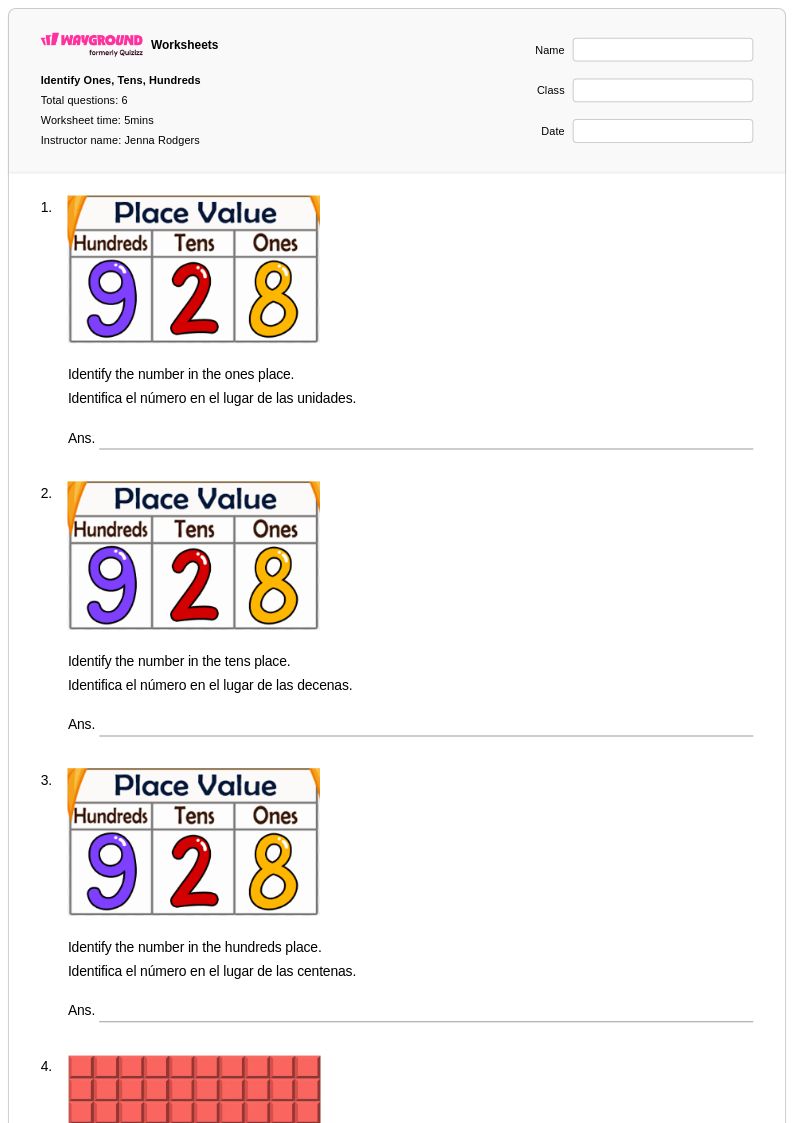
6 P
KG - 2nd
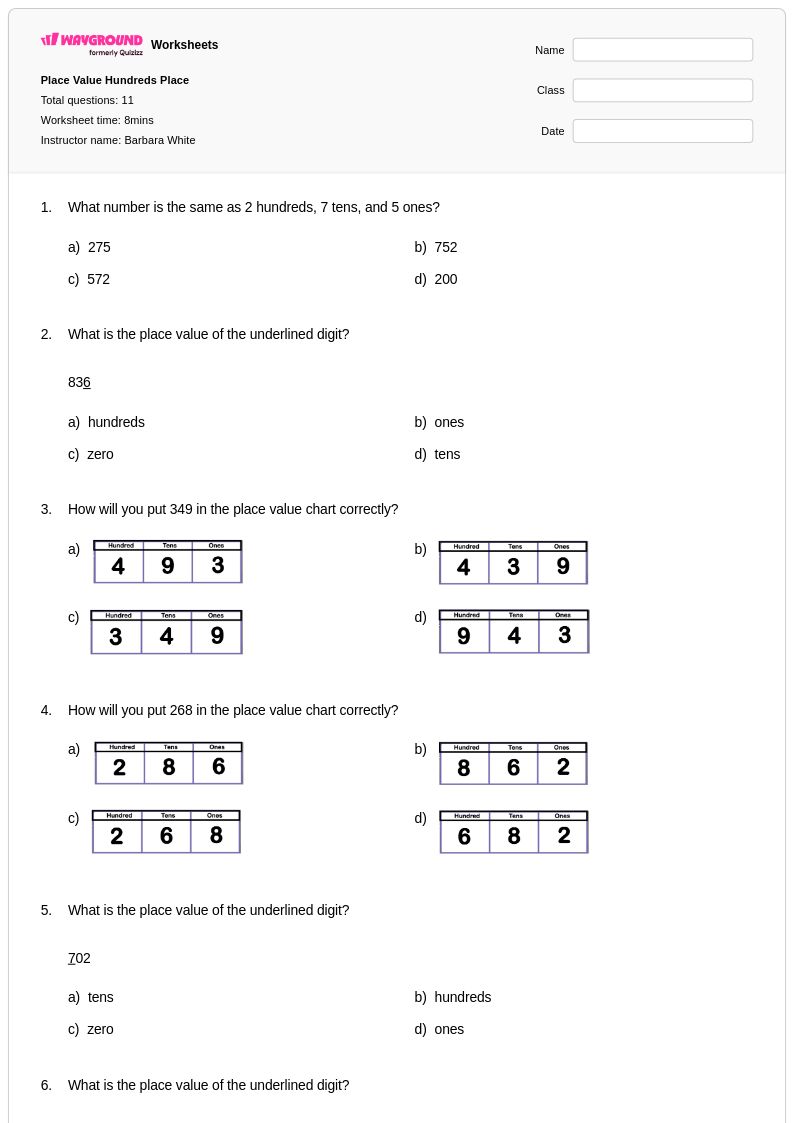
11 P
1st
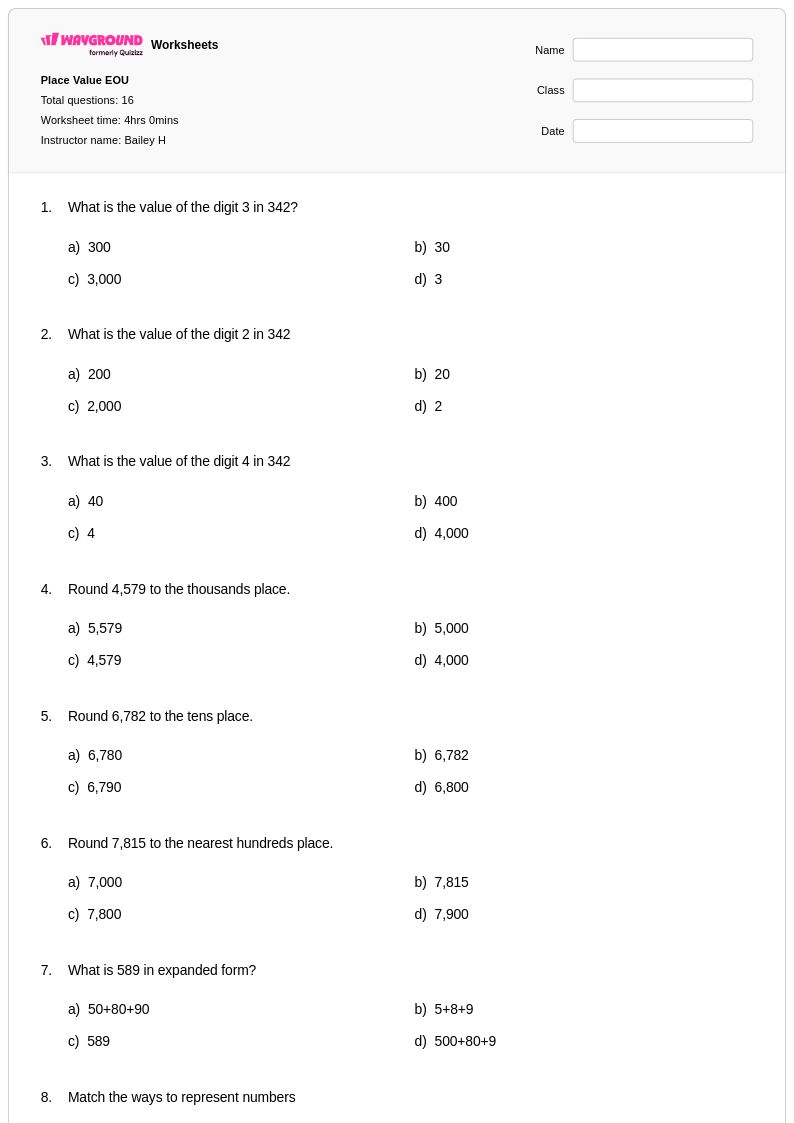
16 P
1st - 3rd
17 P
1st - Uni
10 P
1st
16 P
1st - 3rd
10 P
1st
15 P
1st - 2nd
18 P
1st

15 P
1st
20 P
1st - Uni
20 P
1st - 3rd
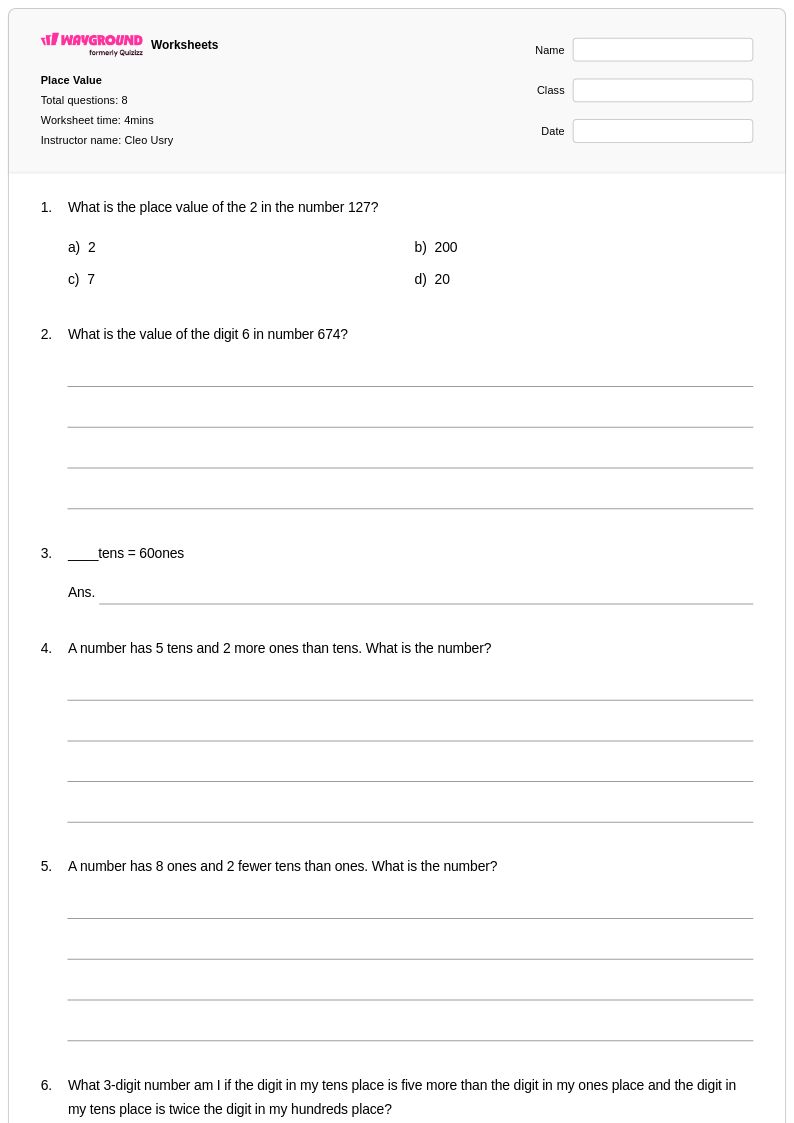
8 P
1st - 3rd
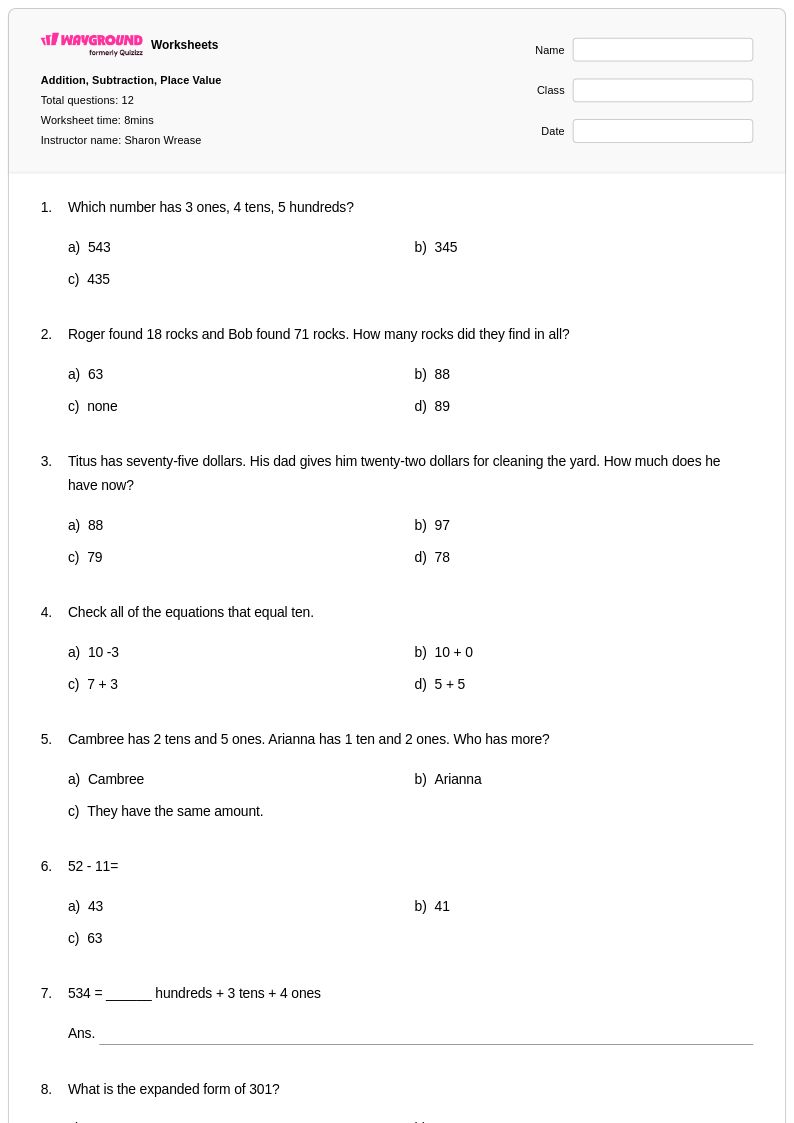
12 P
1st - 2nd
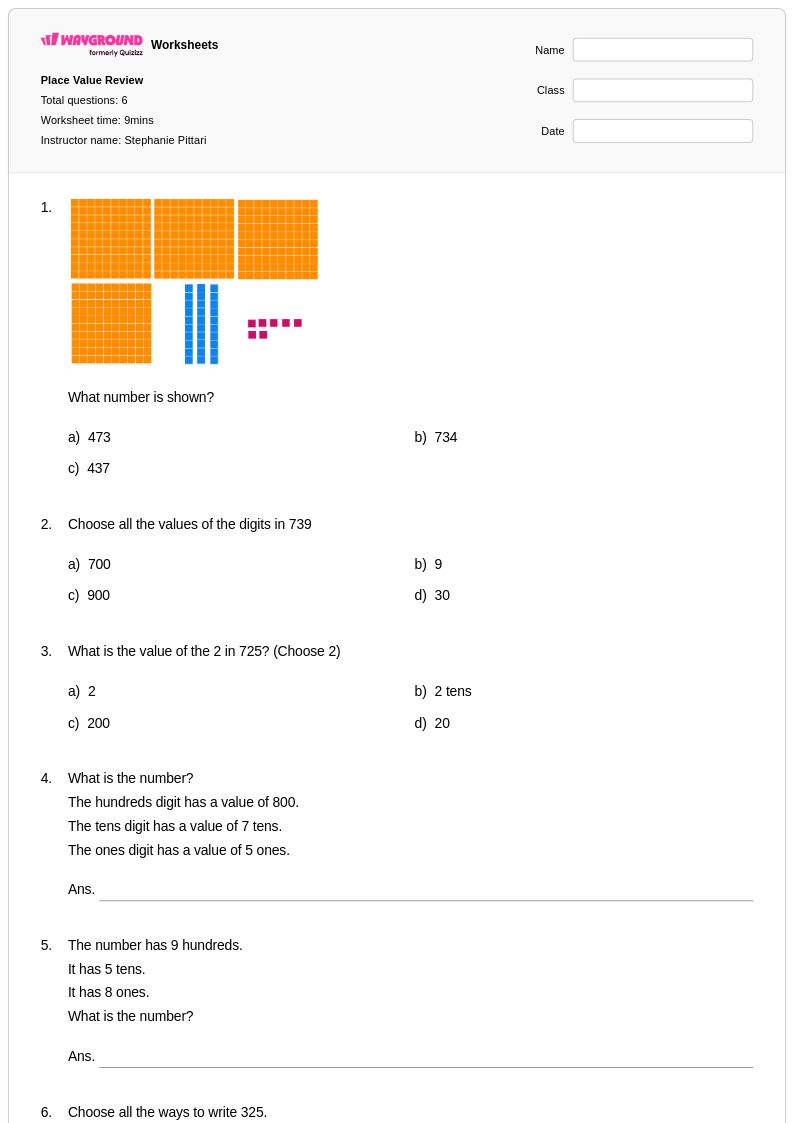
6 P
1st - 2nd
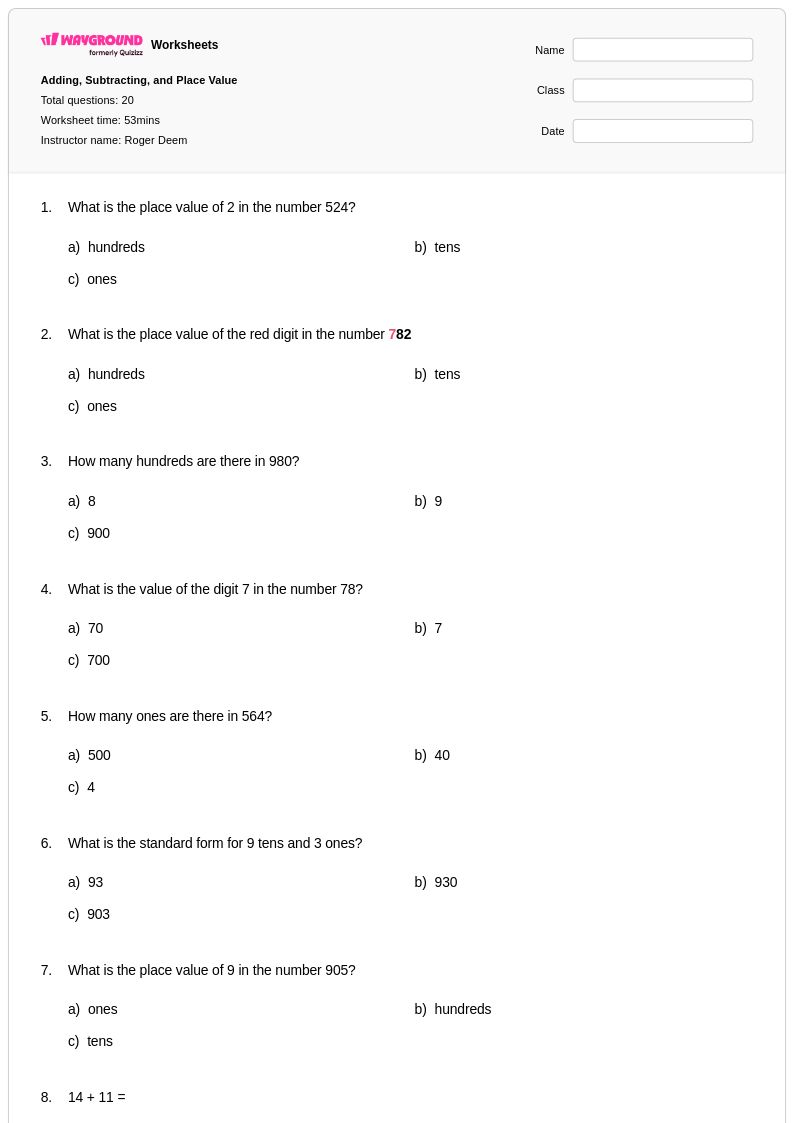
20 P
1st - 2nd
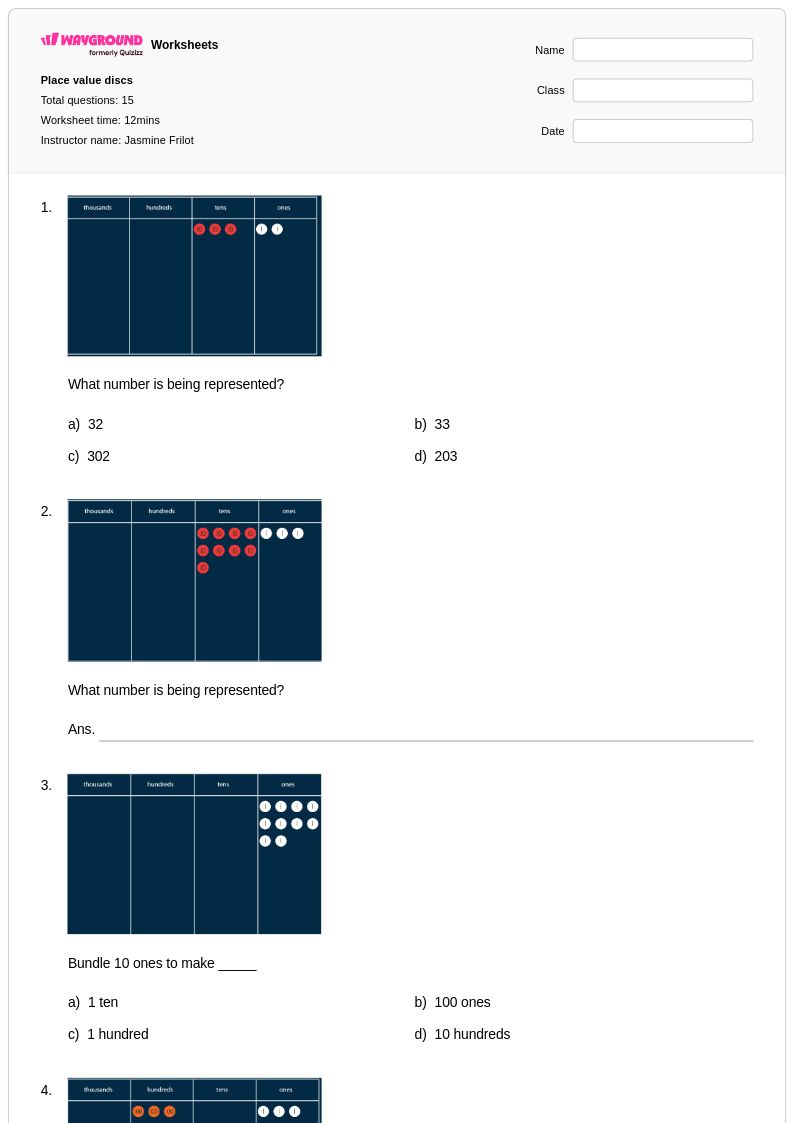
15 P
1st - 2nd
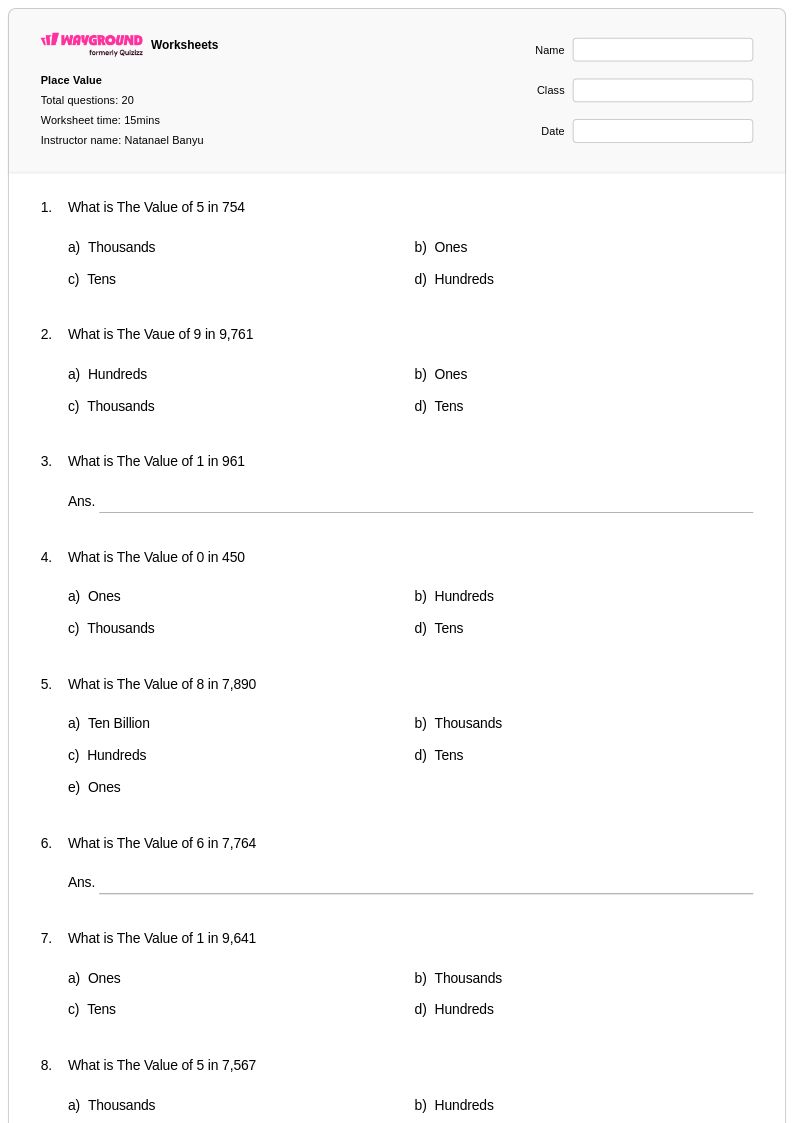
20 P
1st
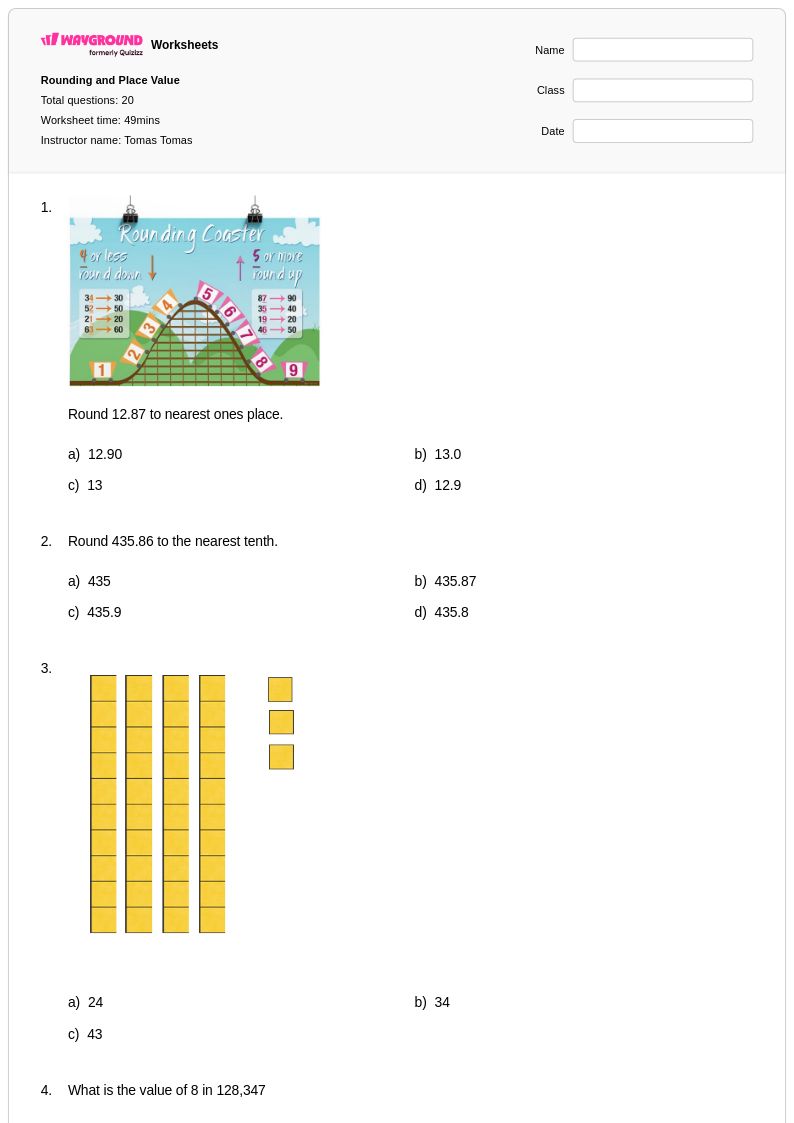
20 P
1st
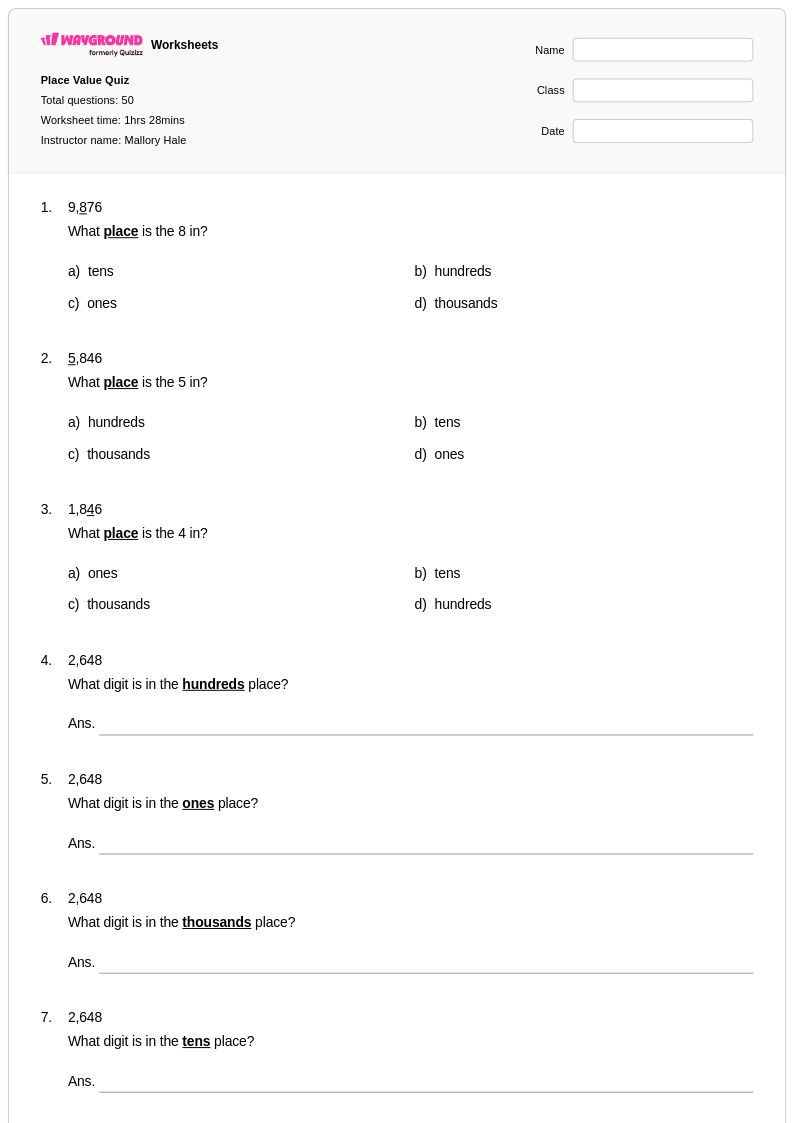
50 P
1st - 5th
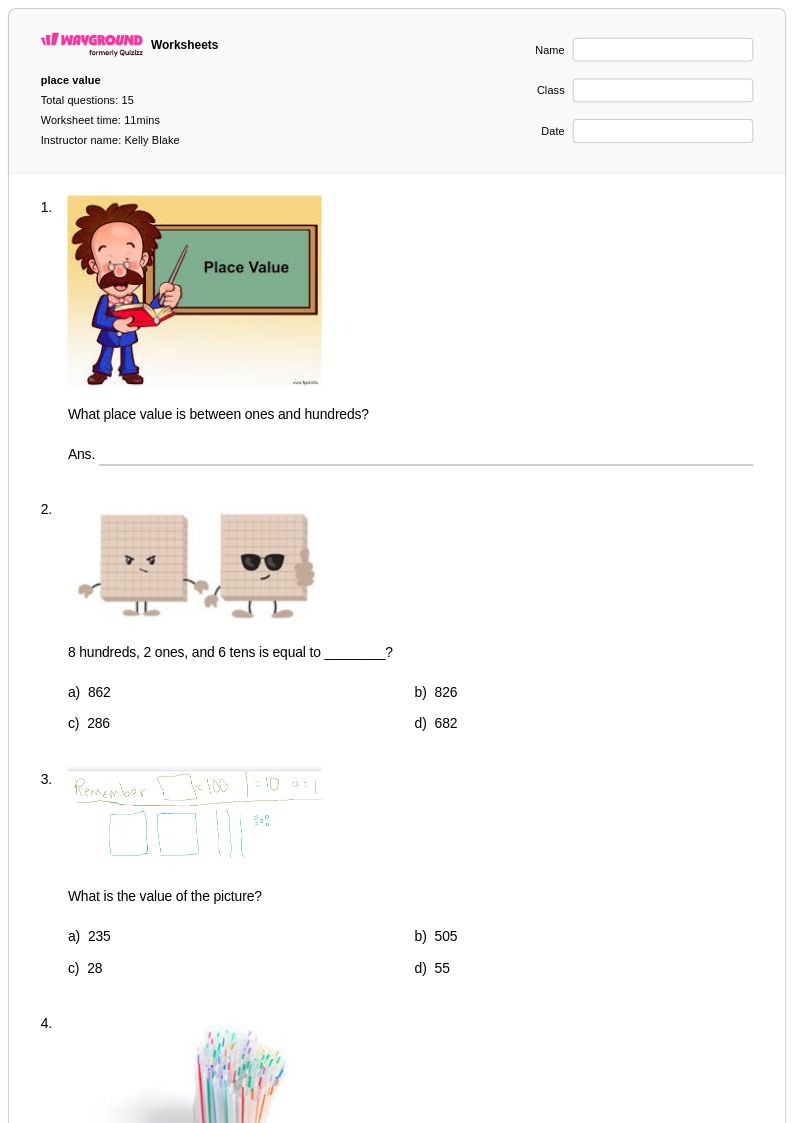
15 P
1st - 3rd
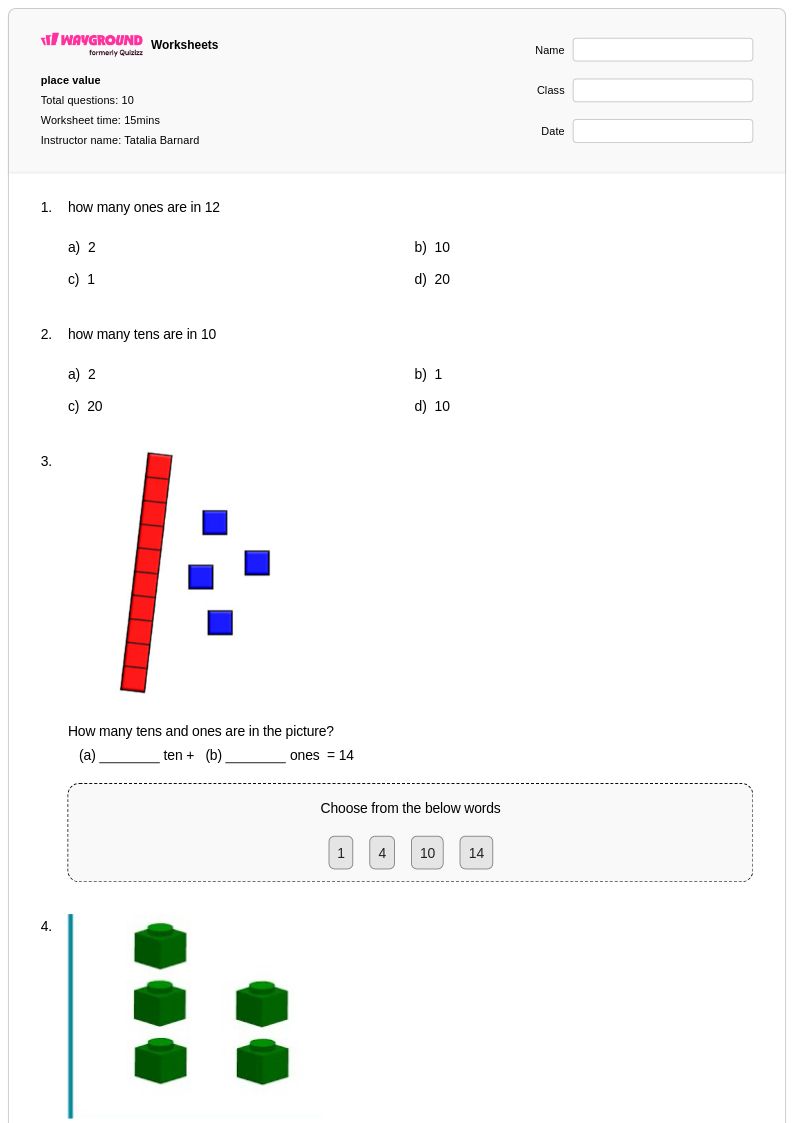
10 P
1st
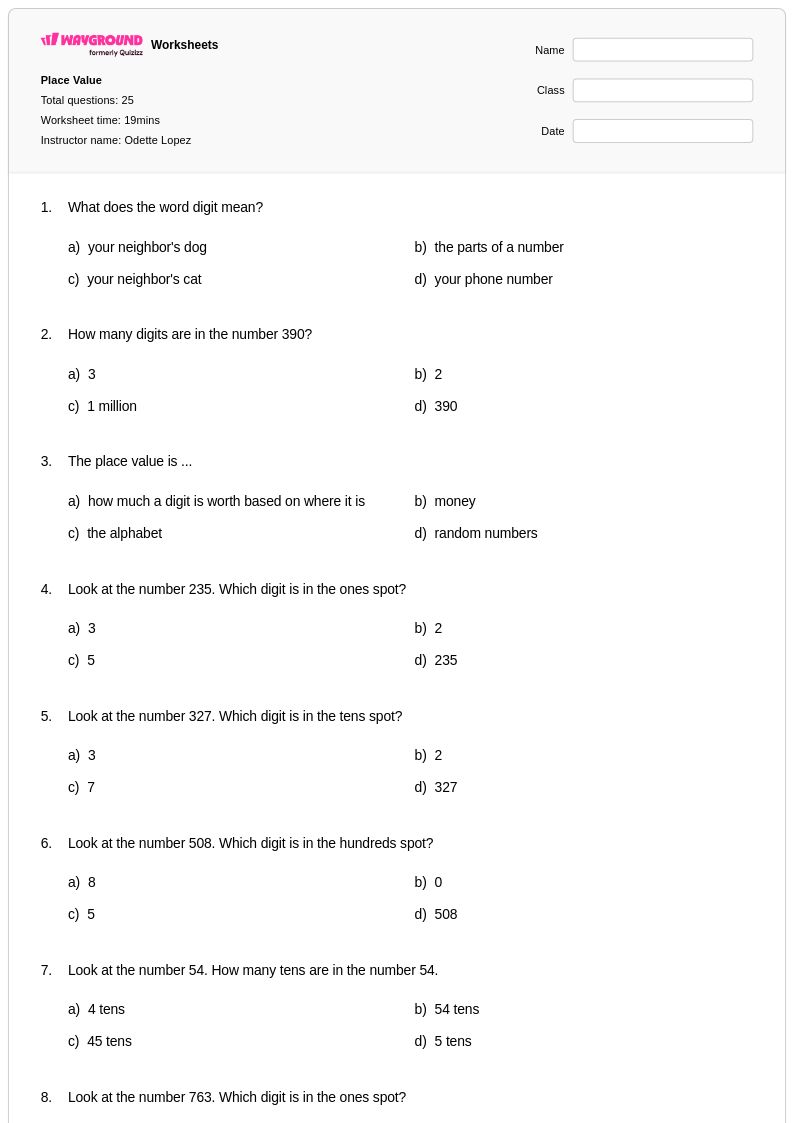
25 P
1st - 2nd
Przeglądaj Place Value: Hundreds arkusze ćwiczeń według ocen
Przeglądaj inne arkusze tematyczne dla grade 1
Explore printable Place Value: Hundreds worksheets for Grade 1
Place value with hundreds represents a foundational mathematical concept for Grade 1 students as they expand their understanding of number relationships and positional notation beyond tens and ones. Wayground's comprehensive collection of place value worksheets targeting hundreds provides young learners with structured practice in recognizing, composing, and decomposing three-digit numbers while building essential number sense skills. These carefully designed worksheets include a variety of practice problems that help students visualize hundreds through base-ten blocks, place value charts, and expanded form exercises, with each printable resource accompanied by a detailed answer key to support accurate assessment and immediate feedback. The free pdf materials systematically guide first-grade students through the critical process of understanding how the position of a digit determines its value, establishing the groundwork for advanced mathematical concepts including addition, subtraction, and number comparison strategies.
Wayground's extensive library of millions of teacher-created resources ensures educators have access to diverse, high-quality place value worksheets specifically aligned with Grade 1 mathematical standards and learning objectives. The platform's robust search and filtering capabilities allow teachers to quickly locate materials that match their students' specific learning needs, whether for initial instruction, remediation support, or enrichment activities. These customizable worksheets are available in both printable pdf format and interactive digital versions, enabling seamless integration into various classroom environments and teaching approaches. The differentiation tools and flexible customization options empower educators to modify content difficulty, adjust problem types, and personalize learning experiences, making it easier to address diverse learning styles while ensuring all students develop confidence and competency in understanding place value concepts with hundreds.
FAQs
Is place value with hundreds a first-grade topic?
What's an effective way to teach hundreds in first grade?
What exercises help first graders practice with hundreds?
What's a common misconception for first graders with three-digit numbers?
How can I use this worksheet in my first-grade class?
How does this align with Common Core for Grade 1?