
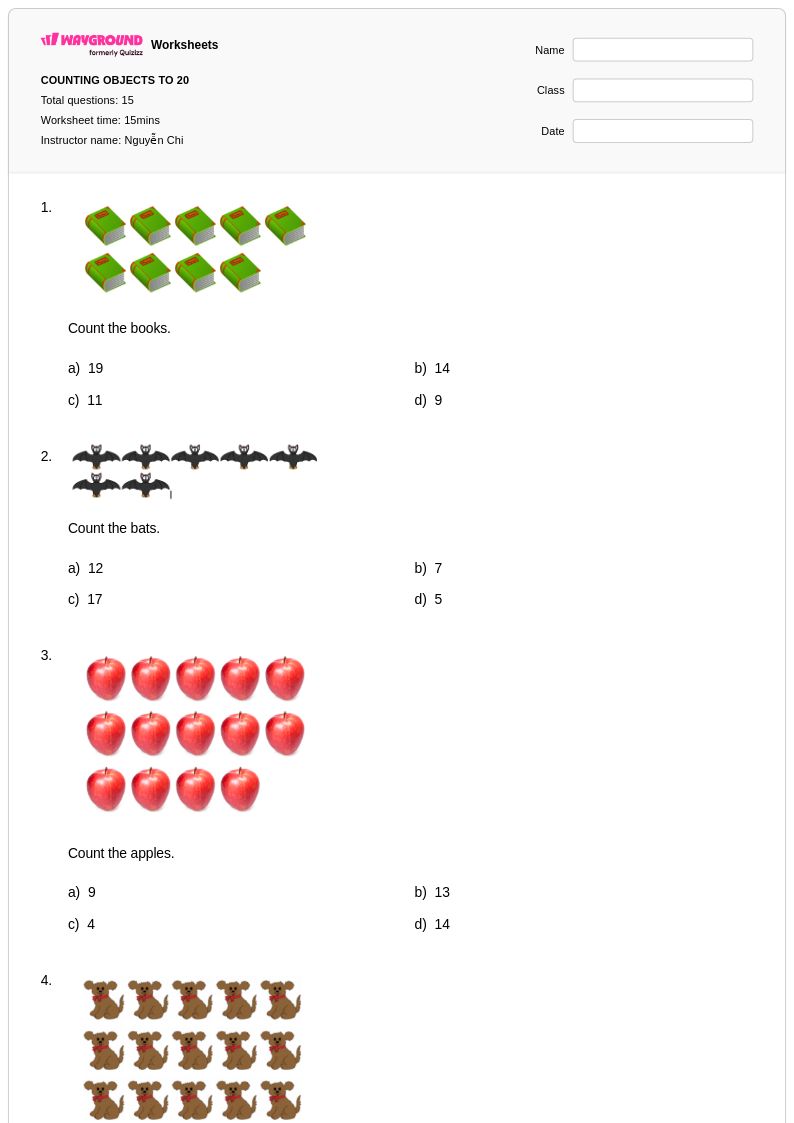
15 Q
1st - 3rd
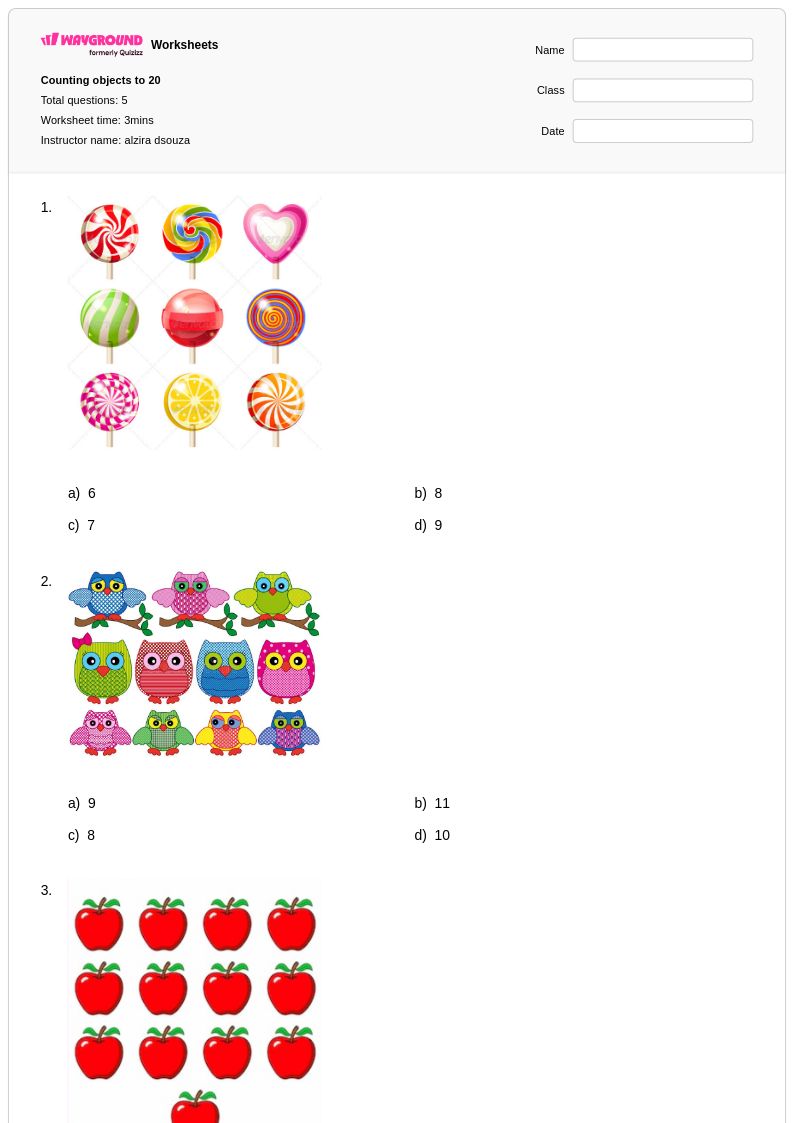
5 Q
1st
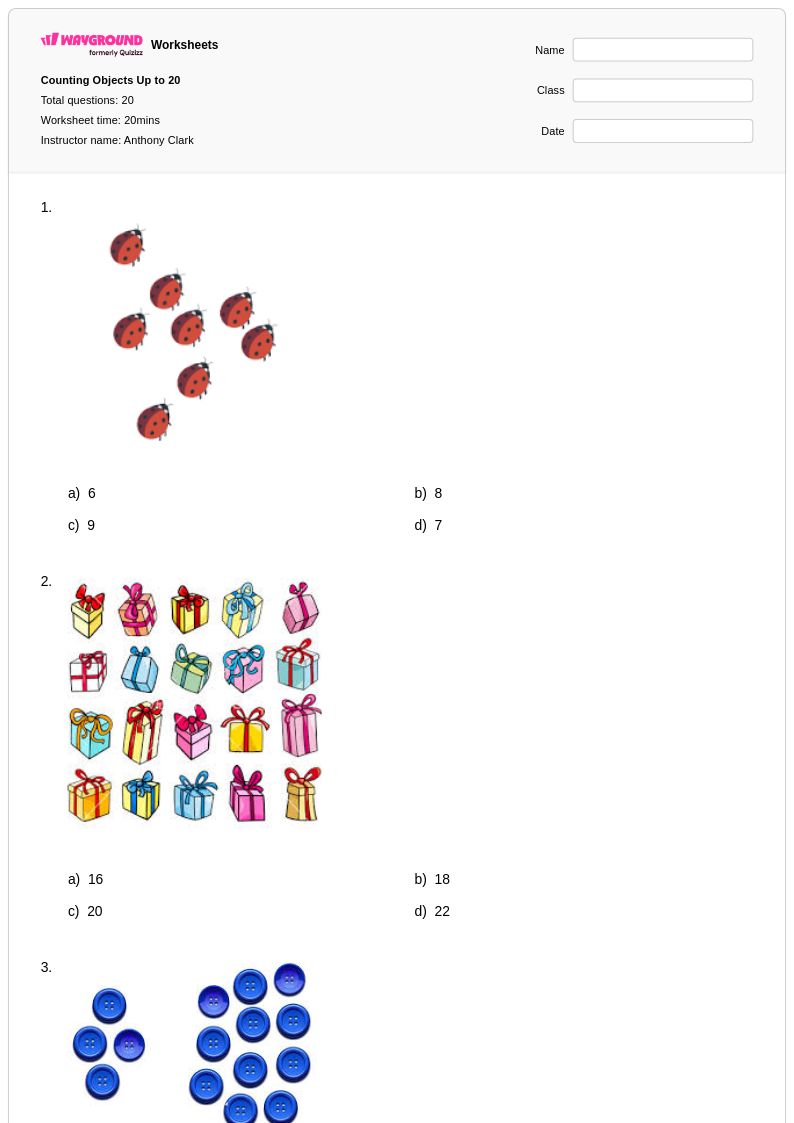
20 Q
1st - Uni
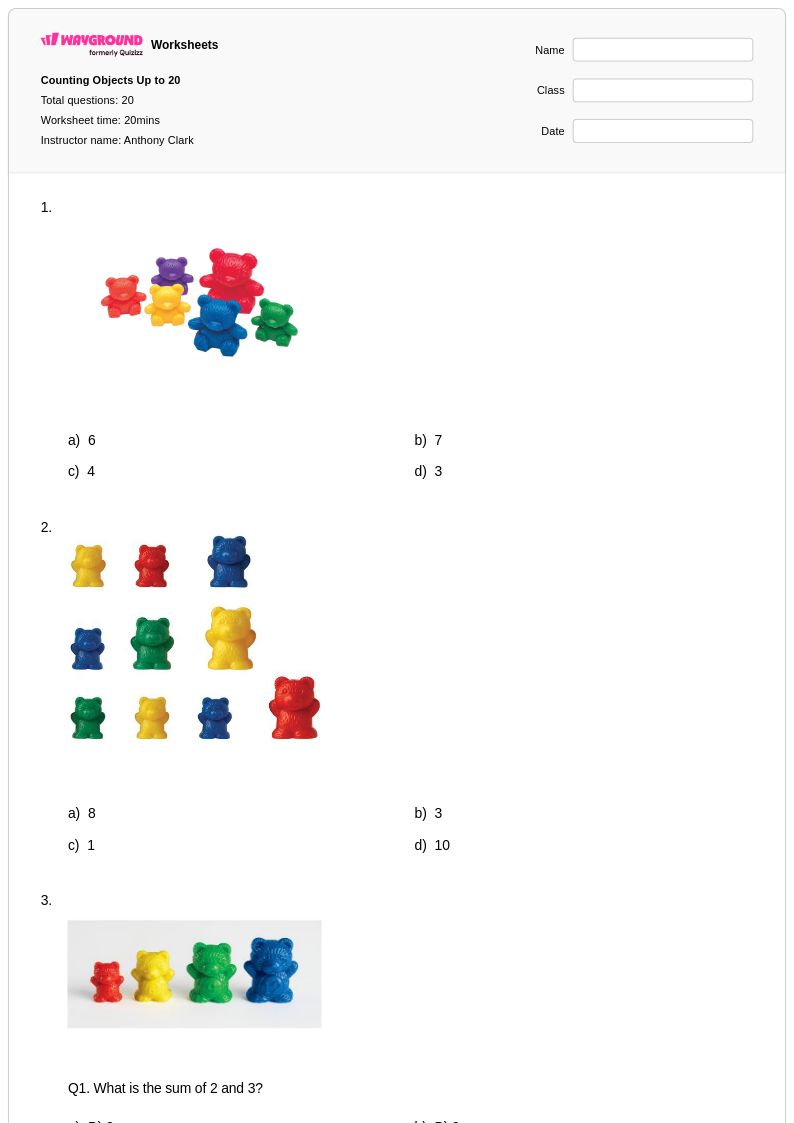
20 Q
1st - Uni
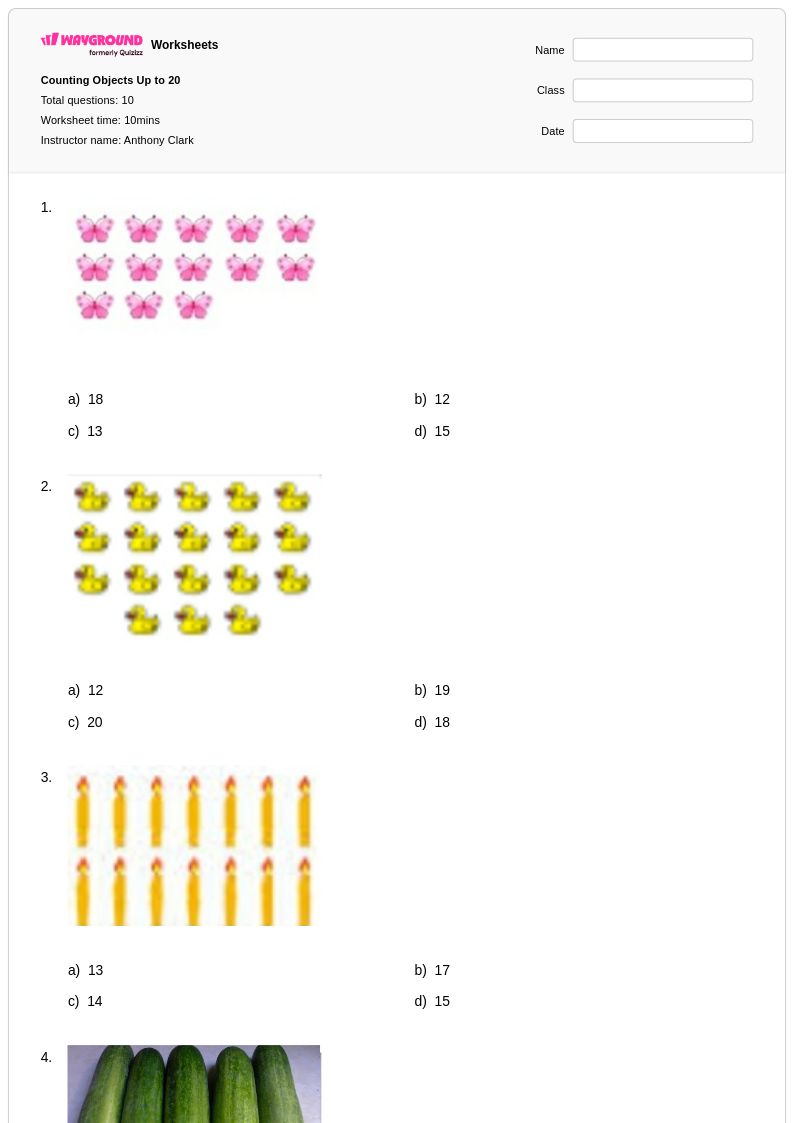
10 Q
1st - Uni
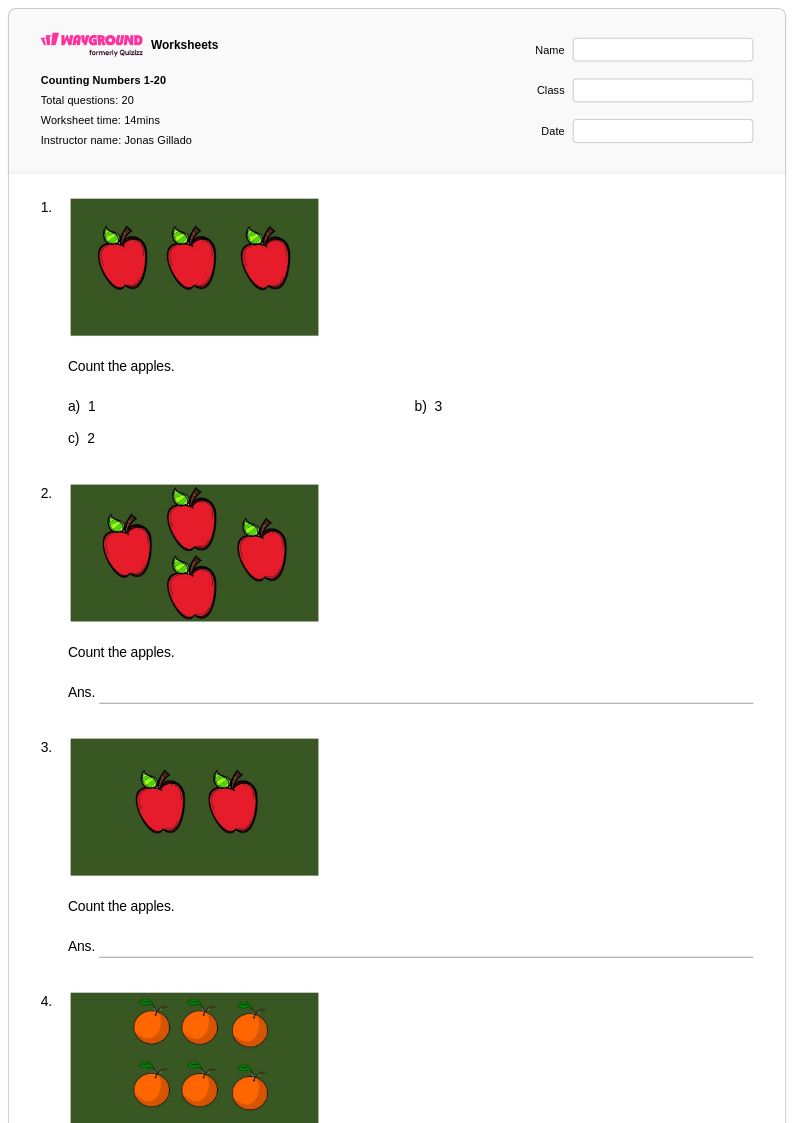
20 Q
KG - 3rd
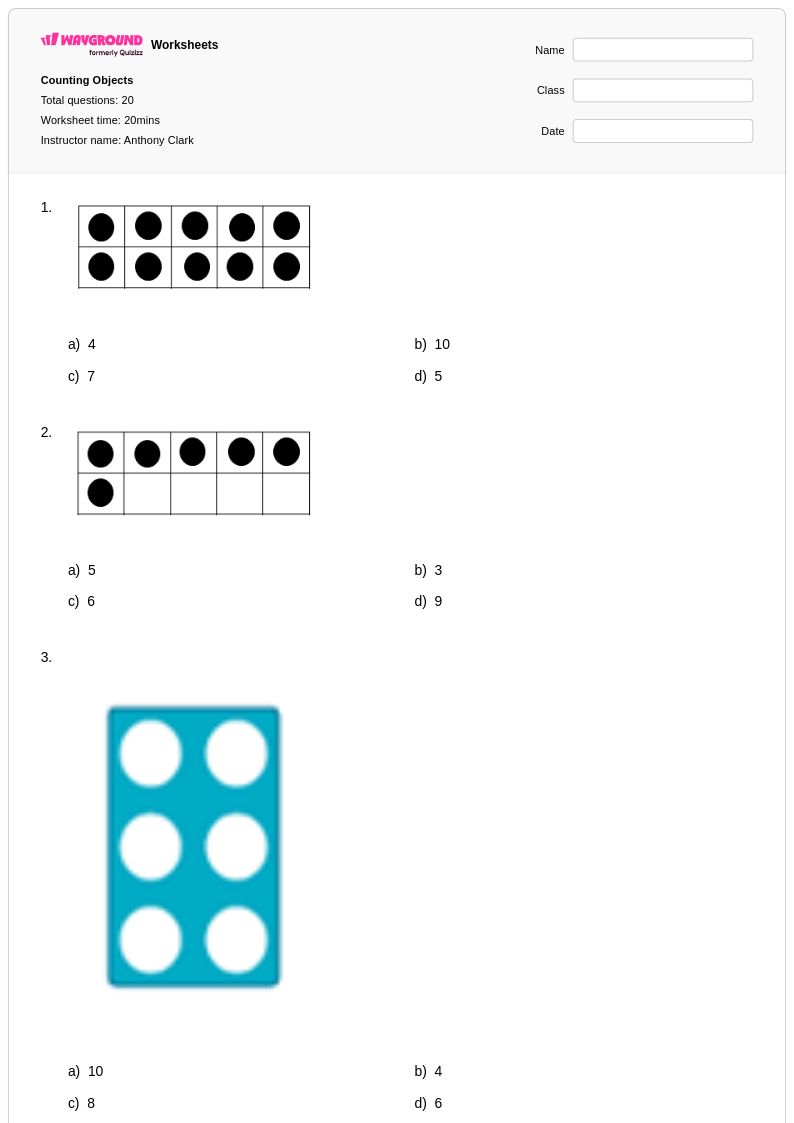
20 Q
1st - Uni
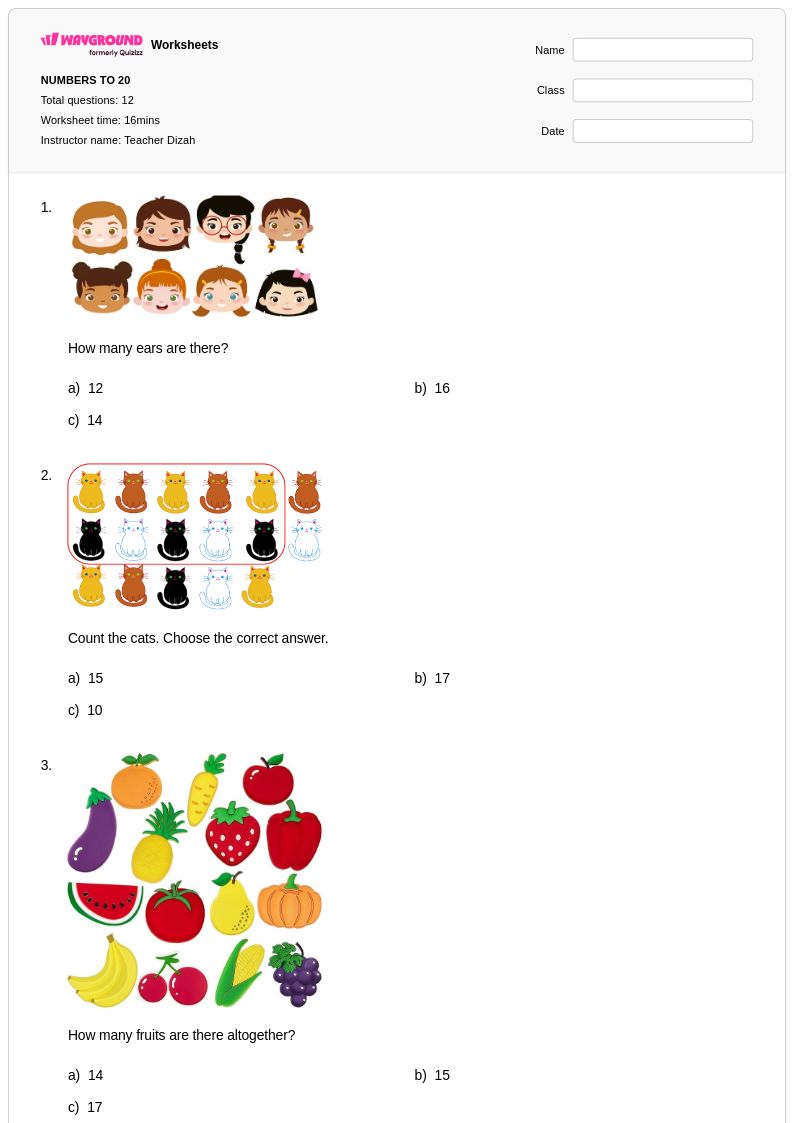
12 Q
1st
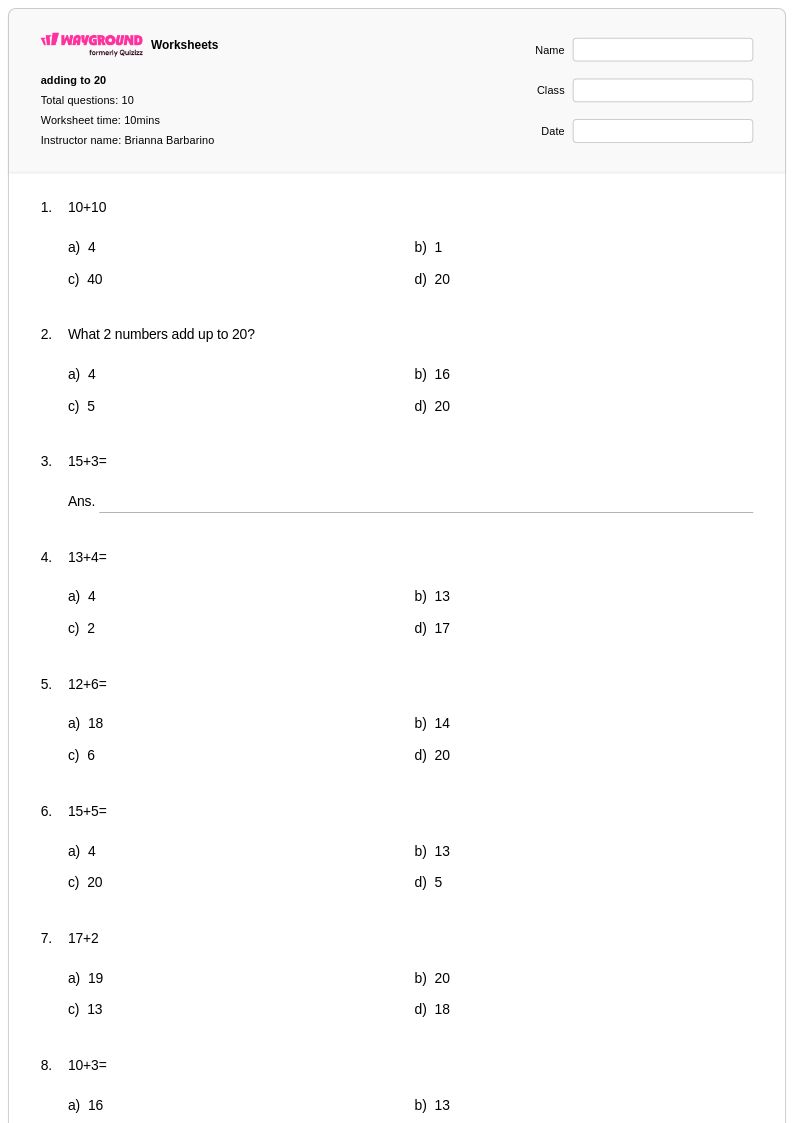
10 Q
1st
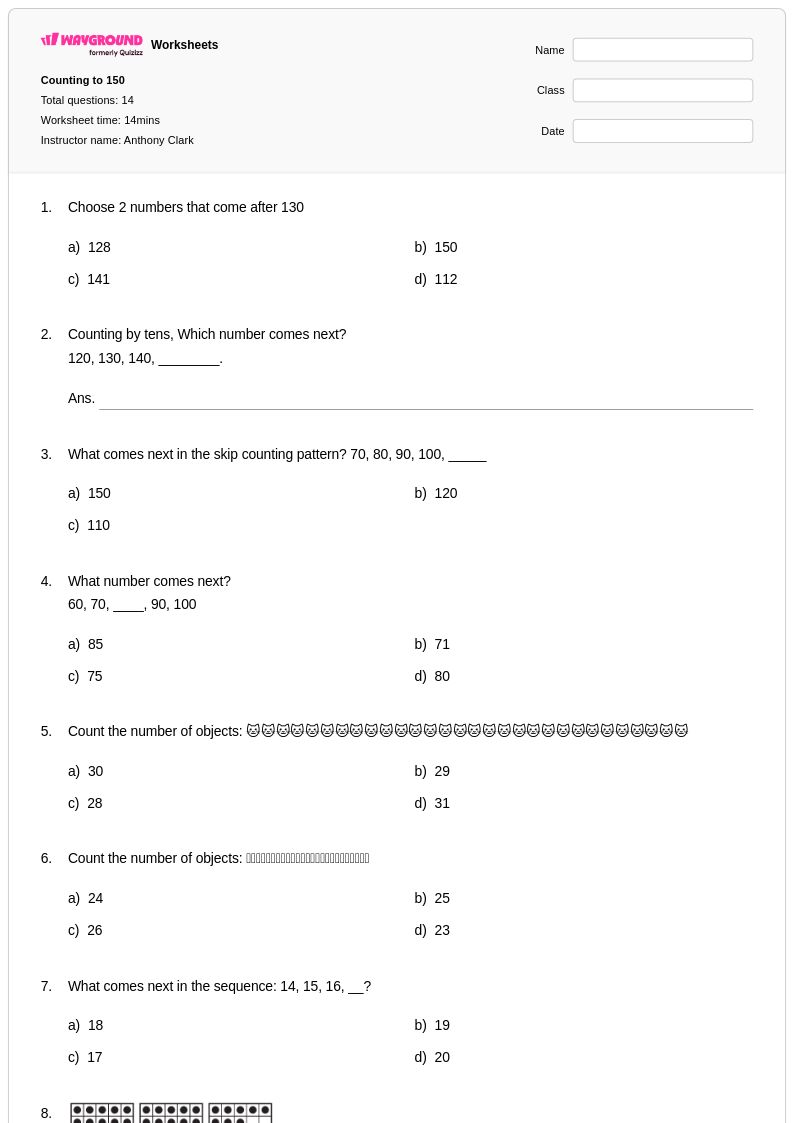
14 Q
1st - Uni
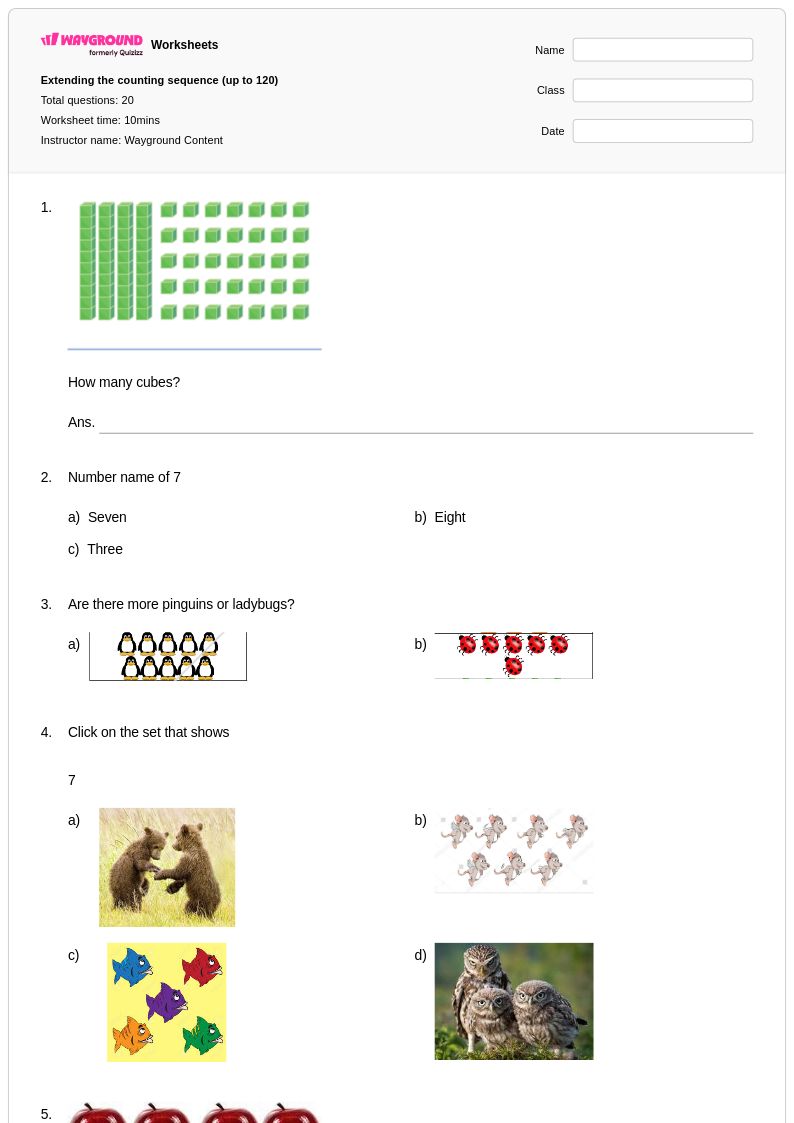
20 Q
1st
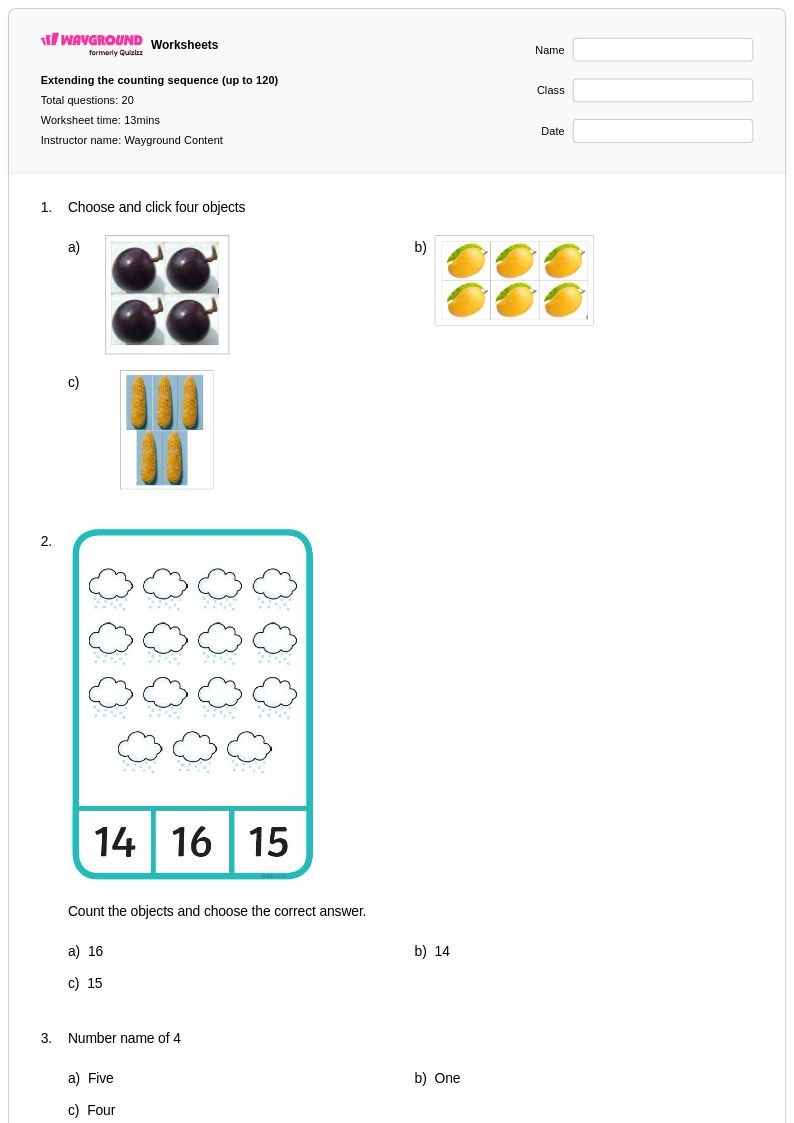
20 Q
1st
20 Q
1st
20 Q
1st - Uni
10 Q
1st - Uni
20 Q
1st
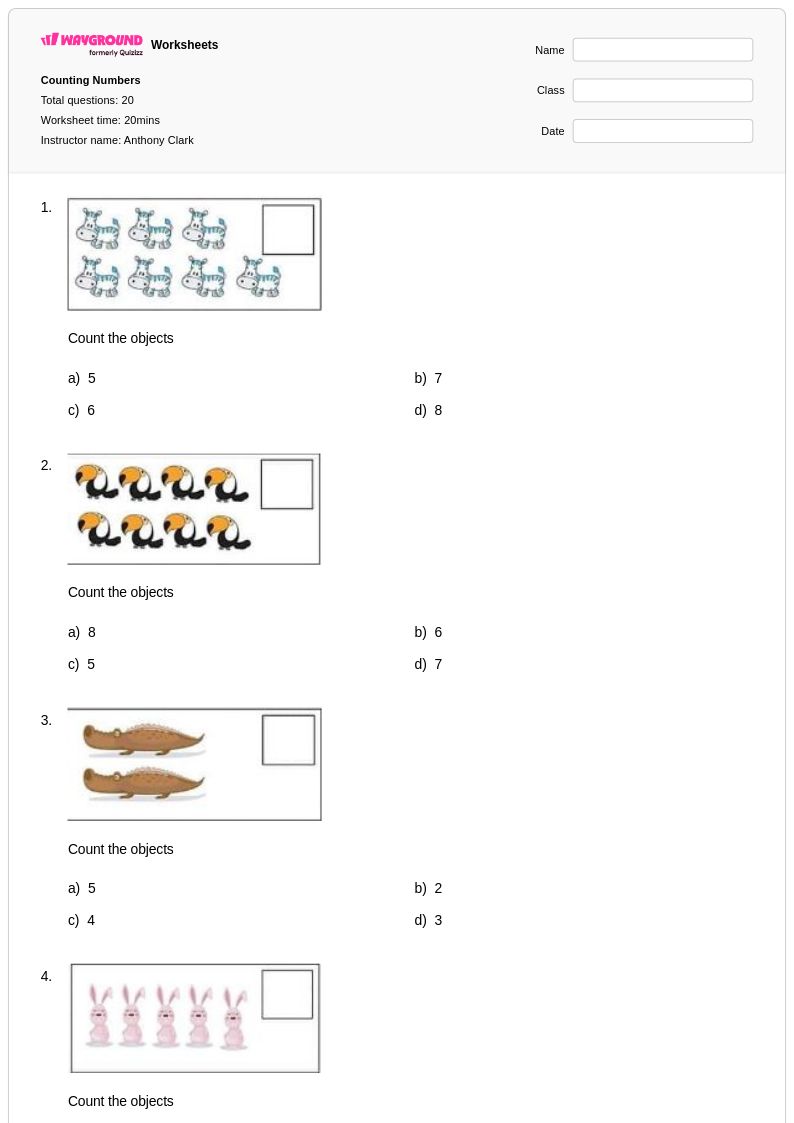
20 Q
1st - Uni
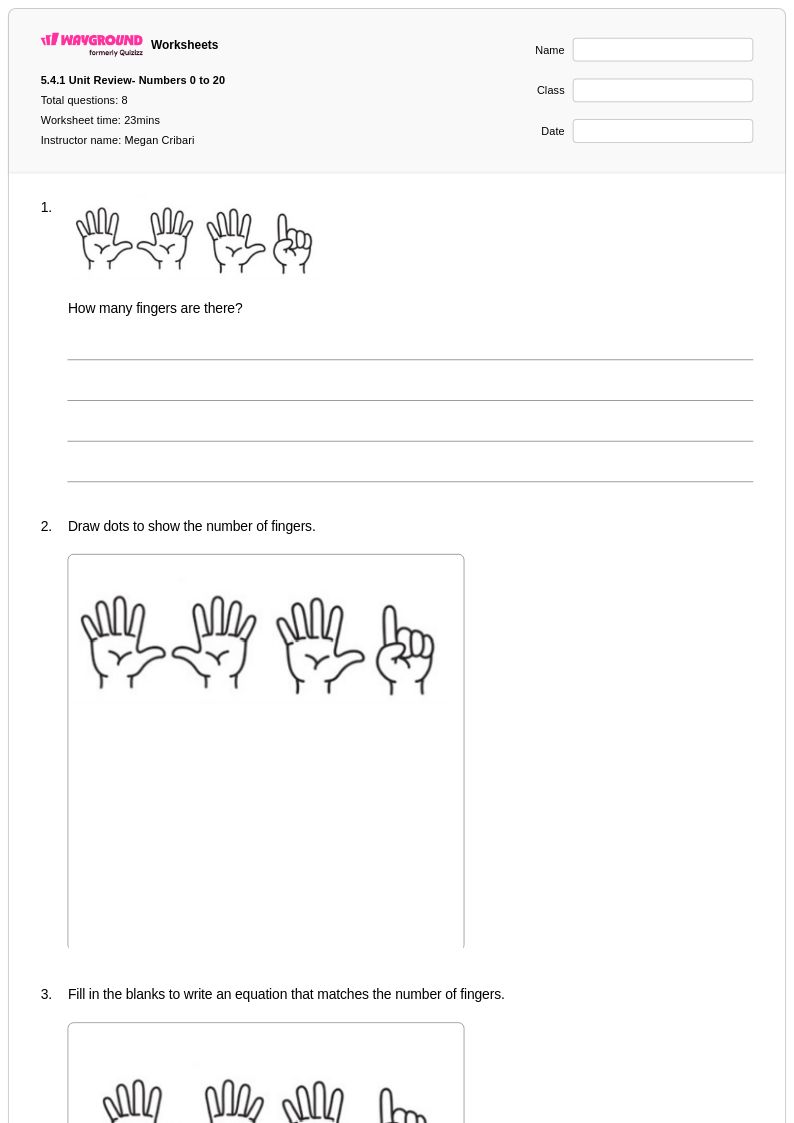
8 Q
1st
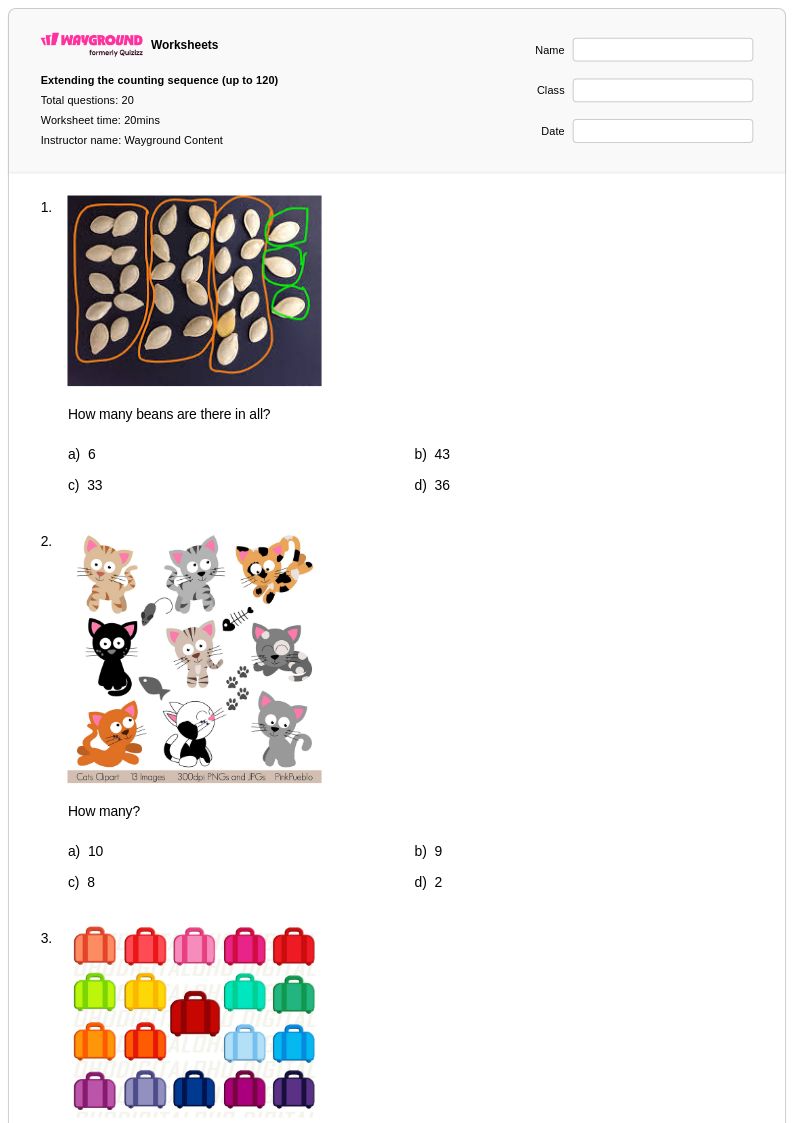
20 Q
1st
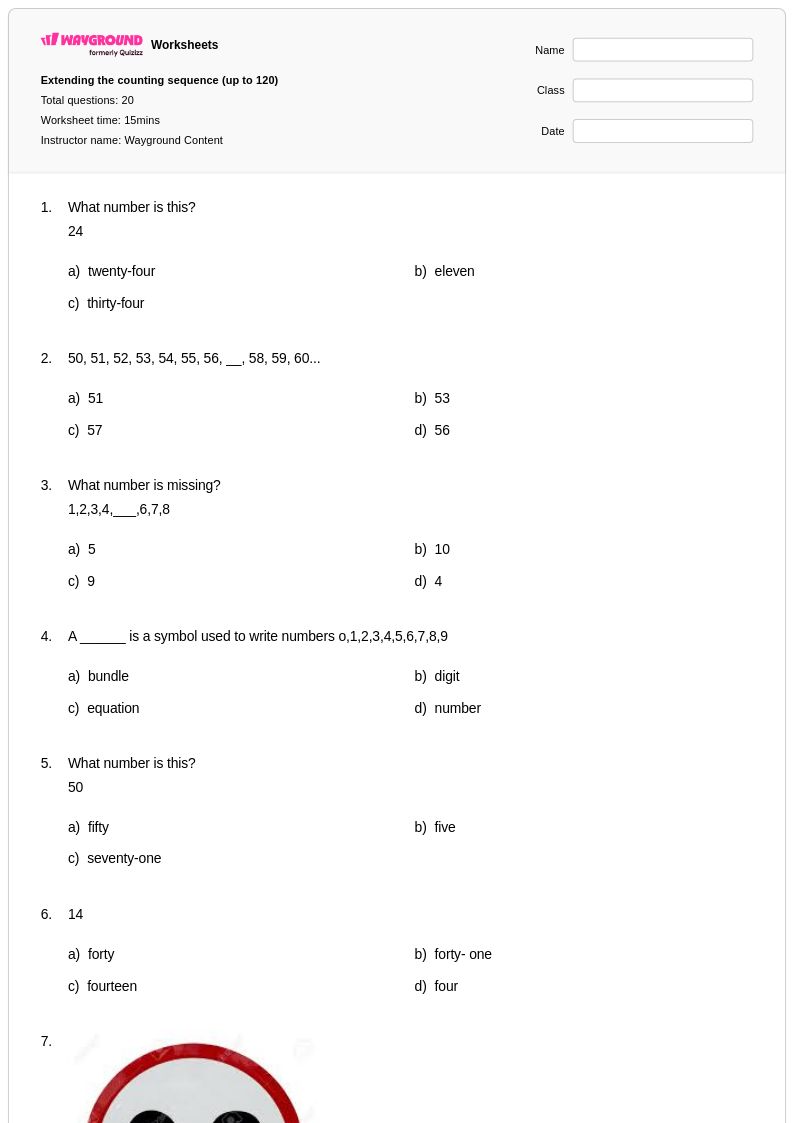
20 Q
1st
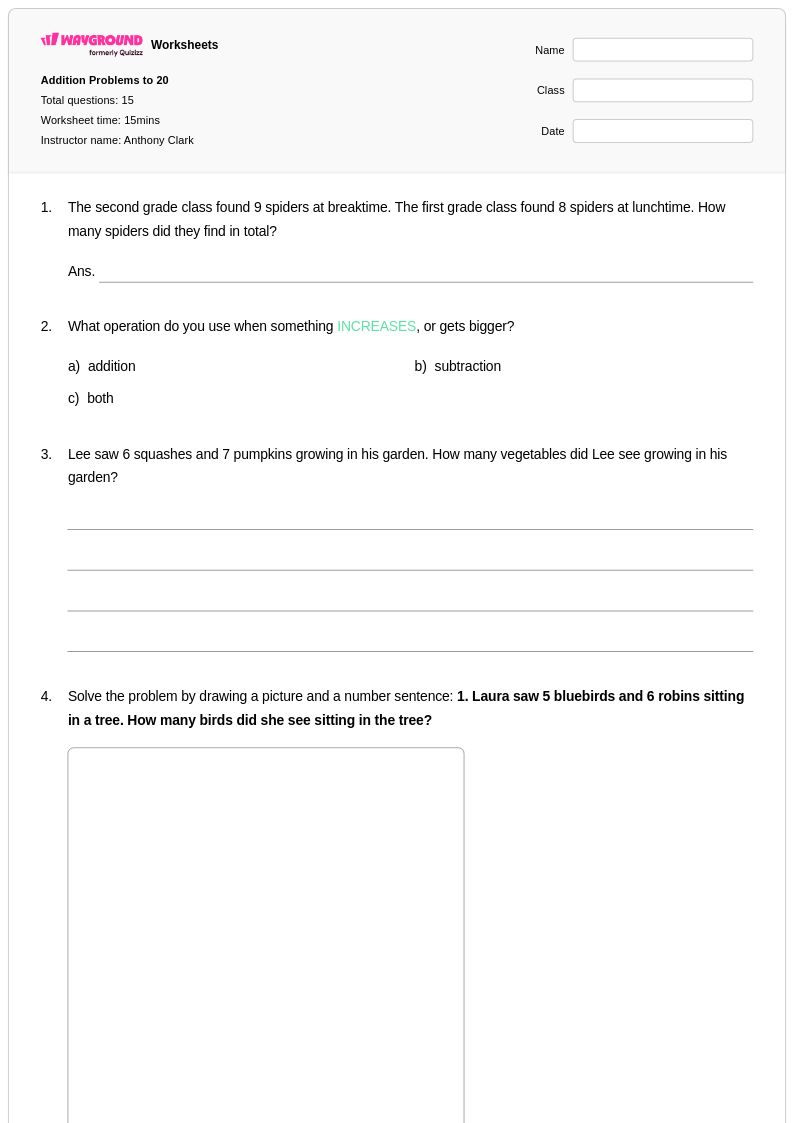
15 Q
1st - Uni
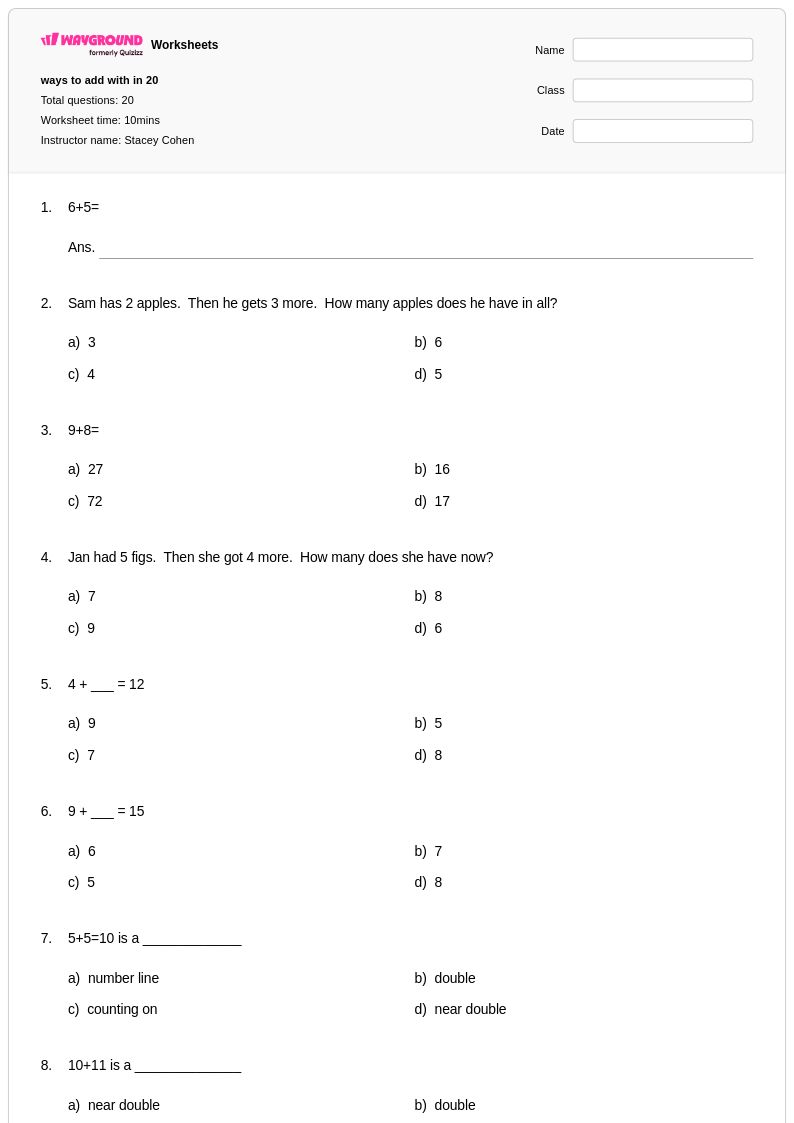
20 Q
1st
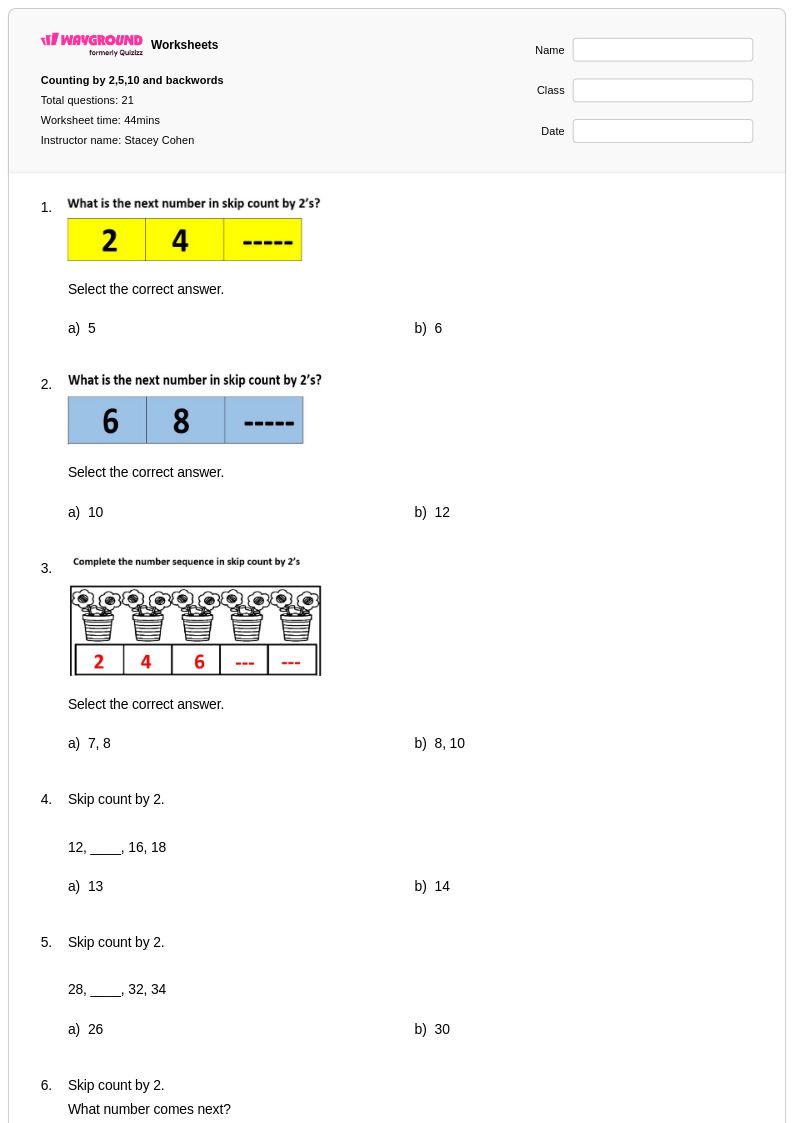
21 Q
1st
Explore Counting Objects to 20 Worksheets by Grades
Explore Other Subject Worksheets for grade 1
Explore printable Counting Objects to 20 worksheets for Grade 1
Counting Objects to 20 worksheets for Grade 1 students through Wayground (formerly Quizizz) provide essential foundational practice in developing early mathematical number sense skills. These carefully designed educational resources help young learners master the fundamental ability to count concrete objects accurately within the 1-20 range, establishing crucial building blocks for all future mathematical learning. The comprehensive collection includes varied practice problems featuring different object types, arrangements, and counting challenges that strengthen one-to-one correspondence, number sequence recognition, and quantity comprehension. Each worksheet comes with a detailed answer key to support both independent learning and guided instruction, and all materials are available as free printables in convenient PDF format for seamless classroom integration.
Wayground (formerly Quizizz) empowers educators with an extensive library of millions of teacher-created counting worksheets that can be easily searched and filtered to match specific Grade 1 learning objectives and standards alignment requirements. The platform's robust differentiation tools allow teachers to customize worksheets based on individual student needs, whether providing additional support for struggling learners or offering enrichment activities for advanced students. These versatile resources are available in both printable and digital formats, including downloadable PDFs, giving educators maximum flexibility for lesson planning, homework assignments, intervention sessions, and skill-building practice. The comprehensive search functionality and organizational features streamline the process of finding appropriate counting activities, enabling teachers to efficiently address diverse learning needs while ensuring students develop strong foundational number sense through consistent, targeted practice with concrete object counting exercises.
FAQs
How should I teach counting objects to 20 in Grade 1?
What exercises help Grade 1 students practice counting objects to 20?
What mistakes do Grade 1 students make when counting objects to 20?
How can I use a Grade 1 counting objects to 20 worksheet on Wayground?
How does counting objects to 20 support the Common Core Grade 1 math progression?
How can I differentiate counting objects to 20 worksheets in Grade 1?
Is counting objects to 20 appropriate for Grade 1 students?