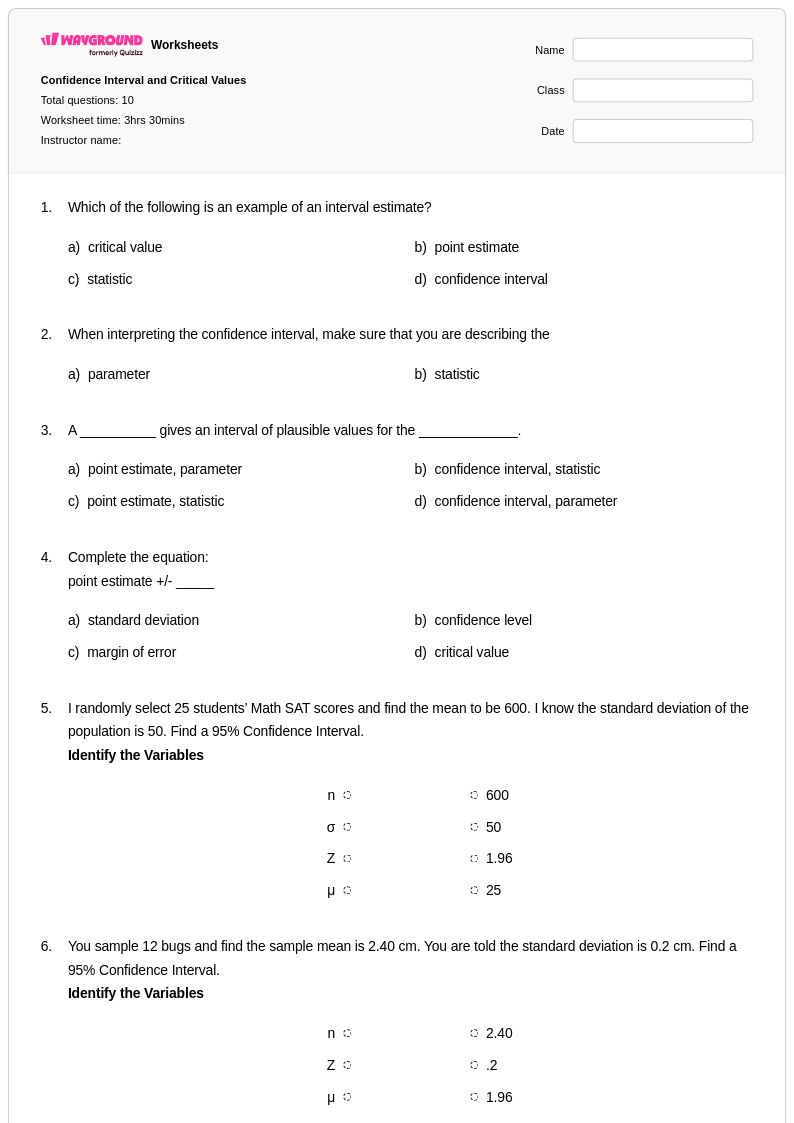
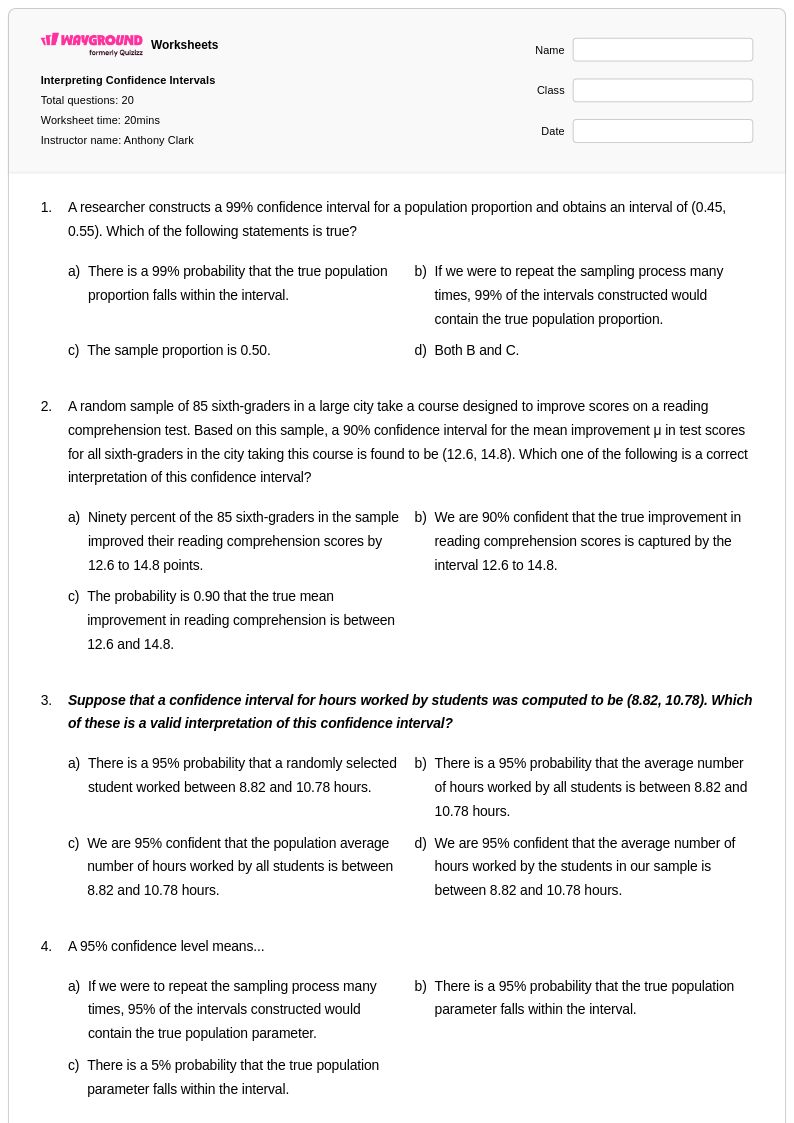
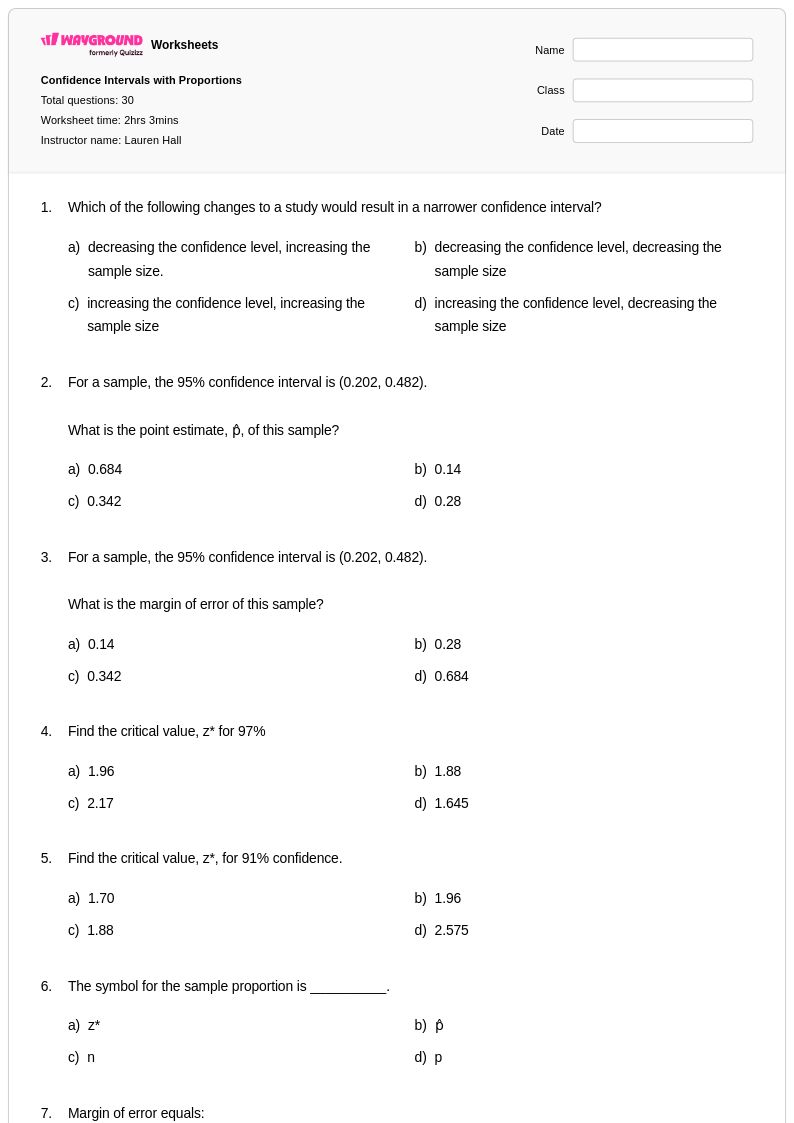
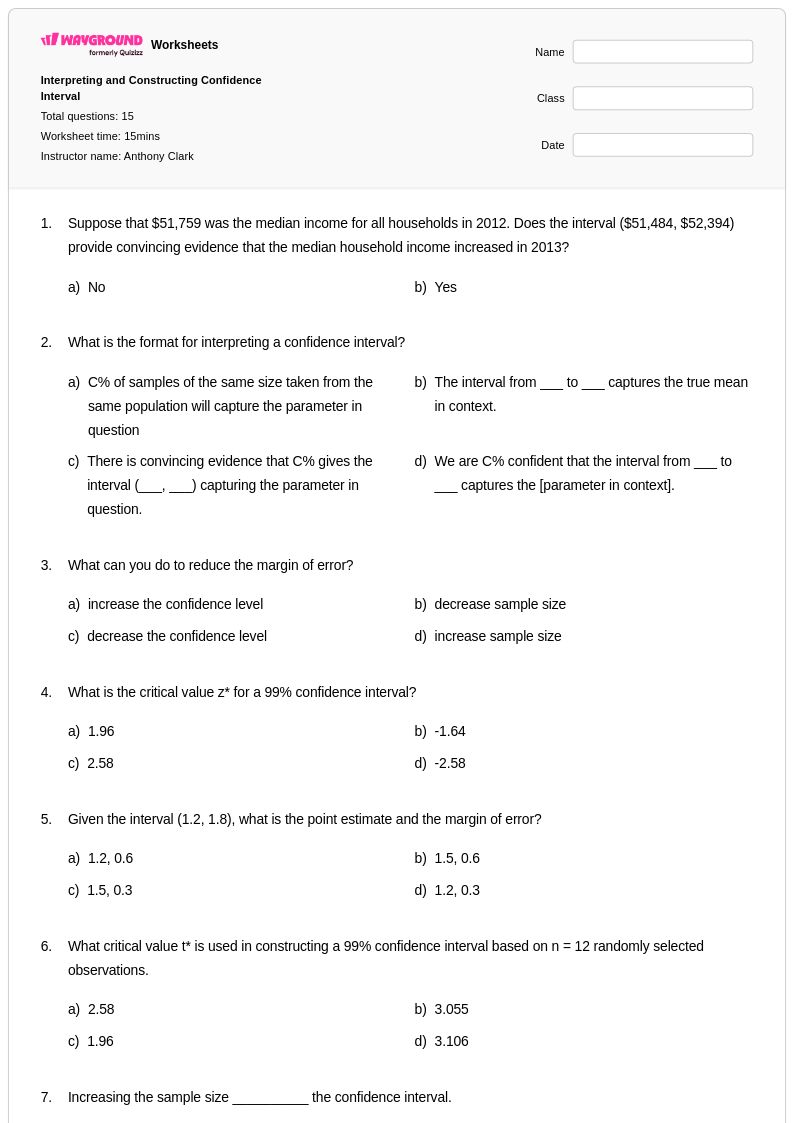
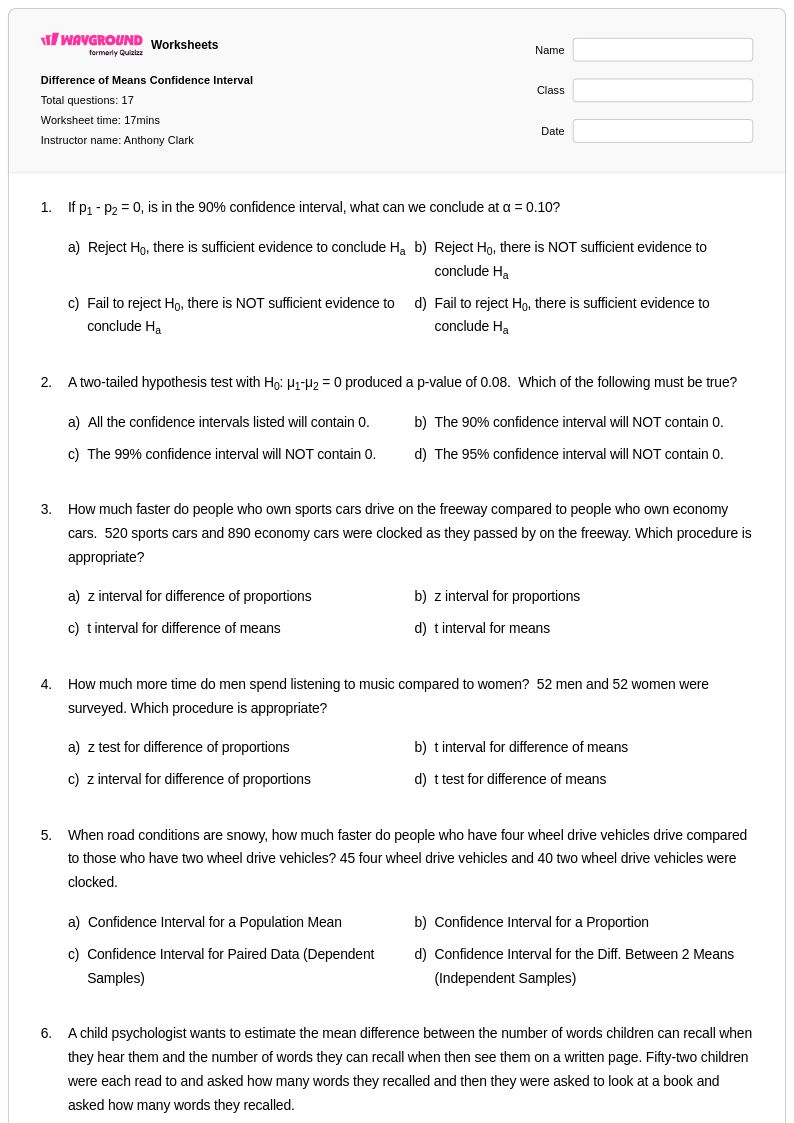
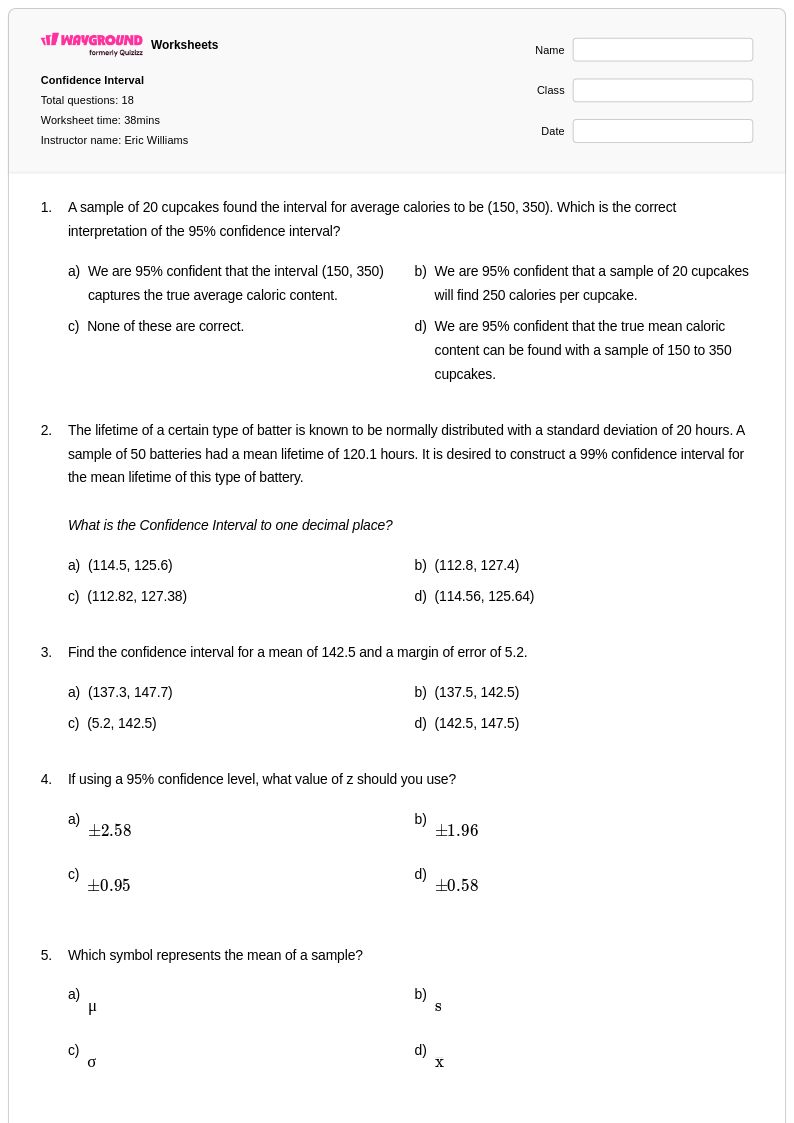
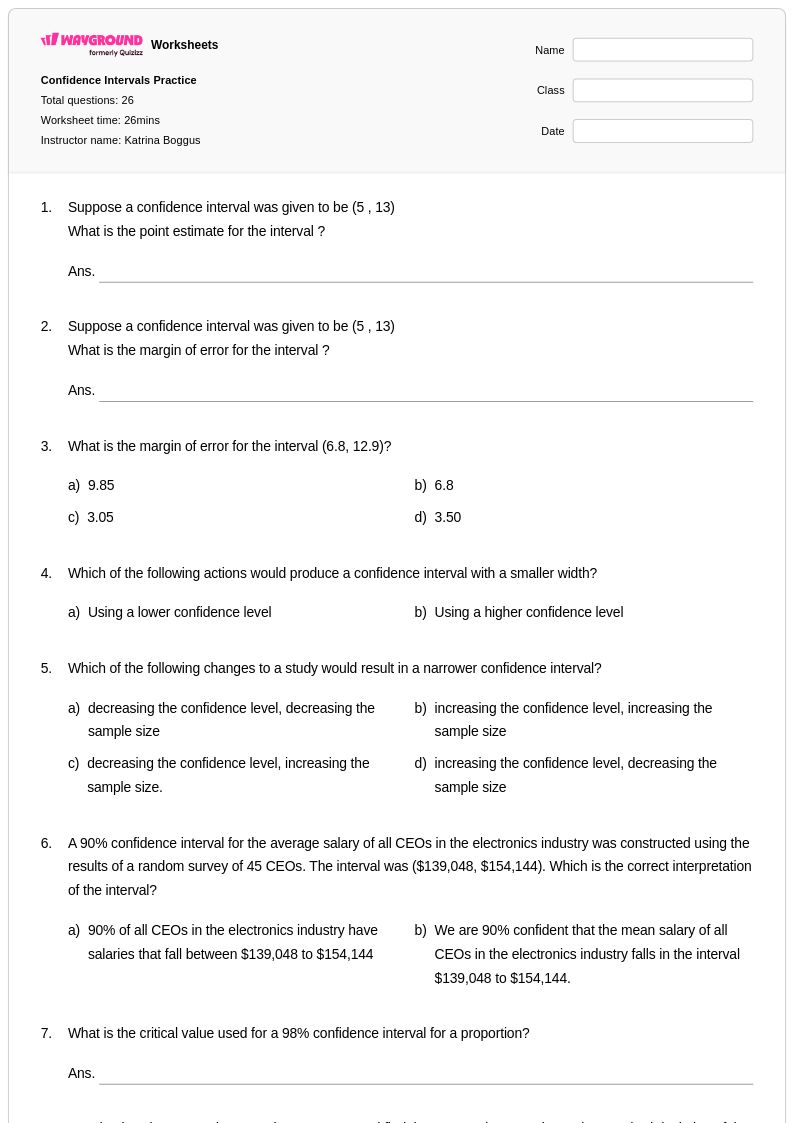
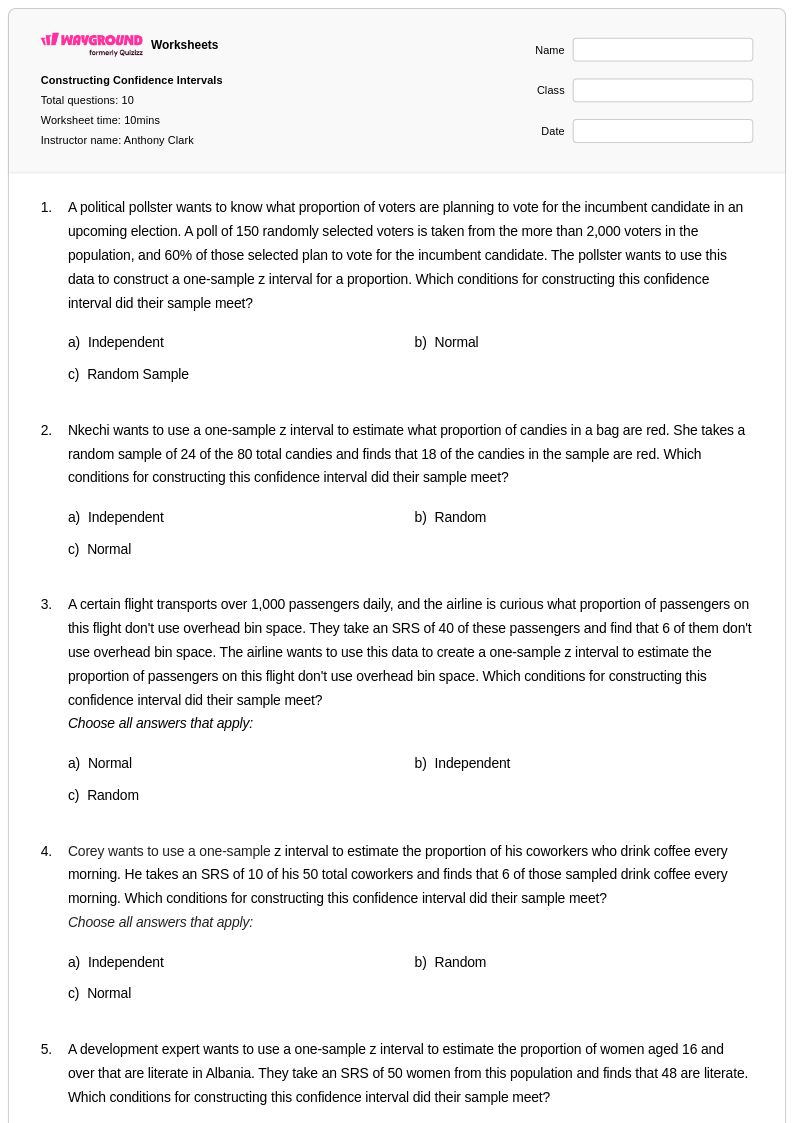
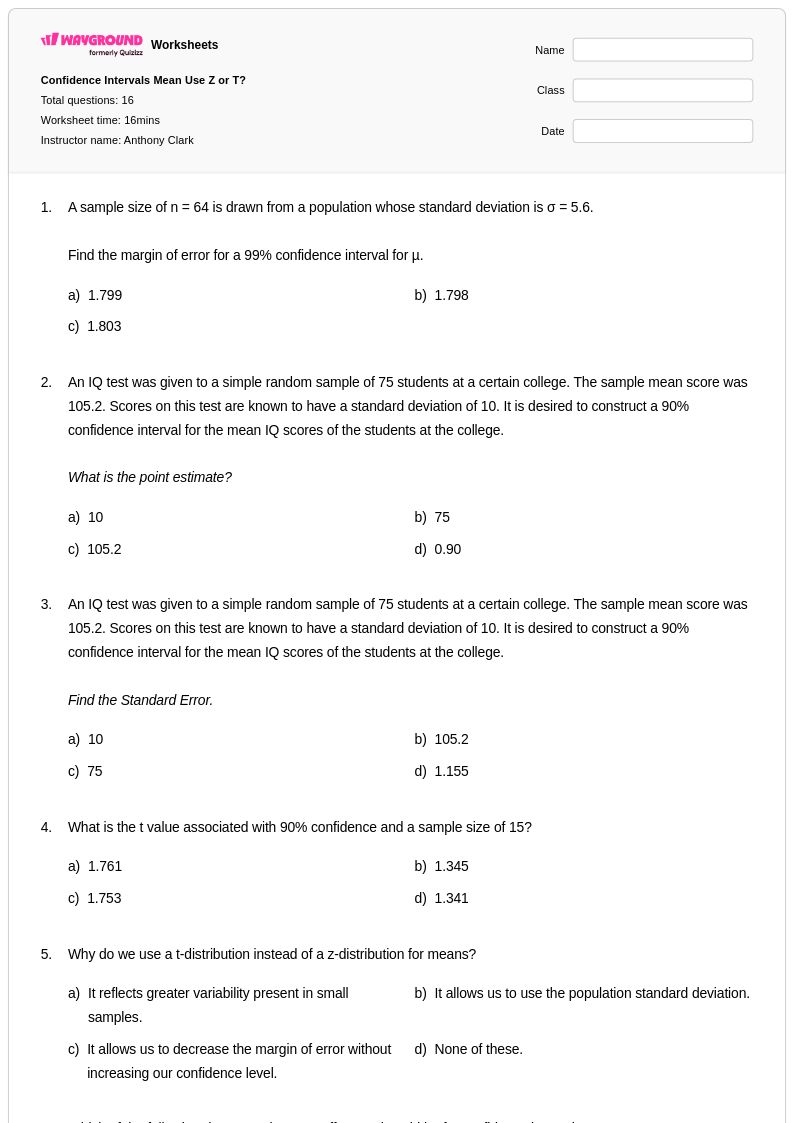
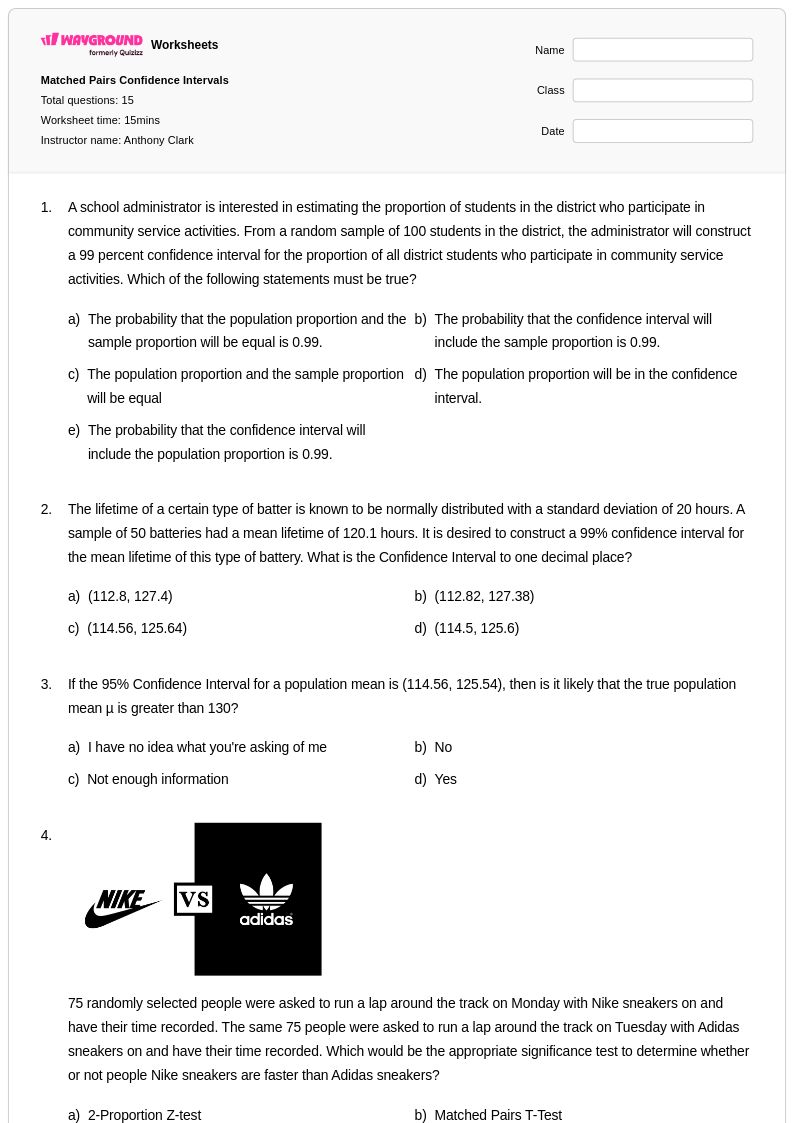
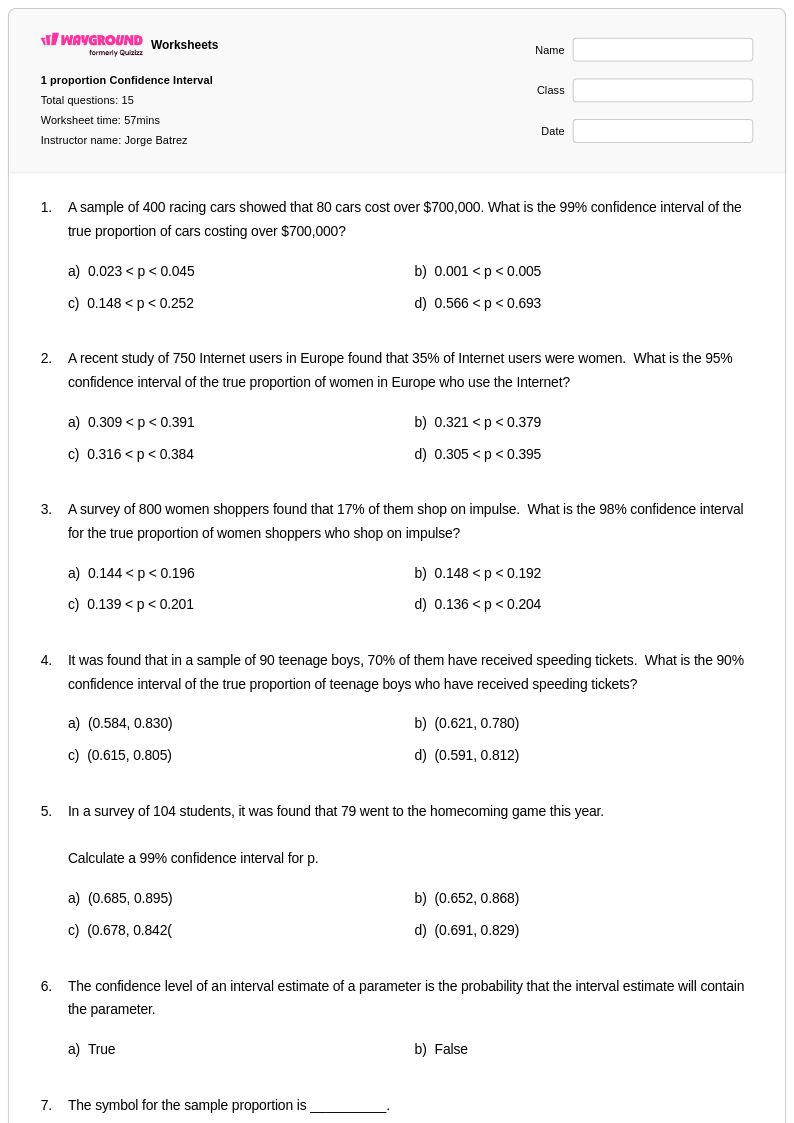
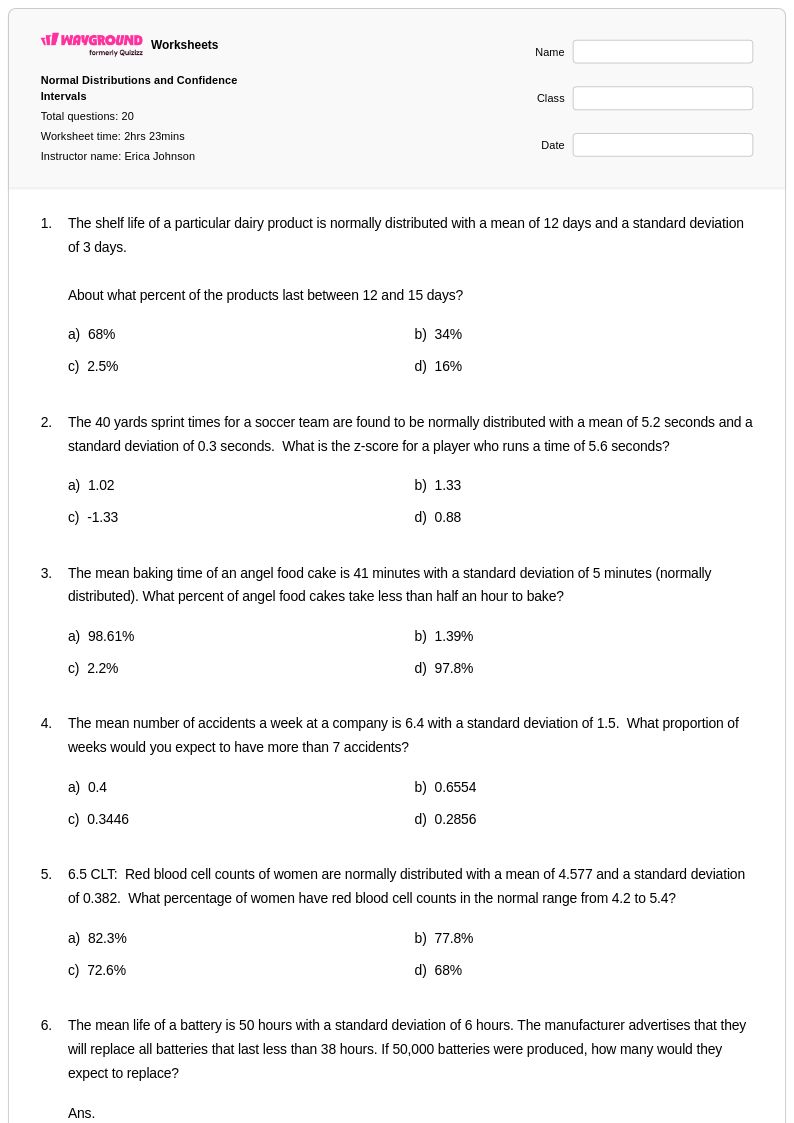
Master confidence intervals with Wayground's comprehensive collection of free worksheets and printables, featuring practice problems and answer keys that help students understand statistical estimation and margin of error calculations.
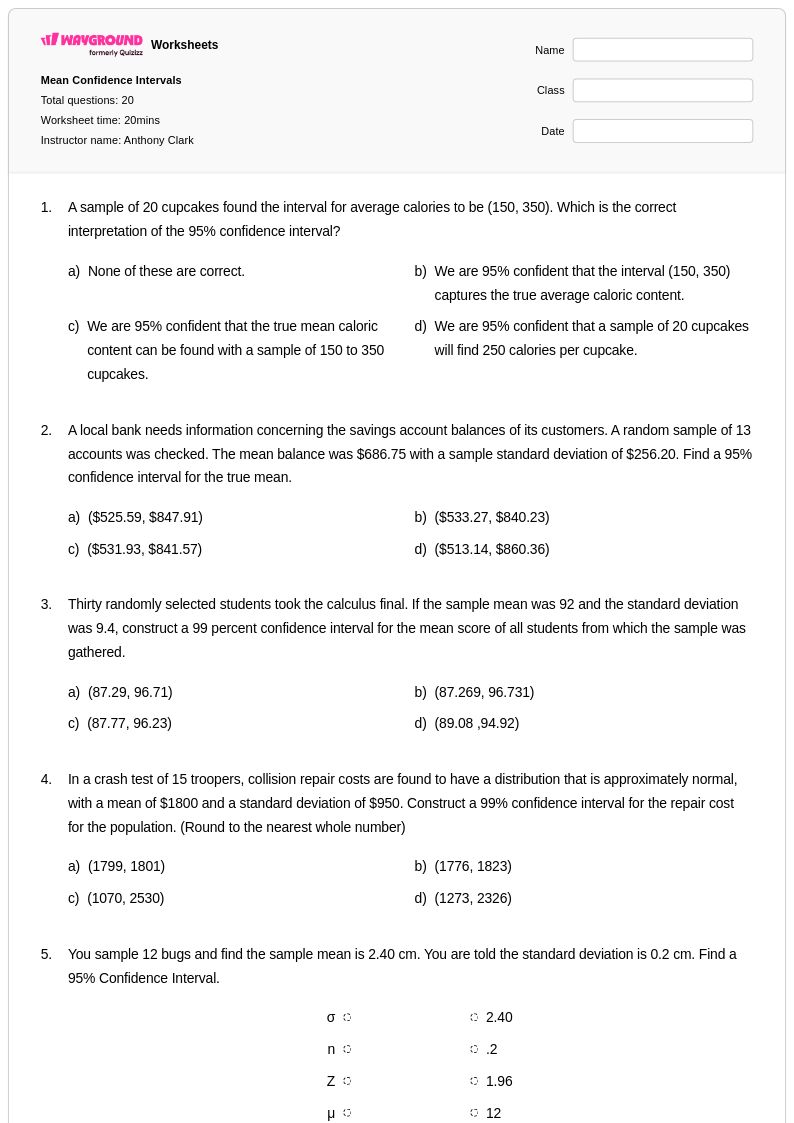
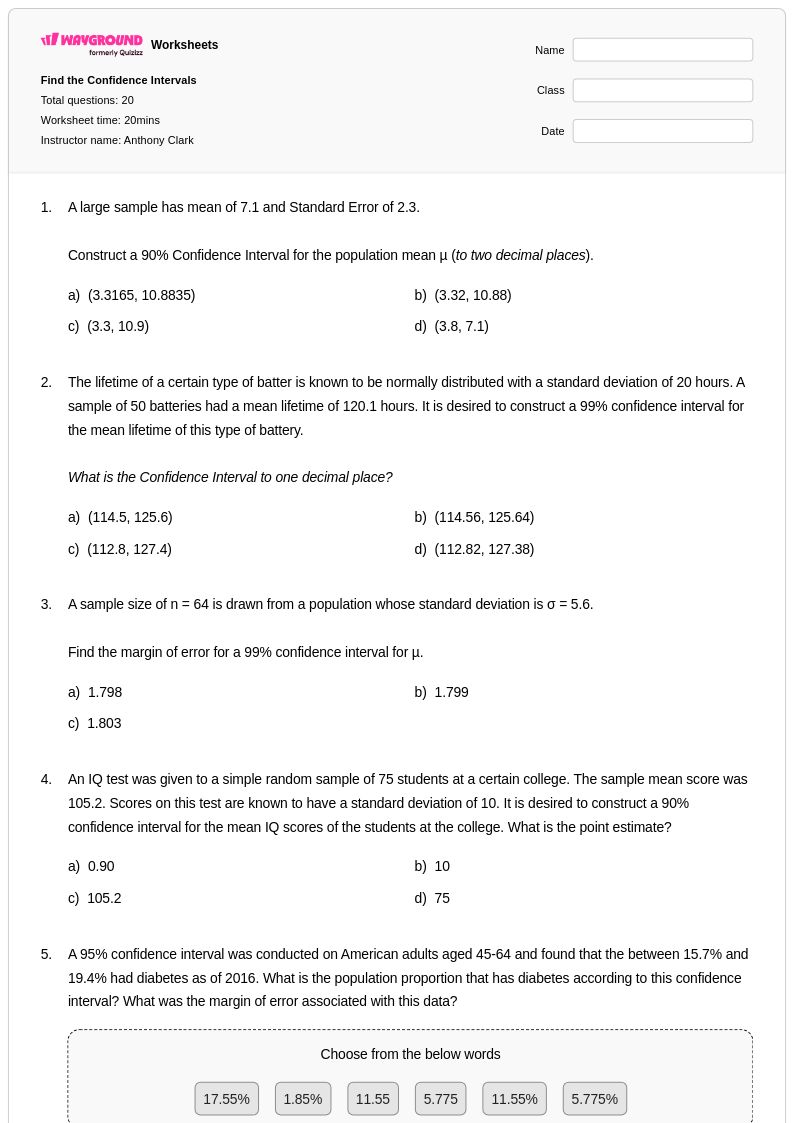
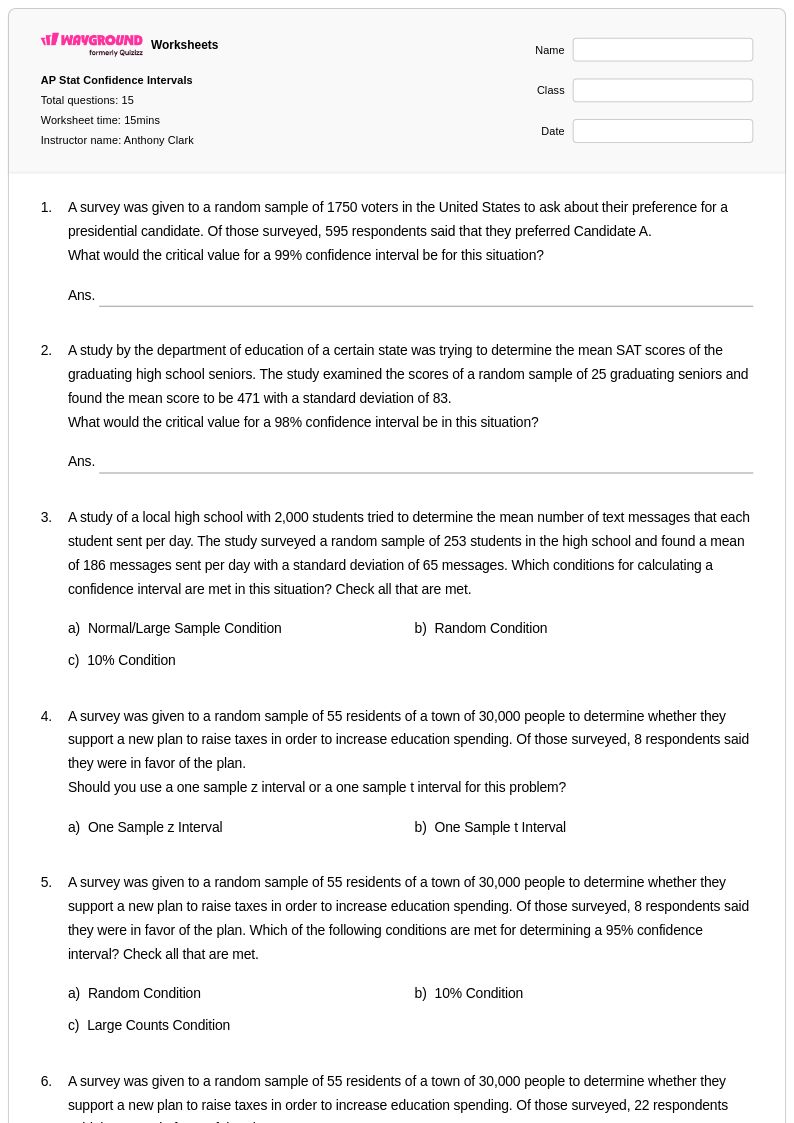
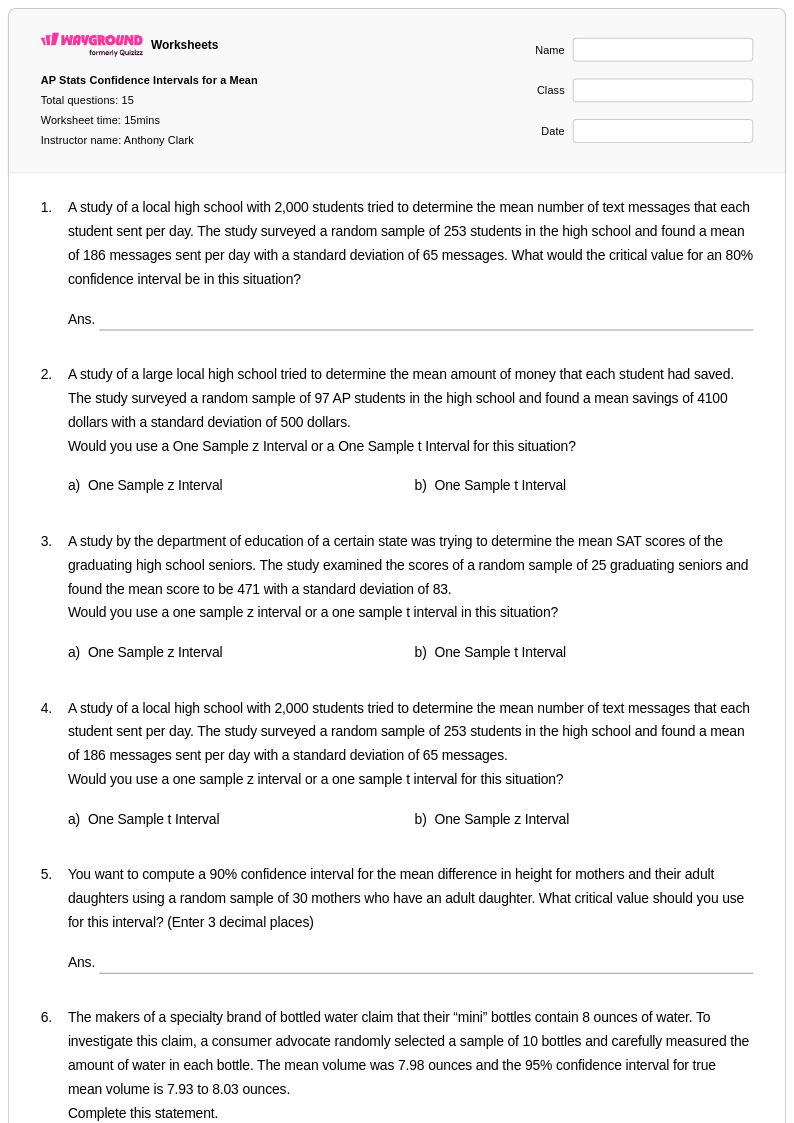
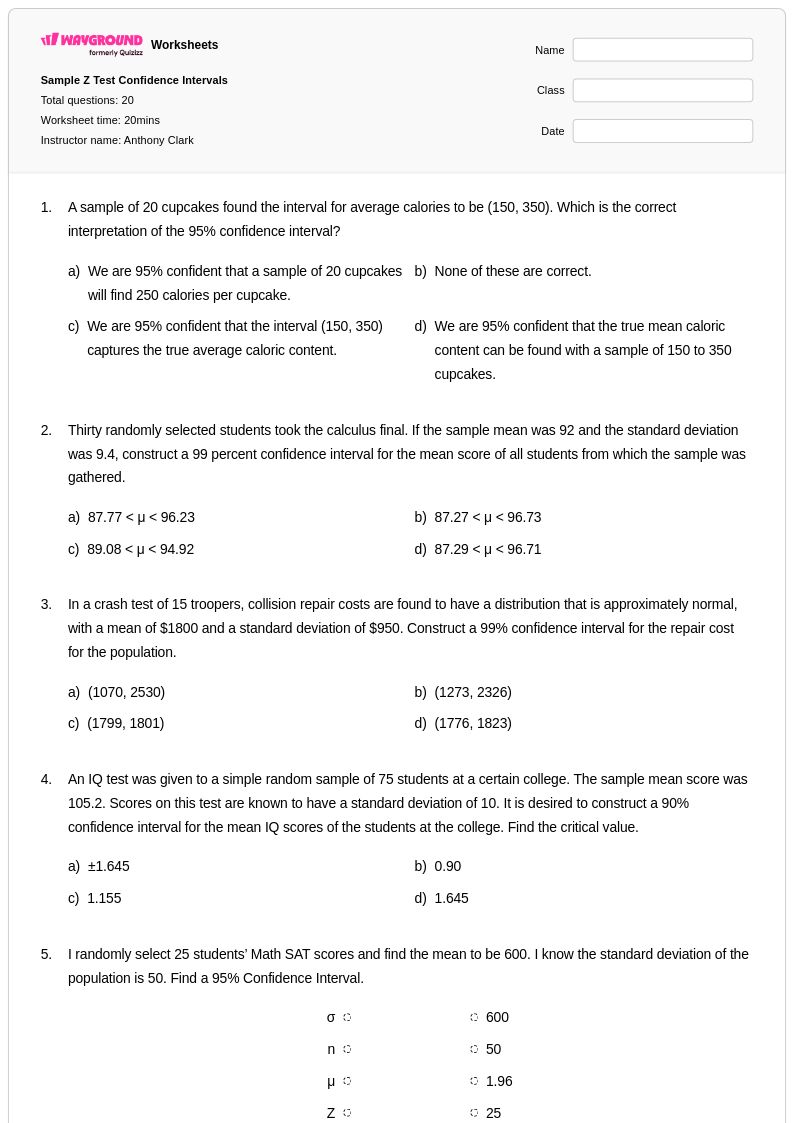
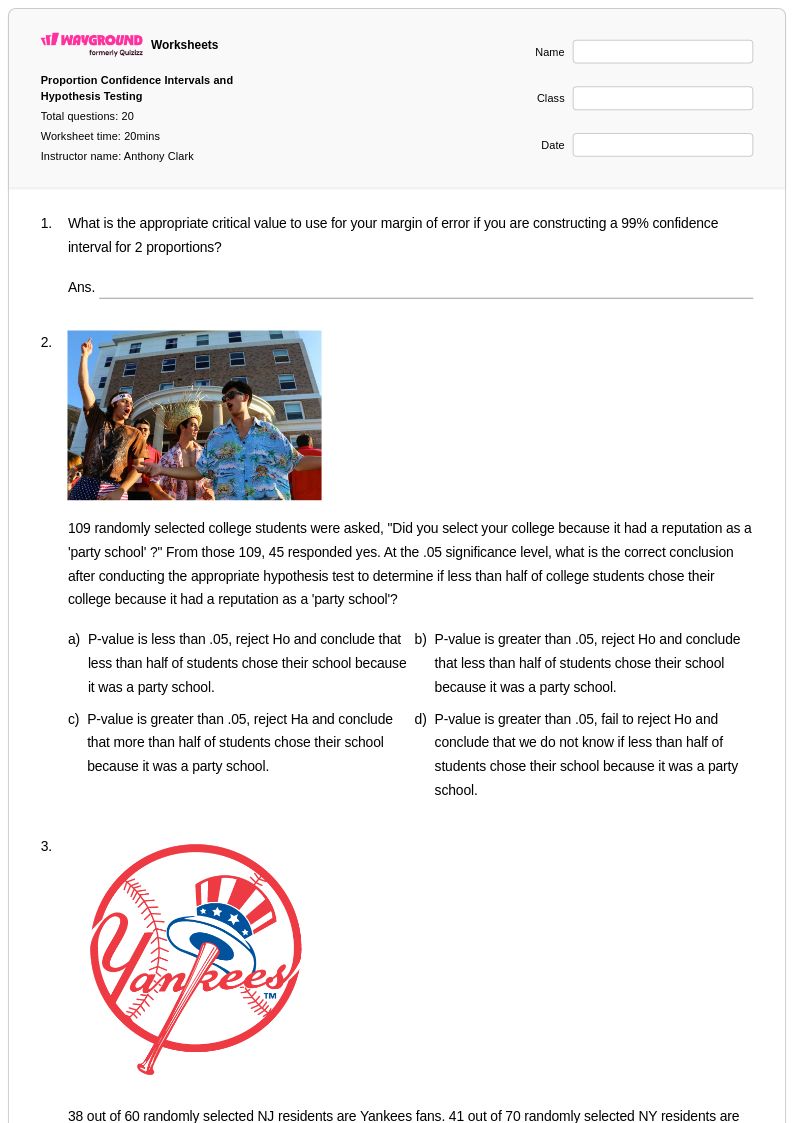
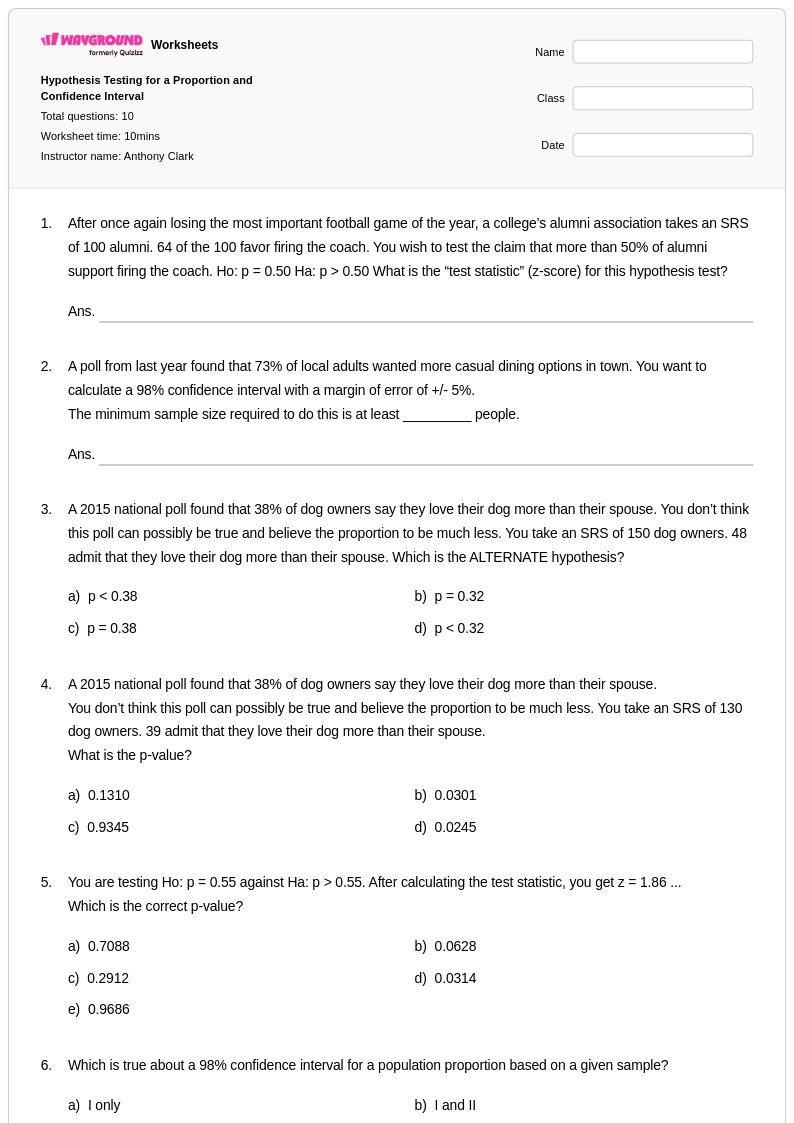
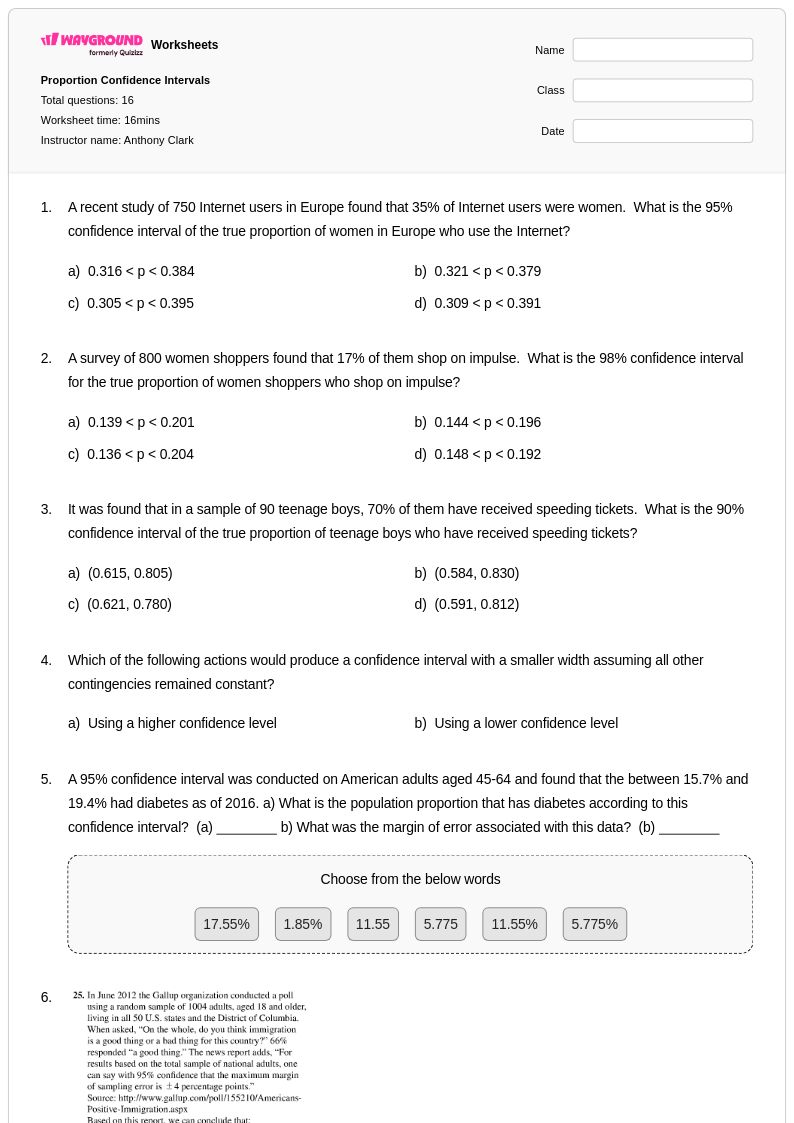
Confidence interval worksheets available through Wayground (formerly Quizizz) provide comprehensive practice opportunities for students to master this fundamental concept in statistical inference. These carefully designed resources strengthen critical analytical skills including calculating margin of error, interpreting confidence levels, determining appropriate sample sizes, and constructing intervals for population parameters such as means and proportions. Students work through systematic practice problems that progress from basic interval construction using normal distributions to more complex scenarios involving t-distributions and various confidence levels. Each worksheet includes detailed answer keys that guide students through step-by-step solutions, while the free printable pdf format ensures accessibility for both classroom instruction and independent study sessions.
Wayground (formerly Quizizz) empowers mathematics educators with an extensive collection of confidence interval resources drawn from millions of teacher-created materials that undergo continuous refinement through classroom implementation. The platform's advanced search and filtering capabilities allow instructors to locate worksheets aligned with specific statistical standards and learning objectives, while built-in differentiation tools enable customization based on individual student needs and mathematical backgrounds. Teachers can seamlessly transition between printable pdf versions for traditional assignments and digital formats for interactive learning experiences, making these resources invaluable for lesson planning, targeted remediation of statistical concepts, enrichment activities for advanced learners, and ongoing skill practice throughout probability and statistics instruction.
FAQs
How do I teach confidence intervals so students understand what they mean?
Begin by connecting a sample statistic to the unknown population parameter it estimates, then represent the margin of error visually around that estimate. Have students interpret each interval in context before calculating intervals for means and proportions, and explicitly distinguish the confidence level from the probability that one completed interval contains the parameter.
What exercises help students practice confidence intervals?
Effective practice progresses from identifying sample statistics, critical values, and margins of error to constructing intervals for population means and proportions. Students should also compare confidence levels, determine sample sizes, choose between normal and t-distribution procedures, and explain interval estimates in real-world contexts.
What mistakes do students commonly make with confidence intervals?
Students often interpret a confidence level as the percentage of population values inside an interval or claim that it gives the probability that a fixed parameter lies within one already-calculated interval. Other common errors include using the wrong critical value, ignoring required sample conditions, confusing standard deviation with standard error, and overlooking how confidence level or sample size affects interval width.
How can I use a Wayground confidence interval worksheet?
Wayground worksheets are available as printable PDFs and digital formats, accommodating different teaching environments and student preferences. Teachers can host a worksheet as a digital quiz or print and assign it on paper; every worksheet includes a complete answer key, and physical submissions can be scanned or captured for grading with the Wayground for Teachers app.
How do confidence interval worksheets support the Common Core statistics progression?
These worksheets align with the Common Core emphasis on using sample data to make inferences about populations and evaluating the uncertainty surrounding an estimate. Practice with margins of error, confidence levels, sample sizes, and contextual interpretation develops the statistical reasoning students need to analyze claims rather than report calculations without meaning.
How can I differentiate confidence interval practice for mixed-ability classes?
Teachers can scaffold the same worksheet by adjusting font spacing and size, applying a dyslexia-friendly font, translating the content, or creating versions with different problem complexity. In digital sessions, Wayground also supports reusable student-level settings such as extended time, Read Aloud, reduced answer choices, and reading mode without changing the default experience for the rest of the class.