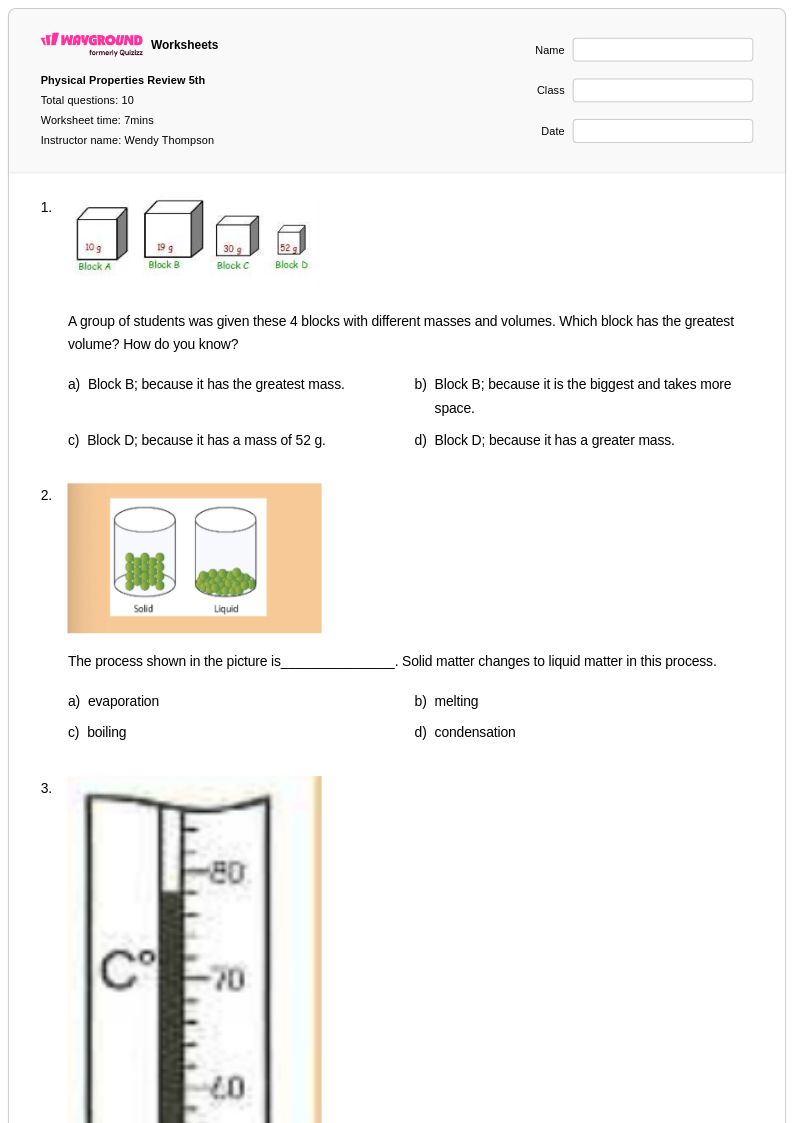
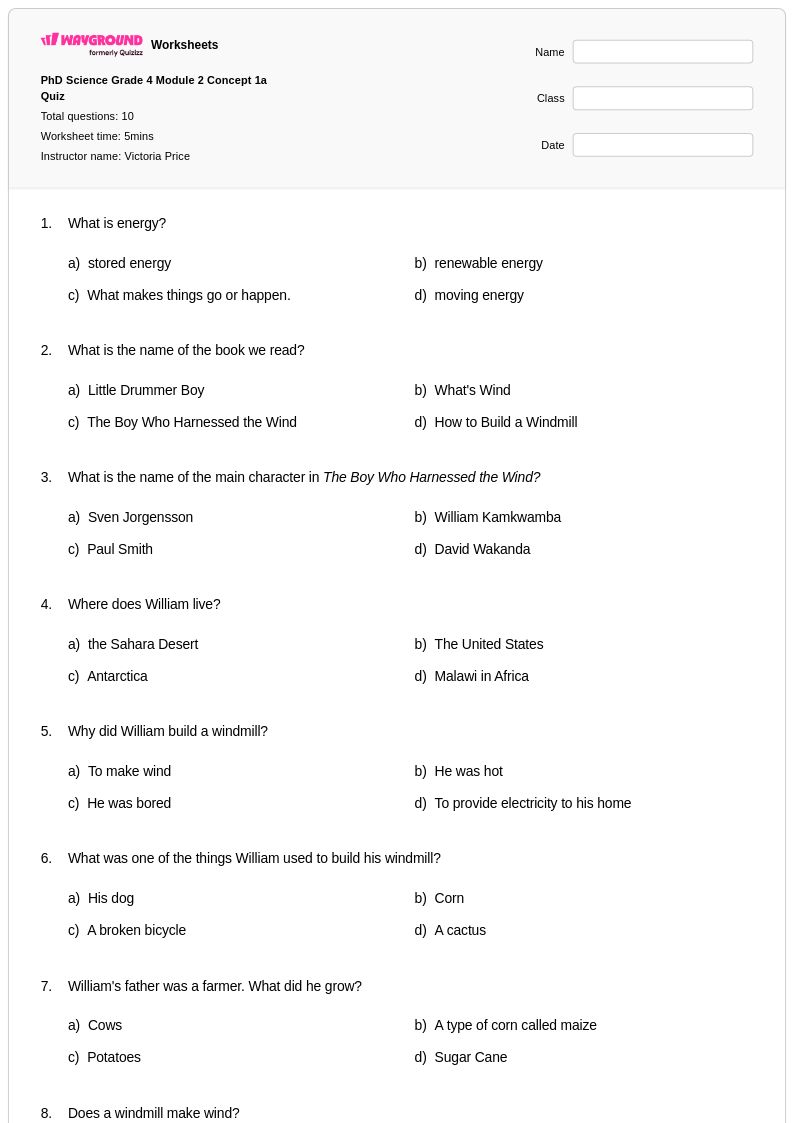
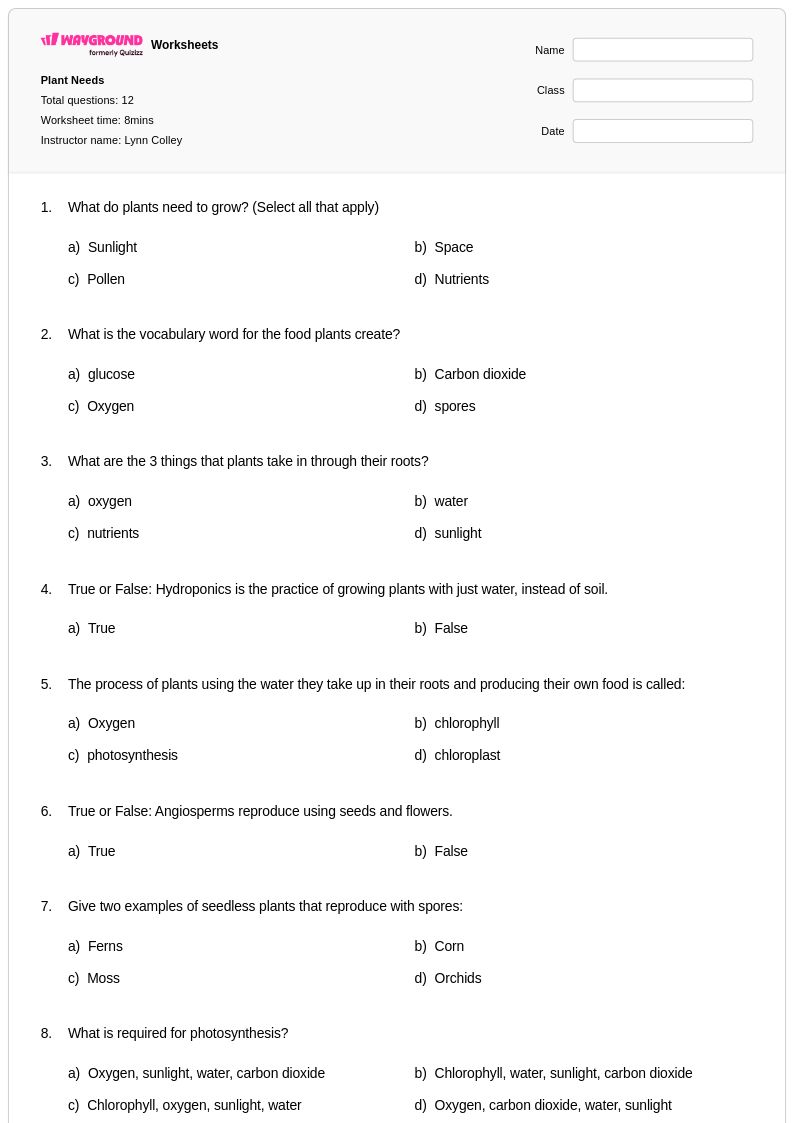
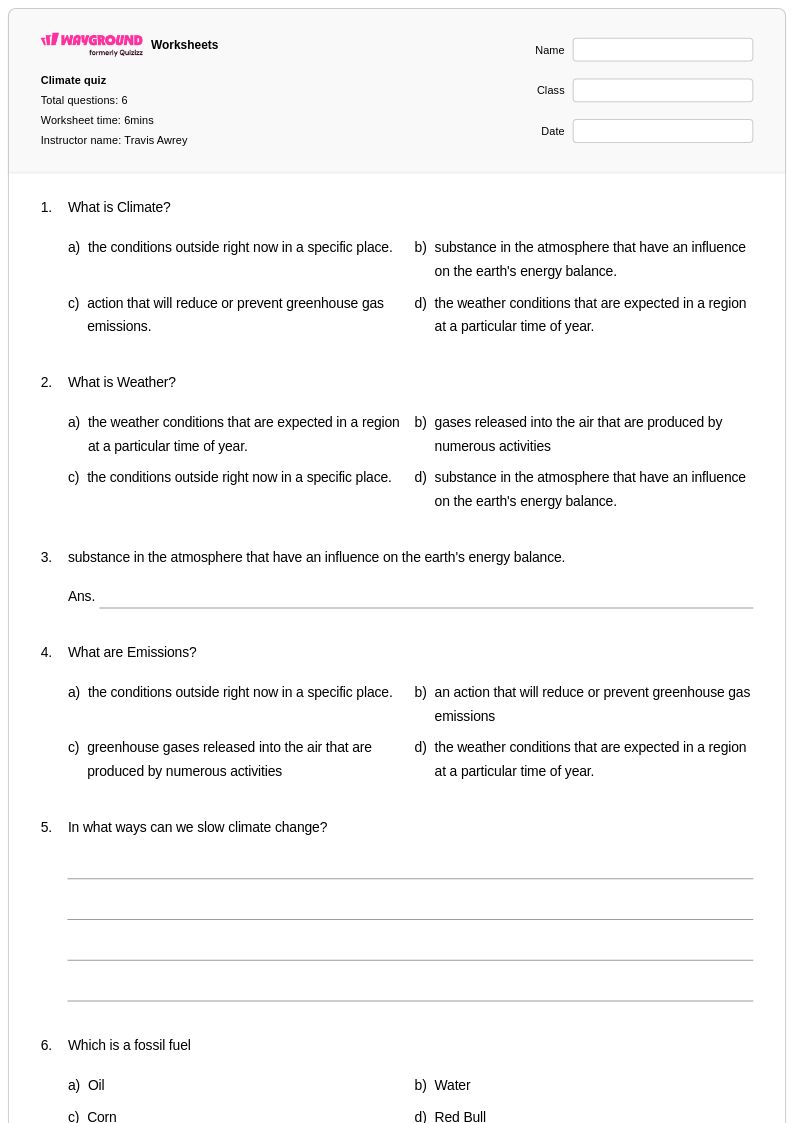
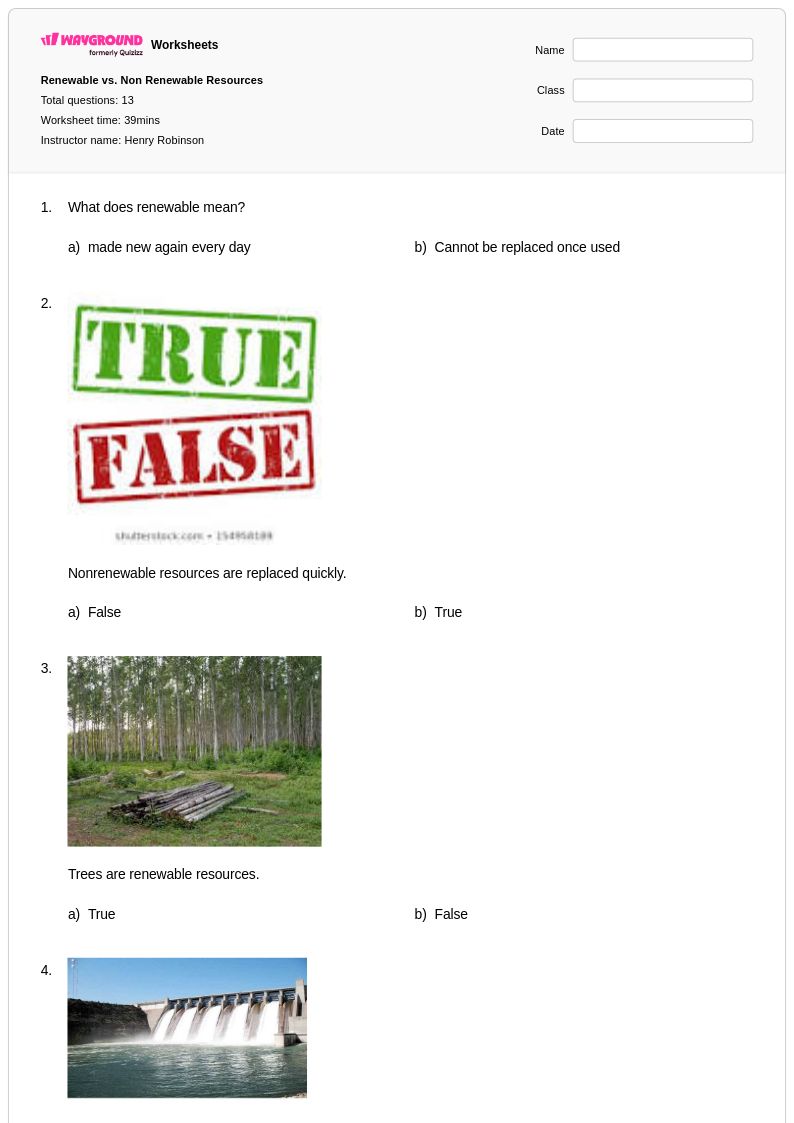
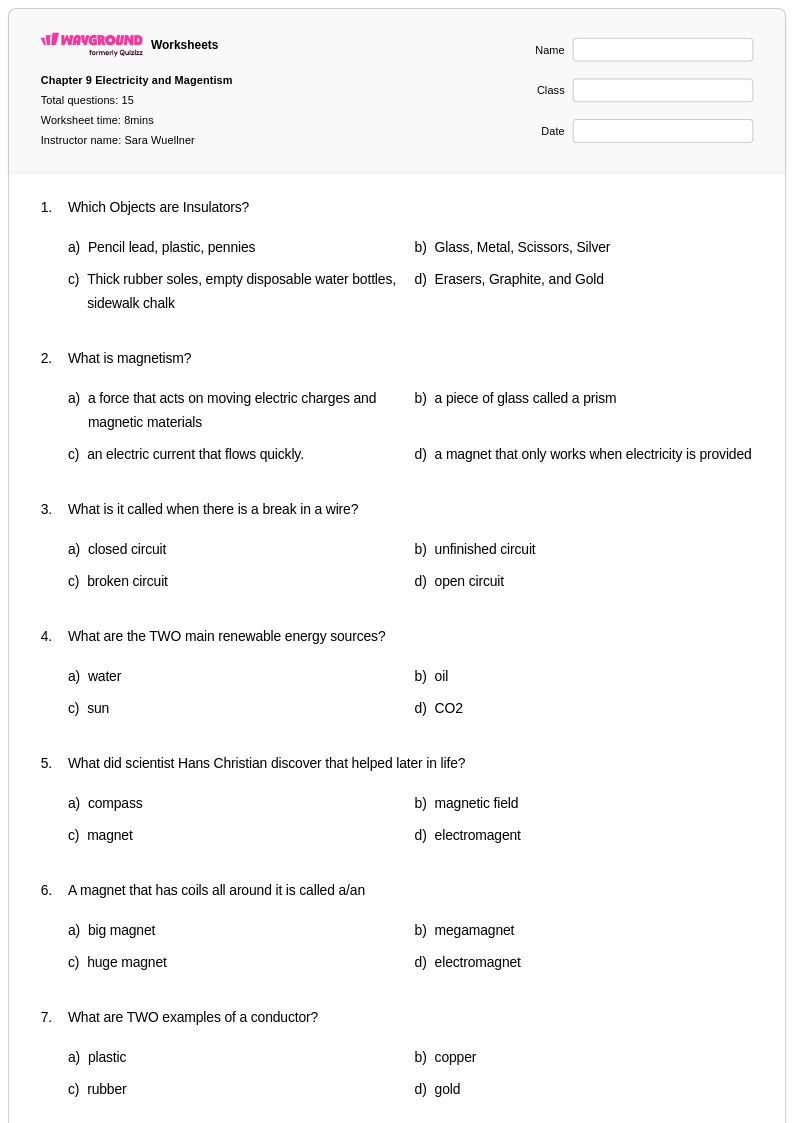
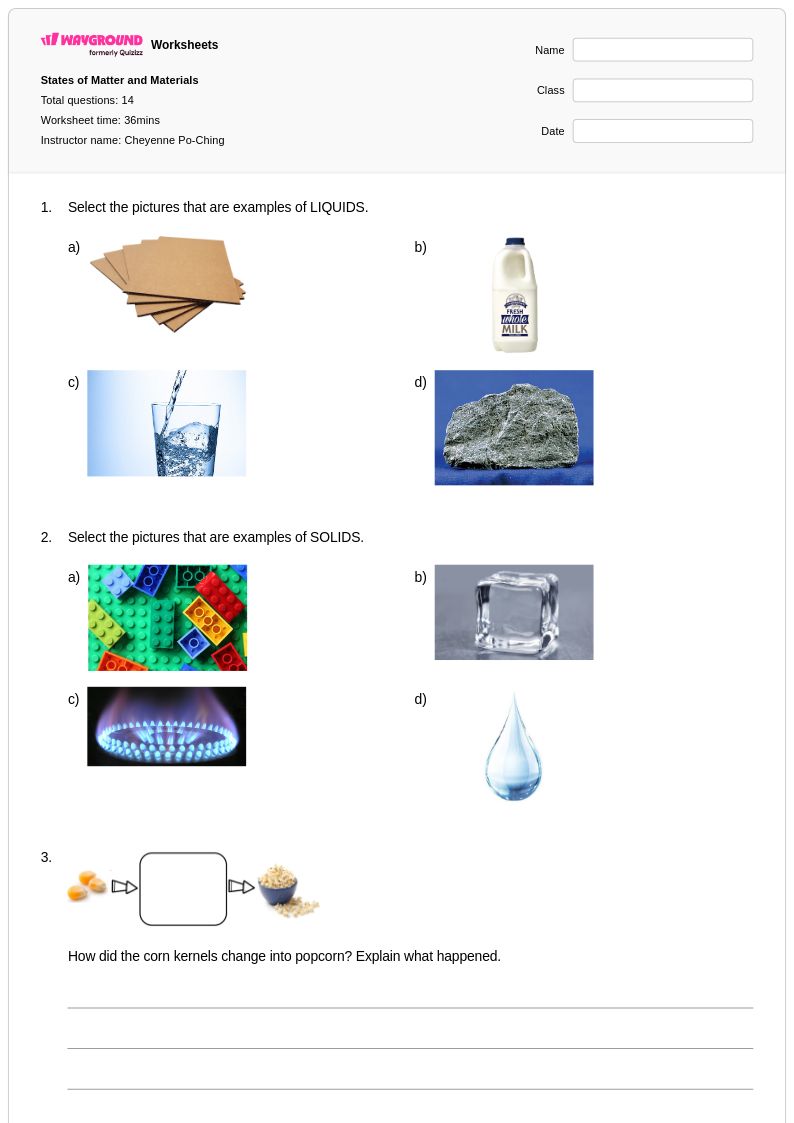
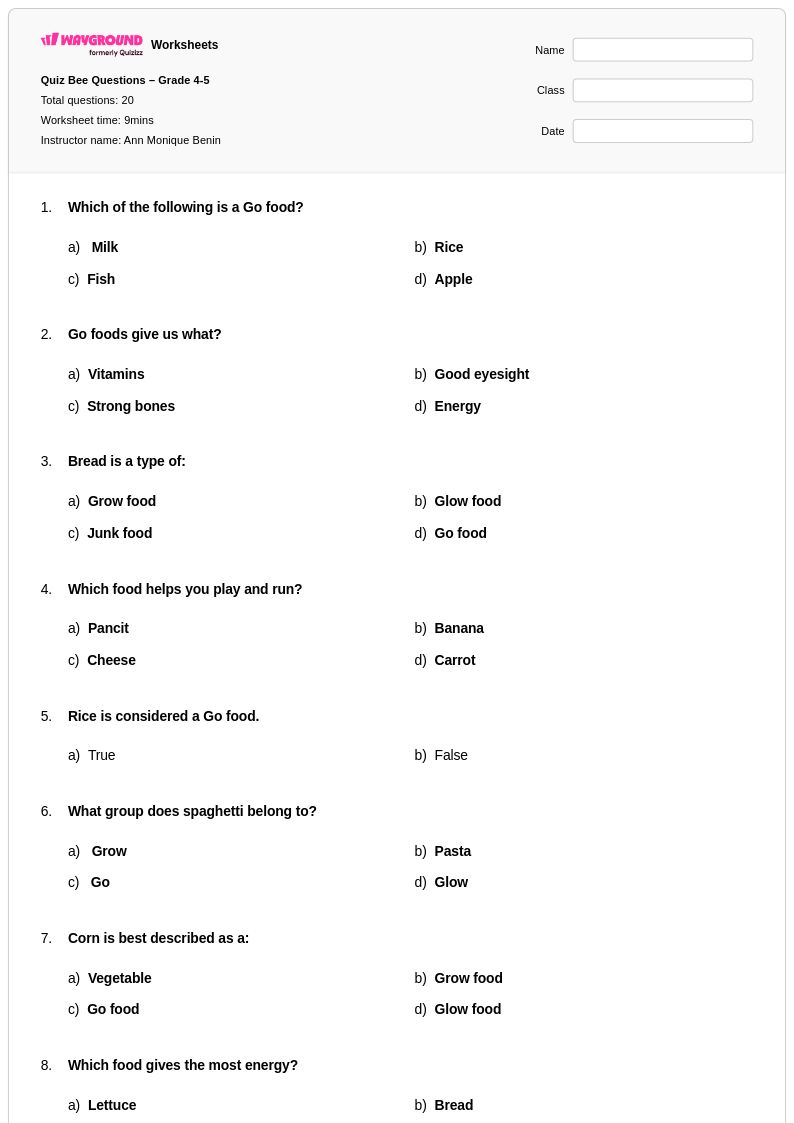
Grade 4 corn biology worksheets from Wayground offer free printable PDFs with practice problems and answer keys to help students explore plant structure, growth cycles, and agricultural science concepts.
Corn worksheets for Grade 4 students through Wayground (formerly Quizizz) provide comprehensive educational resources that explore this essential crop from multiple scientific perspectives. These carefully designed materials guide fourth-grade learners through the botanical structure of corn plants, examining roots, stems, leaves, and reproductive parts while building foundational knowledge about plant biology and agricultural science. Students engage with practice problems that cover corn's life cycle stages, from seed germination through pollination and harvest, strengthening their observation skills and scientific vocabulary. The collection includes detailed answer keys and printable pdf formats that support both classroom instruction and independent study, with free resources covering topics such as corn's nutritional value, its role in ecosystems, and its importance as a food source for humans and animals.
Wayground (formerly Quizizz) empowers educators with millions of teacher-created corn and plant biology worksheets specifically curated for Grade 4 science instruction. The platform's robust search and filtering capabilities enable teachers to locate materials aligned with state and national science standards, ensuring that corn-focused lessons meet curriculum requirements for elementary plant studies. Advanced differentiation tools allow educators to customize worksheet difficulty levels, adapting content for diverse learning needs while maintaining scientific accuracy and age-appropriate complexity. Available in both printable and digital formats including downloadable pdfs, these resources support flexible lesson planning whether teachers need materials for remediation sessions with struggling students, enrichment activities for advanced learners, or structured skill practice during regular classroom instruction, making corn biology education both accessible and engaging for fourth-grade scientists.
FAQs
How do I teach corn biology in a science classroom?
Teaching corn biology works best when students can connect the plant's structure to its function. Start with corn's anatomy — kernel composition, root systems, and leaf structure — then move into reproductive processes like pollination and fertilization. Connecting these concepts to corn's role in global food systems gives students a real-world anchor that reinforces plant biology fundamentals and drives engagement.
What topics should a corn biology worksheet cover?
A well-rounded corn biology worksheet should cover the plant's anatomical structures (kernels, roots, tassels, silk), its reproductive cycle including pollination and fertilization, photosynthetic processes, and genetic diversity. Strong worksheets also address corn's agricultural and economic significance, which connects plant science to broader ecological and food system contexts.
What practice exercises help students understand corn genetics and plant structure?
Practice problems that ask students to label corn anatomy diagrams, trace the steps of corn's reproductive cycle, and apply Mendelian genetics to kernel color inheritance are especially effective. Exercises that connect corn's photosynthetic processes to its productivity as a crop help students integrate biology concepts rather than memorize them in isolation.
What misconceptions do students commonly have about corn as a plant?
A frequent misconception is that corn kernels are seeds when they are actually fruits, each containing a single seed. Students also commonly confuse the tassel and silk as decorative rather than functional reproductive structures. Another common error is assuming corn is self-pollinating when it is primarily wind-pollinated, which has significant implications for understanding crop genetics and agricultural practices.
How can I use corn worksheets to differentiate instruction for diverse learners?
Corn worksheets on Wayground can be assigned digitally, allowing teachers to apply student-level accommodations such as read aloud for struggling readers, reduced answer choices to lower cognitive load, and extended time for students who need it. These accommodations can be set per student without notifying the rest of the class, making differentiation seamless during both formative practice and assessed activities.
How do I use Wayground's corn worksheets in my classroom?
Wayground's corn worksheets are available as printable PDFs for traditional classroom distribution and in digital formats for technology-integrated learning environments. Teachers can also host them as a quiz directly on Wayground, enabling real-time student responses and automatic grading. Each worksheet includes a complete answer key, reducing prep time and making them practical for both instruction and formative assessment.