
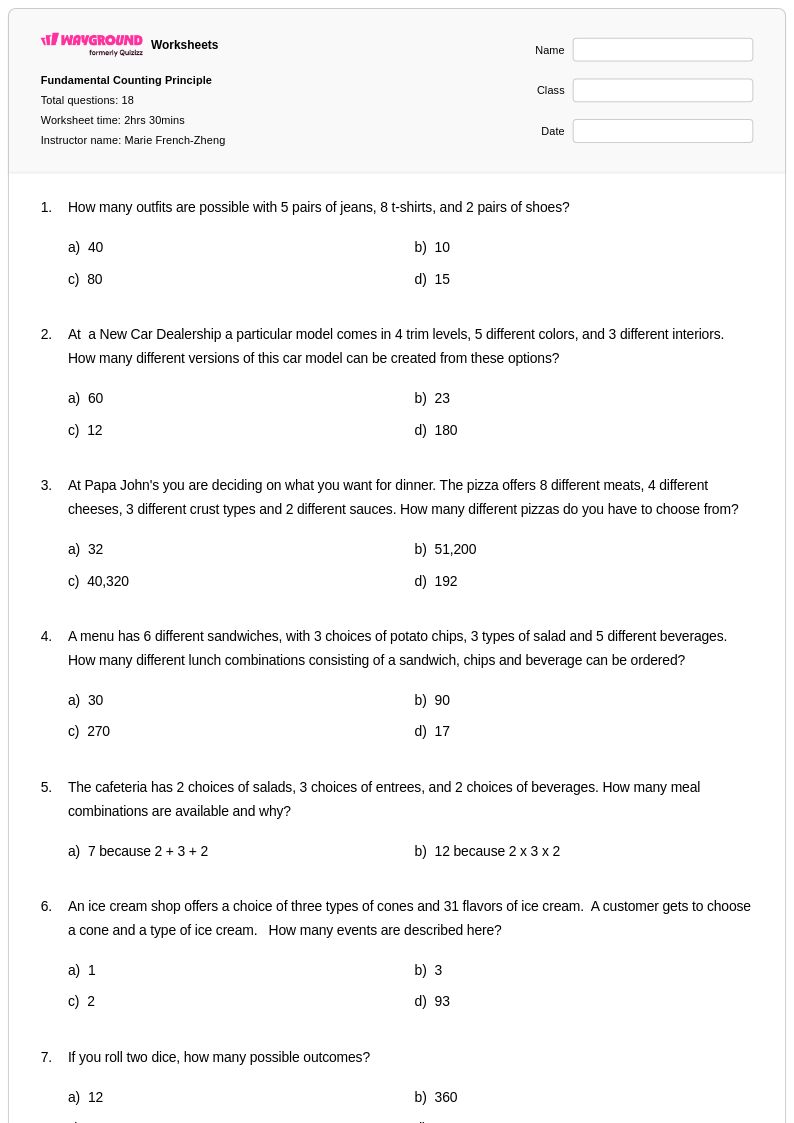
18 Q
7th
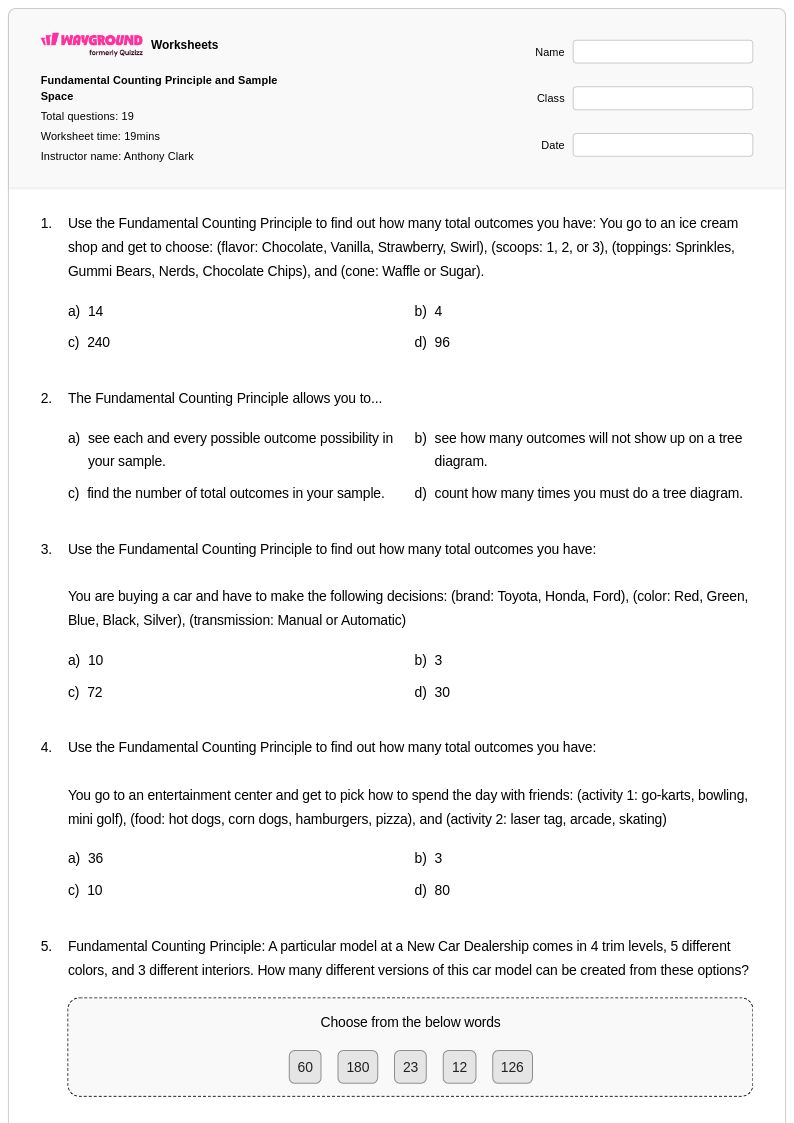
19 Q
7th - Uni
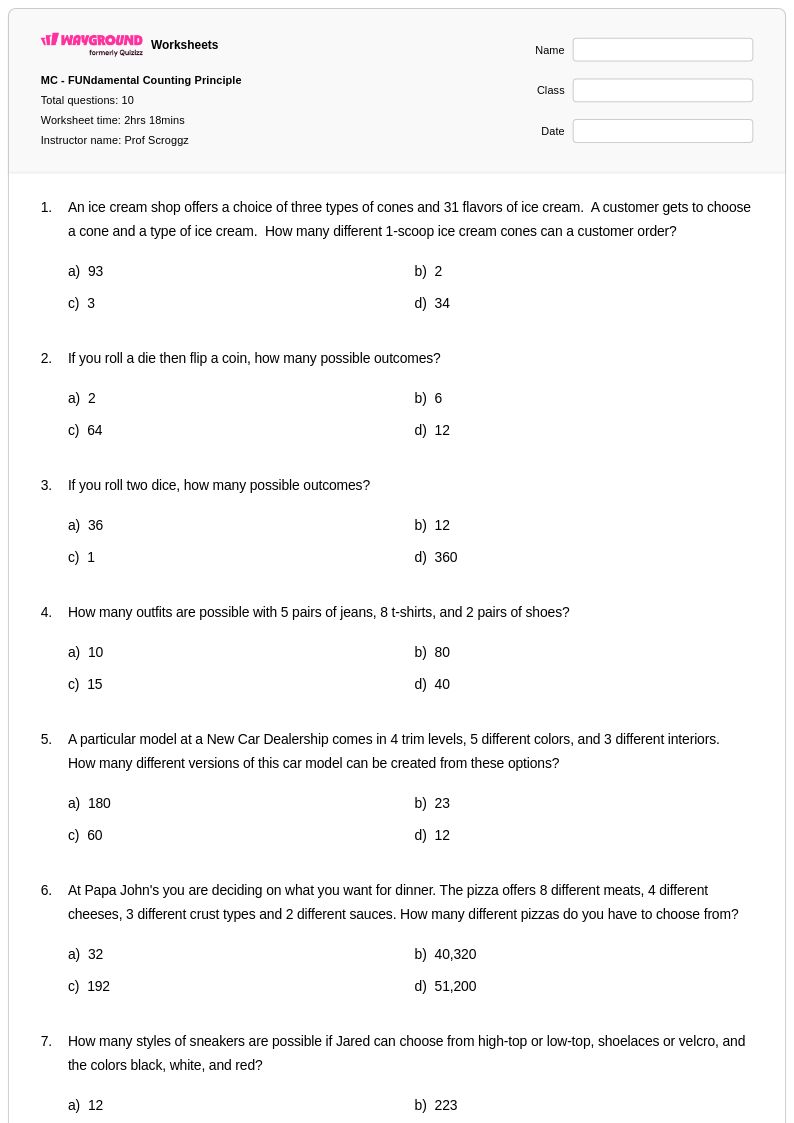
10 Q
7th
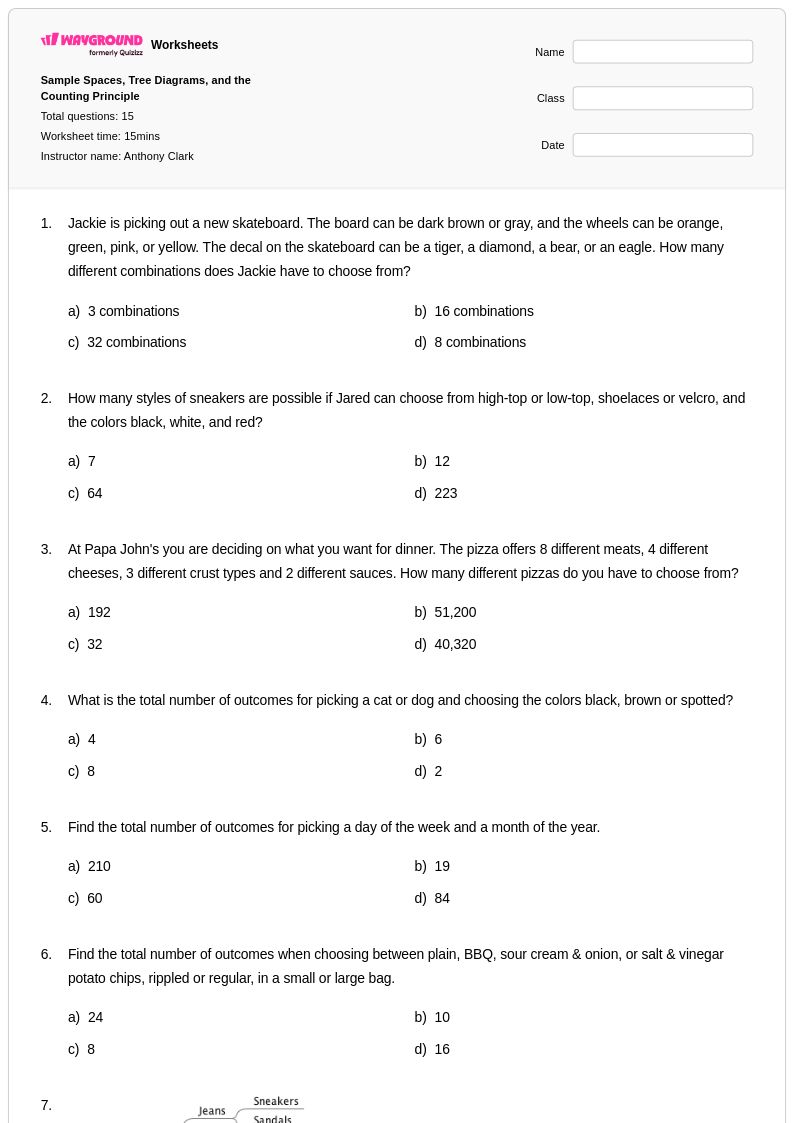
15 Q
7th - Uni
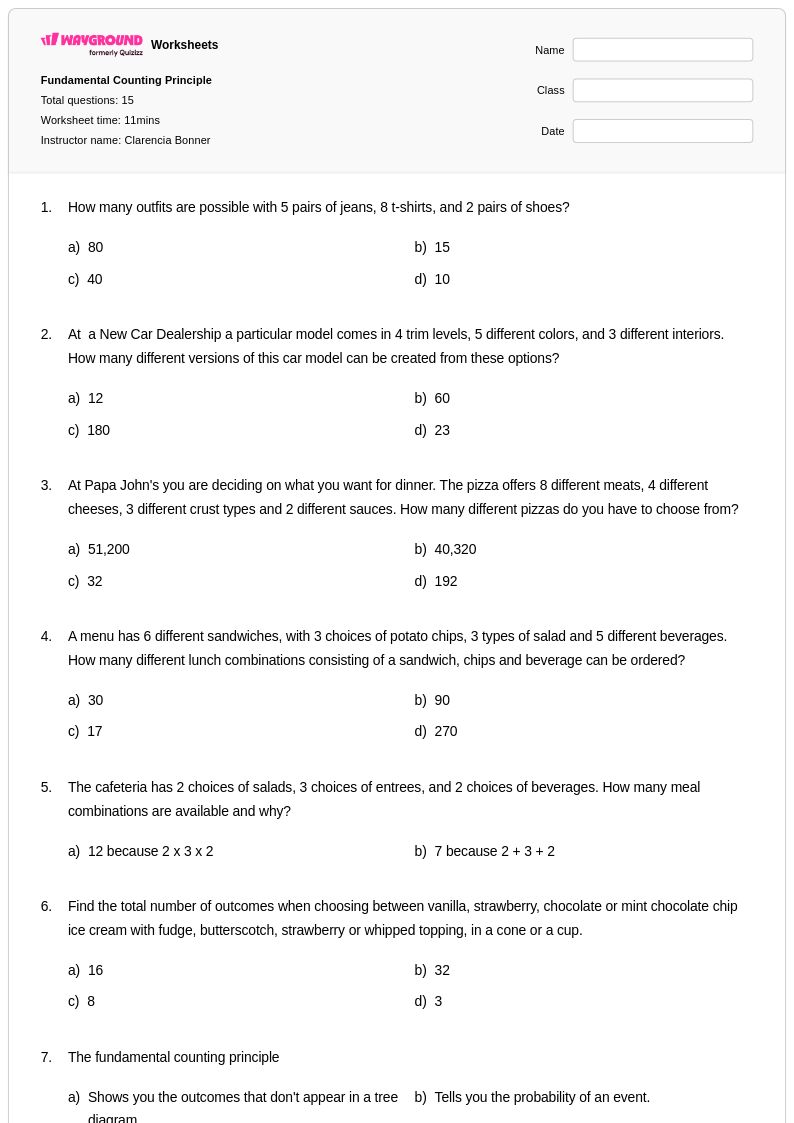
15 Q
7th
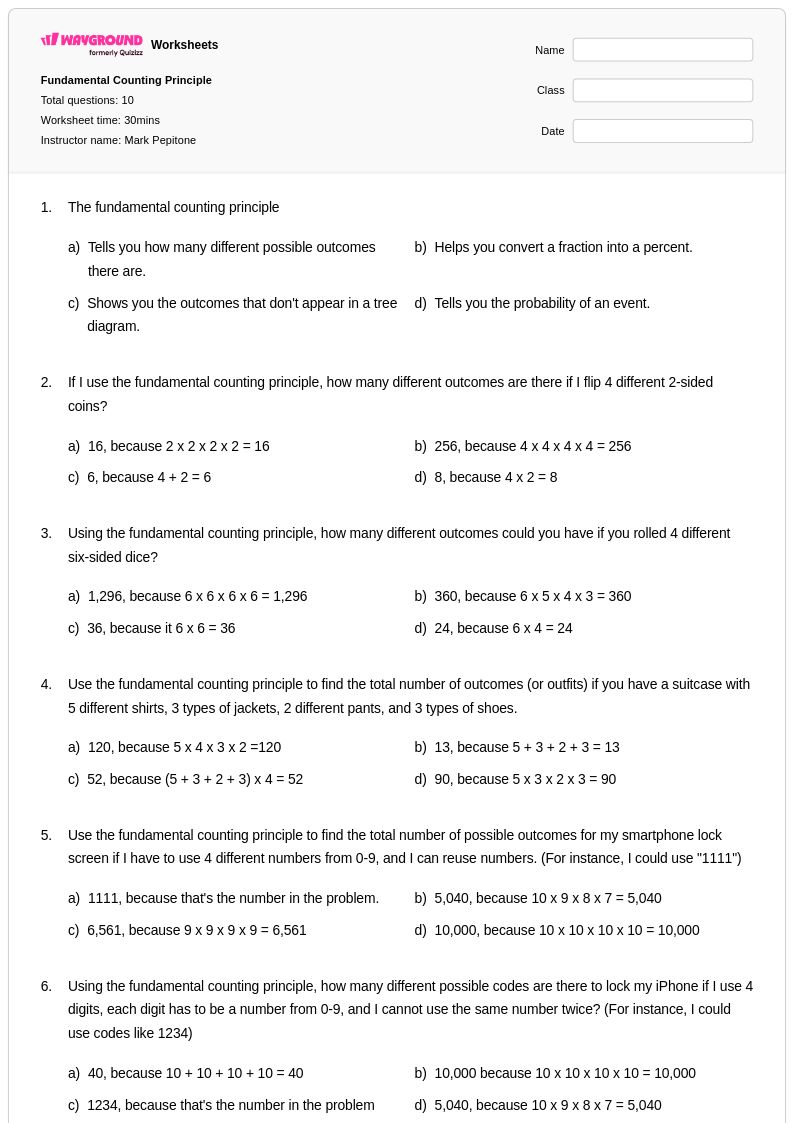
10 Q
7th
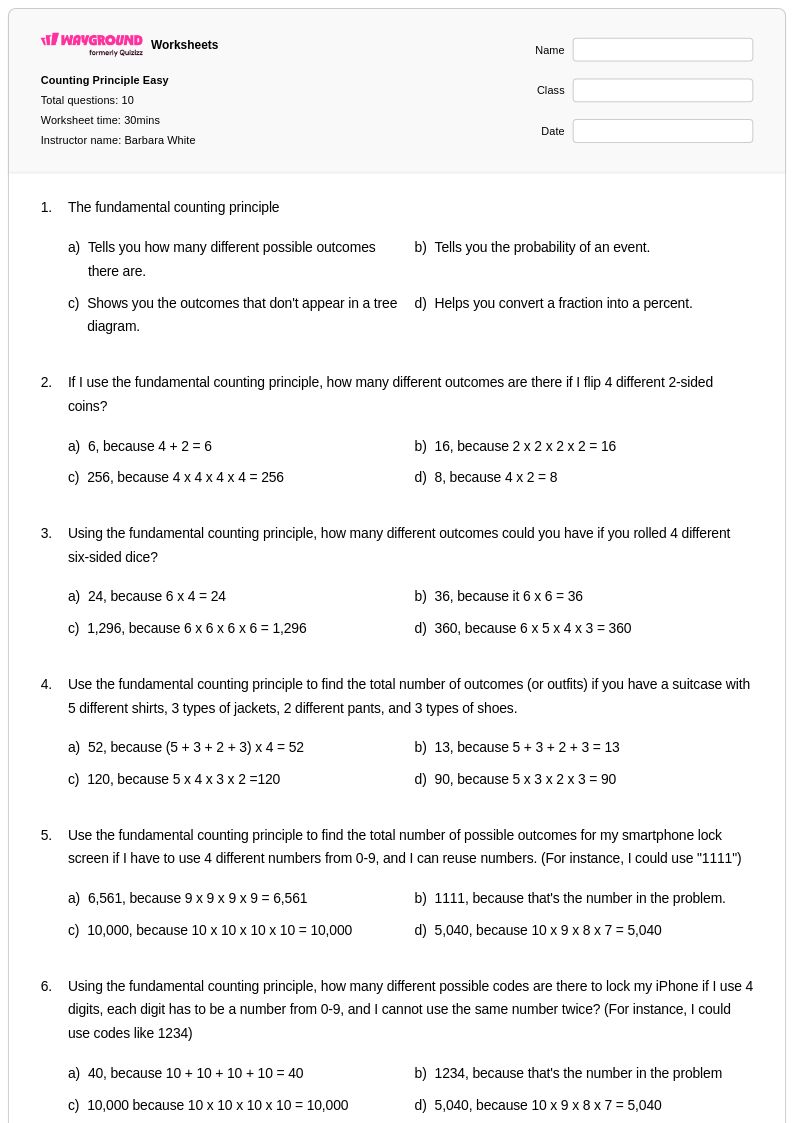
10 Q
7th
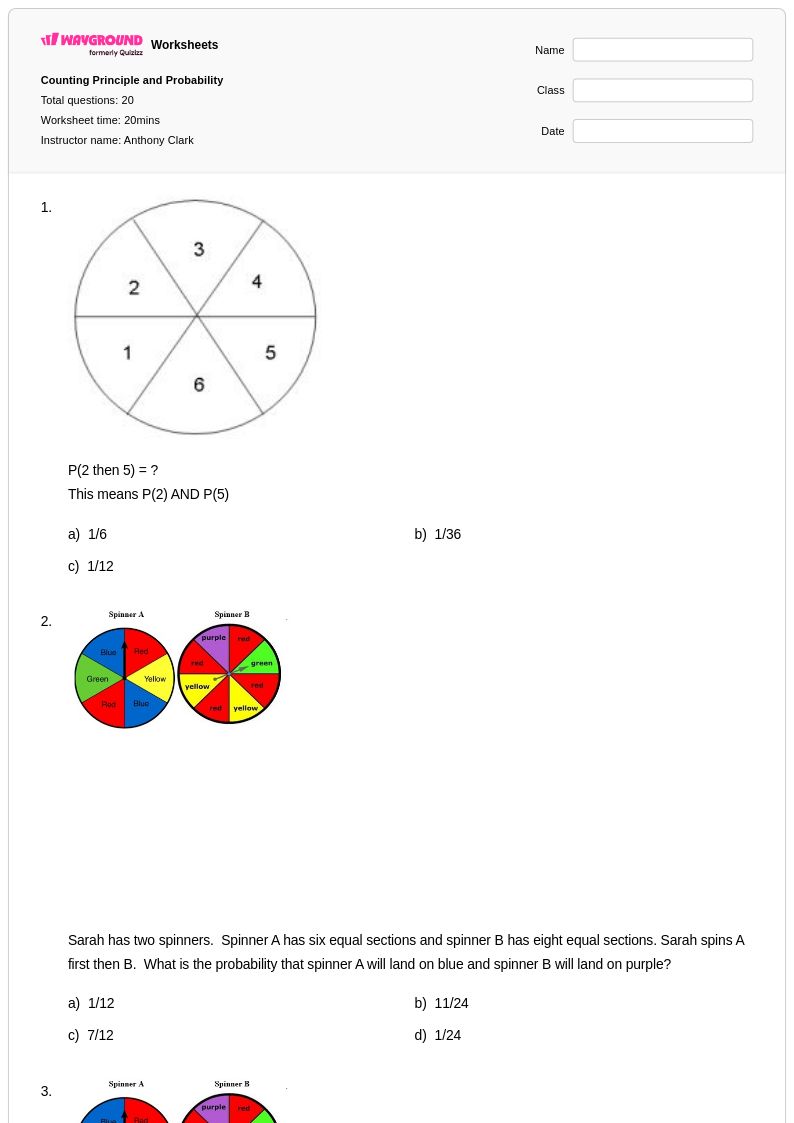
20 Q
7th - Uni
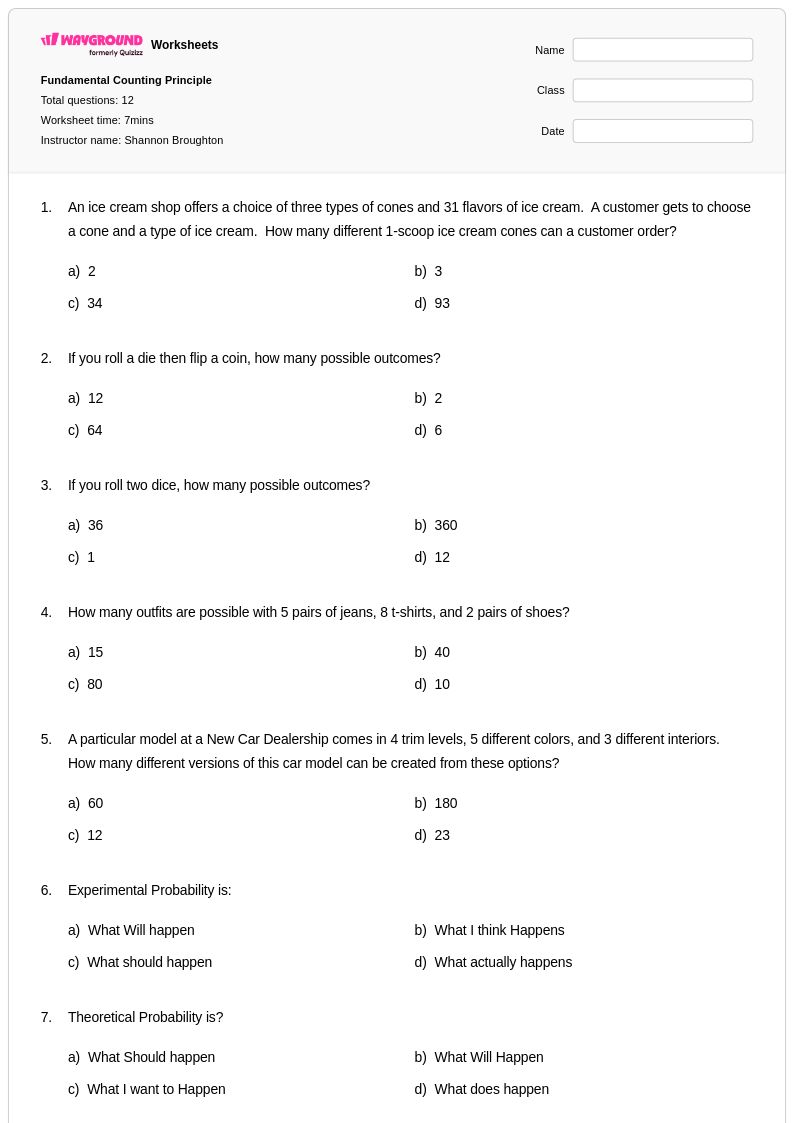
12 Q
6th - 8th
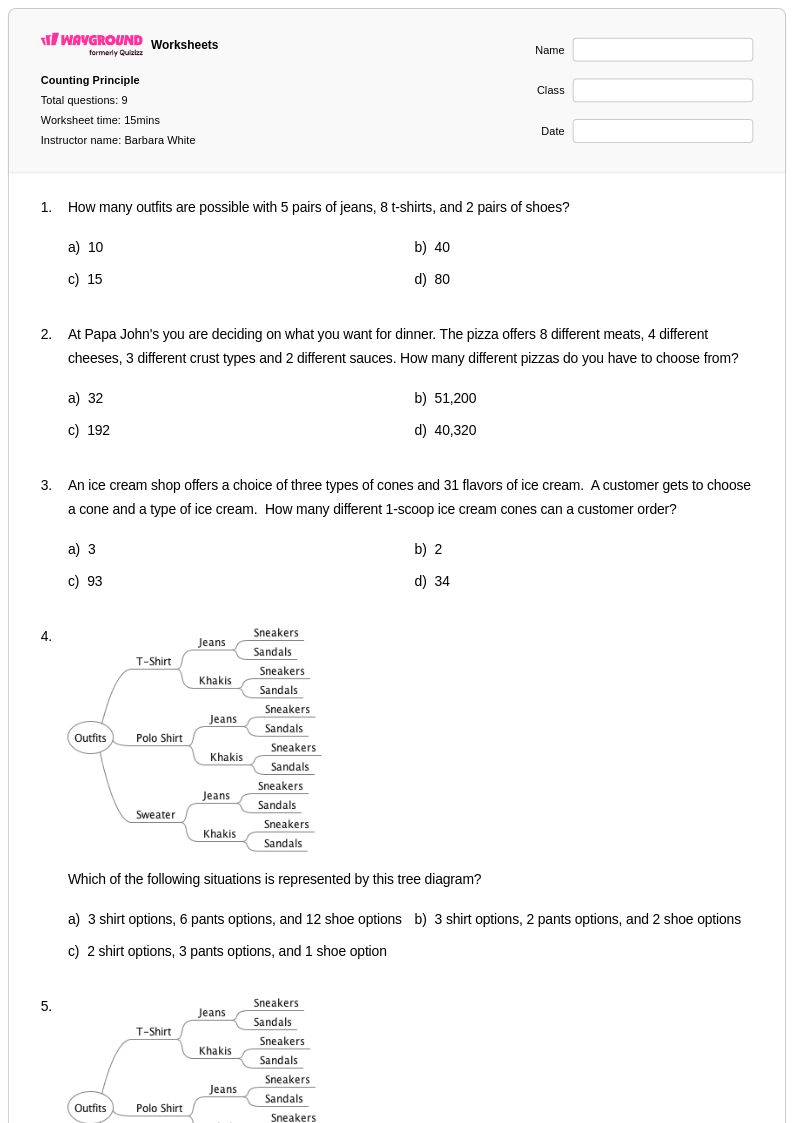
9 Q
6th - 8th
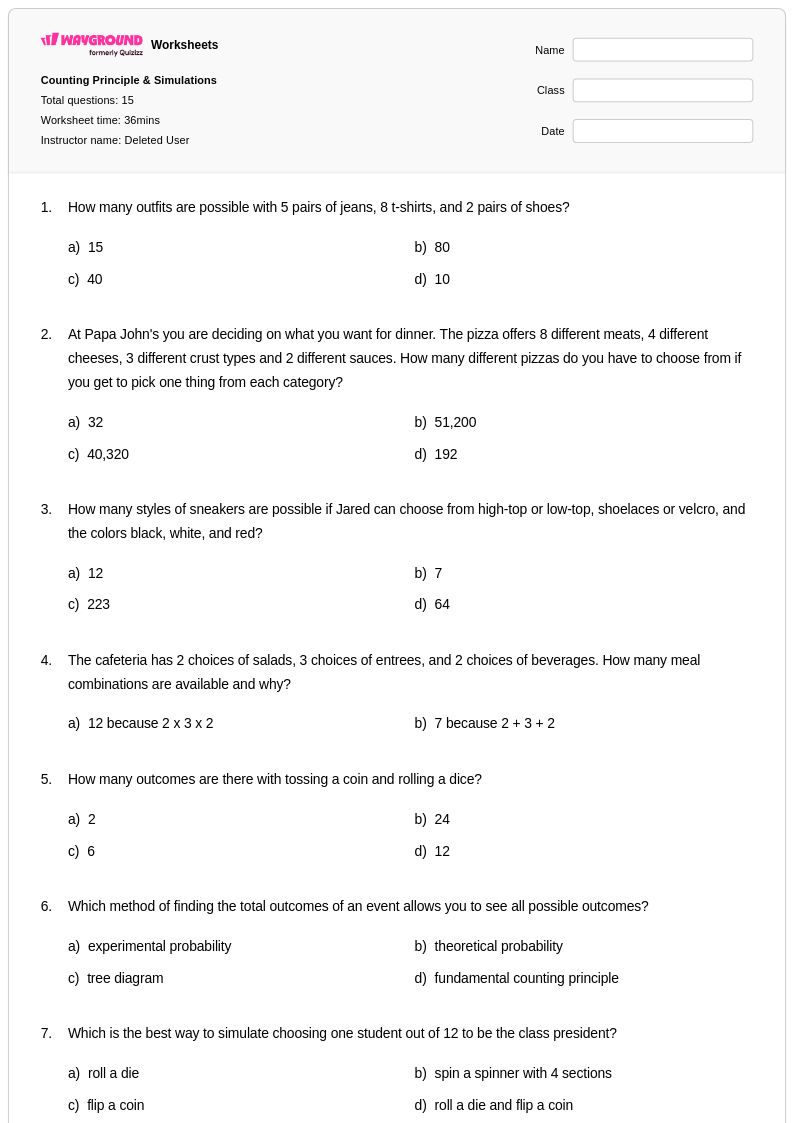
15 Q
7th
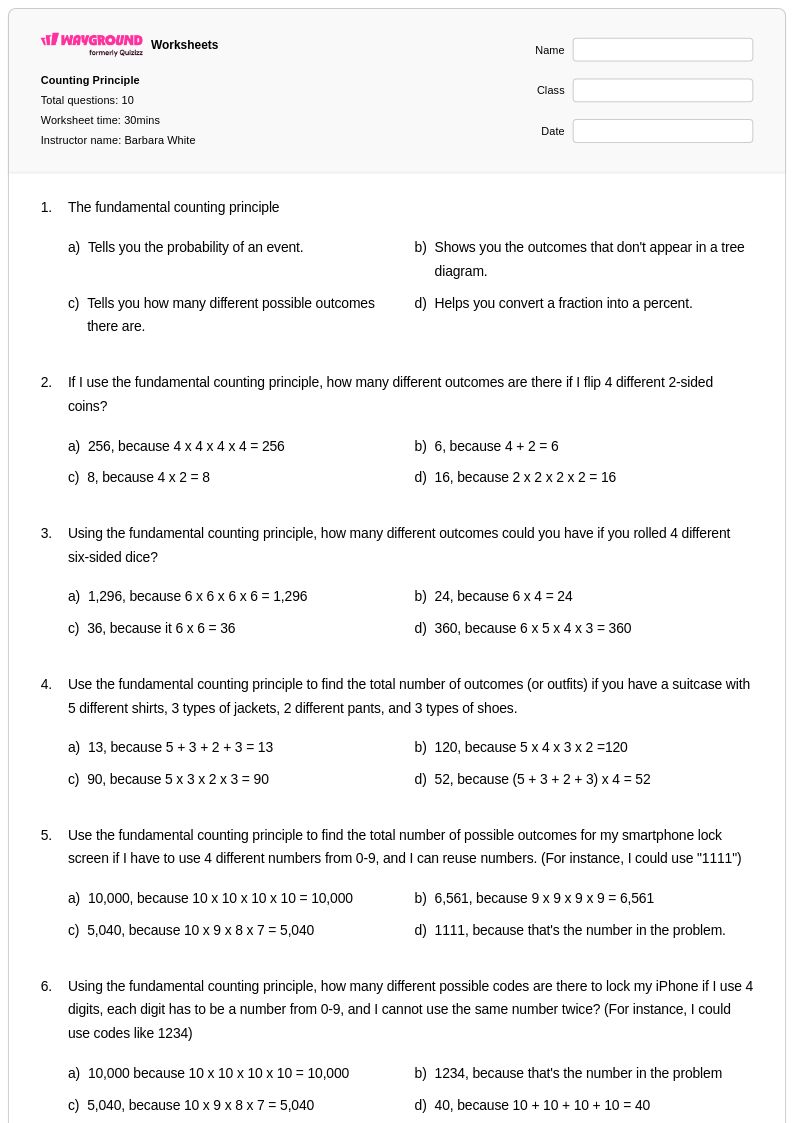
10 Q
7th
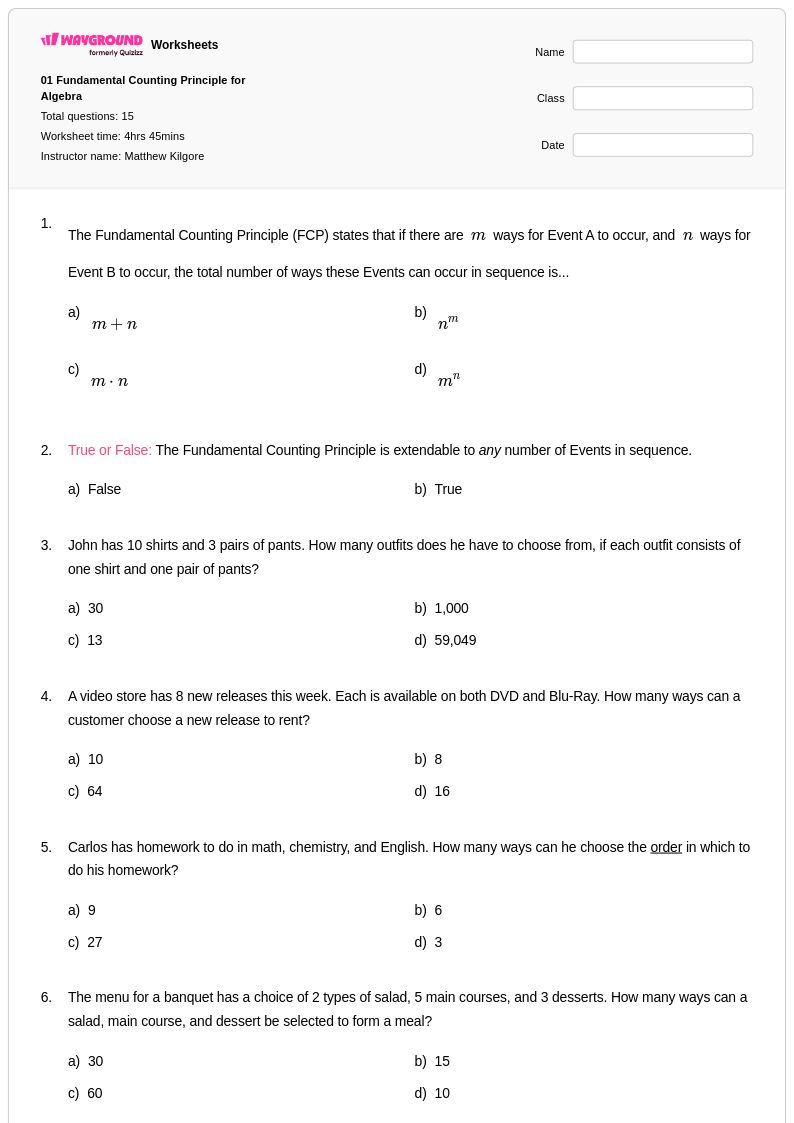
15 Q
7th
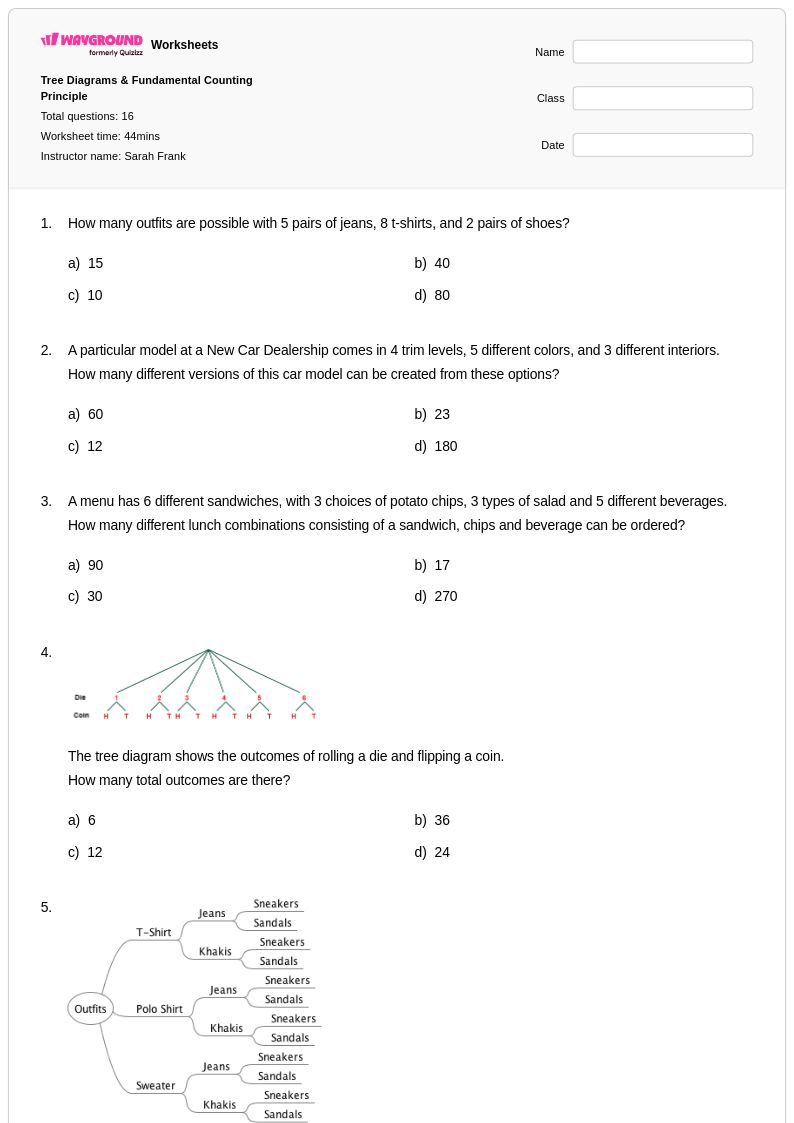
16 Q
7th
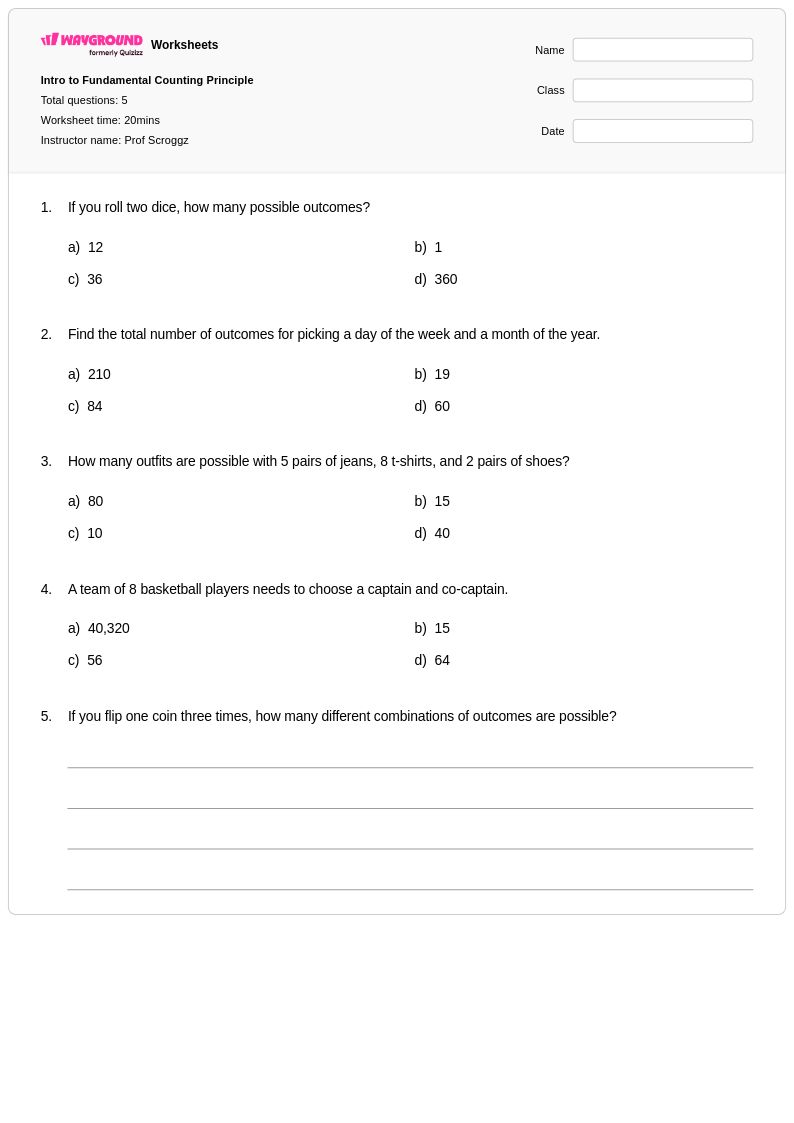
5 Q
6th - 8th
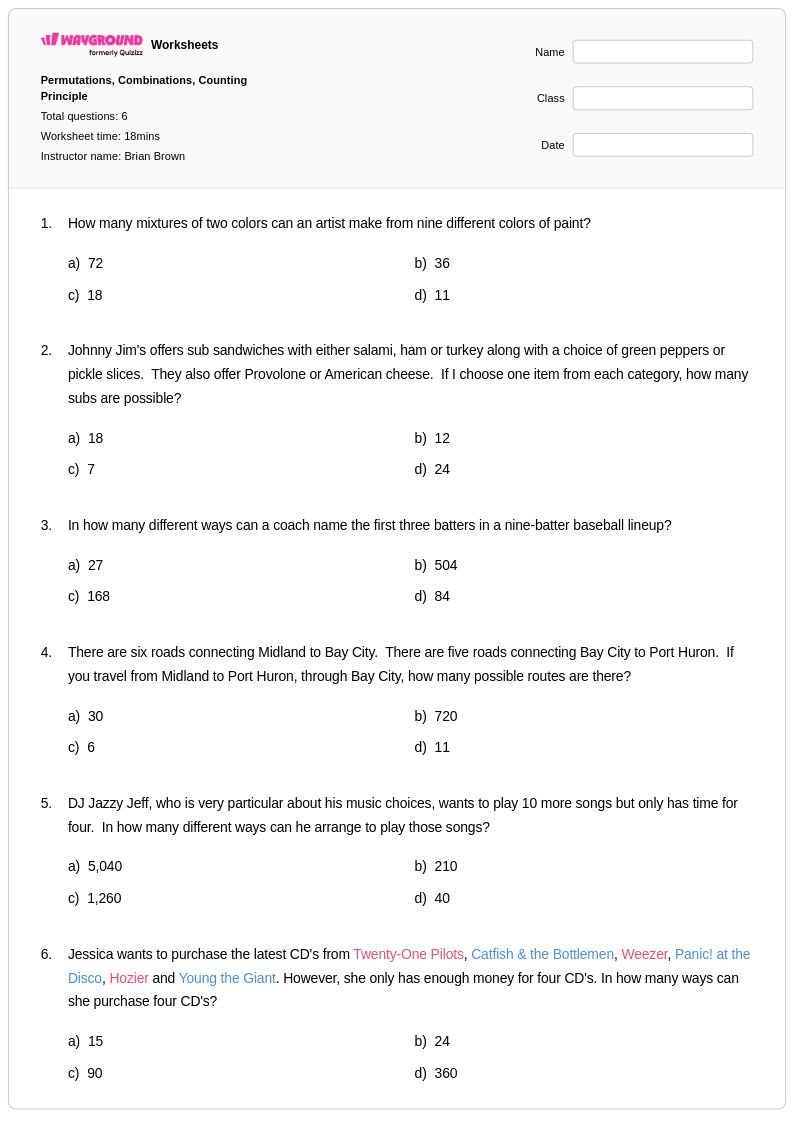
6 Q
7th - 8th
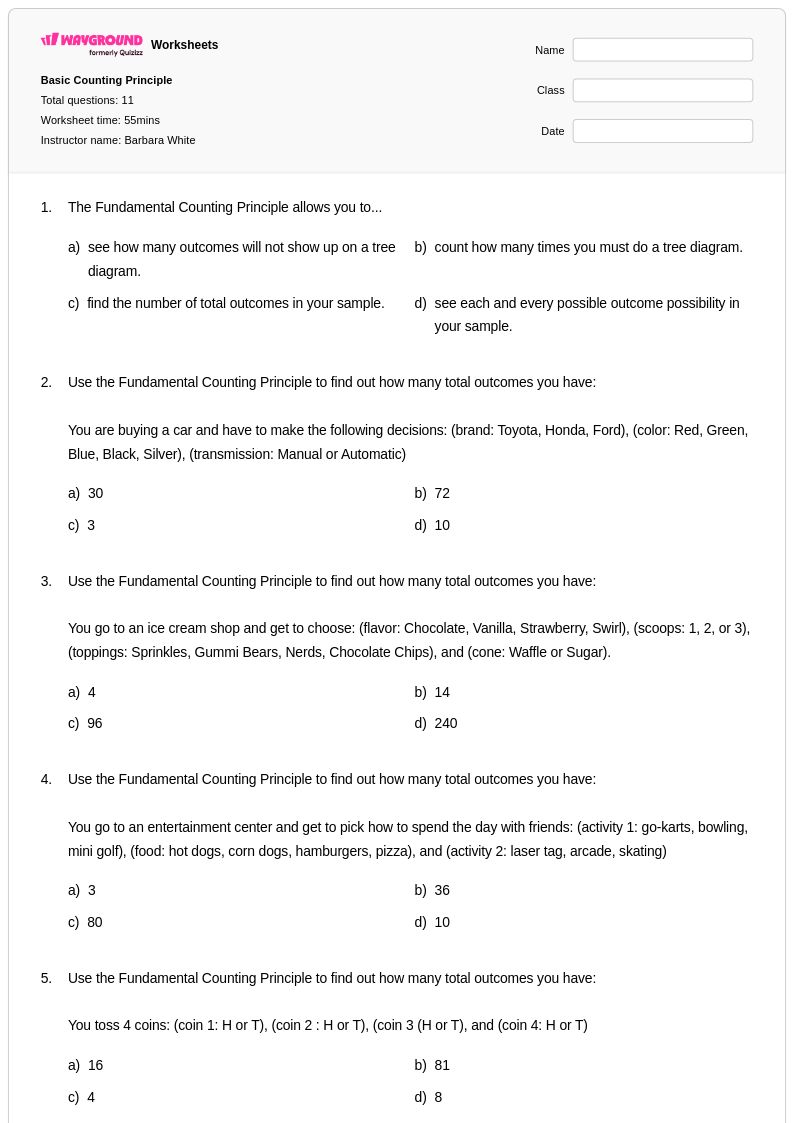
11 Q
7th
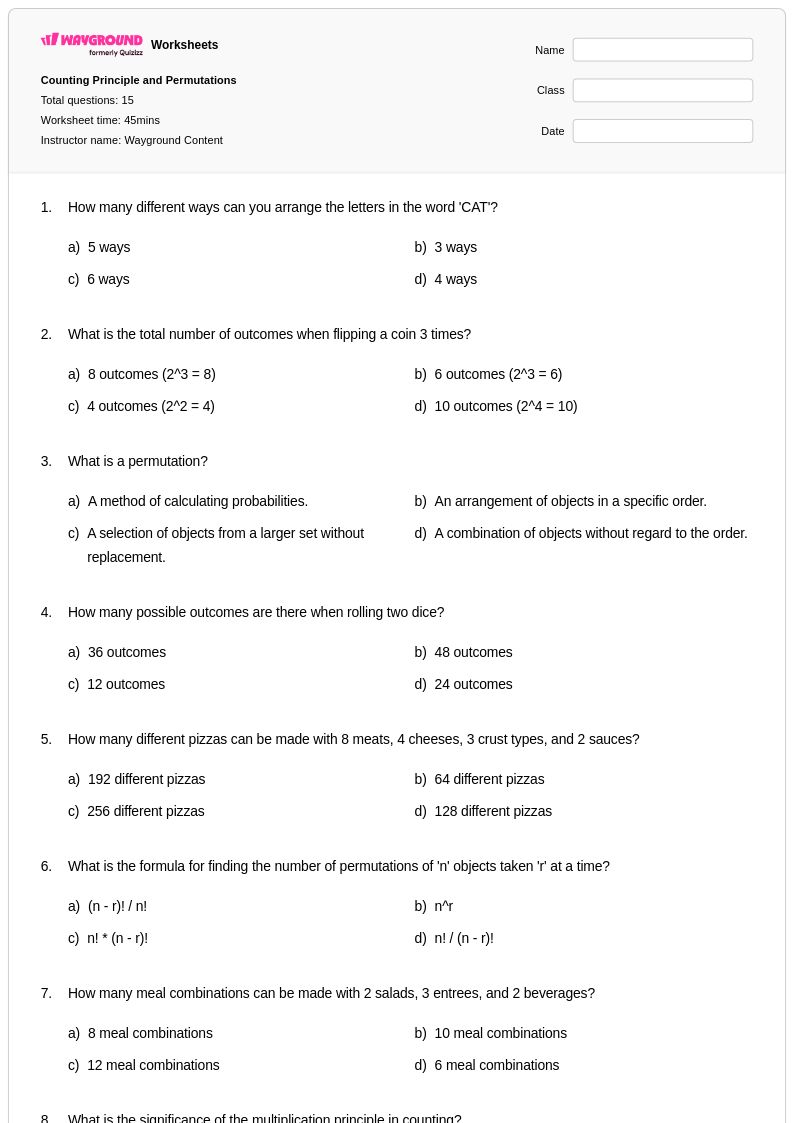
15 Q
7th
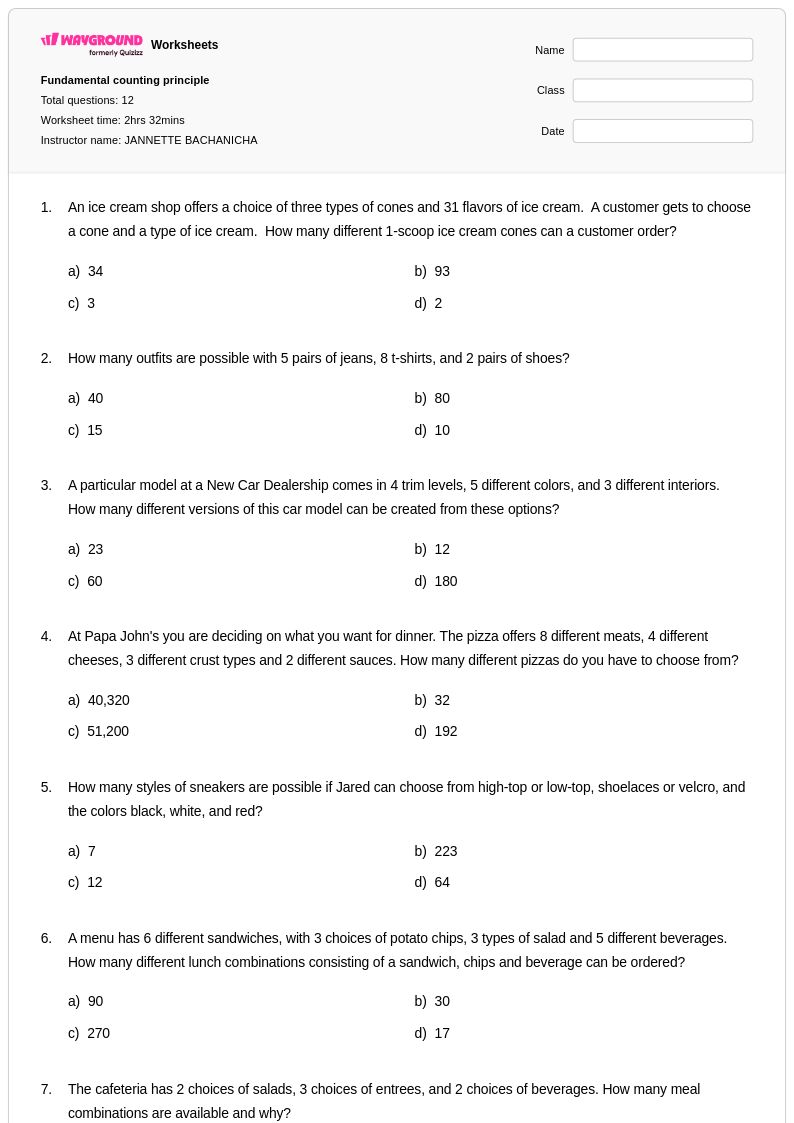
12 Q
7th
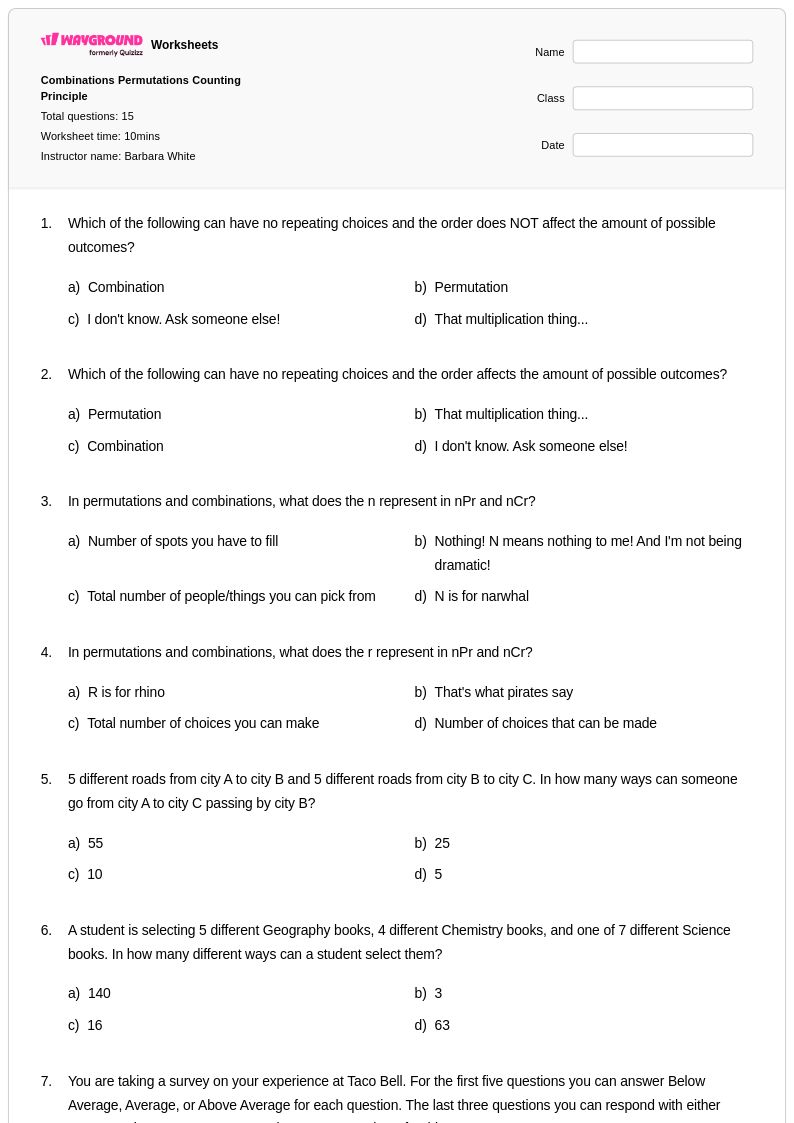
15 Q
7th - 10th
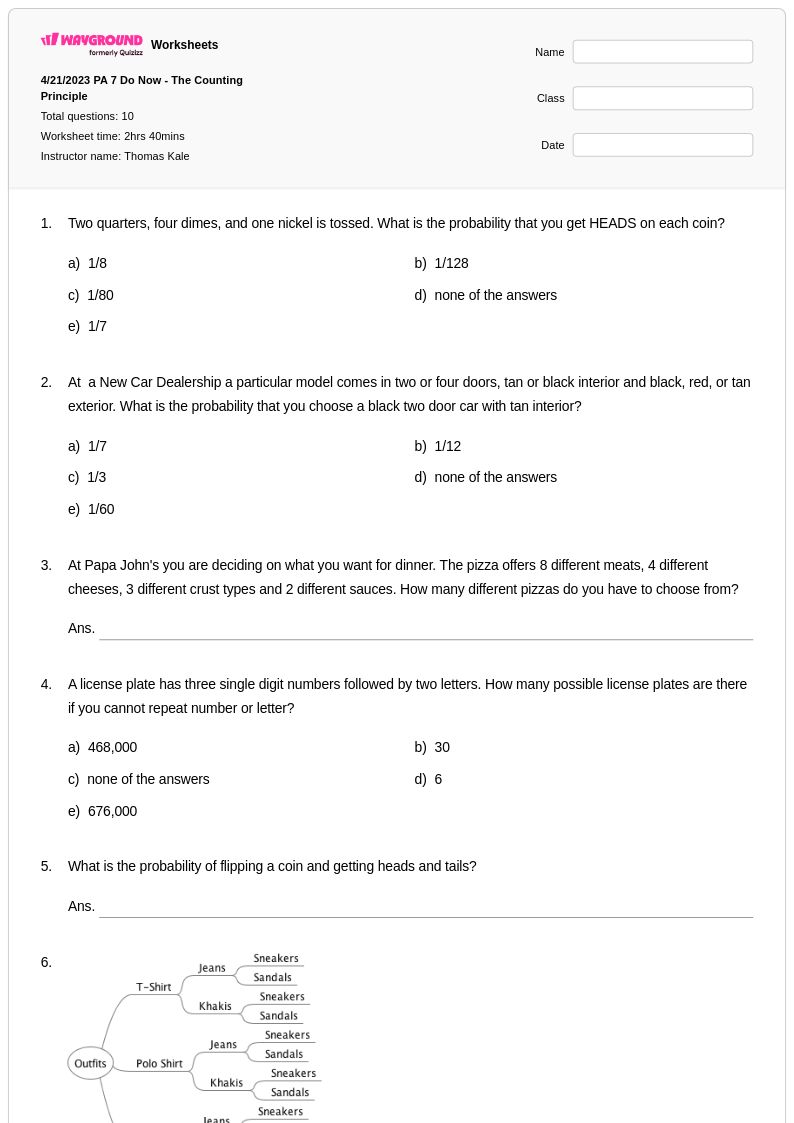
10 Q
7th
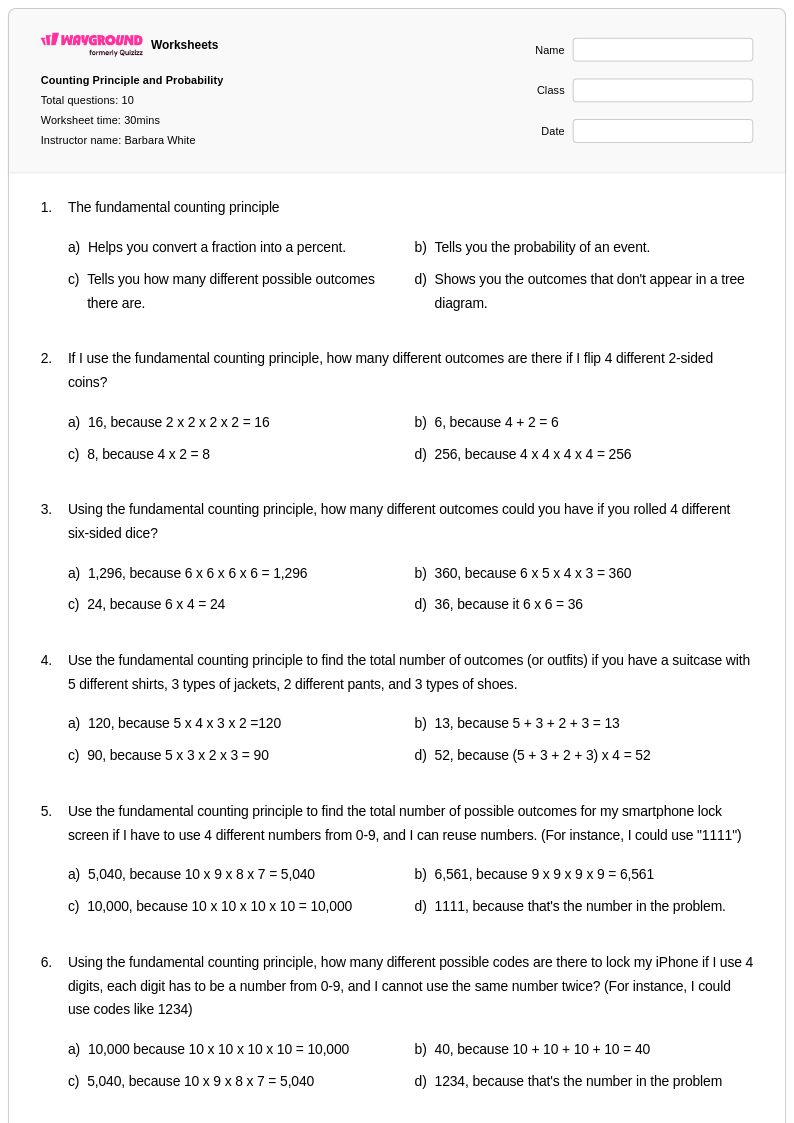
10 Q
7th
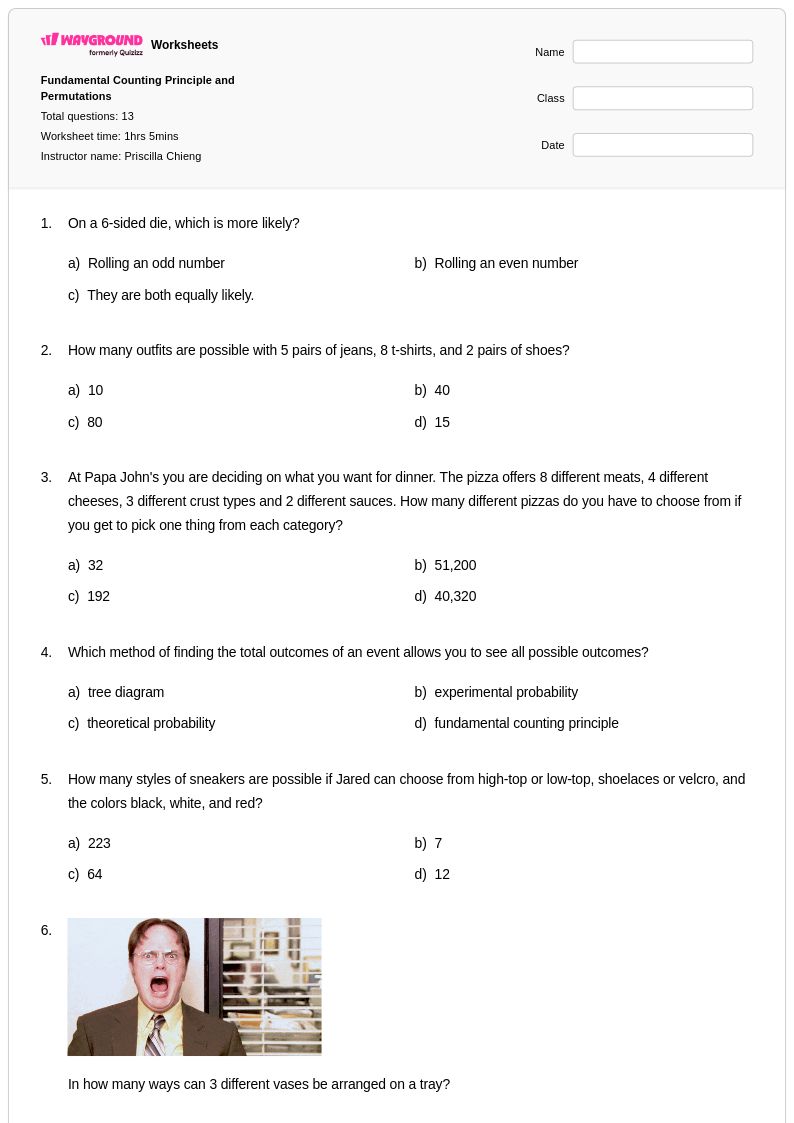
13 Q
6th - 8th
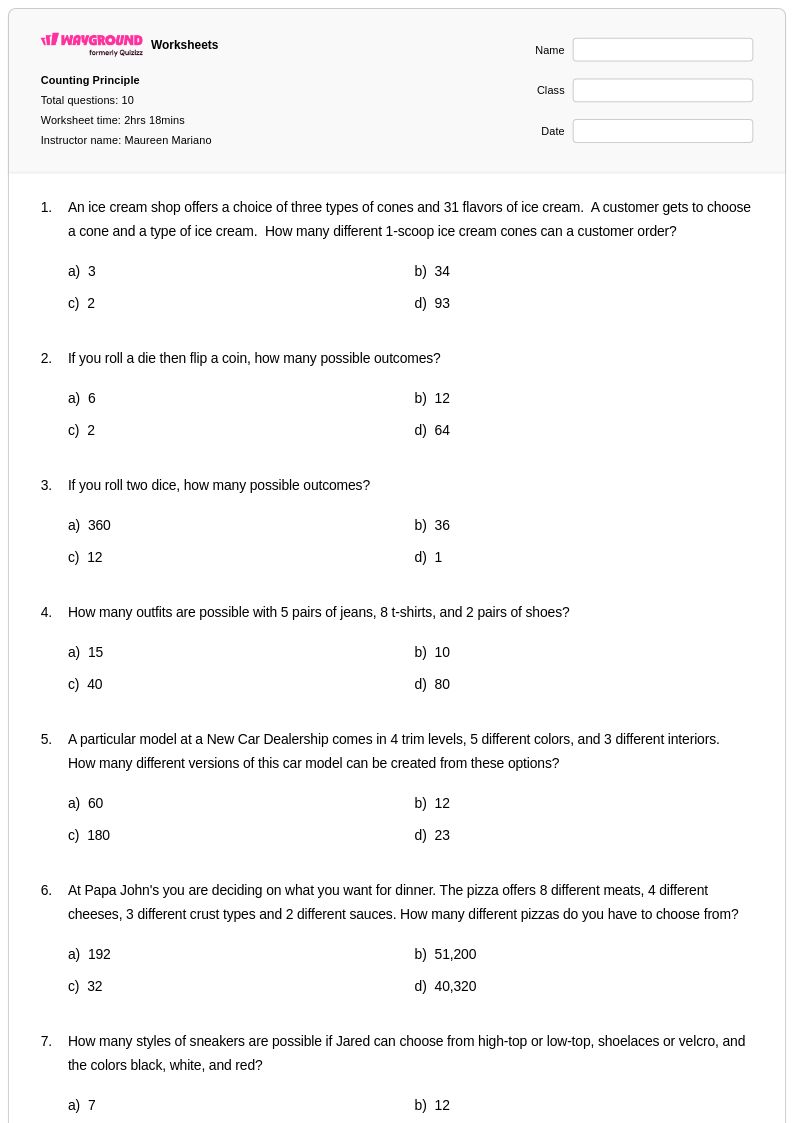
10 Q
6th - 12th
Explore Counting Principle Worksheets by Grades
Explore Other Subject Worksheets for grade 7
Explore printable Counting Principle worksheets for Grade 7
Counting Principle worksheets for Grade 7 students available through Wayground (formerly Quizizz) provide comprehensive practice with fundamental multiplication and addition principles essential for probability and statistics mastery. These expertly designed resources guide seventh graders through systematic approaches to counting outcomes, combinations, and arrangements in multi-step scenarios. Students strengthen their analytical thinking by working through practice problems that involve determining total possibilities using tree diagrams, organized lists, and strategic counting methods. Each worksheet collection includes detailed answer keys and is available as free printables in convenient pdf format, allowing educators to seamlessly integrate these materials into their probability and statistics curriculum while building students' foundational skills for more advanced mathematical concepts.
Wayground (formerly Quizizz) empowers teachers with access to millions of educator-created counting principle resources specifically aligned with Grade 7 mathematics standards and learning objectives. The platform's robust search and filtering capabilities enable instructors to quickly locate worksheets that match their students' specific skill levels and learning needs, whether for initial instruction, targeted remediation, or advanced enrichment activities. Teachers can customize these materials to accommodate diverse learning styles and differentiate instruction effectively, with resources available in both printable pdf formats for traditional classroom use and digital formats for interactive learning experiences. This comprehensive collection supports lesson planning by providing varied practice opportunities that help students master the counting principle concepts essential for success in probability, statistics, and higher-level mathematics courses.
FAQs
How do I teach the counting principle to Grade 7 students?
What counting principle exercises are useful for Grade 7?
What mistakes do Grade 7 students make with counting principles?
How can I use Grade 7 counting principle worksheets on Wayground?
How does the counting principle fit into Grade 7 Common Core math?
How can I differentiate counting principle practice in Grade 7?
What grade do students learn the counting principle?