
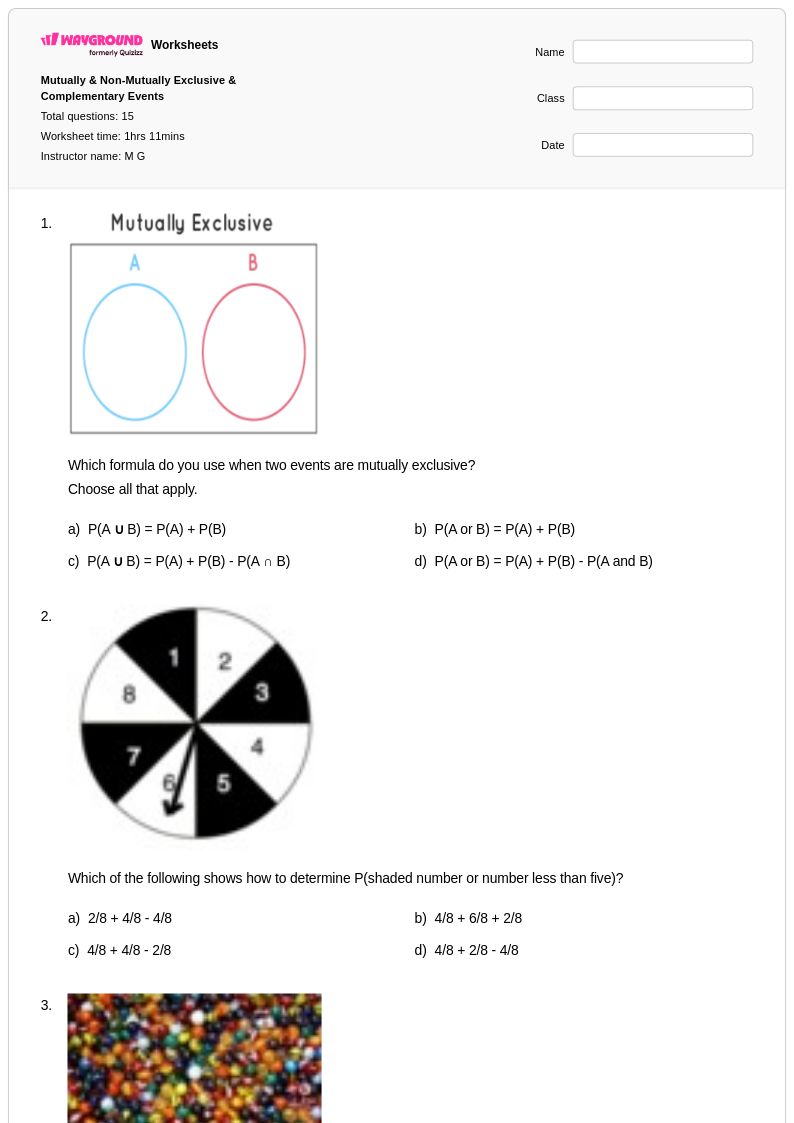
15 Q
6th - 8th
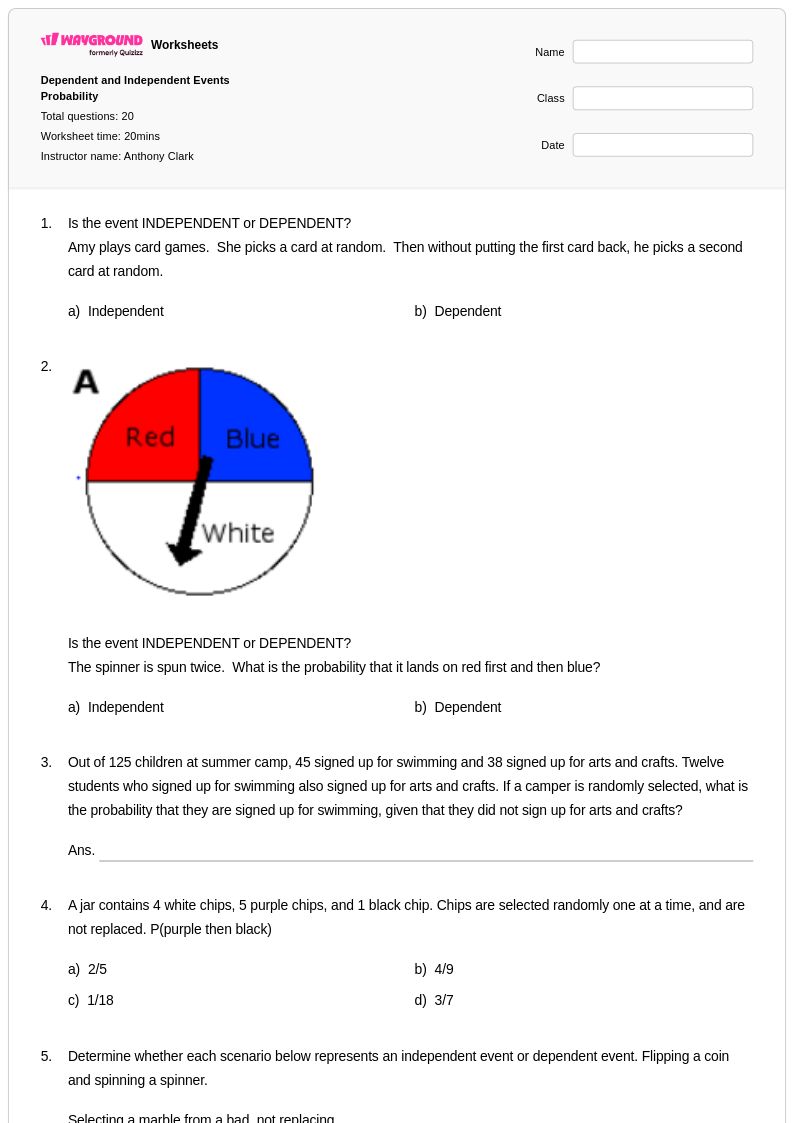
20 Q
7th - Uni
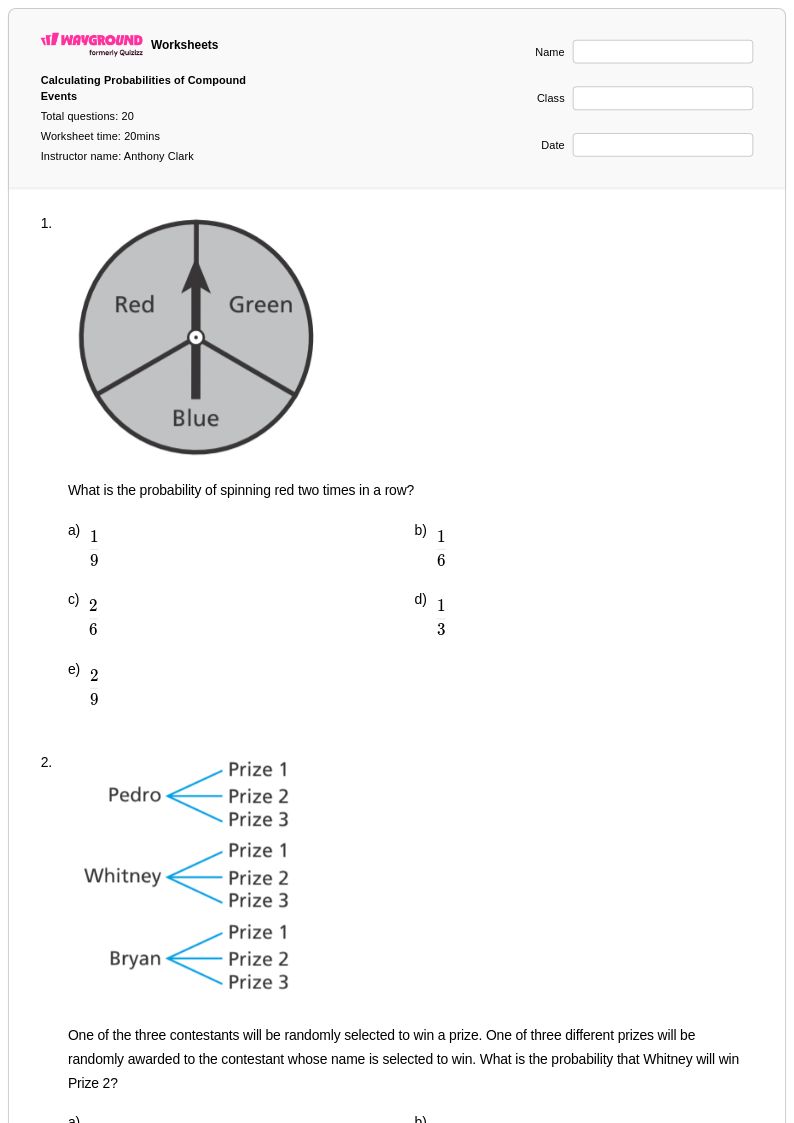
20 Q
7th - Uni
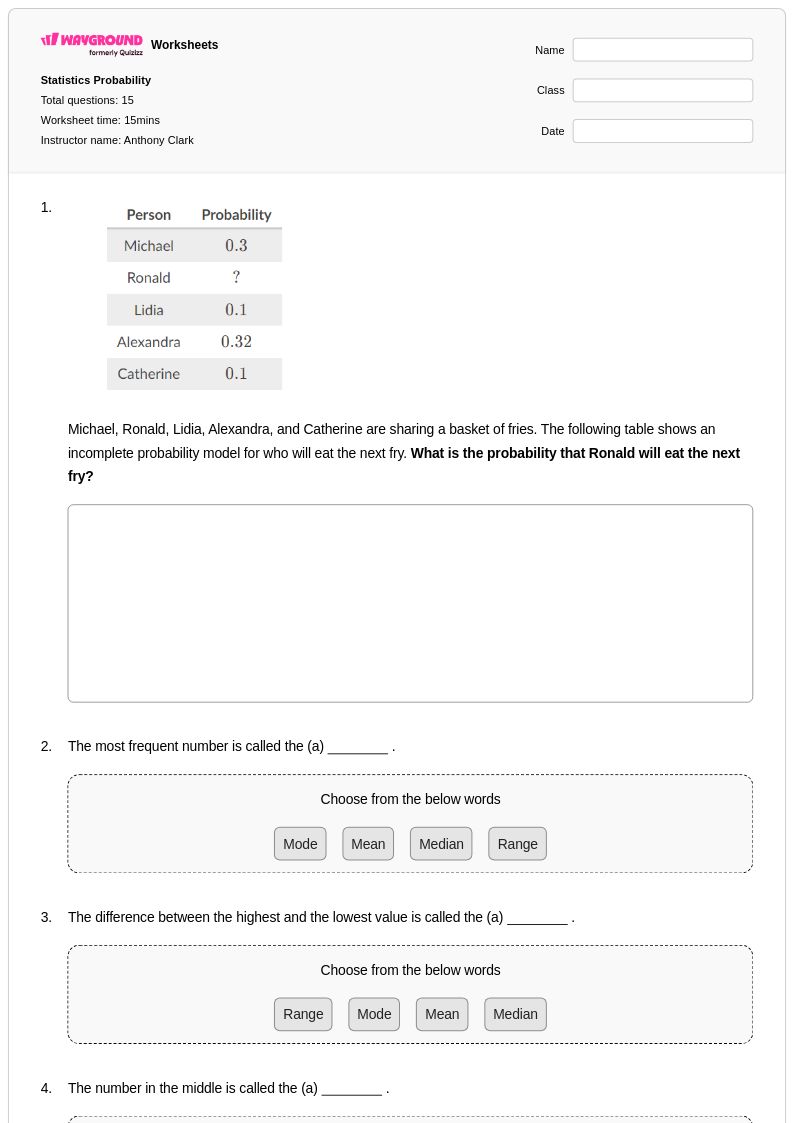
15 Q
7th - Uni
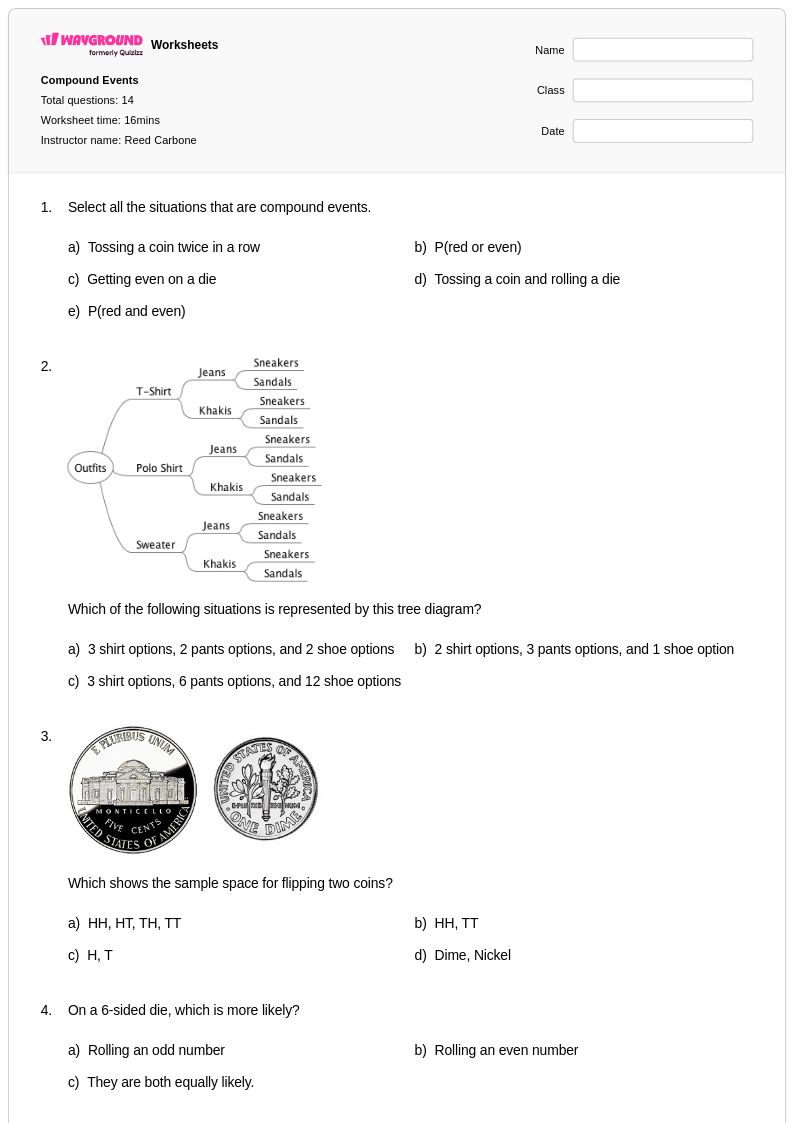
14 Q
7th
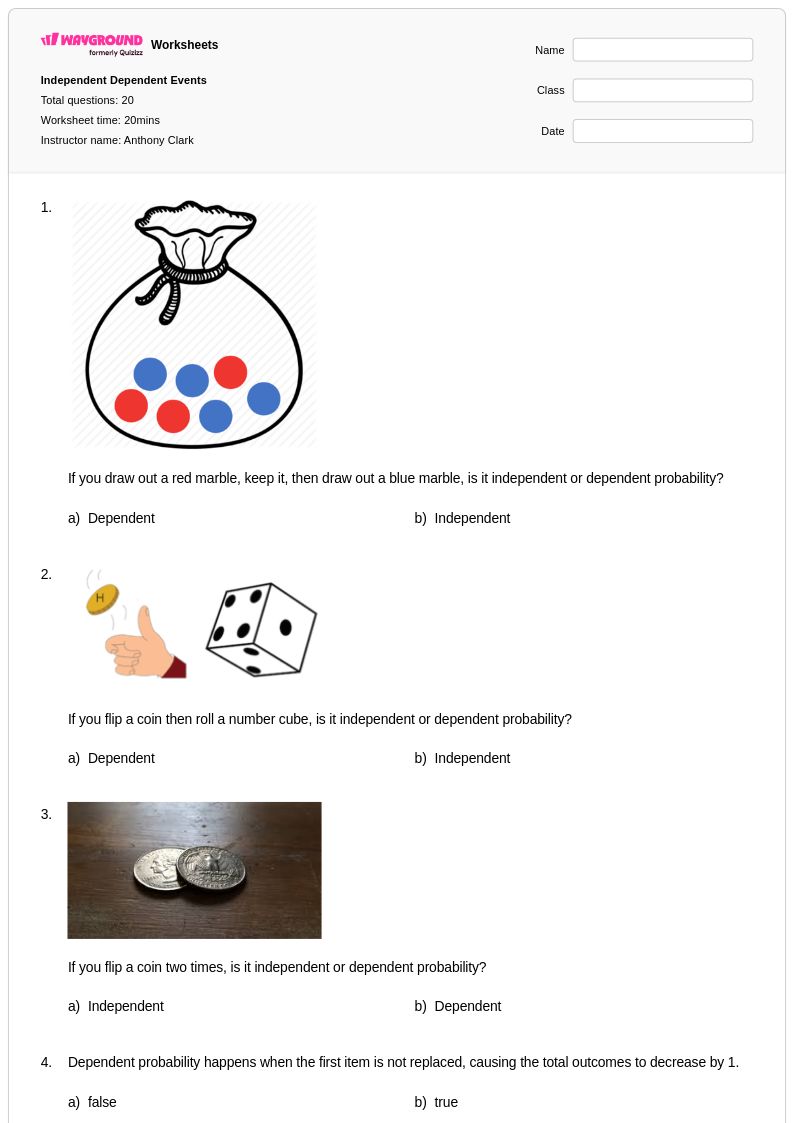
20 Q
7th - Uni
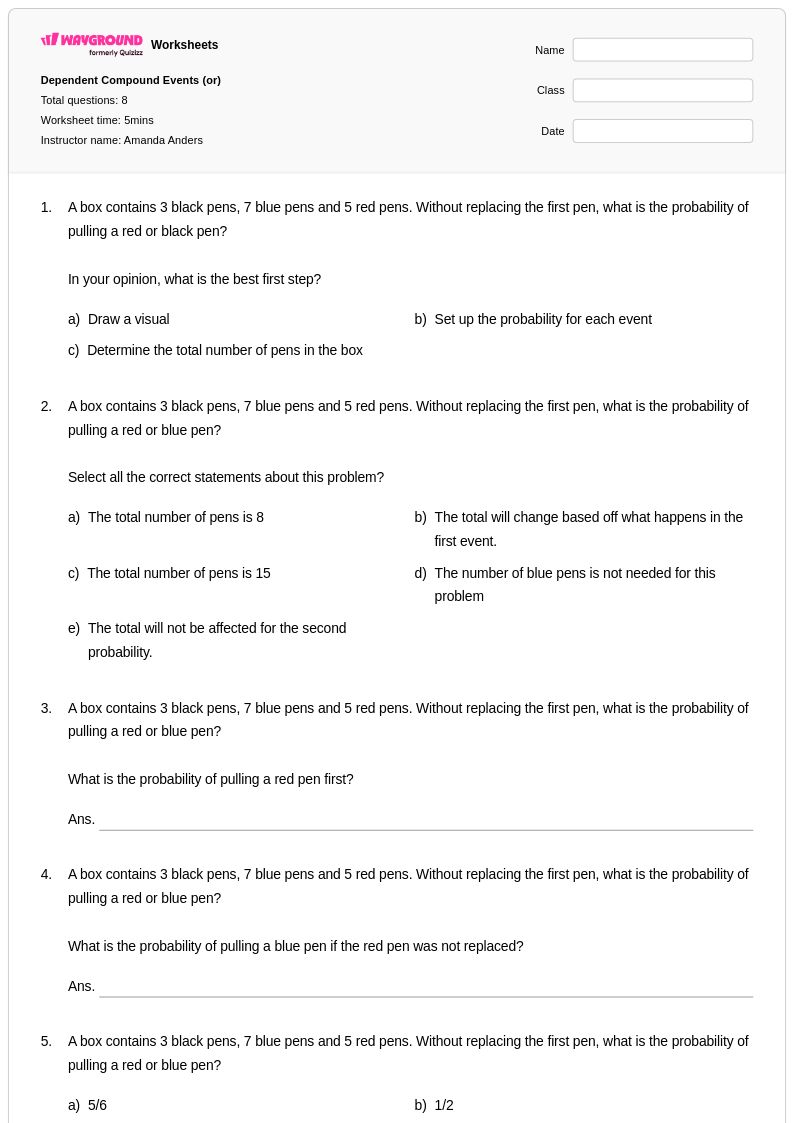
8 Q
7th
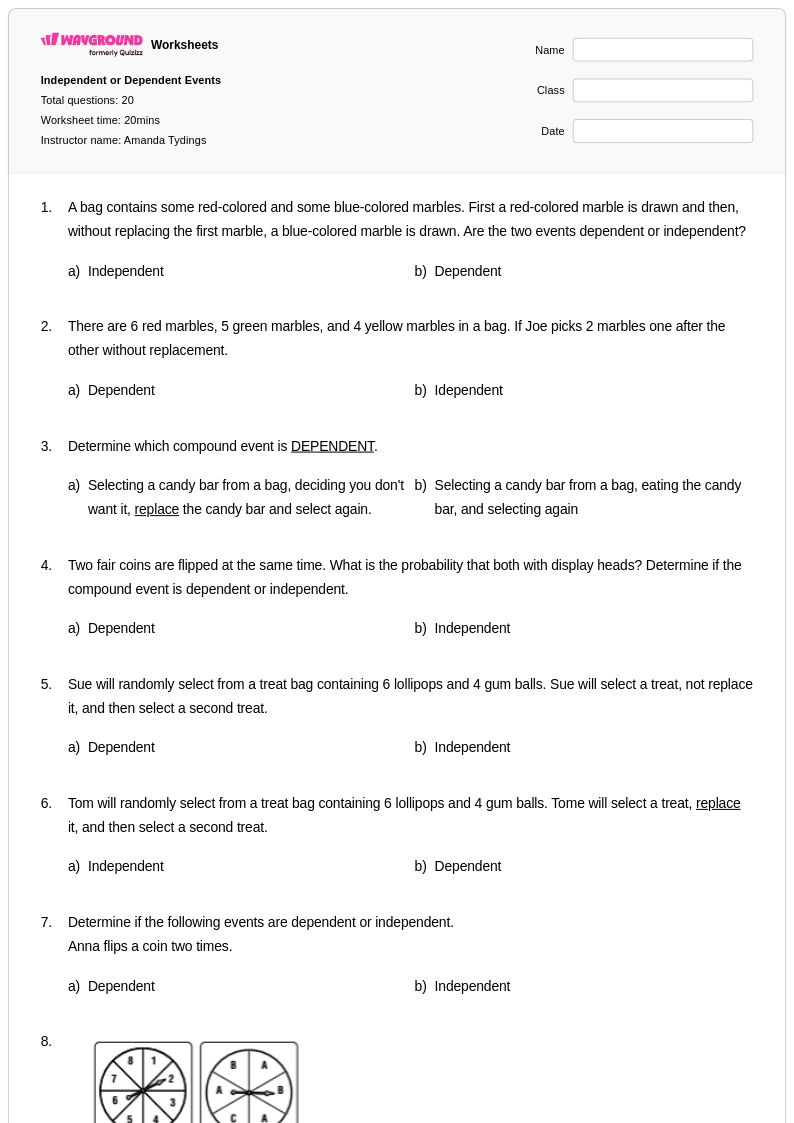
20 Q
7th - Uni
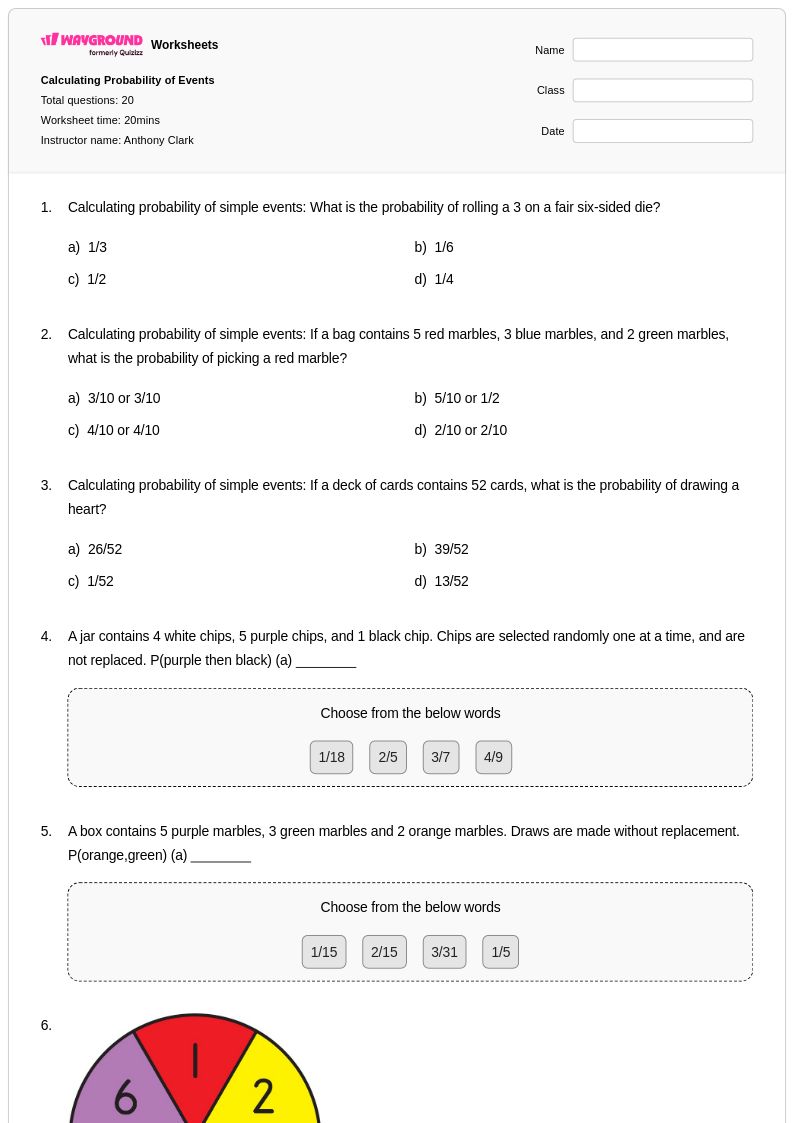
20 Q
7th - Uni
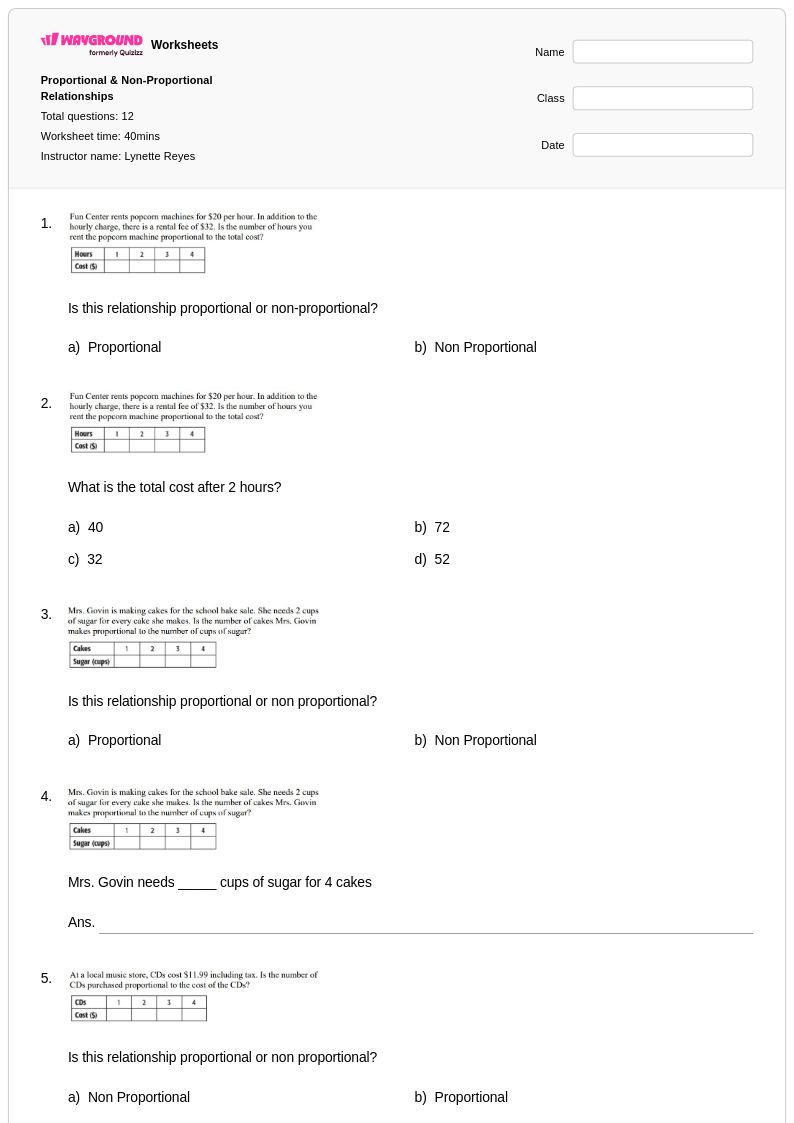
12 Q
7th
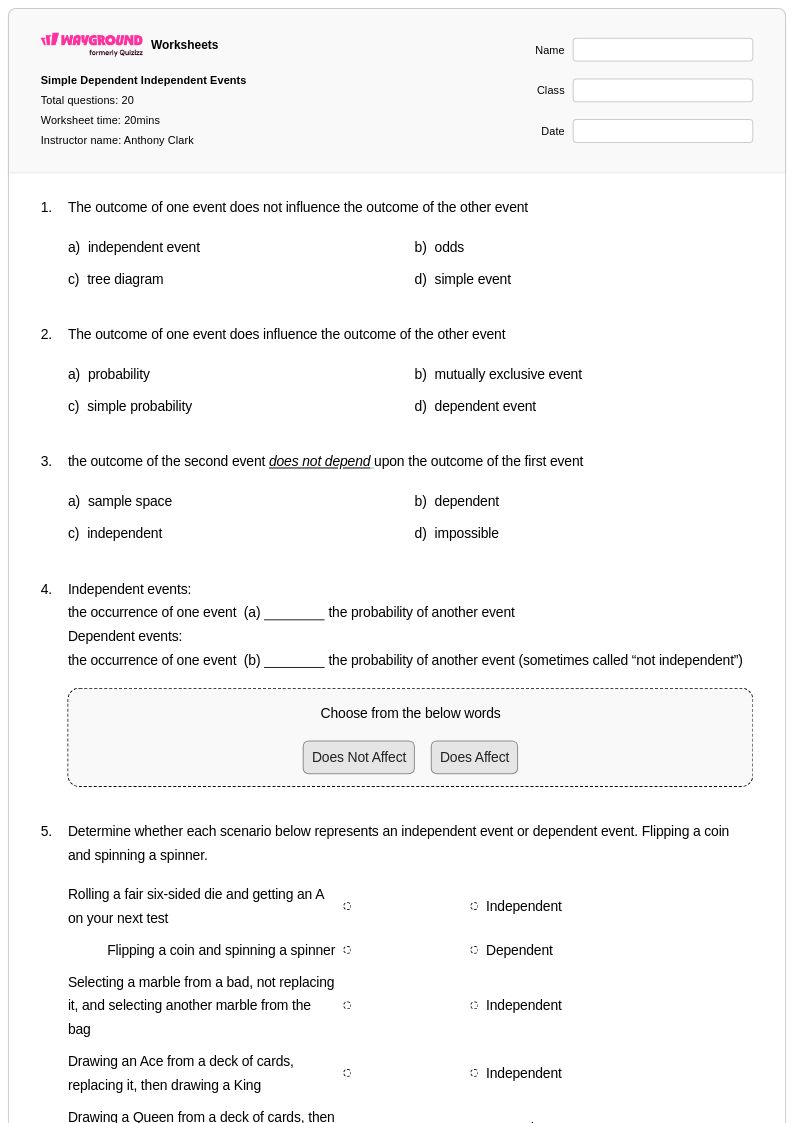
20 Q
7th - Uni
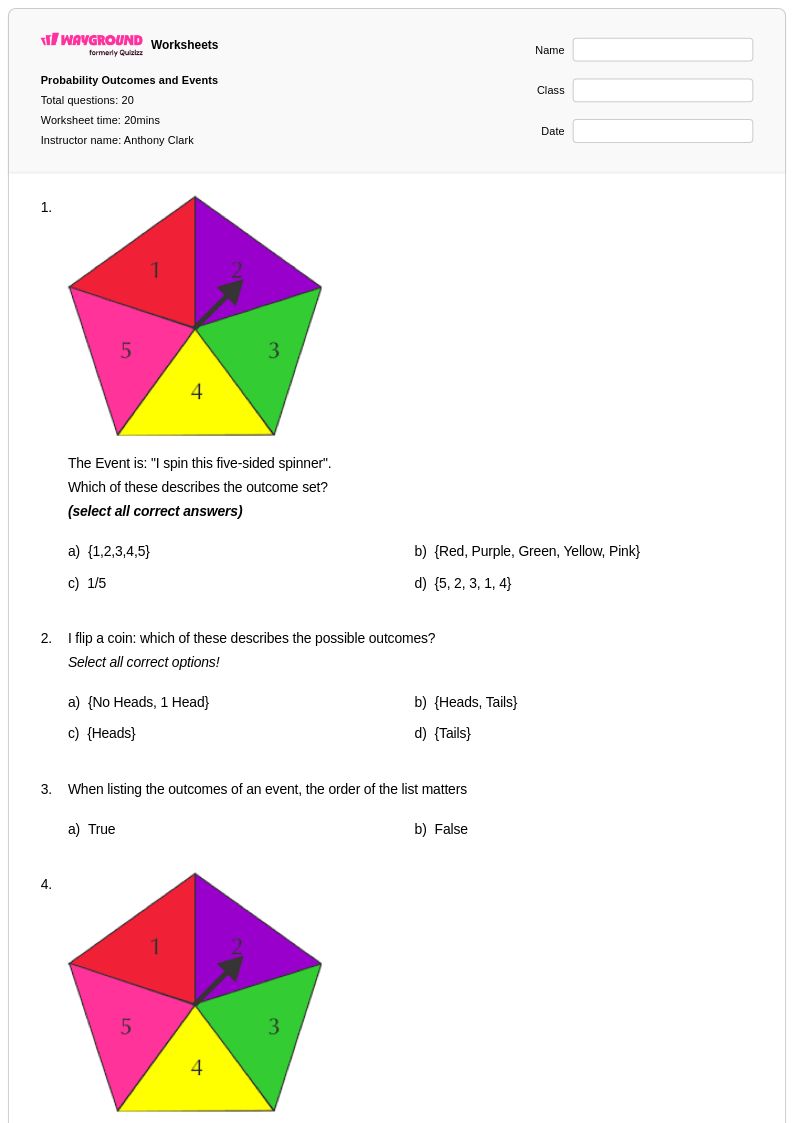
20 Q
7th - Uni
19 Q
6th - Uni
20 Q
7th - Uni
20 Q
7th - Uni
20 Q
7th - Uni
20 Q
7th - Uni
20 Q
7th - Uni
20 Q
7th - Uni
8 Q
7th
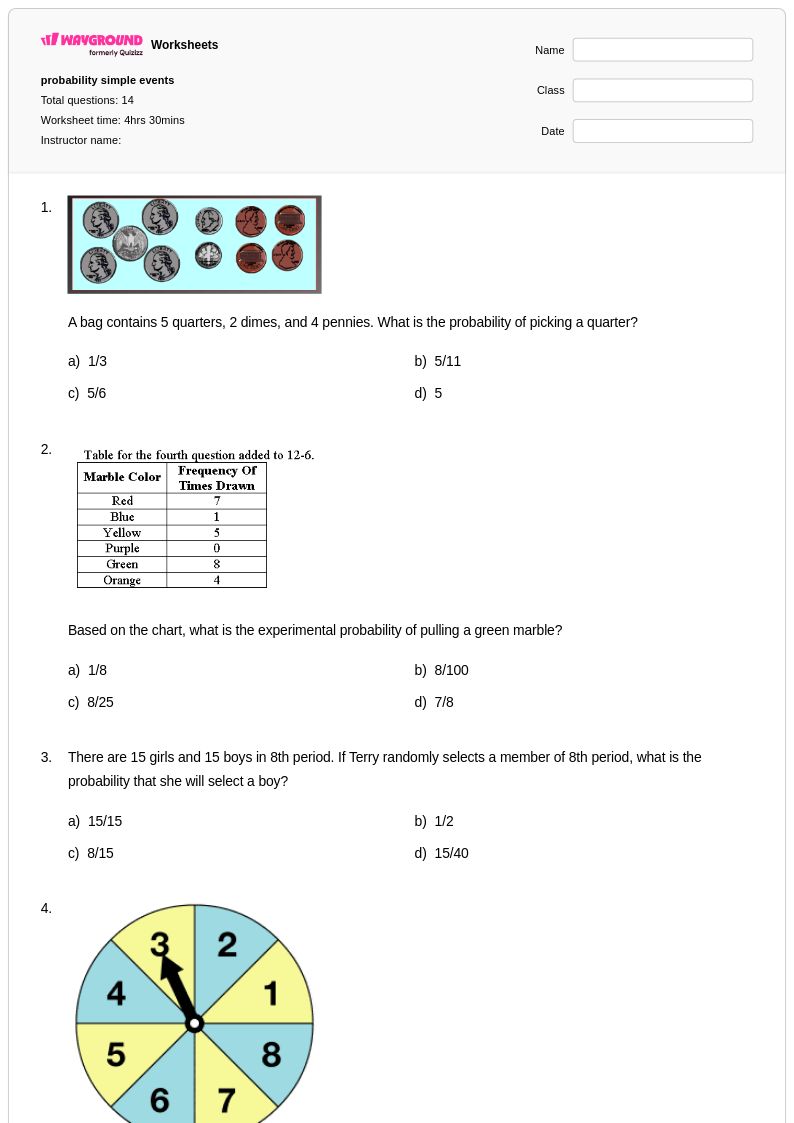
14 Q
7th
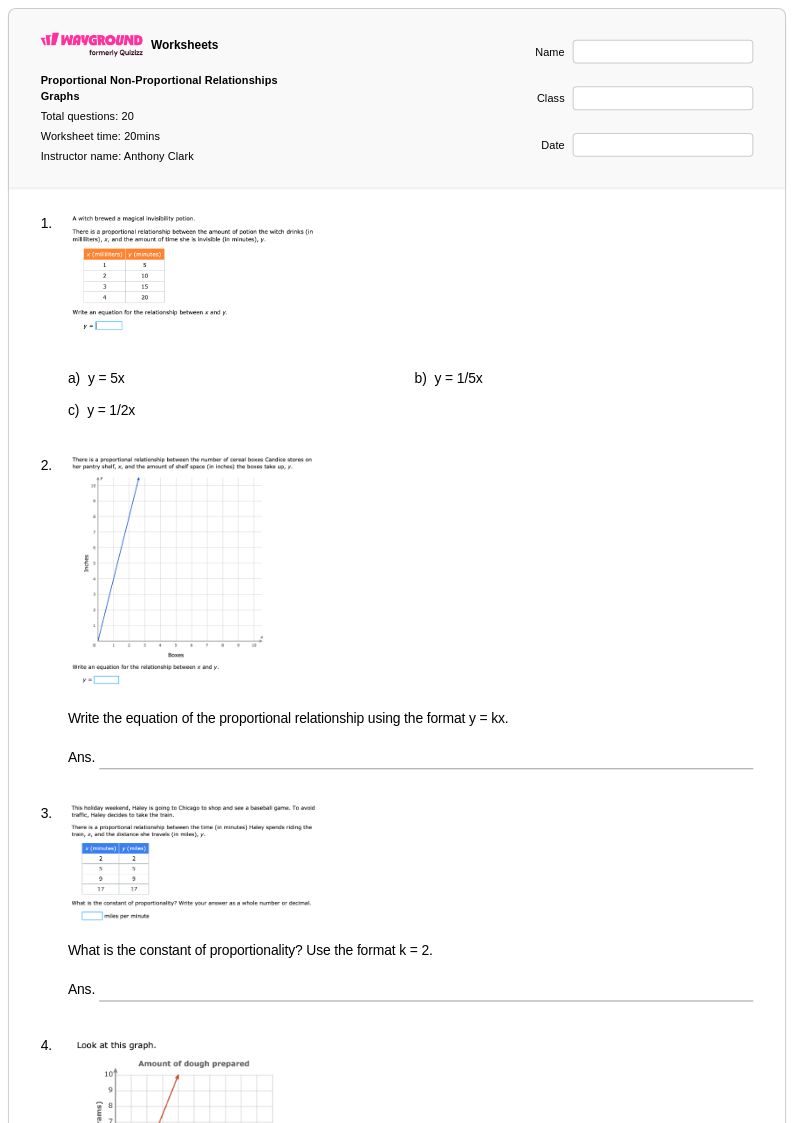
20 Q
7th - Uni
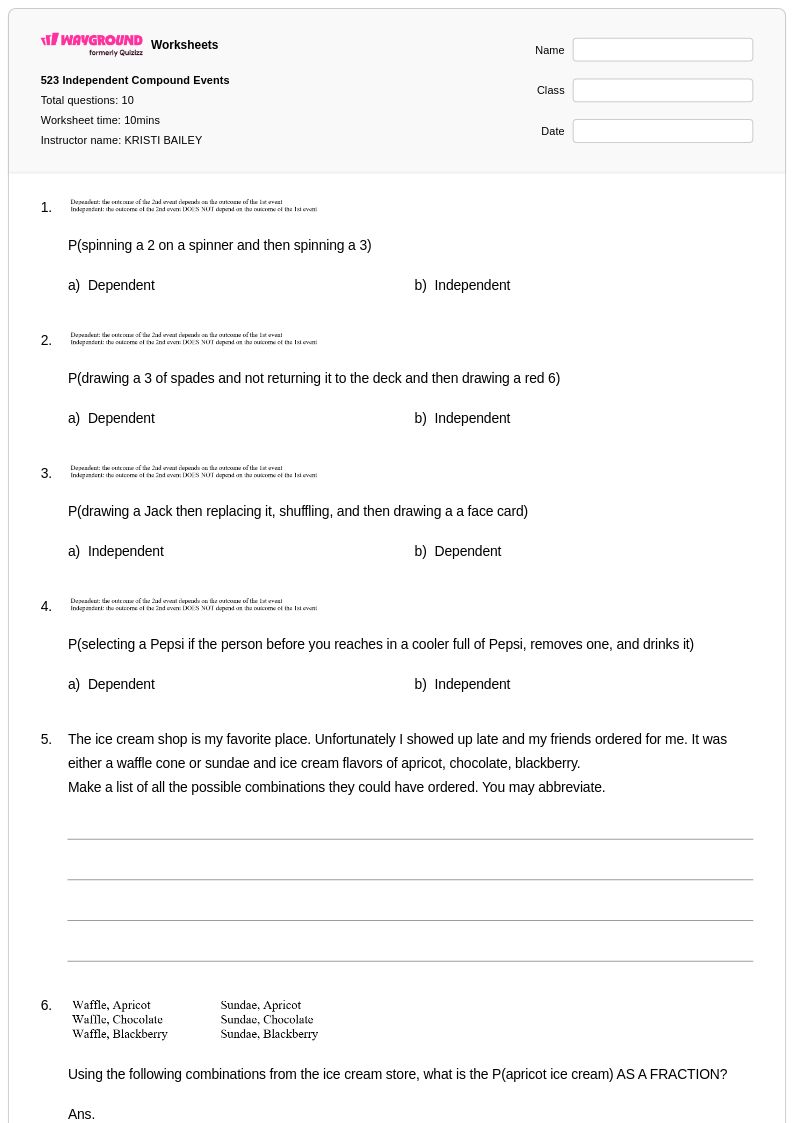
10 Q
7th
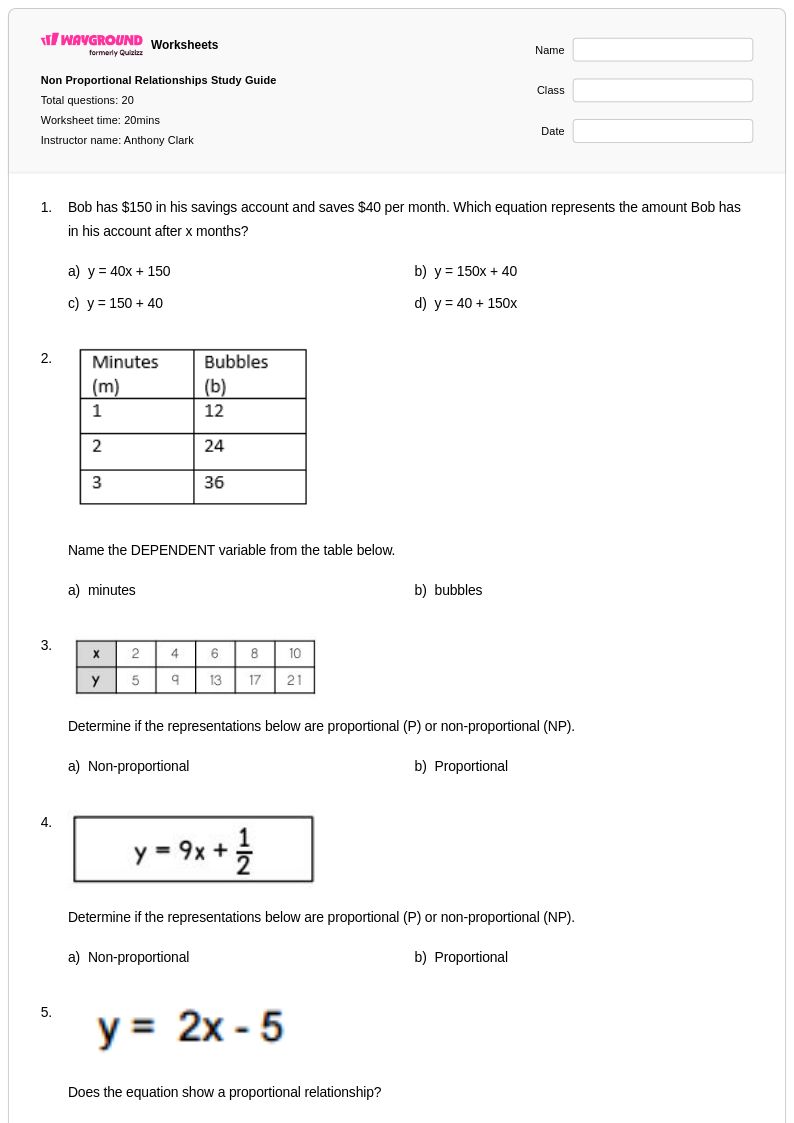
20 Q
7th - Uni
Explore Non-disjoint Events Worksheets by Grades
Explore Other Subject Worksheets for grade 7
Explore printable Non-disjoint Events worksheets for Grade 7
Non-disjoint events worksheets for Grade 7 students available through Wayground (formerly Quizizz) provide comprehensive practice in understanding probability scenarios where events can occur simultaneously. These carefully designed resources help students master the fundamental concept that non-disjoint events share common outcomes, strengthening their ability to calculate probabilities using the addition rule for overlapping events. Each worksheet includes a complete answer key and offers structured practice problems that guide students through real-world scenarios such as drawing cards from a deck, selecting students with multiple characteristics, or analyzing survey data where categories overlap. These free printables systematically build conceptual understanding by presenting problems that require students to identify shared outcomes, apply the formula P(A or B) = P(A) + P(B) - P(A and B), and interpret results within meaningful contexts.
Wayground (formerly Quizizz) empowers teachers with millions of educator-created resources specifically focused on non-disjoint events and probability concepts, featuring robust search and filtering capabilities that allow quick identification of materials aligned to specific learning objectives and mathematical standards. The platform's differentiation tools enable teachers to customize worksheets for varying skill levels, while flexible formatting options provide both printable pdf versions for traditional classroom use and digital formats for interactive learning experiences. These comprehensive collections support effective lesson planning by offering resources for initial instruction, targeted remediation for students struggling with probability concepts, and enrichment activities for advanced learners ready to explore more complex scenarios involving multiple overlapping events. Teachers can seamlessly integrate these materials into their probability and statistics curriculum to provide consistent skill practice that builds student confidence in analyzing and solving problems involving non-disjoint events.
FAQs
What grade is the addition rule for probability taught?
How do I teach the addition rule for non-disjoint events?
What is the most common mistake when calculating the probability of non-disjoint events?
What kinds of problems help students practice the addition rule?
How do I use this worksheet to practice the addition rule?
How does this topic fit into the 7th-grade curriculum?