Free Printable Crossing Over Worksheets for Grade 12
Master Grade 12 crossing over concepts with Wayground's comprehensive collection of free worksheets, printable PDFs, and practice problems that help students understand genetic recombination processes with detailed answer keys.
Explore printable Crossing Over worksheets for Grade 12
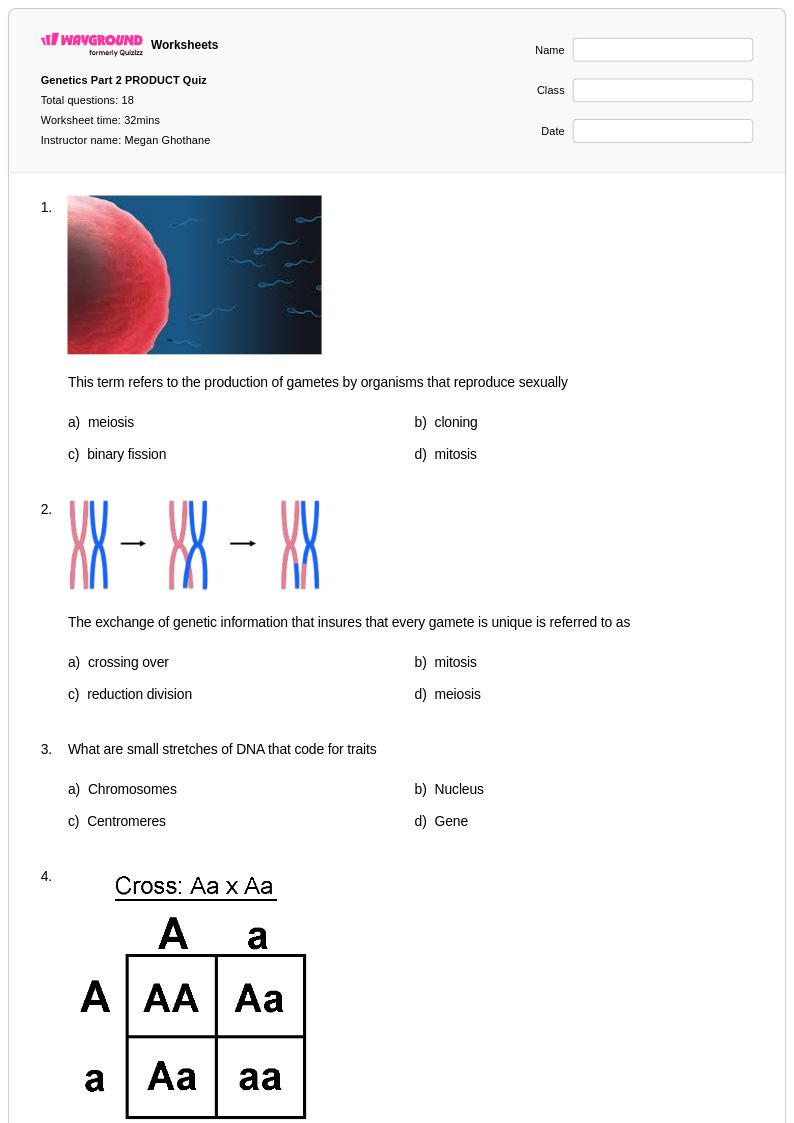
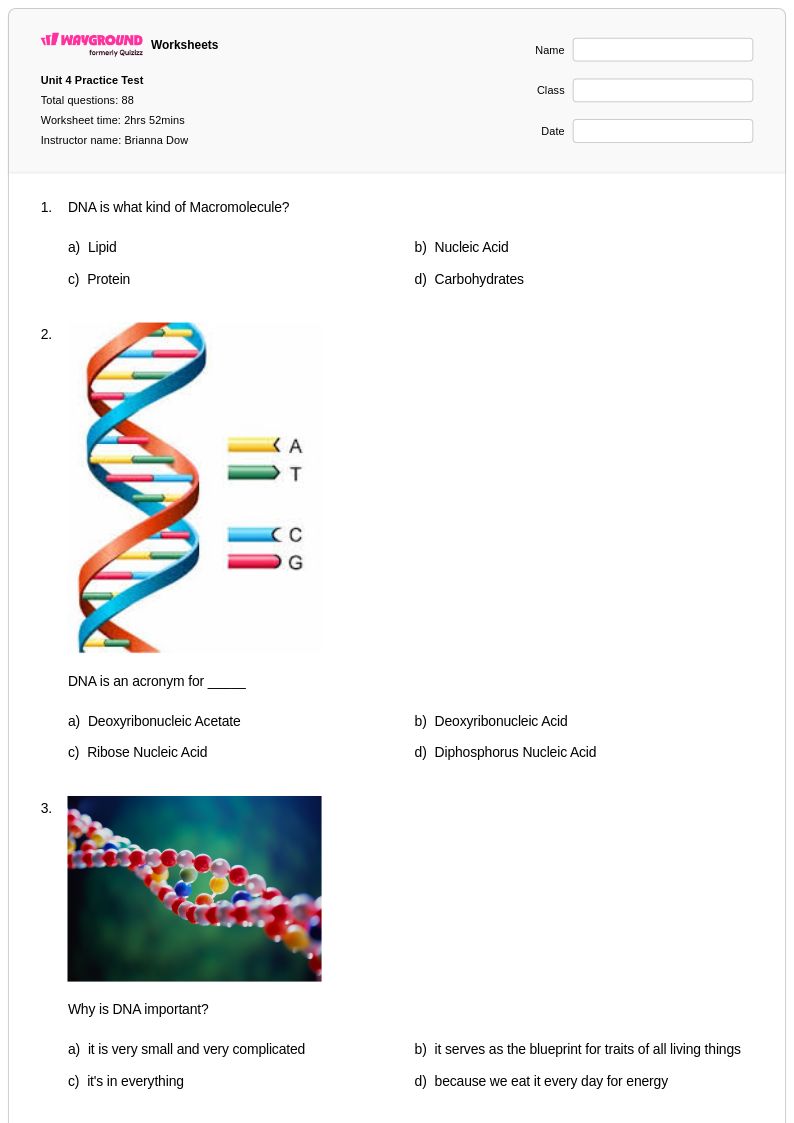
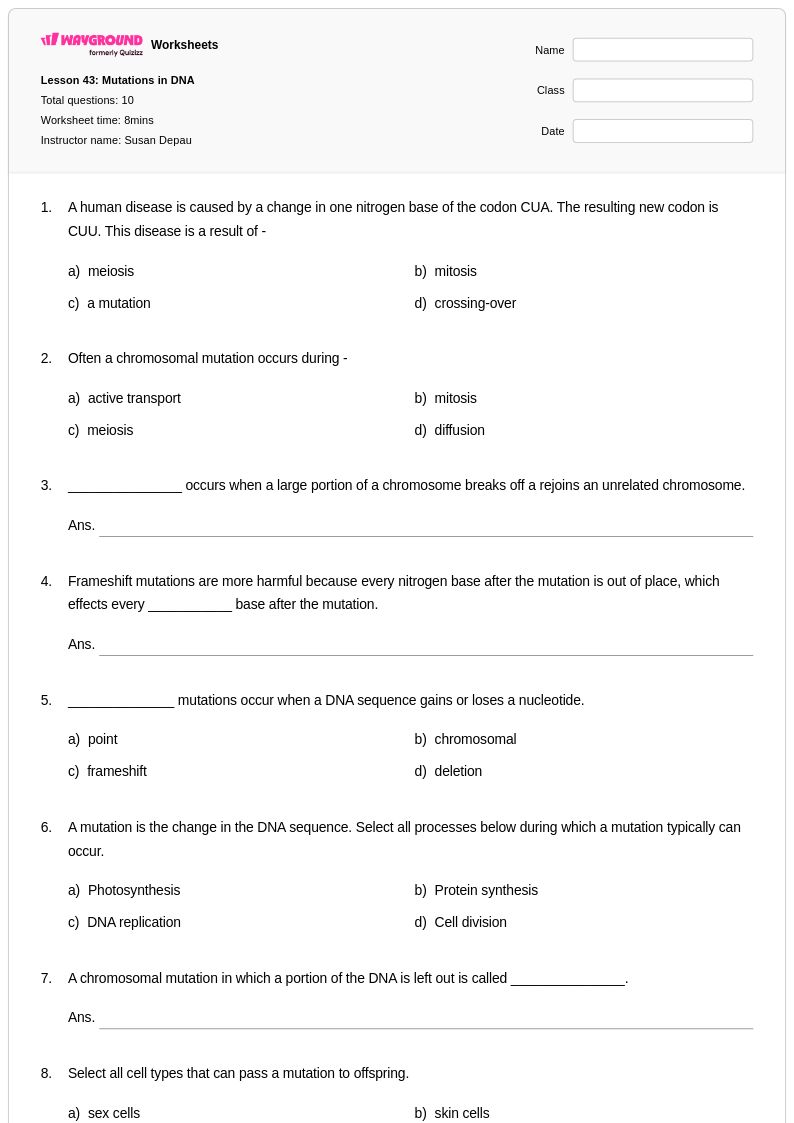
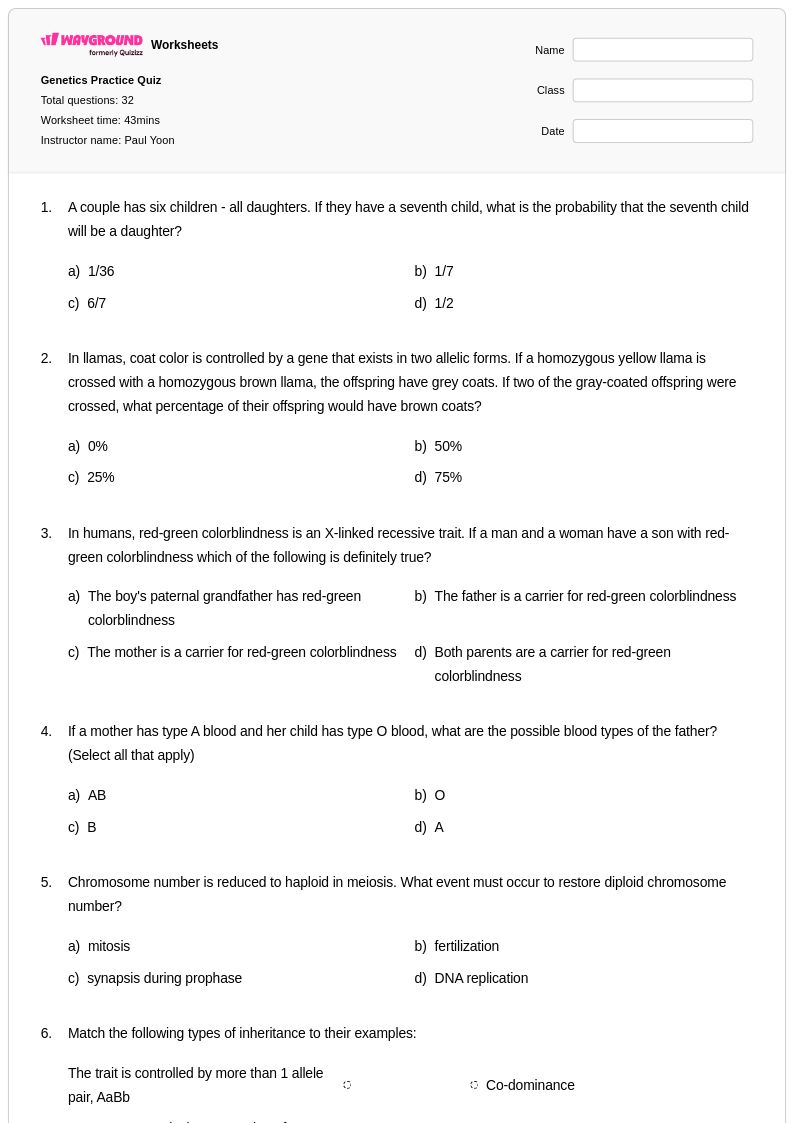
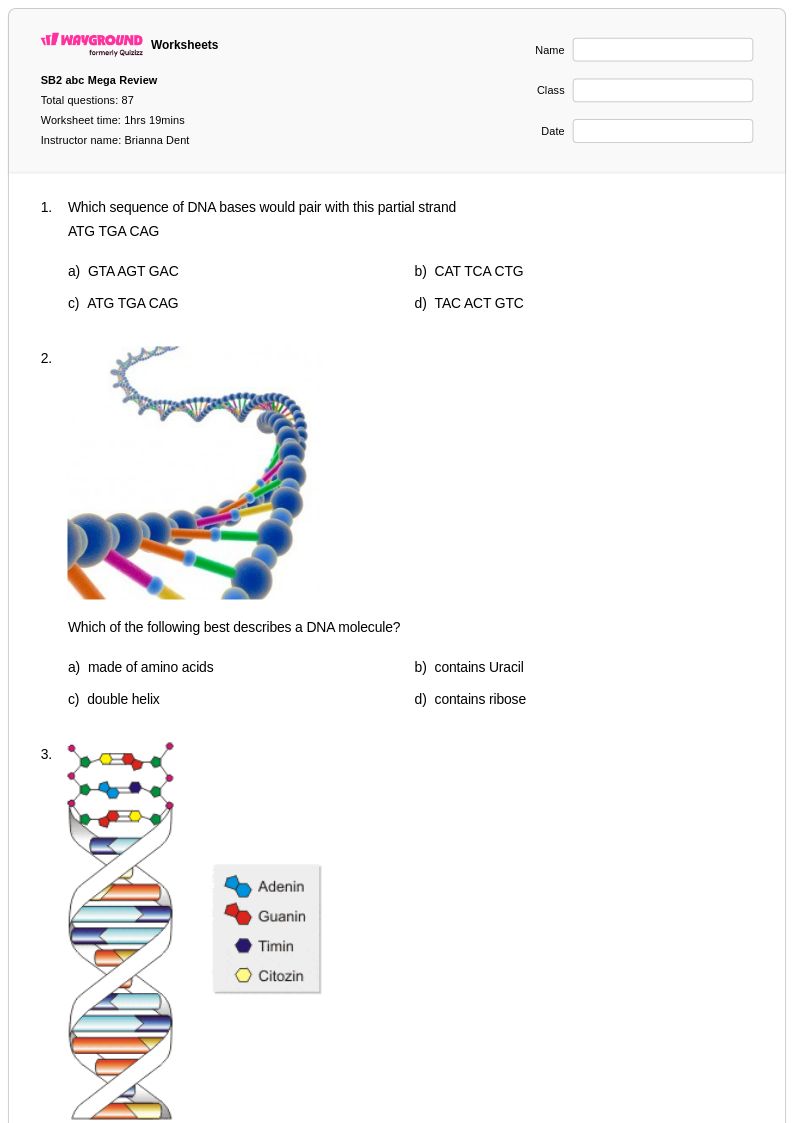
Crossing over worksheets for Grade 12 students through Wayground (formerly Quizizz) provide comprehensive practice with this fundamental genetic recombination process that occurs during meiosis. These expertly designed resources help students master the intricate mechanisms of chromosomal crossover, including the formation of chiasmata, the exchange of genetic material between homologous chromosomes, and the resulting genetic variation in gametes. Students develop critical analytical skills through practice problems that require them to calculate recombination frequencies, construct genetic maps, and predict offspring genotypes based on crossing over patterns. Each worksheet collection includes detailed answer keys and is available as free printables in convenient PDF format, enabling students to work through complex scenarios involving linked genes, map units, and the relationship between crossing over frequency and physical distance between genetic loci.
Wayground's extensive library contains millions of teacher-created crossing over worksheets that support educators in delivering rigorous Grade 12 genetics instruction. The platform's advanced search and filtering capabilities allow teachers to quickly locate resources aligned with specific curriculum standards and learning objectives, while differentiation tools enable customization for diverse student needs and ability levels. These comprehensive worksheet collections are available in both printable PDF and interactive digital formats, providing flexibility for classroom instruction, homework assignments, and assessment preparation. Teachers utilize these resources for targeted skill practice, remediation of challenging concepts like recombination mapping, and enrichment activities that explore advanced applications of crossing over in population genetics and evolutionary biology, ensuring students develop a thorough understanding of genetic recombination mechanisms essential for success in advanced biology coursework.
FAQs
How do I teach crossing over to high school biology students?
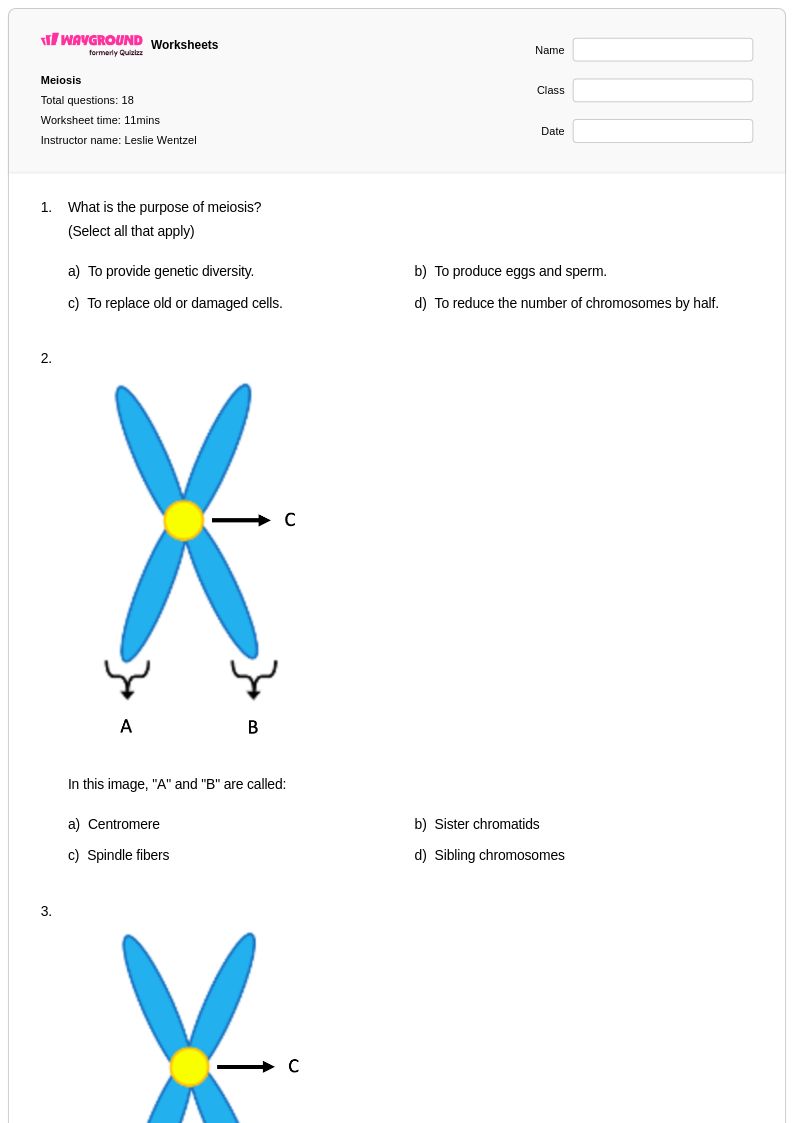
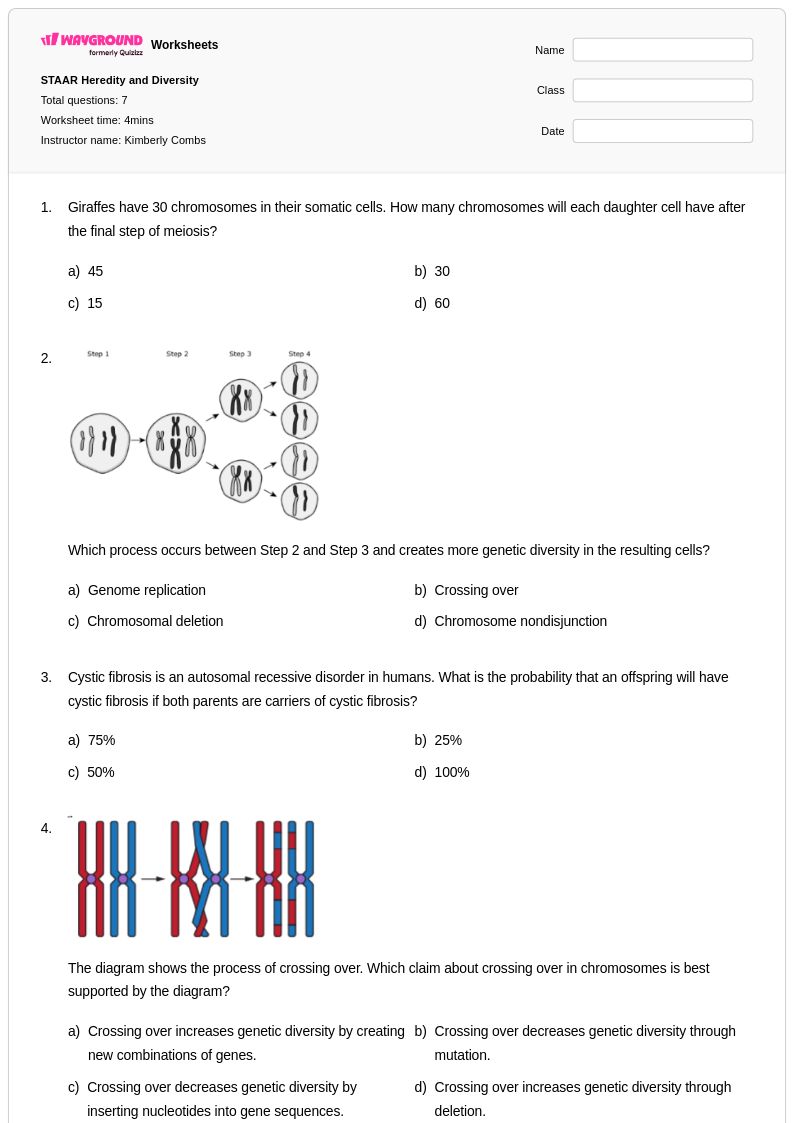
Teach crossing over by first grounding students in meiosis, specifically prophase I, where homologous chromosomes pair up as bivalents and chiasmata form at crossover points. Use chromosome diagrams to show how non-sister chromatids physically exchange segments, then connect this to downstream outcomes like new allele combinations and increased genetic diversity in gametes. Linking crossing over to real inheritance patterns, such as why linked genes do not always travel together, helps students see why this process matters beyond the diagram level.
What practice problems help students understand genetic recombination and crossing over?
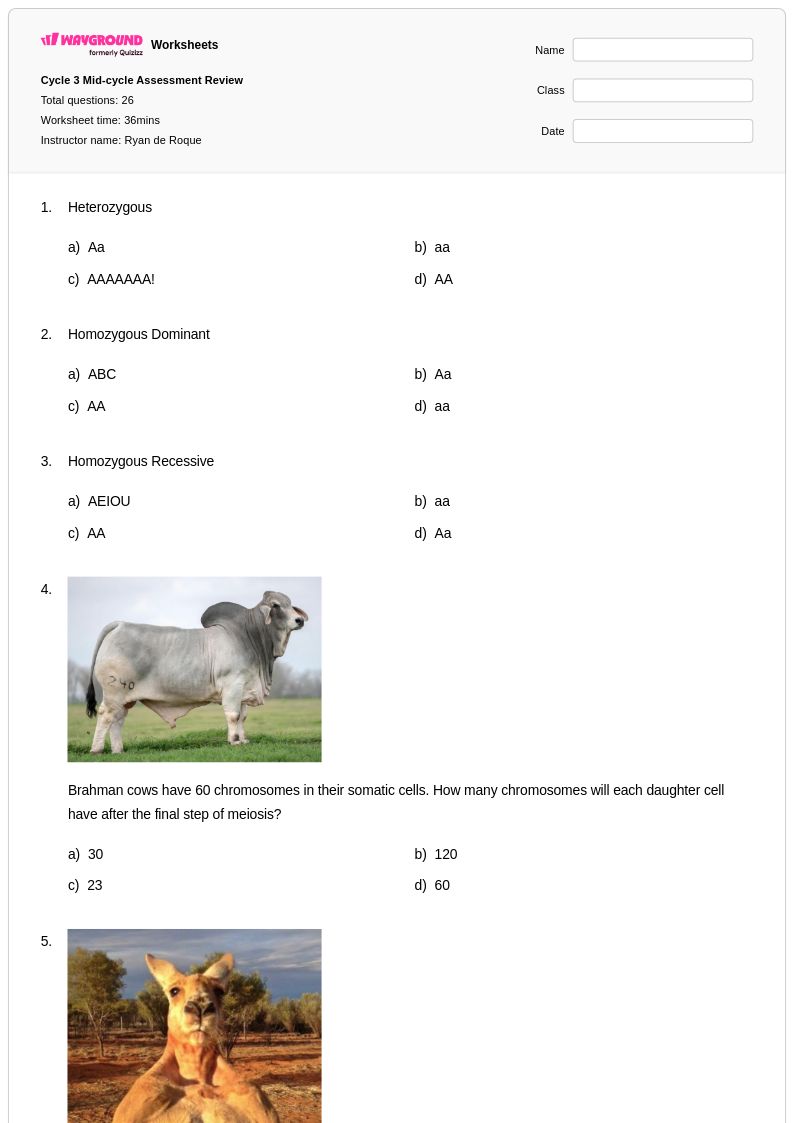
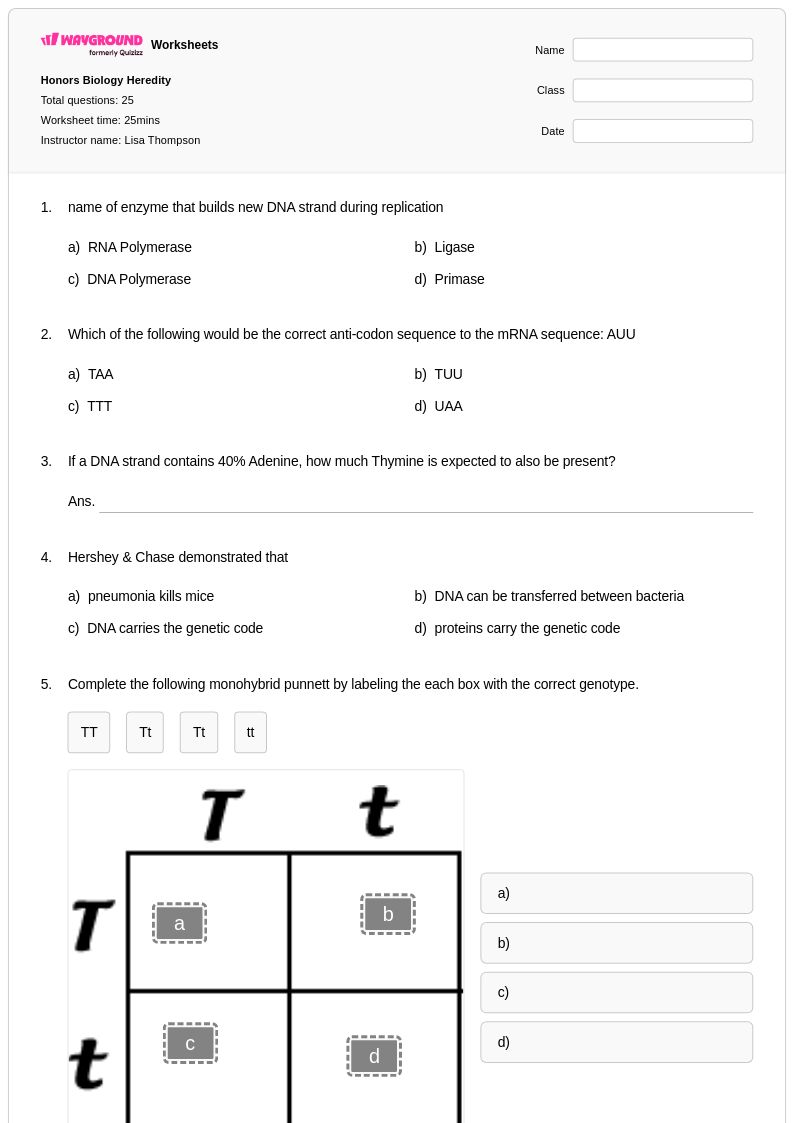
Effective practice problems for crossing over include identifying crossover points on labeled chromosome diagrams, calculating recombination frequencies from given offspring data, and using those frequencies to construct basic genetic maps. Problems that ask students to predict gamete genotypes before and after a crossover event are especially useful for reinforcing how allele combinations change. Working through linkage problems where students must determine whether two genes assort independently or show partial linkage bridges crossing over to broader Mendelian genetics.
What mistakes do students commonly make when learning about crossing over?
A common misconception is that crossing over occurs between sister chromatids of the same chromosome rather than between non-sister chromatids of homologous chromosomes, which produces no new genetic information. Students also frequently confuse recombination frequency with physical distance in an intuitive but imprecise way, not recognizing that frequencies above 50% are impossible to observe even when genes are far apart. Another frequent error is placing crossing over in the wrong phase of meiosis, often mistaking it for an event in meiosis II rather than prophase I.
How do I calculate recombination frequency from a crossing over problem?
Recombination frequency is calculated by dividing the number of recombinant offspring by the total number of offspring, then multiplying by 100 to express it as a percentage. Recombinant offspring are those that show a new combination of alleles not present in either parent, which results directly from a crossover event between the two loci. A recombination frequency of 1% is defined as 1 map unit or 1 centimorgan, so this value is used directly to estimate the relative distance between two genes on a chromosome.
How can I use Wayground's crossing over worksheets in my classroom?
Wayground's crossing over worksheets are available as printable PDFs for traditional classroom distribution and in digital formats for technology-integrated or hybrid learning environments, giving teachers flexibility in how they deploy the material. Teachers can also host worksheets as a quiz directly on Wayground, allowing for real-time student responses and streamlined review. All worksheets include complete answer keys, so they work equally well as guided practice, independent work, or homework assignments without requiring additional prep.
How does crossing over contribute to genetic diversity?
Crossing over generates genetic diversity by producing new combinations of alleles on chromosomes that did not exist in either parent, a process called recombination. Because crossover points form at different locations each time meiosis occurs, the resulting gametes carry unique chromosomal arrangements, meaning virtually no two gametes are genetically identical. This shuffling of alleles is one of the primary mechanisms driving variation within a species and is a key source of the raw material on which natural selection acts.