
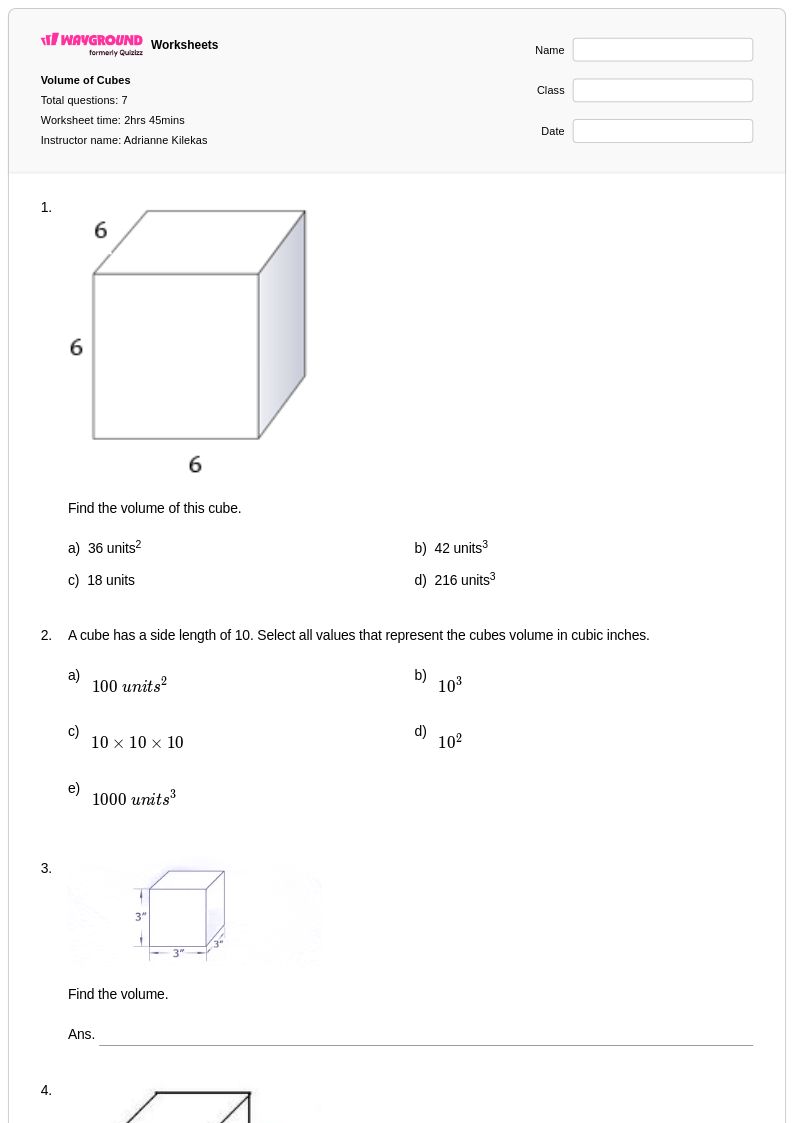
7 Q
6th
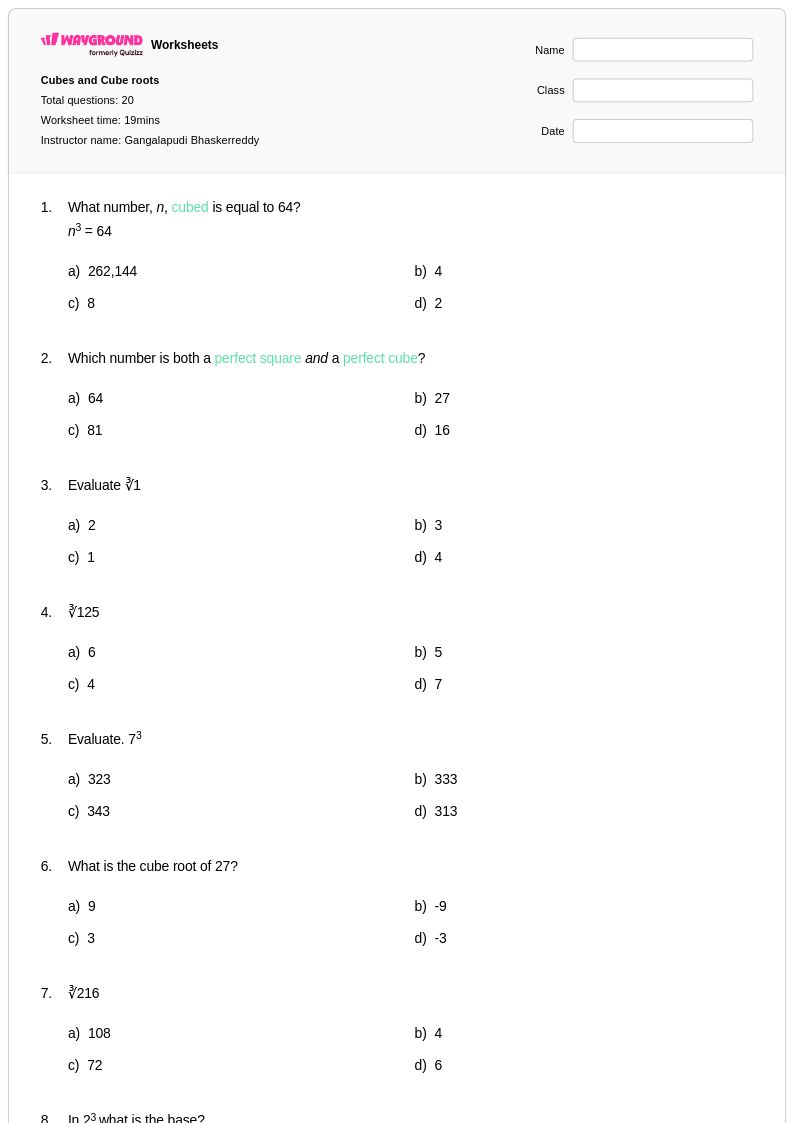
20 Q
8th
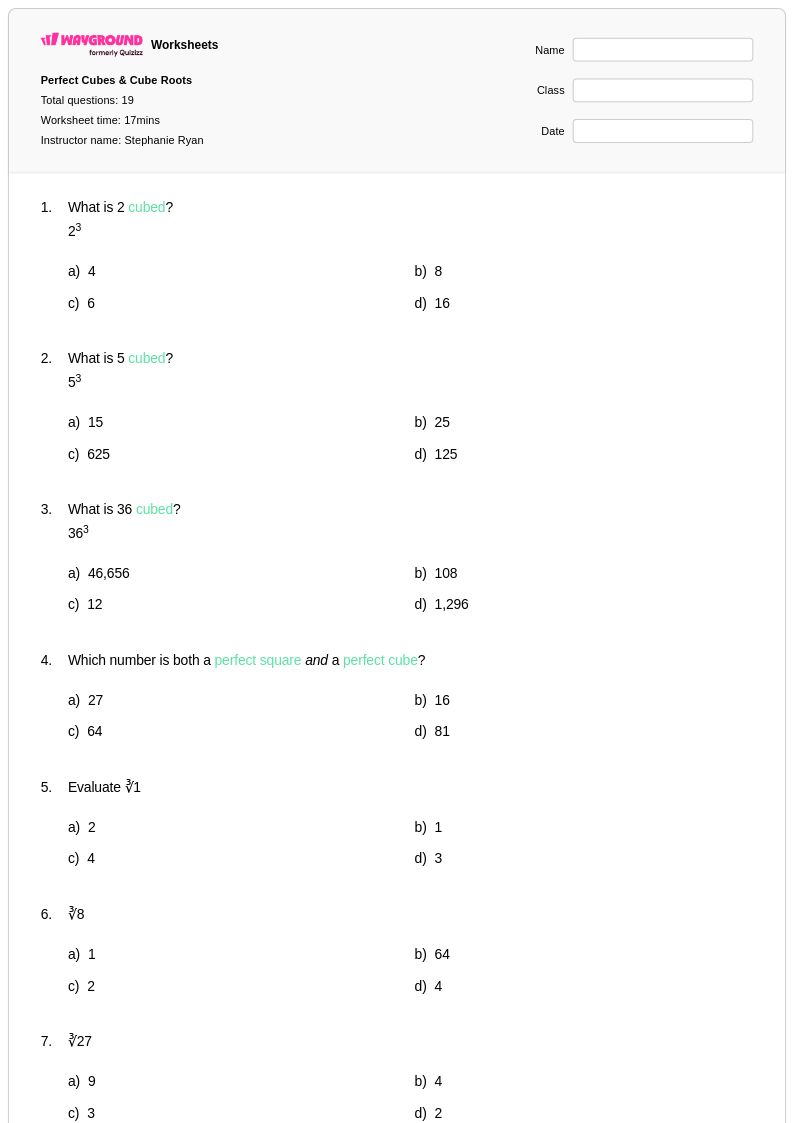
19 Q
8th
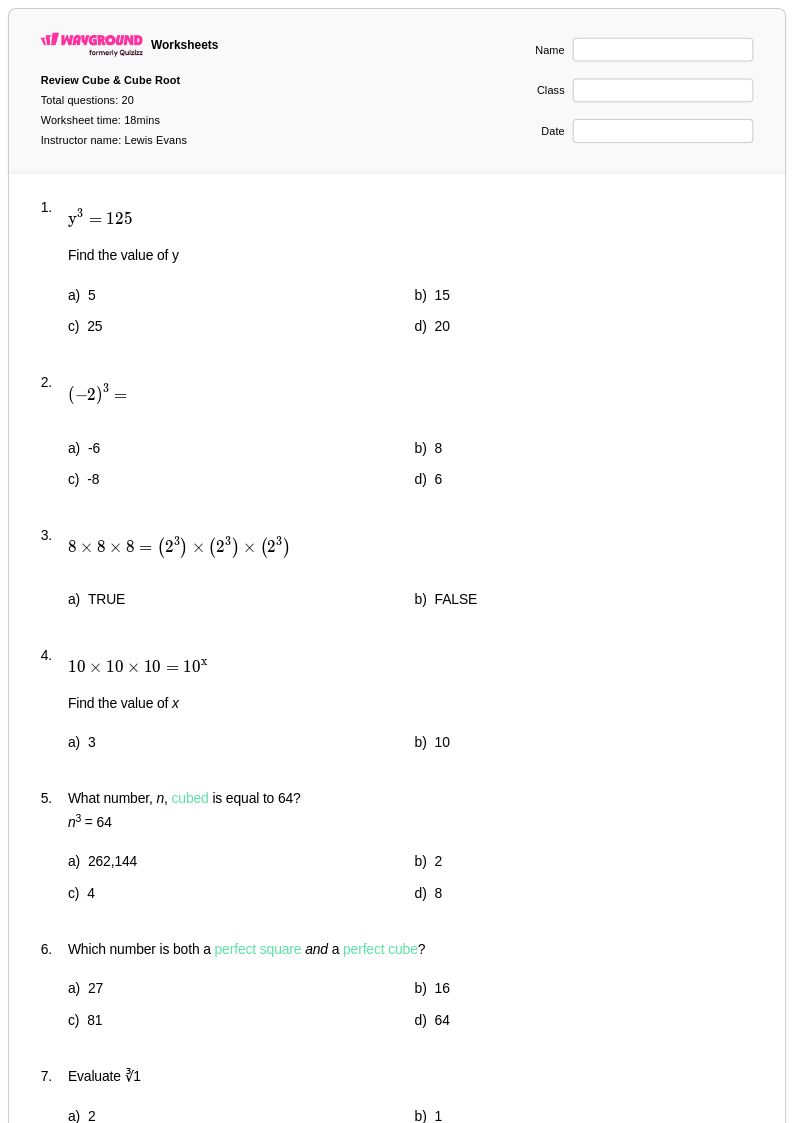
20 Q
8th
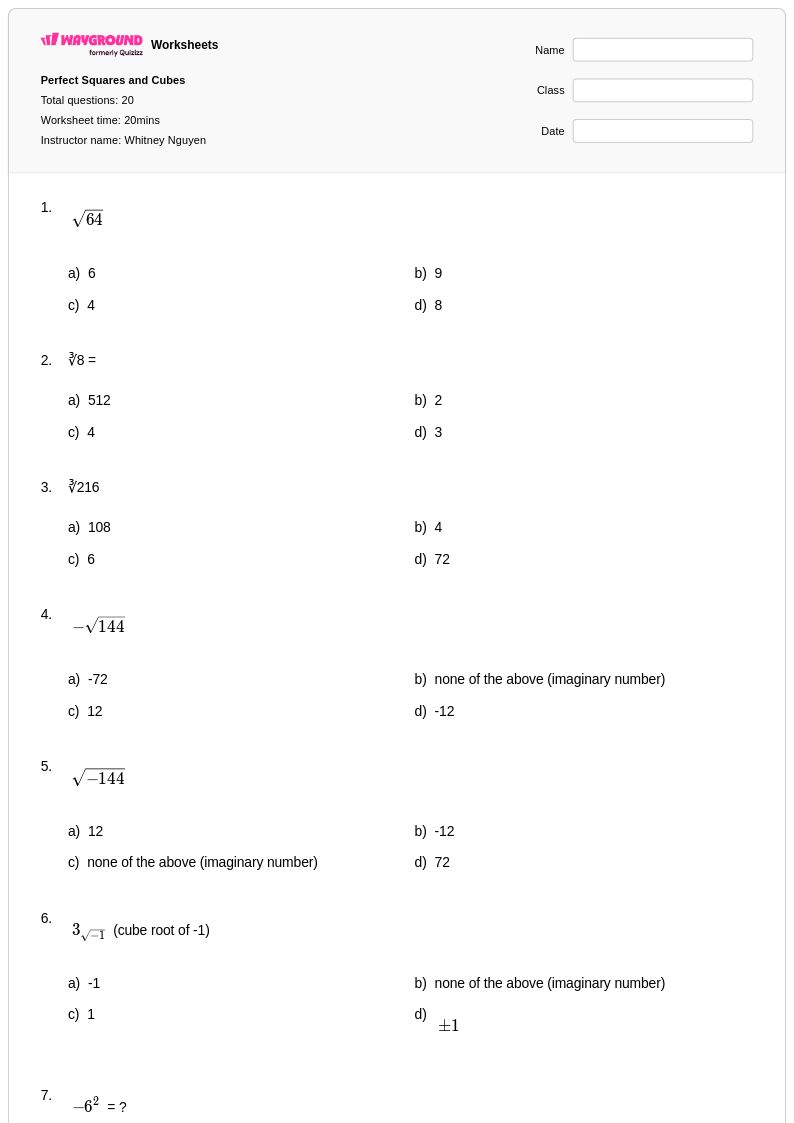
20 Q
8th
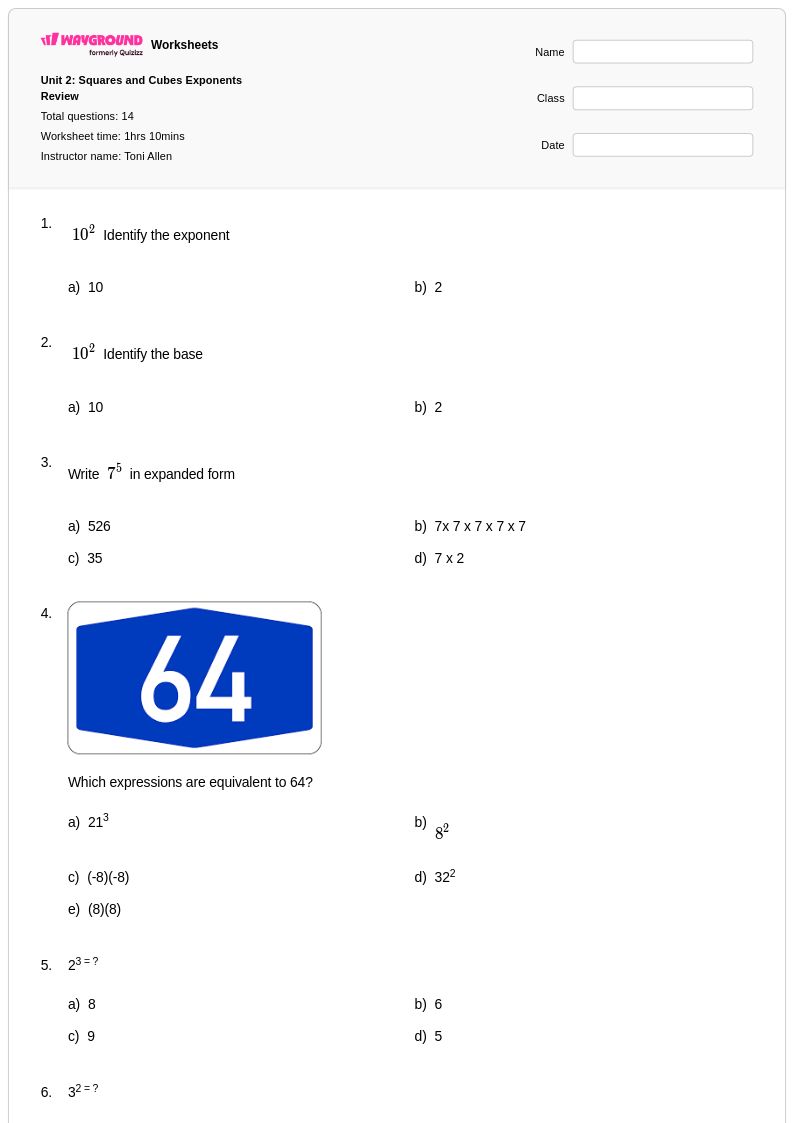
14 Q
7th - 8th
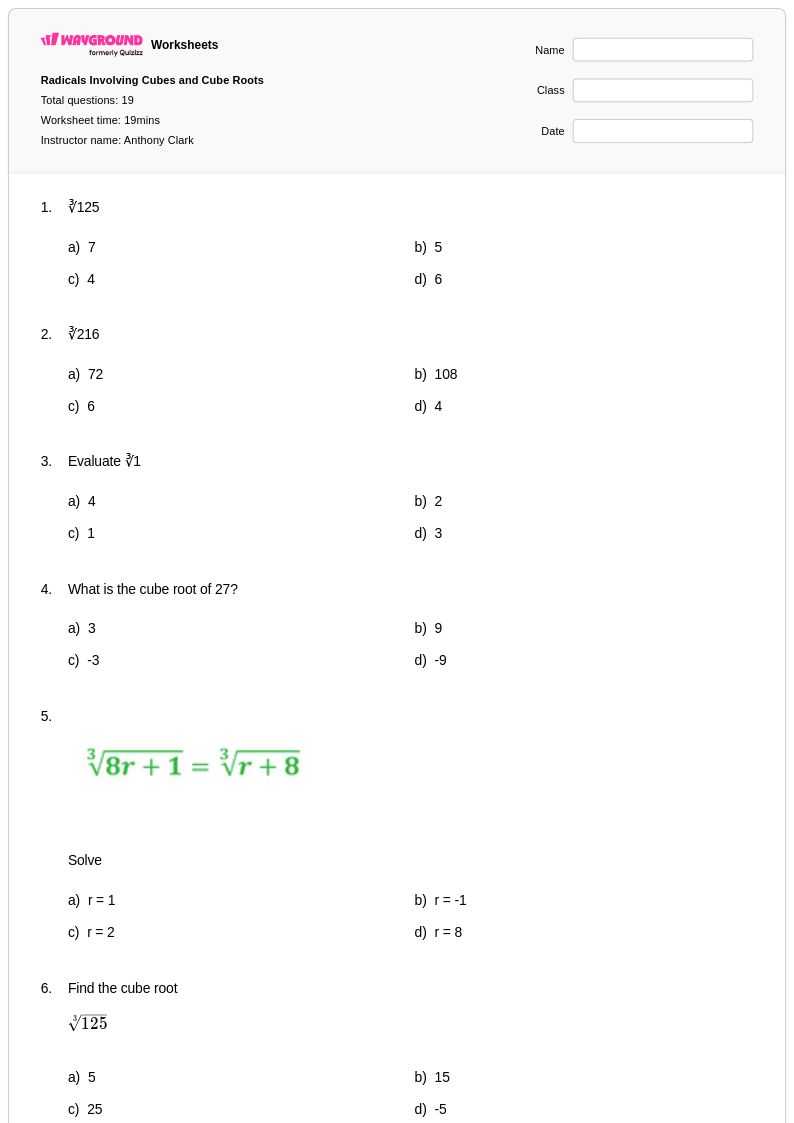
19 Q
8th - Uni
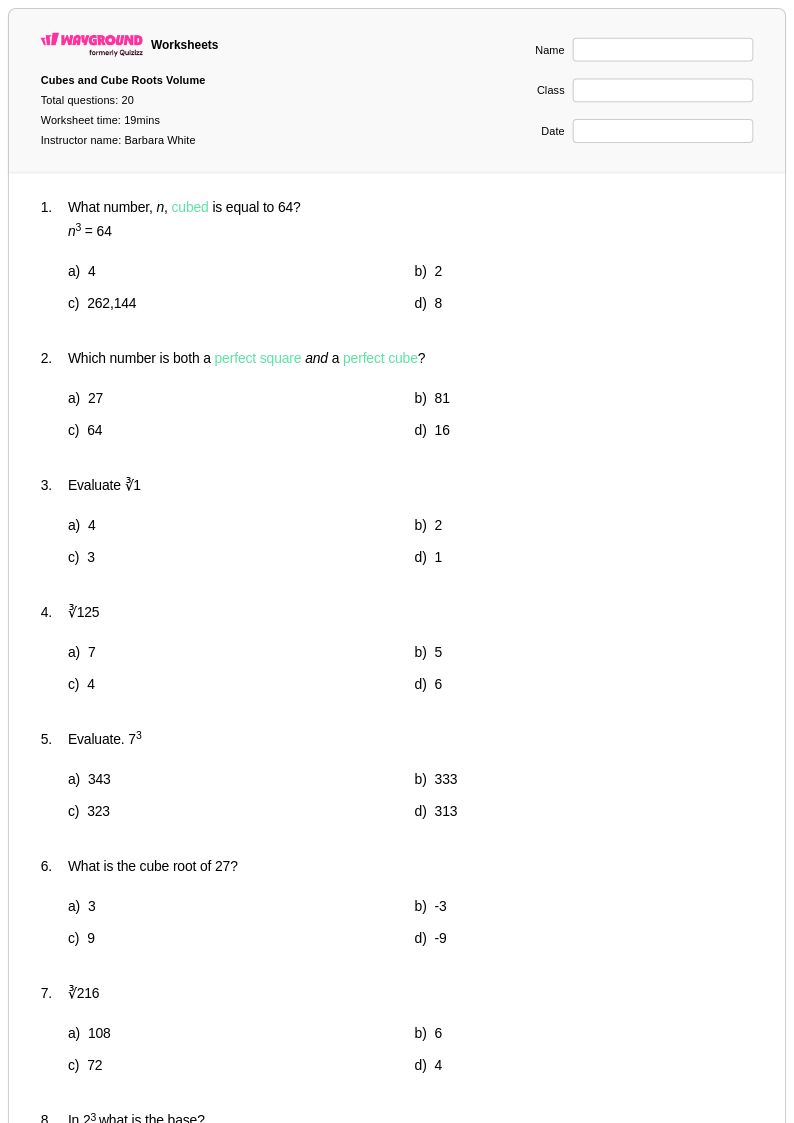
20 Q
8th
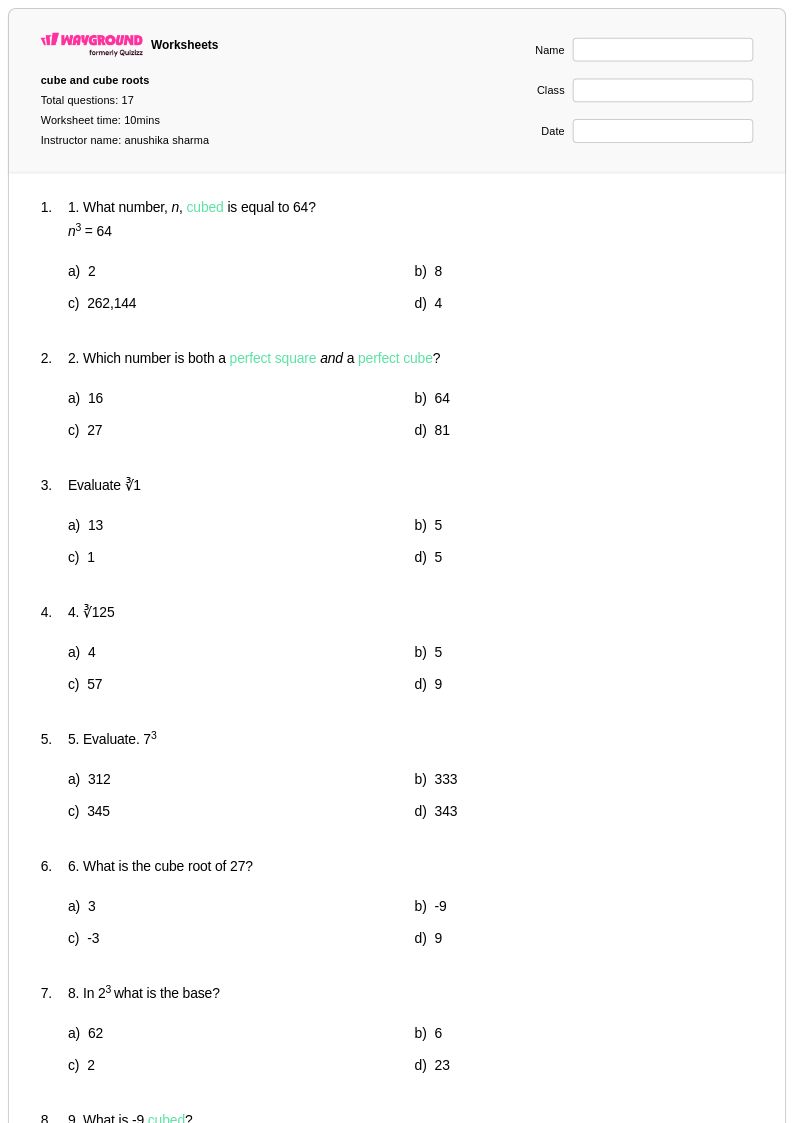
17 Q
8th
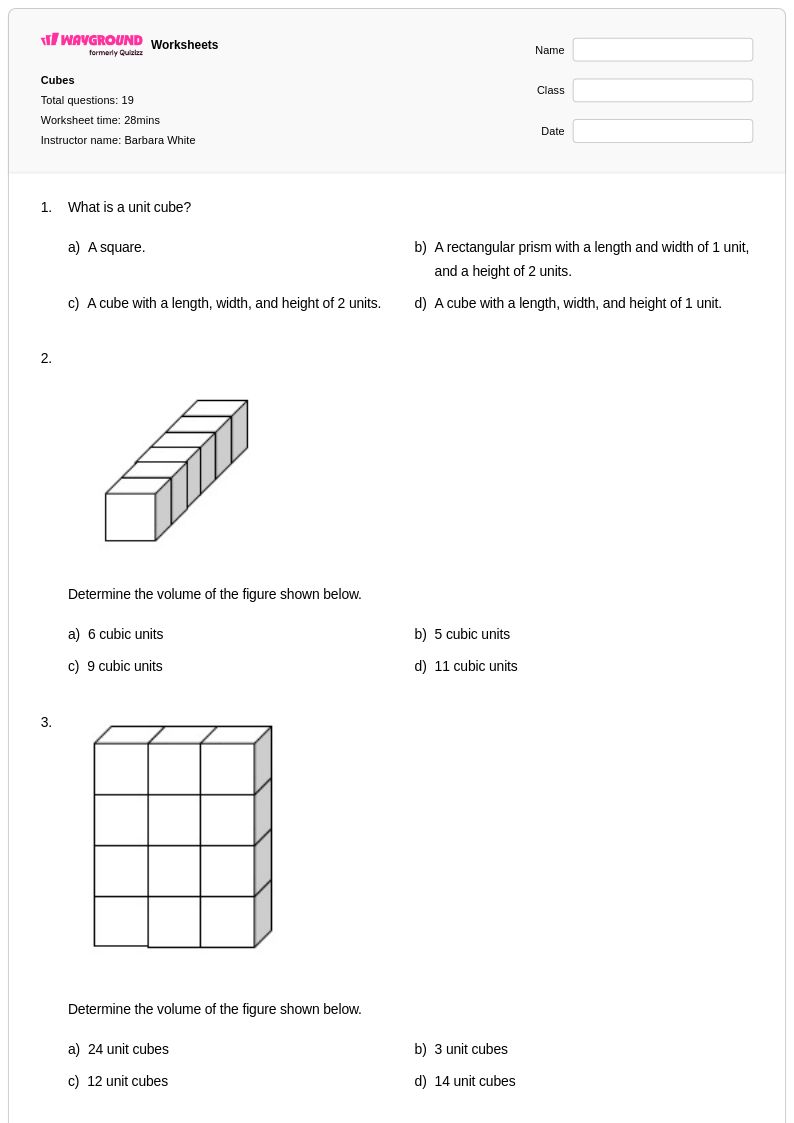
19 Q
4th - 5th
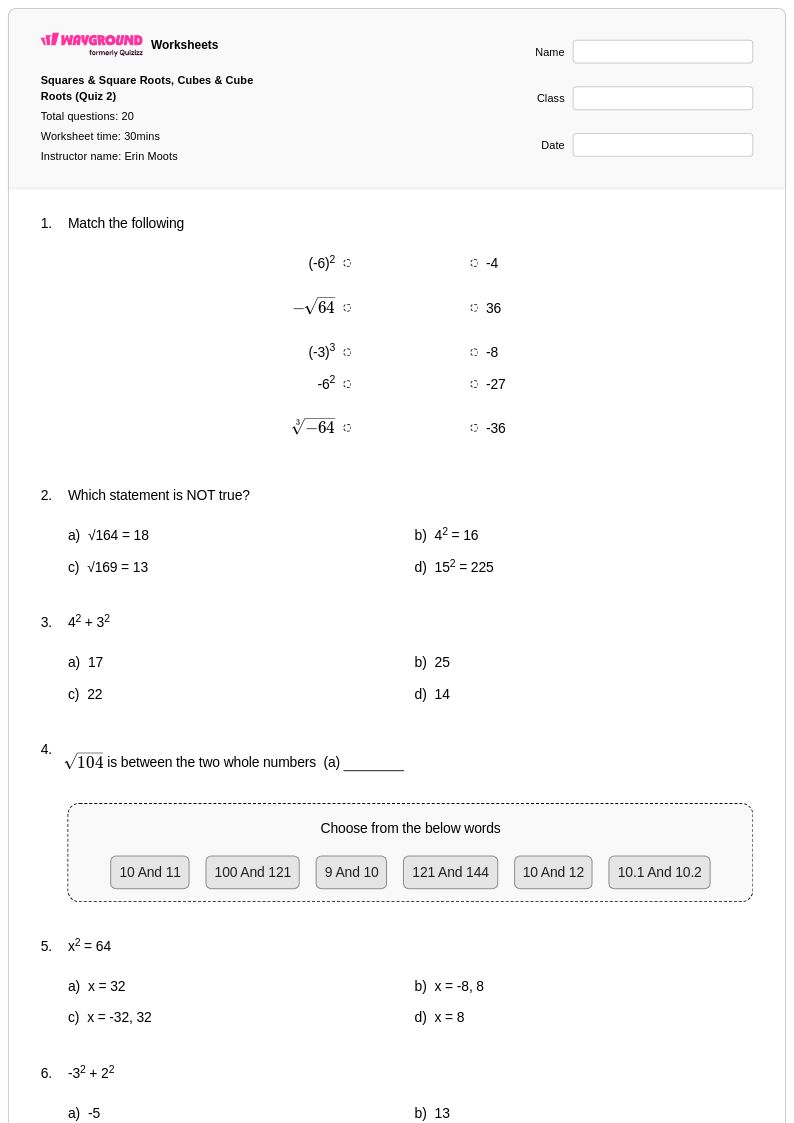
20 Q
8th
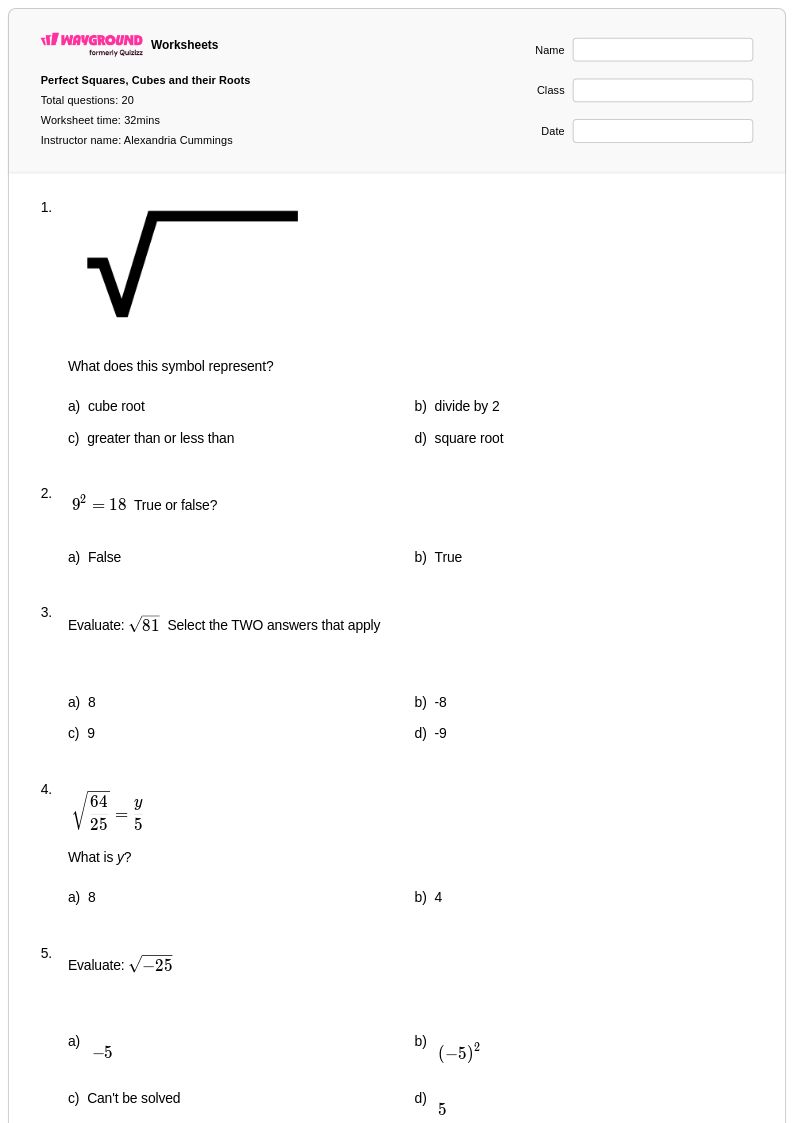
20 Q
8th
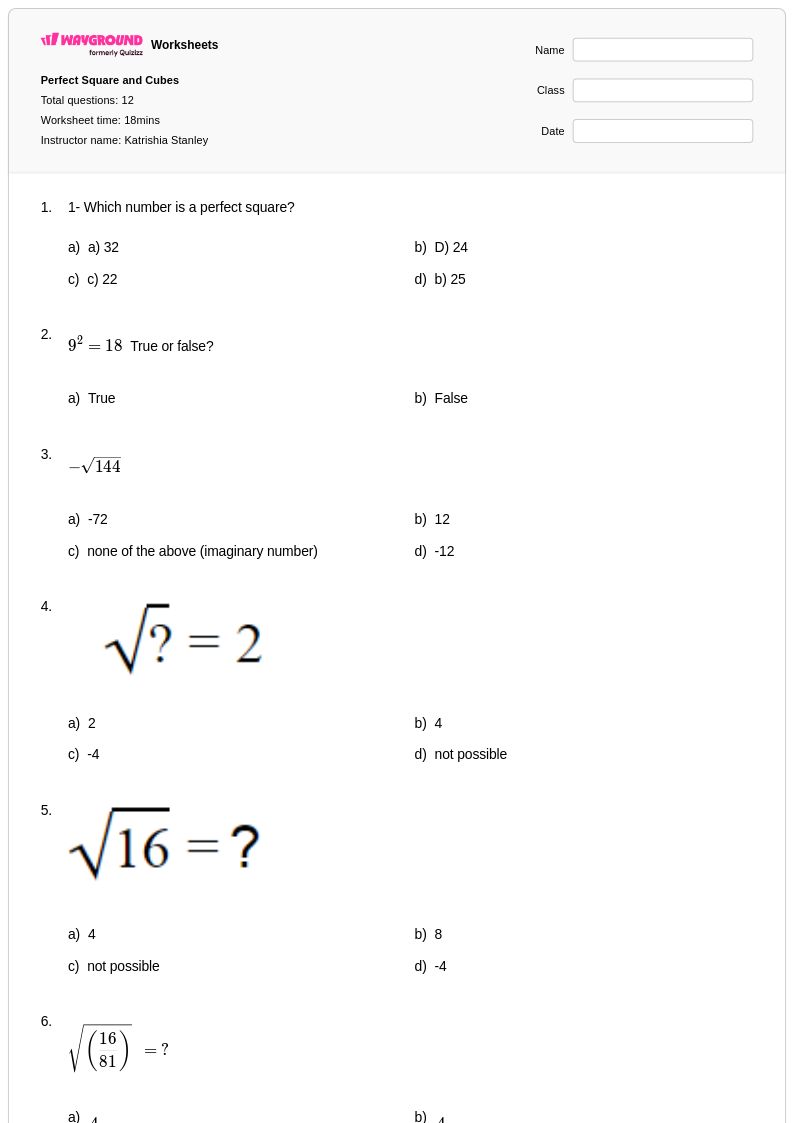
12 Q
11th
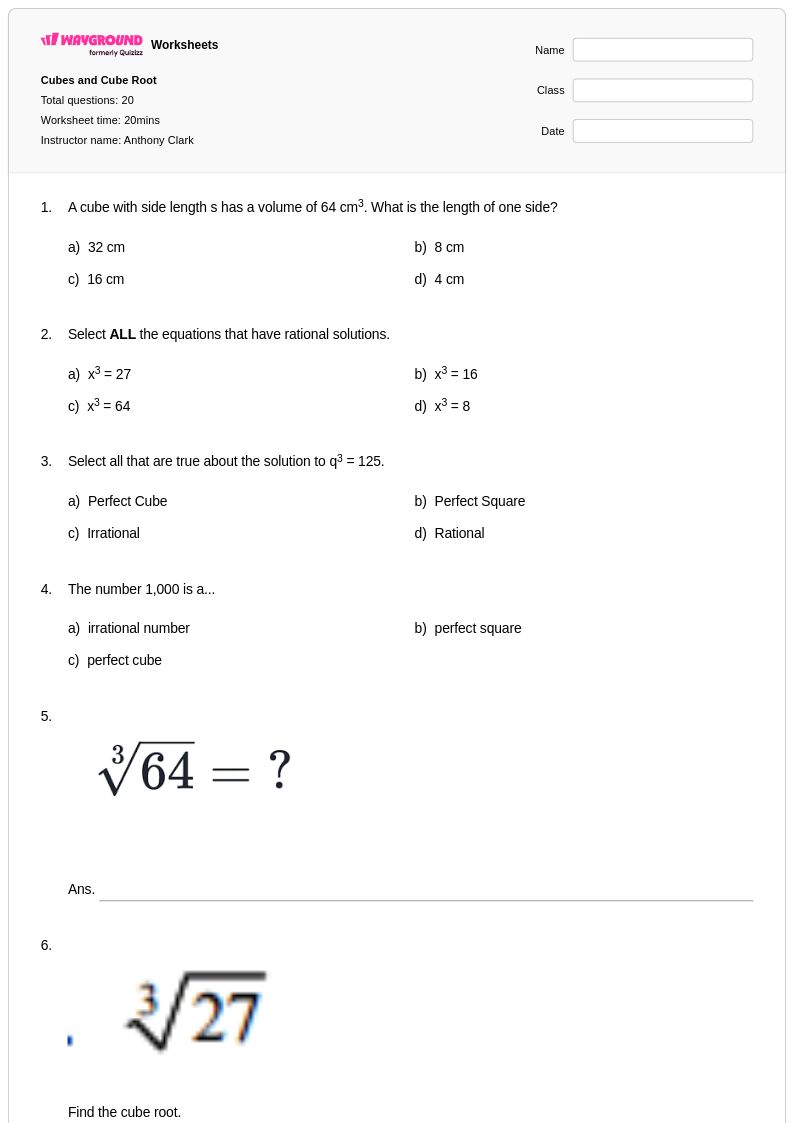
20 Q
8th - Uni
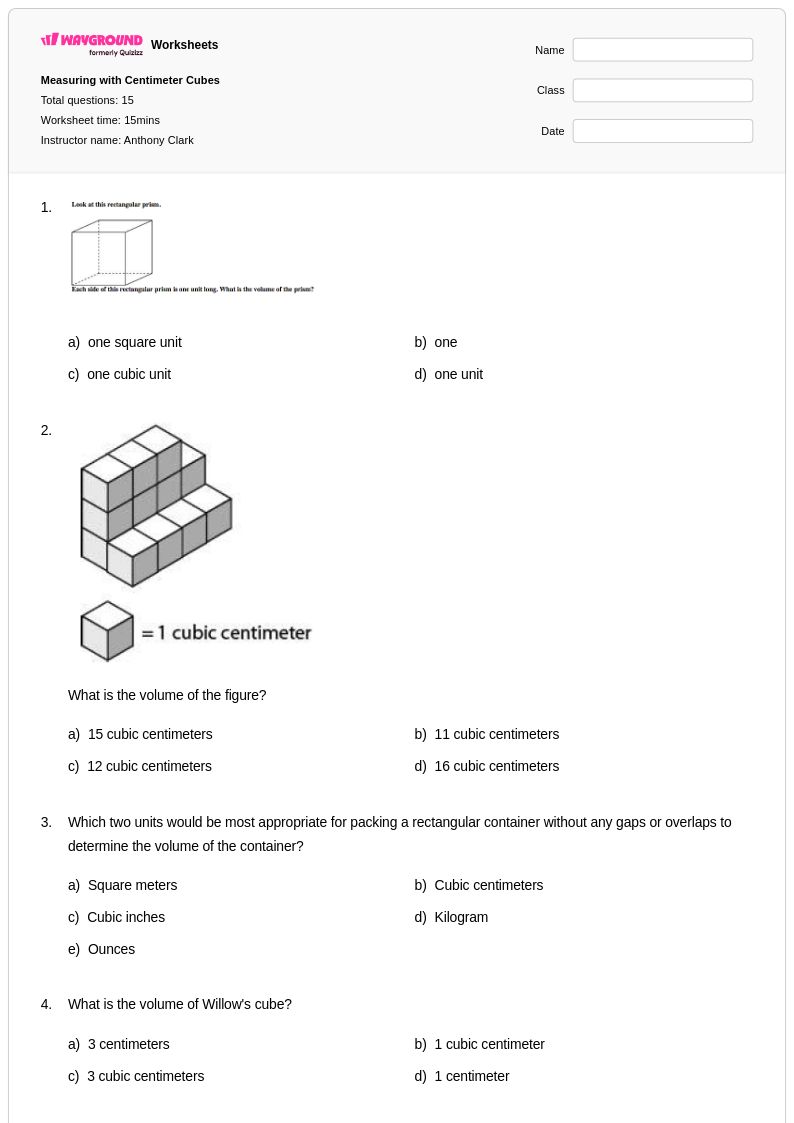
15 Q
5th - Uni
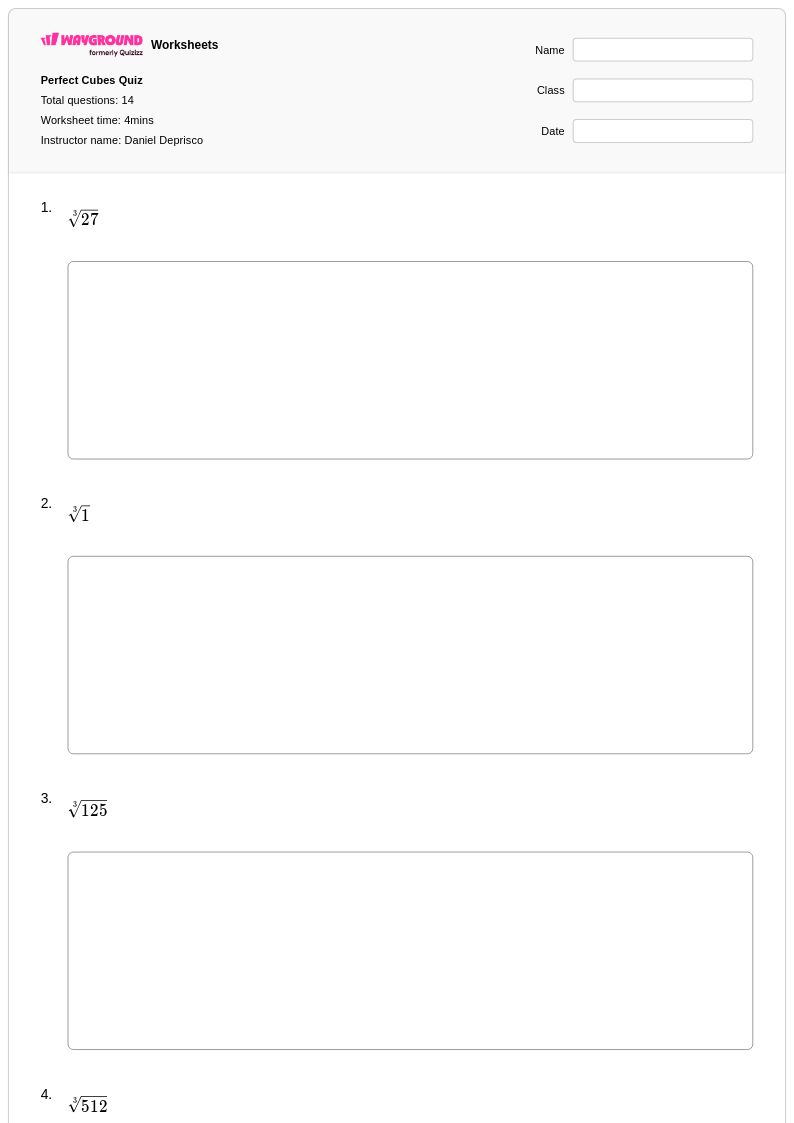
14 Q
9th - 12th
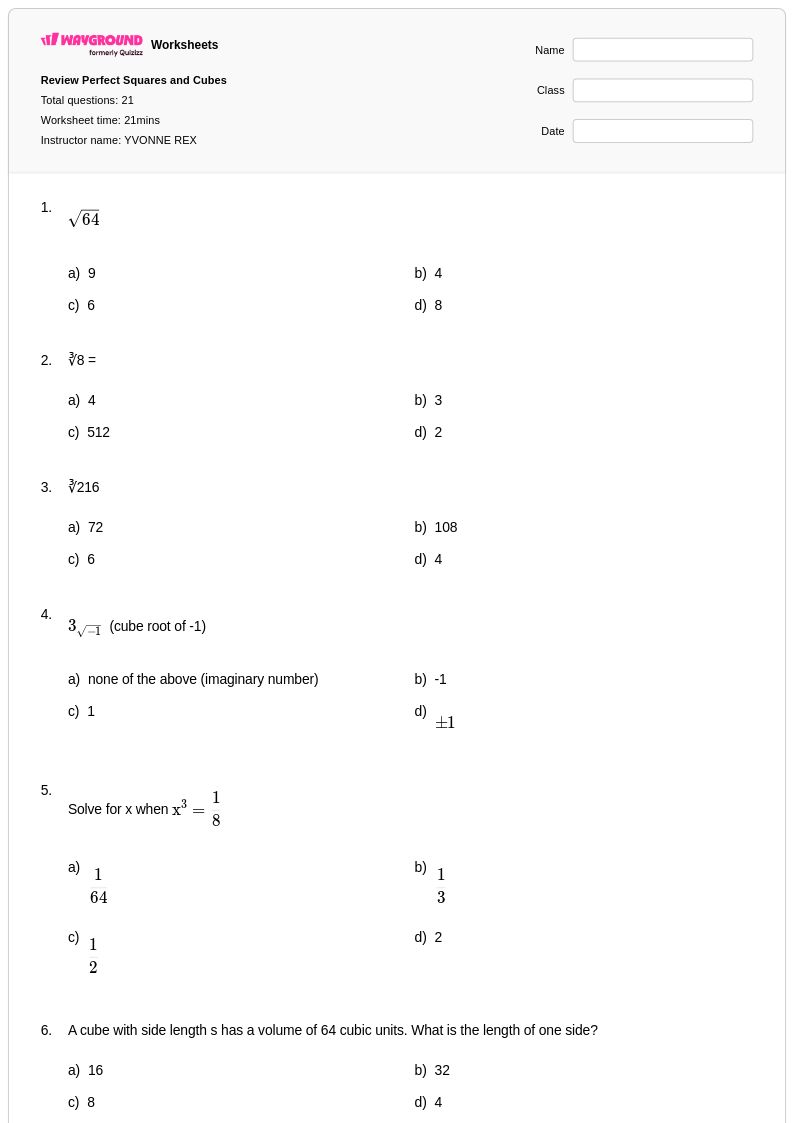
21 Q
8th
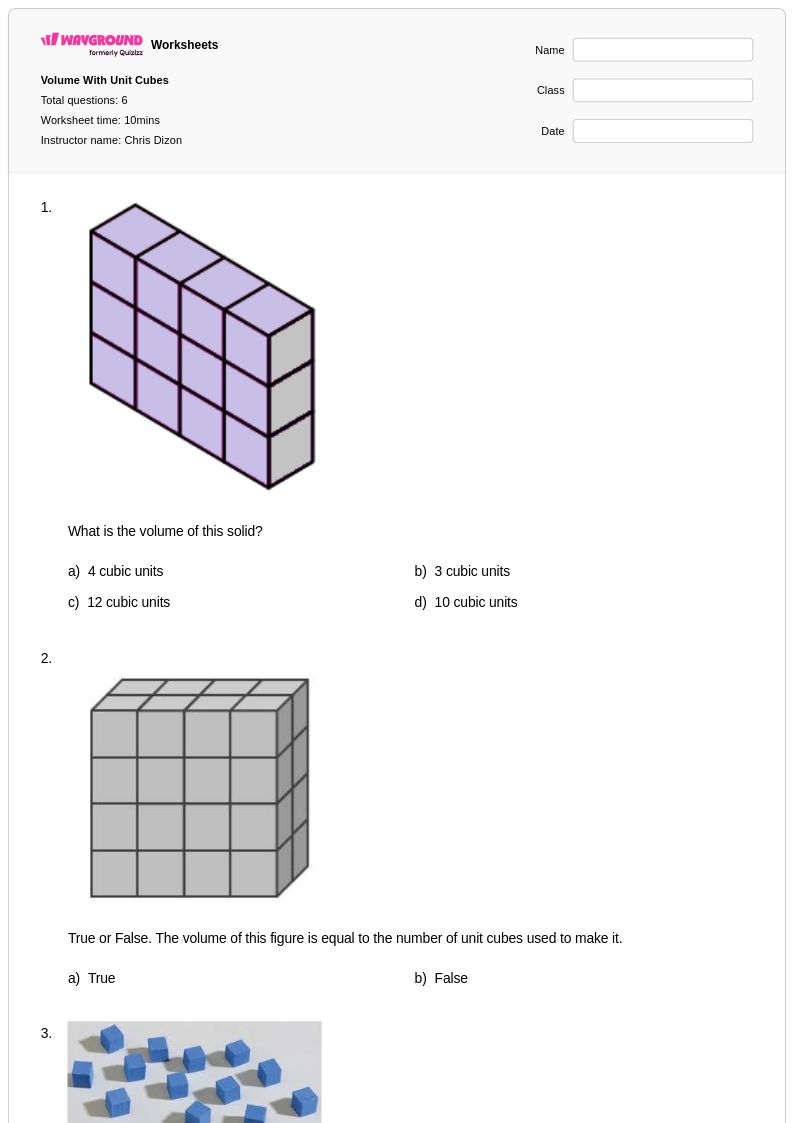
6 Q
5th
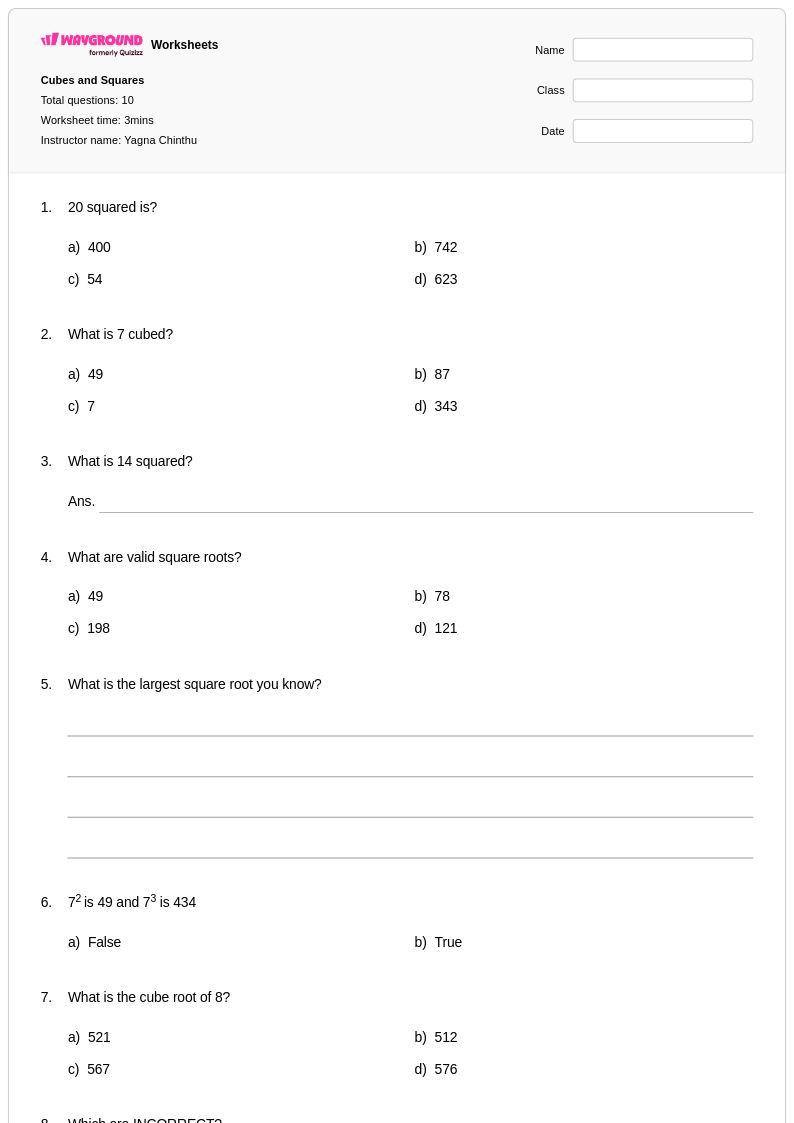
10 Q
4th - 7th
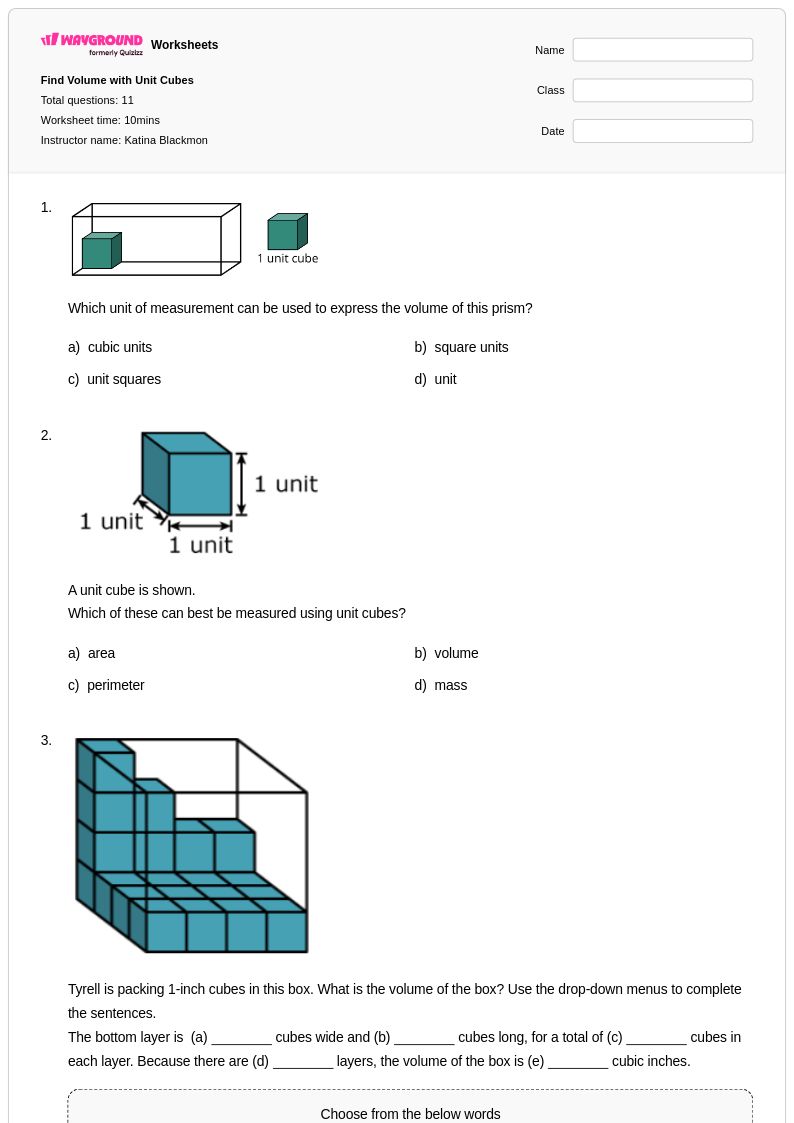
11 Q
5th
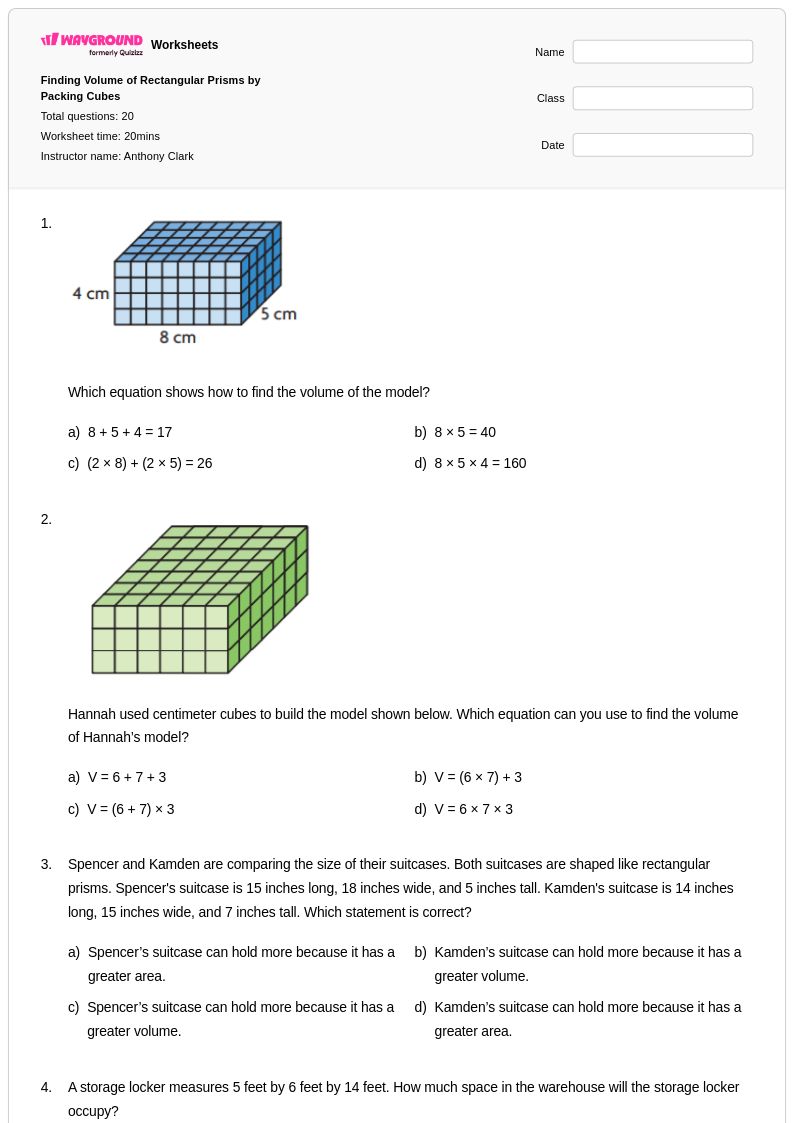
20 Q
5th - Uni
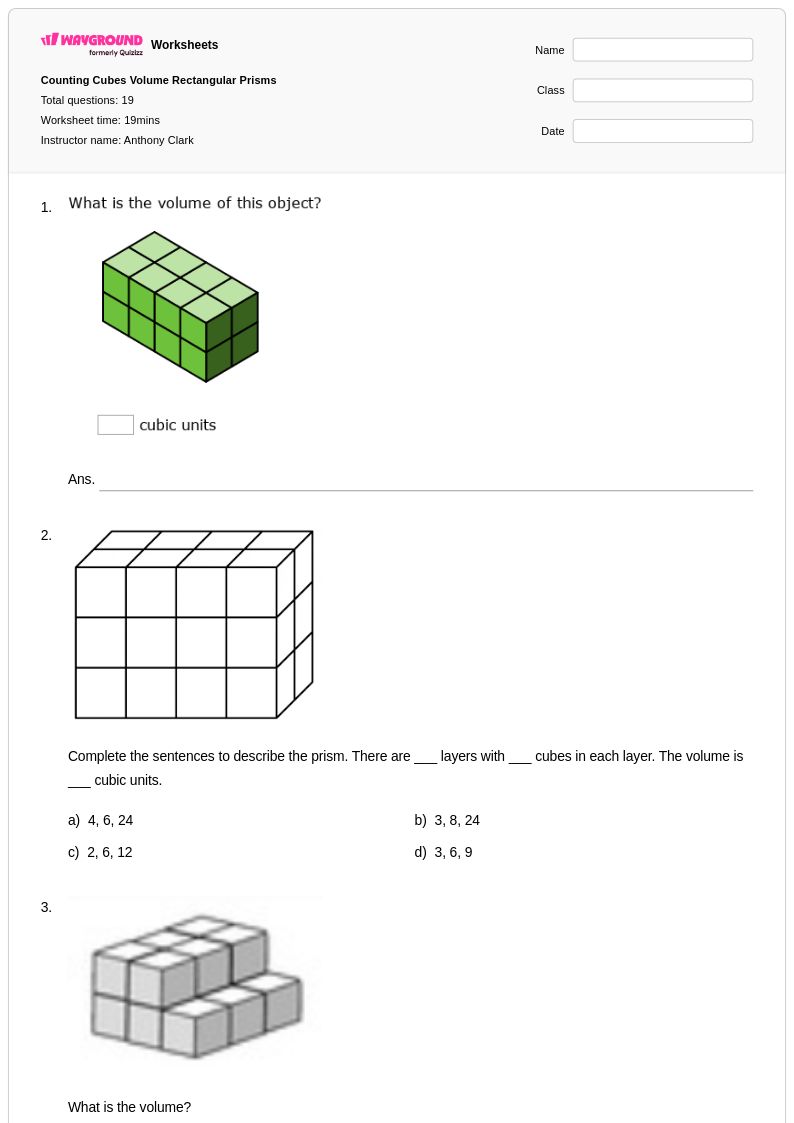
19 Q
5th - Uni
20 Q
8th
17 Q
7th
Explore Cubes Worksheets by Grades
Explore Other Subject Worksheets for kindergarten
Explore printable Cubes worksheets for Kindergarten
Kindergarten cube worksheets available through Wayground (formerly Quizizz) provide young learners with essential foundational experiences in three-dimensional shape recognition and spatial reasoning. These carefully designed printable resources help kindergarten students develop crucial geometric skills by engaging them in hands-on activities that teach cube identification, basic properties exploration, and real-world connections to cube-shaped objects in their environment. Each worksheet collection includes comprehensive practice problems that guide students through visual discrimination exercises, sorting activities, and simple cube-counting tasks, with complete answer keys provided to support both independent learning and teacher-directed instruction. The free pdf format ensures accessibility for all educators while maintaining high-quality graphics and age-appropriate content that aligns with early childhood mathematics standards.
Wayground (formerly Quizizz) empowers teachers with an extensive collection of millions of teacher-created cube worksheets specifically designed for kindergarten mathematics instruction. The platform's robust search and filtering capabilities allow educators to quickly locate materials that match their specific curriculum requirements and standards alignment needs, while built-in differentiation tools enable seamless adaptation of content for diverse learning levels within the same classroom. Teachers can customize these printable and digital resources to address individual student needs, whether for remediation of foundational shape concepts or enrichment of advanced spatial reasoning skills. The flexible pdf format supports both traditional paper-based learning and modern digital classroom environments, making lesson planning more efficient while providing consistent opportunities for meaningful geometric skill practice that builds students' confidence with three-dimensional shape concepts.
FAQs
How do I teach cubes to kindergarten students?
What cube activities are appropriate for kindergarten?
What mistakes do kindergarten students make when identifying cubes?
How can I use kindergarten cube worksheets on Wayground?
How do cubes fit into the Common Core kindergarten math progression?
How can I differentiate kindergarten cube practice?
What should kindergarten students know about cubes?