
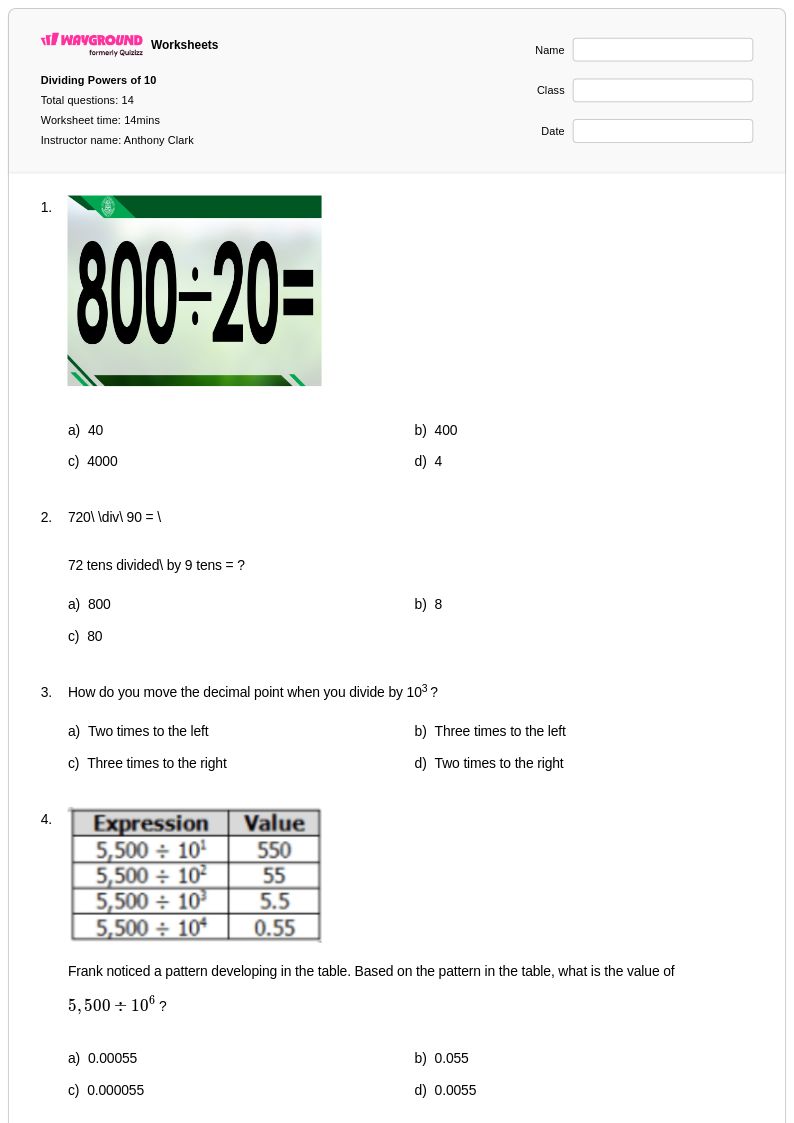
14 Q
5th - Uni
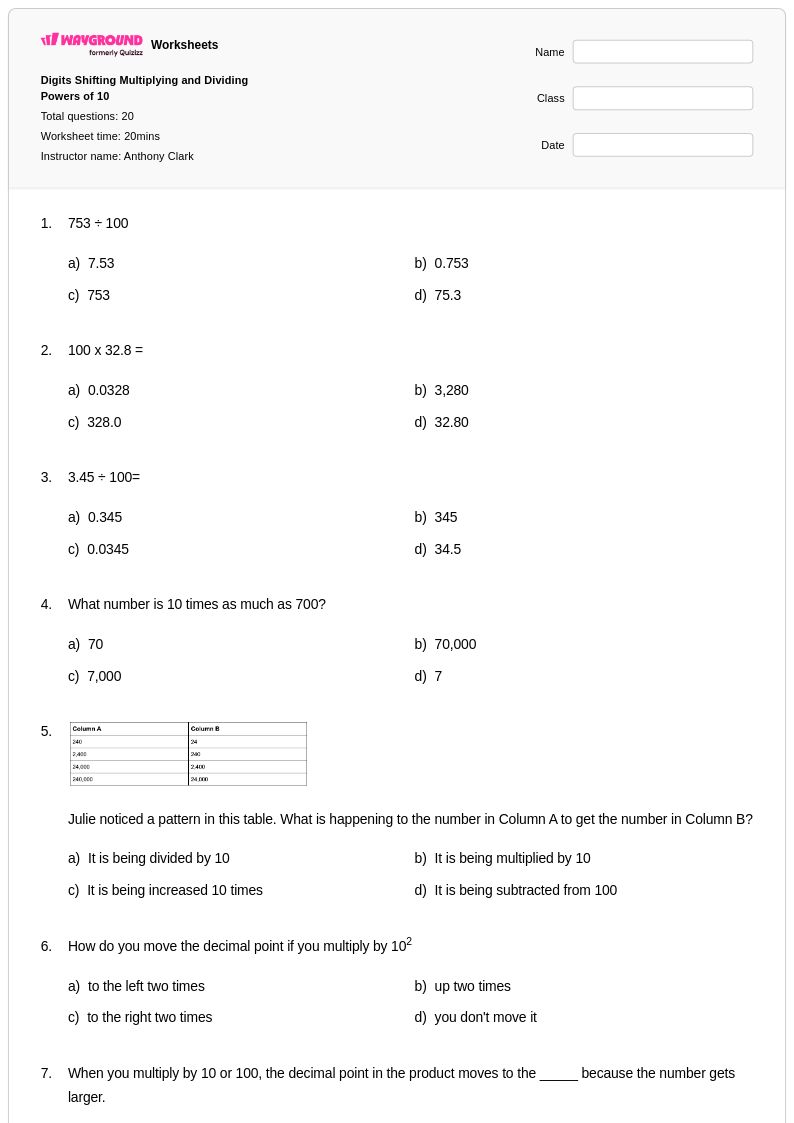
20 Q
5th - Uni
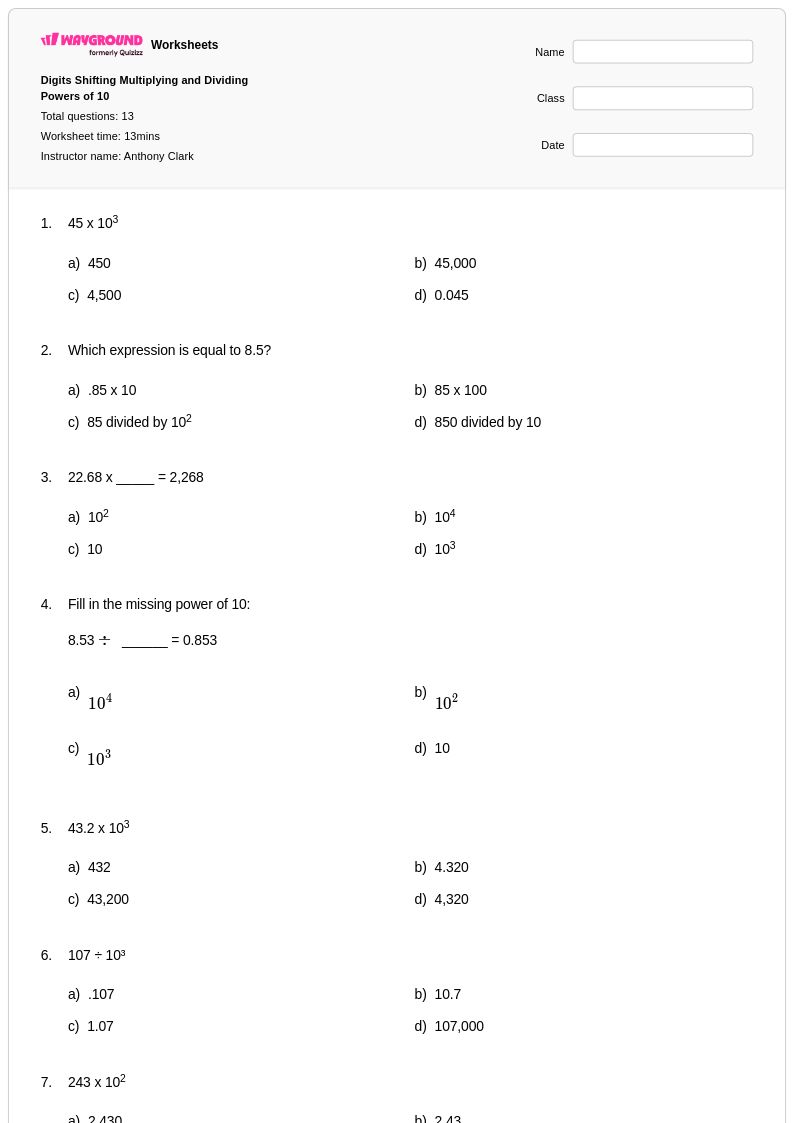
13 Q
5th - Uni
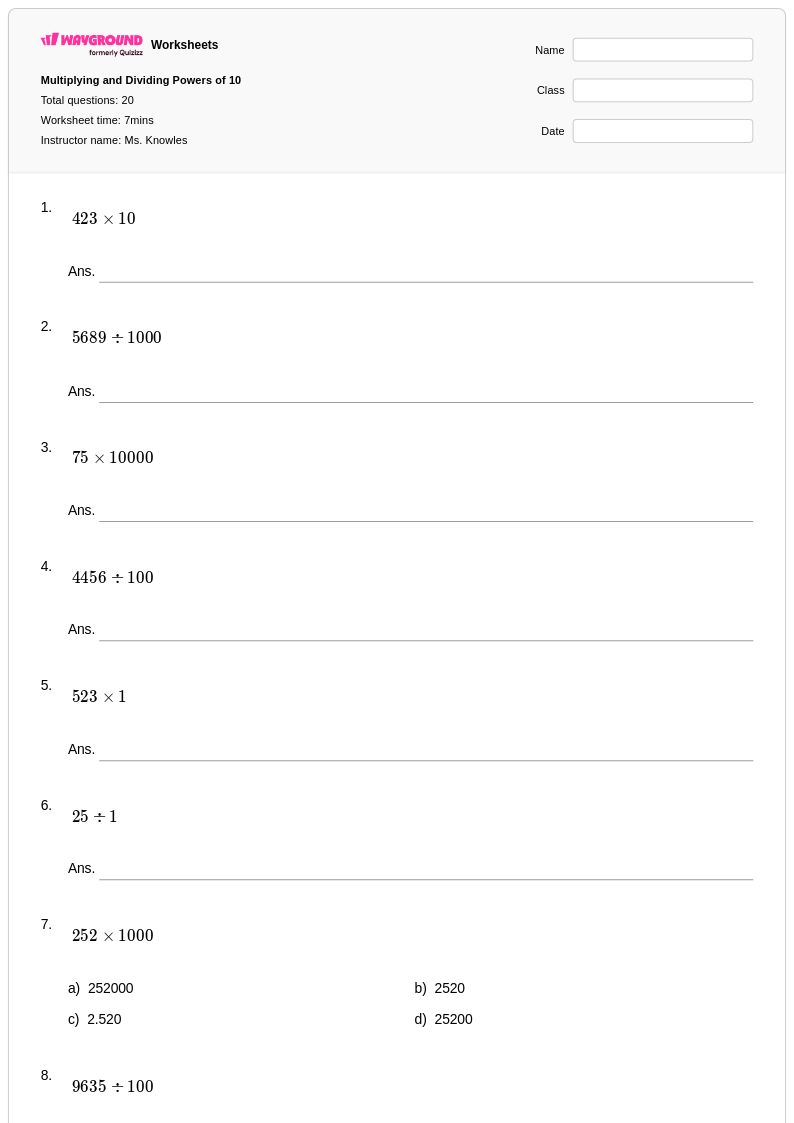
20 Q
6th - 10th
20 Q
5th - Uni
12 Q
6th
20 Q
5th - Uni
11 Q
6th - Uni
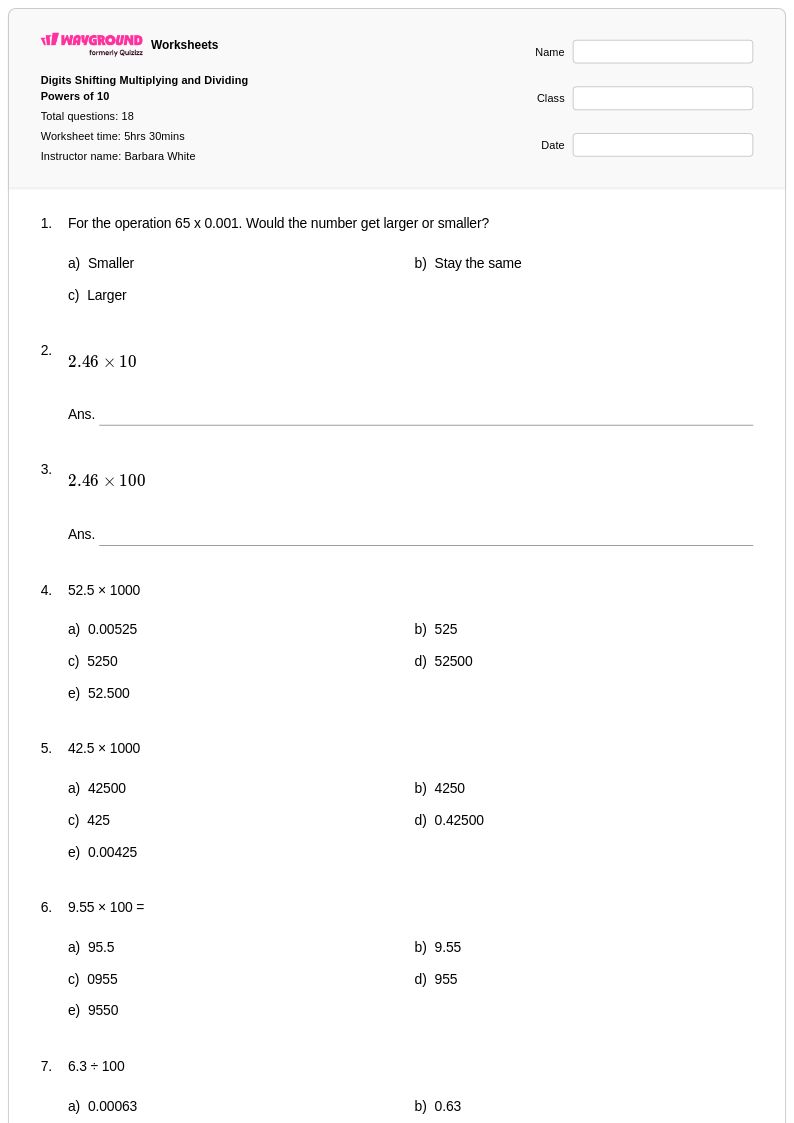
18 Q
4th - 8th
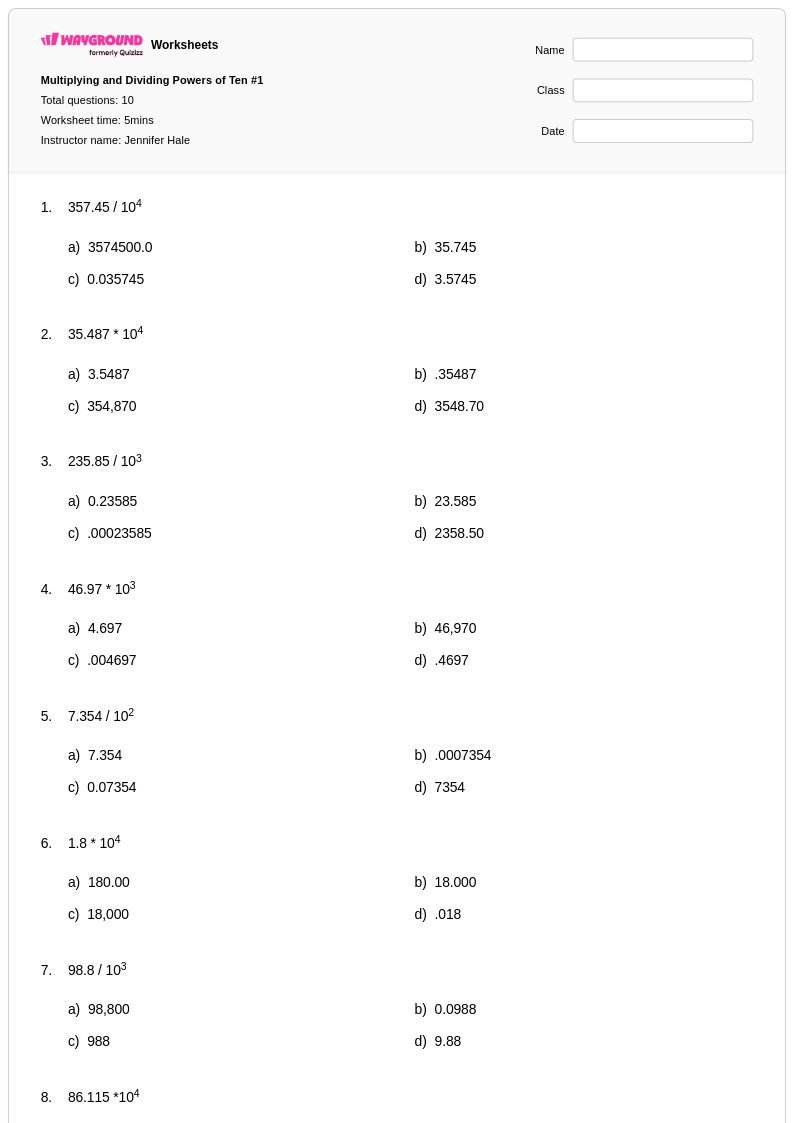
10 Q
5th - 6th
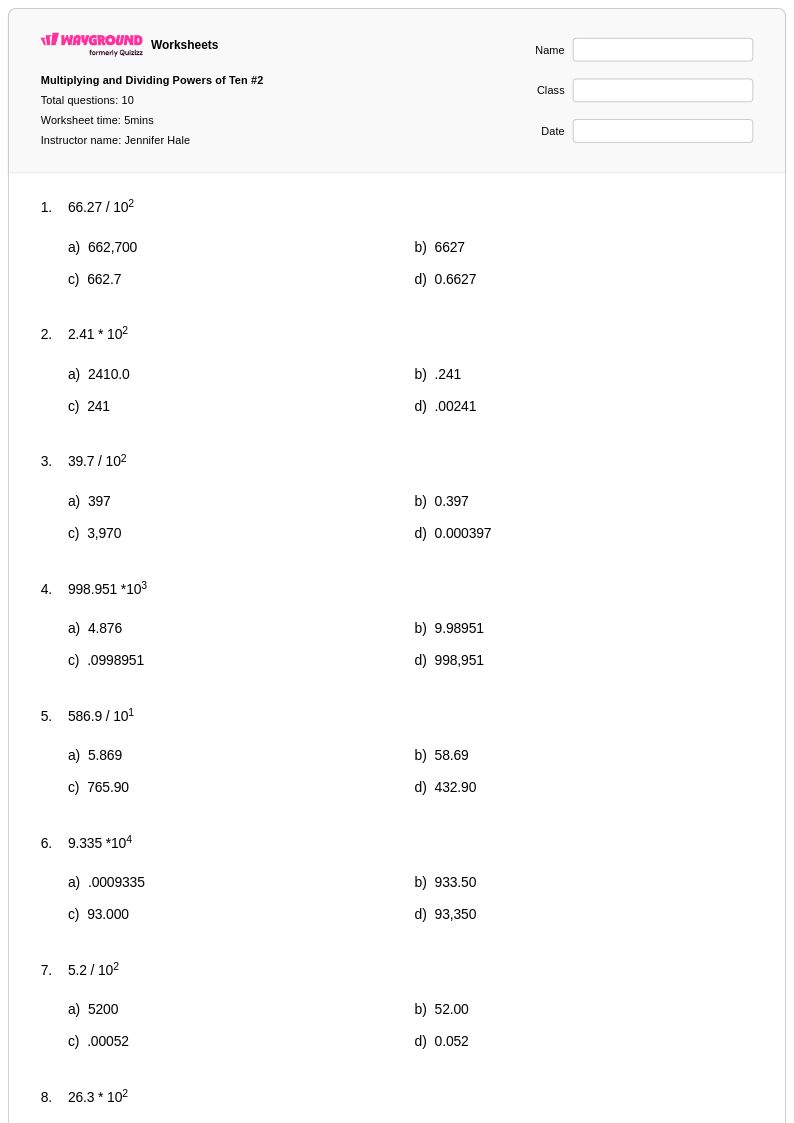
10 Q
5th - 6th
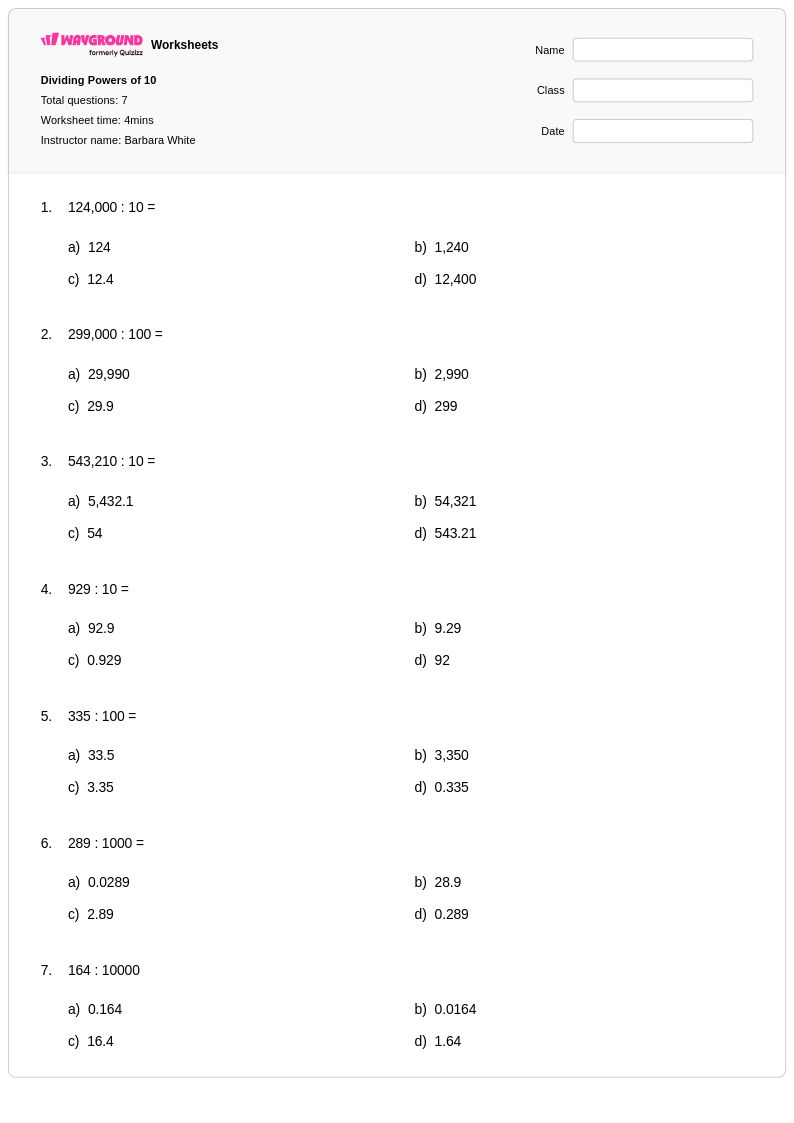
7 Q
5th - 6th
20 Q
5th - Uni
11 Q
5th - Uni
9 Q
4th - 6th
10 Q
5th - 6th
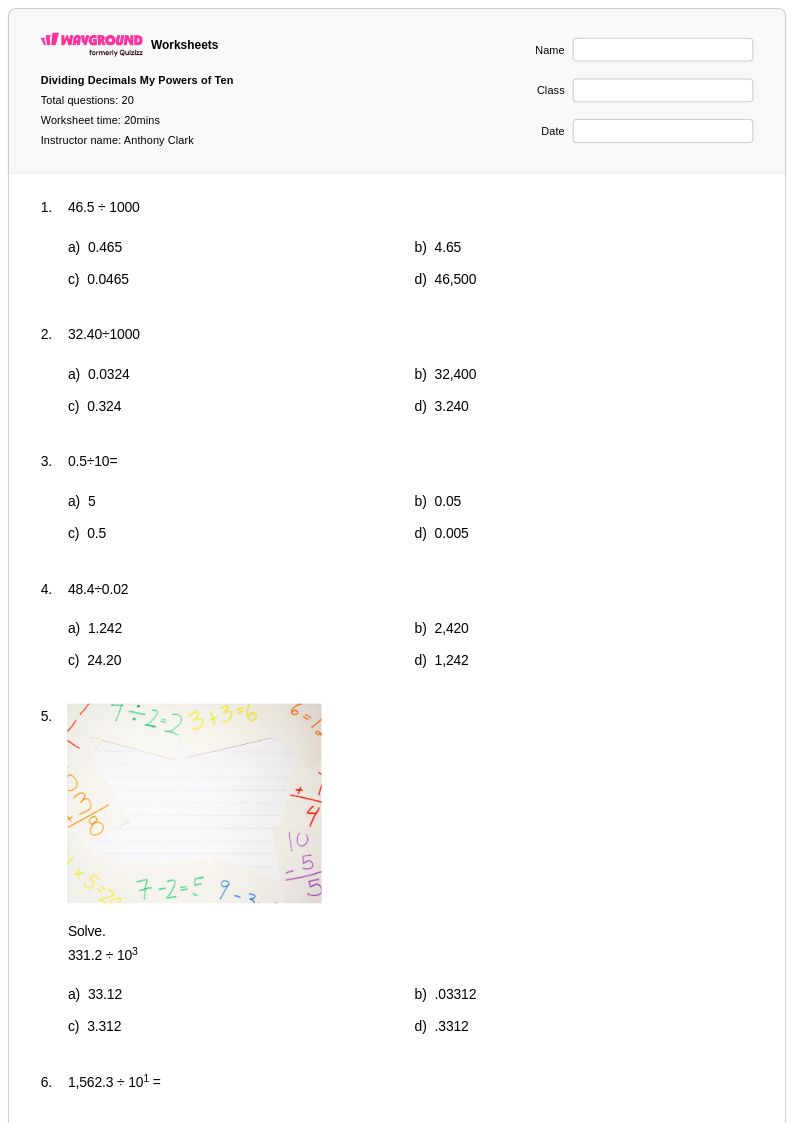
20 Q
5th - Uni
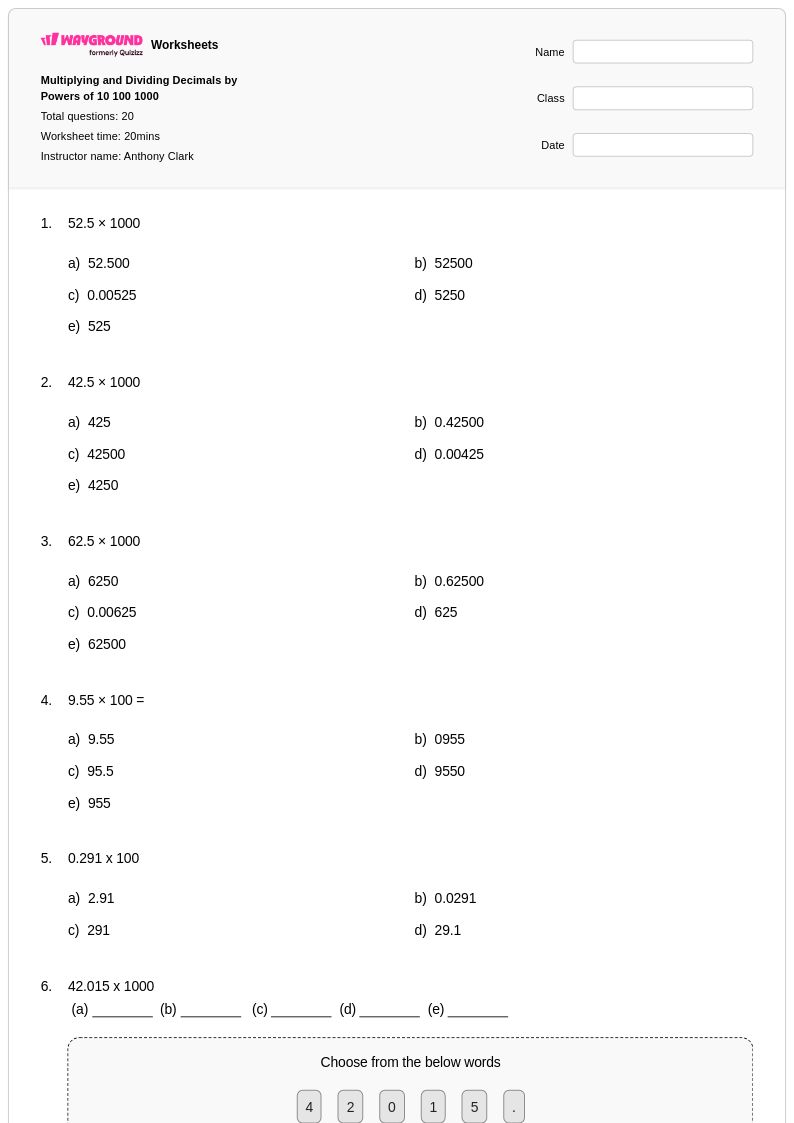
20 Q
5th - Uni
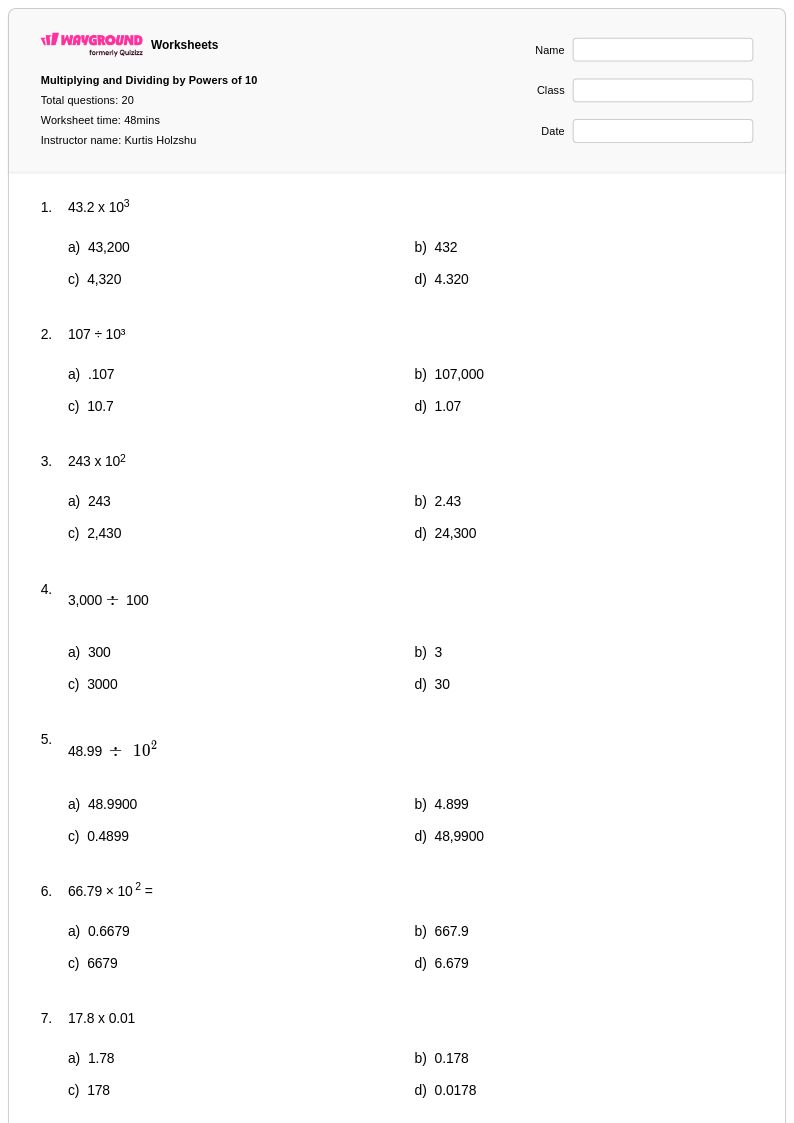
20 Q
5th - 6th
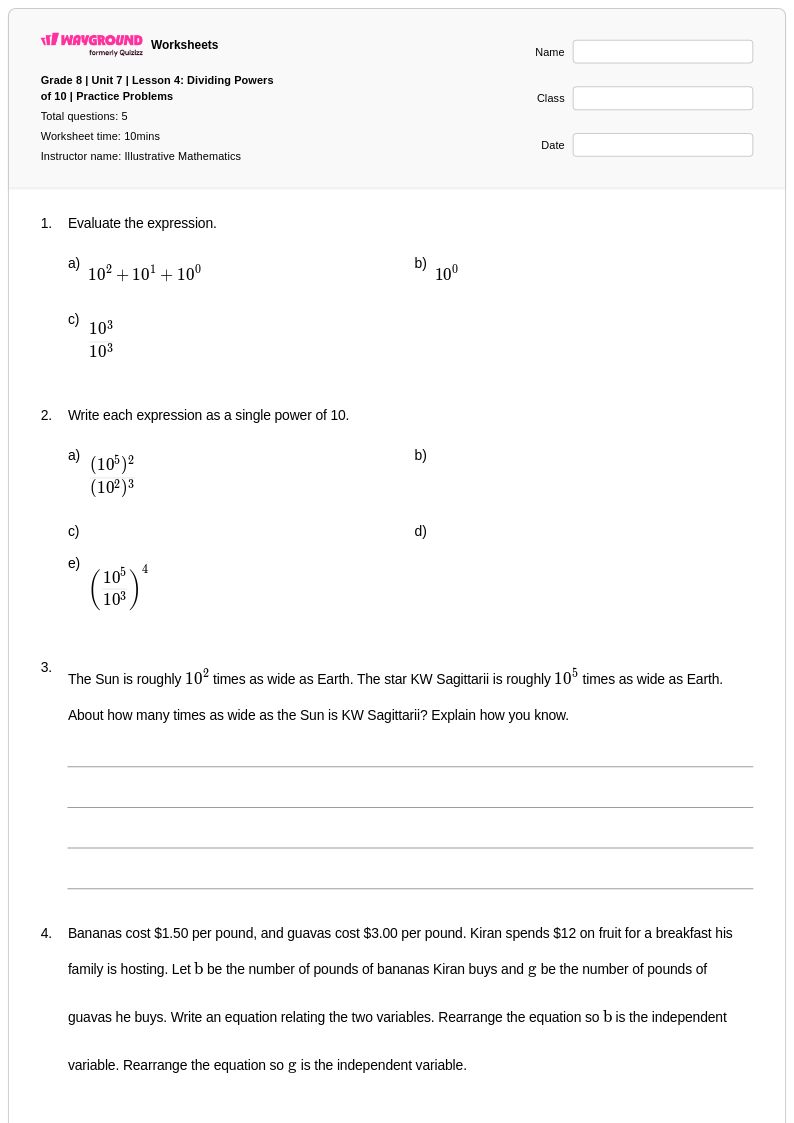
5 Q
6th - Uni
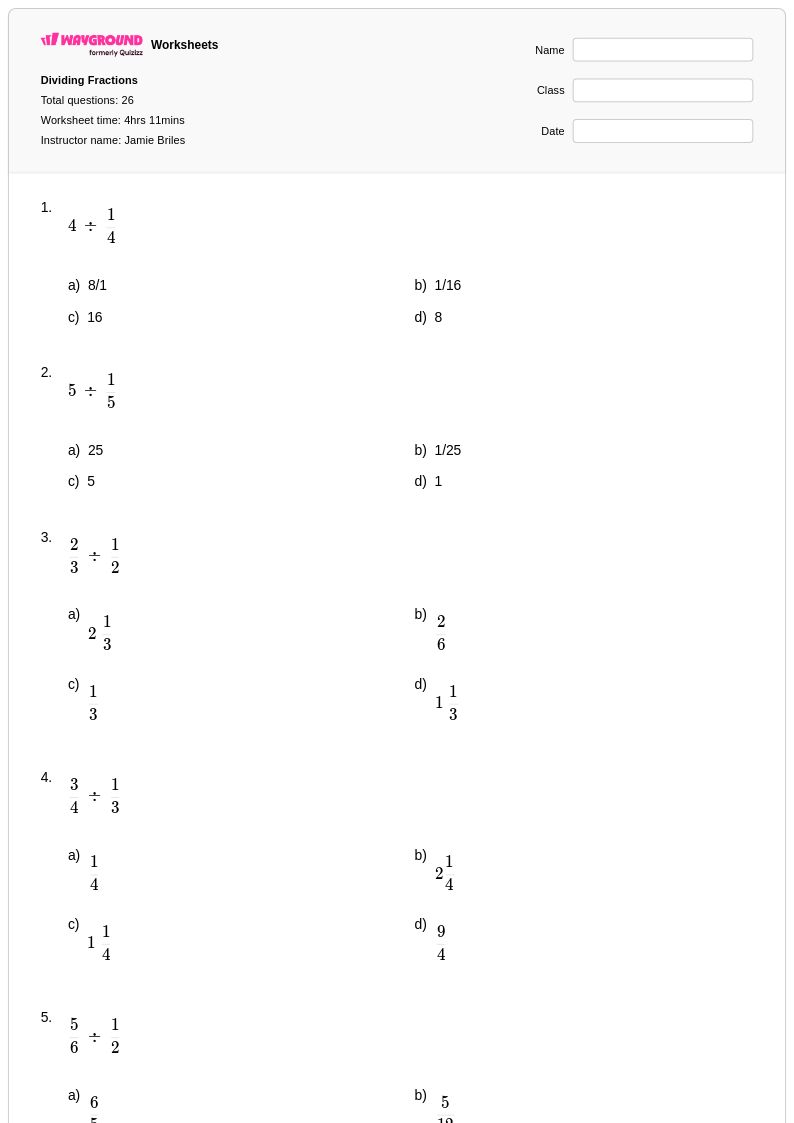
26 Q
6th
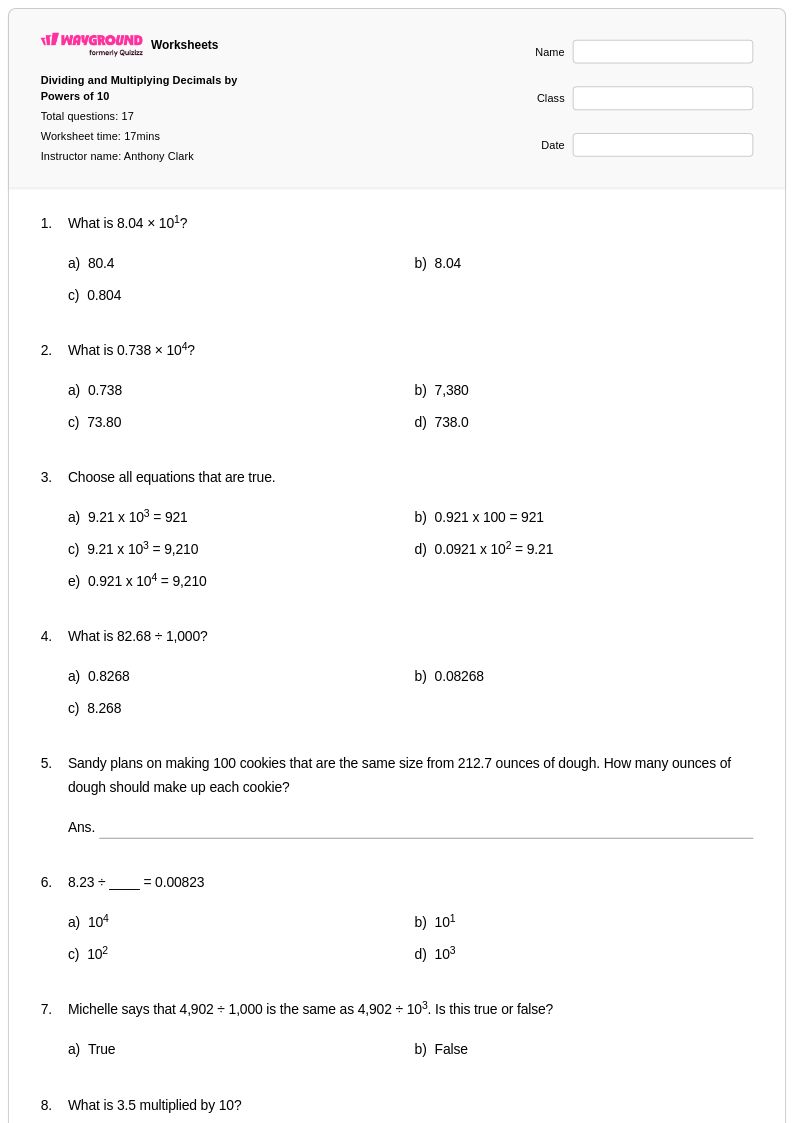
17 Q
5th - Uni
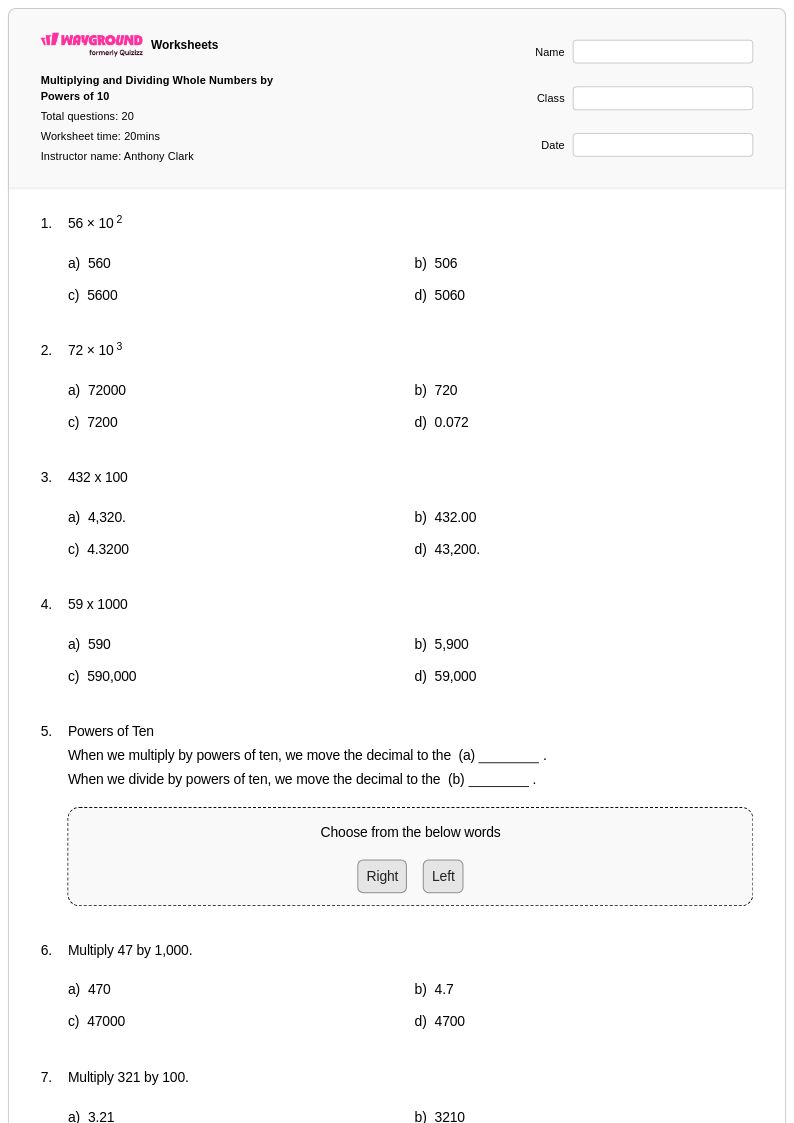
20 Q
5th - Uni
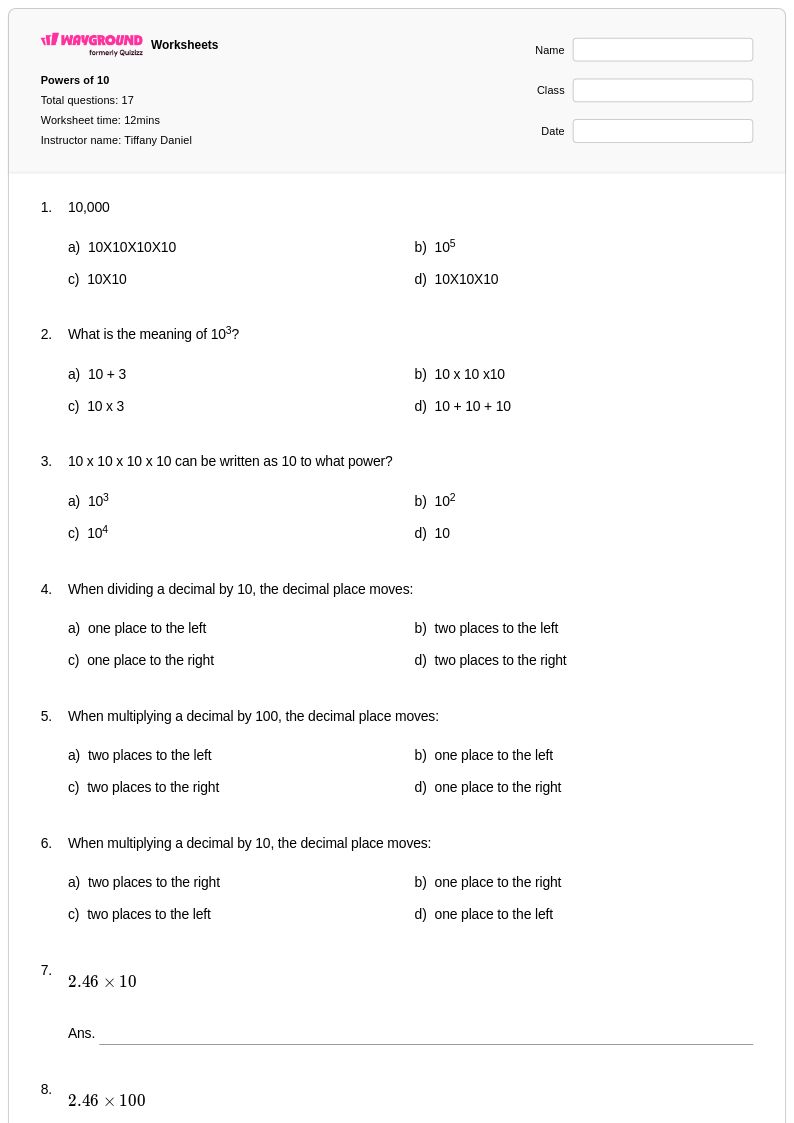
17 Q
5th - 6th
Explore Other Subject Worksheets for grade 6
Explore printable Dividing Powers worksheets for Grade 6
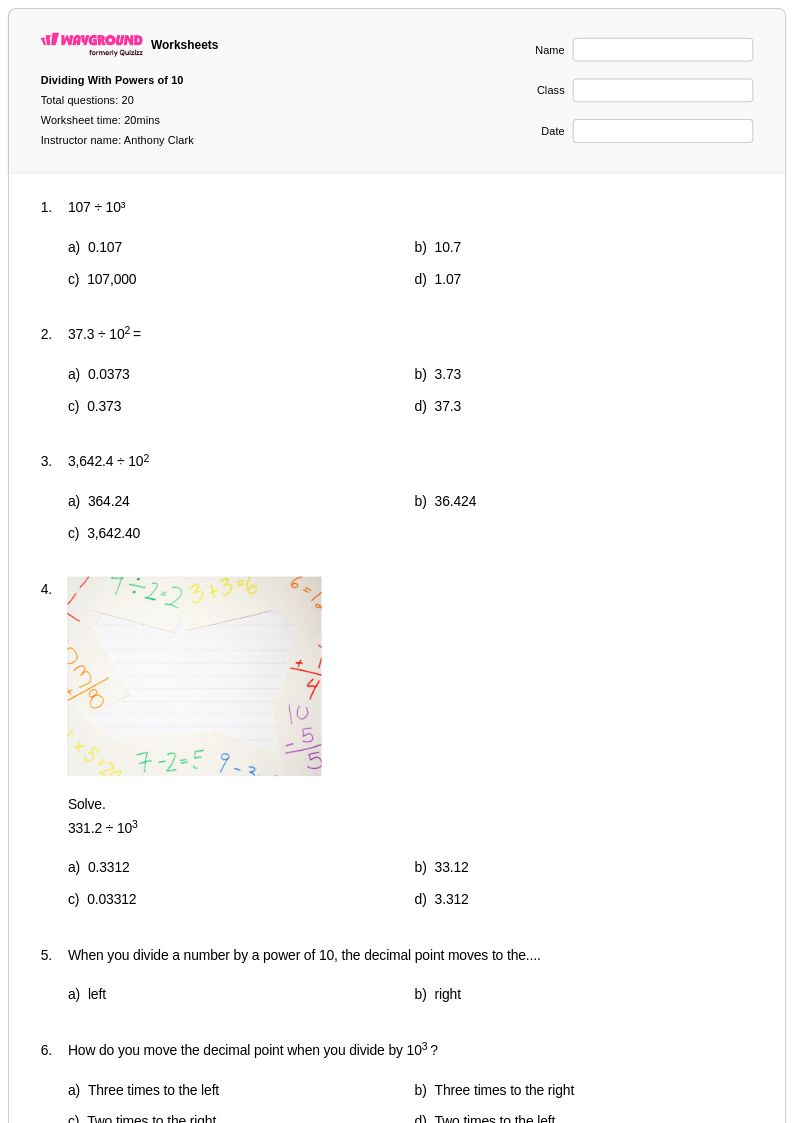
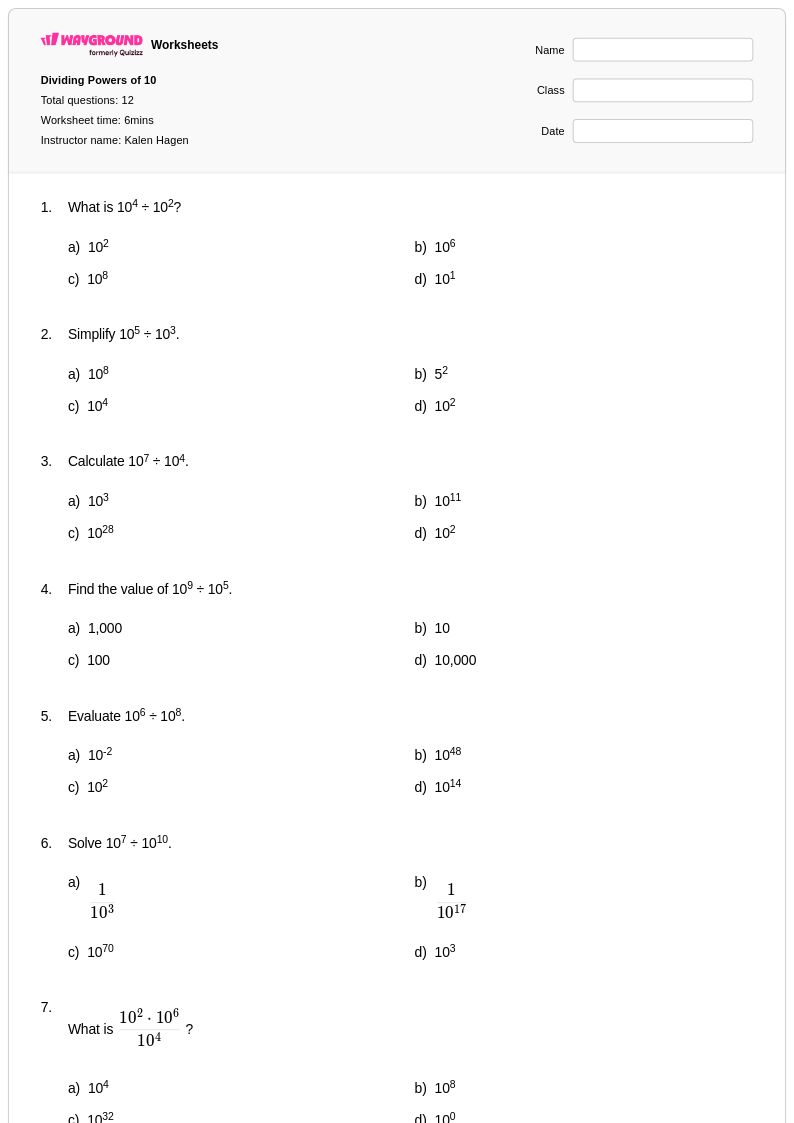
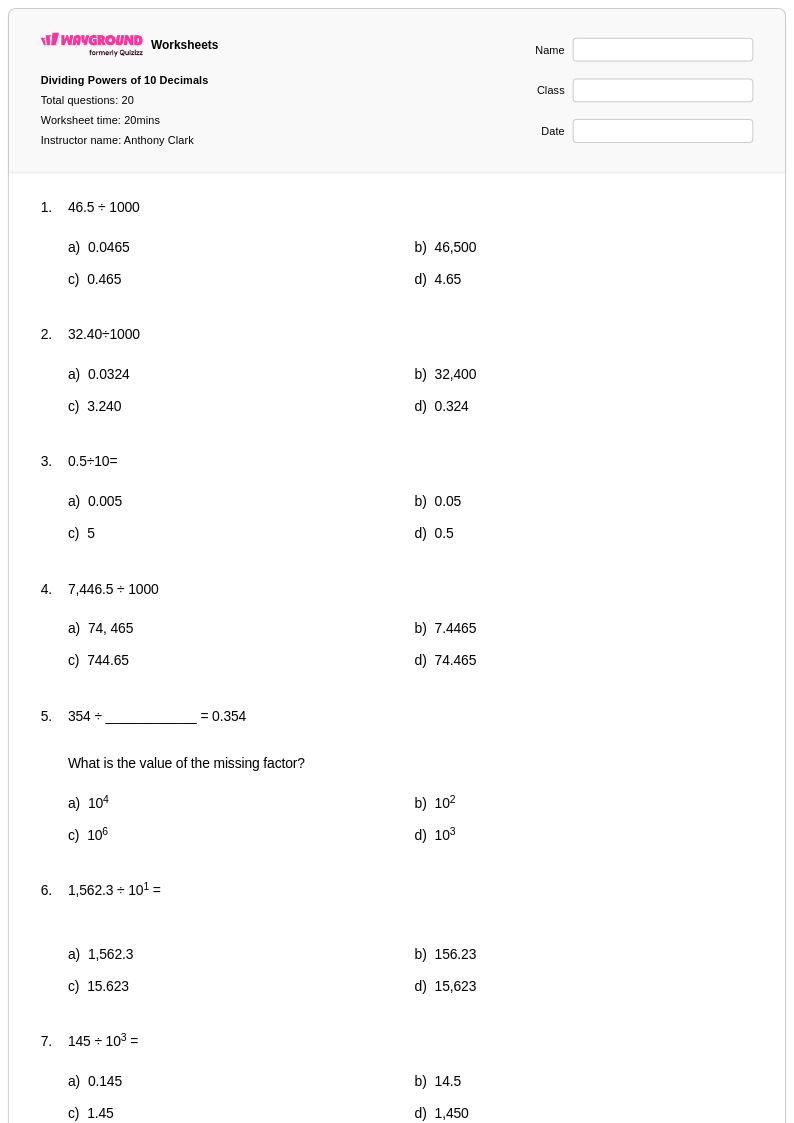
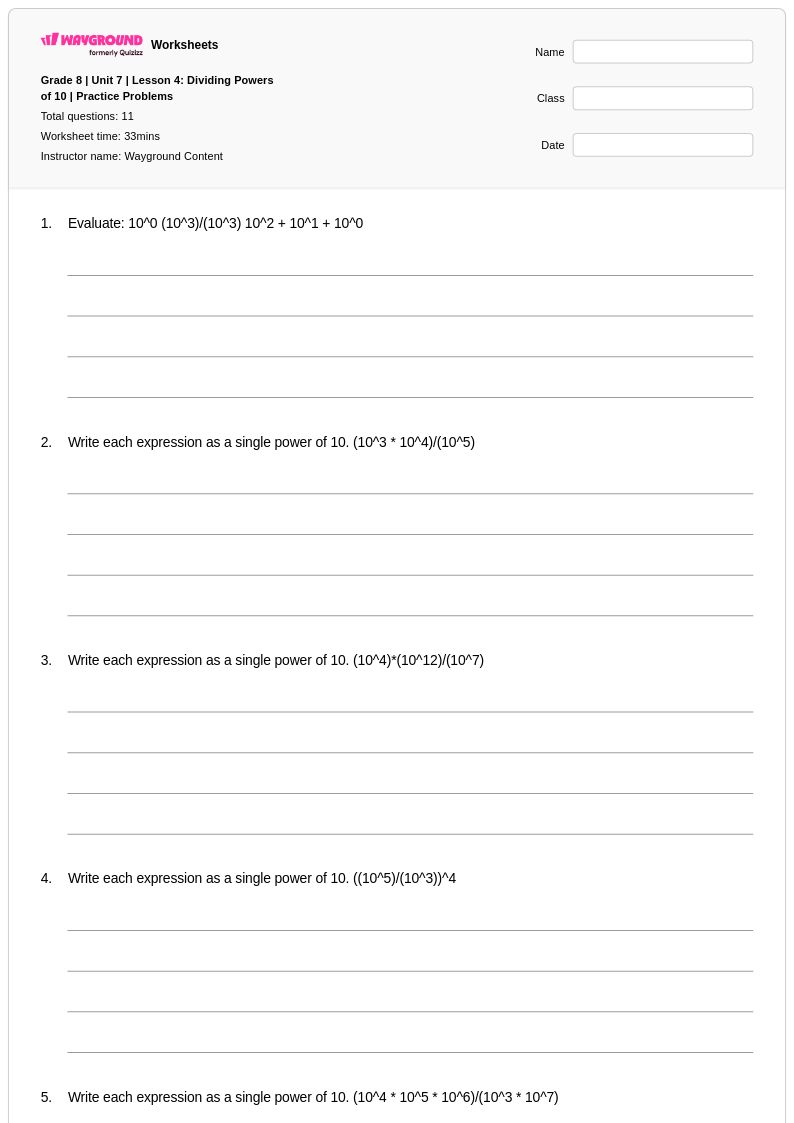
Dividing Powers worksheets for Grade 6 mathematics provide essential practice for students learning to manipulate exponents through division operations. These comprehensive worksheets from Wayground (formerly Quizizz) focus on building foundational skills in applying the quotient rule for exponents, where students learn that dividing powers with the same base involves subtracting the exponents. The practice problems guide students through systematic approaches to simplifying expressions like x⁸ ÷ x³ = x⁵, while reinforcing the underlying mathematical principles that govern exponential operations. Each worksheet includes carefully structured exercises that progress from basic single-variable problems to more complex multi-step expressions, with complete answer keys provided to support independent learning and allow students to check their work. These free printables serve as invaluable resources for developing computational fluency and conceptual understanding of how division affects exponential expressions.
Wayground (formerly Quizizz) empowers educators with an extensive collection of teacher-created dividing powers resources, drawing from millions of expertly designed worksheets that can be easily searched and filtered to match specific classroom needs. The platform's robust standards alignment ensures that Grade 6 dividing powers content corresponds directly to curriculum requirements, while differentiation tools allow teachers to customize worksheets for varying skill levels within their classrooms. Teachers can seamlessly access these materials in both printable pdf format for traditional paper-based instruction and digital formats for technology-integrated learning environments. This flexibility proves particularly valuable for lesson planning, targeted remediation for students struggling with exponent rules, enrichment activities for advanced learners, and ongoing skill practice that reinforces the mathematical reasoning required to successfully divide exponential expressions across various contexts and complexity levels.
FAQs
How do I teach dividing powers to 6th graders?
What exercises help 6th graders practice dividing powers?
What mistakes do 6th graders commonly make with dividing powers?
How do I use Wayground's Grade 6 dividing powers worksheets?
What grade level is dividing powers taught?
Is dividing powers in the 6th grade Common Core curriculum?