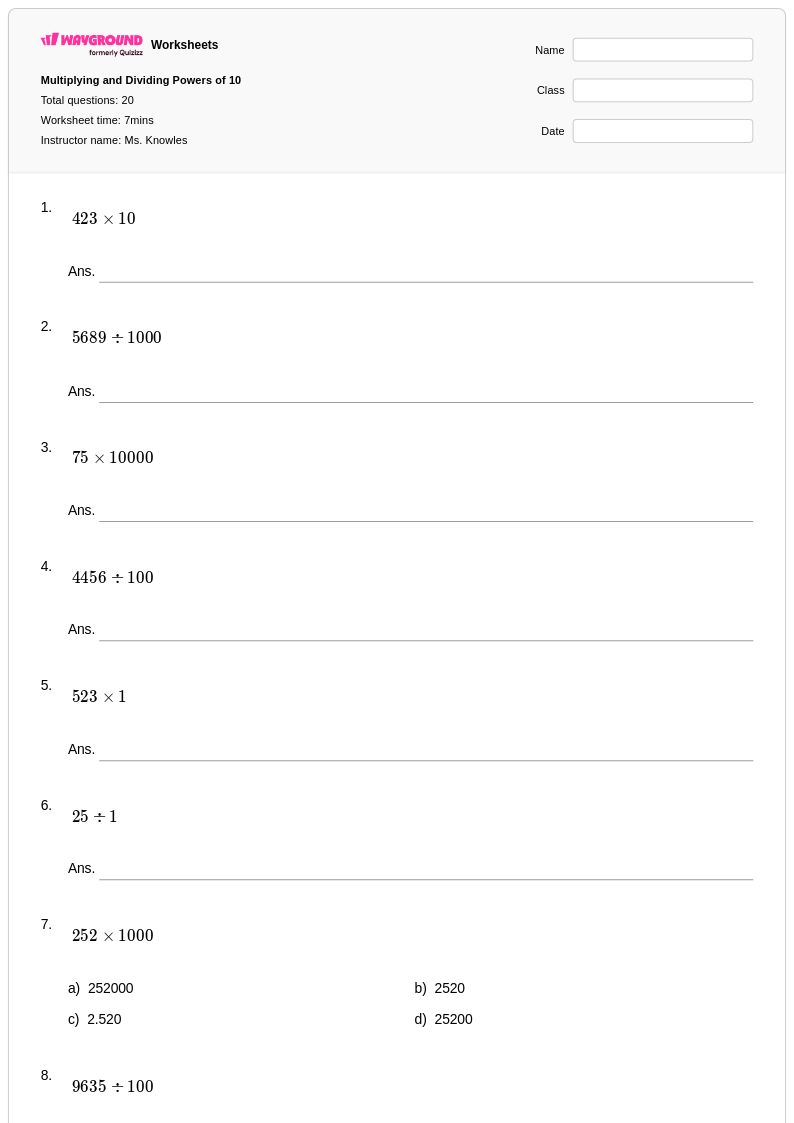
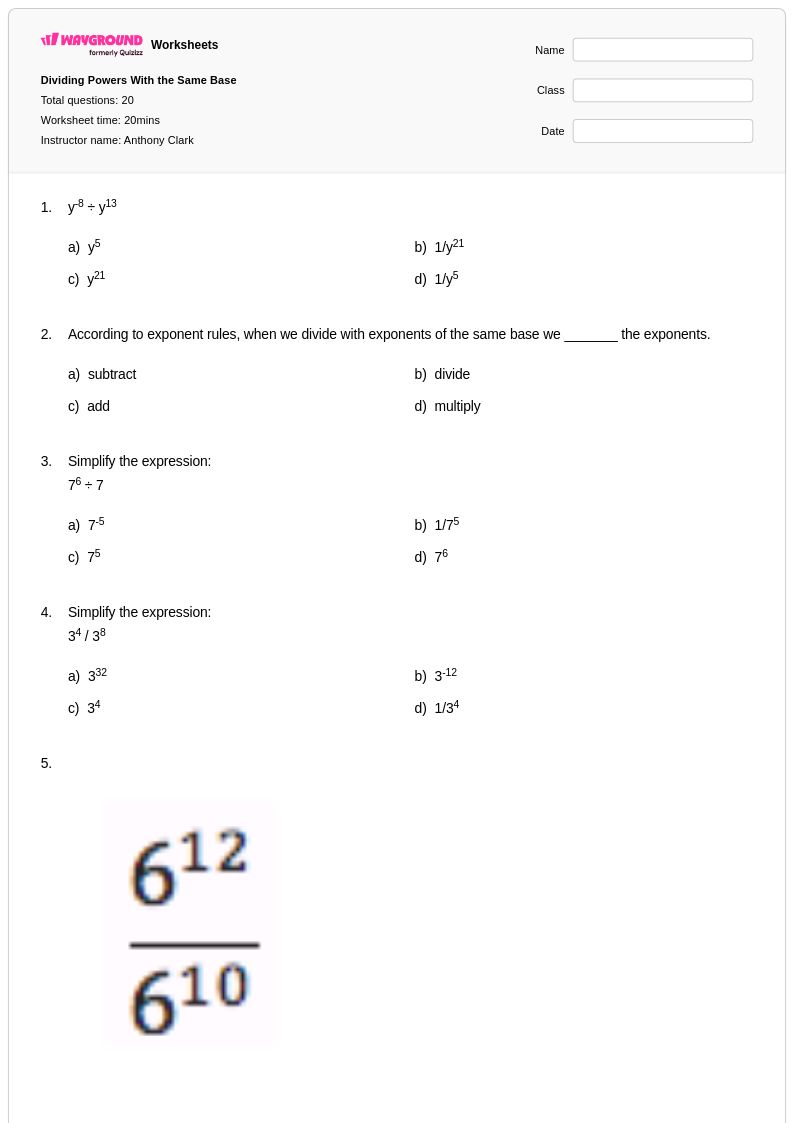
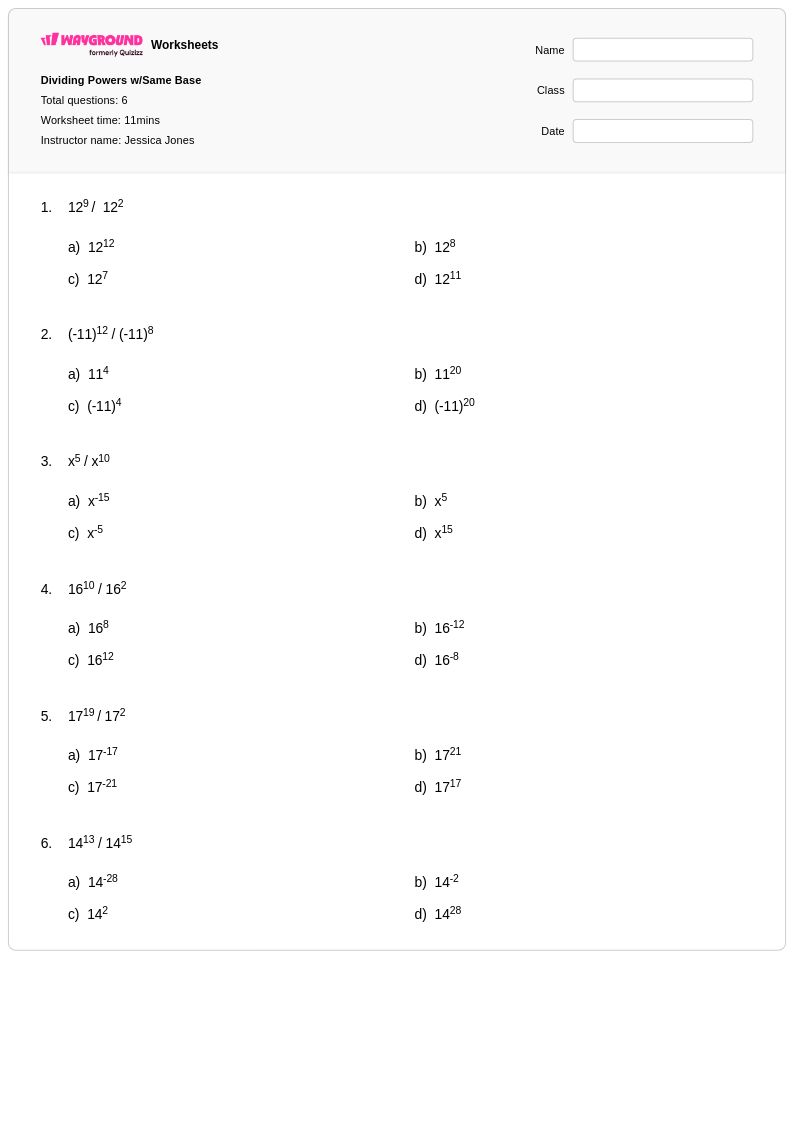
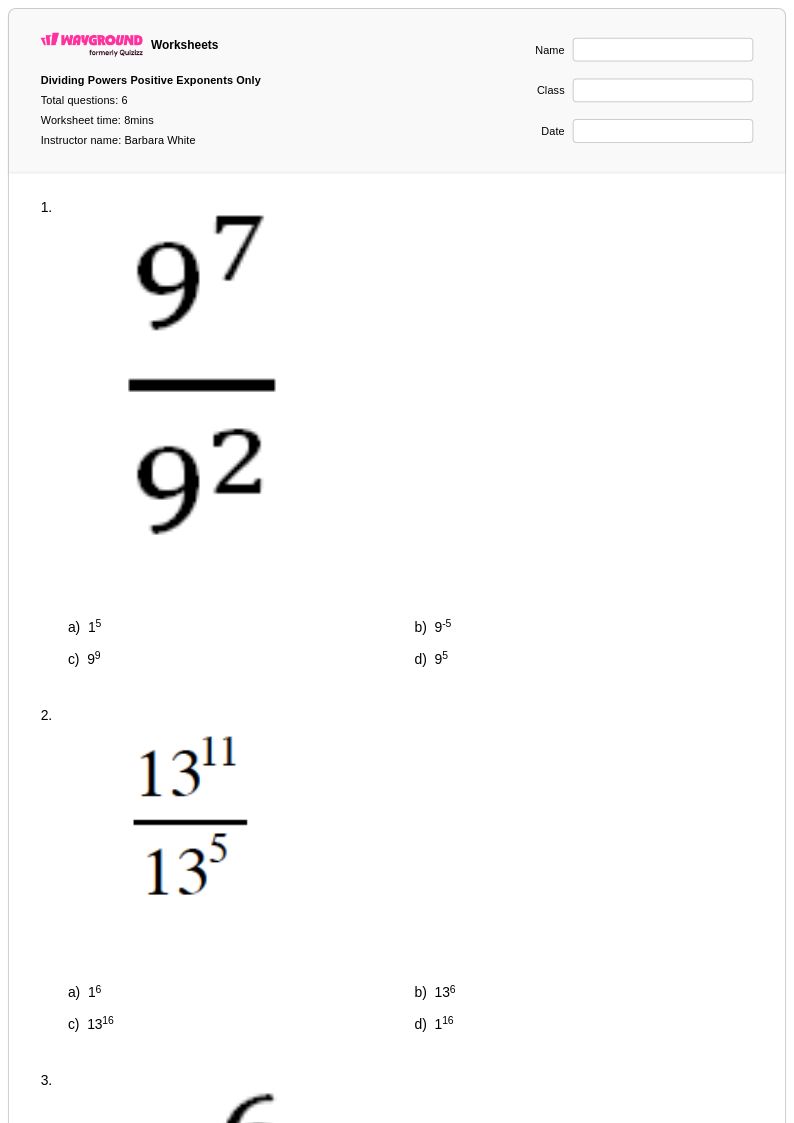
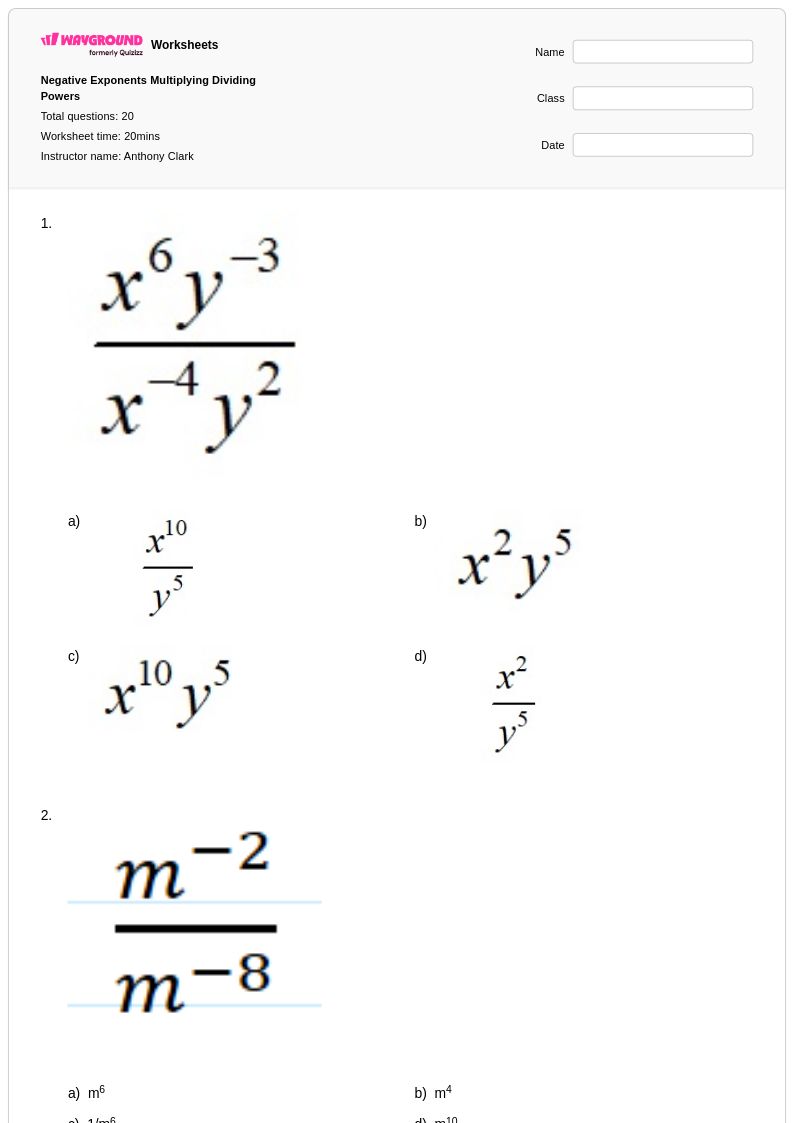
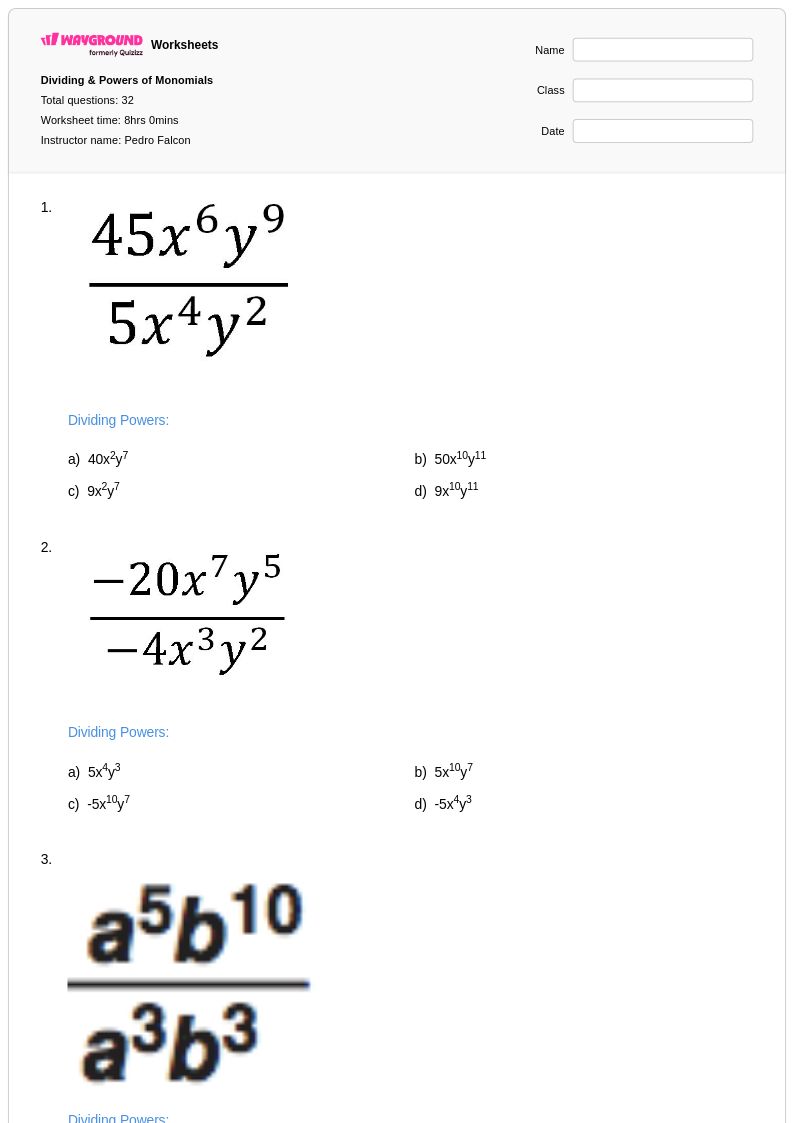
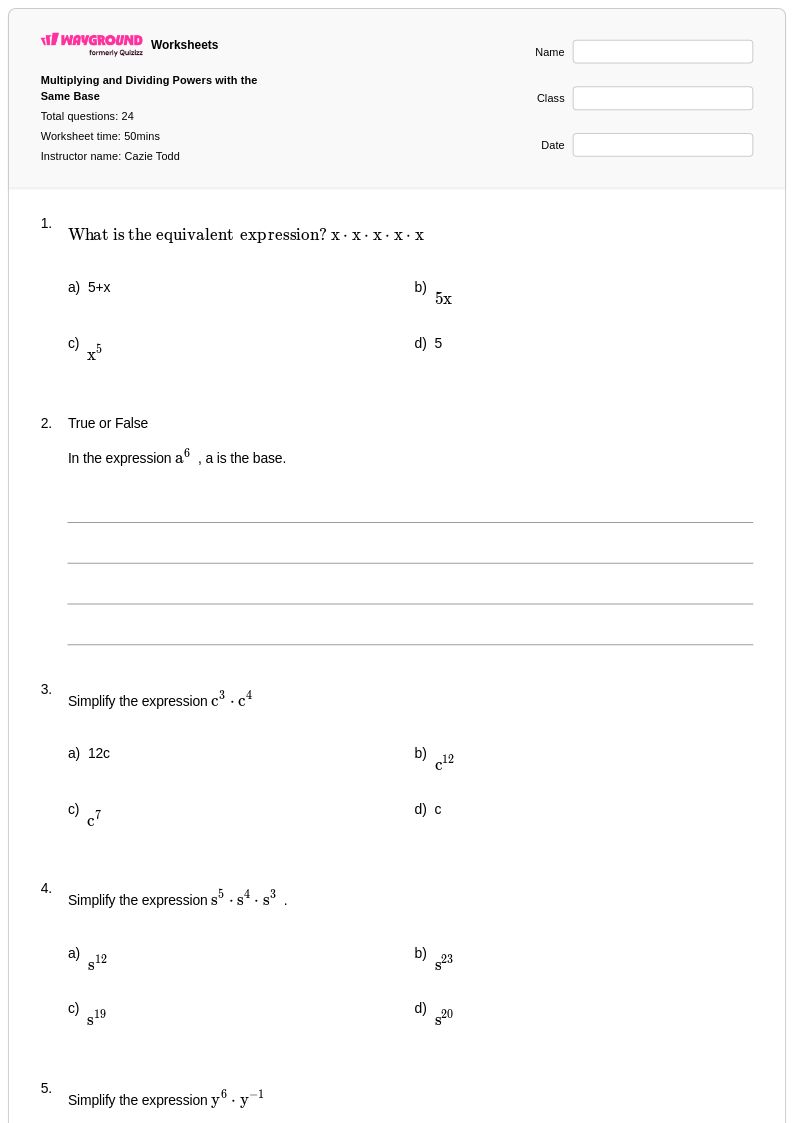
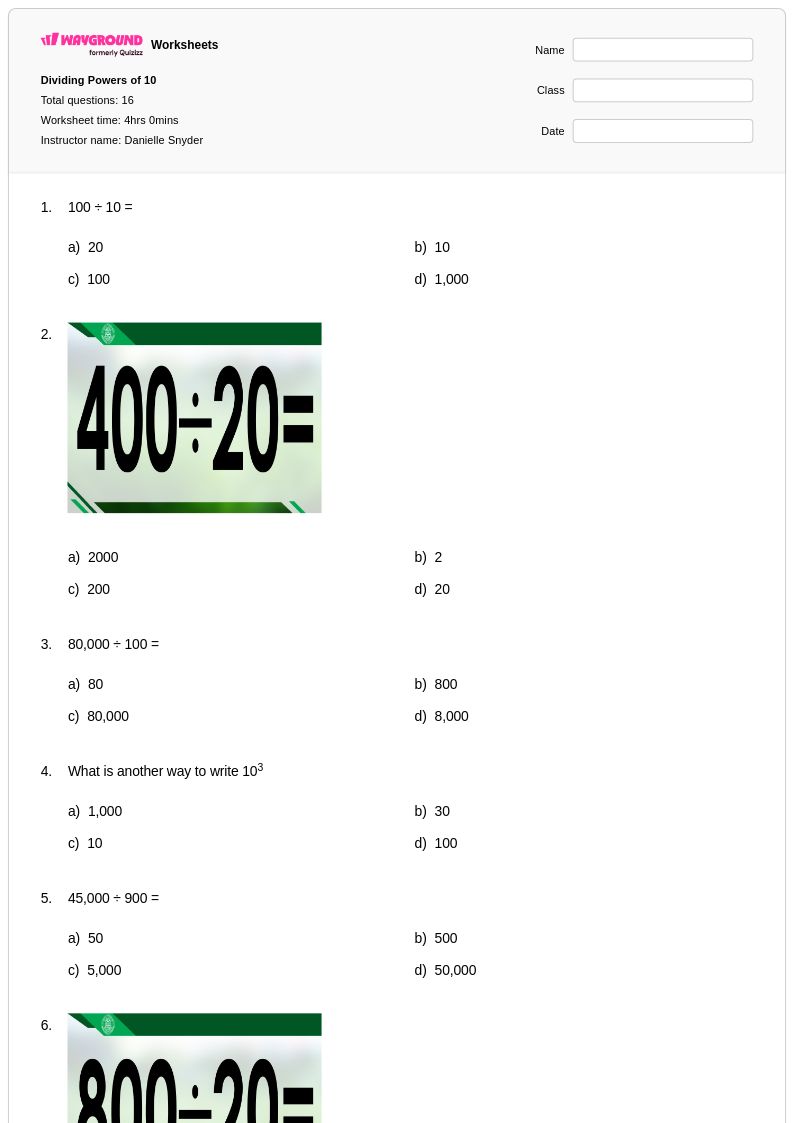
Enhance students' understanding of dividing powers with Wayground's comprehensive collection of free worksheets, featuring targeted practice problems, printable PDFs, and complete answer keys for mastering exponent division rules.
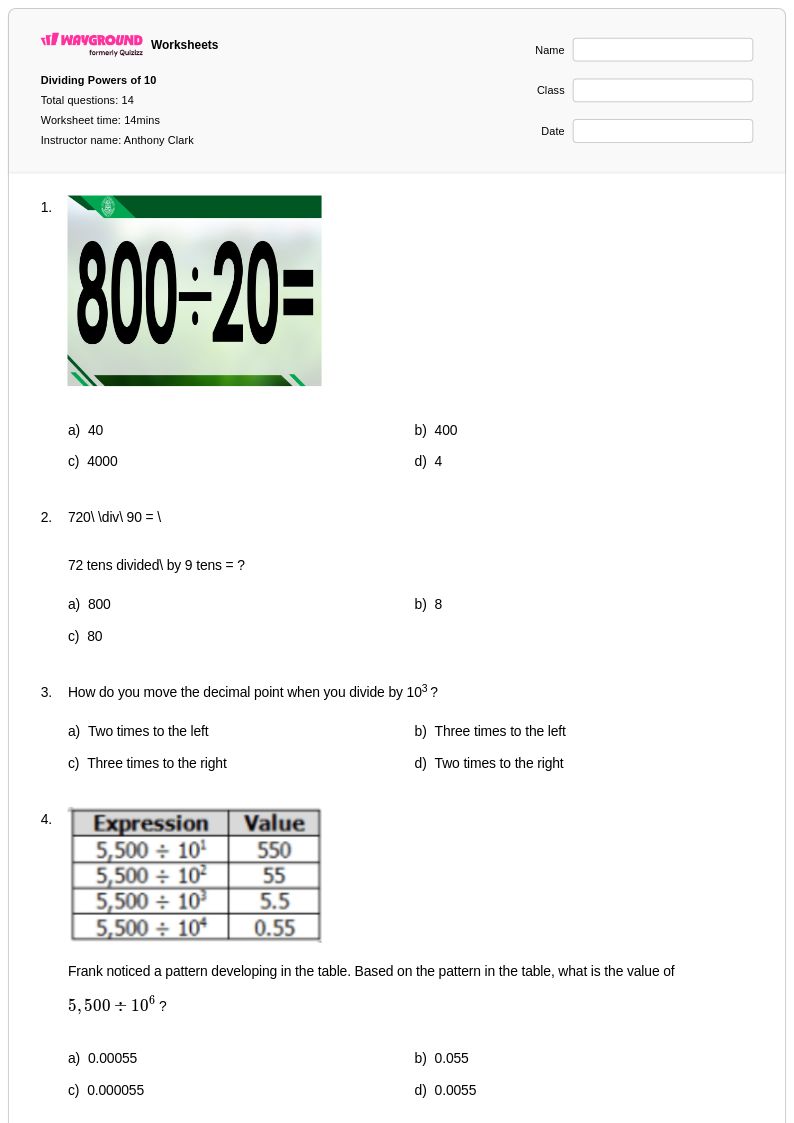
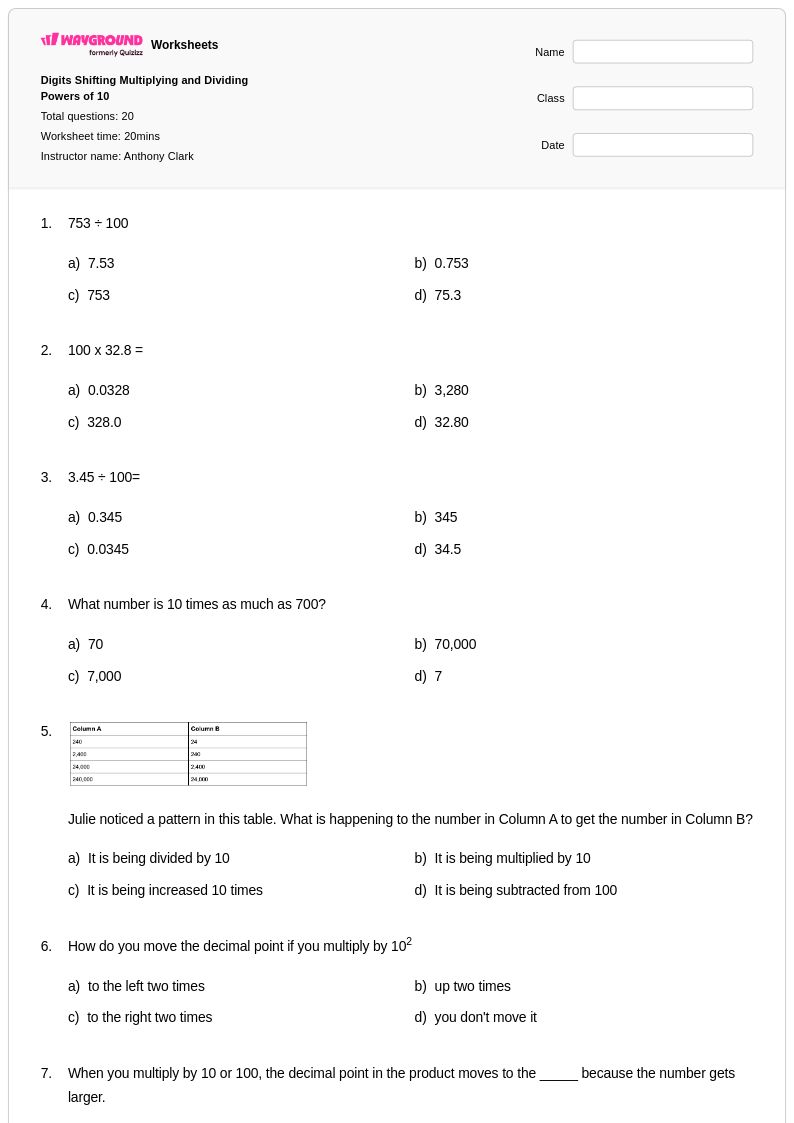
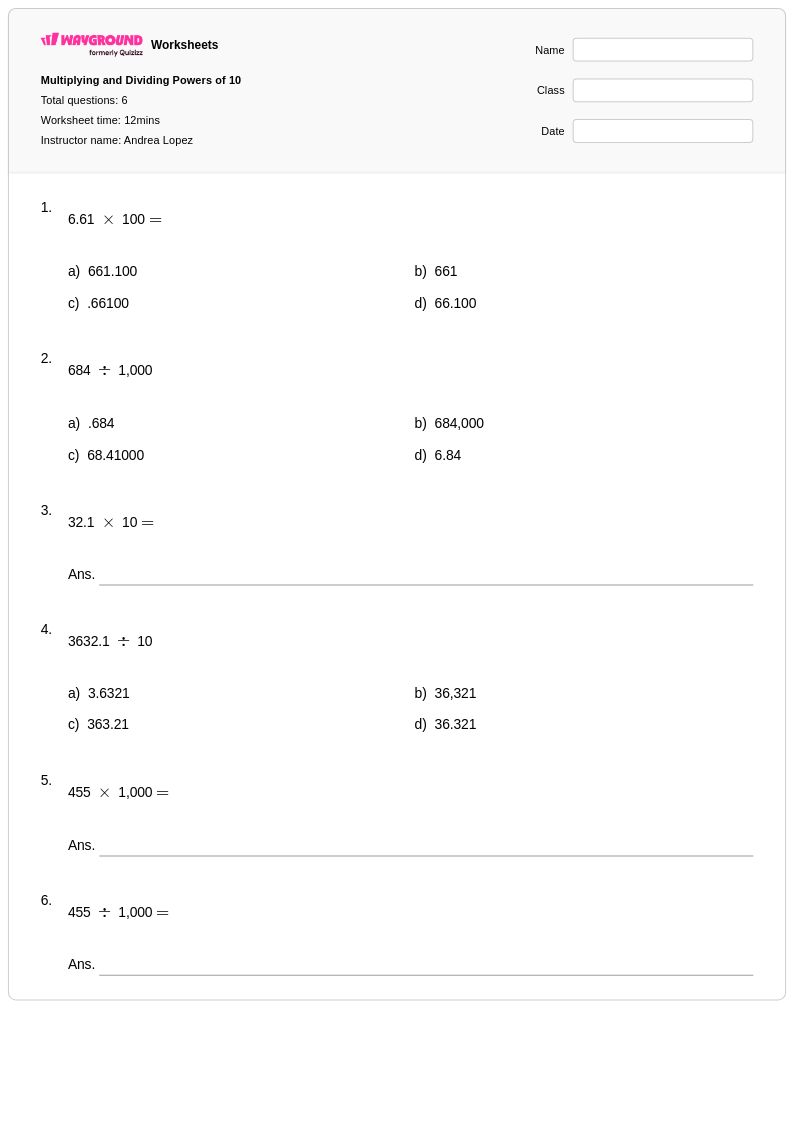
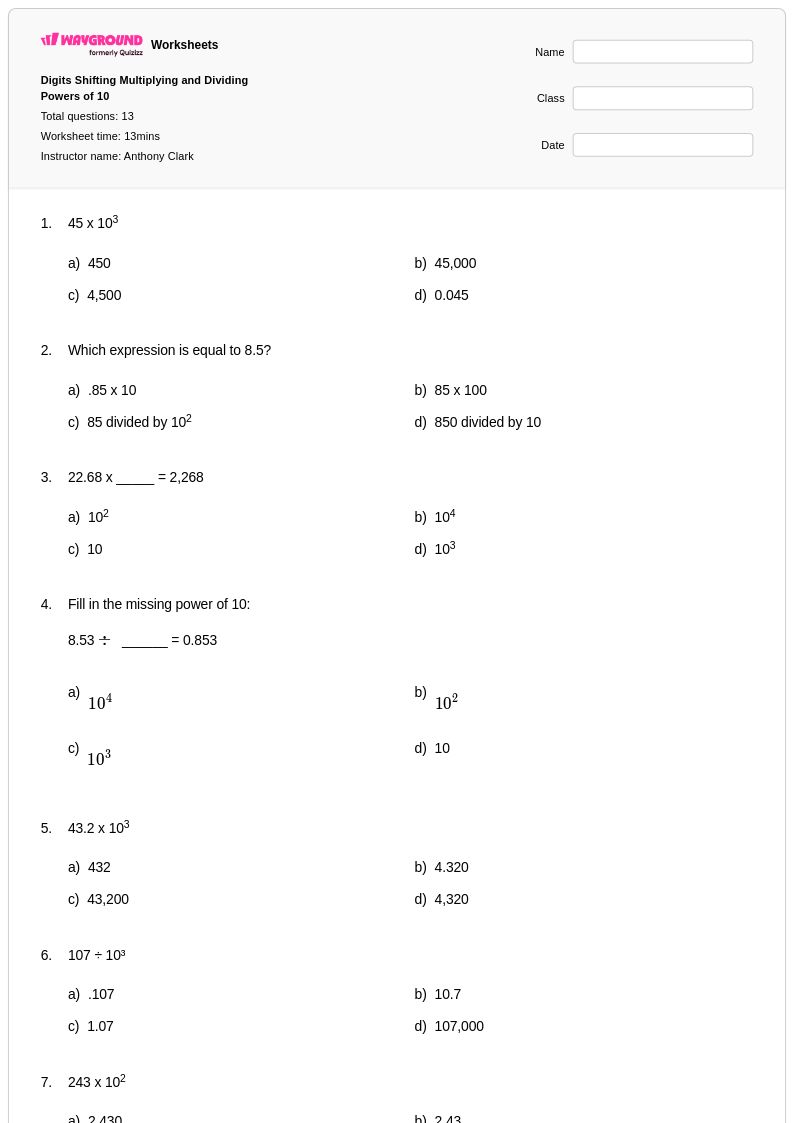
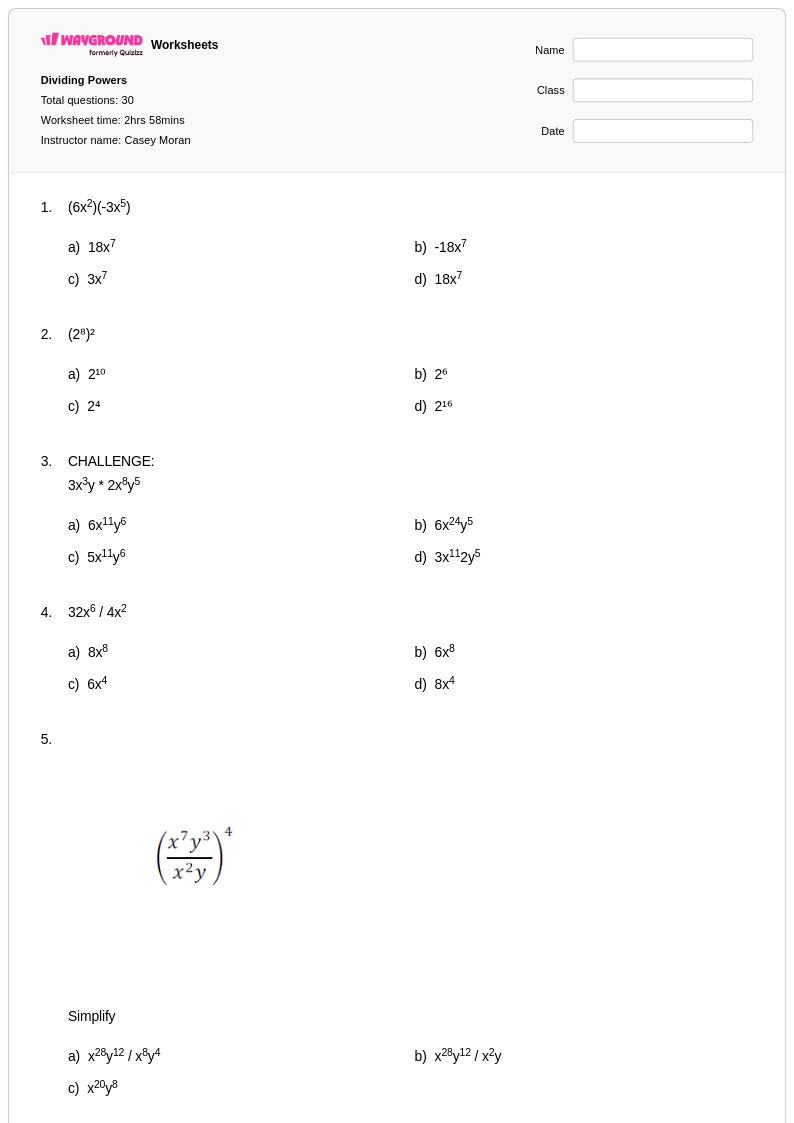
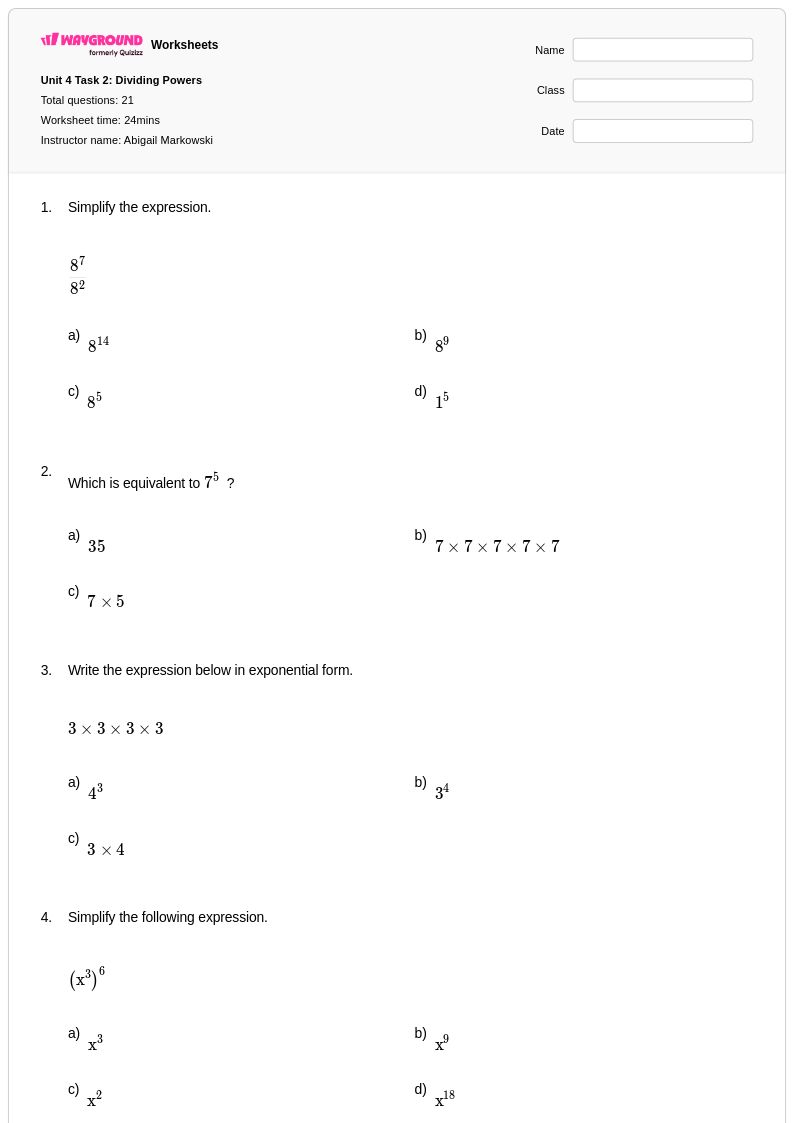
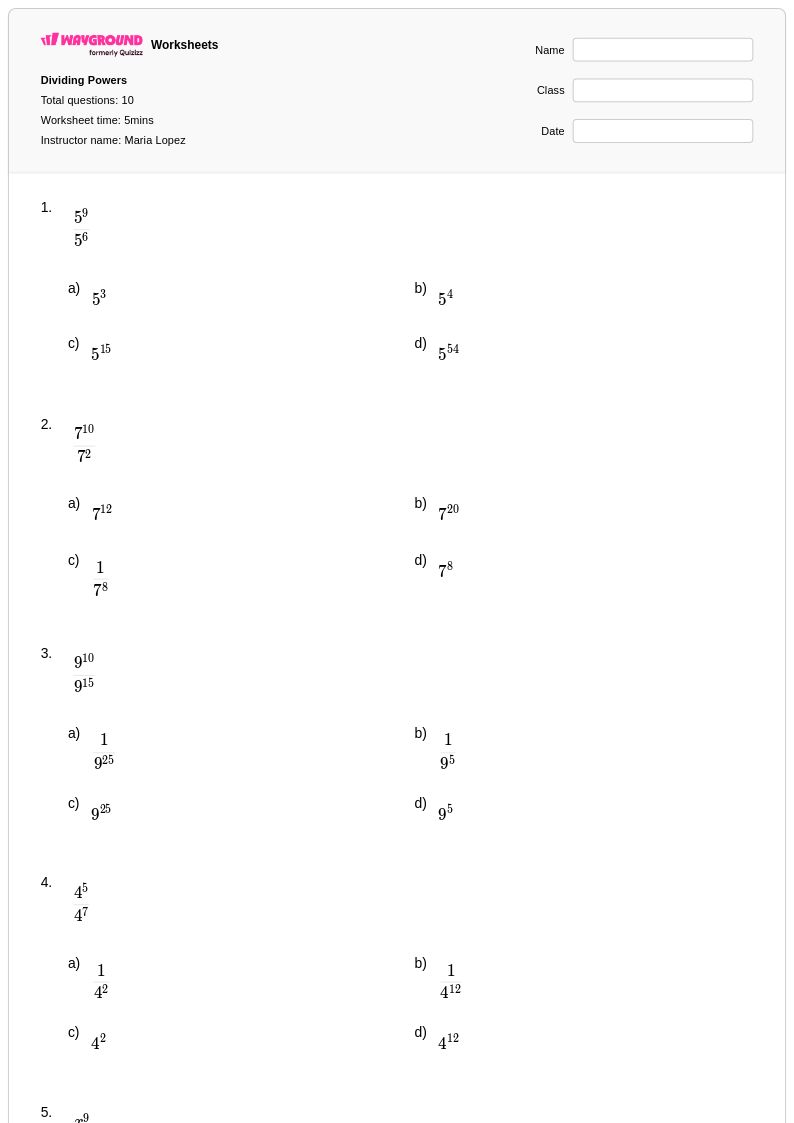
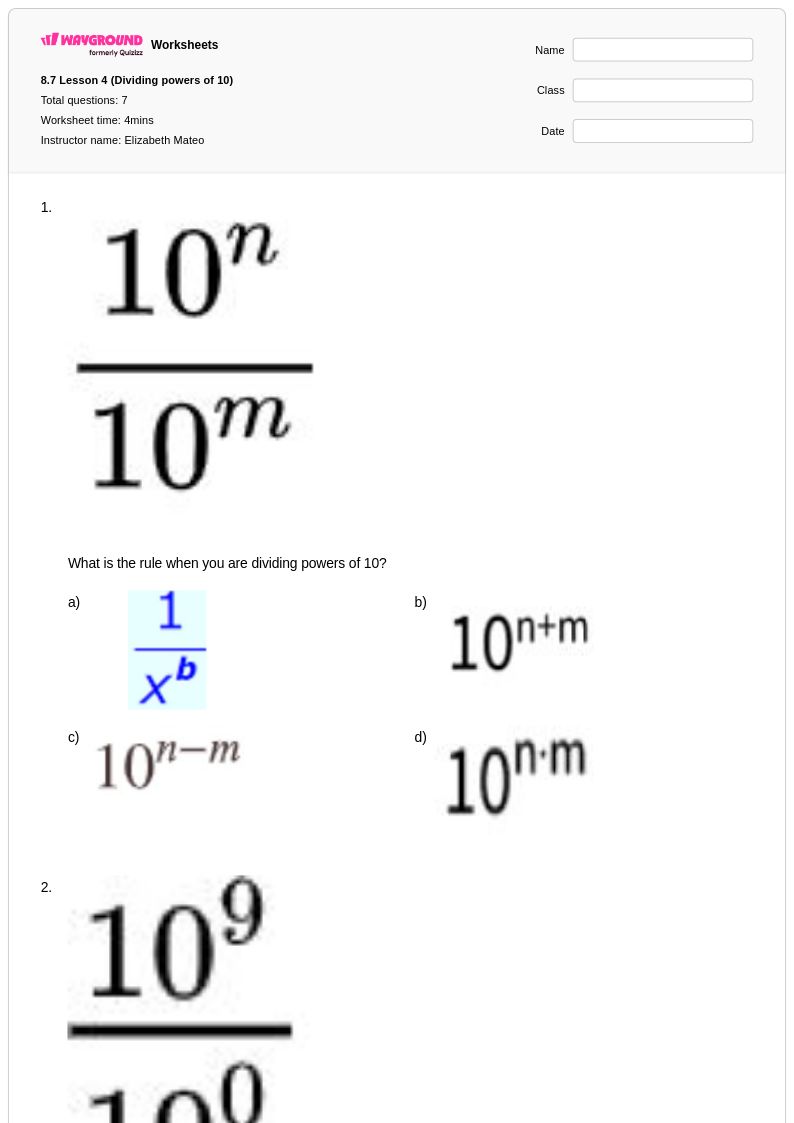
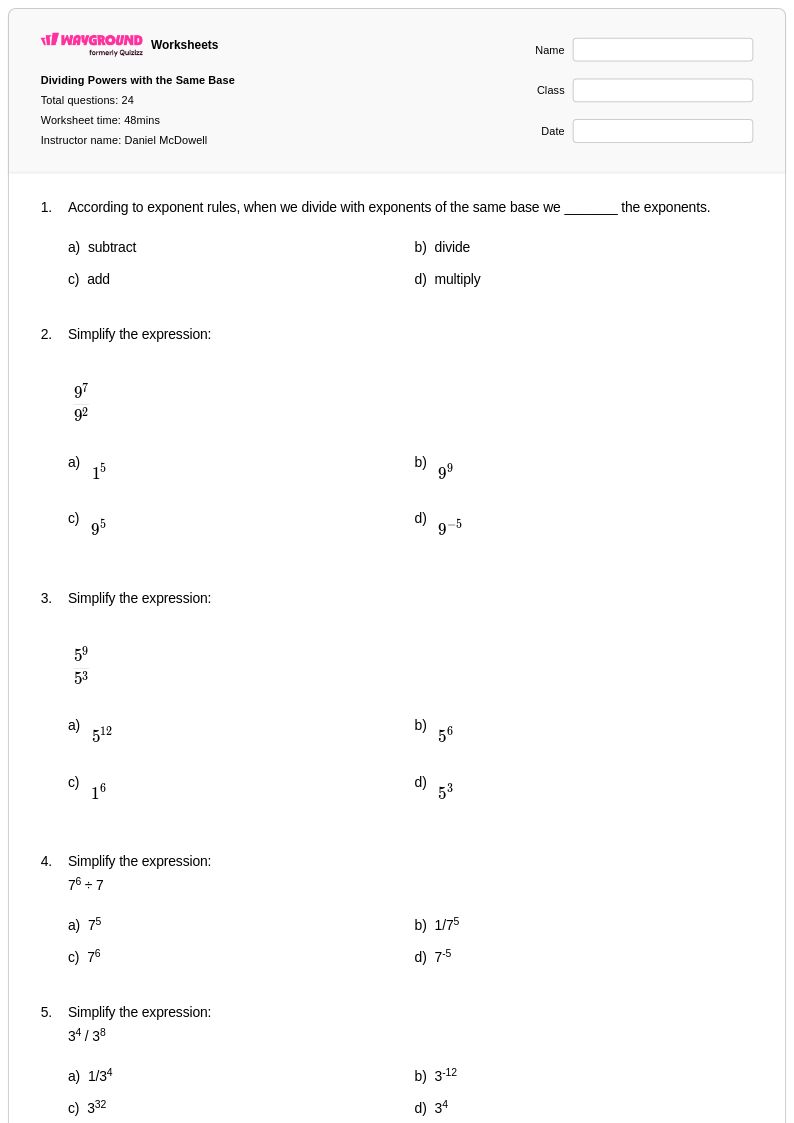
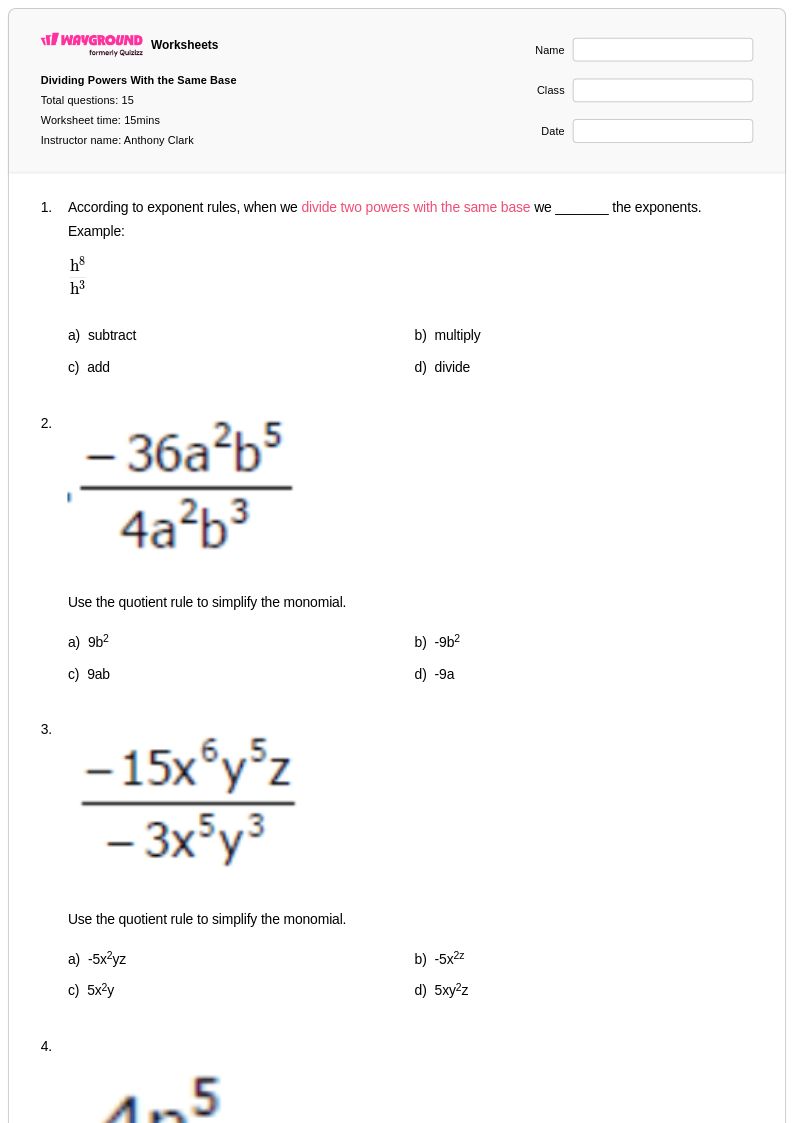
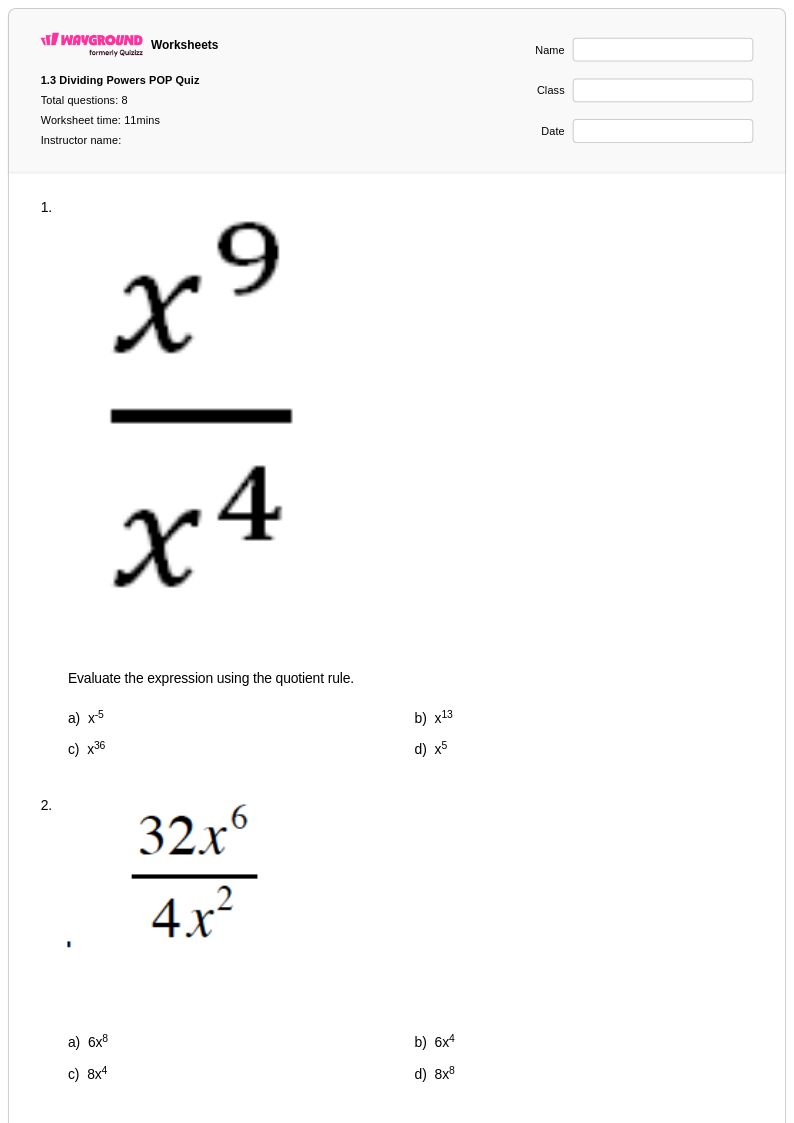
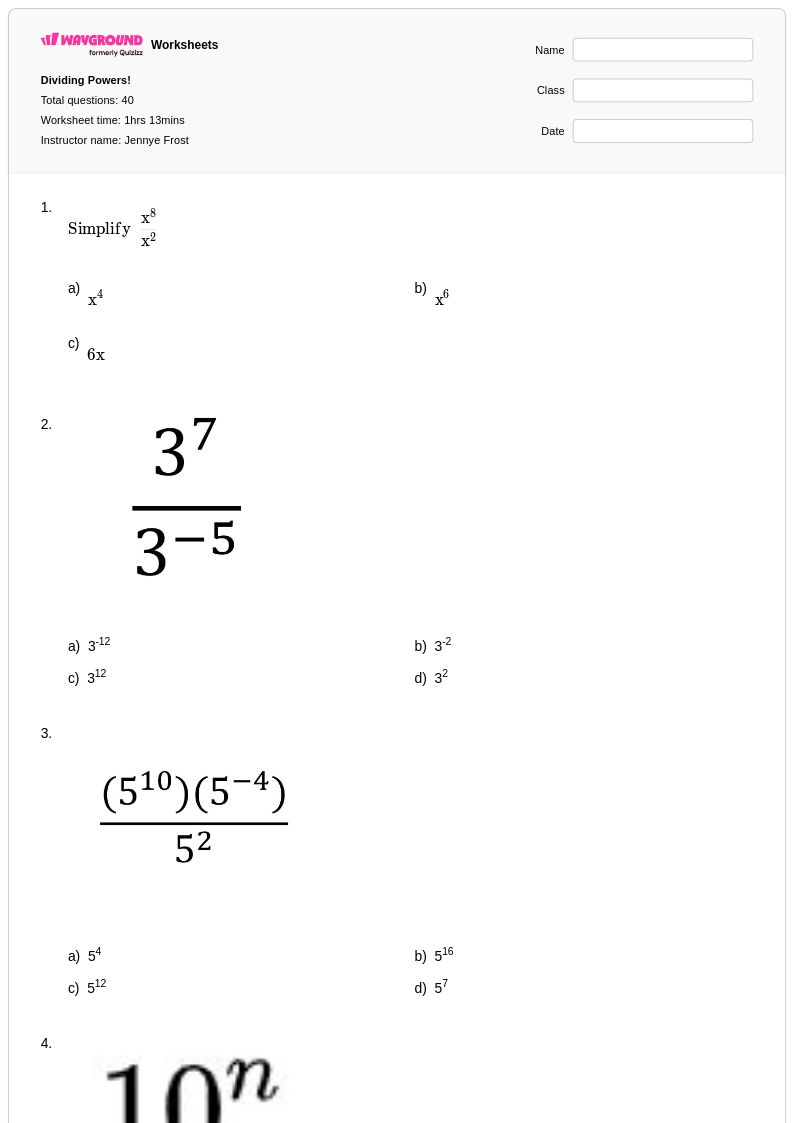
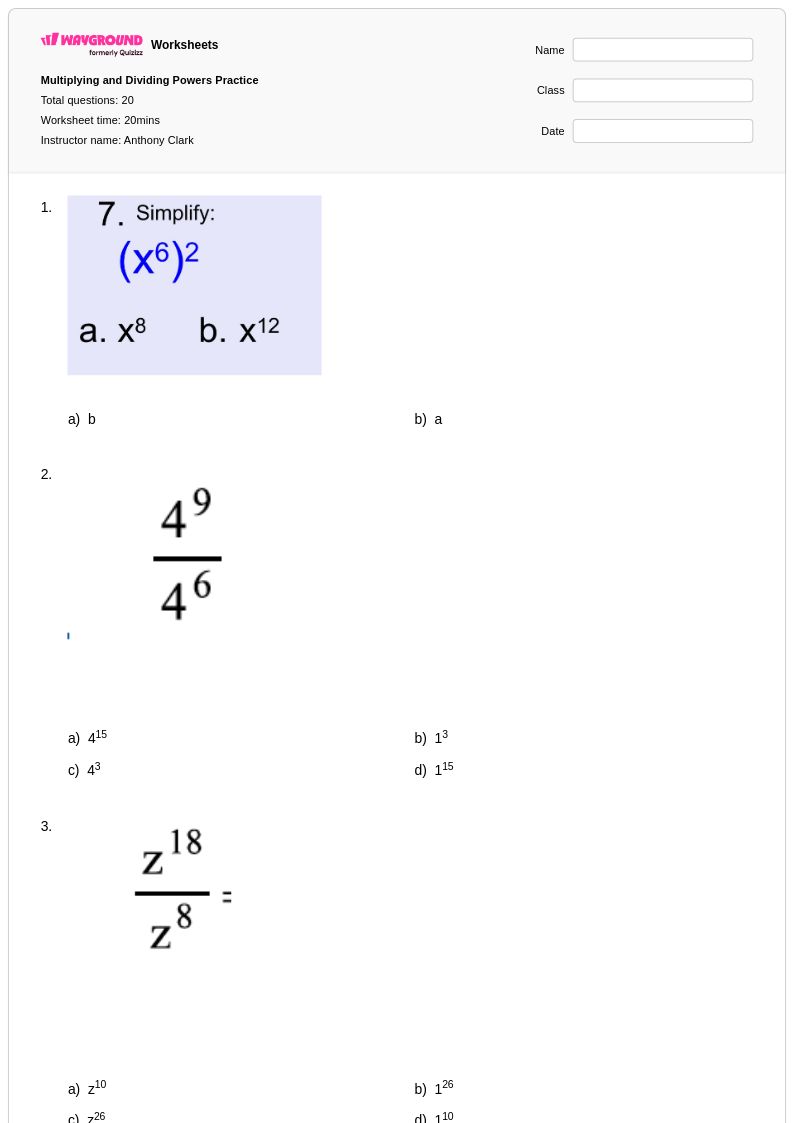
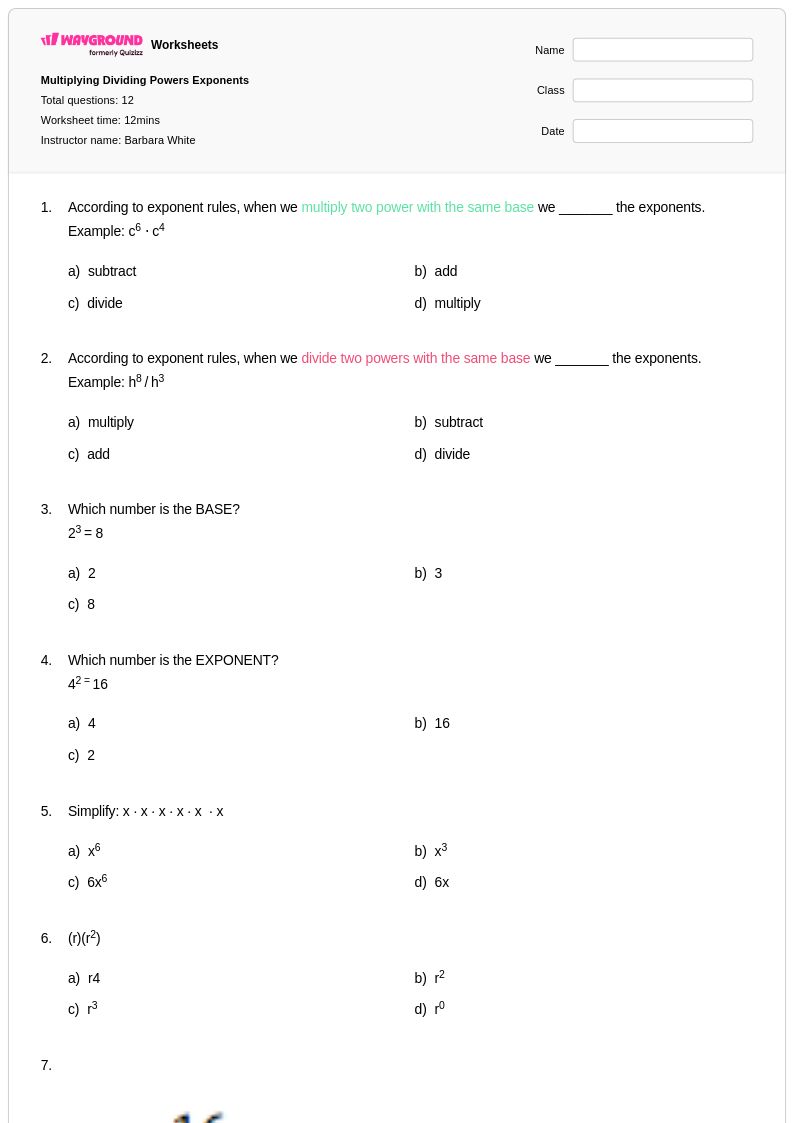
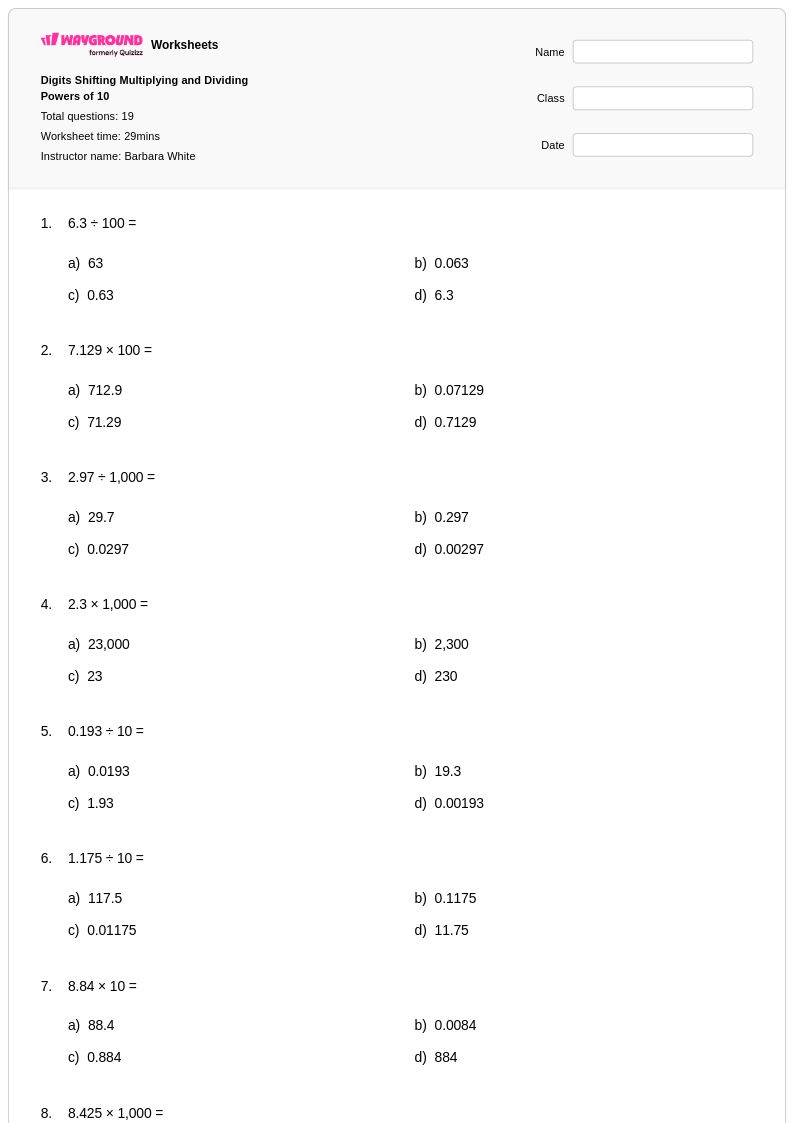
Dividing powers worksheets available through Wayground (formerly Quizizz) provide comprehensive practice with one of the most fundamental operations in exponential mathematics. These carefully designed resources help students master the quotient rule for exponents, which states that when dividing powers with the same base, you subtract the exponents. Students work through systematic practice problems that reinforce understanding of how to simplify expressions like x^7 ÷ x^3 = x^4, building confidence with both numerical and algebraic bases. The worksheets include detailed answer keys that allow students to check their work independently, and the free printable pdf format makes these resources accessible for classroom use, homework assignments, or individual study sessions focused on strengthening exponential manipulation skills.
Wayground (formerly Quizizz) empowers mathematics educators with an extensive collection of millions of teacher-created dividing powers worksheets that can be easily discovered through robust search and filtering capabilities. Teachers can locate materials that align with specific mathematical standards and curriculum requirements, then customize these resources to match their students' varying skill levels and learning needs. The platform's differentiation tools enable educators to modify problem complexity, adjust worksheet length, and incorporate visual aids or scaffolding as needed for different learners. Whether delivered in traditional printable format or through interactive digital pdf versions, these dividing powers worksheets serve multiple instructional purposes including initial skill introduction, targeted remediation for struggling students, enrichment challenges for advanced learners, and ongoing practice to maintain computational fluency with exponential operations.
FAQs
How do I teach dividing powers to students?
Start with the intuition before the rule. Write out x⁷ ÷ x³ in expanded form — seven x's divided by three x's — so students can see the cancellation happening before you name it the quotient rule. Once they've seen why the exponents subtract, move to symbolic practice. The most common sticking point is same-base requirement: students try to apply the rule to expressions like x⁵ ÷ y³, so address that explicitly early.
What exercises help students practice dividing powers?
The most effective practice sequence moves from numerical bases (8⁶ ÷ 8²) to single-variable expressions (x⁷ ÷ x³) to multi-step problems that mix both. Wayground's dividing powers worksheets follow this progression, giving students repeated exposure to the quotient rule across different problem types so the pattern becomes automatic rather than memorized.
What mistakes do students commonly make when dividing powers?
Three errors come up repeatedly: dividing the exponents instead of subtracting them (writing x⁶ ÷ x² = x³ instead of x⁴), applying the rule to different bases, and mishandling the result when the exponents are equal — students often write 0 instead of 1, forgetting that x⁰ = 1. The equal-exponent case is worth a dedicated set of problems before moving on.
How do I use Wayground's dividing powers worksheets in my class?
You can run the worksheet as a digital quiz hosted on Wayground — students submit answers online and you get results instantly — or download the printable PDF and assign it on paper, which works well for classrooms limiting screen time. Either way, every worksheet includes a complete answer key. If you go the paper route, the Wayground for Teachers app lets you scan or capture student work to grade submissions without re-entering everything by hand.
Is dividing powers aligned to Common Core standards?
Yes. Common Core addresses properties of exponents in the expressions and equations domain, where students are expected to apply rules like the quotient rule to simplify expressions with integer exponents. Dividing powers builds directly from students' earlier work with multiplication and place value, and it lays the groundwork for working with negative exponents and scientific notation — both of which depend on fluent use of the quotient rule.
How can I differentiate dividing powers practice for mixed-ability classes?
For students who struggle with the abstract rule, Wayground's worksheet-level tools let you increase font size or apply a dyslexia-friendly font to reduce visual load, and you can enable Read Aloud so problem text is read to them. For the digital version, you can also reduce the number of answer choices for students who need it, keeping the math the same while lowering the cognitive overhead of selecting an answer. These settings are saved per student, so the rest of the class sees the default version without any disruption.