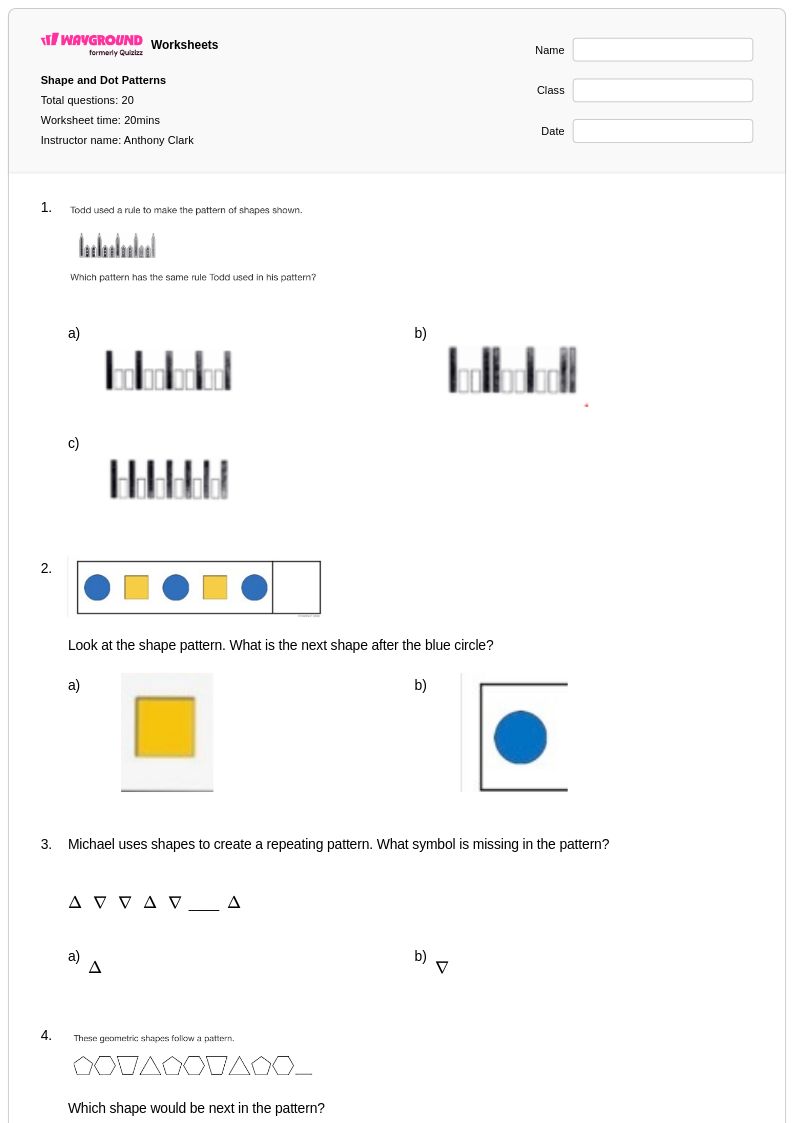
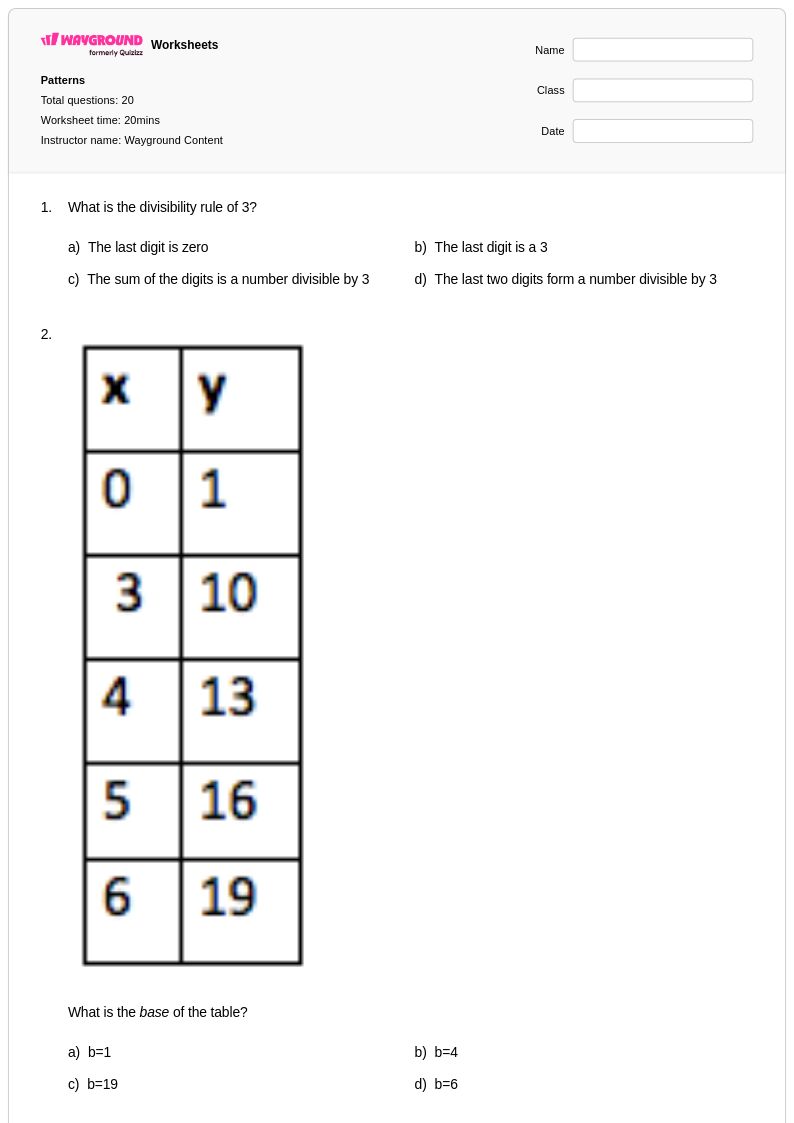
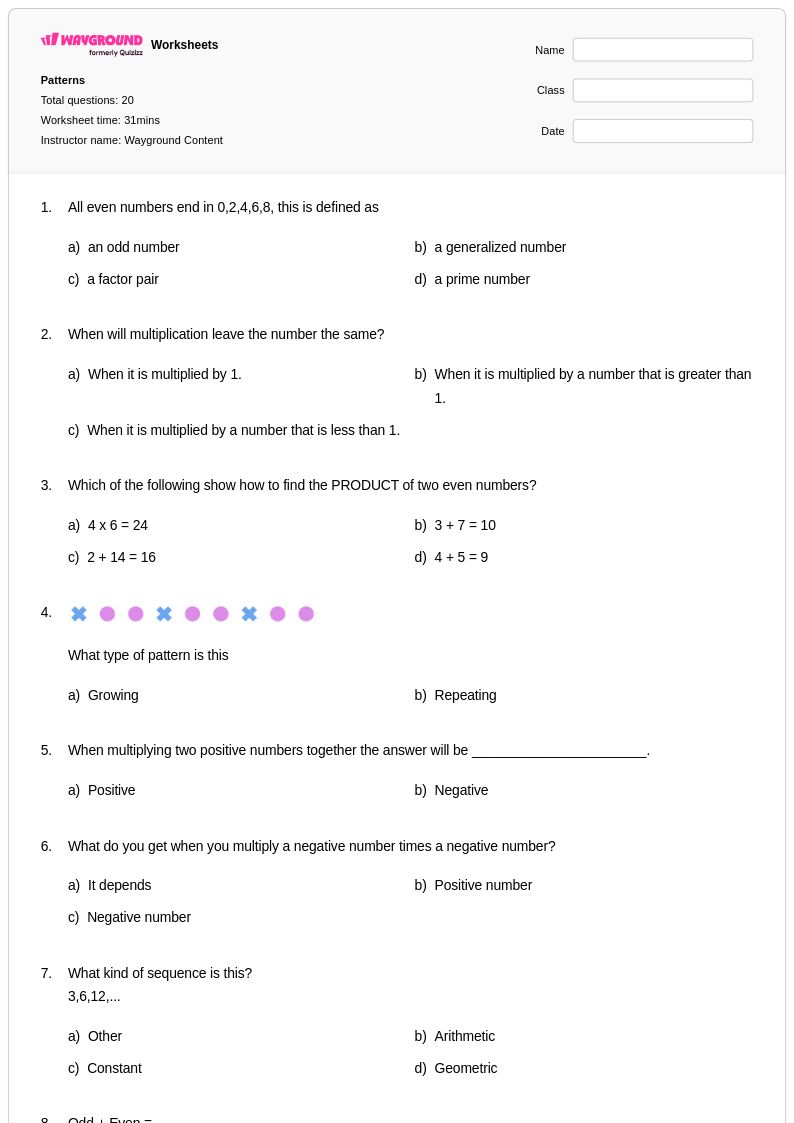
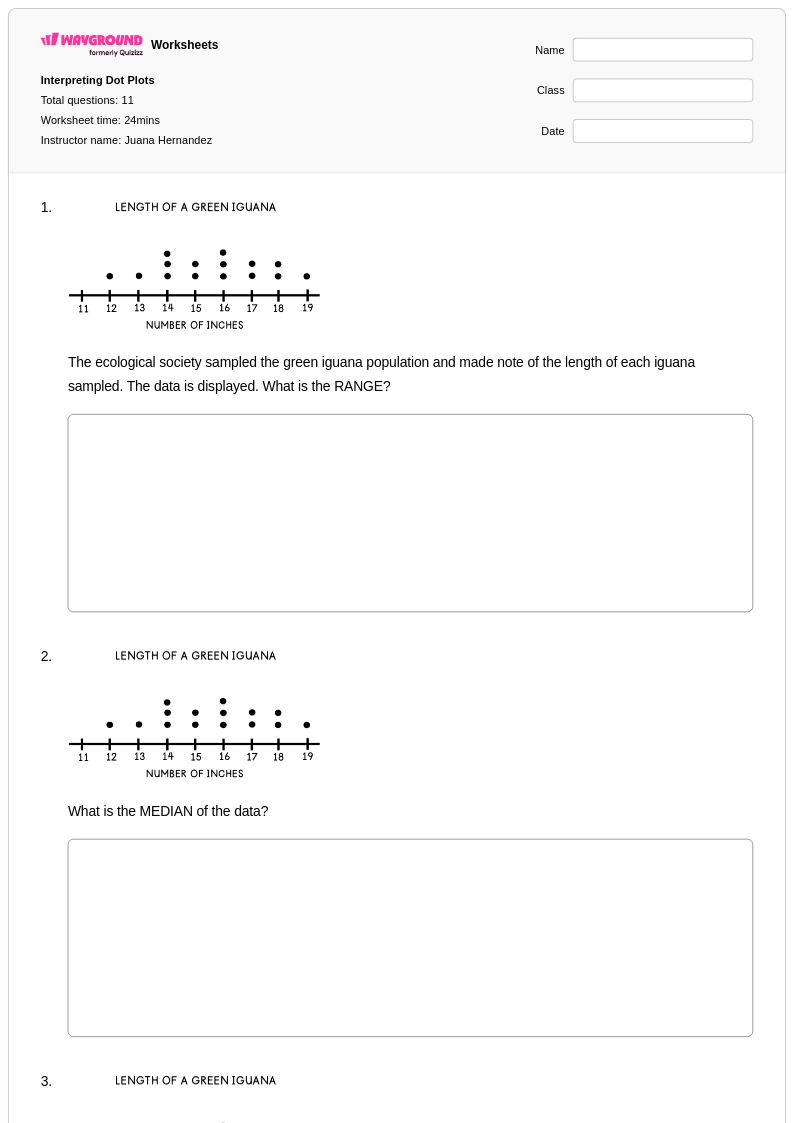
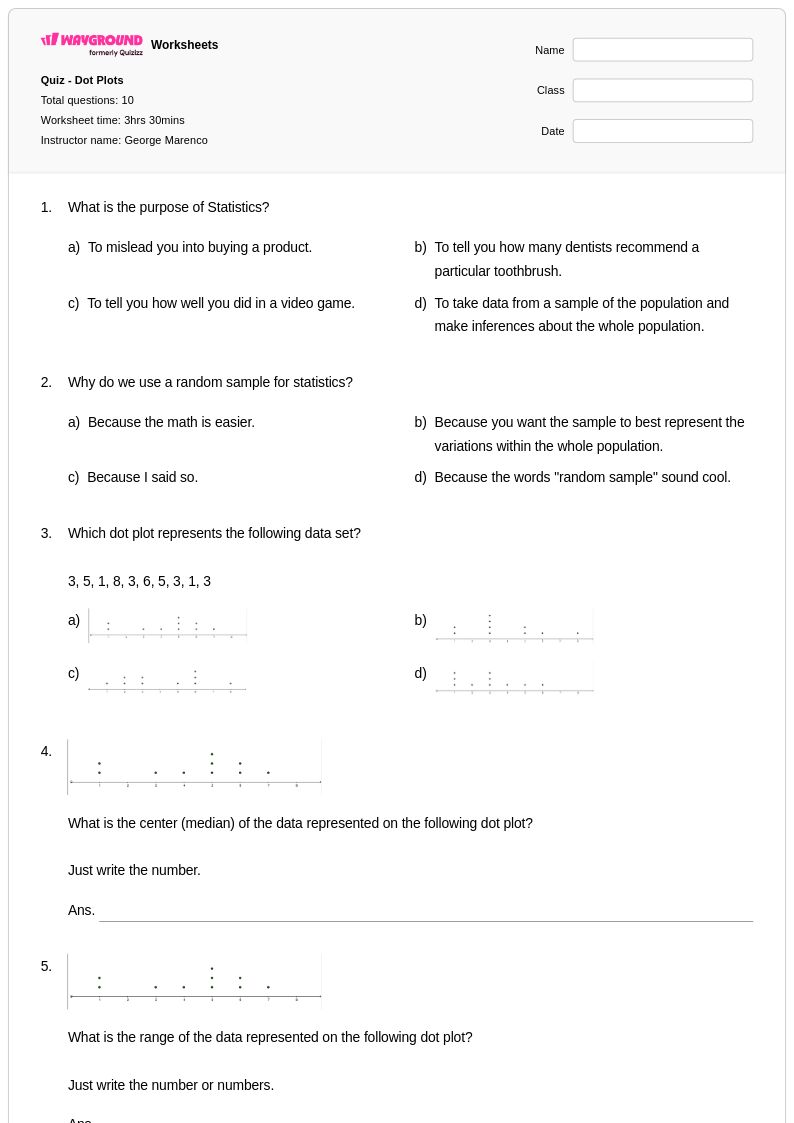
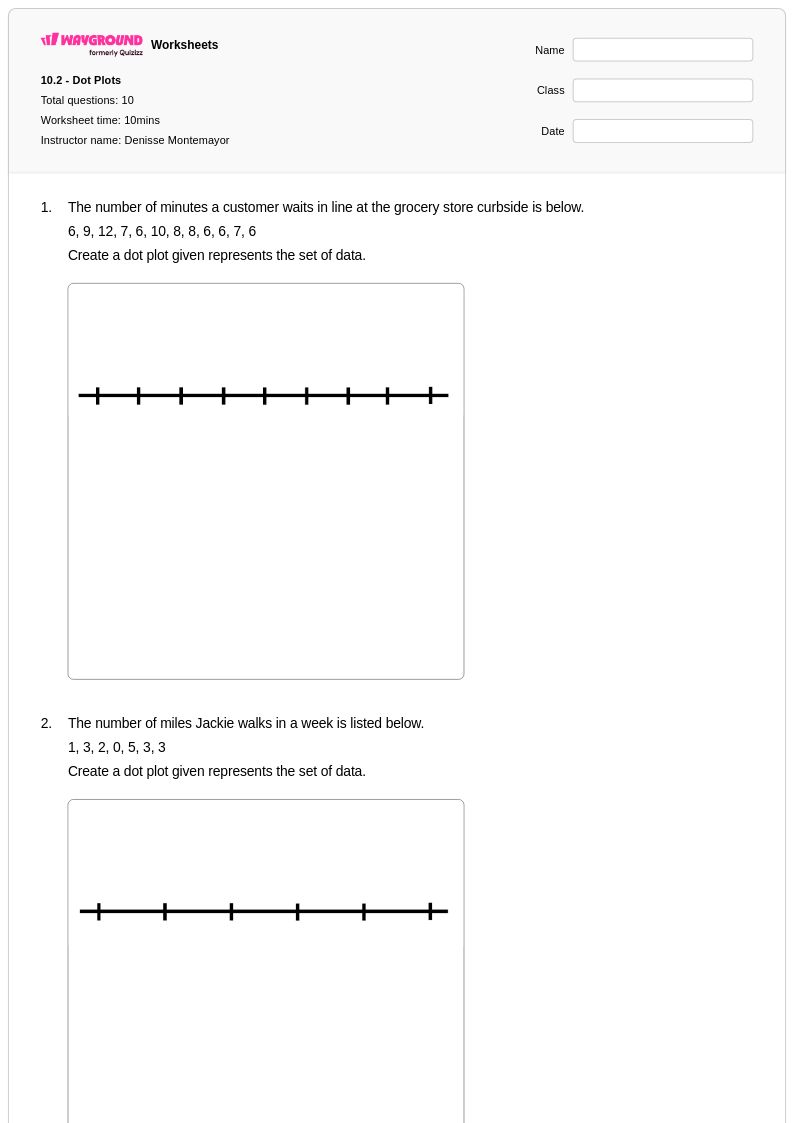
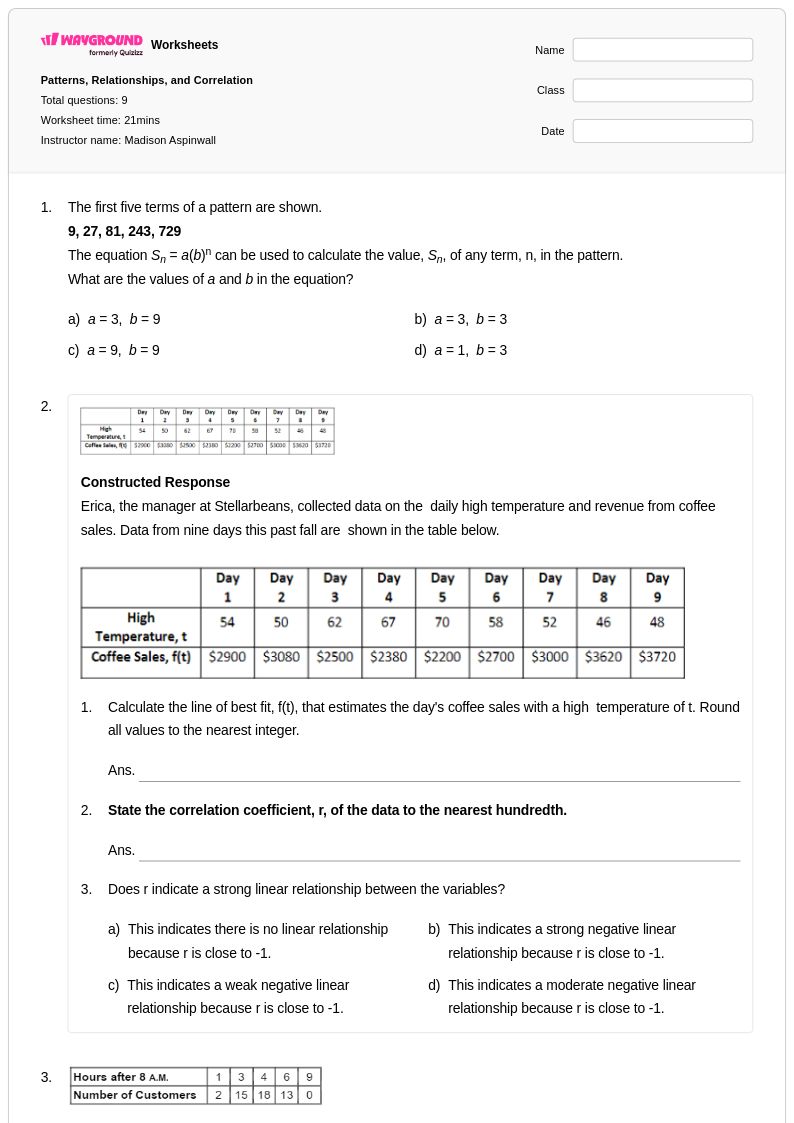
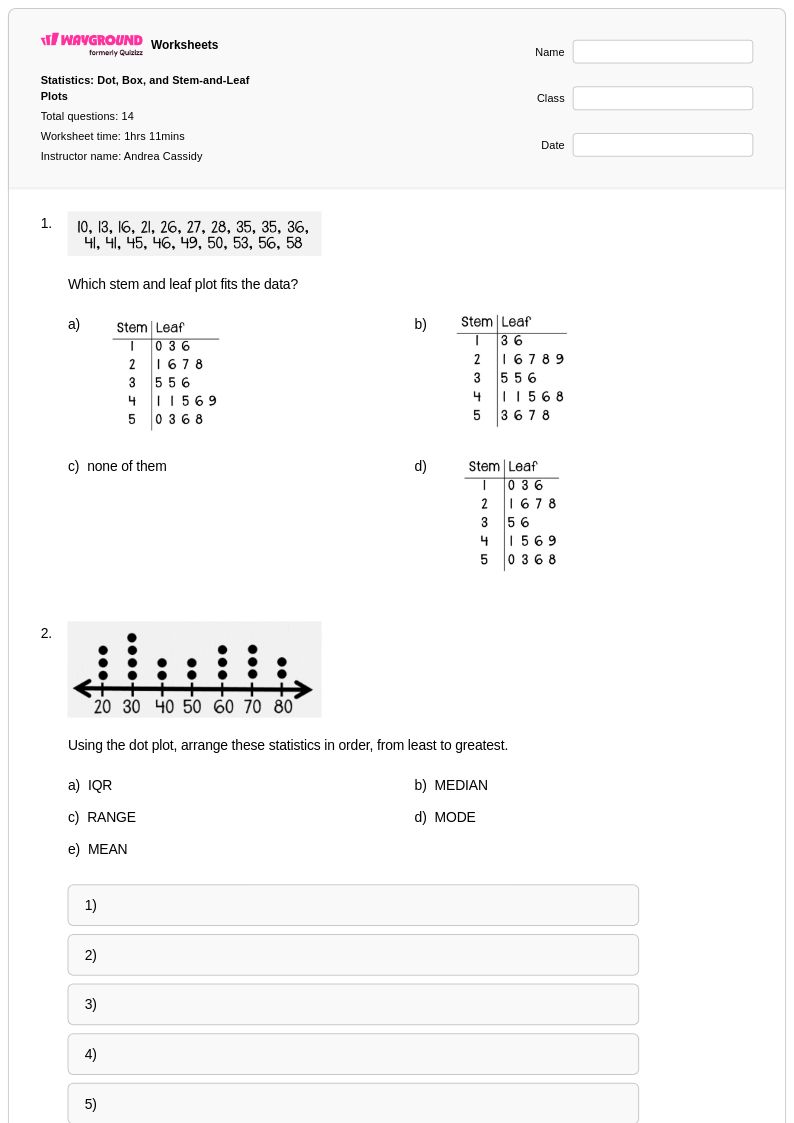
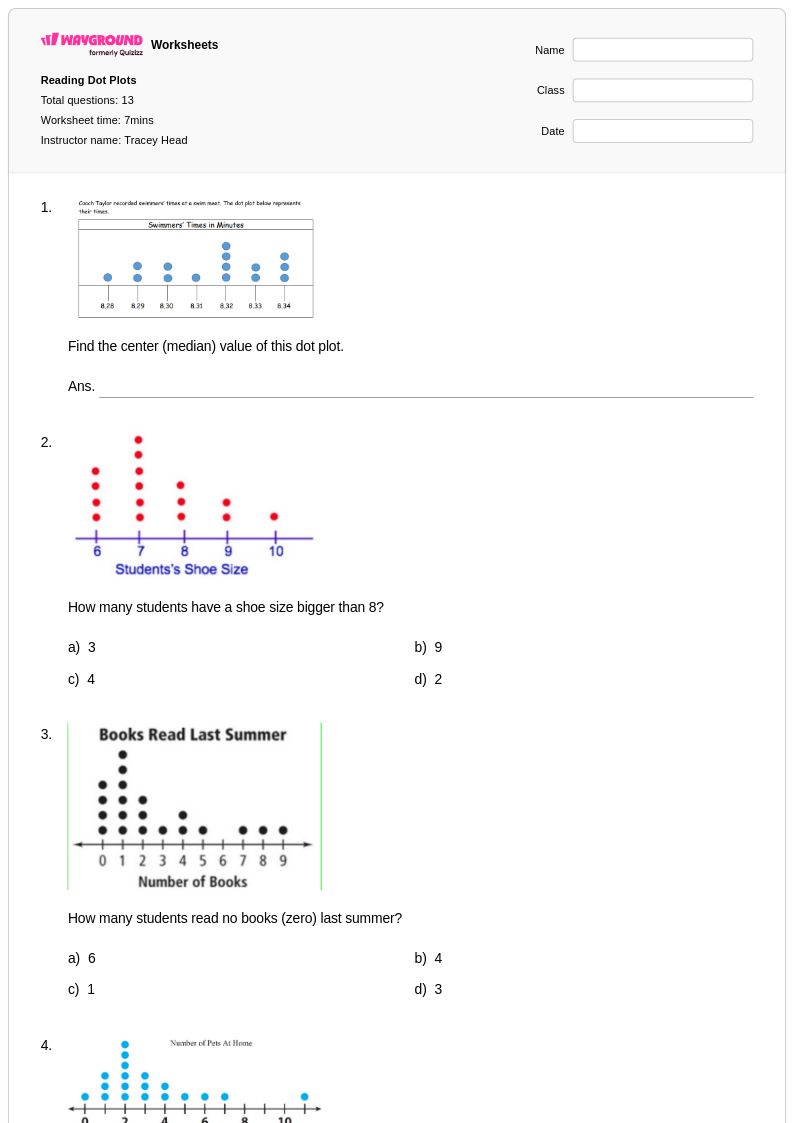
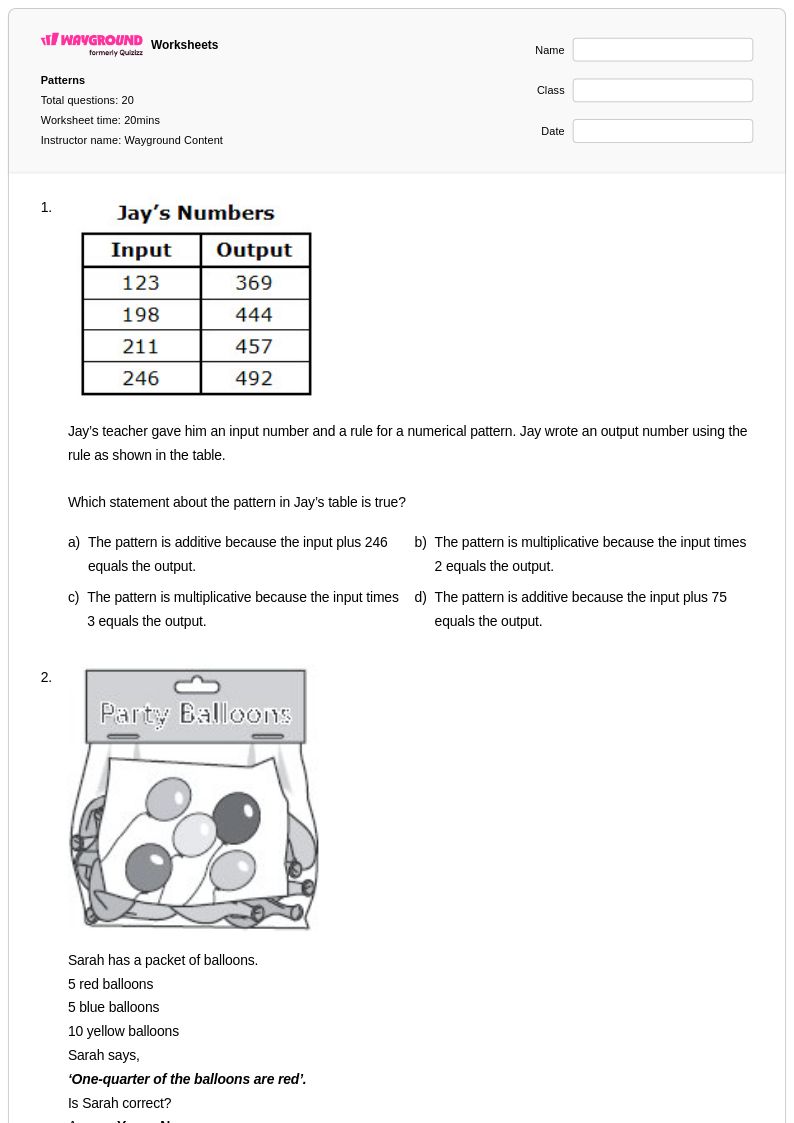
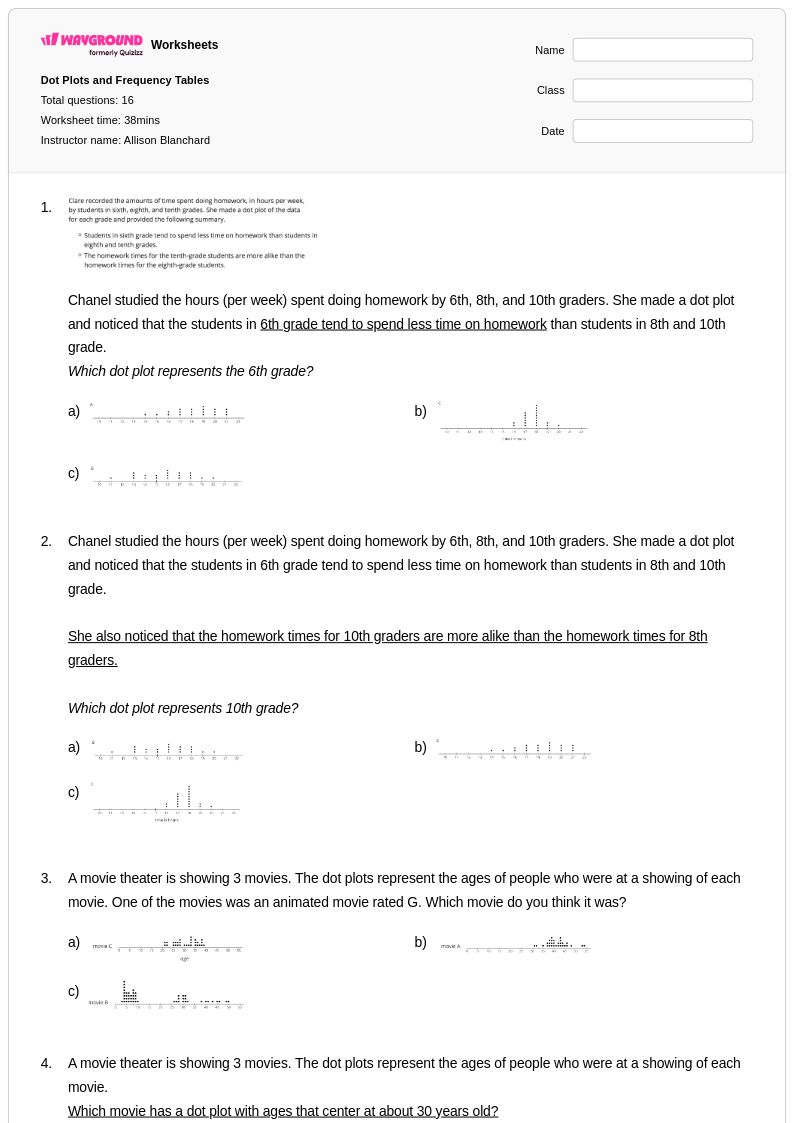
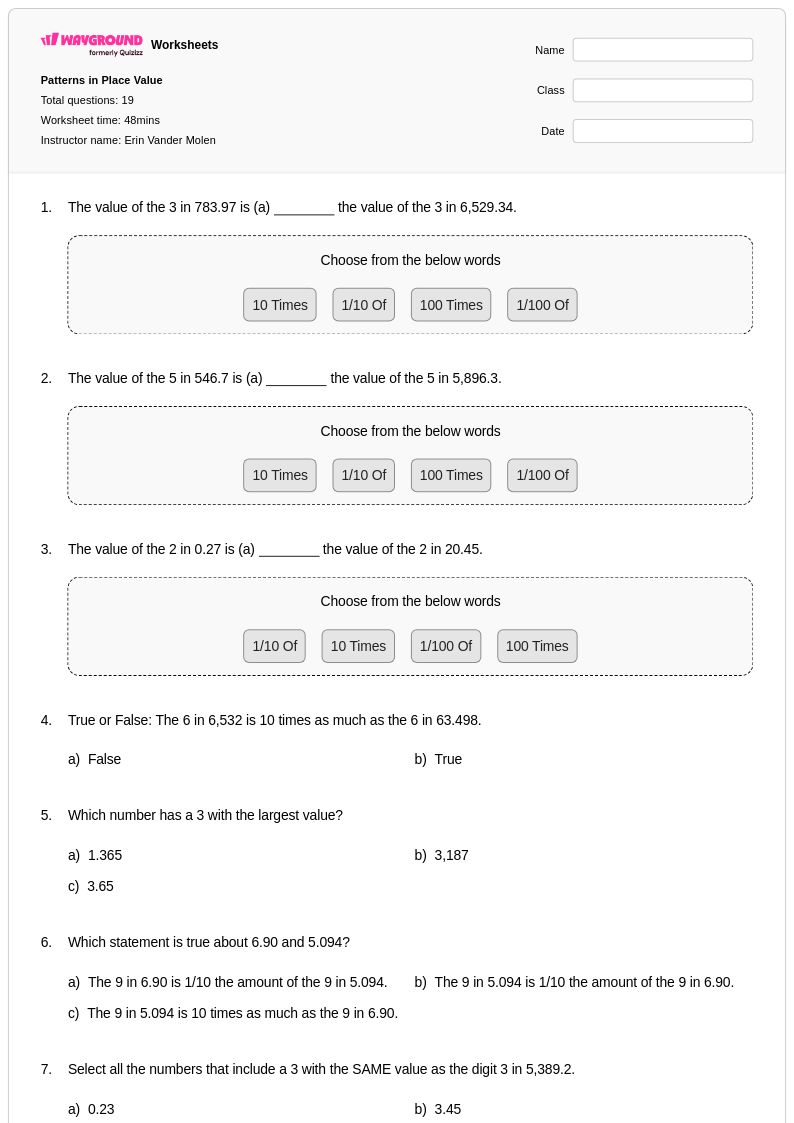
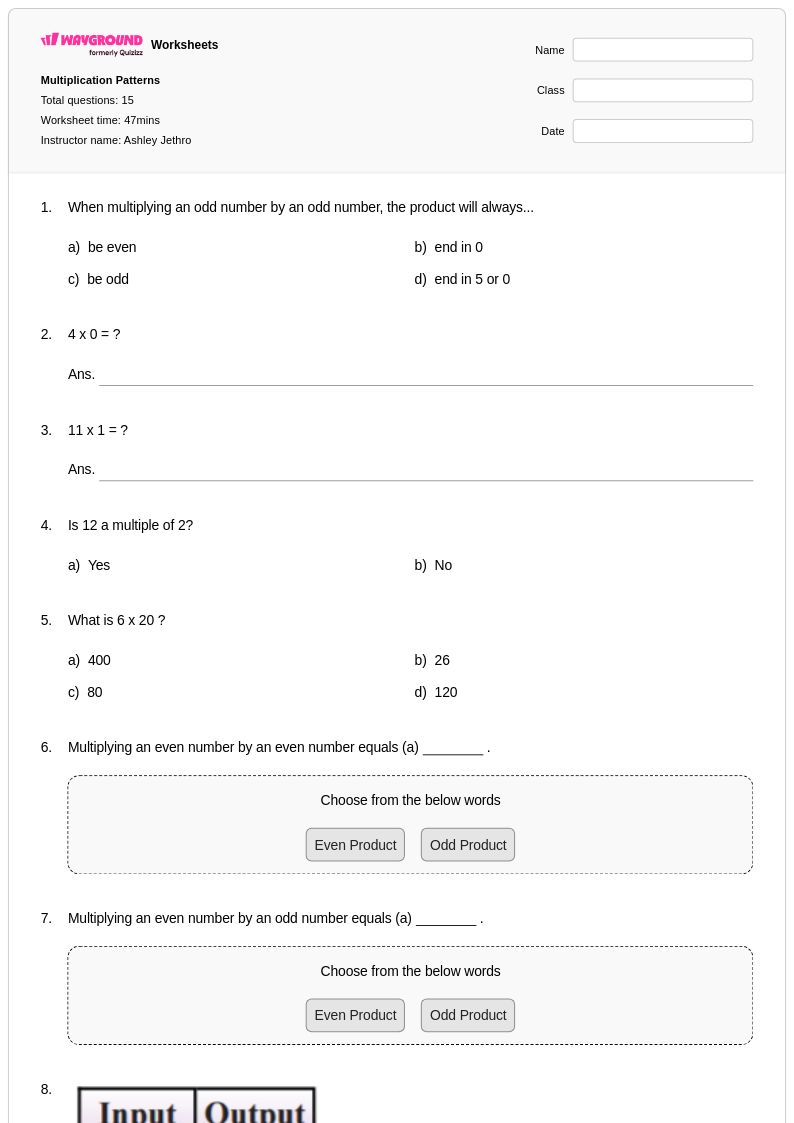
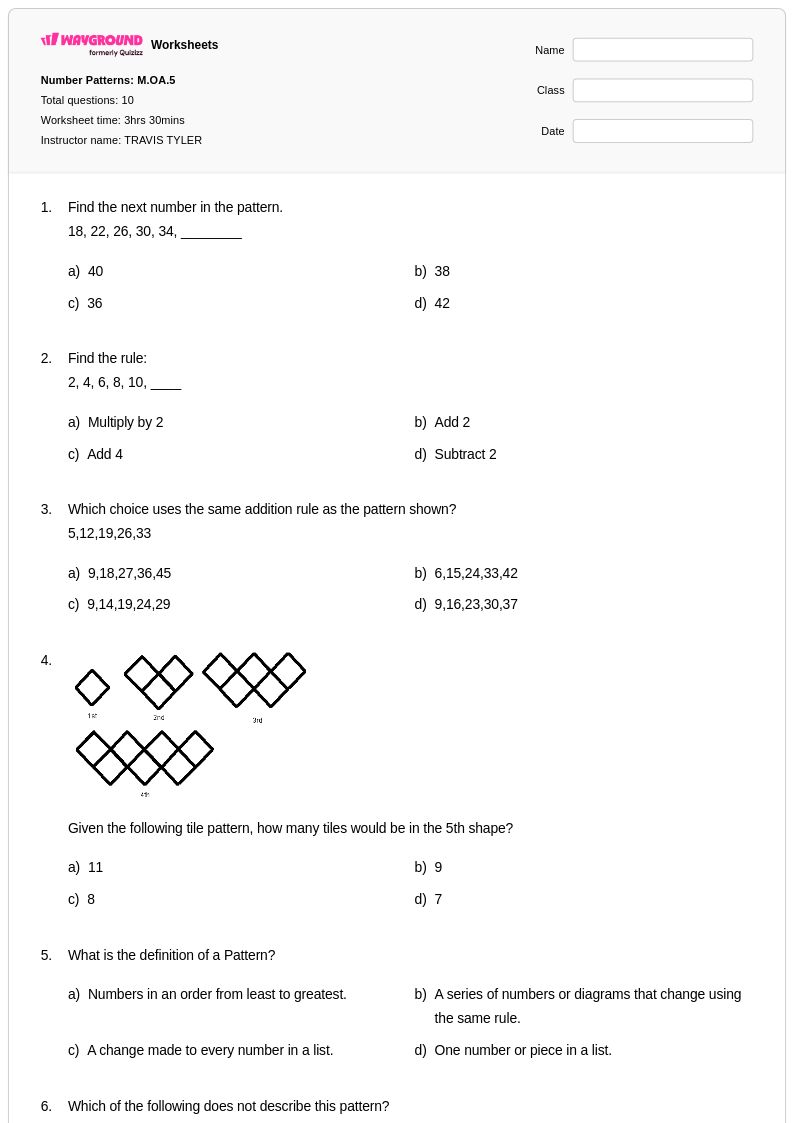
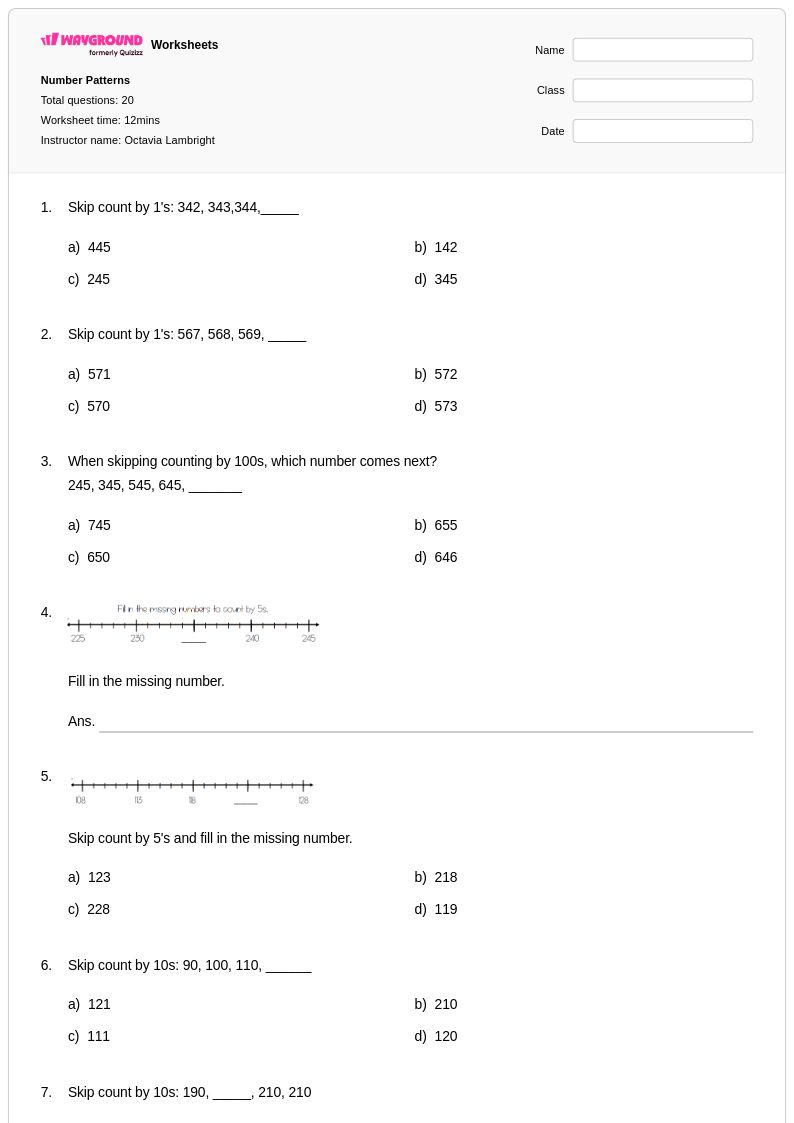
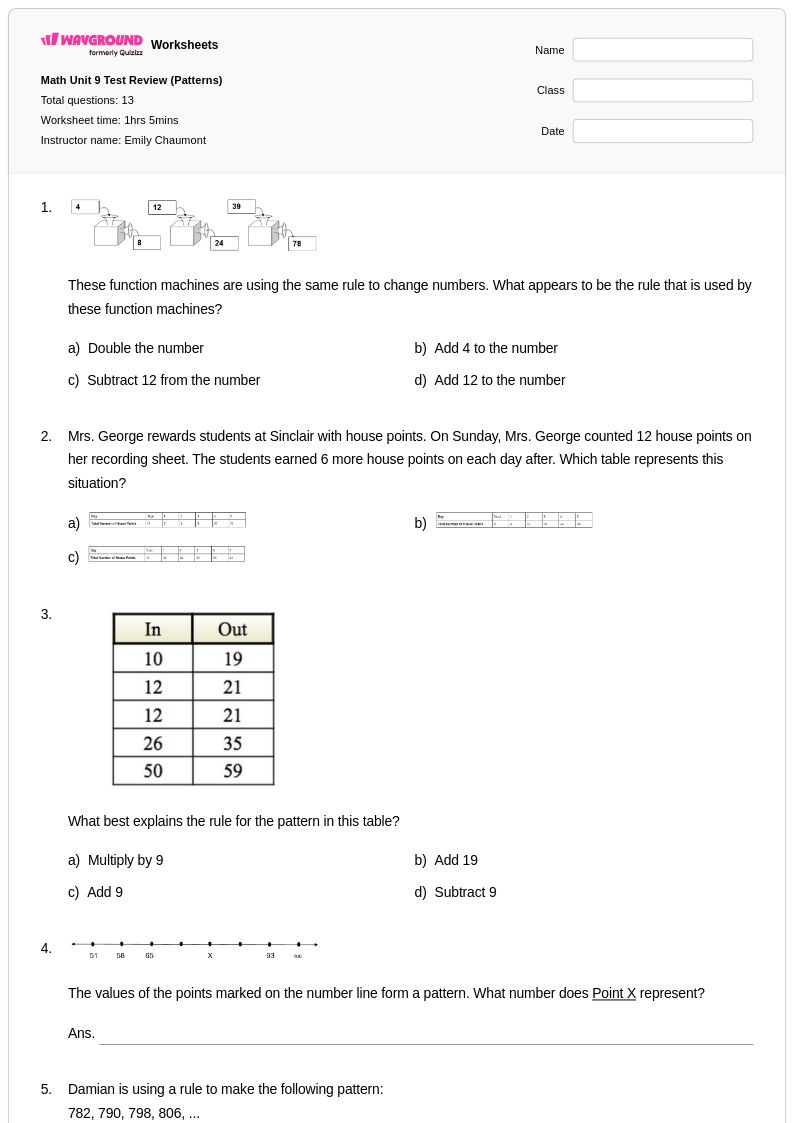
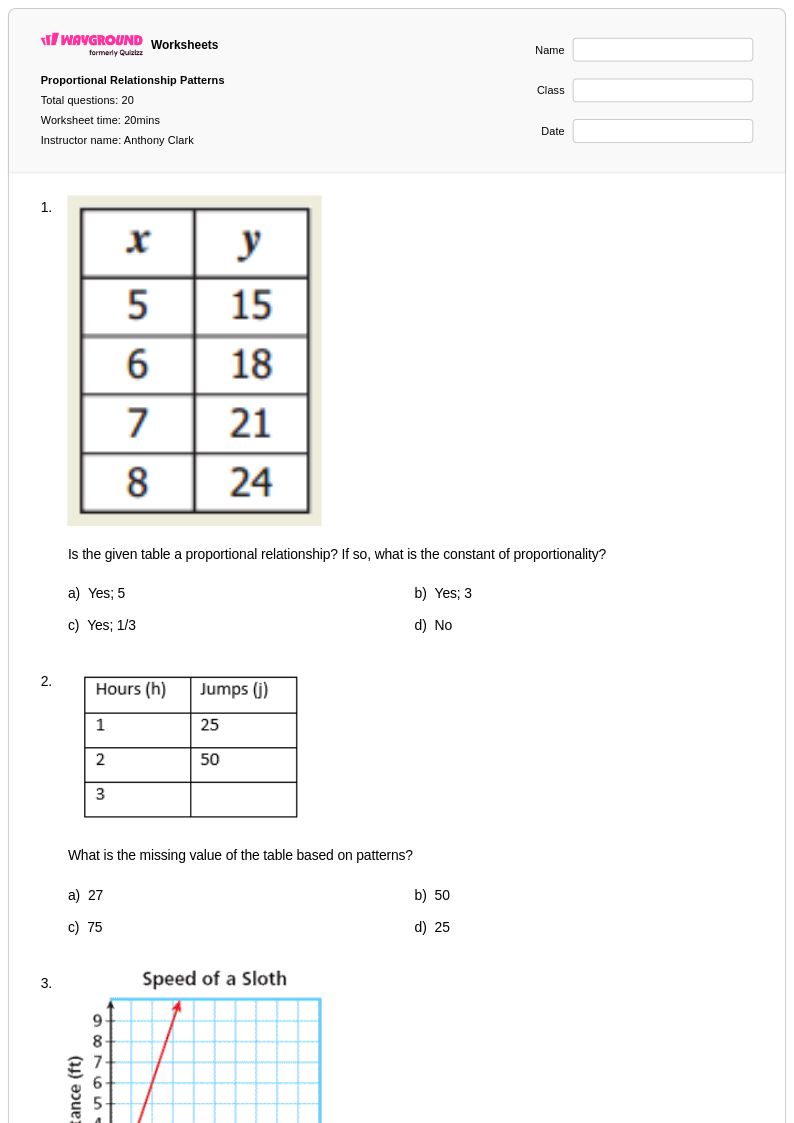
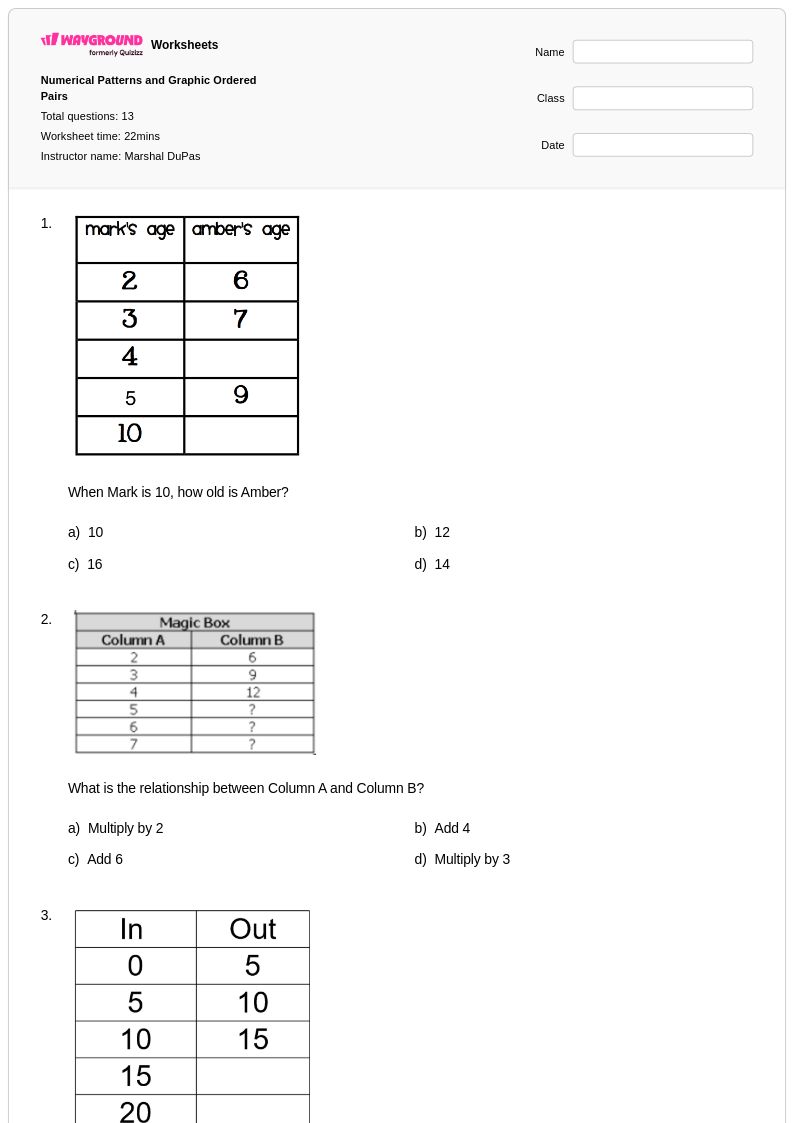
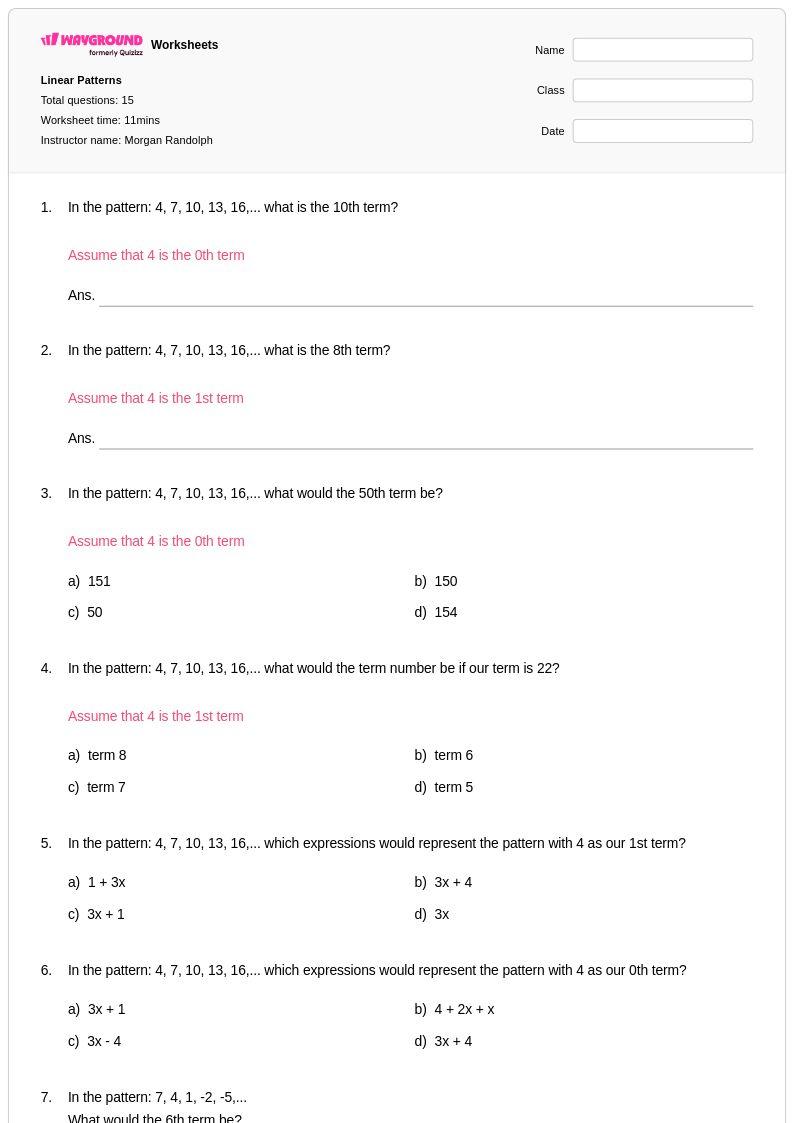
Explore Wayground's free dot patterns worksheets and printables that help students develop essential number sense skills through visual pattern recognition, counting practice problems, and structured exercises with complete answer keys.
Dot patterns worksheets available through Wayground (formerly Quizizz) provide essential foundational practice for developing strong number sense skills in mathematics education. These carefully designed printable resources help students recognize numerical relationships through visual representations, strengthening their ability to subitize, count systematically, and understand quantity without relying solely on verbal counting methods. Each worksheet contains practice problems that guide learners through identifying patterns in dot arrangements, connecting visual representations to numerical values, and building conceptual understanding of numbers through spatial reasoning. The comprehensive collection includes answer keys and free pdf downloads that support both independent practice and guided instruction, allowing students to develop fluency in recognizing quantities at a glance while building the mental number flexibility crucial for future mathematical success.
Wayground (formerly Quizizz) empowers mathematics educators with millions of teacher-created dot pattern resources that streamline lesson planning and support differentiated instruction across diverse learning needs. The platform's robust search and filtering capabilities enable teachers to quickly locate worksheets aligned with specific standards and learning objectives, while customization tools allow for seamless modification of content difficulty and format. These digital and printable materials serve multiple instructional purposes, from initial skill introduction and remediation support to enrichment activities for advanced learners, ensuring that every student receives appropriate challenge levels in developing number sense foundations. The flexibility of accessing resources in both interactive digital formats and traditional pdf printables accommodates various classroom environments and teaching preferences, making it simple for educators to integrate dot pattern practice into daily math instruction, homework assignments, or intervention programs.
FAQs
How do I teach dot patterns in math?
Start with small quantities (1–5 dots) in familiar arrangements like dice faces or domino patterns, where students can recognize the amount without counting. Once students can subitize those reliably, introduce ten frames and arrays to extend the same visual logic to larger numbers. The key is moving from 'I see 3' to 'I see 2 and 2 more, so that's 4' — that decomposition habit is what builds number sense, not just pattern memorization.
What skills do dot pattern worksheets actually build?
Dot pattern practice develops subitizing — the ability to recognize a quantity instantly without counting one by one. That skill underpins mental addition, number bonds, and eventually multiplication, because students who can 'see' groups of dots don't need to recount from scratch every time. Worksheets that ask students to match dot arrangements to numerals, complete partial patterns, or compare two arrangements give that skill repeated, low-stakes reps.
What mistakes do students commonly make with dot patterns?
The most common issue is reverting to one-by-one counting even when the arrangement is familiar — students who haven't internalized subitizing will count every dot on a standard dice face rather than recognize it. A second pattern: students recognize a quantity in one arrangement (say, a 3×2 array) but fail to recognize the same quantity in a different layout, which signals they've memorized a shape rather than understood the number. Watch for both.
How do I use Wayground's dot pattern worksheets in my classroom?
Each worksheet is available as a printable PDF with a complete answer key, so you can hand it out as a warm-up, center activity, or homework with no extra prep. If you're running a digital session, you can host the same worksheet as an interactive quiz on Wayground. For paper submissions, the Wayground for Teachers app lets you scan or capture student work to grade it without re-entering anything manually.
How do dot patterns fit into the Common Core math progression?
Common Core builds early number sense by asking students to understand quantities and their relationships before moving to formal operations. Dot pattern work directly supports that foundation: students who can subitize and decompose small quantities visually are better prepared for the addition and subtraction strategies Common Core emphasizes in kindergarten through second grade, where composing and decomposing numbers (e.g., knowing 7 is 5 and 2) is a central expectation.
Can I use dot pattern worksheets with students at different skill levels in the same class?
Yes. In Wayground, you can generate alternate versions of the same worksheet with adjusted font size, wider spacing, or a dyslexia-friendly font for students who need it. For students who struggle with visual discrimination, the Read Aloud accommodation can narrate question prompts, and Reduced Answer Choices lowers the cognitive load on matching tasks. Students who need more time on each problem can be given extended time individually — other students won't see any difference in their own experience.