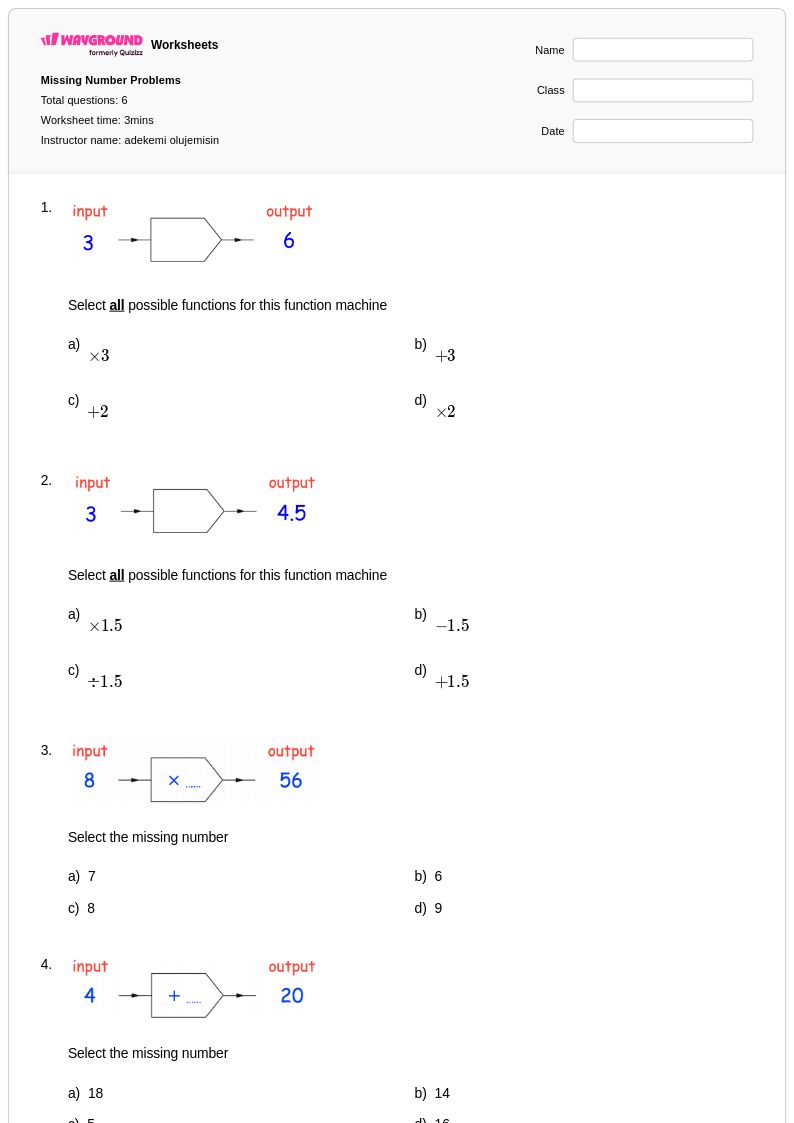
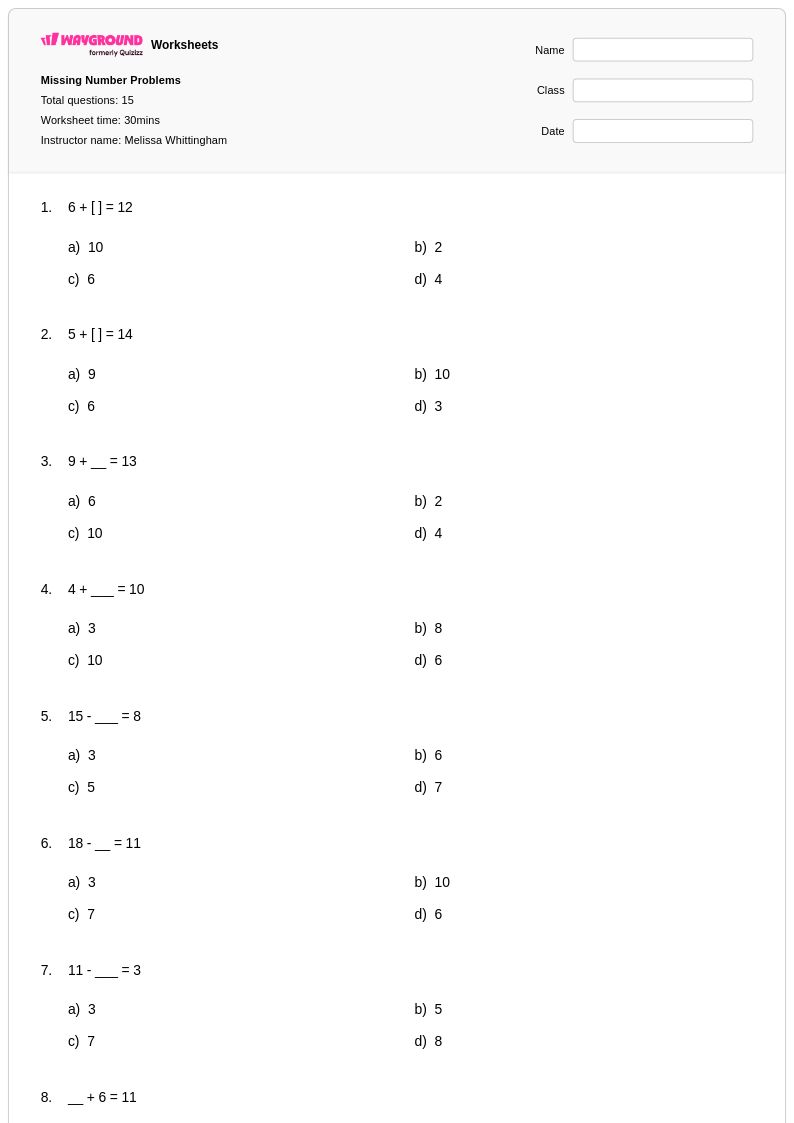
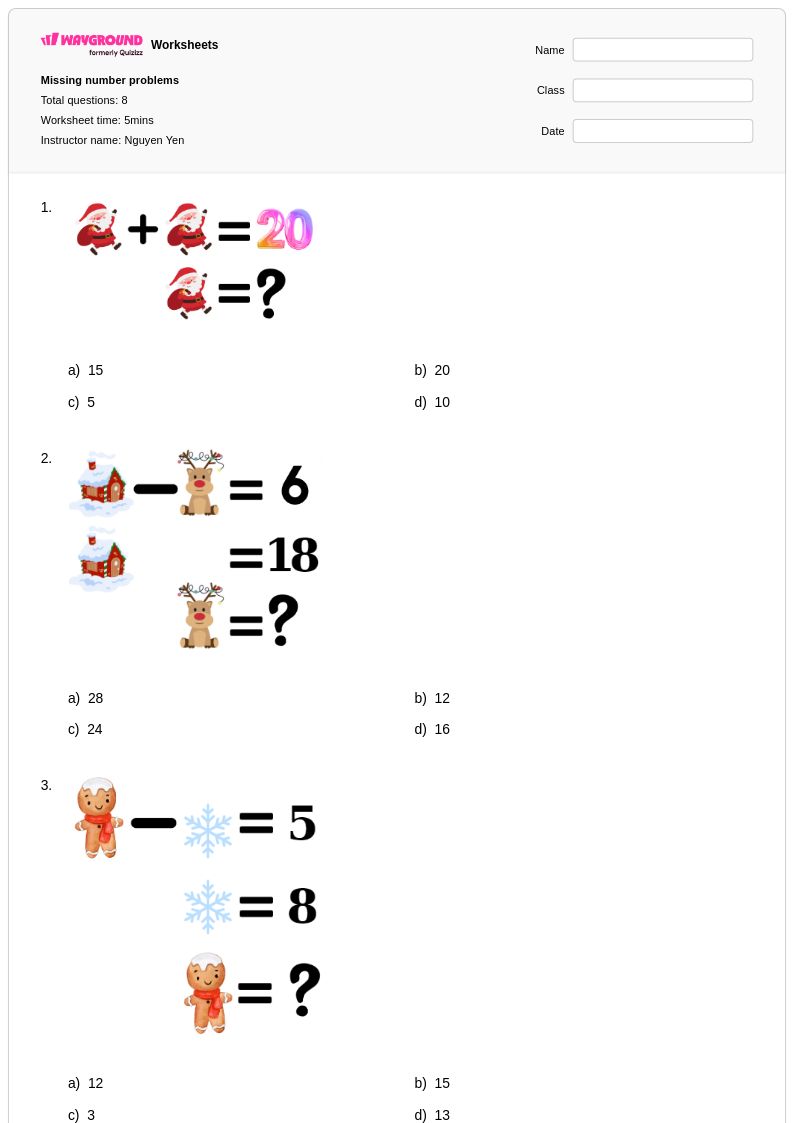
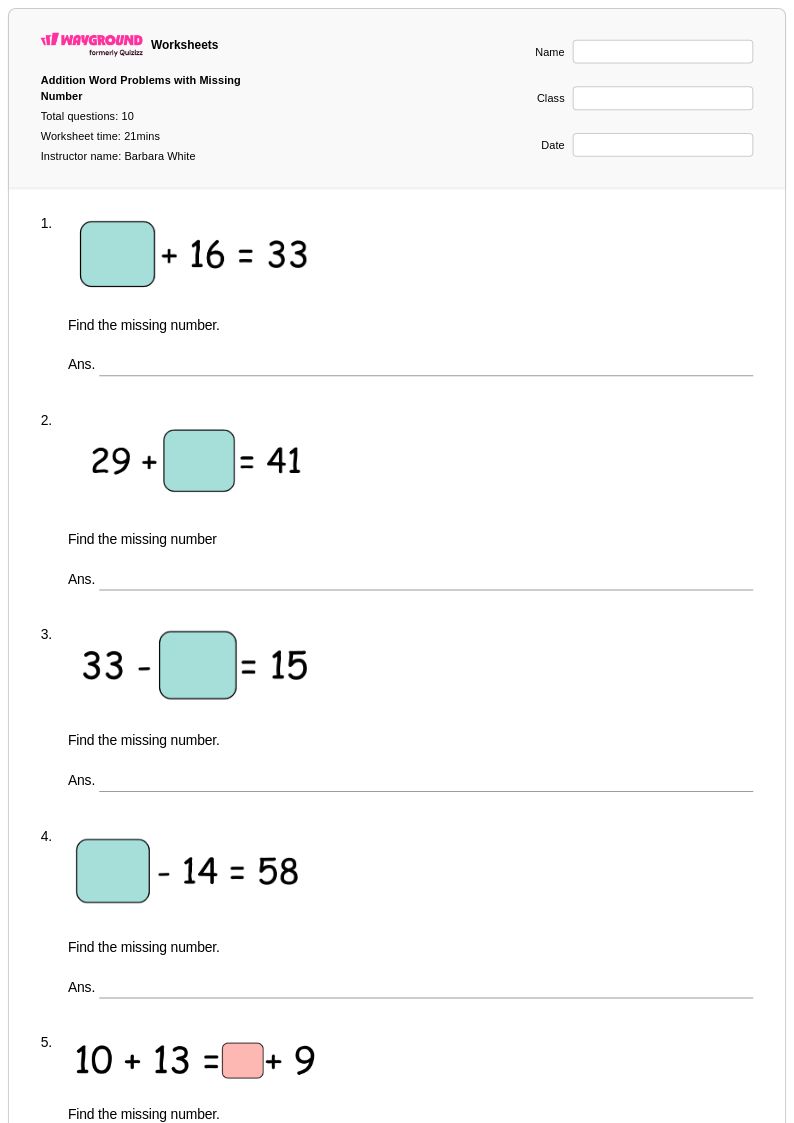
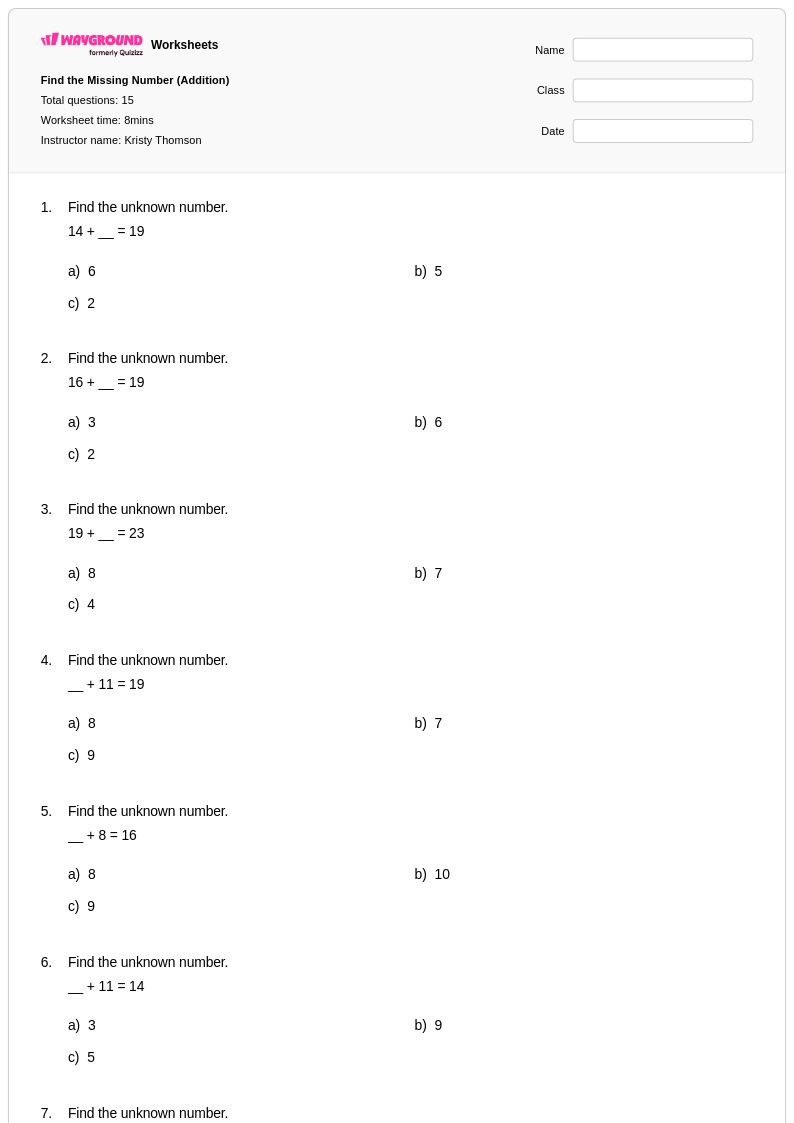
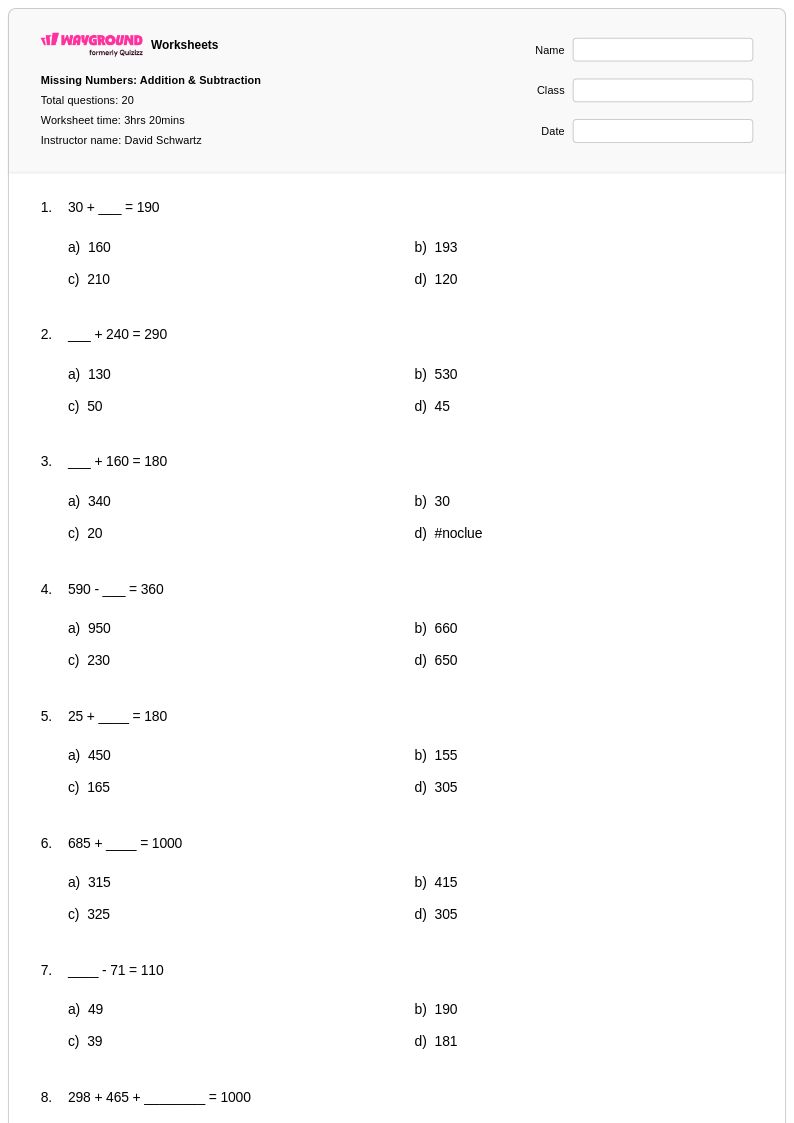
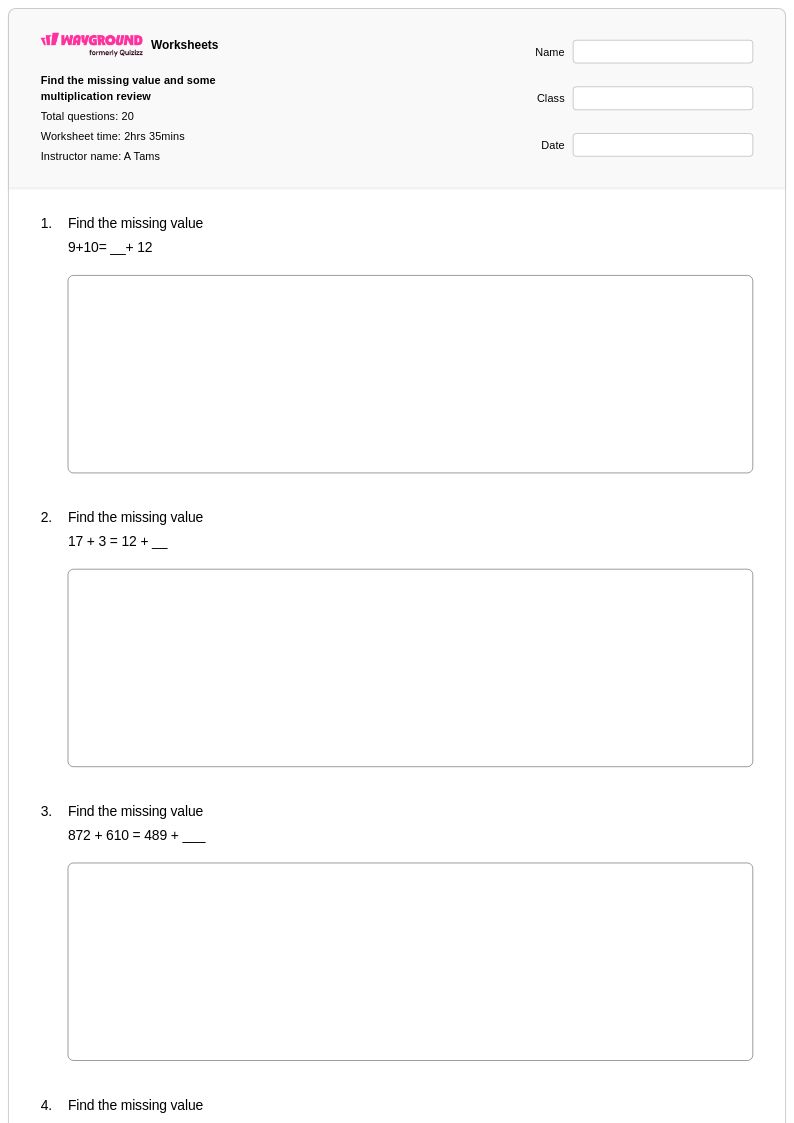
Strengthen mathematical foundations with Wayground's free missing number problems worksheets, featuring engaging printables and practice problems with answer keys to help students develop critical number sense skills.
Explore printable Missing Number Problems worksheets
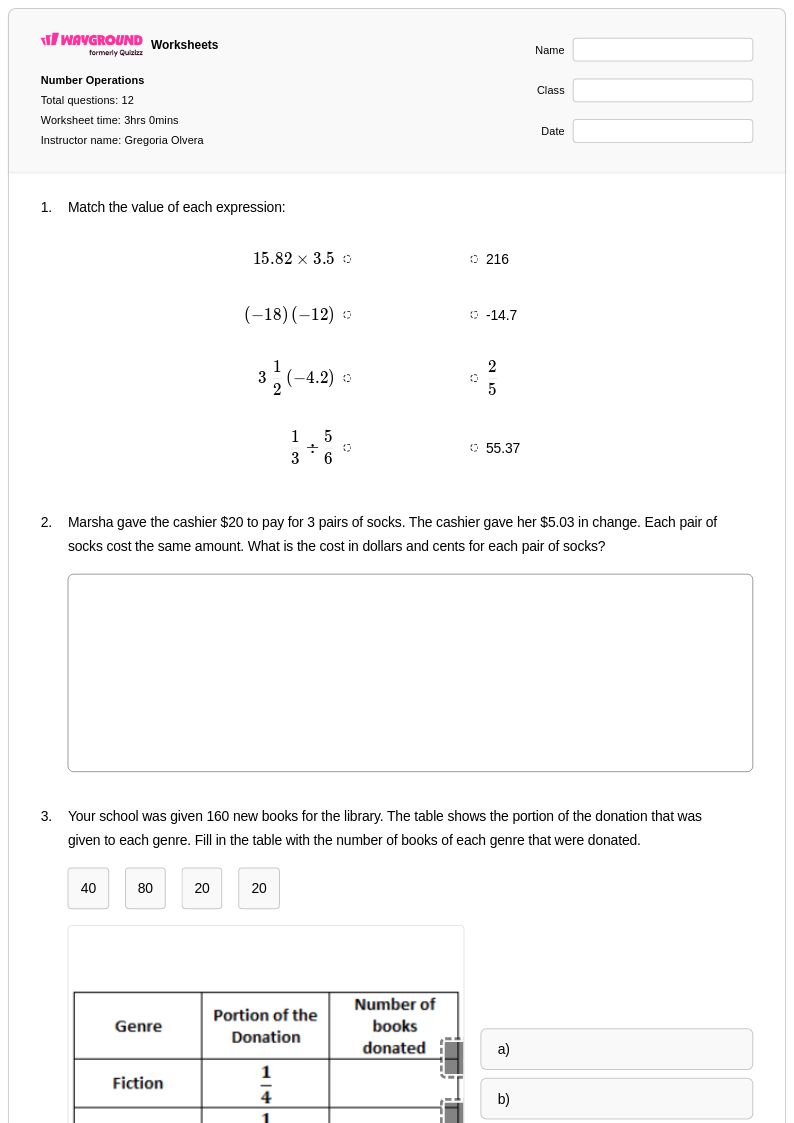
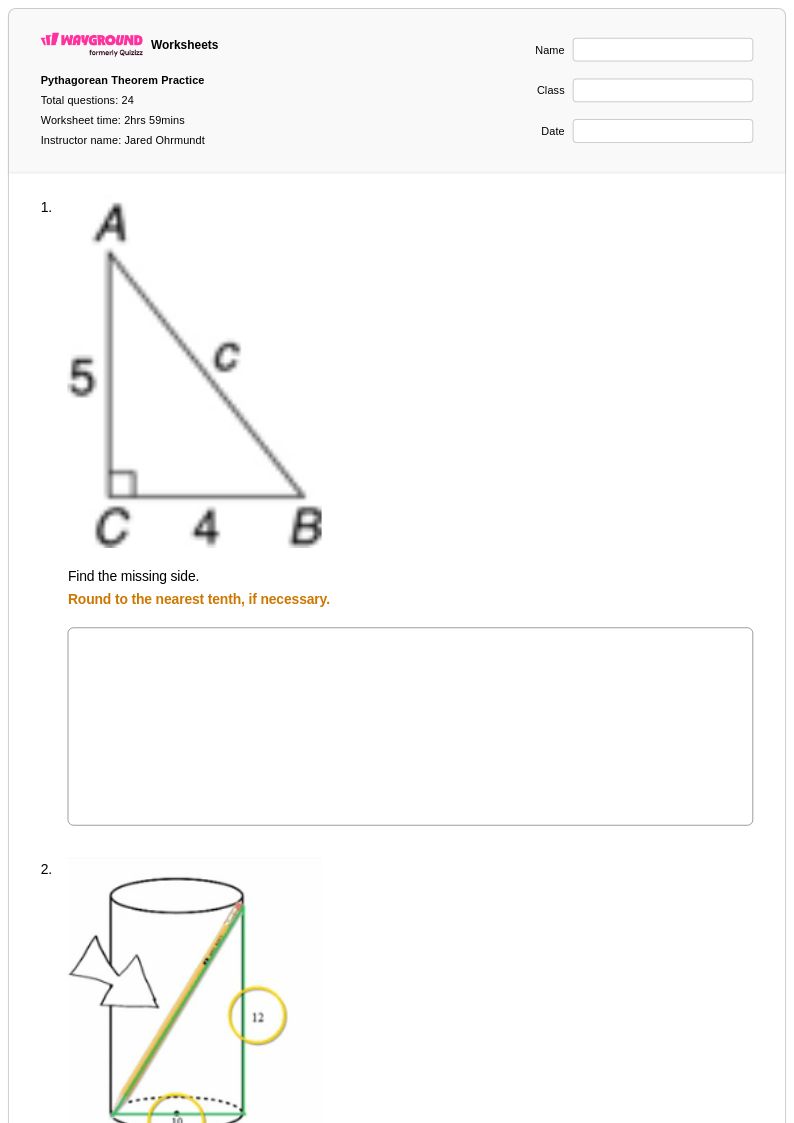
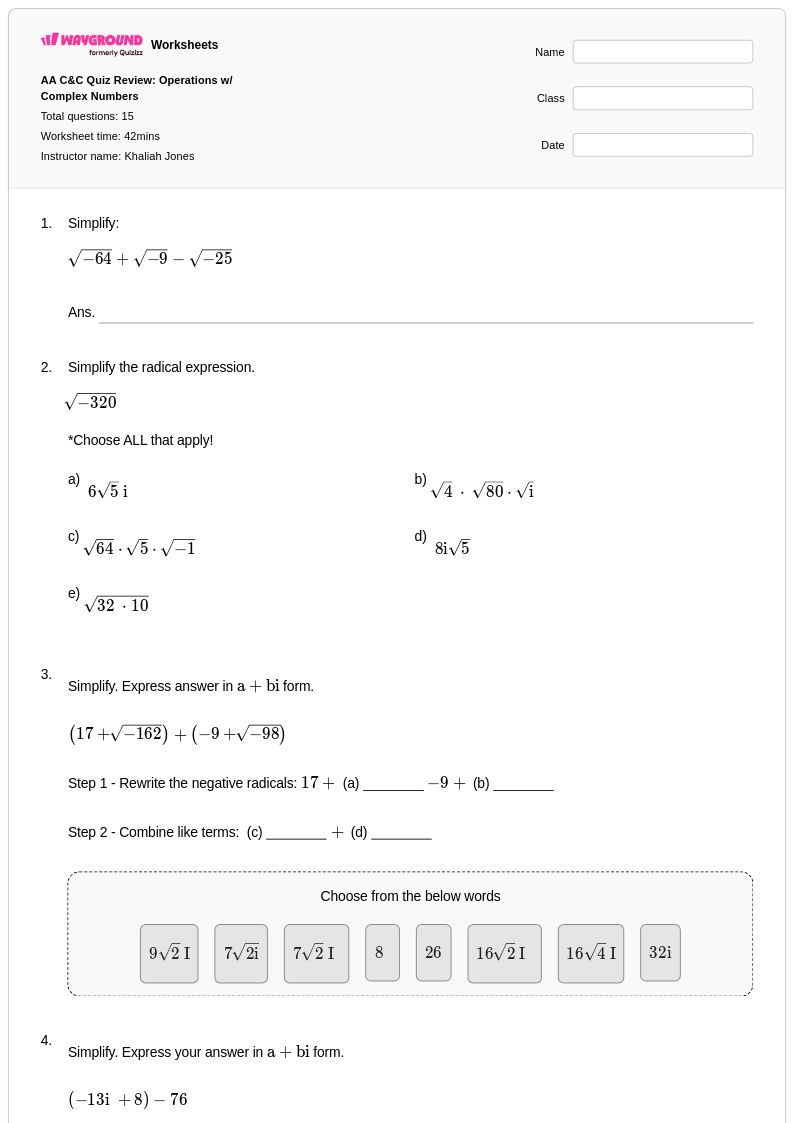
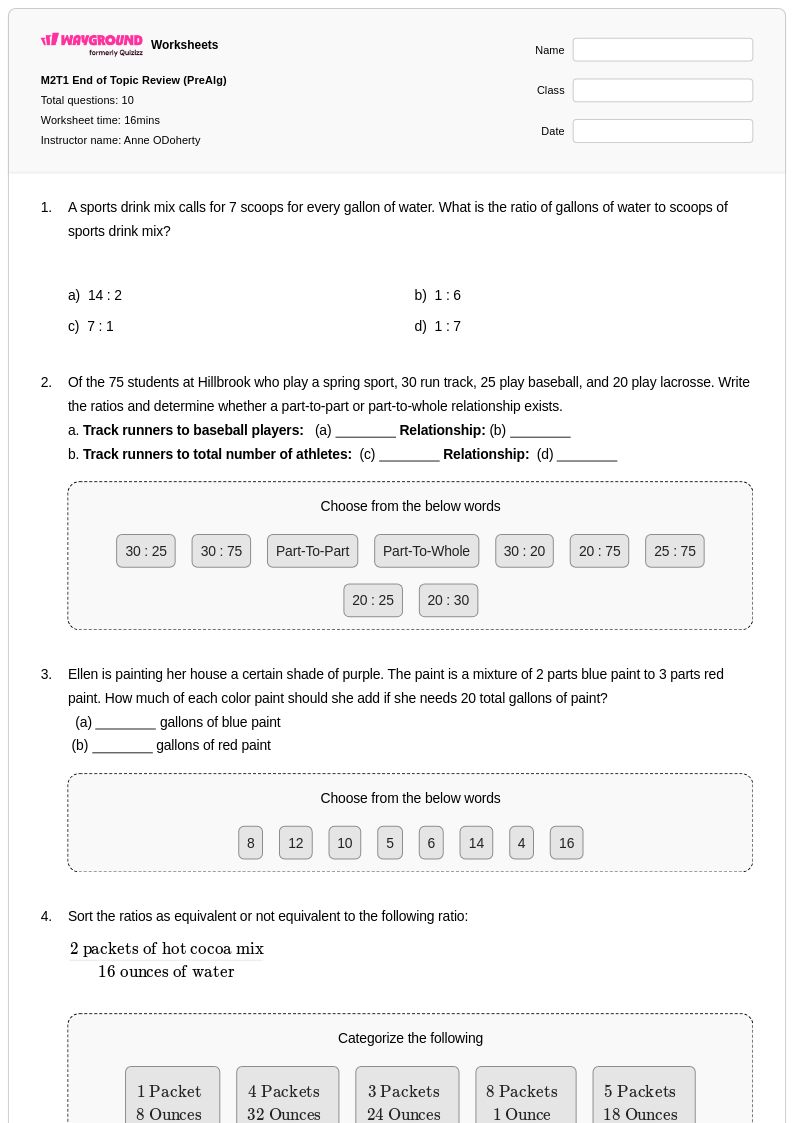
Missing number problems worksheets available through Wayground (formerly Quizizz) provide essential practice for developing fundamental mathematical reasoning and pattern recognition skills. These comprehensive worksheets challenge students to identify and fill in missing values across various number sequences, equations, and mathematical patterns, strengthening their ability to understand numerical relationships and logical thinking processes. Each worksheet collection includes detailed answer keys and is available as free printable pdf resources, offering educators flexibility in delivering targeted practice problems that build confidence in mathematical problem-solving and enhance students' overall number sense foundation.
Wayground (formerly Quizizz) empowers teachers with millions of teacher-created missing number problem worksheets that support effective mathematics instruction through robust search and filtering capabilities. The platform's extensive collection allows educators to quickly locate age-appropriate resources with standards alignment features that ensure curriculum compatibility, while differentiation tools enable customization for diverse learning needs and skill levels. These worksheets are available in both printable pdf formats and digital versions, providing maximum flexibility for classroom implementation, homework assignments, remediation activities, and enrichment opportunities that help students master essential number sense concepts through systematic practice and reinforcement.
FAQs
How do I teach missing number problems?
Start with concrete materials like counting blocks to represent a sequence with one item missing. Progress to visual aids like number lines or hundred charts to help students see the relationships between numbers. Finally, transition to abstract problems with blank spaces in equations, connecting the concept to part-part-whole relationships.
What types of exercises help students practice missing number problems?
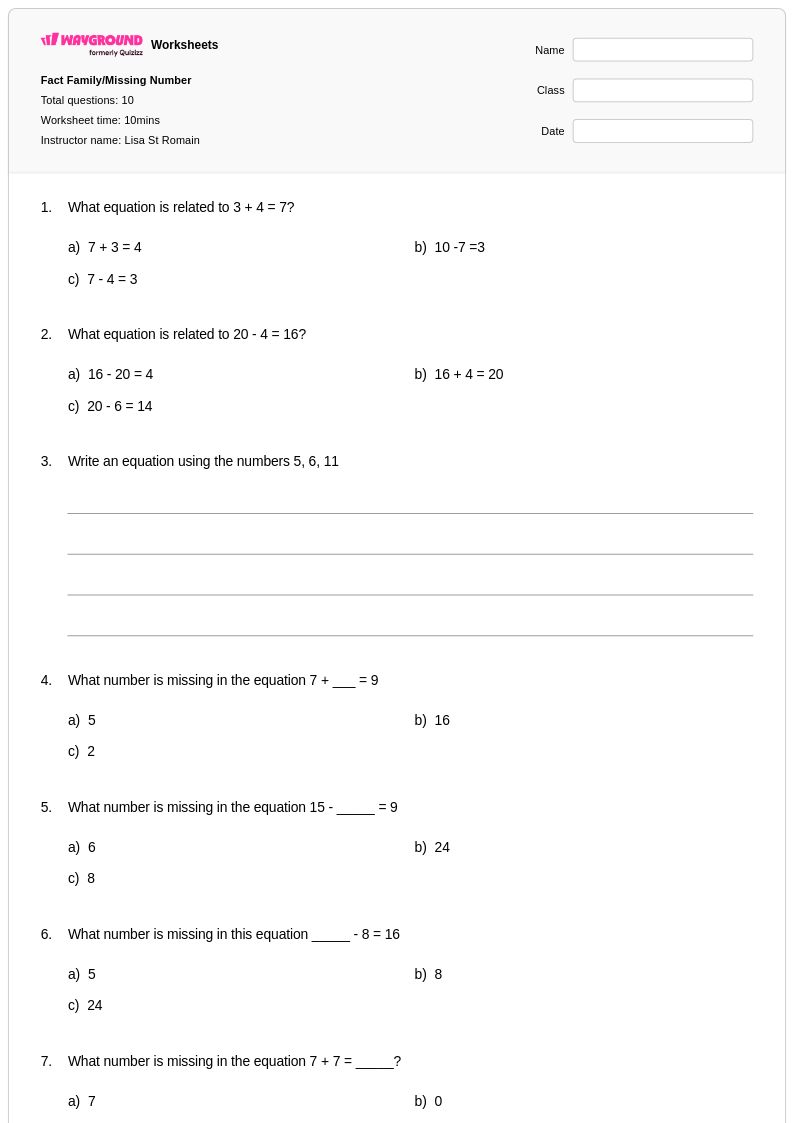
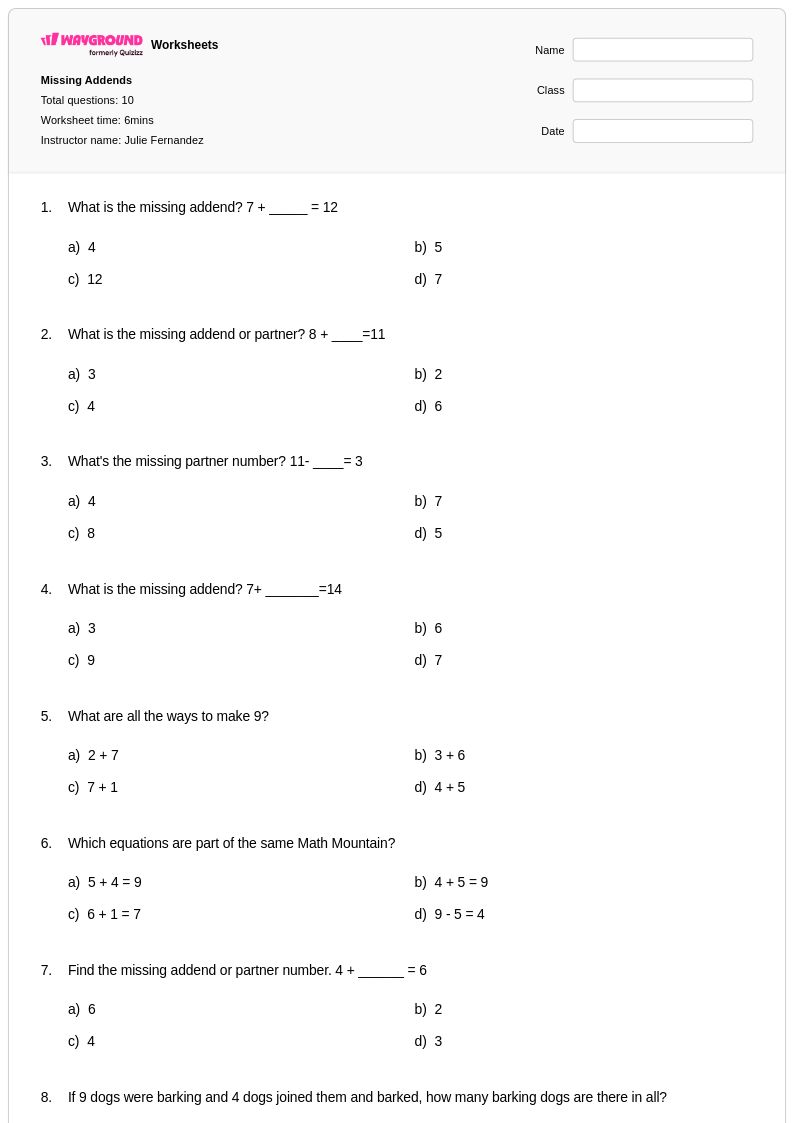
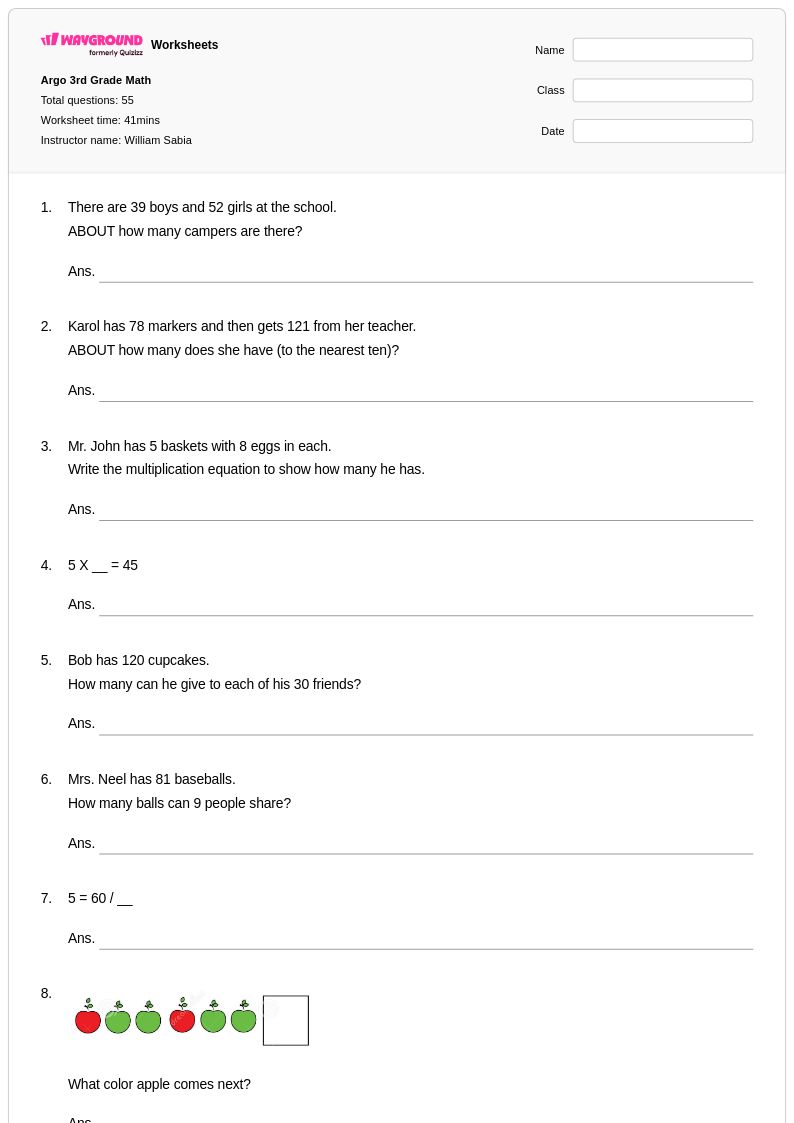
Effective practice includes a variety of problem types. Start with simple number sequences (e.g., 2, 4, __, 8). Move on to basic equations with the unknown in different positions (e.g., 5 + __ = 9 and __ + 4 = 9). Finally, introduce problems based on patterns to build broader logical reasoning.
What are common mistakes students make with missing number problems?
A frequent error is treating every problem as a simple calculation. For instance, in `__ + 7 = 15`, a student might incorrectly add 7 and 15. Another common issue is difficulty when the unknown is the first number in an equation, as it disrupts the typical left-to-right flow of solving.
How do missing number problems fit into the math curriculum?
These problems are a cornerstone of algebraic thinking as outlined in the Common Core State Standards. The concept progresses from identifying missing numbers in a counting sequence in Kindergarten, to solving for unknowns in addition and subtraction equations in Grades 1-2, and finally to finding unknown factors in multiplication and division problems in Grade 3.
How can I use this missing number problems worksheet with my class?
Wayground worksheets offer flexibility for any classroom. You can print the worksheet as a PDF for offline paper-and-pencil practice, then use the Wayground for Teachers app to quickly scan and grade submissions. Alternatively, you can host it as a digital quiz on the Wayground platform for interactive practice and automatic grading. Every worksheet includes a complete answer key.
How can I differentiate practice for missing number problems?
Because this topic spans multiple skill levels, differentiation is key. Use Wayground's tools to create alternate versions of a worksheet with different number ranges (e.g., within 20 vs. within 100). For digital assignments, you can enable accommodations like "Reduced answer choices" for students who need more support.