
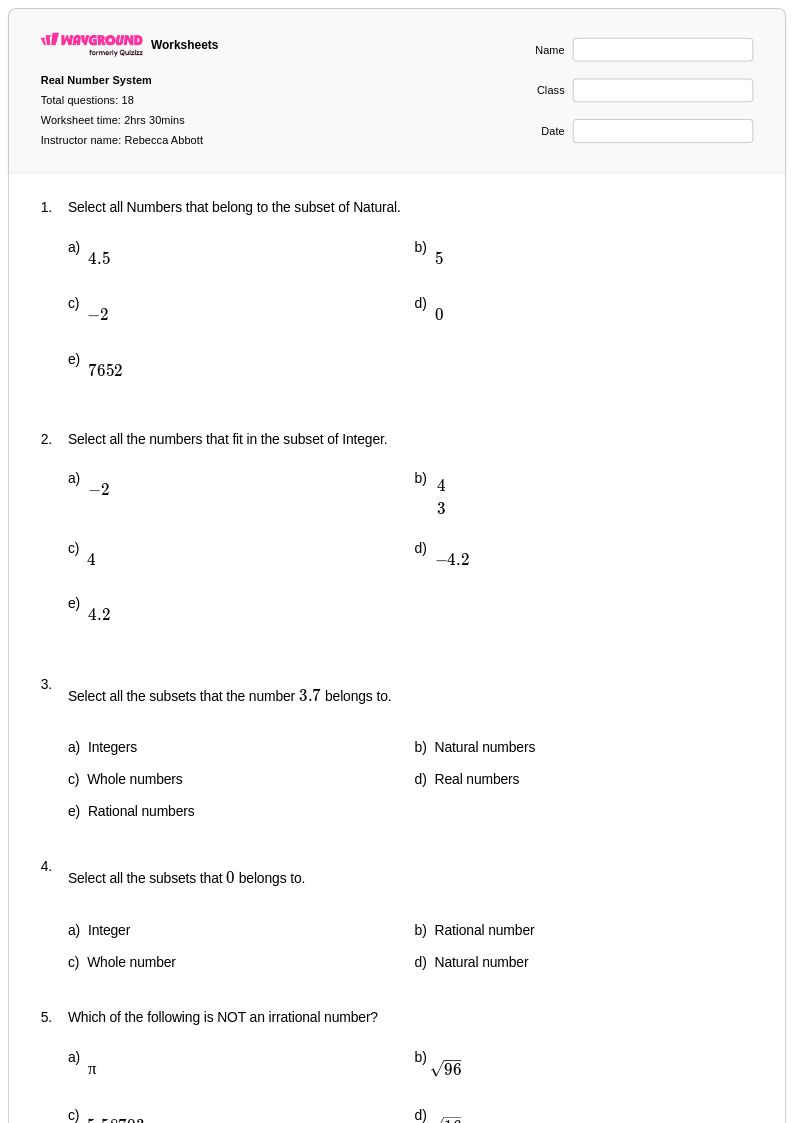
18Q
6th - 8th
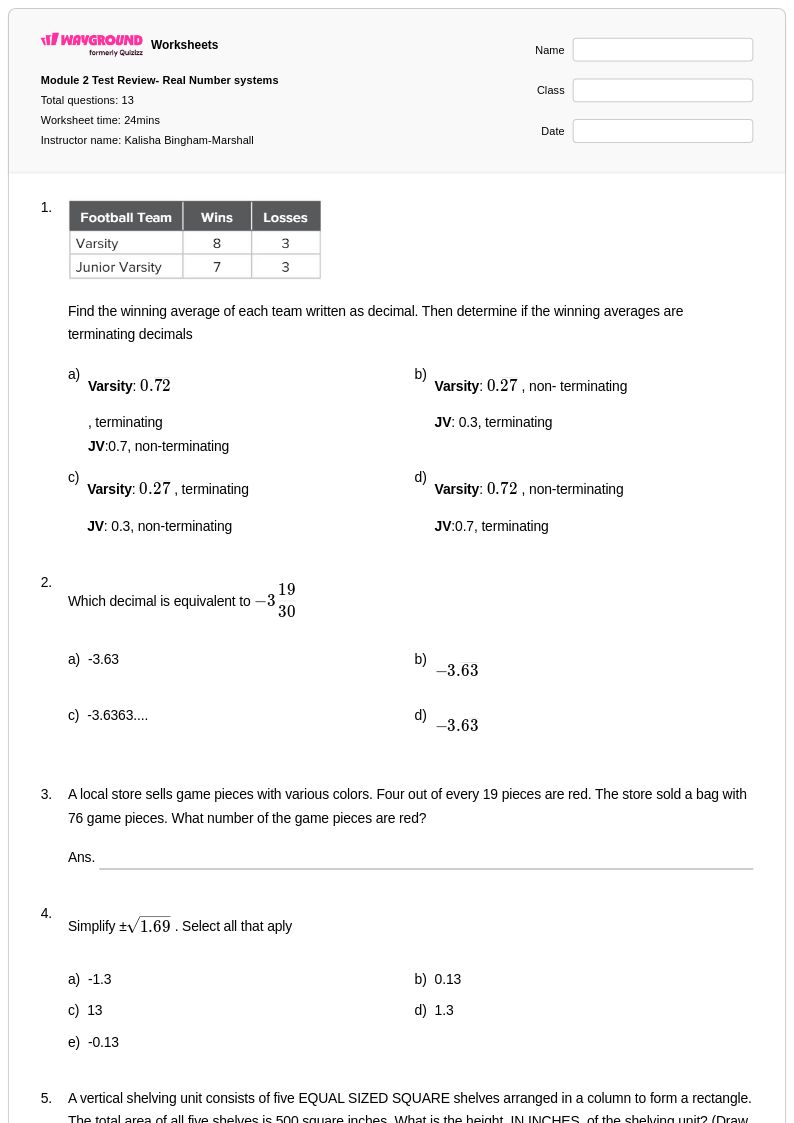
13Q
8th
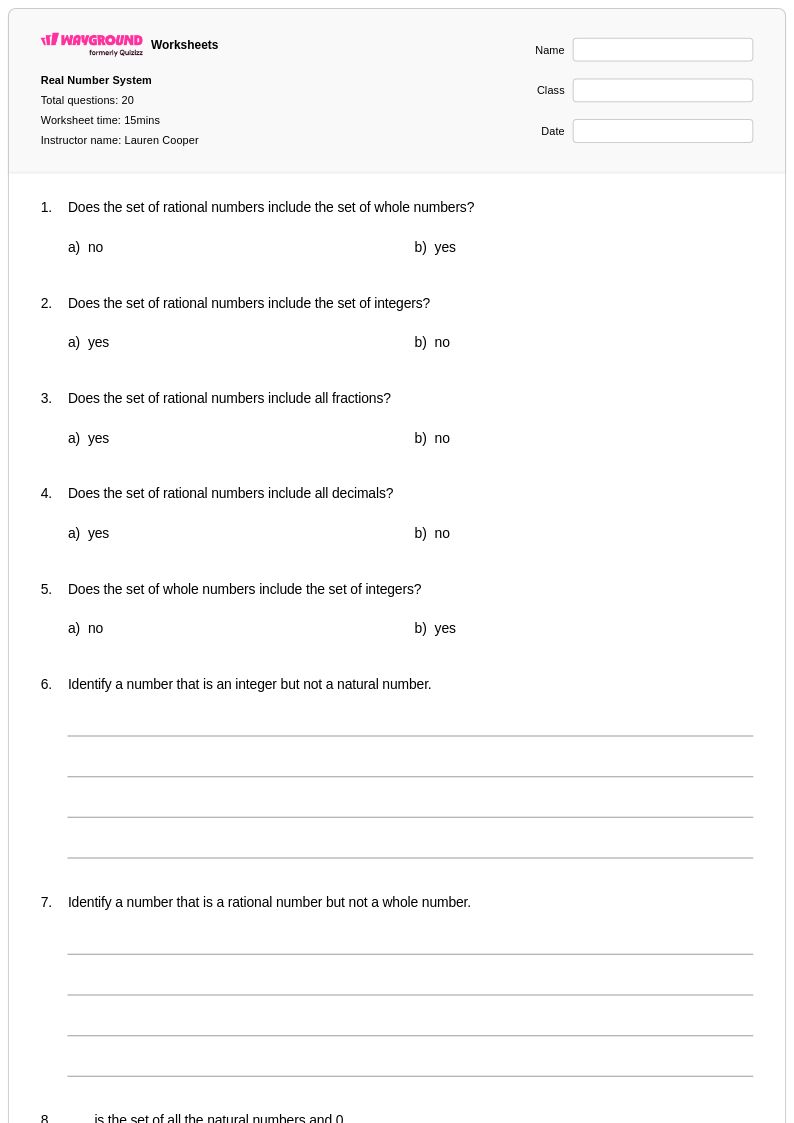
20Q
8th
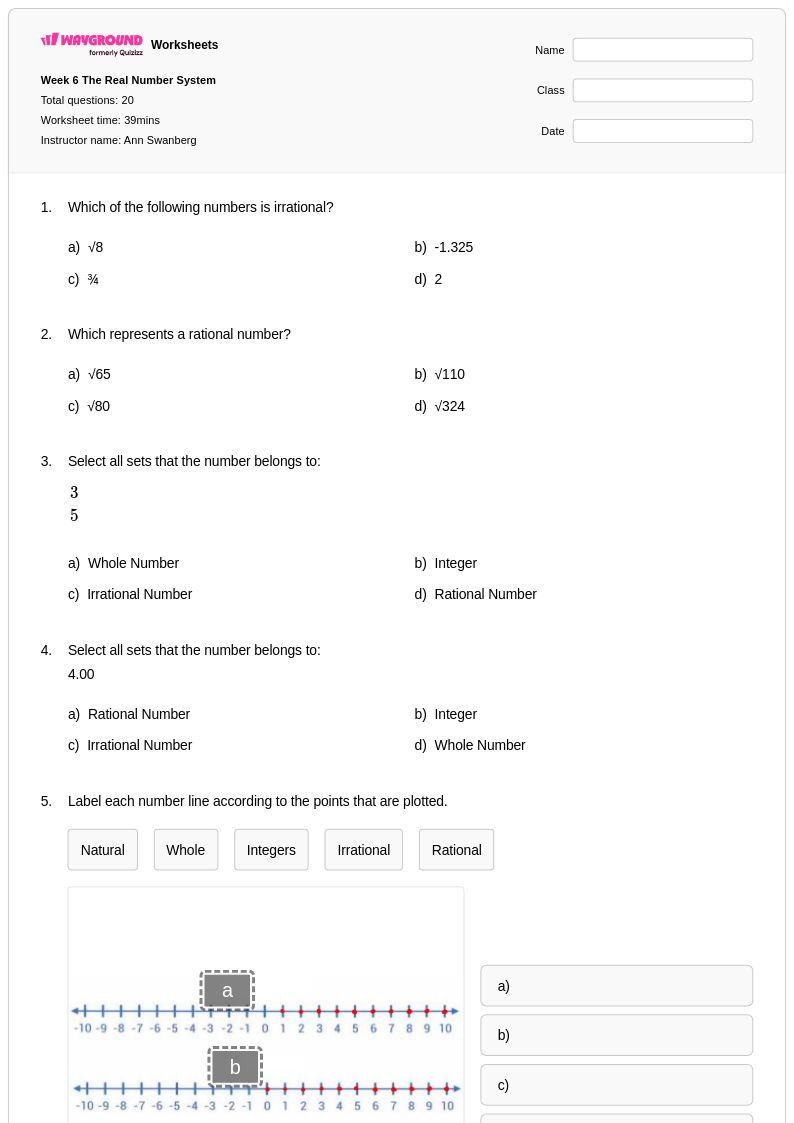
20Q
8th
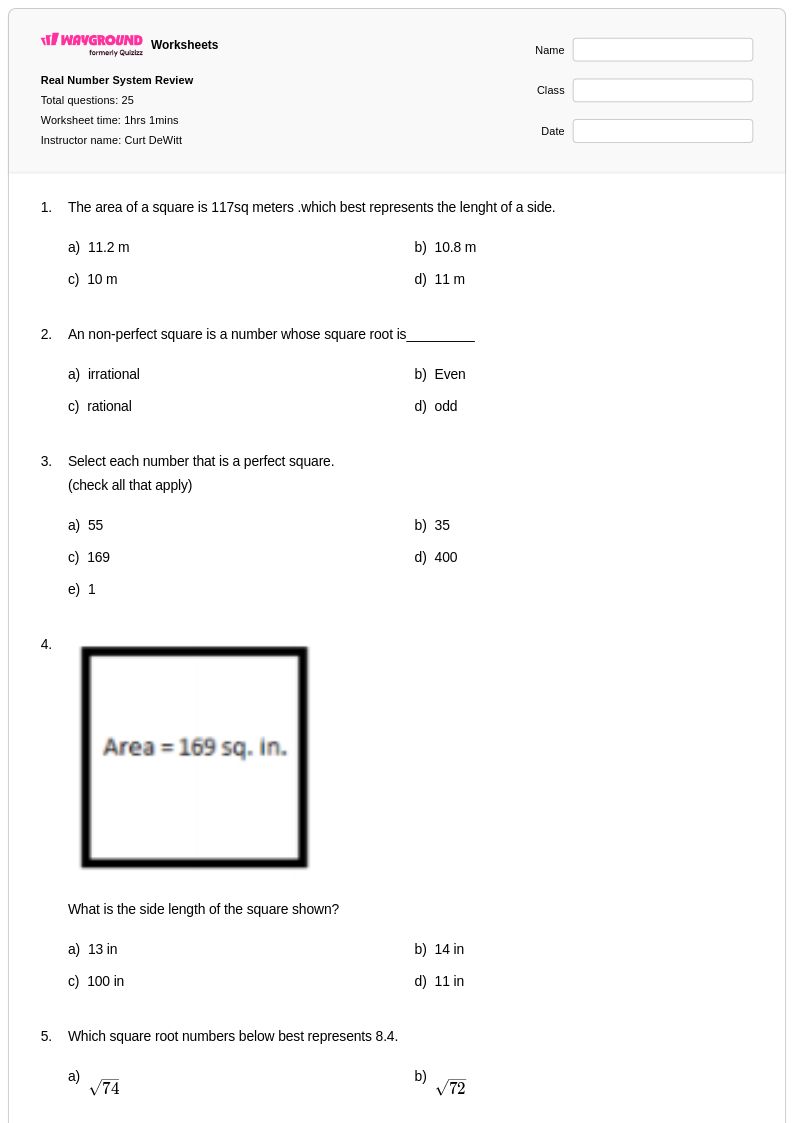
25Q
8th
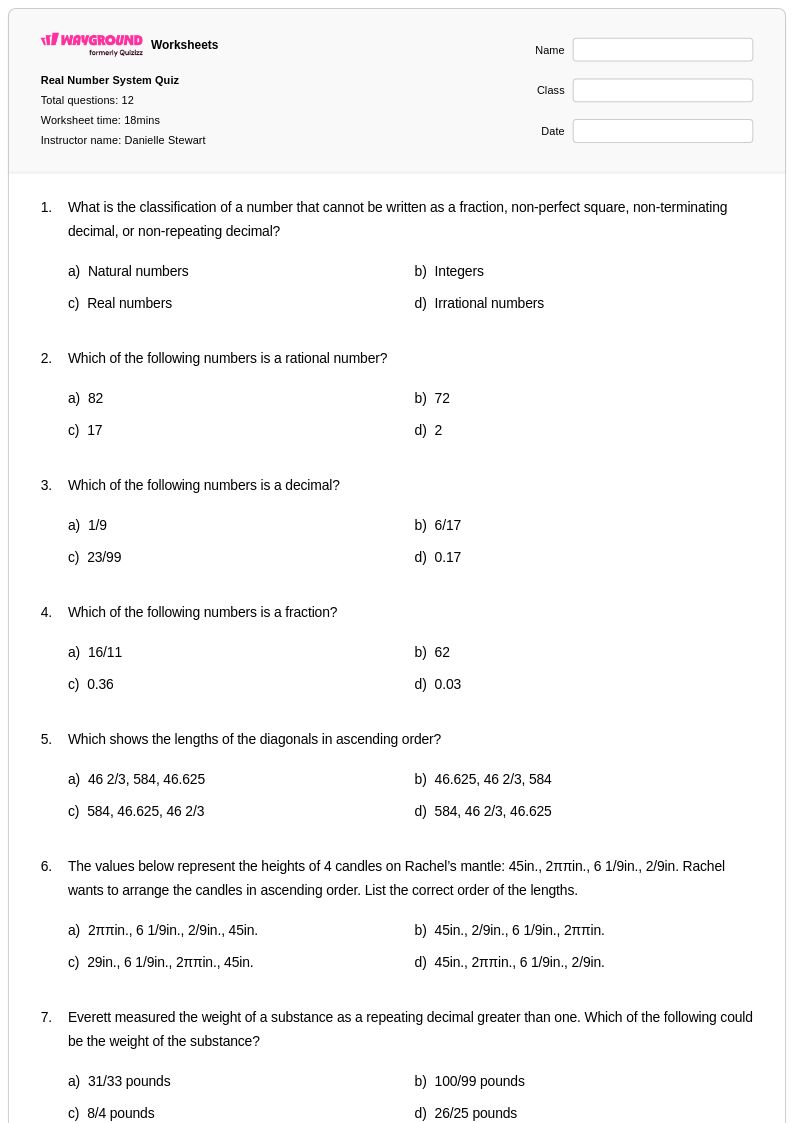
12Q
8th
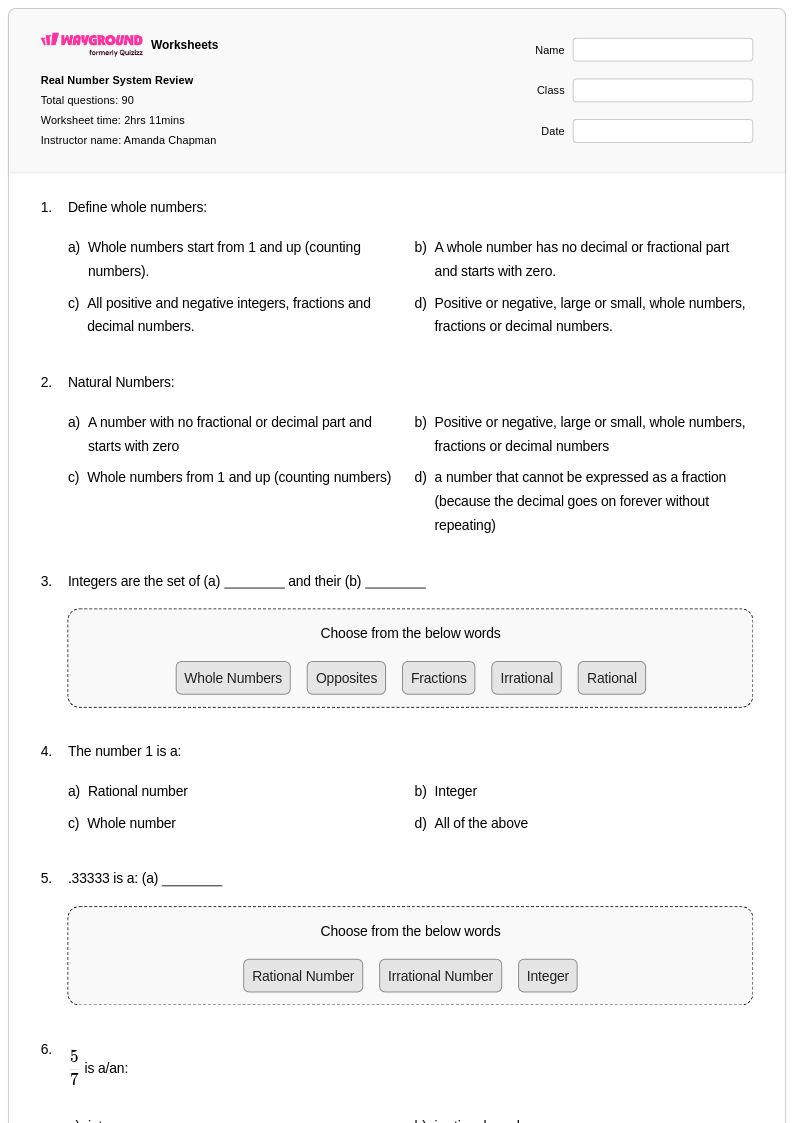
90Q
8th
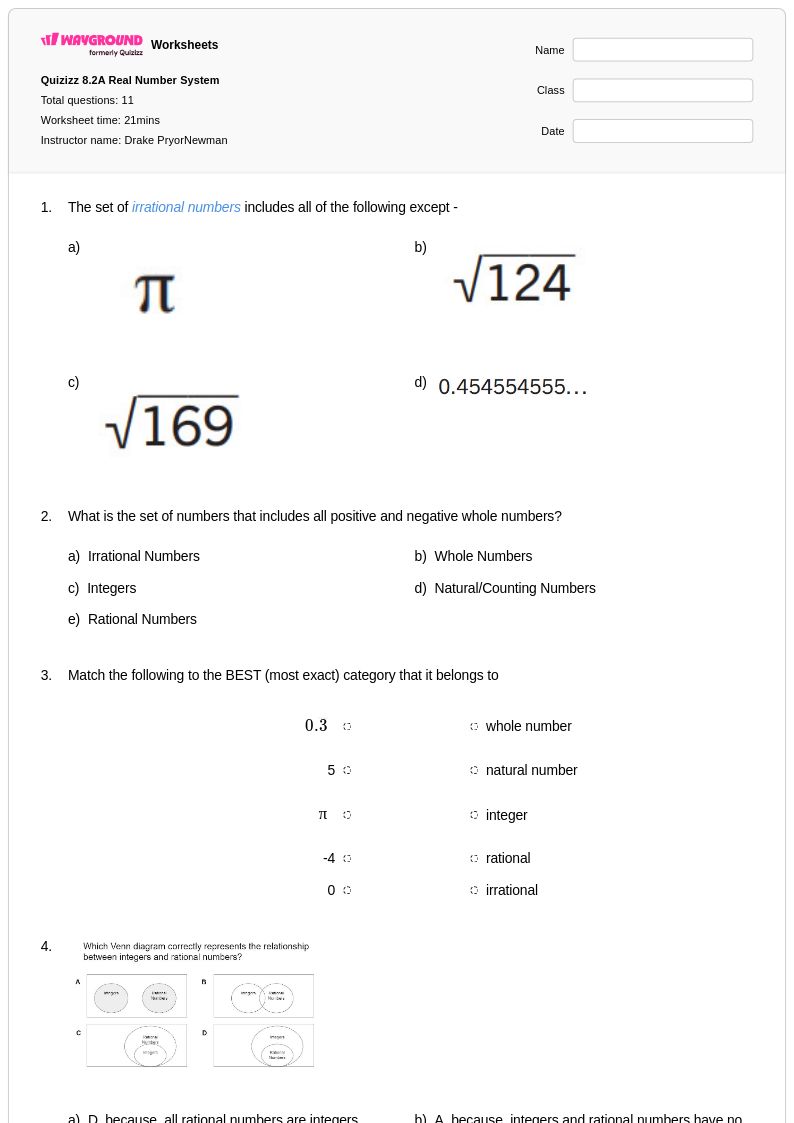
11Q
8th
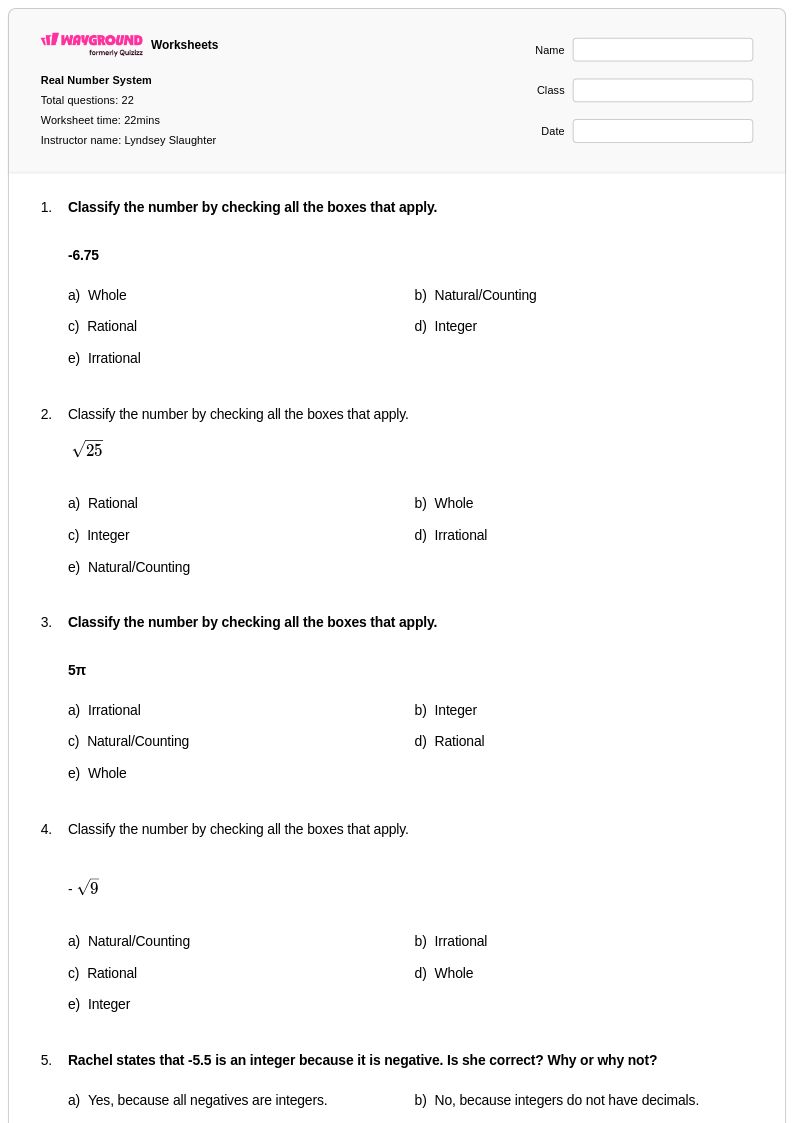
22Q
8th
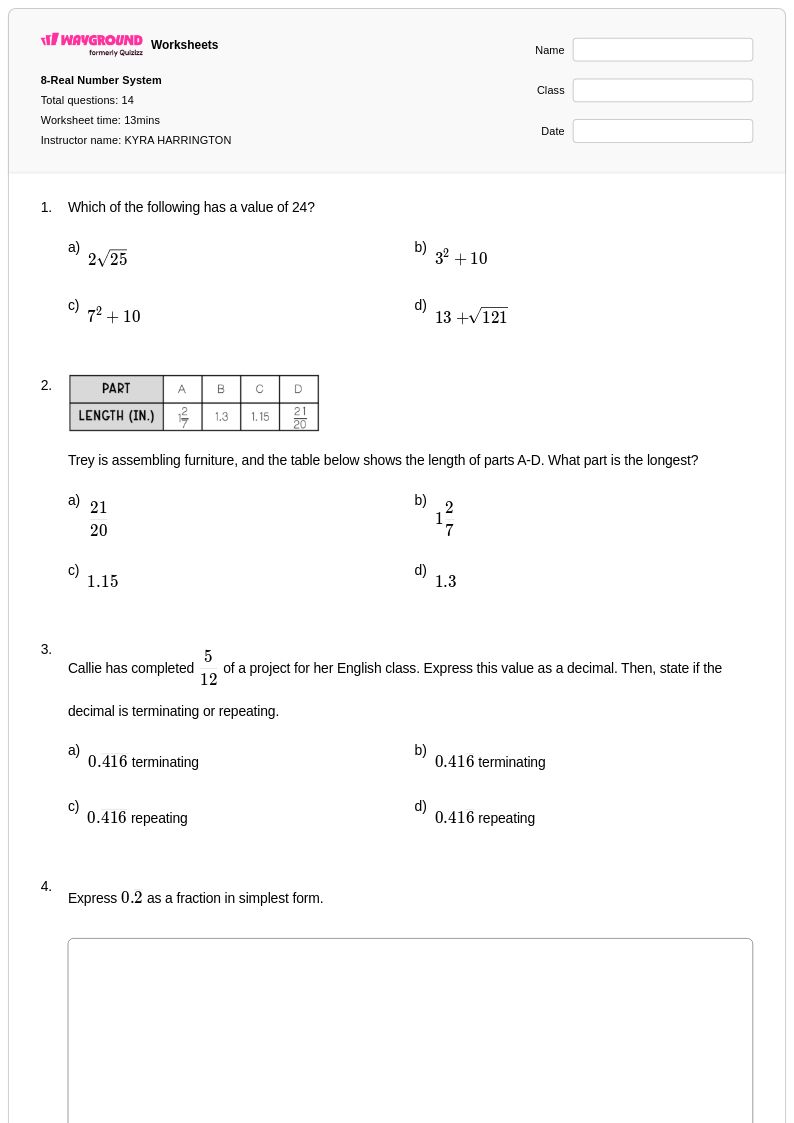
14Q
8th
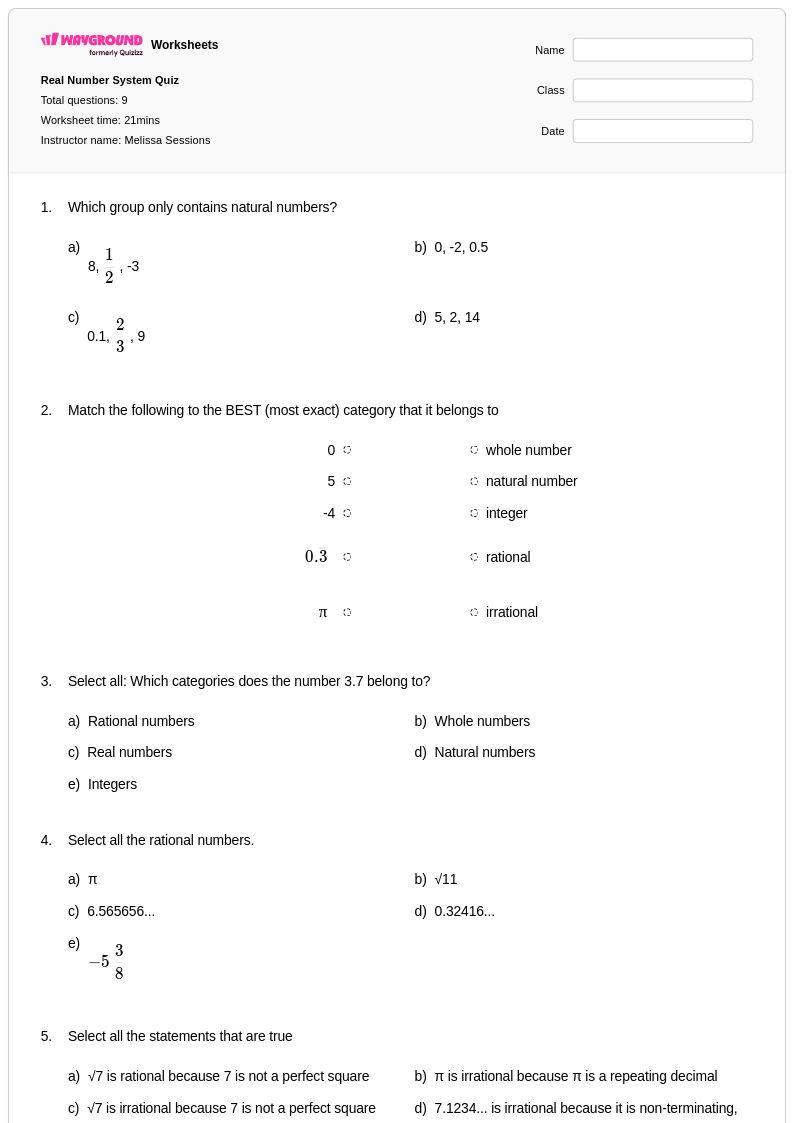
9Q
8th
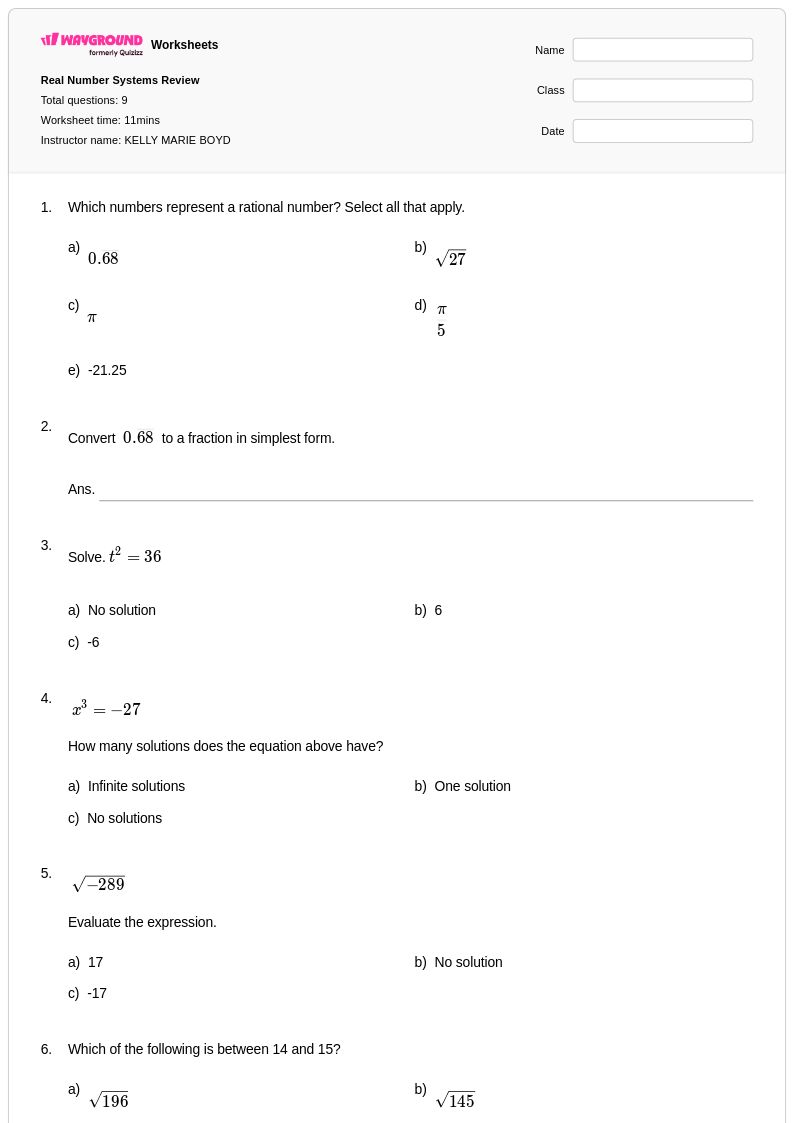
9Q
8th
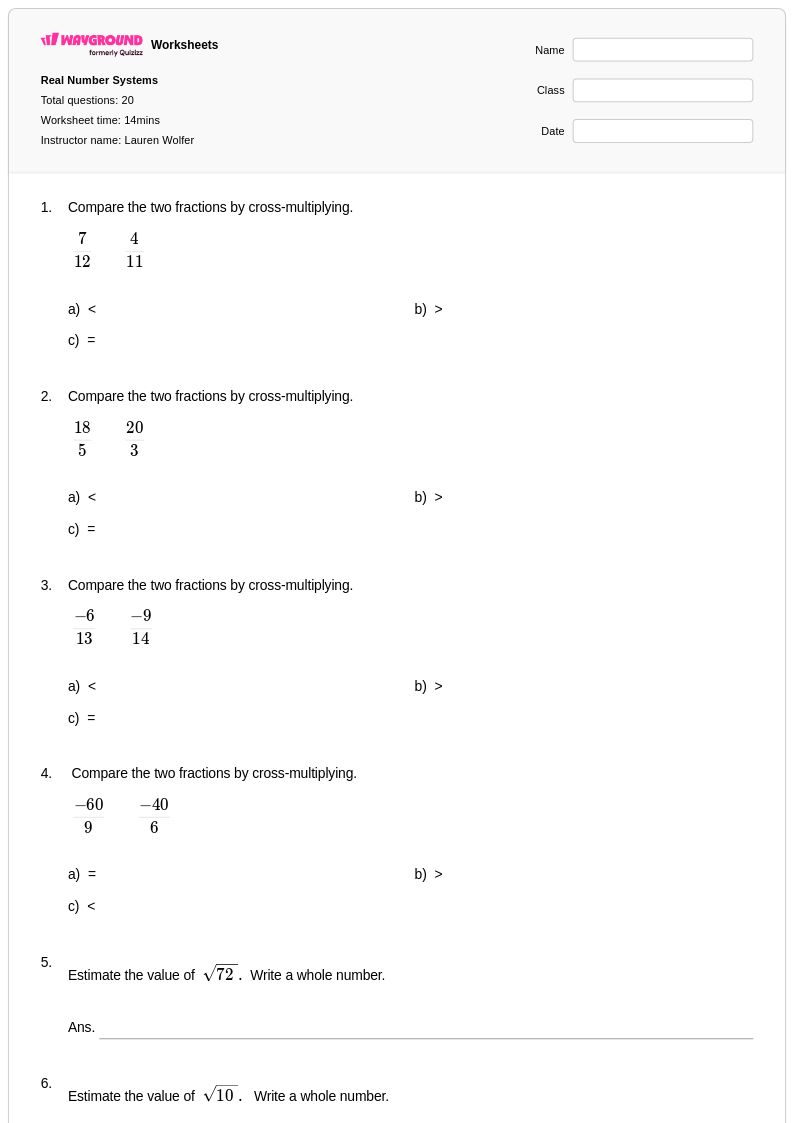
20Q
9th - 10th
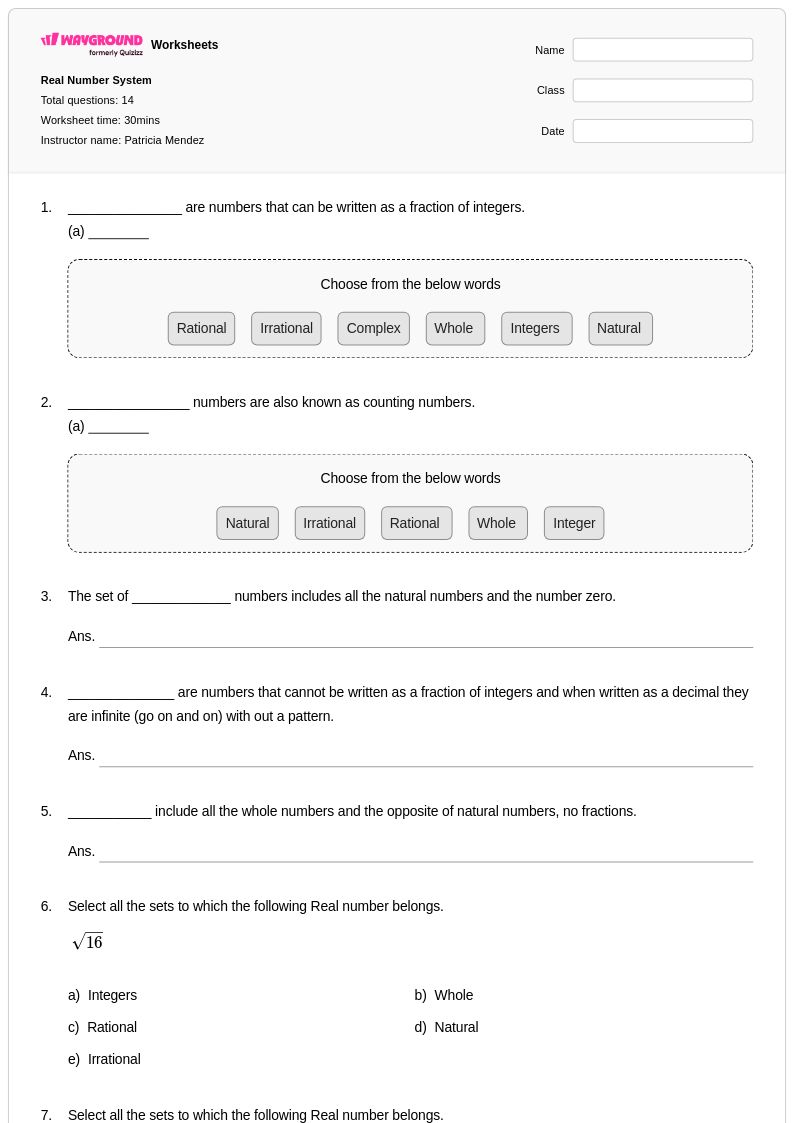
14Q
9th
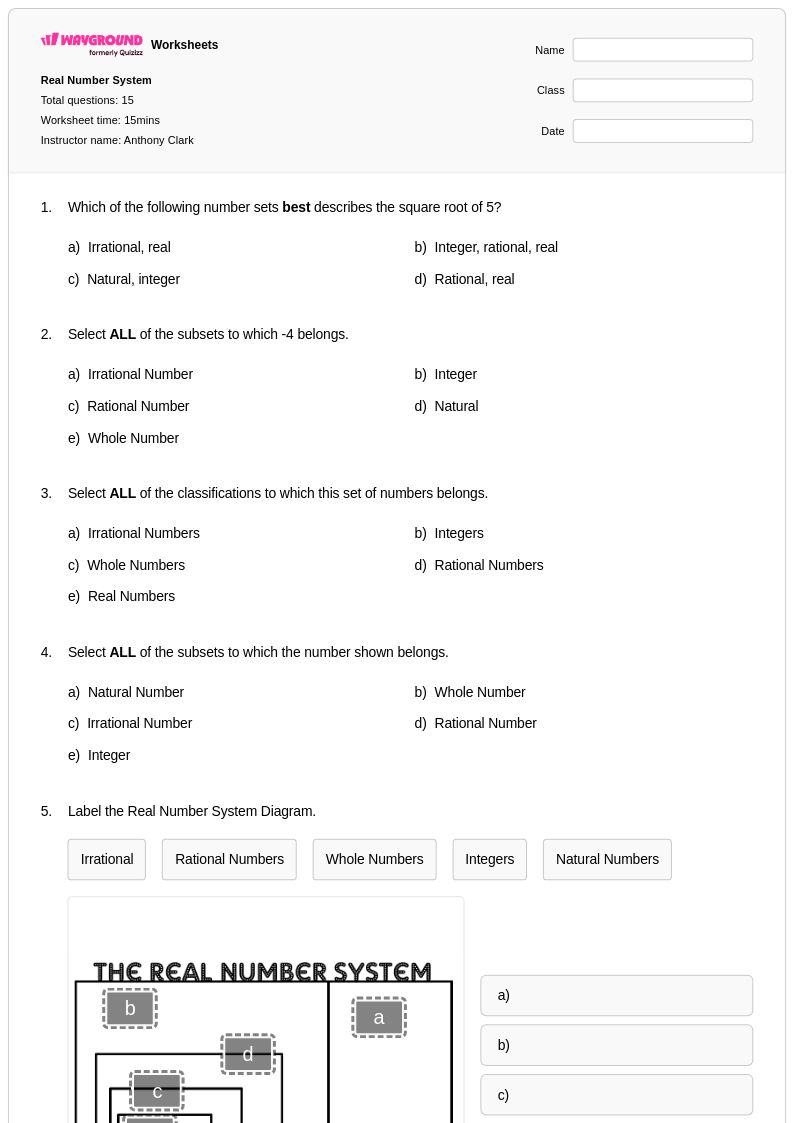
15Q
8th - Uni
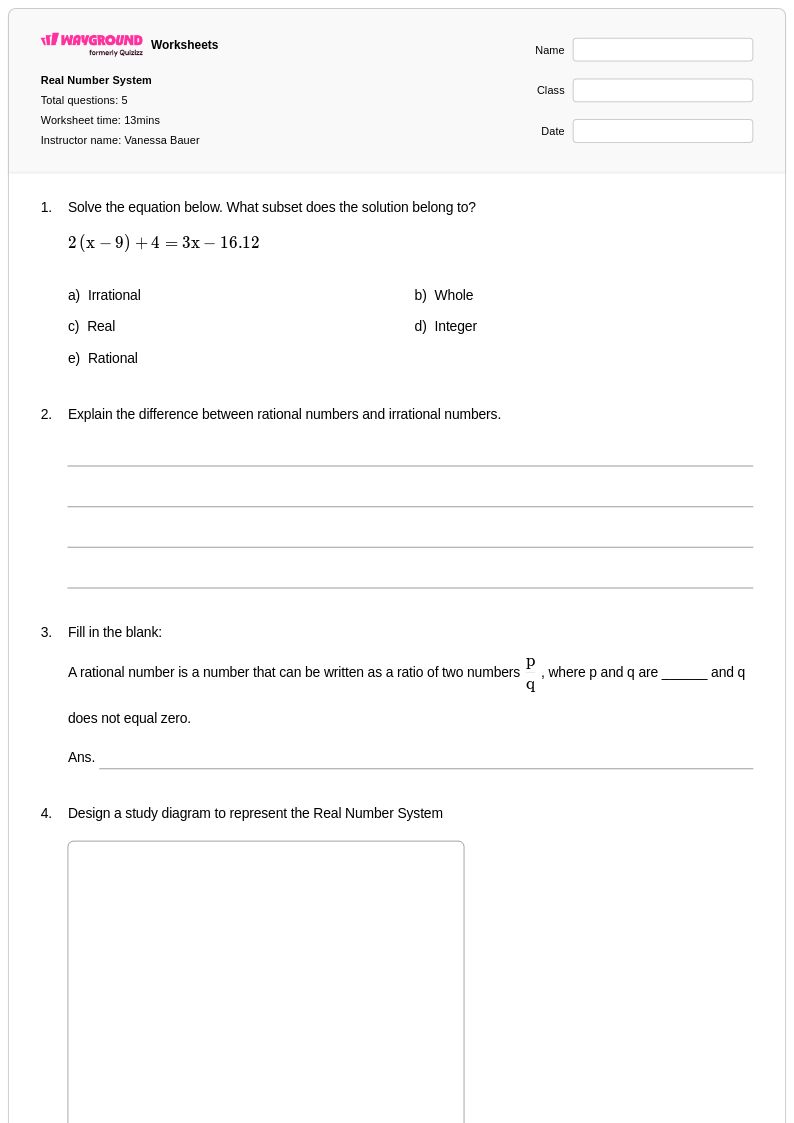
5Q
8th
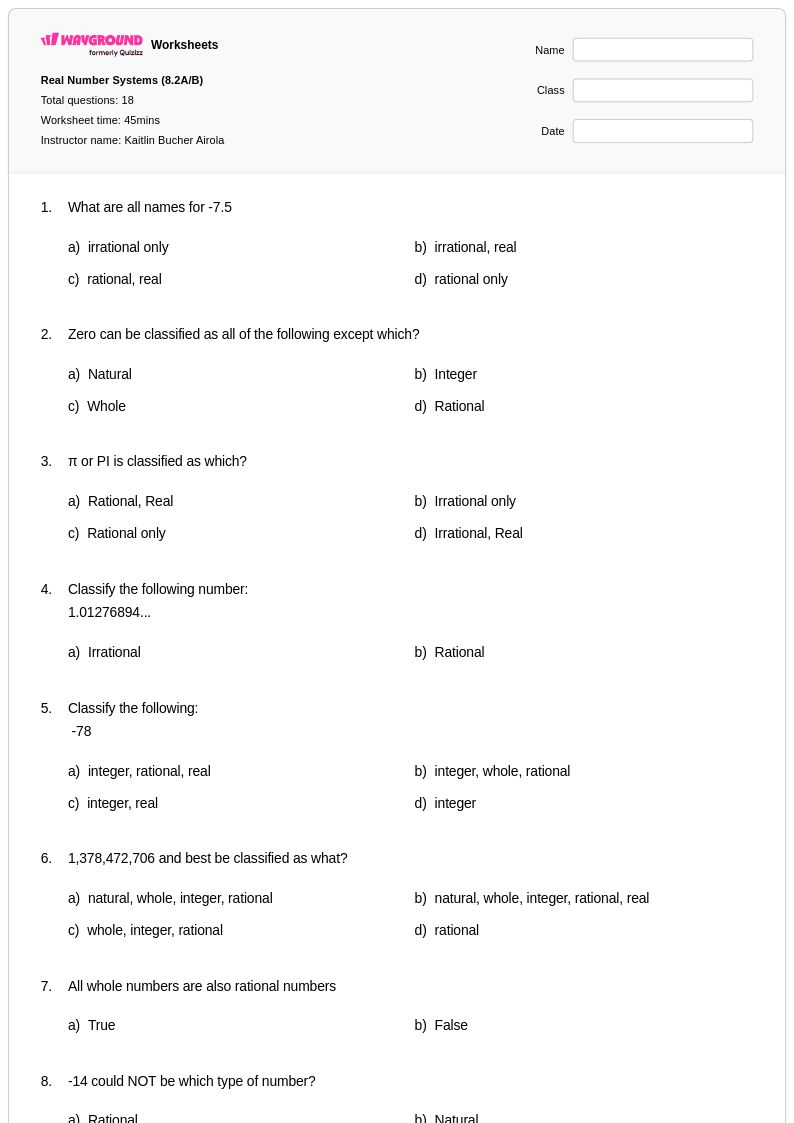
18Q
8th
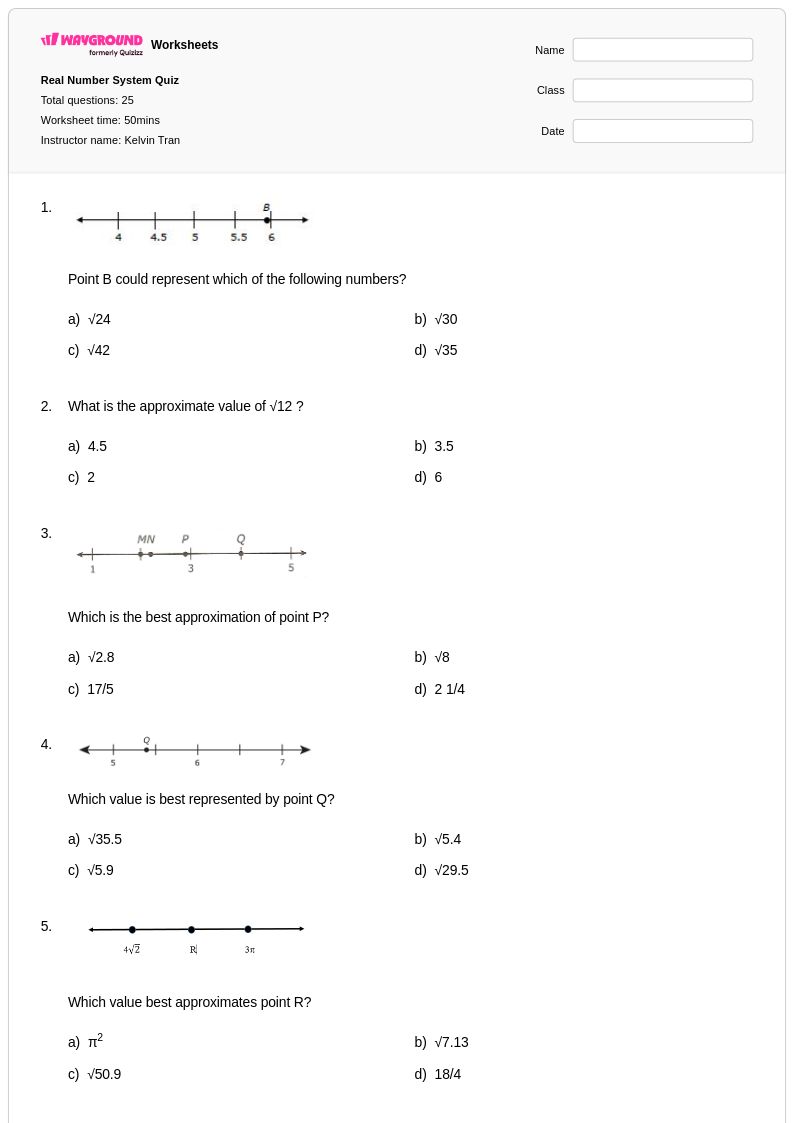
25Q
8th
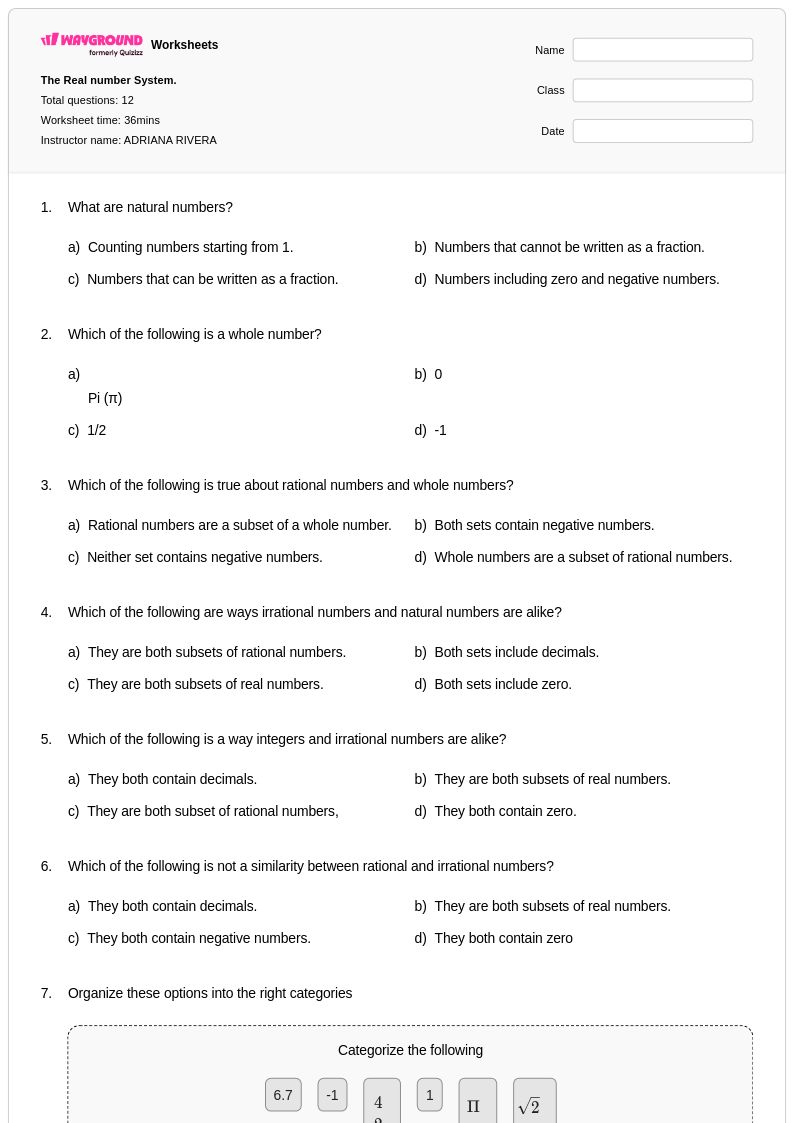
12Q
8th
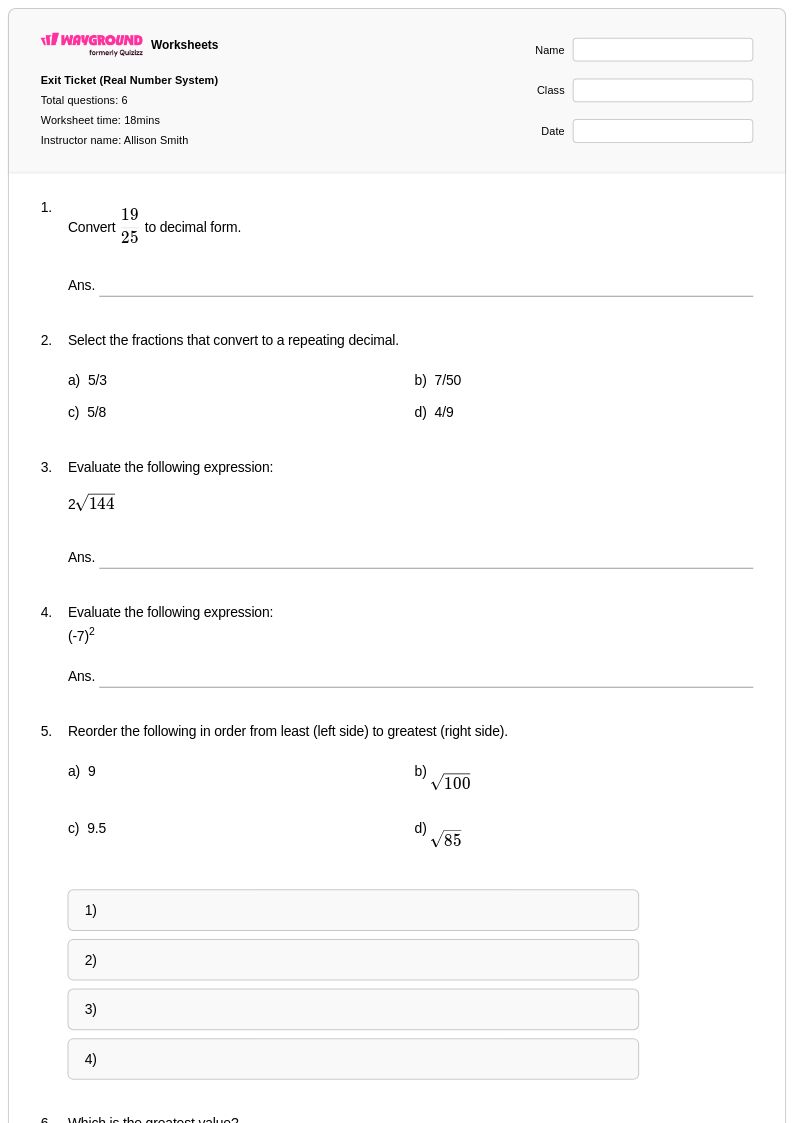
6Q
7th
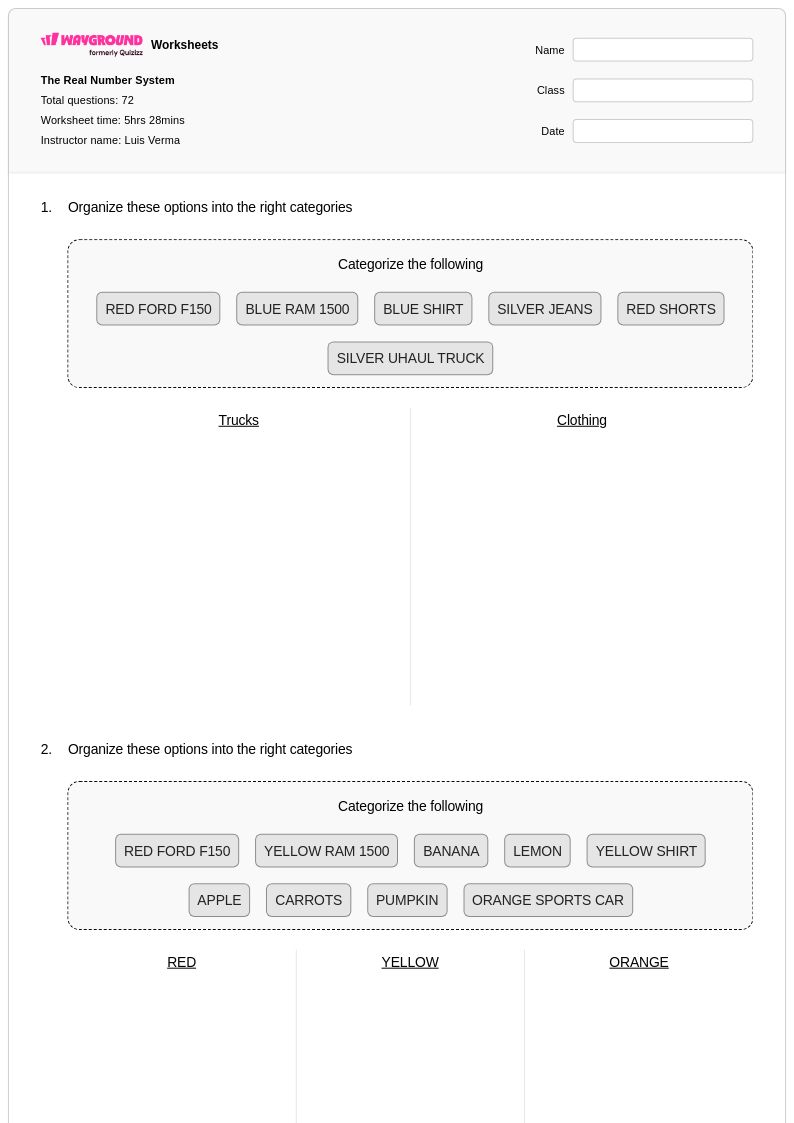
72Q
9th
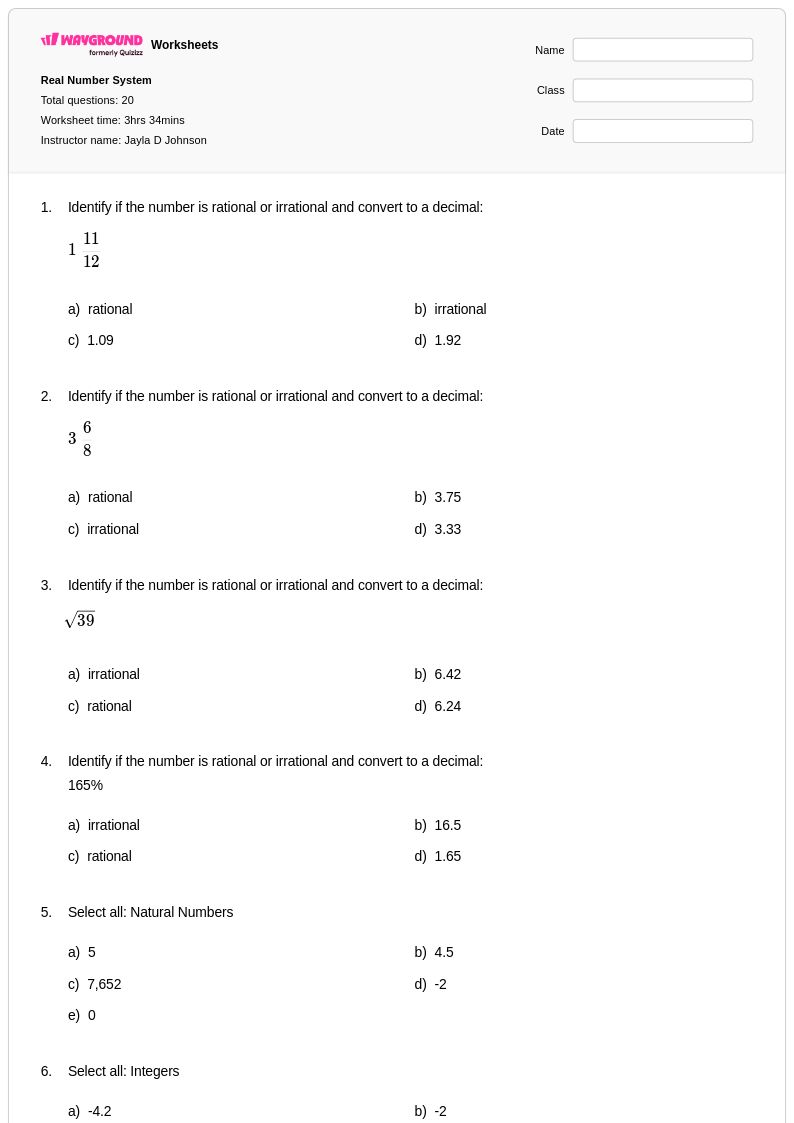
20Q
8th
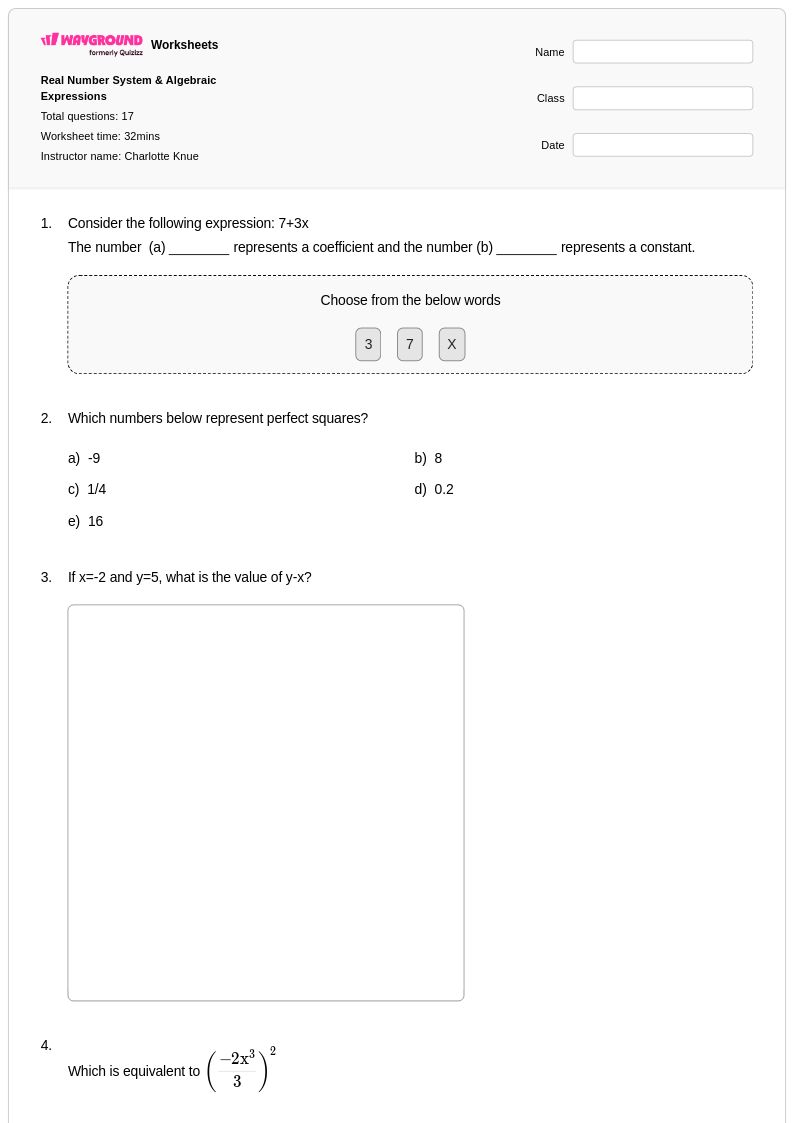
17Q
9th
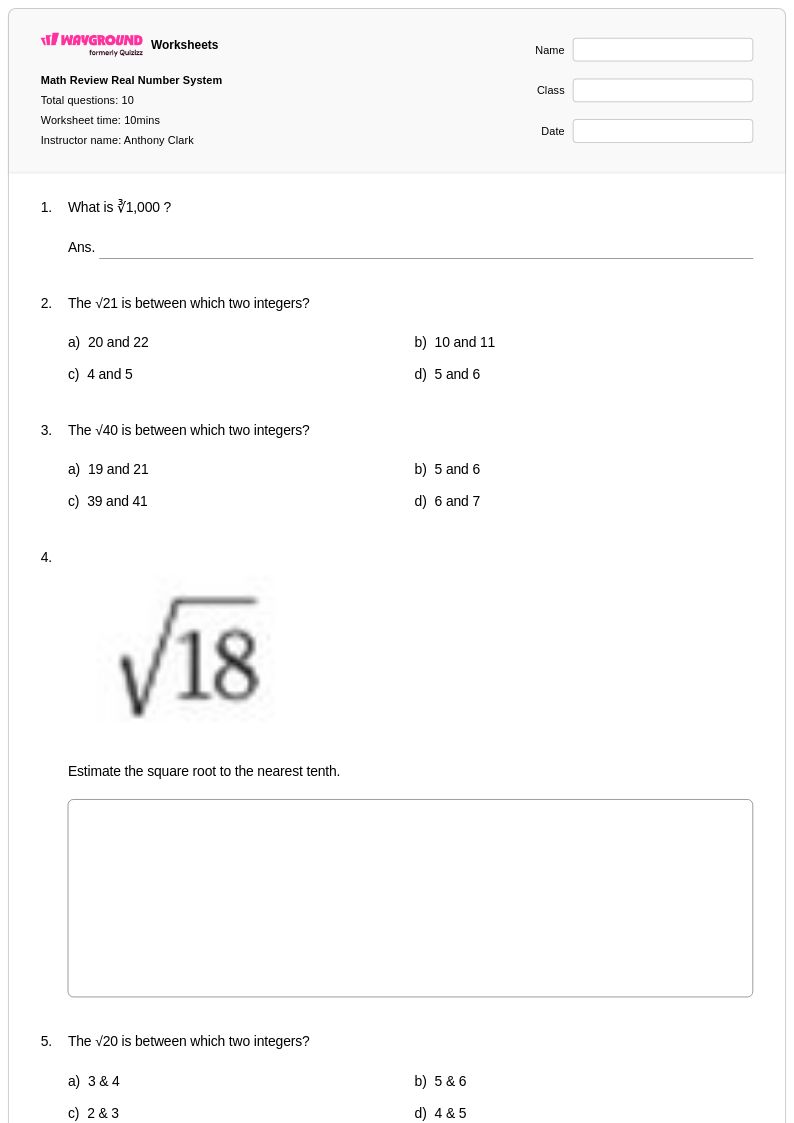
10Q
8th - Uni
Explorar hojas de trabajo por materias
Explore printable Real Number System worksheets
Real number system worksheets available through Wayground (formerly Quizizz) provide comprehensive practice materials that help students master the fundamental concepts underlying all mathematical reasoning. These expertly designed resources strengthen critical skills including classifying numbers within the rational and irrational number categories, understanding the relationships between natural numbers, whole numbers, integers, and real numbers, and applying number properties in various mathematical contexts. Students work through carefully structured practice problems that build conceptual understanding of number density, closure properties, and the completeness of the real number system, while teachers benefit from accompanying answer keys and free printable pdf formats that streamline classroom implementation and assessment.
Wayground (formerly Quizizz) empowers educators with access to millions of teacher-created real number system resources that feature robust search and filtering capabilities aligned to mathematical standards and learning objectives. The platform's differentiation tools and flexible customization options allow teachers to modify worksheets for diverse learning needs, creating targeted practice opportunities for both remediation and enrichment activities. These comprehensive materials are available in both printable and digital formats, including convenient pdf downloads, enabling seamless integration into lesson planning whether for whole-group instruction, individual skill practice, or homework assignments that reinforce students' understanding of the real number system's structure and properties.
FAQs
How do I teach the real number system?
What exercises help students practice classifying real numbers?
What are common student mistakes with the real number system?
How does this topic progress in the curriculum?
How can I use this worksheet with my class?
How can I differentiate this topic for diverse learners?