
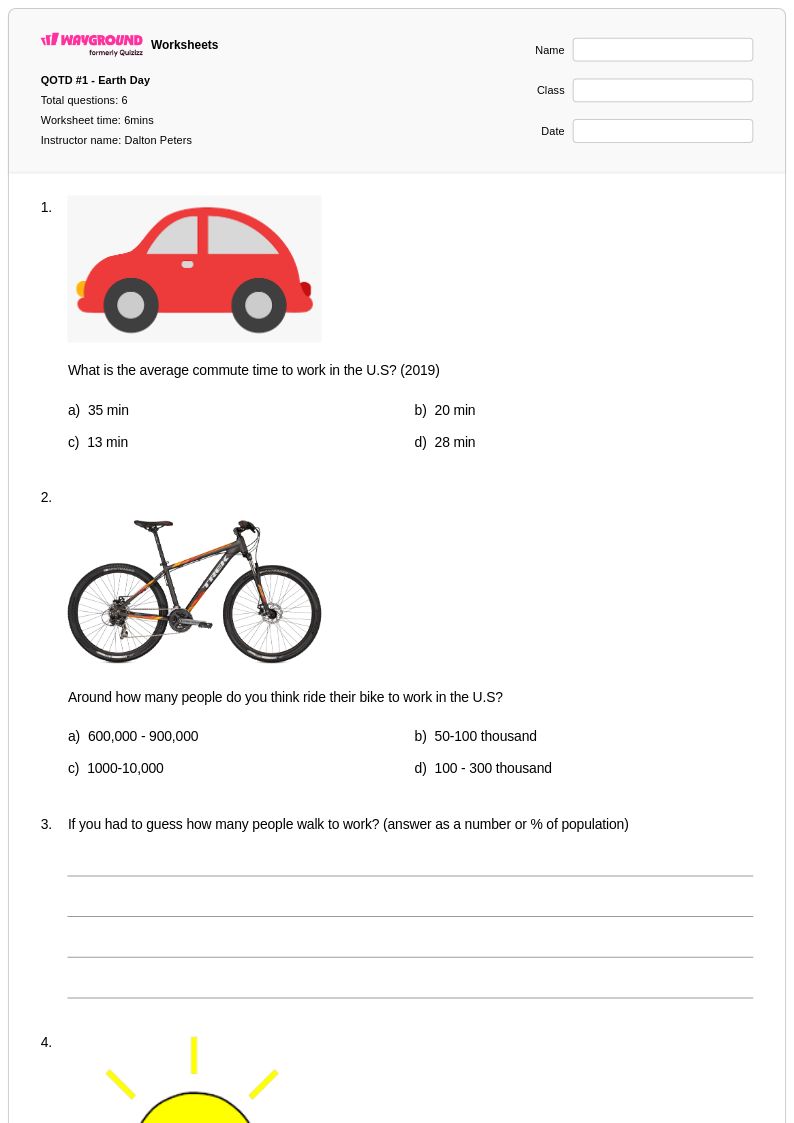
6 Q
9th - 12th
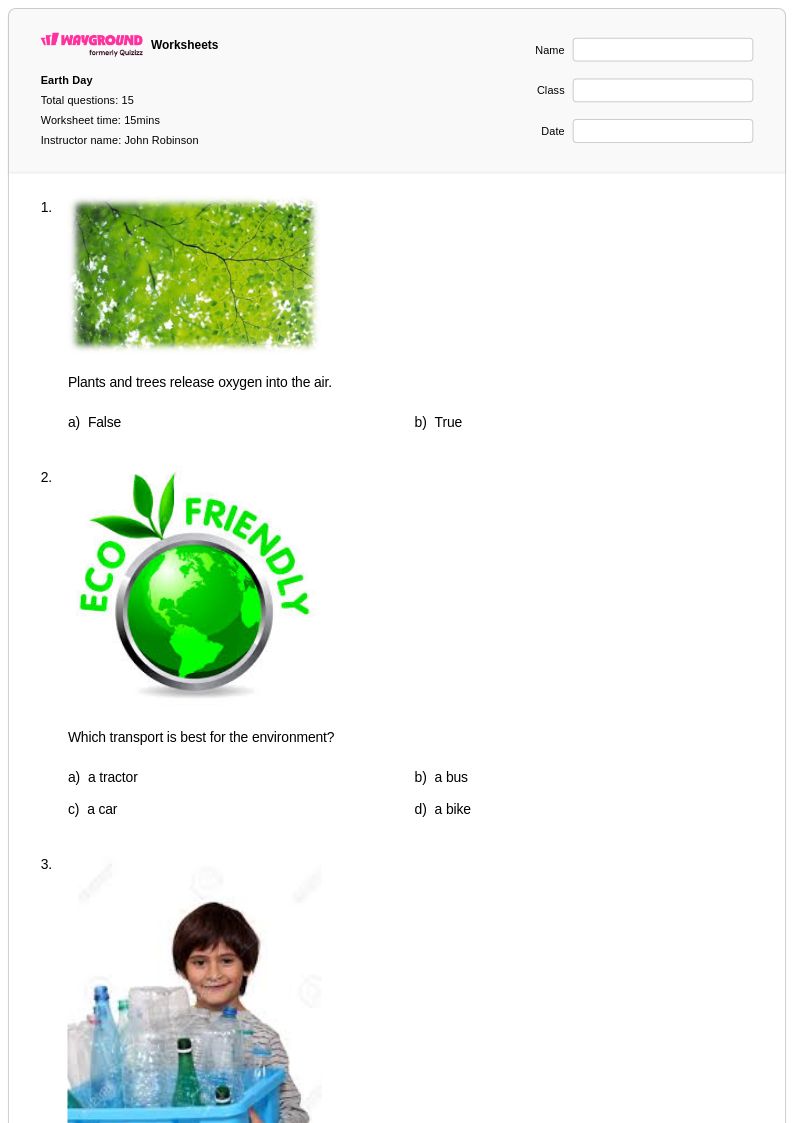
15 Q
2nd - Uni
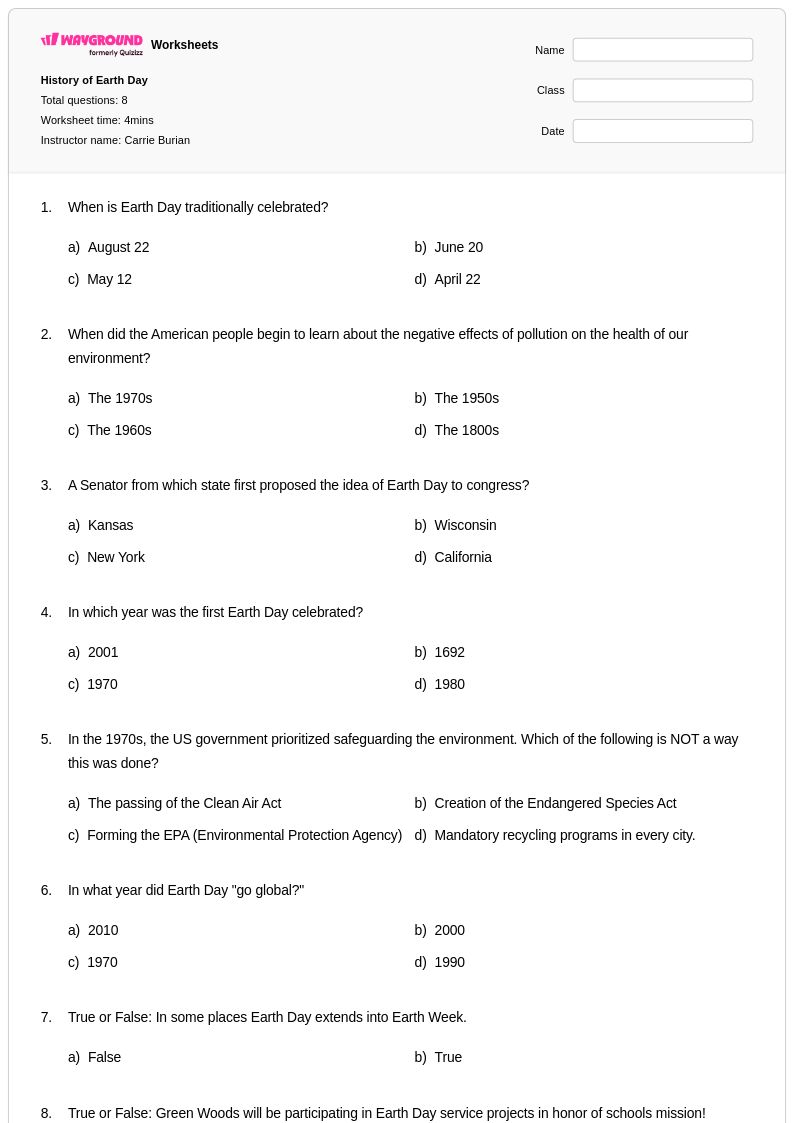
8 Q
5th
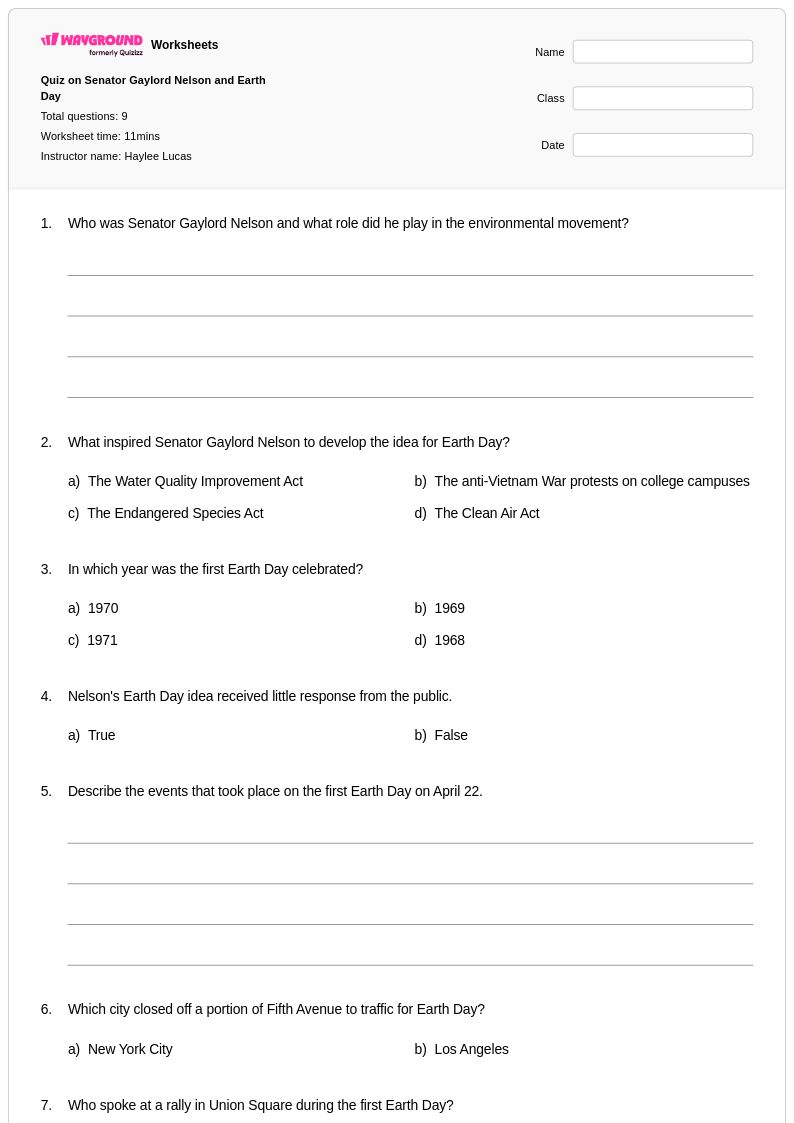
9 Q
6th
10 Q
2nd - 5th
20 Q
1st
10 Q
1st
10 Q
6th
10 Q
4th
8 Q
3rd - 5th
15 Q
7th - Uni
18 Q
7th
6 Q
2nd - 3rd
8 Q
3rd - 5th
8 Q
3rd - 5th
25 Q
2nd - Uni
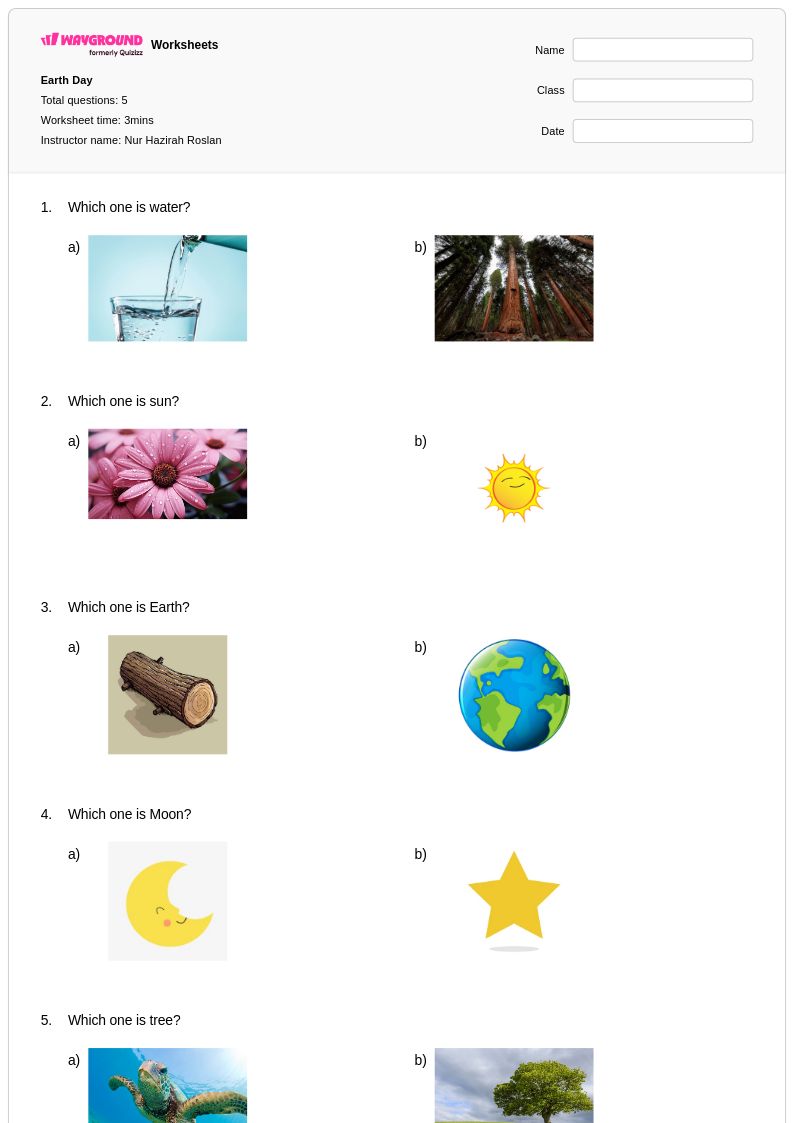
5 Q
KG
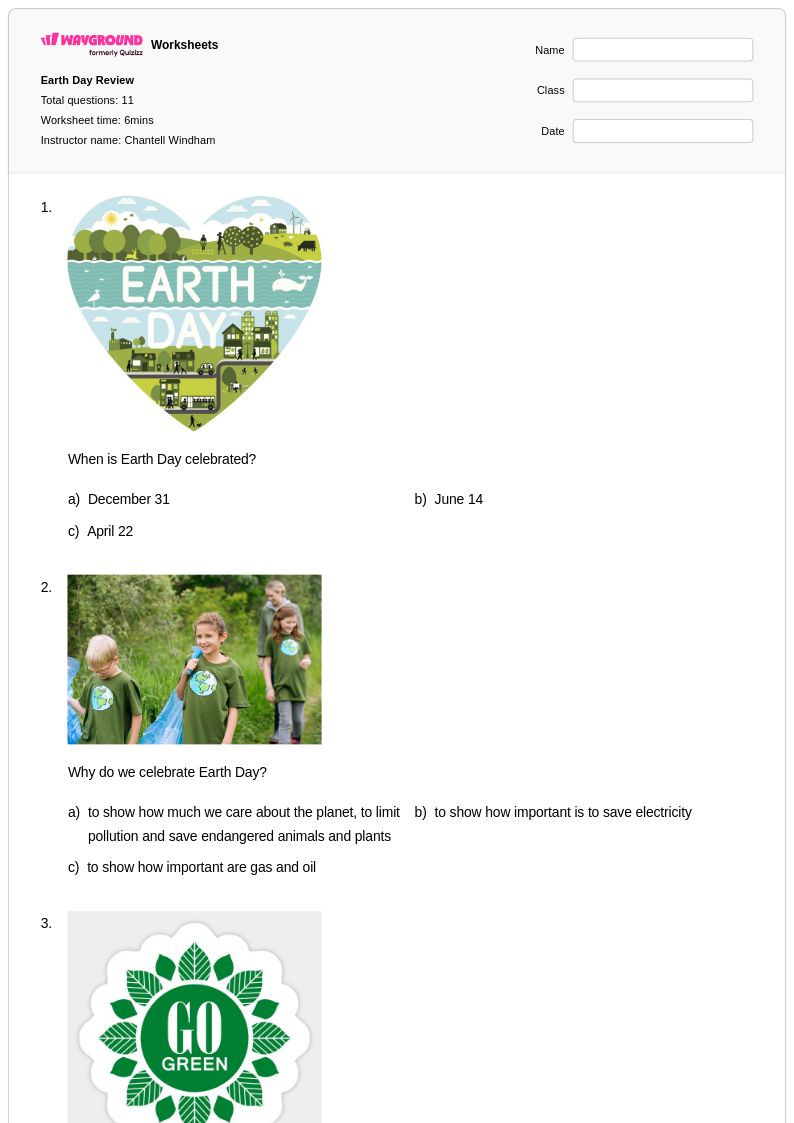
11 Q
4th
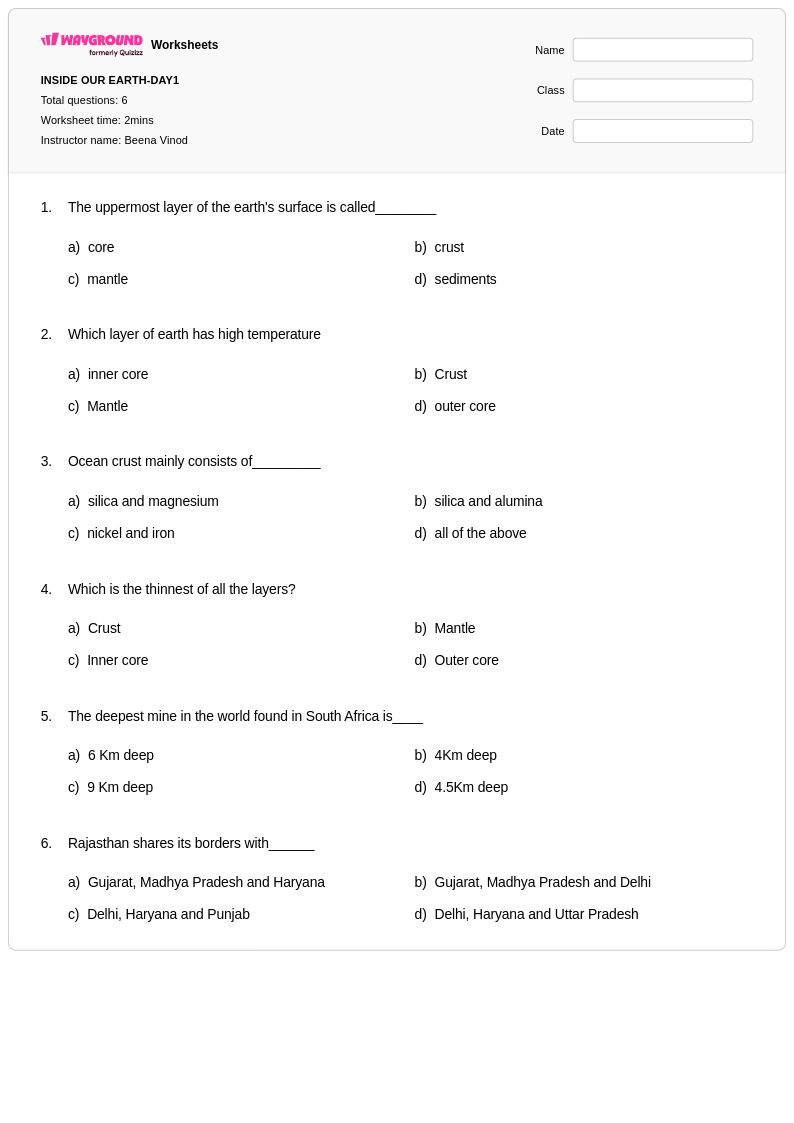
6 Q
7th
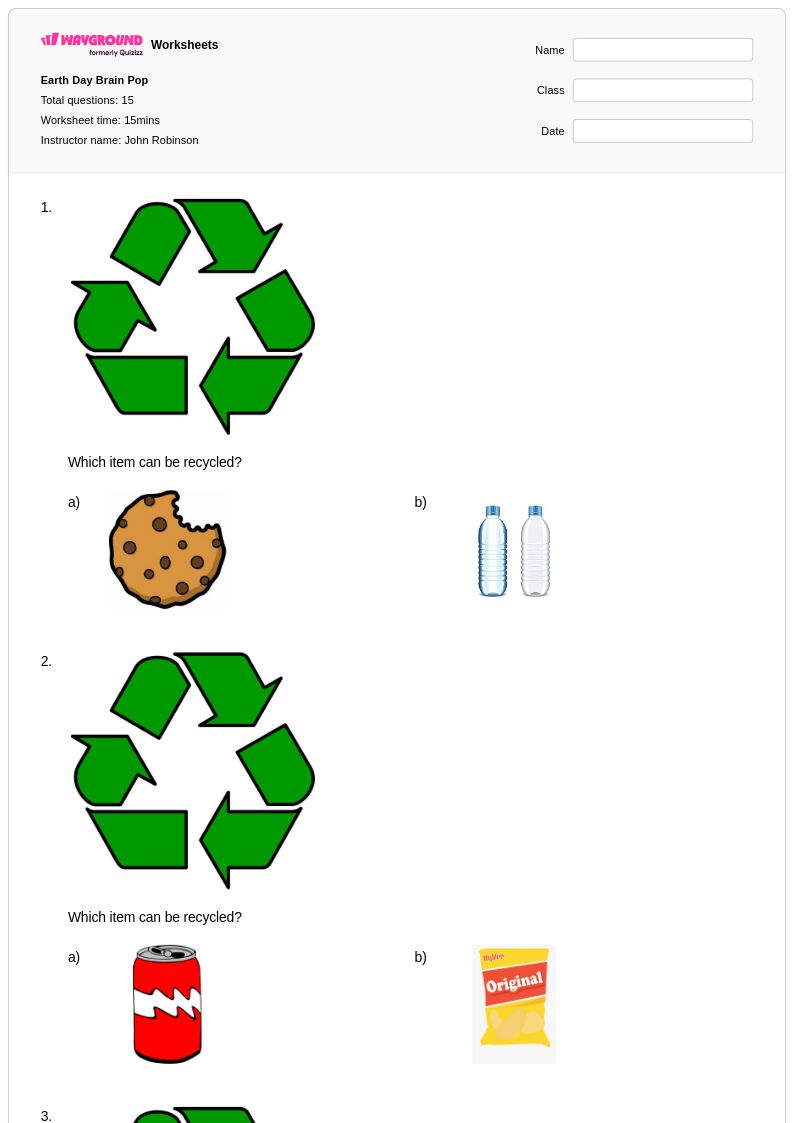
15 Q
5th - Uni
19 Q
5th
30 Q
4th - 5th
10 Q
Uni
8 Q
3rd
Explore Worksheets by Subjects
Explore printable Earth Day worksheets
Earth Day worksheets available through Wayground (formerly Quizizz) provide students with engaging opportunities to explore environmental awareness and community responsibility within their social studies curriculum. These comprehensive educational resources help students develop critical thinking skills about environmental stewardship, understand the interconnectedness of communities and ecosystems, and examine how cultural practices impact our planet. The worksheet collection includes diverse practice problems that challenge students to analyze environmental data, compare conservation efforts across different cultures, and evaluate the role of individual and community action in protecting natural resources. Teachers can access complete answer keys and free printables in convenient pdf format, making lesson preparation streamlined while ensuring students receive immediate feedback on their environmental literacy development.
Wayground's extensive platform supports educators with millions of teacher-created resources specifically designed for Earth Day instruction across all grade levels. The robust search and filtering capabilities allow teachers to quickly locate worksheets that align with specific learning standards while accommodating diverse classroom needs through built-in differentiation tools. These customizable materials are available in both printable and digital formats, including downloadable pdf versions that can be easily adapted for individual student requirements or whole-class instruction. The platform's flexible design enables teachers to use these Earth Day resources for initial skill-building lessons, targeted remediation for struggling learners, enrichment activities for advanced students, and ongoing practice throughout their environmental education units, ultimately supporting comprehensive lesson planning that connects community values with global environmental responsibility.
FAQs
How do I teach Earth Day concepts in a meaningful way across grade levels?
What kinds of activities help students practice environmental stewardship skills?
What common misconceptions do students have about Earth Day and environmental responsibility?
How can I differentiate Earth Day worksheets for students with different learning needs?
How do I use Wayground's Earth Day worksheets in my classroom?