Free Printable Electromagnetic Radiation Worksheets for Grade 9
Grade 9 electromagnetic radiation worksheets from Wayground offer comprehensive printables and practice problems with answer keys to help students master wave properties, the electromagnetic spectrum, and radiation applications in physics.
Explore printable Electromagnetic Radiation worksheets for Grade 9
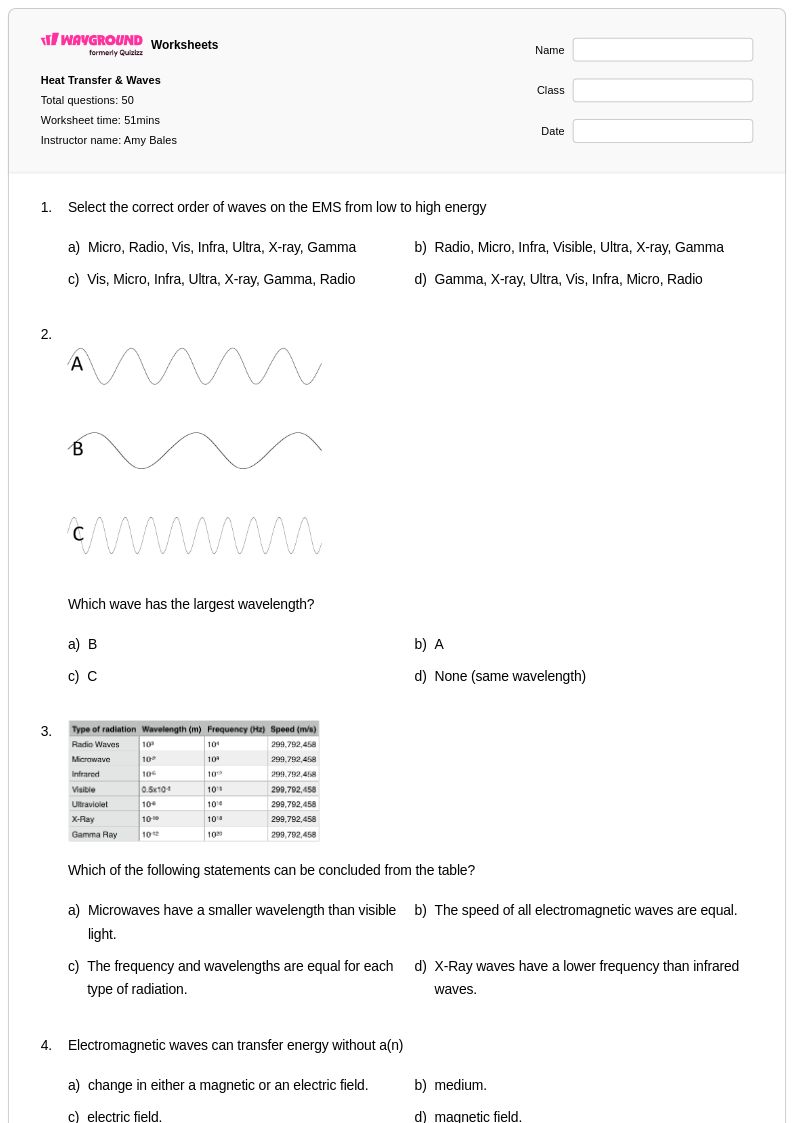
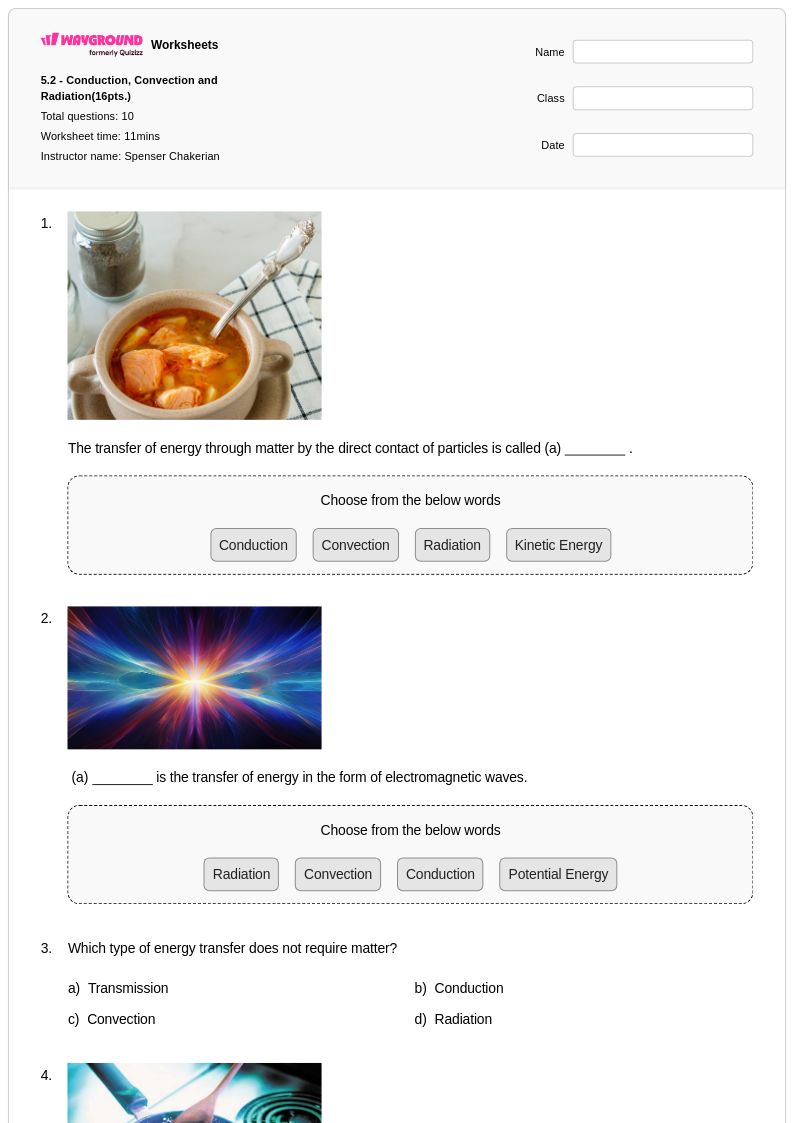
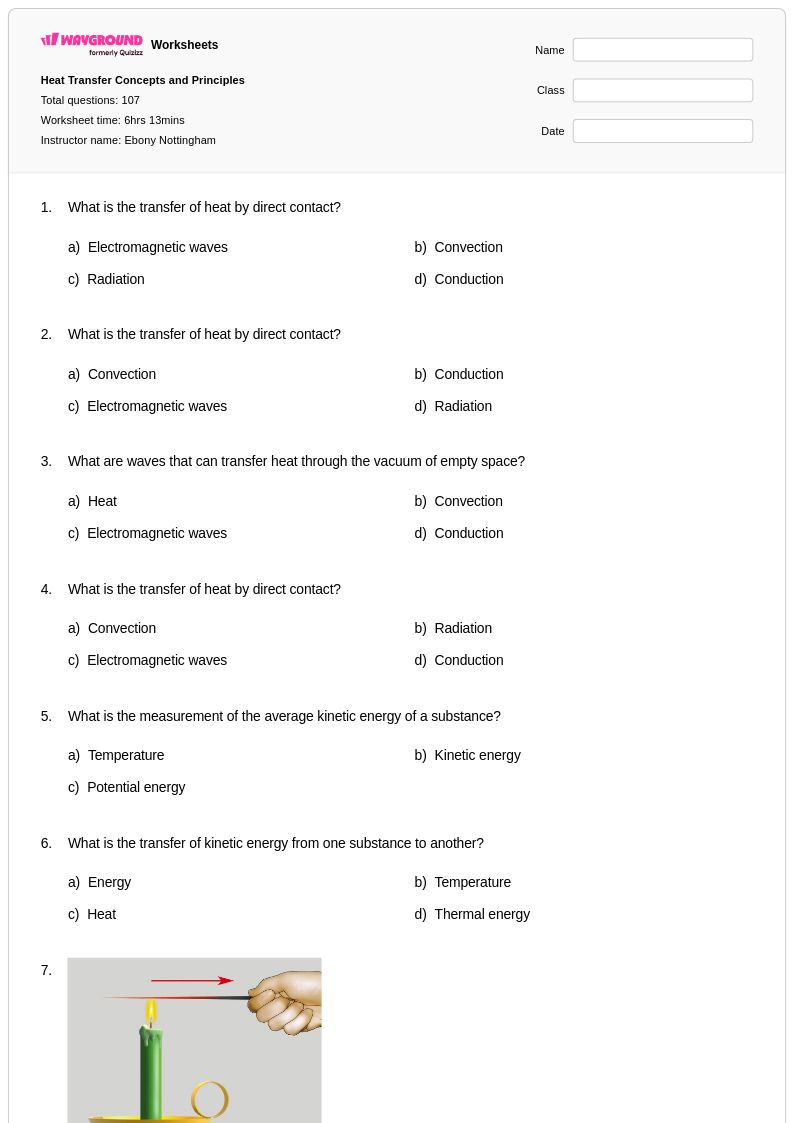
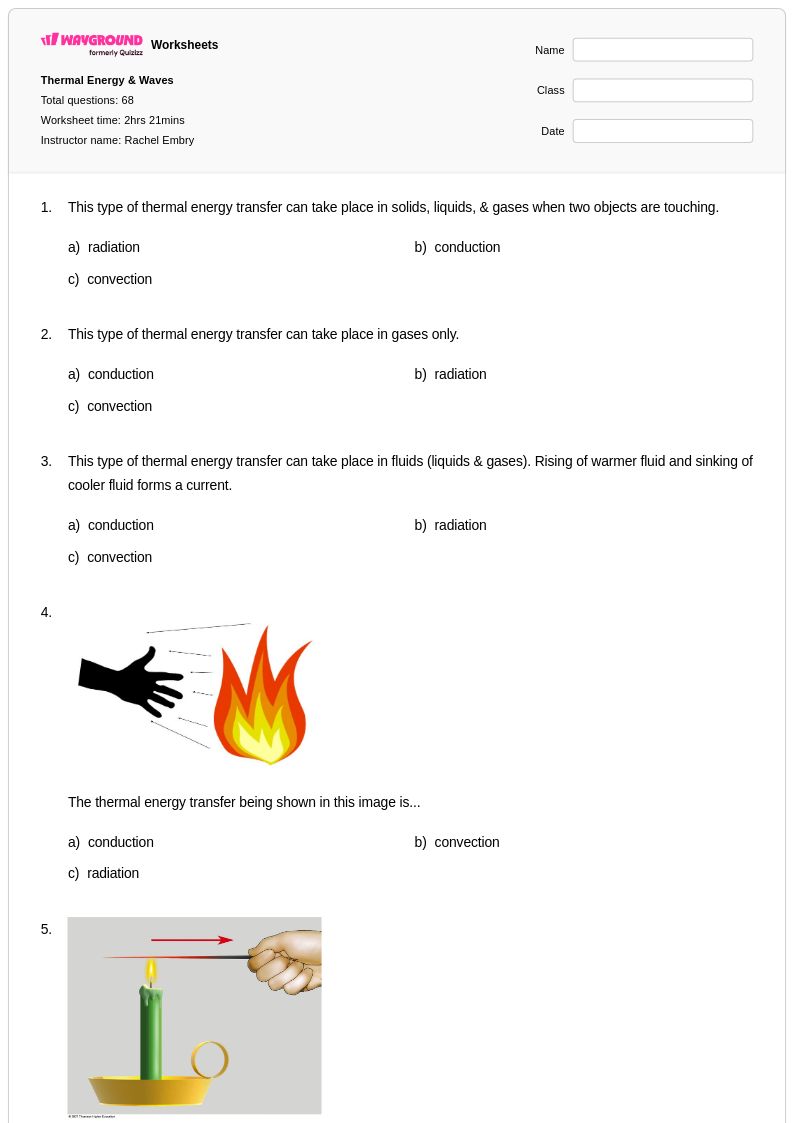
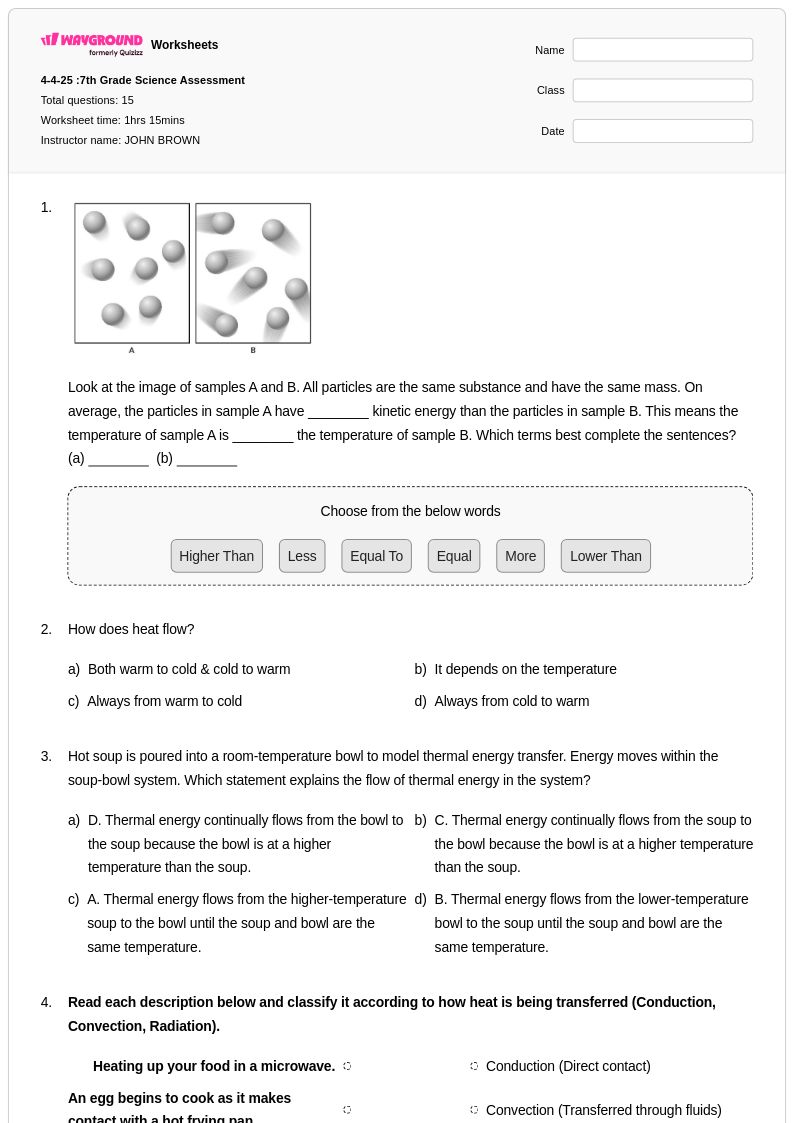
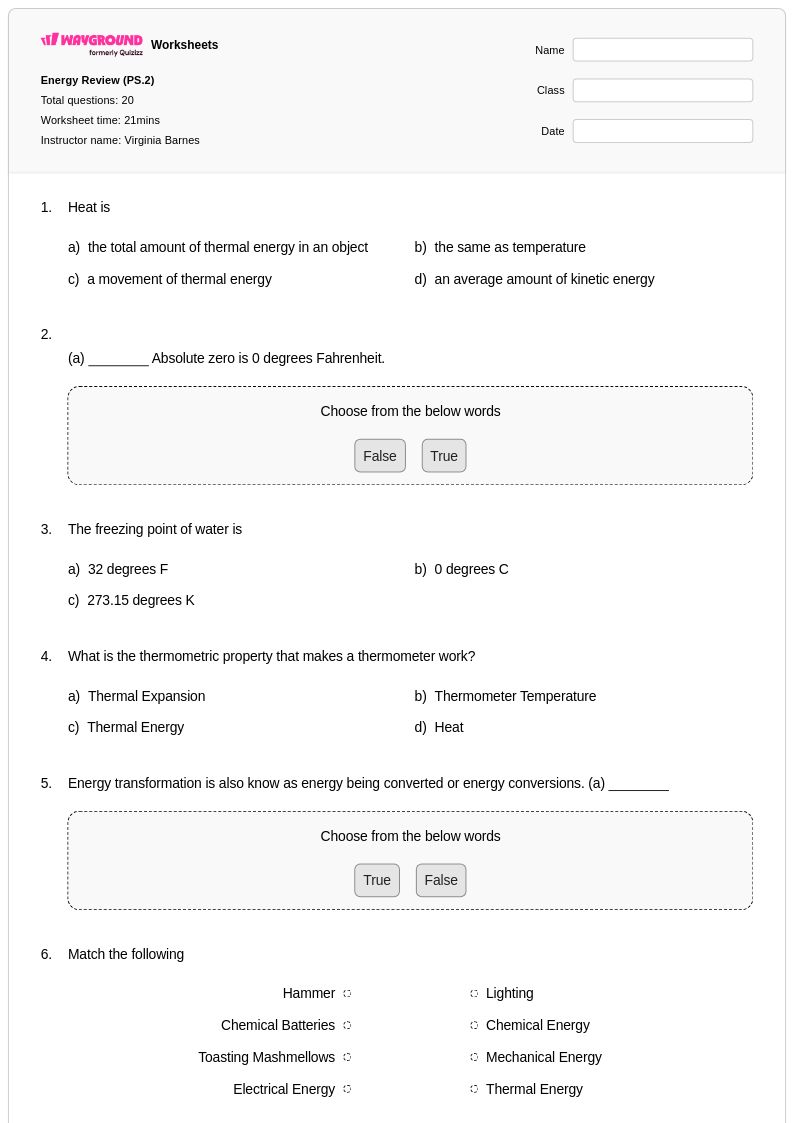
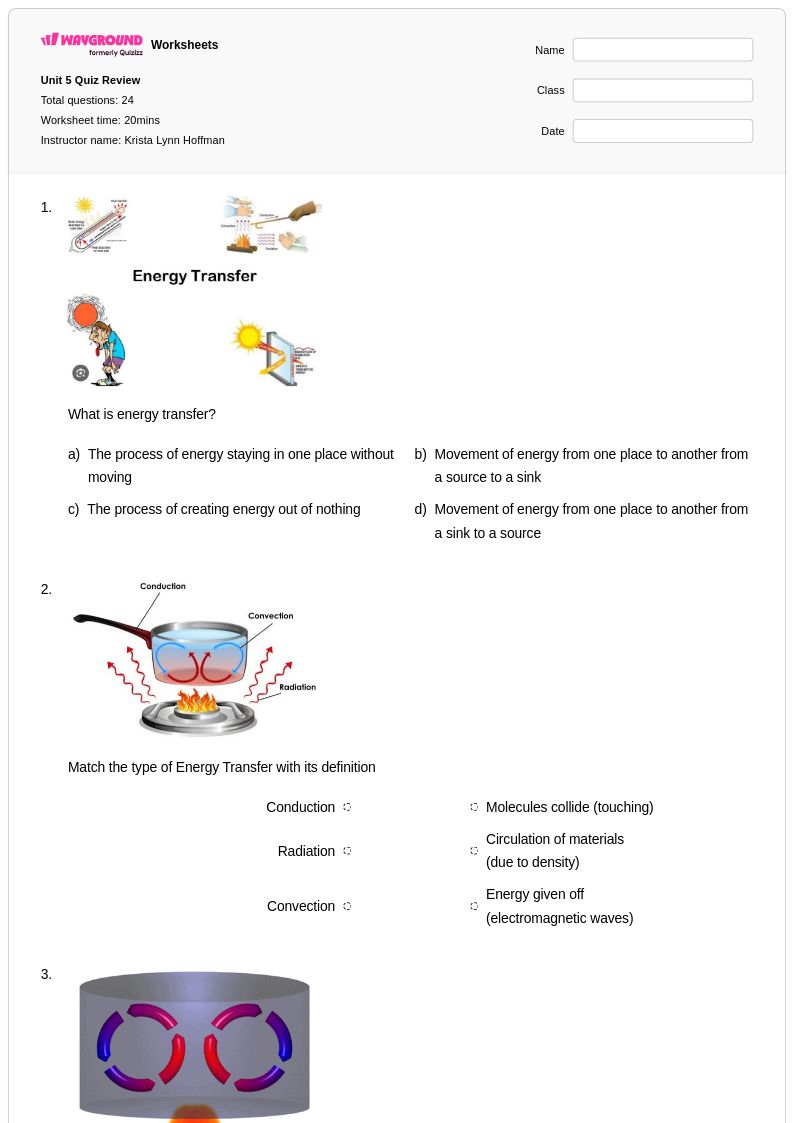
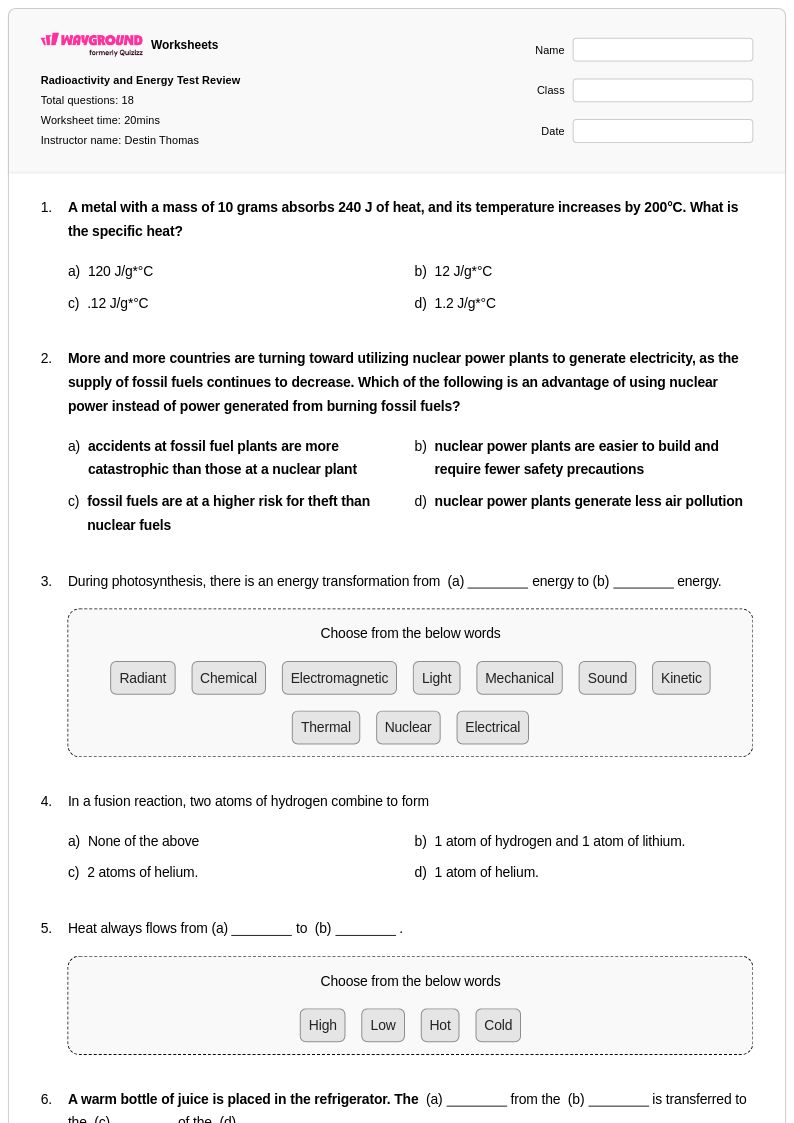
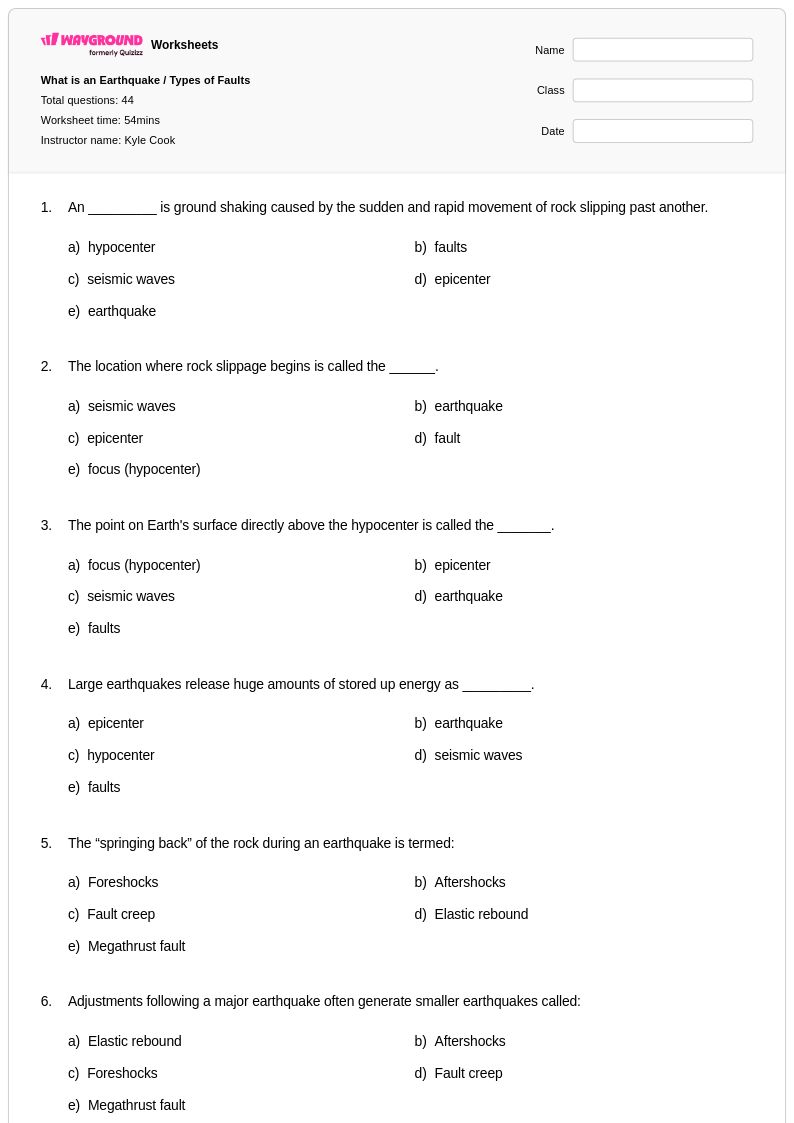
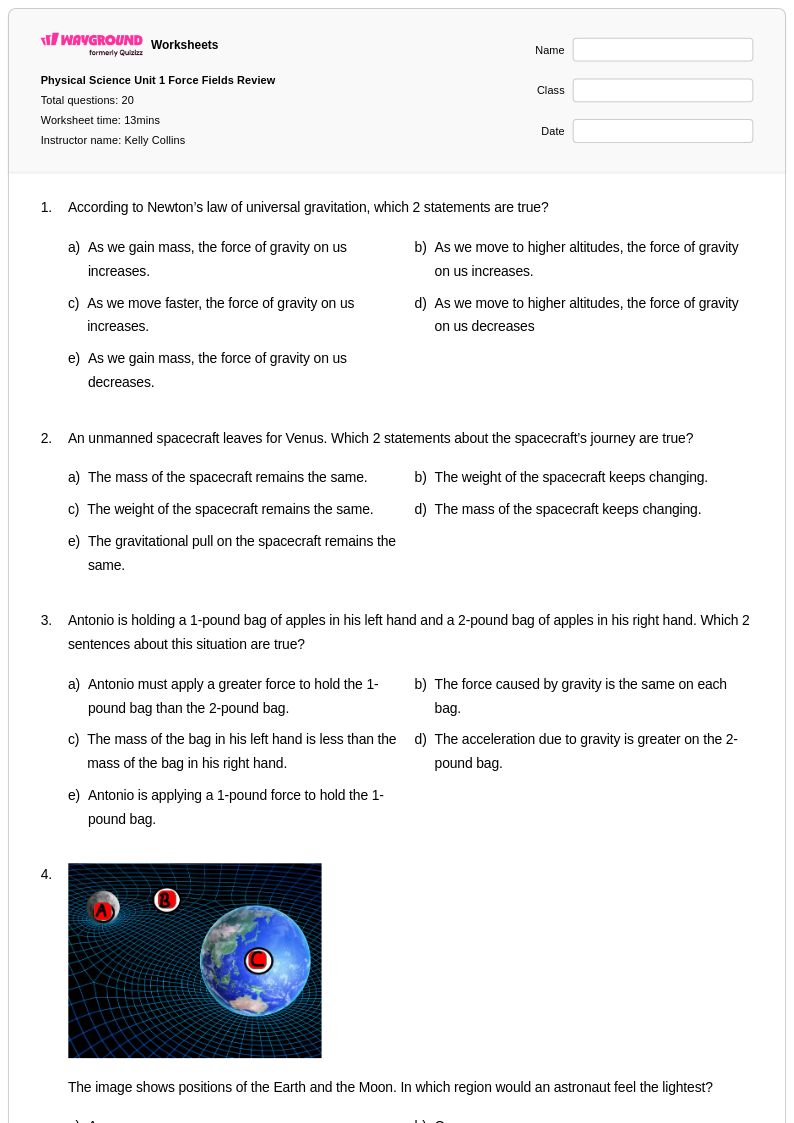
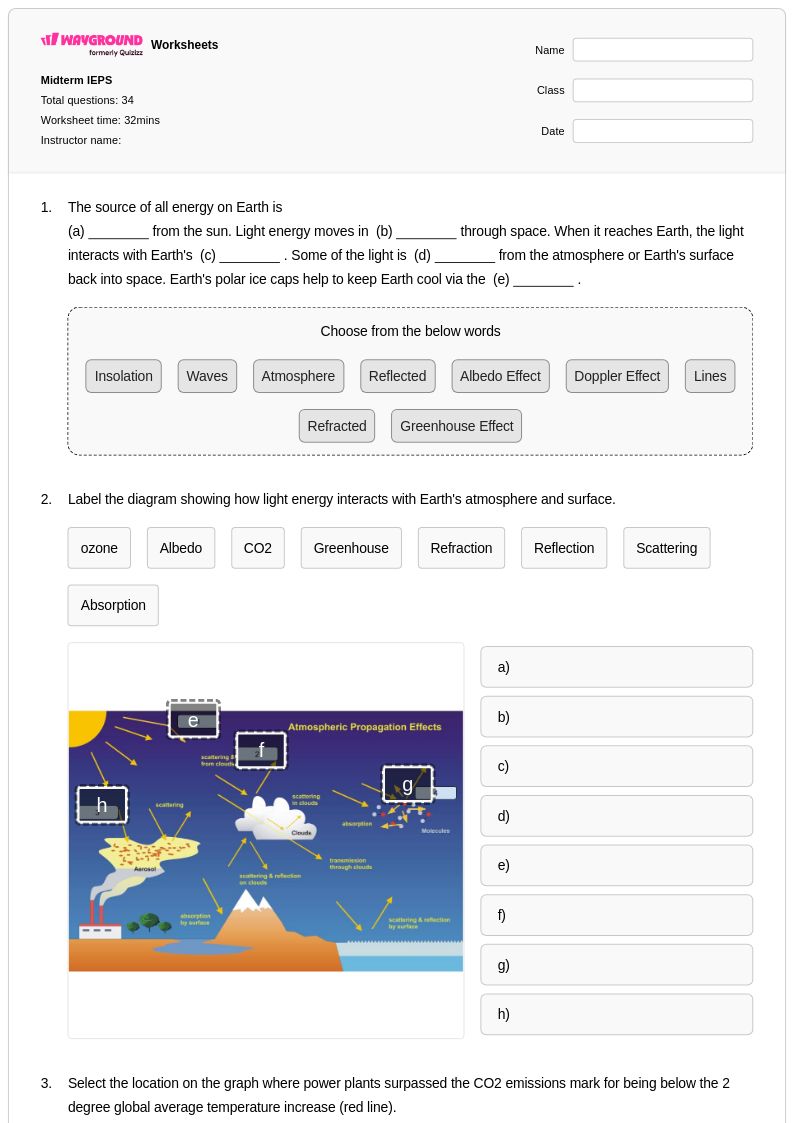
Electromagnetic radiation worksheets for Grade 9 students available through Wayground (formerly Quizizz) provide comprehensive coverage of this fundamental physics concept, helping students master the properties and behaviors of electromagnetic waves across the entire spectrum. These carefully designed practice problems guide ninth graders through essential topics including wave characteristics such as frequency, wavelength, and amplitude, the relationship between electromagnetic radiation and energy, and real-world applications ranging from radio waves to gamma rays. Students develop critical analytical skills by working through calculations involving the electromagnetic spectrum, exploring how different types of radiation interact with matter, and understanding the wave-particle duality that defines electromagnetic phenomena. Each worksheet includes a complete answer key and is available as a free printable pdf, enabling students to practice independently while building confidence in their understanding of electromagnetic theory and its practical applications in technology and medicine.
Wayground (formerly Quizizz) empowers physics teachers with an extensive collection of millions of teacher-created electromagnetic radiation worksheets specifically tailored for Grade 9 instruction, featuring robust search and filtering capabilities that allow educators to quickly locate resources aligned with specific learning standards and curriculum requirements. The platform's differentiation tools enable teachers to customize worksheet difficulty levels and modify practice problems to meet diverse student needs, while flexible formatting options provide both printable pdf versions for traditional classroom use and interactive digital formats for modern learning environments. These comprehensive resources support effective lesson planning by offering varied question types and problem-solving approaches, facilitate targeted remediation for students struggling with electromagnetic concepts, and provide enrichment opportunities for advanced learners ready to explore more complex applications of electromagnetic radiation in fields such as astronomy, communications technology, and medical imaging.
FAQs
How do I teach electromagnetic radiation to high school physics students?
Start by grounding students in wave properties — frequency, wavelength, and amplitude — before introducing the electromagnetic spectrum as an organized continuum of radiation types. Use real-world applications like radio communication, medical X-rays, and microwave ovens to anchor each region of the spectrum to something tangible. From there, move into energy calculations using E = hf, connecting wave behavior to quantum theory. Sequencing the content this way helps students see electromagnetic radiation as a unified concept rather than a list of disconnected facts.
What practice problems should students work through to understand electromagnetic radiation?
Students benefit most from problems that require them to move between frequency, wavelength, and energy using c = fλ and E = hf. Practice should include identifying where a given wave falls on the electromagnetic spectrum, comparing the properties of different radiation types, and solving multi-step problems involving photon energy calculations. Problems that tie calculations to real applications — such as determining the frequency of a medical imaging tool or the energy of UV radiation — help students build both computational fluency and conceptual understanding.
What mistakes do students commonly make when learning about electromagnetic radiation?
One of the most persistent misconceptions is that higher frequency means lower energy — students often confuse the inverse relationship between wavelength and frequency with the relationship between wavelength and energy. Many also struggle with wave-particle duality, finding it difficult to accept that electromagnetic radiation can behave as both a wave and a photon depending on context. Another common error is misremembering the order of the electromagnetic spectrum, particularly the placement of ultraviolet, X-rays, and gamma rays relative to visible light.
How do I use electromagnetic radiation worksheets effectively in my classroom?
Electromagnetic radiation worksheets on Wayground are available as printable PDFs for traditional classroom use and in digital formats for technology-integrated learning environments, including the option to host them as a quiz directly on Wayground. Printable versions work well for focused, independent practice sessions or homework assignments, while digital formats allow for immediate feedback and pacing flexibility. Using worksheets that include detailed answer keys lets you model problem-solving steps during review, which is especially valuable for multi-step frequency, wavelength, and energy calculations that students find challenging.
How do I differentiate electromagnetic radiation instruction for students at different skill levels?
For students who need additional support, reduce the cognitive load by starting with conceptual identification tasks — such as ordering the spectrum or matching radiation types to their properties — before moving to calculations. Wayground's platform supports accommodations including read aloud for students who need questions read to them, reduced answer choices to lower cognitive demand, and extended time settings that can be configured per student. More advanced students can be challenged with multi-step energy quantization problems or application tasks that connect electromagnetic radiation to modern technologies like MRI or fiber optics.
What topics within electromagnetic radiation are most important to assess?
Key assessment targets include the ability to correctly order the electromagnetic spectrum by frequency, wavelength, and energy; apply the wave speed equation (c = fλ) and Planck's equation (E = hf) accurately; and explain the properties that distinguish different types of electromagnetic waves. Students should also be assessed on their understanding of wave-particle duality and their ability to connect specific radiation types to real-world applications. Misconception-targeting questions — such as asking students to explain why gamma rays are more energetic than radio waves — are particularly effective for surfacing gaps in conceptual understanding.