
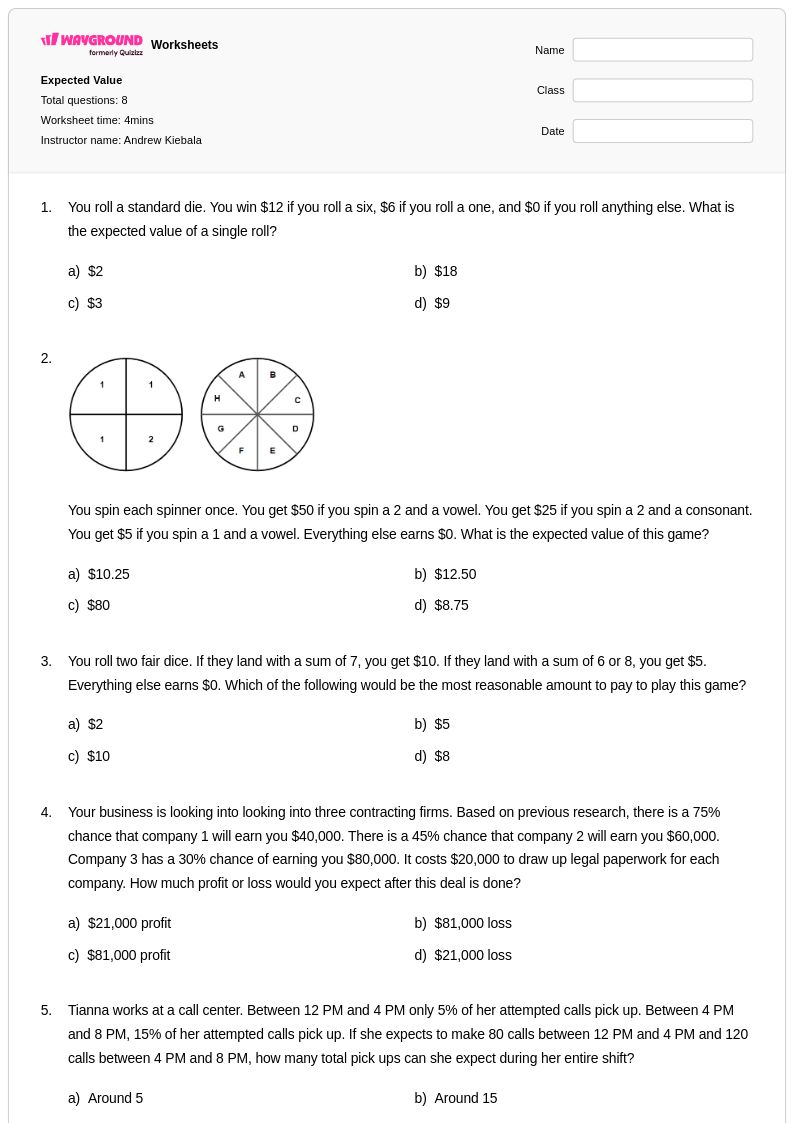
8 Q
11th - Uni
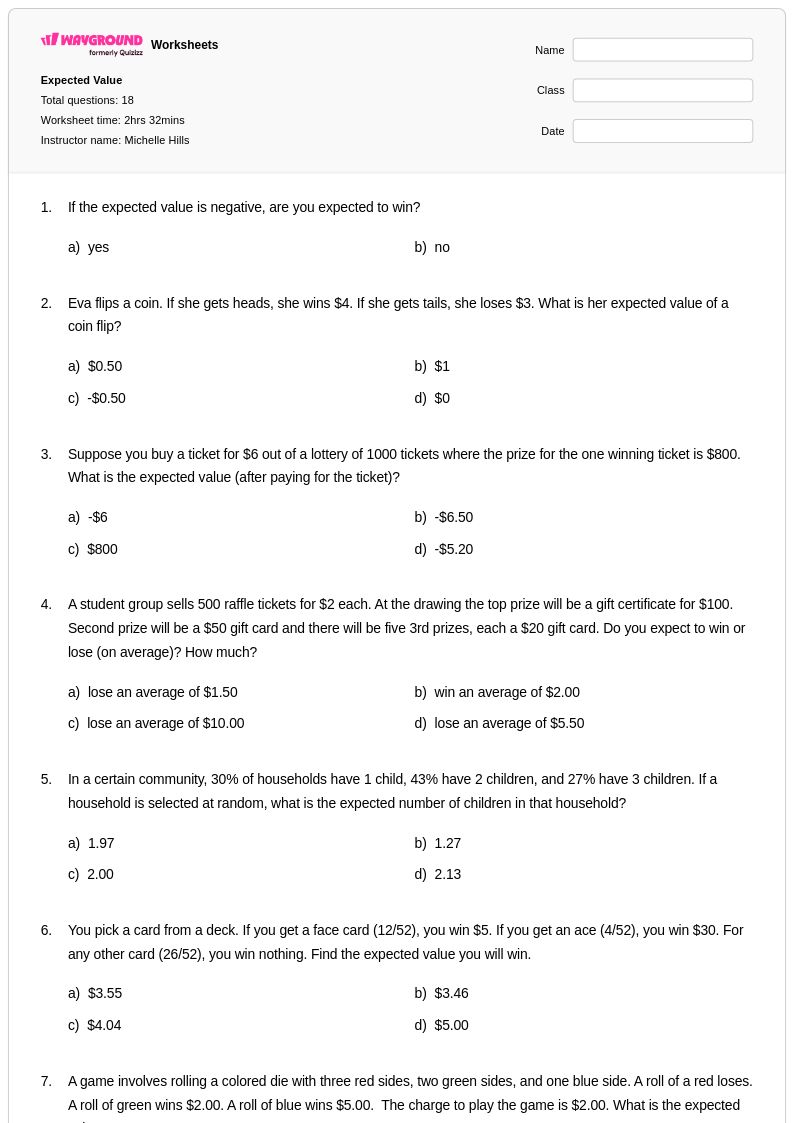
18 Q
9th - 12th
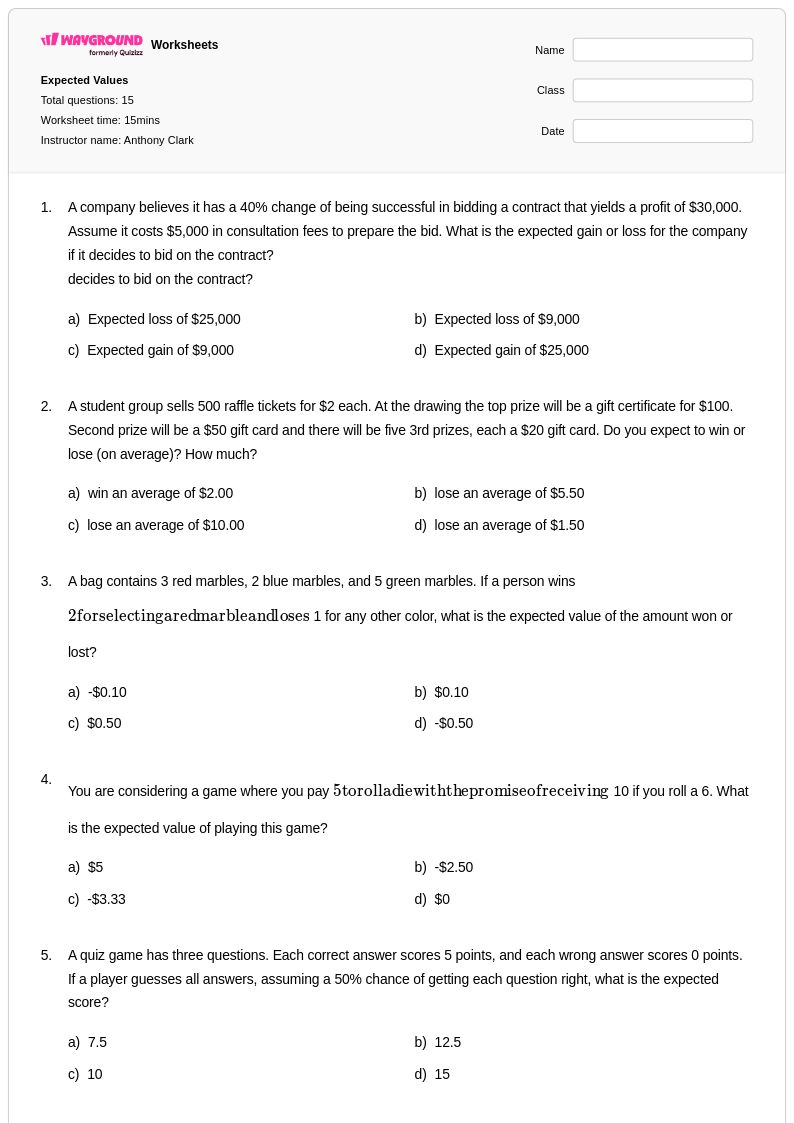
15 Q
12th - Uni
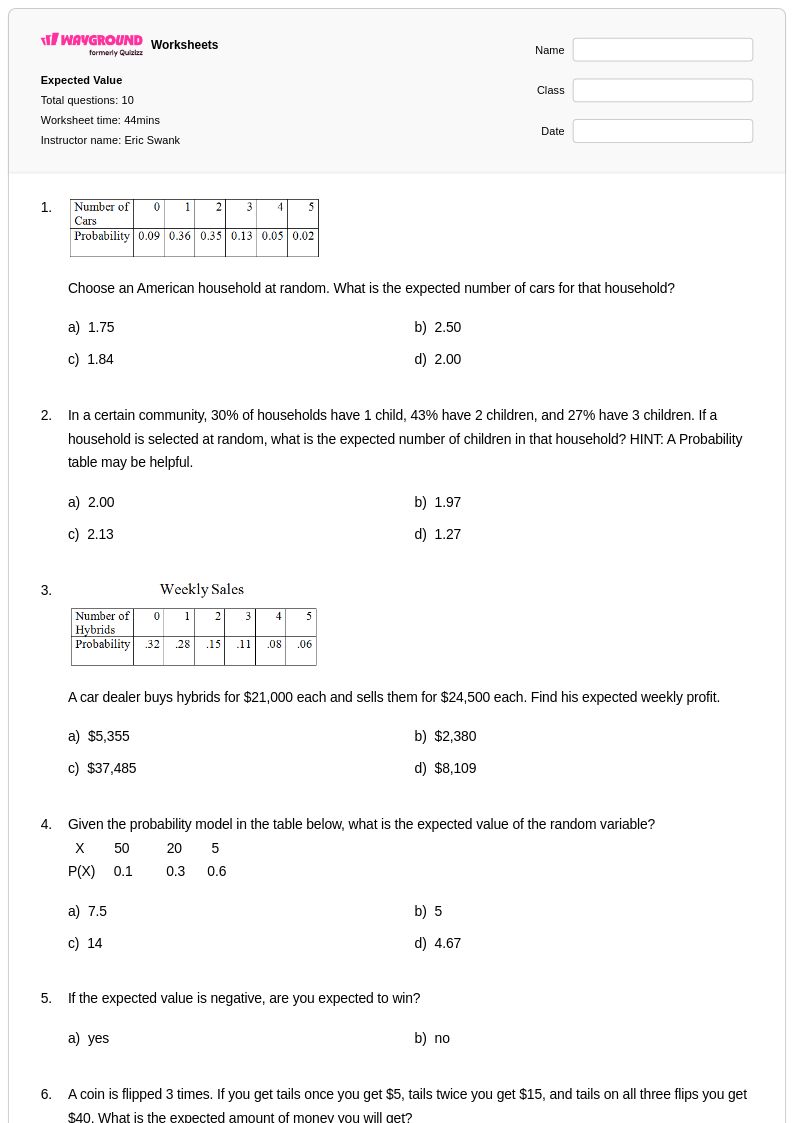
10 Q
12th
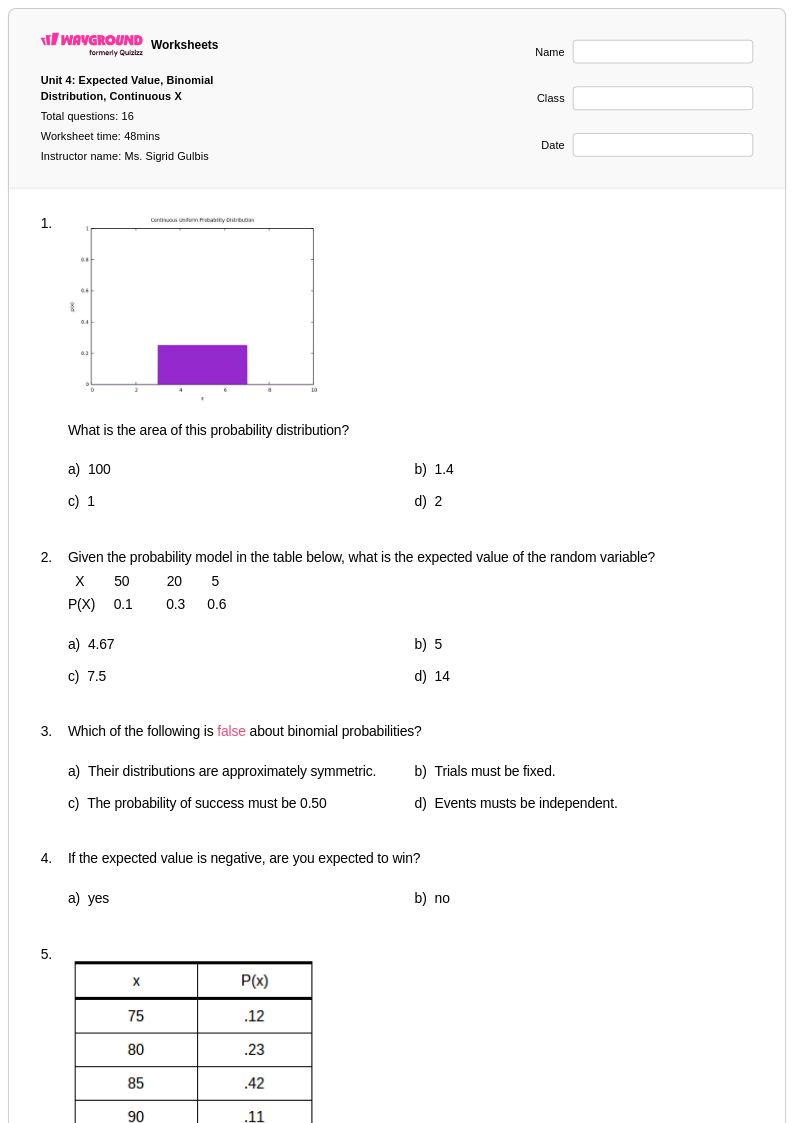
16 Q
9th - 12th
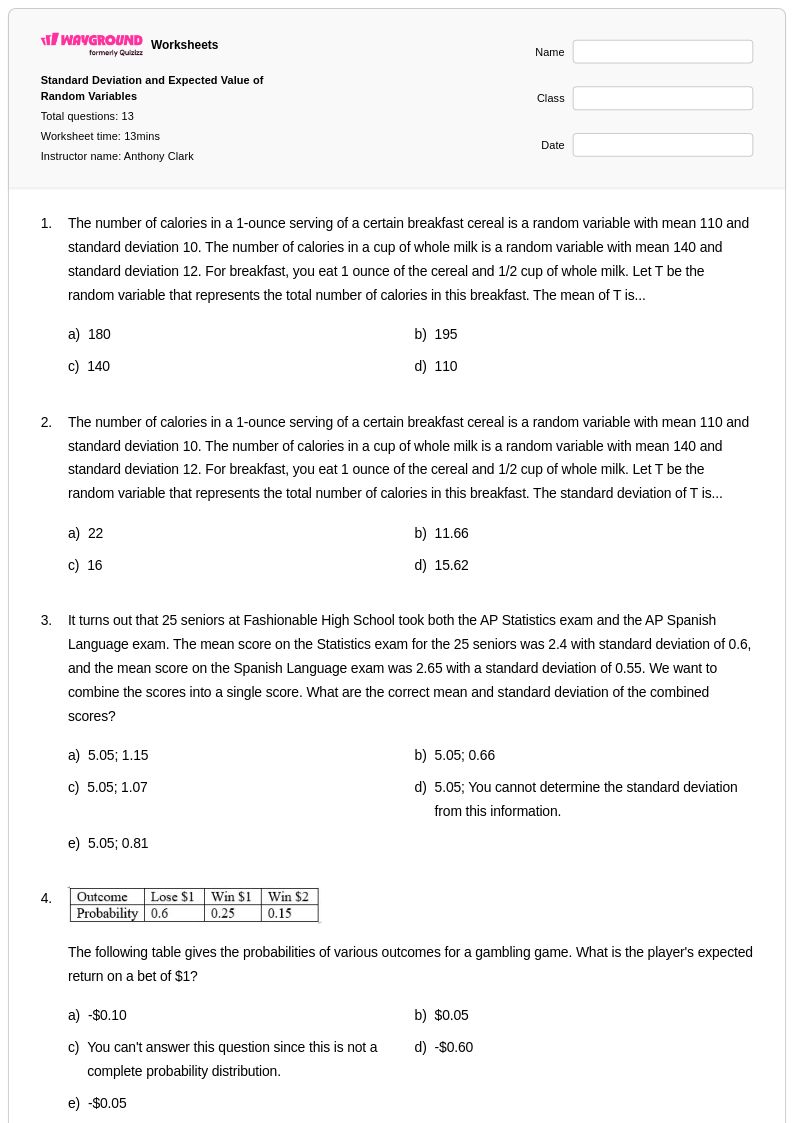
13 Q
12th - Uni
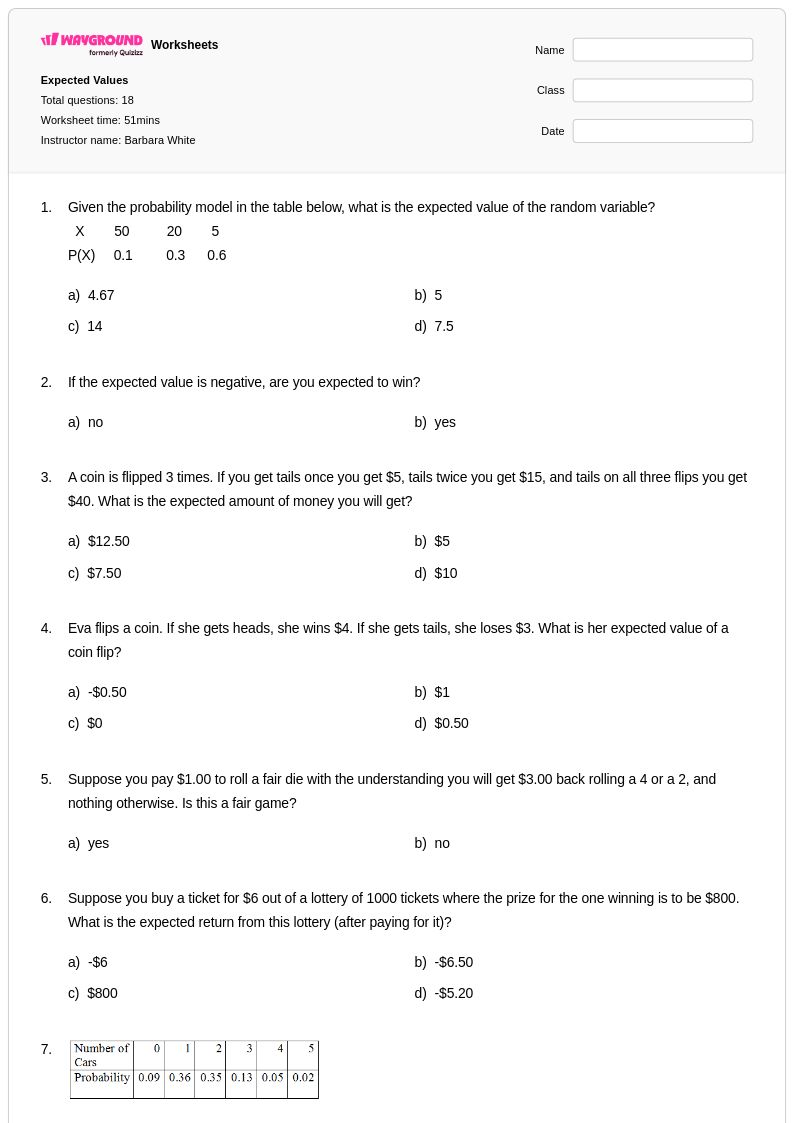
18 Q
10th - 12th
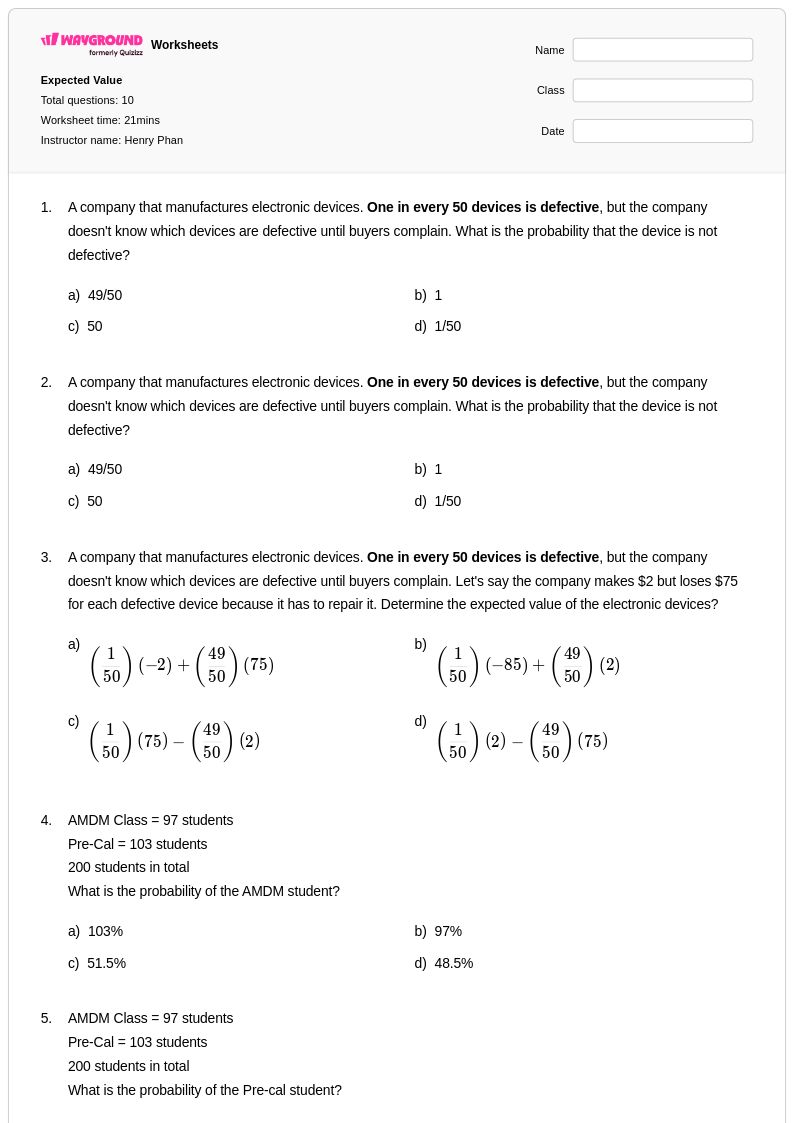
10 Q
9th - 12th
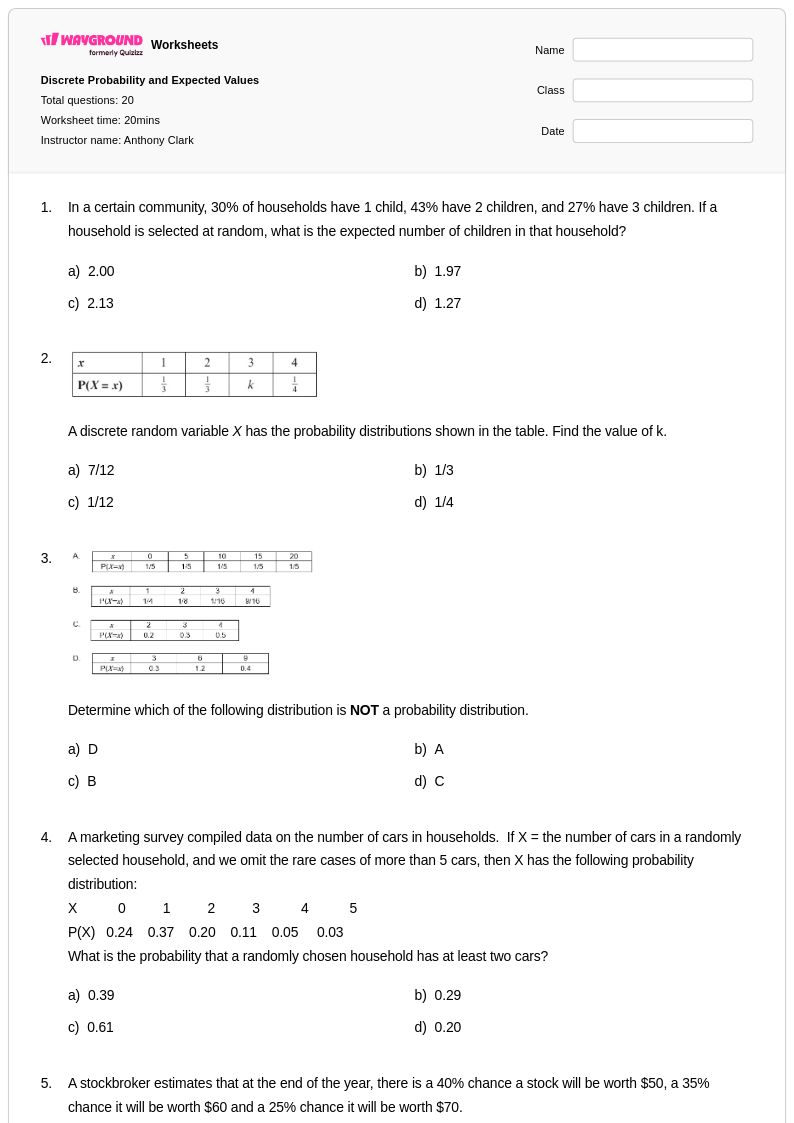
20 Q
11th - Uni
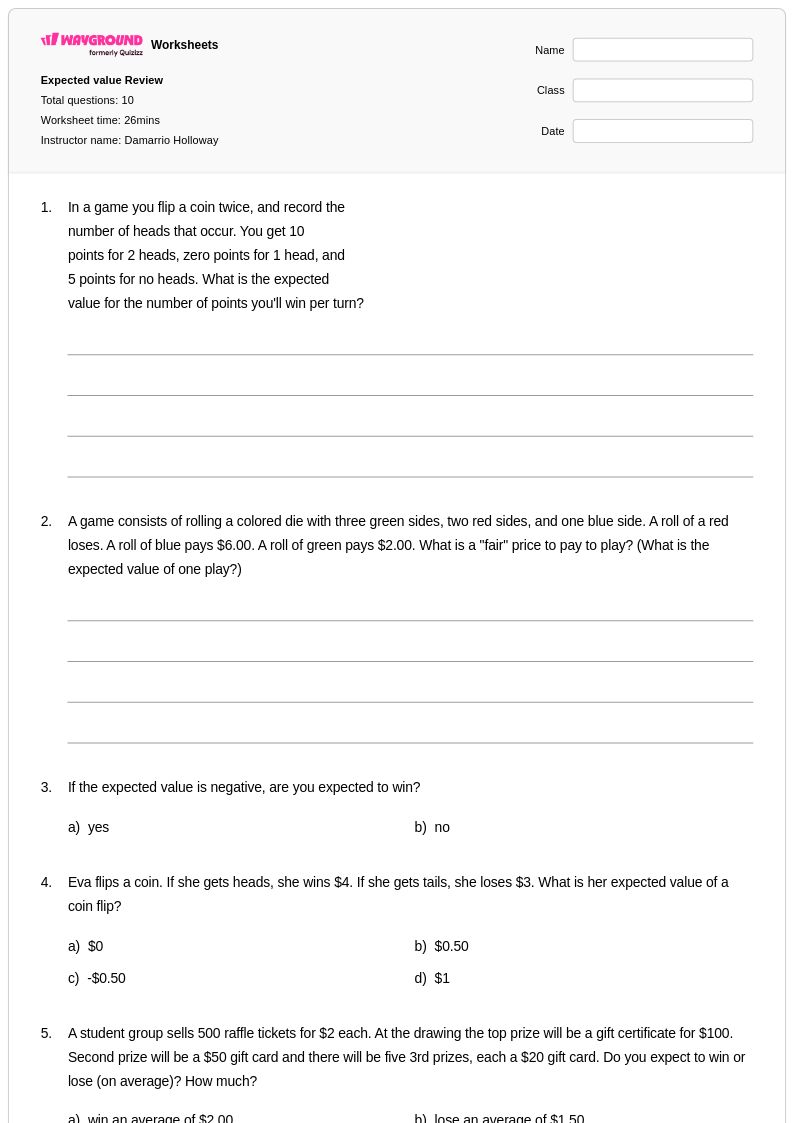
10 Q
10th - 12th
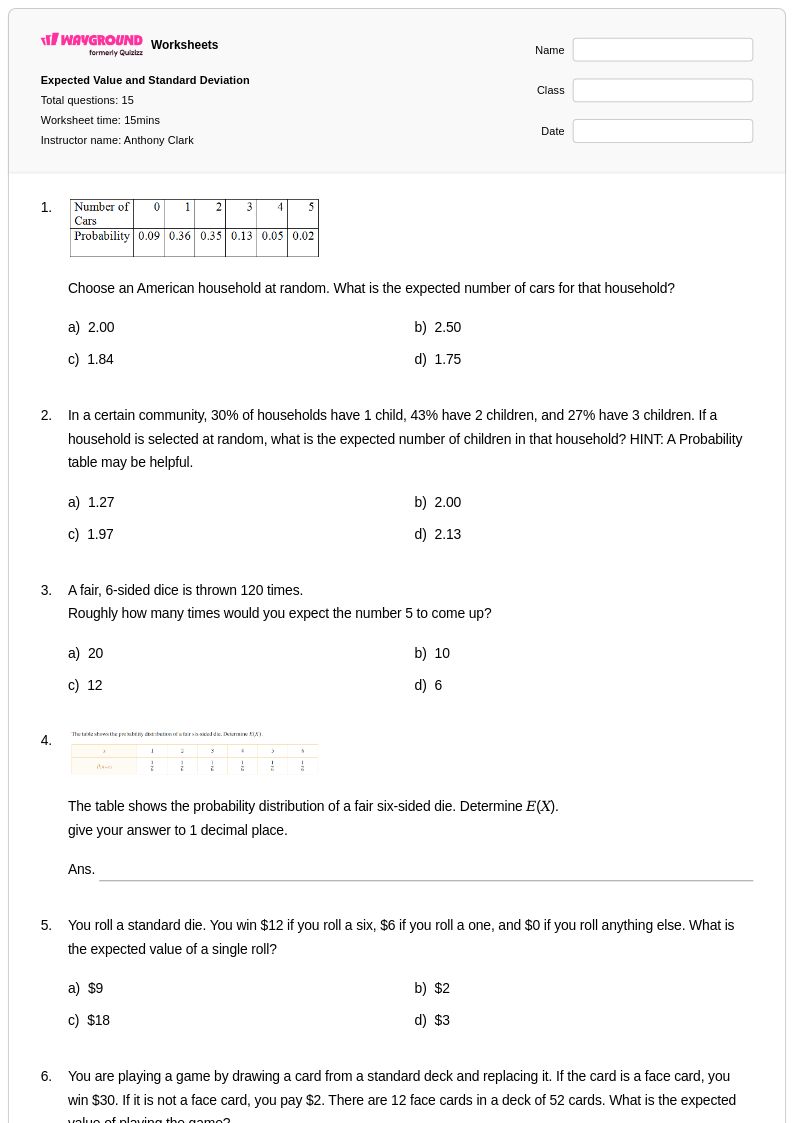
15 Q
12th - Uni
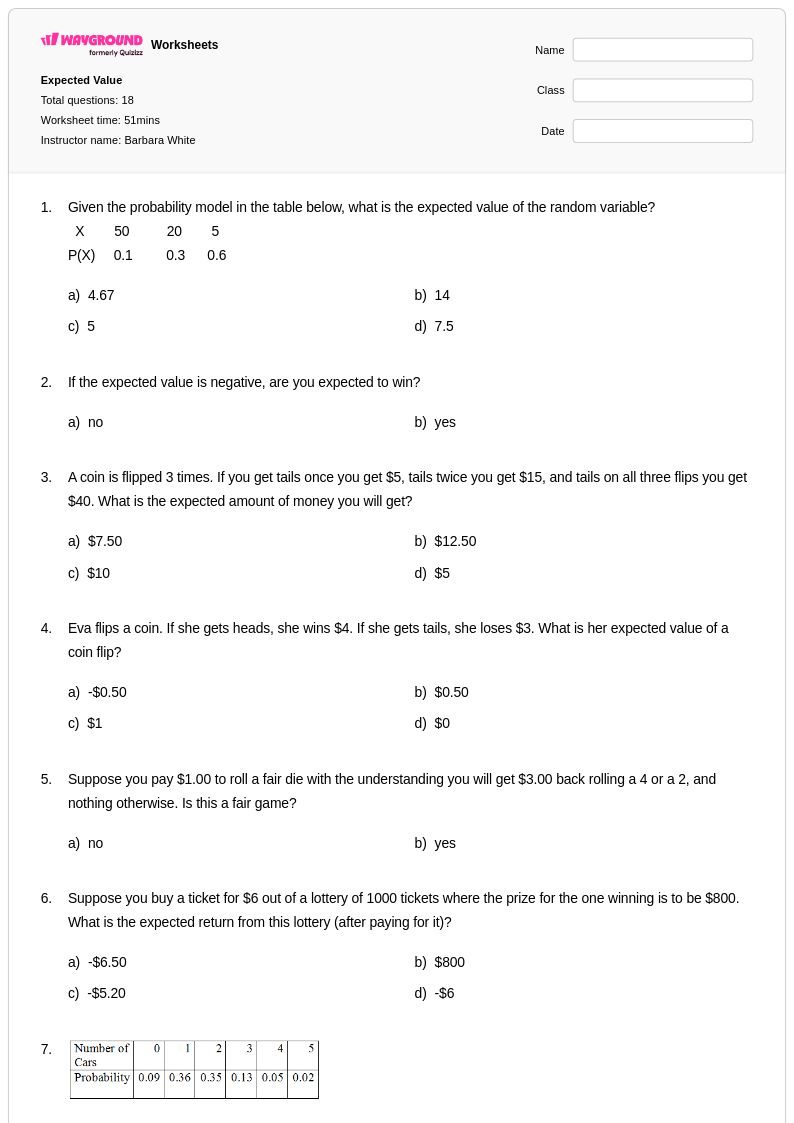
18 Q
10th - 12th
15 Q
11th - Uni
10 Q
9th - 12th
10 Q
10th - 12th
10 Q
12th - Uni
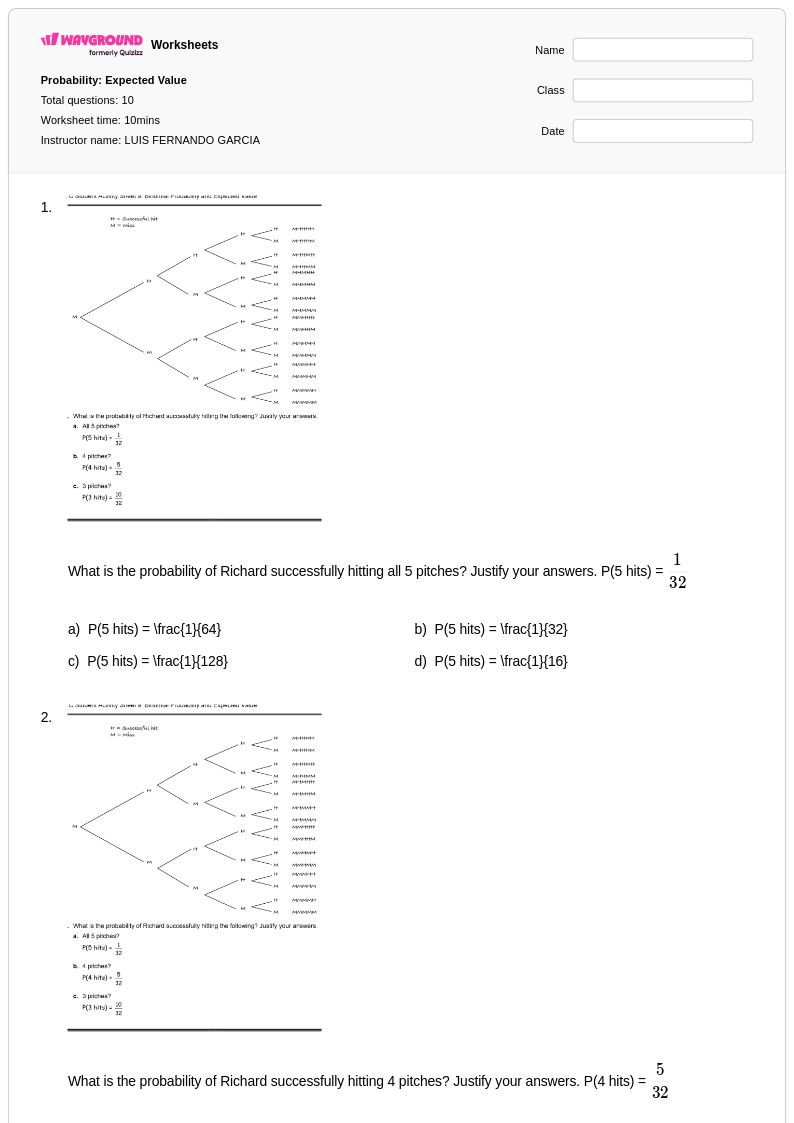
10 Q
12th
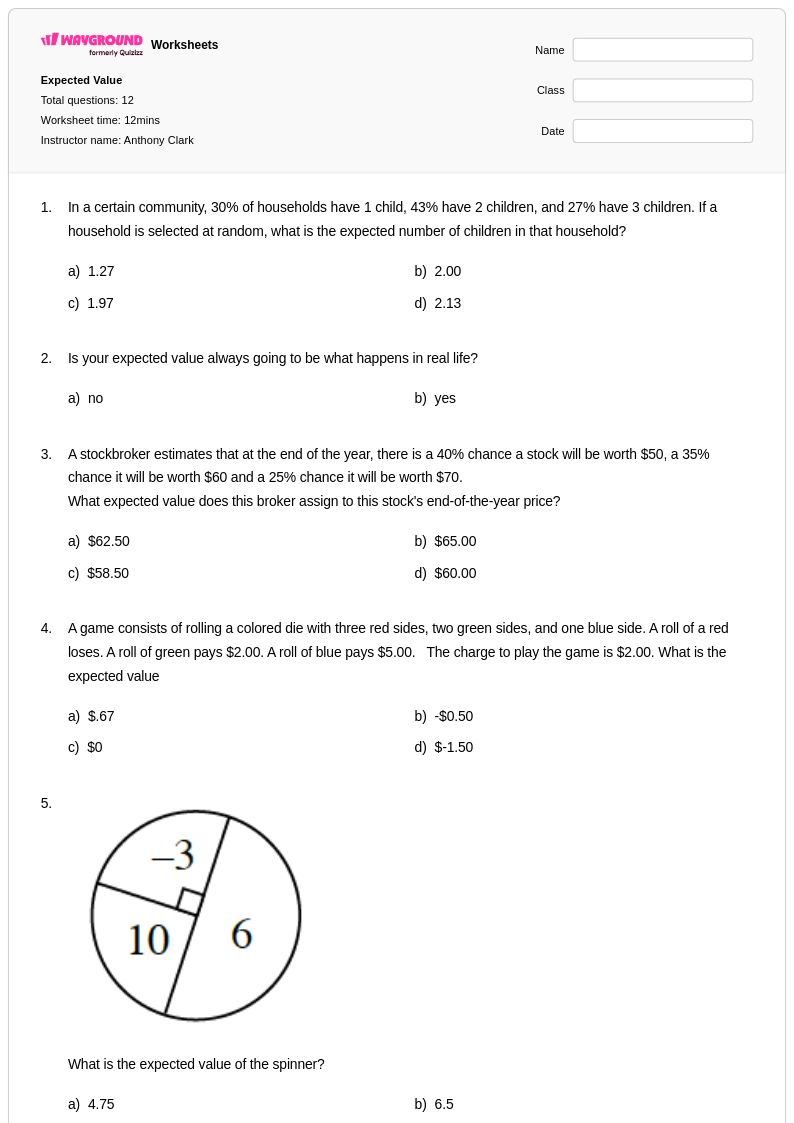
12 Q
12th - Uni
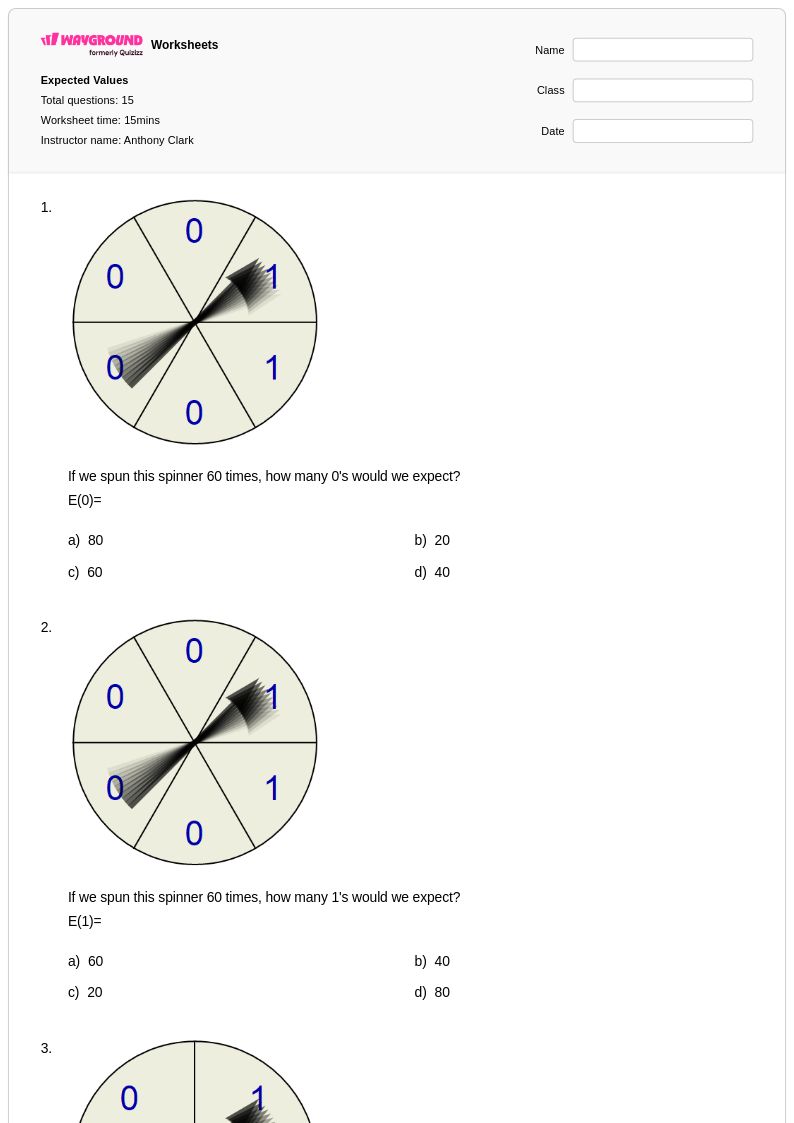
15 Q
12th - Uni
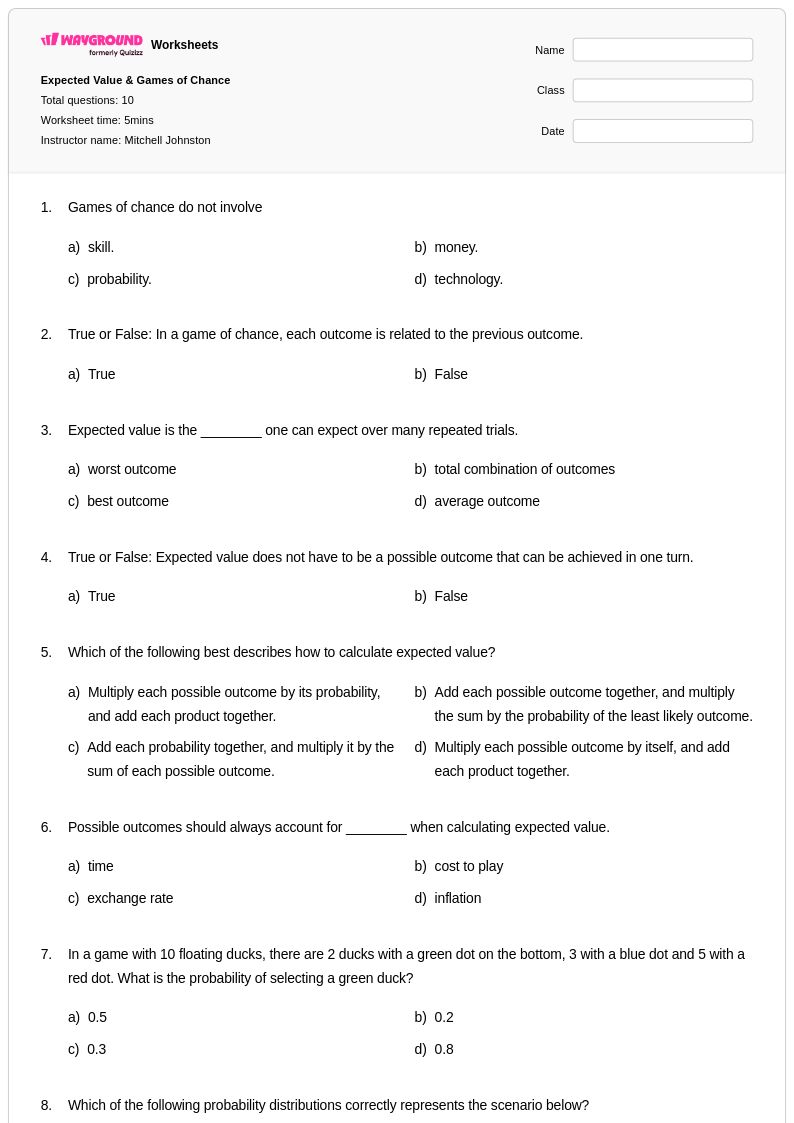
10 Q
9th - 12th
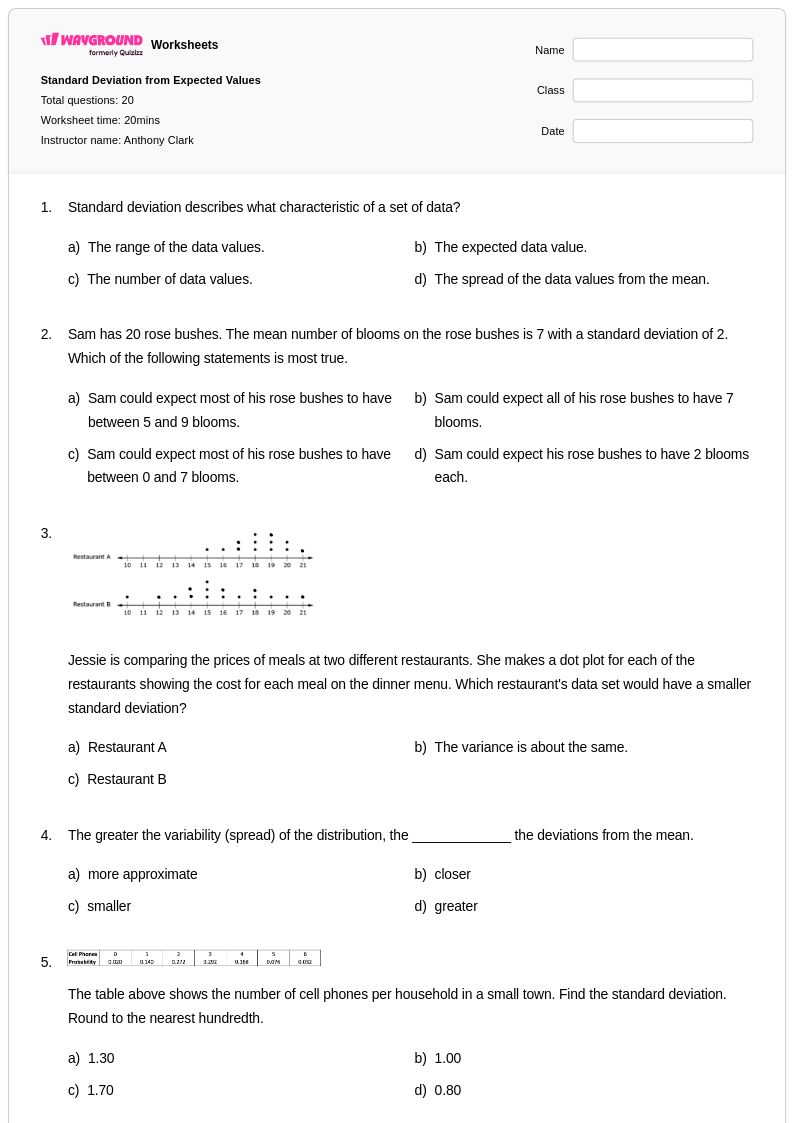
20 Q
11th - Uni
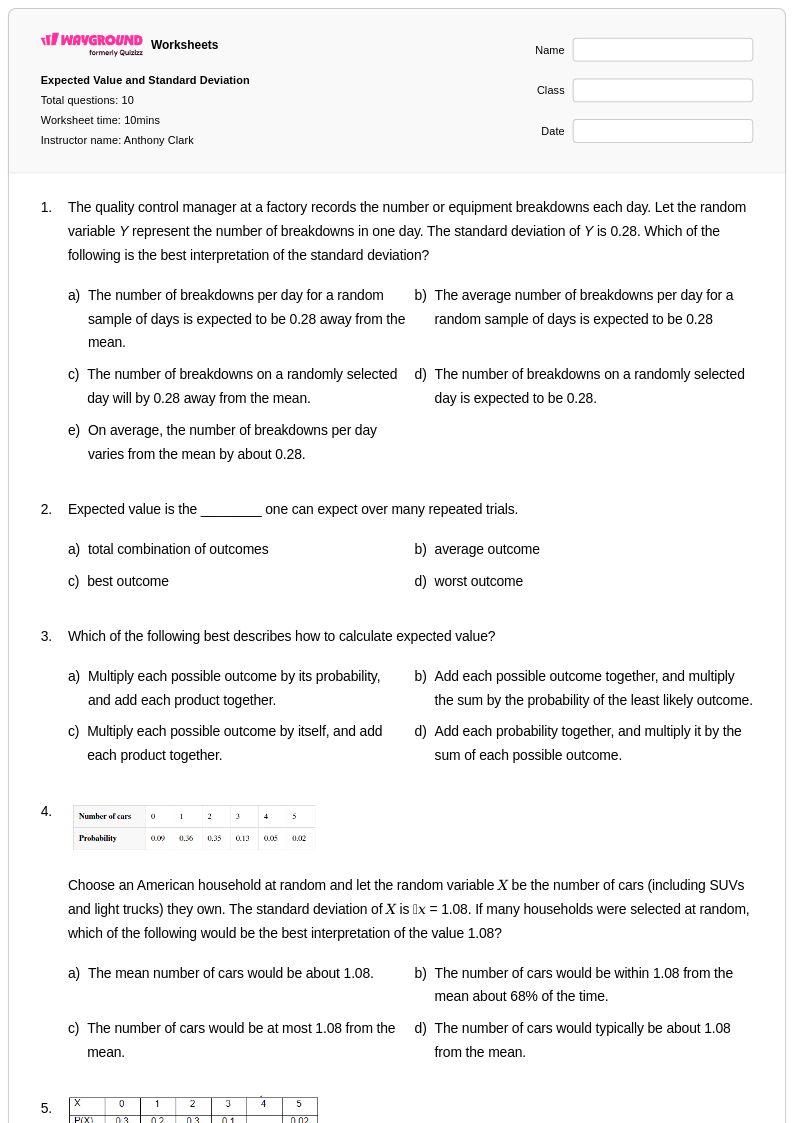
10 Q
12th - Uni
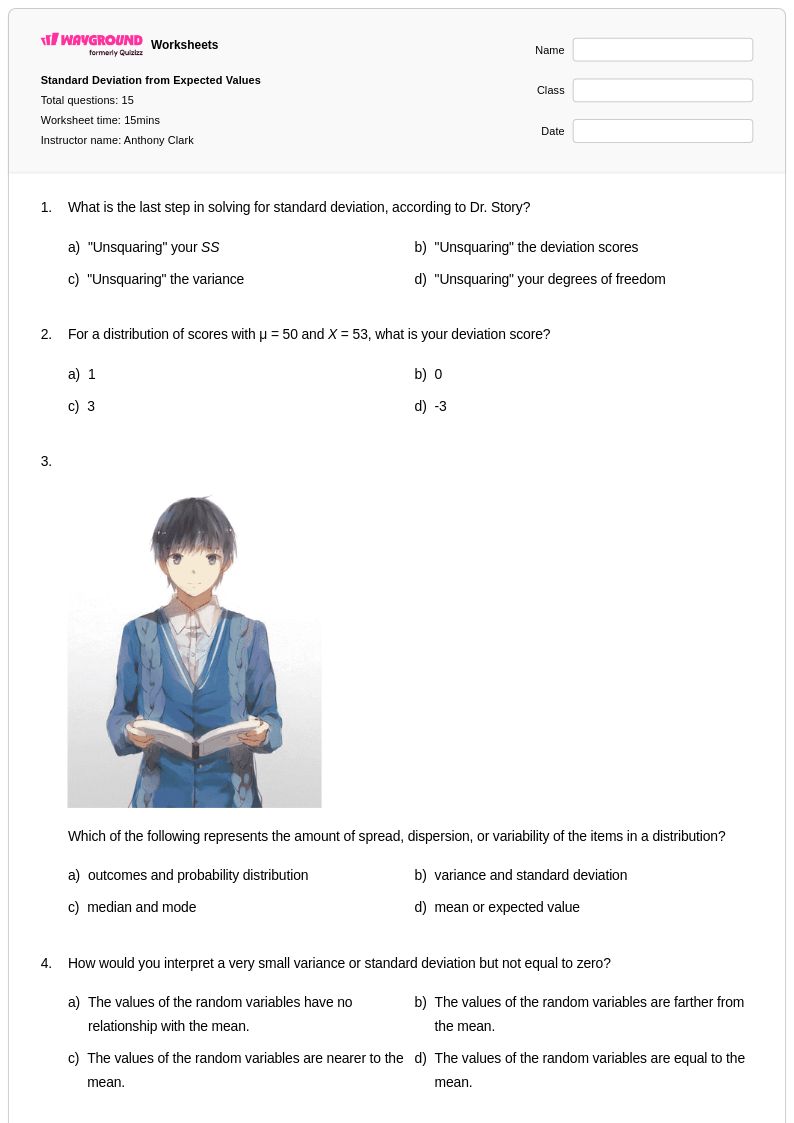
15 Q
11th - Uni
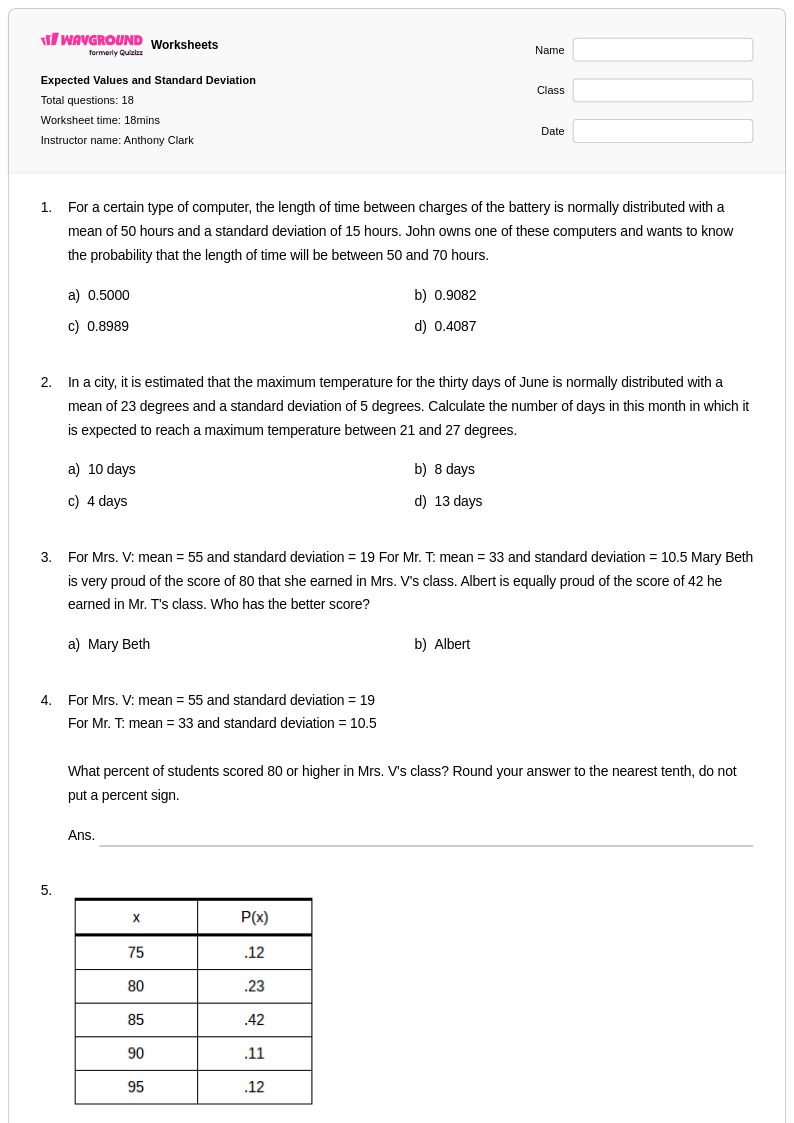
18 Q
11th - Uni
Explore Other Subject Worksheets for grade 12
Explore printable Expected Value worksheets for Grade 12
Expected value worksheets for Grade 12 students available through Wayground (formerly Quizizz) provide comprehensive practice with this fundamental concept in probability theory and statistical analysis. These carefully designed resources help students master the calculation of expected values for discrete and continuous probability distributions, reinforcing their understanding of how to determine the average outcome of random variables over many trials. The worksheets include practice problems ranging from basic expected value calculations for simple probability scenarios to complex applications involving binomial distributions, geometric distributions, and real-world decision-making situations. Each printable resource comes with a detailed answer key that guides students through step-by-step solutions, making these free educational materials invaluable for both classroom instruction and independent study as students prepare for advanced placement exams and college-level statistics courses.
Wayground's extensive collection of teacher-created expected value worksheets draws from millions of educational resources, offering educators powerful search and filtering capabilities to locate materials perfectly suited to their Grade 12 mathematics curriculum needs. The platform's robust standards alignment ensures that worksheets correspond to state and national mathematics standards, while differentiation tools allow teachers to customize difficulty levels and problem types to accommodate diverse learning needs within their classrooms. These versatile resources are available in both digital and printable PDF formats, enabling seamless integration into traditional classroom settings, hybrid learning environments, and remote instruction scenarios. Teachers can efficiently plan lessons, provide targeted remediation for struggling students, offer enrichment opportunities for advanced learners, and assign focused skill practice that reinforces expected value concepts through varied mathematical contexts and real-world applications.
FAQs
How do I teach expected value to 12th graders preparing for AP or college stats?
What expected value problems should 12th graders be practicing?
What errors do 12th graders make with expected value on high-stakes assessments?
How do I use Wayground's Grade 12 expected value worksheets for exam prep?
How does expected value connect to the broader AP Statistics curriculum?
How can I differentiate expected value practice for 12th graders with different preparation levels?