Free Printable Fertile Crescent Worksheets for Grade 8
Explore Grade 8 Fertile Crescent printables and free worksheets that help students master ancient Mesopotamian civilizations through engaging practice problems, comprehensive study materials, and detailed answer keys.
Explore printable Fertile Crescent worksheets for Grade 8
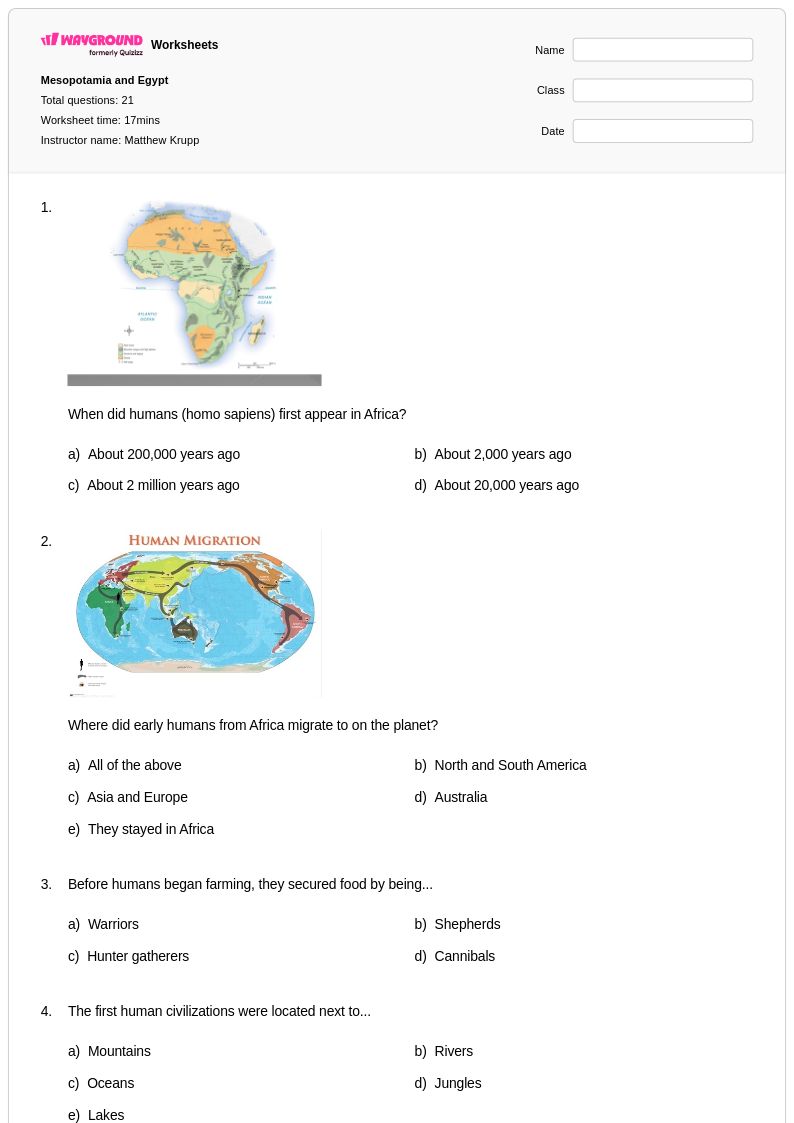
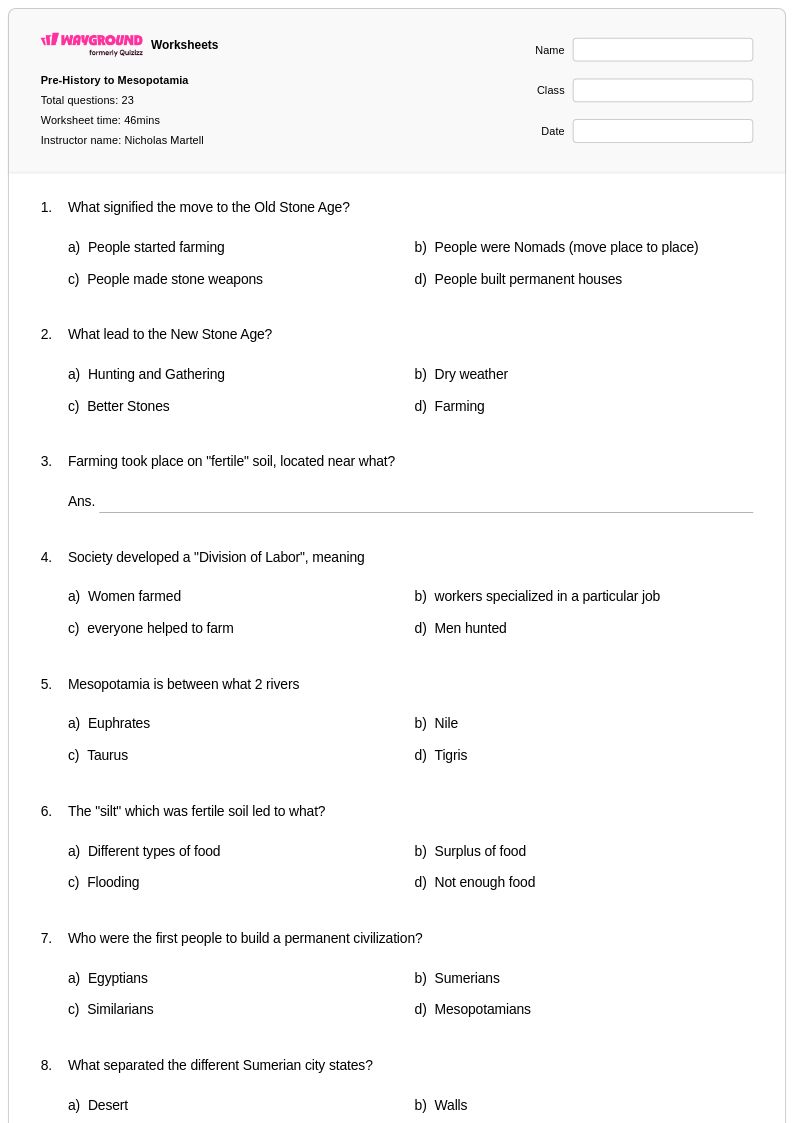
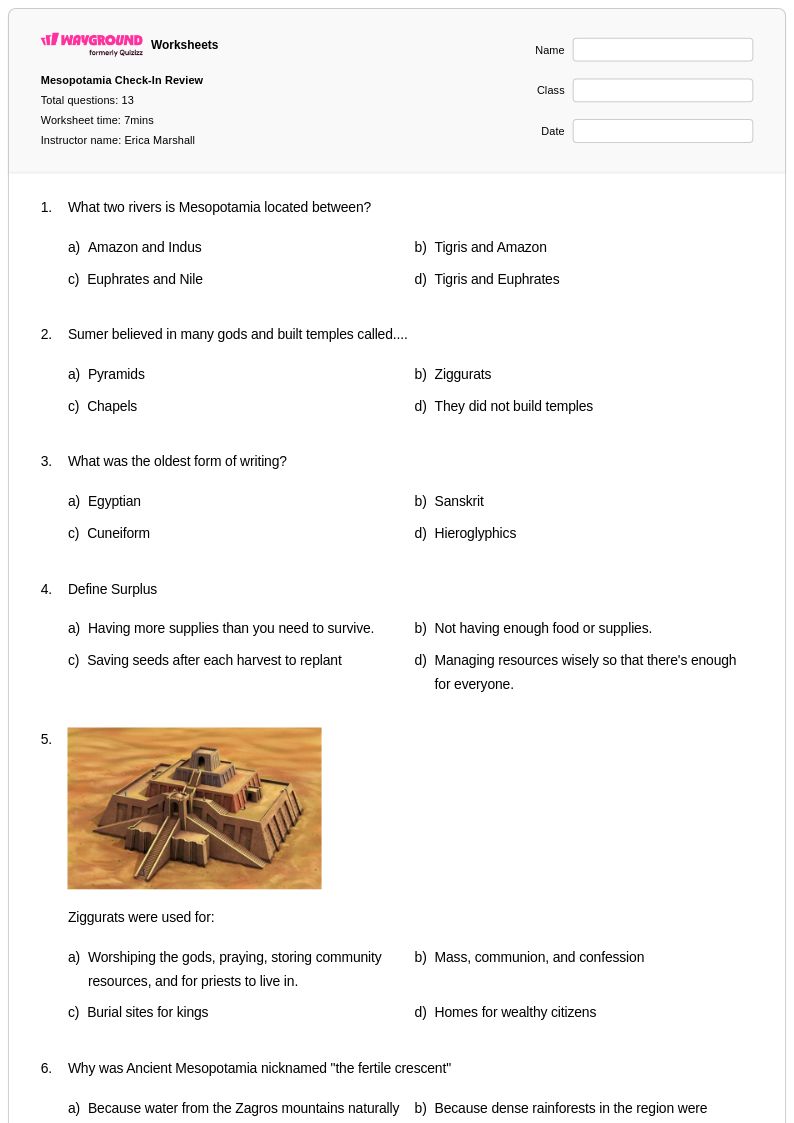
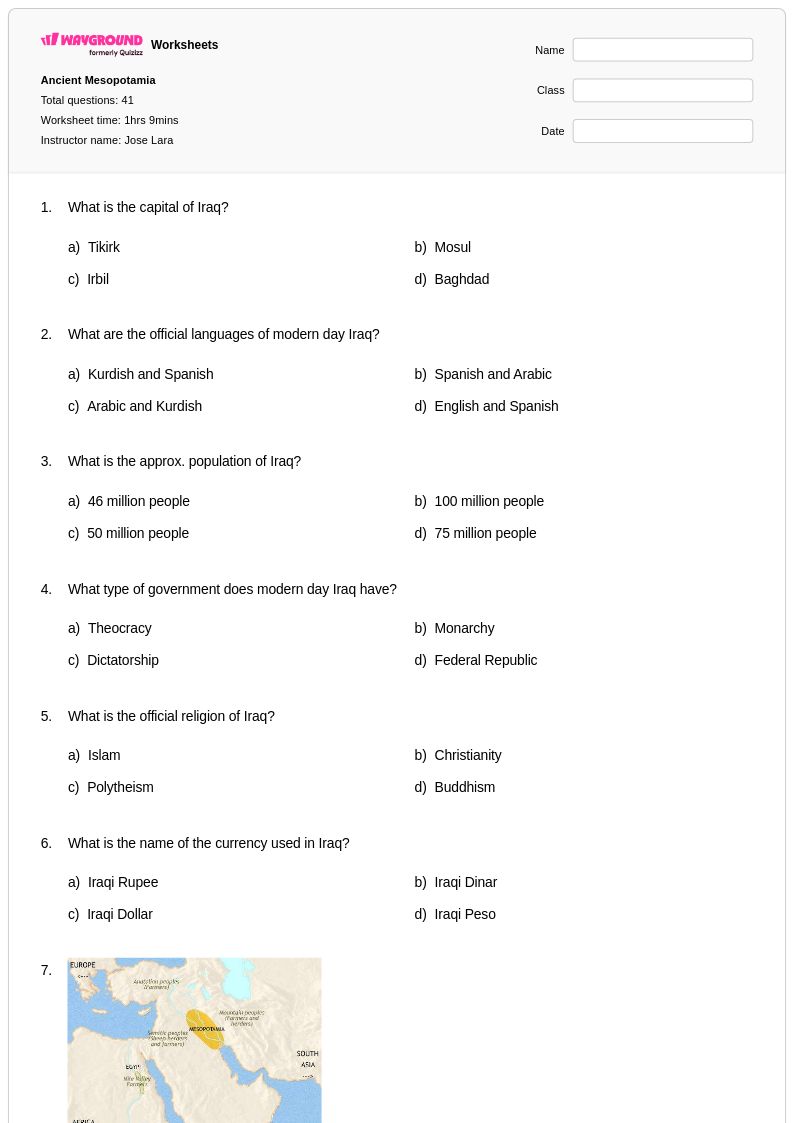
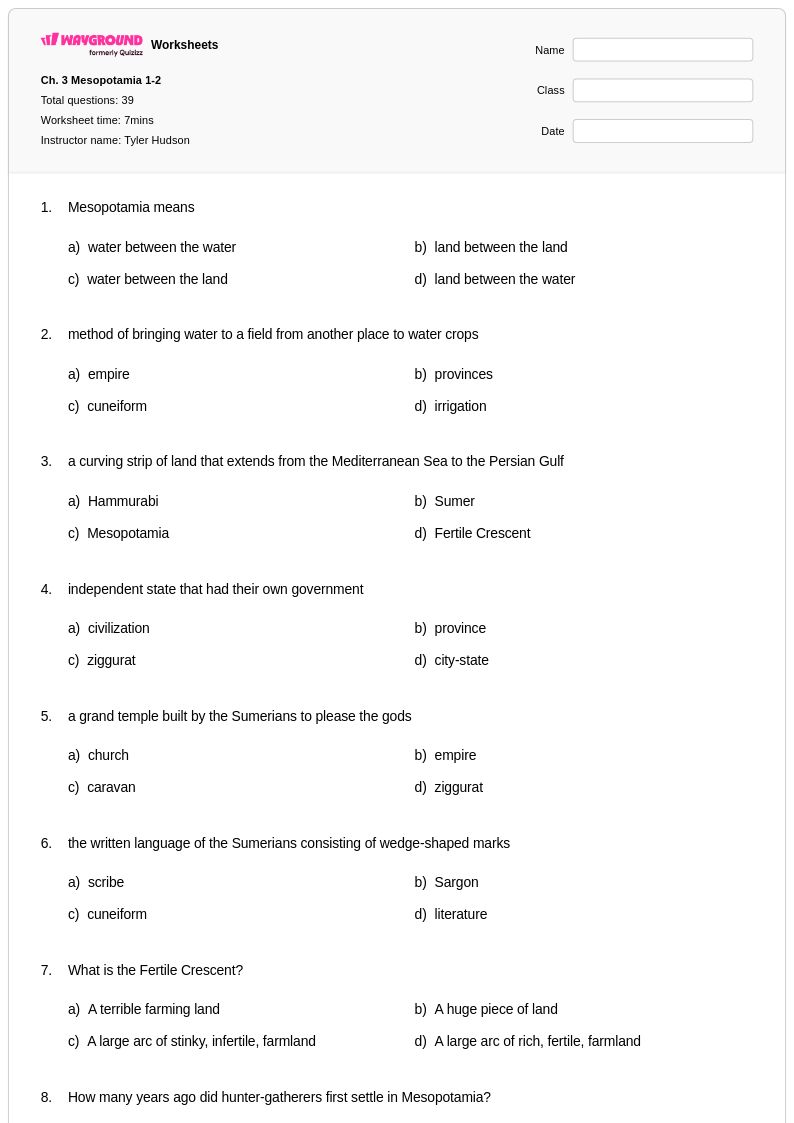
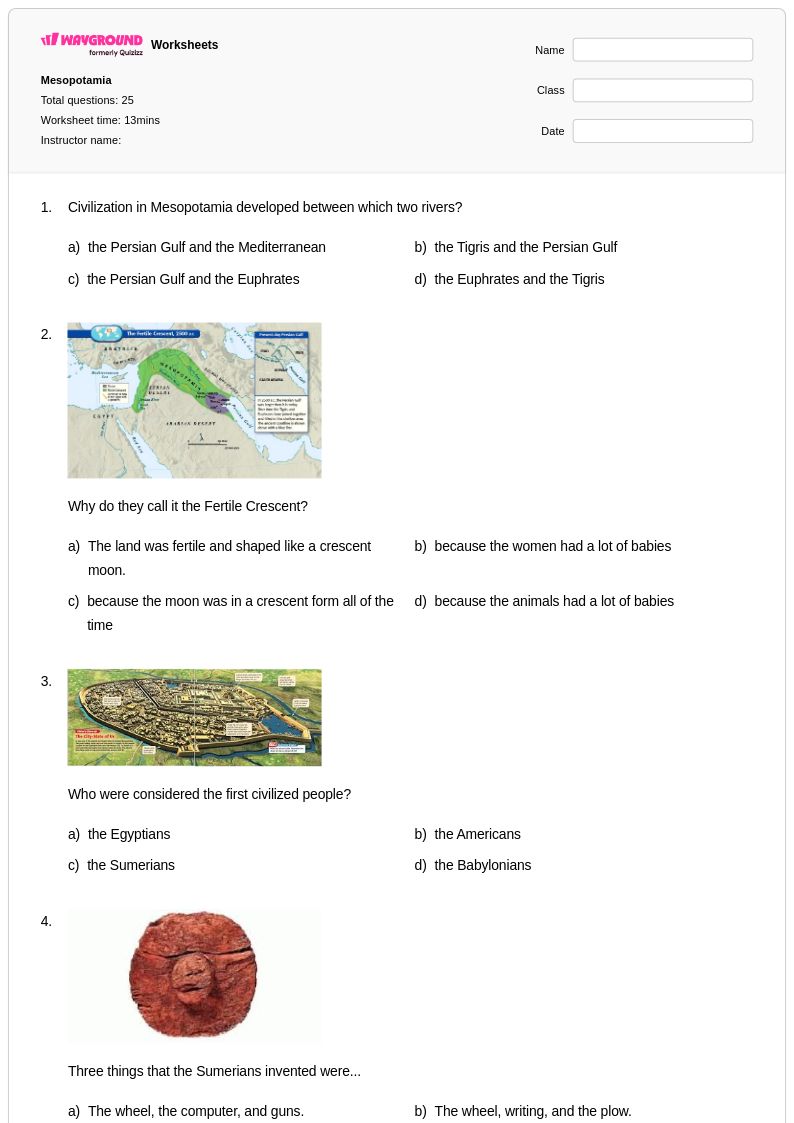
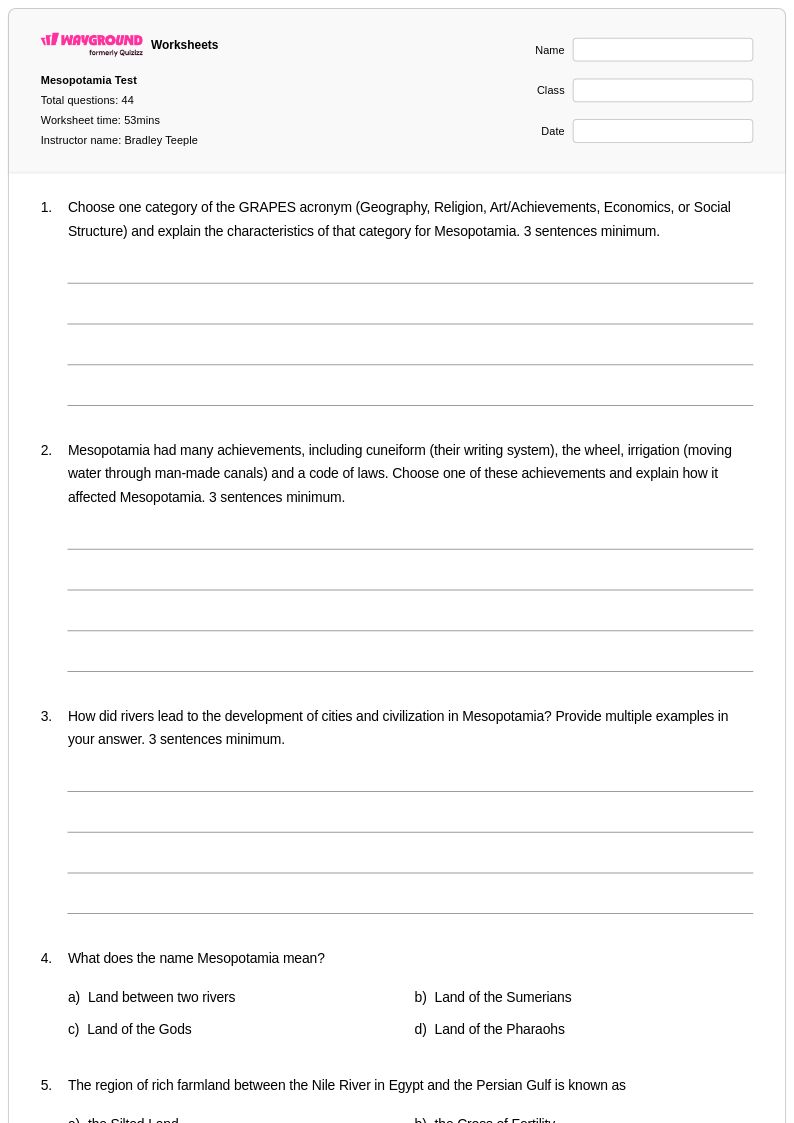
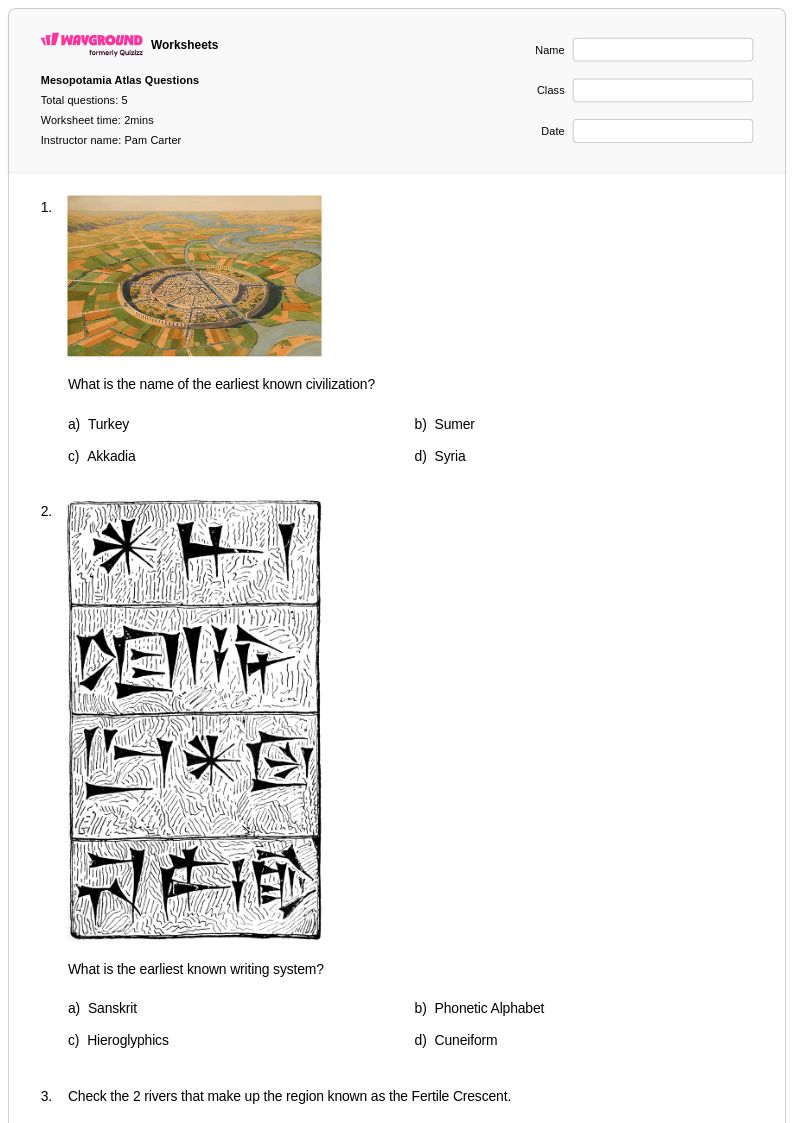
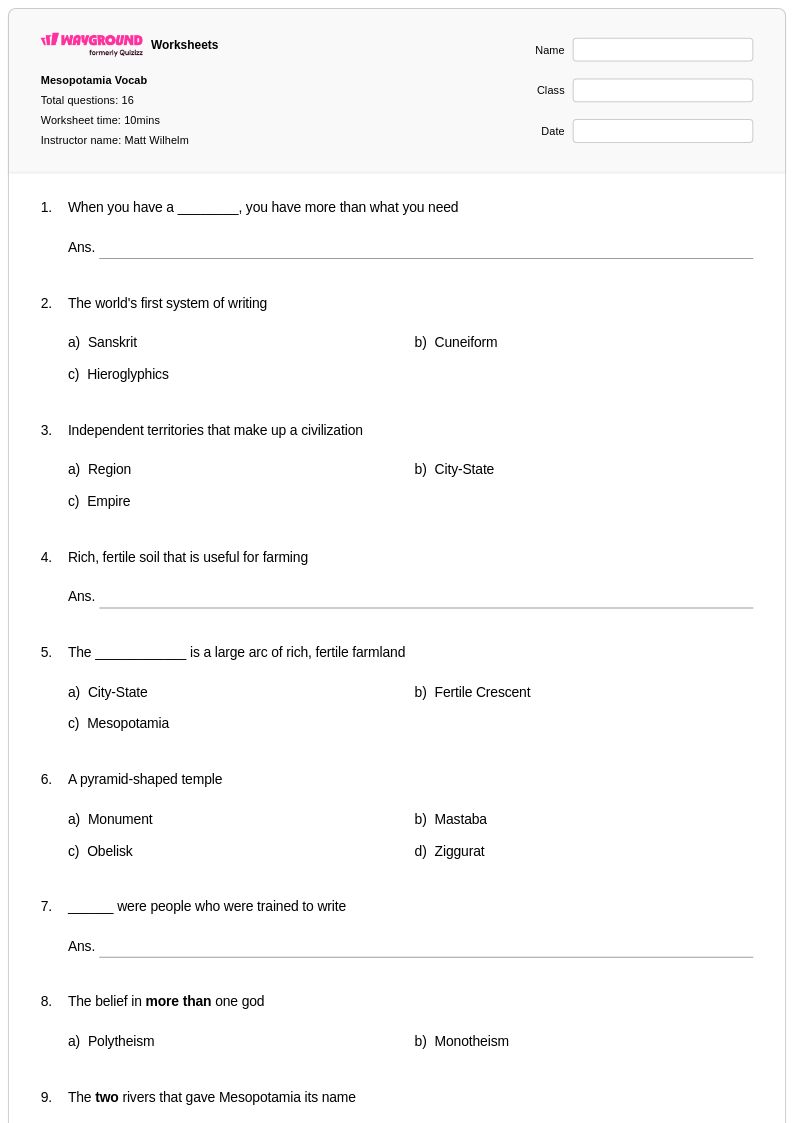
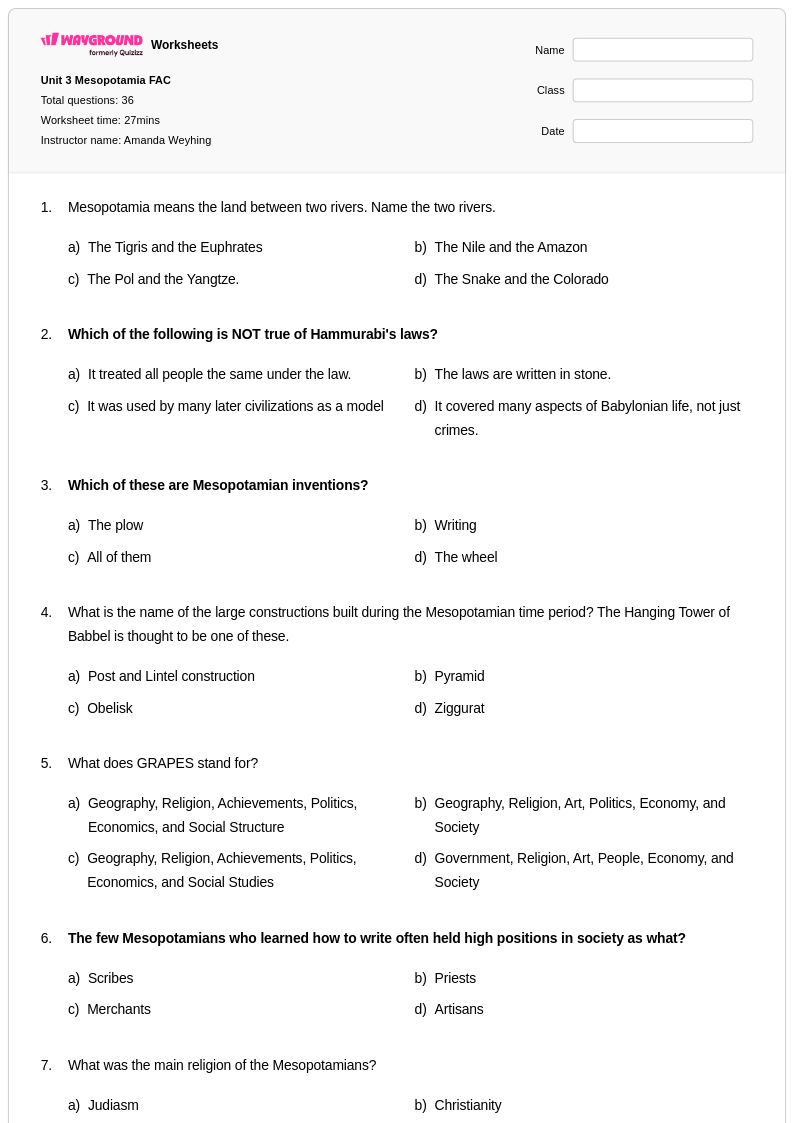
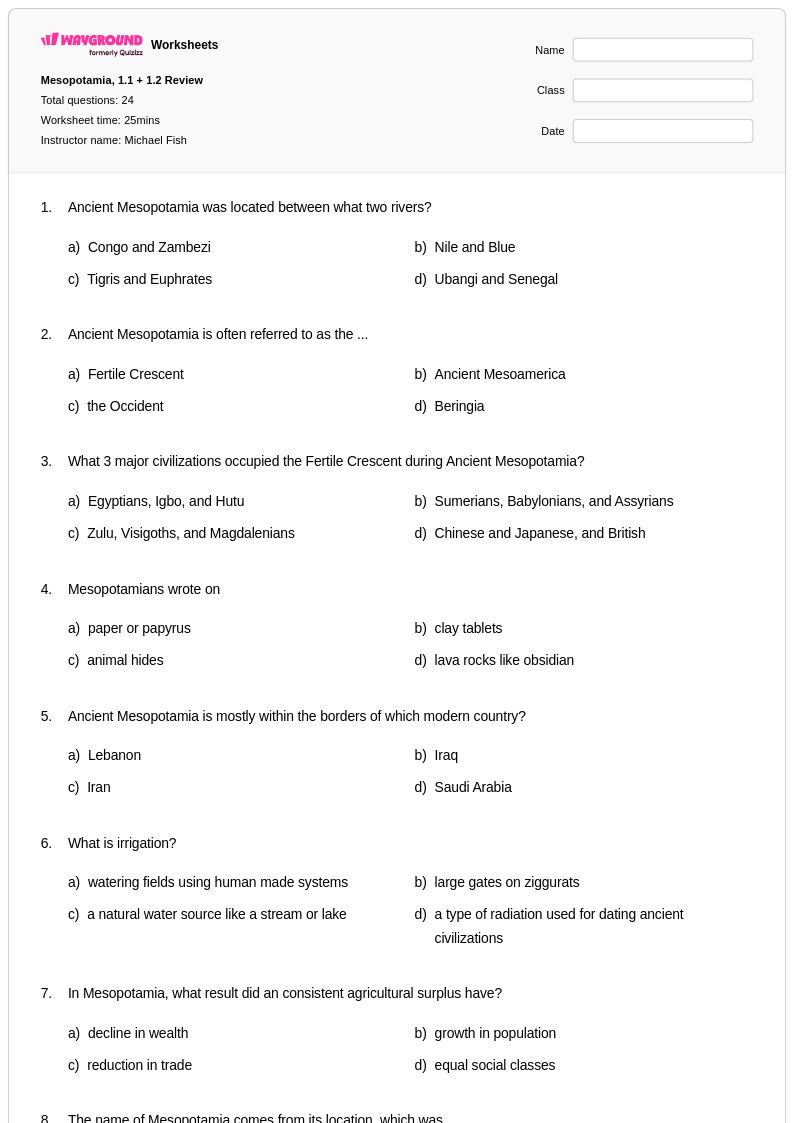
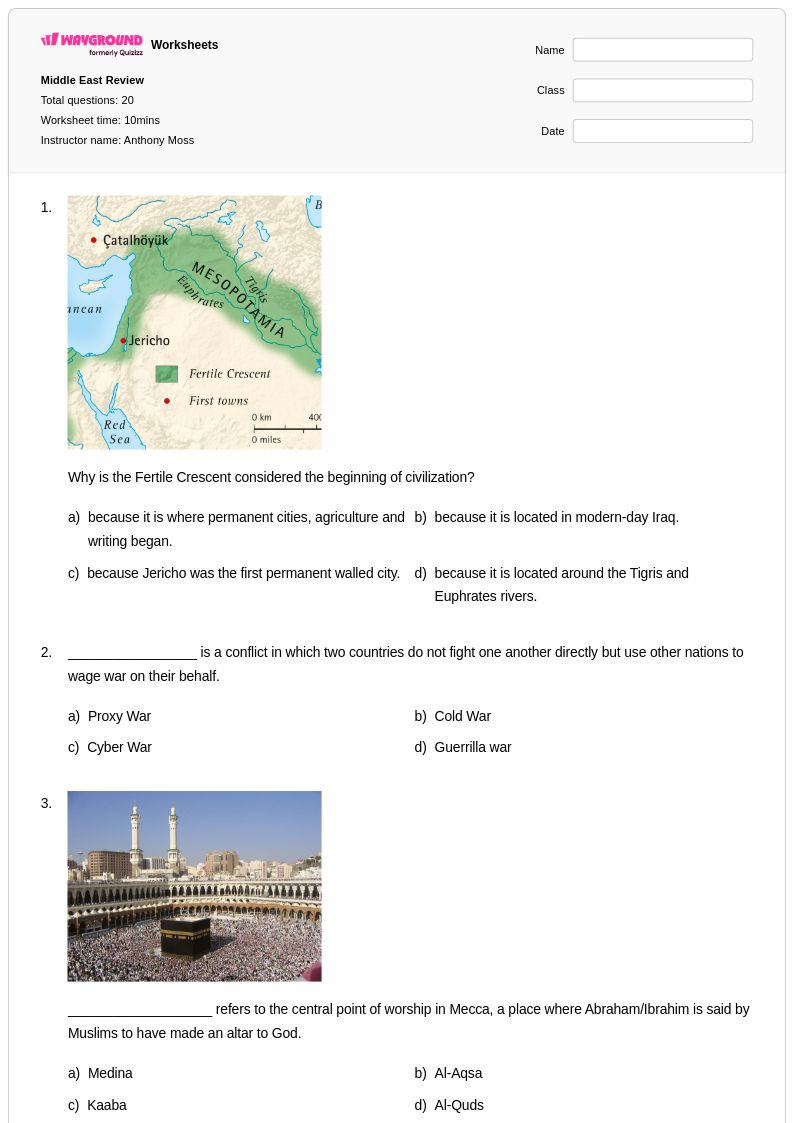
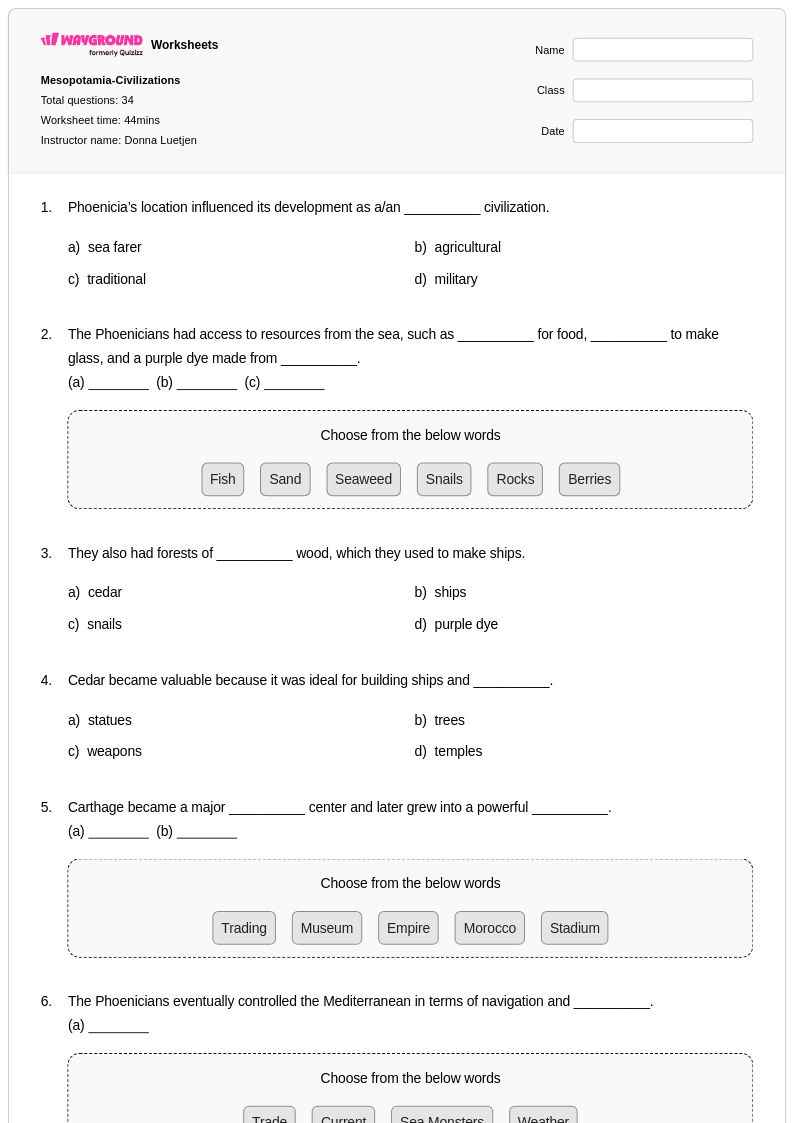
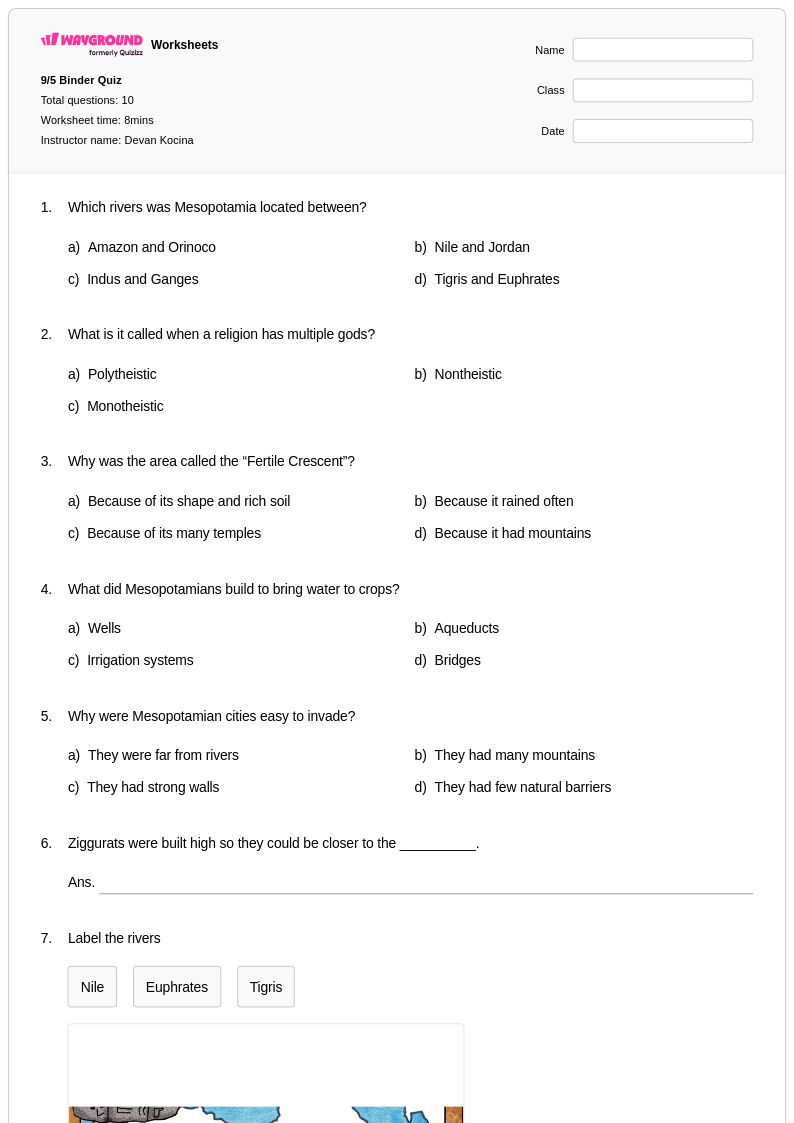
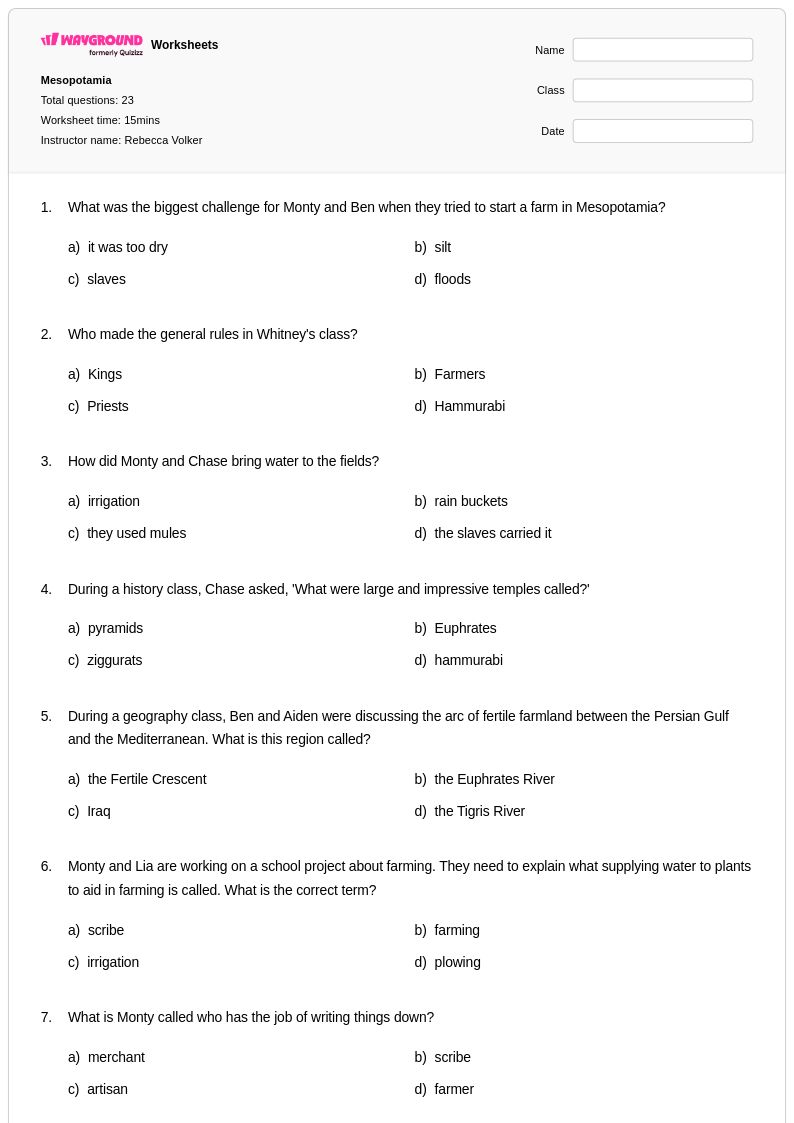
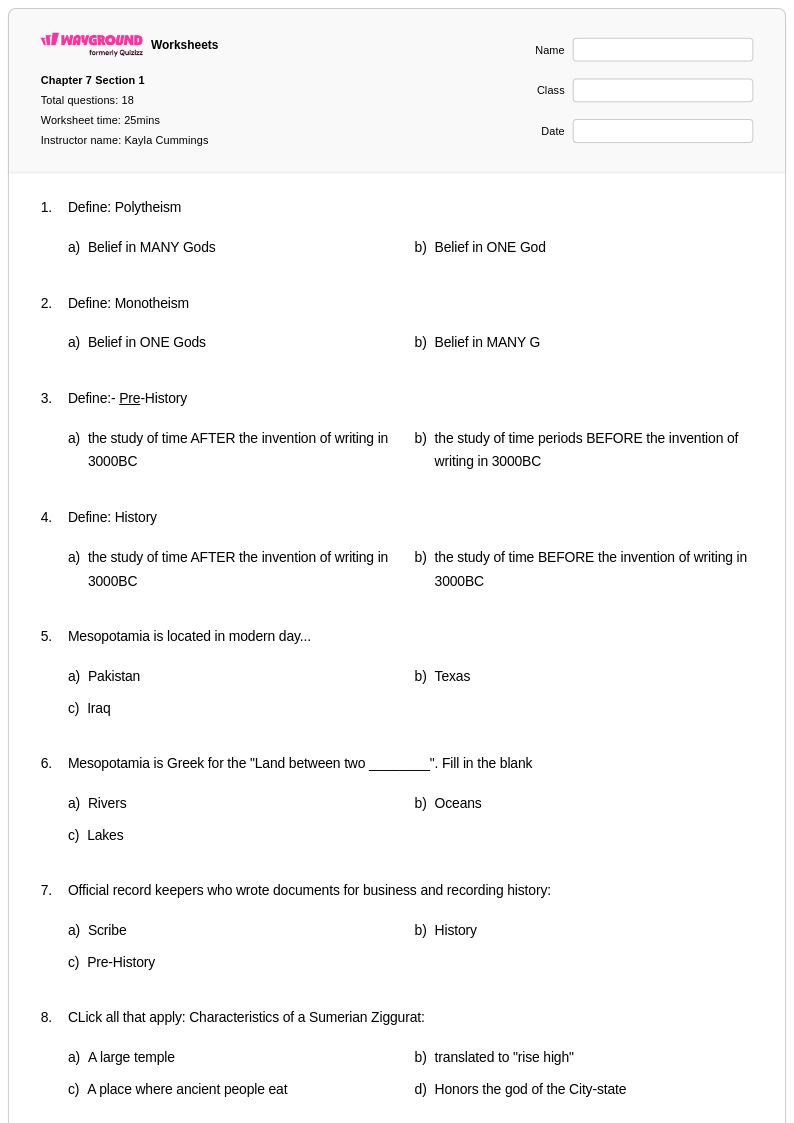
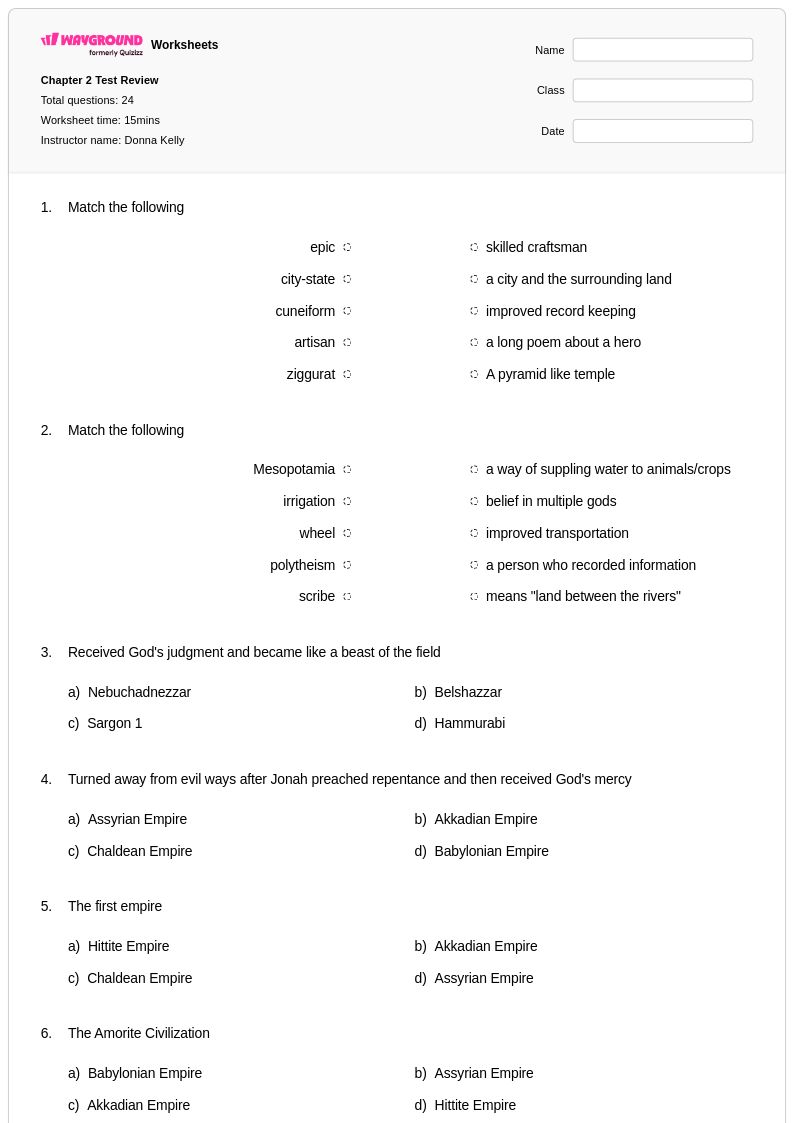
Grade 8 Fertile Crescent worksheets available through Wayground (formerly Quizizz) provide comprehensive coverage of this foundational region in ancient history, often called the "cradle of civilization." These educational resources help students explore the geographic advantages of Mesopotamia, the Tigris and Euphrates rivers, and the agricultural revolution that enabled the world's first cities to flourish. Students develop critical thinking skills through practice problems that examine the innovations of Sumerian, Babylonian, and Assyrian civilizations, including cuneiform writing, the Code of Hammurabi, and early governmental systems. Each worksheet collection includes detailed answer keys to support independent learning and assessment, while printable pdf formats ensure accessibility for both classroom and home use. These free resources strengthen analytical skills as students trace connections between geographic features and the rise of complex societies in ancient Mesopotamia.
Wayground (formerly Quizizz) supports educators with an extensive collection of teacher-created Fertile Crescent worksheets drawn from millions of educational resources developed by classroom professionals. The platform's robust search and filtering capabilities allow teachers to quickly locate materials aligned with state standards and curriculum objectives, while differentiation tools enable customization for diverse learning needs and ability levels. These worksheets are available in both printable and digital formats, including downloadable pdf versions that facilitate flexible lesson planning and implementation. Teachers can easily adapt content for remediation activities, enrichment projects, or targeted skill practice, making it simple to address individual student needs while covering essential concepts about early river valley civilizations. The comprehensive nature of these resources streamlines preparation time while ensuring students receive engaging, standards-based practice with the geographic, political, and cultural developments that shaped human civilization in the ancient Fertile Crescent.
FAQs
How do I teach the Fertile Crescent to middle school students?
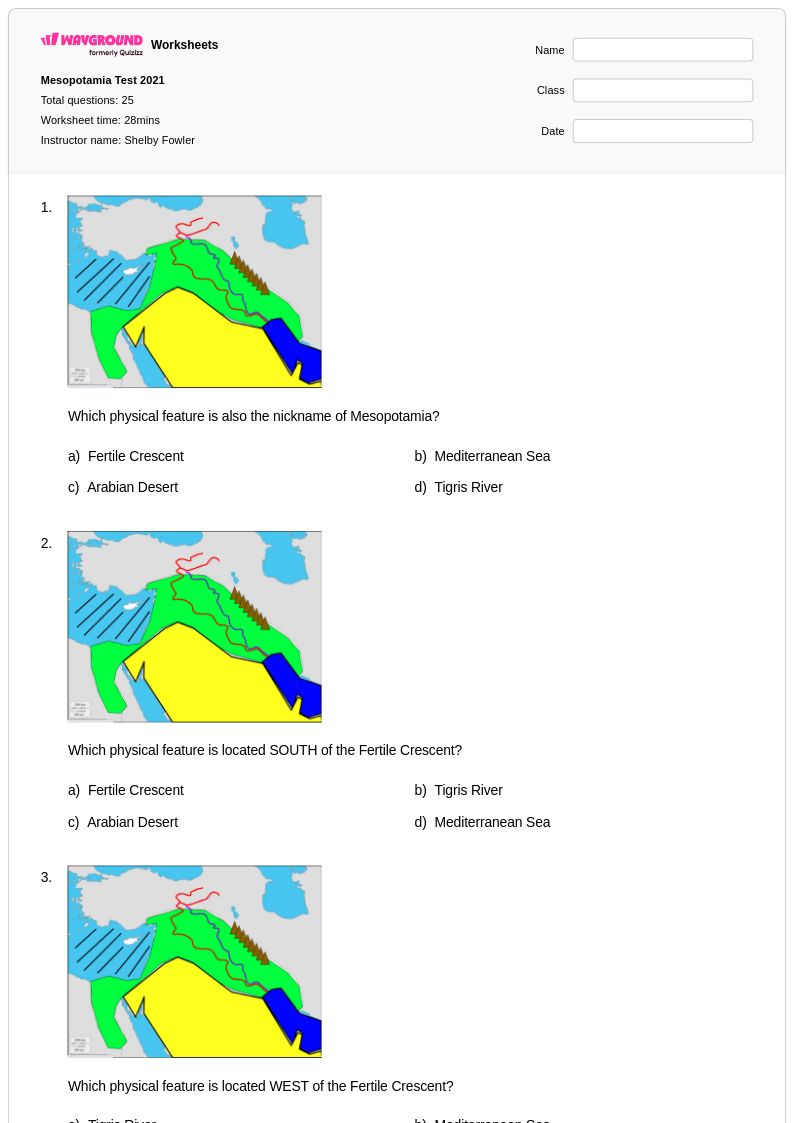
Start by grounding students in geography — use map activities to show why the Tigris-Euphrates river valley, Nile Delta, and Levant created ideal conditions for early agriculture. From there, build outward to the social and political developments those conditions made possible, including Sumerian city-states, Babylonian law codes, and Egyptian dynasties. Connecting geographic advantage to civilizational development helps students understand cause and effect rather than memorizing isolated facts.
What exercises help students practice Fertile Crescent concepts?
Effective practice exercises include map analysis tasks that require students to identify key rivers, cities, and trade routes, as well as primary source readings drawn from documents like the Code of Hammurabi. Comparative exercises asking students to contrast Mesopotamian and Egyptian societies reinforce analytical thinking, while fill-in-the-blank and short-answer questions targeting cuneiform writing, irrigation systems, and early law help solidify vocabulary and concept retention.
What misconceptions do students commonly have about the Fertile Crescent?
A common misconception is that the Fertile Crescent refers only to Mesopotamia, when it also encompasses the Nile River valley and the Levant. Students also frequently confuse Sumerian and Babylonian civilizations or treat them as the same culture rather than as distinct societies across different time periods. Another persistent error is assuming early civilizations developed in isolation rather than through trade, conquest, and cultural exchange across the region.
How do I use Fertile Crescent worksheets effectively in my classroom?
Fertile Crescent worksheets work best when sequenced alongside direct instruction — use map activities early in the unit to build geographic context, then introduce primary source and analytical exercises as students develop background knowledge. Wayground's worksheets are available as printable PDFs for traditional classroom use and in digital formats for technology-integrated environments, including the option to host them as a quiz directly on Wayground, making them adaptable for in-class work, homework, or hybrid learning setups.
How do I differentiate Fertile Crescent instruction for students at different skill levels?
For struggling learners, reduce cognitive load by scaffolding reading passages with vocabulary support and using graphic organizers that chunk information about Sumerian city-states or Egyptian dynasties into manageable sections. For advanced students, comparative analysis tasks — such as evaluating how Mesopotamian and Egyptian law codes reflect different social values — provide meaningful enrichment. Wayground also supports individual accommodations including read-aloud, reduced answer choices, and extended time, which can be assigned per student without disrupting the rest of the class.
How do I assess student understanding of the Fertile Crescent?
Strong assessments for this topic move beyond recall and ask students to explain relationships — for example, connecting geographic features to agricultural development, or linking the Code of Hammurabi to broader concepts of governance and social order. Watch for students who can name key terms like cuneiform or irrigation but cannot explain their significance, which signals surface-level learning. Short constructed-response questions and map labeling tasks together give a fuller picture of whether students understand both content and context.