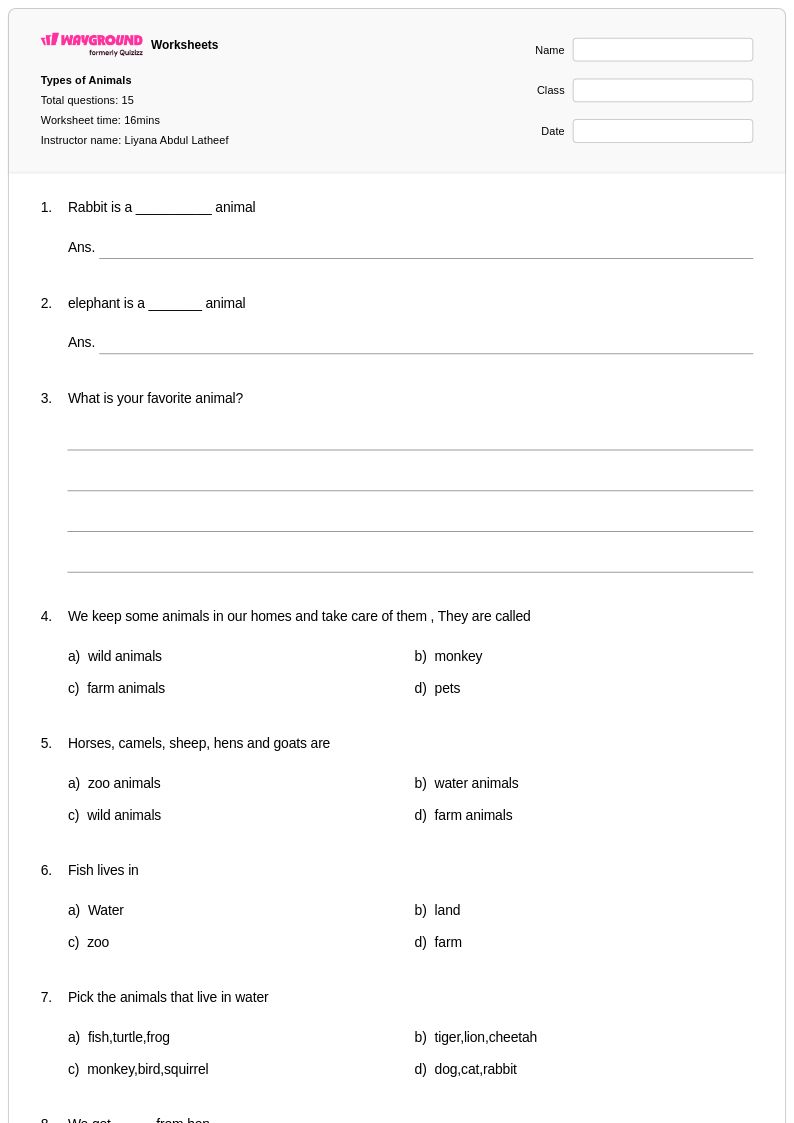
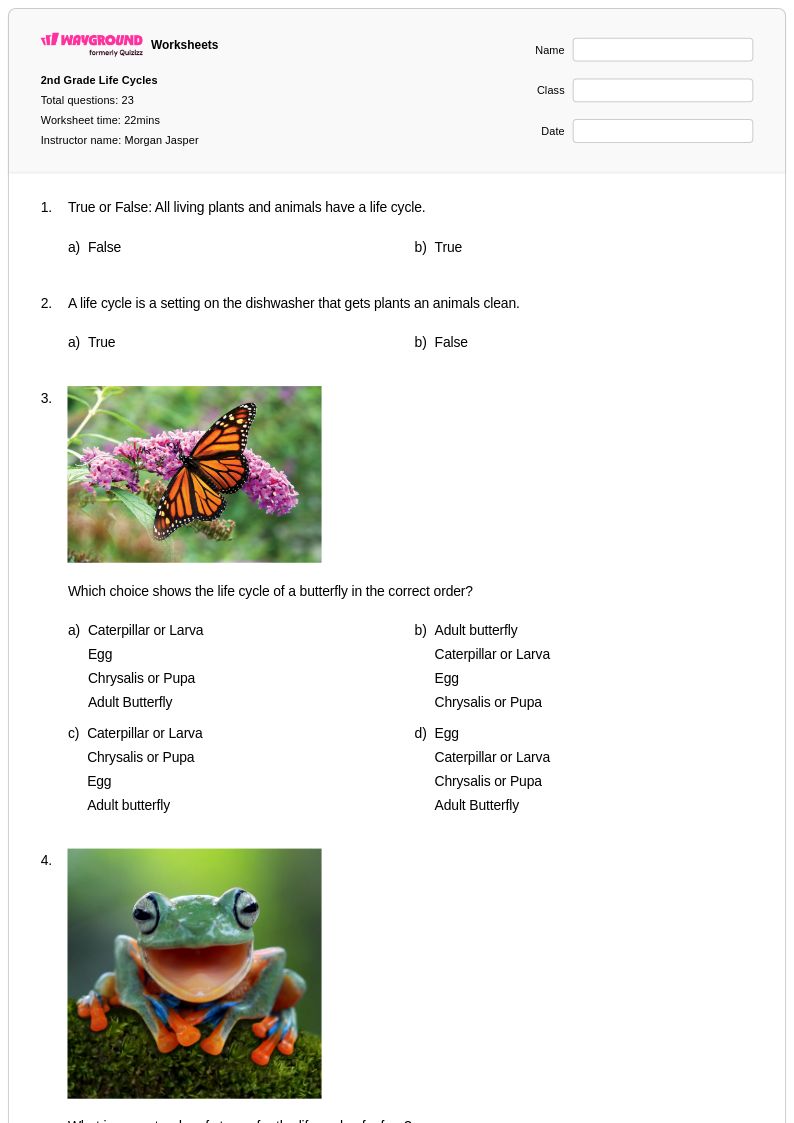
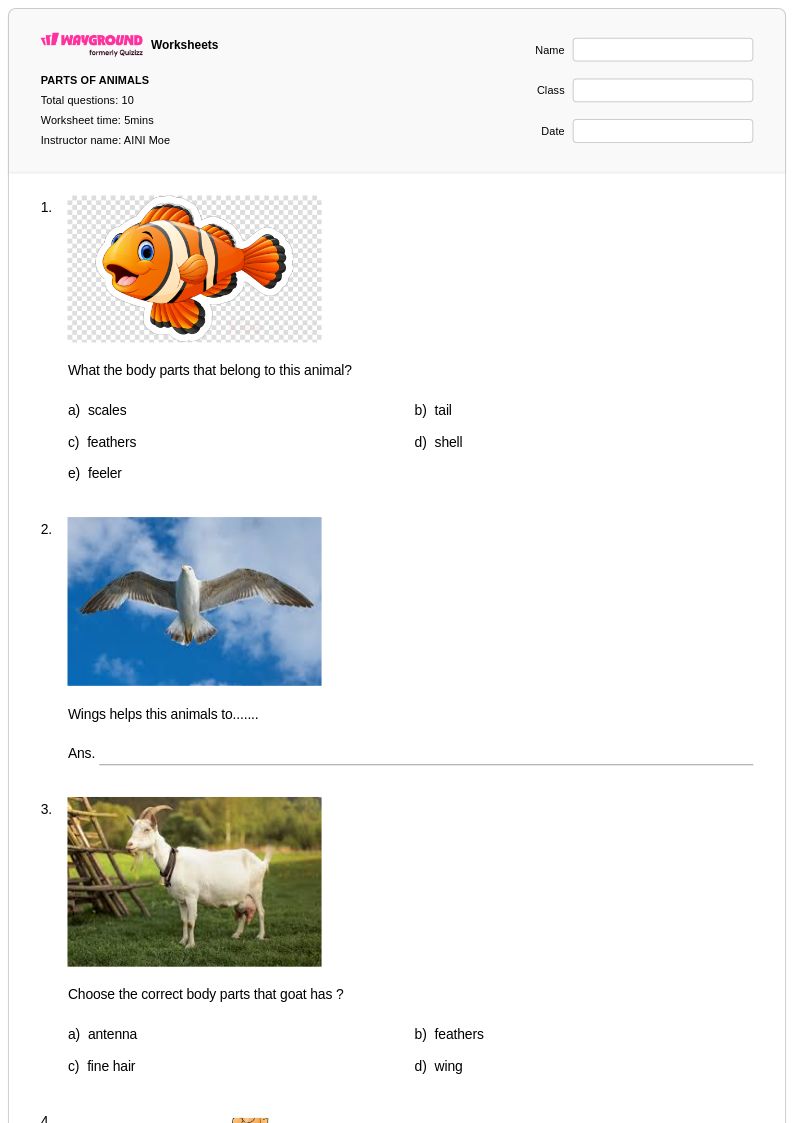
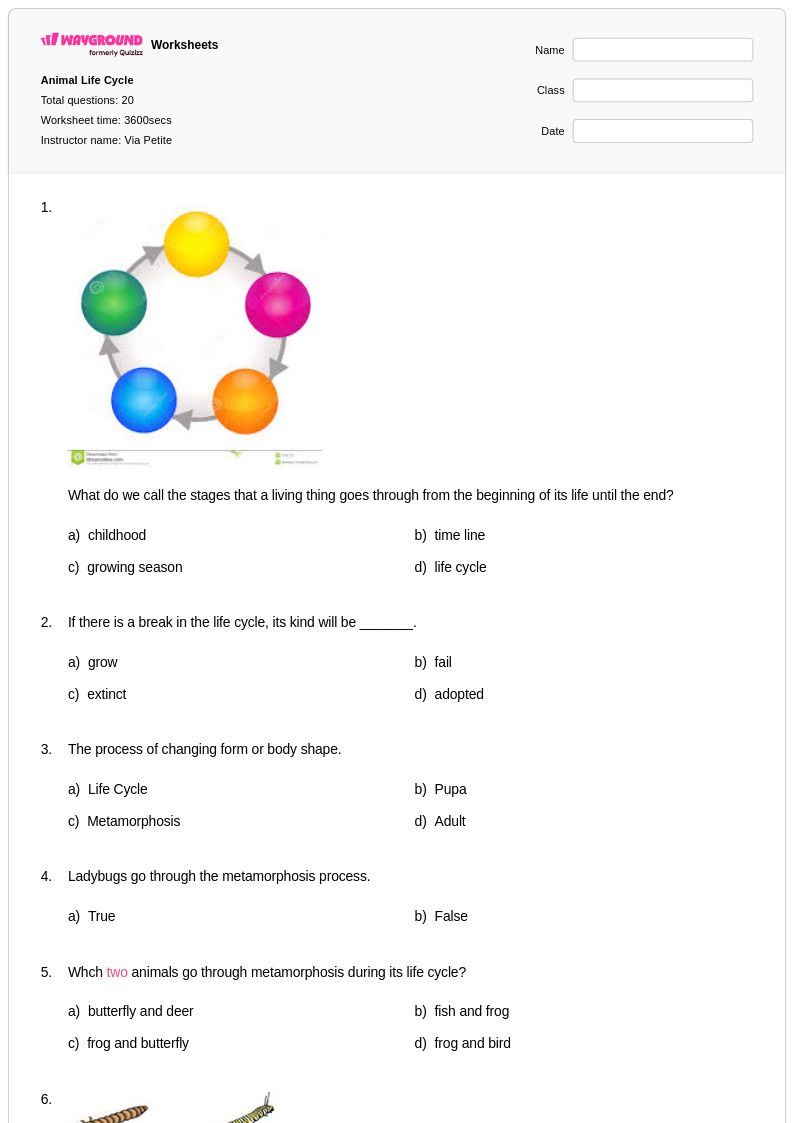
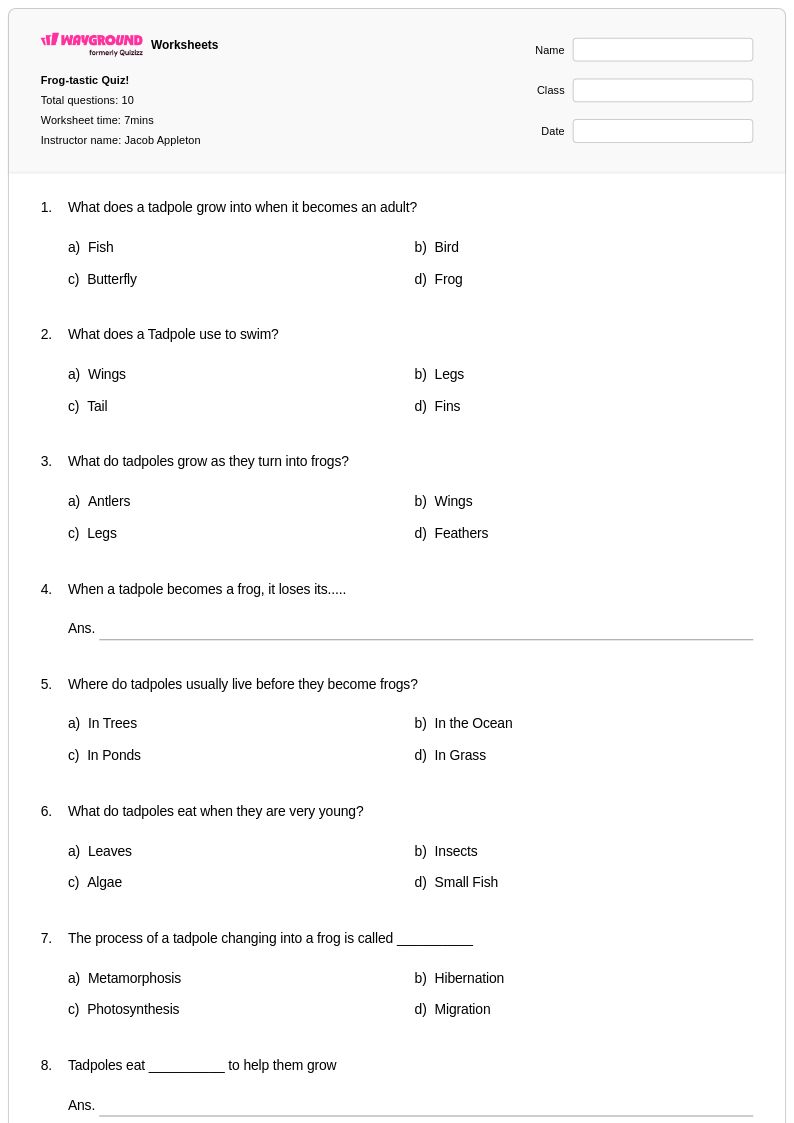
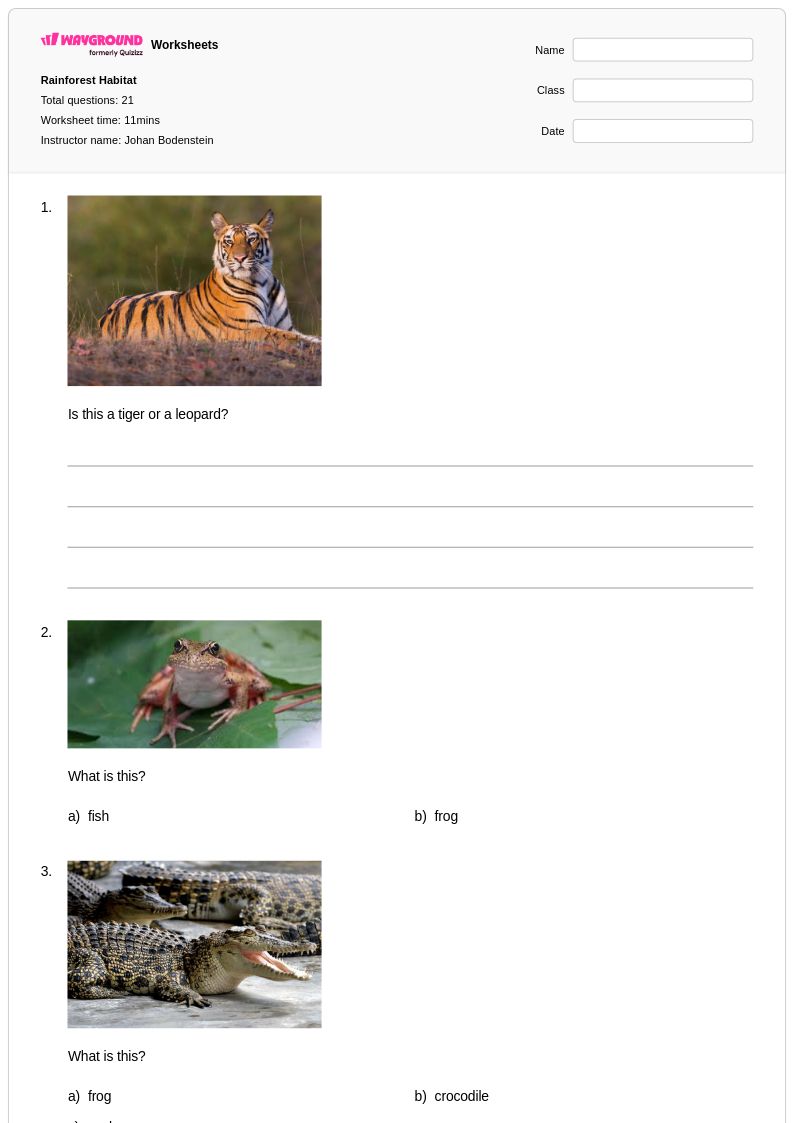
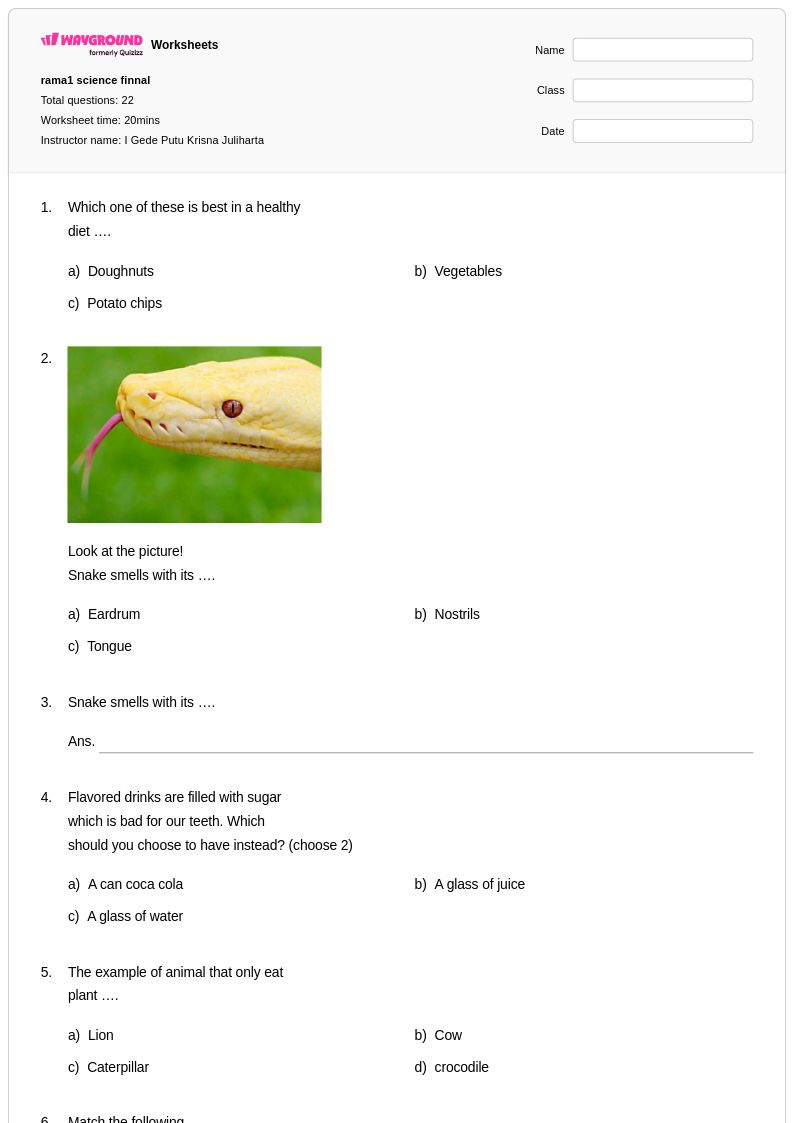
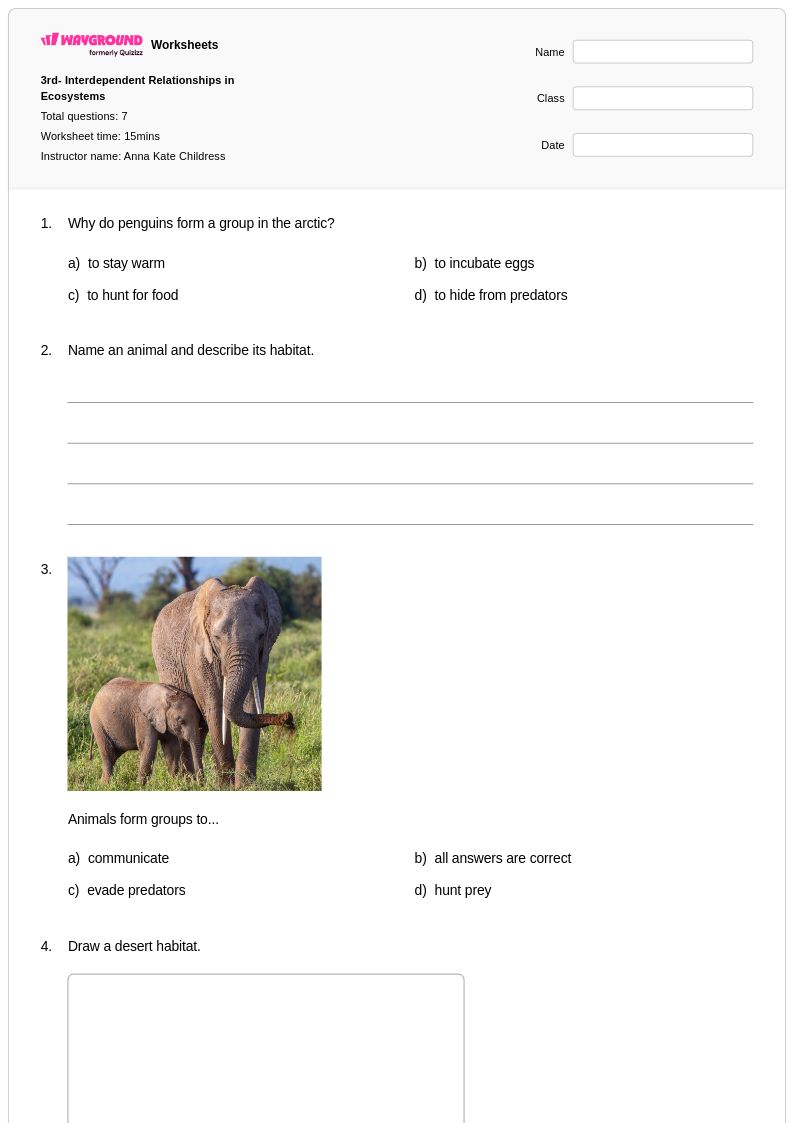
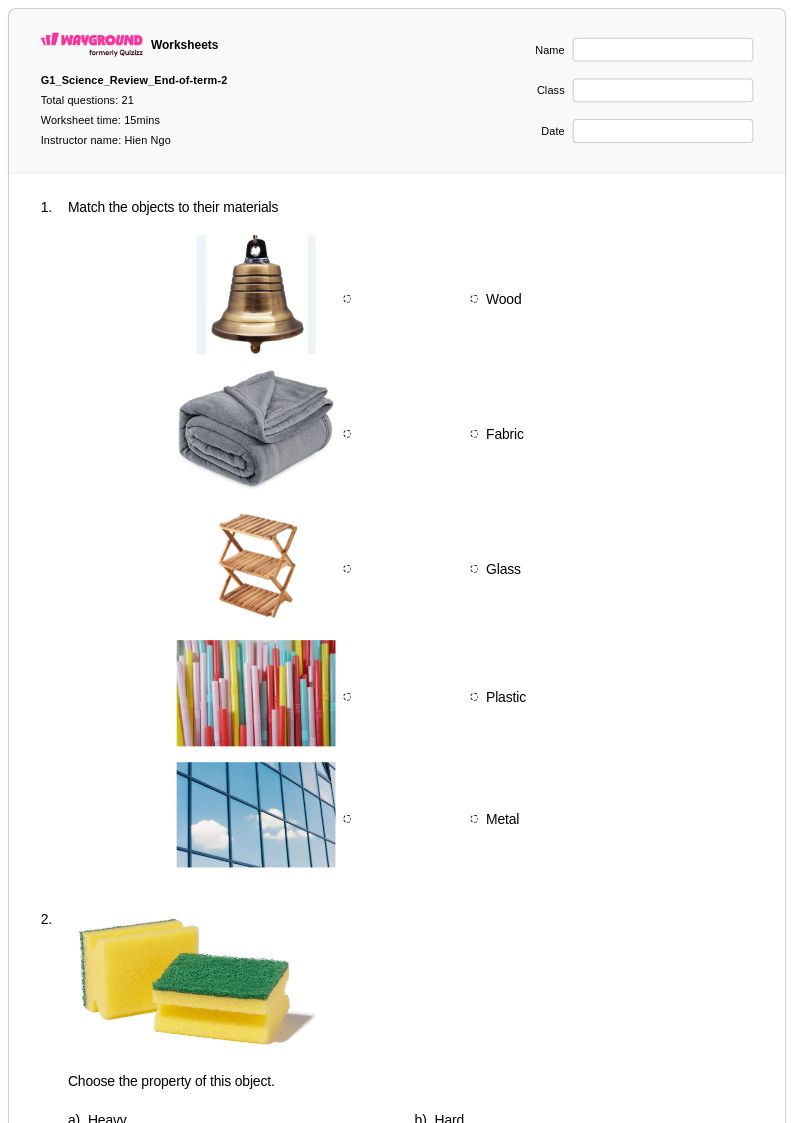
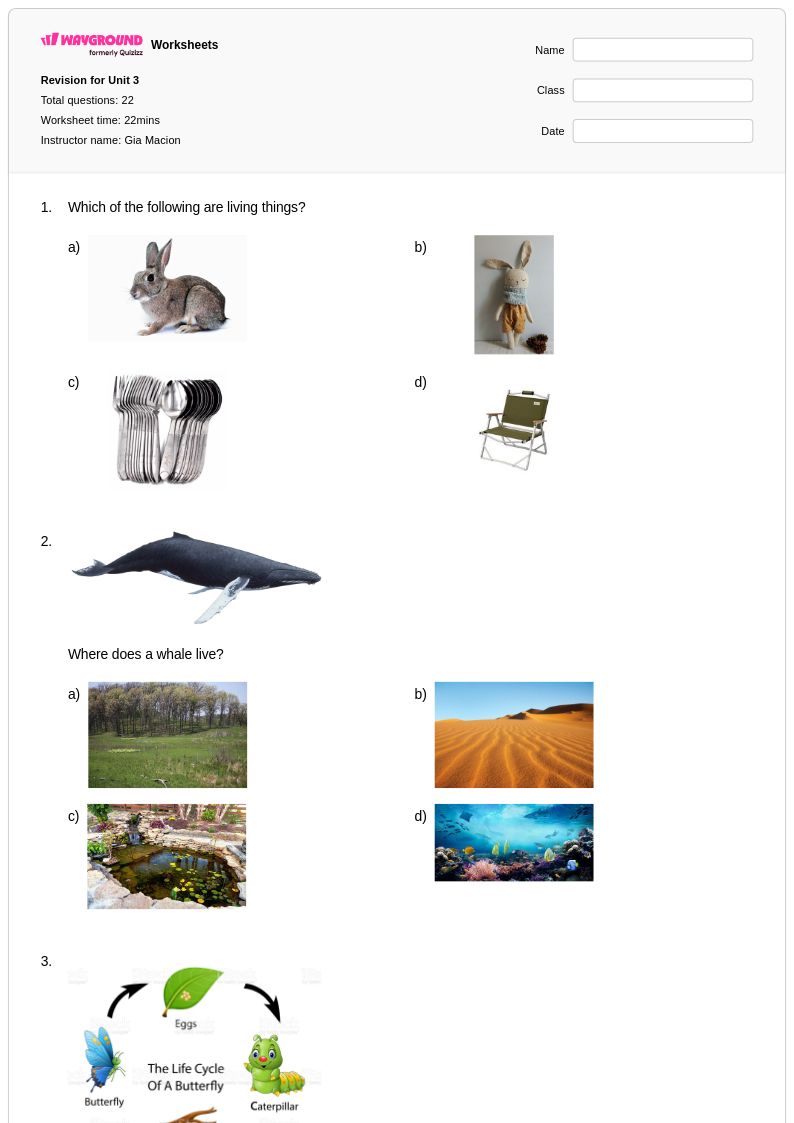
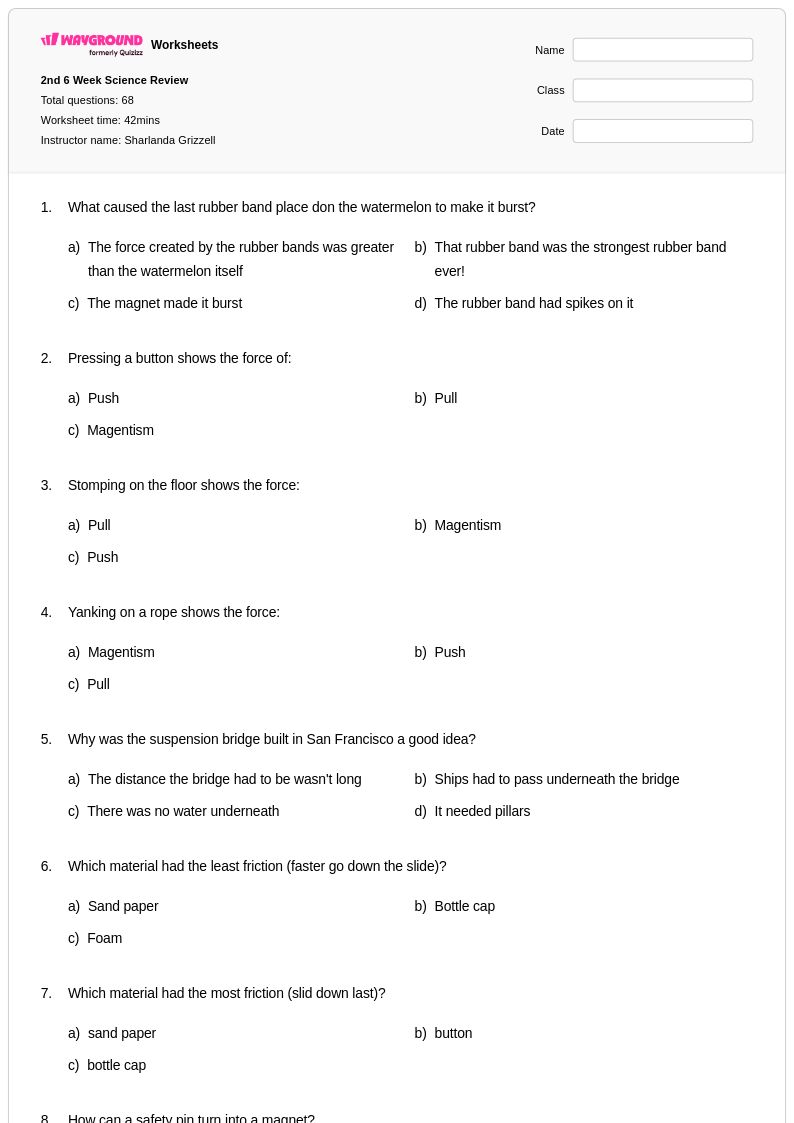
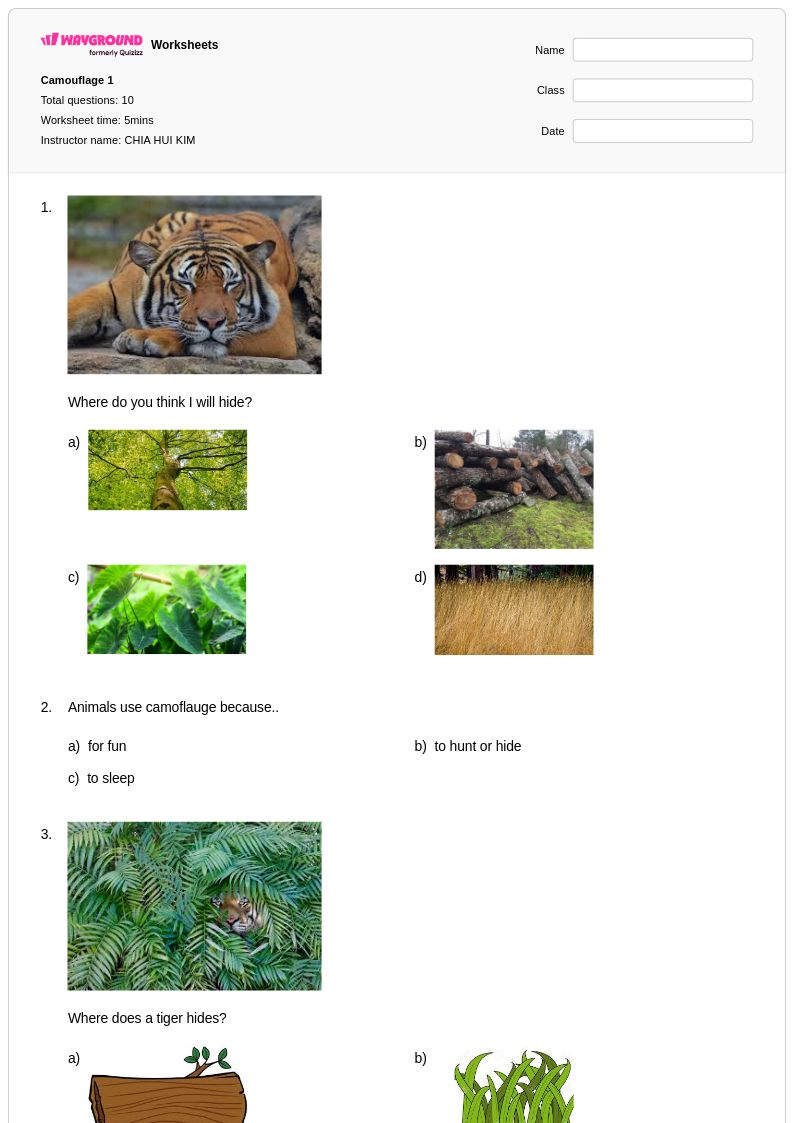
Explore our free Grade 1 frog worksheets and printables that help young students discover amphibian life cycles, habitats, and characteristics through engaging practice problems with complete answer keys.
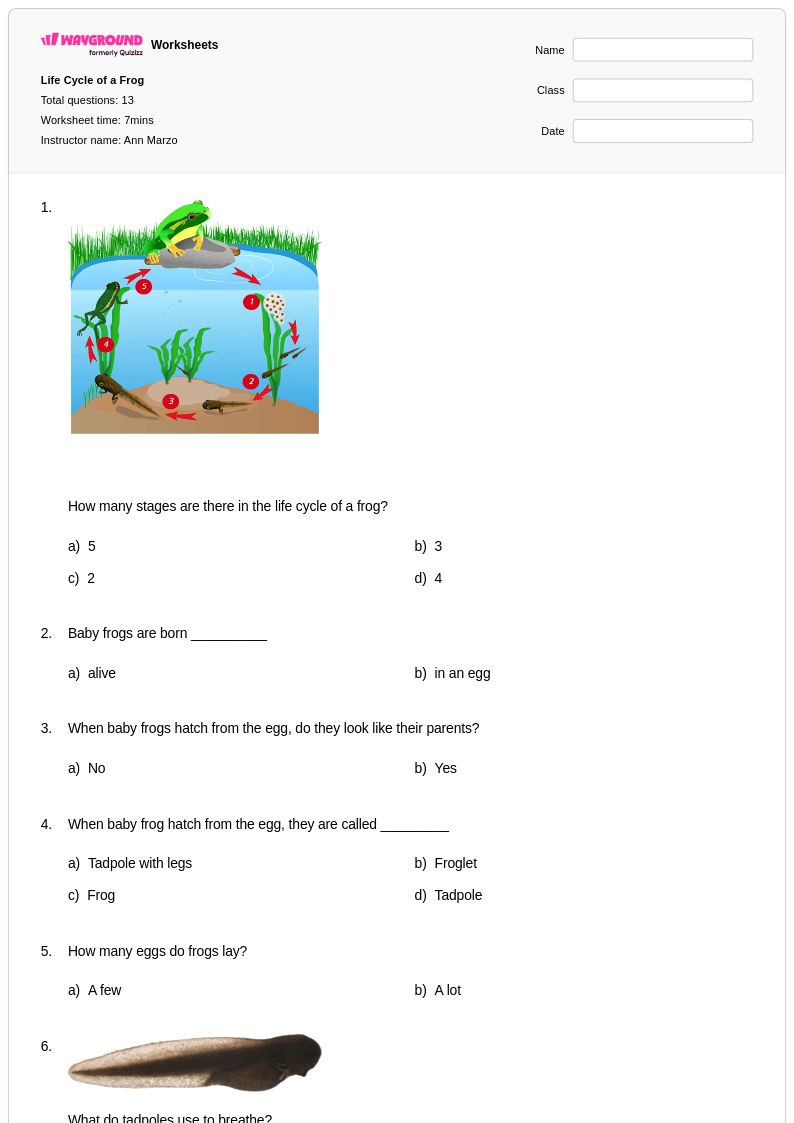
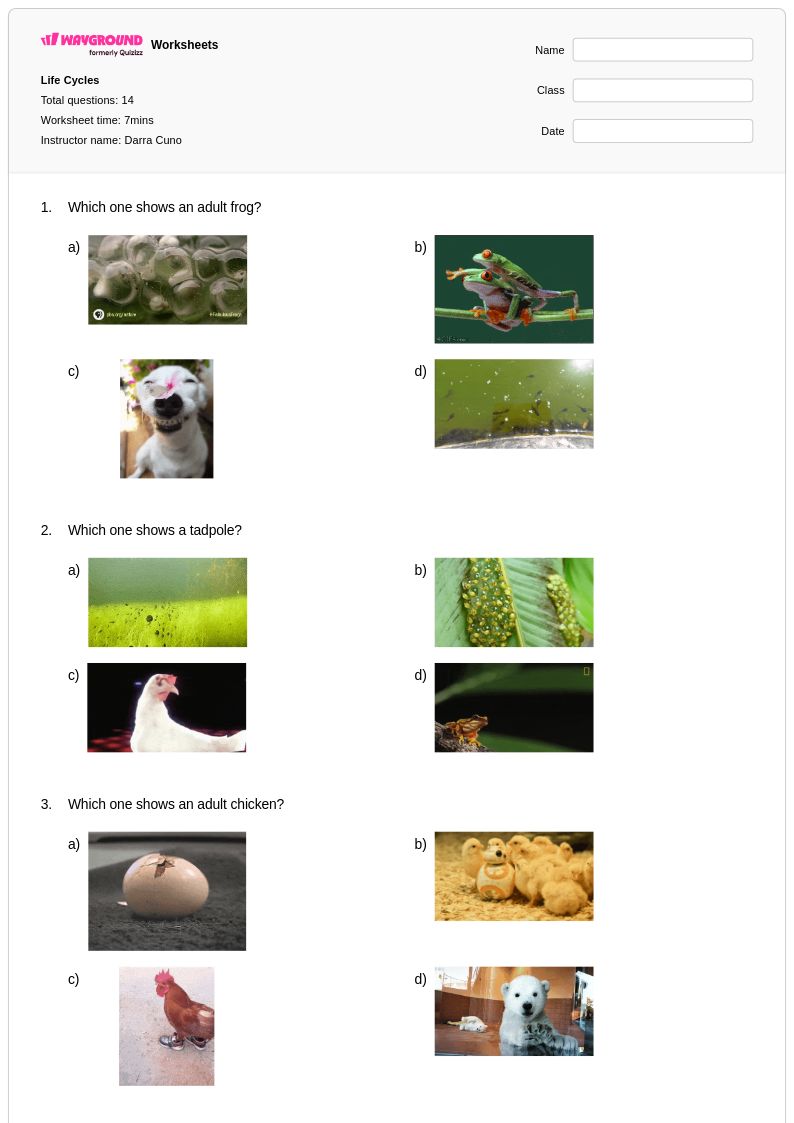
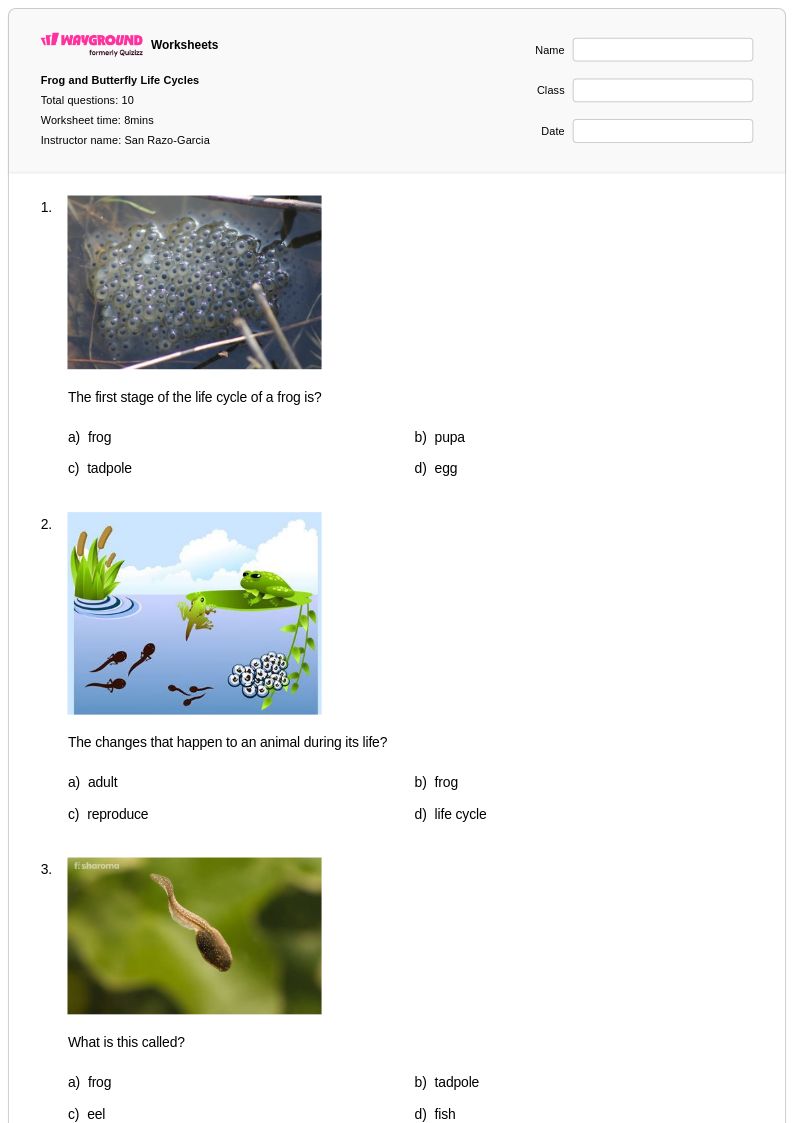
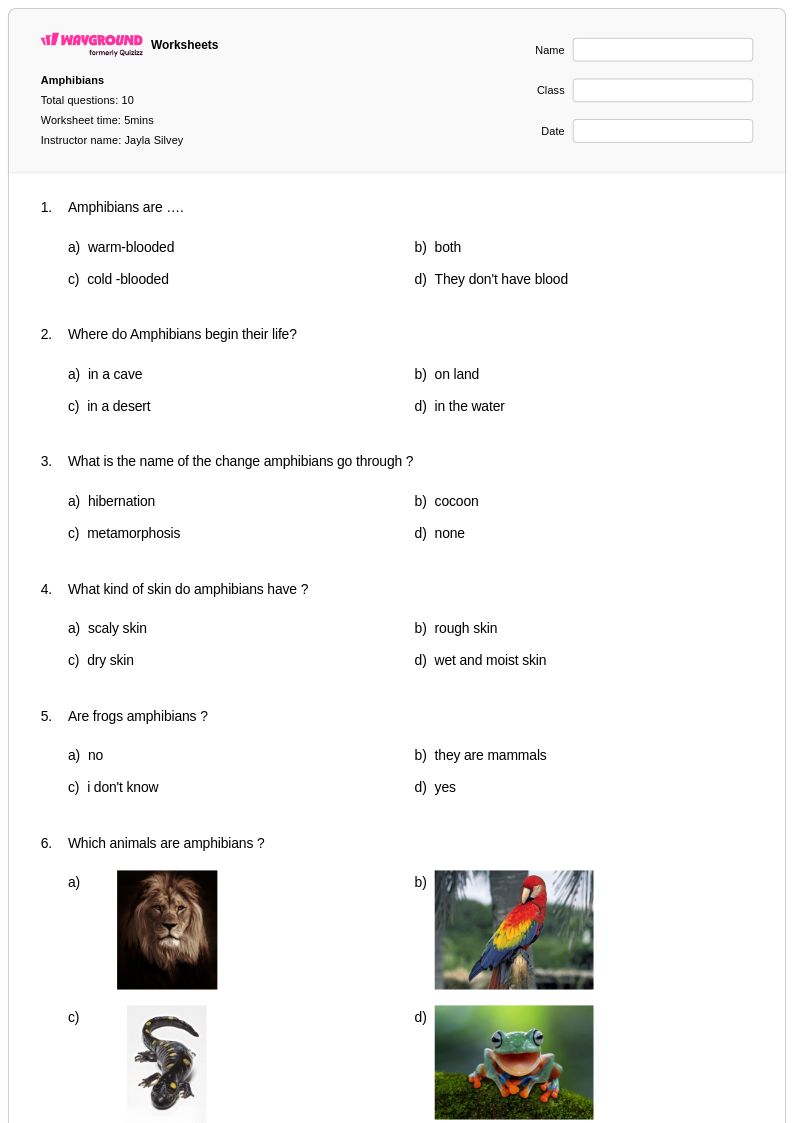
Frog worksheets for Grade 1 students available through Wayground (formerly Quizizz) provide young learners with engaging opportunities to explore amphibian life cycles, habitats, and basic biological characteristics. These educational resources strengthen foundational observation skills, scientific vocabulary development, and early understanding of animal classification through age-appropriate activities like labeling frog body parts, sequencing life cycle stages from tadpole to adult, and identifying pond environments. The comprehensive collection includes practice problems that encourage students to compare frogs with other animals, trace developmental changes, and recognize the connection between physical features and survival needs. Teachers can access complete answer keys alongside each worksheet, and the free printables are available in convenient pdf format for both classroom instruction and independent study sessions.
Wayground (formerly Quizizz) supports educators with an extensive library of millions of teacher-created frog and amphibian resources specifically designed for Grade 1 life science instruction. The platform's robust search and filtering capabilities allow teachers to quickly locate materials that align with state science standards while offering differentiation tools to accommodate diverse learning needs within the classroom. Each worksheet collection provides flexible customization options, enabling educators to modify content difficulty, add visual supports, or incorporate additional practice elements based on individual student requirements. Available in both printable and digital formats including downloadable pdf versions, these resources facilitate seamless lesson planning while supporting targeted skill practice, remediation for struggling learners, and enrichment opportunities for advanced students ready to explore more complex amphibian concepts.
FAQs
How do I teach frog life cycles to elementary students?
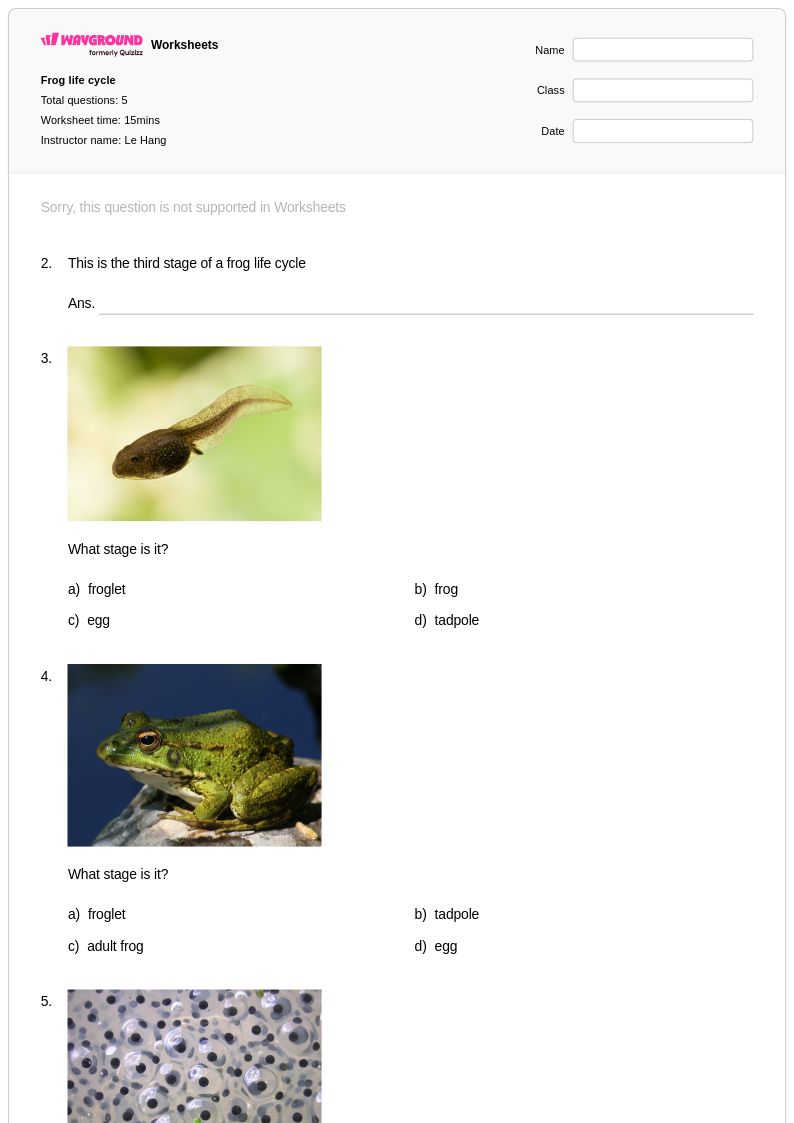
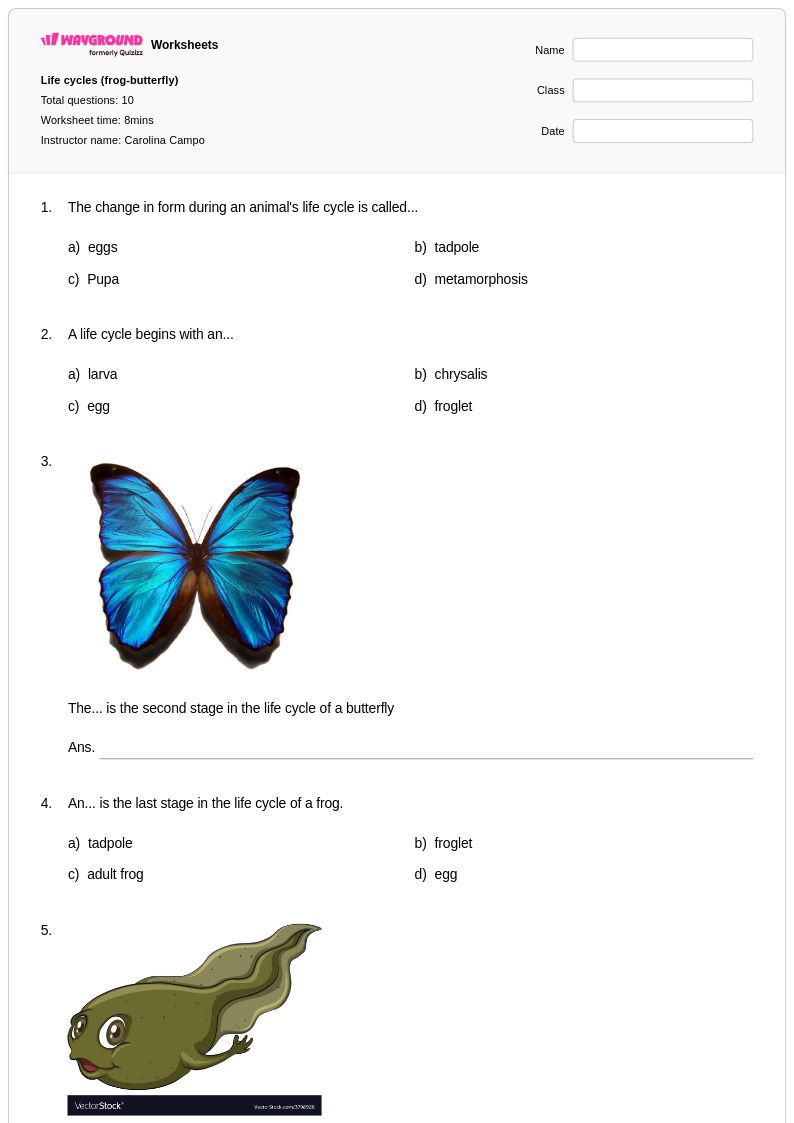
Teaching the frog life cycle is most effective when students can sequence the four stages — egg, tadpole, froglet, and adult — through visual ordering activities and labeled diagram exercises. Connecting each stage to observable physical changes, such as the loss of the tail and development of lungs, helps students understand metamorphosis as a biological process rather than a memorized sequence. Pairing sequencing worksheets with short video observations reinforces the concept through multiple modalities.
What exercises help students practice identifying frog anatomy?
Labeling diagrams of external and internal frog anatomy is one of the most effective practice formats for this topic, requiring students to recall and place terms like tympanum, cloaca, and nictitating membrane in context. Matching exercises that pair body parts with their functions push students beyond simple identification toward functional understanding. Worksheets that combine both diagram labeling and function matching give students layered practice within a single activity.
What common mistakes do students make when learning about frog adaptations?
Students frequently confuse structural adaptations with behavioral ones, for example listing 'jumping away from predators' as a physical trait rather than a behavior. Another common error is overgeneralizing frog adaptations across all amphibian species without accounting for habitat-specific differences, such as the webbed feet of aquatic frogs versus the sticky toe pads of tree frogs. Worksheets that require students to match specific adaptations to specific species and habitats directly target this misconception.
How do students commonly confuse frogs with other amphibians like toads or salamanders?
Students often use 'frog' and 'toad' interchangeably, not recognizing that toads are a subset of frogs or that key differences — such as skin texture, body shape, and preferred habitat — distinguish them. Salamanders cause additional confusion because students may categorize all moist, four-limbed animals together without applying the defining characteristics of each amphibian group. Comparative classification worksheets that ask students to sort and justify their groupings help address this gap.
How can I use frog worksheets in my classroom, and are they available digitally?
Frog worksheets on Wayground are available as printable PDFs for traditional classroom use and in digital formats for technology-integrated environments, giving teachers flexibility based on their instructional setup. Teachers can distribute printed versions for hands-on labs or homework reinforcement, or host the worksheets as a digital quiz directly on Wayground for immediate student engagement and automated response tracking. Each worksheet includes a complete answer key, supporting both teacher-led review and independent student self-assessment.
How can I differentiate frog worksheets for students at different skill levels?
Differentiation can be achieved by selecting worksheets that range in complexity — from basic life cycle sequencing for foundational learners to multi-species habitat analysis for advanced students. On Wayground, teachers can apply individual student accommodations such as read aloud support, extended time, and reduced answer choices, which are especially useful when supporting students with reading challenges or processing differences during science activities. These settings can be configured per student and reused across sessions without disrupting the experience of other students in the class.