
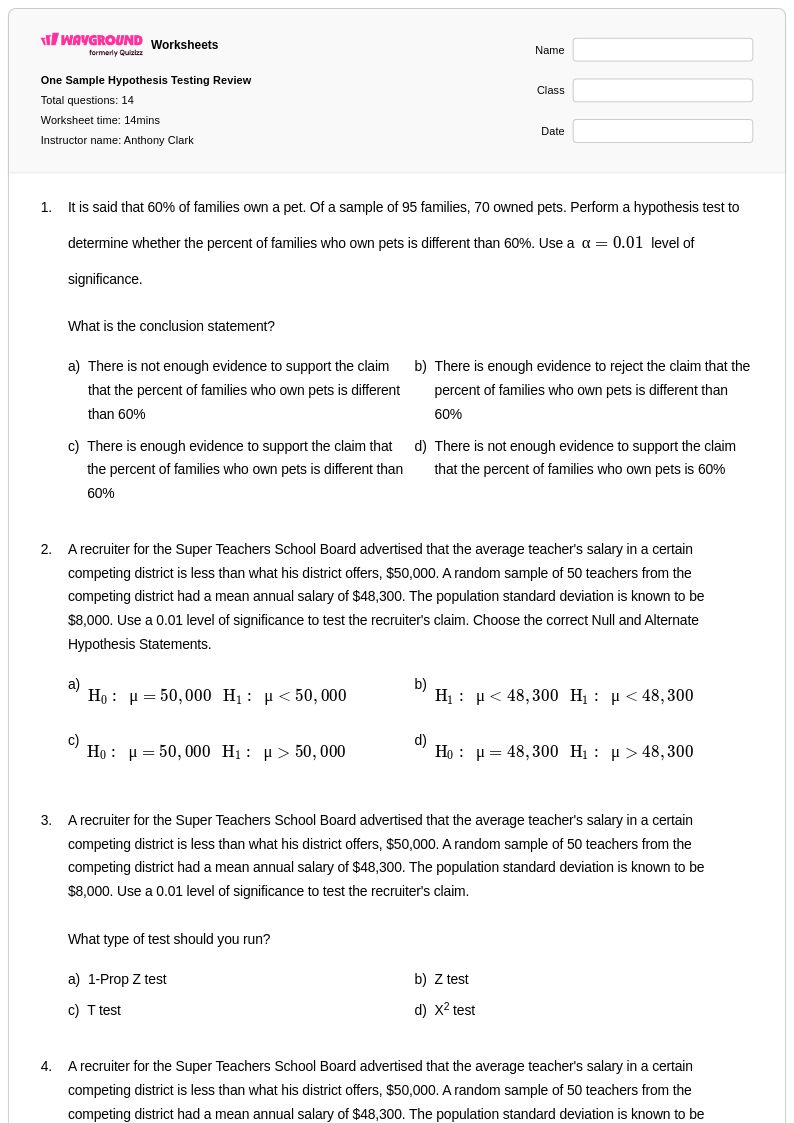
14 Q
11th - Uni
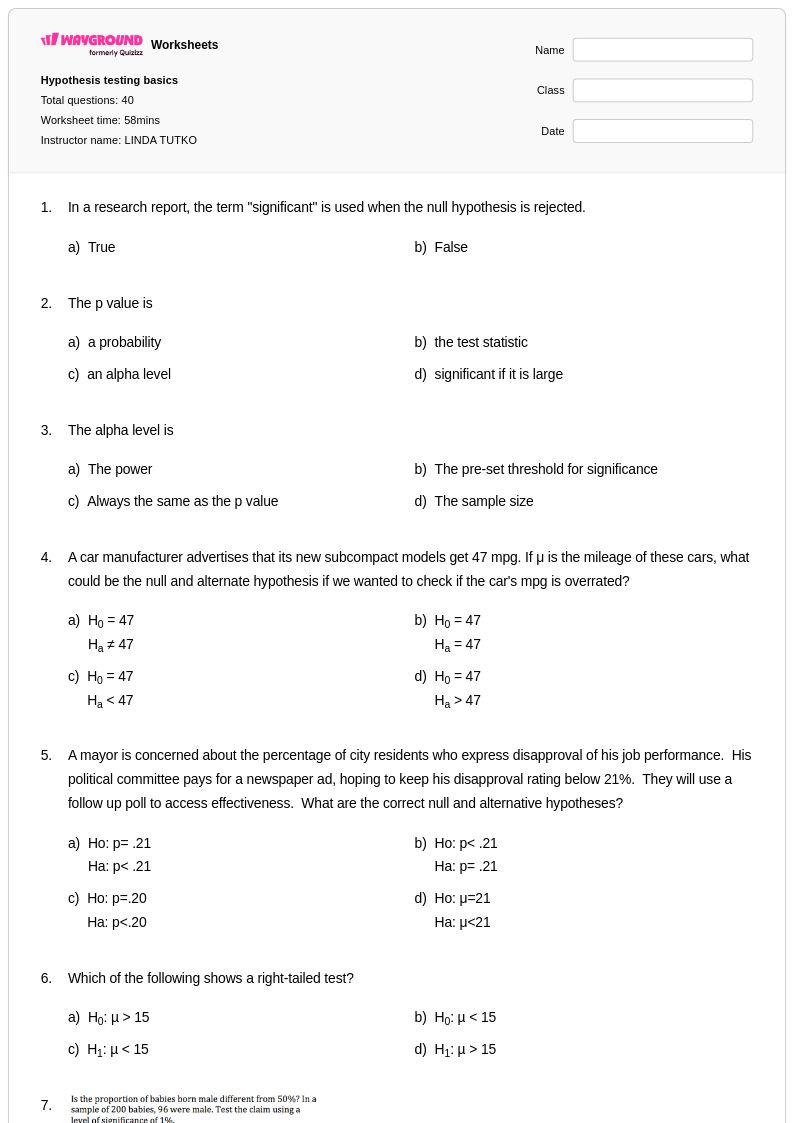
40 Q
11th - 12th
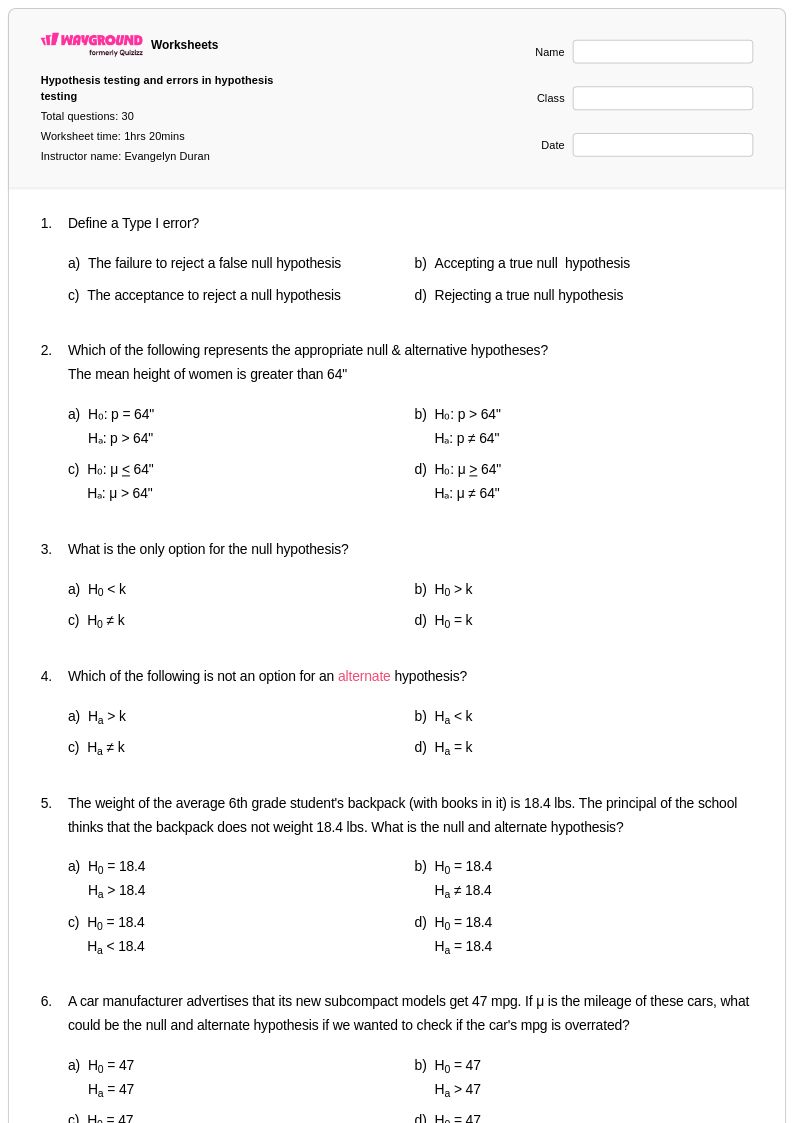
30 Q
11th
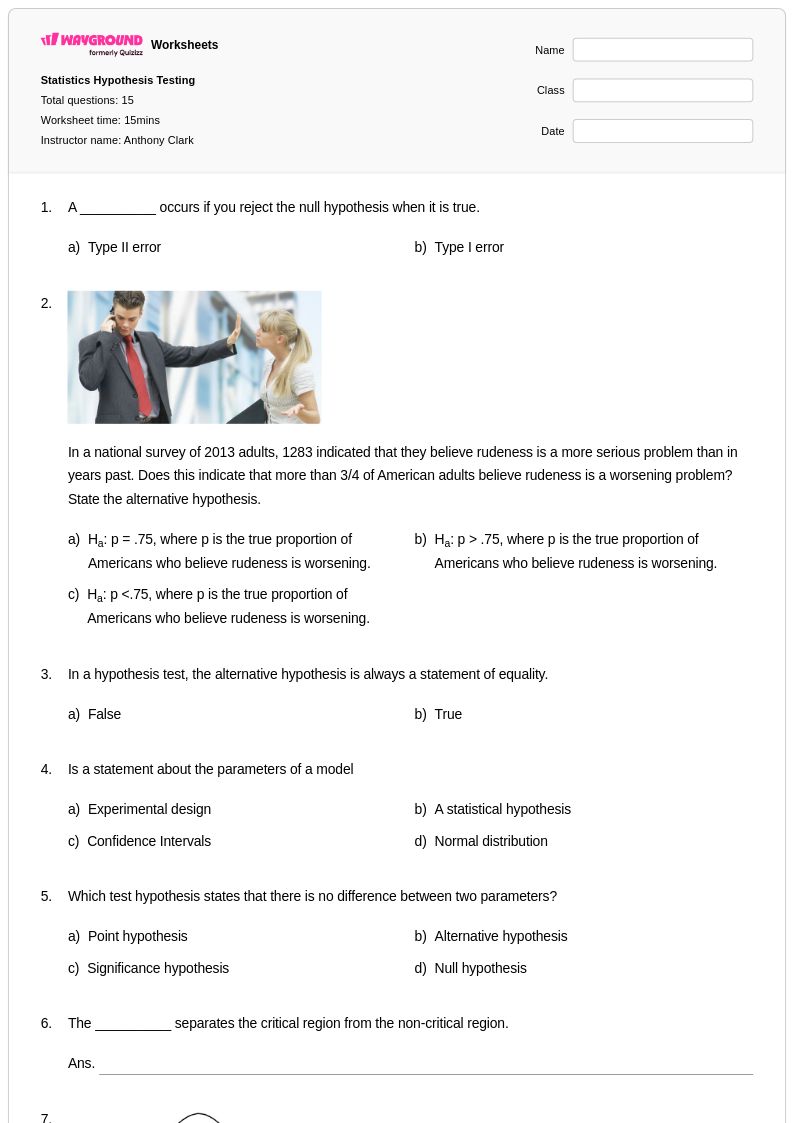
15 Q
11th - Uni
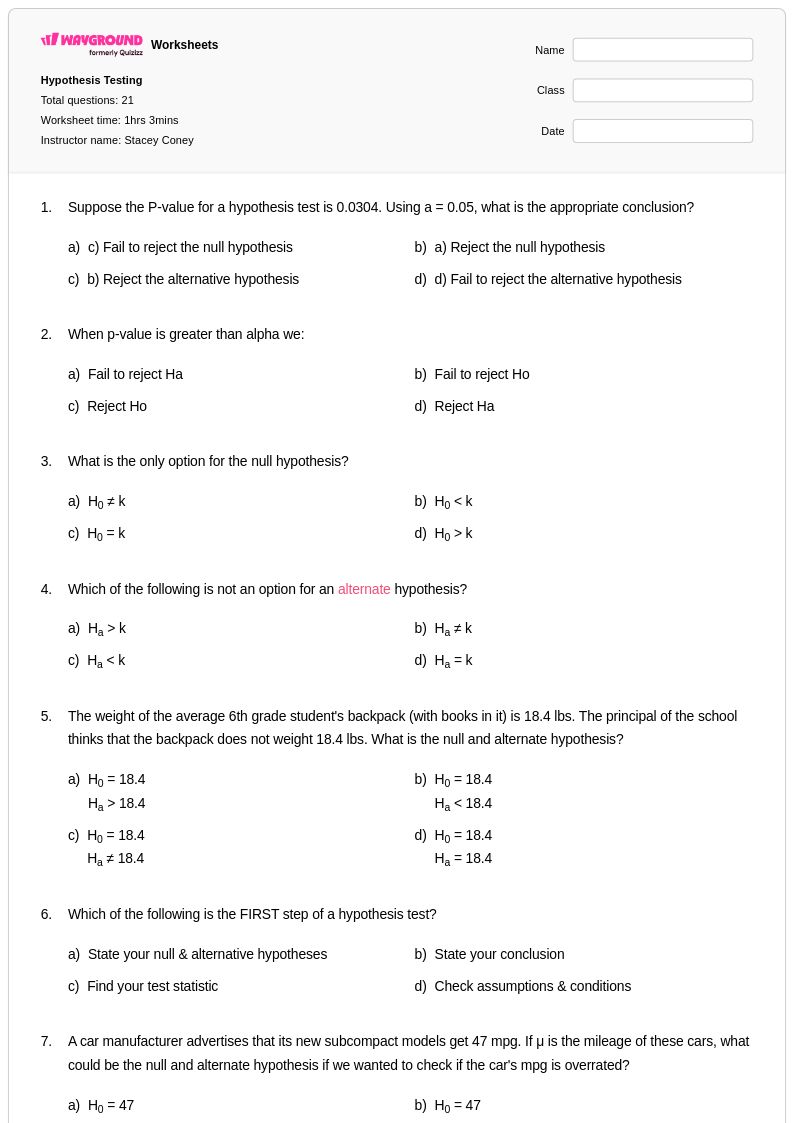
21 Q
11th - 12th
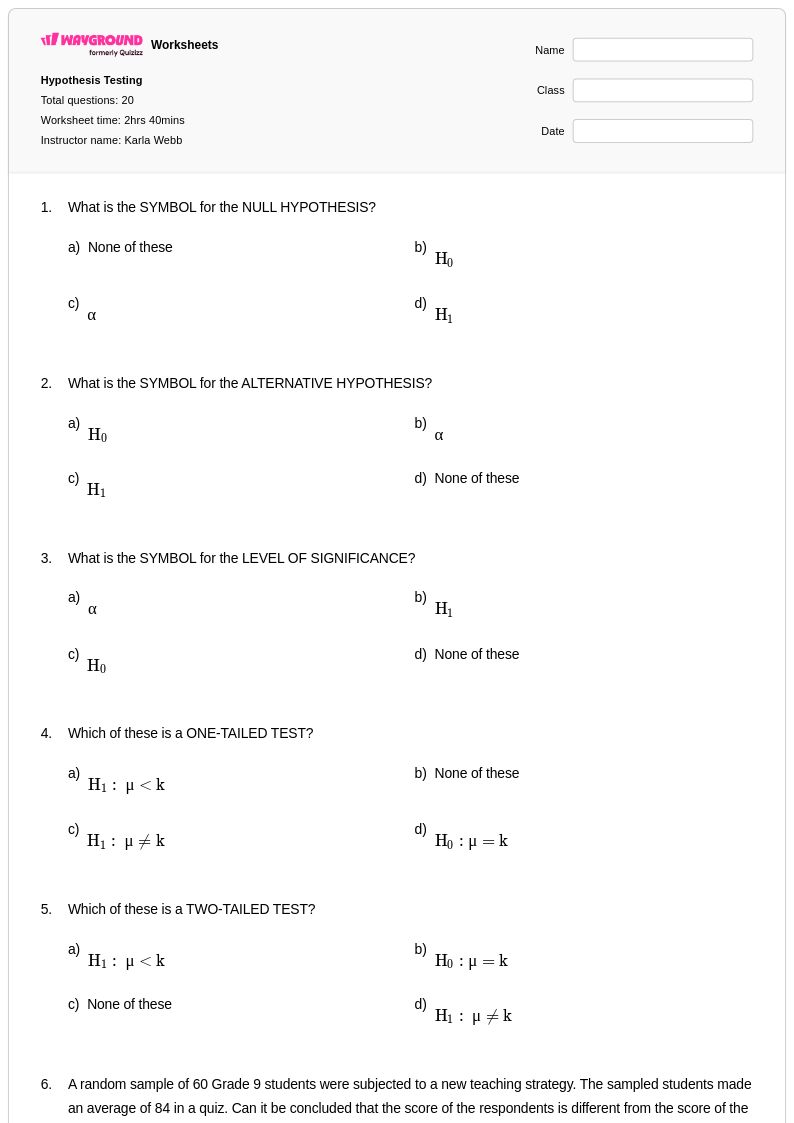
20 Q
12th
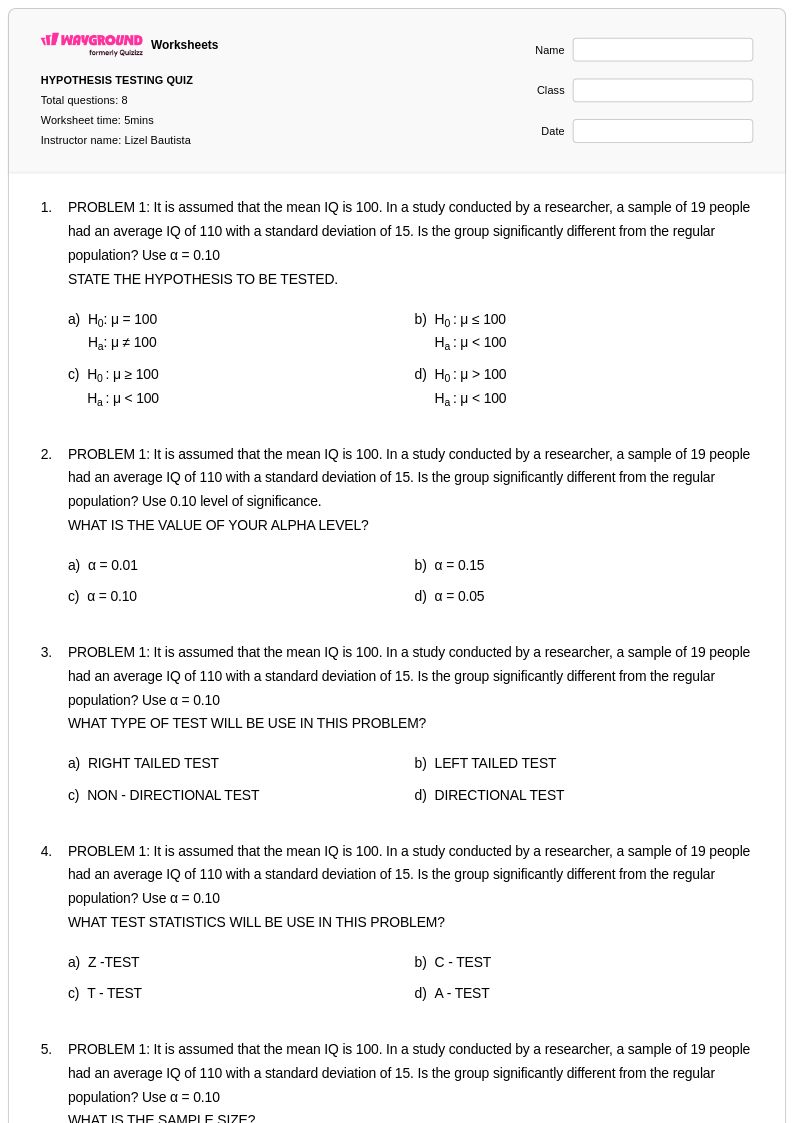
8 Q
11th
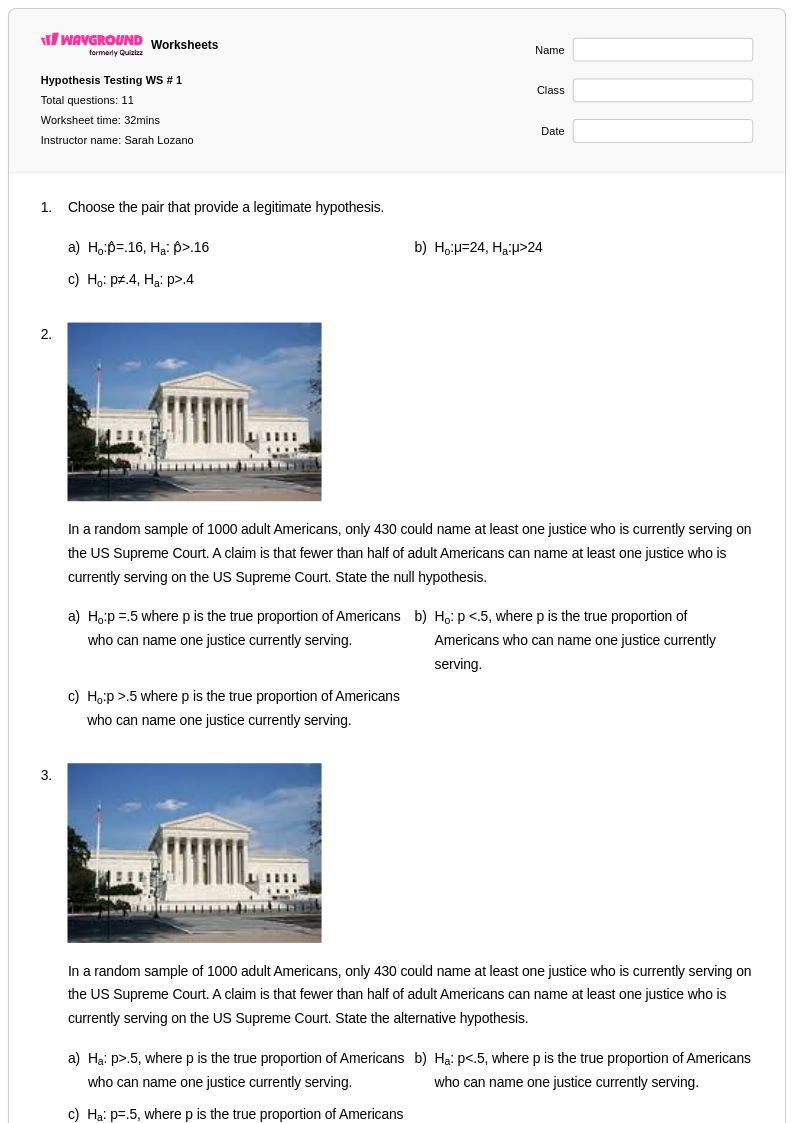
11 Q
12th
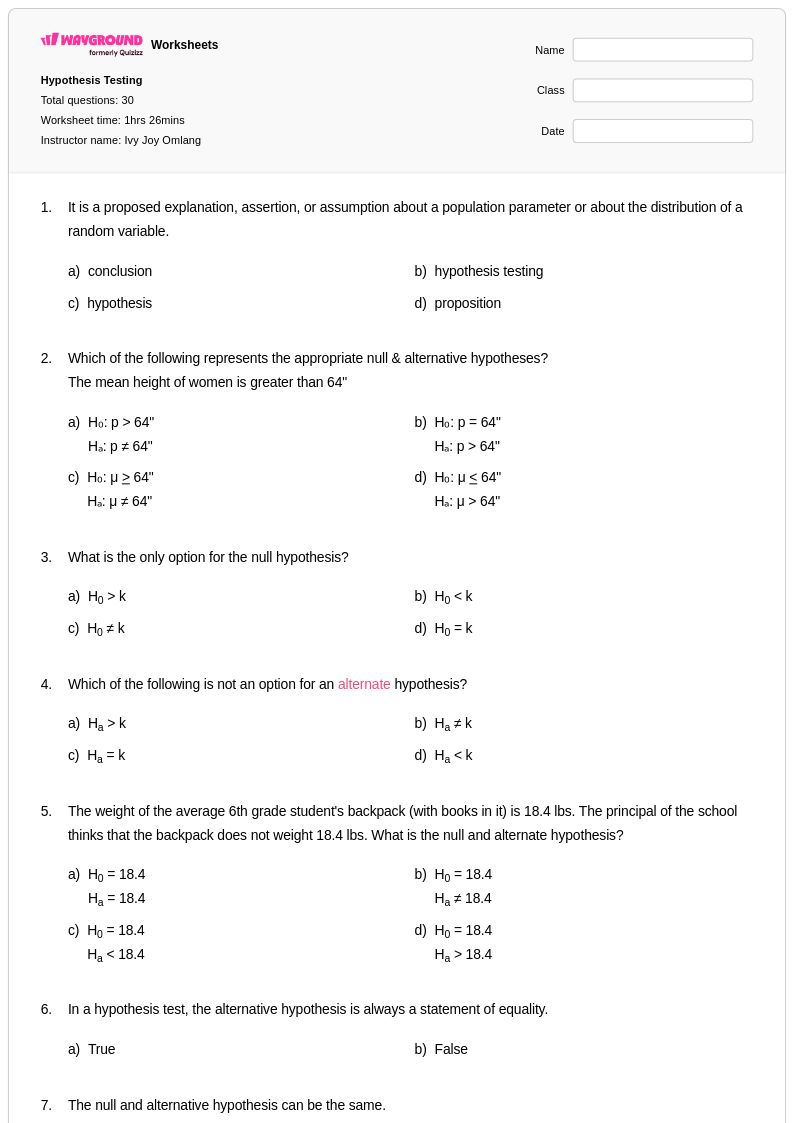
30 Q
Uni
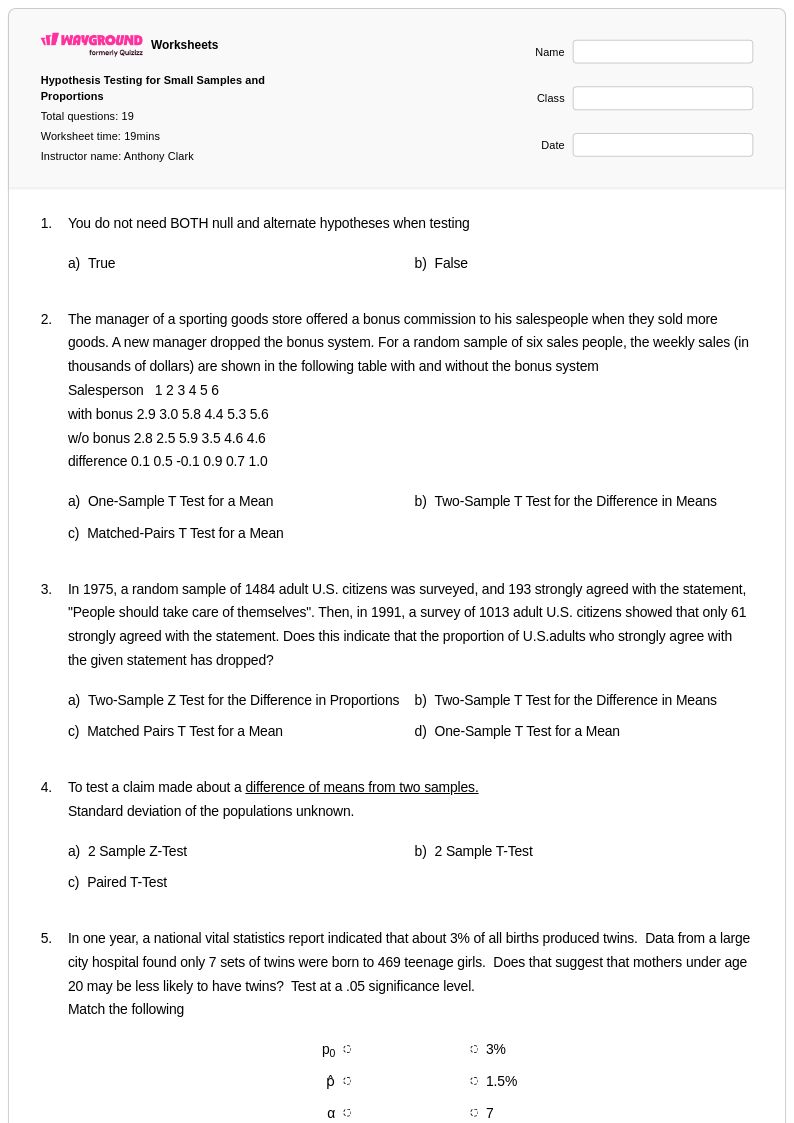
19 Q
12th - Uni
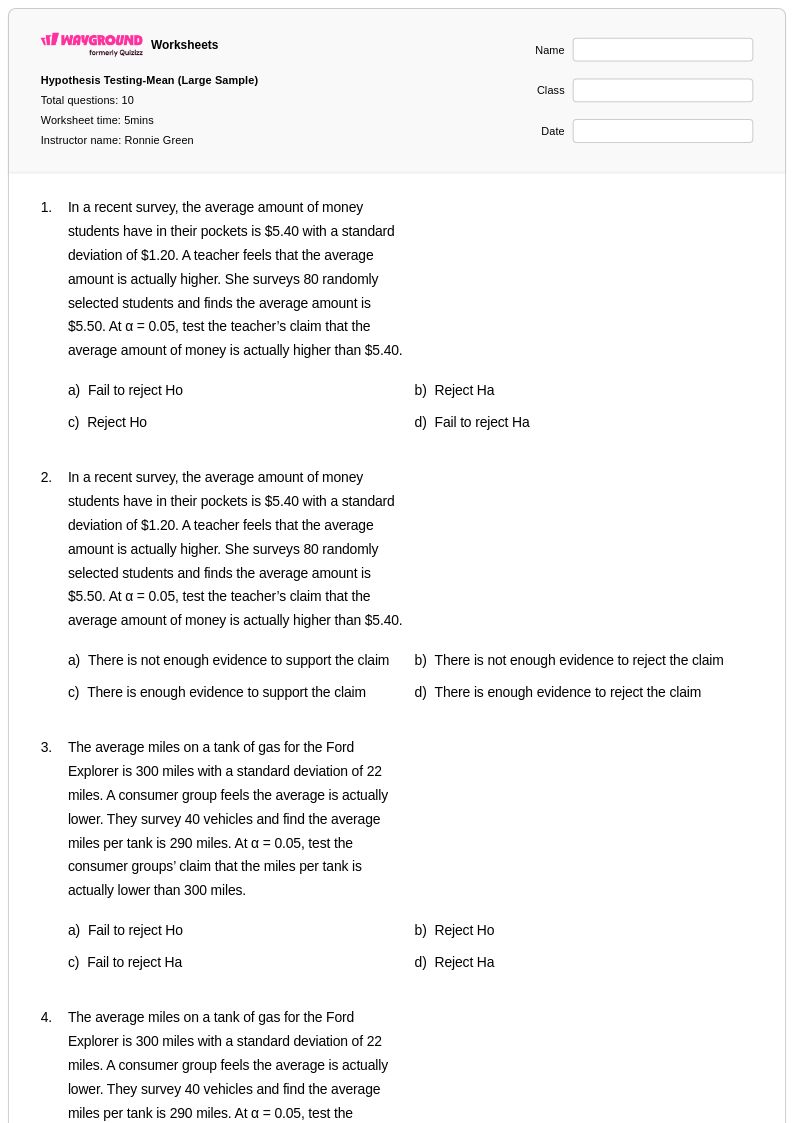
10 Q
9th - 12th
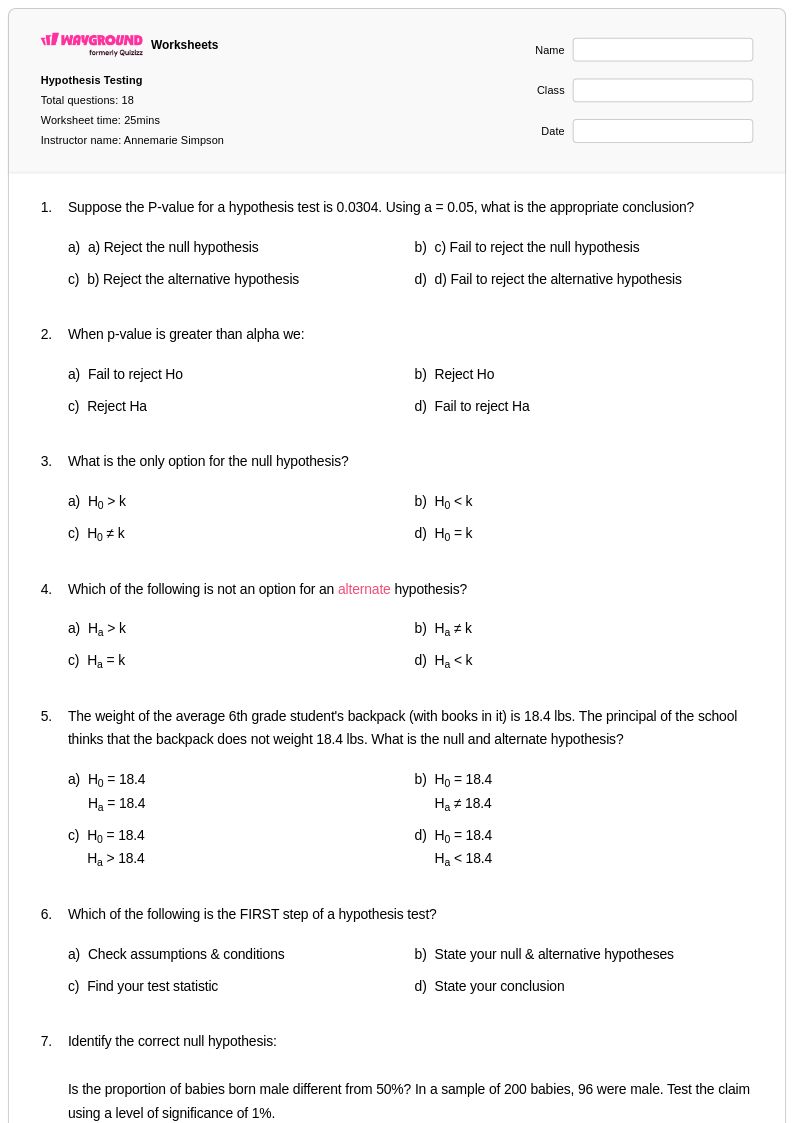
18 Q
11th - 12th
20 Q
11th - Uni
20 Q
11th - Uni
15 Q
12th - Uni
12 Q
11th - 12th
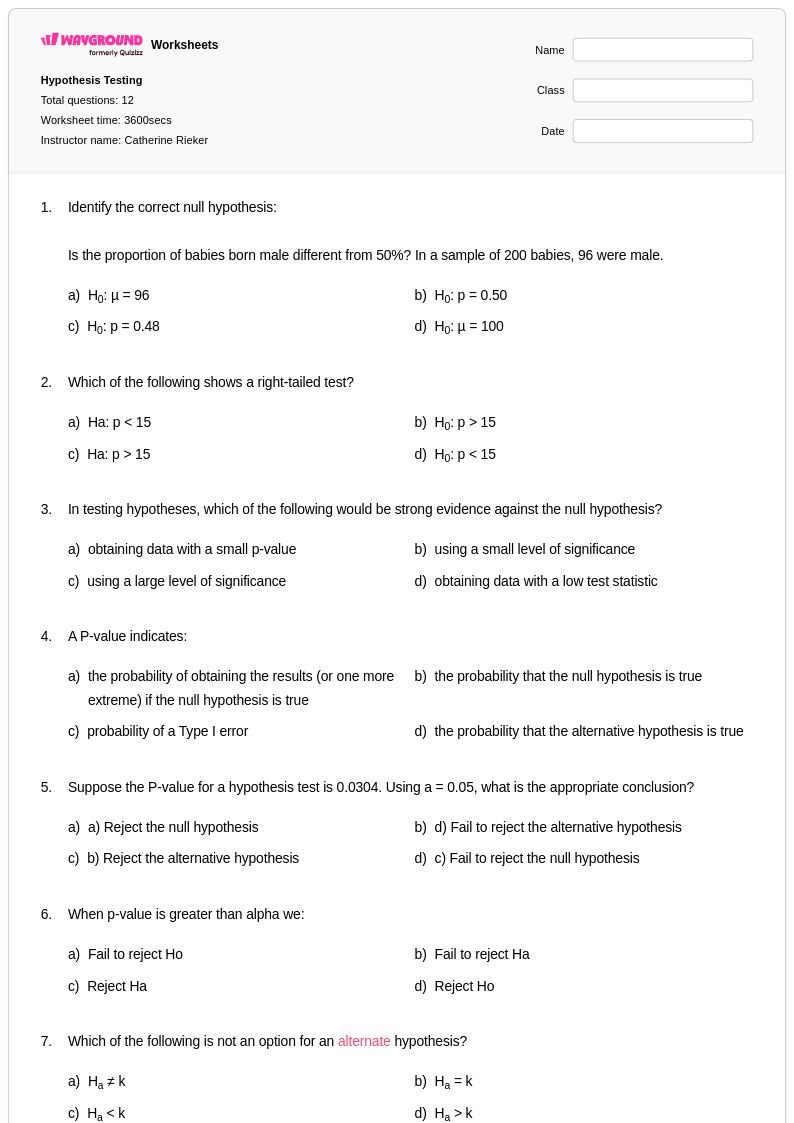
12 Q
12th
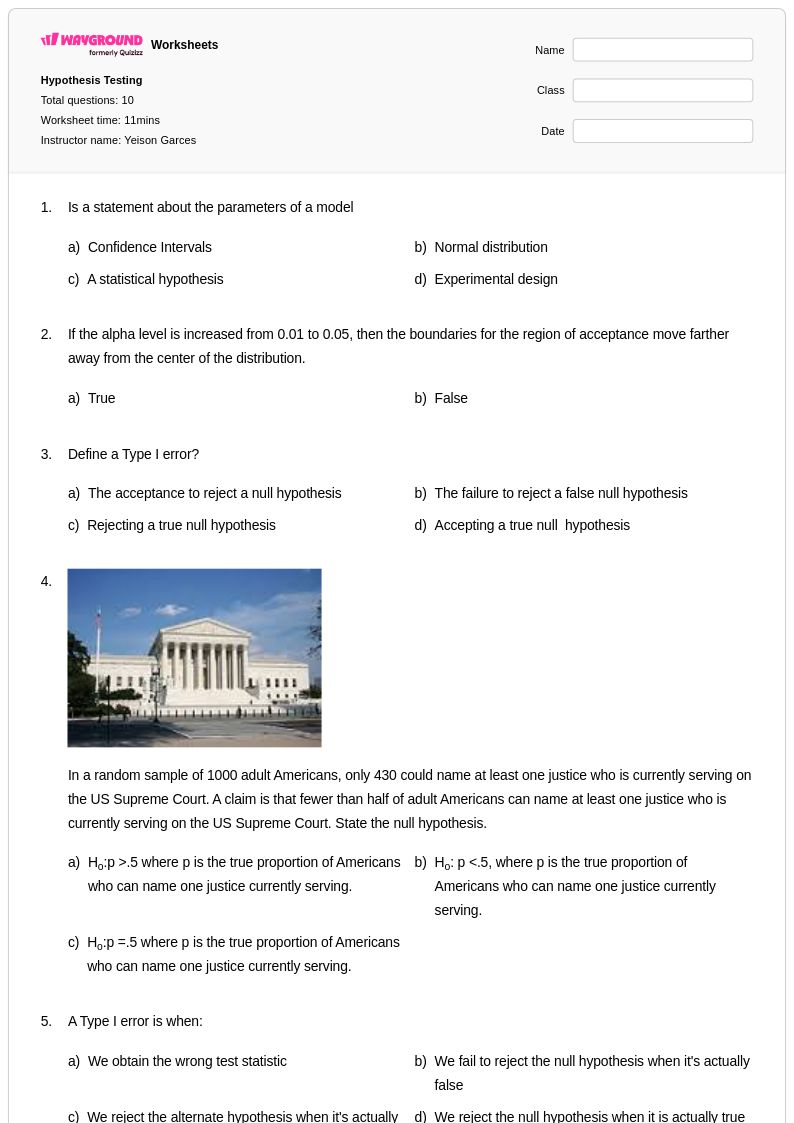
10 Q
Uni
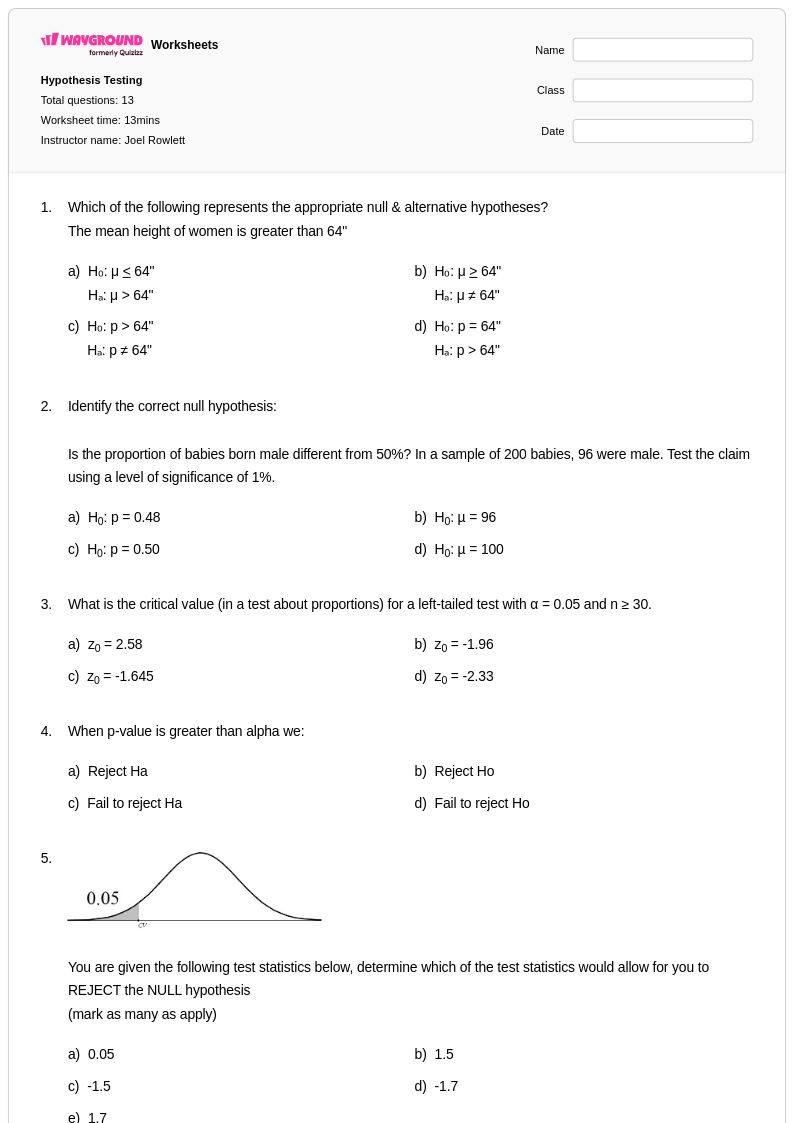
13 Q
12th
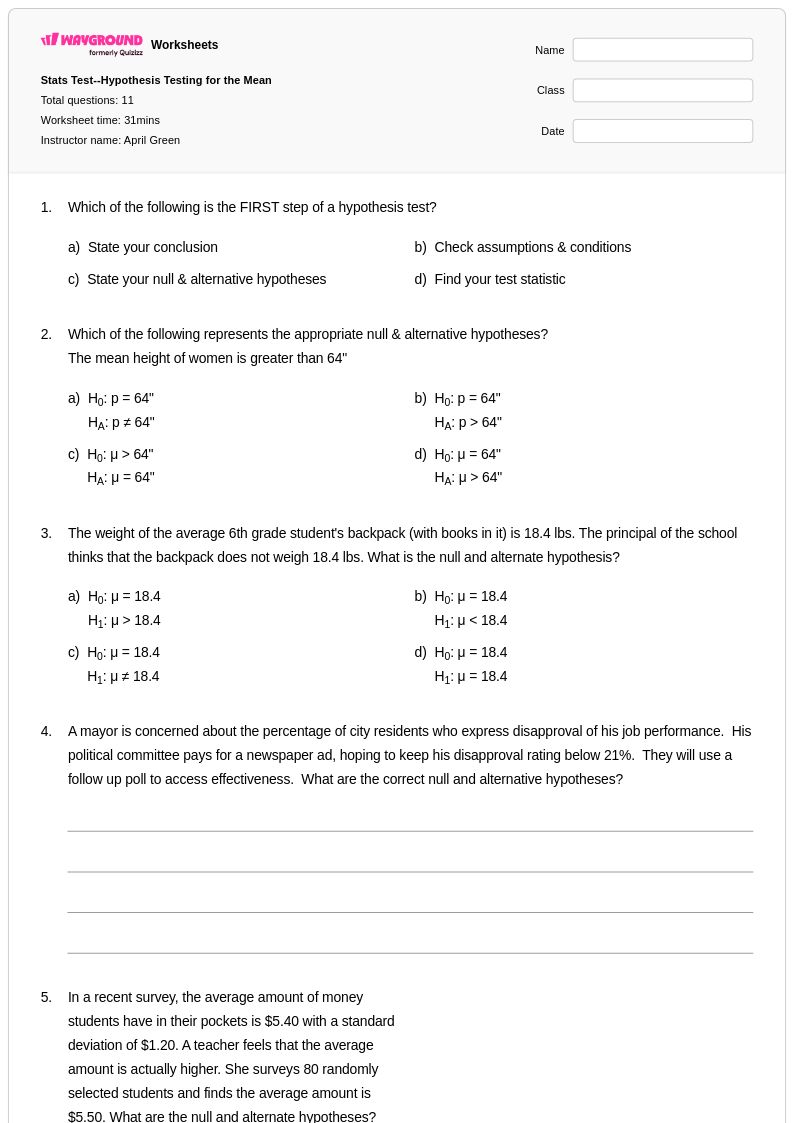
11 Q
9th - 12th
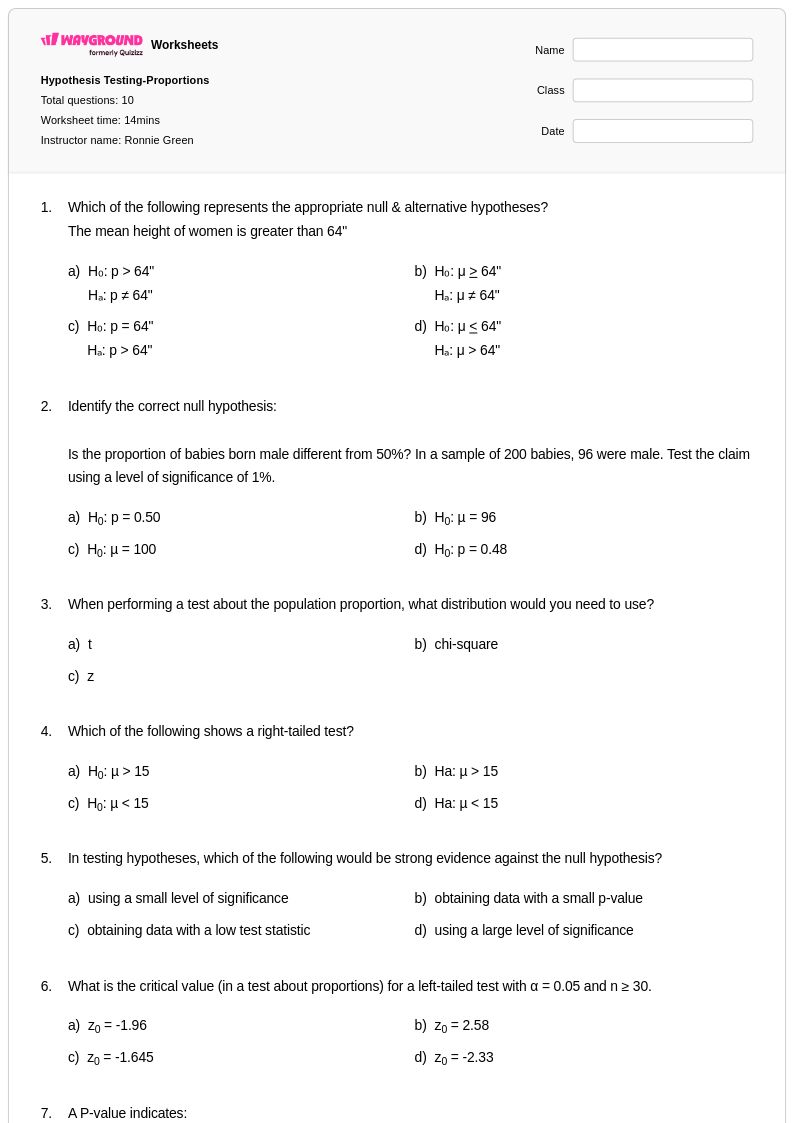
10 Q
9th - 12th
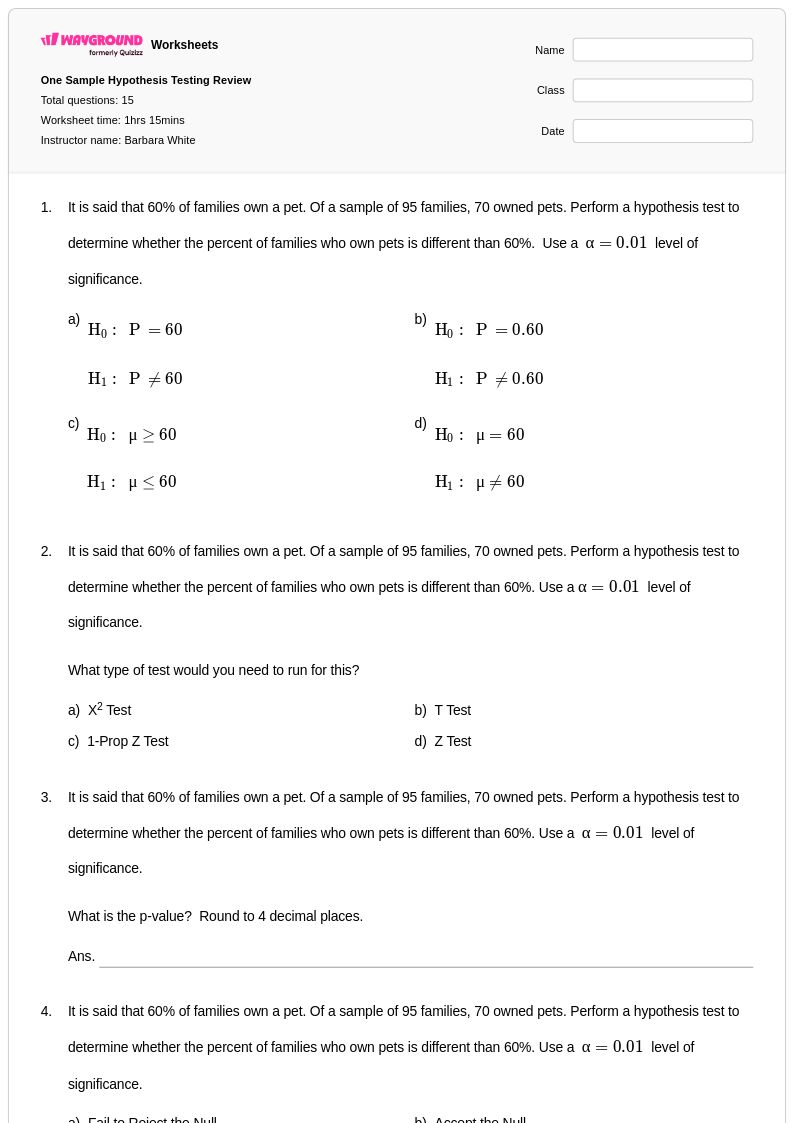
15 Q
Uni
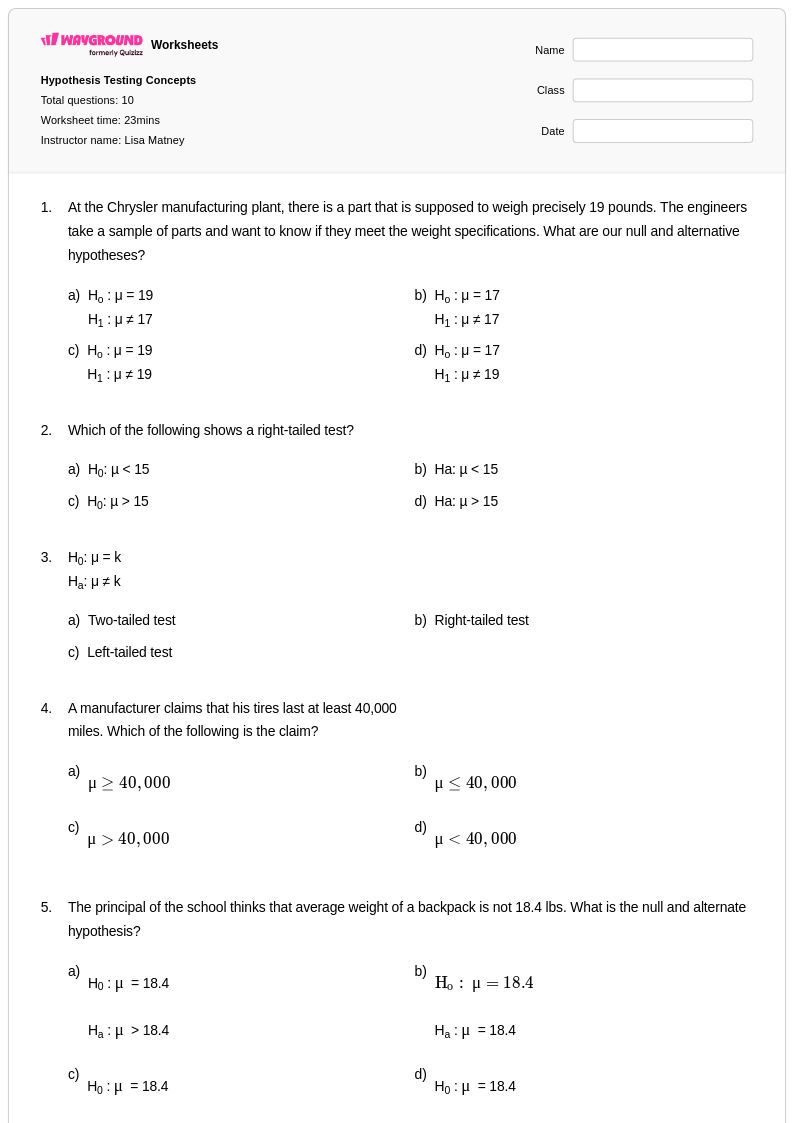
10 Q
12th
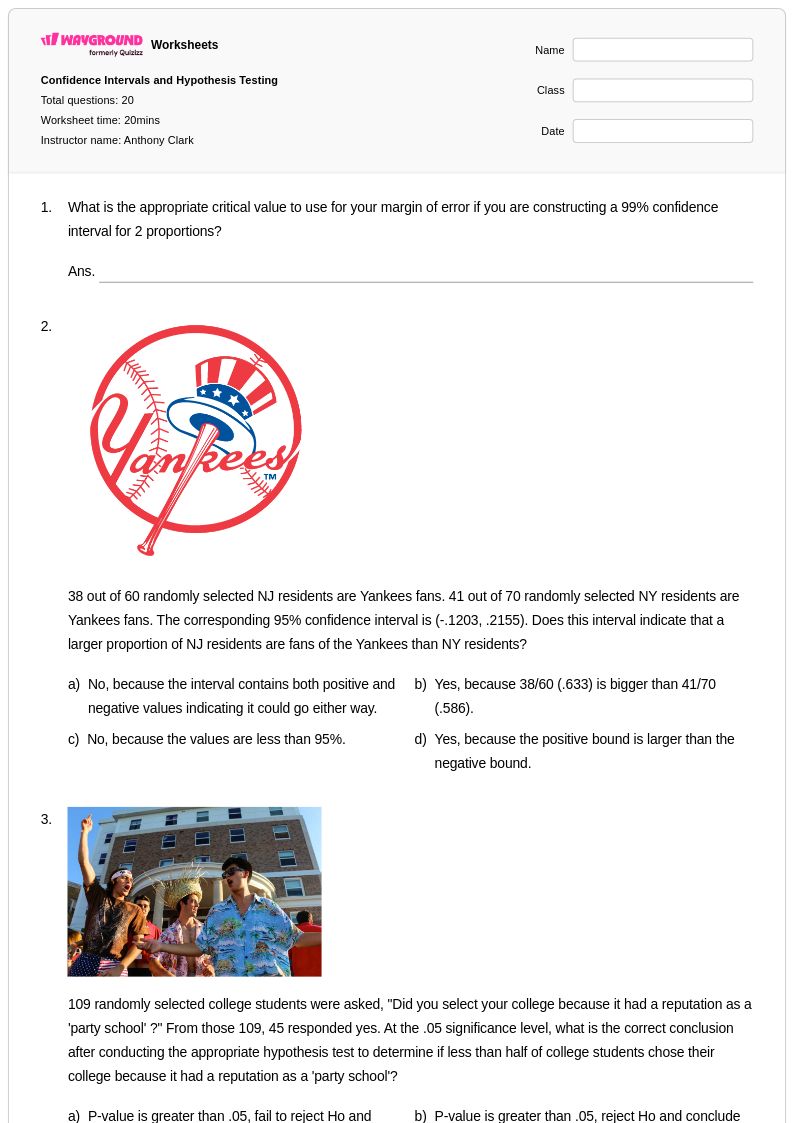
20 Q
12th - Uni
Explore Worksheets by Subjects
Explore printable Hypothesis Testing worksheets
Hypothesis testing worksheets available through Wayground (formerly Quizizz) provide comprehensive coverage of this fundamental statistical concept, helping students master the systematic process of evaluating claims about population parameters. These expertly designed practice problems guide learners through each critical step of hypothesis testing, from formulating null and alternative hypotheses to calculating test statistics, determining p-values, and drawing appropriate conclusions. The worksheet collection strengthens essential skills including identifying appropriate statistical tests for different scenarios, understanding Type I and Type II errors, interpreting confidence intervals, and applying hypothesis testing to real-world data analysis situations. Each printable resource includes detailed answer keys that explain the reasoning behind statistical decisions, while the free pdf formats ensure easy access for both classroom instruction and independent study.
Wayground (formerly Quizizz) supports mathematics educators with an extensive library of millions of teacher-created hypothesis testing worksheets that can be easily located through robust search and filtering capabilities. The platform's differentiation tools allow instructors to customize content difficulty levels and problem types to match diverse learning needs, while standards alignment features ensure worksheets support curriculum objectives across different educational frameworks. Teachers can seamlessly integrate these resources into lesson planning for initial concept introduction, targeted remediation for struggling students, or enrichment activities for advanced learners seeking deeper statistical analysis challenges. The flexible availability of materials in both printable and digital pdf formats accommodates various teaching environments and learning preferences, enabling educators to provide consistent skill practice whether students are working in traditional classrooms or remote learning settings.
FAQs
How do I teach the steps of hypothesis testing?
What are the most common student mistakes in hypothesis testing?
What kinds of exercises help students practice hypothesis testing?
How does hypothesis testing fit into the high school math curriculum?
How can I use this Wayground worksheet with my class?
How can I differentiate hypothesis testing practice for my students?