
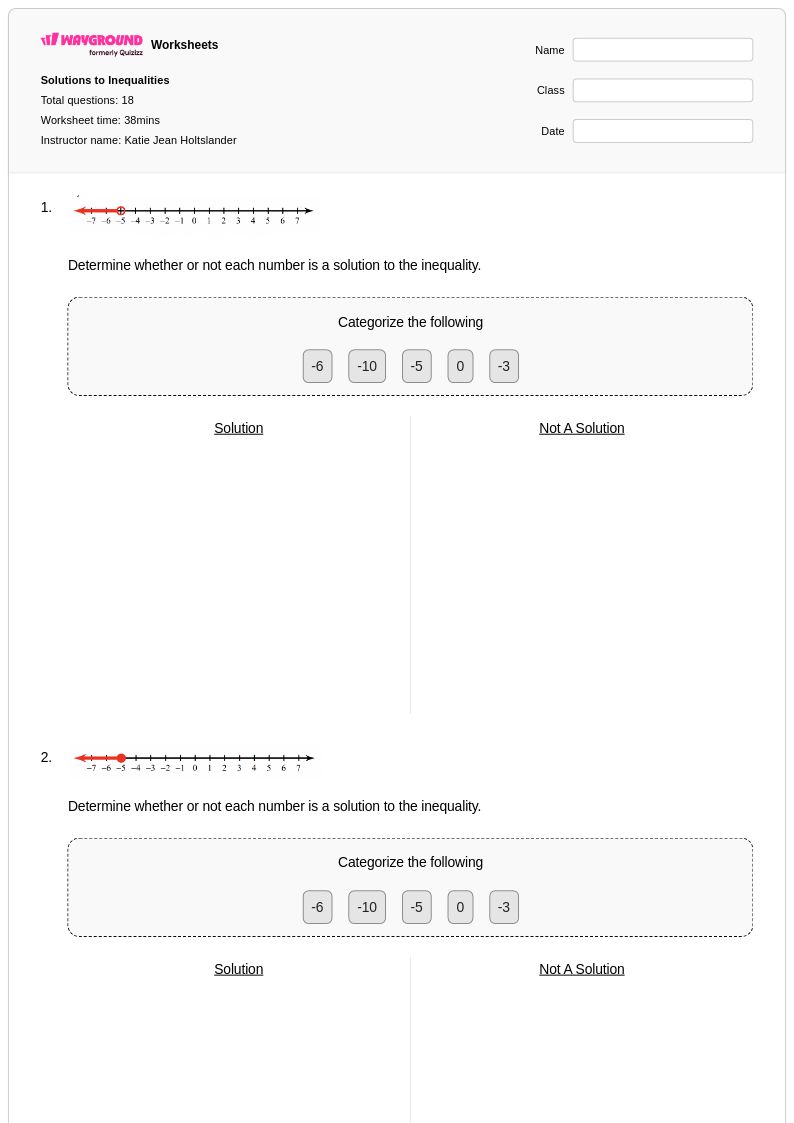
18 Q
7th
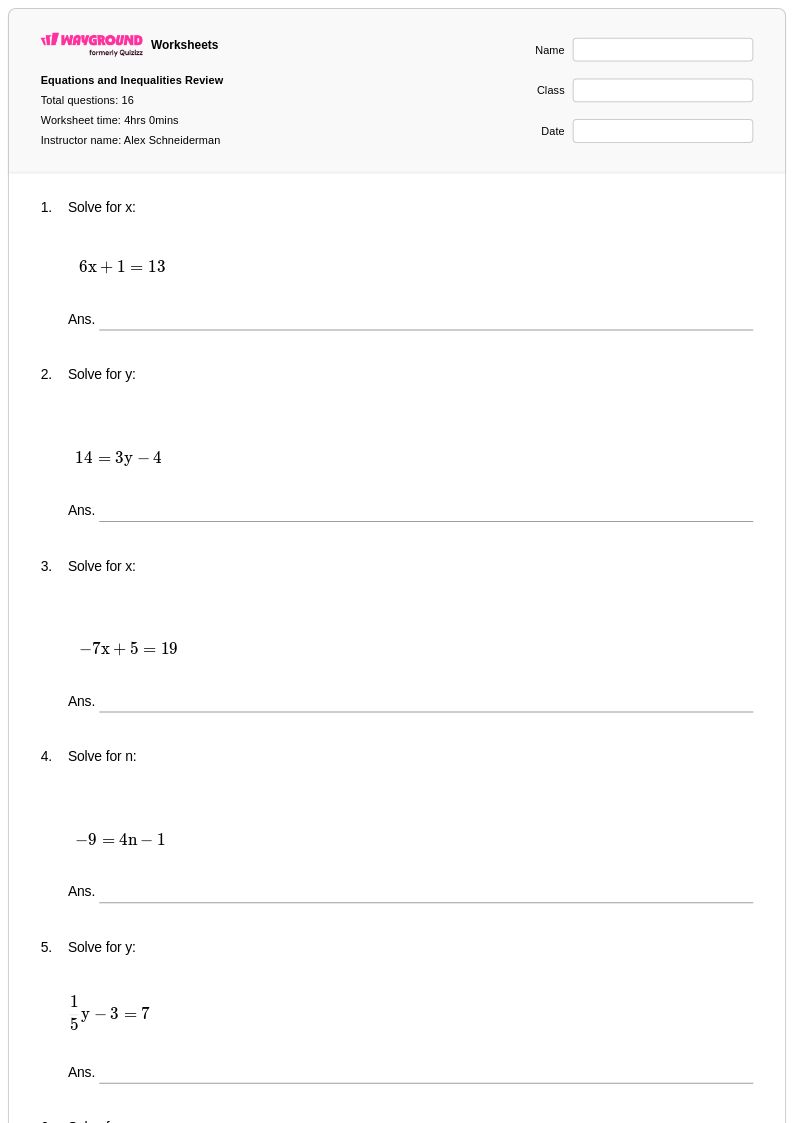
16 Q
7th
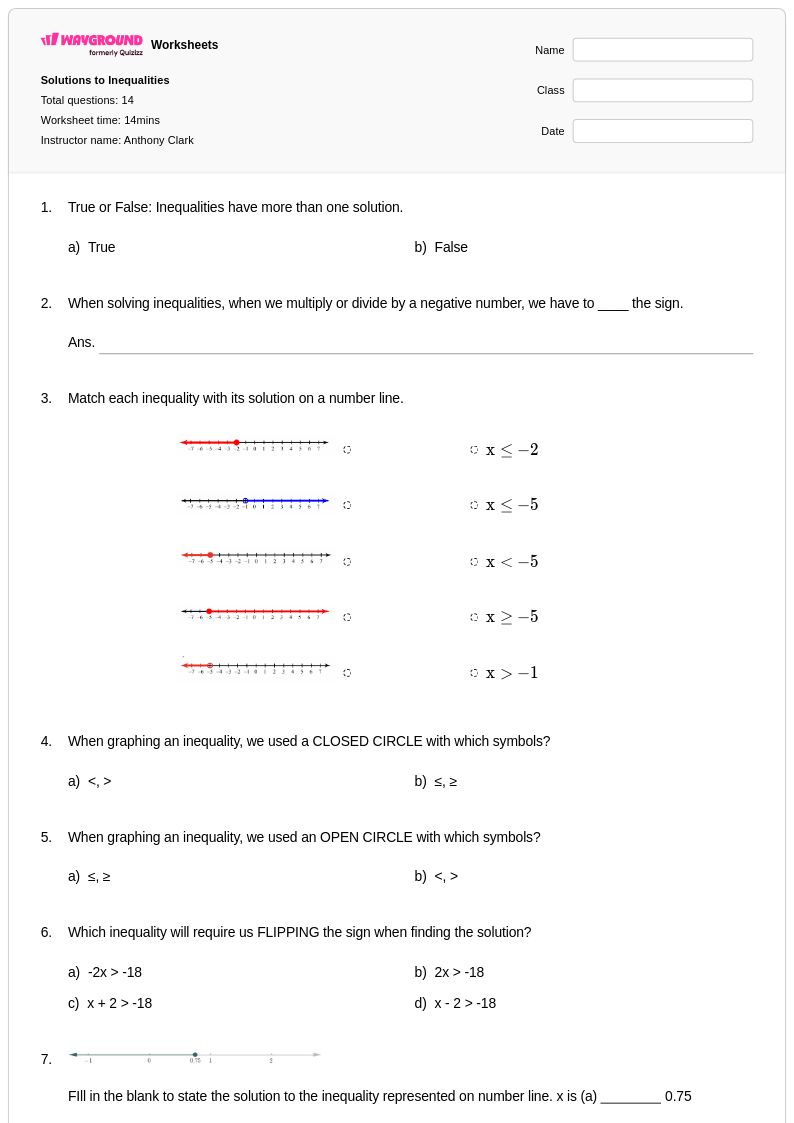
14 Q
6th - Uni
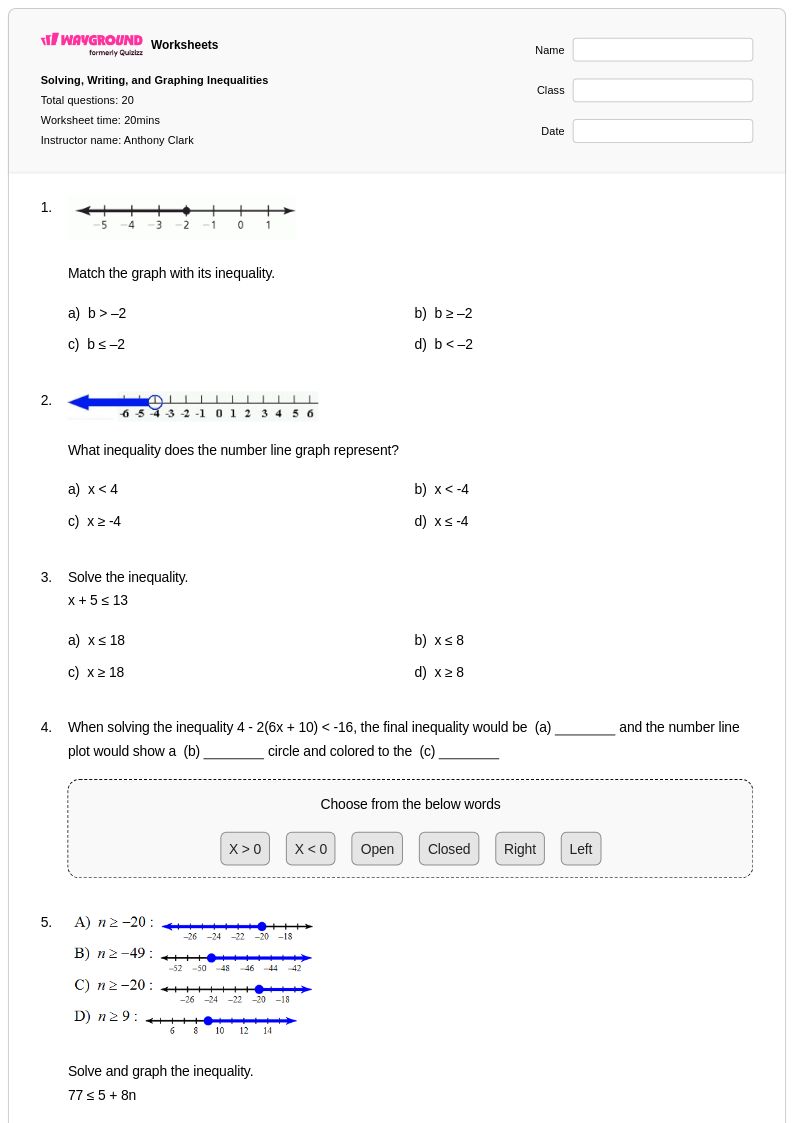
20 Q
7th - Uni
32 Q
7th
25 Q
7th
20 Q
6th - Uni
20 Q
6th - 8th
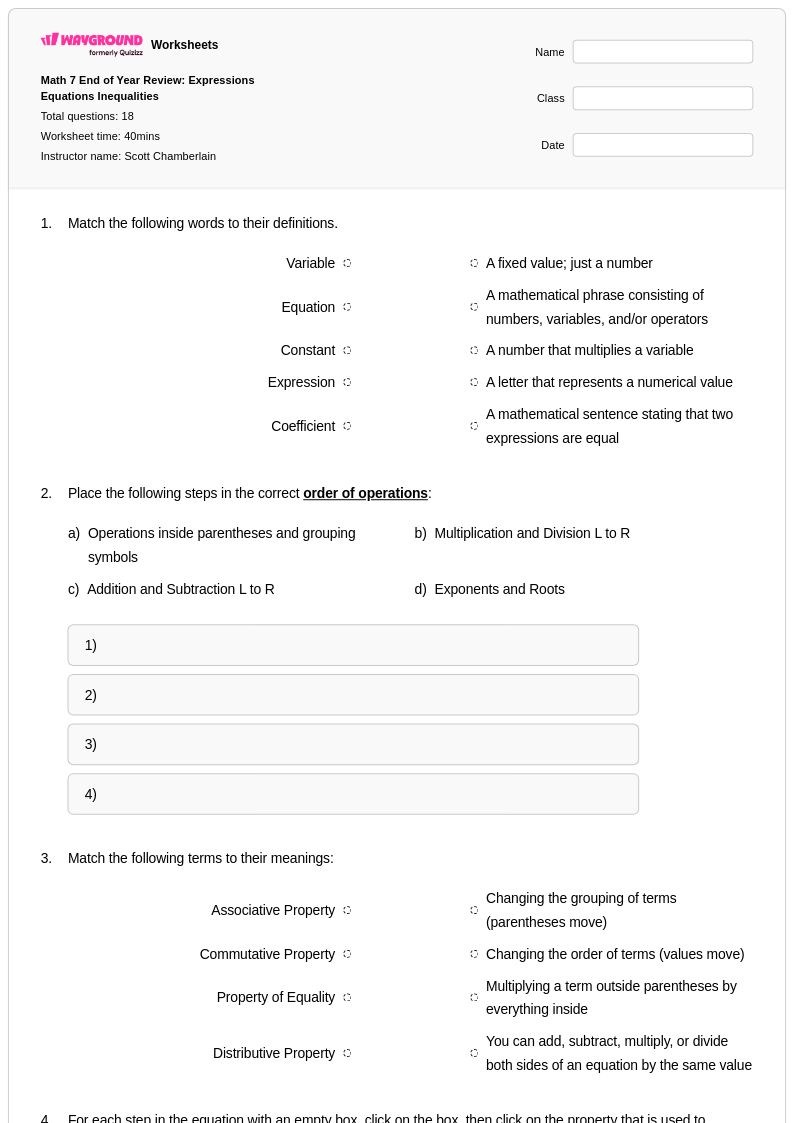
18 Q
7th
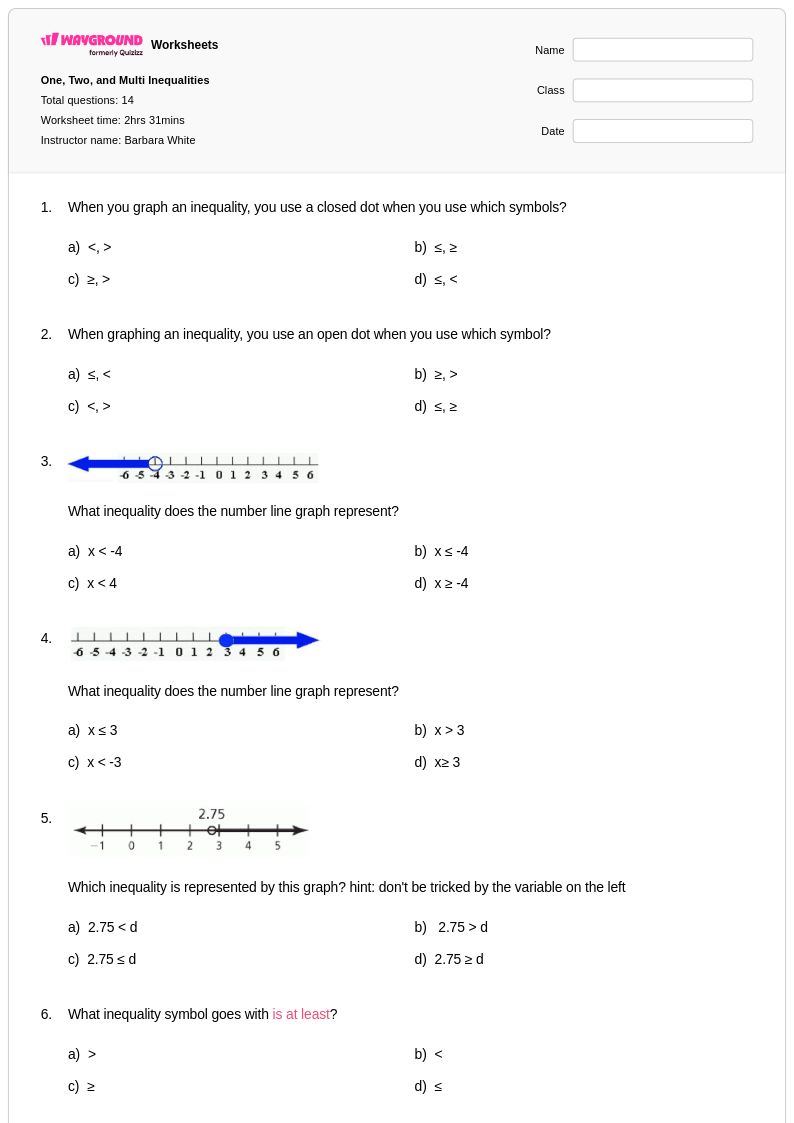
14 Q
7th - 8th
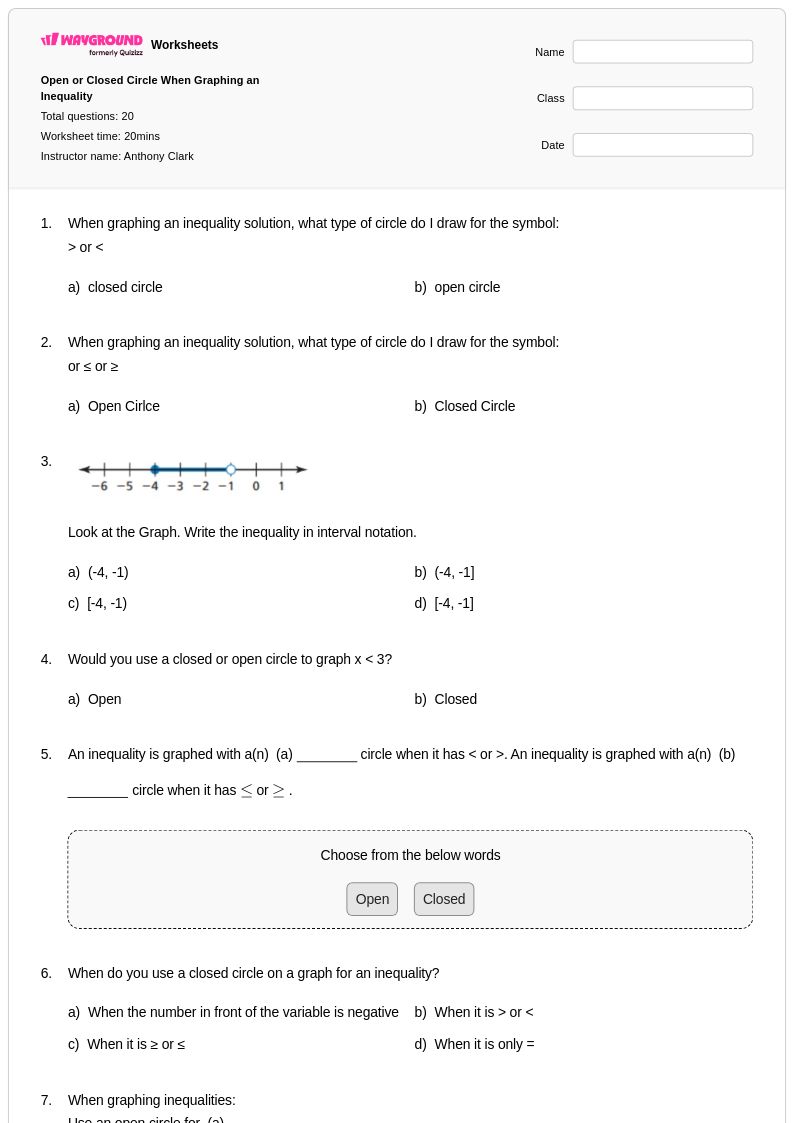
20 Q
7th - Uni
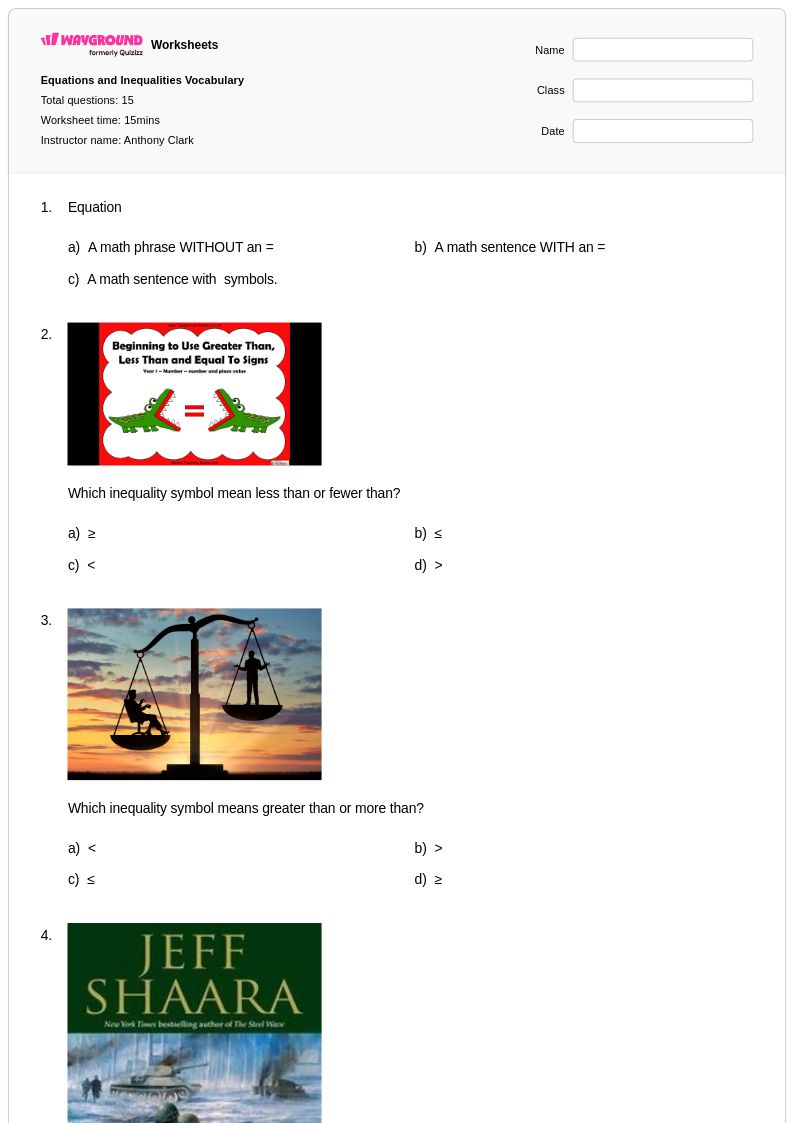
15 Q
7th - Uni
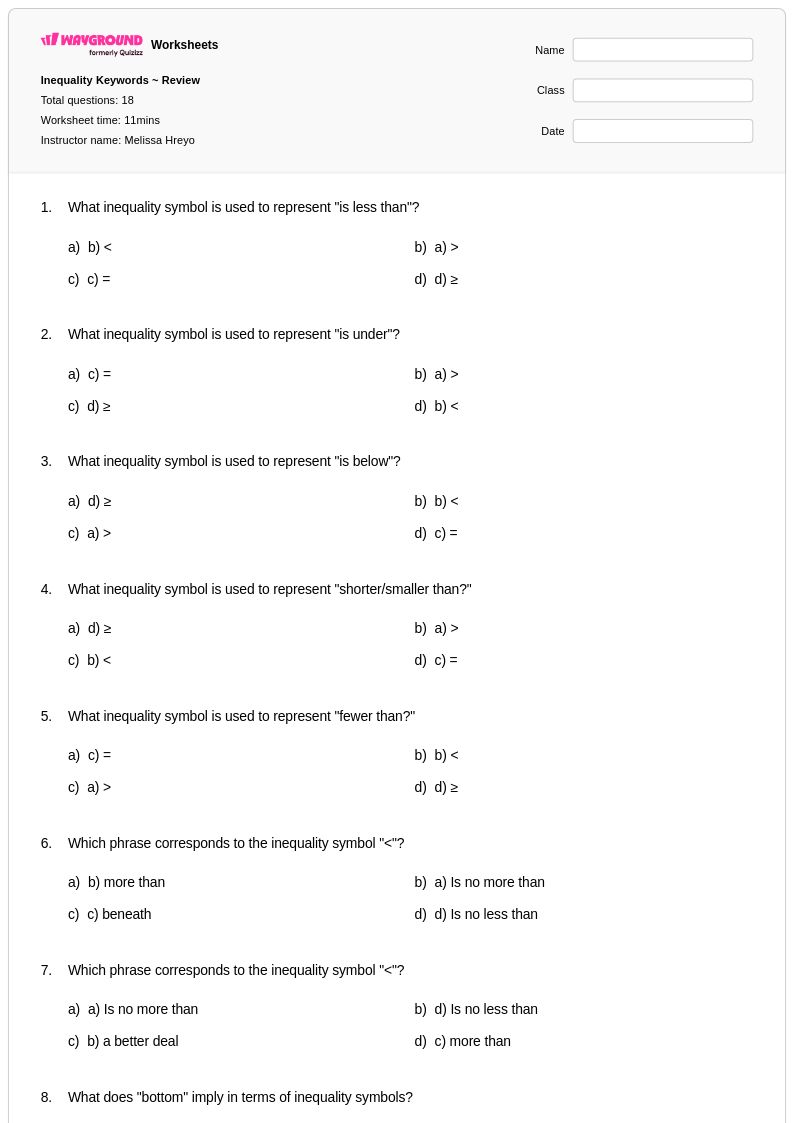
18 Q
7th
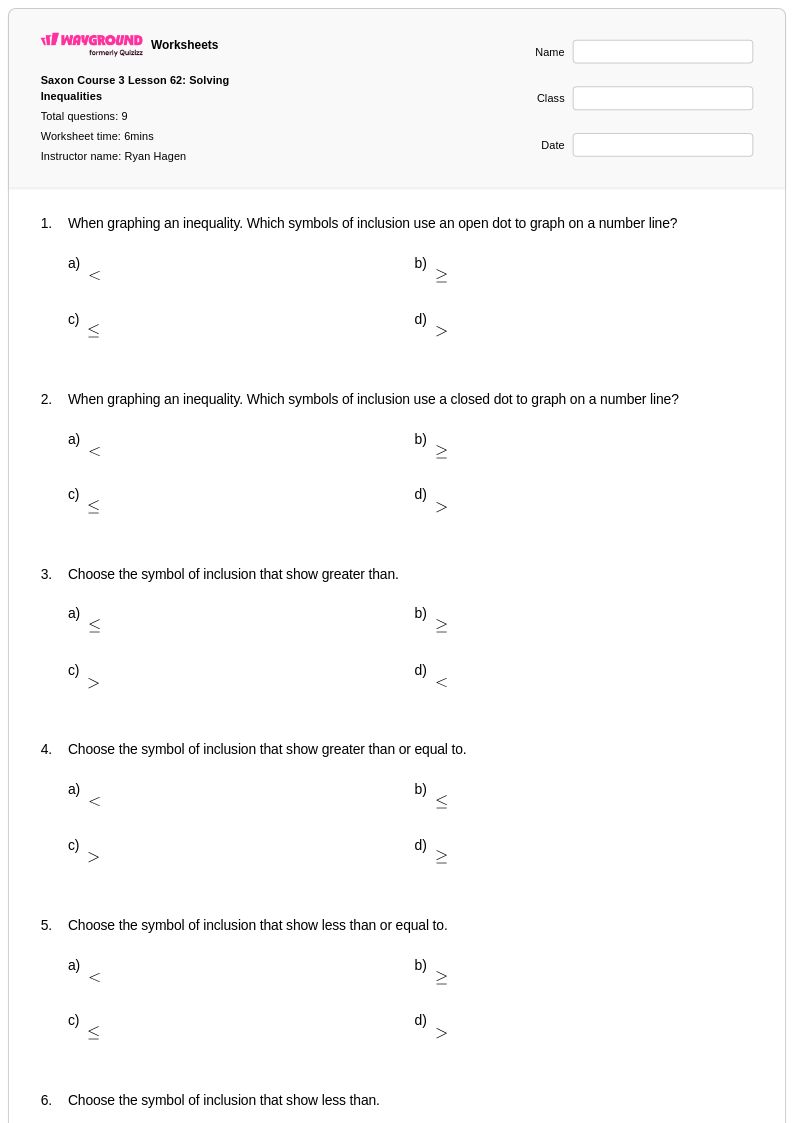
9 Q
6th - 8th
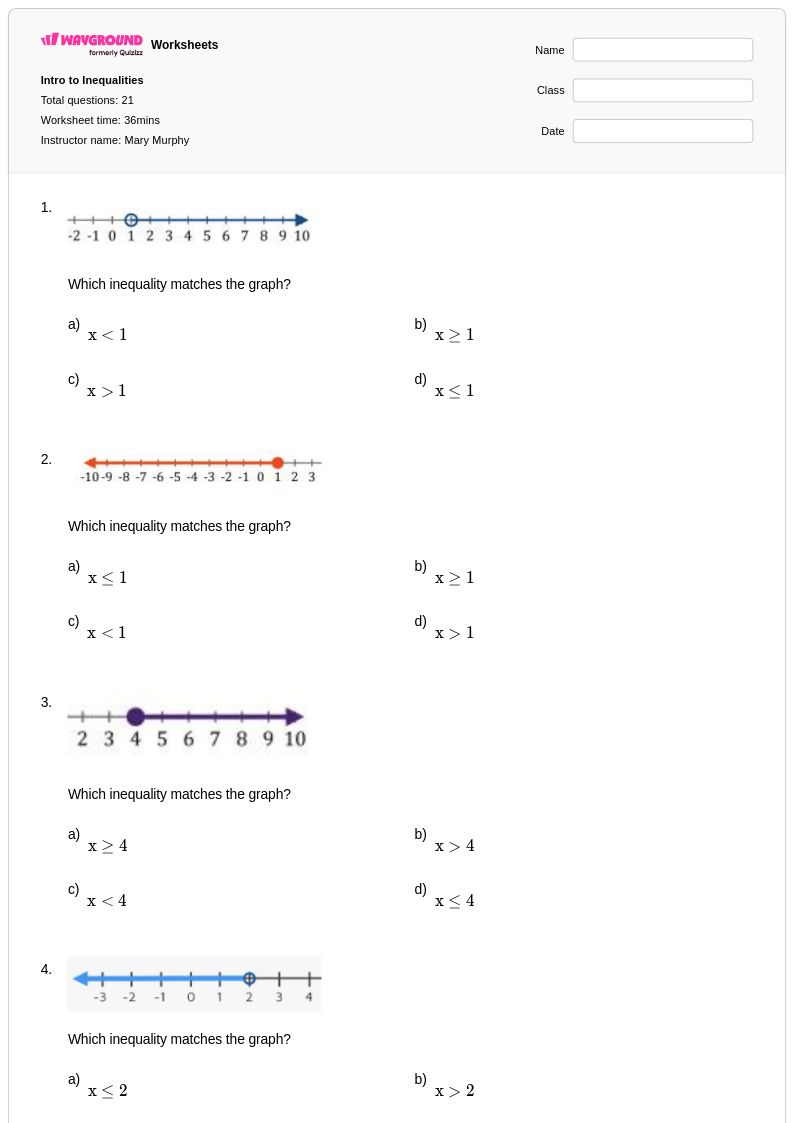
21 Q
7th
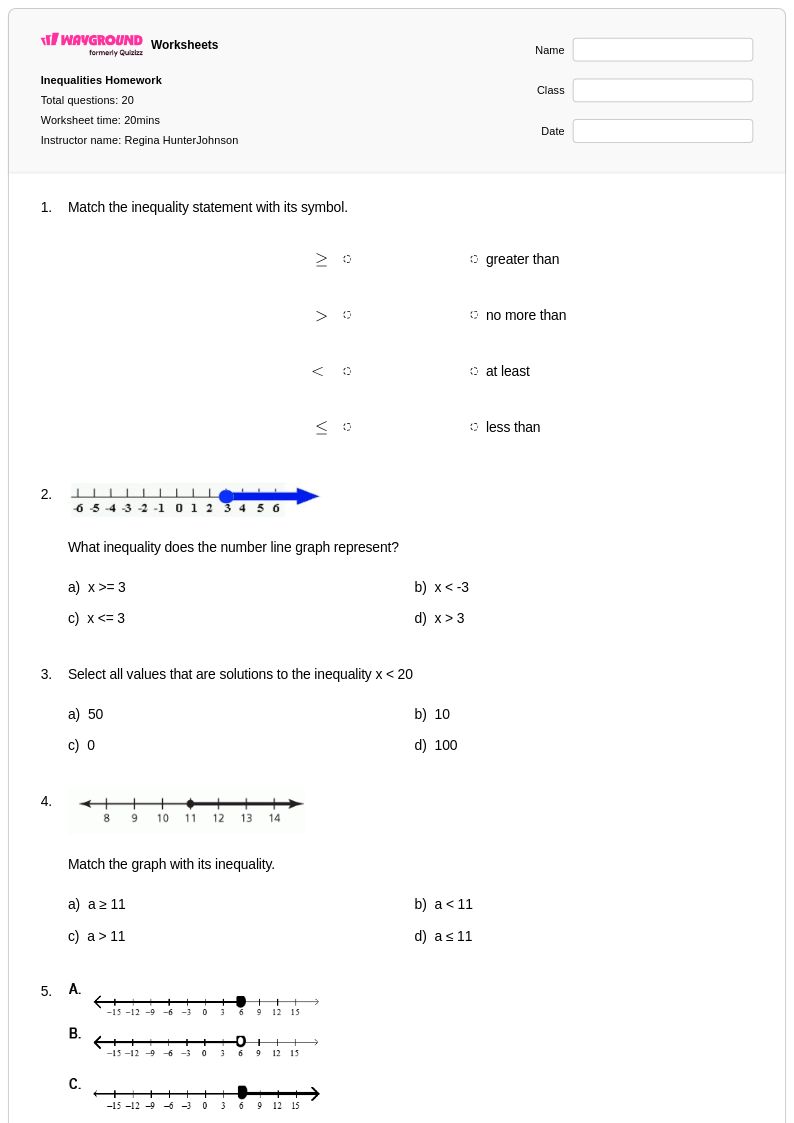
20 Q
6th - 8th
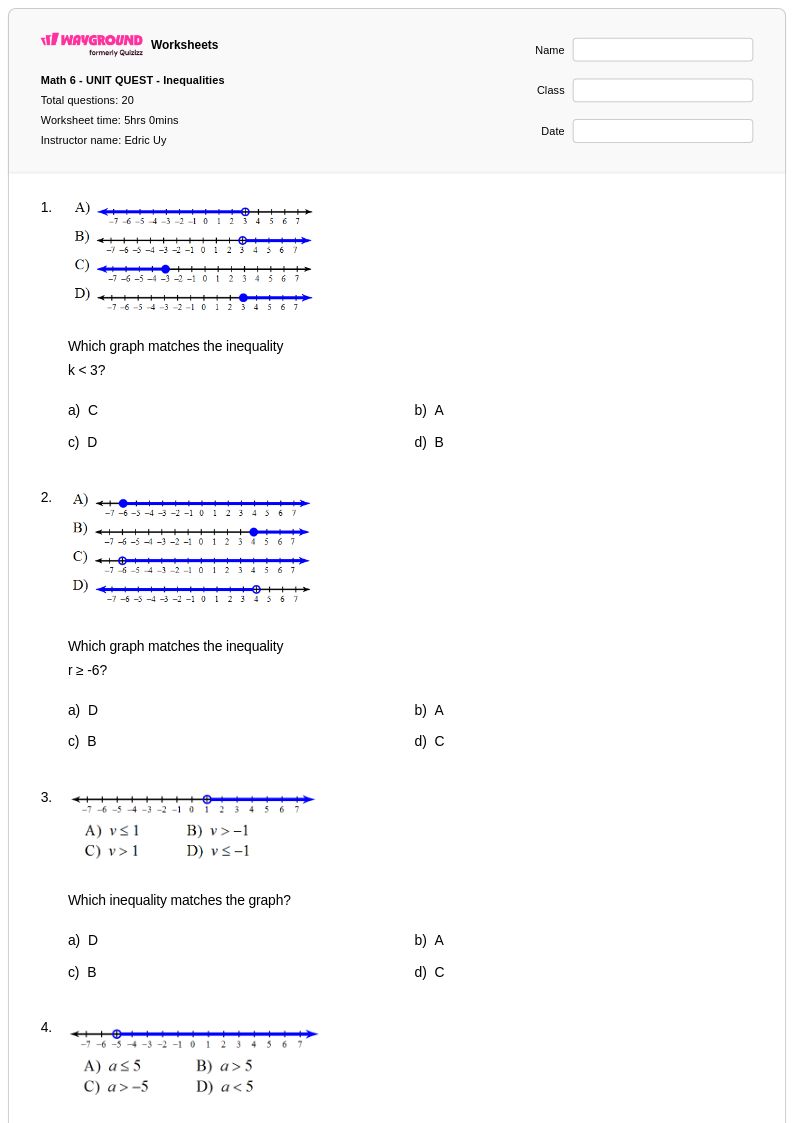
20 Q
6th - 8th
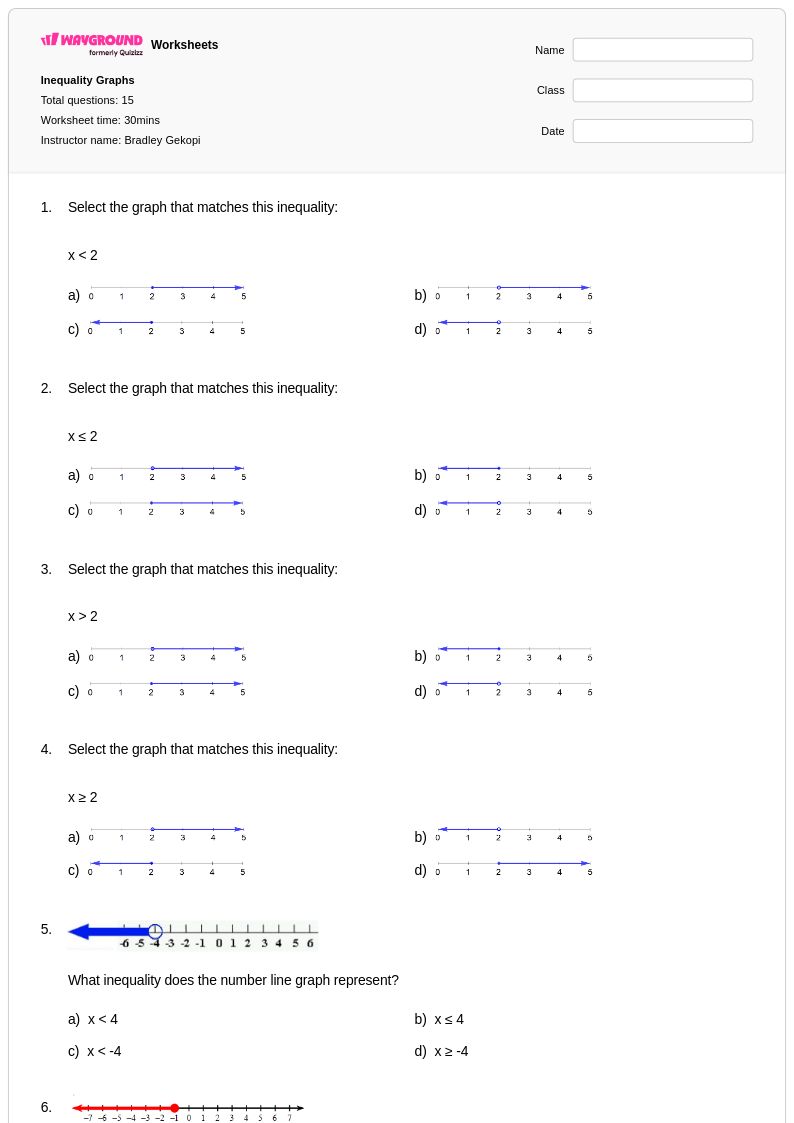
15 Q
7th
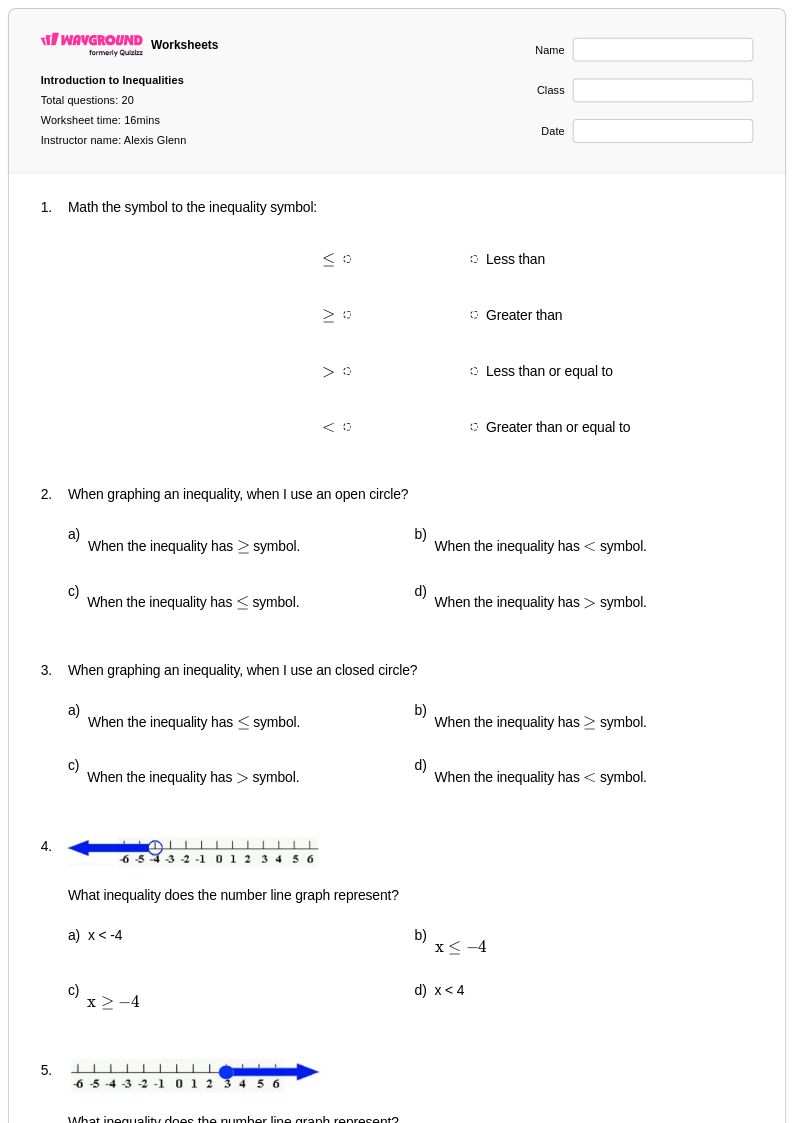
20 Q
6th - 8th
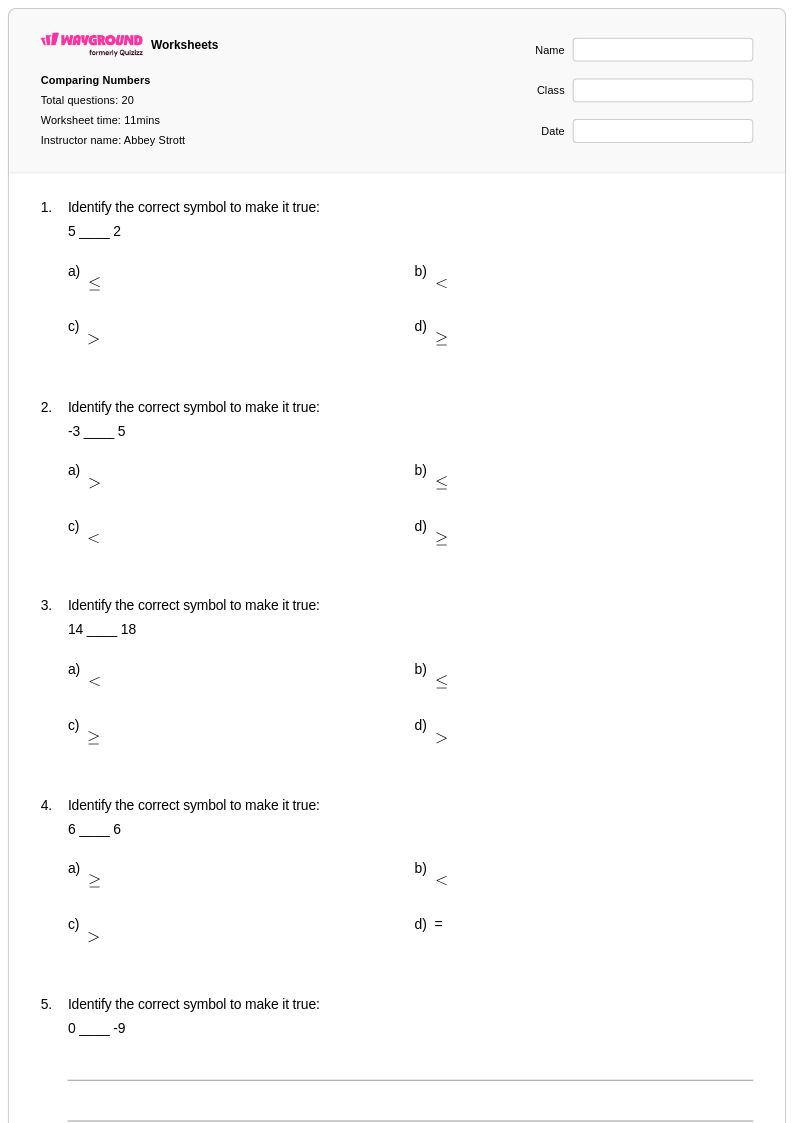
20 Q
7th - 8th
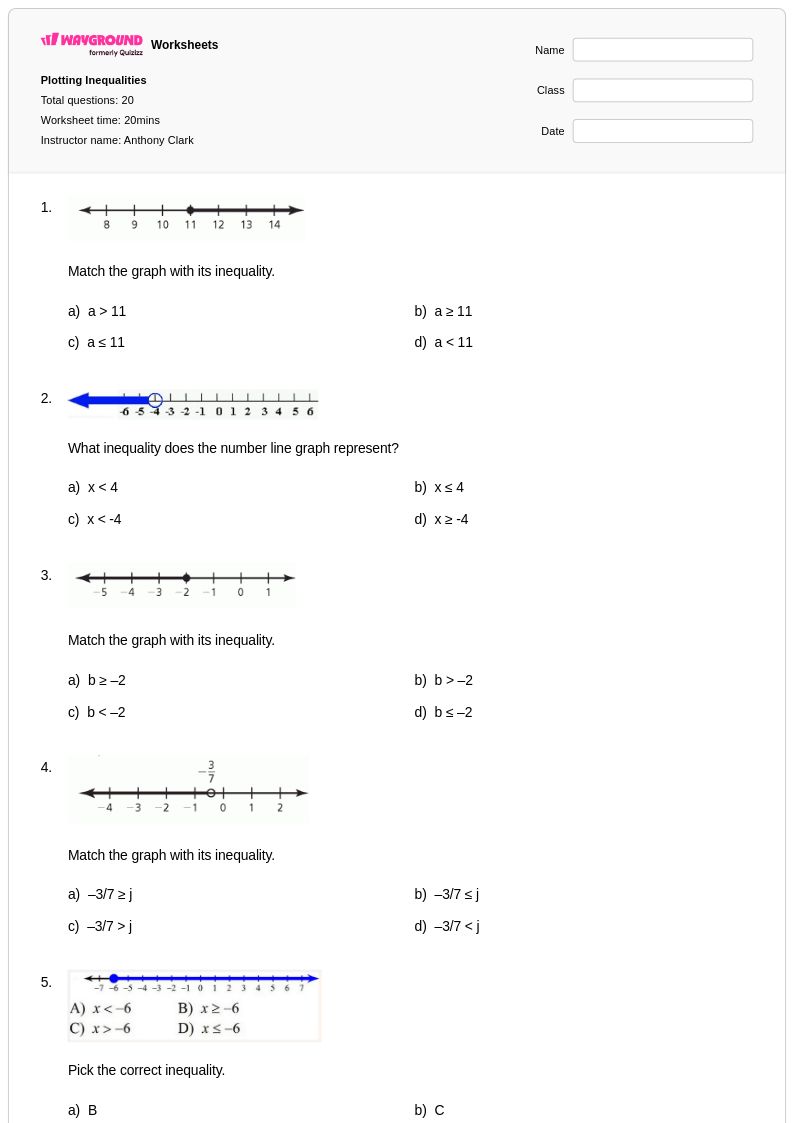
20 Q
6th - Uni
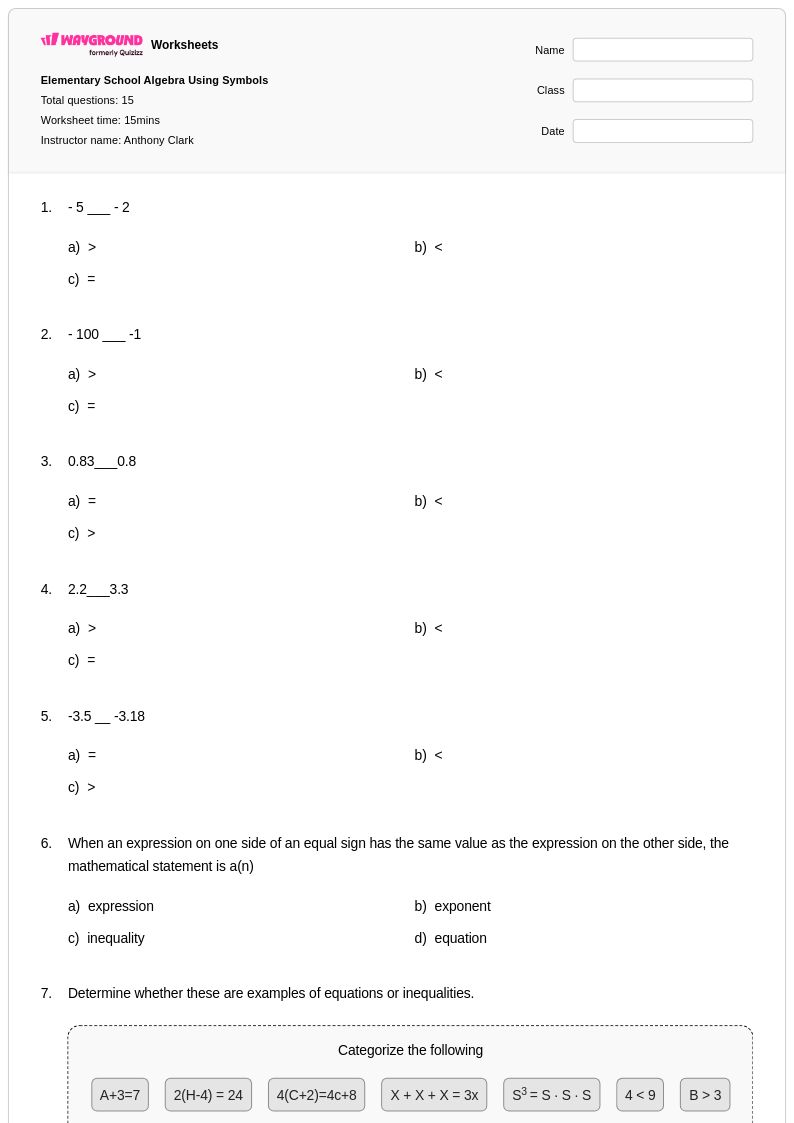
15 Q
7th - Uni
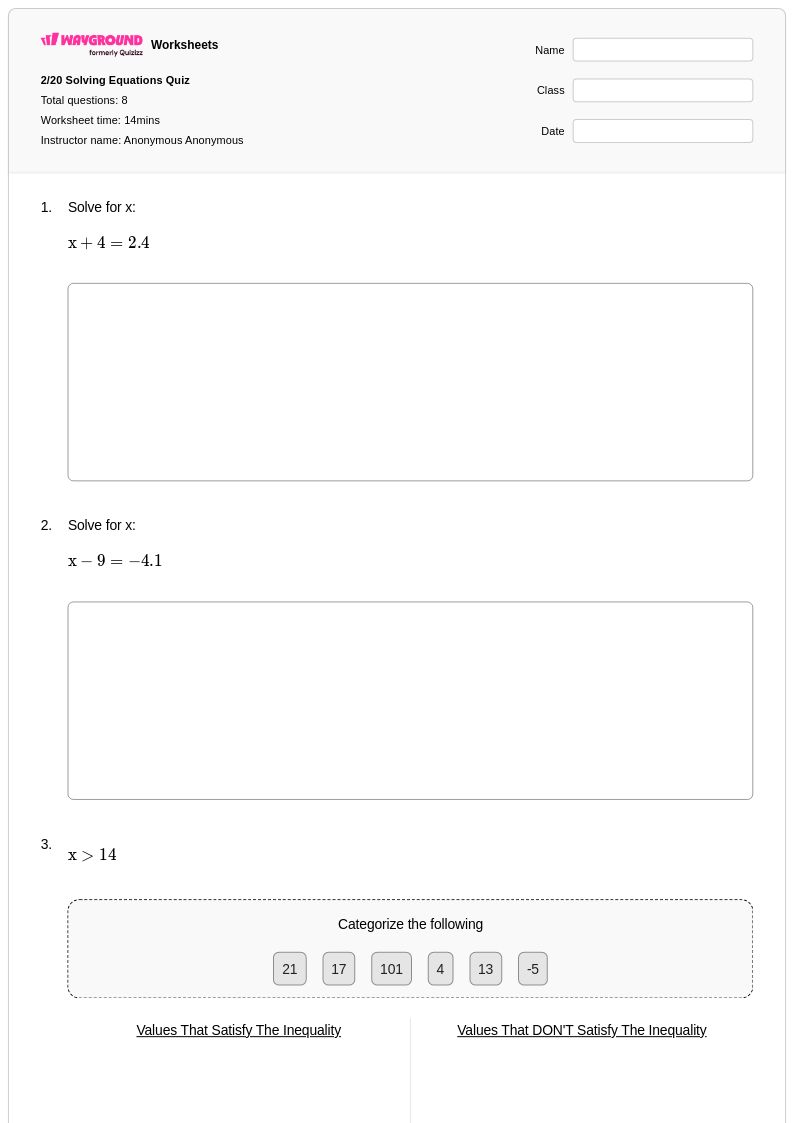
8 Q
7th
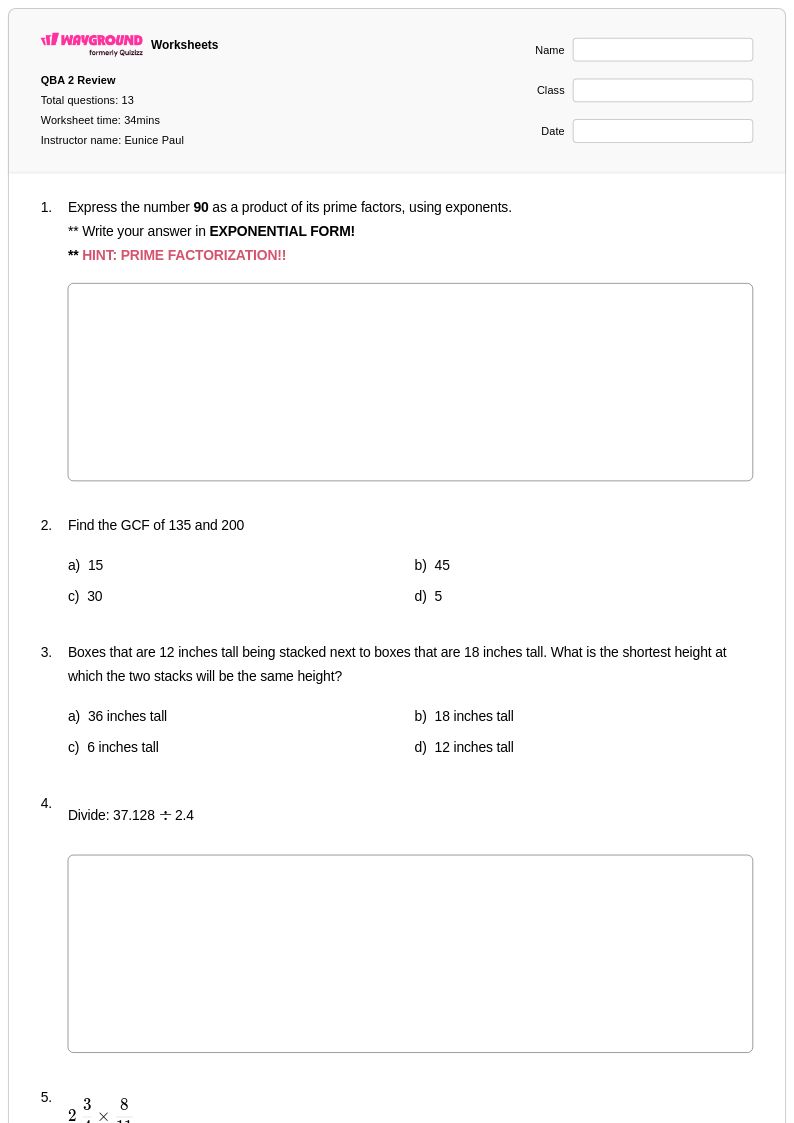
13 Q
6th - 8th
Explore Inequality Symbols Worksheets by Grades
Explore Other Subject Worksheets for grade 7
Explore printable Inequality Symbols worksheets for Grade 7
Inequality symbols form a critical foundation in Grade 7 algebra, and Wayground's comprehensive worksheet collection provides students with targeted practice to master these essential mathematical concepts. These carefully designed worksheets guide seventh-grade students through understanding and applying inequality symbols including greater than, less than, greater than or equal to, and less than or equal to in various algebraic contexts. Students work through practice problems that range from basic symbol recognition to complex inequality expressions, building confidence as they learn to interpret mathematical relationships and solve real-world problems. Each worksheet includes a complete answer key, making it easy for students to check their understanding and identify areas needing additional focus, while the free printable format ensures accessibility for both classroom and home learning environments.
Wayground supports mathematics educators with millions of teacher-created inequality symbols worksheets specifically aligned to Grade 7 algebra standards, offering unprecedented flexibility in lesson planning and student assessment. The platform's robust search and filtering capabilities allow teachers to quickly locate materials that match their specific curriculum requirements and student ability levels, while built-in differentiation tools enable seamless customization for diverse learning needs. These resources are available in both digital and printable PDF formats, making them ideal for traditional classroom instruction, homework assignments, remediation sessions, and enrichment activities. Teachers can efficiently create targeted practice opportunities that strengthen students' algebraic reasoning skills, support struggling learners through step-by-step skill development, and challenge advanced students with more complex inequality applications, all while maintaining alignment with established mathematical standards and learning objectives.
FAQs
What is the focus of inequalities in 7th grade?
What is the most common mistake when solving inequalities?
What exercises help 7th graders practice solving inequalities?
How can I use this 7th-grade inequality worksheet?
How does solving inequalities in 7th grade build on prior knowledge?
How can I help students who confuse open and closed circles when graphing inequalities?