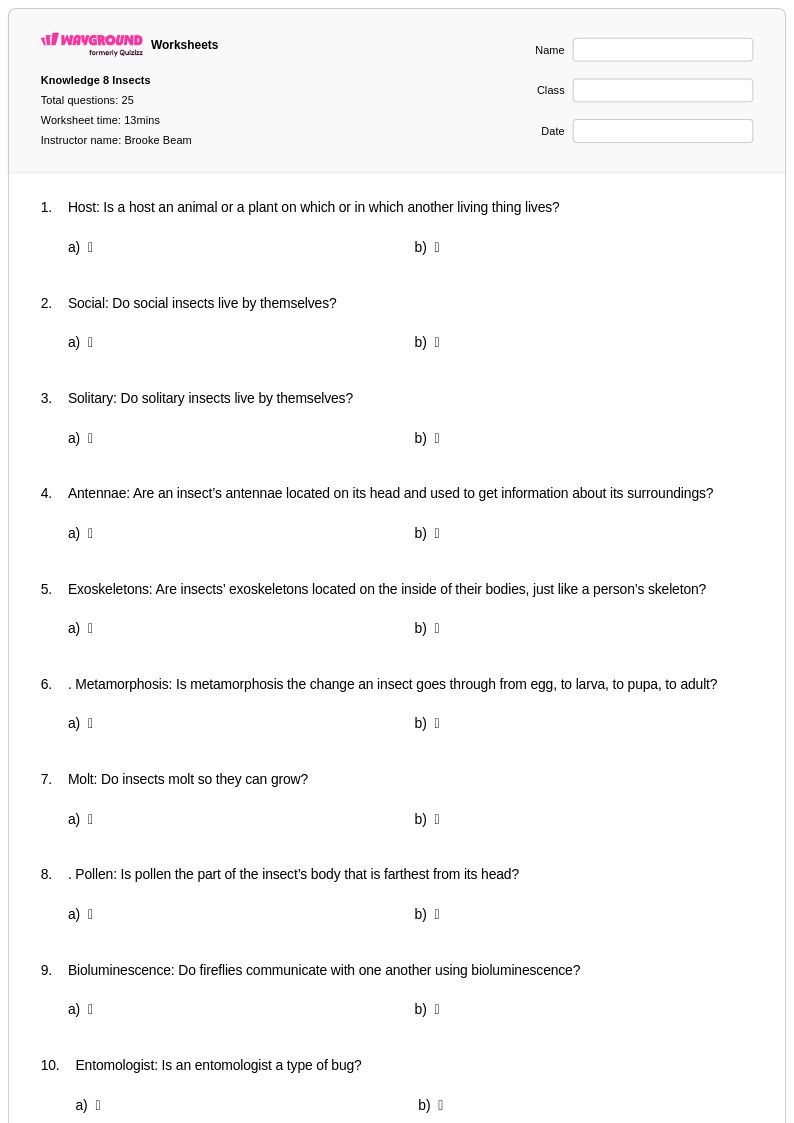
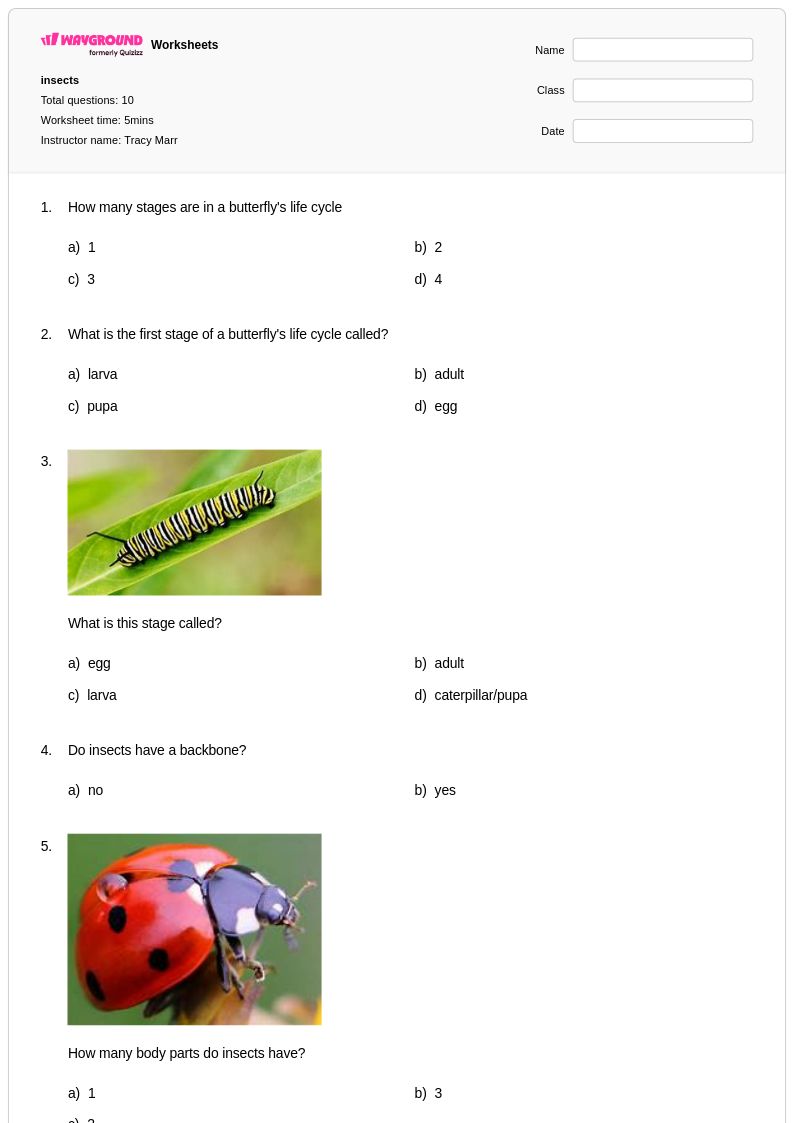
Explore Grade 2 insects worksheets and free printables from Wayground that help young students discover fascinating facts about bugs, butterflies, and beetles through engaging practice problems and activities with answer keys.
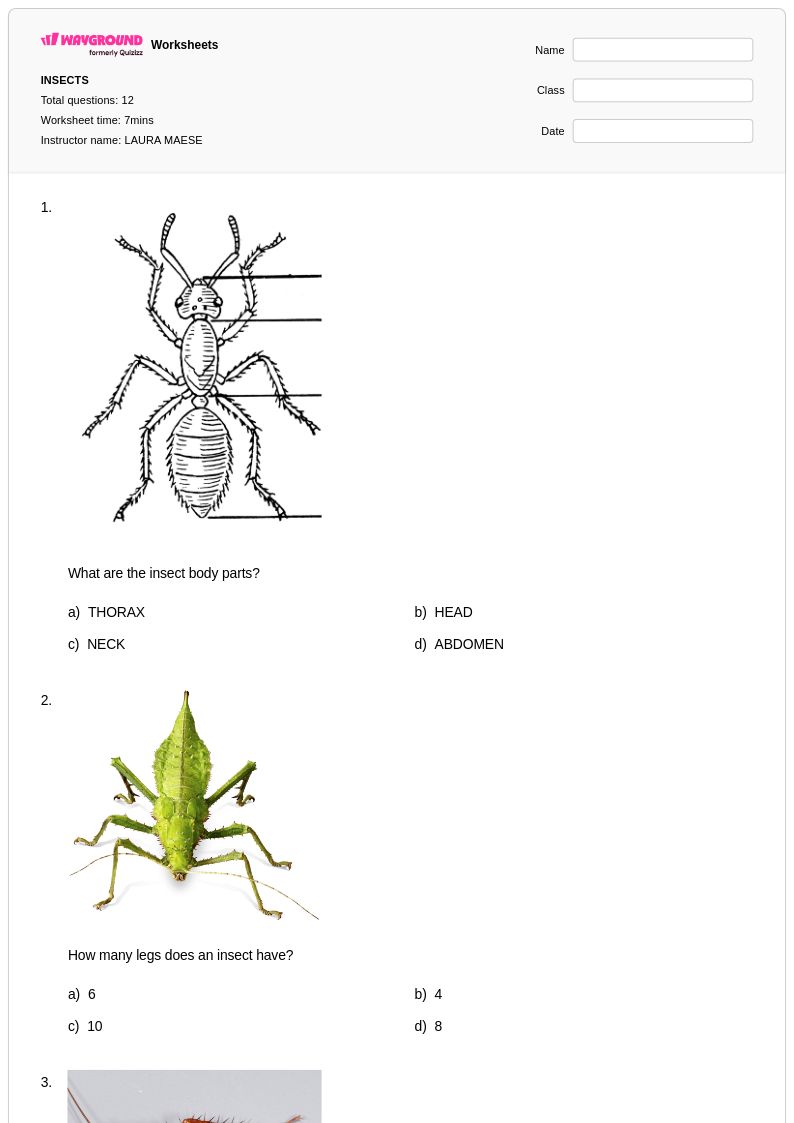
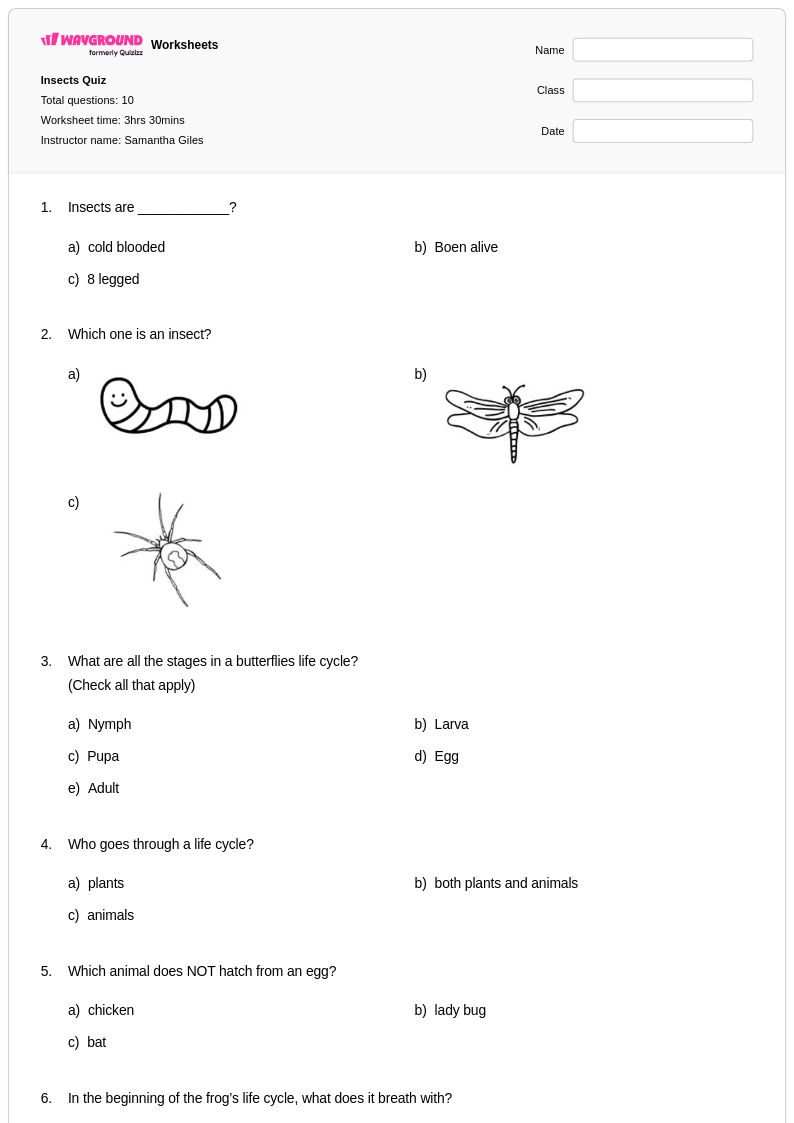
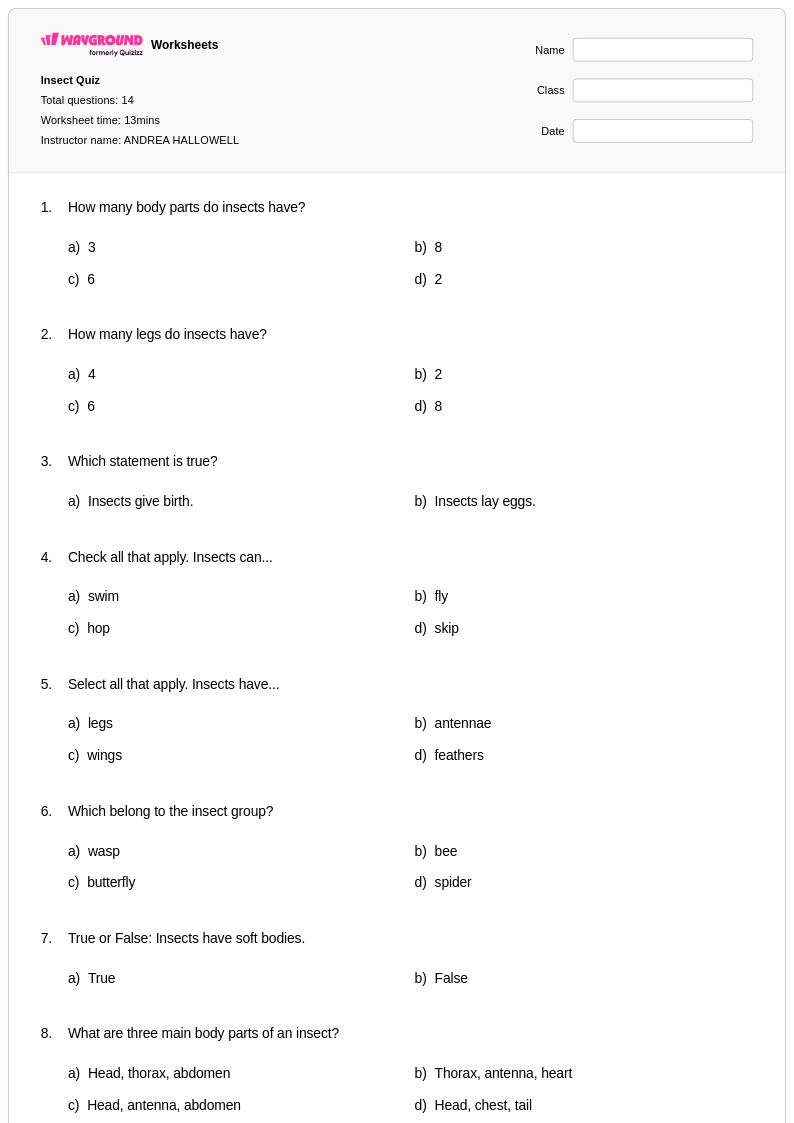
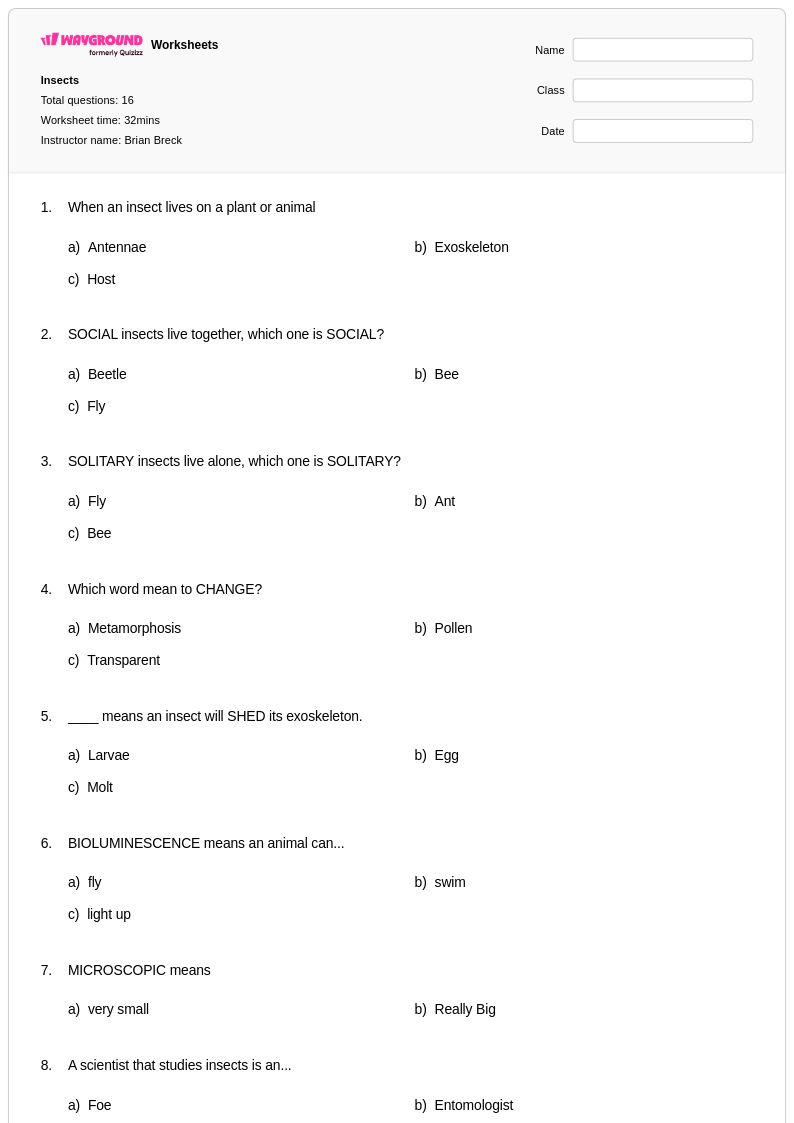
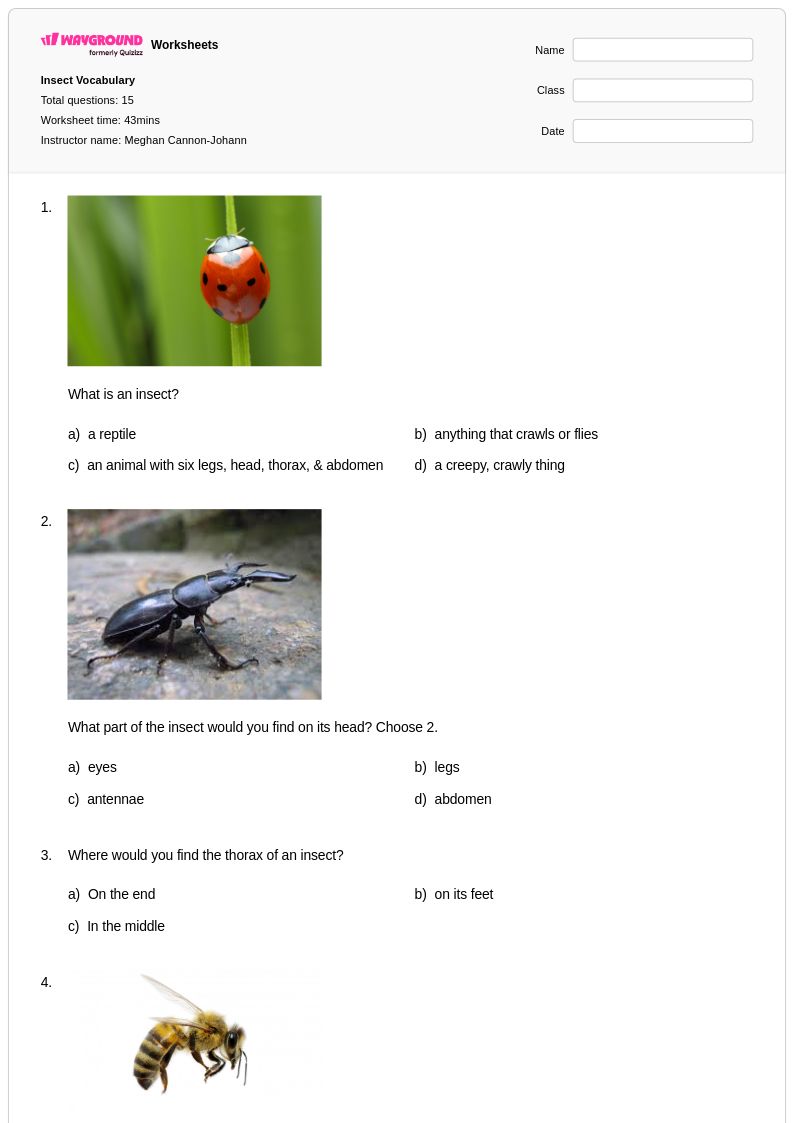
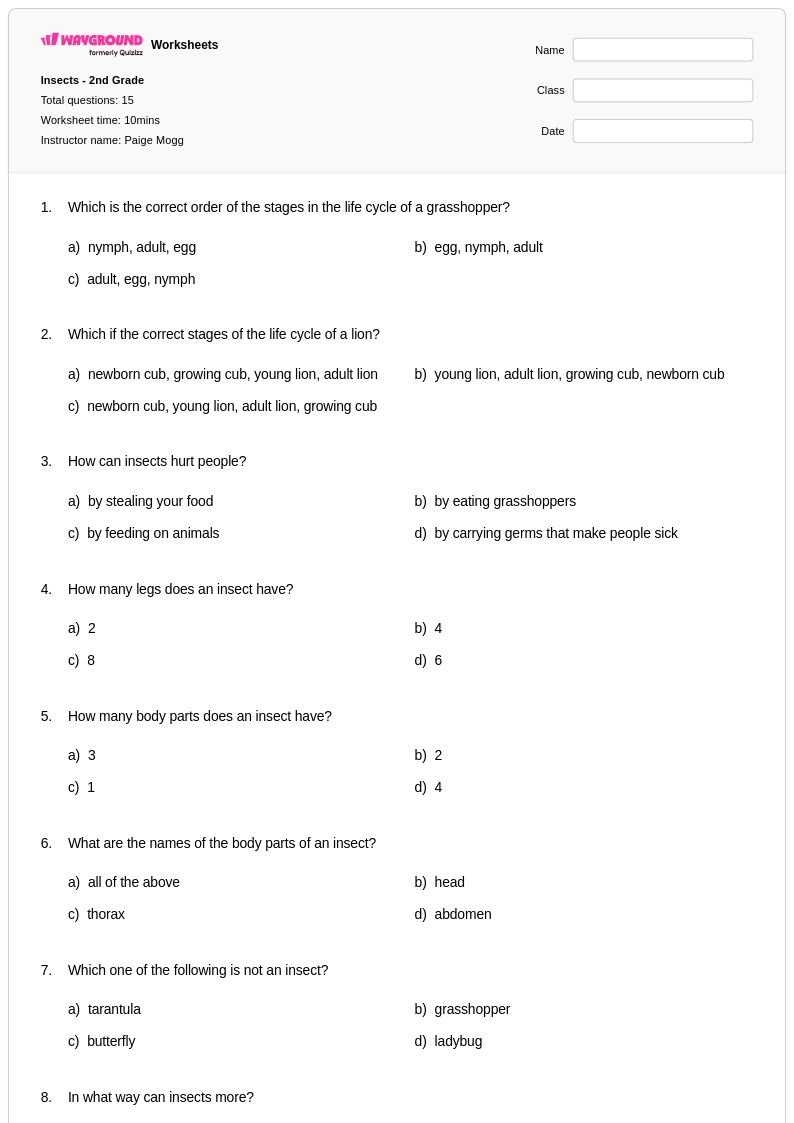
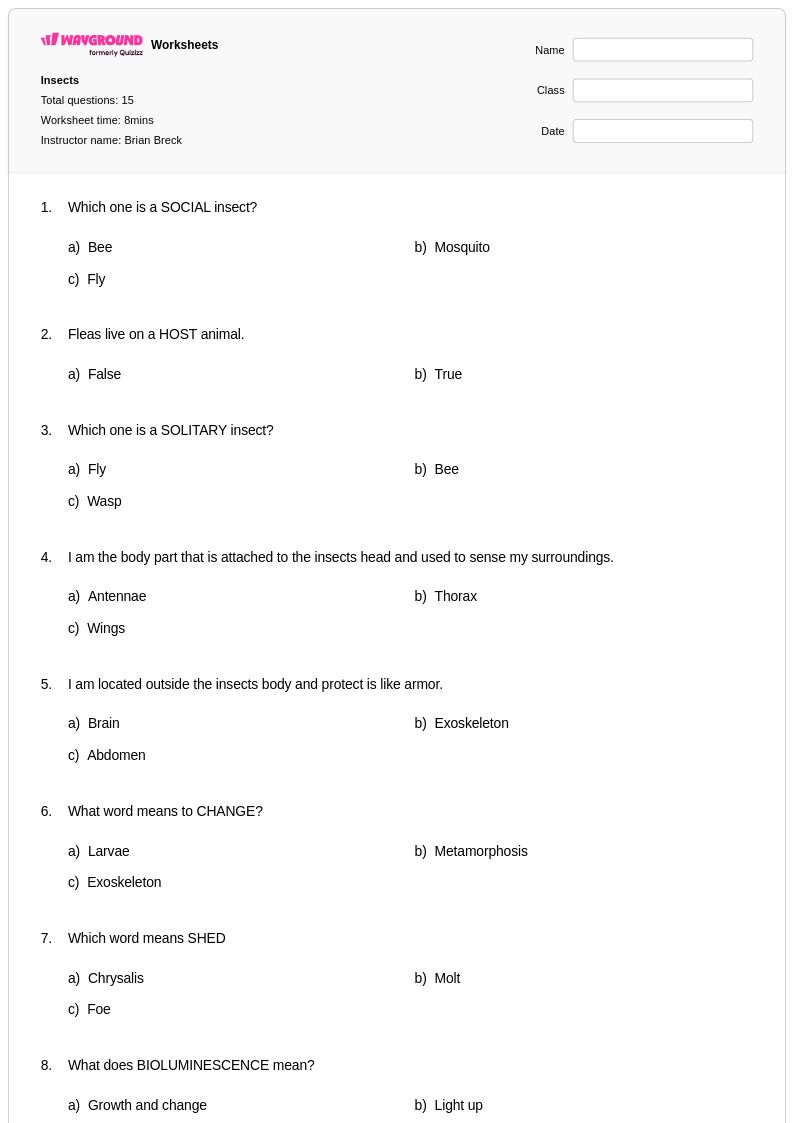
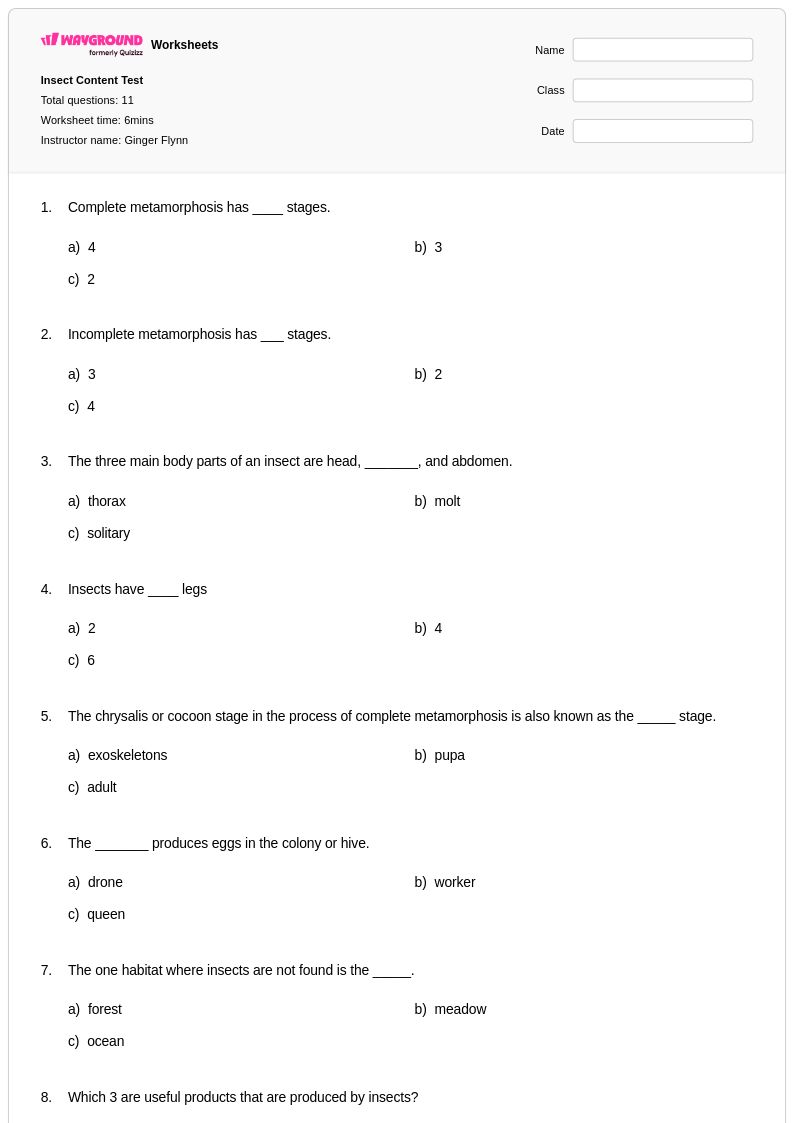
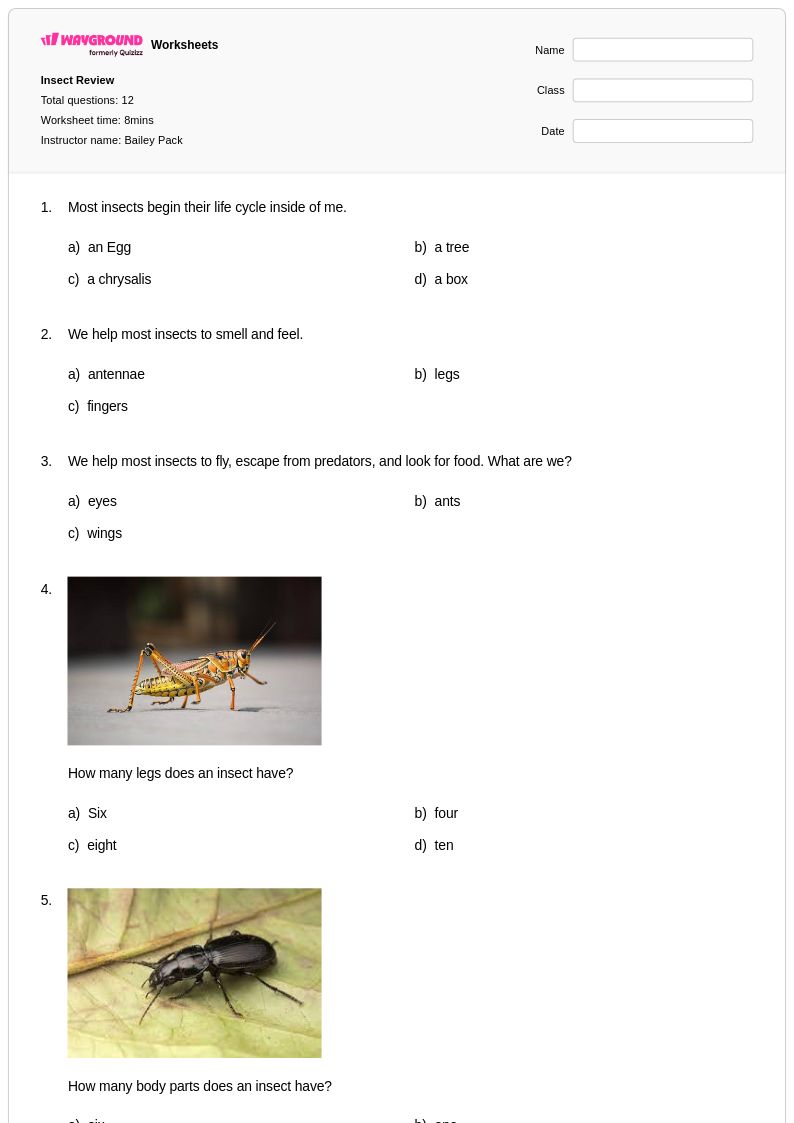
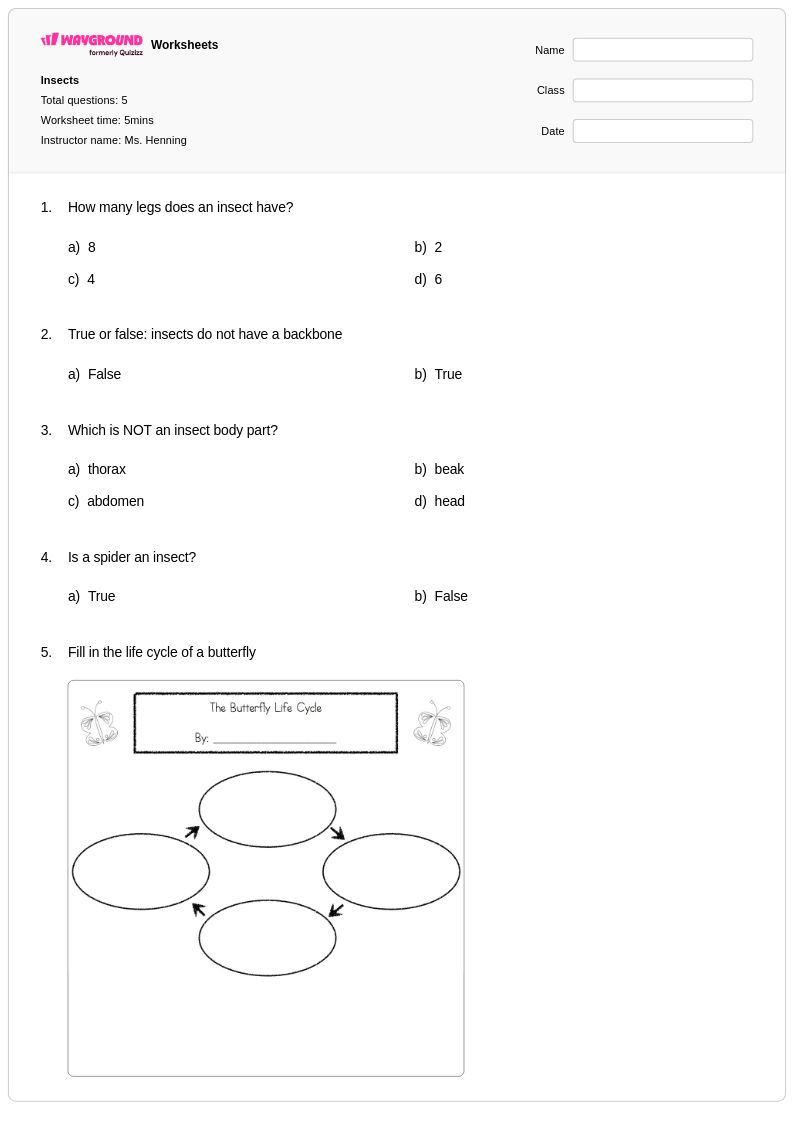
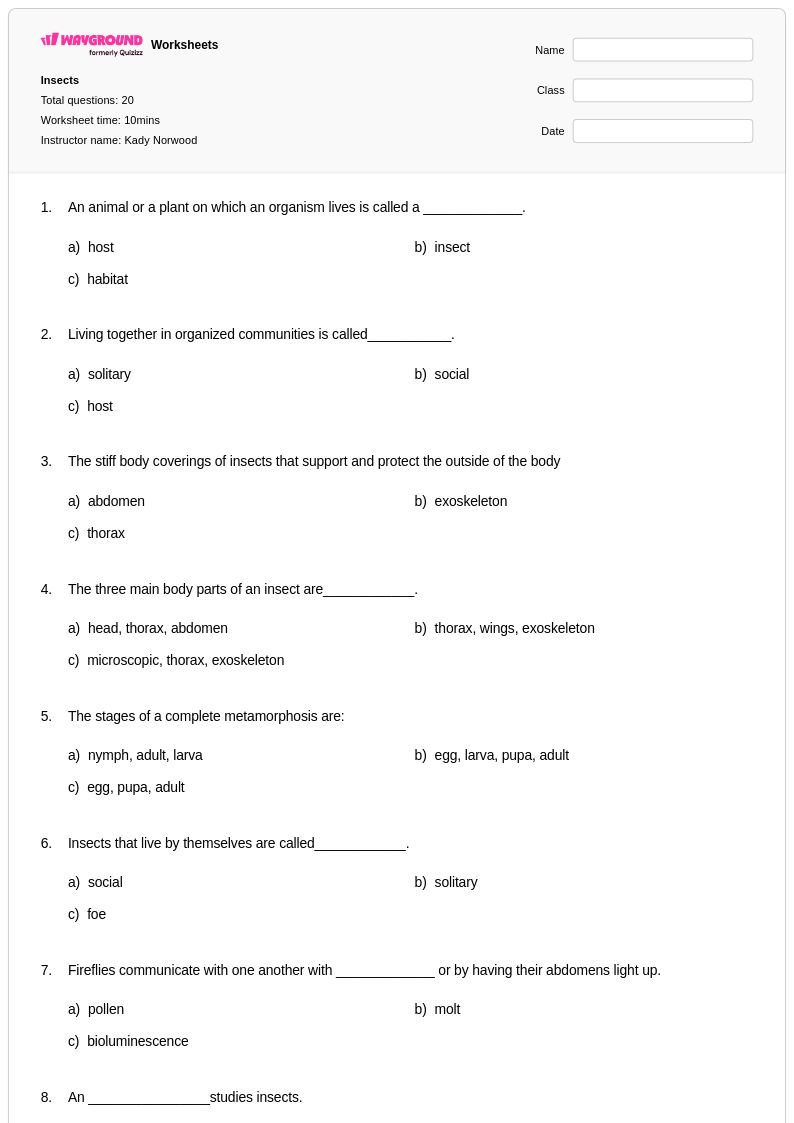
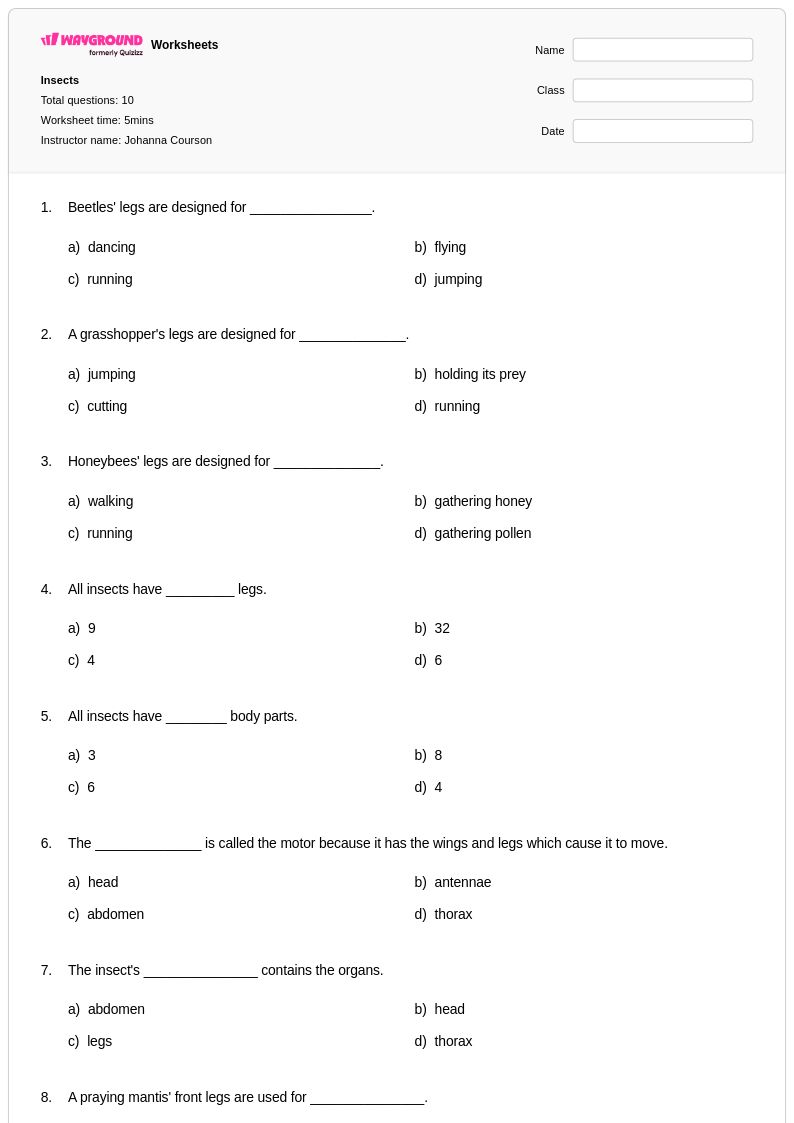
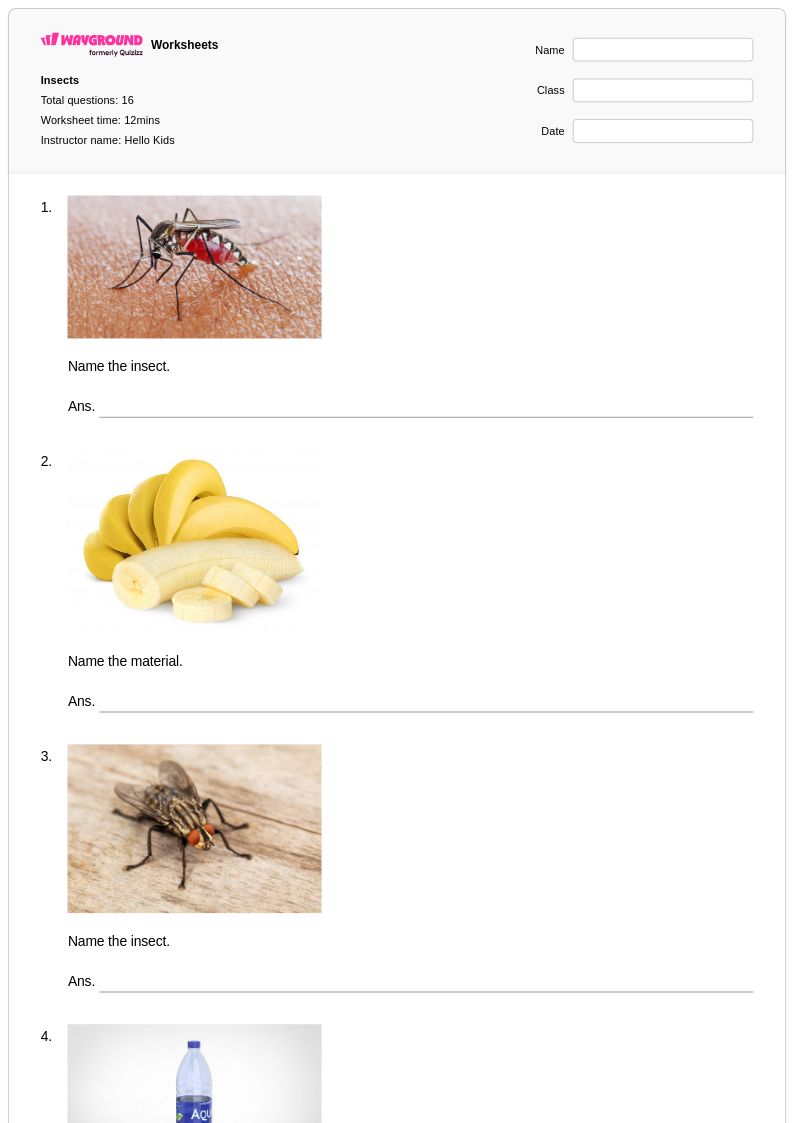
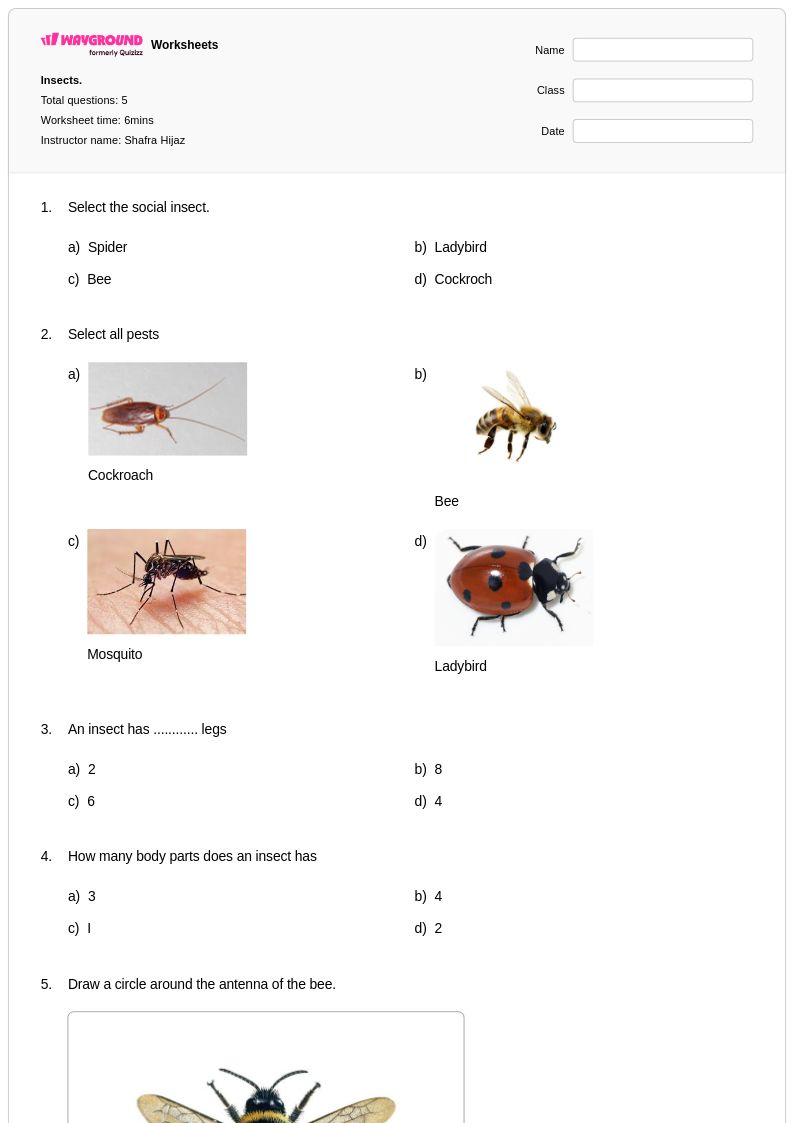
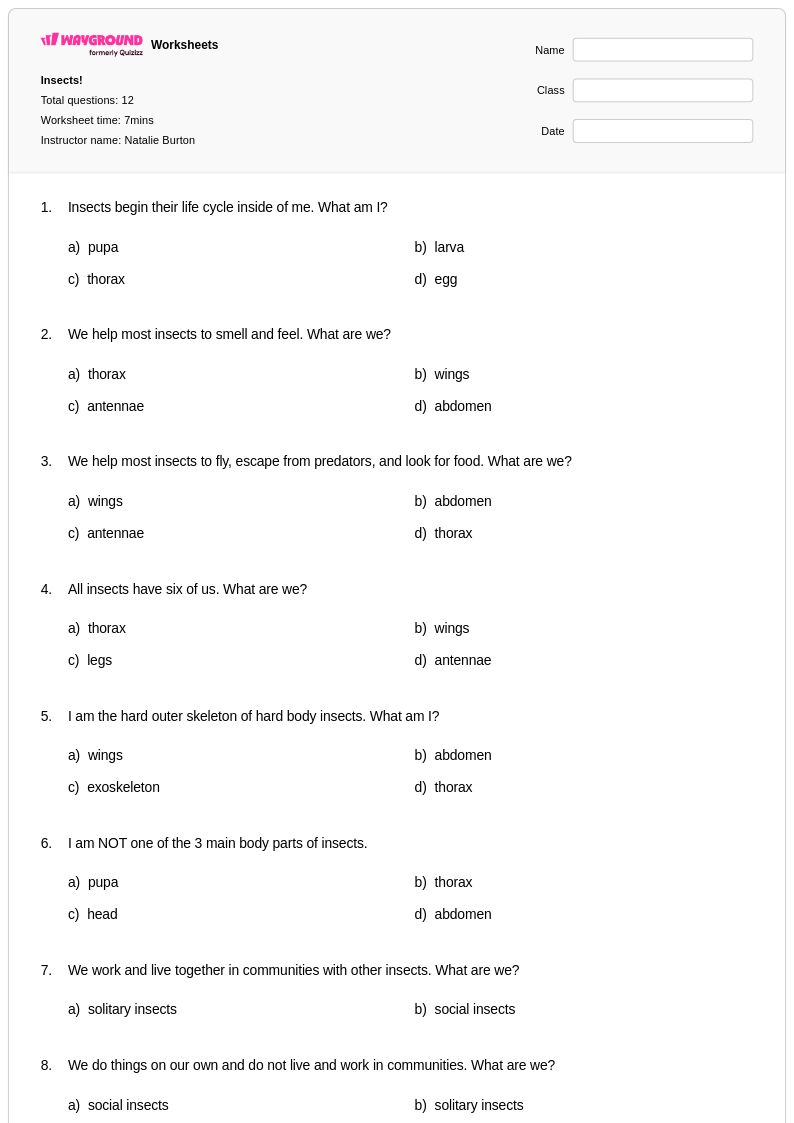
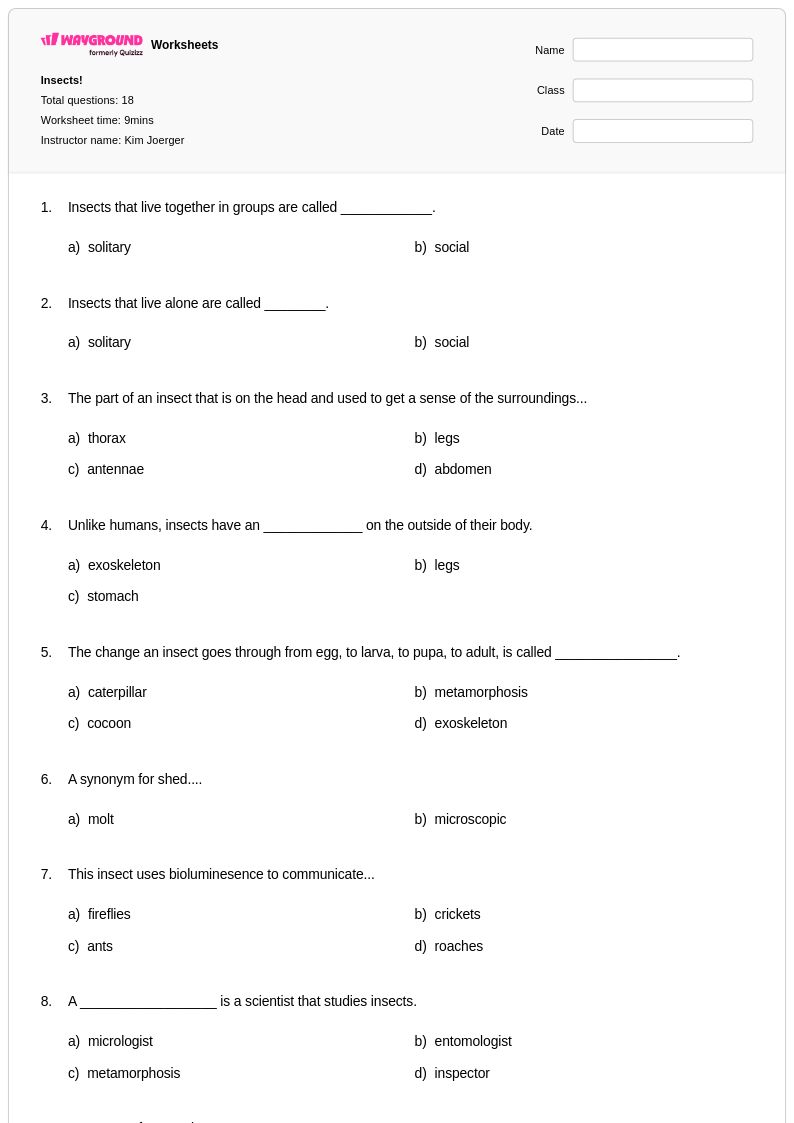
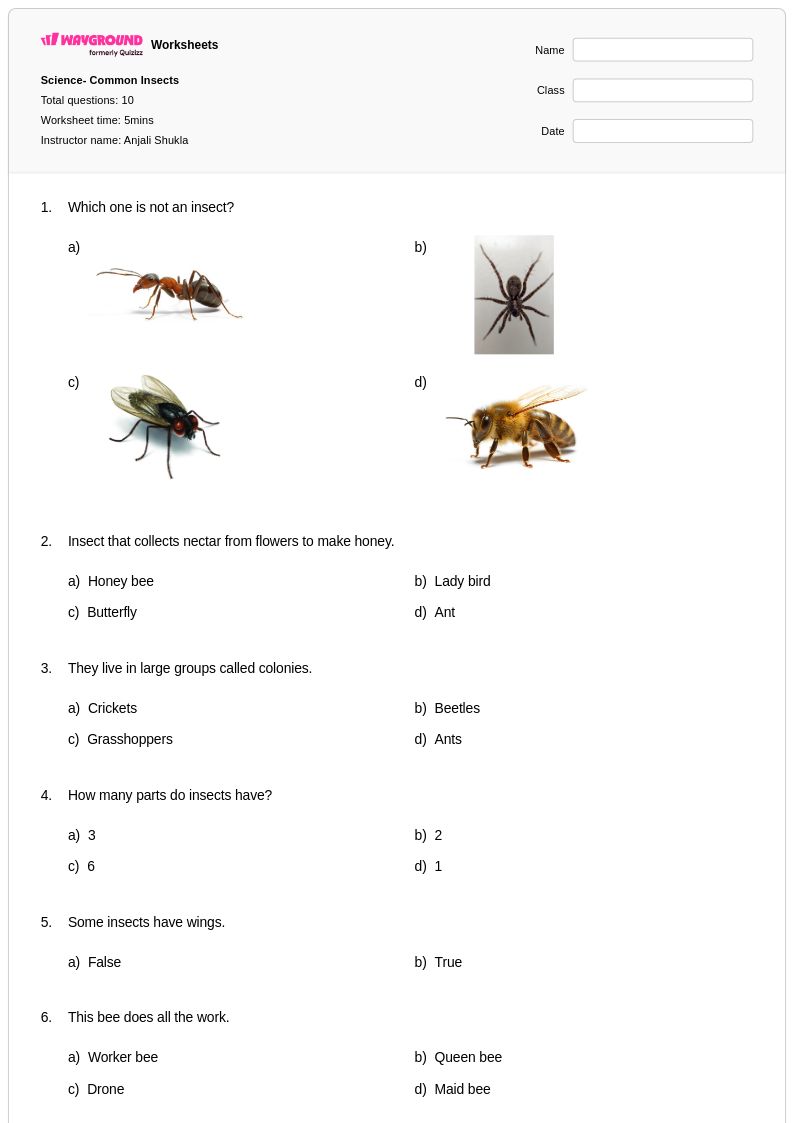
Grade 2 insects worksheets available through Wayground provide young learners with engaging opportunities to explore the fascinating world of six-legged creatures that surround them daily. These carefully designed educational resources strengthen foundational life science skills by helping students identify common insects, understand basic insect body parts, and recognize the important roles insects play in ecosystems. The comprehensive collection includes hands-on activities where students practice sorting insects from other animals, labeling diagrams of insect anatomy, and observing insect life cycles through interactive exercises. Each worksheet comes with a complete answer key to support accurate assessment, and the free printables offer flexible practice problems that reinforce key concepts about insect characteristics, habitats, and behaviors in age-appropriate formats that maintain student interest and comprehension.
Wayground supports elementary science educators with an extensive library of millions of teacher-created insect worksheets and related life science resources that streamline lesson planning and enhance classroom instruction. The platform's robust search and filtering capabilities allow teachers to quickly locate materials that align with specific learning standards and match their students' developmental needs. Advanced differentiation tools enable educators to customize worksheet difficulty levels, making it simple to provide targeted remediation for struggling learners while offering enrichment opportunities for advanced students. Available in both printable PDF format and digital versions, these versatile resources accommodate diverse classroom environments and teaching preferences, empowering teachers to deliver effective skill practice sessions that build students' scientific observation abilities and deepen their understanding of the natural world around them.
FAQs
How do I teach insects to elementary students?
Start by grounding students in the three defining features of insects: six legs, three body segments (head, thorax, abdomen), and an exoskeleton. Use visual labeling activities to build vocabulary before introducing more complex concepts like metamorphosis or insect classification. Connecting insects to students' everyday experiences, such as butterflies in the garden or beetles under rocks, increases engagement and helps anchor abstract scientific concepts to observable reality.
What activities help students practice identifying insect body parts?
Diagram labeling worksheets are among the most effective tools for reinforcing insect anatomy, requiring students to identify and name the head, thorax, abdomen, antennae, compound eyes, and legs on a drawn or photographic specimen. Pairing labeling tasks with comparison activities, where students distinguish insects from non-insect arthropods like spiders or centipedes, deepens understanding of what defines an insect. Practice problems that ask students to justify their classifications build the scientific reasoning skills expected in life science curricula.
What misconceptions do students commonly have about insects?
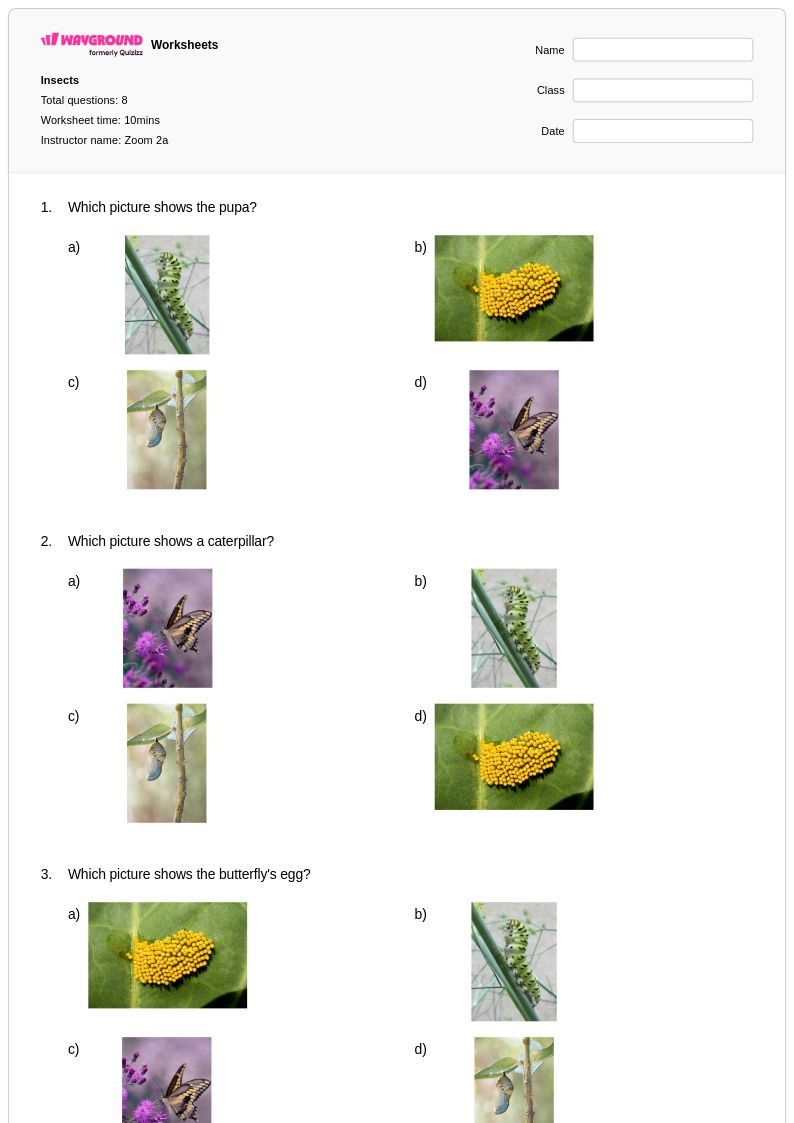
One of the most persistent misconceptions is that all bugs are insects. Students frequently classify spiders, worms, and centipedes as insects, so explicit instruction on the defining characteristics of the class Insecta is essential. Another common error is confusing complete metamorphosis (egg, larva, pupa, adult) with incomplete metamorphosis (egg, nymph, adult), particularly when students assume all insects follow the butterfly life cycle. Worksheets that require students to sort organisms and match life cycle stages by type help surface and correct both errors.
How do I teach the insect life cycle in a way that students actually remember?
Teach complete and incomplete metamorphosis as two distinct pathways rather than variations of the same process. Use sequencing activities where students arrange life cycle stages in order for specific insects such as a mosquito or grasshopper, which forces them to apply the concept rather than simply memorize it. Comparing the life cycles of two insects side by side on a worksheet, one that undergoes complete metamorphosis and one that undergoes incomplete metamorphosis, makes the structural difference concrete and memorable.
How can I use insect worksheets to support different skill levels in the same class?
Insect worksheets can be tiered so that foundational tasks focus on labeling and matching, while more advanced versions require students to analyze ecological relationships or explain the adaptive advantages of metamorphosis. On Wayground, teachers can assign digital versions of worksheets with individualized accommodations, including reduced answer choices to lower cognitive load for struggling learners or read-aloud support for students who need text-to-speech assistance. These settings are saved per student and apply automatically in future sessions without singling out individual students in front of the class.
How do I use Wayground's insect worksheets in my classroom?
Wayground's insect worksheets are available as printable PDFs, making them easy to distribute in a traditional classroom setting, and as digital versions that can be assigned online for remote or hybrid learning. Teachers can also host worksheets as a quiz on Wayground, enabling instant scoring and progress tracking without manual grading. Each worksheet includes a complete answer key, so materials work equally well for guided instruction, independent practice, or self-paced review.