Free Printable Kidney Dissection Worksheets for Grade 9
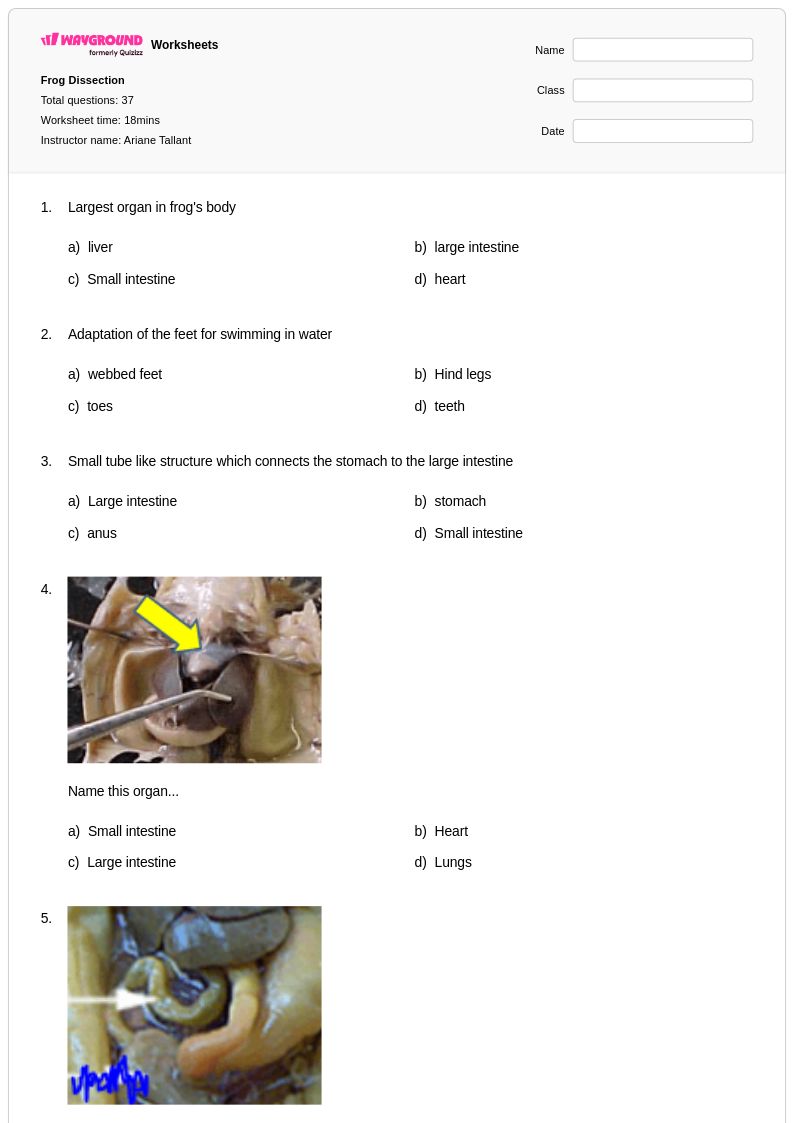
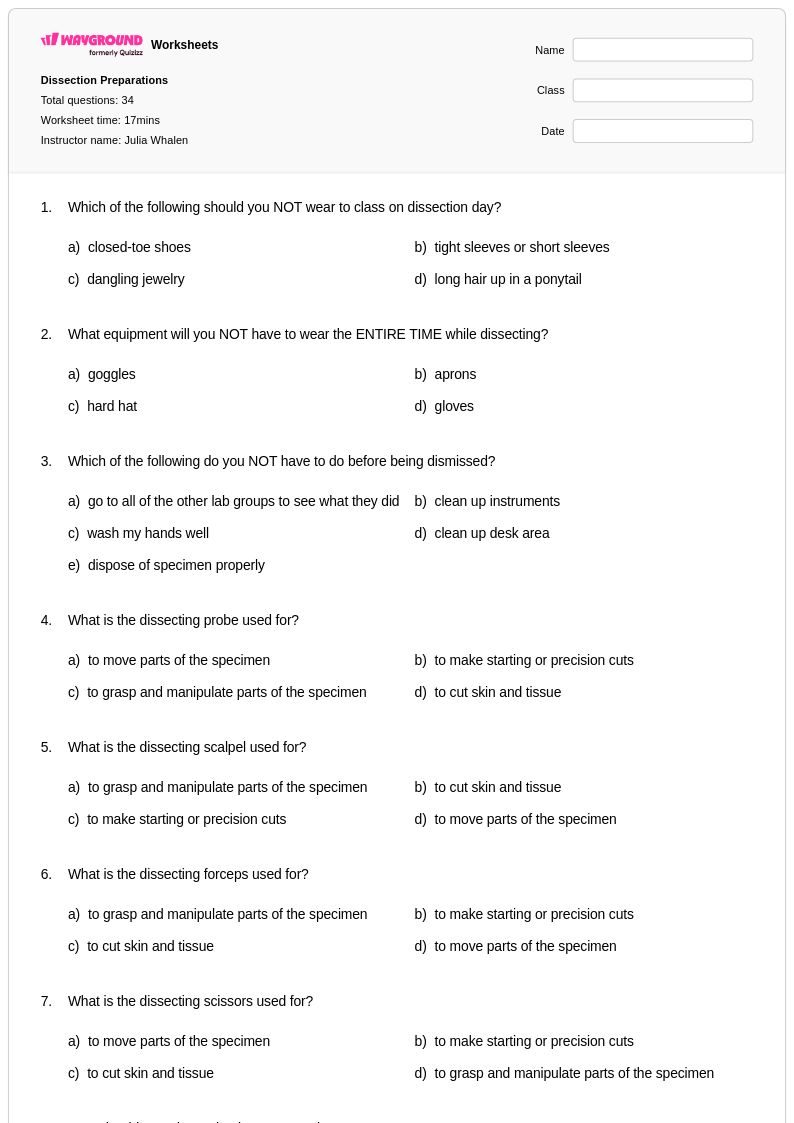
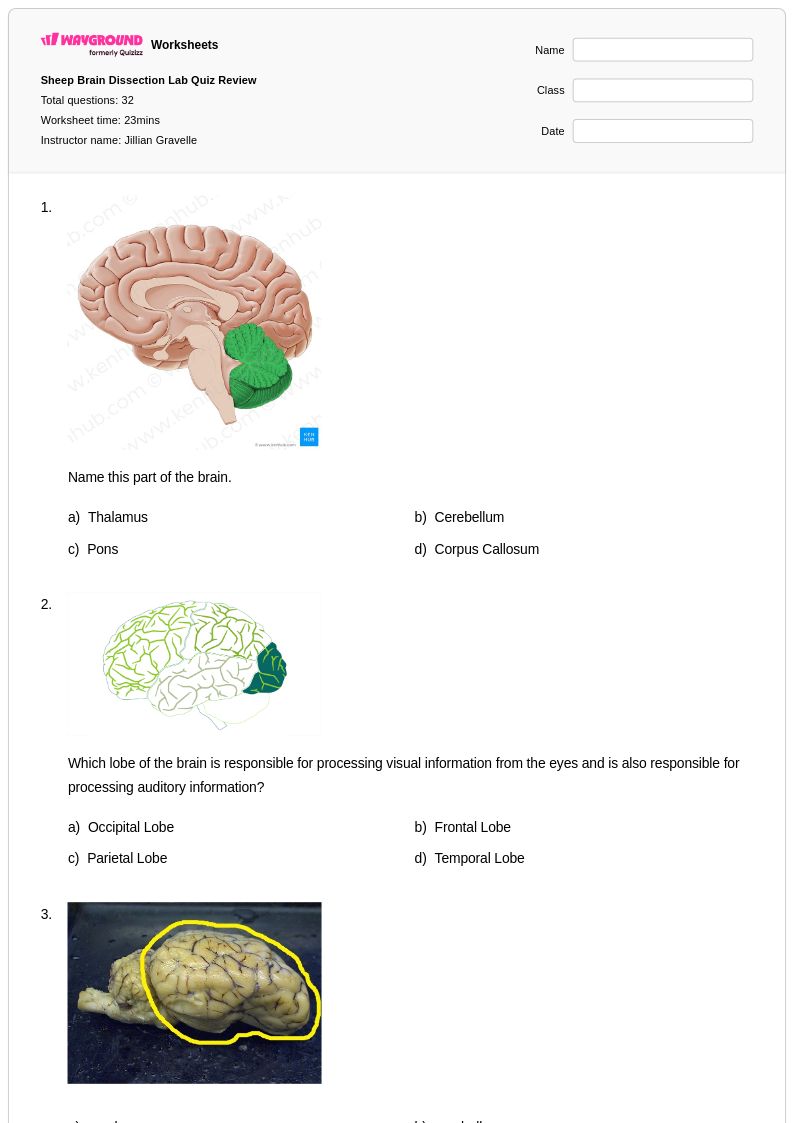
Grade 9 kidney dissection worksheets from Wayground provide comprehensive printables and practice problems that help students learn anatomical structures and functions through hands-on biological exploration with detailed answer keys.
Explore printable Kidney Dissection worksheets for Grade 9
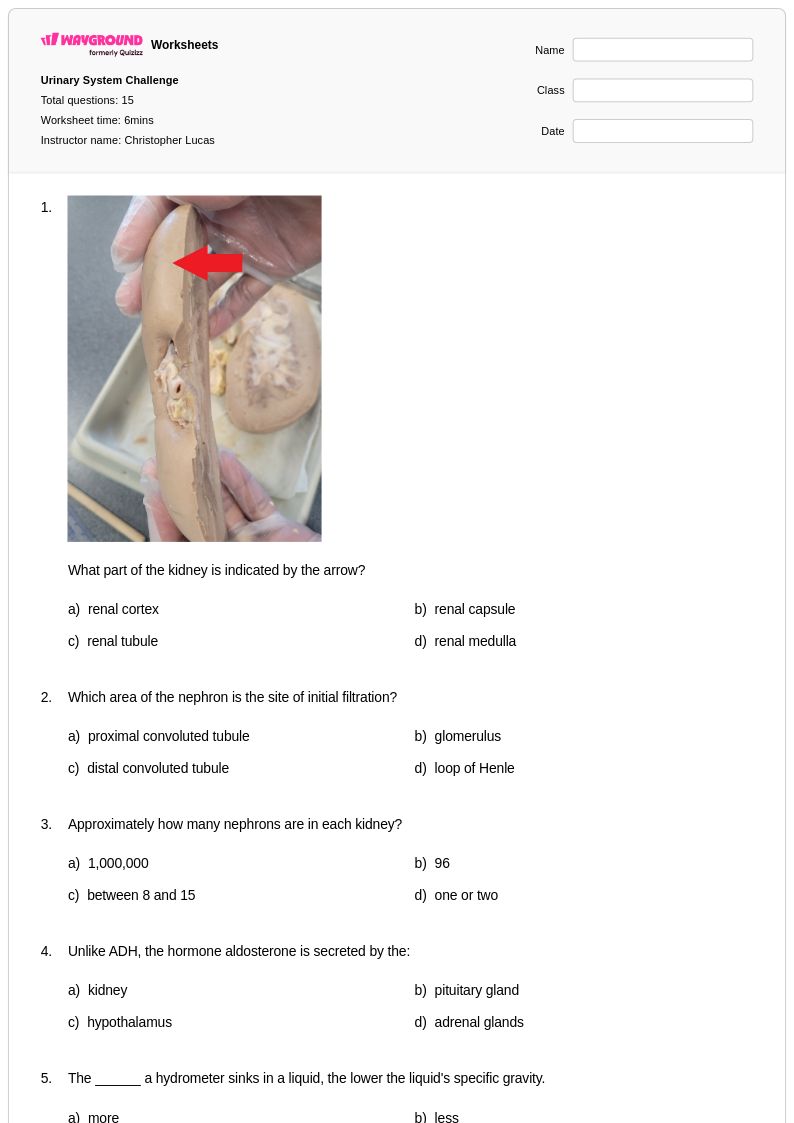
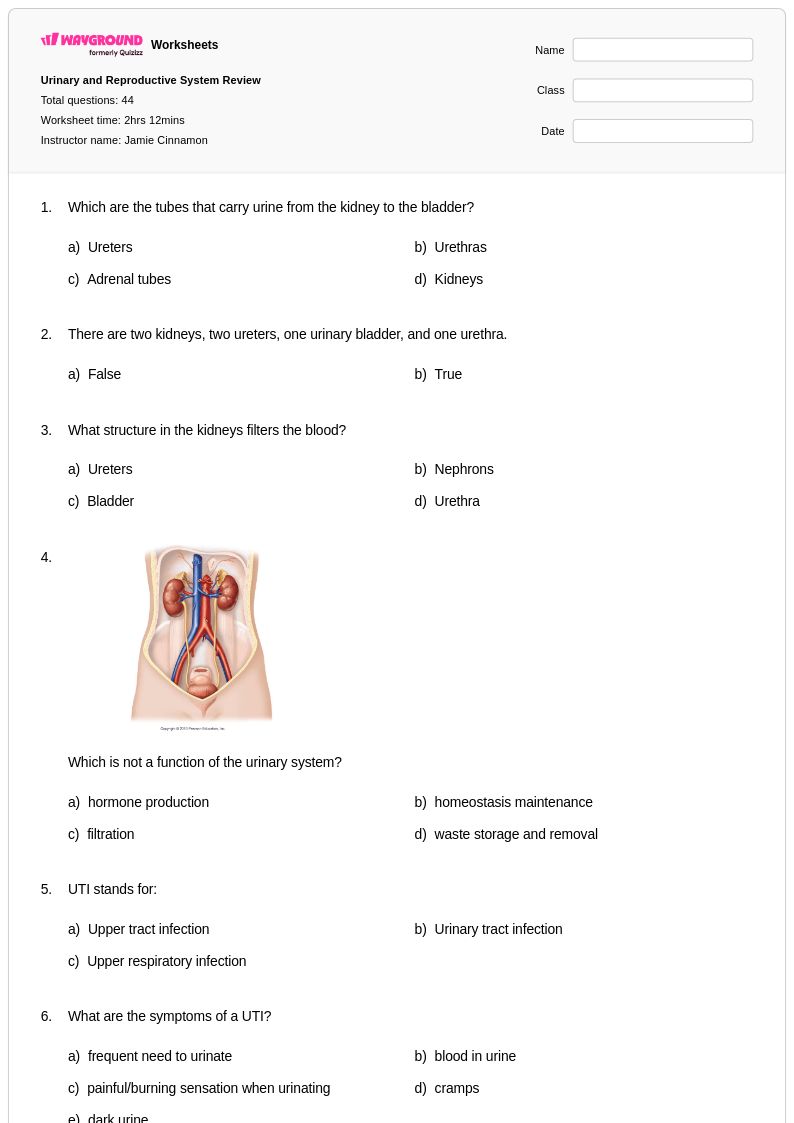
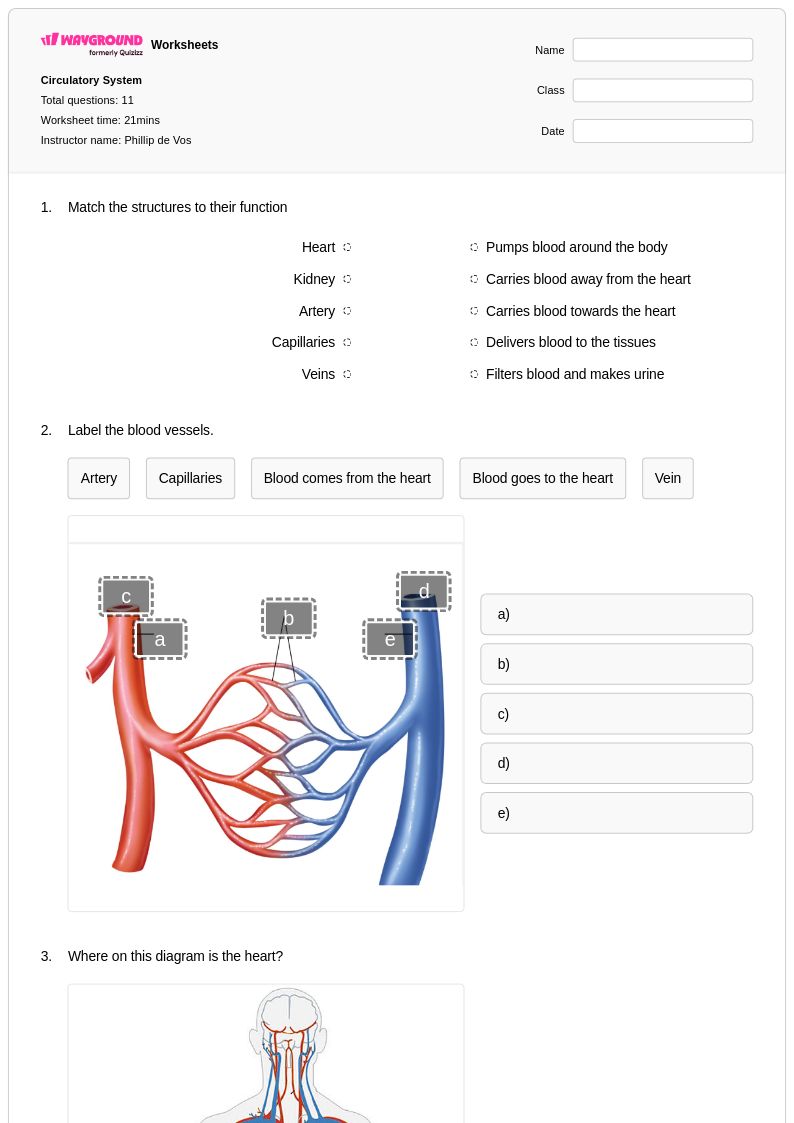
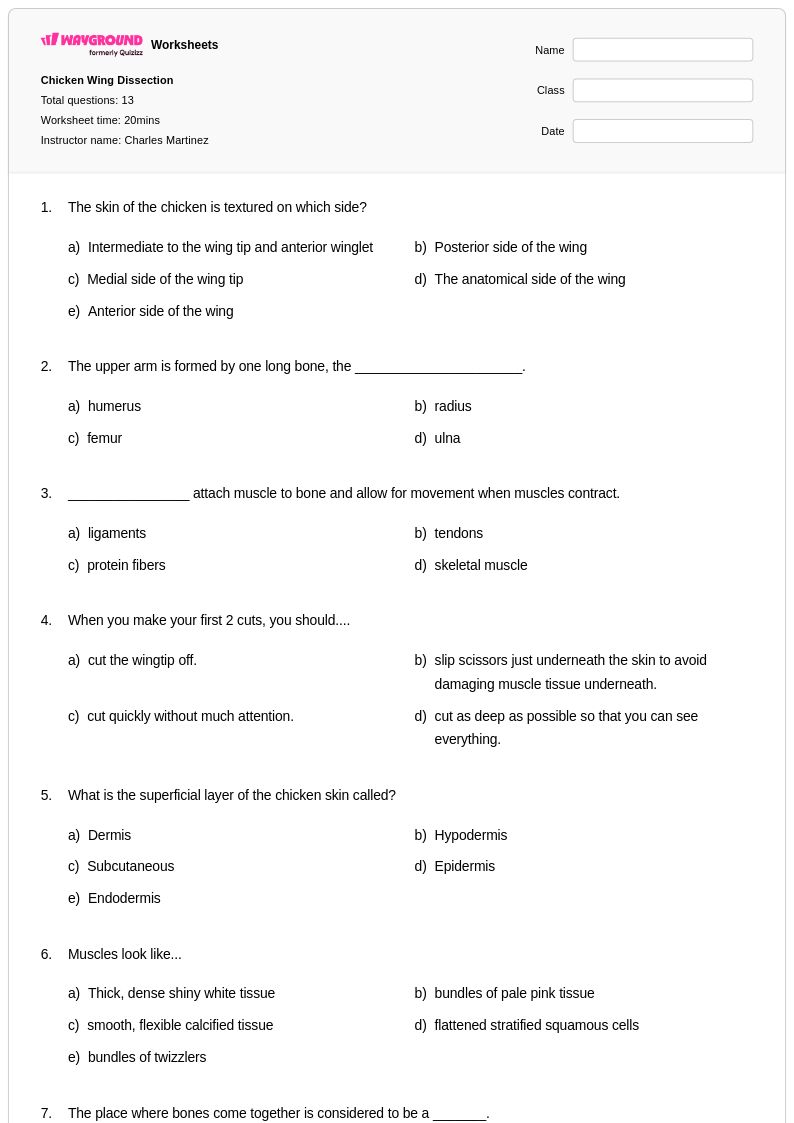
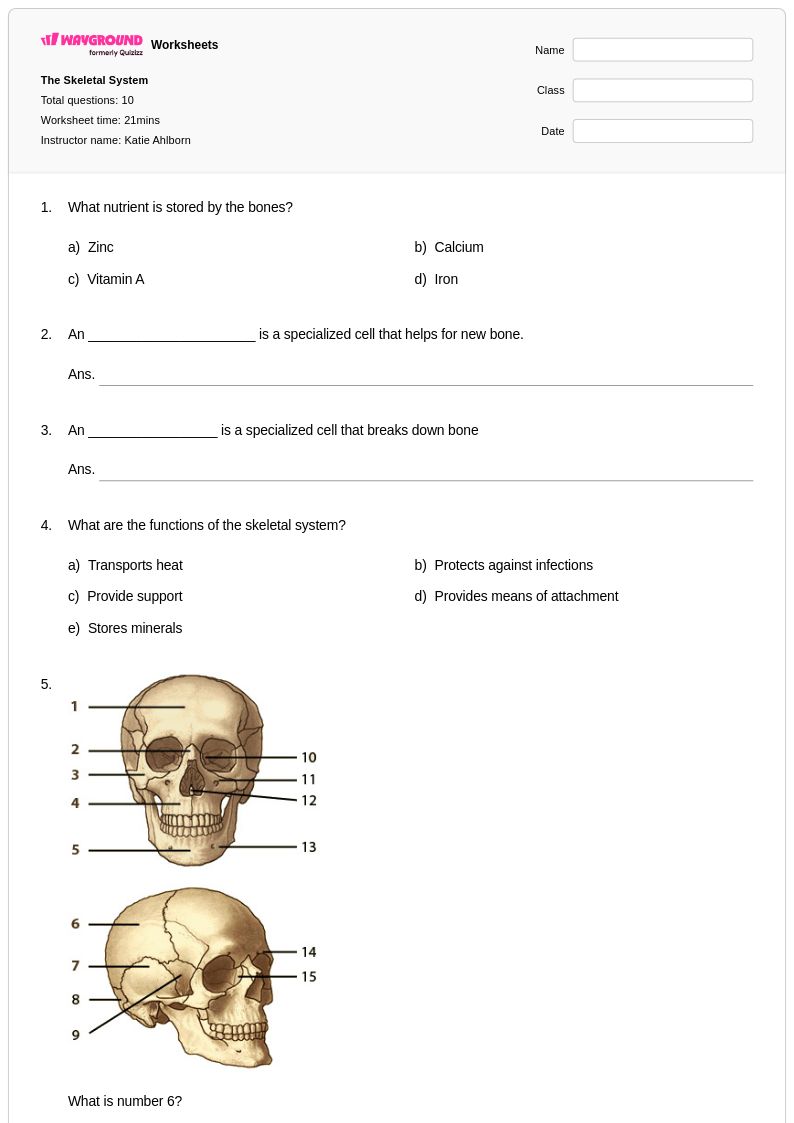
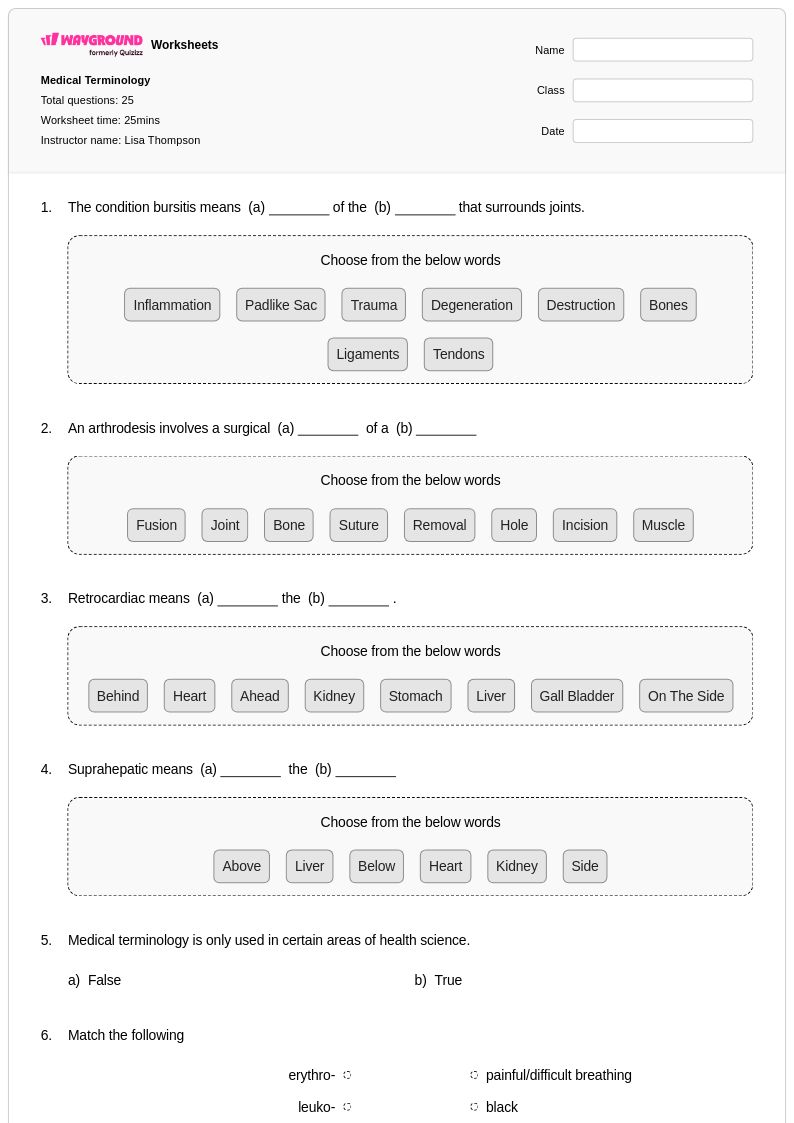
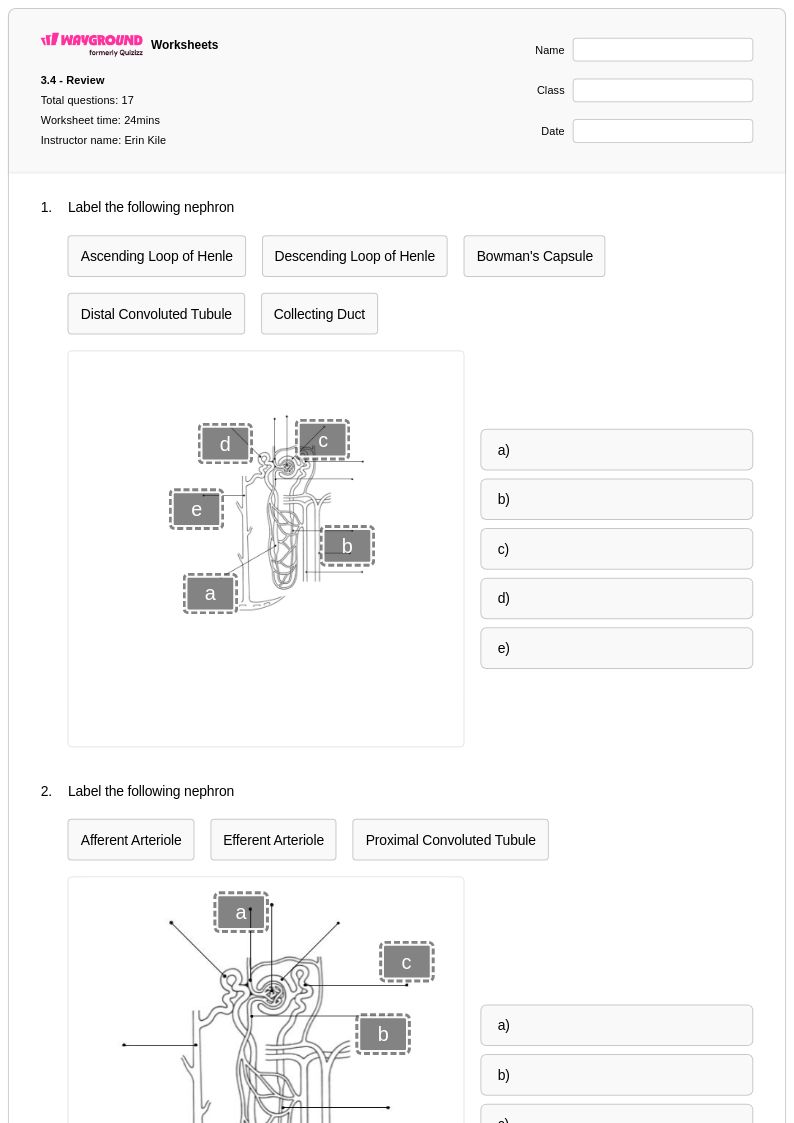
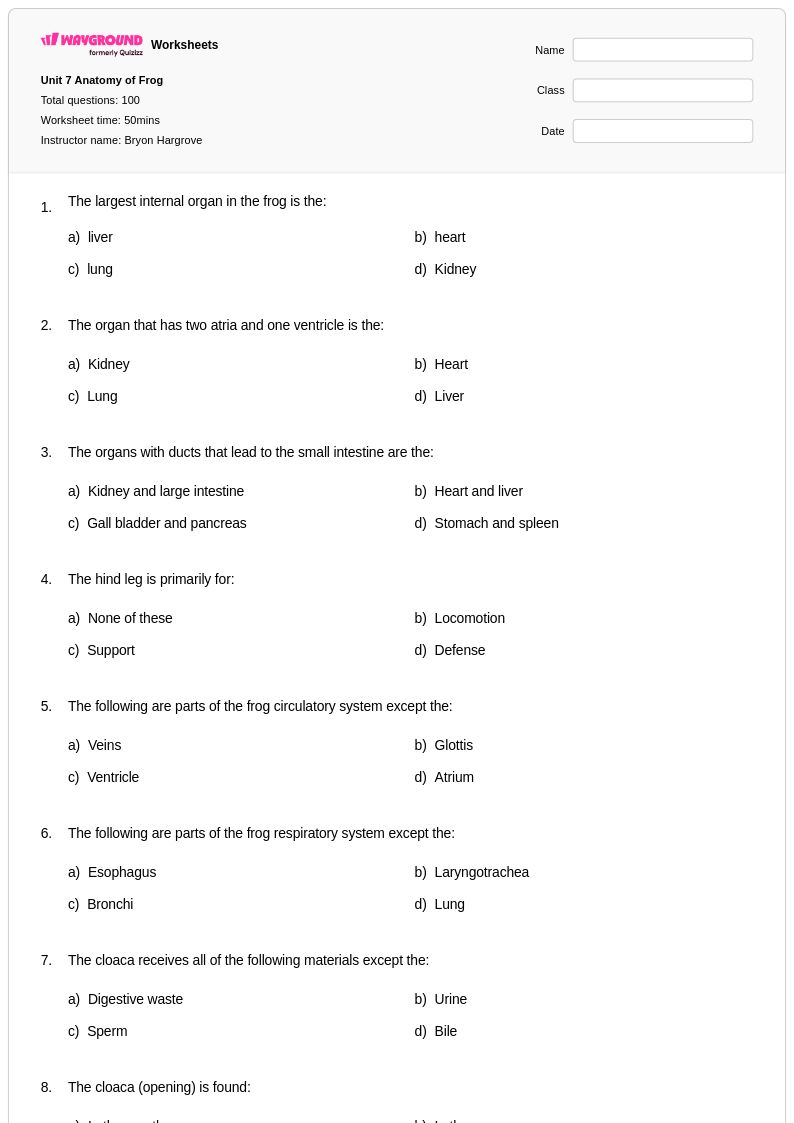
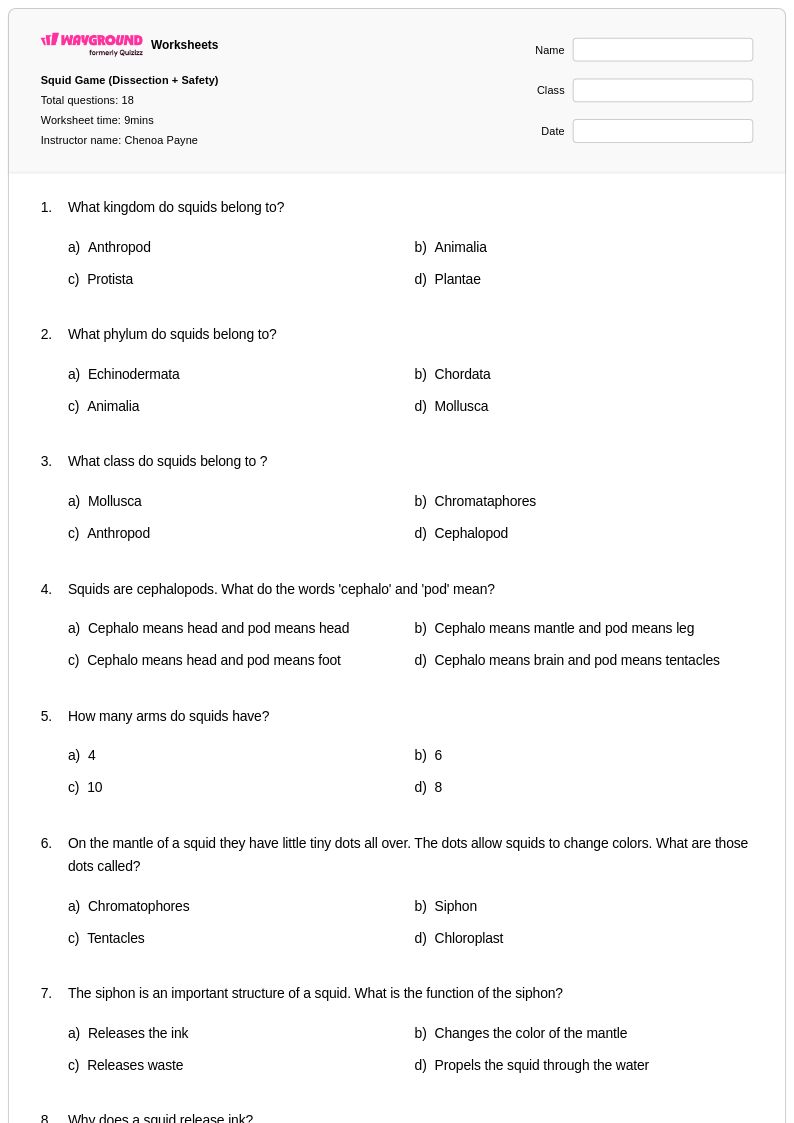
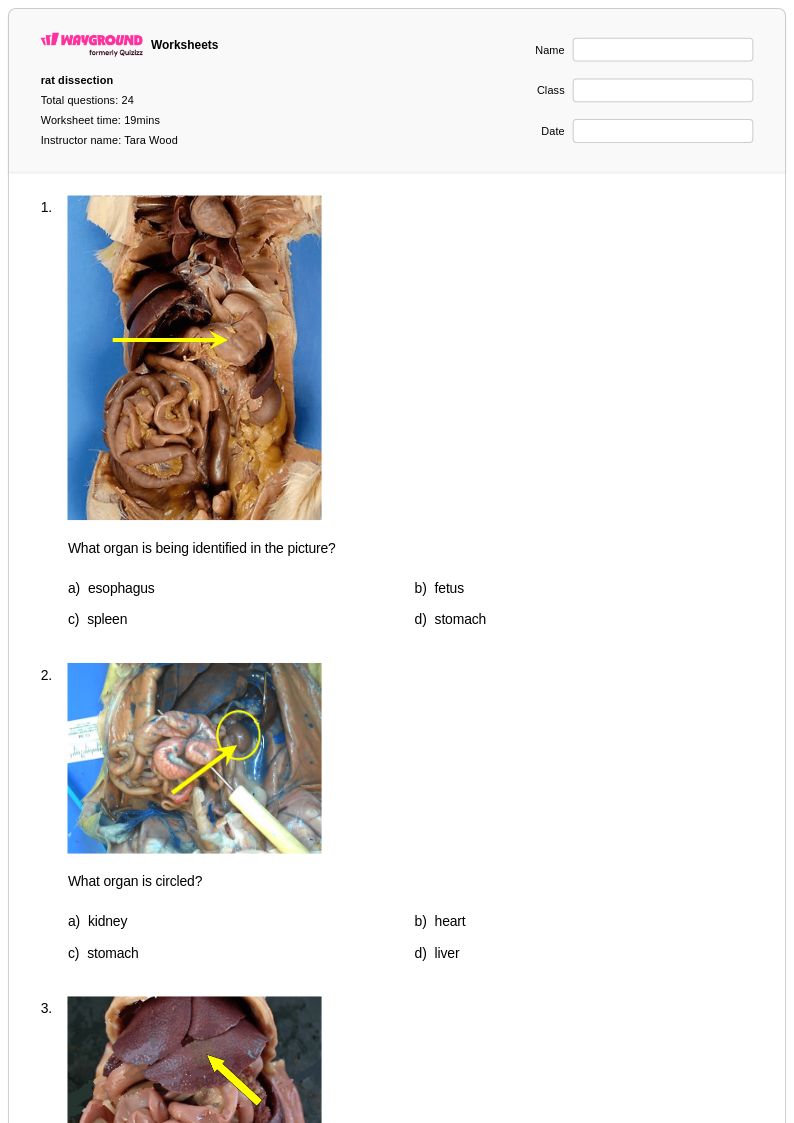
Kidney dissection worksheets for Grade 9 biology provide students with comprehensive guided activities that enhance their understanding of nephron structure, renal anatomy, and urinary system functions through hands-on laboratory experiences. These educational resources available through Wayground include detailed observation sheets, labeling diagrams, data collection templates, and analytical questions that help students document their findings while developing critical thinking skills about organ systems and physiological processes. The practice problems within these worksheets challenge students to identify key structures such as the renal cortex, medulla, and pelvis, while answer keys support both independent study and classroom instruction. These free printables serve as essential tools for reinforcing anatomical vocabulary, scientific observation techniques, and the connection between structure and function in biological systems, ensuring students gain practical laboratory skills alongside theoretical knowledge.
Wayground, formerly Quizizz, empowers biology educators with access to millions of teacher-created kidney dissection worksheet resources that streamline lesson planning and enhance student engagement in laboratory settings. The platform's robust search and filtering capabilities allow teachers to quickly locate materials aligned with specific curriculum standards and grade-level expectations, while differentiation tools enable customization for diverse learning needs and abilities. These worksheet collections are available in both printable pdf formats for traditional laboratory use and digital versions for hybrid learning environments, providing flexibility for various classroom configurations. Teachers can leverage these comprehensive resources for pre-lab preparation, during-dissection documentation, post-lab analysis, and remediation activities, while advanced filtering options help identify materials suitable for enrichment opportunities or additional skill practice in anatomical studies and scientific methodology.
FAQs
How do I teach a kidney dissection lab in a biology class?
Effective kidney dissection instruction begins with pre-lab preparation, where students review the major anatomical structures they will identify, including the renal cortex, medulla, pelvis, and nephrons. During the dissection, guide students through a systematic external-to-internal examination, connecting each structure to its physiological role in filtration, reabsorption, and excretion. Post-lab discussion should reinforce how the kidney maintains homeostasis through urine formation and blood pressure regulation, helping students connect observable anatomy to underlying function.
What structures should students be able to identify during a kidney dissection?
Students should be able to identify the renal cortex, renal medulla, renal pelvis, renal capsule, ureter, and the renal pyramids during a dissection. At a more advanced level, students should connect these structures to nephron function, particularly how the cortex and medulla work together in filtration and concentration of urine. Labeling diagrams before and after the dissection reinforces anatomical vocabulary and spatial understanding of the organ.
What exercises help students practice kidney anatomy and function?
Effective practice activities include diagram labeling tasks, matching exercises that pair structures with their physiological functions, and sequencing activities that trace the path of filtrate through the nephron. Short-answer and critical-thinking questions about urine formation and blood pressure regulation push students beyond memorization toward conceptual application. Pairing these exercises with dissection observations strengthens both vocabulary acquisition and scientific reasoning.
What mistakes do students commonly make when learning kidney anatomy?
A frequent misconception is confusing the renal cortex and medulla, with students often reversing their locations or misattributing their functions. Students also commonly conflate the kidney's role in filtration with complete waste removal, not recognizing the selectivity of reabsorption. Another common error is treating the nephron as a single undifferentiated tube rather than understanding its distinct regions and their specialized roles in forming urine.
How can I use kidney dissection worksheets for students with different learning needs?
Kidney dissection worksheets can be differentiated by selecting resources at varying complexity levels, from basic organ identification for introductory students to advanced questions on nephron physiology for honors-level learners. On Wayground, teachers can apply individual accommodations such as read aloud support for students who benefit from audio delivery of content, reduced answer choices to lower cognitive load, and extended time settings, all configurable per student without disrupting the rest of the class.
How do I use kidney dissection worksheets from Wayground in my classroom?
Kidney dissection worksheets on Wayground are available as printable PDFs for traditional lab settings and in digital formats for technology-integrated classrooms, including the option to host them as a quiz directly on the platform. Teachers can use them as pre-lab preparation tools, in-lab observation guides, or post-lab assessment activities. Each worksheet includes a complete answer key, allowing educators to provide prompt, targeted feedback after the dissection activity.