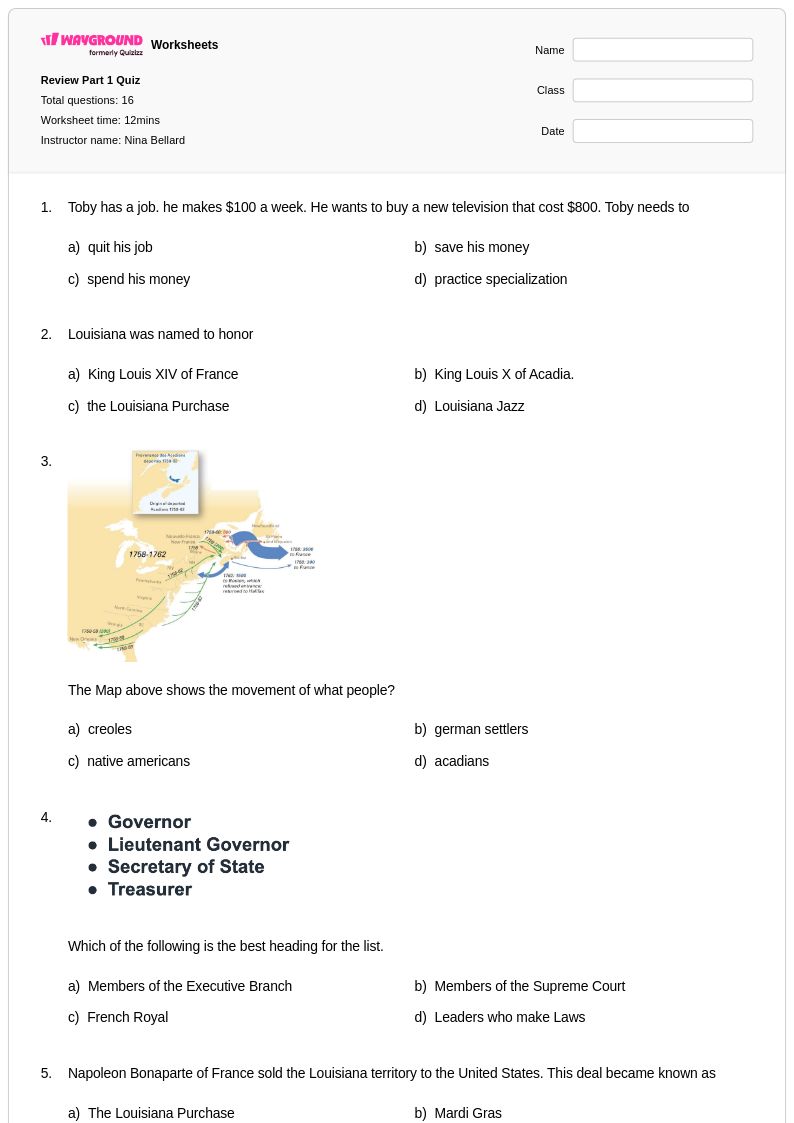
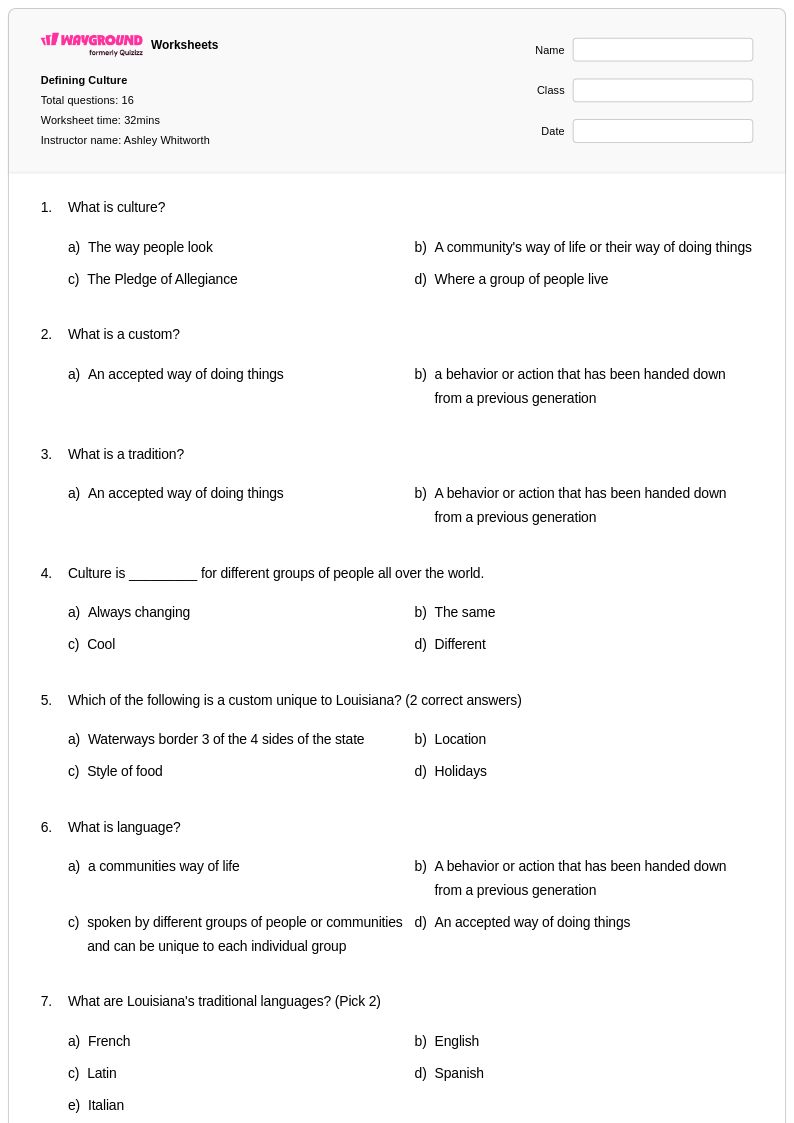
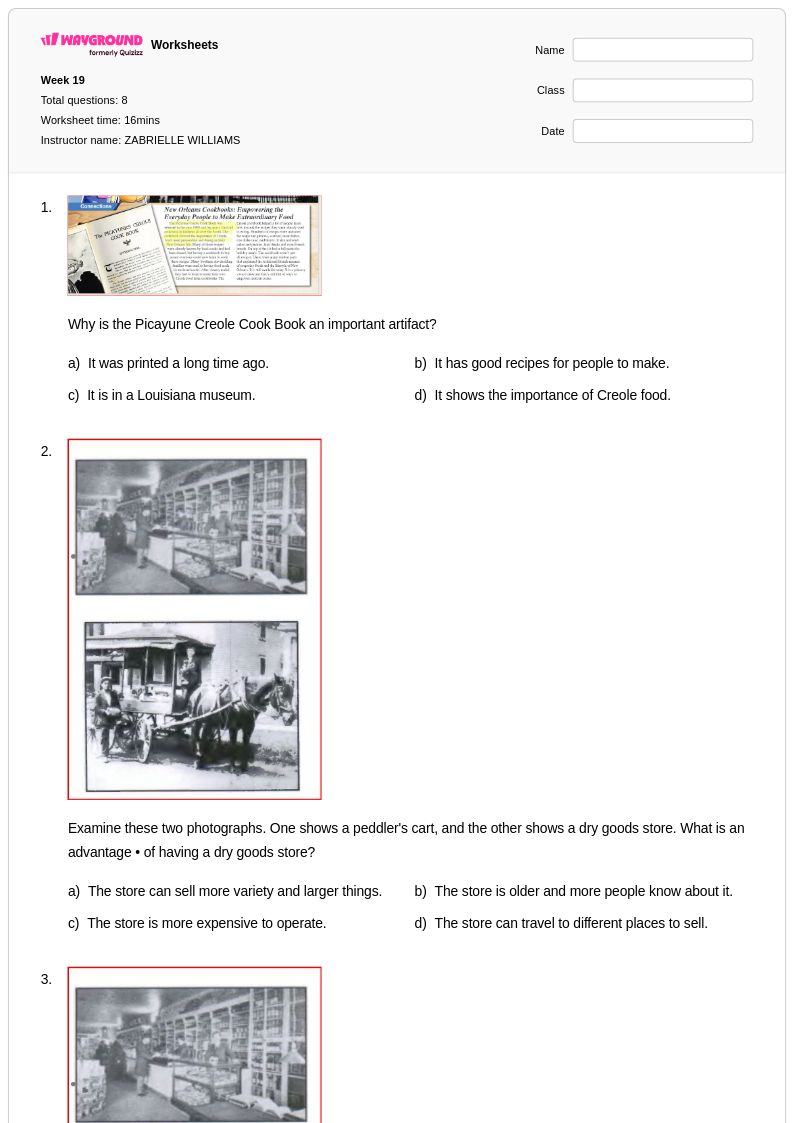
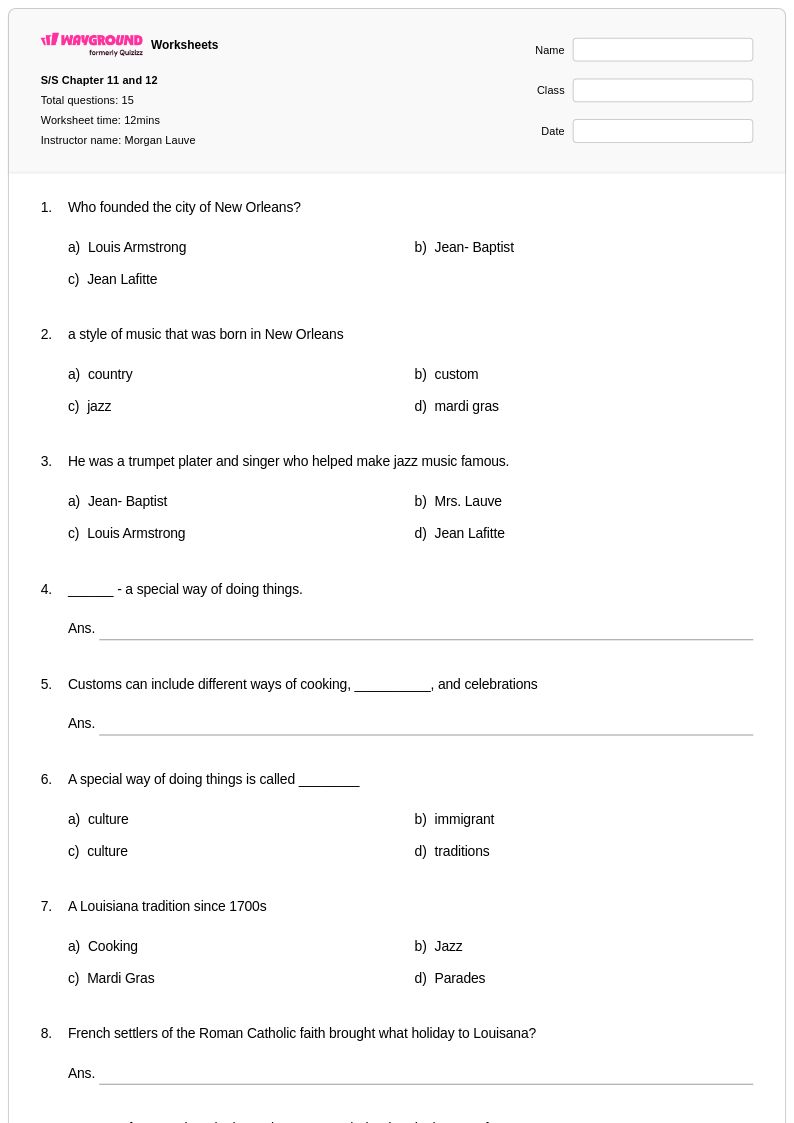
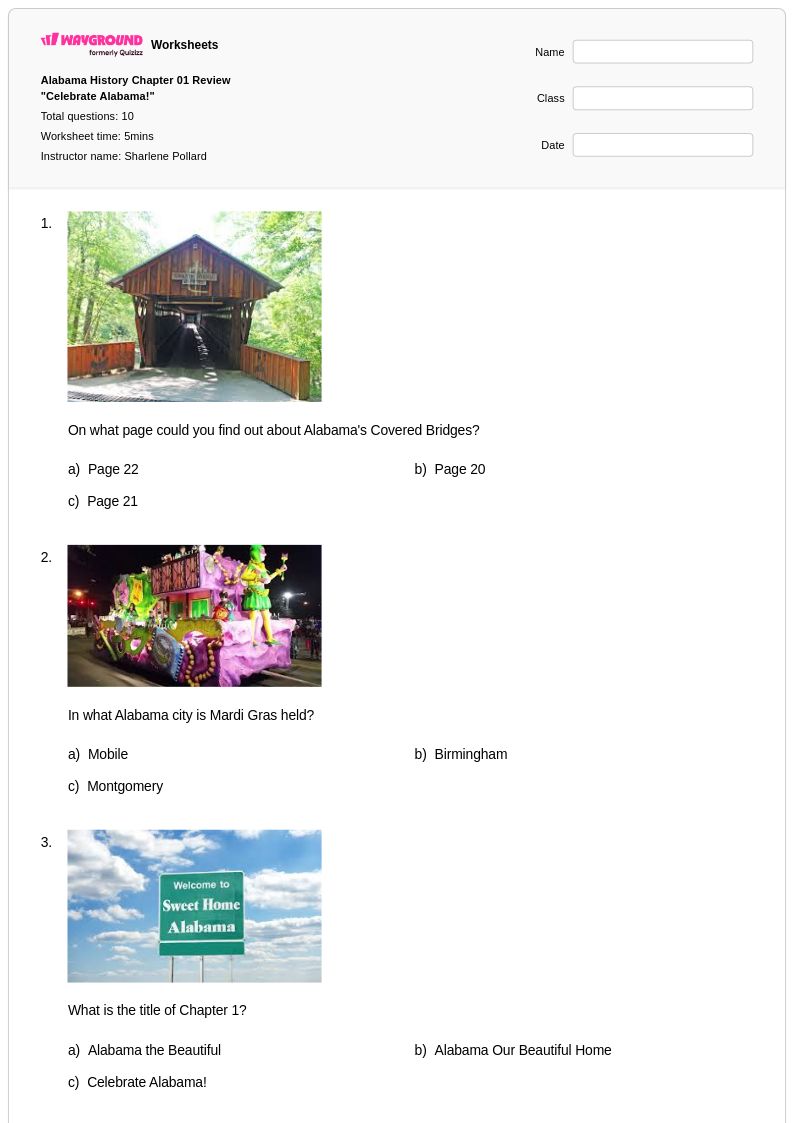
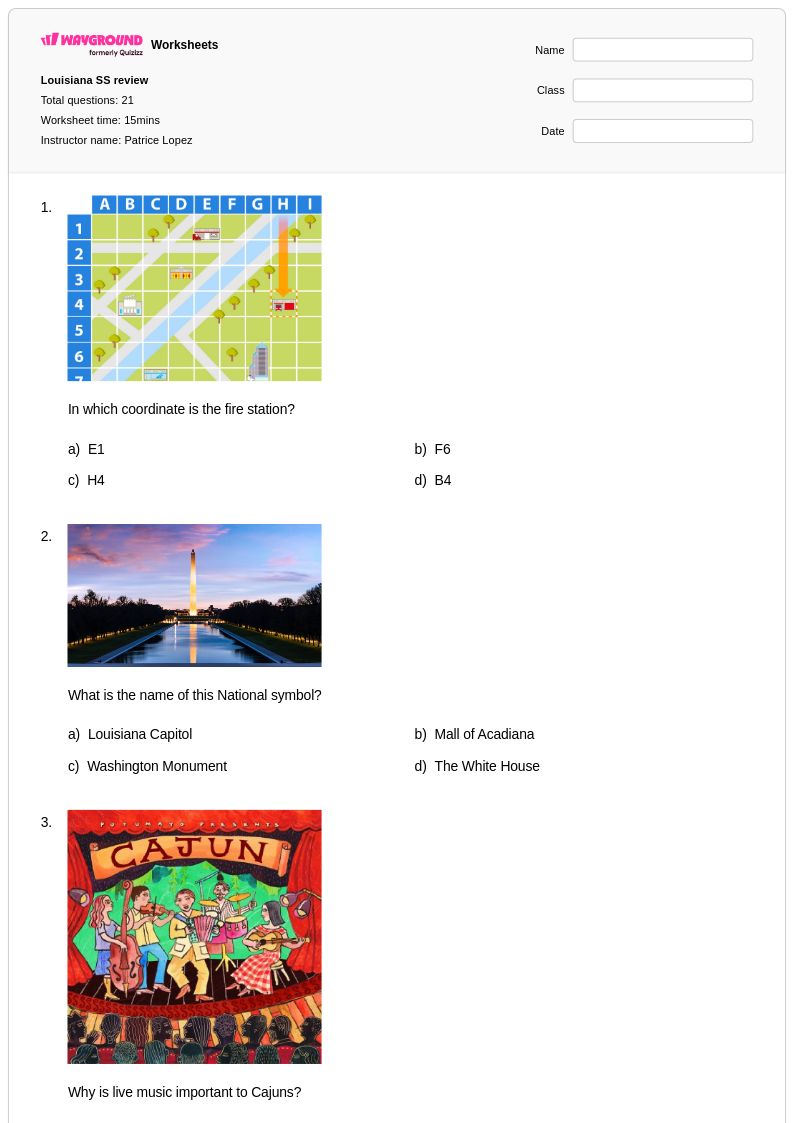
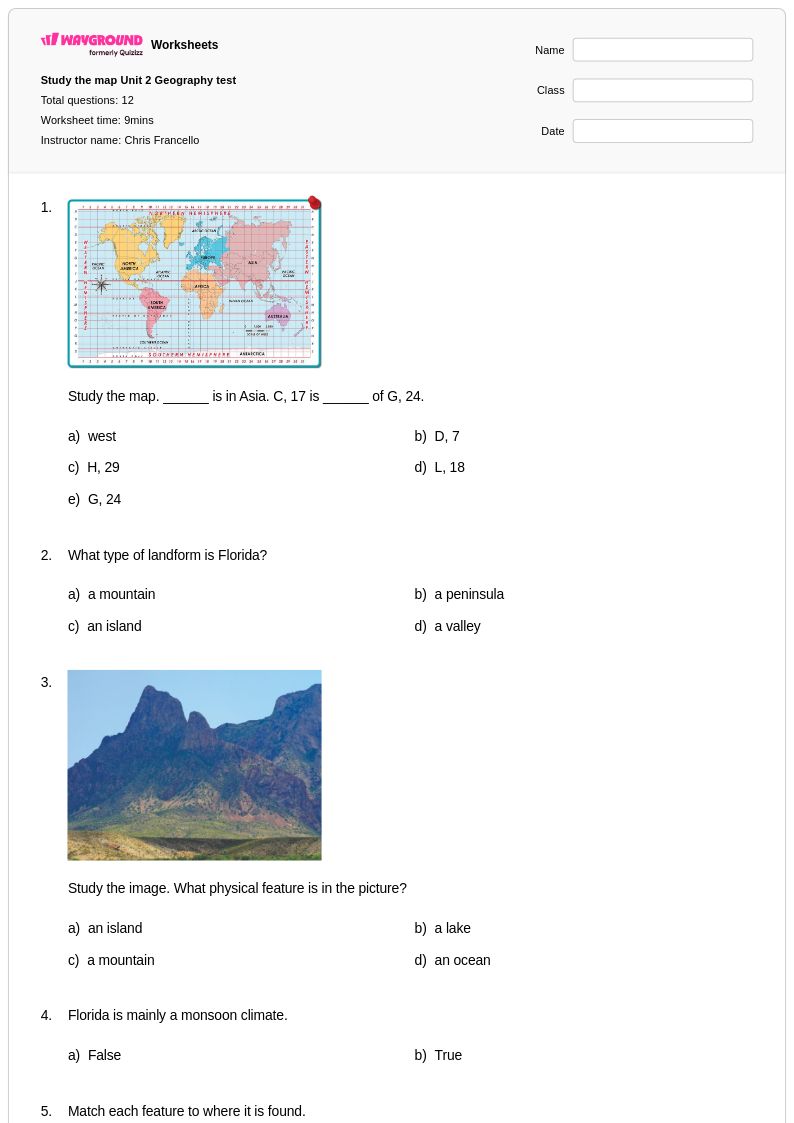
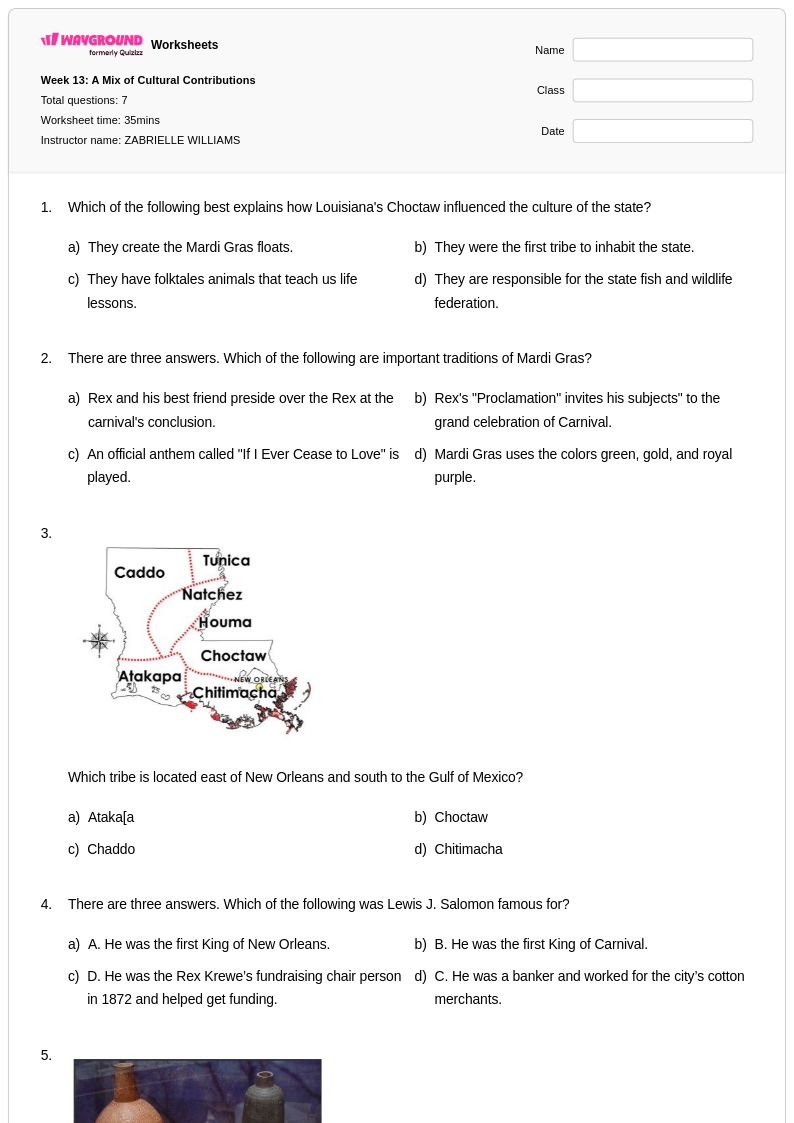
Explore Wayground's free Mardi Gras worksheets and printables that help students discover the rich traditions, cultural significance, and festive celebrations of this vibrant community event through engaging practice problems and comprehensive answer keys.
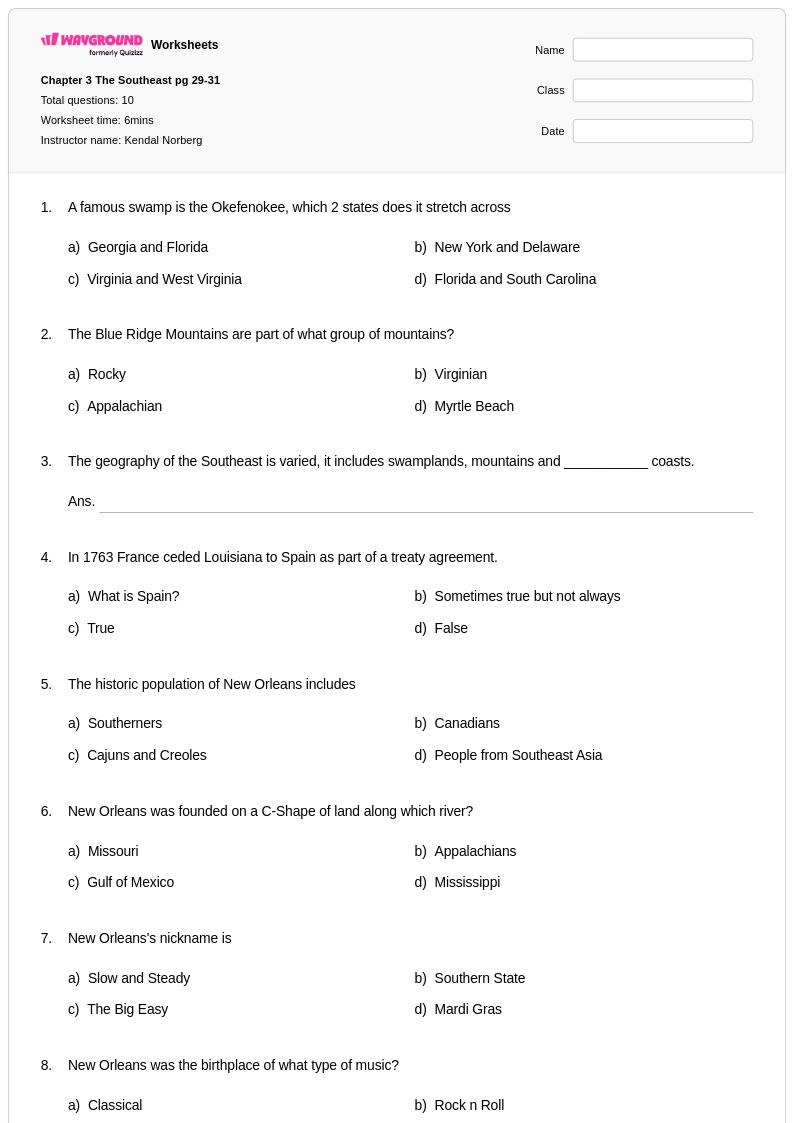
Mardi Gras worksheets available through Wayground (formerly Quizizz) provide students with engaging opportunities to explore this vibrant cultural celebration while developing critical social studies skills. These comprehensive educational resources examine the historical origins, religious significance, and cultural traditions of Mardi Gras, helping students understand how communities express their identity through festivals and celebrations. The worksheets strengthen analytical thinking as students compare Mardi Gras traditions across different regions, particularly New Orleans and other Gulf Coast communities, while building cultural awareness and appreciation for diverse customs. Each printable resource includes detailed answer keys and practice problems that guide students through the complexities of this centuries-old tradition, from its European roots to its modern American expressions, ensuring thorough comprehension of both historical context and contemporary cultural significance.
Wayground (formerly Quizizz) supports educators with an extensive collection of teacher-created Mardi Gras resources, drawing from millions of high-quality worksheets that can be easily searched and filtered to match specific classroom needs and learning objectives. The platform's robust differentiation tools allow teachers to customize content for various skill levels, while standards alignment features ensure that Mardi Gras studies connect meaningfully to broader social studies curricula focusing on community and cultural understanding. Available in both digital and printable pdf formats, these flexible resources support diverse instructional approaches, whether teachers need materials for whole-class lessons, small group activities, or individual practice sessions. The comprehensive worksheet collection proves invaluable for lesson planning, targeted remediation for students needing additional cultural context, and enrichment opportunities that deepen understanding of how celebrations reflect community values and historical experiences.
FAQs
How do I teach Mardi Gras in a social studies classroom?
Teaching Mardi Gras effectively means grounding it in both its historical origins and its cultural functions. Start with its European Catholic roots as a pre-Lenten celebration, then trace its evolution into the distinctive American traditions found in New Orleans and Gulf Coast communities. Connecting the celebration to broader social studies themes — such as how communities express identity through festivals — gives students a meaningful analytical framework rather than treating it as a surface-level cultural curiosity.
What are the key concepts students should understand about Mardi Gras?
Students should understand that Mardi Gras has both religious and secular dimensions: it originates as a Christian observance marking the final day before Lent, but has evolved into a broader cultural celebration with distinct regional traditions. Key concepts include its European origins, the role of community identity in shaping local customs, and how traditions vary significantly between cities like New Orleans and other Gulf Coast communities. Building this layered understanding helps students see celebrations as historical and cultural documents, not just events.
What exercises help students practice analyzing cultural traditions like Mardi Gras?
Comparison exercises are particularly effective — having students examine how Mardi Gras traditions differ across regions, such as between New Orleans and smaller Gulf Coast towns, builds analytical thinking alongside cultural awareness. Practice problems that ask students to trace a tradition from its historical origin to its modern expression reinforce cause-and-effect reasoning within a social studies context. Structured worksheets with guided questions and answer keys help students move from surface-level observation to deeper interpretation of what cultural celebrations reveal about community values.
What misconceptions do students commonly have about Mardi Gras?
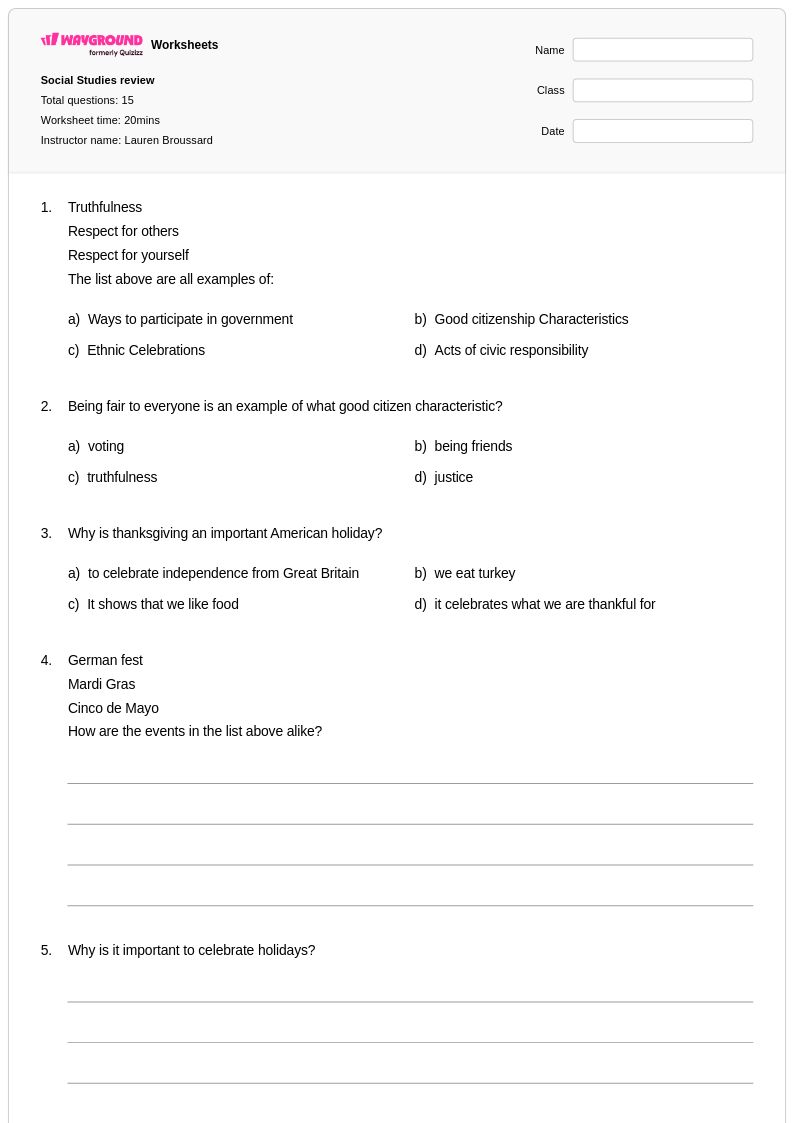
A common misconception is that Mardi Gras is purely a secular party with no historical or religious meaning. Students often don't realize it is tied to the Christian liturgical calendar as the day before Ash Wednesday, making it part of a centuries-old religious observance. Another frequent error is treating Mardi Gras as a single uniform tradition, when in reality its customs, foods, music, and rituals vary considerably from one community to another. Addressing these misconceptions early ensures students develop accurate cultural and historical understanding.
How can I use Mardi Gras worksheets to support different learners in my class?
Mardi Gras worksheets work well for differentiation because the topic has both accessible entry points and layers of complexity. On Wayground, teachers can apply accommodations at the individual student level, including Read Aloud support for students who need audio access to text, reduced answer choices to lower cognitive load, and extended time settings for students who need additional processing time. These accommodations can be assigned to specific students without affecting the experience of the rest of the class, making it practical to support diverse learners within the same lesson.
How do I use Mardi Gras worksheets from Wayground in my classroom?
Wayground's Mardi Gras worksheets are available as printable PDFs for traditional classroom use and in digital formats for technology-integrated environments, including the option to host them as a quiz directly on Wayground. Each worksheet includes a complete answer key, so teachers can use them for whole-class instruction, small group work, or independent practice without additional preparation. The digital format is particularly useful for remote or hybrid settings where students need structured, self-paced access to culturally rich content.