Explore Wayground's comprehensive collection of mean absolute deviation worksheets featuring free printables, practice problems, and answer keys to help students master this essential probability and statistics concept through hands-on learning exercises.
Explore printable Mean Absolute Deviation worksheets
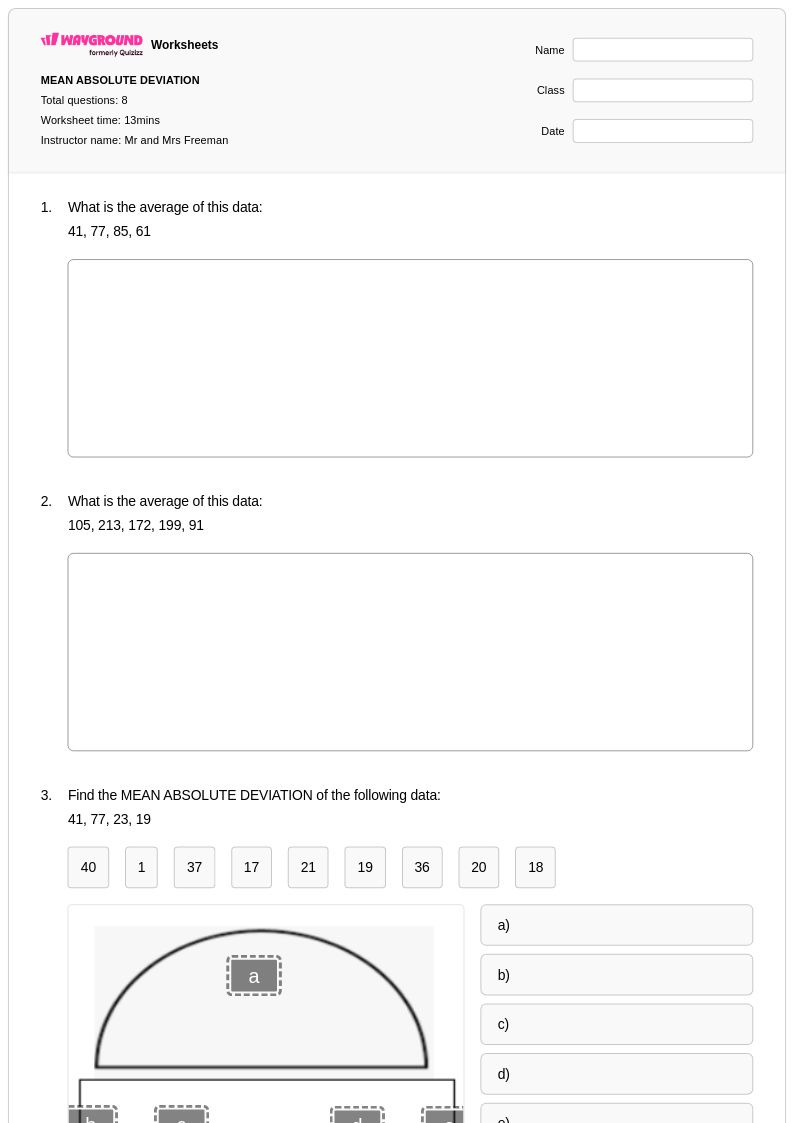
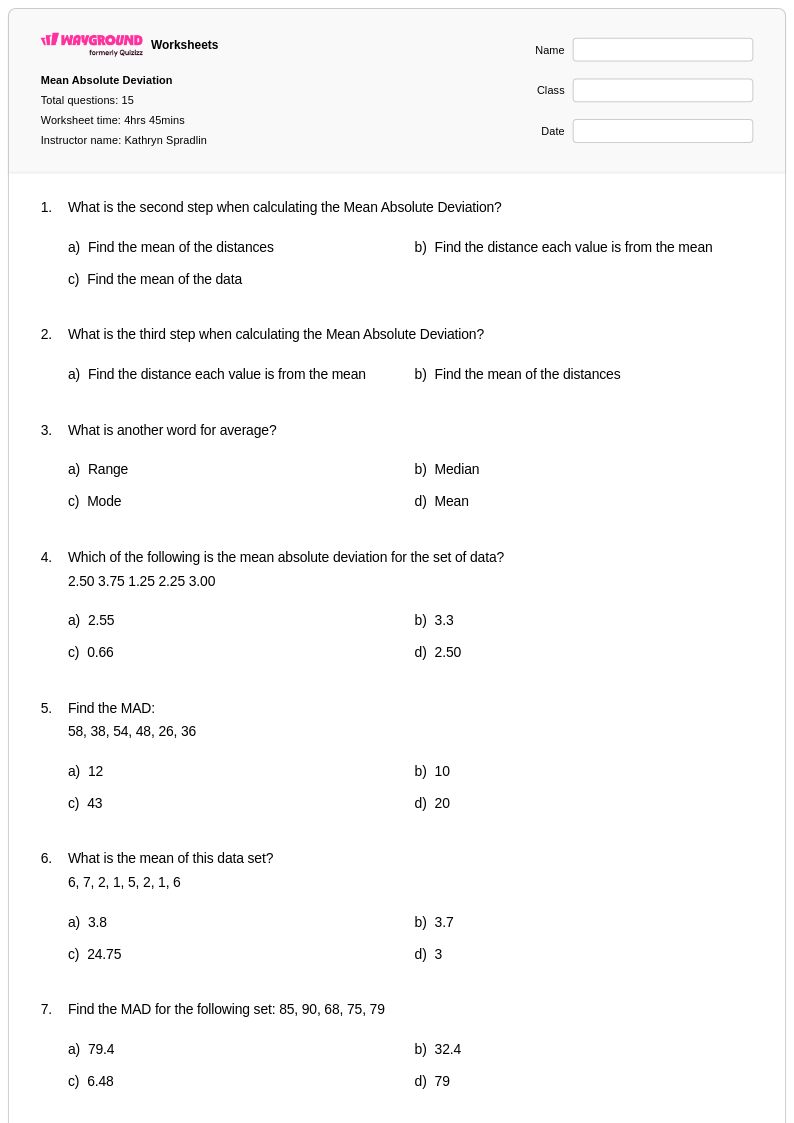
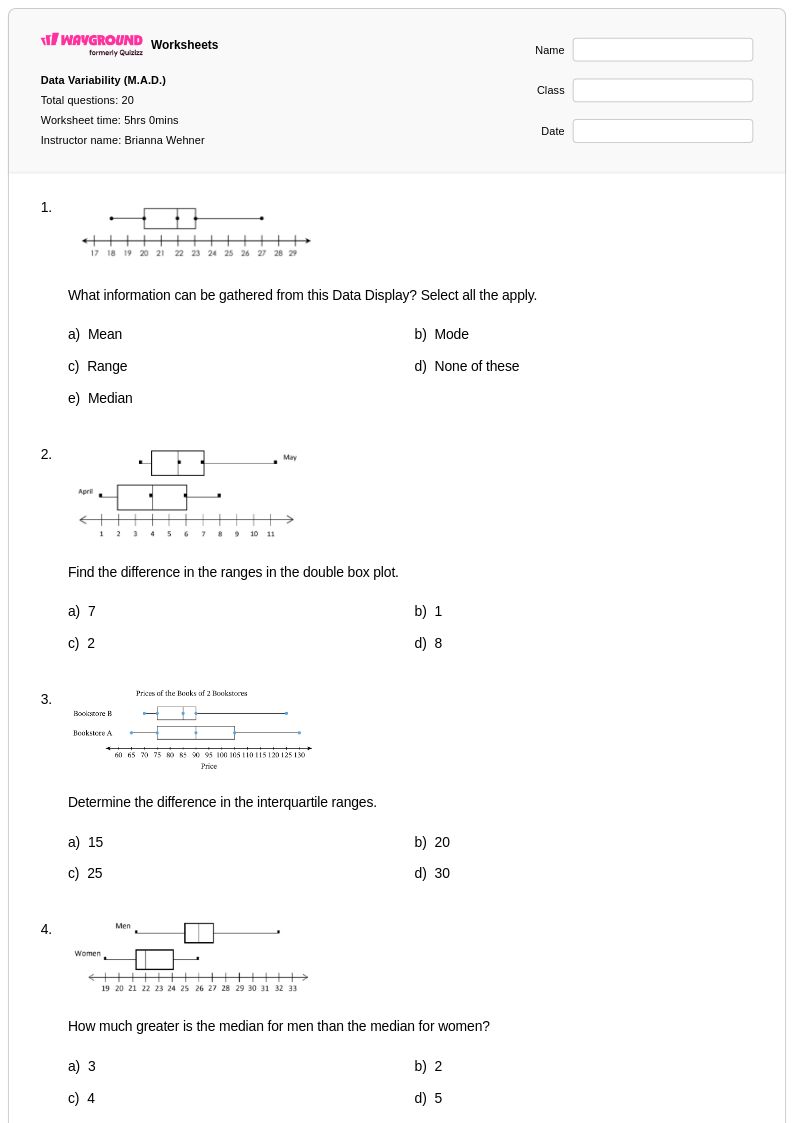
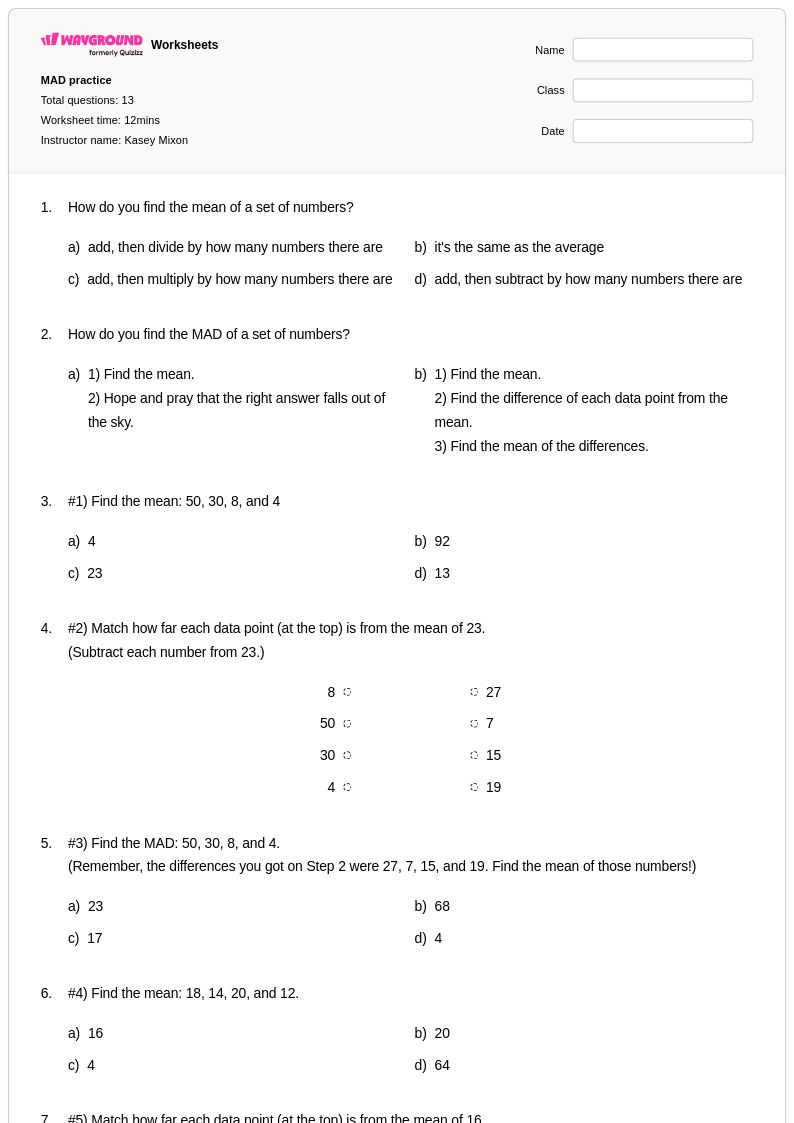
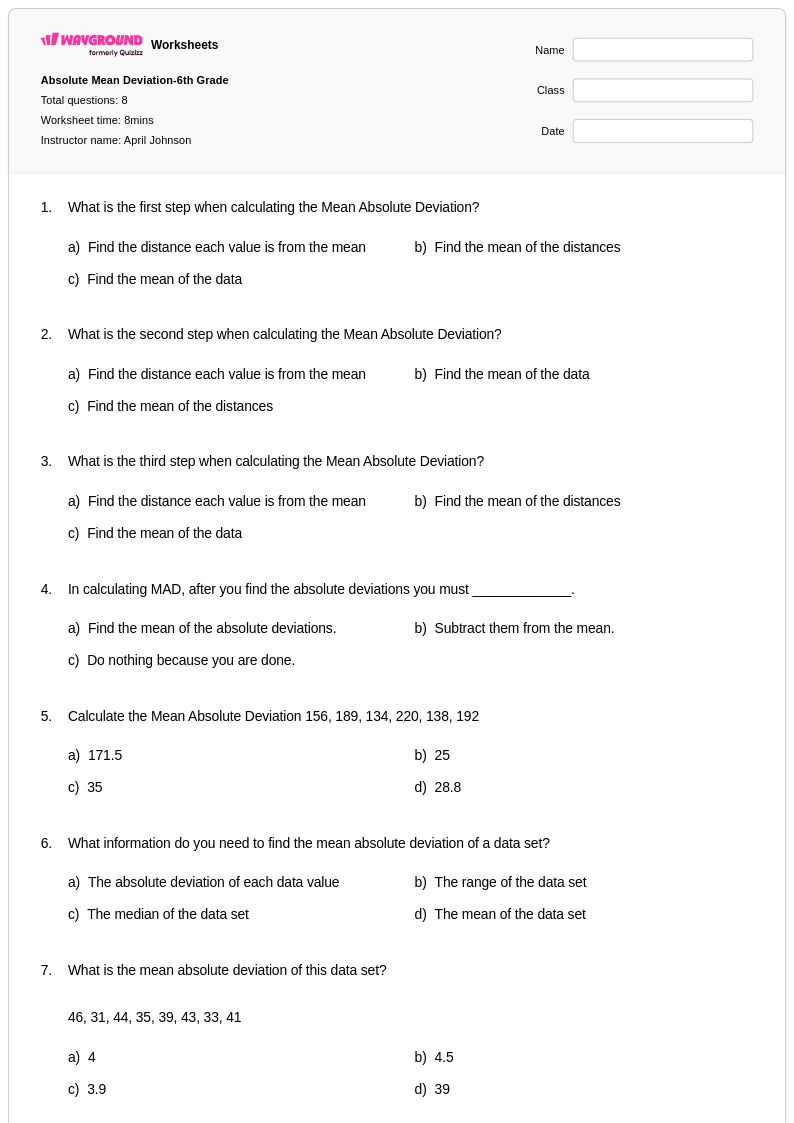
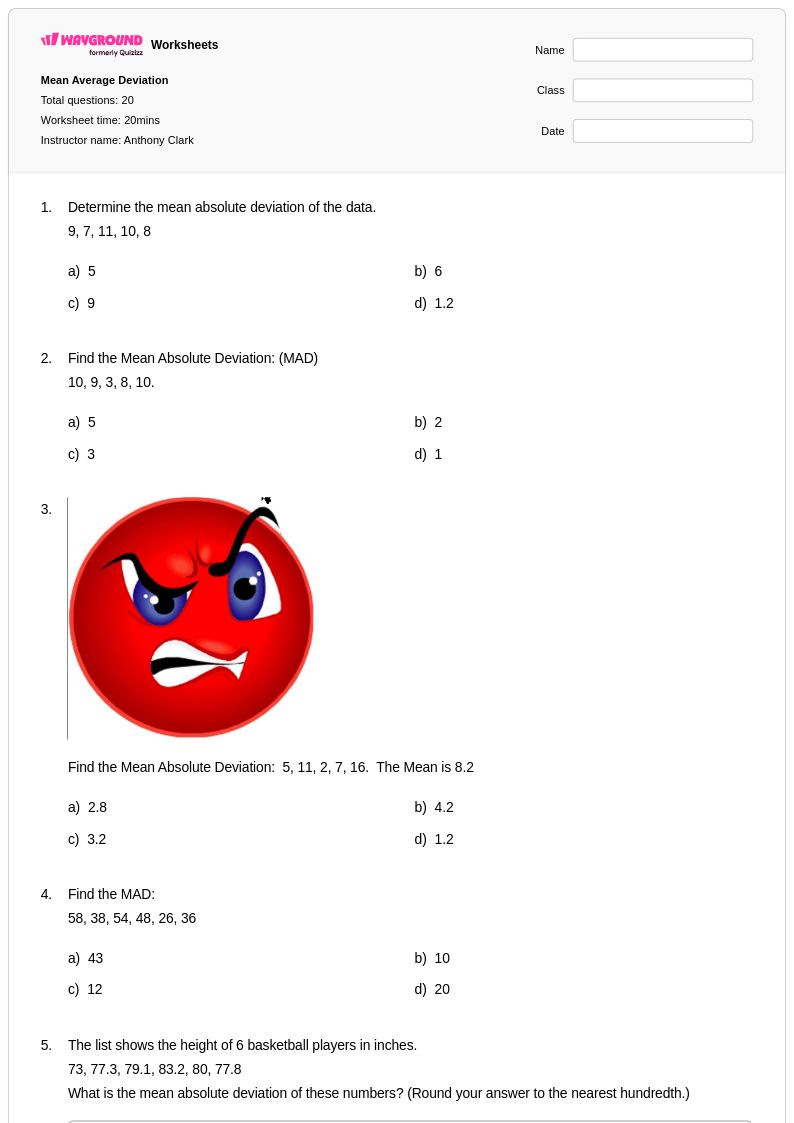
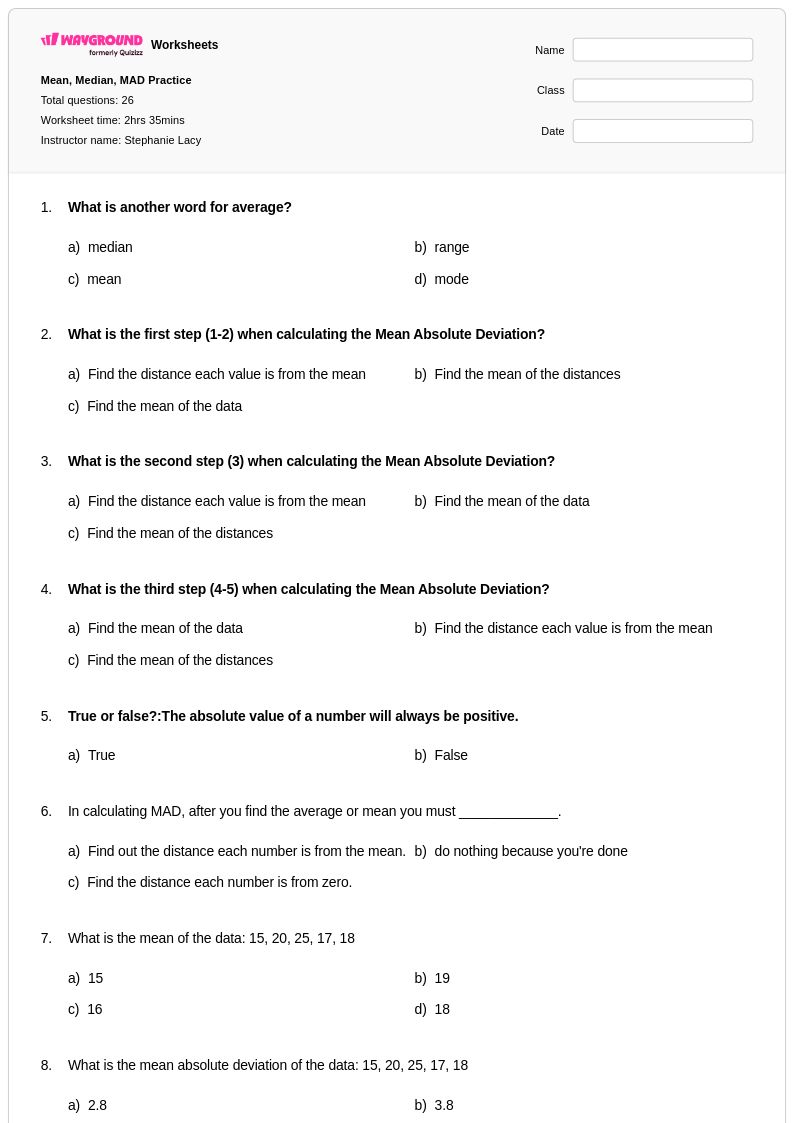
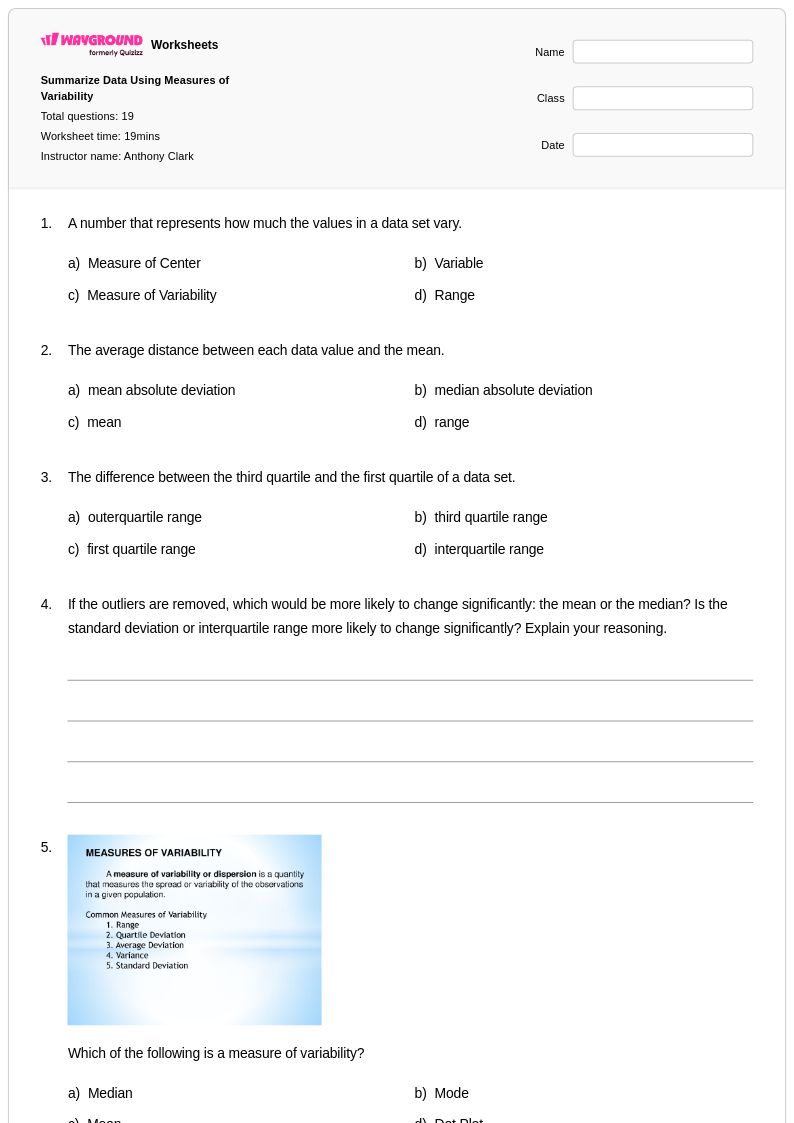
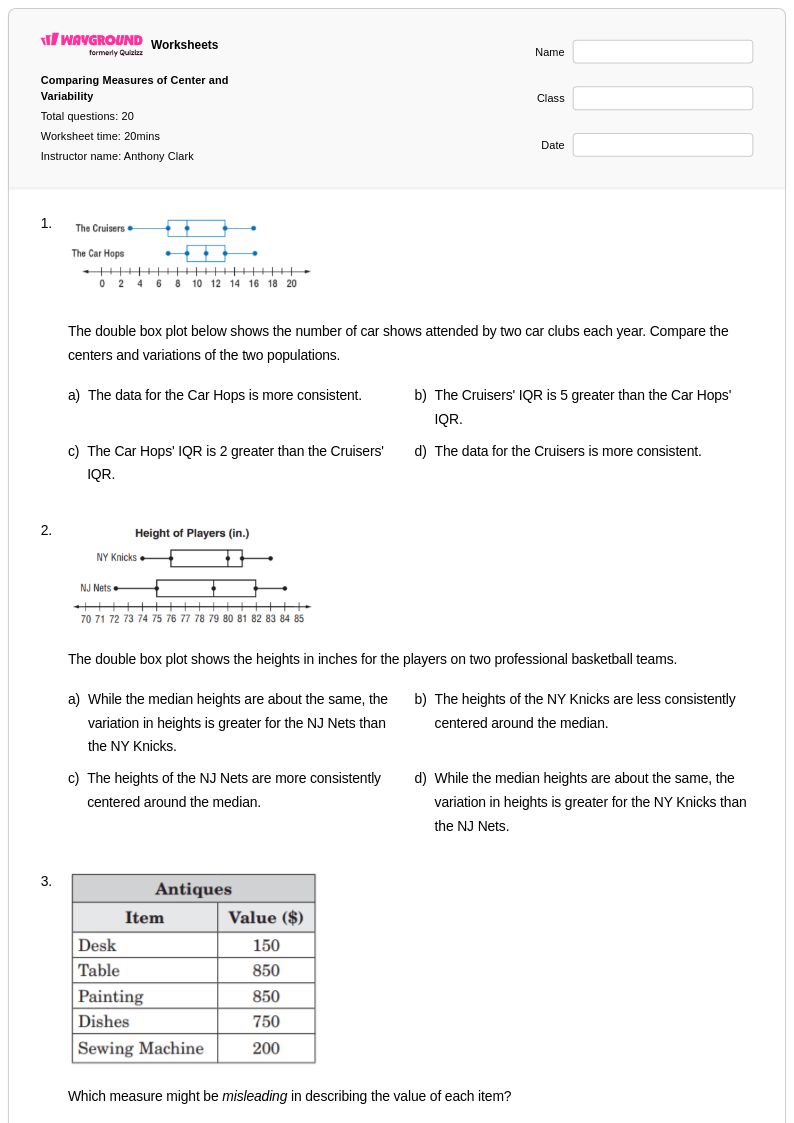
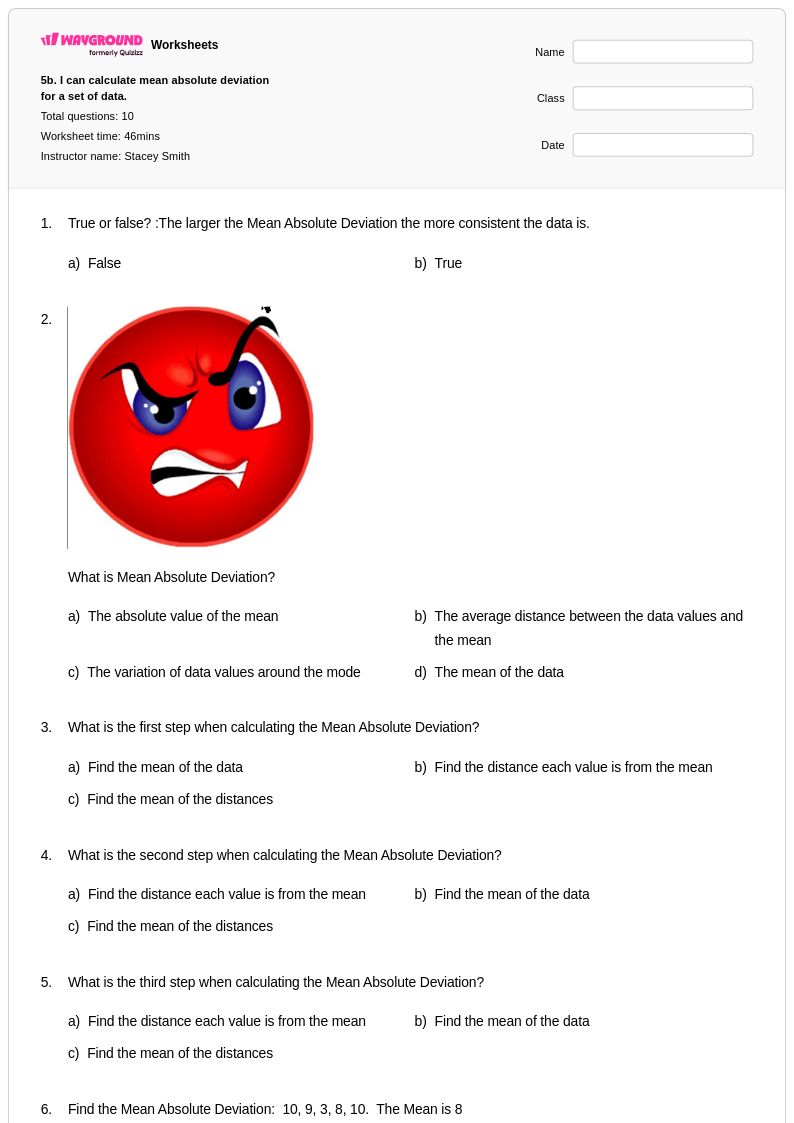
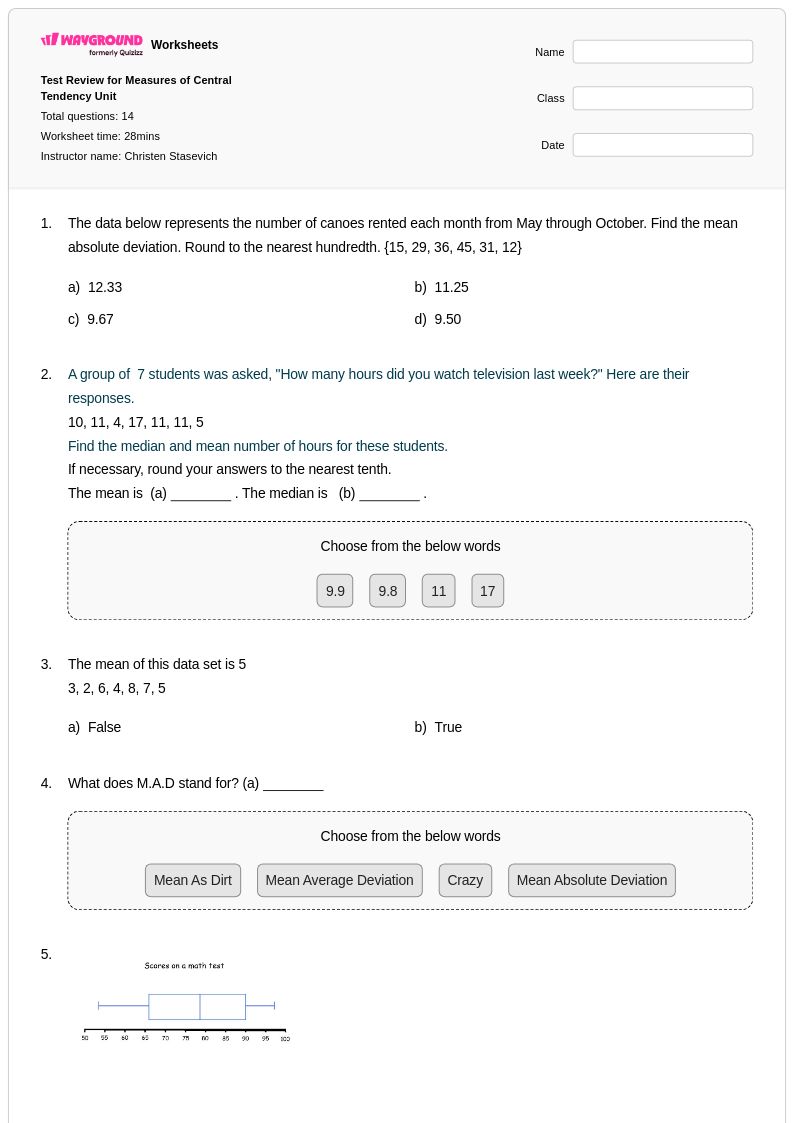
Mean Absolute Deviation worksheets available through Wayground (formerly Quizizz) provide comprehensive practice opportunities for students to master this essential statistical measure of variability. These expertly designed resources guide learners through calculating the average distance between individual data points and the mean of a dataset, strengthening critical analytical skills needed for advanced statistical reasoning. Each worksheet collection includes detailed answer keys and step-by-step solutions, ensuring students can verify their work and identify areas needing additional focus. The printable pdf format makes these free practice problems accessible for both classroom instruction and independent study, while covering fundamental concepts such as finding deviations from the mean, calculating absolute values, and interpreting results in real-world contexts.
Wayground (formerly Quizizz) empowers educators with millions of teacher-created Mean Absolute Deviation resources that streamline lesson planning and enhance statistical instruction across diverse learning environments. The platform's robust search and filtering capabilities allow teachers to quickly locate worksheets aligned with specific curriculum standards, while differentiation tools enable customization based on individual student needs and skill levels. These flexible resources are available in both printable and digital pdf formats, supporting various classroom configurations and remote learning scenarios. Teachers can effectively use these comprehensive worksheet collections for targeted remediation with struggling students, enrichment activities for advanced learners, and regular skill practice that builds confidence in statistical analysis and data interpretation.
FAQs
What grade do students learn mean absolute deviation?
Mean absolute deviation (MAD) is typically introduced in 6th-grade math as a primary measure of variability. The concept is then revisited and applied in 7th grade for comparing data sets and in high school as a conceptual foundation for understanding standard deviation.
How do I teach mean absolute deviation?
Teach MAD as a four-step process: 1) Find the mean of the data set. 2) Find the distance (absolute difference) of each data point from the mean. 3) Sum those distances. 4) Divide by the number of data points. Using a real-world example, like comparing the consistency of two basketball players' scores, helps make the concept concrete.
What exercises help students practice mean absolute deviation?
Effective practice begins with worksheets using small, manageable data sets so students can focus on the calculation process. From there, introduce problems with larger data sets or real-world scenarios that require students to interpret what the MAD value means. Comparing the MAD of two different data sets is an excellent extension activity.
What are common student errors when calculating MAD?
The most frequent mistake is forgetting to take the absolute value of the deviations, which incorrectly causes the sum of the differences to be zero. Students also often make simple arithmetic errors when calculating the mean or summing the deviations. A third common error is confusing MAD with the range or the mean itself.
How does mean absolute deviation fit into the math curriculum?
Aligned with Common Core State Standards, mean absolute deviation is a key step in developing statistical reasoning. It builds on students' understanding of measures of center (like the mean) and serves as their first formal introduction to measures of variability. Mastering MAD in middle school provides the conceptual groundwork for learning about standard deviation in high school.
How can I use this worksheet with my students?
This worksheet can be assigned as a printable PDF for hands-on practice or used as a digital activity on the Wayground platform. The printable version is great for offline work and can be graded quickly using the Wayground for Teachers mobile app. Every worksheet, in either format, includes a complete answer key for easy review.
How can I differentiate this topic for diverse learners?
For students needing support, provide a worksheet version with the calculation steps scaffolded, perhaps with the mean already calculated. On Wayground's digital platform, you can reduce the number of answer choices on multiple-choice questions or enable the Read Aloud feature to support students with reading difficulties.