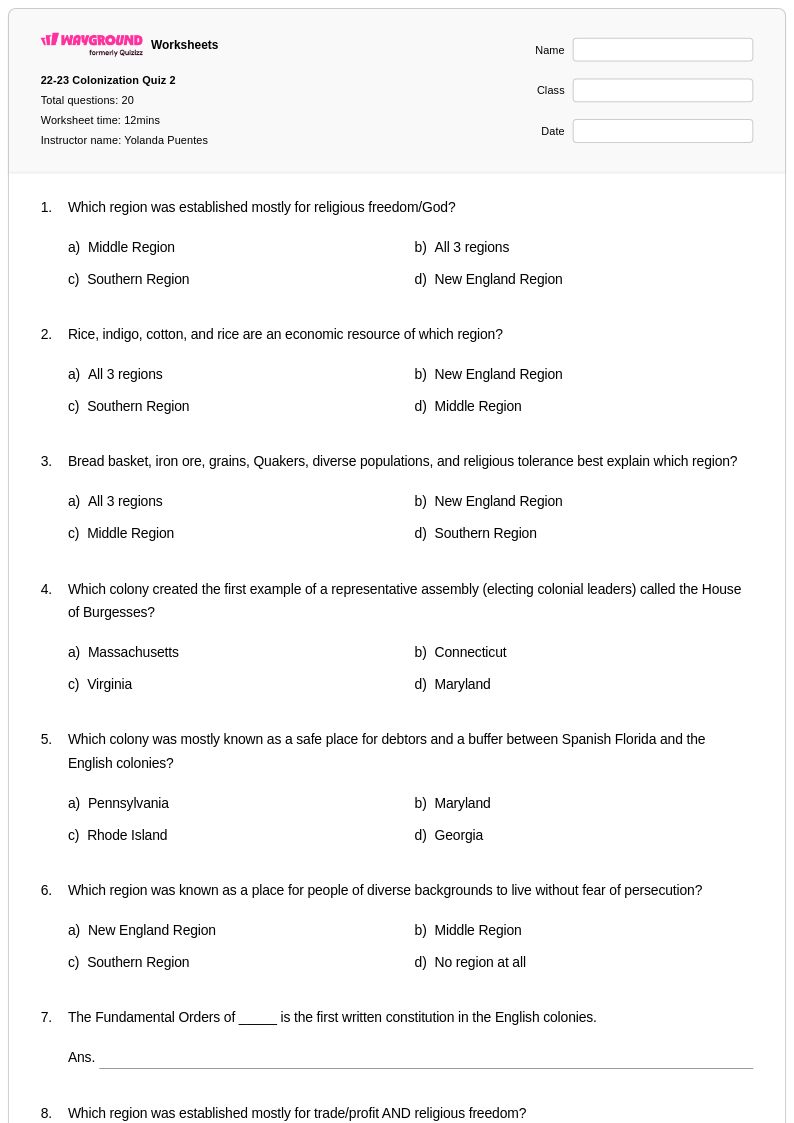
Free Printable Middle Colonies Worksheets for Grade 8
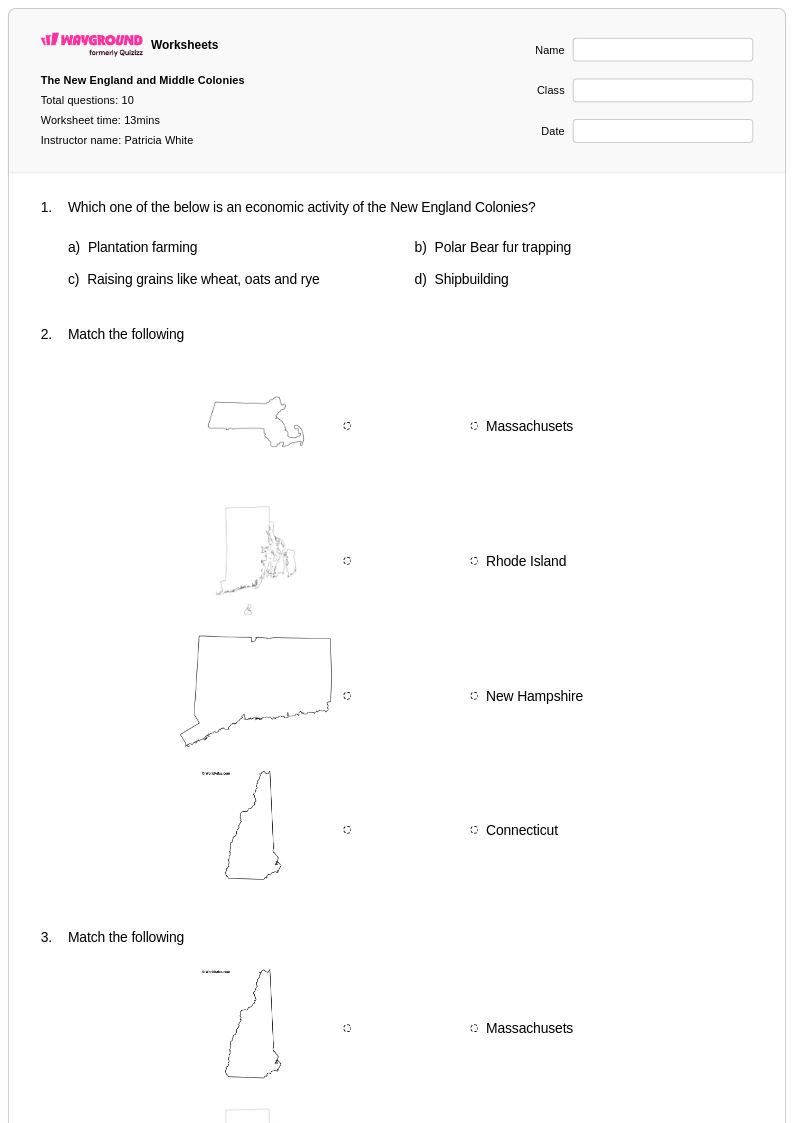
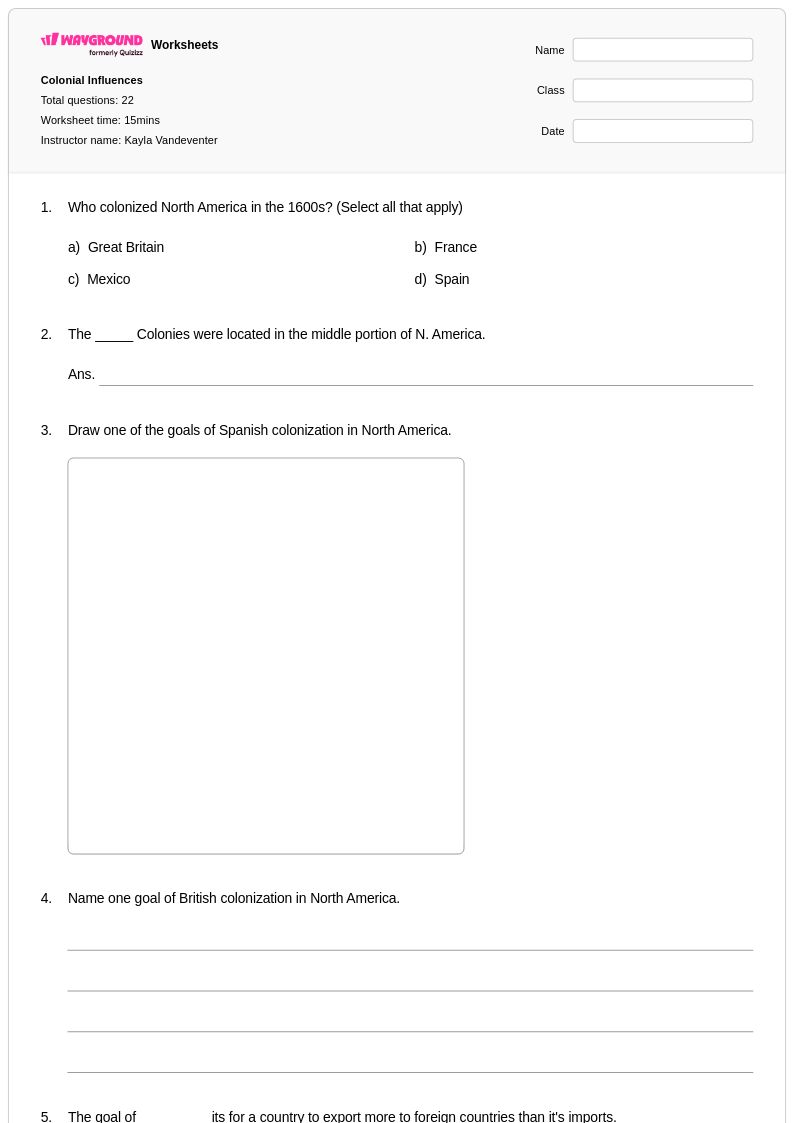
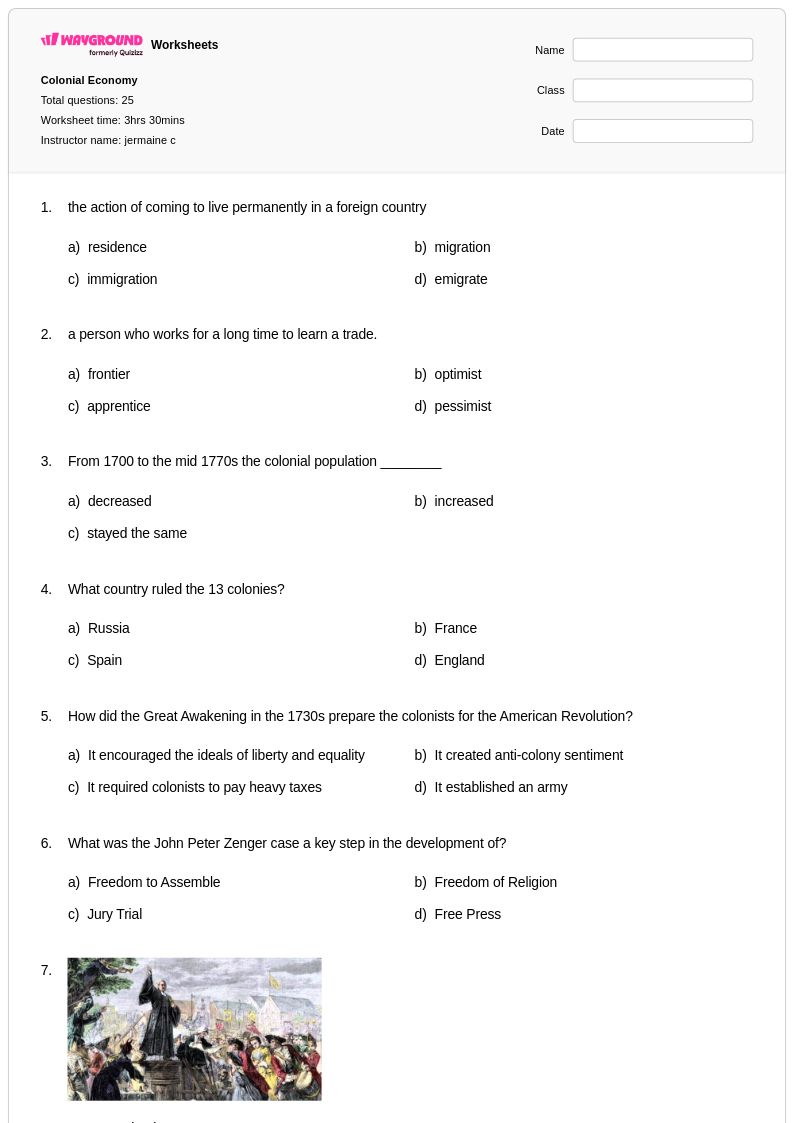
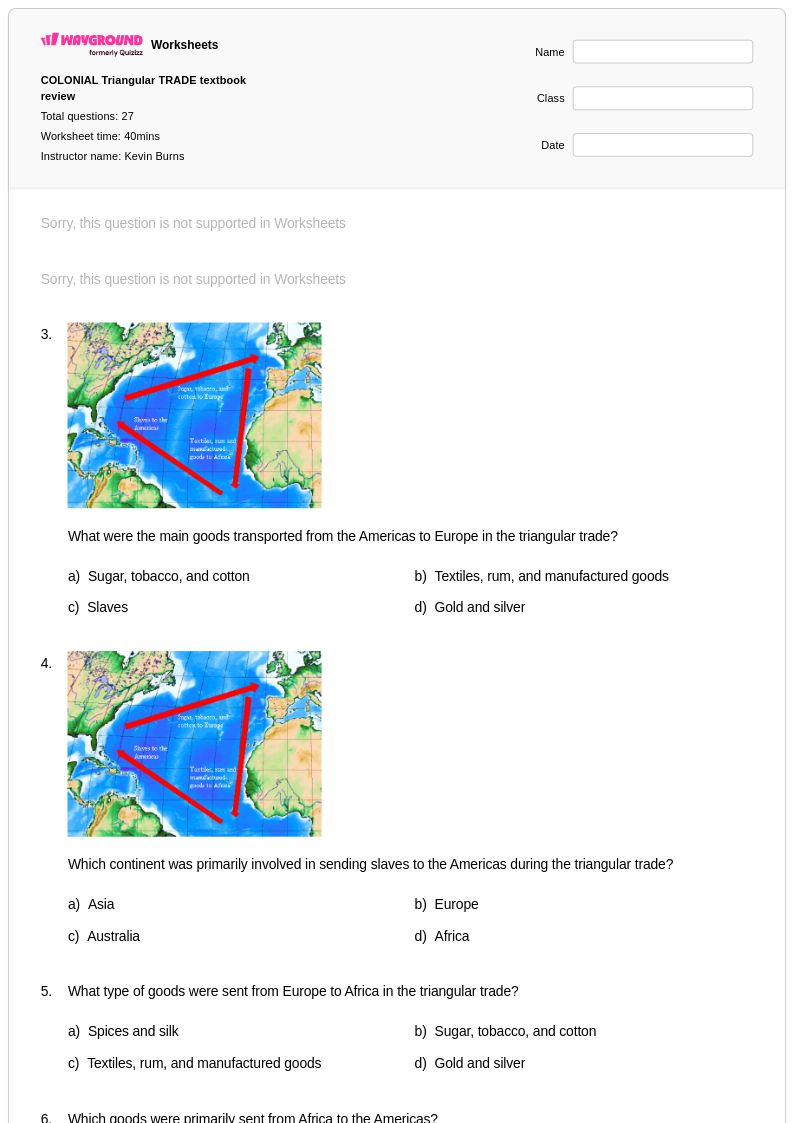
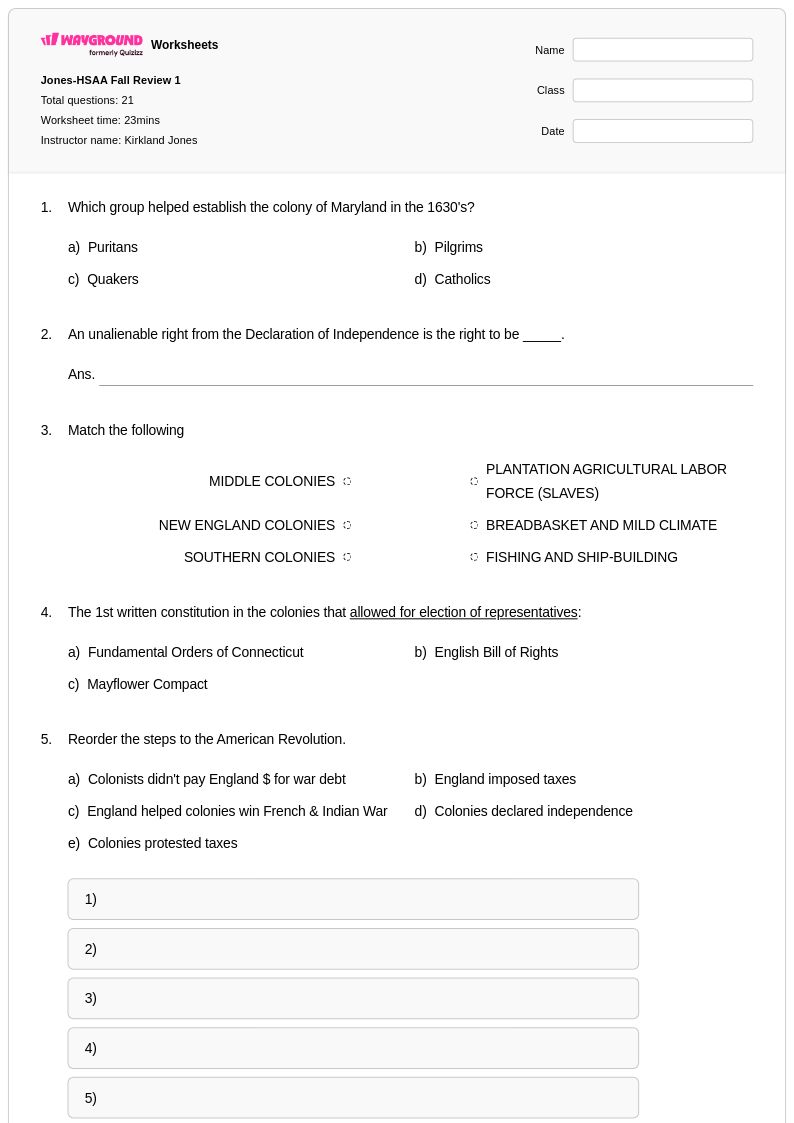
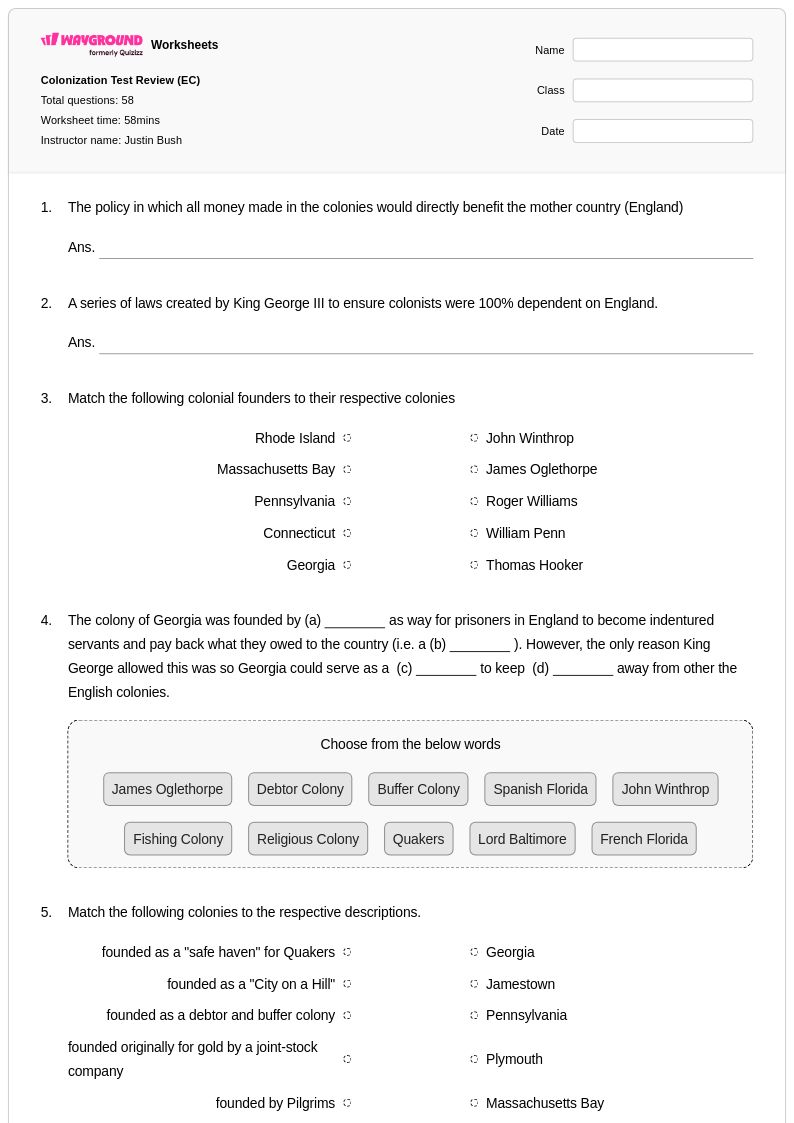
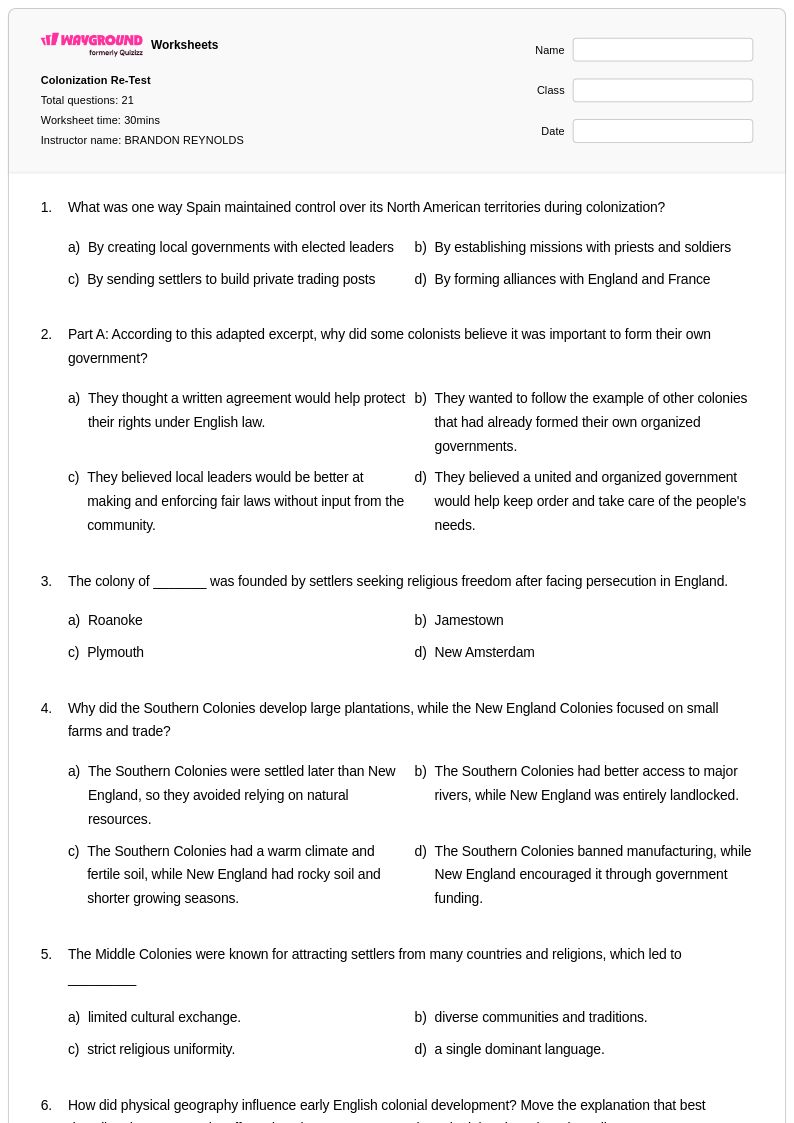
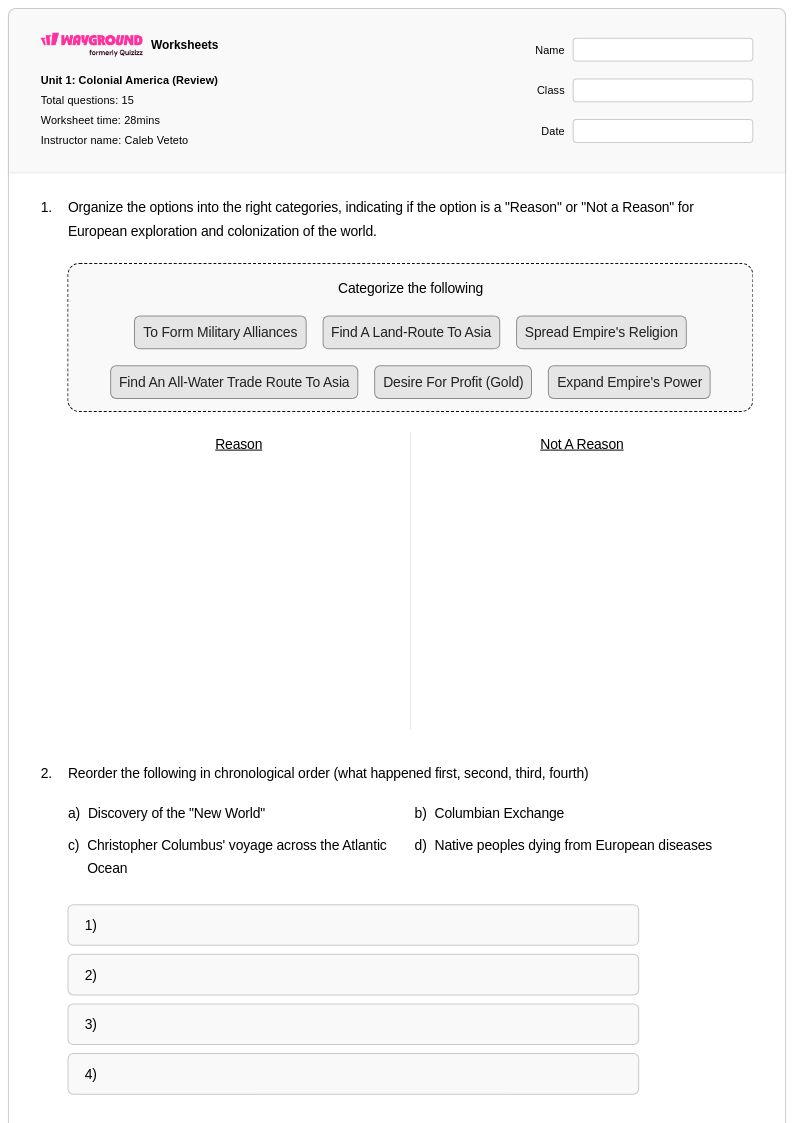
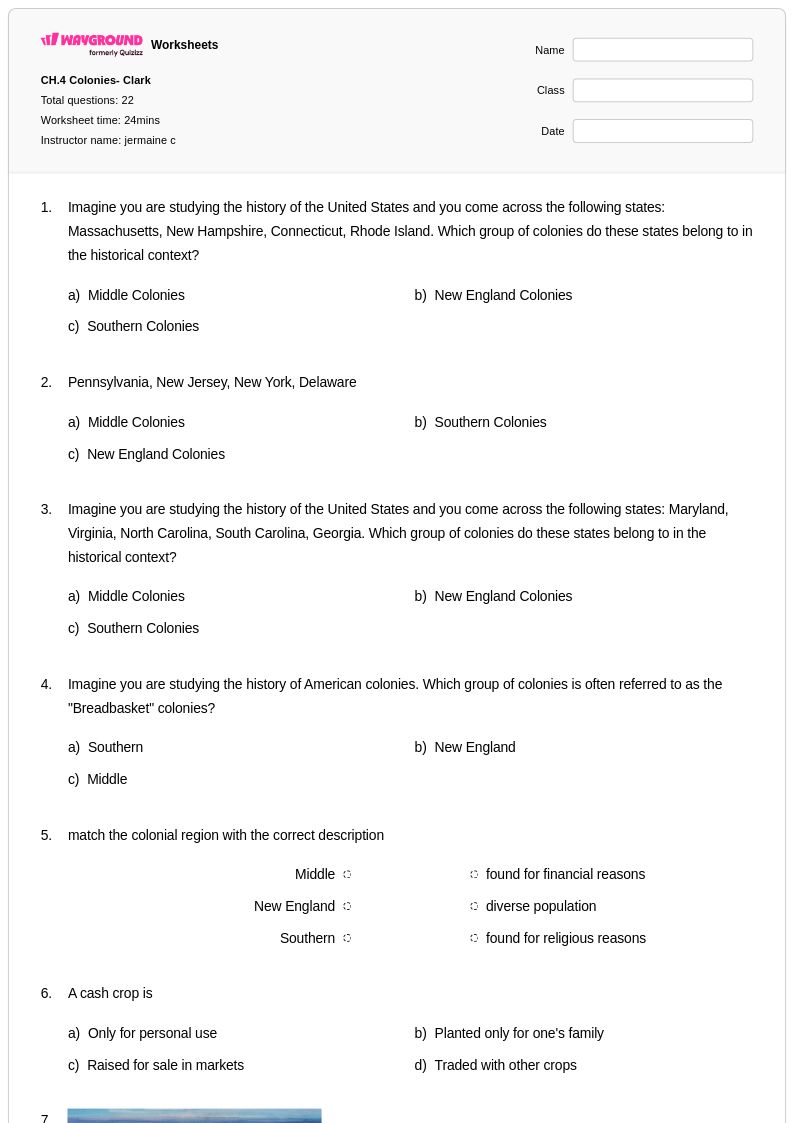
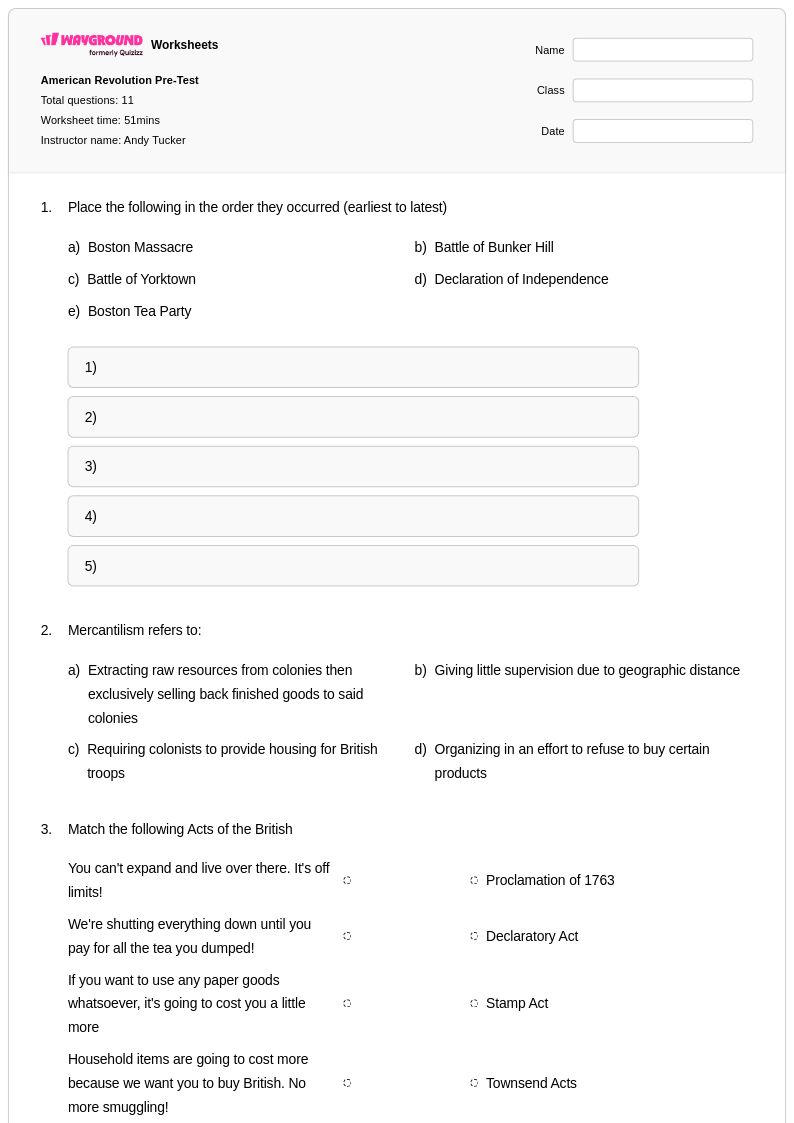
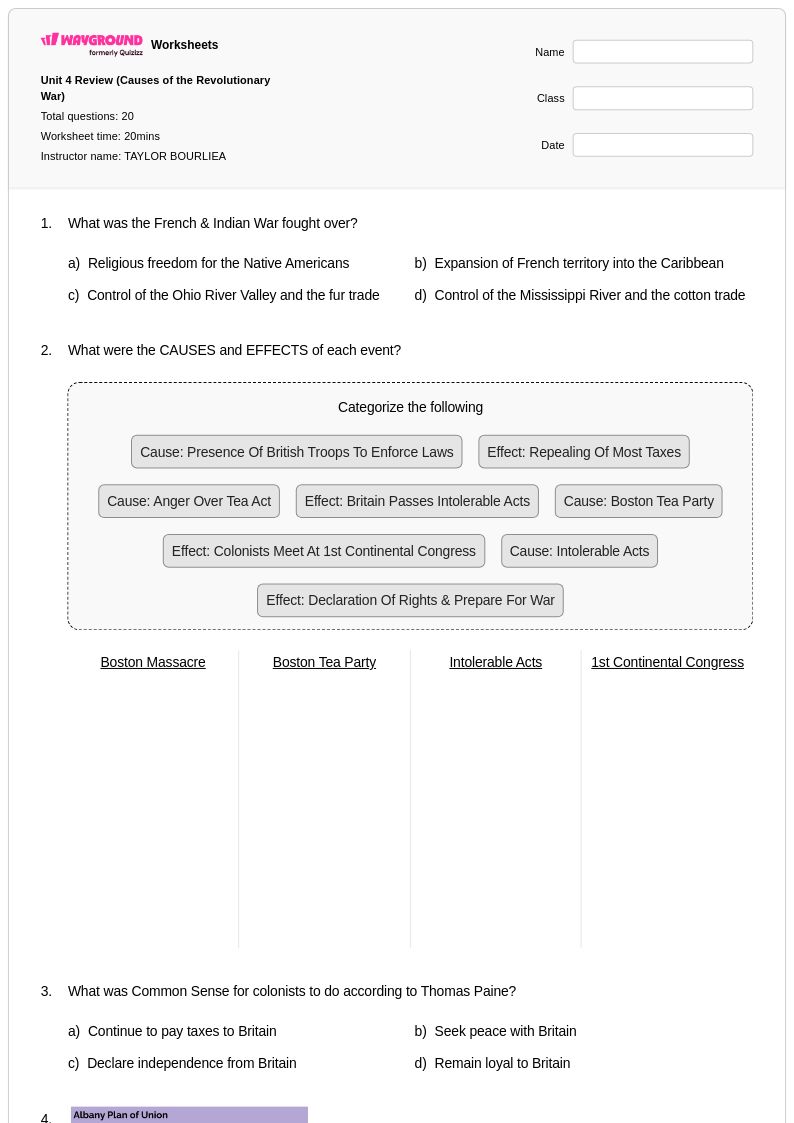
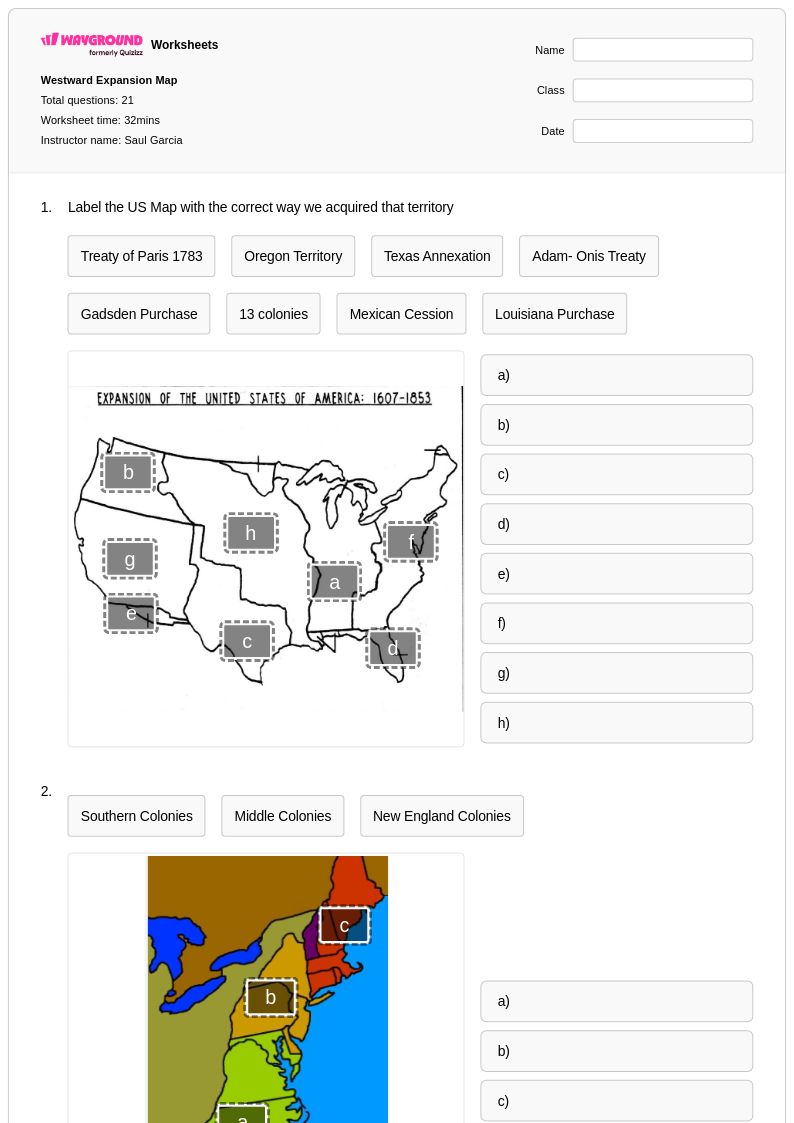
Grade 8 Middle Colonies worksheets from Wayground offer free printables and practice problems with answer keys to help students explore the history, geography, and culture of Pennsylvania, New York, New Jersey, and Delaware.
Explore printable Middle Colonies worksheets for Grade 8
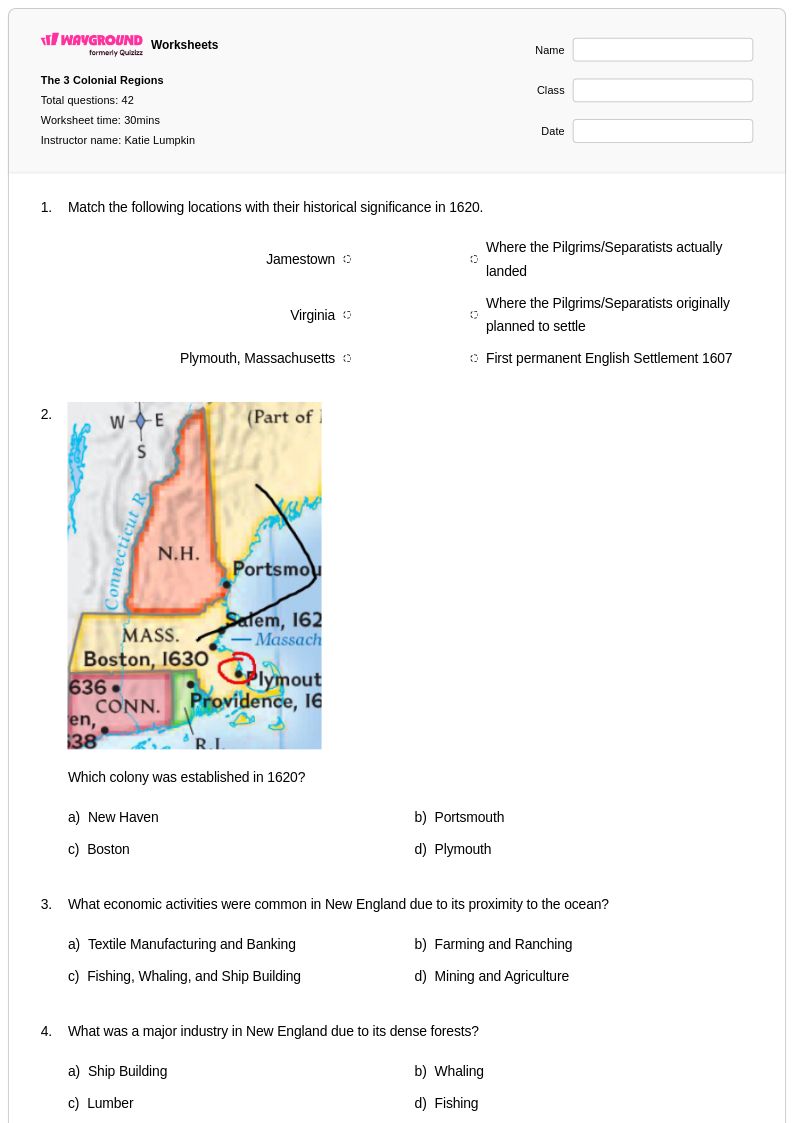
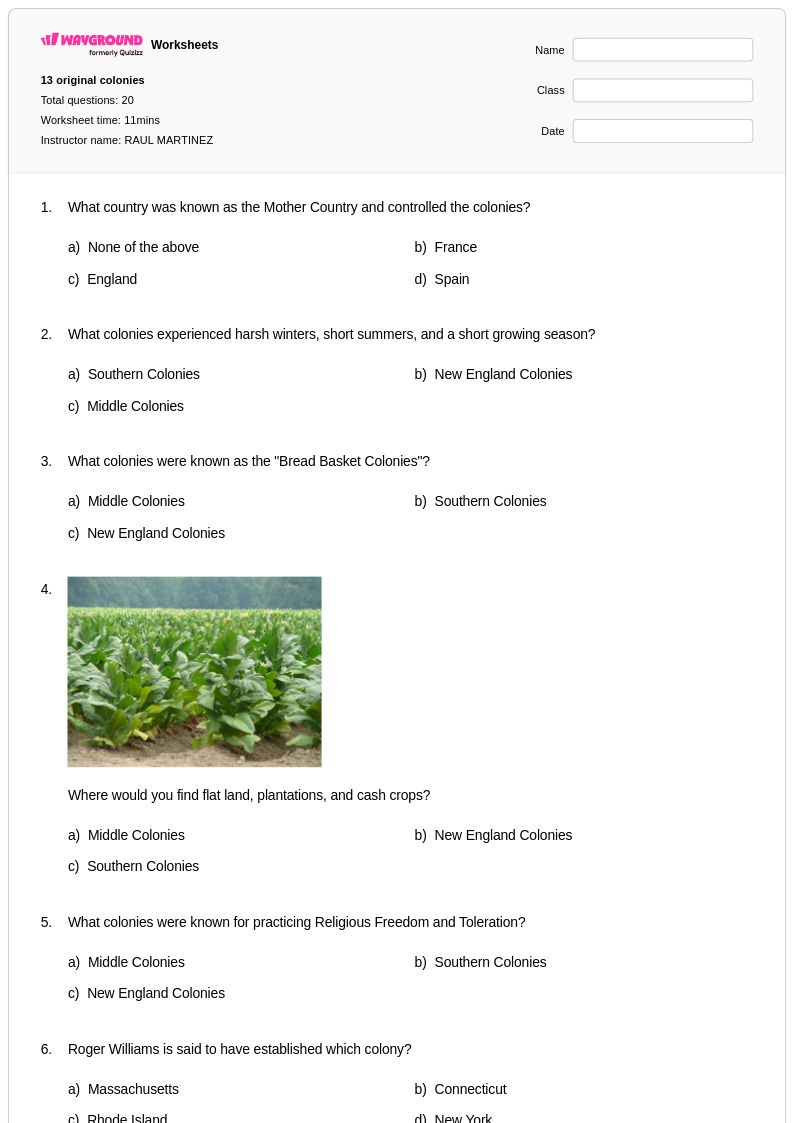
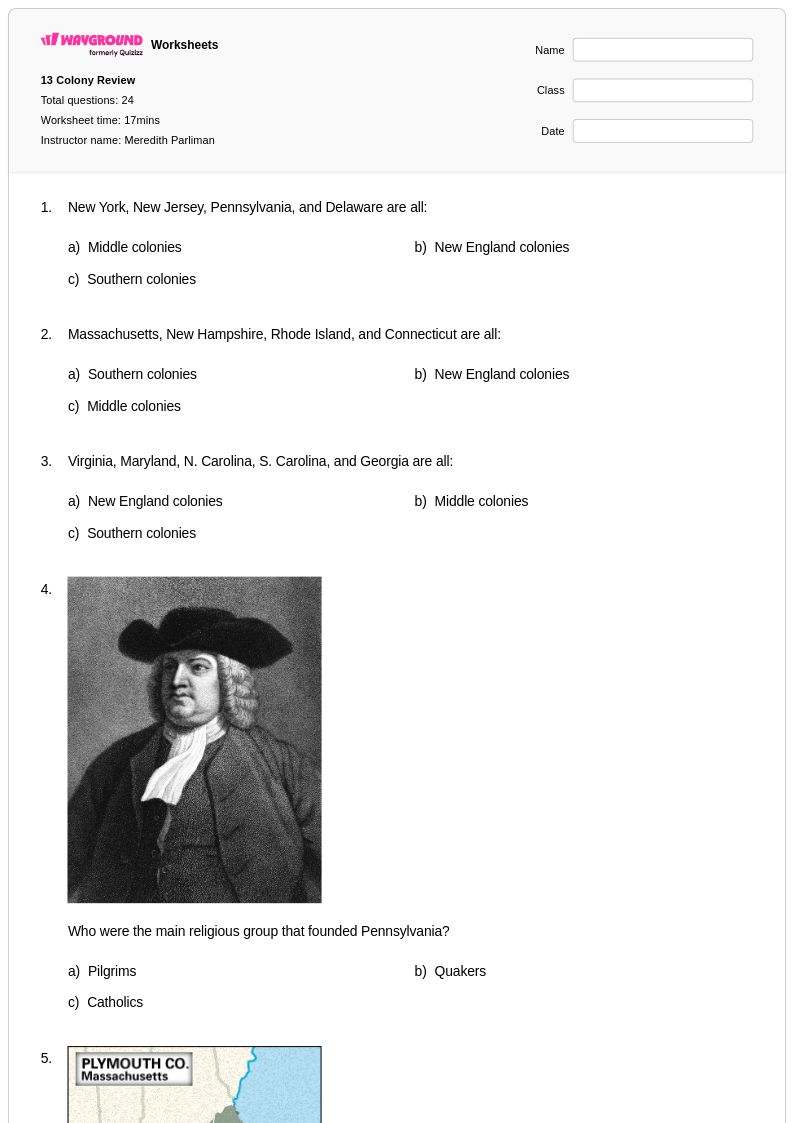
Middle Colonies worksheets for Grade 8 students through Wayground (formerly Quizizz) provide comprehensive exploration of this pivotal region in early American history, covering the diverse settlements of New York, New Jersey, Pennsylvania, and Delaware. These educational resources strengthen critical thinking skills as students analyze the unique characteristics that distinguished the Middle Colonies from their New England and Southern counterparts, including religious tolerance, ethnic diversity, and economic practices centered on agriculture and trade. Each worksheet collection includes detailed answer keys and is available as free printables in convenient PDF format, featuring practice problems that challenge students to examine primary sources, interpret maps, and evaluate the lasting impact of William Penn's "Holy Experiment" and other foundational developments in colonial society.
Wayground (formerly Quizizz) supports educators with an extensive library of millions of teacher-created Middle Colonies resources that streamline lesson planning and enhance student engagement through robust search and filtering capabilities aligned with national social studies standards. Teachers can easily differentiate instruction by accessing worksheets that range from foundational comprehension activities to advanced analytical tasks, with flexible customization options that allow educators to modify content for diverse learning needs. These digital and printable PDF resources facilitate targeted remediation for struggling students while providing enrichment opportunities for advanced learners, enabling teachers to conduct focused skill practice sessions that deepen understanding of colonial demographics, governance structures, and the economic foundations that shaped the Middle Colonies' development into thriving multicultural communities.
FAQs
How do I teach the Middle Colonies to middle school students?
Teaching the Middle Colonies effectively means anchoring instruction in what made them distinct: religious tolerance, ethnic diversity, and economic variety that set them apart from both New England and the Southern colonies. Start by contrasting the three colonial regions so students can place the Middle Colonies in context, then zoom in on Pennsylvania's Quaker principles, Dutch influences in New York, and the role of diverse immigrant populations in shaping daily life. Primary source analysis — such as William Penn's writings or colonial land grant documents — helps students move beyond memorization and engage with the motivations behind settlement.
What are good practice exercises for students learning about the Middle Colonies?
Effective practice exercises for the Middle Colonies include compare-and-contrast tasks that ask students to evaluate how Pennsylvania, New York, New Jersey, and Delaware differed in governance, religion, and economy. Document analysis activities using colonial-era primary sources build critical thinking skills, while mapping exercises that show trade routes and settlement patterns reinforce geographic context. Structured response questions that ask students to explain how Quaker values or Dutch colonial policies shaped regional development push students to synthesize rather than recall.
What mistakes do students commonly make when learning about the Middle Colonies?
One of the most common misconceptions is that the Middle Colonies were simply a bland middle ground — students often underestimate how economically sophisticated and culturally distinct they were compared to New England and the Southern colonies. Students also frequently conflate religious tolerance with the absence of religious influence, when in fact Quaker principles in Pennsylvania actively shaped laws and social norms. Another persistent error is treating the Middle Colonies as a single unified region rather than four separate colonies with different founding histories, demographics, and governing structures.
How do I use Middle Colonies worksheets in my classroom?
Middle Colonies worksheets on Wayground are available as printable PDFs for direct classroom distribution and in digital formats for technology-integrated or remote learning environments, giving teachers flexibility in how they deploy the material. Teachers can use them as structured independent practice after direct instruction, as small-group analysis tasks, or as formative assessments to check understanding before moving to colonial comparisons or the road to independence. Wayground also allows teachers to host worksheets as a digital quiz, enabling automated scoring and real-time visibility into student performance.
How do the Middle Colonies worksheets on Wayground support differentiated instruction?
Wayground's differentiation tools allow teachers to adjust content complexity and modify assignments to meet the needs of different learners, whether that means scaffolding for struggling students or extending tasks for advanced ones. For individual student accommodations, teachers can enable features such as read aloud support, extended time, reduced answer choices, and adjustable reading modes — all configurable from the Students tab or session settings. These settings are saved and reusable across future sessions, so teachers don't need to reconfigure them for every assignment.
How do Middle Colonies worksheets align with social studies standards?
Middle Colonies worksheets on Wayground are designed to support alignment with state social studies standards through robust search and filtering capabilities that let teachers locate materials matching specific curriculum objectives. Topics covered — including colonial economics, religious freedom, cultural pluralism, and comparative colonial government — map directly to the U.S. history and civics benchmarks found in most state frameworks for upper elementary and middle school. Teachers can filter by skill type or concept focus to ensure the materials they assign are precisely matched to what their standards require.

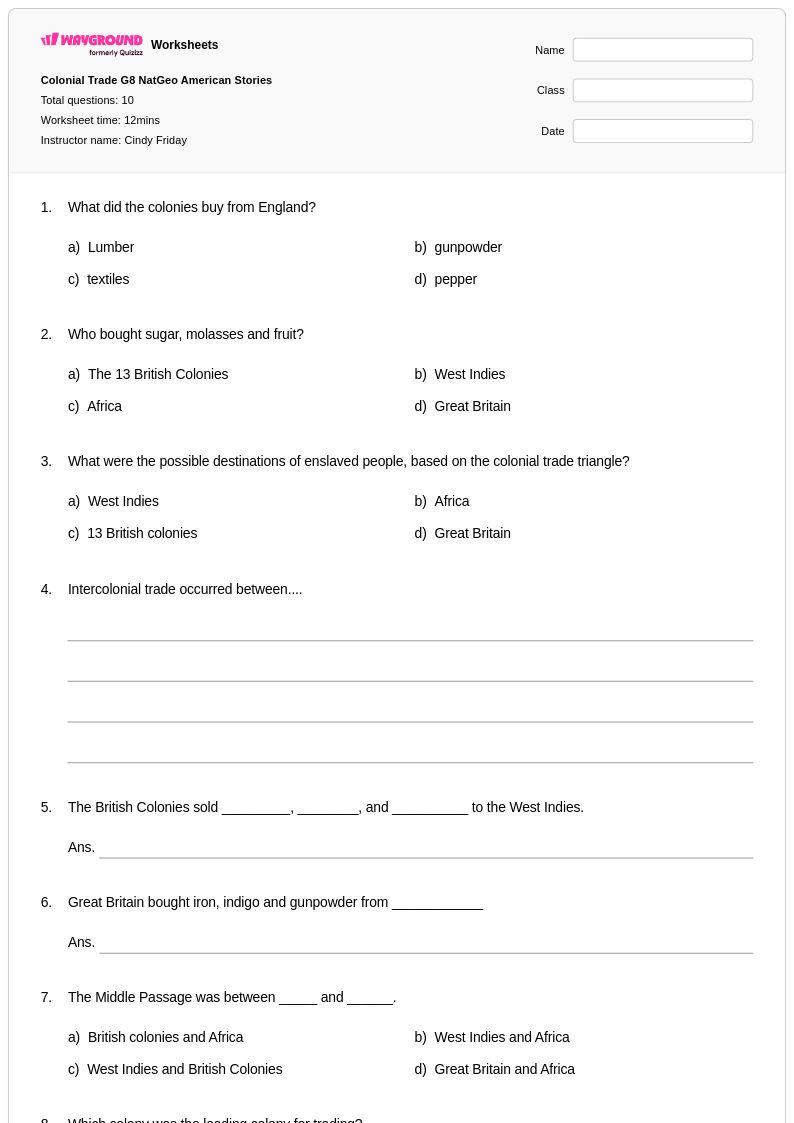
![US - Colonization [Middle and Southern] 21-22 - Printable Middle-colonies Worksheets Grade 8 - Quizizz](https://quizizz-static.s3.amazonaws.com/_media/worksheets-new/612bd43aa13f14001d82a533-us-colonization-middle-and-southern-21-22)