Free Printable Nervous System Worksheets for Grade 12
Grade 12 Biology nervous system worksheets from Wayground help students master neural pathways, brain functions, and neuron structures through comprehensive printables, practice problems, and answer keys available as free PDF downloads.
Explore printable Nervous System worksheets for Grade 12
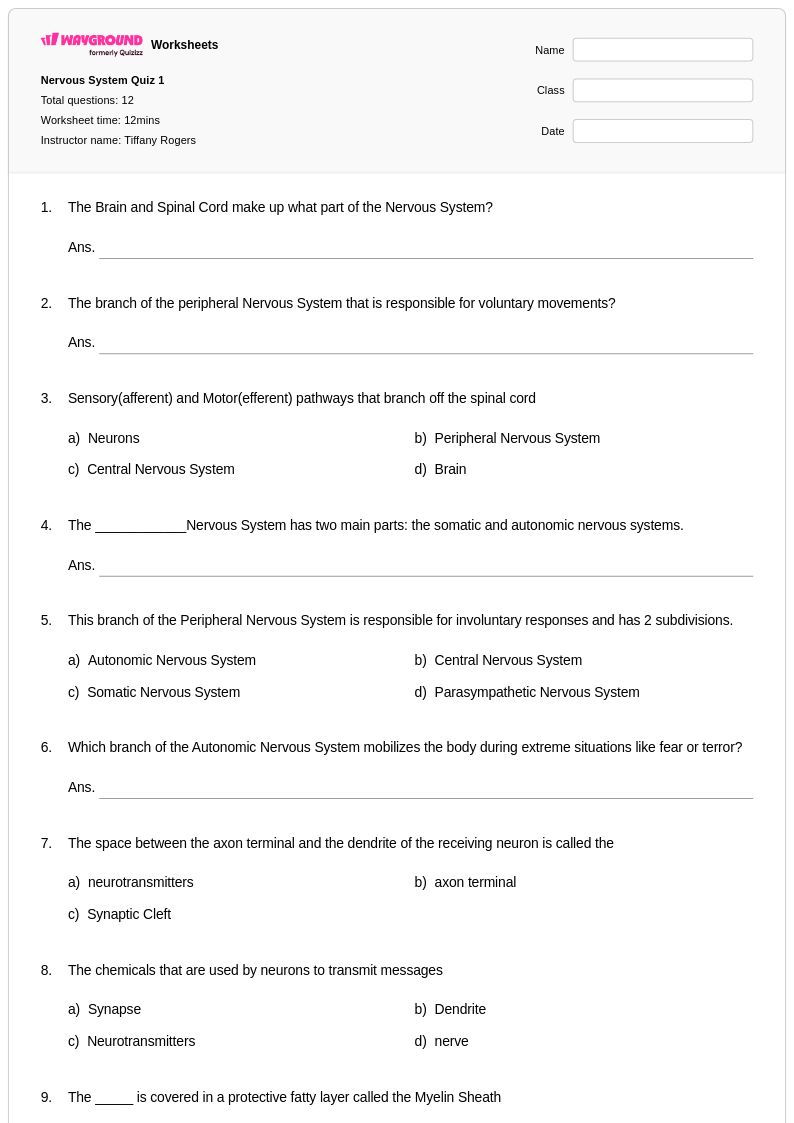
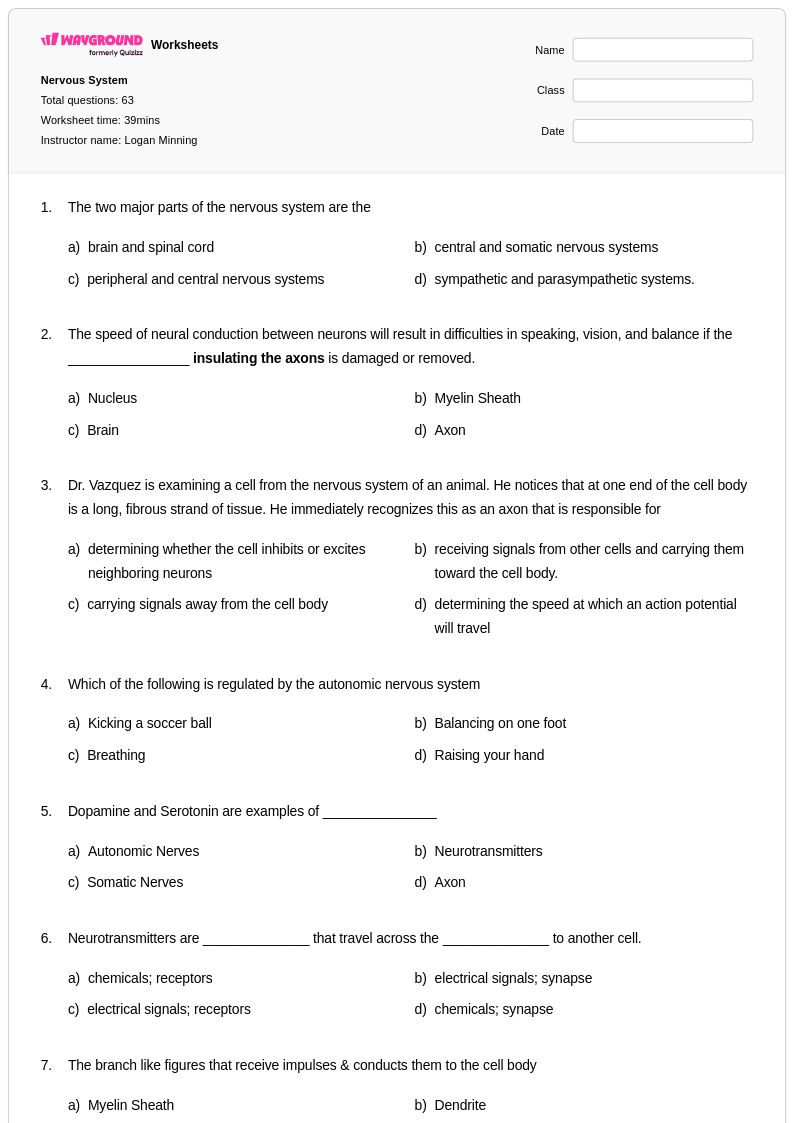
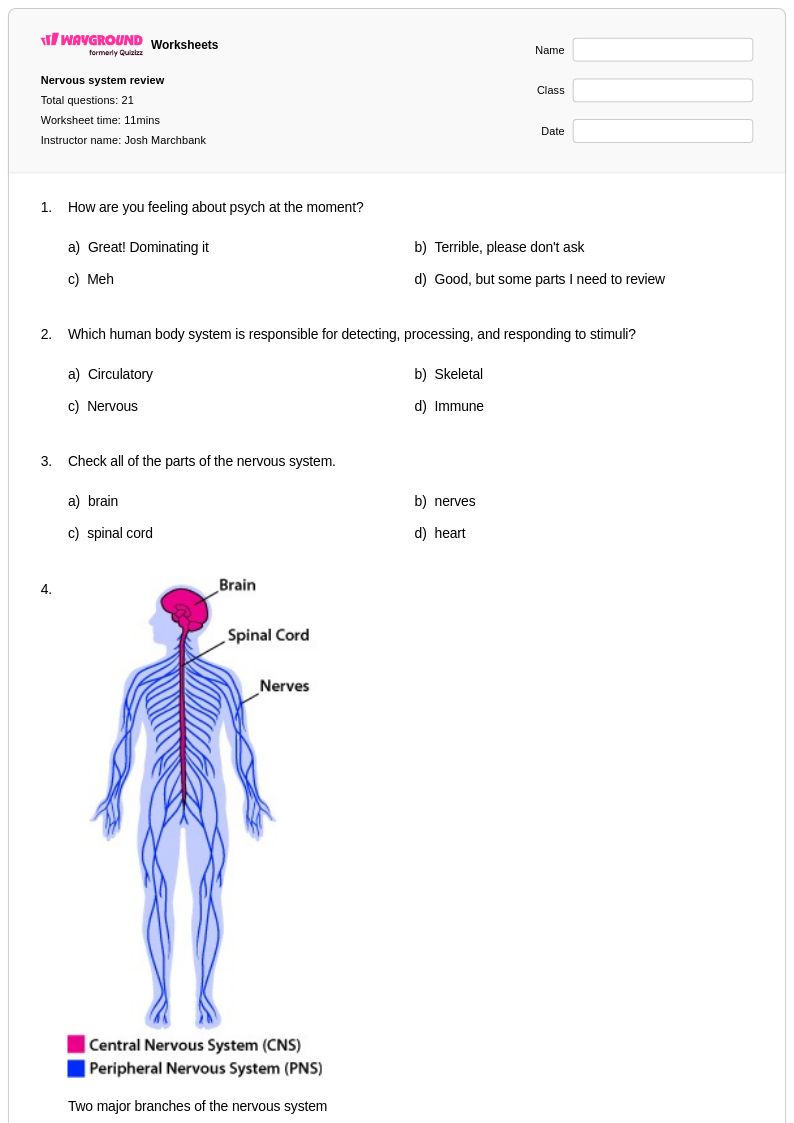
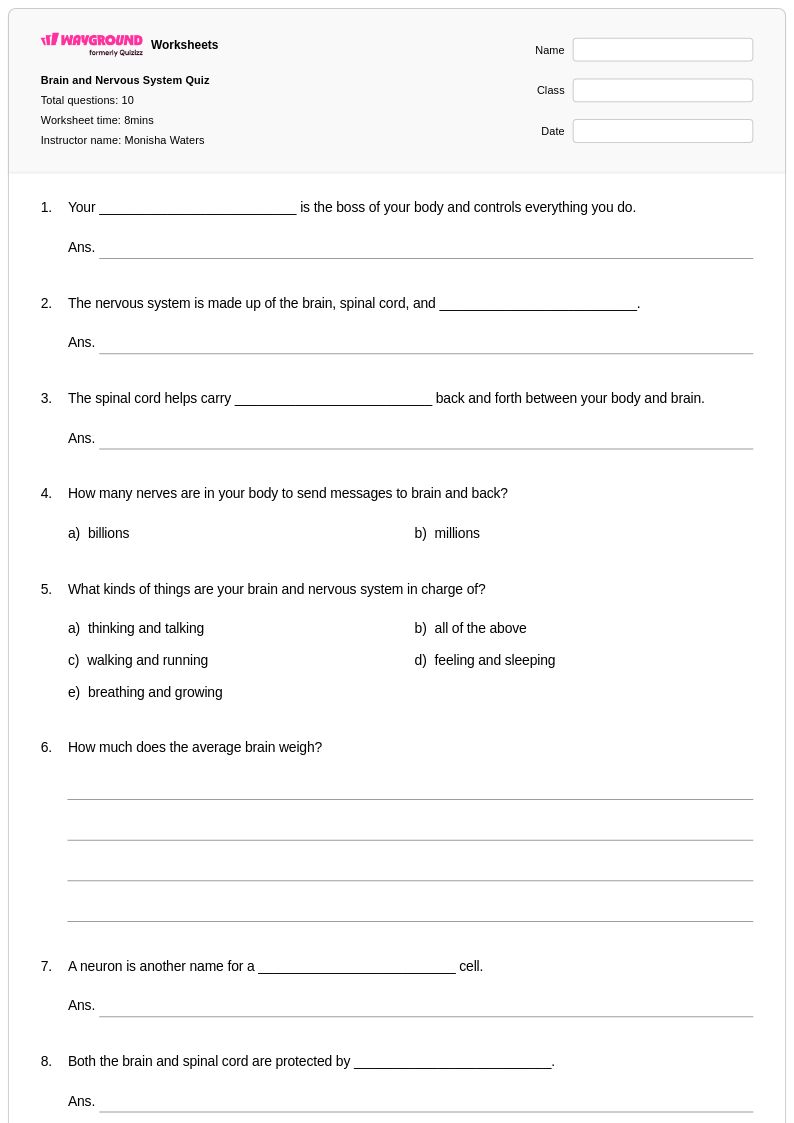
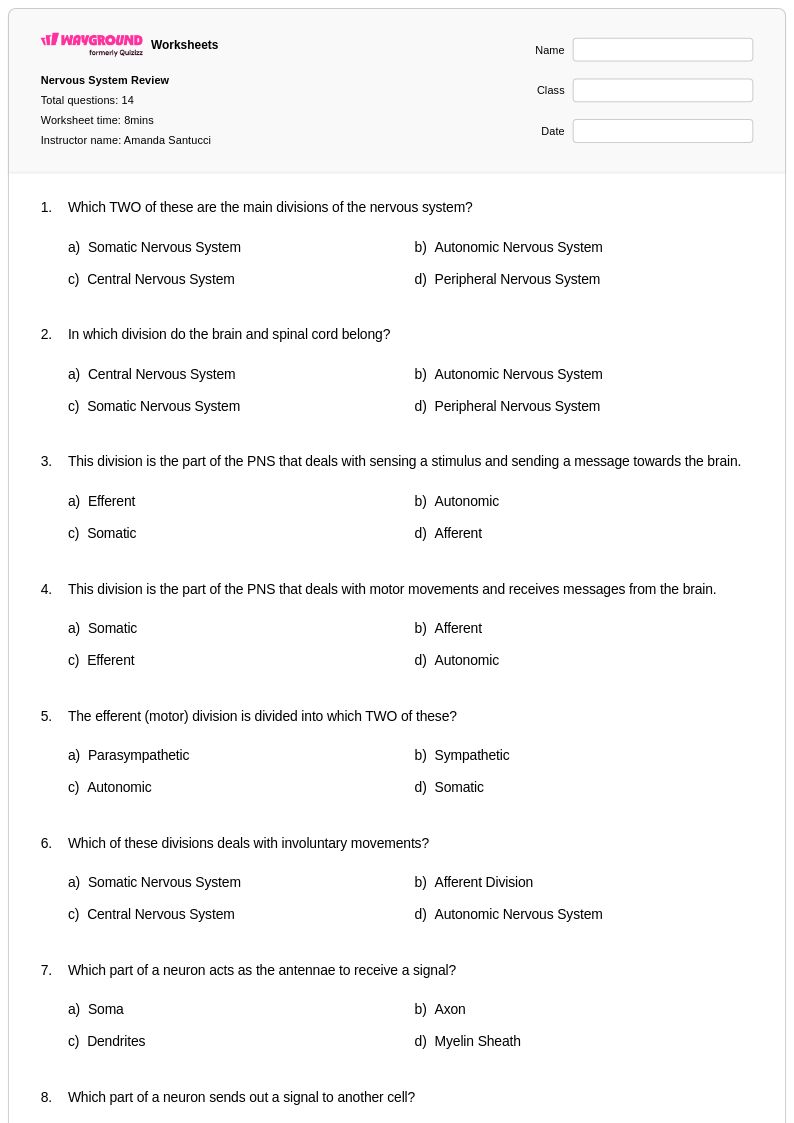
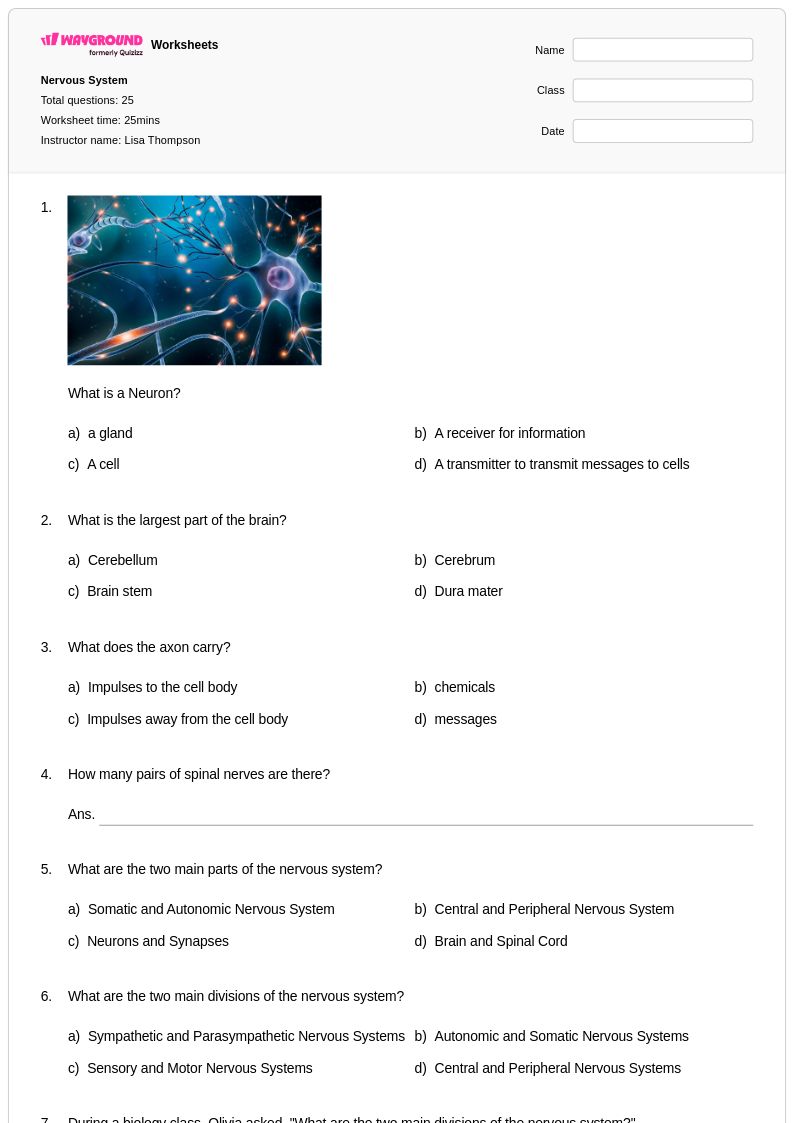
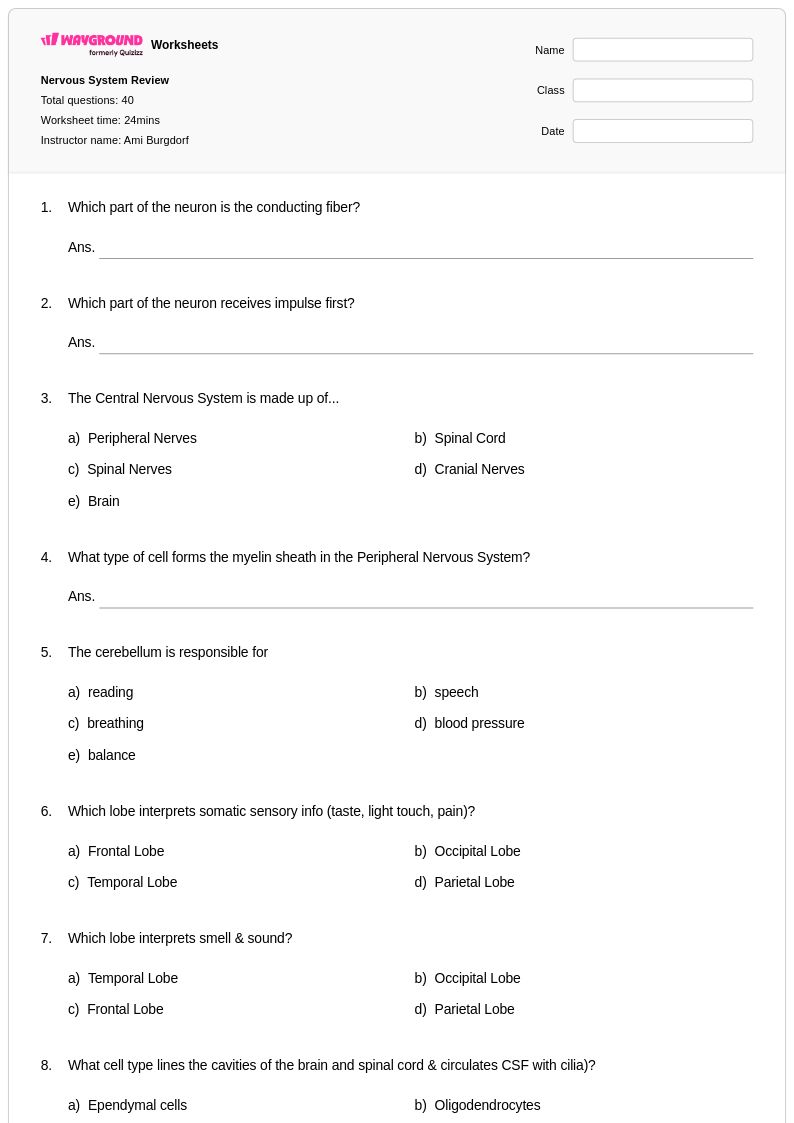
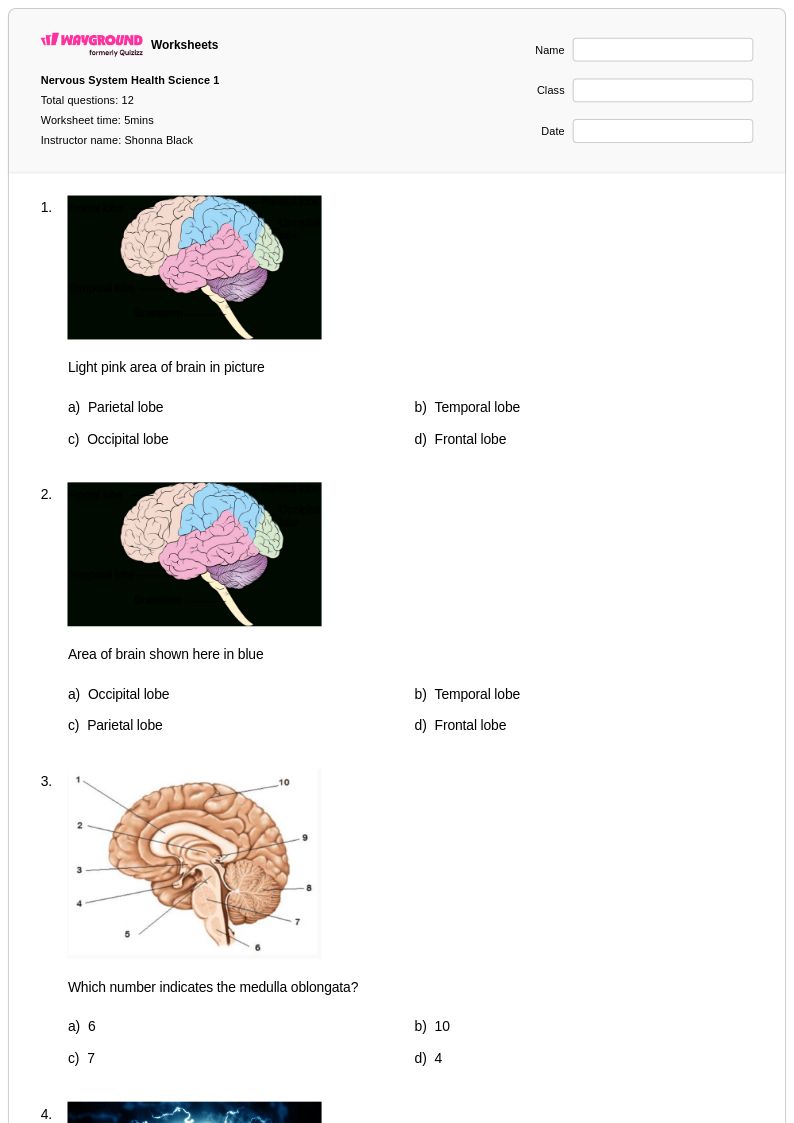
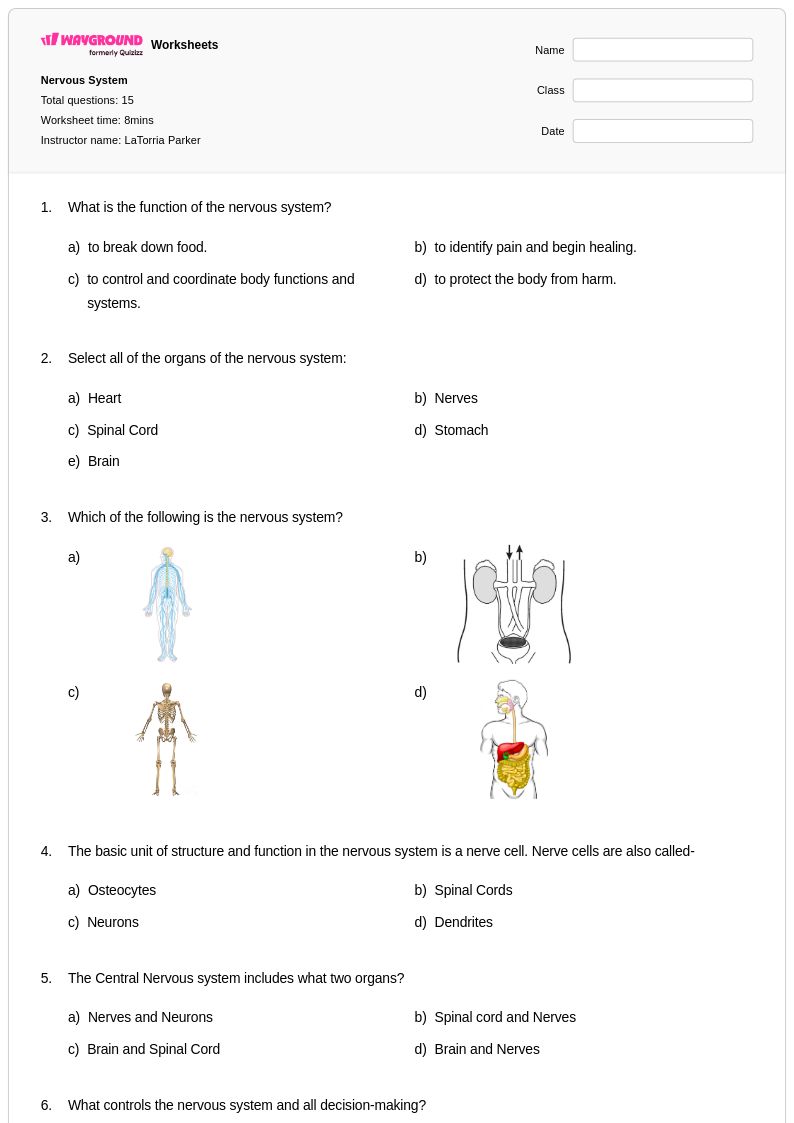
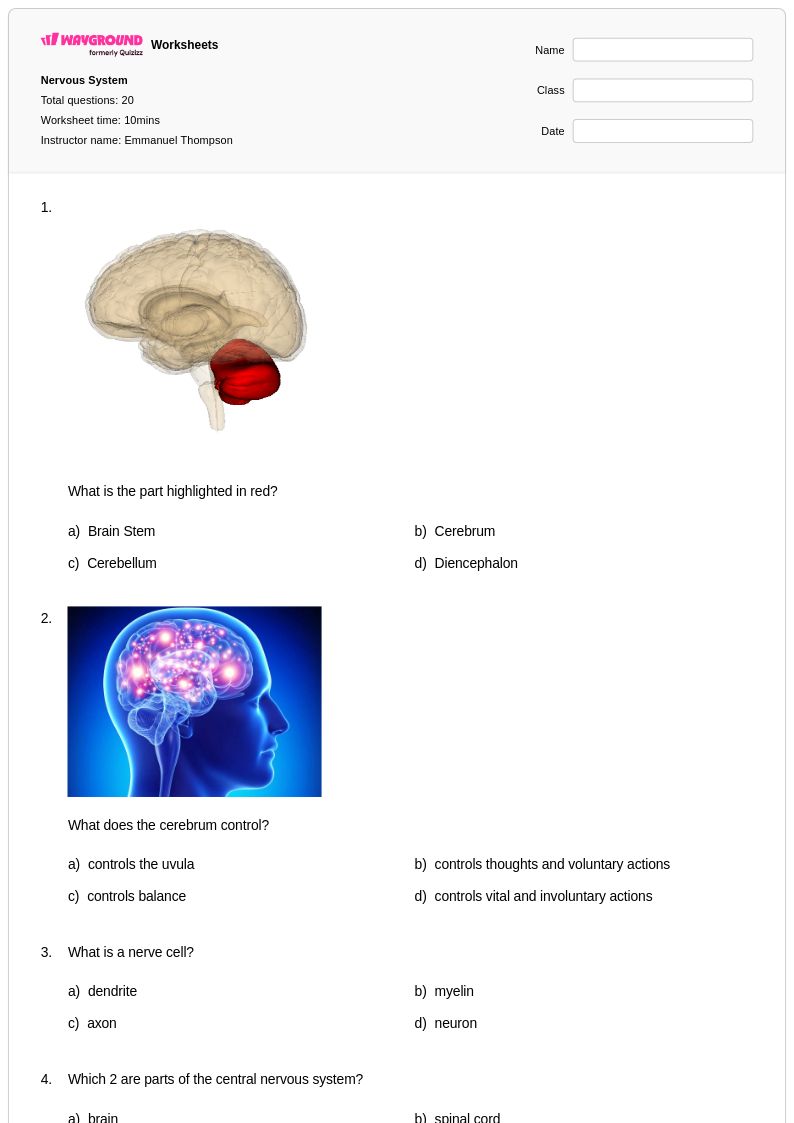
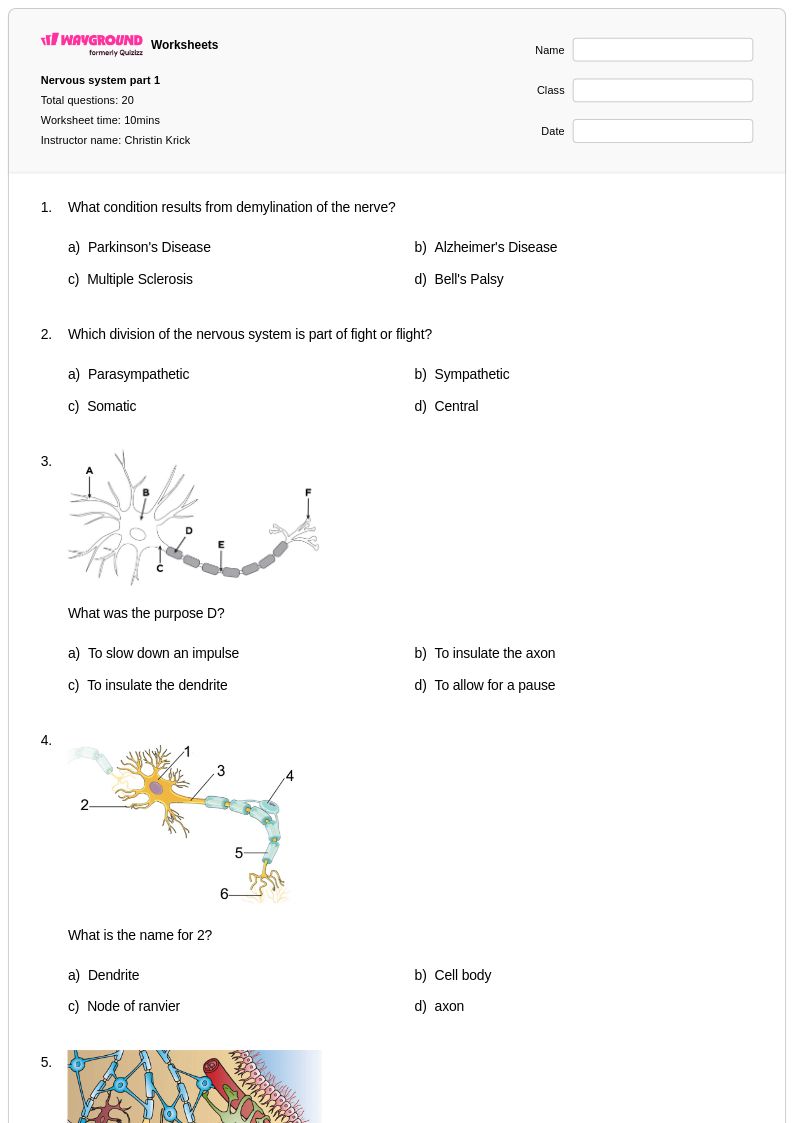
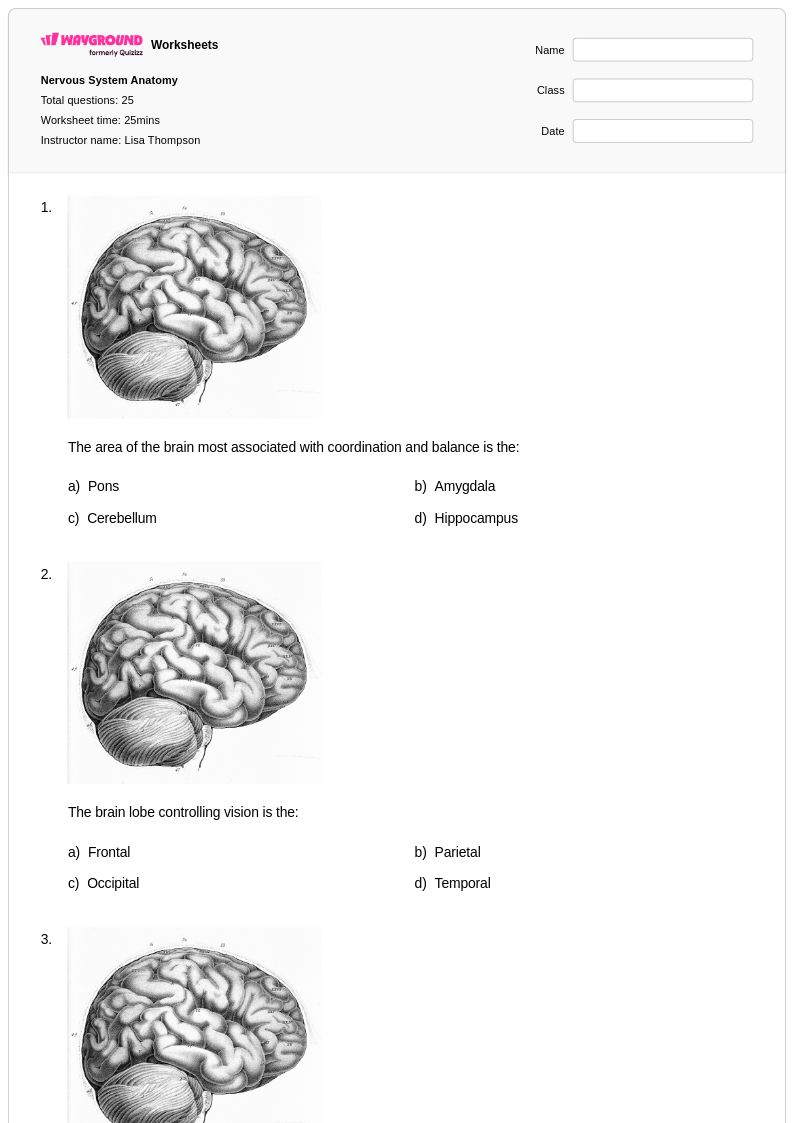
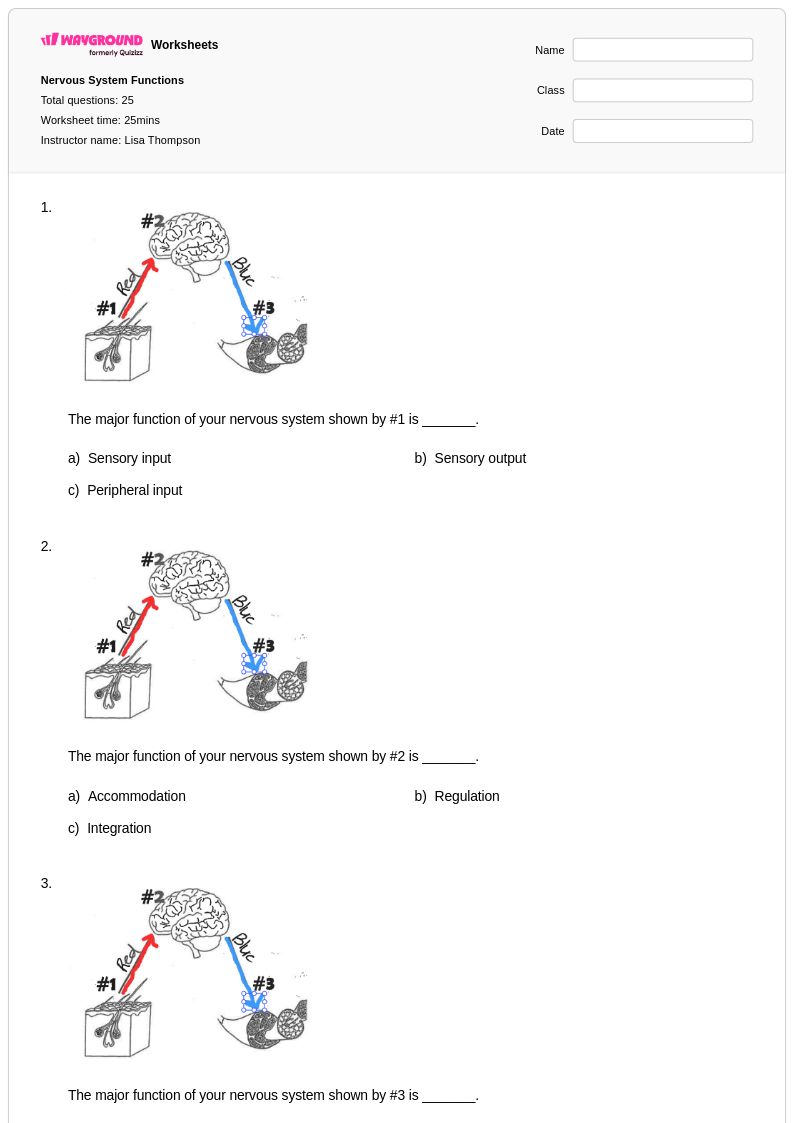
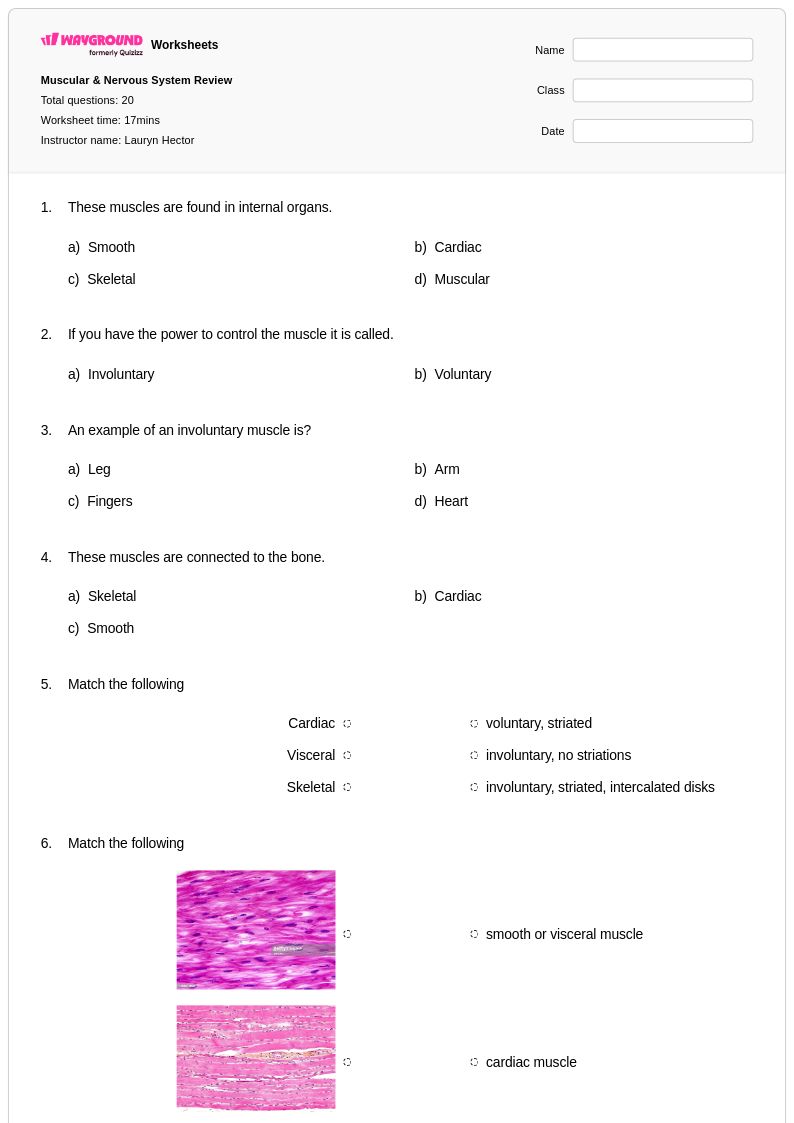
Grade 12 nervous system worksheets available through Wayground (formerly Quizizz) provide comprehensive coverage of advanced neurobiological concepts essential for college-bound students. These expertly designed resources strengthen critical thinking skills through detailed exploration of neural transmission, synaptic mechanisms, central and peripheral nervous system organization, and neurological disorders. Students engage with complex practice problems that challenge their understanding of action potentials, neurotransmitter function, brain anatomy, and reflex pathways. Each worksheet collection includes comprehensive answer keys that support independent learning and self-assessment, while printable pdf formats ensure accessibility for both classroom instruction and home study. These free educational resources emphasize analytical problem-solving and data interpretation skills that prepare students for advanced placement examinations and undergraduate science coursework.
Wayground's extensive platform supports biology educators with millions of teacher-created nervous system resources specifically curated for Grade 12 instruction. The platform's advanced search and filtering capabilities allow teachers to quickly locate materials aligned with state and national science standards, ensuring curriculum coherence and academic rigor. Differentiation tools enable educators to customize worksheets for diverse learning needs, while flexible formatting options provide both digital and printable pdf versions to accommodate various classroom environments. These comprehensive collections facilitate effective lesson planning by offering resources for initial concept introduction, skill reinforcement, and remediation support. Teachers can seamlessly integrate these materials into their instruction to provide targeted practice opportunities, support struggling learners with additional scaffolding, and challenge advanced students with enrichment activities that deepen their neurobiological understanding.
FAQs
How do I teach the nervous system to middle or high school students?
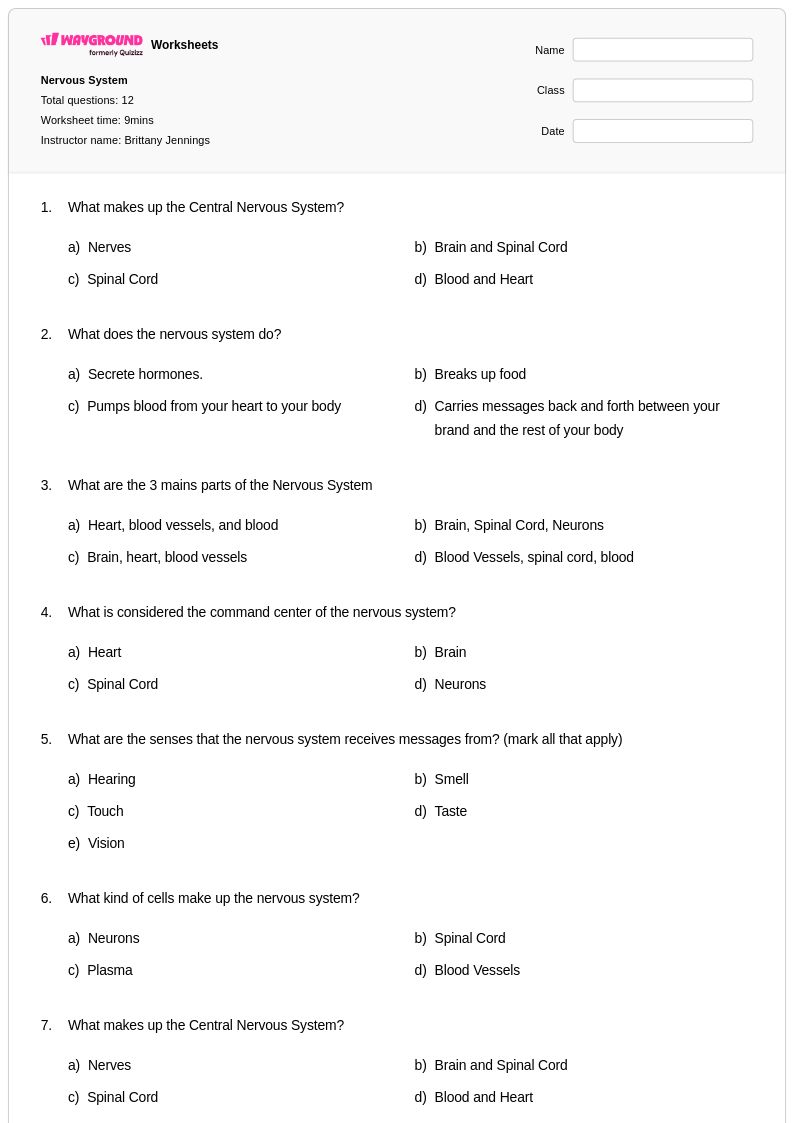
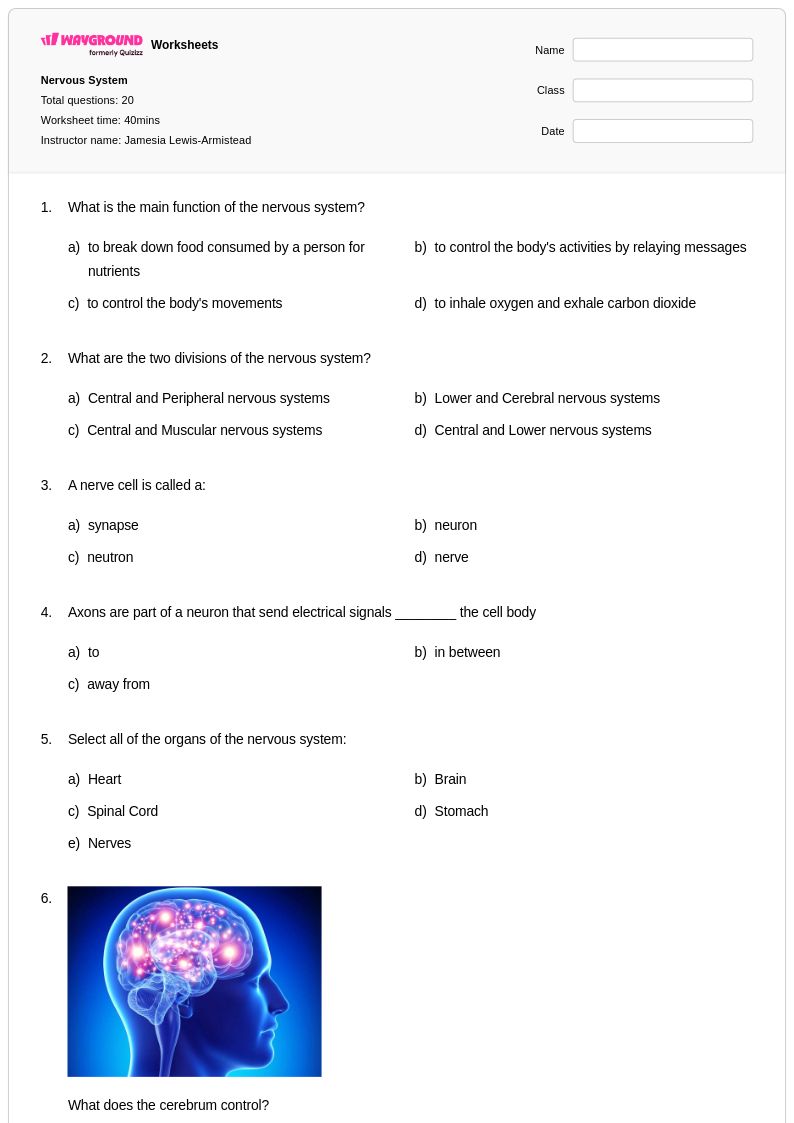
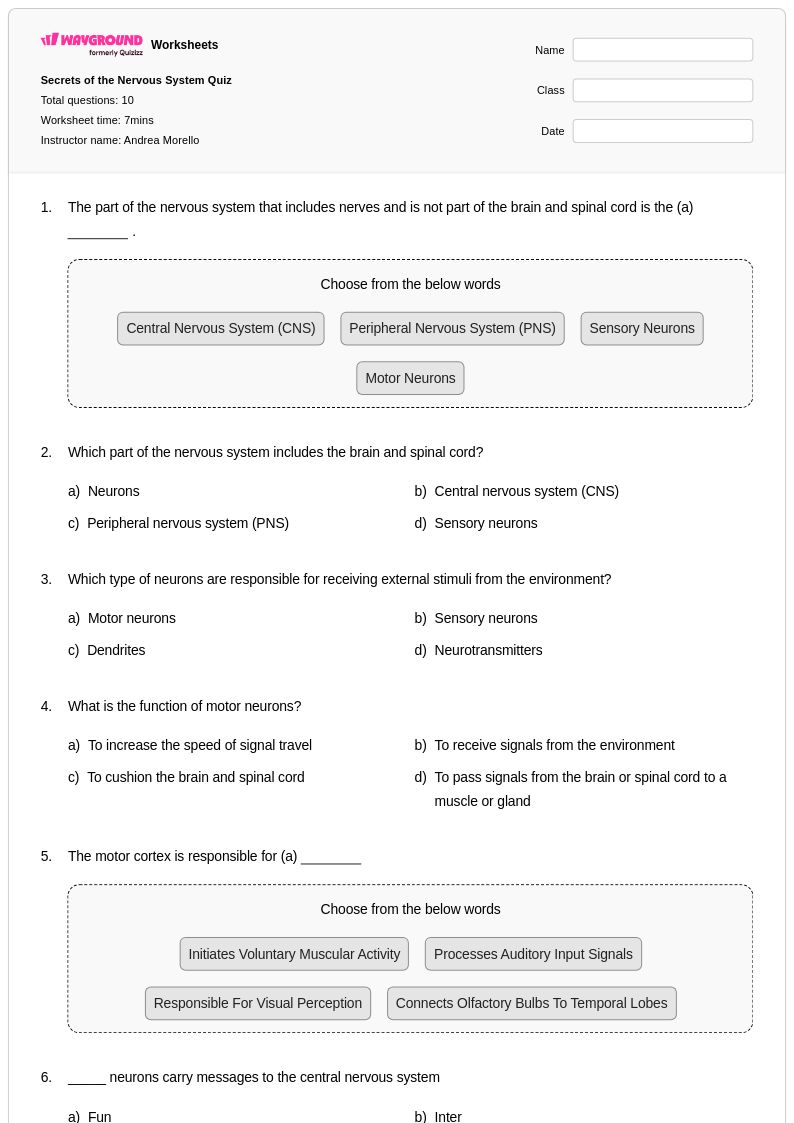
Start by establishing the structural hierarchy: central nervous system (brain and spinal cord) versus peripheral nervous system (sensory and motor neurons). From there, build toward function by tracing how a stimulus travels through sensory neurons, is processed by the CNS, and triggers a motor response. Using labeled neuron diagrams and reflex arc models early in the unit helps students anchor abstract processes to concrete structures before moving into topics like synaptic transmission and neurotransmitter function.
What worksheets and exercises help students practice nervous system concepts?
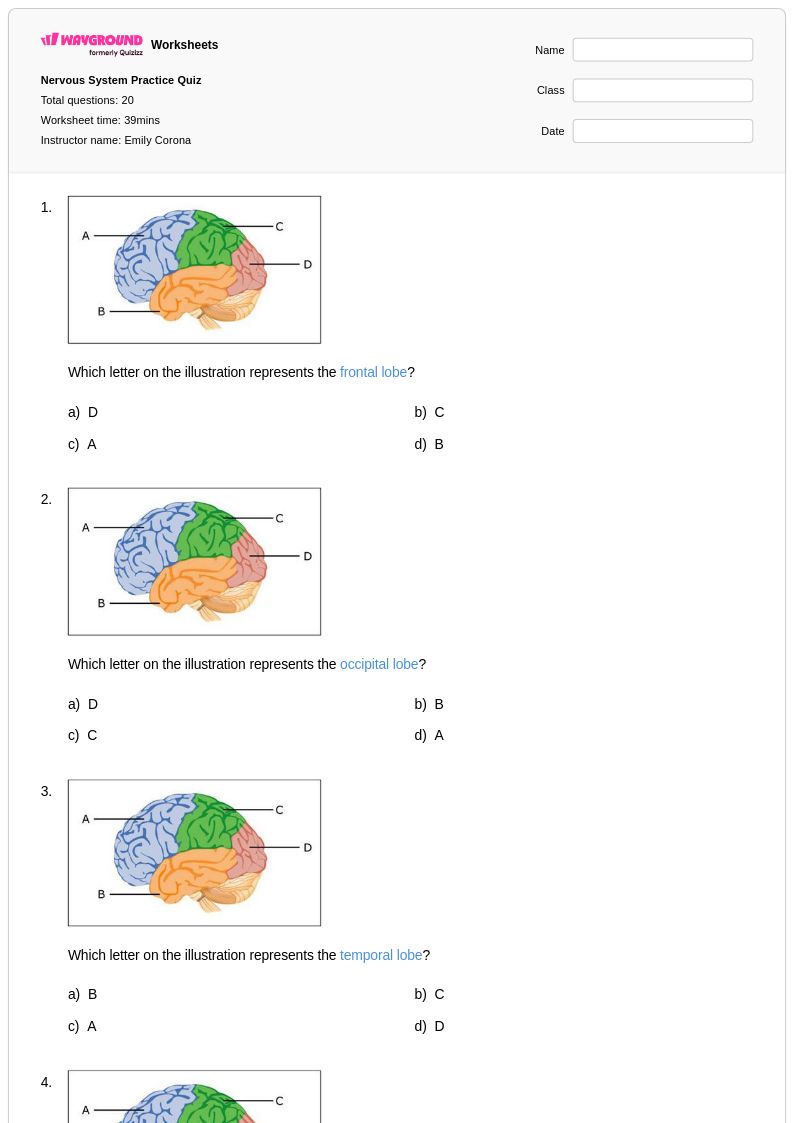
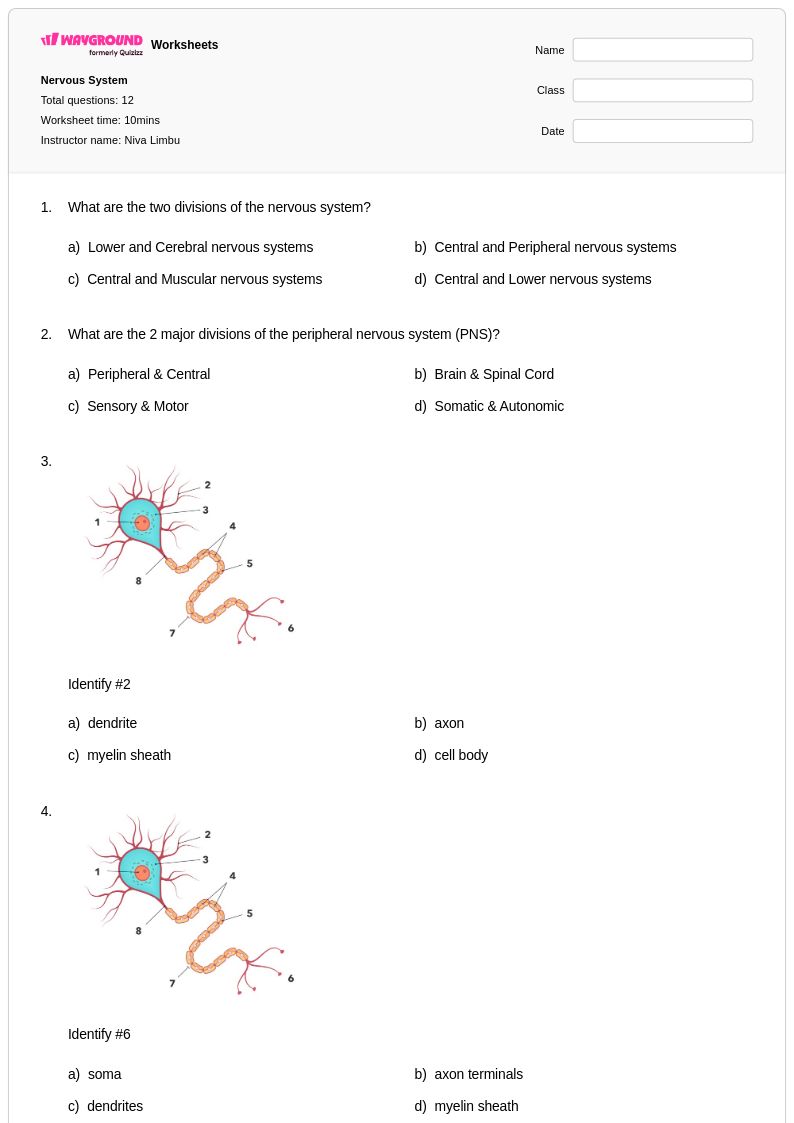
Effective nervous system practice includes neuron labeling activities (identifying dendrites, axon, myelin sheath, and synaptic terminals), reflex arc tracing problems, and matching exercises that connect neurotransmitters to their functions. Scenario-based questions that ask students to trace a neural pathway from stimulus to response are particularly useful because they require integrating structural knowledge with functional understanding. Practice problems that cover both the somatic and autonomic divisions reinforce the organizational complexity of the peripheral nervous system.
What misconceptions do students commonly have about the nervous system?
A frequent misconception is that neurons physically touch when transmitting signals, when in fact the synaptic cleft separates them and neurotransmitters carry the signal chemically. Students also tend to conflate the brain with the entire nervous system, underestimating the role of the spinal cord and peripheral nerves. Another common error is assuming that reflex arcs always involve conscious brain processing, when many reflexes bypass the brain entirely and are mediated at the spinal cord level.
How can I differentiate nervous system instruction for students at different levels?
For struggling learners, simplify by focusing on the basic neuron structure and a single reflex arc pathway before introducing the full CNS/PNS organizational framework. For advanced students, extend into neuroplasticity, action potential mechanics, or nervous system disorders such as multiple sclerosis or Parkinson's disease. On Wayground, teachers can apply accommodations at the individual student level, including reduced answer choices to lower cognitive load, read-aloud support for students who need it, and extended time, all configurable without notifying other students.
How do I use Wayground's nervous system worksheets in my classroom?
Wayground's nervous system worksheets are available as printable PDFs for traditional classroom use and in digital formats for technology-integrated environments, giving teachers flexibility in how they assign and collect student work. Teachers can also host worksheets directly as a quiz on Wayground, enabling real-time student responses and automatic grading. All worksheets include comprehensive answer keys, supporting both teacher-led correction and independent student self-assessment.
How do I assess whether students understand neural pathways and synaptic transmission?
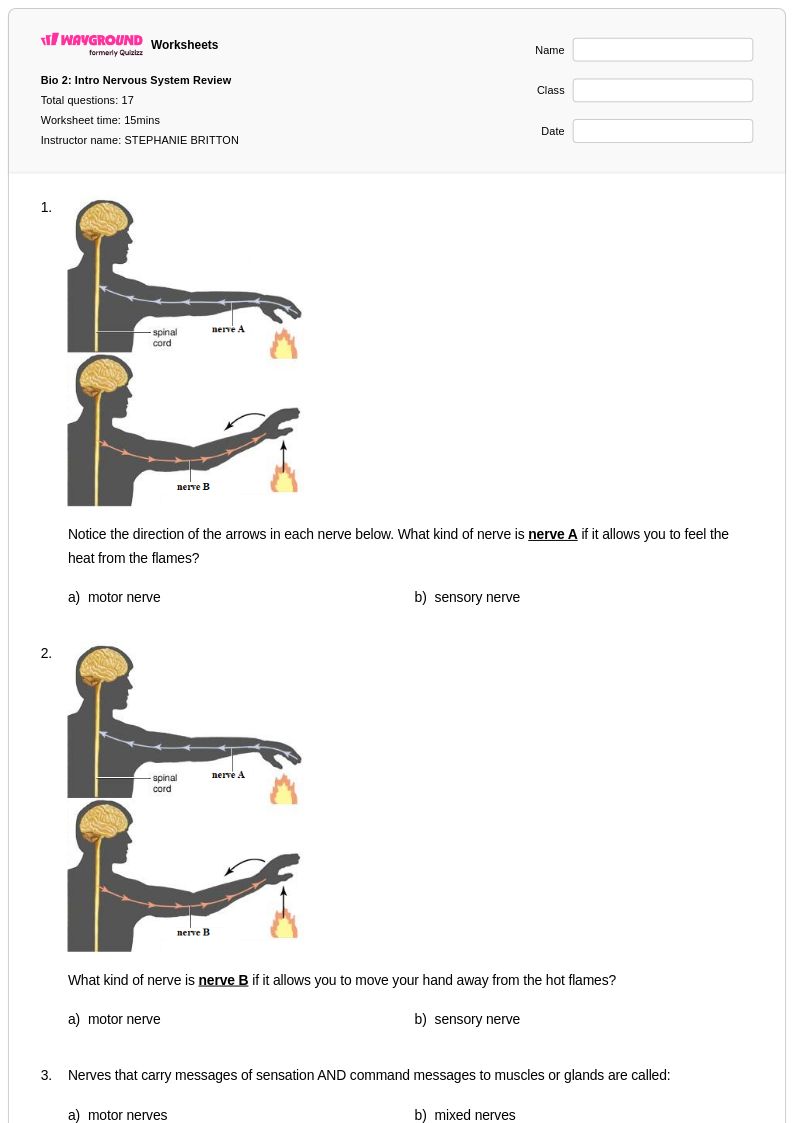
Strong assessment tasks ask students to trace a specific pathway from sensory input to motor output, labeling each neuron type and synapse involved rather than simply recalling vocabulary. Including questions about nervous system disorders, such as what happens when myelin is damaged or when a neurotransmitter is overproduced, reveals whether students understand function and not just structure. Short constructed-response questions that require students to explain why a reflex occurs faster than a voluntary movement are especially effective at surfacing depth of understanding.