Free Printable Neuroglial Cells Worksheets for Grade 12
Grade 12 Biology worksheets on neuroglial cells provide free printables and practice problems with answer keys to help students master the structure, functions, and types of glial cells in the nervous system.
Explore printable Neuroglial Cells worksheets for Grade 12
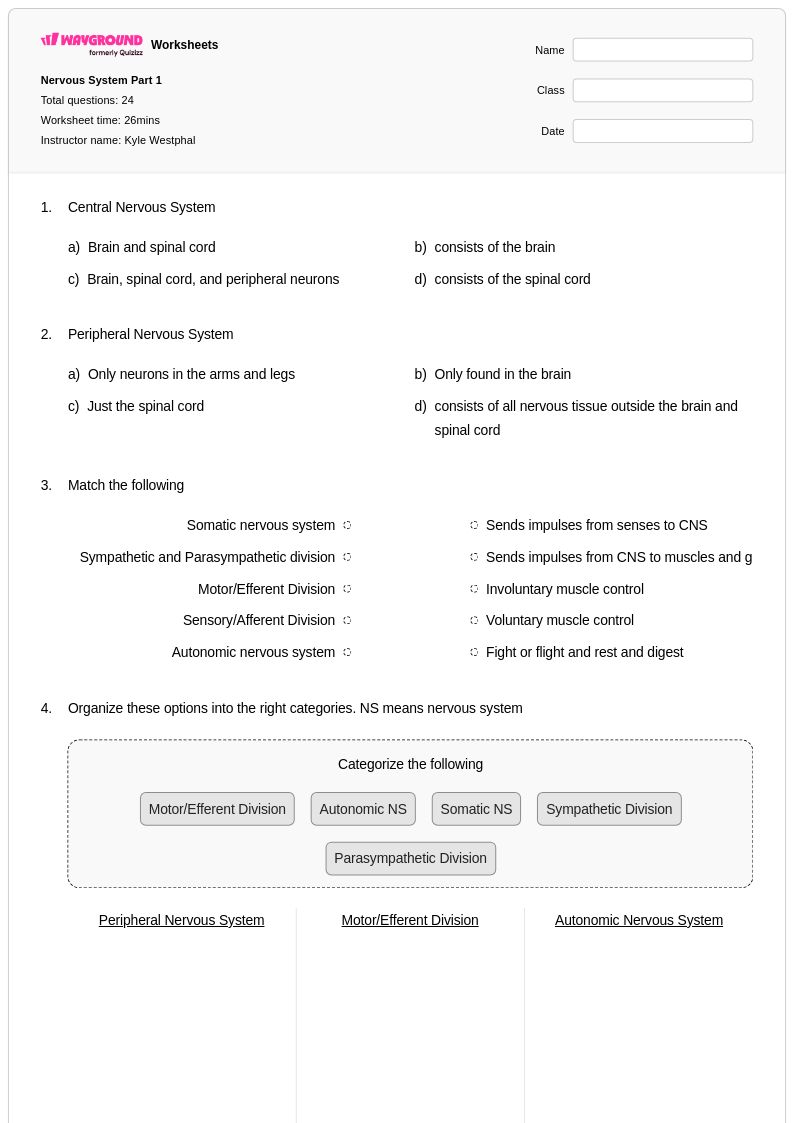
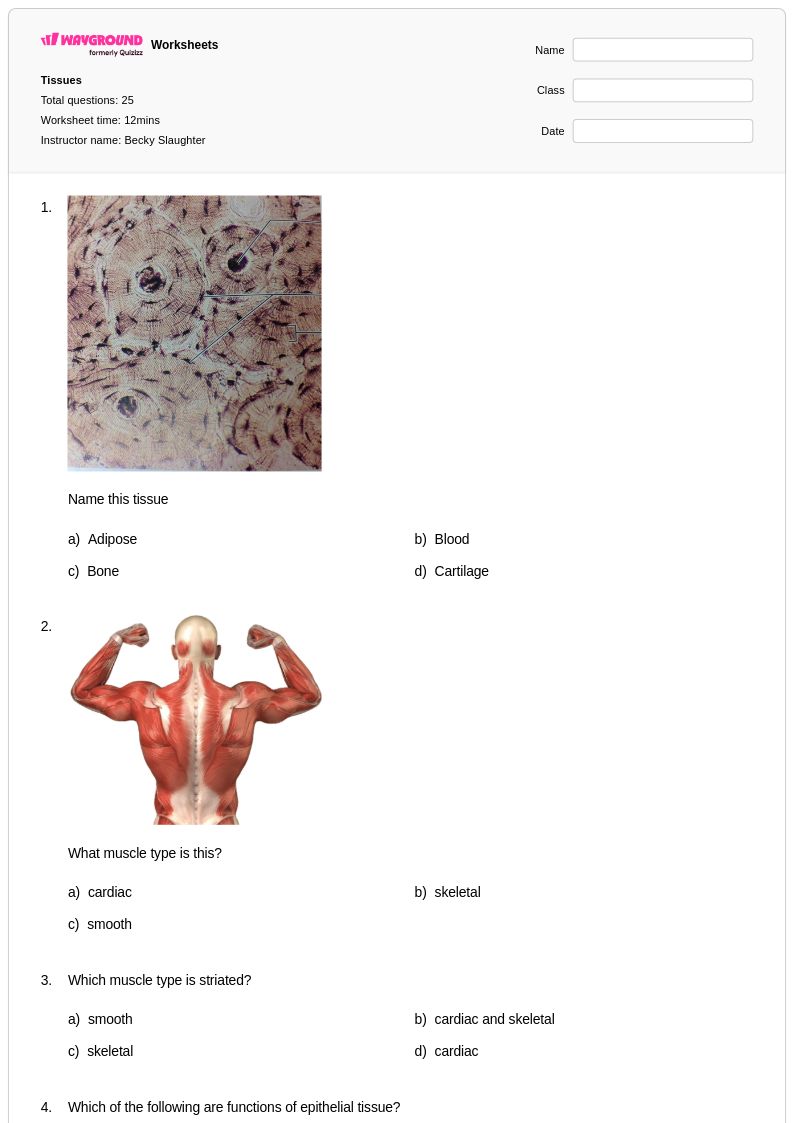
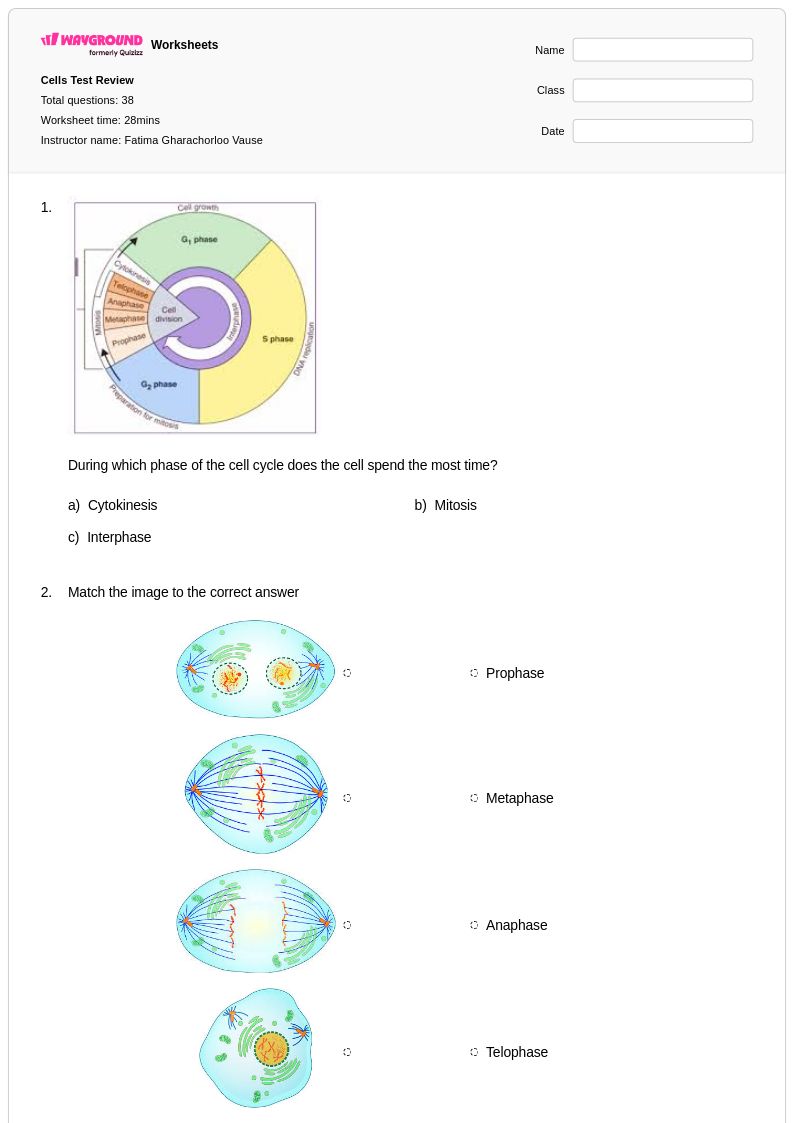
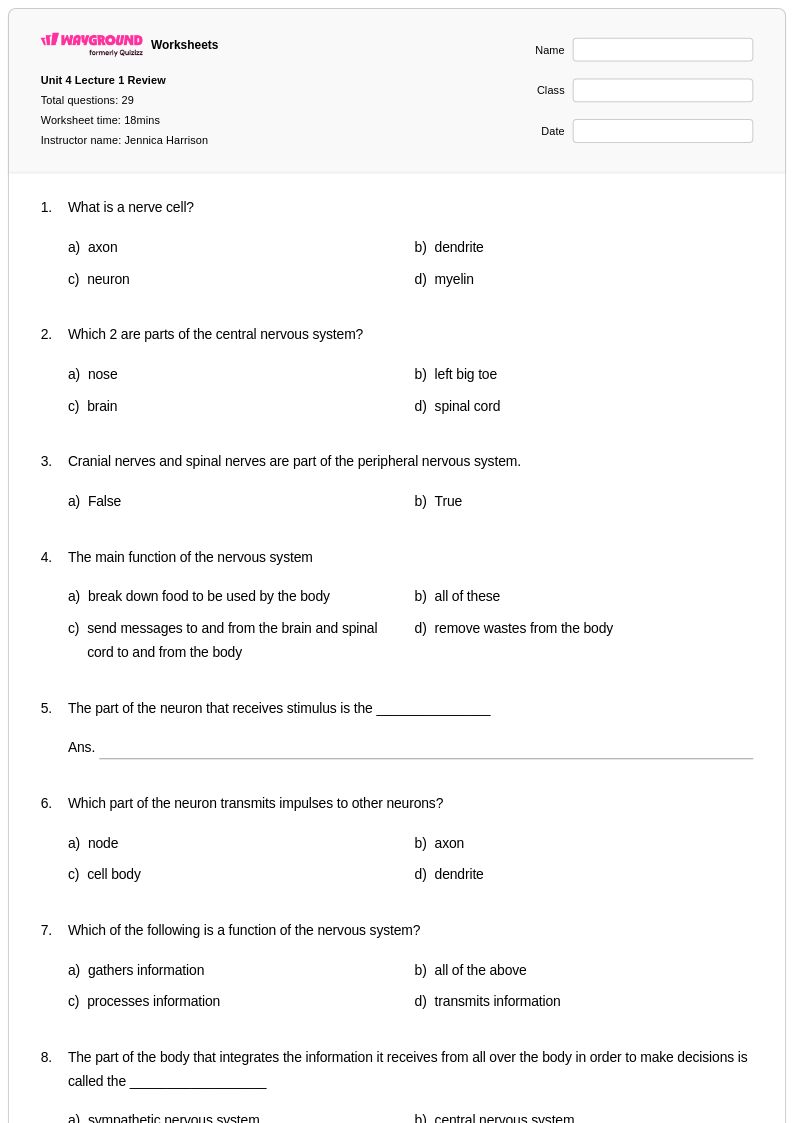
Neuroglial cells worksheets for Grade 12 students available through Wayground (formerly Quizizz) provide comprehensive coverage of the non-neuronal cells that support and protect neurons throughout the nervous system. These expertly designed educational resources strengthen students' understanding of the four main types of neuroglial cells in the central nervous system—astrocytes, oligodendrocytes, microglia, and ependymal cells—as well as the Schwann cells and satellite cells found in the peripheral nervous system. The worksheets feature detailed practice problems that challenge students to identify cellular structures, analyze the specialized functions of each glial cell type, and evaluate their roles in maintaining neural homeostasis, forming myelin sheaths, and supporting synaptic transmission. Each worksheet includes a complete answer key and is available as free printable pdf resources, enabling students to master complex neurobiological concepts through structured practice and immediate feedback on their understanding of these essential cellular components.
Wayground (formerly Quizizz) empowers educators with an extensive collection of millions of teacher-created neuroglial cell worksheets specifically aligned with Grade 12 biology standards and learning objectives. The platform's robust search and filtering capabilities allow teachers to quickly locate resources that match their specific curriculum requirements, whether focusing on glial cell morphology, biochemical functions, or pathological conditions. Advanced differentiation tools enable instructors to customize worksheets for diverse learning needs, modifying complexity levels and question formats to support both remediation for struggling students and enrichment opportunities for advanced learners. These versatile resources are available in both printable and digital formats, including downloadable pdf versions, making them ideal for traditional classroom instruction, homework assignments, laboratory exercises, and assessment preparation that reinforces critical thinking skills essential for understanding nervous system physiology.
FAQs
How do I teach neuroglial cells to biology students?
Start by distinguishing neuroglial cells from neurons, emphasizing that glia support rather than transmit signals. Then introduce each major cell type — astrocytes, oligodendrocytes, microglia, and ependymal cells — by pairing its structure with its specific function, such as myelin formation for oligodendrocytes or immune surveillance for microglia. Using labeled diagrams alongside function-matching activities helps students build accurate mental models before moving into more complex topics like the blood-brain barrier or synaptic pruning.
What are the best exercises for practicing neuroglial cell classifications?
Effective practice exercises include cell-type matching tasks that connect each glial cell to its primary function, fill-in-the-blank passages focused on glial cell morphology and location, and short-answer questions requiring students to explain how specific glia contribute to homeostasis or neural transmission. Practice problems that ask students to compare and contrast two glial cell types are especially useful for reinforcing distinctions that are commonly confused, such as astrocytes versus ependymal cells.
What mistakes do students commonly make when learning about neuroglial cells?
The most common misconception is that neurons are the only functionally important cells in the nervous system, causing students to underestimate the roles of glia. Students also frequently confuse oligodendrocytes with Schwann cells, not recognizing that oligodendrocytes myelinate axons in the central nervous system while Schwann cells do so in the peripheral nervous system. Another frequent error is misidentifying microglia as structural support cells rather than as the resident immune cells of the central nervous system.
How can I use neuroglial cells worksheets to support students at different skill levels?
Neuroglial cells worksheets can be tiered by complexity — introductory students benefit from labeling diagrams and matching cell types to functions, while advanced students can work through analysis questions on blood-brain barrier maintenance and synaptic pruning. On Wayground, teachers can apply built-in accommodations such as Read Aloud for students who need audio support, reduced answer choices to lower cognitive load for struggling learners, and extended time settings configurable per student. These accommodations can be assigned individually without alerting other students, making differentiation practical within a single class session.
How do I use Wayground's neuroglial cells worksheets in my classroom?
Wayground's neuroglial cells worksheets are available as free printable PDFs for traditional classroom use and in digital formats for technology-integrated environments, including the option to host them as a quiz directly on Wayground. Teachers can use the printable versions for independent study, homework, or in-class review, while the digital format supports real-time feedback and remote learning. Each worksheet includes a complete answer key, so grading and self-assessment are straightforward regardless of the format chosen.
How do neuroglial cells relate to larger nervous system topics I'm already teaching?
Neuroglial cells are directly connected to several major nervous system concepts, making them a natural bridge topic. Myelin formation by oligodendrocytes ties directly into lessons on action potential propagation and nerve conduction speed, while the blood-brain barrier connects to units on homeostasis and neurological disease. Teaching glial function alongside neuronal structure gives students a more complete picture of how the nervous system maintains itself, responds to injury, and filters what enters the brain.