Free Printable Osmosis and Diffusion Worksheets for Grade 12
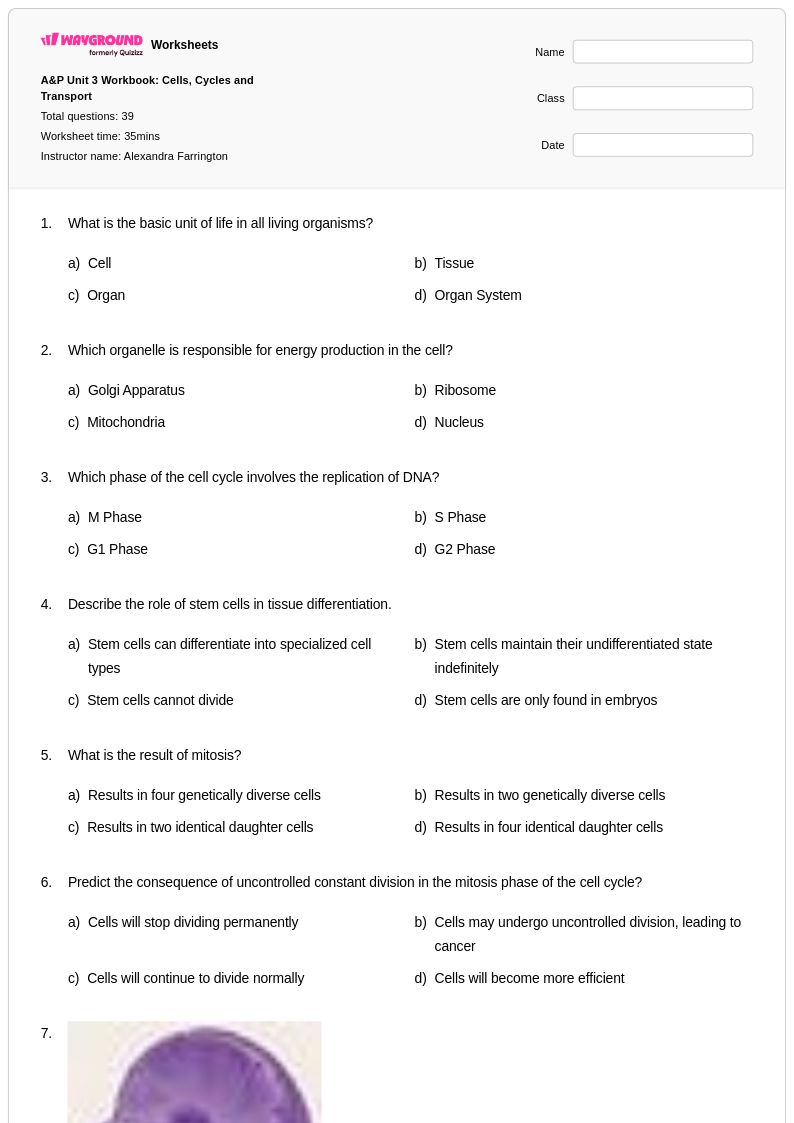
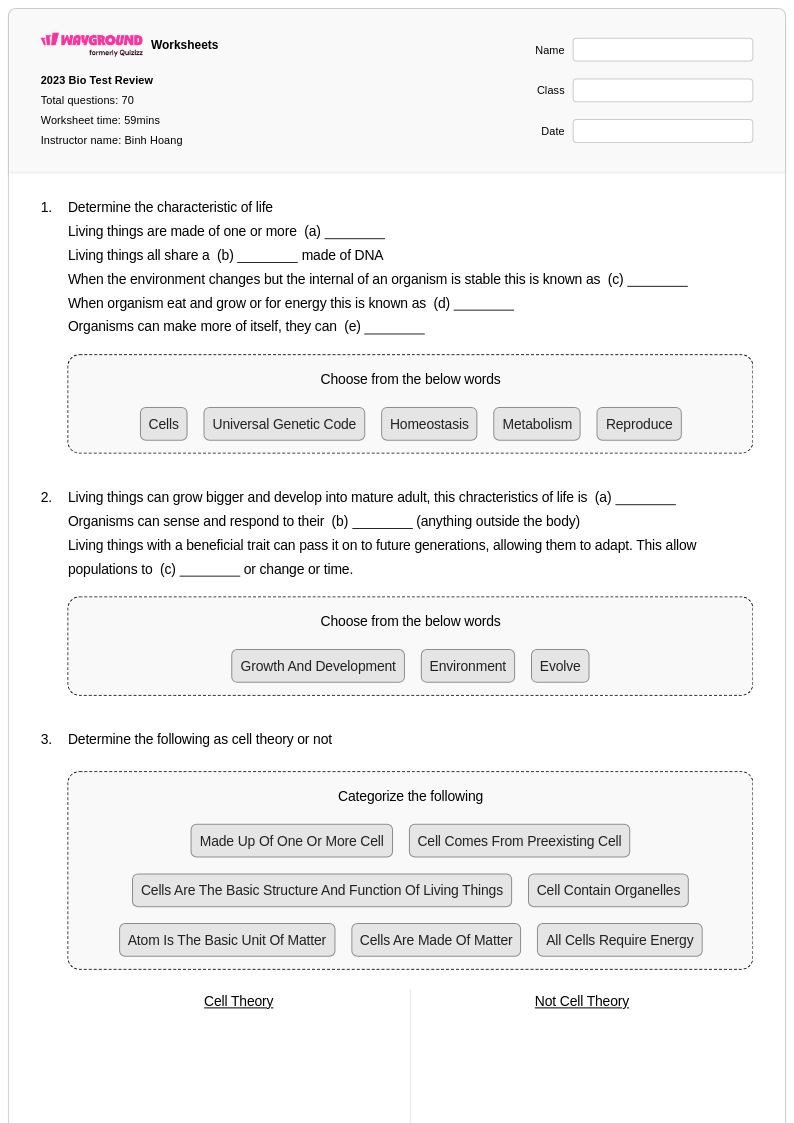
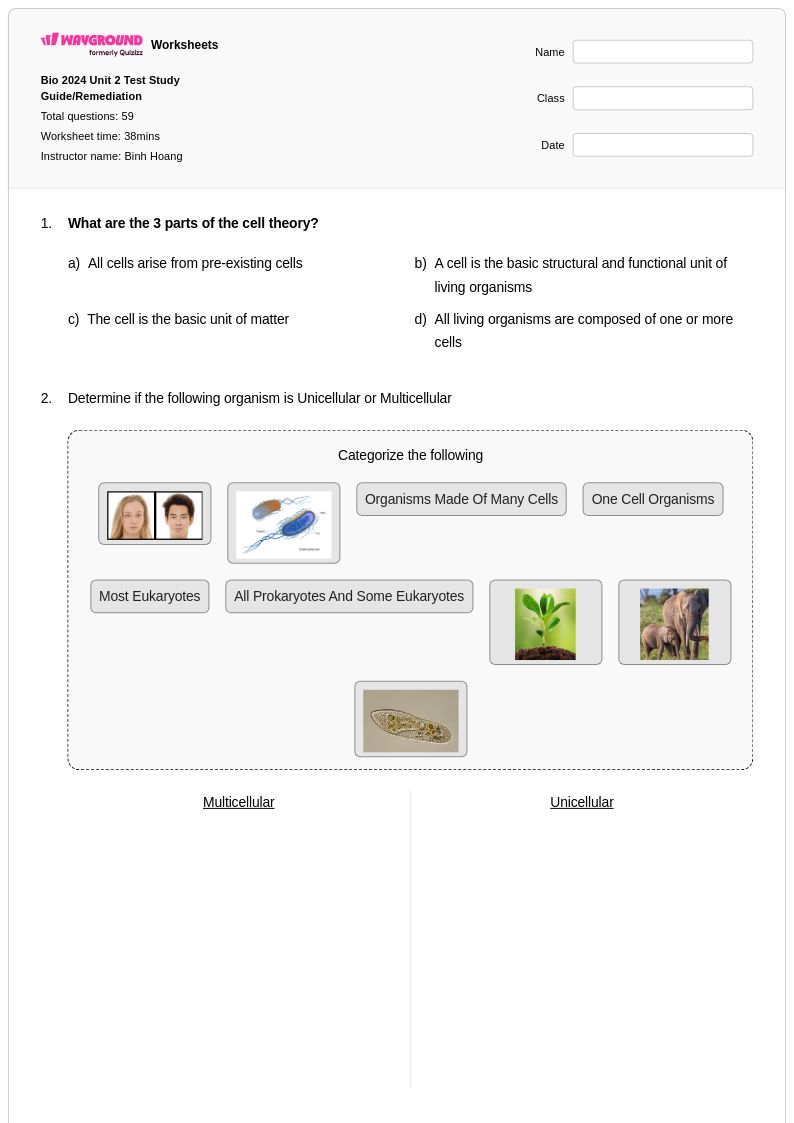
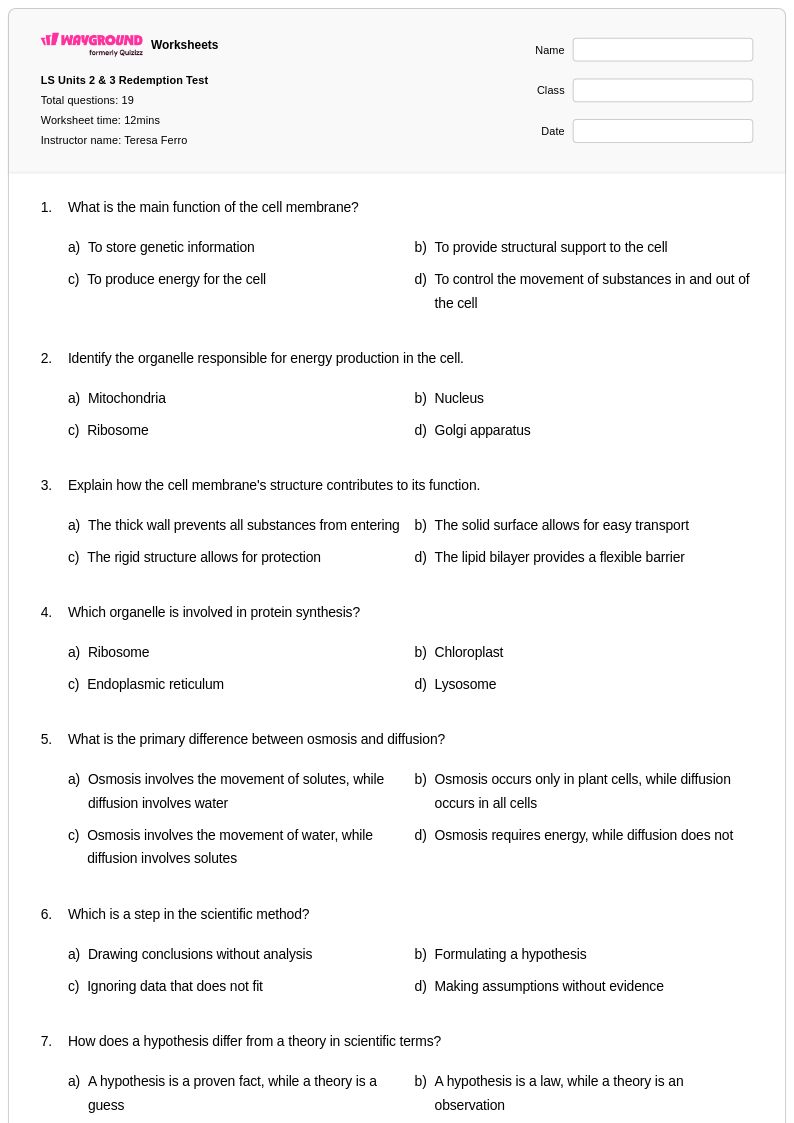
Grade 12 osmosis and diffusion worksheets from Wayground help students master cellular transport mechanisms through comprehensive printables, practice problems, and answer keys available as free PDF downloads.
Explore printable Osmosis and Diffusion worksheets for Grade 12
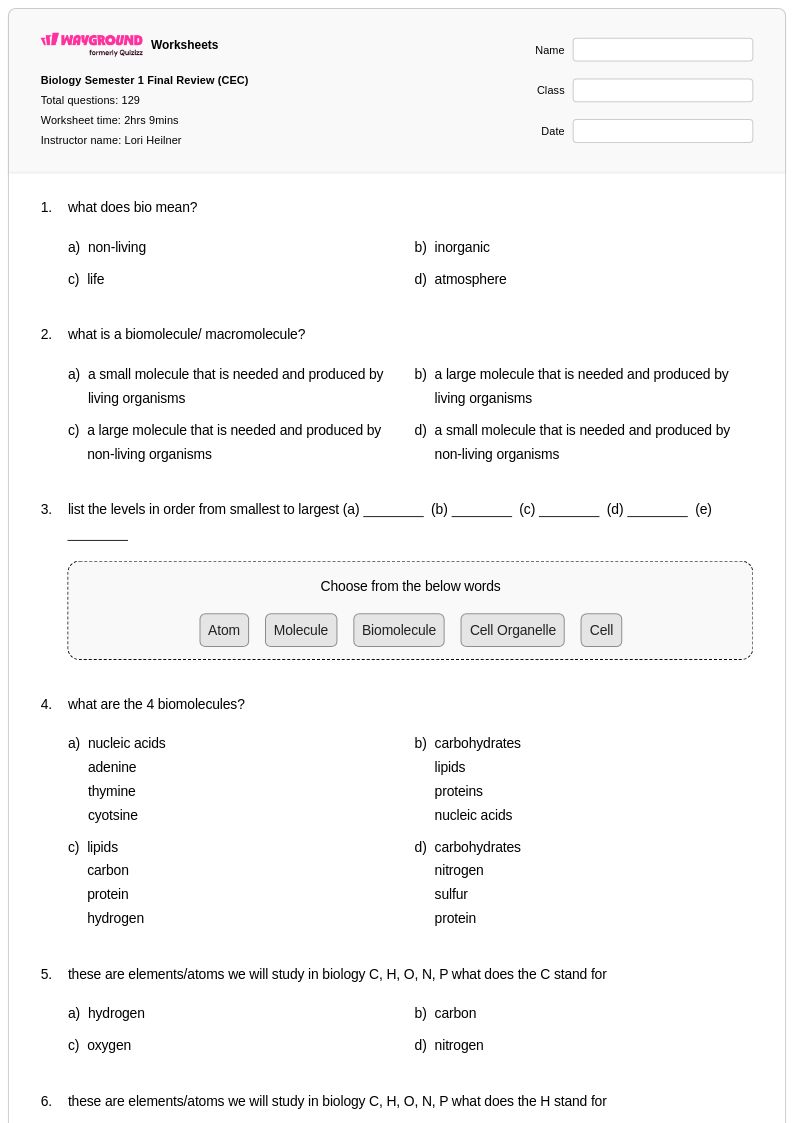
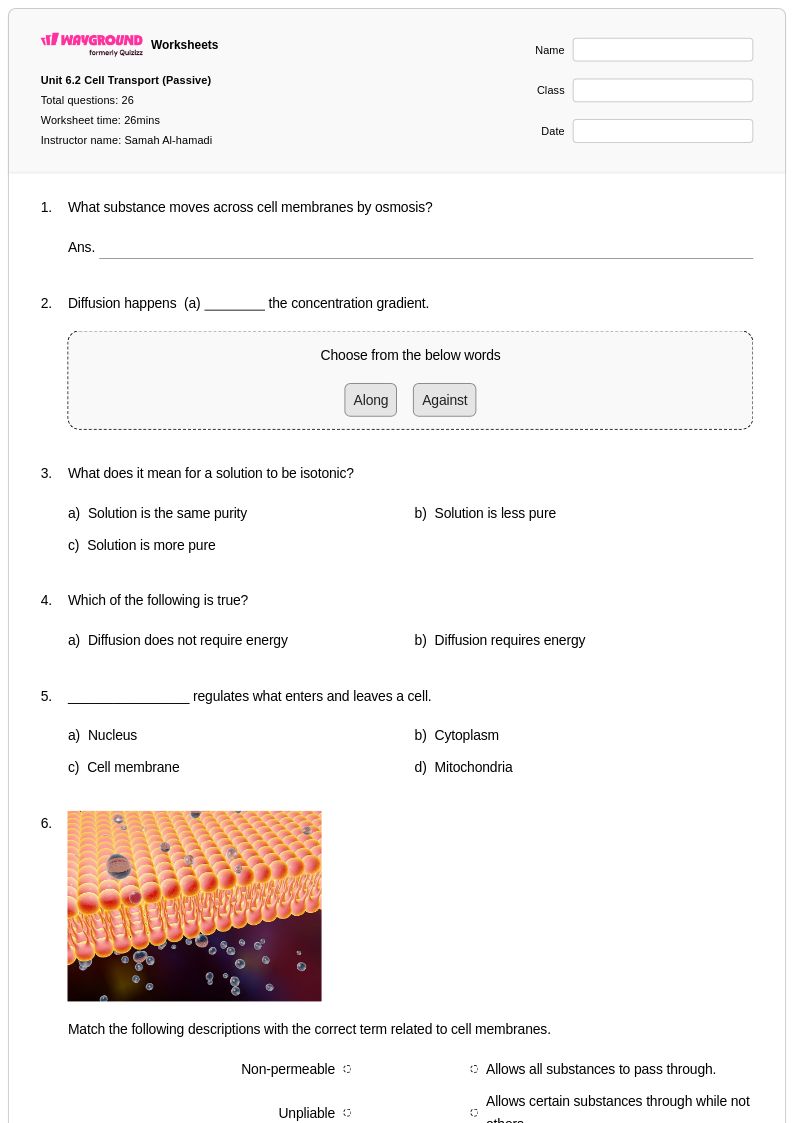
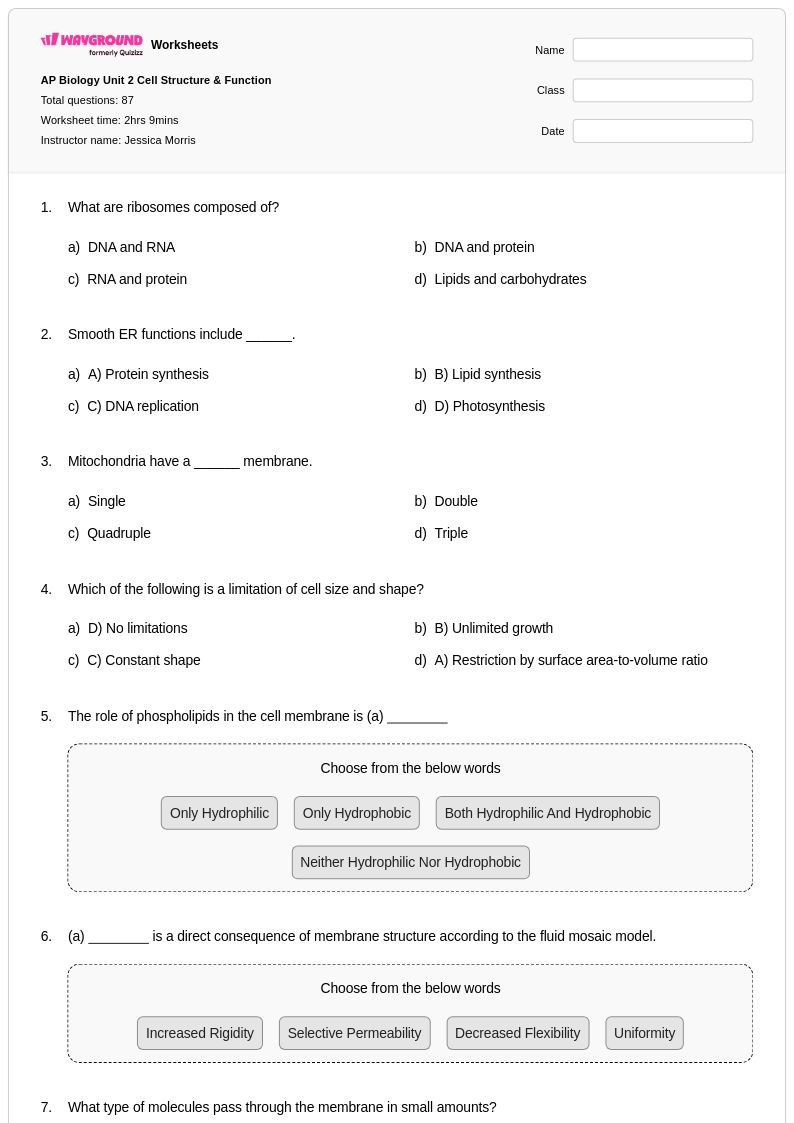
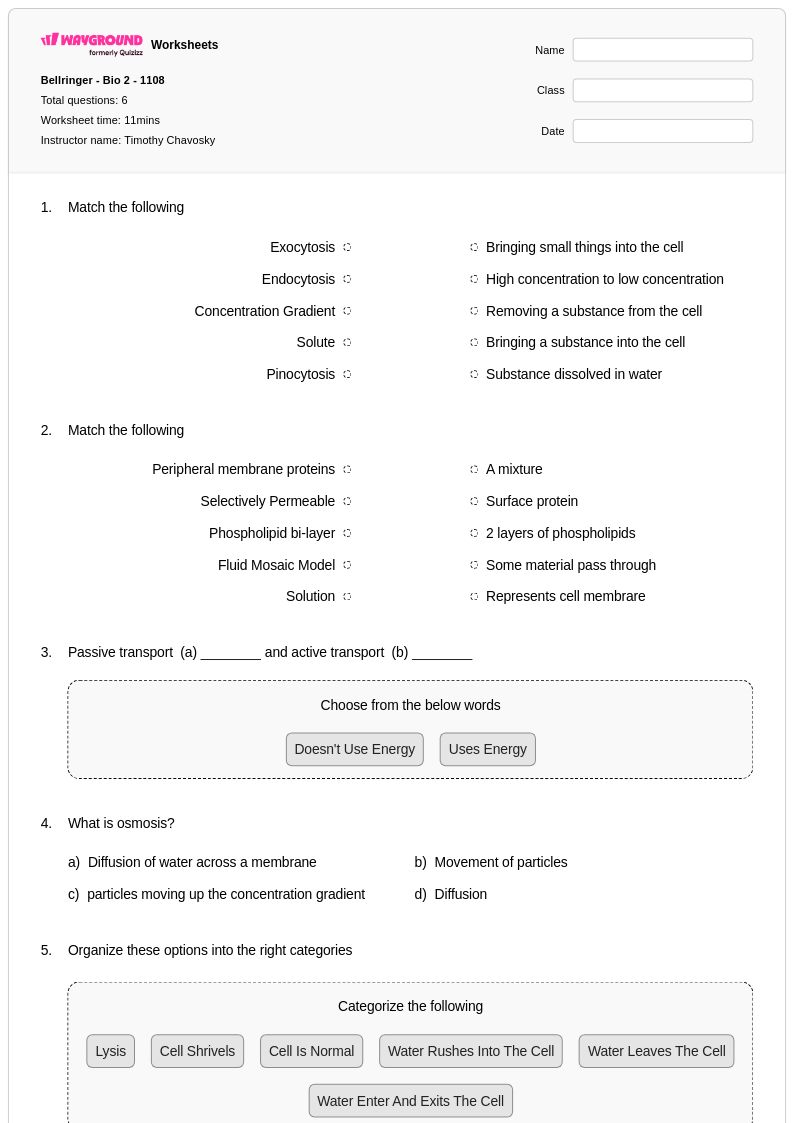
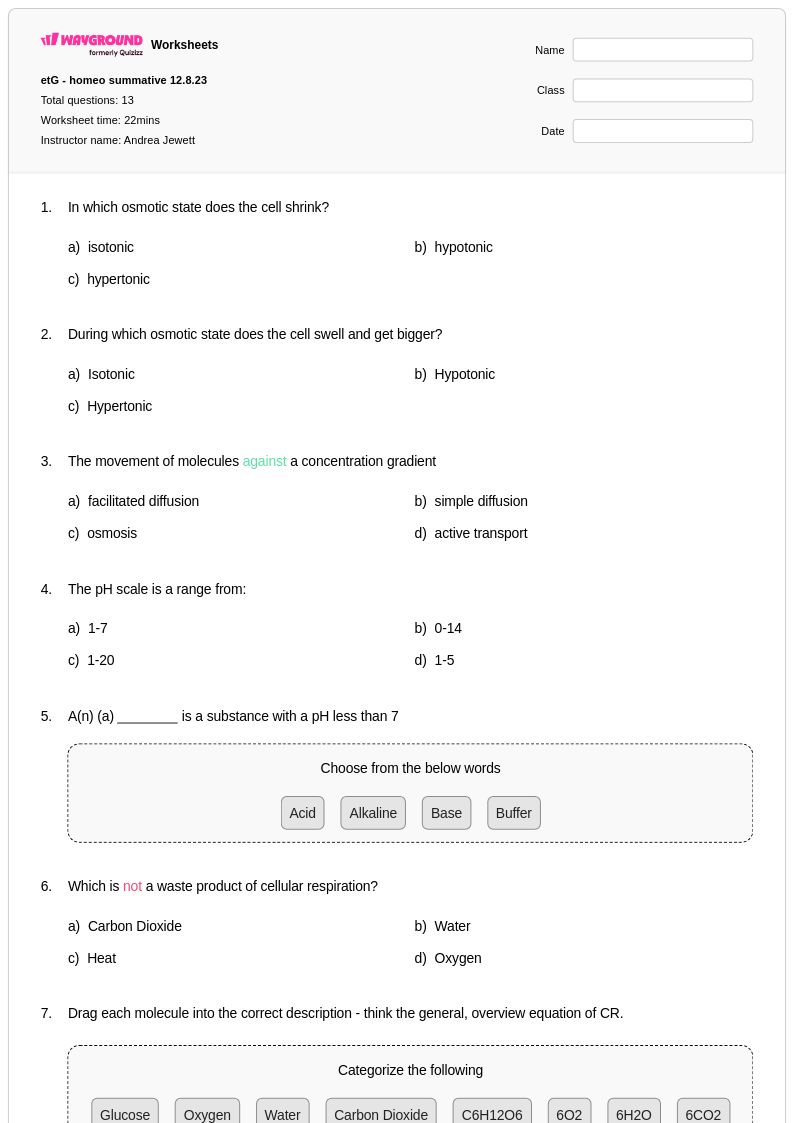
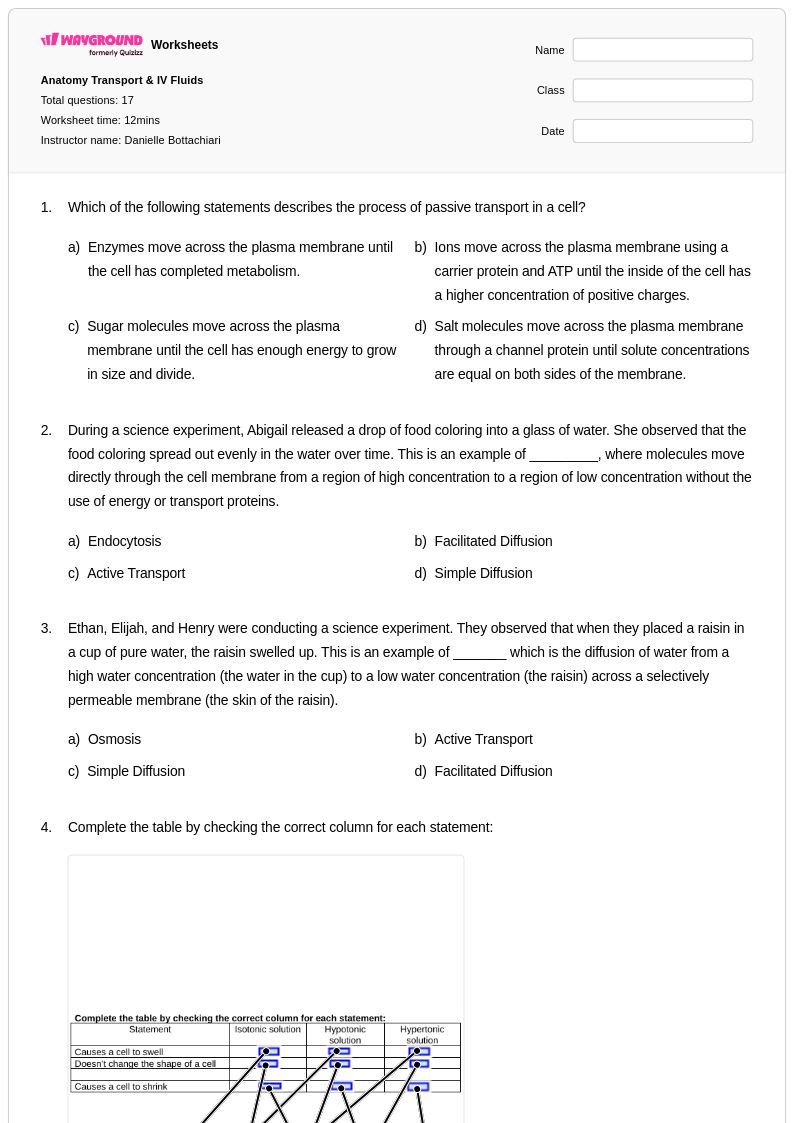
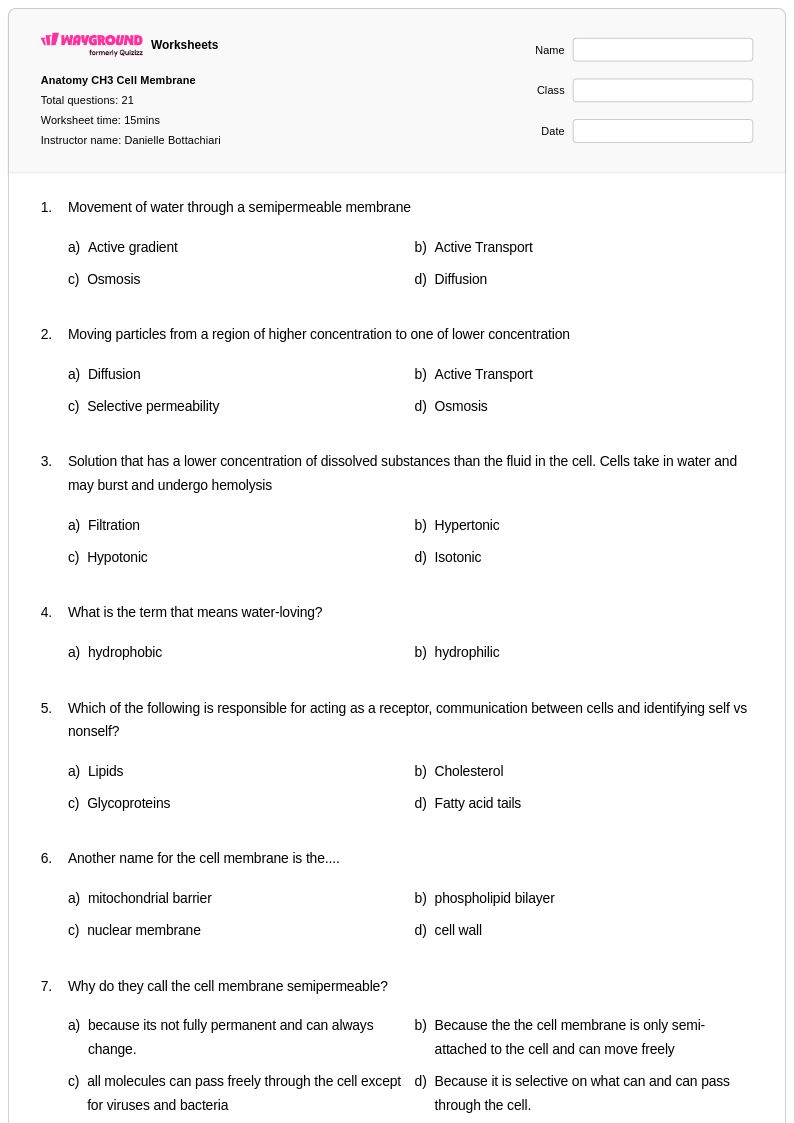
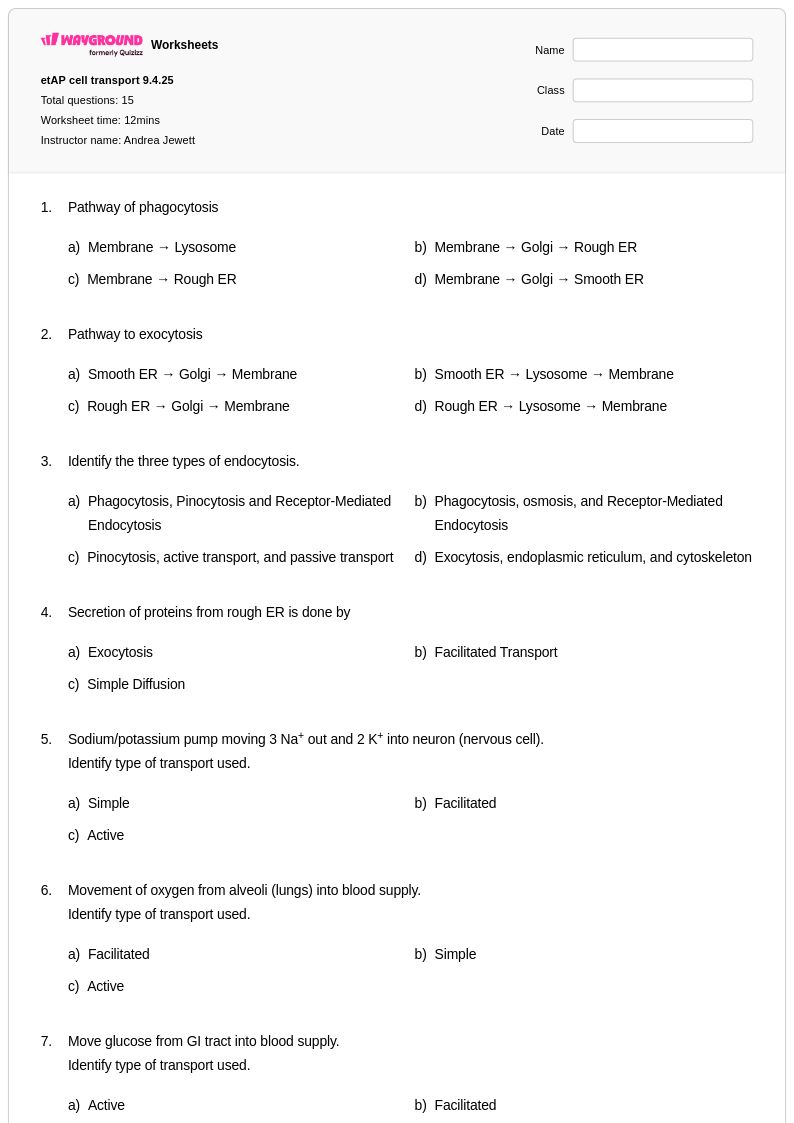
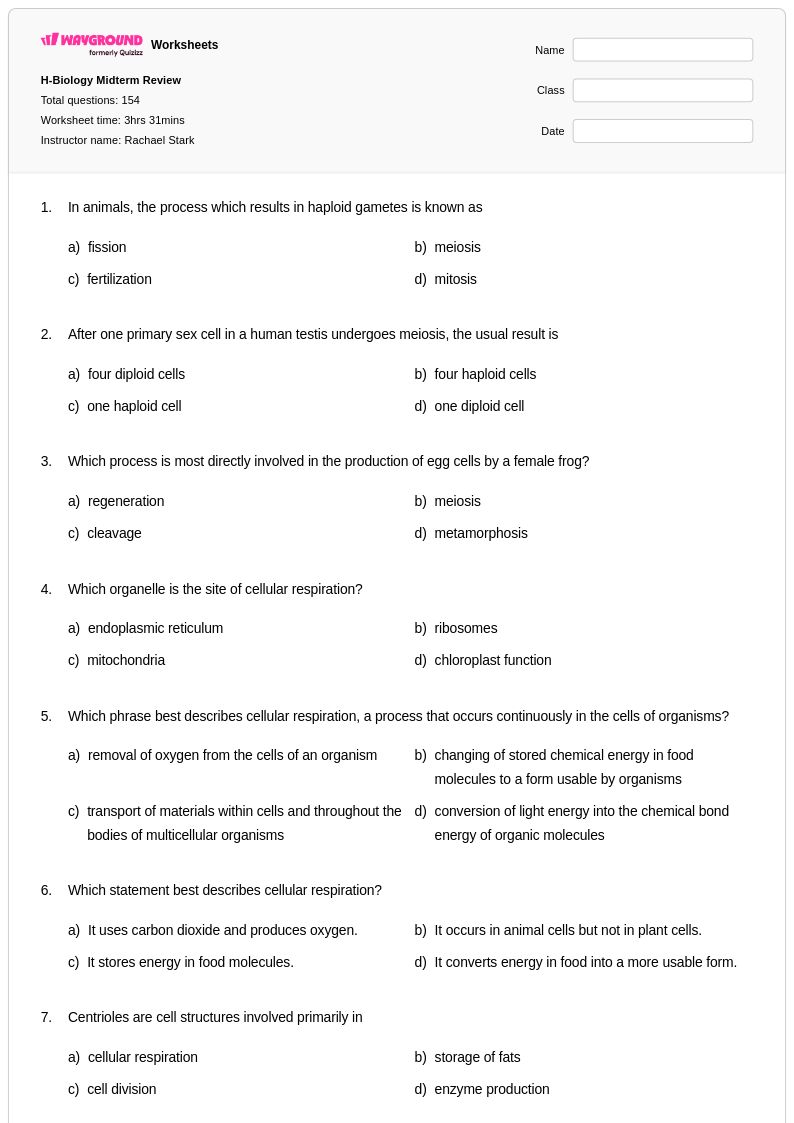
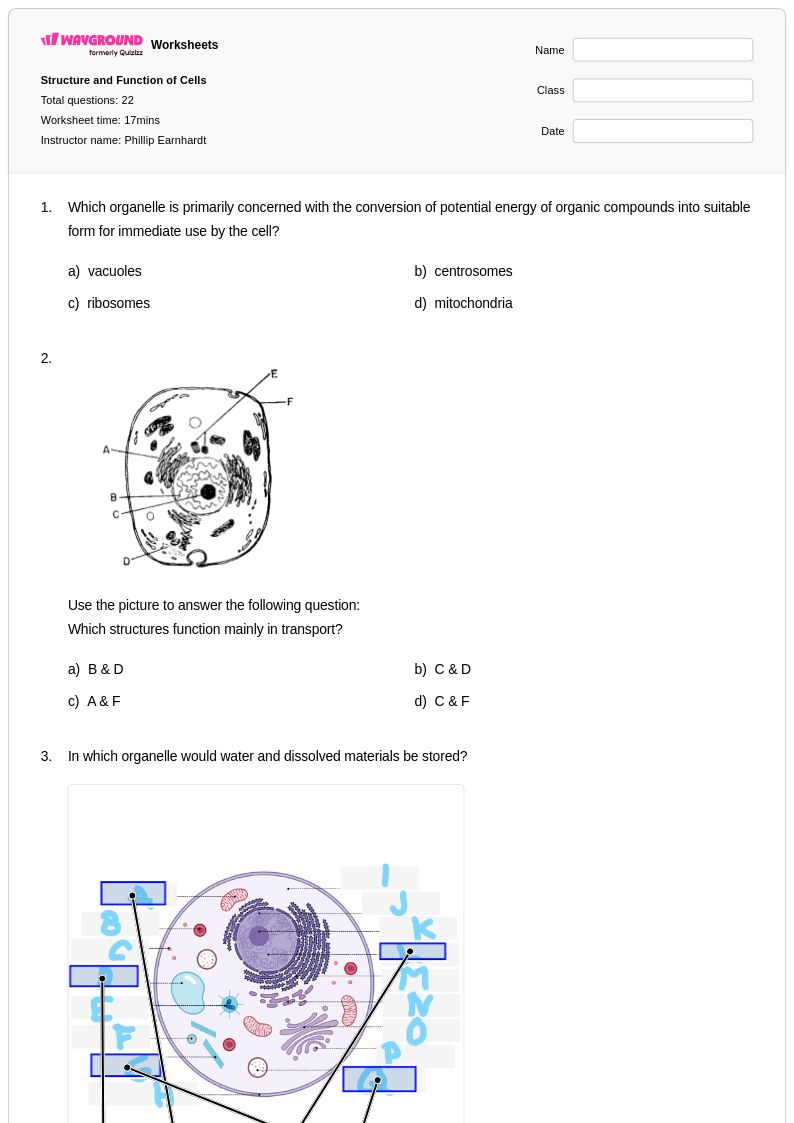
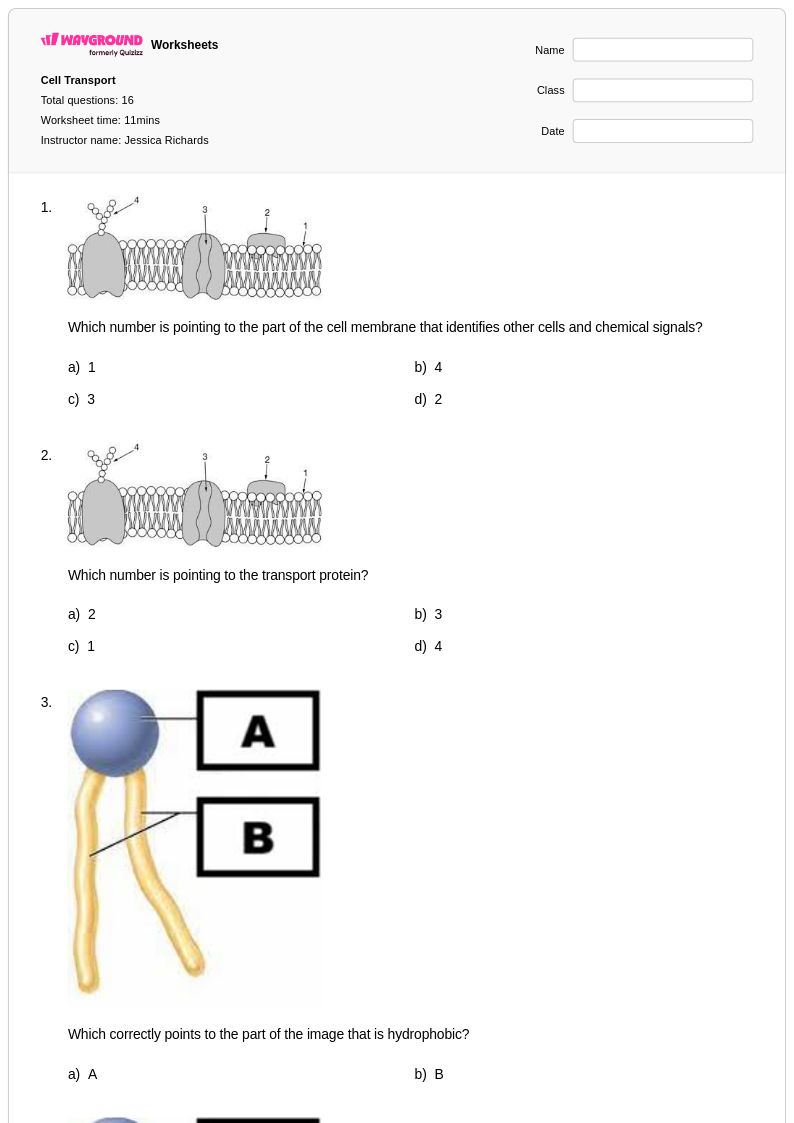
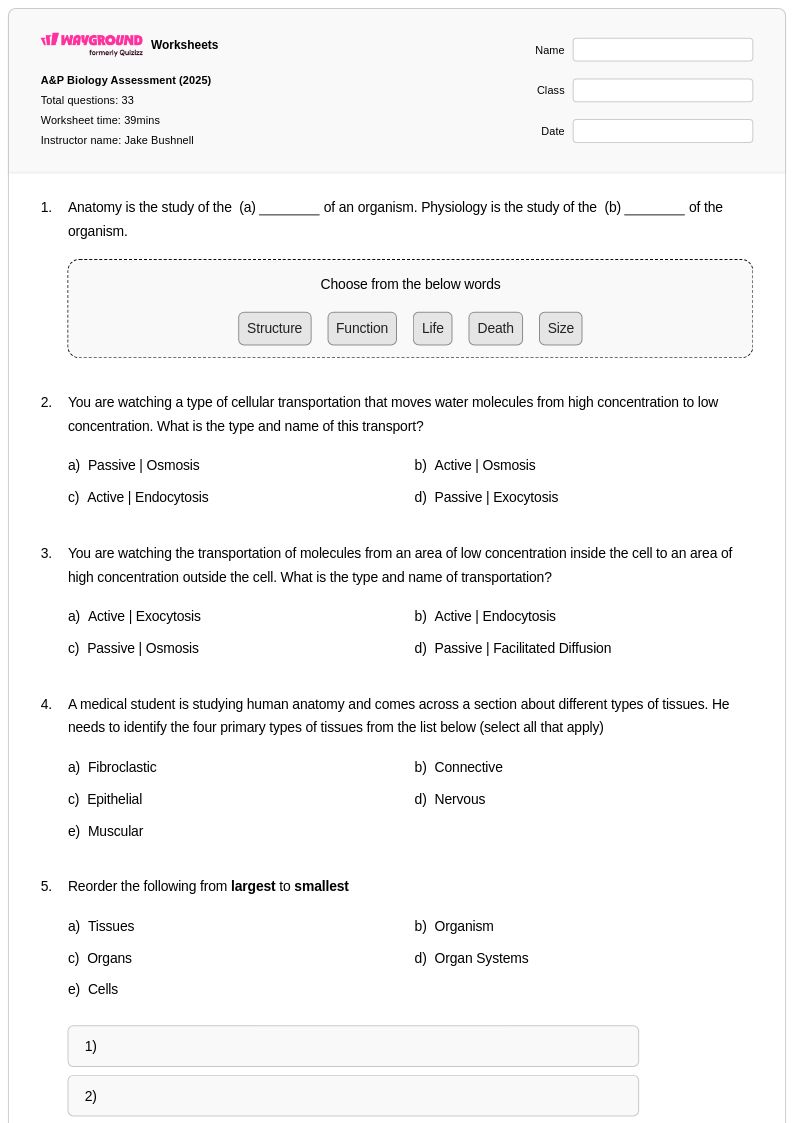
Osmosis and diffusion worksheets for Grade 12 students available through Wayground provide comprehensive practice with these fundamental cellular transport processes that are essential for advanced biology understanding. These carefully designed resources help students master the complex mechanisms by which molecules move across cell membranes, including the movement of water through selectively permeable membranes in osmosis and the net movement of particles from areas of high concentration to low concentration in diffusion. The worksheets strengthen critical thinking skills through practice problems that require students to analyze concentration gradients, predict molecular movement patterns, and calculate water potential in various cellular scenarios. Each worksheet includes a detailed answer key and is available as a free printable pdf, allowing students to work through challenging concepts involving hypertonic, hypotonic, and isotonic solutions while developing their understanding of membrane permeability and cellular homeostasis.
Wayground supports biology educators with millions of teacher-created osmosis and diffusion resources that can be easily discovered through robust search and filtering capabilities, enabling instructors to find materials that align with specific curriculum standards and learning objectives. The platform's differentiation tools allow teachers to customize worksheets for various skill levels within their Grade 12 classrooms, supporting both remediation for students who need additional practice with basic membrane transport concepts and enrichment activities for those ready to explore advanced applications like water potential calculations and plasmolysis. Available in both printable and digital formats including downloadable pdfs, these osmosis and diffusion worksheets integrate seamlessly into lesson planning while providing flexible options for in-class practice, homework assignments, and assessment preparation that help students build confidence with these challenging but crucial biological processes.
FAQs
How do I teach osmosis and diffusion to biology students?
Begin by grounding students in the concept of concentration gradients before introducing osmosis and diffusion as responses to those gradients. Use visual models, such as diagrams of selectively permeable membranes, to show how water moves during osmosis and how dissolved particles spread during diffusion. Connecting these processes to real-world examples, like why plant cells wilt in saltwater or how oxygen enters red blood cells, helps students build intuitive understanding before tackling calculation-based problems.
What exercises help students practice osmosis and diffusion?
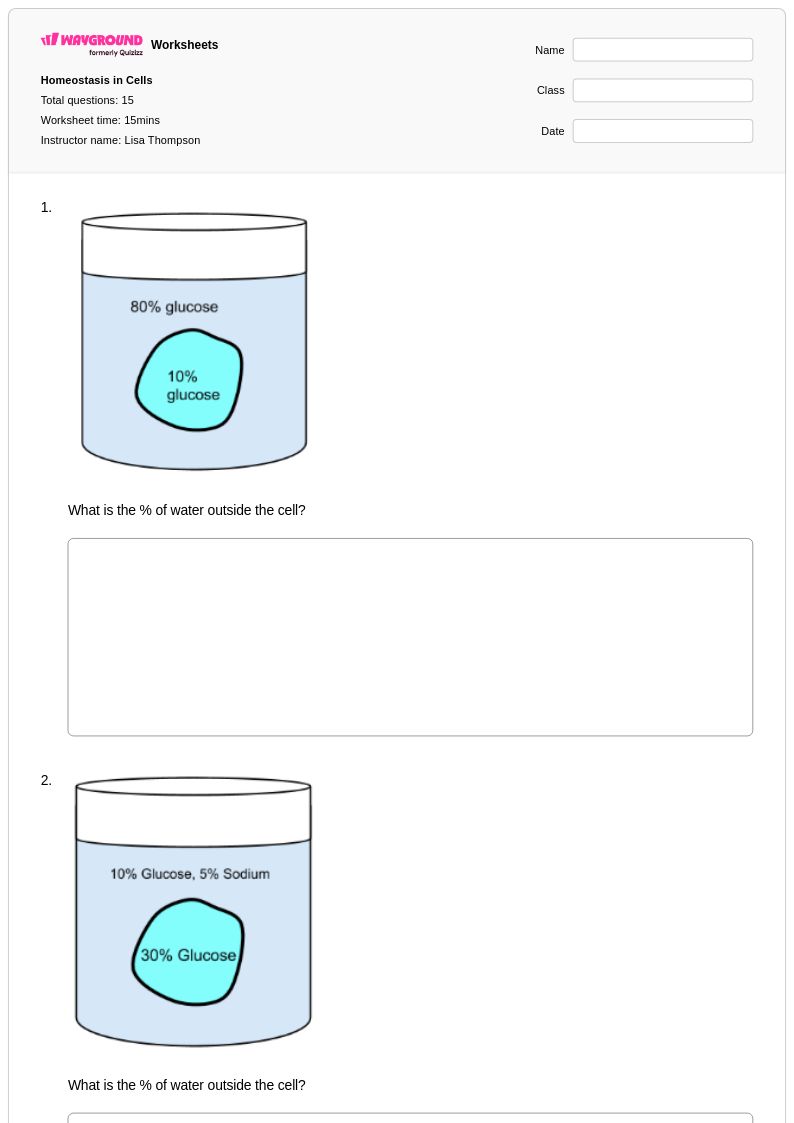
Effective practice exercises include analyzing diagrams to predict the direction of molecular movement across membranes, calculating concentration gradients given solute amounts, and evaluating real-world scenarios such as what happens to a red blood cell placed in a hypotonic solution. Practice problems that require students to classify solutions as isotonic, hypertonic, or hypotonic and then predict cellular responses are especially valuable for reinforcing both conceptual and applied understanding of these transport mechanisms.
What mistakes do students commonly make when learning osmosis and diffusion?
A common misconception is that water moves toward the area of high water concentration rather than toward the area of high solute concentration, causing students to predict the direction of osmosis incorrectly. Students also frequently confuse osmosis with diffusion, applying diffusion rules to water movement and vice versa. Another persistent error is assuming that molecules move against the concentration gradient during passive transport, which reflects a misunderstanding of what makes these processes passive.
How do I use Wayground's osmosis and diffusion worksheets in my classroom?
Wayground's osmosis and diffusion worksheets are available as free printable PDFs for traditional classroom use and in digital formats for technology-integrated learning environments, so you can deploy them however your class is structured. Teachers can also host these worksheets as a quiz directly on Wayground, allowing students to complete them online with built-in progress tracking. Each worksheet includes a complete answer key, reducing prep time and making them easy to assign for in-class practice, homework, or targeted remediation.
How can I differentiate osmosis and diffusion instruction for students at different levels?
For students who are new to cellular transport, start with straightforward diagrams and directional prediction tasks before introducing quantitative concentration gradient problems. Advanced students benefit from exploring tonicity, calculating water potential, and analyzing how cells respond to hypertonic and hypotonic environments. Wayground also offers built-in accommodation tools, including read aloud support, reduced answer choices, and extended time, which can be assigned to individual students without affecting the rest of the class.
How do osmosis and diffusion connect to broader biology concepts students need to know?
Osmosis and diffusion are foundational to understanding cellular homeostasis, nutrient uptake, waste removal, and the functioning of organs like the kidney and lungs. Students who understand these passive transport mechanisms are better prepared to learn about active transport, membrane proteins, and how disruptions to transport processes contribute to conditions like cystic fibrosis or edema. Treating osmosis and diffusion as a gateway concept rather than an isolated topic gives students a durable framework they will revisit throughout biology coursework.