
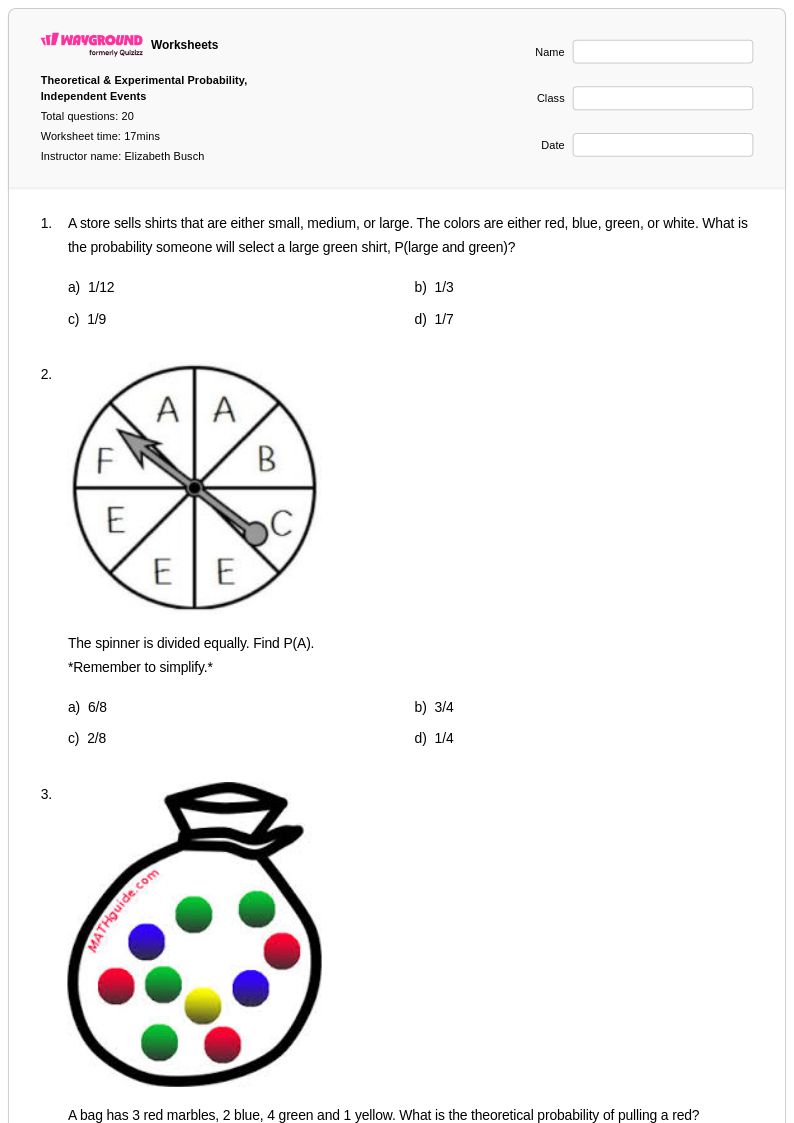
20Q
9th - 12th
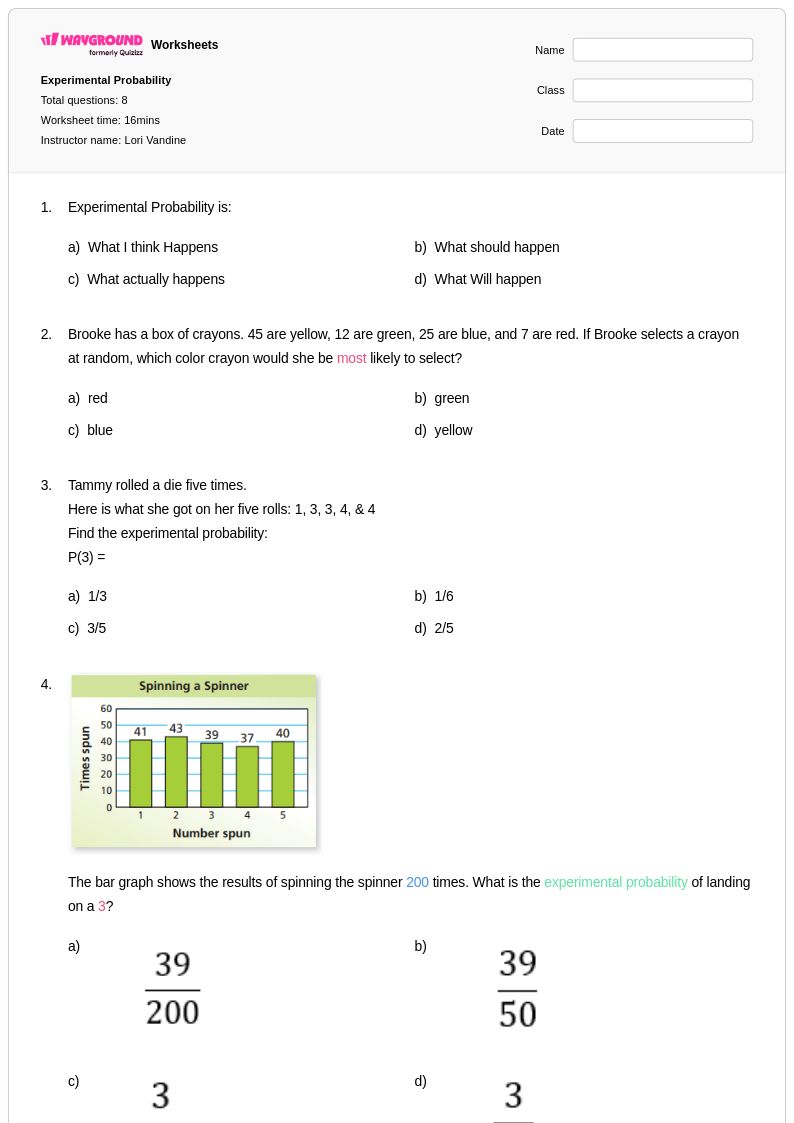
8Q
9th
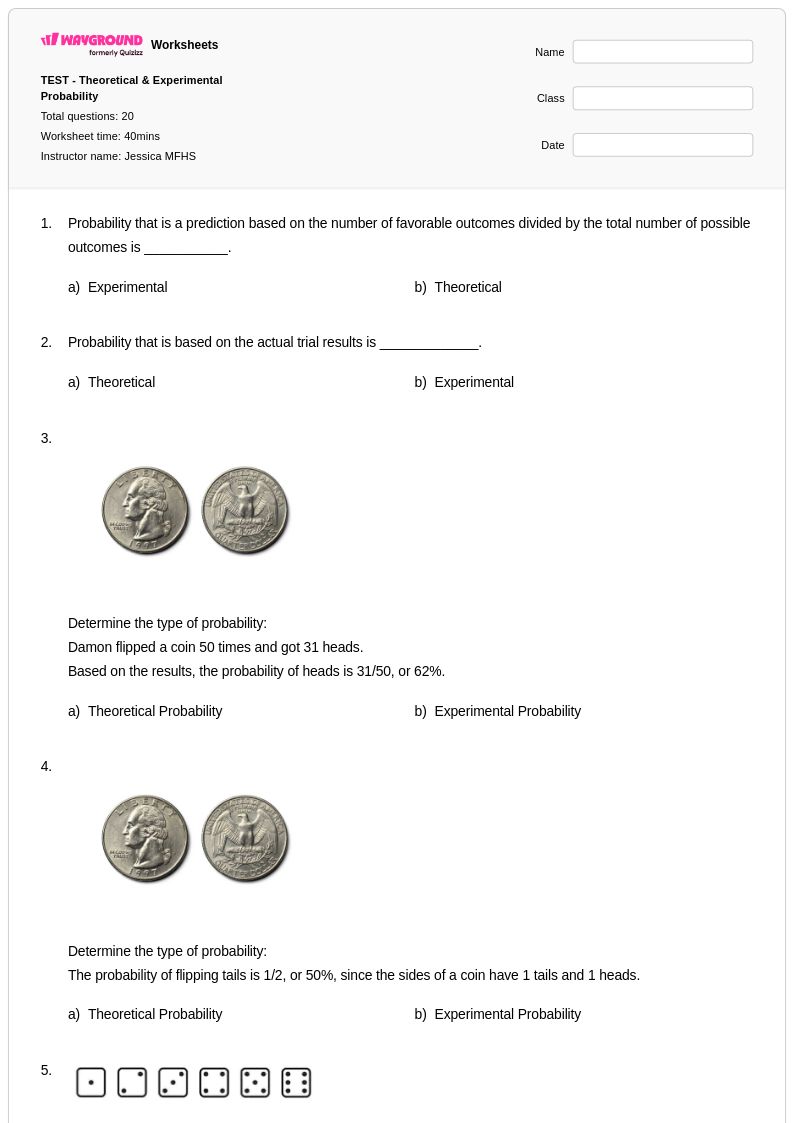
20Q
7th - 11th
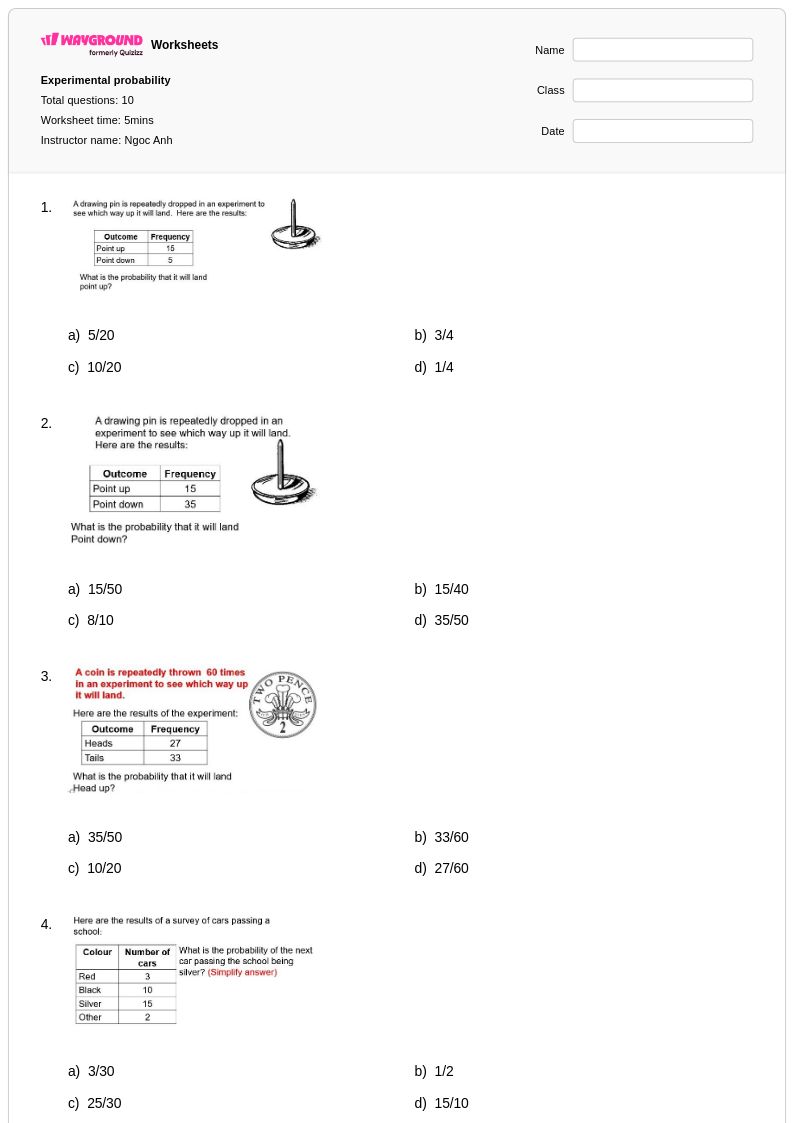
10Q
8th - 9th
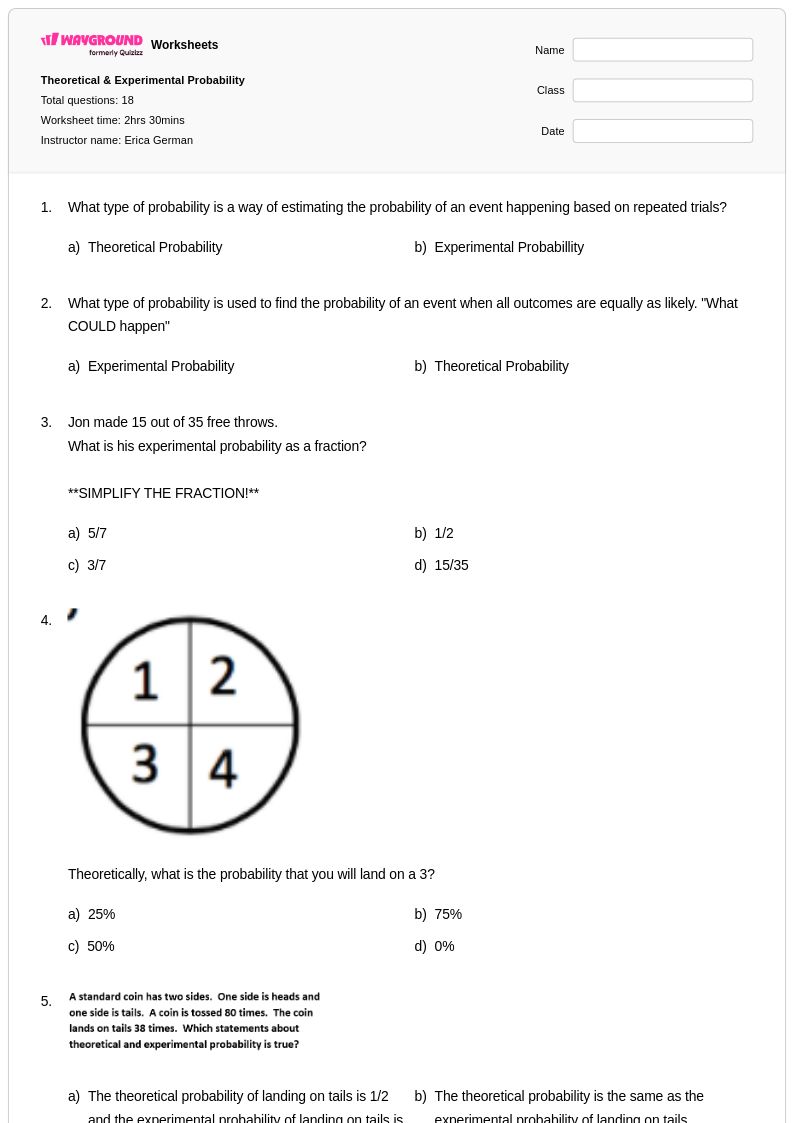
18Q
9th - 12th
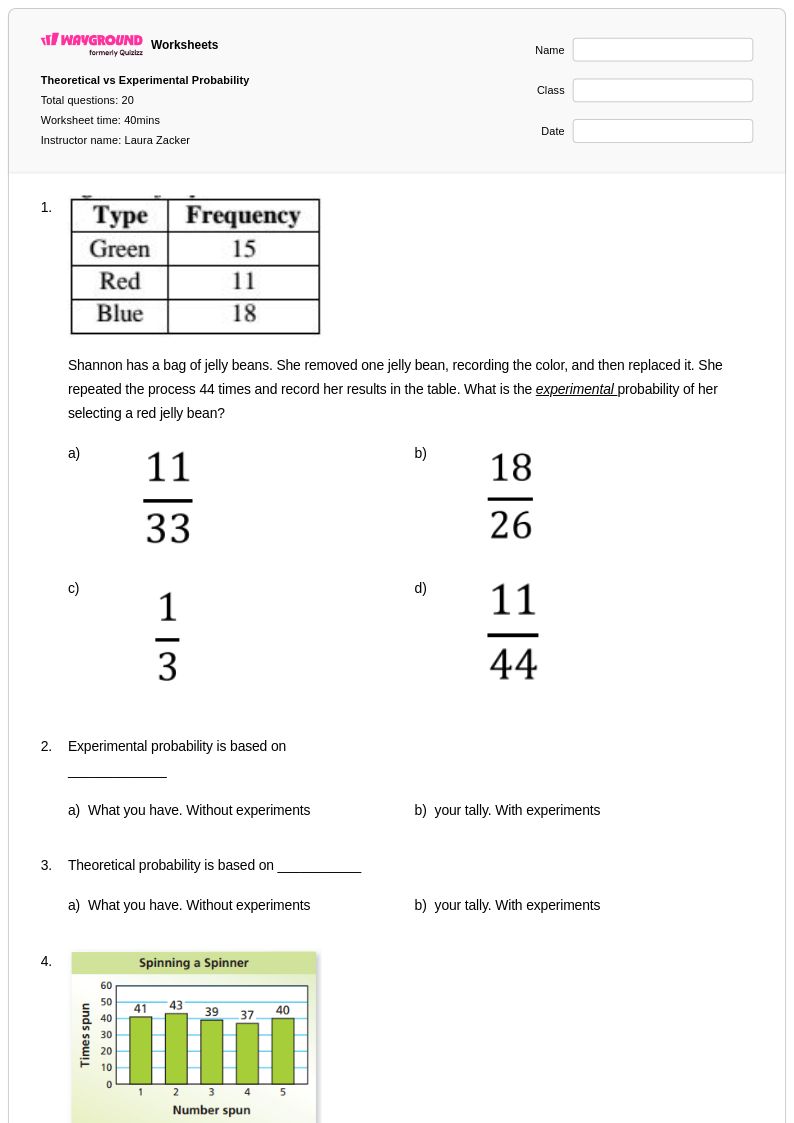
20Q
7th - 11th
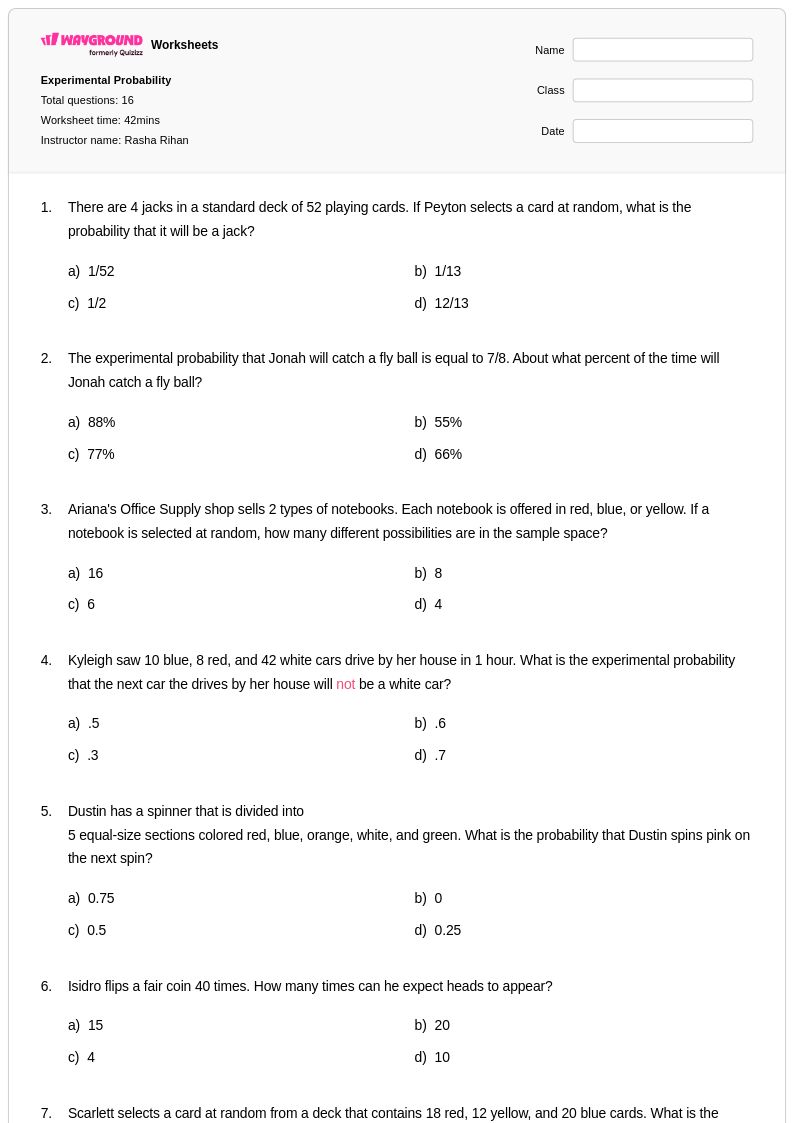
16Q
10th - 11th
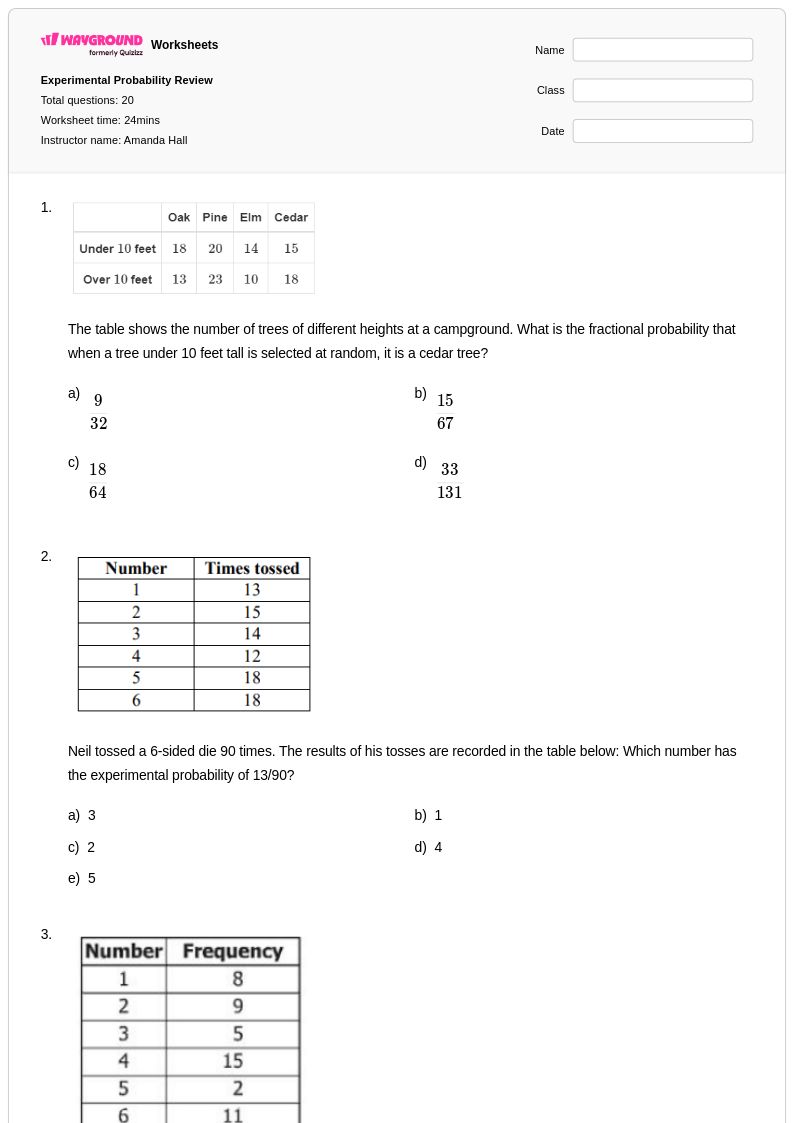
20Q
7th - 9th
10Q
7th - 10th
23Q
7th - 12th
20Q
9th - 12th
18Q
9th - 10th
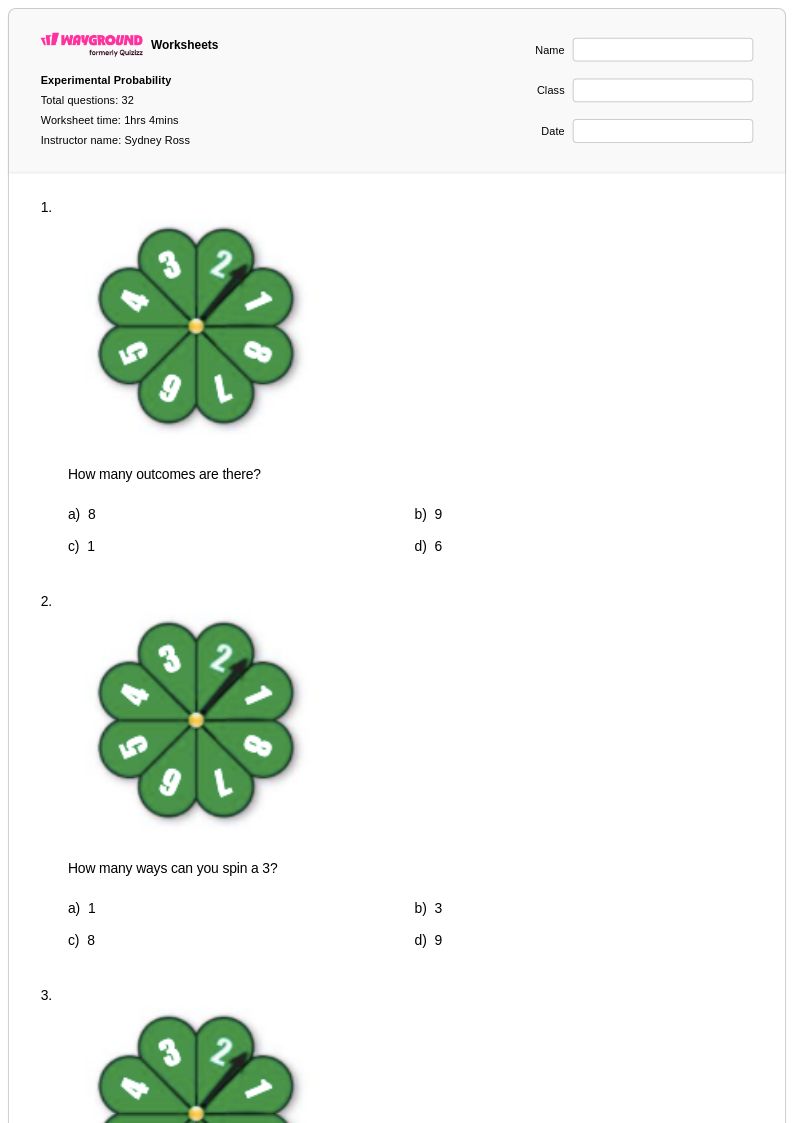
32Q
4th - 9th

30Q
9th - 12th
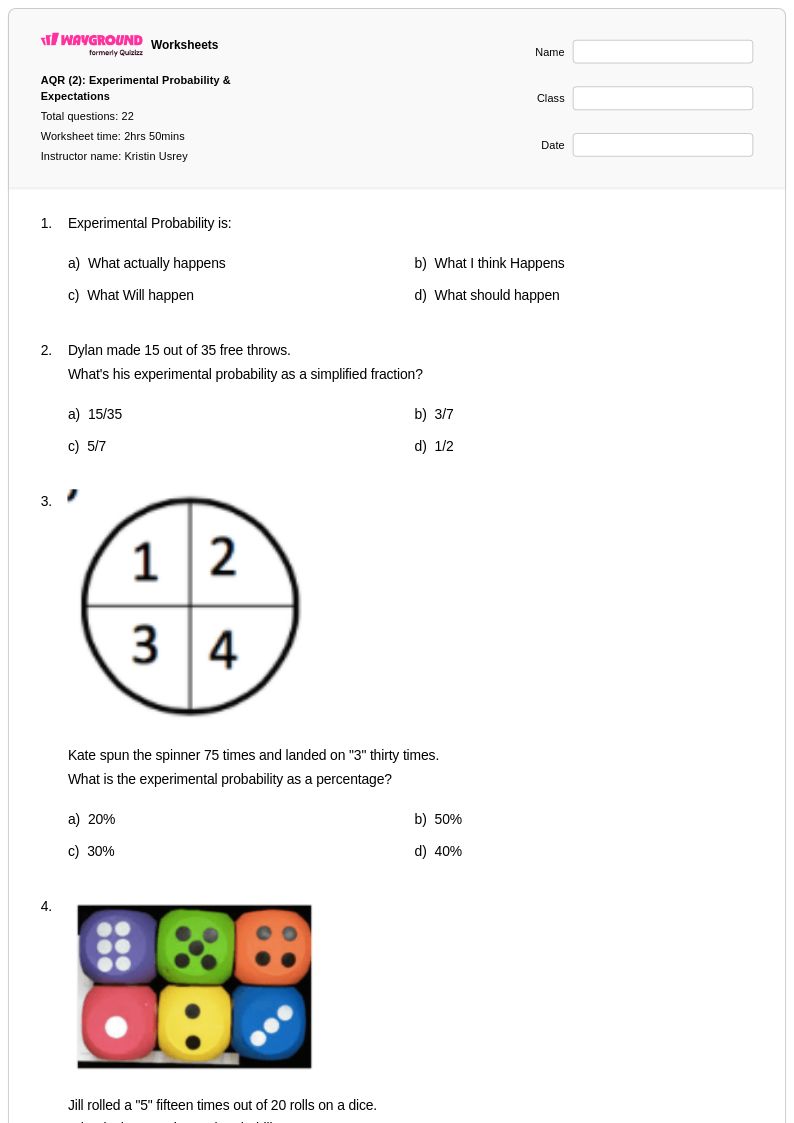
22Q
12th
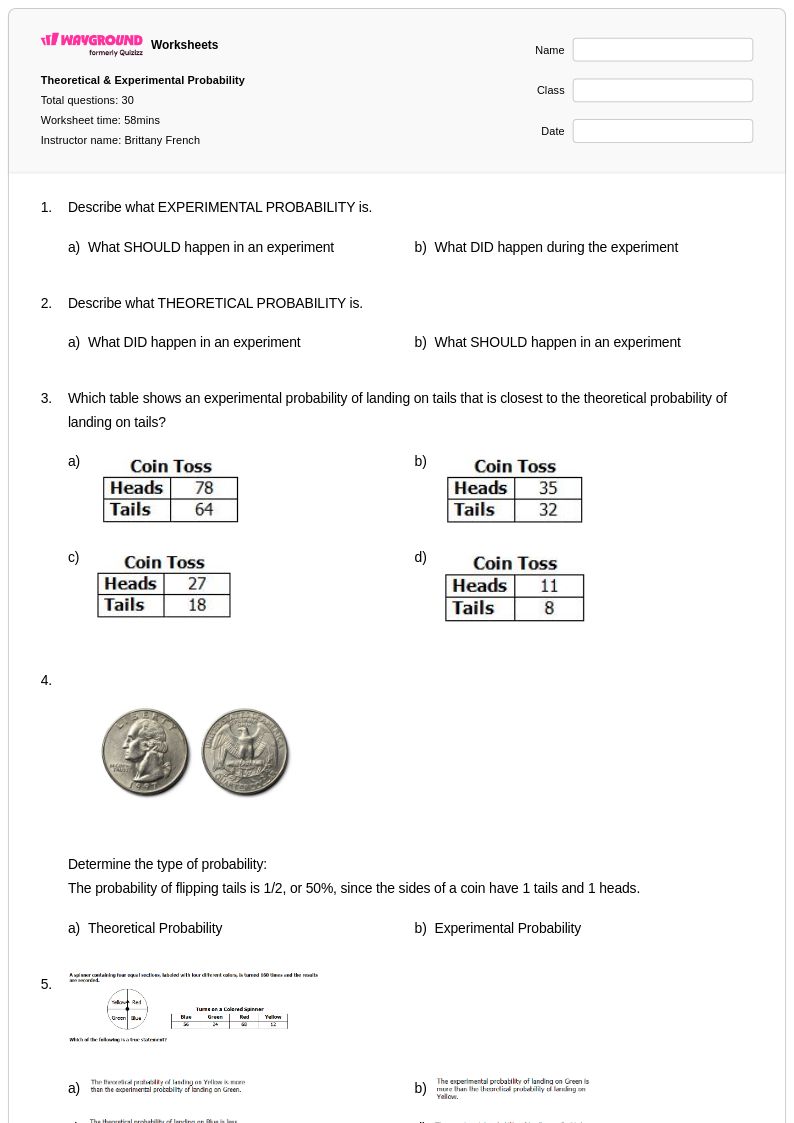
30Q
7th - 11th
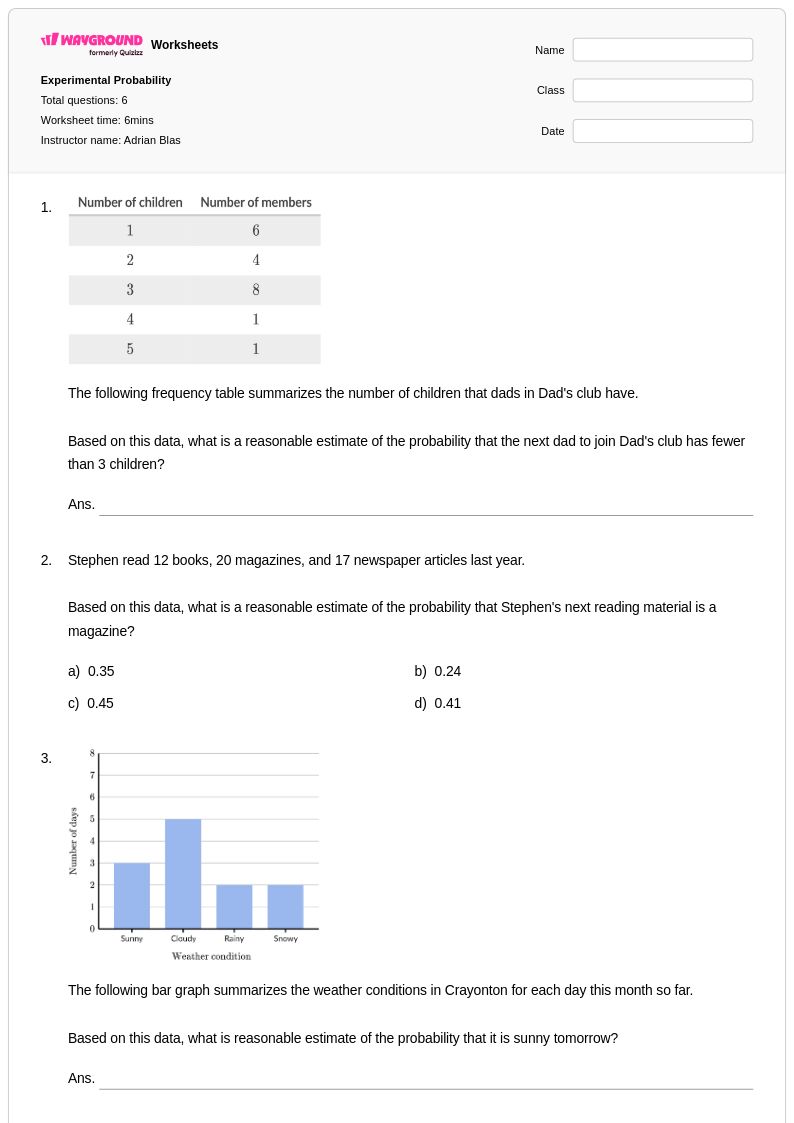
6Q
10th - 12th
20Q
11th
10Q
5th - 9th
13Q
8th - 9th
15Q
8th - 9th
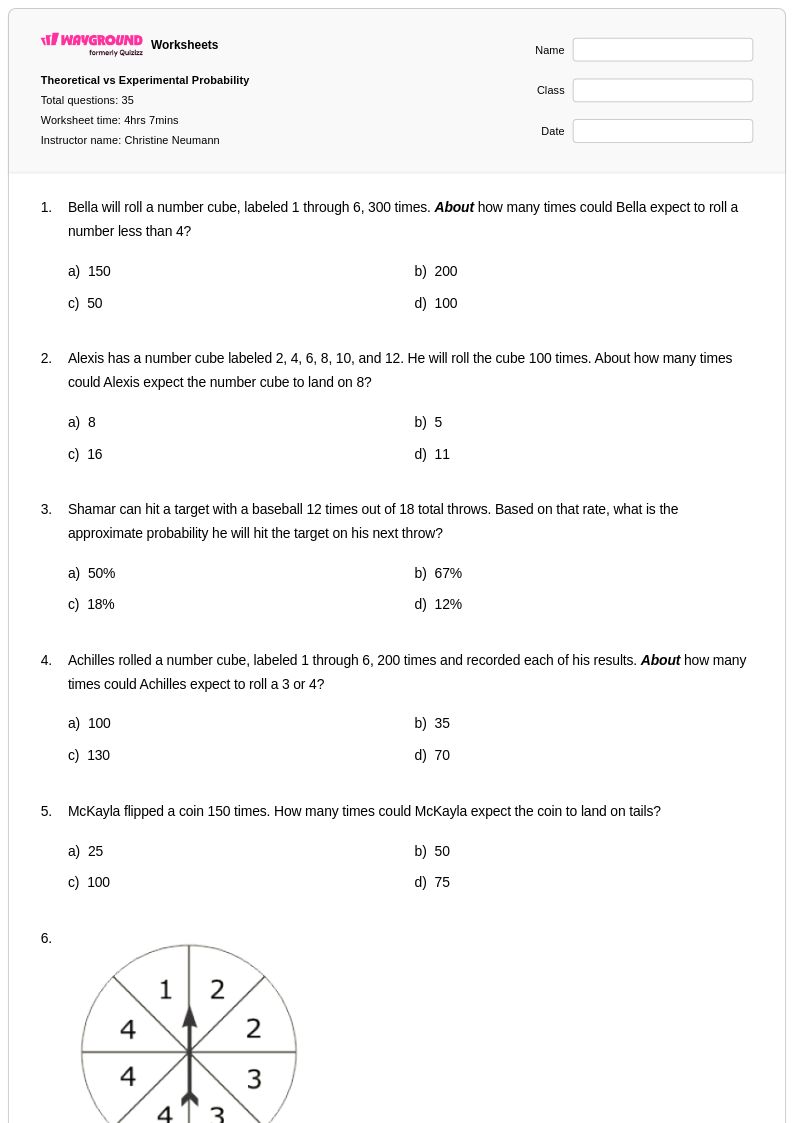
35Q
12th
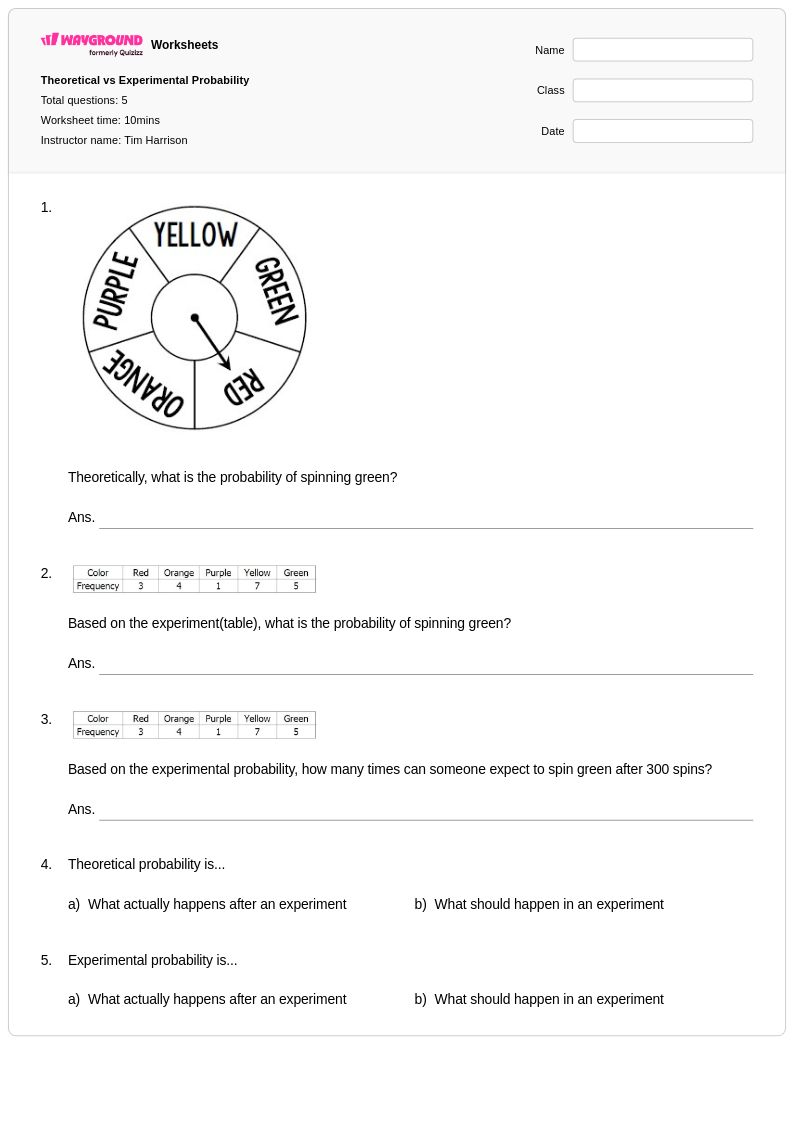
5Q
9th - 12th
Explorar hojas de trabajo por materias
Explore printable Experimental Probability worksheets
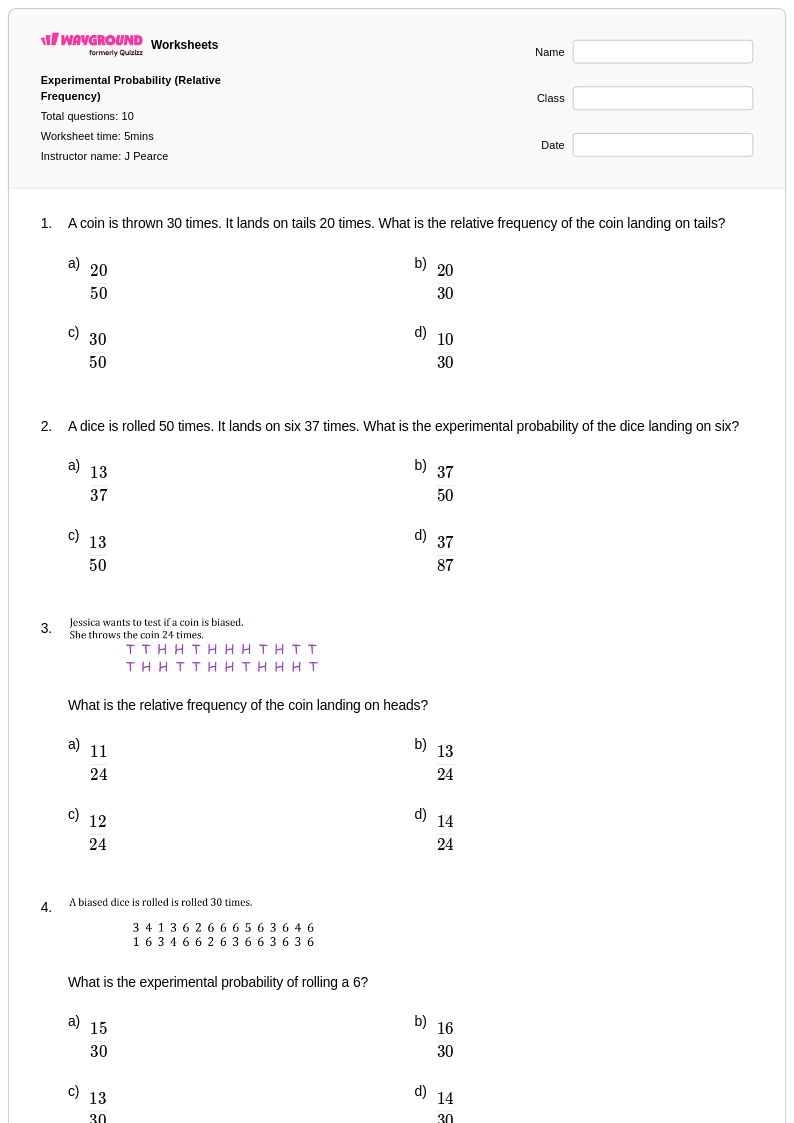
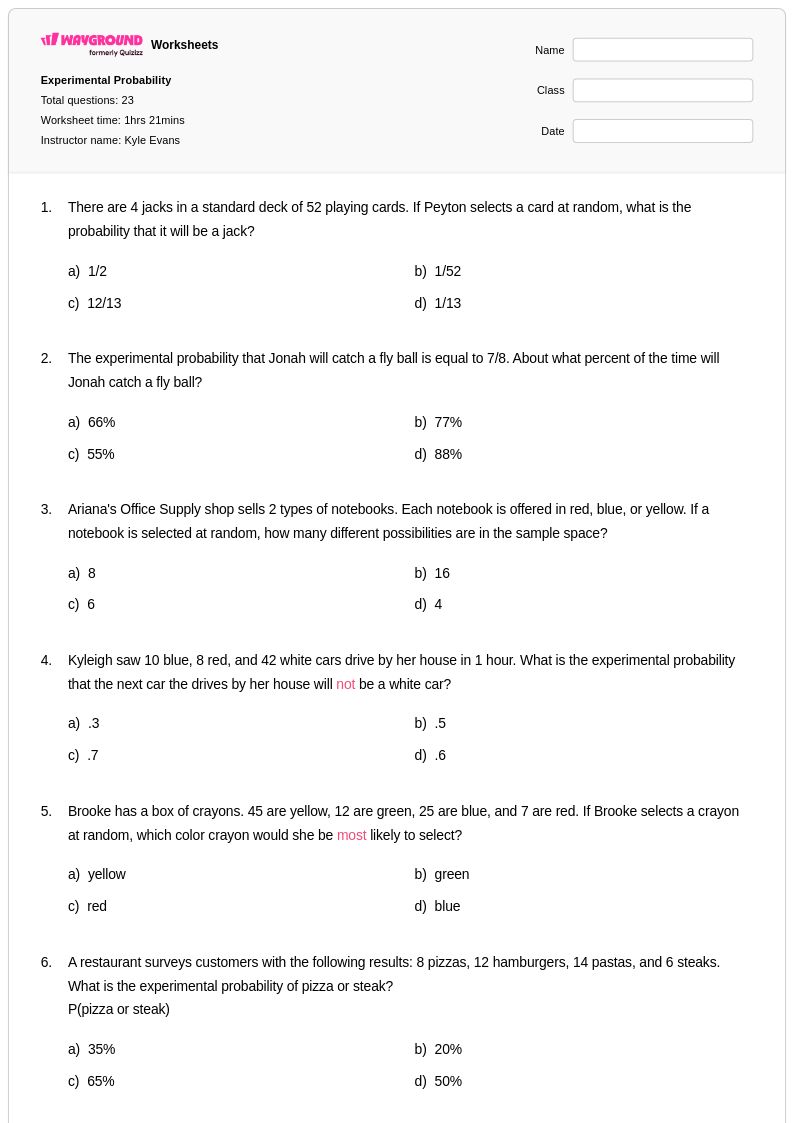
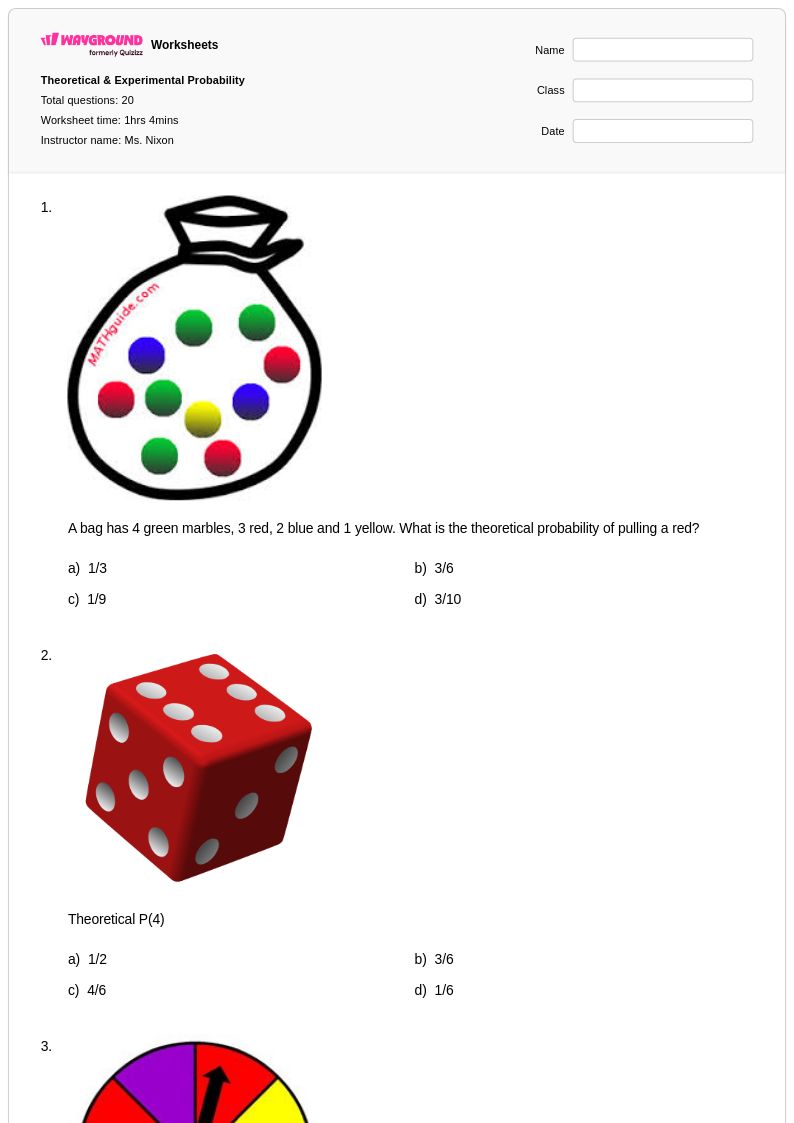
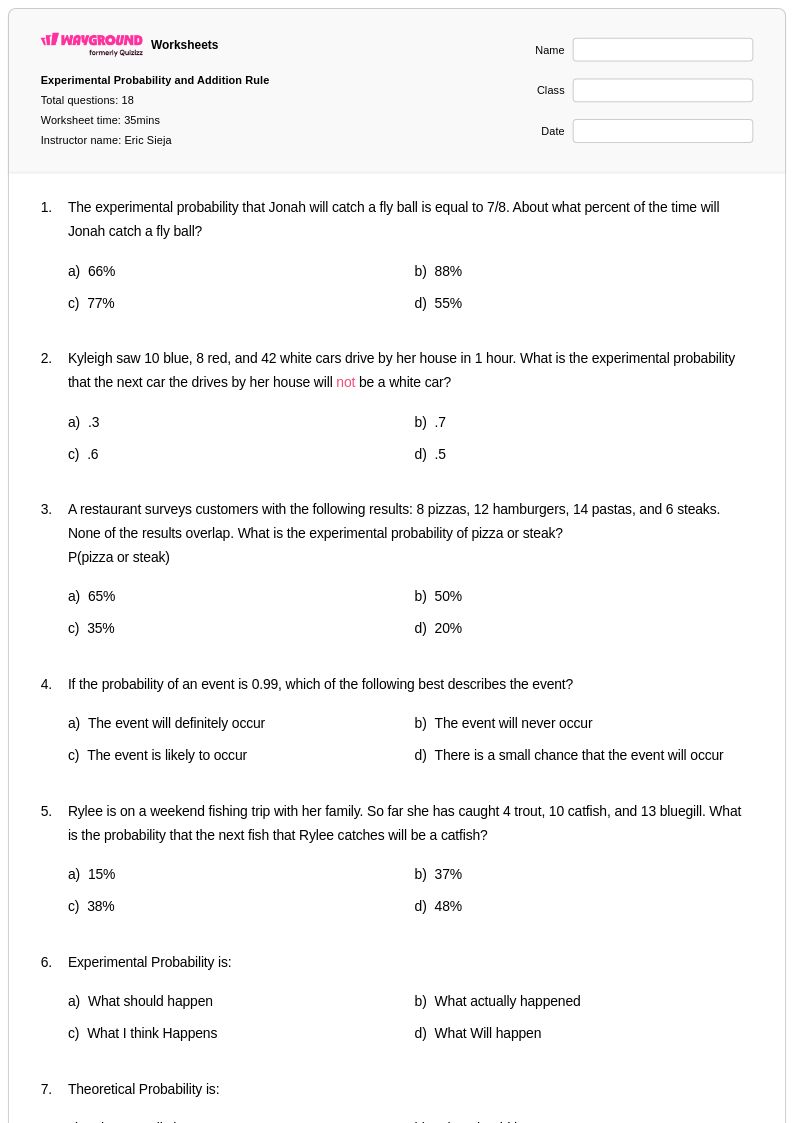
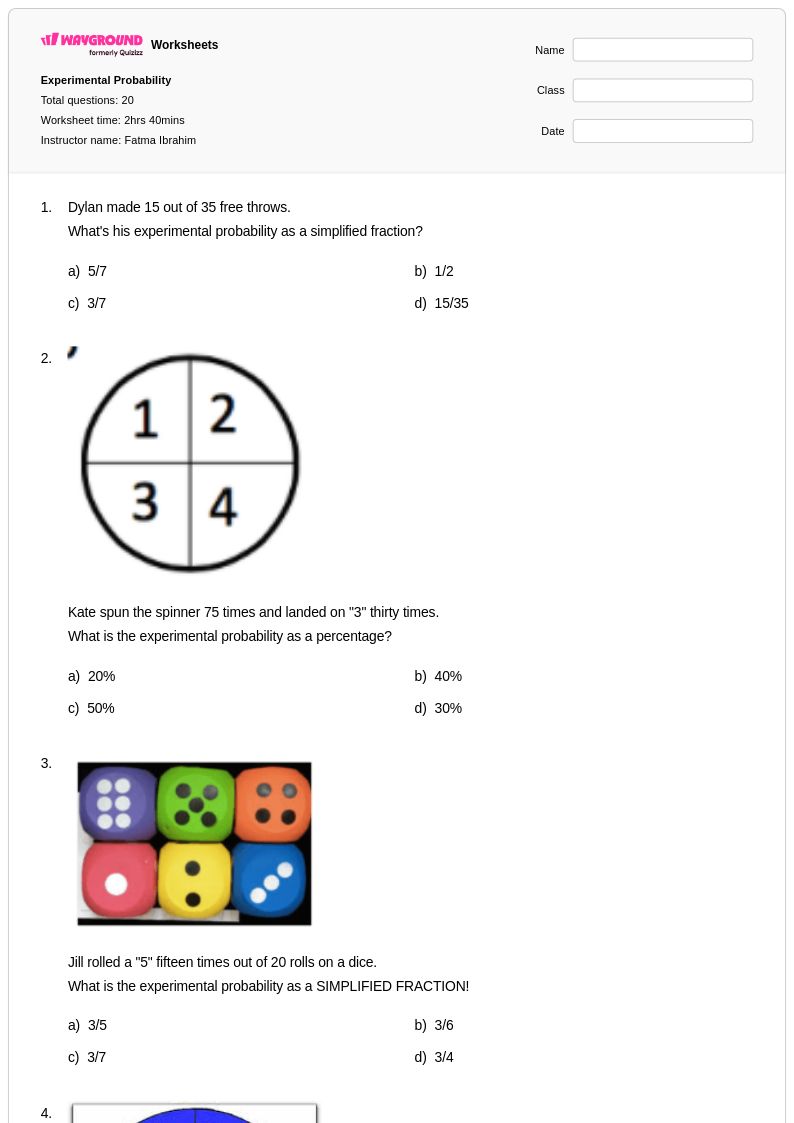
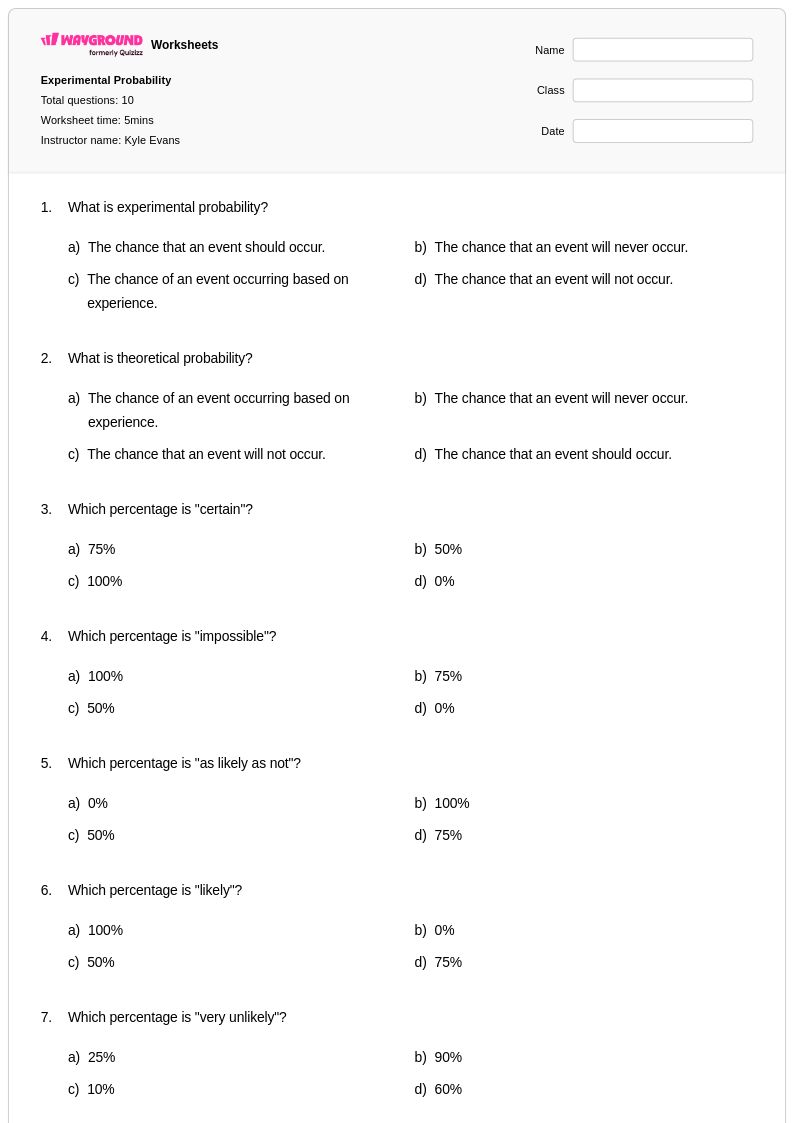
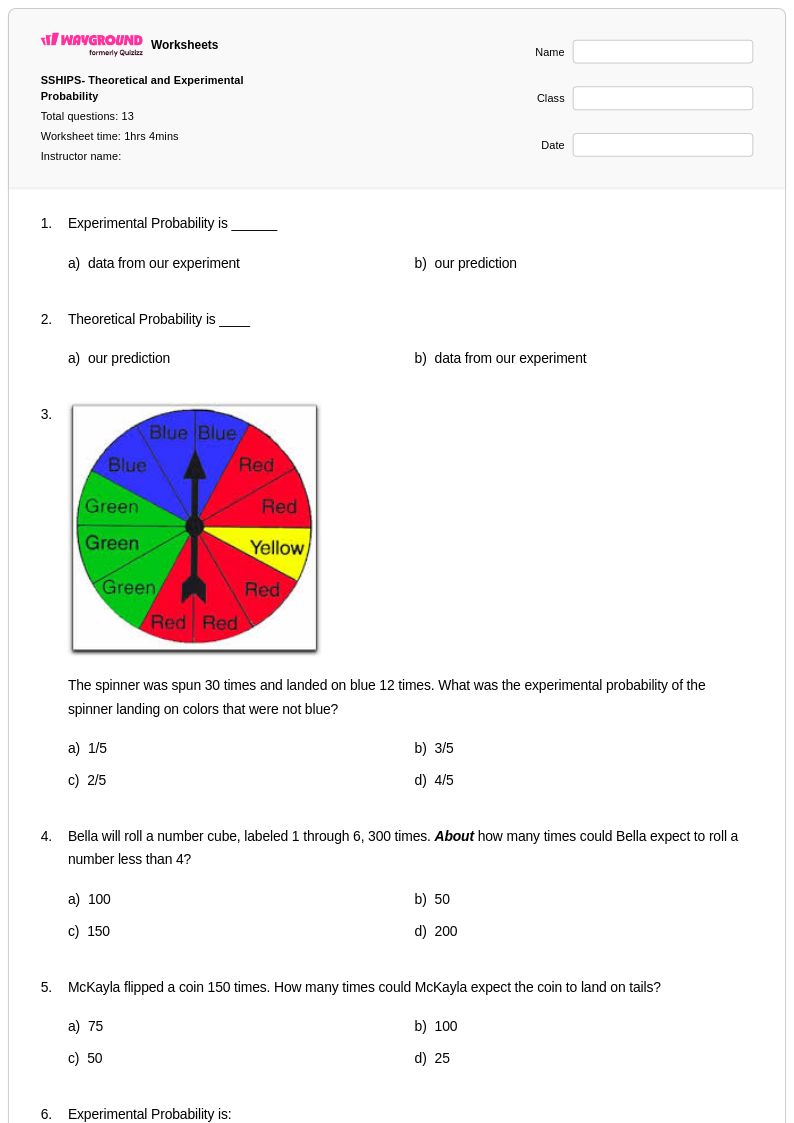
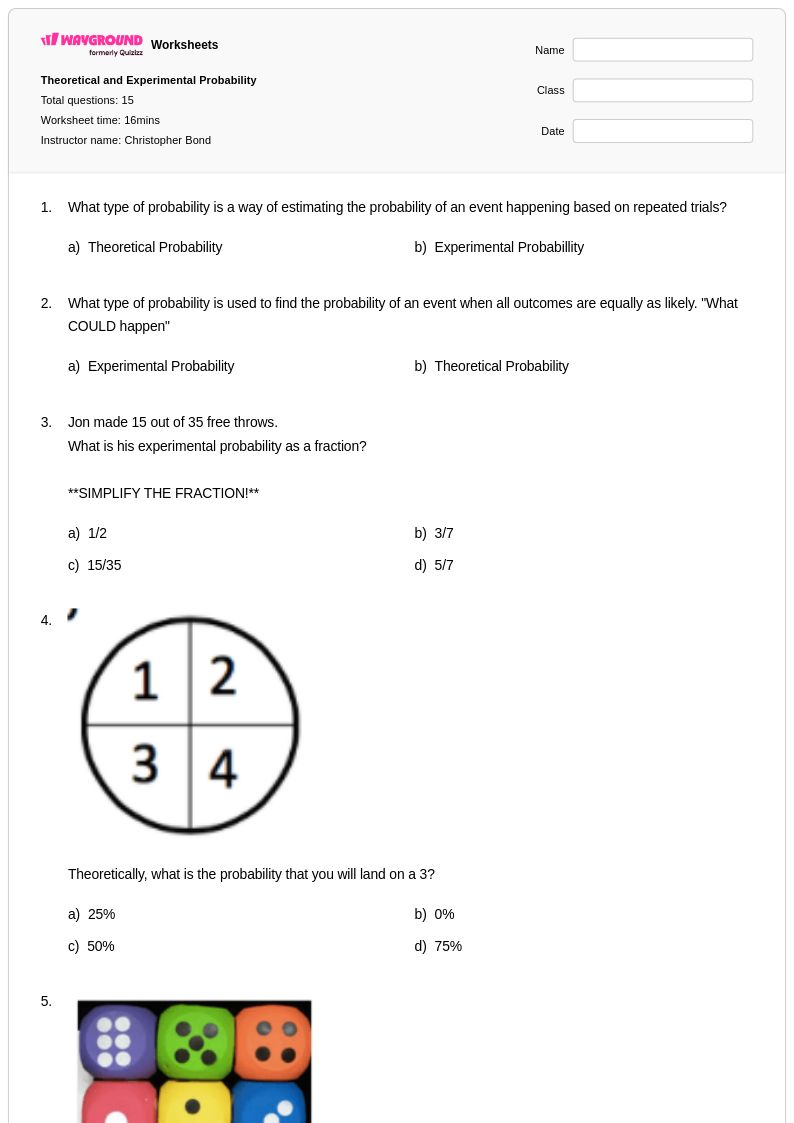
Experimental probability worksheets available through Wayground (formerly Quizizz) provide students with essential hands-on experience in collecting, analyzing, and interpreting data from real-world trials and simulations. These comprehensive resources strengthen critical mathematical thinking skills by guiding learners through the process of conducting experiments, recording outcomes, and calculating probability based on actual results rather than theoretical predictions. Students work with practice problems involving coin flips, dice rolls, spinner activities, and other probability experiments that help them understand how experimental results may differ from theoretical expectations. Each worksheet collection includes detailed answer keys and step-by-step solutions, with materials available as free printables in convenient pdf format that teachers can easily distribute for classroom activities or homework assignments.
Wayground (formerly Quizizz) supports mathematics educators with millions of teacher-created experimental probability resources that can be seamlessly integrated into any curriculum through advanced search and filtering capabilities. The platform's robust collection allows teachers to quickly locate worksheets aligned with specific learning standards while utilizing differentiation tools to meet diverse student needs across all ability levels. Flexible customization options enable educators to modify existing materials or create new experimental probability activities, with resources available in both printable pdf formats for traditional classroom use and interactive digital versions for technology-enhanced learning environments. These versatile tools streamline lesson planning while providing targeted options for skill practice, remediation support for struggling learners, and enrichment opportunities for advanced students ready to explore more complex probability concepts.