
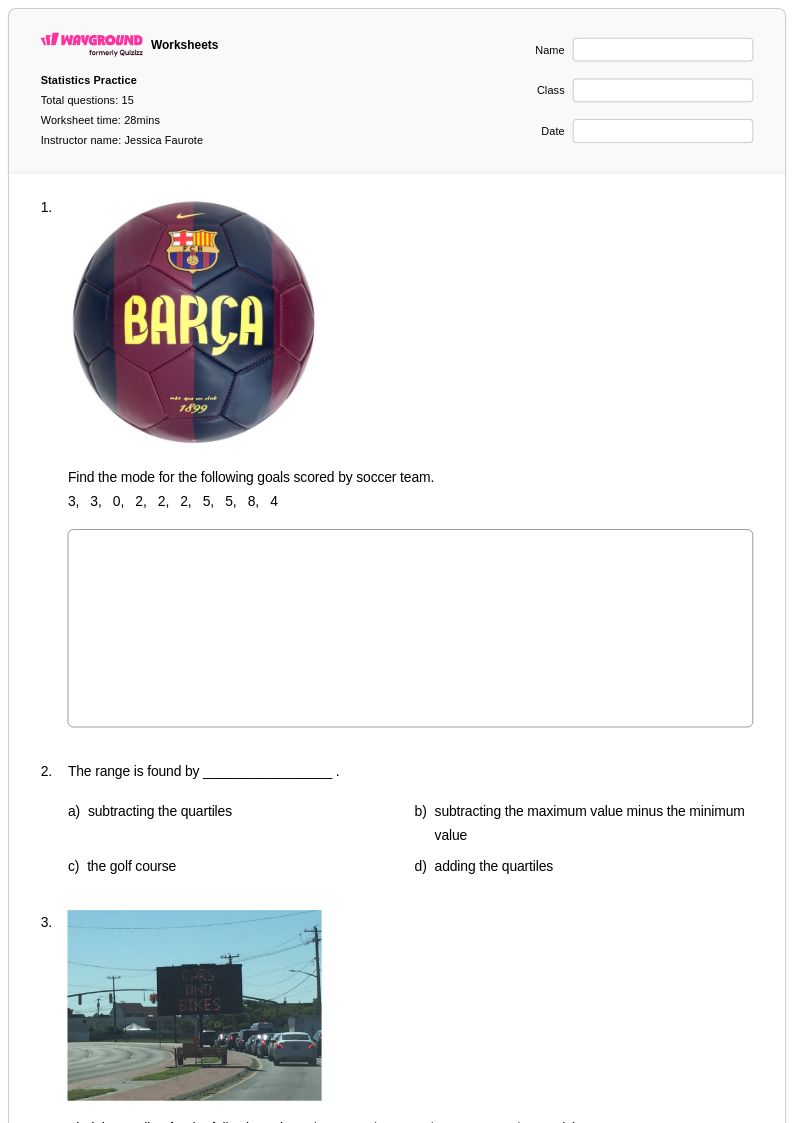
15Q
6th - 8th
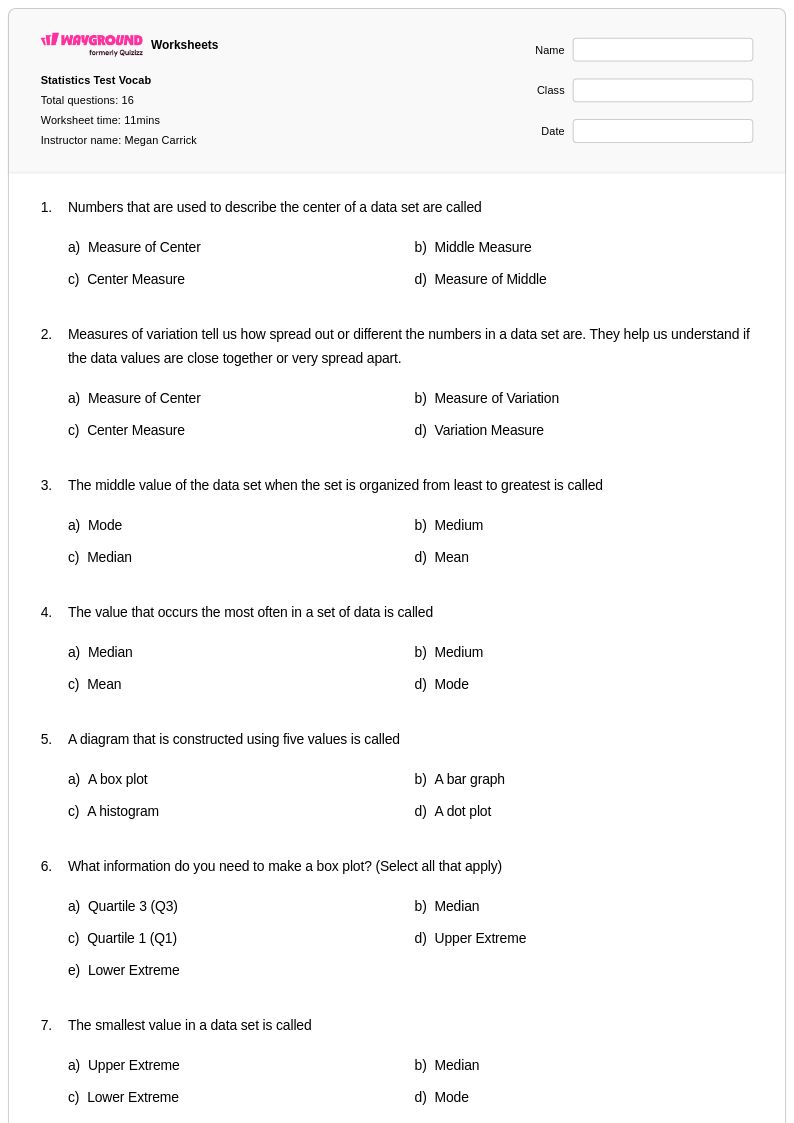
16Q
6th
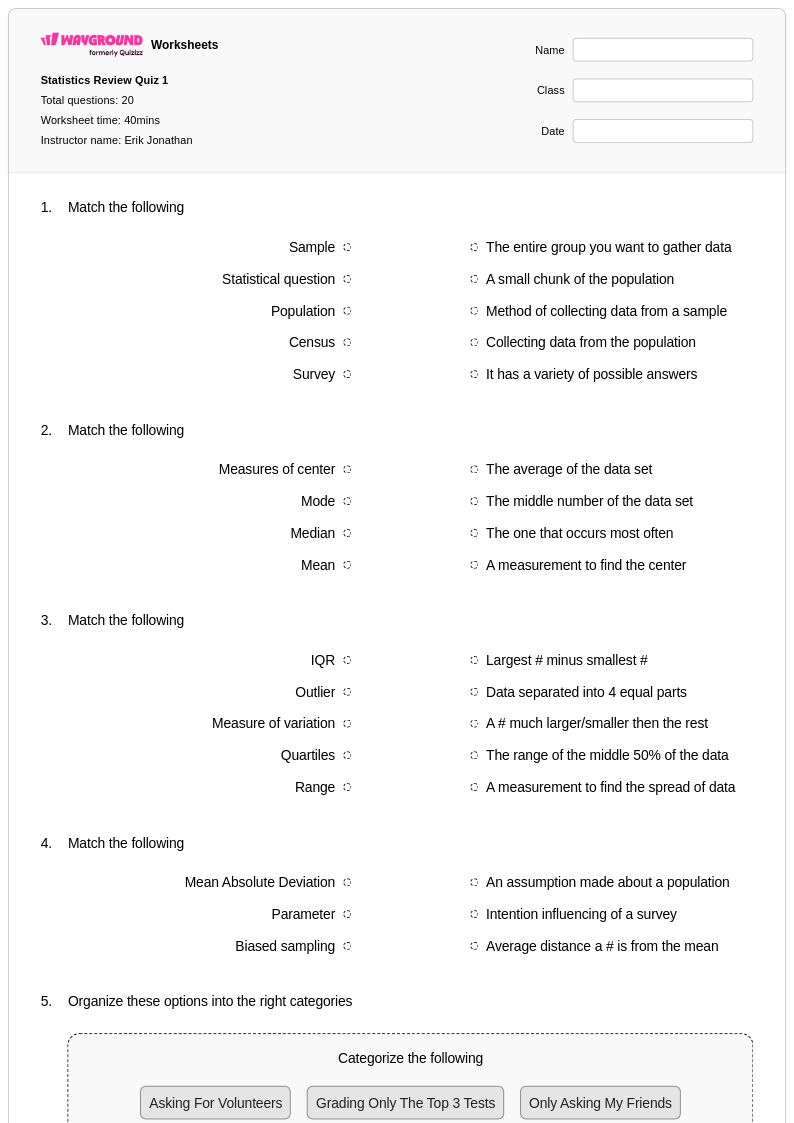
20Q
6th
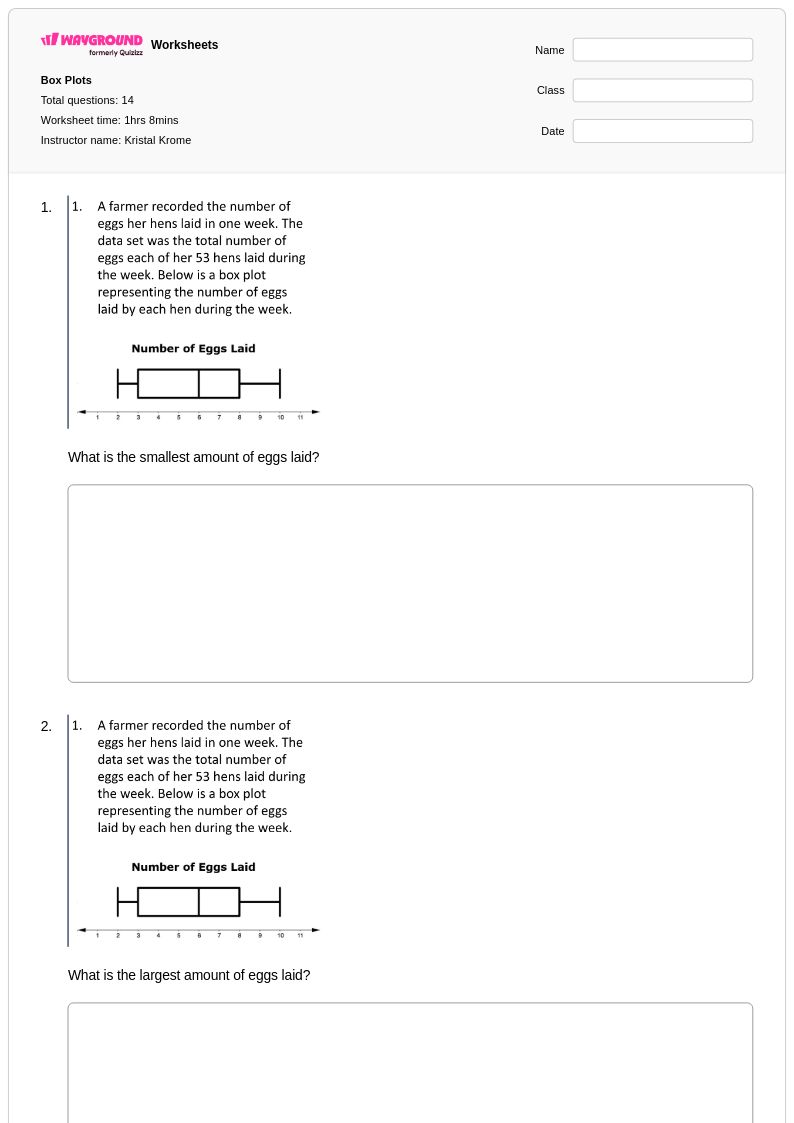
14Q
6th
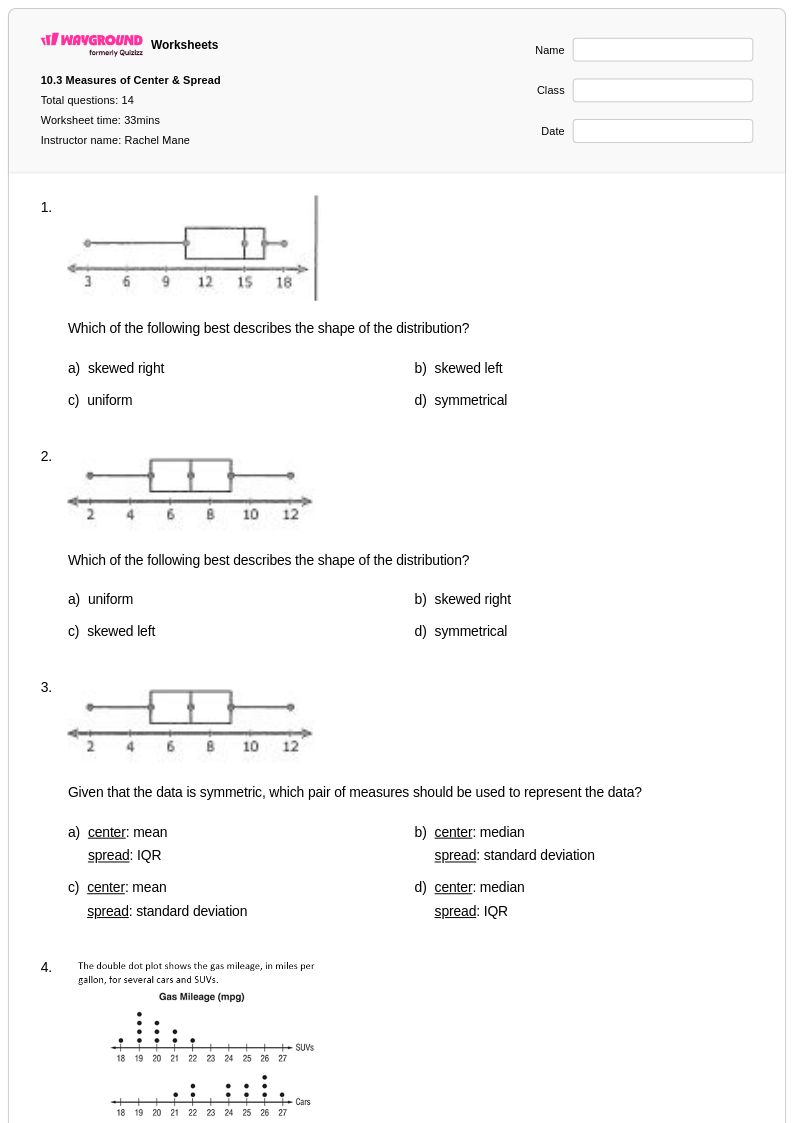
14Q
11th
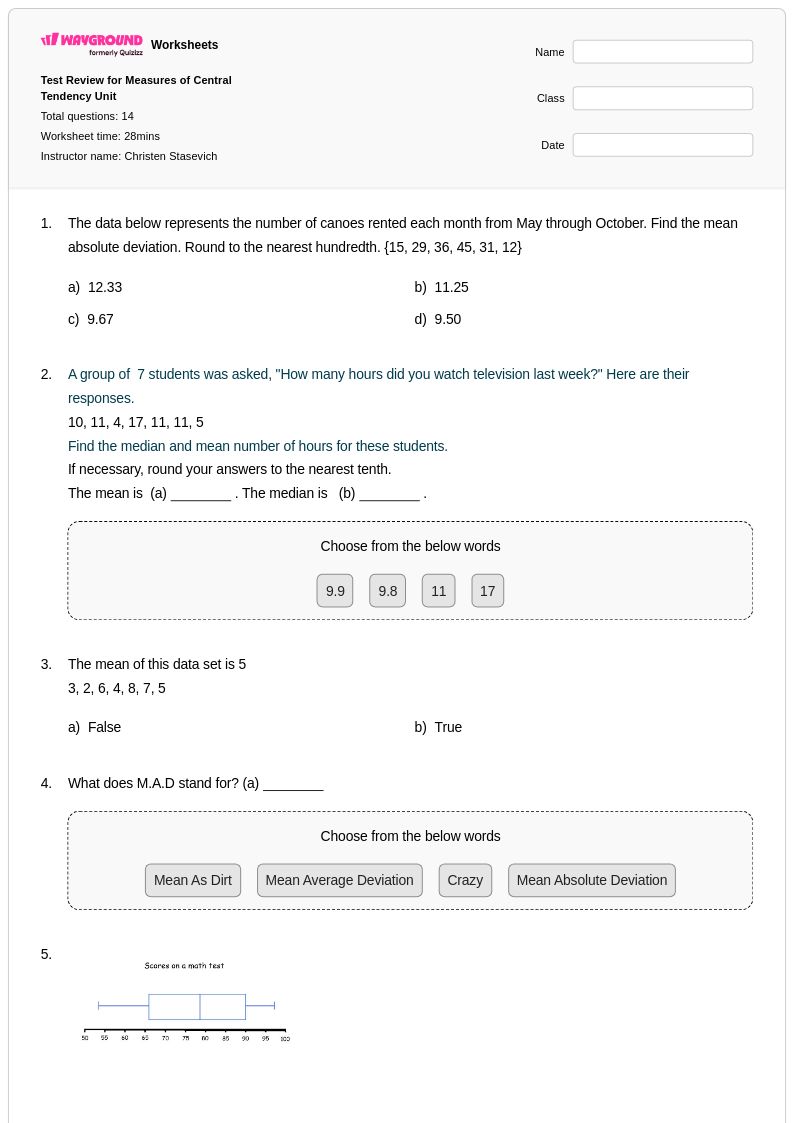
14Q
9th
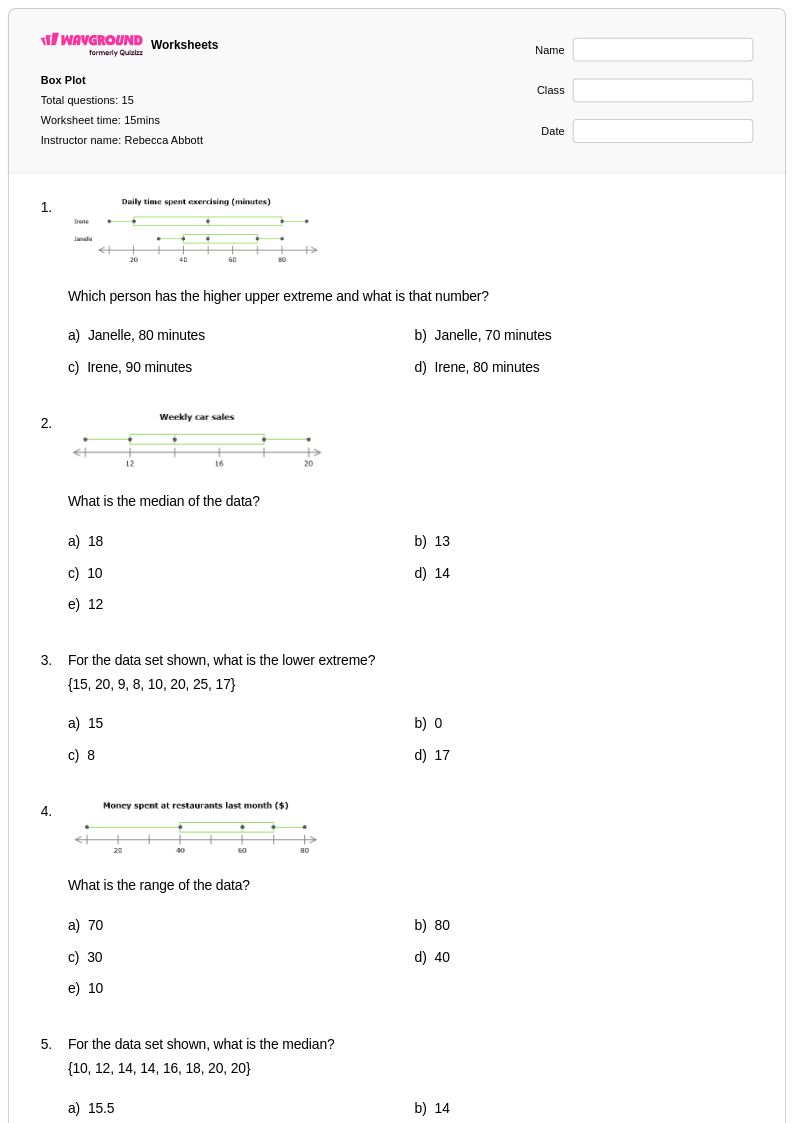
15Q
8th
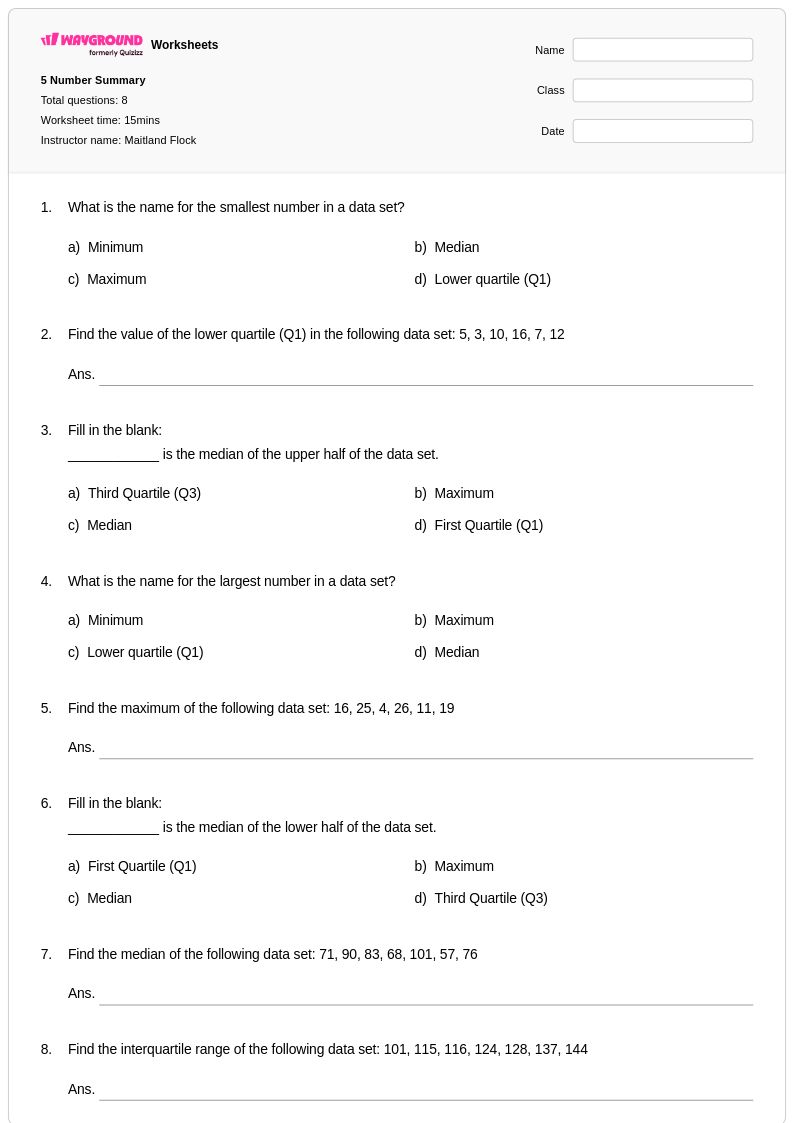
8Q
6th
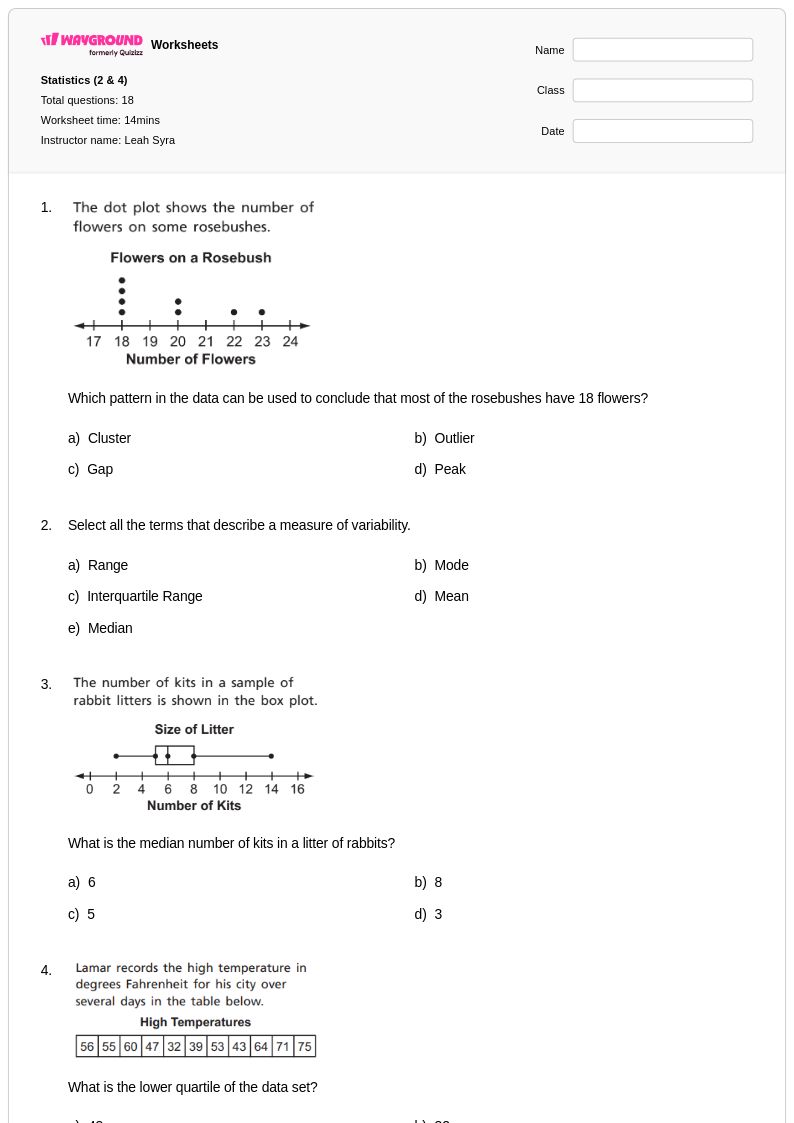
18Q
6th
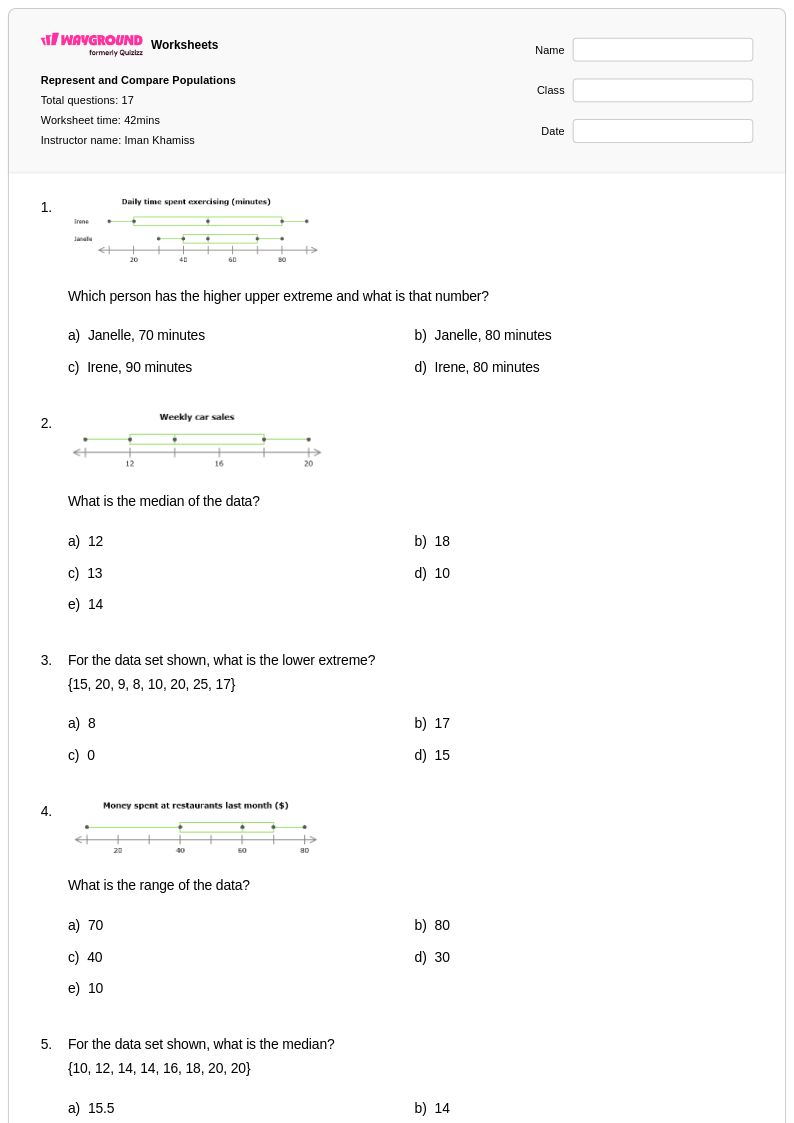
17Q
7th
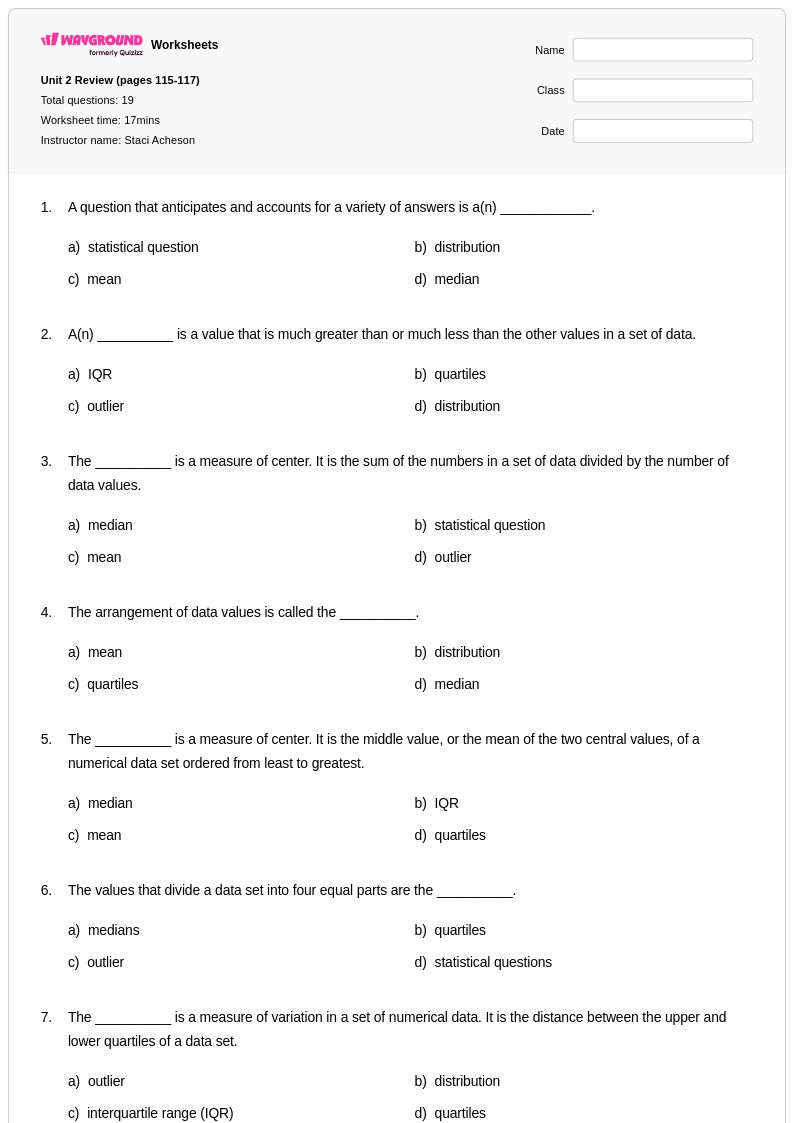
19Q
6th - Uni
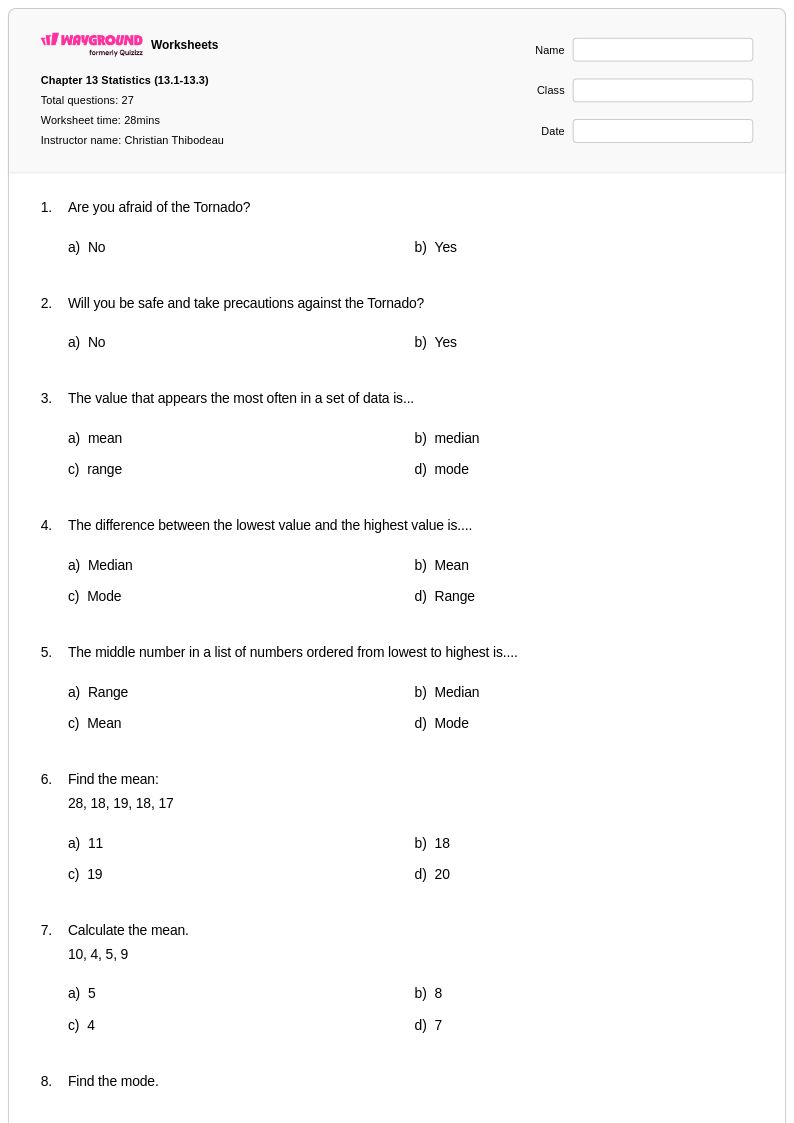
27Q
12th
18Q
7th
25Q
7th
9Q
9th
20Q
6th - Uni
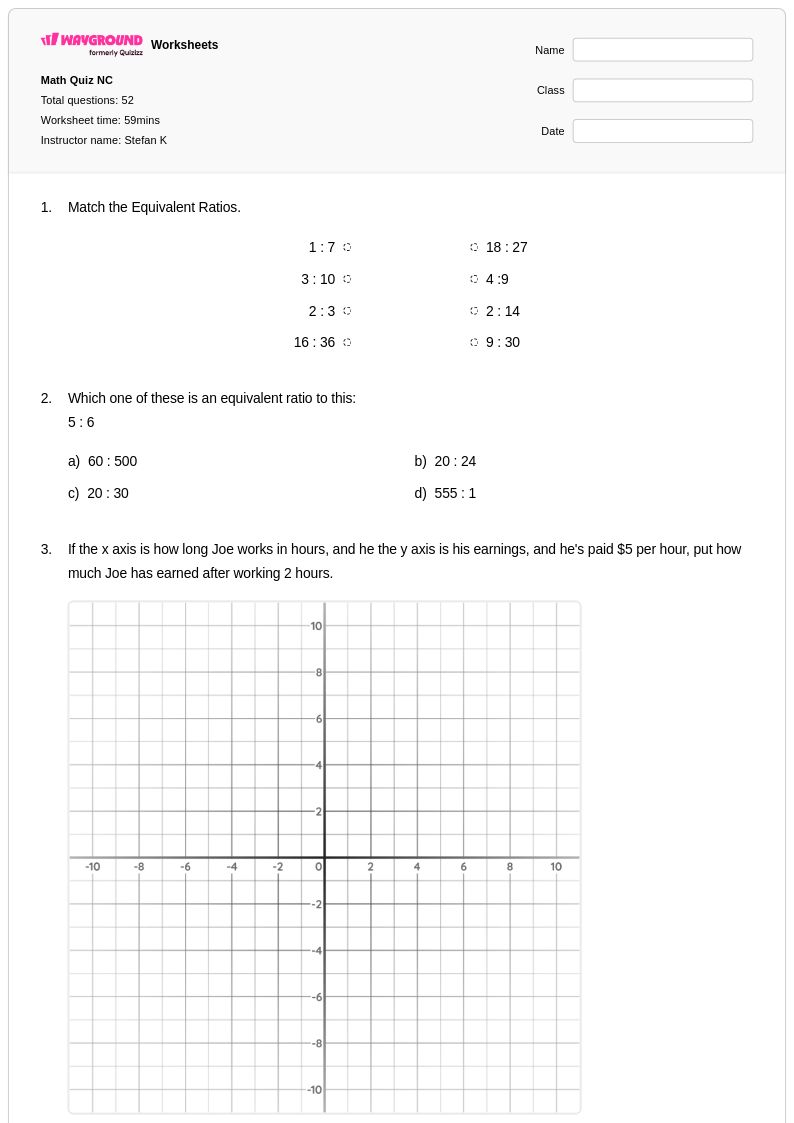
52Q
6th
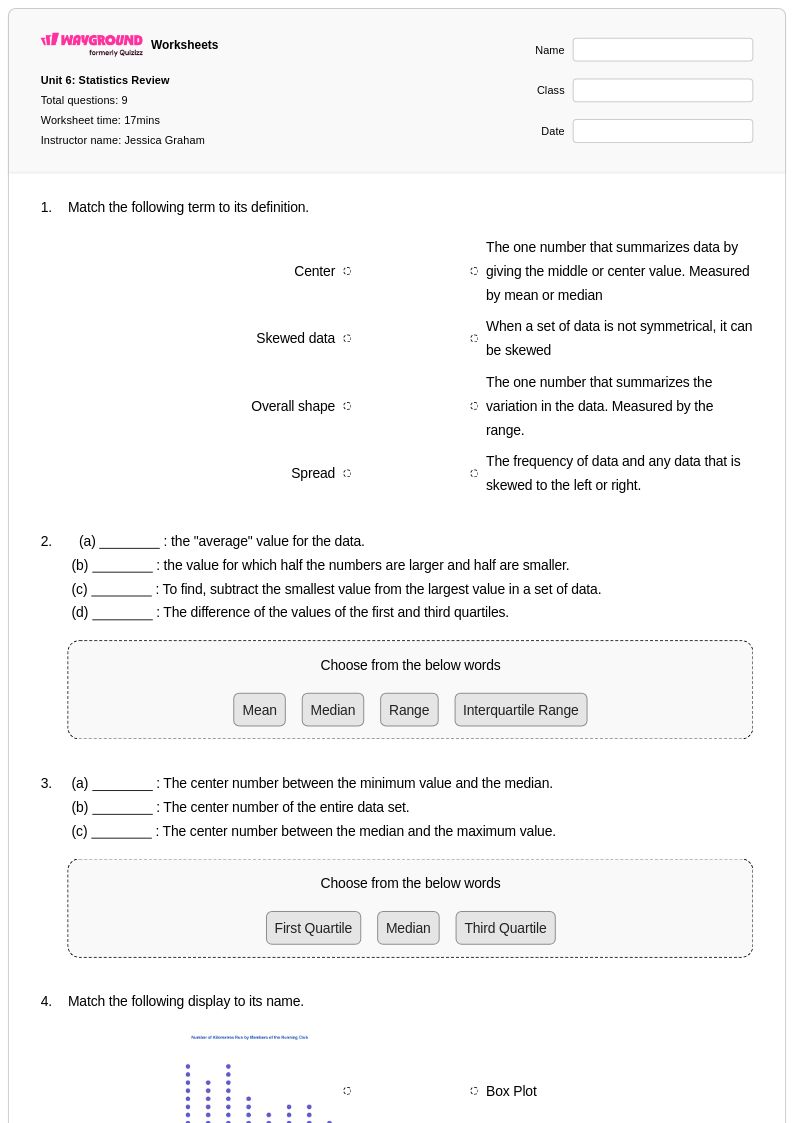
9Q
6th
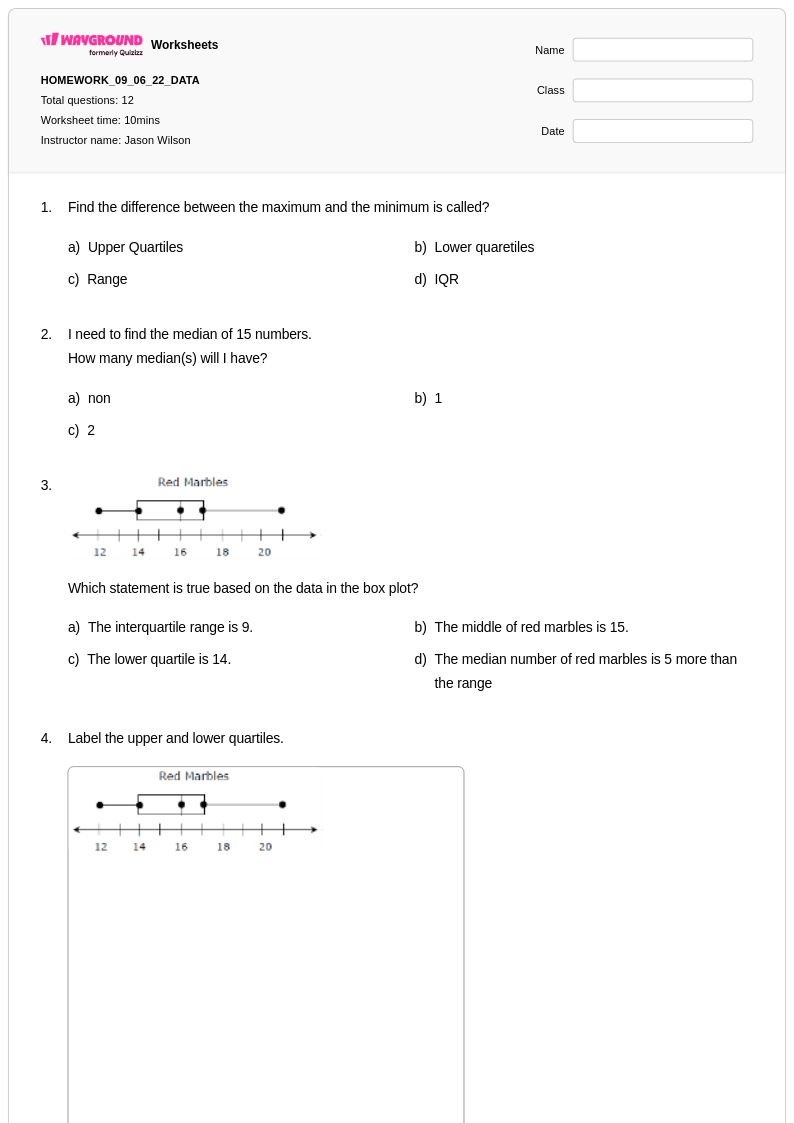
12Q
6th
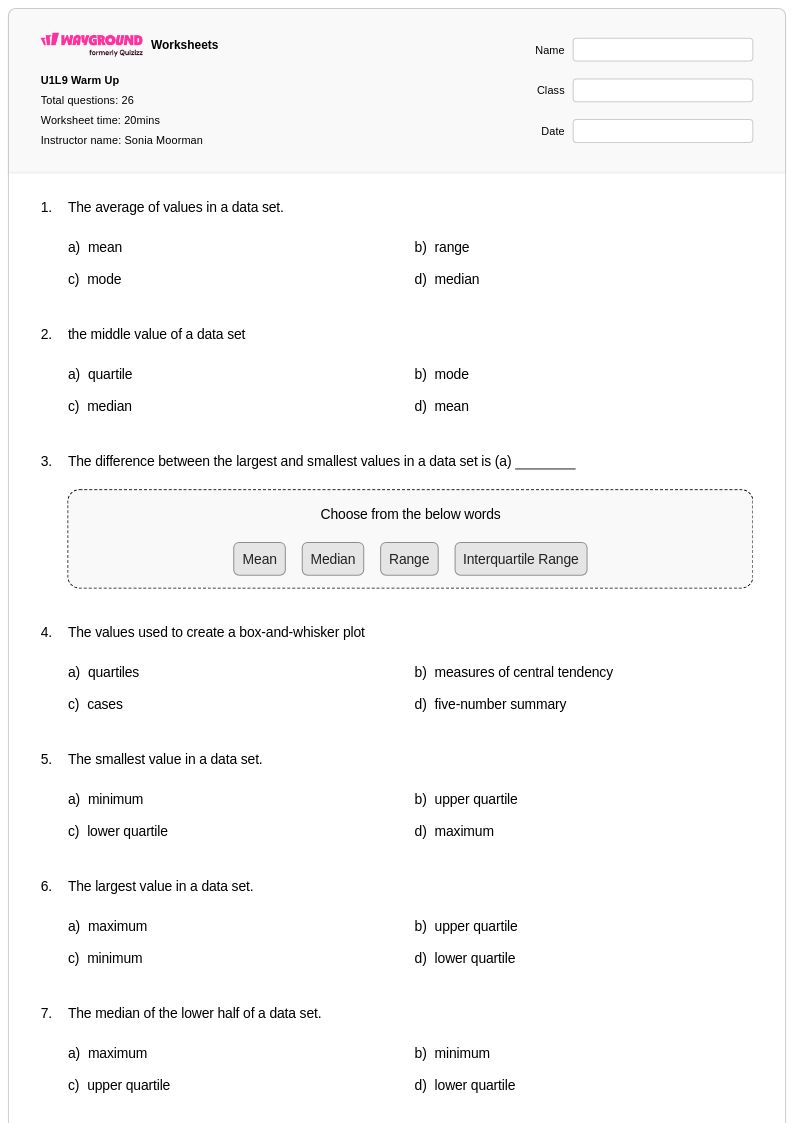
26Q
9th
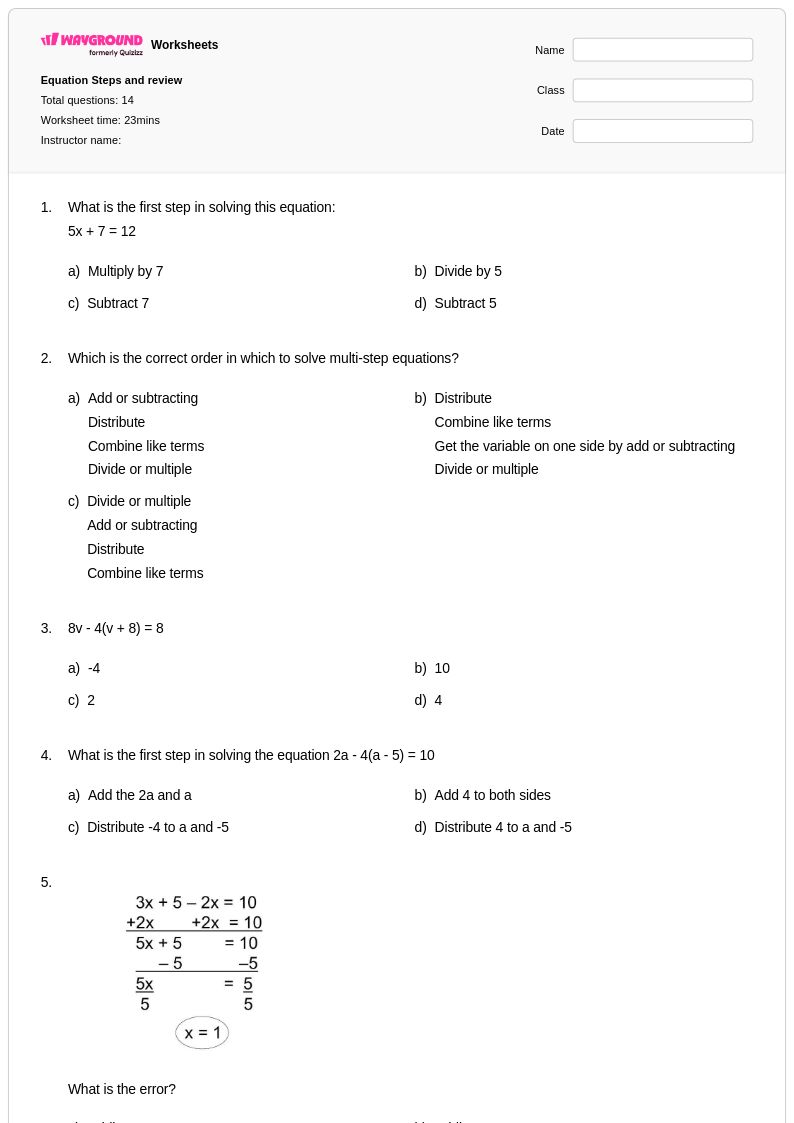
14Q
8th - Uni
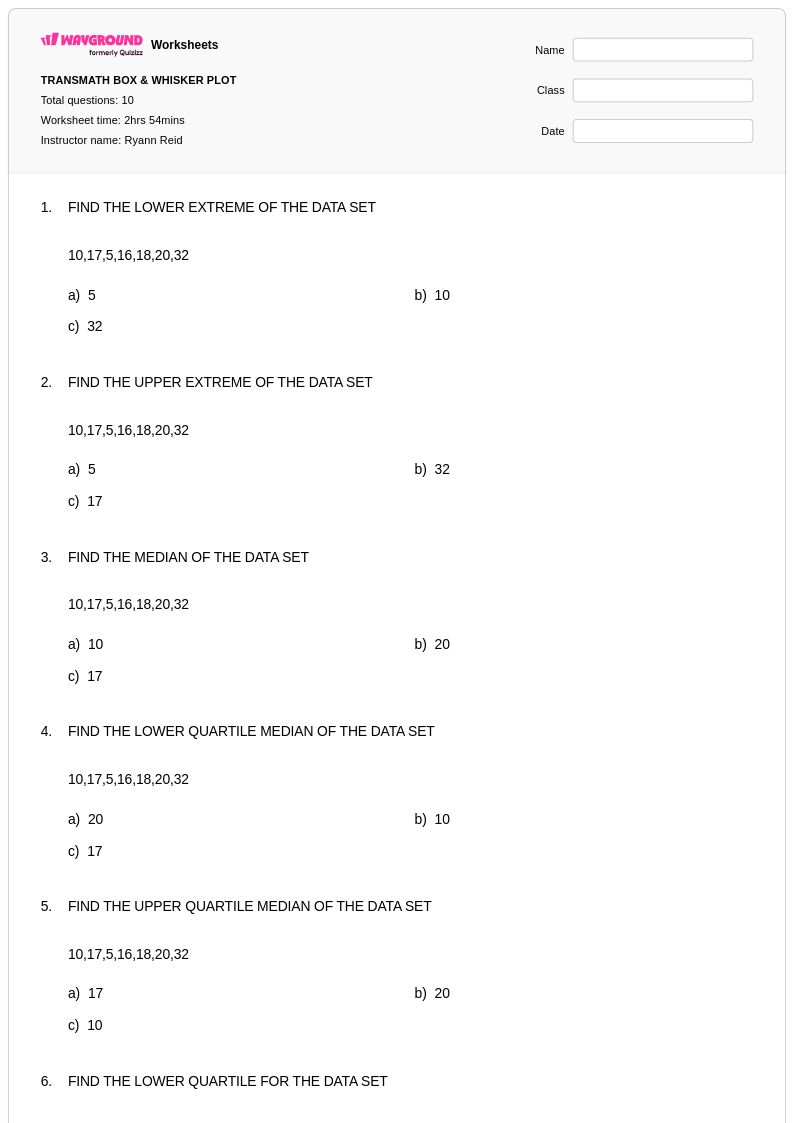
10Q
8th
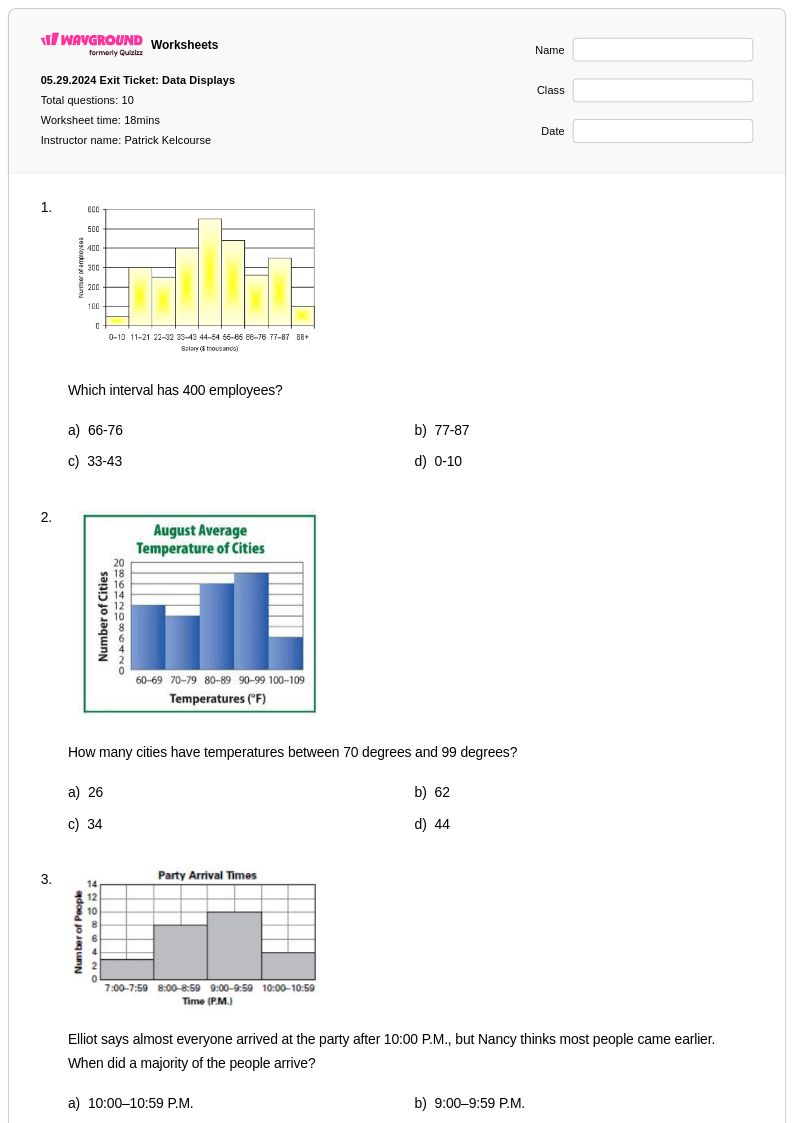
10Q
9th
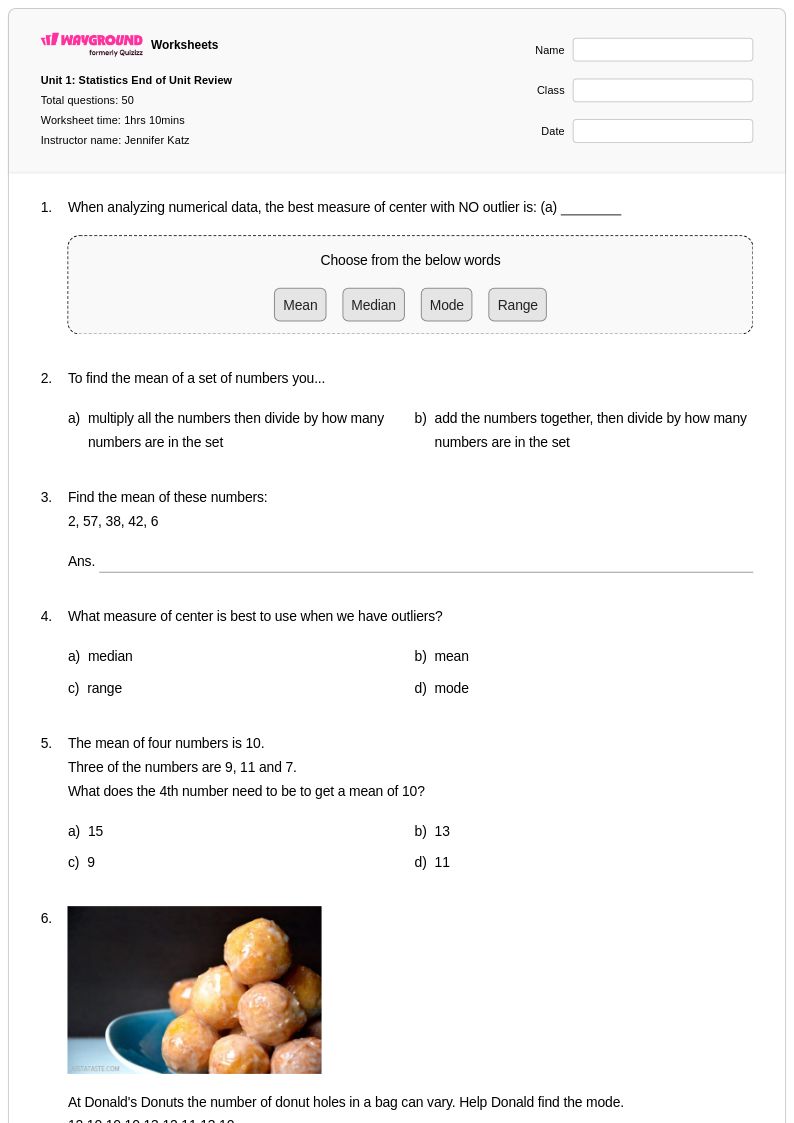
50Q
6th
Explore planilhas por assuntos
Explore printable Quartiles worksheets
Quartiles worksheets available through Wayground (formerly Quizizz) provide comprehensive practice in understanding and calculating the statistical measures that divide datasets into four equal parts. These educational resources strengthen students' ability to find the first quartile (Q1), median (Q2), and third quartile (Q3) while developing proficiency in interpreting interquartile ranges and identifying outliers in data distributions. The collection includes free printables with detailed answer keys, practice problems ranging from basic quartile identification to complex box plot construction, and pdf formats that accommodate various learning environments. Students work through exercises involving both small and large datasets, learning to organize data, determine quartile positions using different methods, and apply quartile concepts to real-world statistical scenarios.
Wayground (formerly Quizizz) supports mathematics educators with an extensive collection of teacher-created quartiles worksheets drawn from millions of educational resources that can be easily searched, filtered, and customized to meet diverse classroom needs. The platform's robust differentiation tools allow teachers to modify worksheet difficulty levels, adjust problem complexity, and select specific quartile calculation methods to match student readiness levels and curriculum standards. These flexible resources are available in both printable and digital formats, including downloadable pdf versions, enabling seamless integration into lesson planning, targeted remediation for students struggling with statistical concepts, and enrichment opportunities for advanced learners ready to explore quartiles in more sophisticated data analysis contexts.
FAQs
How do I introduce the concept of quartiles to my students?
What exercises help students practice finding quartiles?
What is a common mistake students make when calculating quartiles?
How can I use this Wayground worksheet in my classroom?
How do quartiles fit into the math curriculum?
How can I differentiate instruction for learning quartiles?