Free Printable Quotation Marks Worksheets for Grade 6
Grade 6 quotation marks worksheets from Wayground help students master proper punctuation through engaging printables, practice problems, and comprehensive answer keys for effective grammar learning.
Explore printable Quotation Marks worksheets for Grade 6
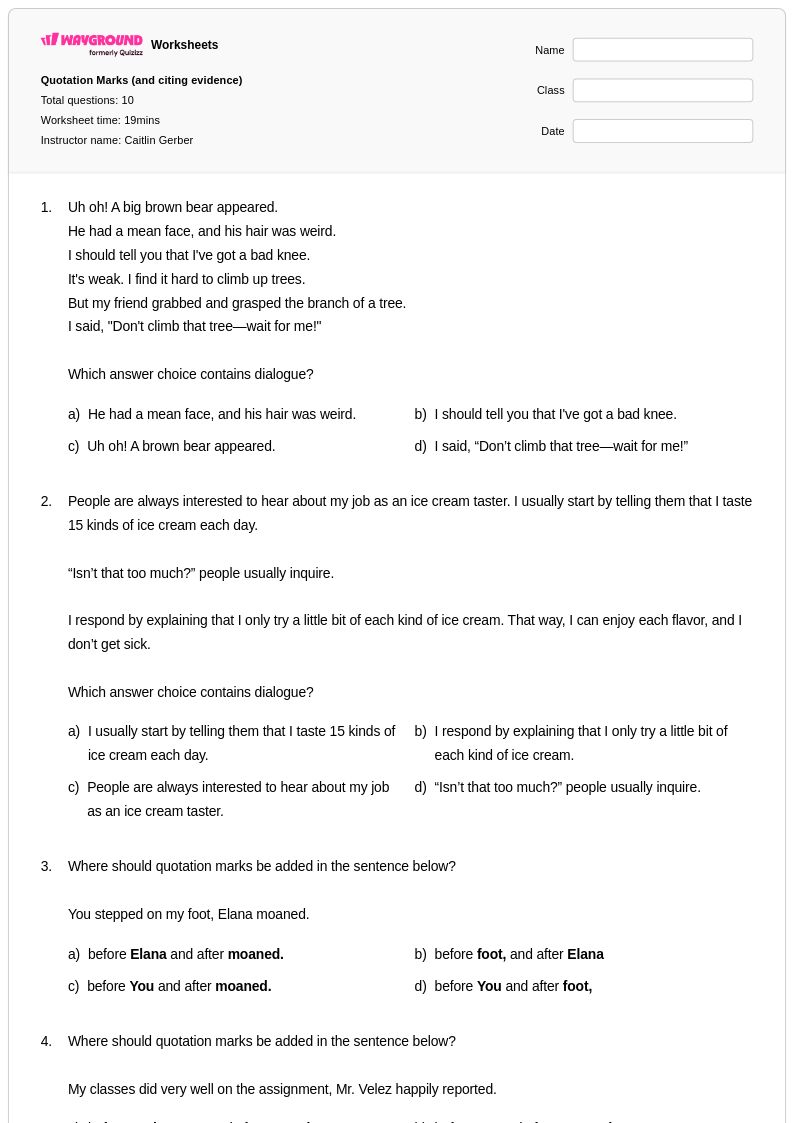
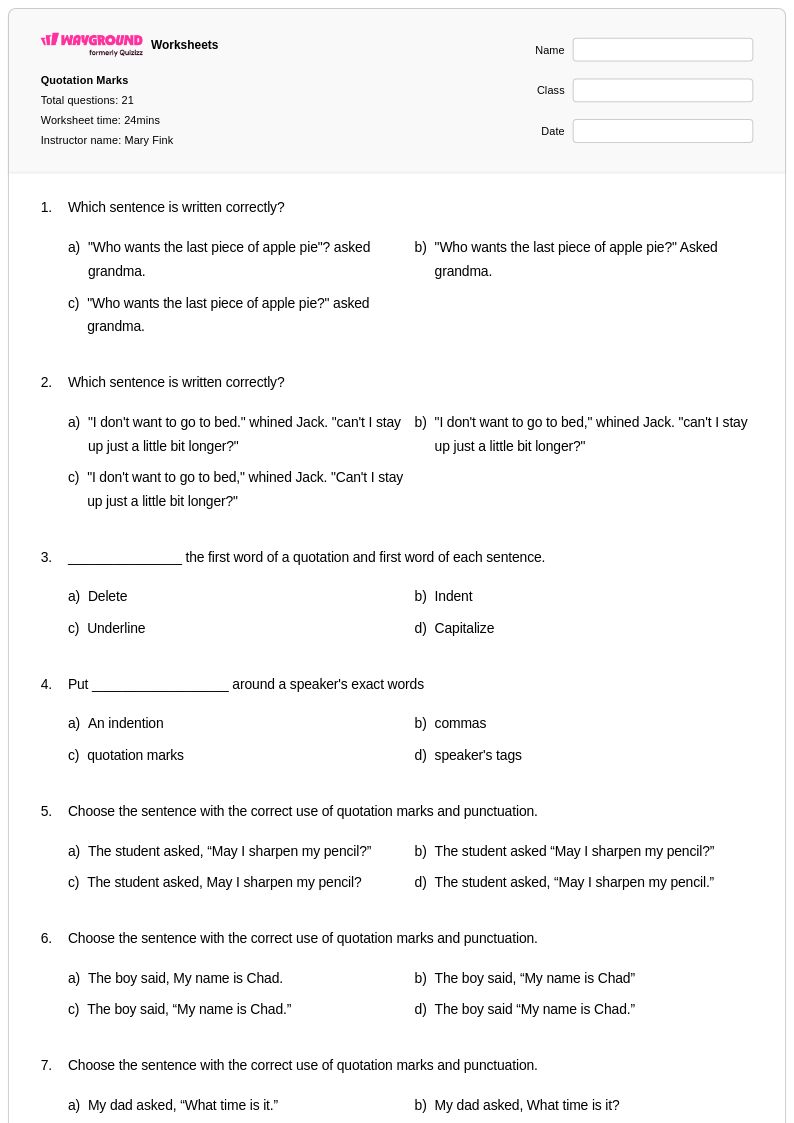
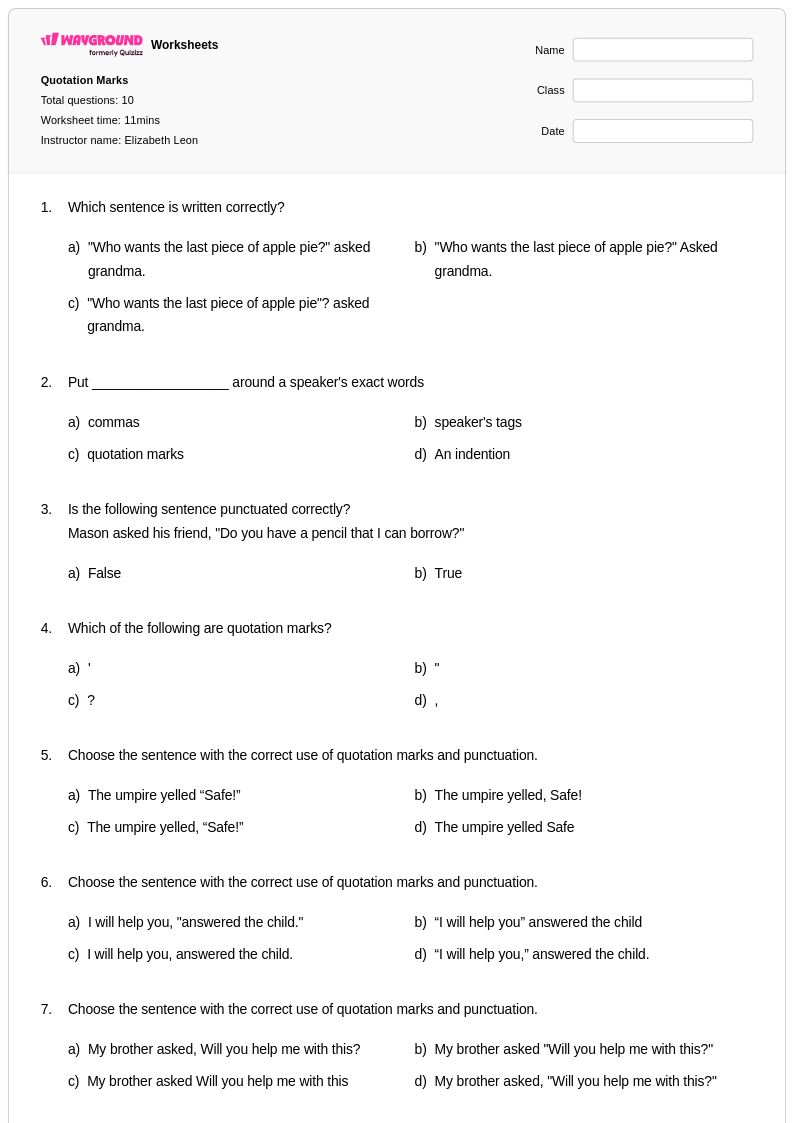
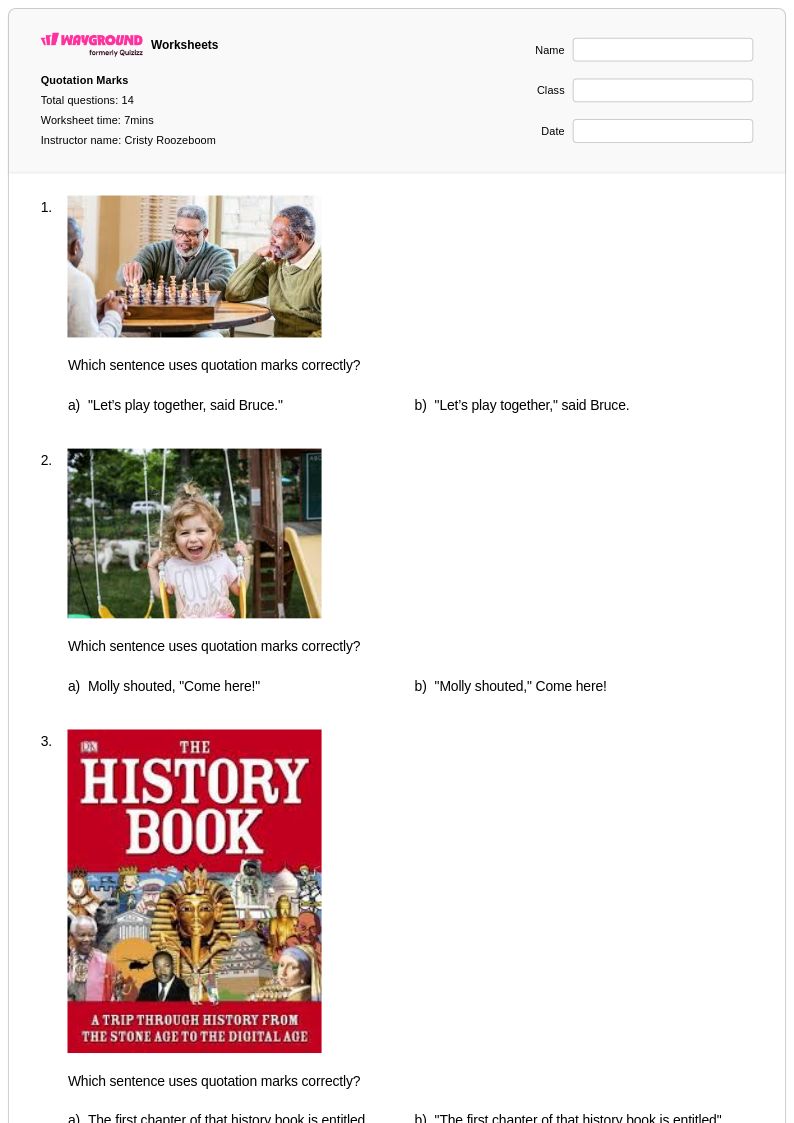
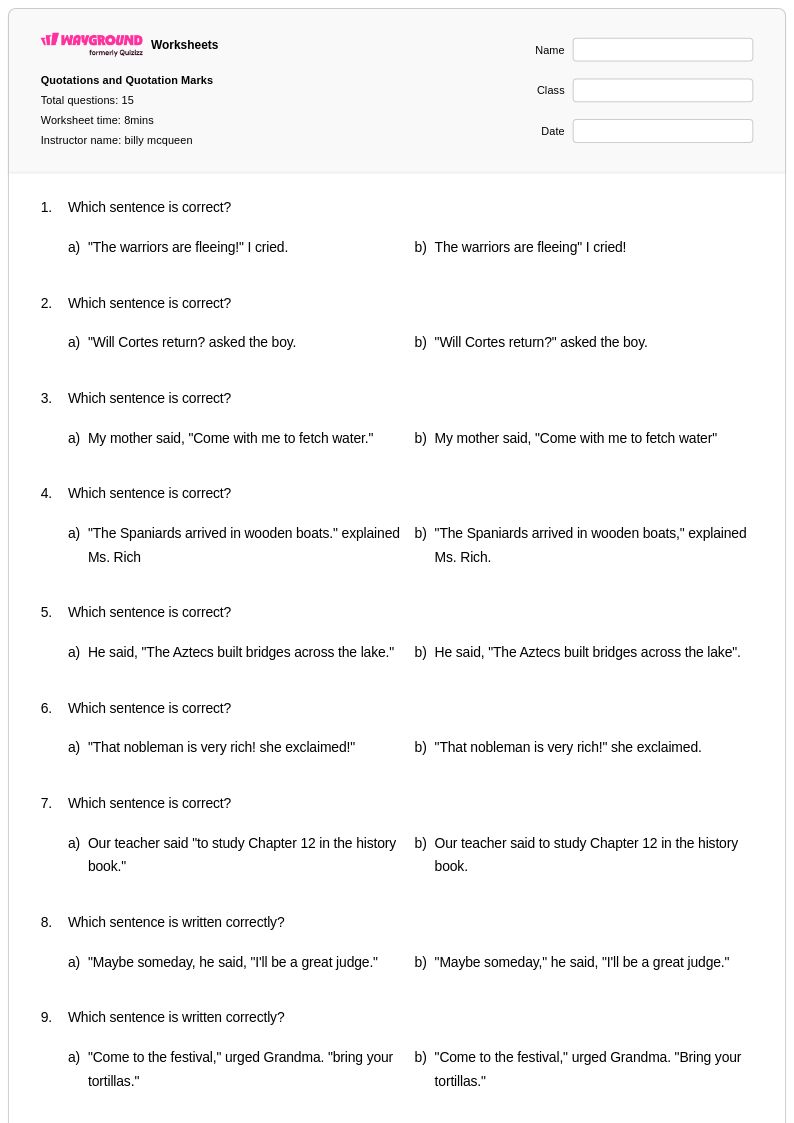
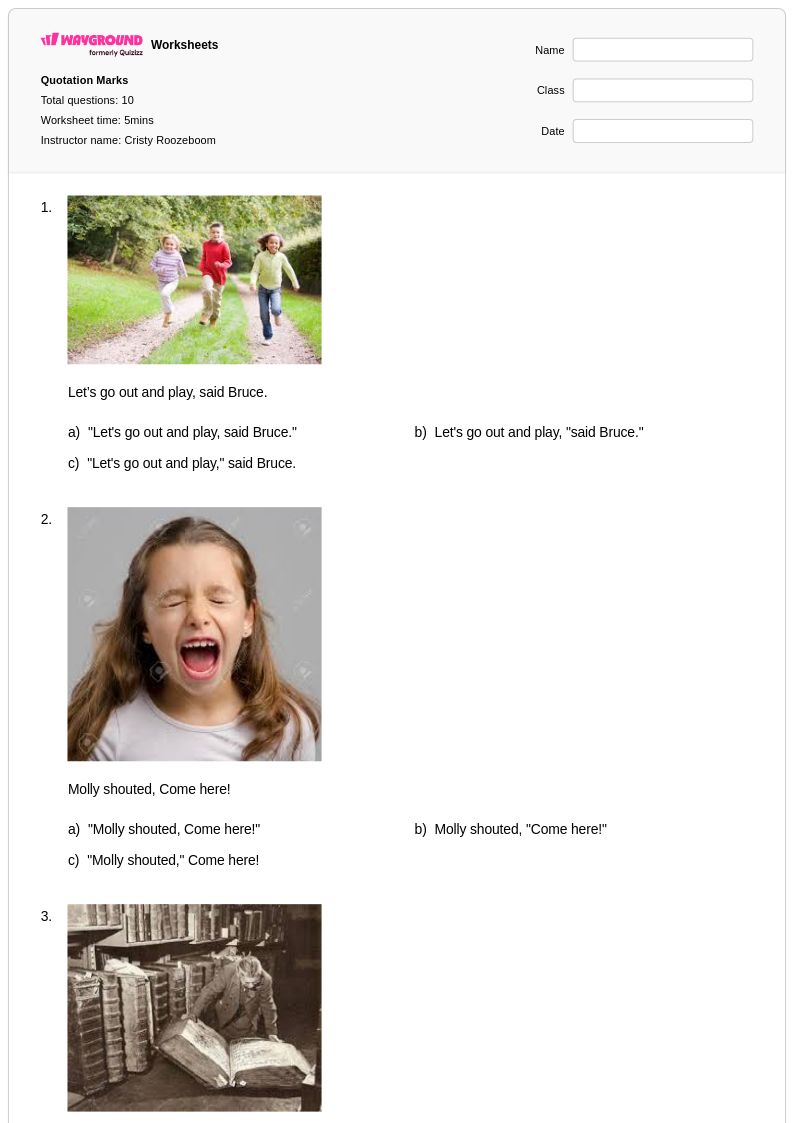
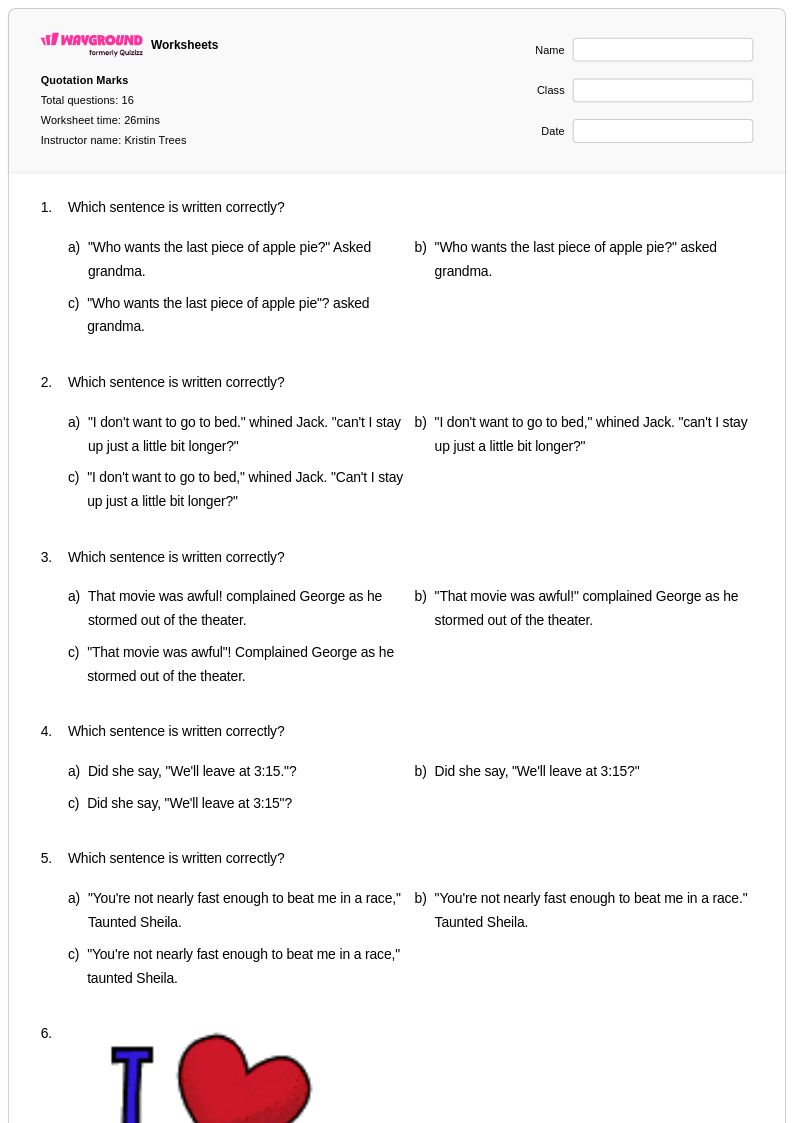
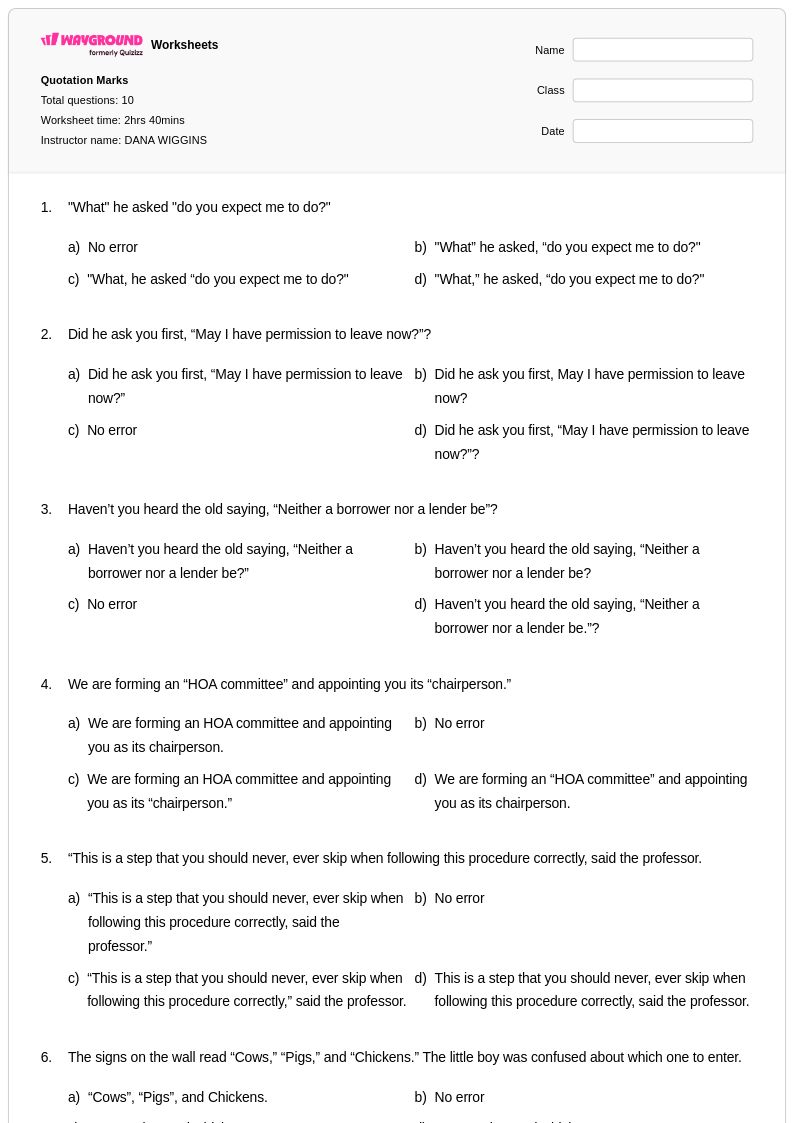
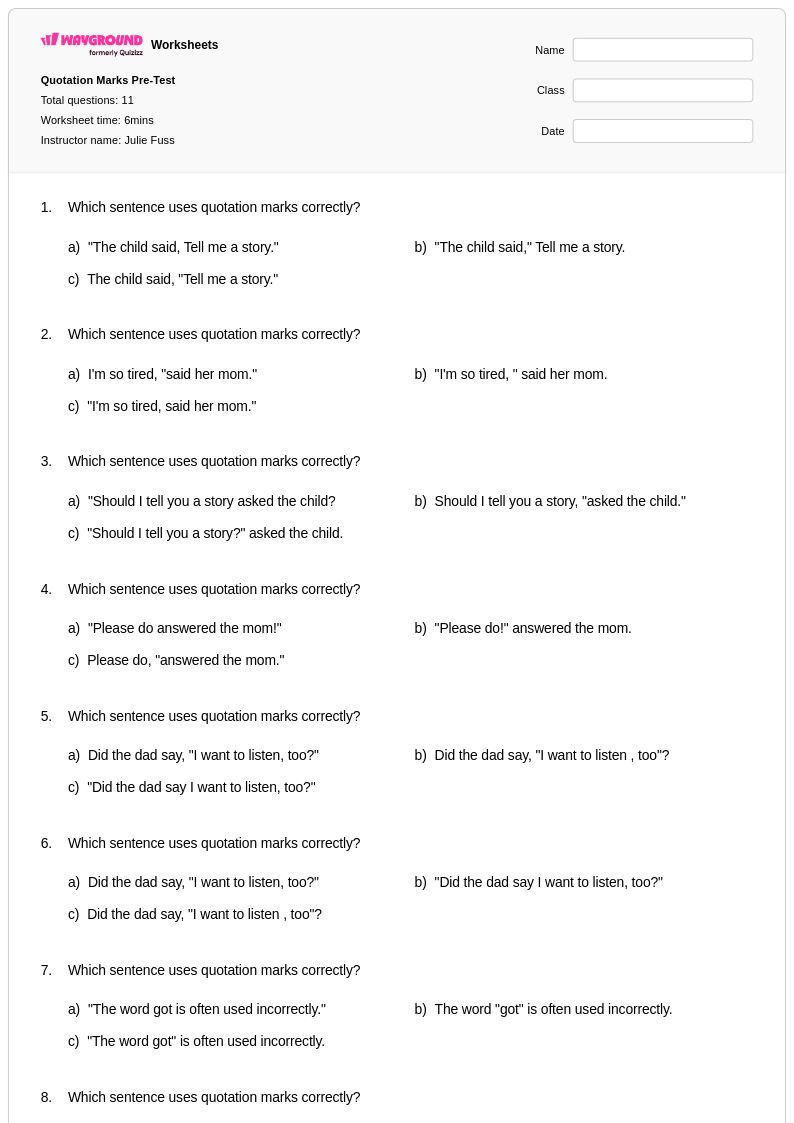
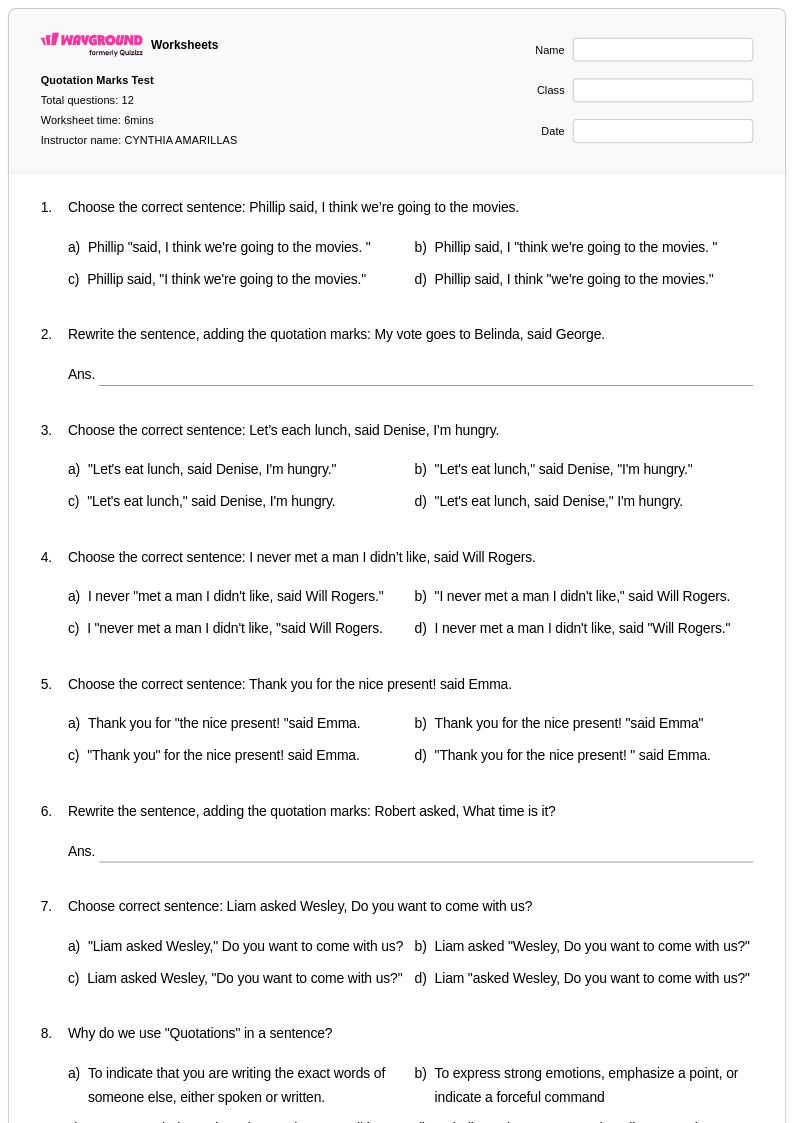
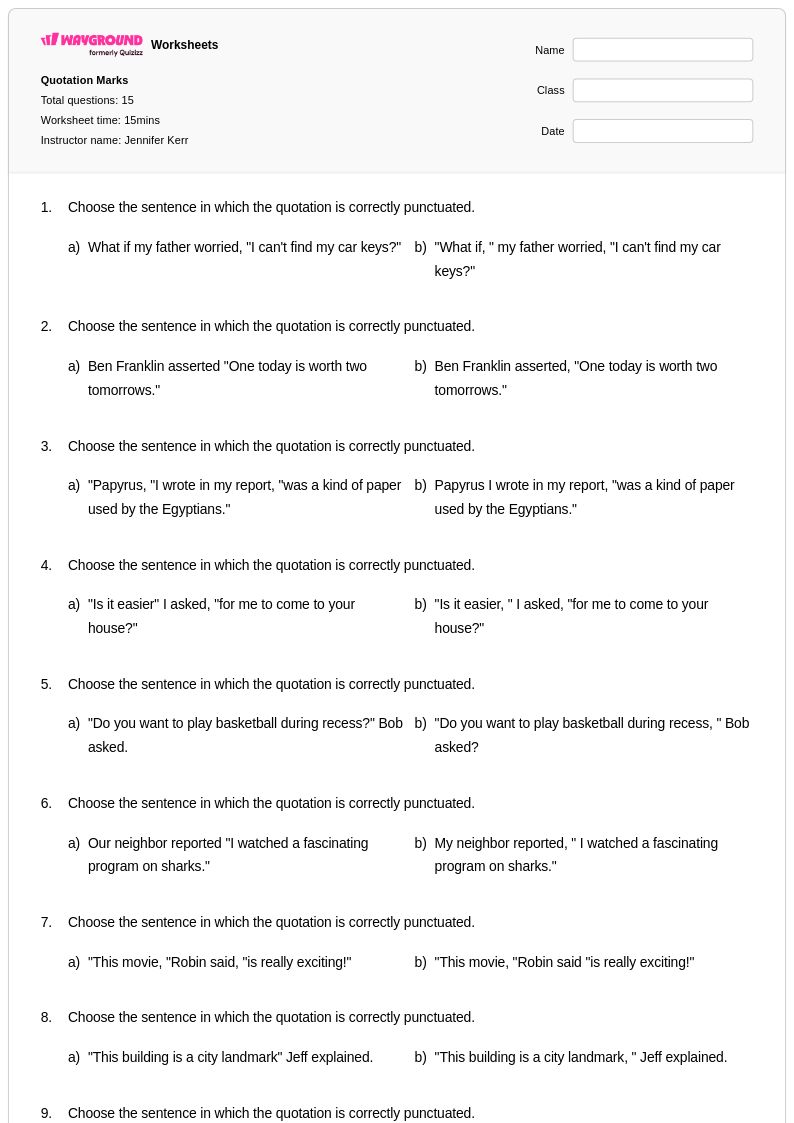
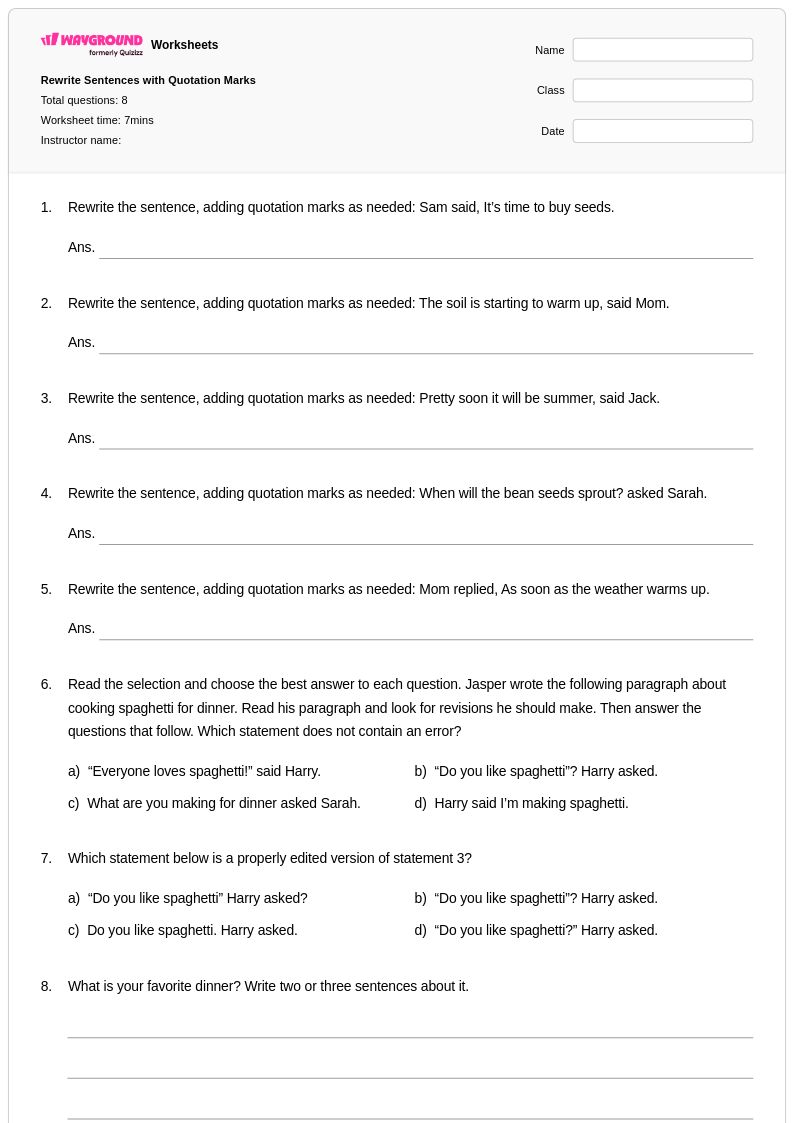
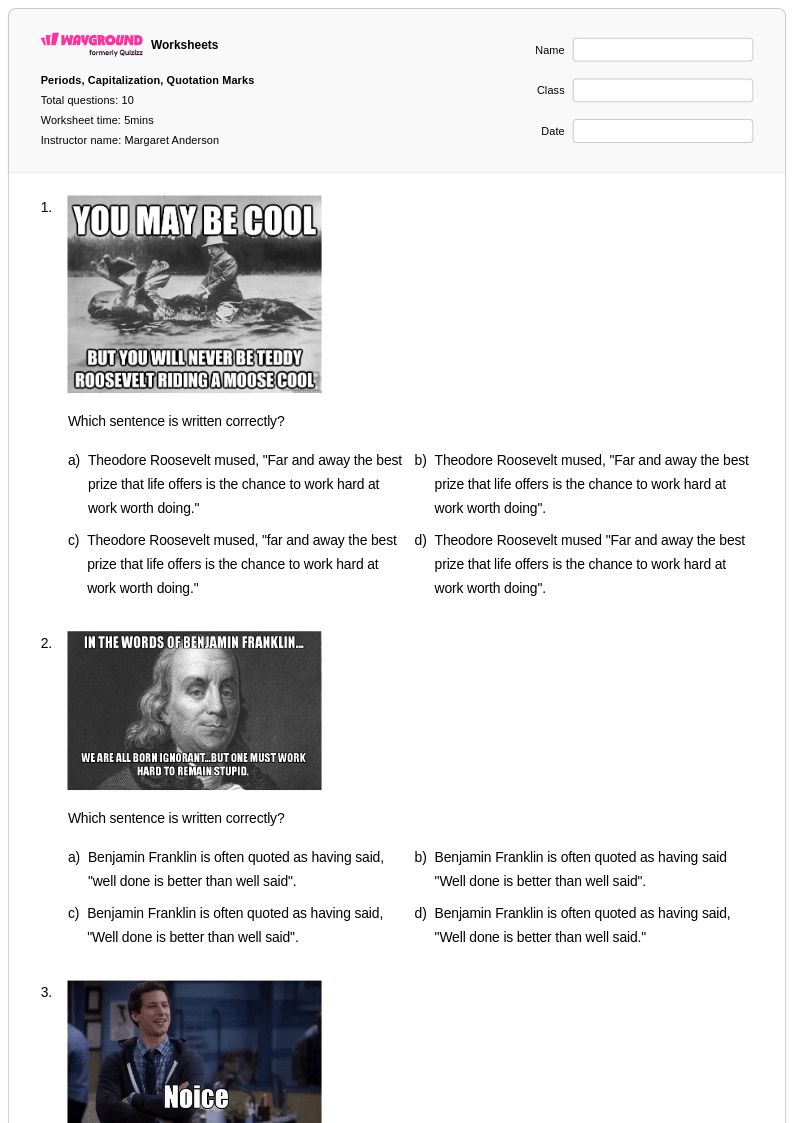
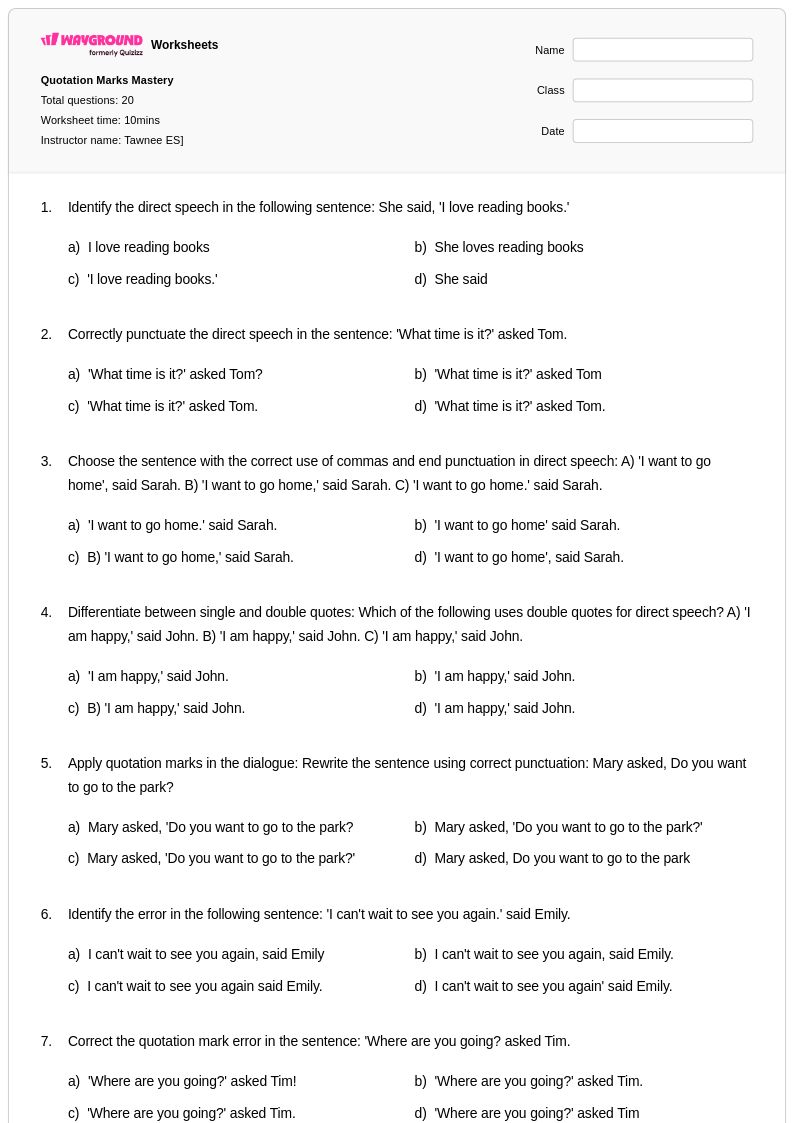
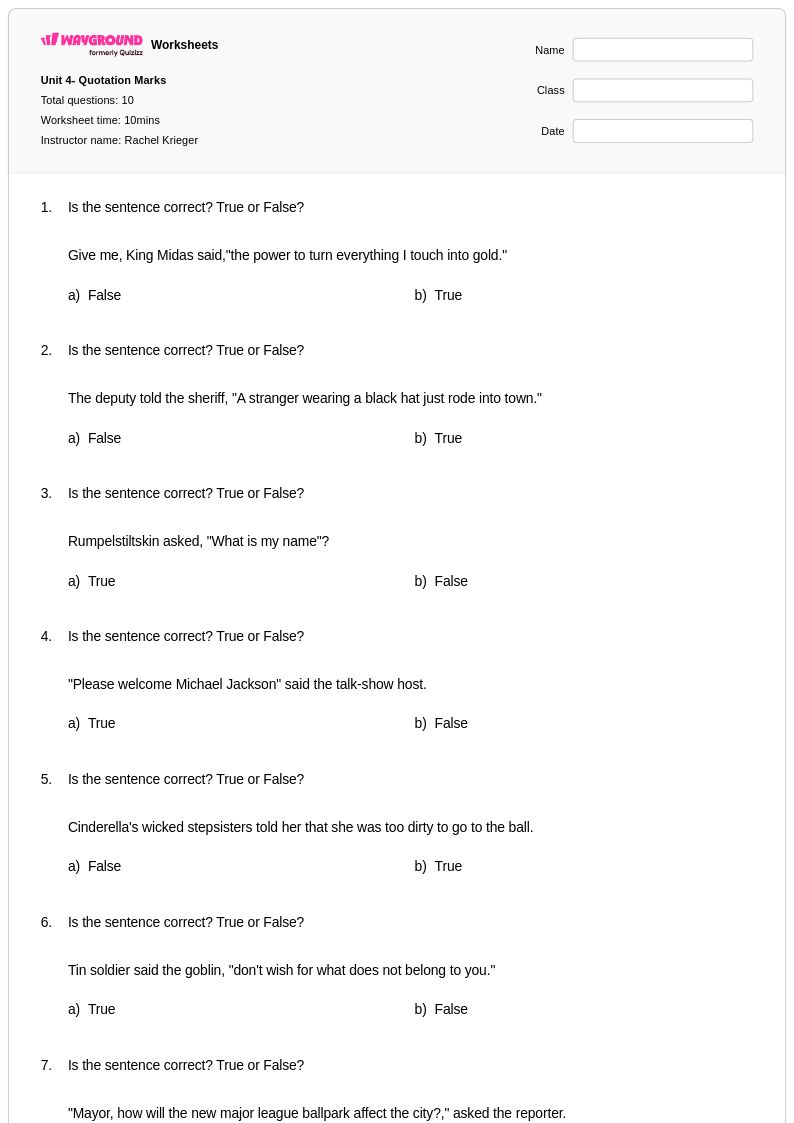
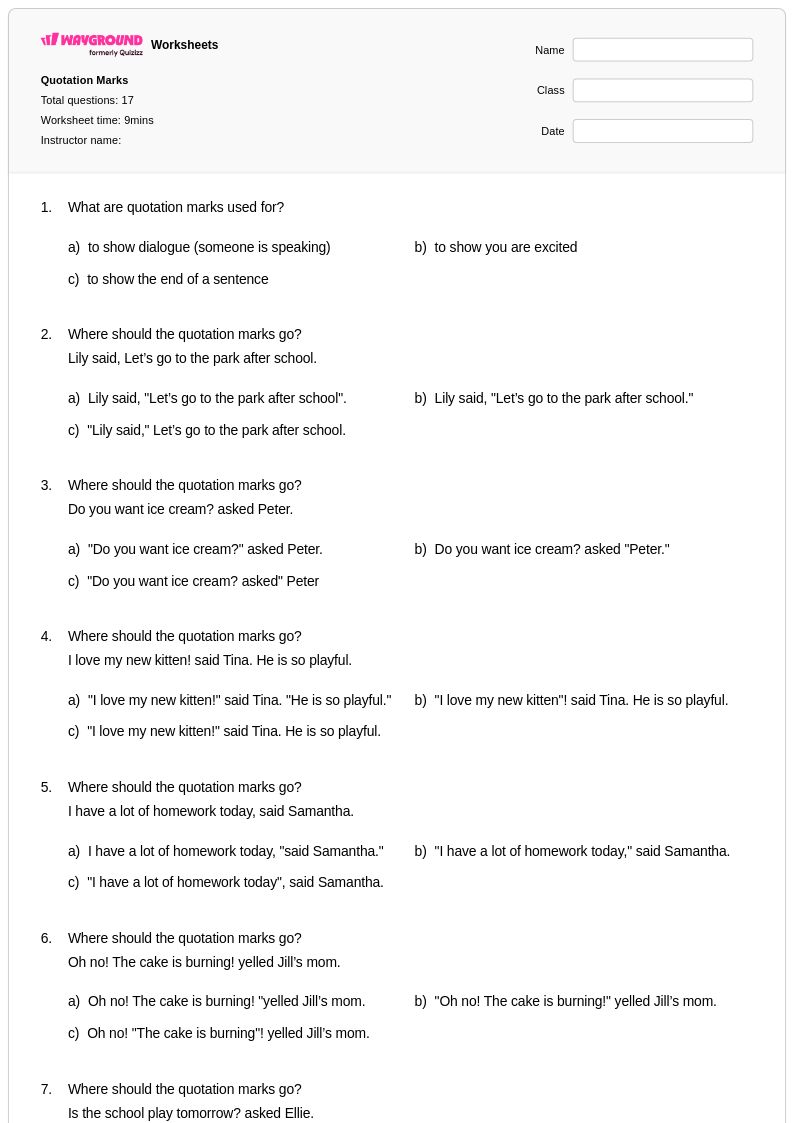
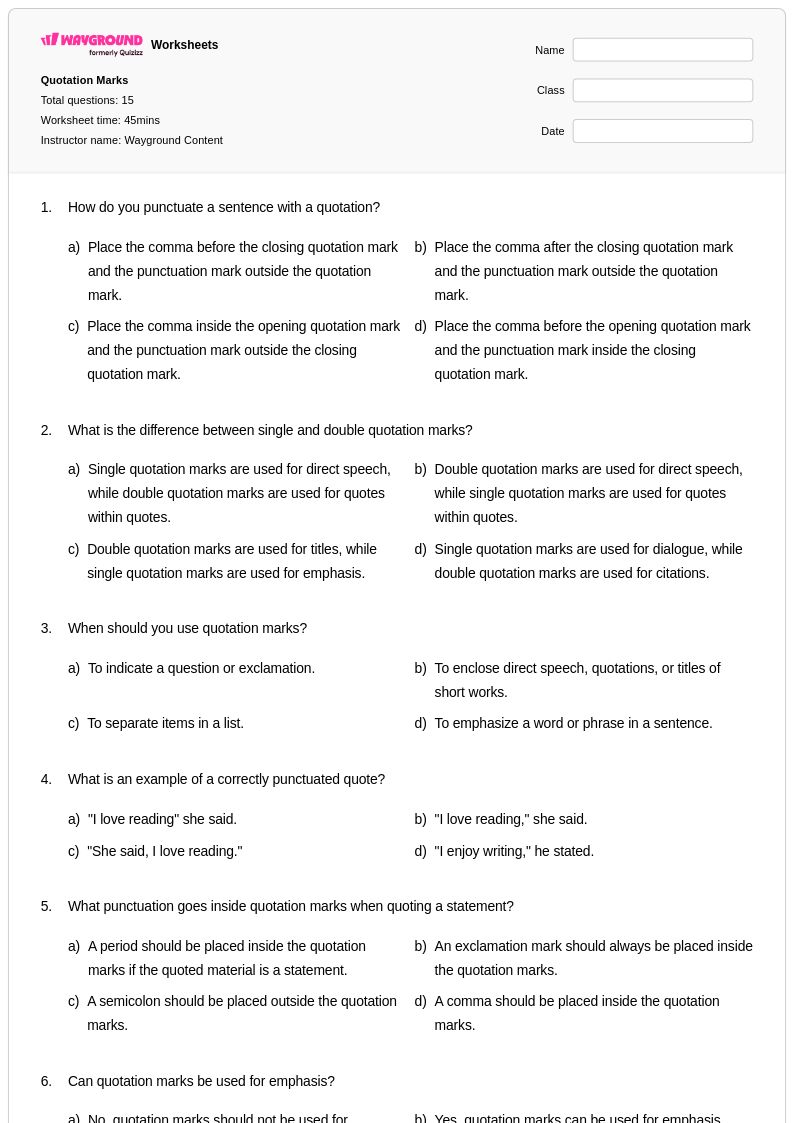
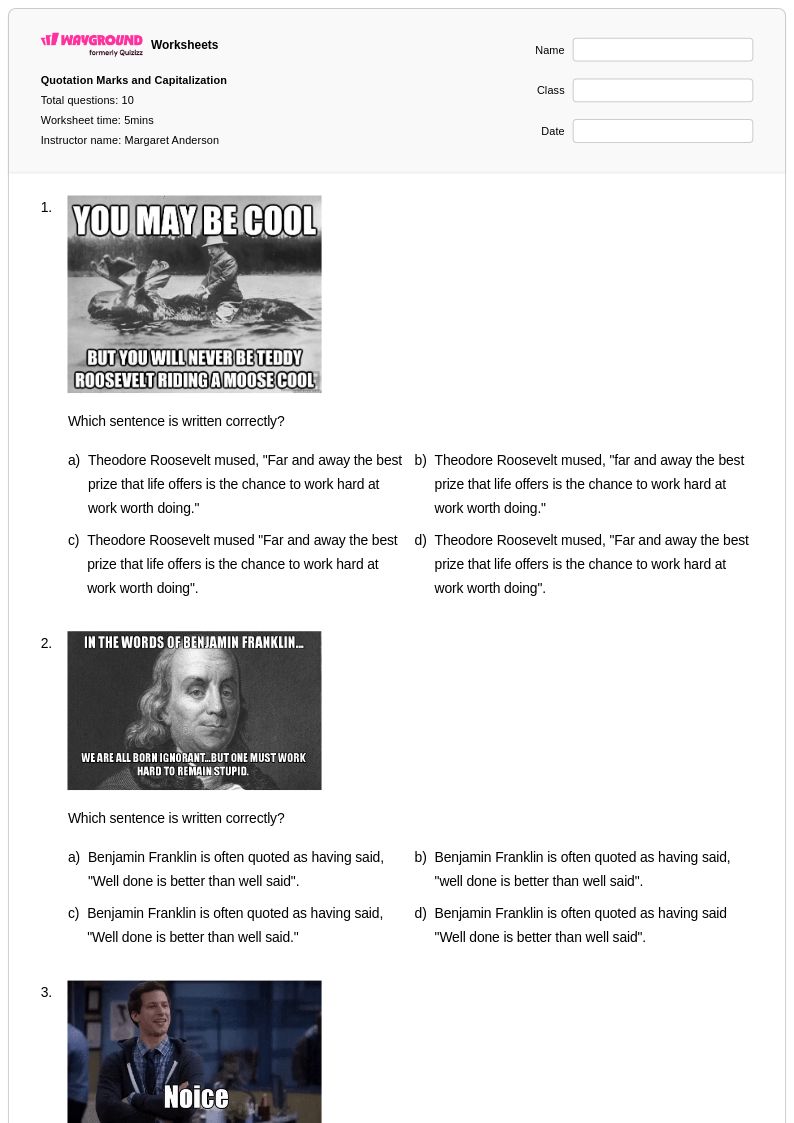
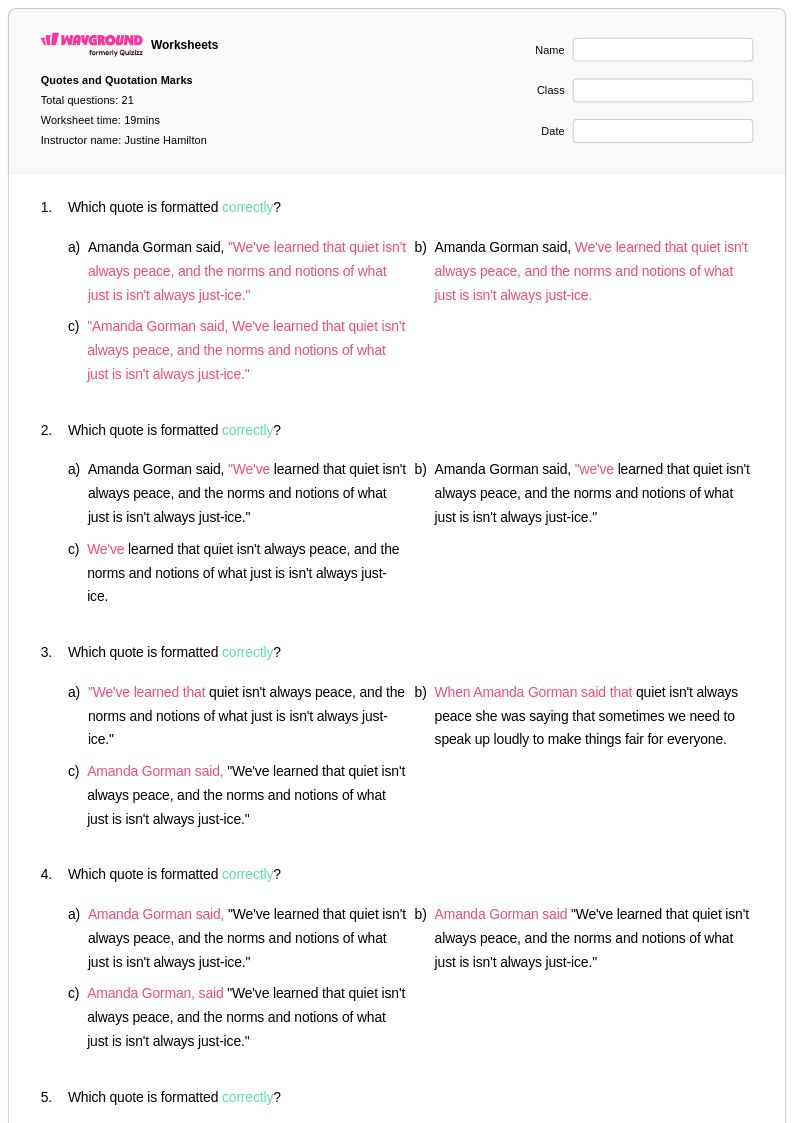
Quotation marks worksheets for Grade 6 students available through Wayground (formerly Quizizz) provide comprehensive practice with this essential punctuation skill that bridges elementary and middle school writing expectations. These carefully designed resources help students master the complex rules governing direct speech, dialogue formatting, and the proper punctuation of quoted material within sentences and paragraphs. The worksheets strengthen critical skills including identifying speaker tags, placing commas and periods correctly in relation to closing quotation marks, and distinguishing between direct and indirect speech. Students work through progressive practice problems that build confidence with both basic applications and more sophisticated scenarios involving multiple speakers or interrupted quotations. Each worksheet includes a detailed answer key and is available as a free printable pdf, making it easy for educators to provide targeted grammar instruction and assessment.
Wayground (formerly Quizizz) empowers teachers with an extensive collection of quotation marks resources created by millions of educators who understand the specific challenges Grade 6 students face when learning advanced punctuation rules. The platform's robust search and filtering capabilities allow teachers to quickly locate worksheets that align with specific learning standards and match their students' skill levels perfectly. Teachers can easily differentiate instruction by selecting from various difficulty levels, customize existing materials to meet classroom needs, or combine multiple resources for comprehensive practice sessions. Whether used for initial instruction, targeted remediation, or enrichment activities, these digital and printable resources support flexible lesson planning while ensuring students receive the focused practice necessary to master quotation mark usage in their writing. The seamless availability in both formats allows teachers to adapt quickly between traditional paper-based activities and modern digital learning environments.
FAQs
How do I teach quotation marks to elementary and middle school students?
Start by distinguishing between direct and indirect speech, since students often confuse the two. Use mentor texts from familiar stories to show quotation marks around exact spoken words, then model how to place them correctly with dialogue tags like 'said' or 'asked.' Progress from identifying quotation marks in published text to writing original dialogue, reinforcing that punctuation always goes inside the closing quotation mark in American English.
What exercises help students practice using quotation marks correctly?
Effective practice exercises include rewriting indirect speech as direct speech, inserting missing quotation marks into dialogue-heavy paragraphs, and correcting intentionally punctuated sentences. Scaffolded tasks that begin with identification and move toward original sentence construction help students internalize the rules progressively. Mixing dialogue attribution with titles of short works and special emphasis cases prepares students for the full range of contexts where quotation marks appear.
What mistakes do students commonly make with quotation marks?
The most frequent errors include placing punctuation outside the closing quotation mark, forgetting to open or close a quotation mark pair, and failing to start a new paragraph when a different speaker begins talking. Students also commonly misapply quotation marks to indirect speech, writing 'She said that she was tired' with quotation marks even though no exact words are being quoted. Targeting these specific error patterns with focused correction exercises accelerates accuracy.
When should students use quotation marks versus italics or other punctuation?
Quotation marks are used for direct speech, titles of short works such as poems, short stories, and articles, and to signal that a word is being used in a special or ironic sense. Italics, by contrast, are used for titles of longer works like novels, films, and albums. Teaching this distinction explicitly prevents students from overgeneralizing quotation mark use to any title or emphasized word.
How do I use Wayground's quotation marks worksheets in my classroom?
Wayground's quotation marks worksheets are available as printable PDFs for traditional classroom use and in digital formats for technology-integrated environments, making them adaptable to in-person, hybrid, or remote instruction. Teachers can also host worksheets as a quiz directly on Wayground, enabling students to complete them interactively with immediate feedback. Each worksheet includes a complete answer key, so teachers can use them for guided practice, independent work, or self-paced review without additional prep.
How can I differentiate quotation marks instruction for students at different skill levels?
For students who need remediation, focus on the single rule of direct speech first before introducing titles and special emphasis. For advanced students, assign tasks that require writing multi-turn dialogue with correct attribution and paragraph breaks. On Wayground, teachers can customize worksheet difficulty and content focus, and platform accommodation tools such as read aloud, reduced answer choices, and extended time can be assigned to individual students to support diverse learning needs without disrupting the rest of the class.