Free Printable Relative Clauses Worksheets for Grade 6
Enhance Grade 6 students' understanding of relative clauses with Wayground's comprehensive collection of free worksheets, printables, and practice problems that include detailed answer keys to master essential grammar skills.
Explore printable Relative Clauses worksheets for Grade 6
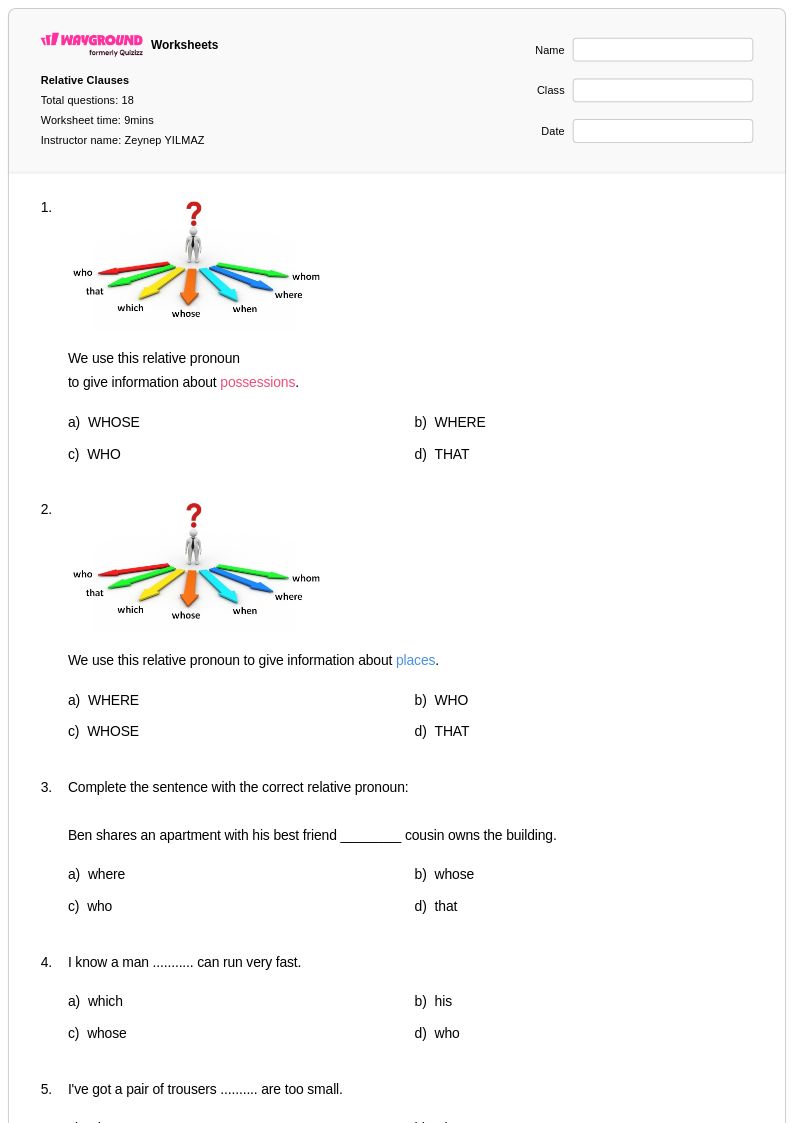
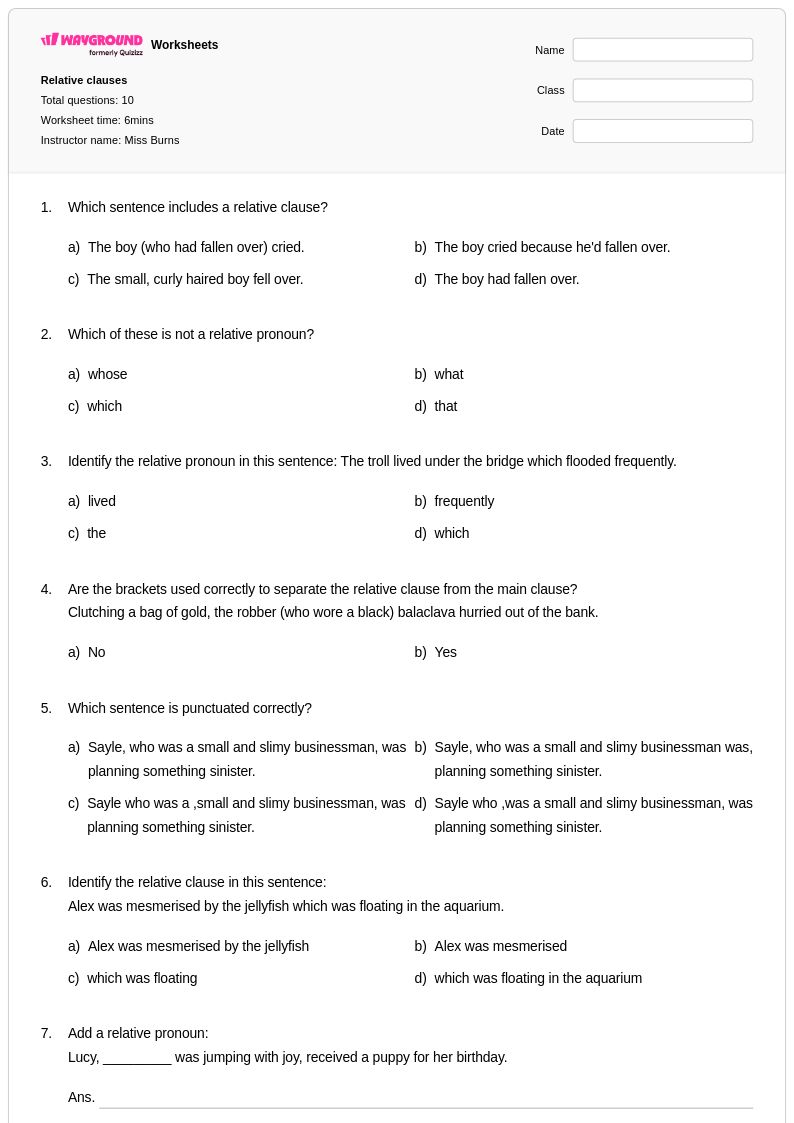
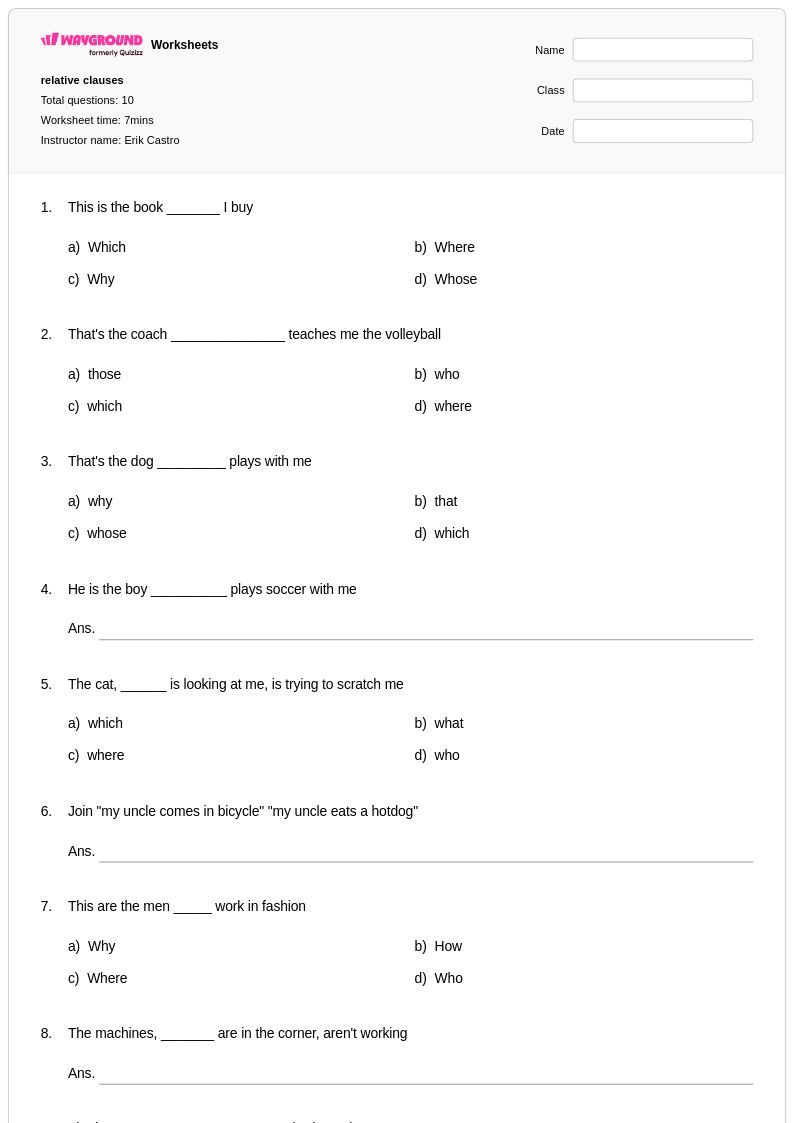
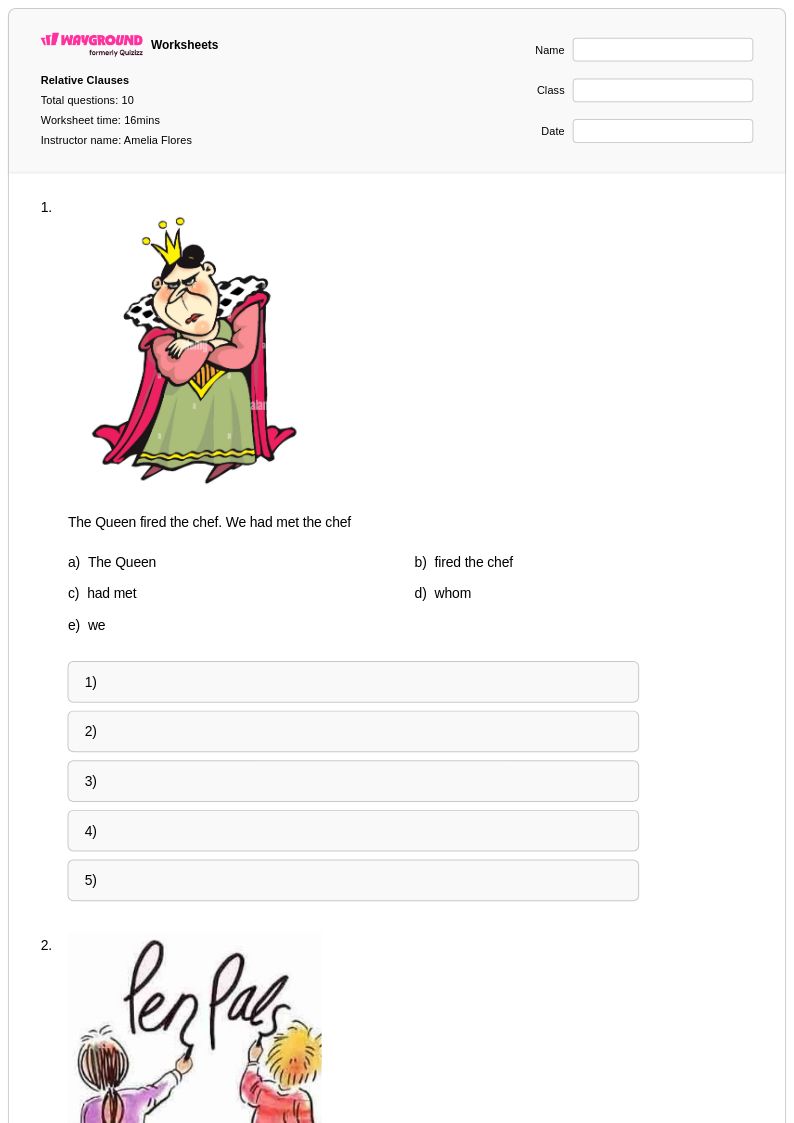
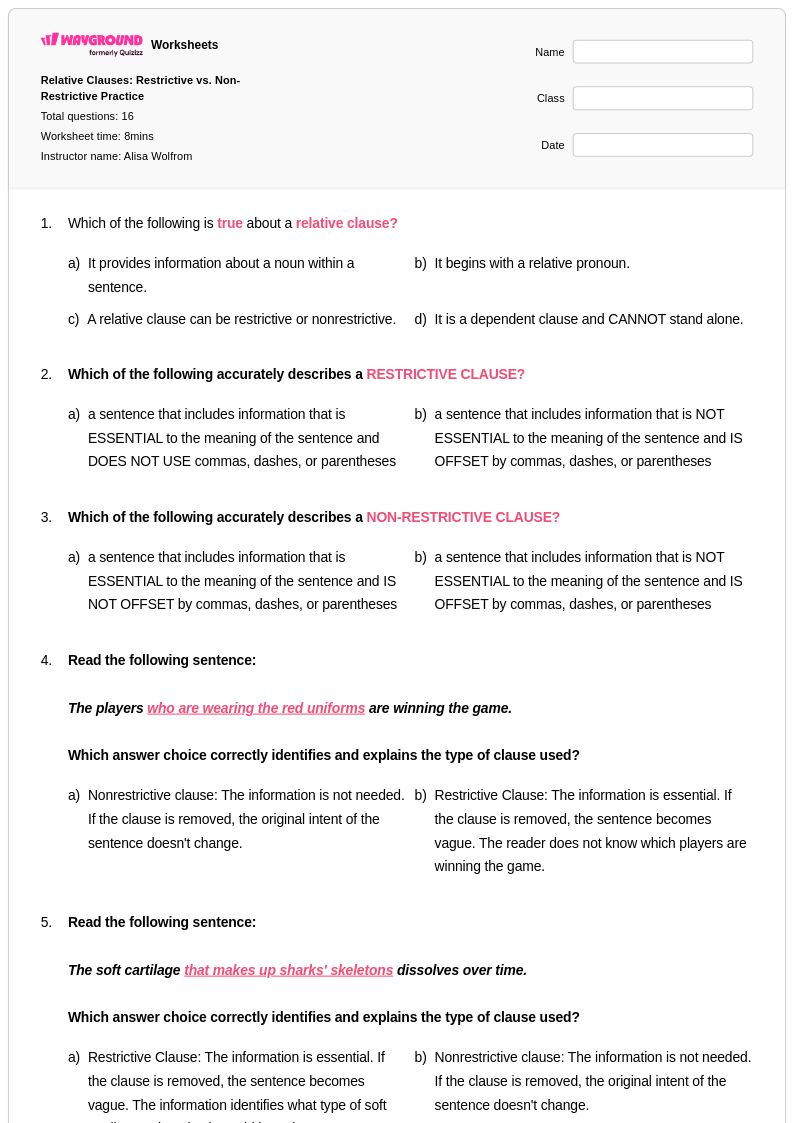
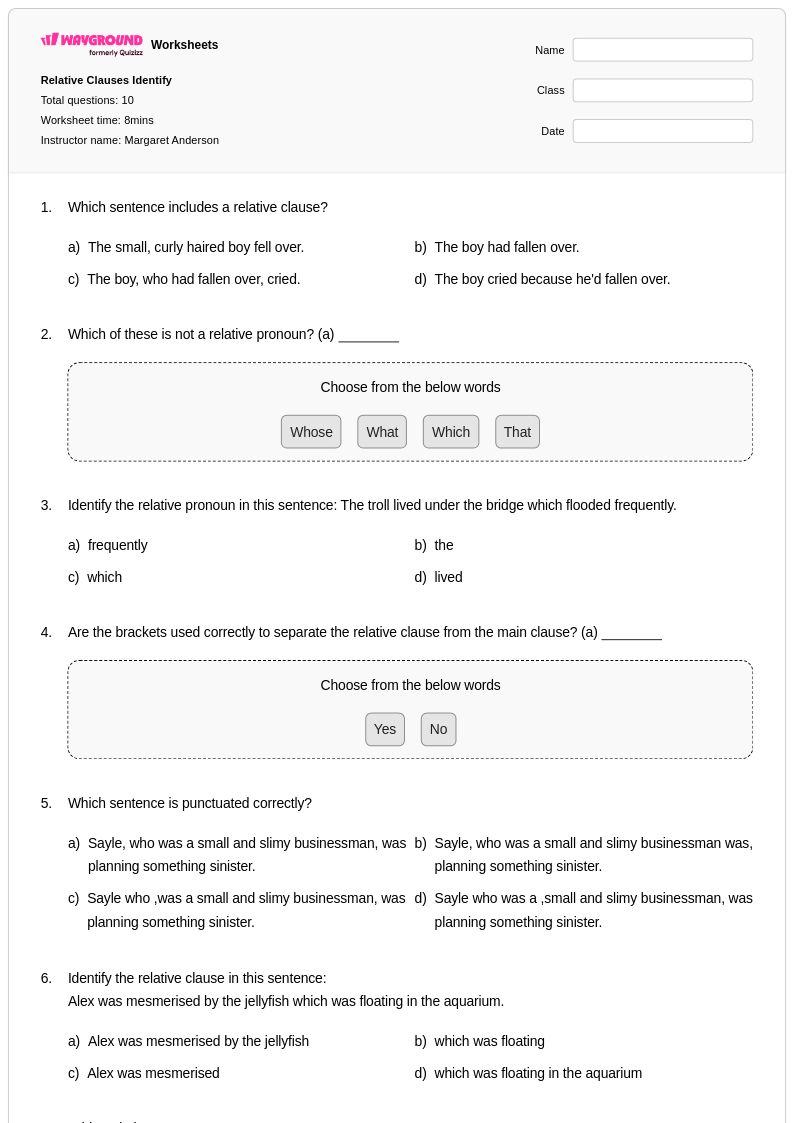
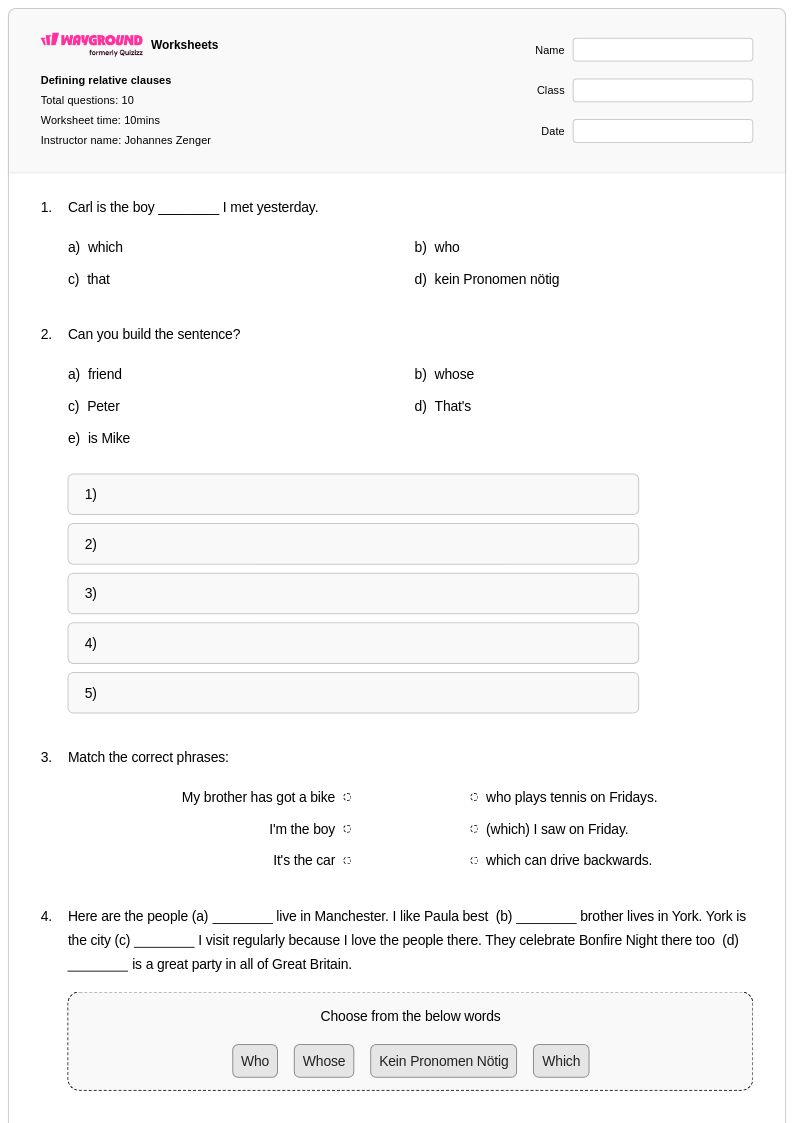
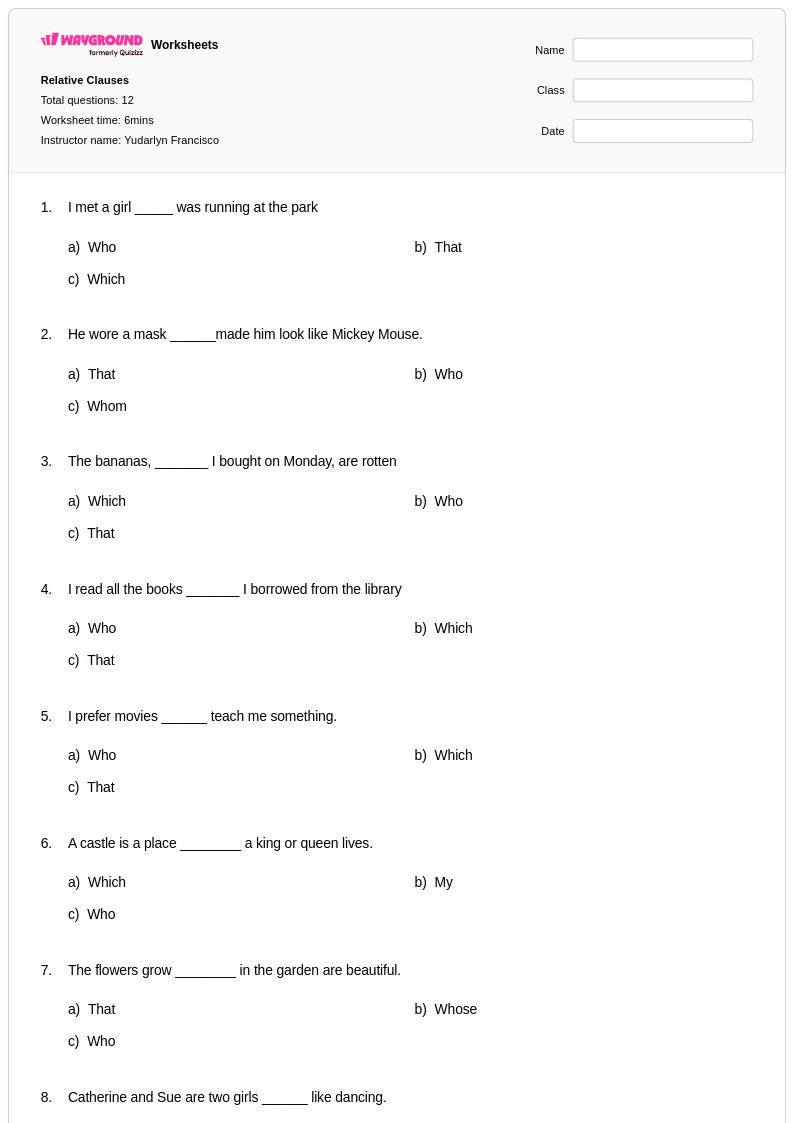
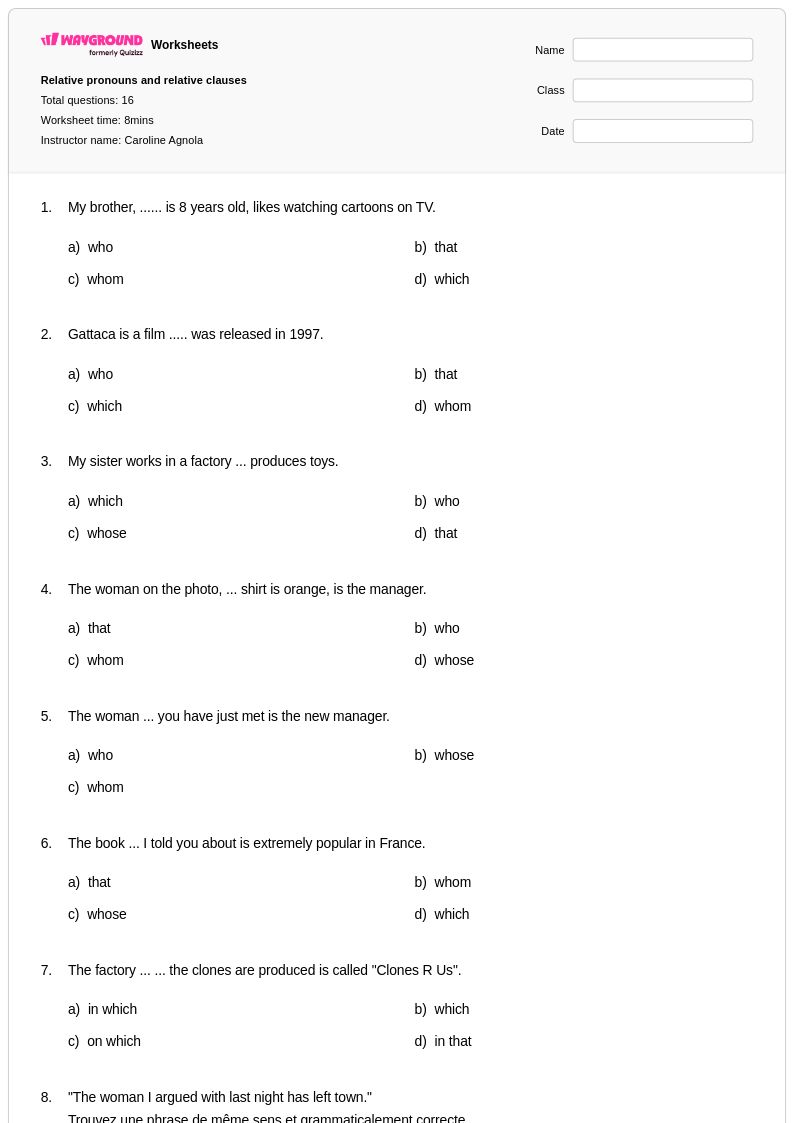
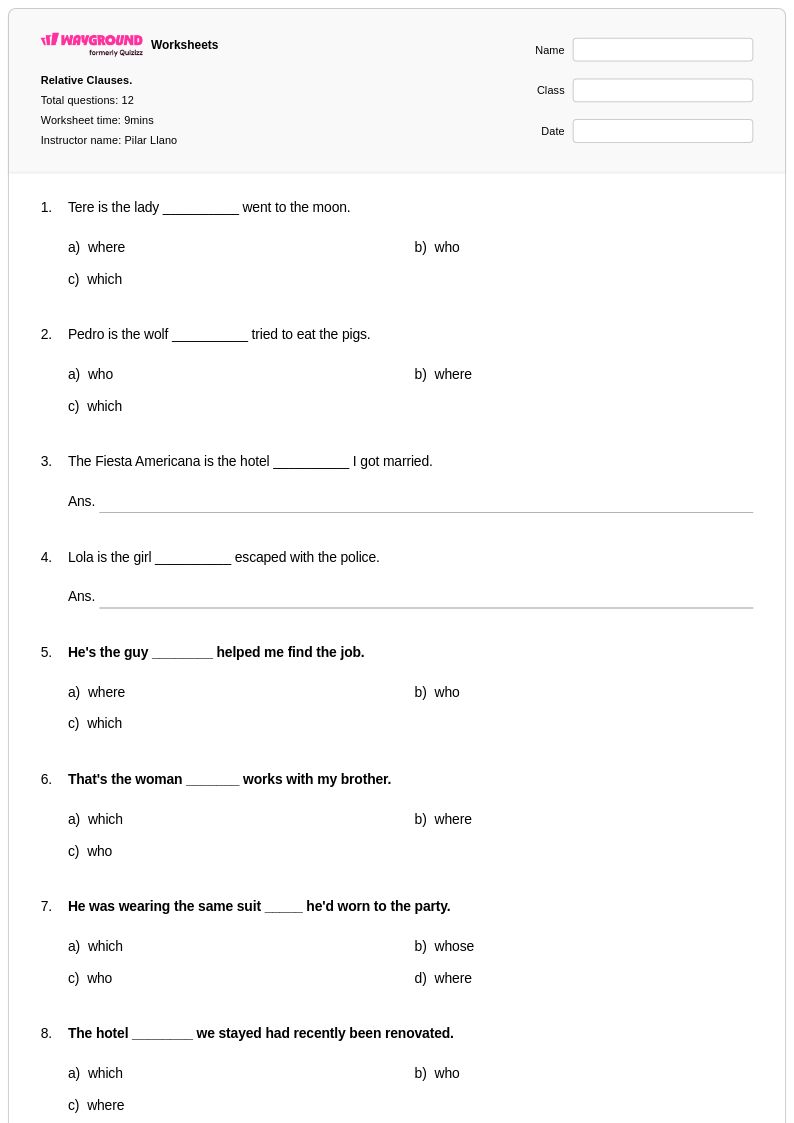
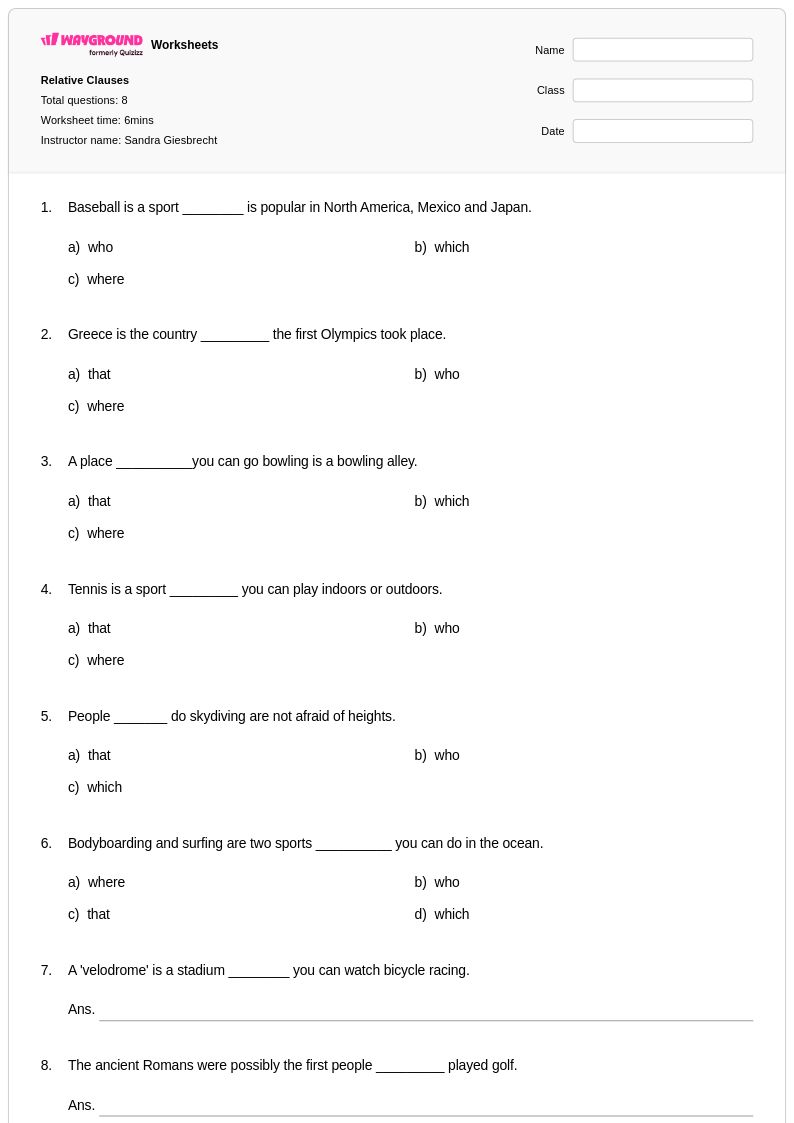
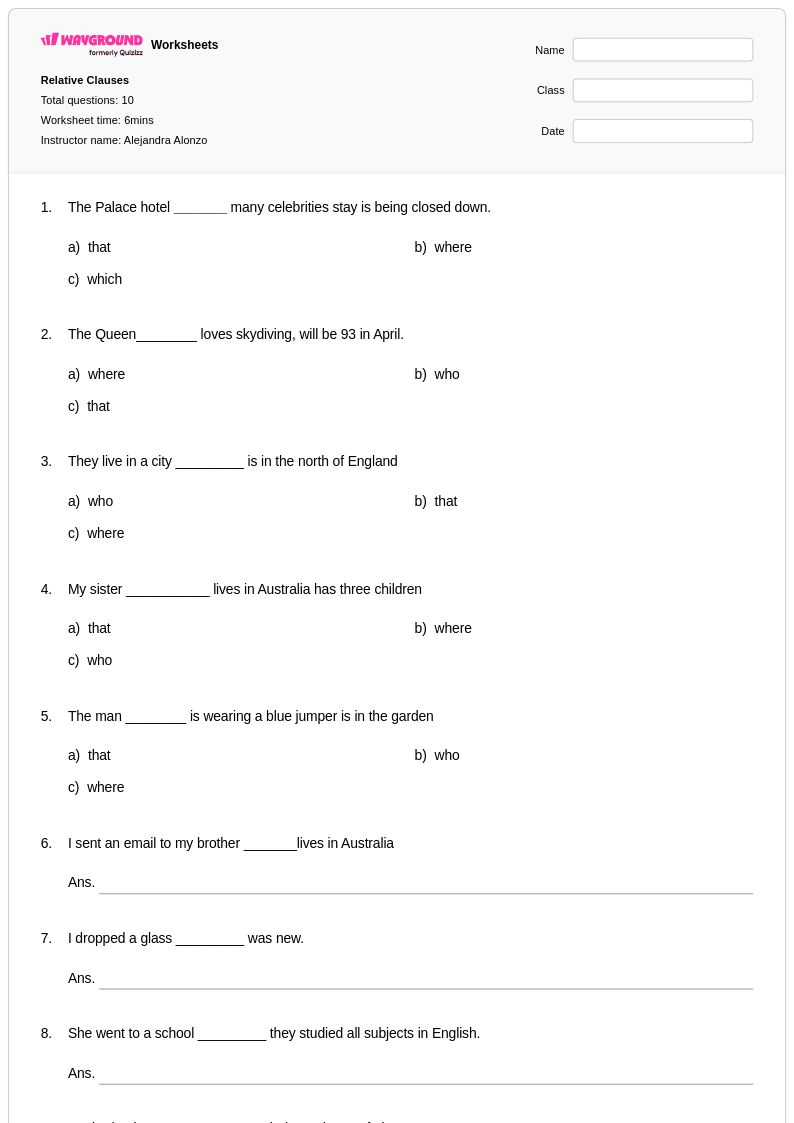
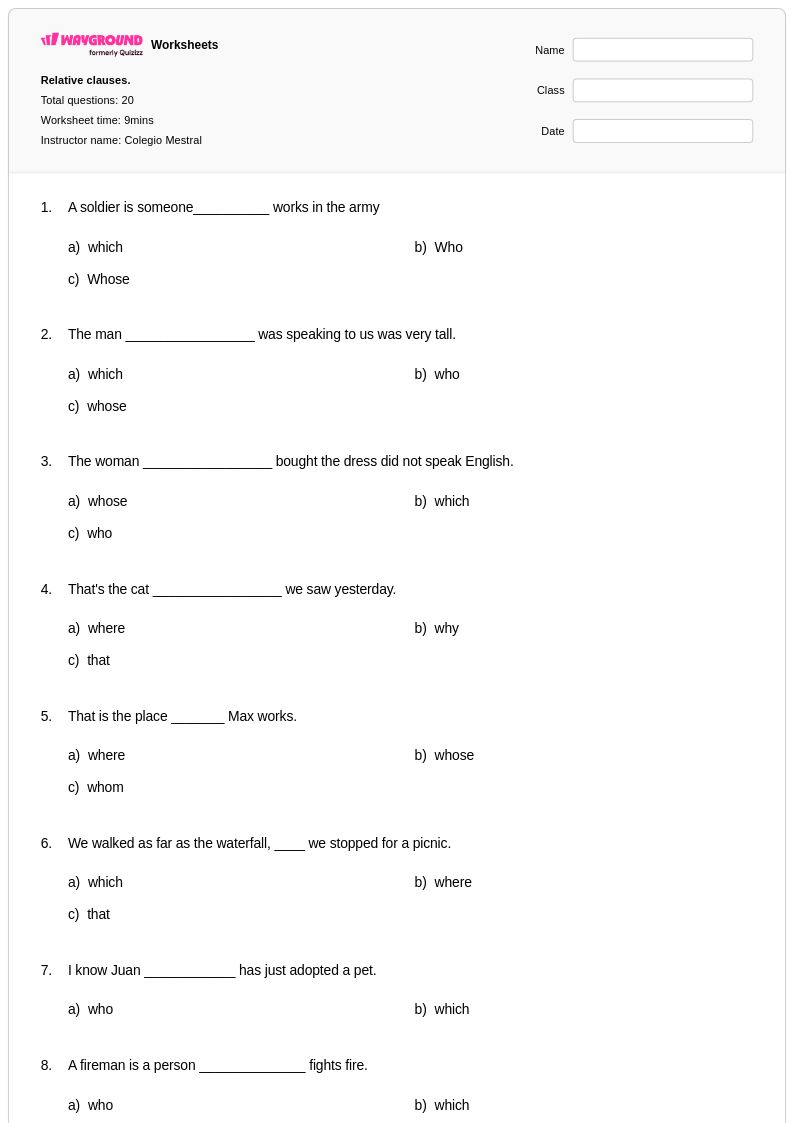
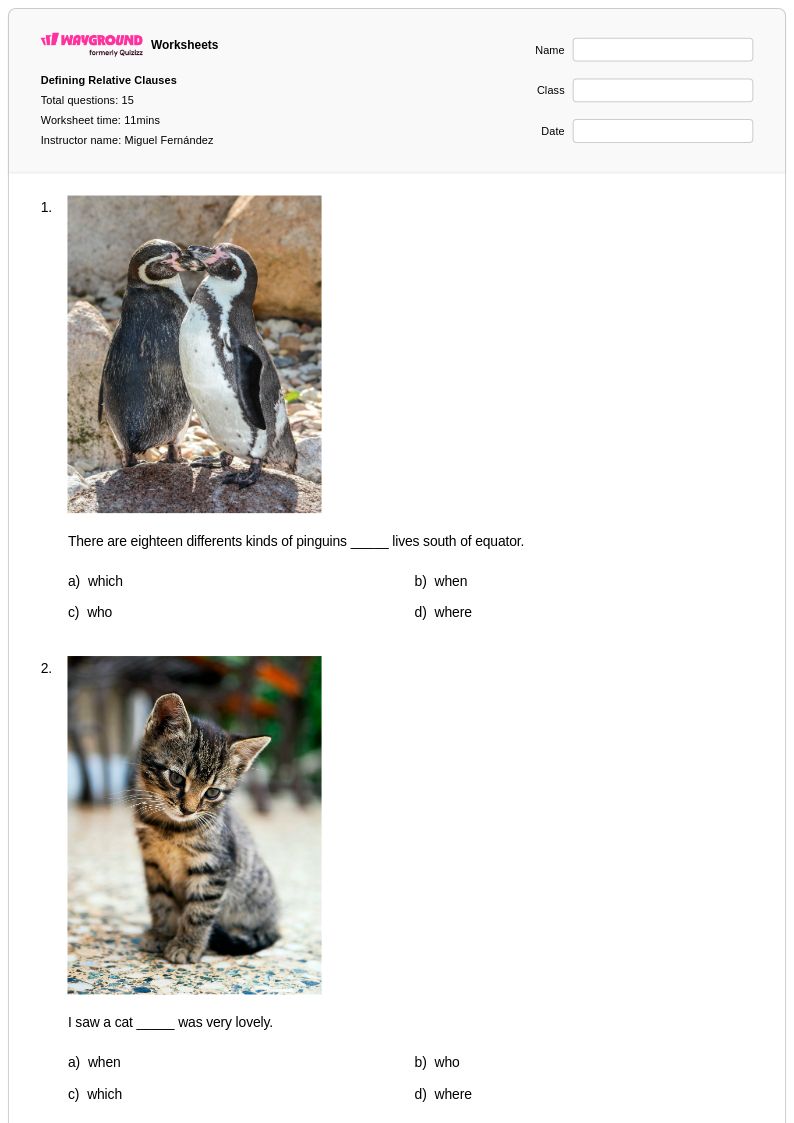
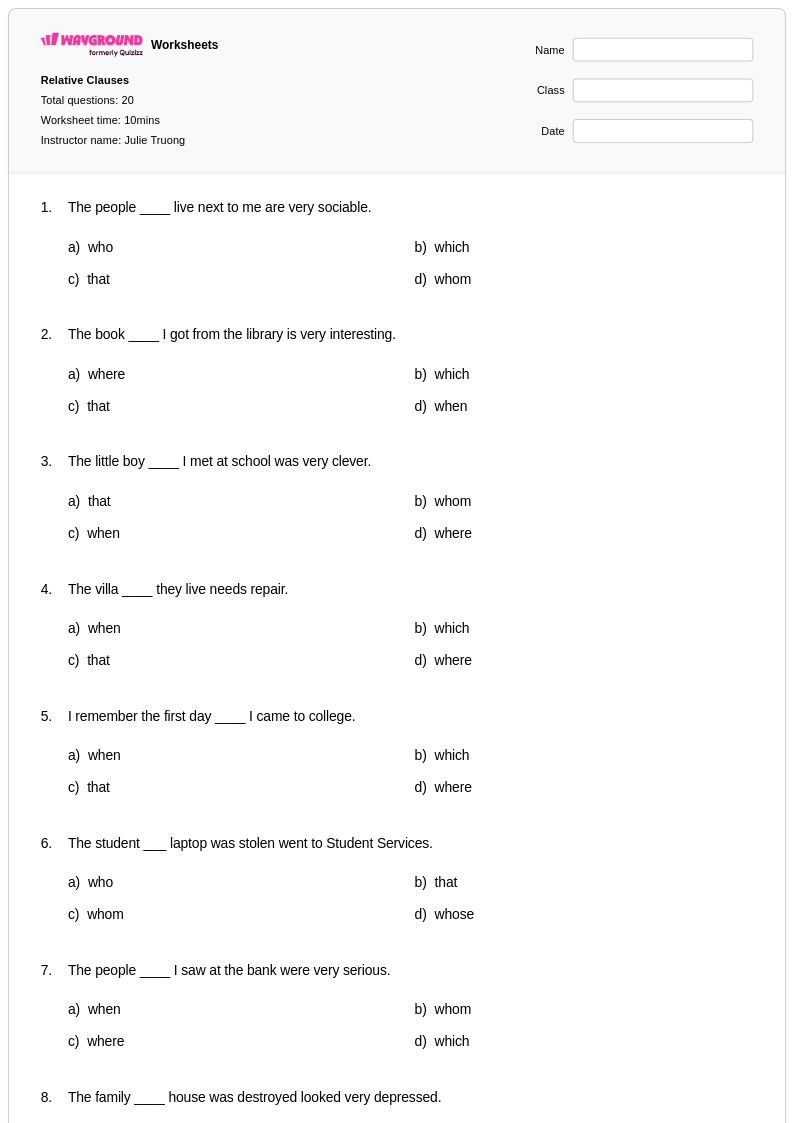
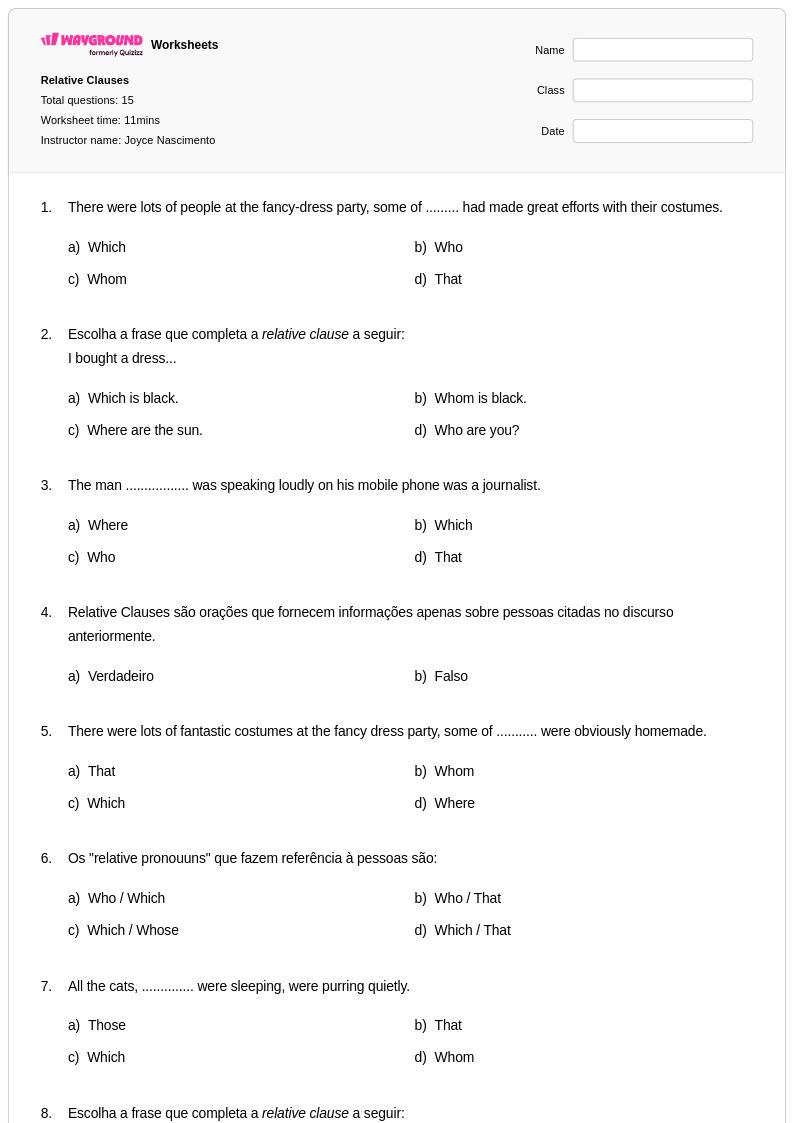
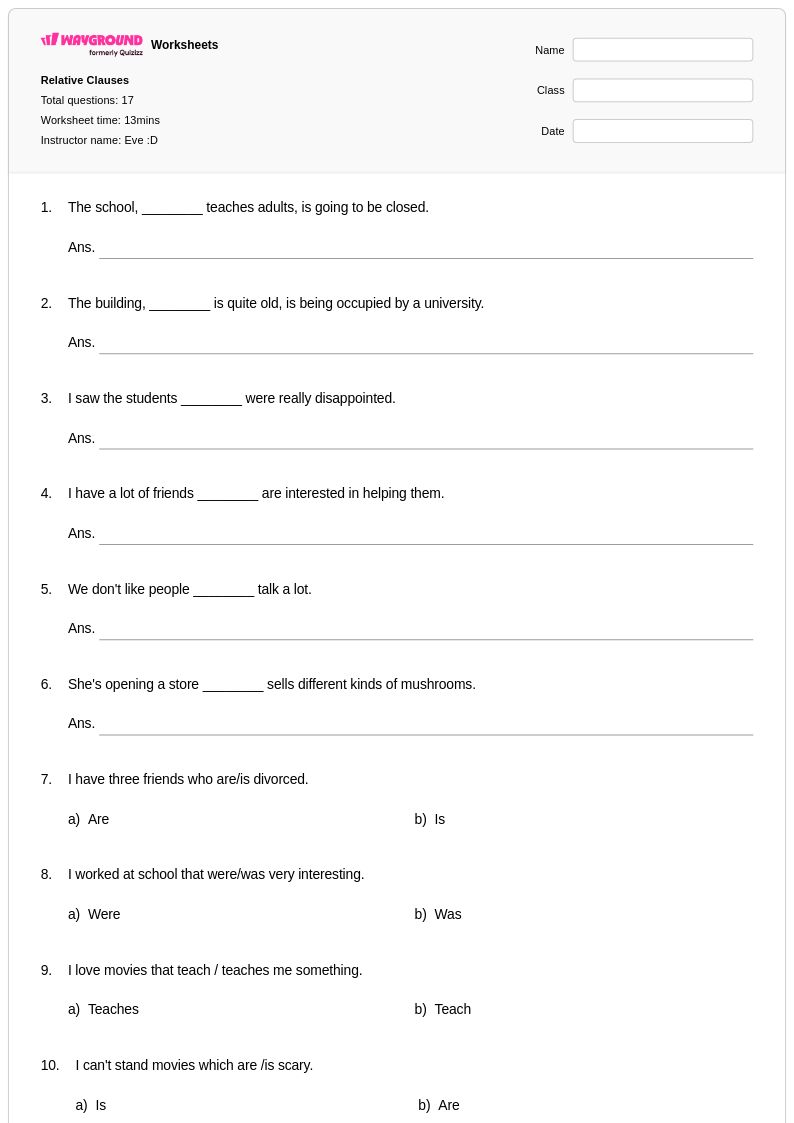
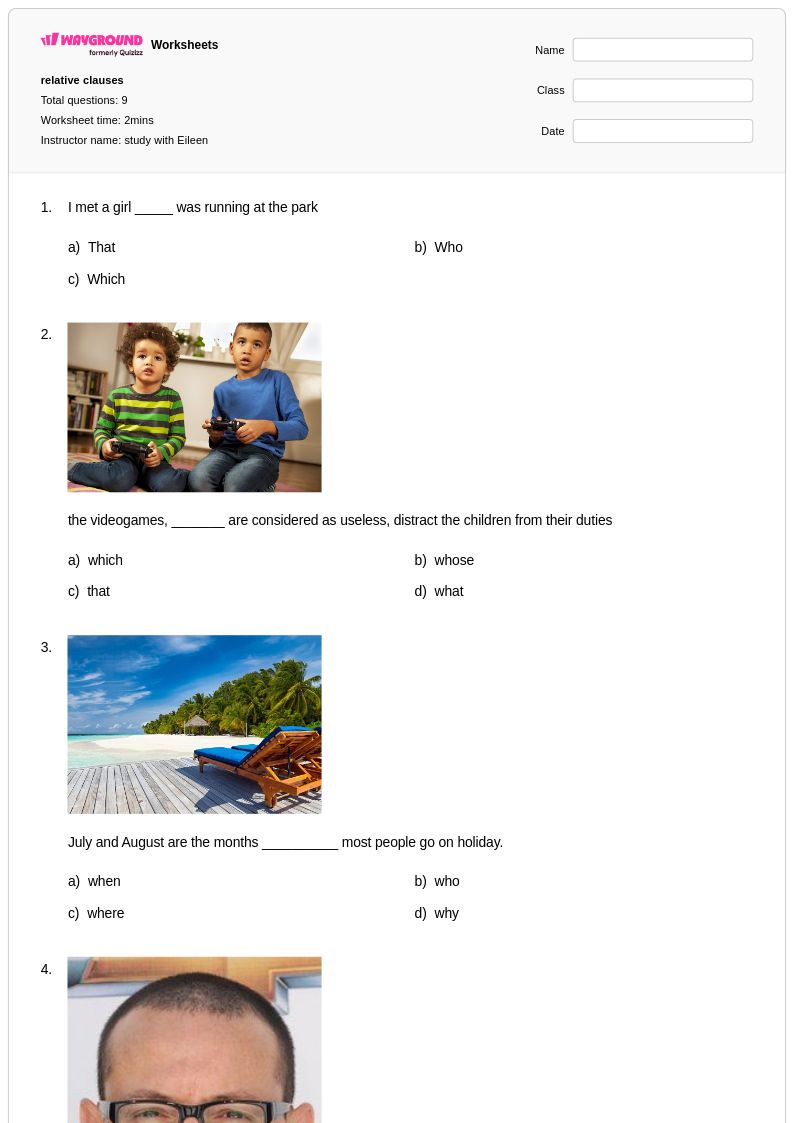
Relative clauses represent a crucial grammar concept for Grade 6 students, requiring focused practice to master the integration of dependent clauses that modify nouns and pronouns. Wayground's comprehensive collection of relative clause worksheets provides systematic instruction on identifying and constructing these essential sentence components, helping students understand how words like "who," "which," "that," and "whose" connect ideas within complex sentences. These carefully designed practice problems guide learners through the mechanics of restrictive and nonrestrictive clauses, proper punctuation usage, and sentence combining techniques that elevate their writing sophistication. Each worksheet includes detailed answer keys and is available as free printables in convenient PDF format, ensuring students receive immediate feedback while developing their understanding of how relative clauses enhance sentence variety and clarity in academic writing.
Wayground's extensive library of teacher-created resources supports educators in delivering effective relative clause instruction through millions of expertly crafted worksheets that align with grammar and mechanics standards. The platform's robust search and filtering capabilities enable teachers to quickly locate materials targeting specific aspects of relative clause construction, from basic identification exercises to advanced sentence revision activities. These customizable worksheets accommodate diverse learning needs through differentiation tools that allow instructors to modify content complexity, adjust practice problem quantities, and select between printable PDF versions for traditional classroom use or digital formats for interactive learning environments. This flexibility proves invaluable for lesson planning, targeted remediation of common grammatical errors, enrichment activities for advanced learners, and ongoing skill practice that reinforces proper relative clause usage across various writing contexts.
FAQs
How do I teach relative clauses to students who are new to the concept?
Start by anchoring relative clauses to something students already know: the idea that one sentence can describe a noun in another. Introduce the five core relative pronouns — who, which, that, whose, and where — and show explicitly when each applies by connecting them to the noun type they reference (people, things, places, possession). Once students can identify the antecedent a relative clause modifies, move to sentence-combining exercises that replace repeated nouns with a pronoun-led clause, which builds intuition for how these structures reduce redundancy and add detail.
What's the difference between defining and non-defining relative clauses, and how do I explain it to students?
A defining (restrictive) relative clause identifies which specific person or thing is being discussed and is essential to the meaning of the sentence — removing it would leave the sentence unclear or incomplete. A non-defining (non-restrictive) clause adds extra information about a noun that is already fully identified, and it is set off by commas. A reliable classroom explanation: if you can remove the clause and still know exactly who or what is being referred to, it's non-defining and needs commas; if removing it creates ambiguity, it's defining and takes no commas.
What exercises help students practice using relative clauses correctly?
The most effective exercises move students from recognition to production in stages. Begin with identification tasks where students underline the relative clause and circle its antecedent, then progress to gap-fill activities requiring them to choose the correct relative pronoun. Sentence-combining tasks — where two short sentences must be merged using a relative clause — build the highest level of productive skill. Adding punctuation exercises that require students to distinguish restrictive from non-restrictive clauses reinforces comma rules in a contextually meaningful way.
What mistakes do students commonly make with relative clauses?
The most frequent error is pronoun confusion — students often use 'which' for people or 'who' for objects, when 'who' applies to people and 'which' to things. Many students also omit commas around non-restrictive clauses or, conversely, add commas to restrictive ones, suggesting they haven't yet internalized the defining versus non-defining distinction. Another common issue is a dangling or misplaced clause that modifies the wrong noun because the antecedent is too far from the pronoun. Targeted practice that explicitly addresses each of these error types — rather than treating relative clauses as a single uniform skill — leads to faster correction.
How can I use Wayground's relative clauses worksheets in my classroom?
Wayground's relative clauses worksheets are available as printable PDFs for traditional classroom use and in digital formats for technology-integrated environments, so they work whether students are at desks or on devices. Each worksheet includes a detailed answer key, supporting both teacher-led correction and independent student self-assessment. Teachers can also host worksheets as a quiz directly on Wayground, enabling live or asynchronous digital practice with built-in accountability.
How do I support struggling students when teaching relative clauses?
Students who struggle with relative clauses often need more scaffolding around identifying the antecedent before they can tackle pronoun selection or punctuation. Provide sentence frames that label the noun being described and leave the relative clause structure partially built so students fill in only the variable element. On Wayground, teachers can enable accommodations such as Read Aloud (so questions are read to students who need audio support) and reduced answer choices (to lower cognitive load during pronoun-selection tasks), helping struggling learners engage with the content without being overwhelmed by the format.