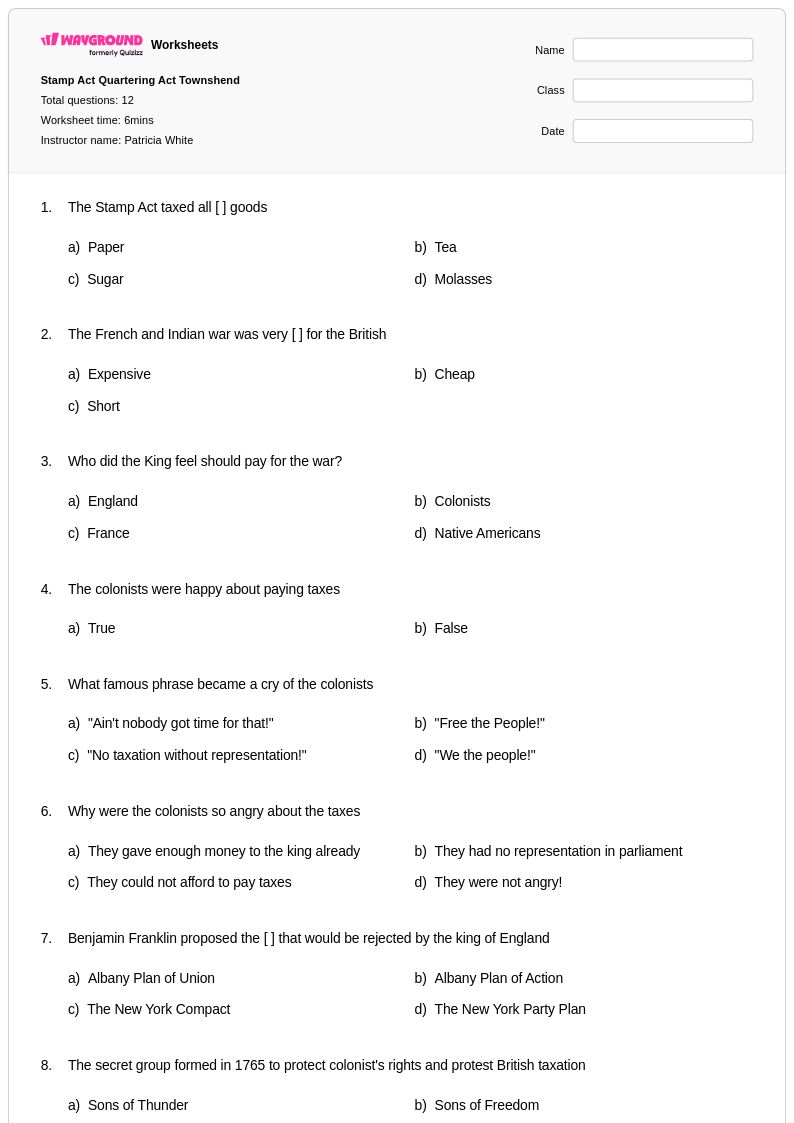
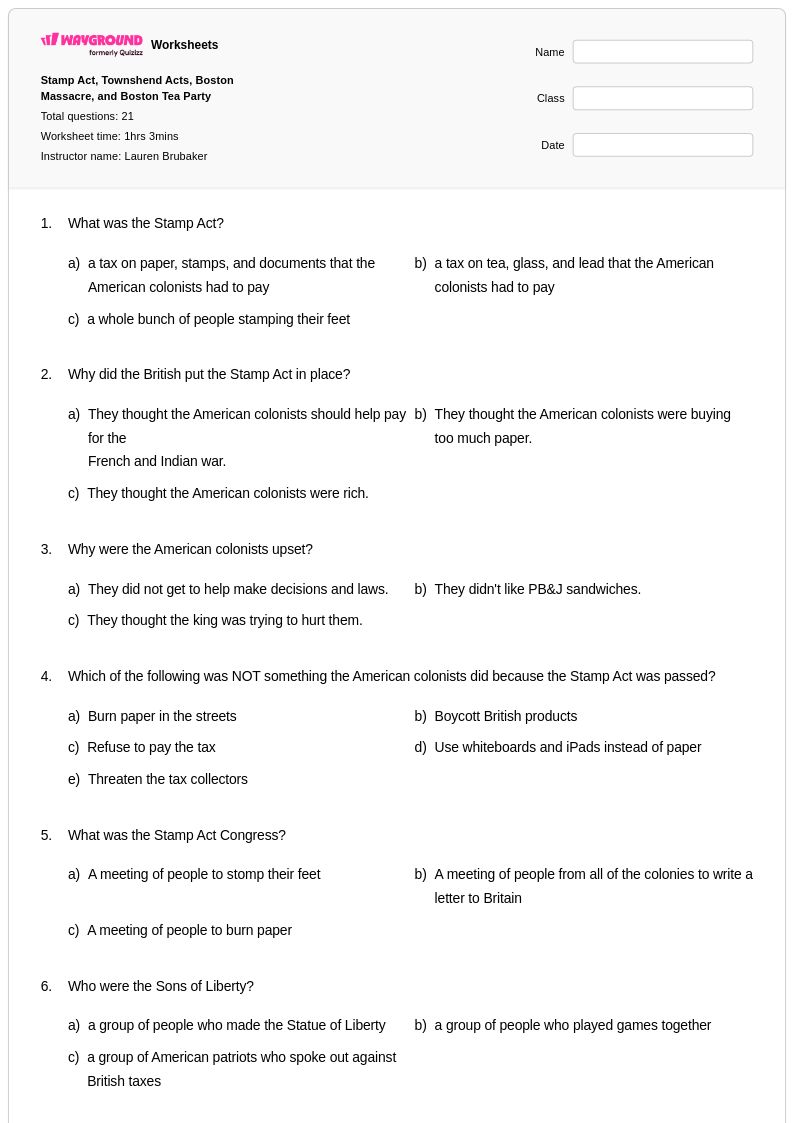
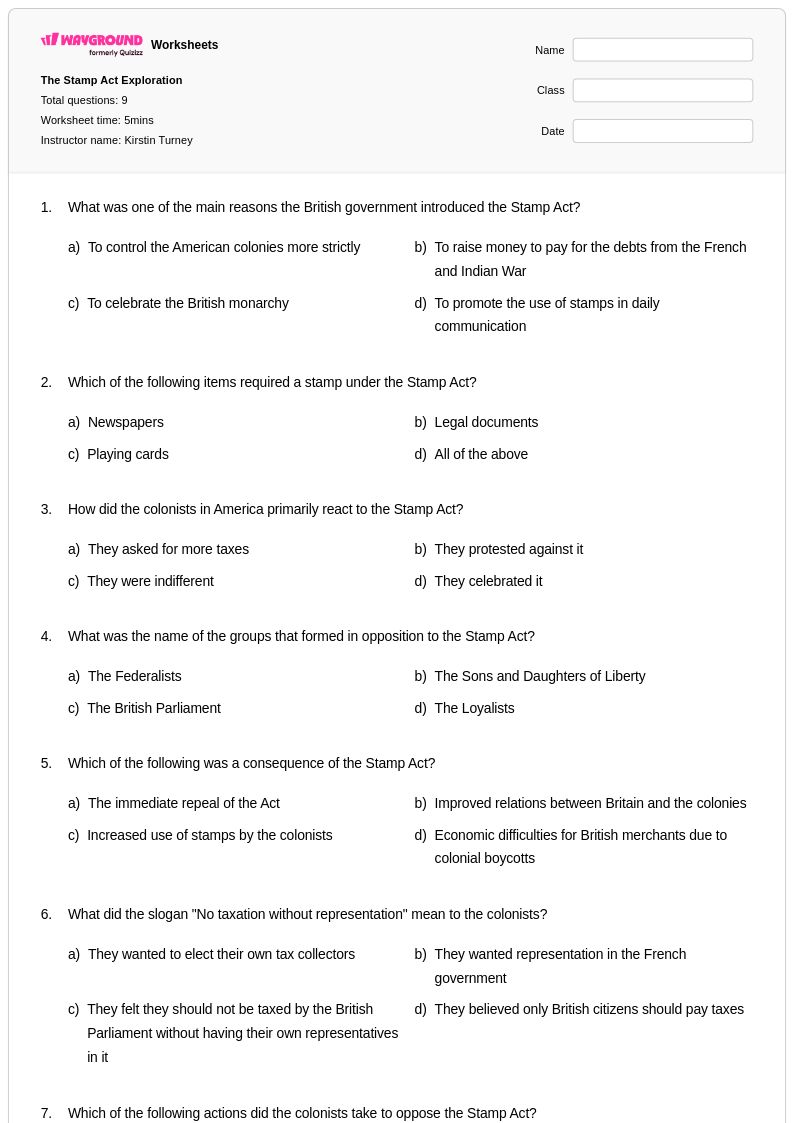
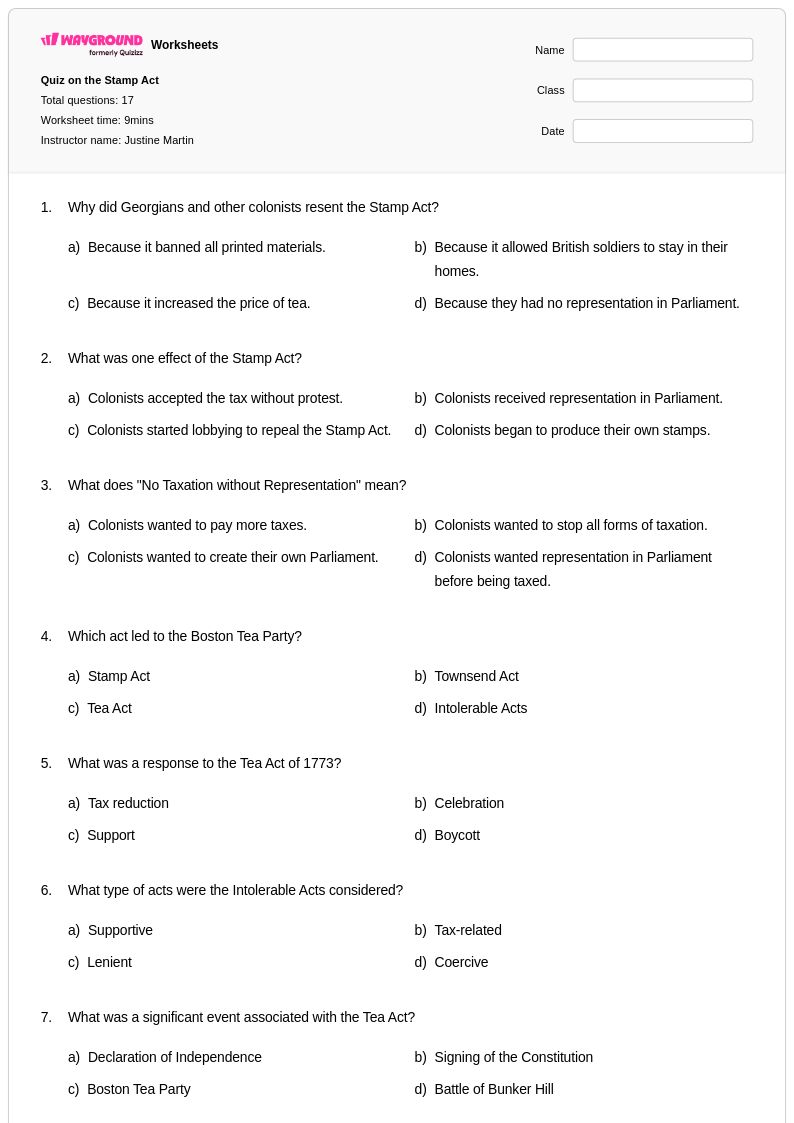
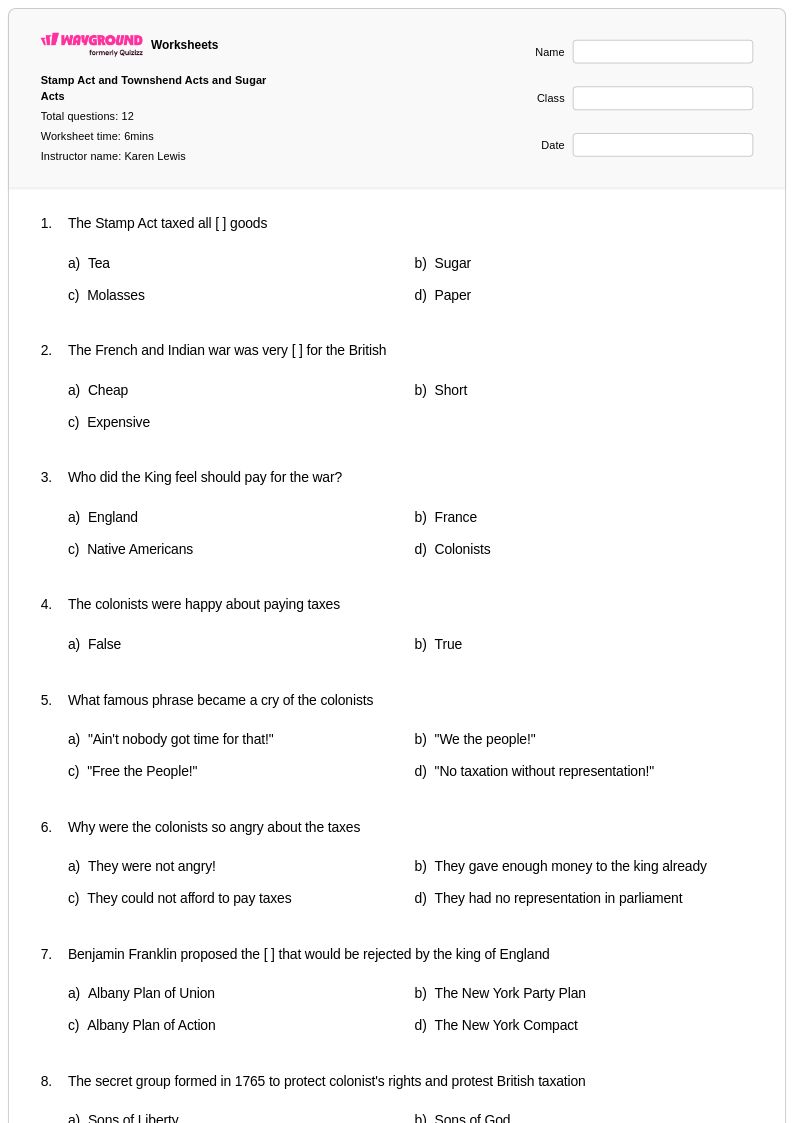
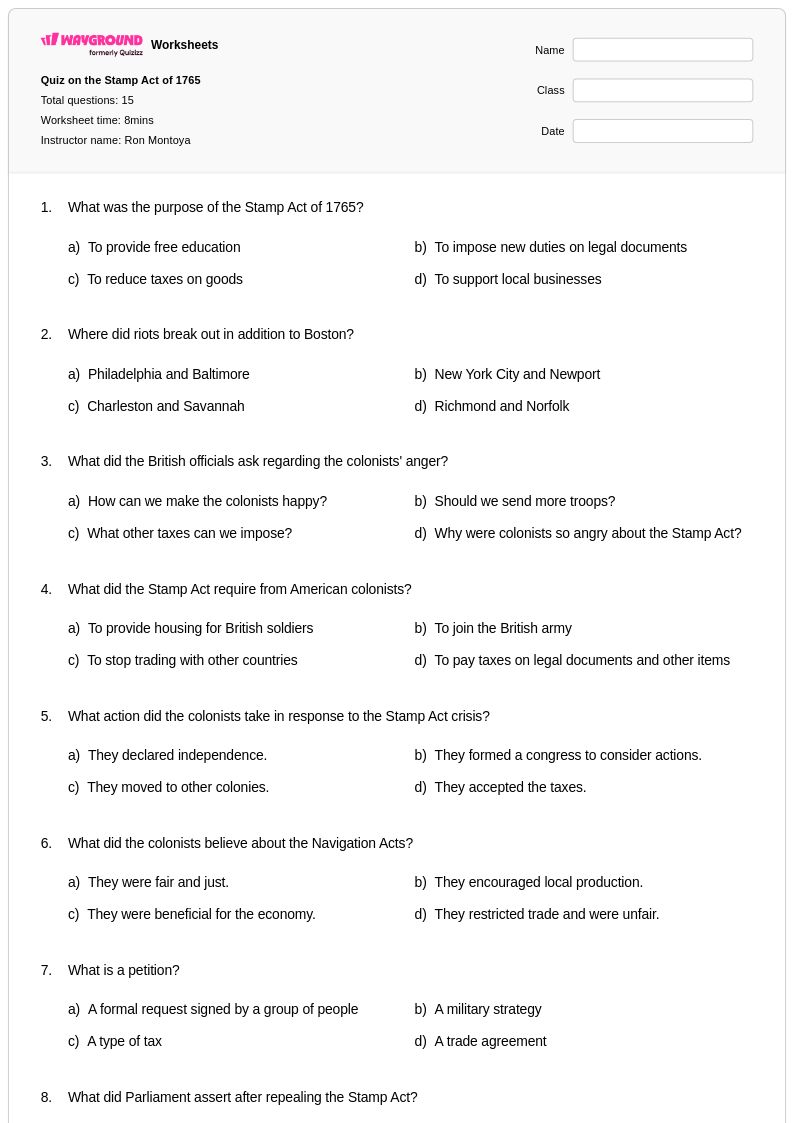
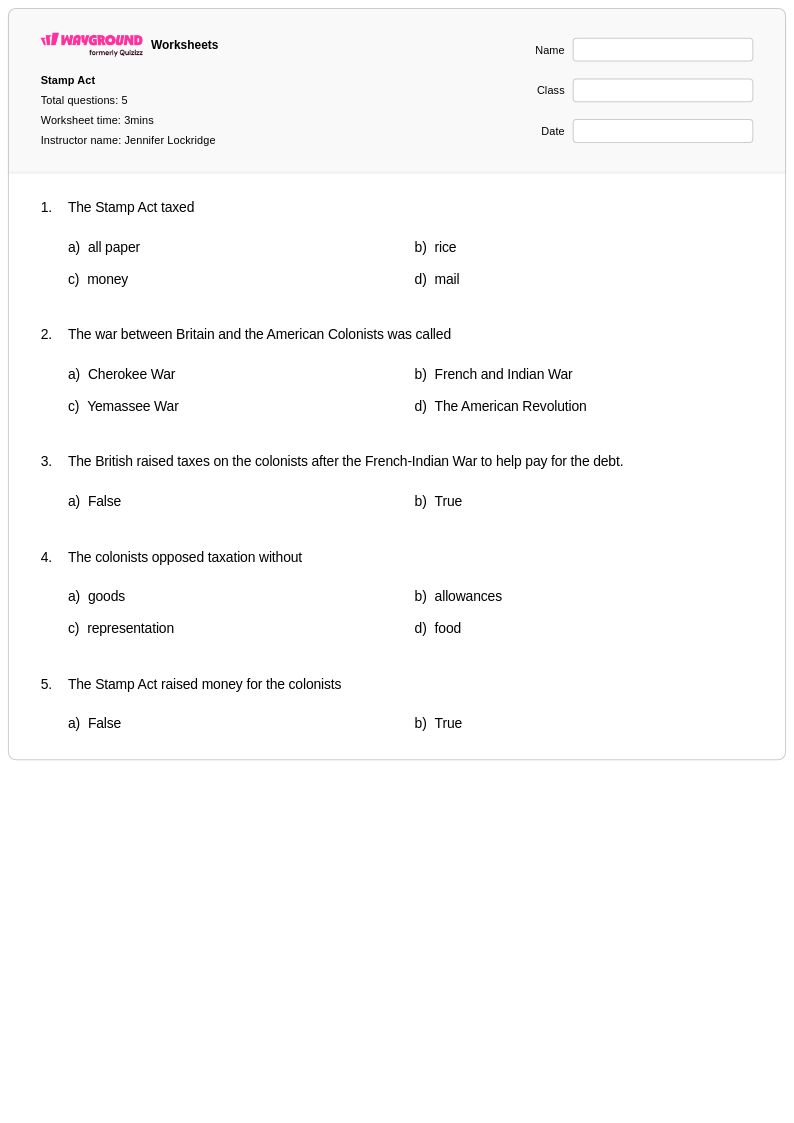
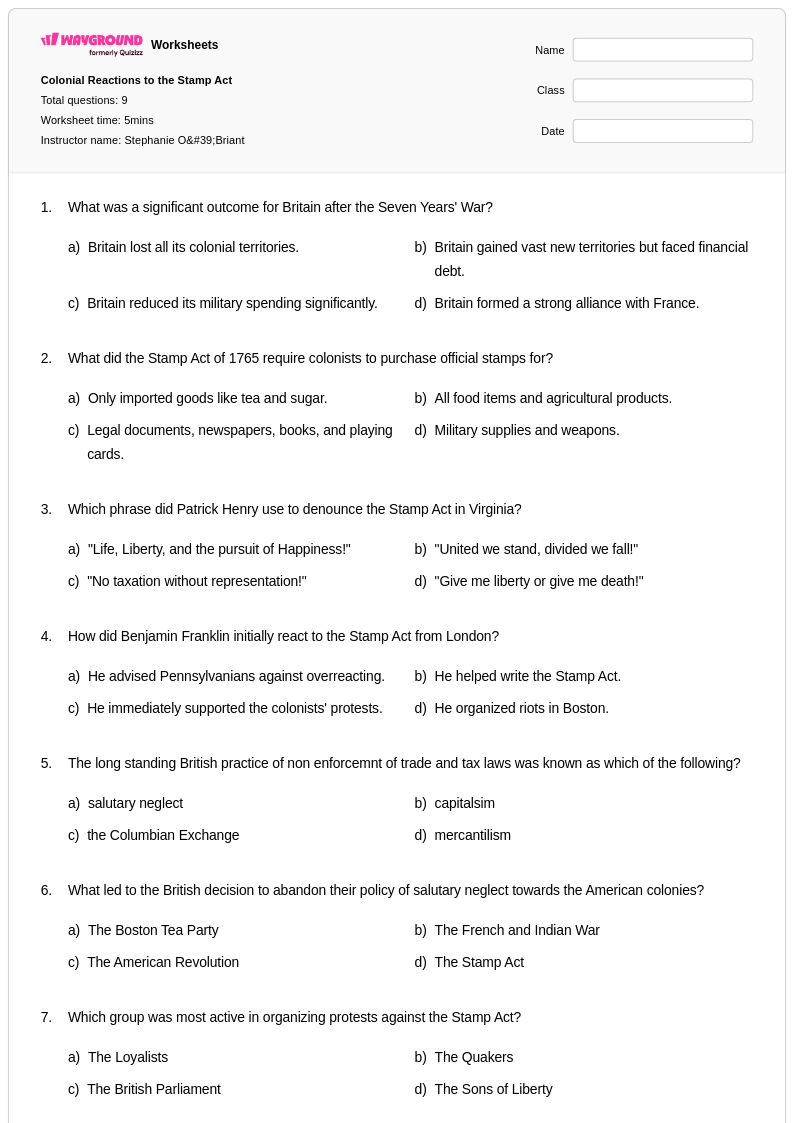
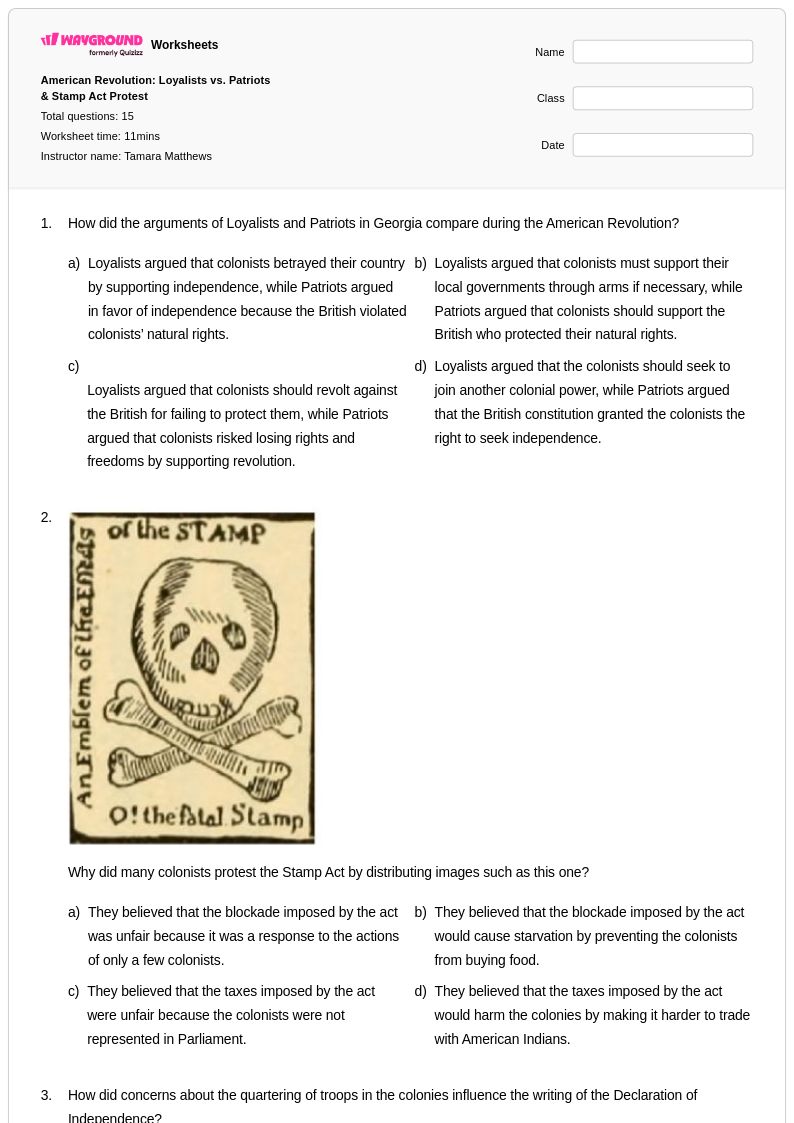
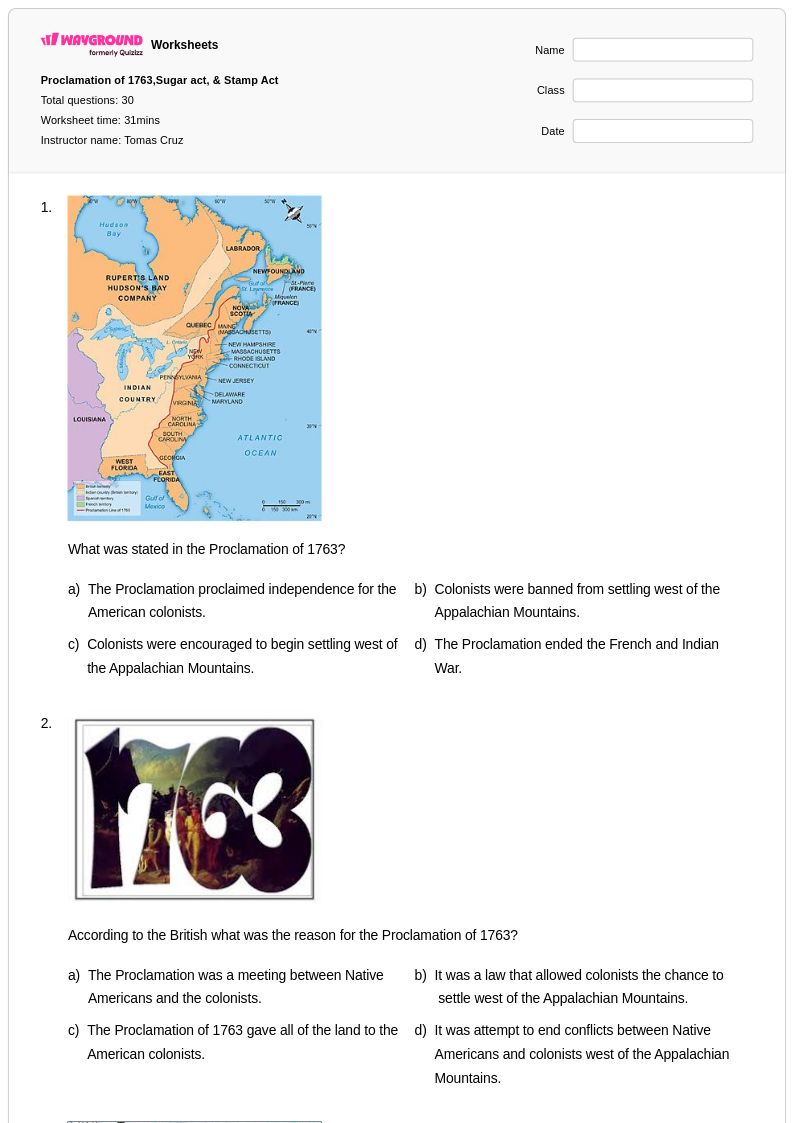
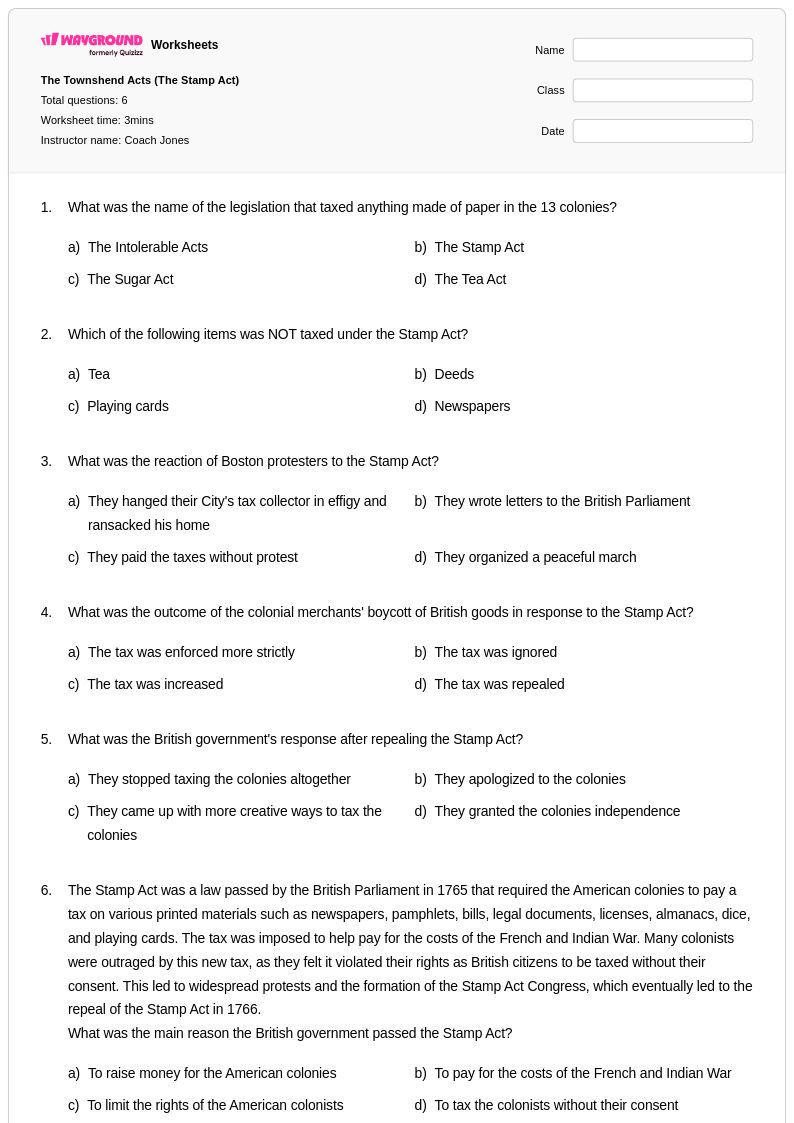
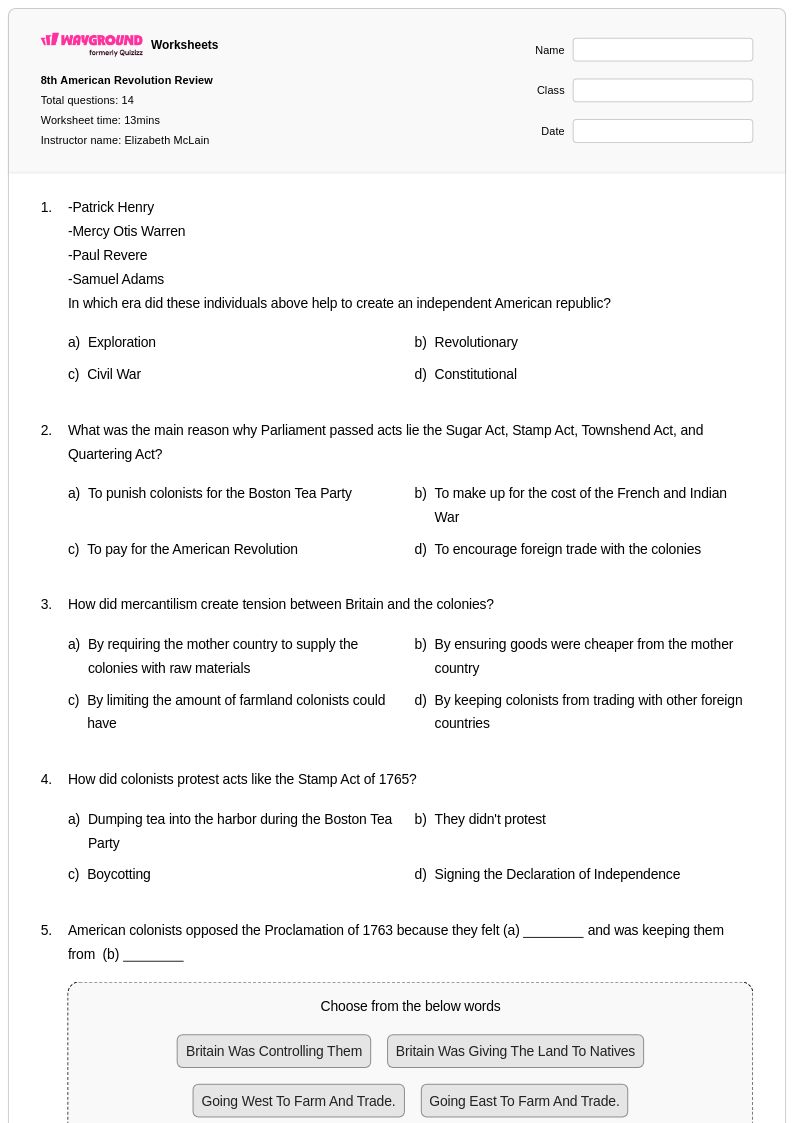
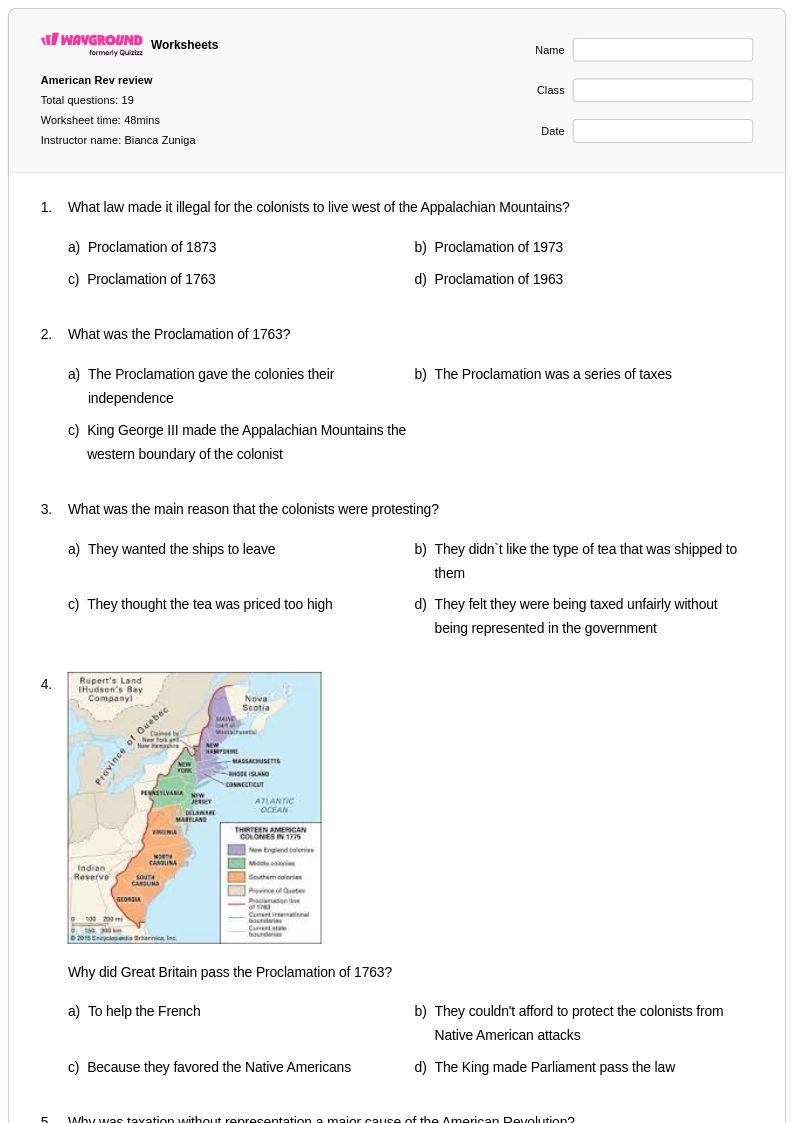
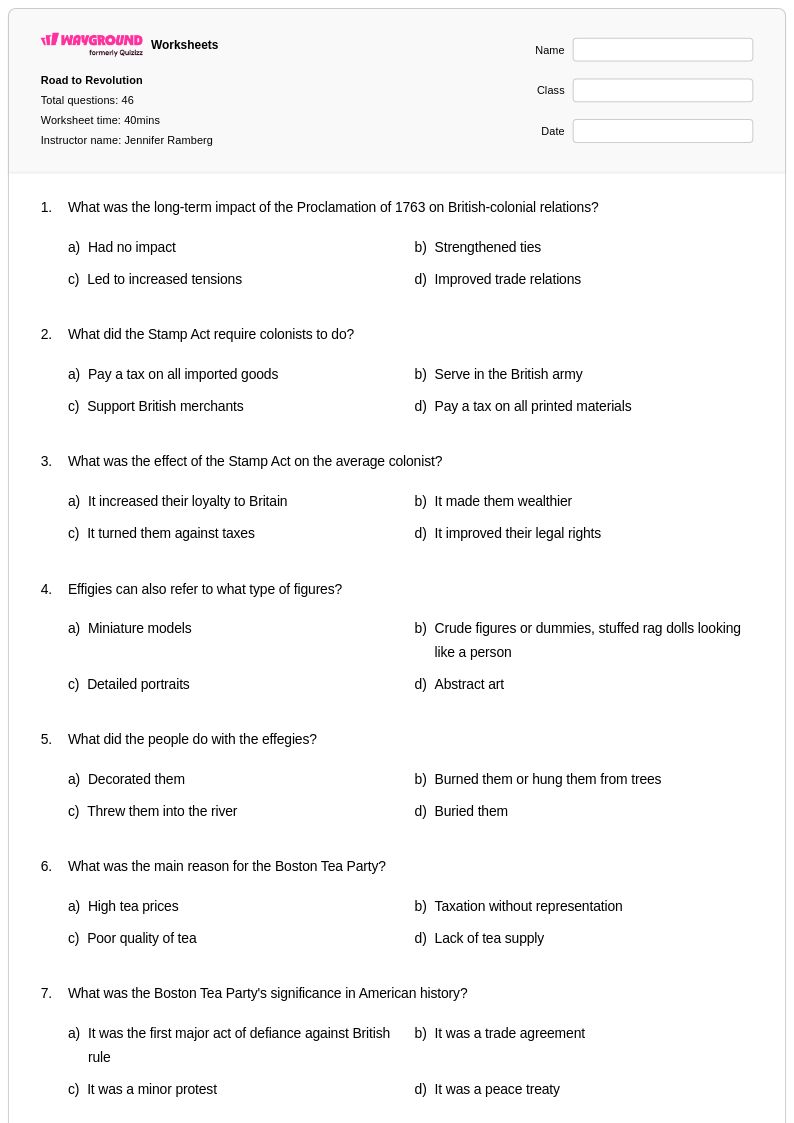
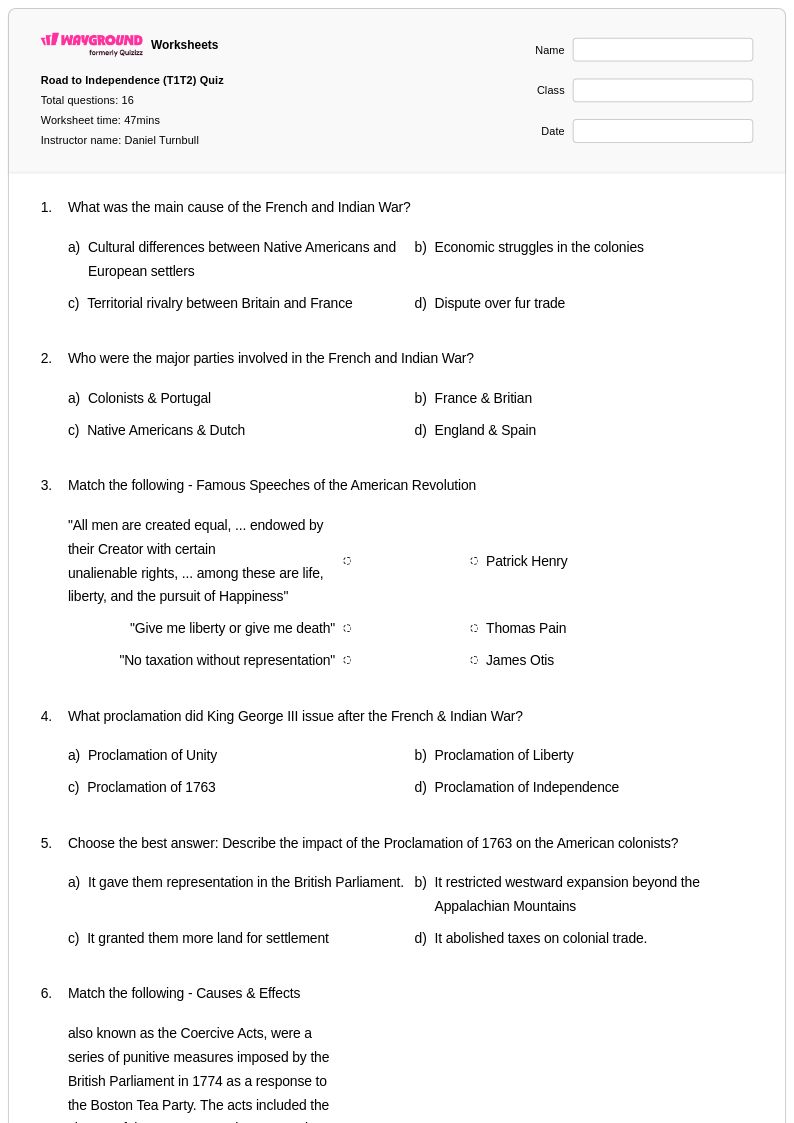
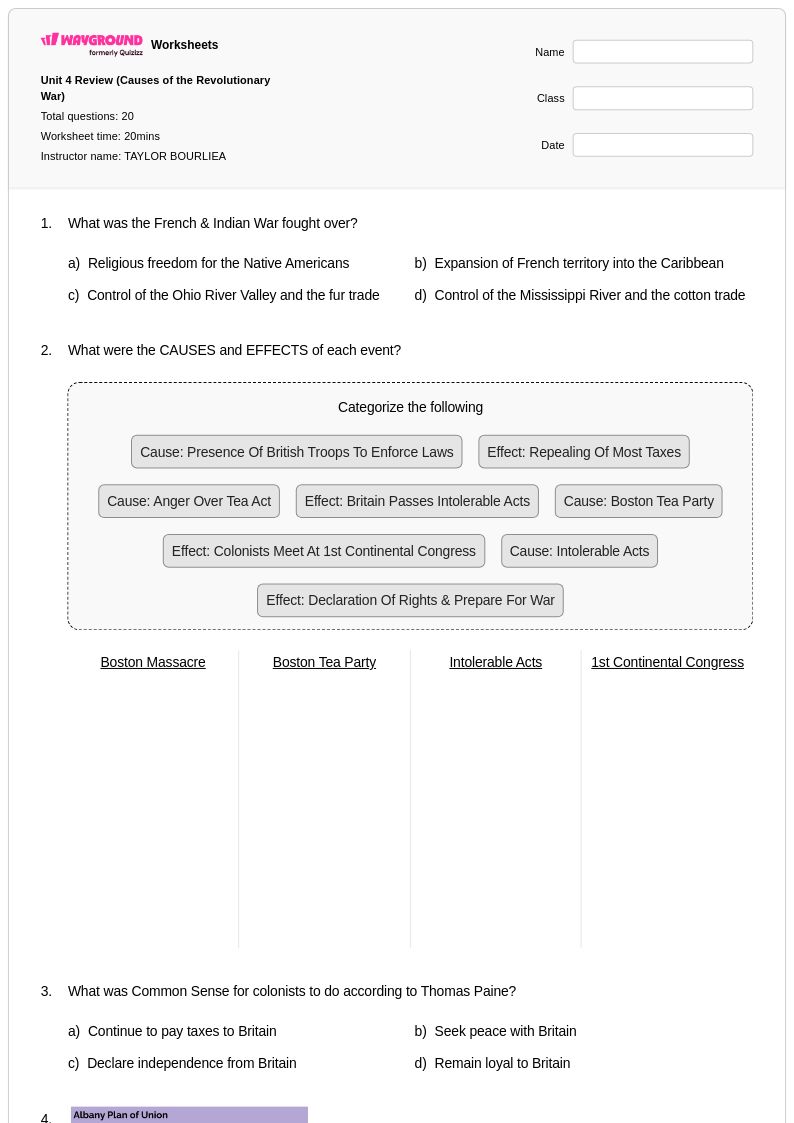
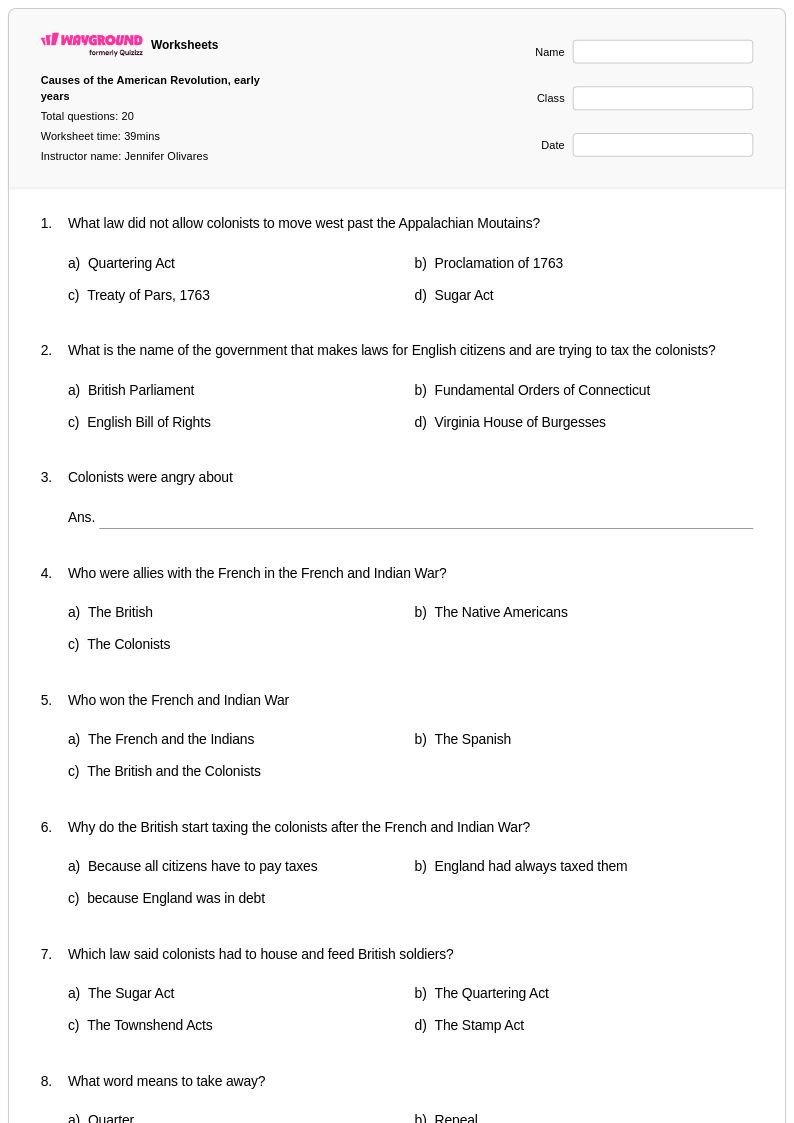
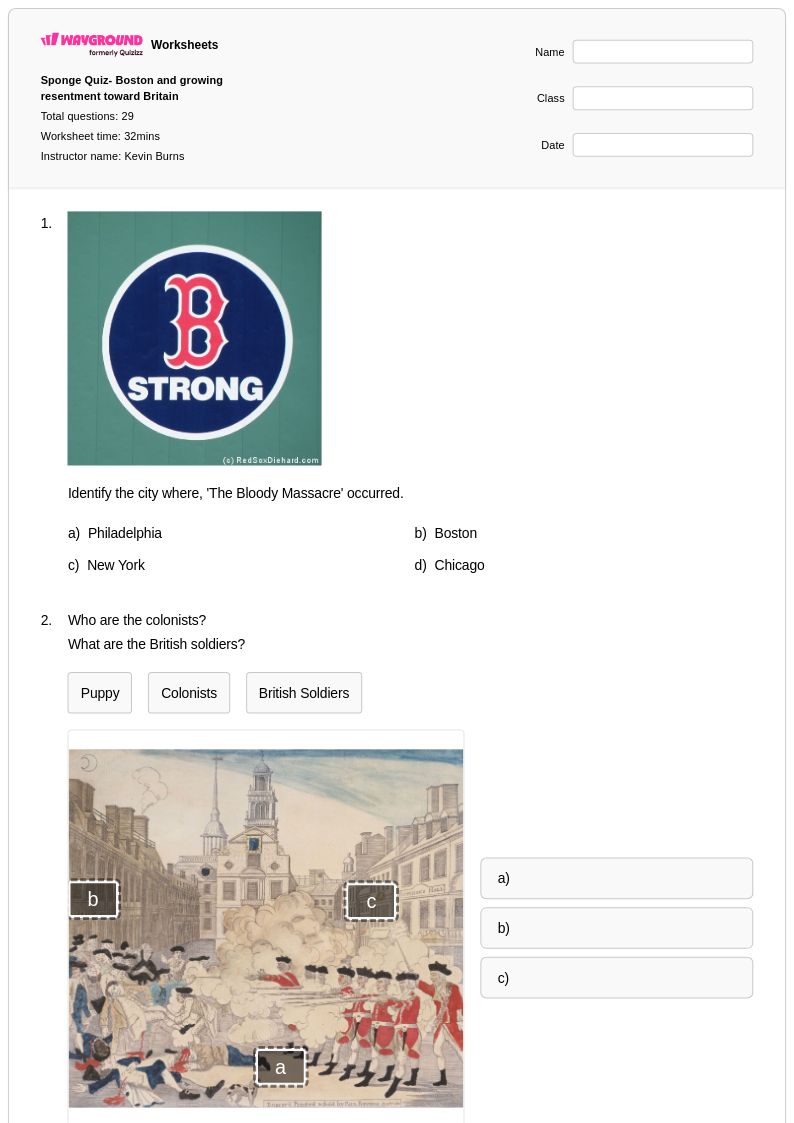
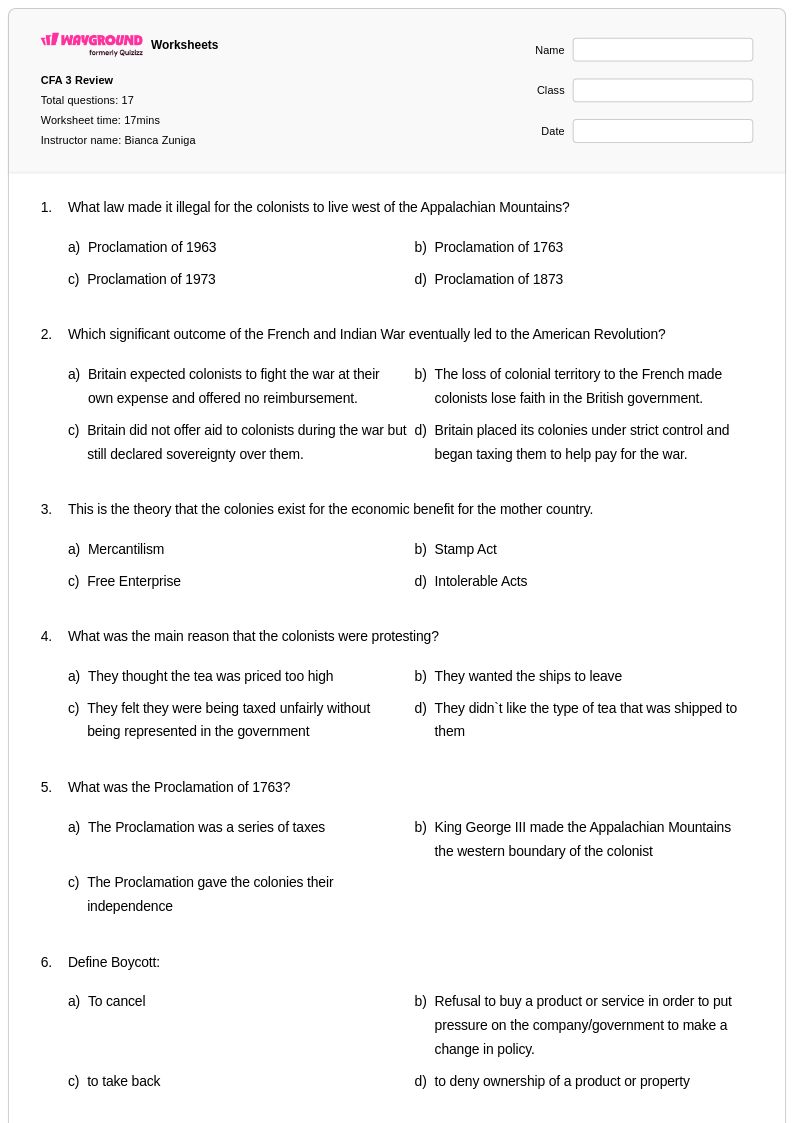
Grade 8 Stamp Act worksheets and printables from Wayground help students explore this pivotal taxation event that sparked colonial resistance, featuring free PDF resources with practice problems and answer keys.
Explore printable Stamp Act worksheets for Grade 8
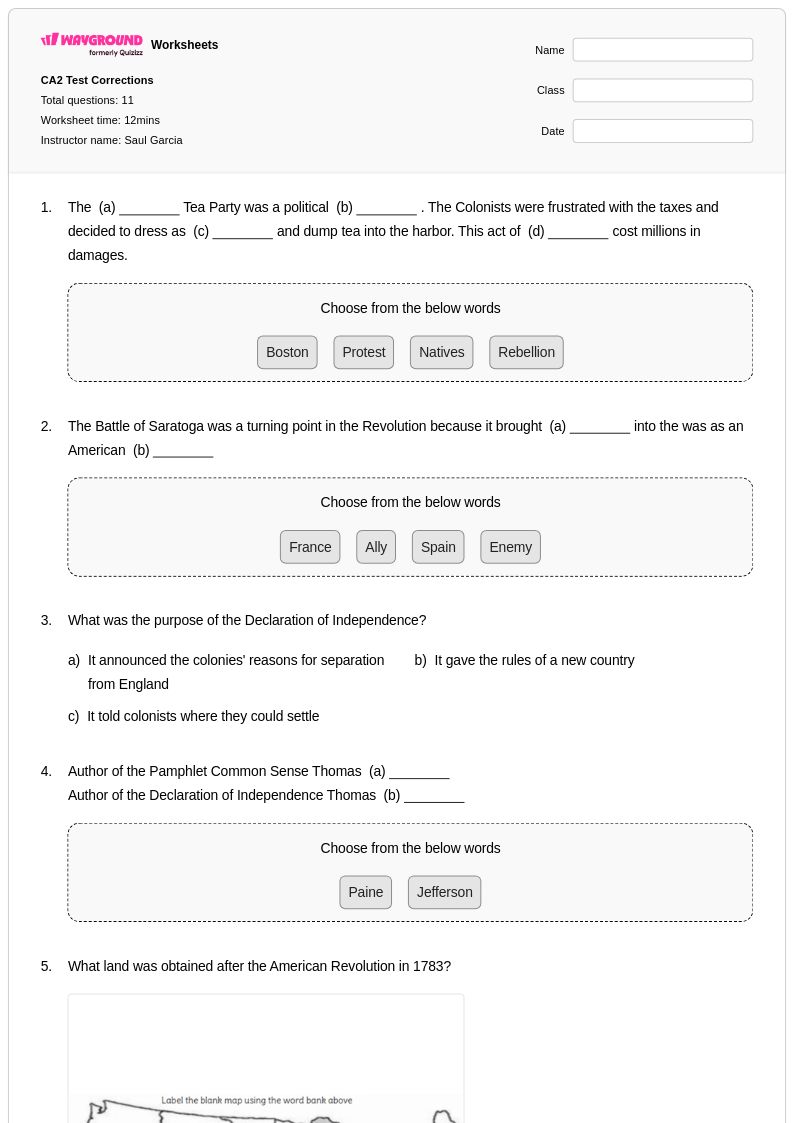
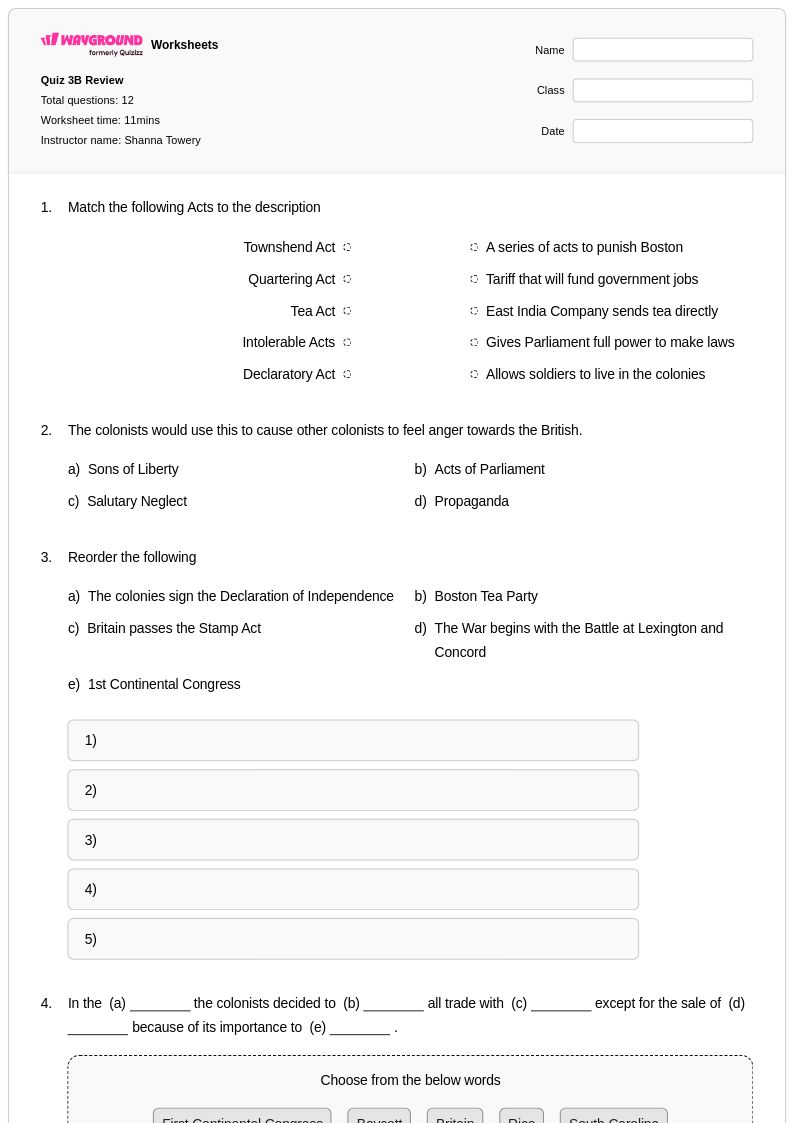
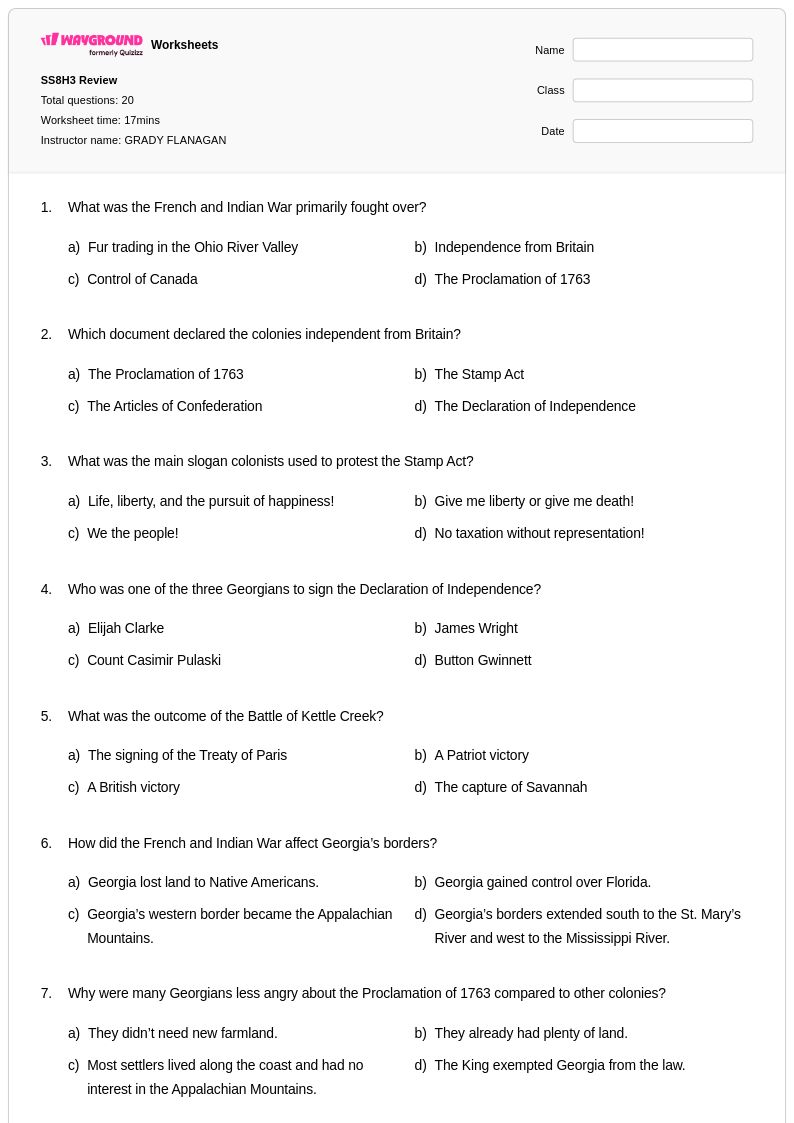
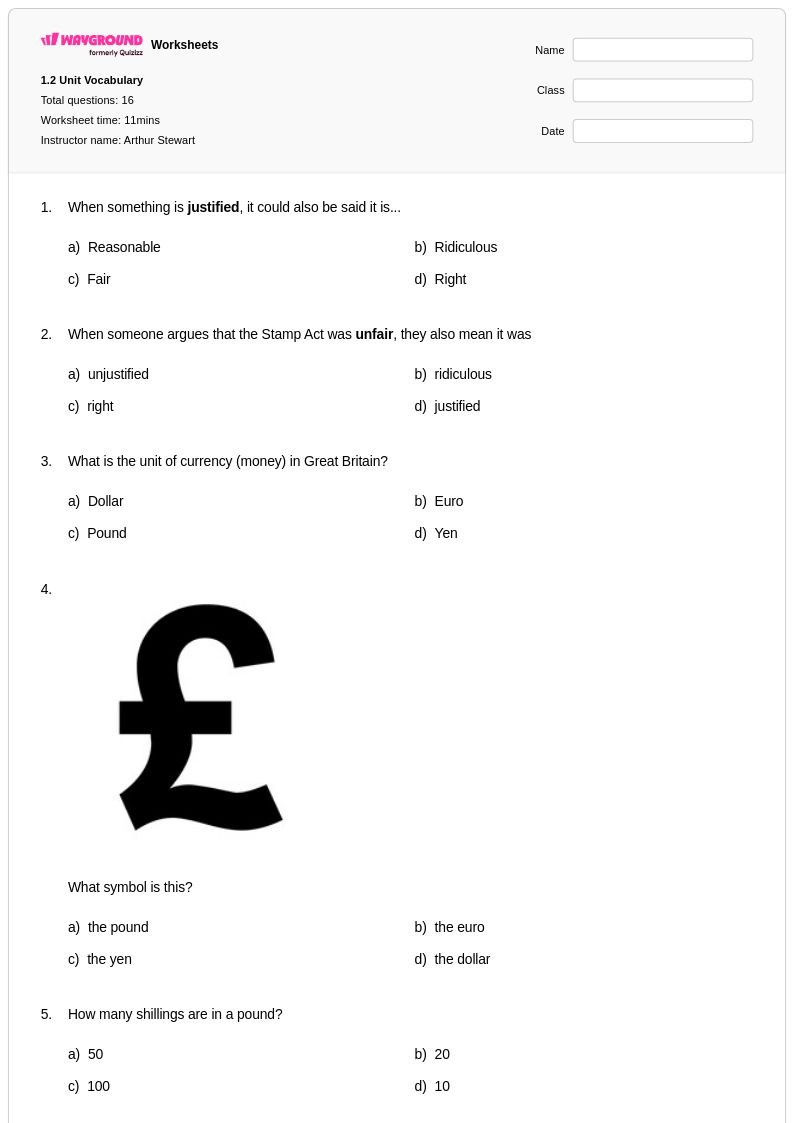
Stamp Act worksheets for Grade 8 students available through Wayground (formerly Quizizz) provide comprehensive coverage of this pivotal legislation that sparked colonial resistance and helped ignite the American Revolution. These educational resources strengthen critical thinking skills as students analyze the economic and political motivations behind Britain's first direct tax on the American colonies, examine colonial reactions including boycotts and the formation of the Sons of Liberty, and evaluate how the Stamp Act's eventual repeal in 1766 set precedents for future colonial-British conflicts. The worksheets feature diverse practice problems that challenge students to interpret primary source documents, compare different colonial responses across regions, and assess the act's role in developing American concepts of taxation and representation. Teachers can access answer keys and utilize these printables as free pdf downloads to support both classroom instruction and independent study.
Wayground (formerly Quizizz) empowers educators with an extensive collection of teacher-created Stamp Act resources drawn from millions of available materials, all searchable through advanced filtering options that align with social studies standards and Grade 8 curriculum requirements. The platform's differentiation tools allow teachers to customize worksheets for varying ability levels, ensuring that advanced learners can explore complex cause-and-effect relationships while struggling students receive additional scaffolding to master foundational concepts about colonial taxation and resistance. These flexible resources are available in both printable and digital formats, including downloadable pdfs, making them ideal for diverse classroom environments and remote learning situations. Teachers rely on these comprehensive materials for lesson planning, targeted remediation of specific historical concepts, enrichment activities that deepen understanding of revolutionary-era politics, and regular skill practice that builds students' ability to analyze historical documents and draw evidence-based conclusions about this crucial period in American history.
FAQs
How do I teach the Stamp Act to middle or high school students?
Teaching the Stamp Act effectively starts with grounding students in the colonial context of 1765, particularly the financial strain Britain faced after the French and Indian War and why Parliament turned to direct taxation of the colonies. From there, teachers can guide students through the principle of 'taxation without representation,' using primary sources like colonial pamphlets and newspaper accounts to show how the act galvanized public opposition. Connecting the Stamp Act to its immediate consequences, such as the formation of the Sons of Liberty and the Stamp Act Congress, helps students understand it as a turning point rather than an isolated policy.
What activities help students practice analyzing the causes and effects of the Stamp Act?
Cause-and-effect graphic organizers work well for the Stamp Act because the chain of consequences is traceable and specific: the 1765 legislation triggered colonial boycotts, organized resistance movements, and eventually Parliament's repeal in 1766. Primary source analysis activities, where students examine colonial newspaper editorials or petitions from the Stamp Act Congress, build historical reasoning skills alongside content knowledge. Pairing these with structured short-answer questions that ask students to explain how the Stamp Act changed colonial attitudes toward British authority deepens analytical thinking beyond simple recall.
What mistakes do students commonly make when learning about the Stamp Act?
The most common misconception is that colonists opposed the Stamp Act purely because of financial hardship, when the deeper grievance was the constitutional principle that Parliament had no right to tax them without colonial representation. Students also frequently conflate the Stamp Act with the Townshend Acts or Intolerable Acts, so explicitly distinguishing these pieces of legislation by date and type of tax is important. Another frequent error is underestimating the role of colonial merchants and printers as organized opponents, rather than viewing resistance as a spontaneous popular uprising.
How can I use Stamp Act worksheets to assess student understanding?
Stamp Act worksheets that include document-based questions and cause-and-effect prompts are particularly effective for formative assessment because they reveal whether students can apply historical reasoning, not just recall facts. Teachers can use short-answer sections to assess whether students understand the distinction between internal and external taxation and why that mattered to colonists. Including questions about the repeal of the Stamp Act and the concurrent passage of the Declaratory Act also assesses whether students grasp the ambiguous resolution and its implications for future colonial tensions.
How do I use Wayground's Stamp Act worksheets in my classroom?
Wayground's Stamp Act worksheets are available as printable PDFs for traditional classroom use and in digital formats for technology-integrated learning environments, giving teachers flexibility for in-class activities, homework, or assessment preparation. Teachers can also host worksheets as a quiz directly on Wayground, enabling interactive student engagement with immediate feedback. All worksheets include complete answer keys, which reduces prep time and supports consistent grading across classroom and at-home settings.
How can I differentiate Stamp Act instruction for students at different skill levels?
For students who need additional support, simplifying primary source excerpts and providing sentence frames for written responses can make the material more accessible without reducing its historical rigor. Advanced students benefit from comparing the Stamp Act's reception in different colonies or analyzing the long-term constitutional arguments it sparked, such as those that resurfaced in debates over the Constitution. On Wayground, teachers can apply accommodations such as read aloud for students who need audio support or reduced answer choices to lower cognitive load, with settings applied individually so the rest of the class is unaffected.