Free Printable Stimulus and Response Worksheets for Grade 4
Help Grade 4 students master stimulus and response concepts with Wayground's free biology worksheets featuring printable PDFs, engaging practice problems, and complete answer keys for effective learning.
Explore printable Stimulus and Response worksheets for Grade 4
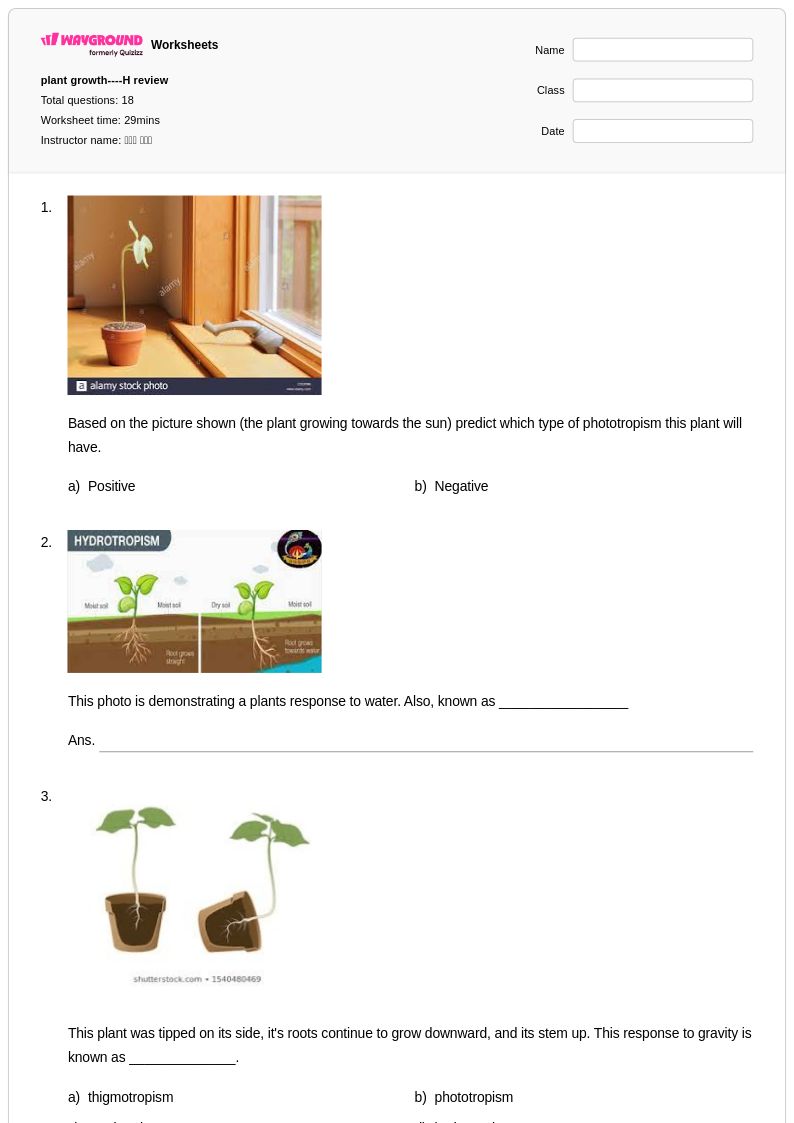
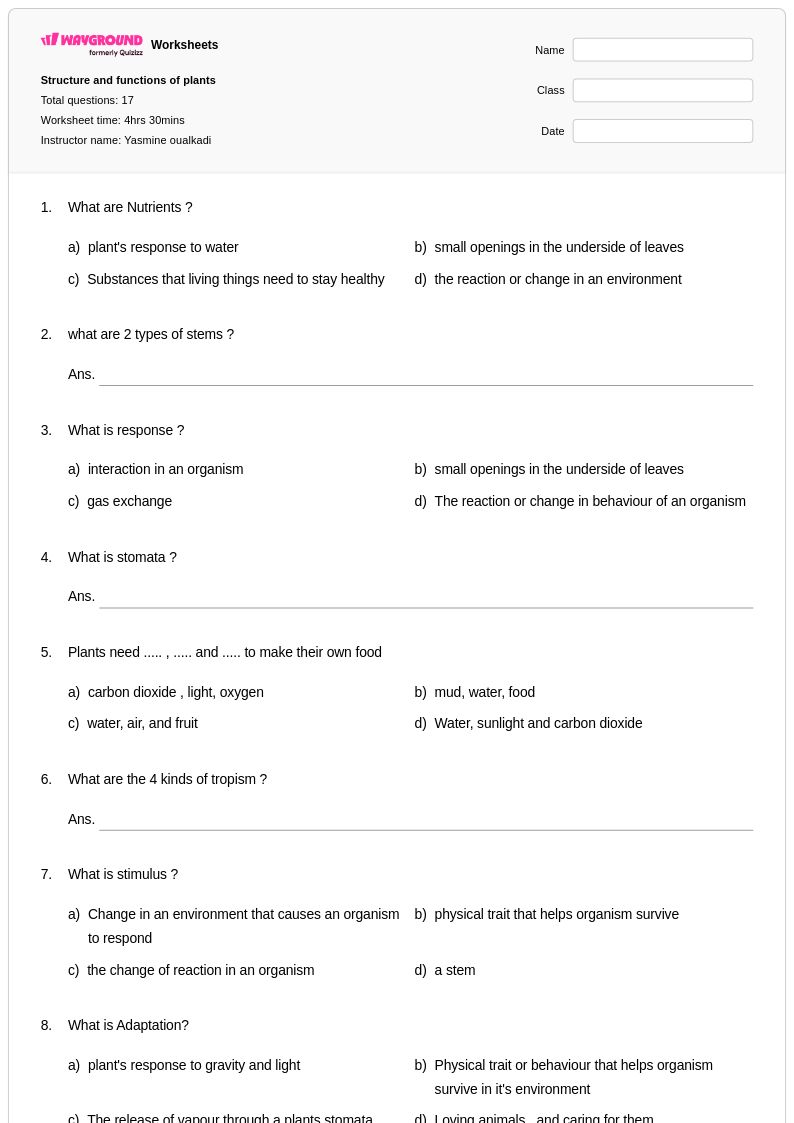
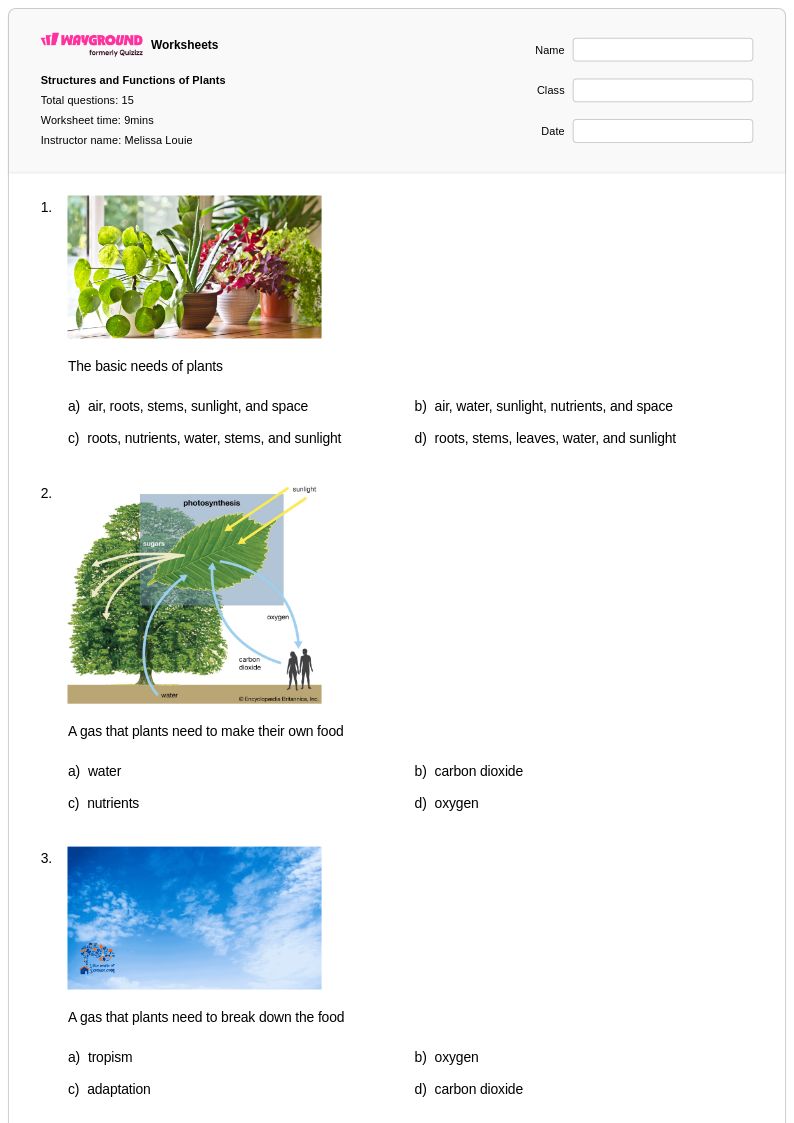
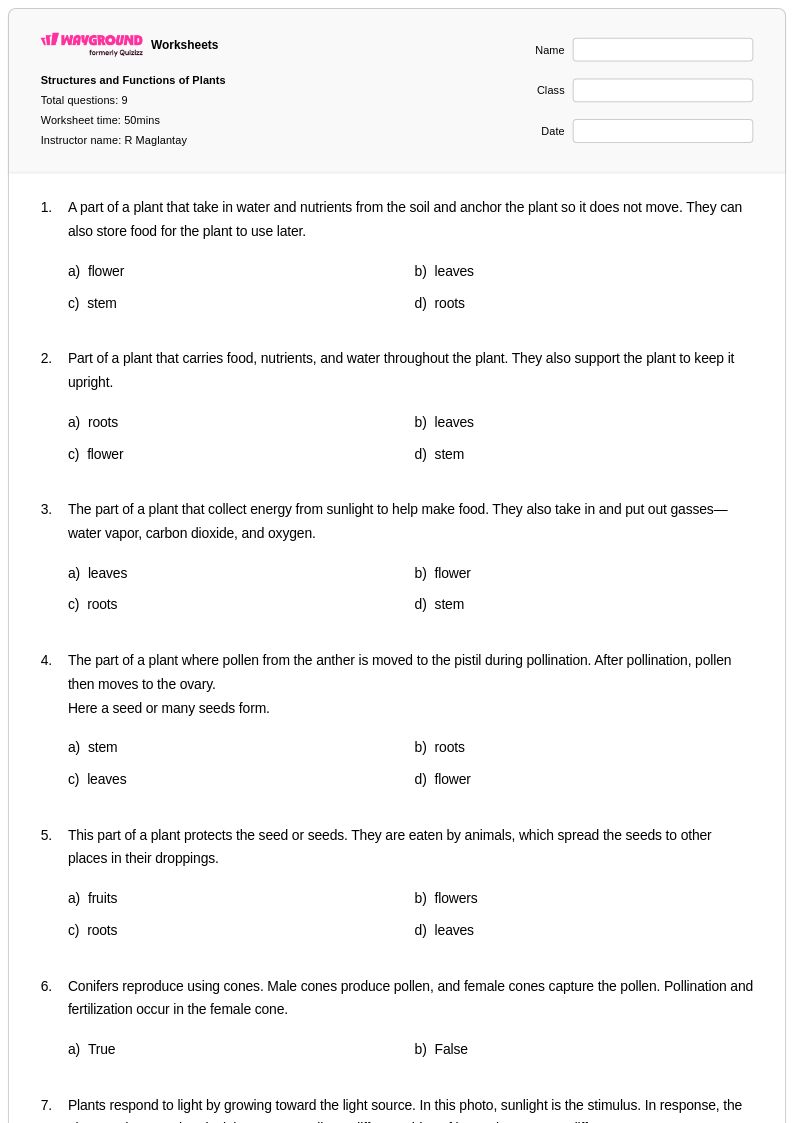
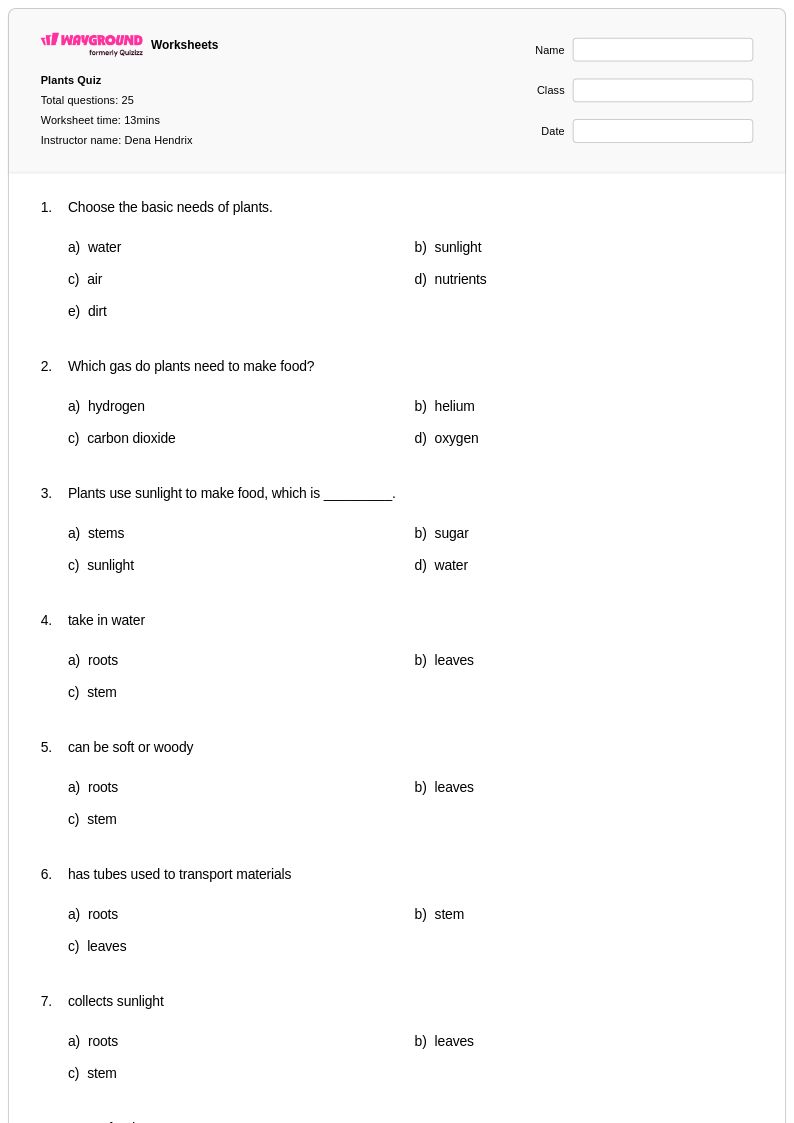
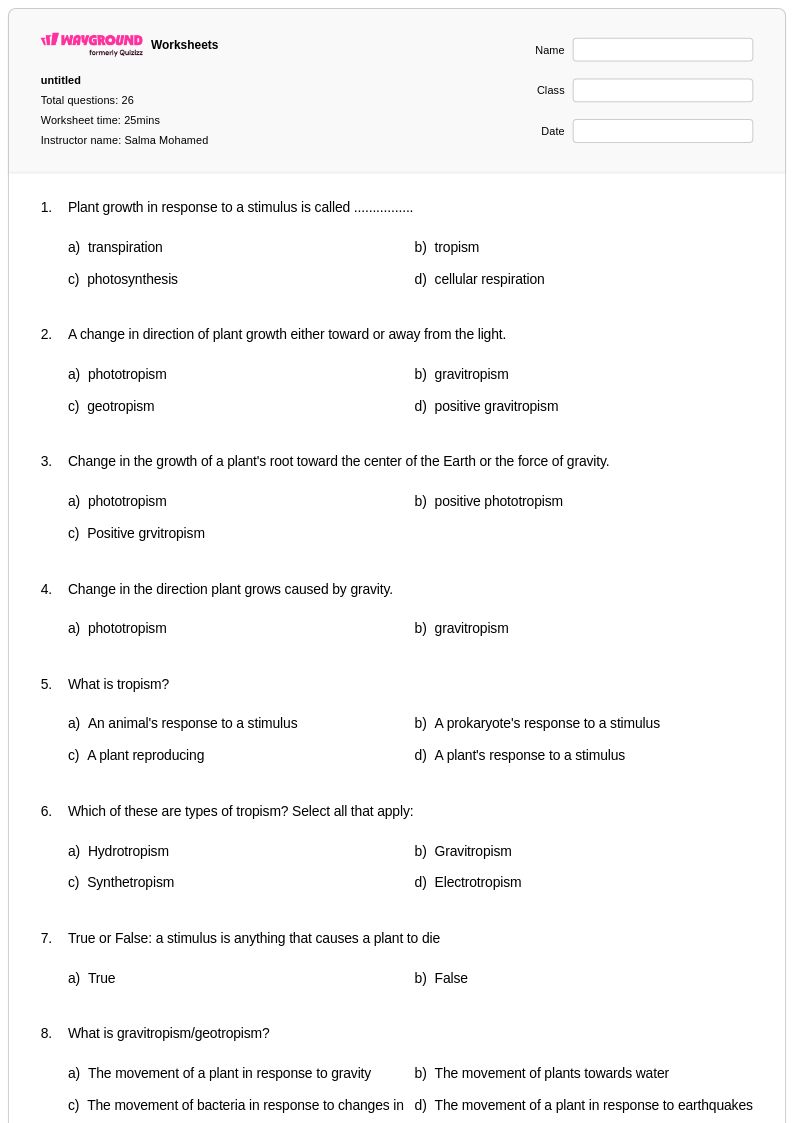
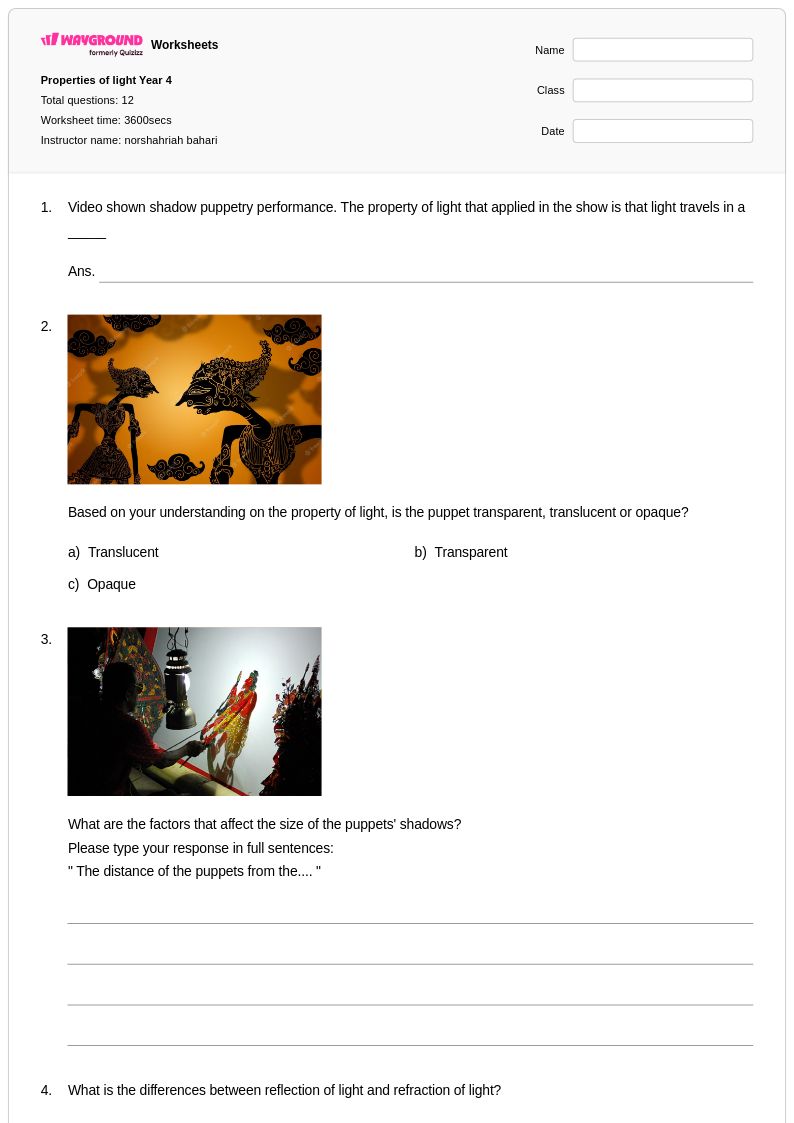
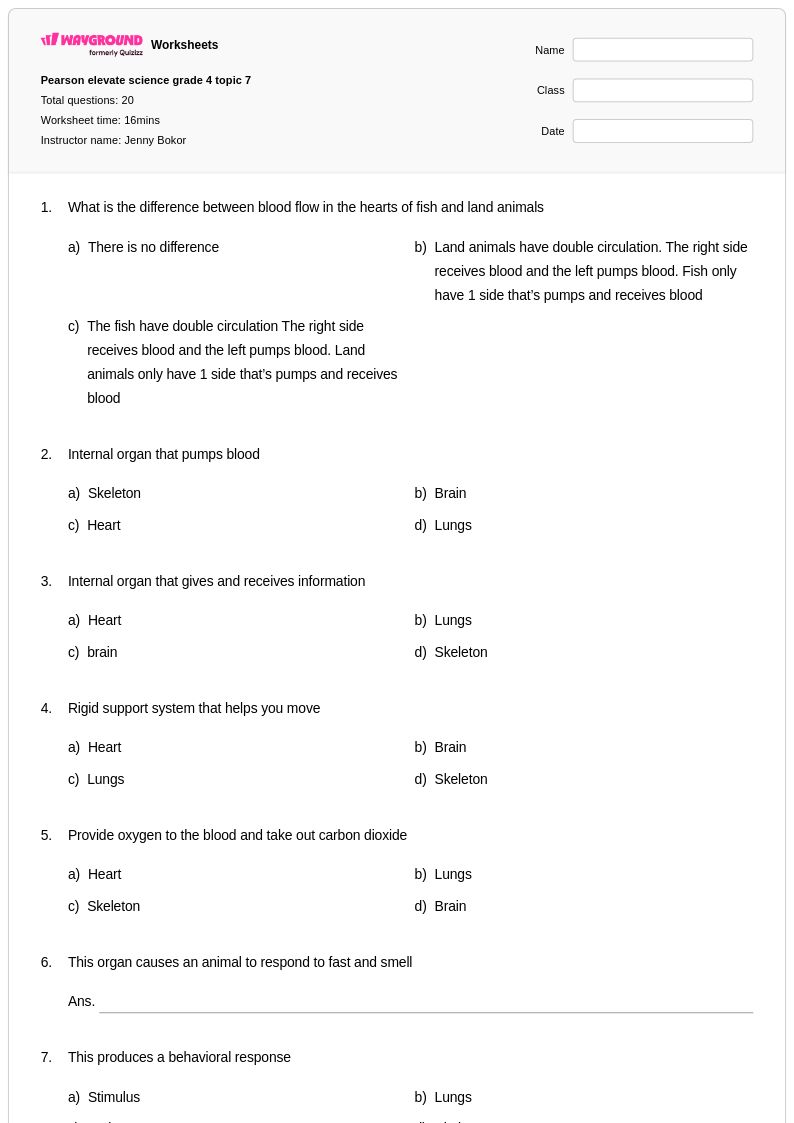
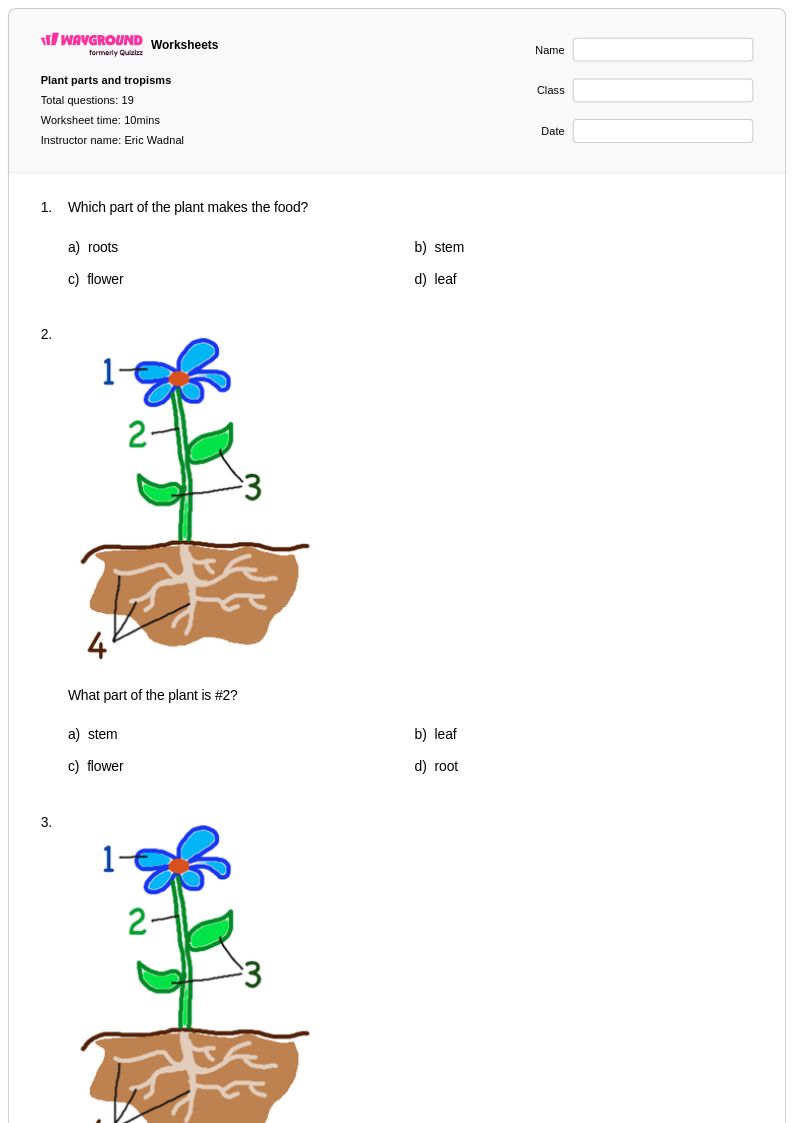
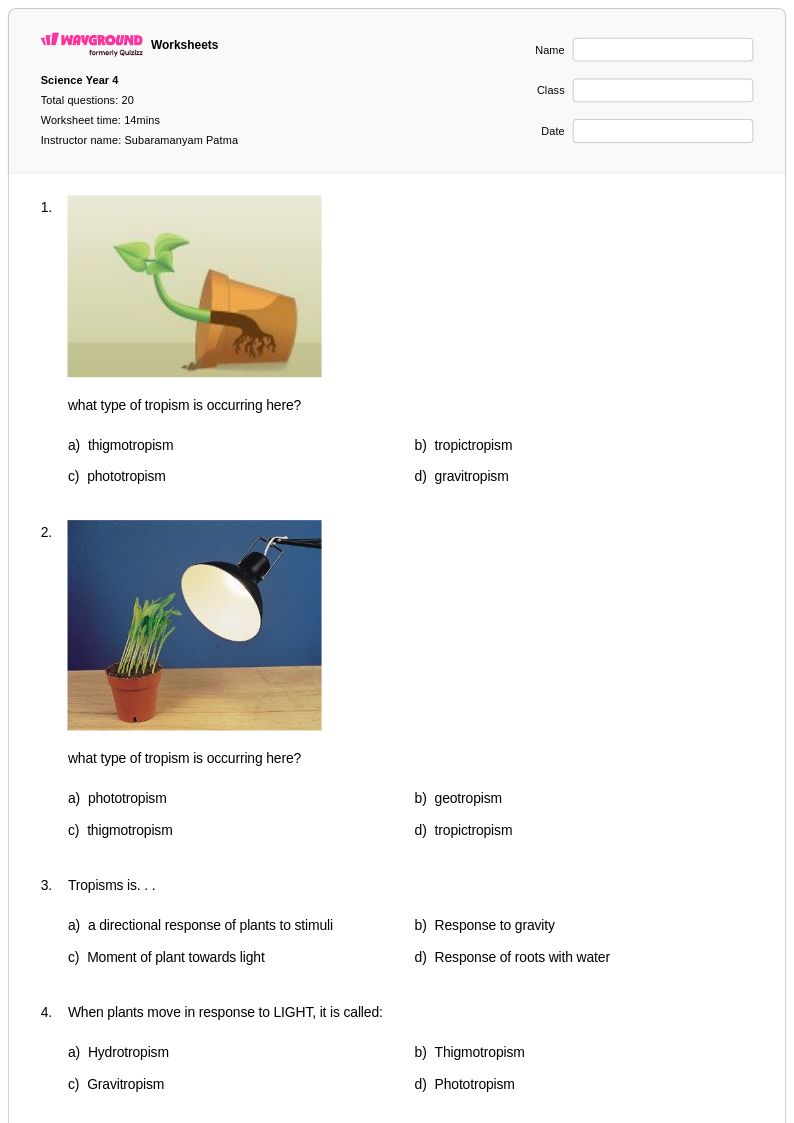
Stimulus and Response worksheets for Grade 4 students available through Wayground (formerly Quizizz) provide comprehensive practice in understanding how living organisms detect and react to changes in their environment. These educational resources strengthen essential biology skills by helping students identify various types of stimuli such as light, sound, temperature, and touch, while exploring corresponding behavioral and physiological responses in plants and animals. The worksheet collections include detailed answer keys that support independent learning and self-assessment, with free printables offering practice problems that range from simple stimulus identification to more complex cause-and-effect relationships. Students engage with real-world scenarios through these pdf resources, developing critical thinking skills as they analyze how organisms like plants growing toward sunlight or animals fleeing from predators demonstrate fundamental biological principles.
Wayground (formerly Quizizz) empowers teachers with millions of educator-created stimulus and response worksheet resources that feature robust search and filtering capabilities, enabling quick access to grade-appropriate content aligned with science standards. The platform's differentiation tools allow educators to customize worksheets for diverse learning needs, while flexible formatting options provide both printable pdf versions for traditional classroom use and digital formats for interactive learning environments. These comprehensive features support effective lesson planning by offering teachers varied approaches to introduce, reinforce, and assess student understanding of stimulus and response concepts, while also providing targeted resources for remediation and enrichment activities. The extensive collection ensures teachers can find appropriate practice materials whether students need foundational skill development or advanced application of biological response mechanisms.
FAQs
How do I teach stimulus and response in biology class?
Start by establishing that a stimulus is any detectable change in the internal or external environment, and a response is the organism's reaction to that change. Use concrete, familiar examples first — a hand pulling back from heat, a plant bending toward light — before moving into more complex signal transduction pathways. Grouping stimuli by type (chemical, mechanical, thermal, light) and pairing each with a corresponding biological response helps students build a structured mental framework they can apply across different organisms and contexts.
What kinds of practice problems help students understand stimulus and response?
Effective practice problems ask students to identify the stimulus, the receptor, and the response in a described scenario, rather than simply defining terms. Scenario-based questions that span both plant tropisms and animal nervous system responses reinforce that the stimulus-response relationship applies across all life forms. Problems that require students to trace the pathway from sensory reception through signal transduction to behavioral output push beyond recall and build genuine conceptual understanding.
What misconceptions do students commonly have about stimulus and response?
One of the most common errors is treating stimulus and response as synonymous — students often describe both using the same language without distinguishing the triggering event from the organism's reaction. Another frequent misconception is assuming that only animals exhibit stimulus-response behavior, when in fact plants and even single-celled organisms respond to environmental changes through tropisms and taxis. Students also tend to overlook the role of receptors and signal transduction, jumping straight from stimulus to response without accounting for the biological mechanisms in between.
How can I differentiate stimulus and response instruction for students at different levels?
For students who need additional support, reduce the complexity of scenarios to familiar, everyday examples and limit the number of variables students must track at once. More advanced students benefit from multi-step problems that require them to compare responses across different organisms or explain the adaptive value of a specific response. On Wayground, teachers can apply accommodations such as reduced answer choices or read-aloud settings to individual students, so differentiation can happen within a single shared activity without singling anyone out.
How do I use Wayground's stimulus and response worksheets in my classroom?
Wayground's stimulus and response worksheets are available as printable PDFs for traditional classroom use and in digital formats for technology-integrated environments, giving teachers flexibility depending on their setup. Teachers can also host the worksheet directly as a quiz on Wayground, enabling real-time student responses and automated grading. Each worksheet includes a complete answer key, which reduces prep time and makes the materials practical for both guided instruction and independent practice.