Explore Wayground's comprehensive collection of free time zones worksheets and printables that help students master global time differences through engaging practice problems and detailed answer keys in PDF format.
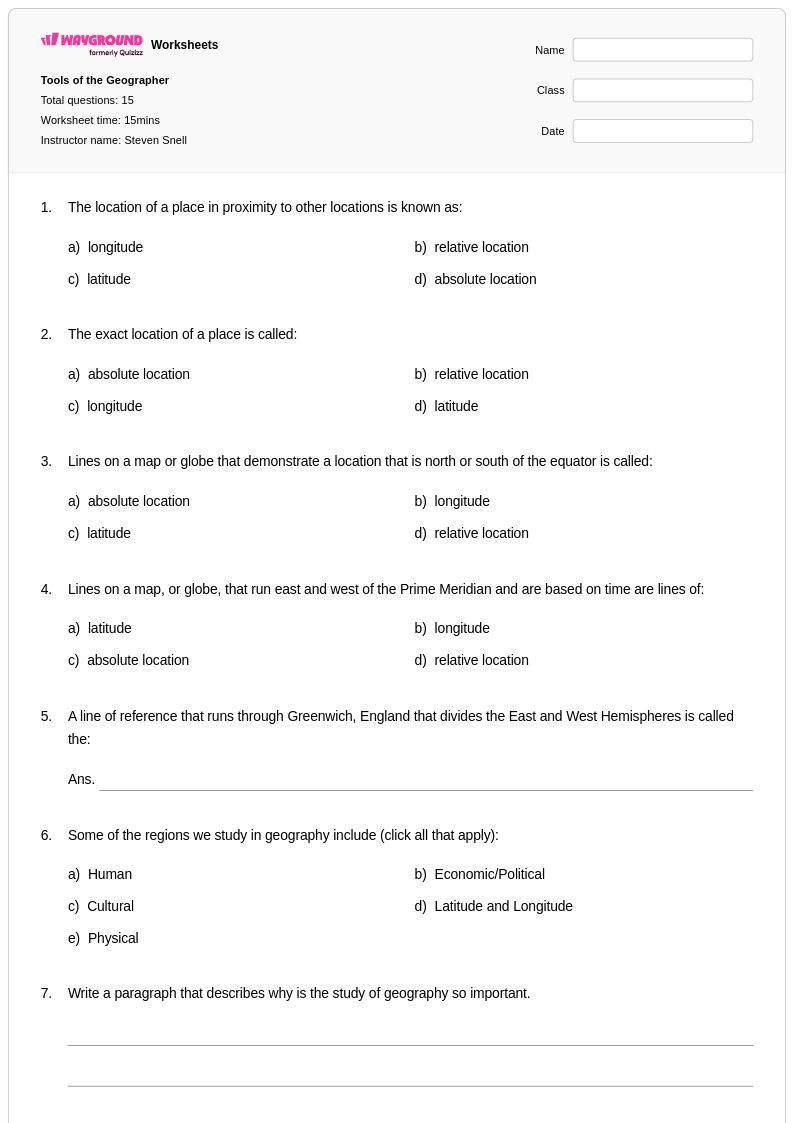
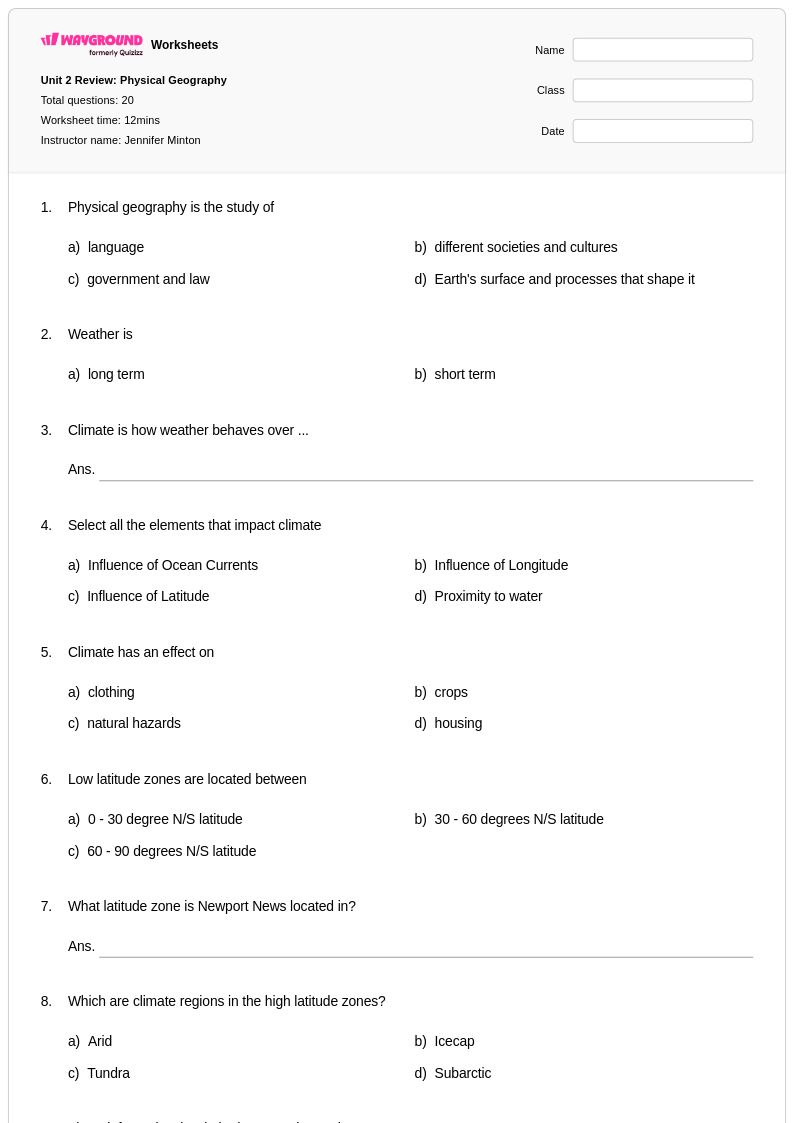
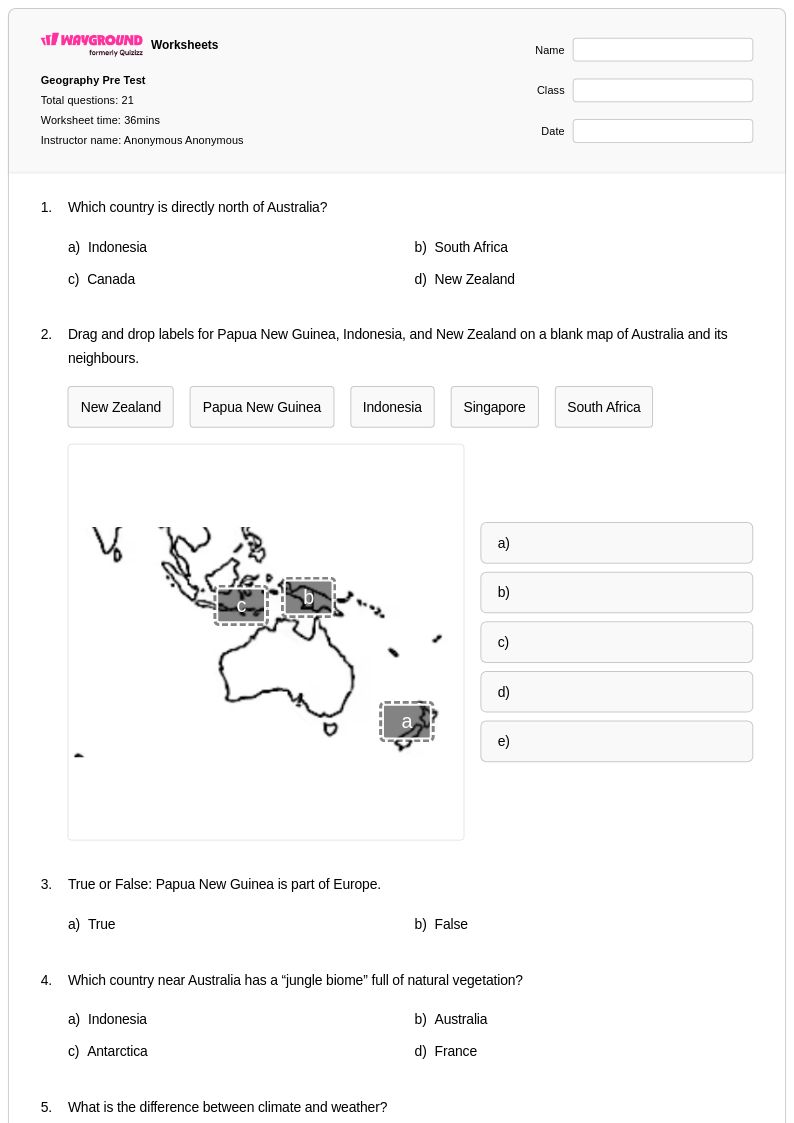
Time zones worksheets available through Wayground (formerly Quizizz) provide comprehensive resources for students to master the complex concepts of global time measurement and geographical coordinate systems. These expertly designed materials strengthen critical thinking skills as students learn to calculate time differences across international boundaries, understand the relationship between Earth's rotation and time measurement, and apply mathematical reasoning to real-world scenarios involving travel, communication, and global business operations. The collection includes detailed practice problems that guide learners through converting times between different zones, identifying time zone boundaries on world maps, and analyzing the effects of daylight saving time implementations. Each worksheet comes complete with answer keys and is available as free printables in pdf format, ensuring educators have immediate access to assessment tools that reinforce essential geographical literacy skills.
Wayground (formerly Quizizz) supports educators with an extensive collection of teacher-created time zones resources drawn from millions of contributions by experienced classroom professionals worldwide. The platform's robust search and filtering capabilities enable teachers to quickly locate materials that align with specific curriculum standards and match their students' diverse learning needs through sophisticated differentiation tools. These customizable worksheets are available in both printable pdf formats for traditional classroom use and digital versions for interactive learning environments, providing the flexibility educators need for effective lesson planning across various instructional contexts. Whether implementing targeted remediation for students struggling with longitude and latitude concepts, offering enrichment activities for advanced learners exploring international date lines, or providing regular skill practice to reinforce fundamental time zone calculations, these comprehensive resources streamline preparation while ensuring rigorous academic engagement with essential geographical concepts.
FAQs
How do I teach time zones to students?
Start by anchoring the concept in Earth's rotation: the Earth rotates 360 degrees in 24 hours, which means each hour corresponds to 15 degrees of longitude. Use a physical or projected world map to walk students through the 24 standard time zones before introducing exceptions like half-hour offsets or daylight saving time. Grounding abstract calculations in real-world scenarios such as scheduling an international video call or tracking a flight path helps students see why time zones matter and makes the math feel purposeful.
What exercises help students practice calculating time zone differences?
Effective practice exercises include converting a given time in one city to the equivalent time in multiple other cities, reading and interpreting world time zone maps, and solving multi-step word problems involving international travel or business communication. Sequencing problems from straightforward UTC offsets to more complex scenarios involving daylight saving time adjustments builds procedural fluency progressively. Practice problems that require students to determine whether to add or subtract hours reinforce the directional logic of moving east versus west across time zones.
What mistakes do students commonly make when working with time zones?
The most common error is adding hours when they should subtract, or vice versa, because students lose track of the direction of travel relative to UTC. Students also frequently forget to account for daylight saving time, which can shift a region's offset by one hour during part of the year. Another persistent misconception is treating the International Date Line as a simple extension of the 180-degree meridian, when in reality it zigzags to avoid splitting countries and island groups. Targeted practice that explicitly addresses these edge cases helps students build more reliable mental models.
How do I use time zones worksheets in my classroom?
Time zones worksheets on Wayground are available as printable PDFs for traditional classroom use and in digital formats for technology-integrated environments, including the option to host them as a quiz directly on the Wayground platform. Printable versions work well for independent seatwork or small-group map activities, while digital formats allow for immediate feedback and progress tracking. Each worksheet includes a complete answer key, so teachers can use them efficiently for guided practice, homework, or formative assessment without additional preparation.
How do I support students who struggle with the longitude and latitude concepts underlying time zones?
Students who struggle with time zones often need to first solidify their understanding of longitude lines and how they relate to Earth's rotation before tackling time calculations. Provide visual scaffolds such as labeled world maps showing degree markings alongside time zone boundaries, and use step-by-step reference guides that break the conversion process into discrete, numbered steps. On Wayground, teachers can apply individual accommodations such as read-aloud support or reduced answer choices for students who need additional scaffolding, without disrupting the experience of the rest of the class.
How can I connect time zone lessons to real-world applications?
Time zones connect directly to international travel, global business scheduling, broadcasting, and digital communication, all of which involve coordinating across multiple time zones simultaneously. Classroom scenarios such as planning a virtual meeting between cities on different continents, calculating arrival times for long-haul flights, or determining when to watch a live international sports event make the math immediately relatable. These applied contexts also naturally introduce the concept of UTC as a universal reference point, which gives students a more durable framework for solving novel problems.