
9 Q
4th
13 Q
4th
16 Q
4th
12 Q
4th
12 Q
3rd - 5th
18 Q
4th
21 Q
4th
20 Q
4th
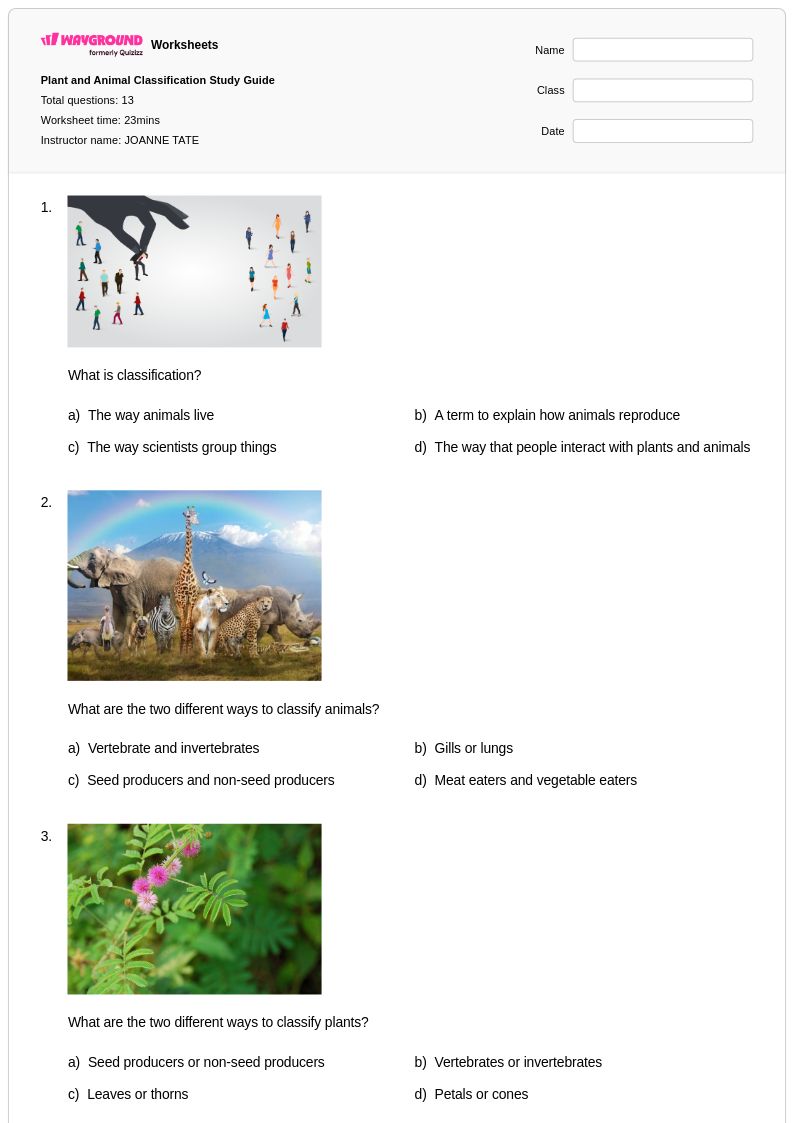
13 Q
4th - 5th
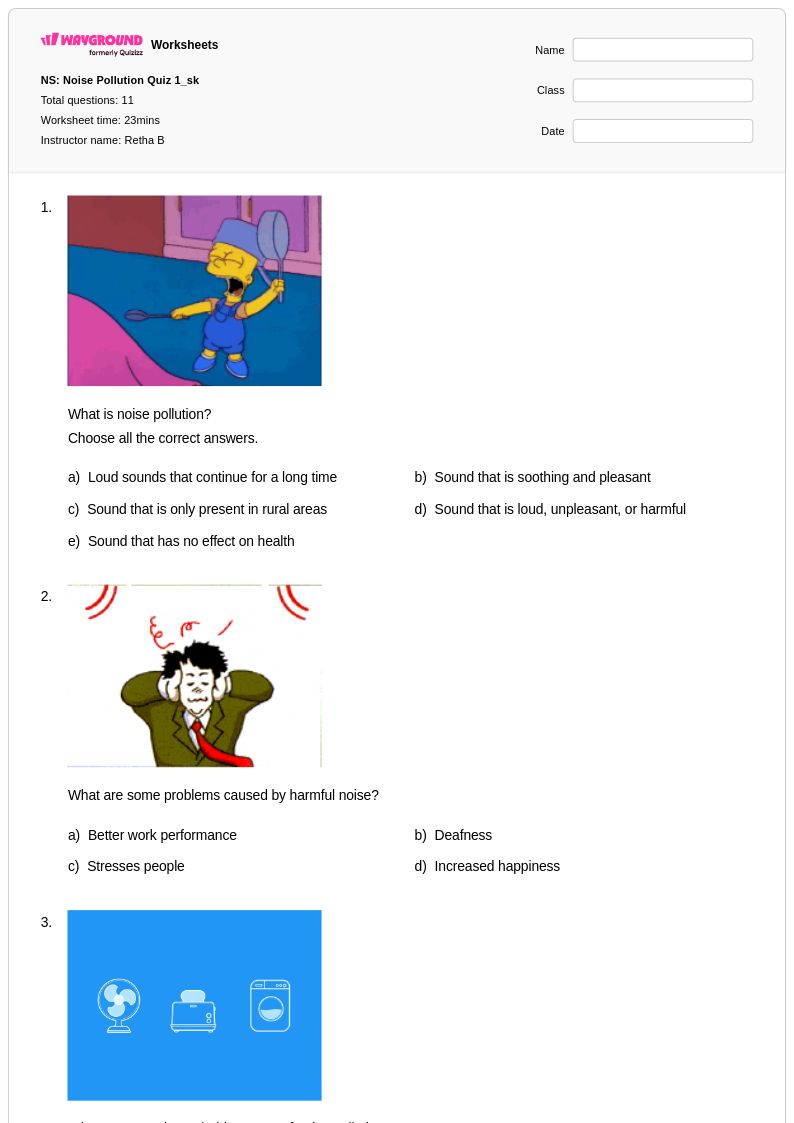
11 Q
4th
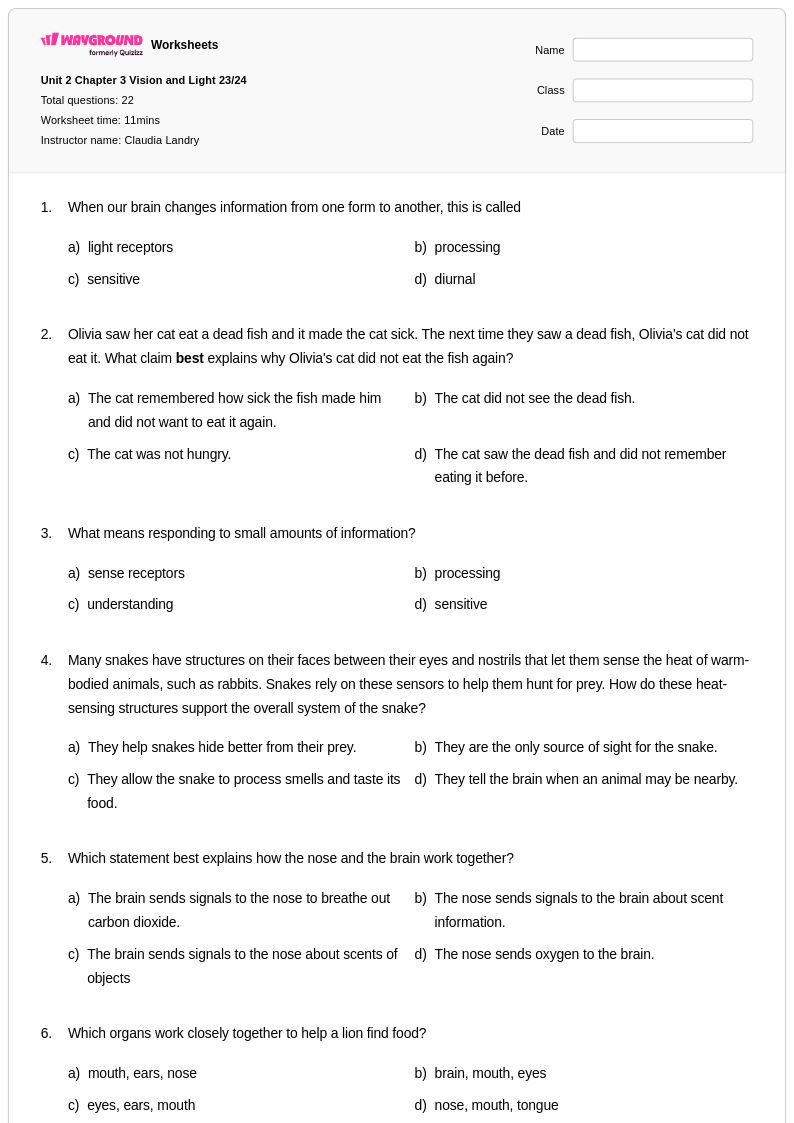
22 Q
4th
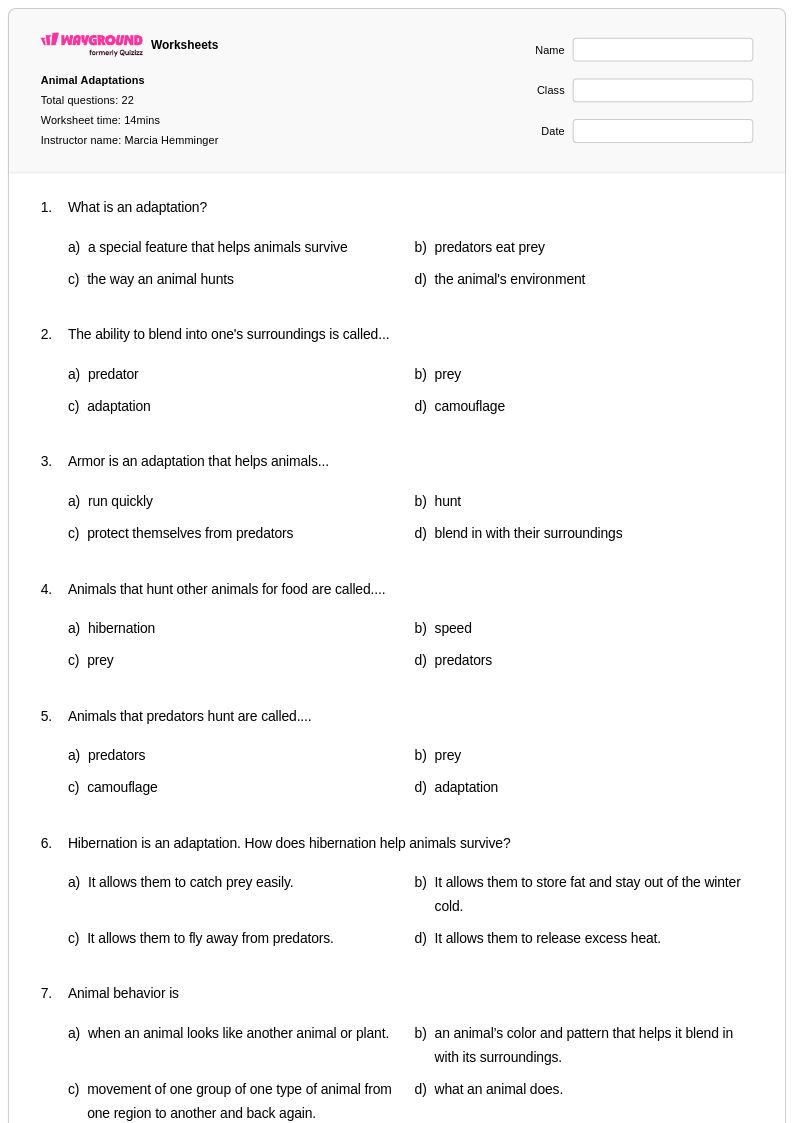
22 Q
4th
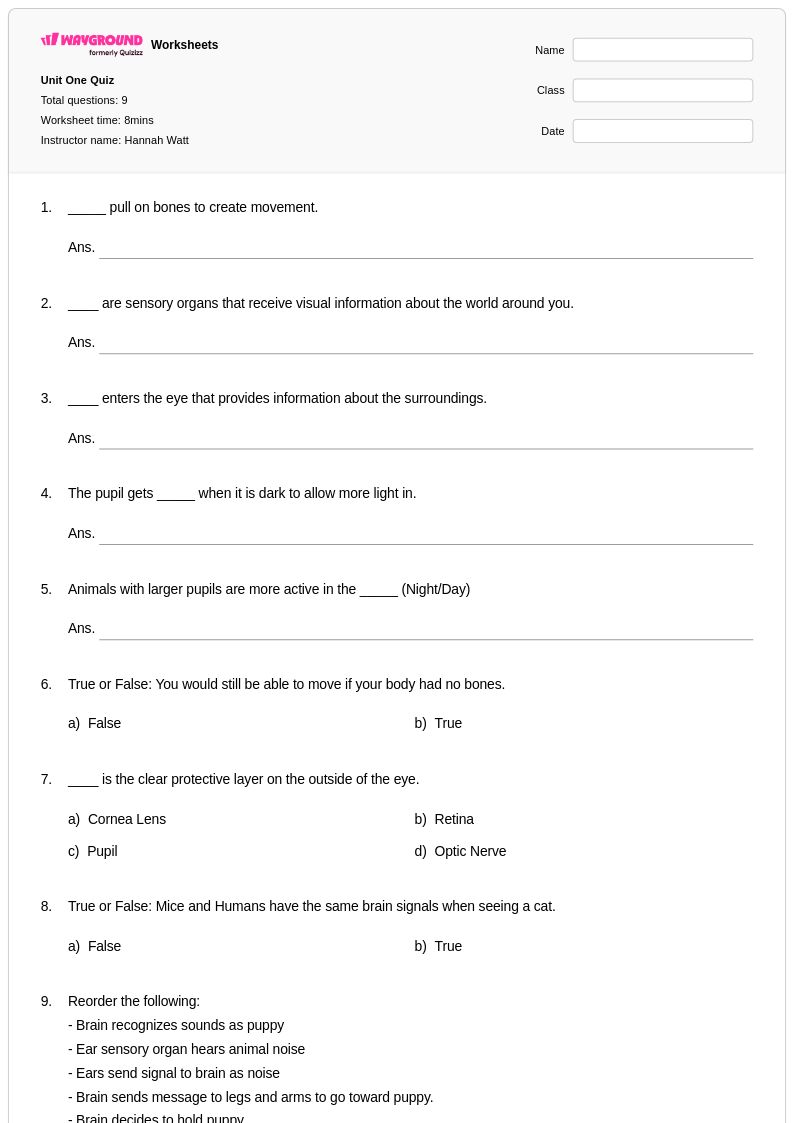
9 Q
4th
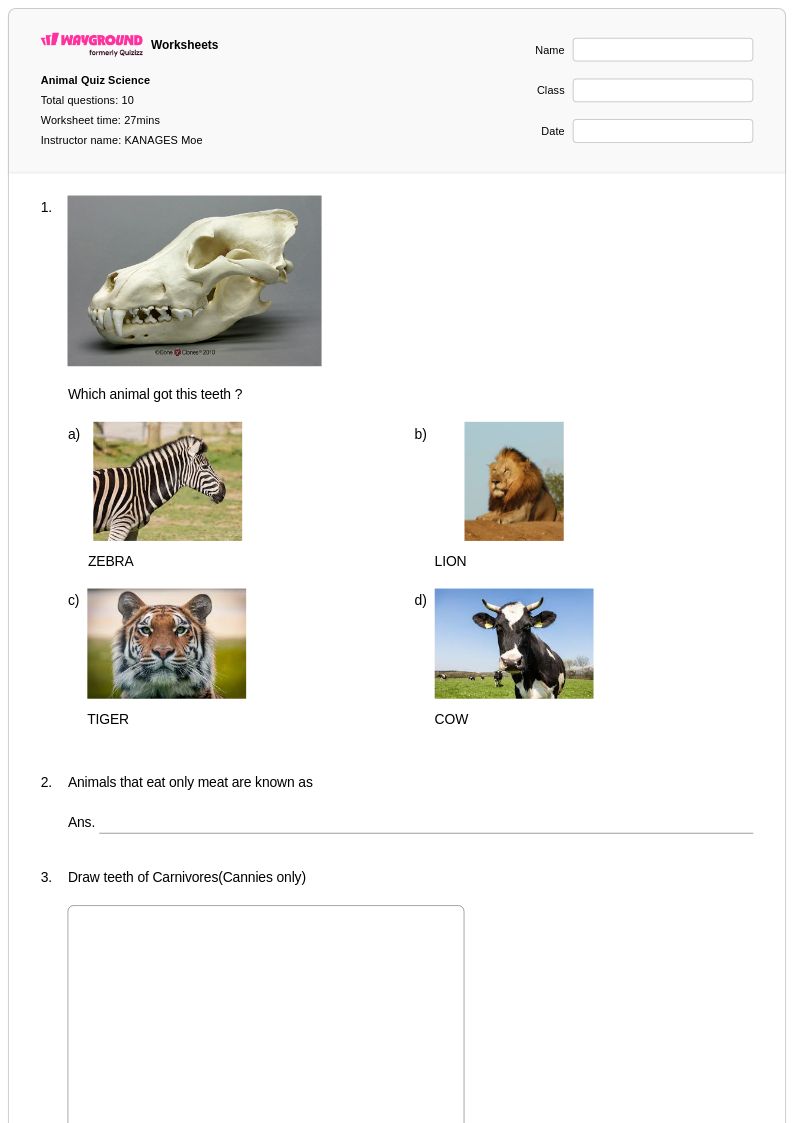
10 Q
1st - Uni
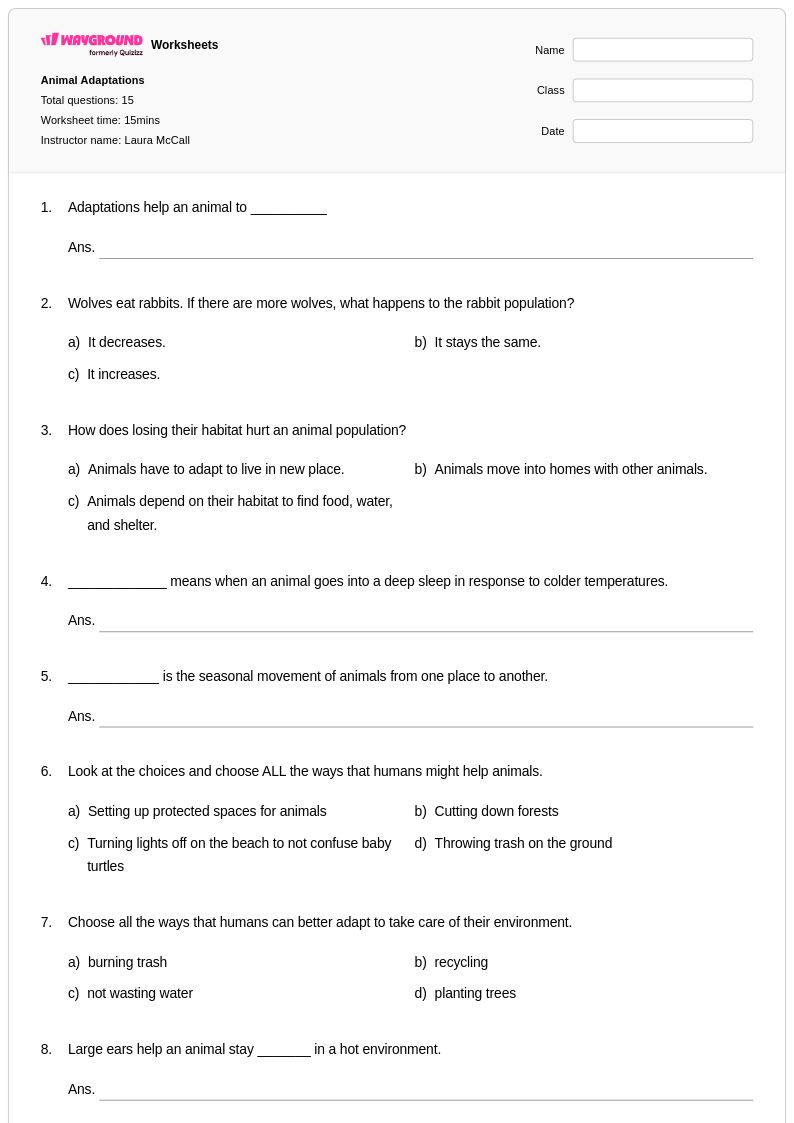
15 Q
4th
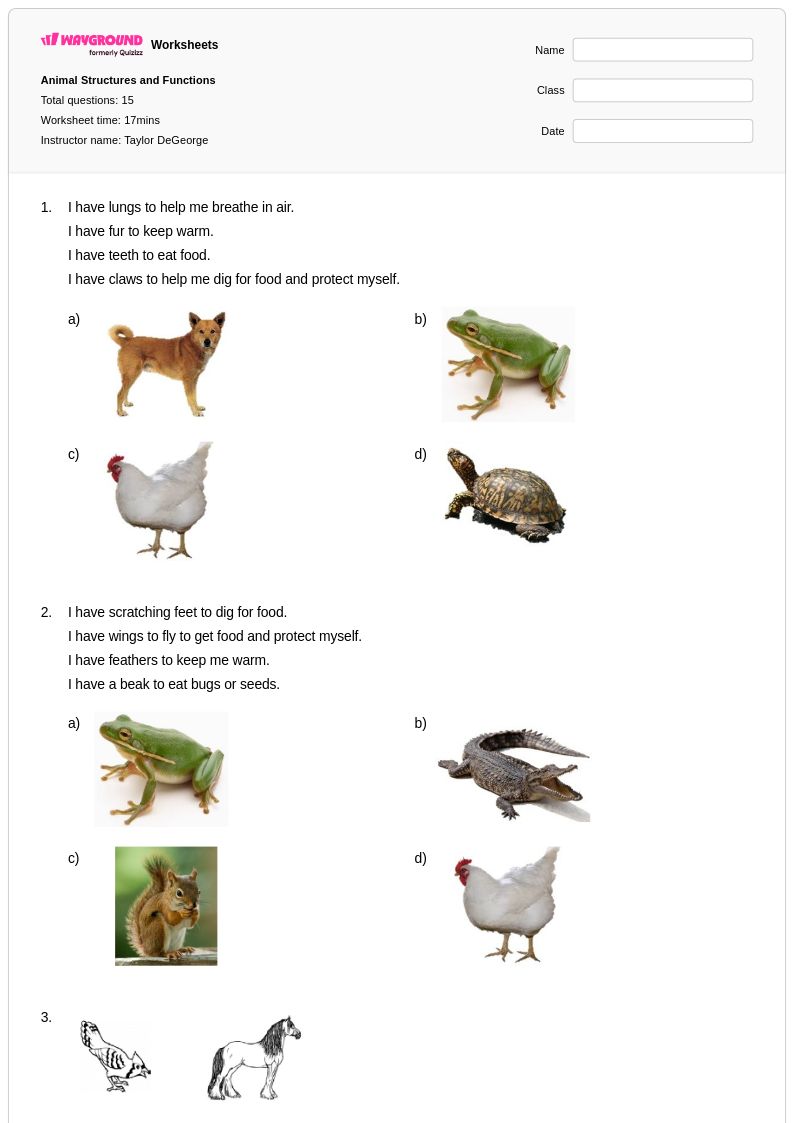
15 Q
4th
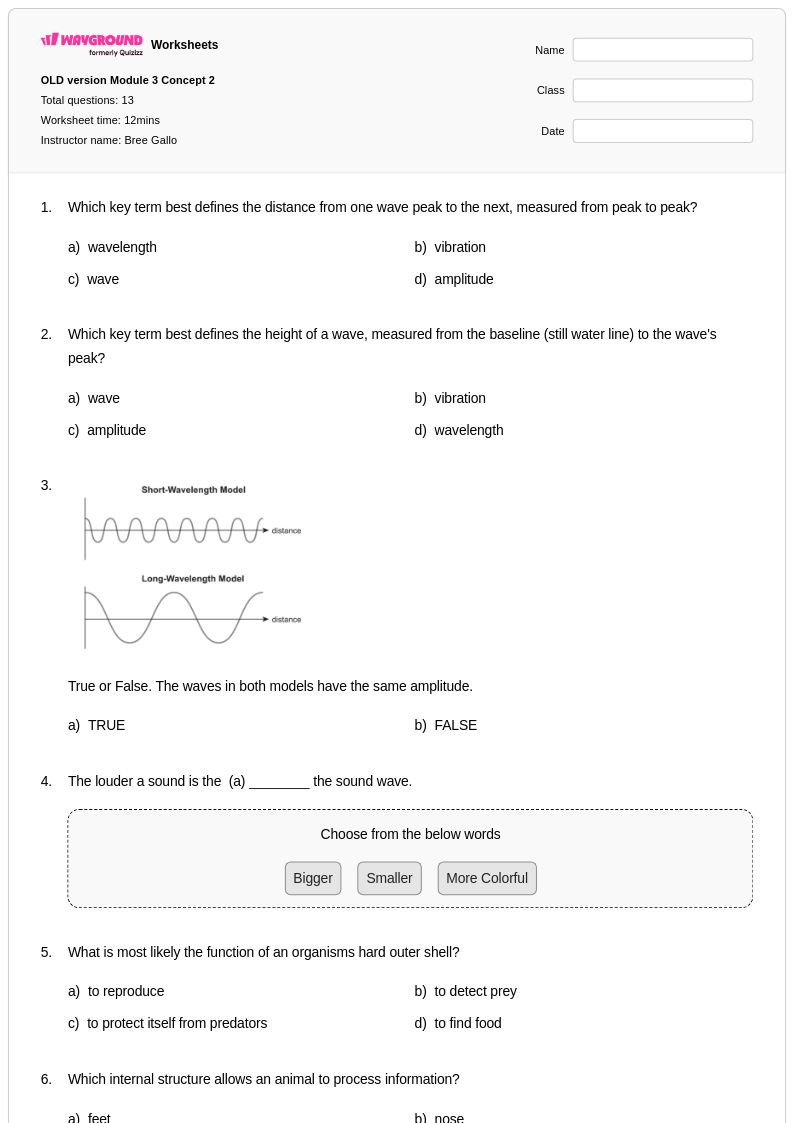
13 Q
4th
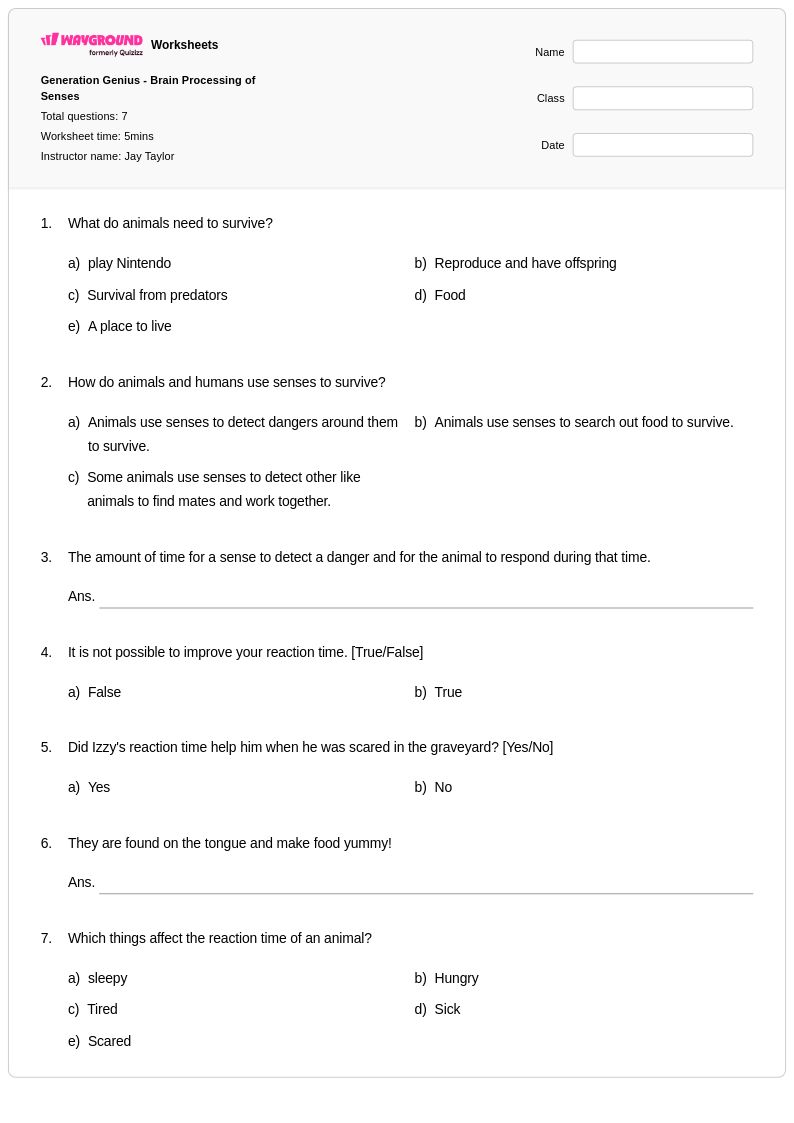
7 Q
3rd - 5th
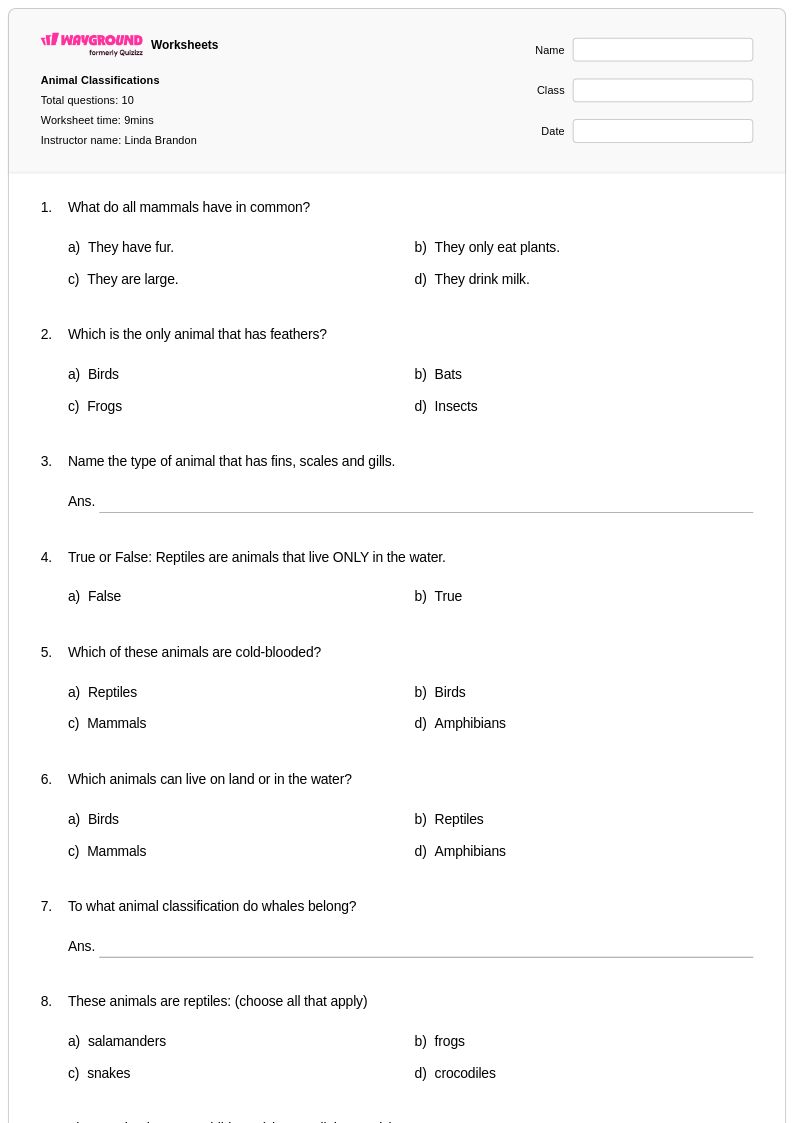
10 Q
1st - 4th
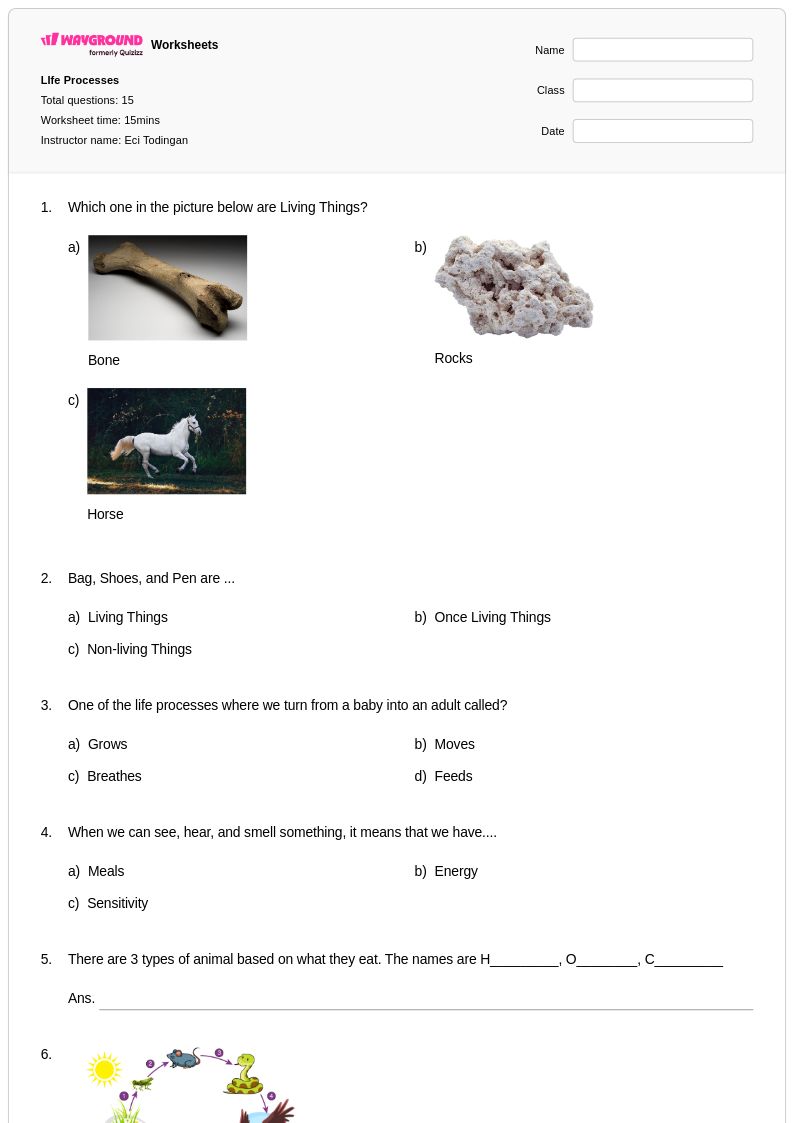
15 Q
4th
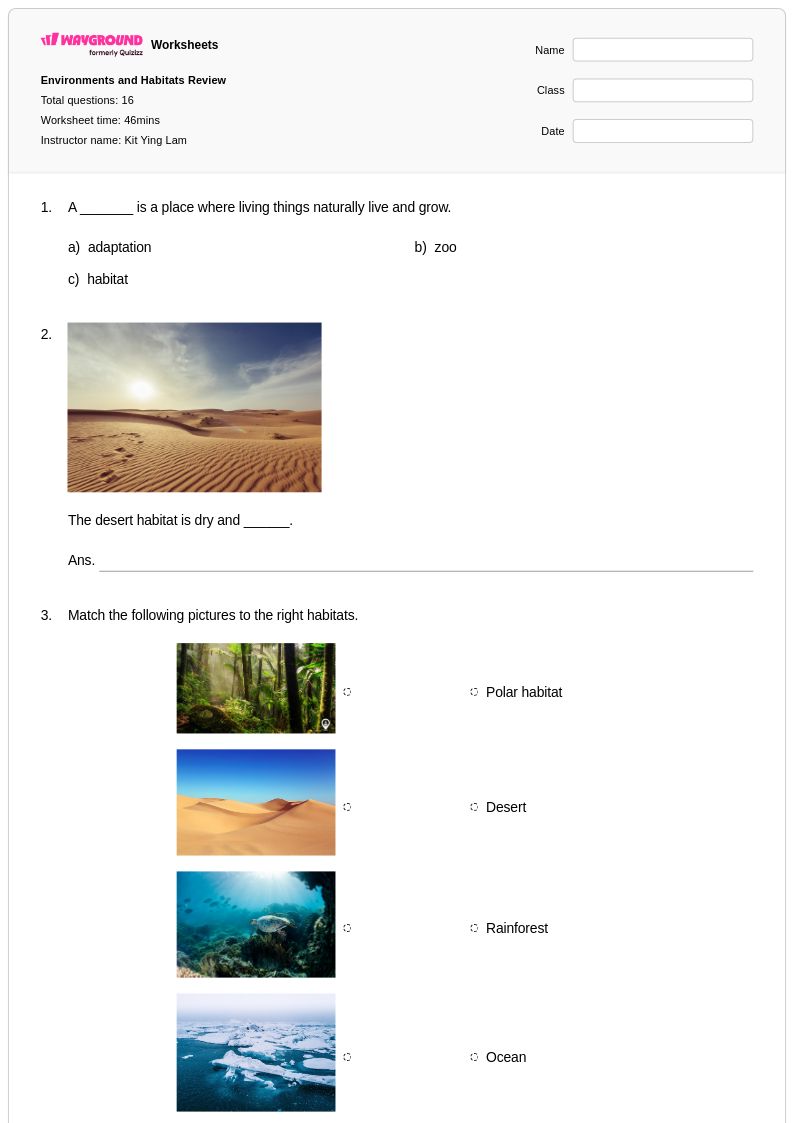
16 Q
2nd - Uni
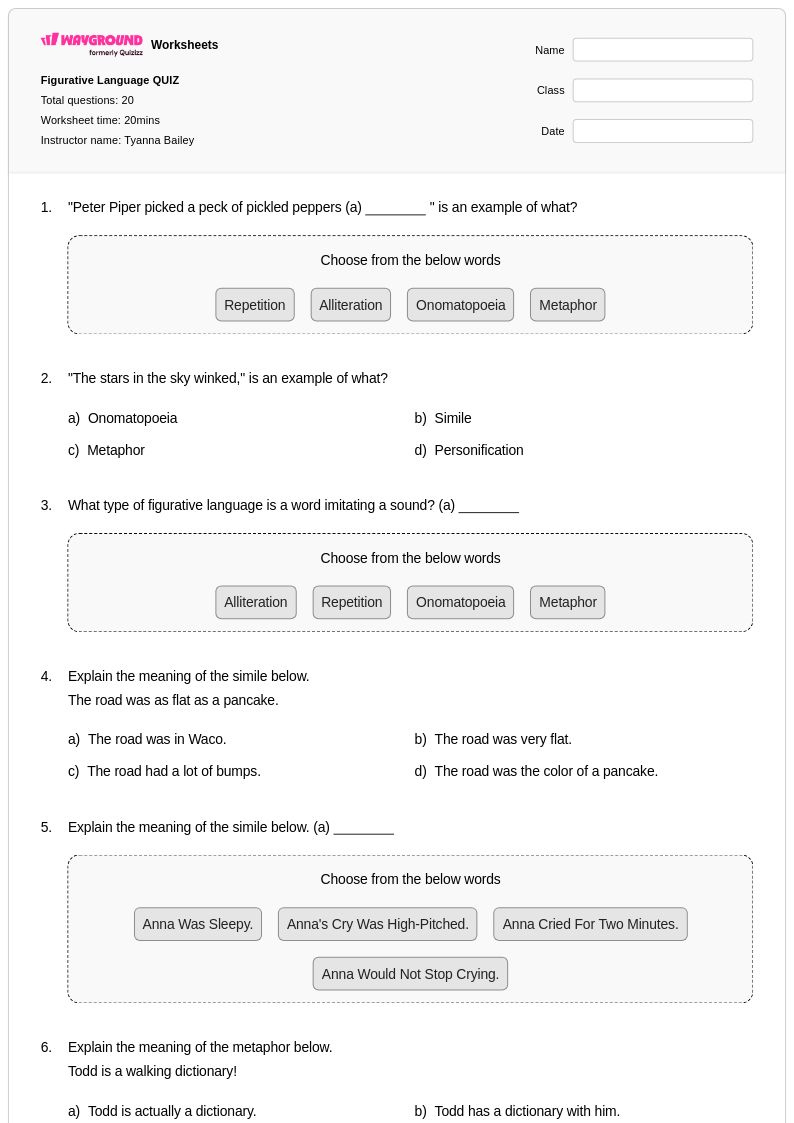
20 Q
4th
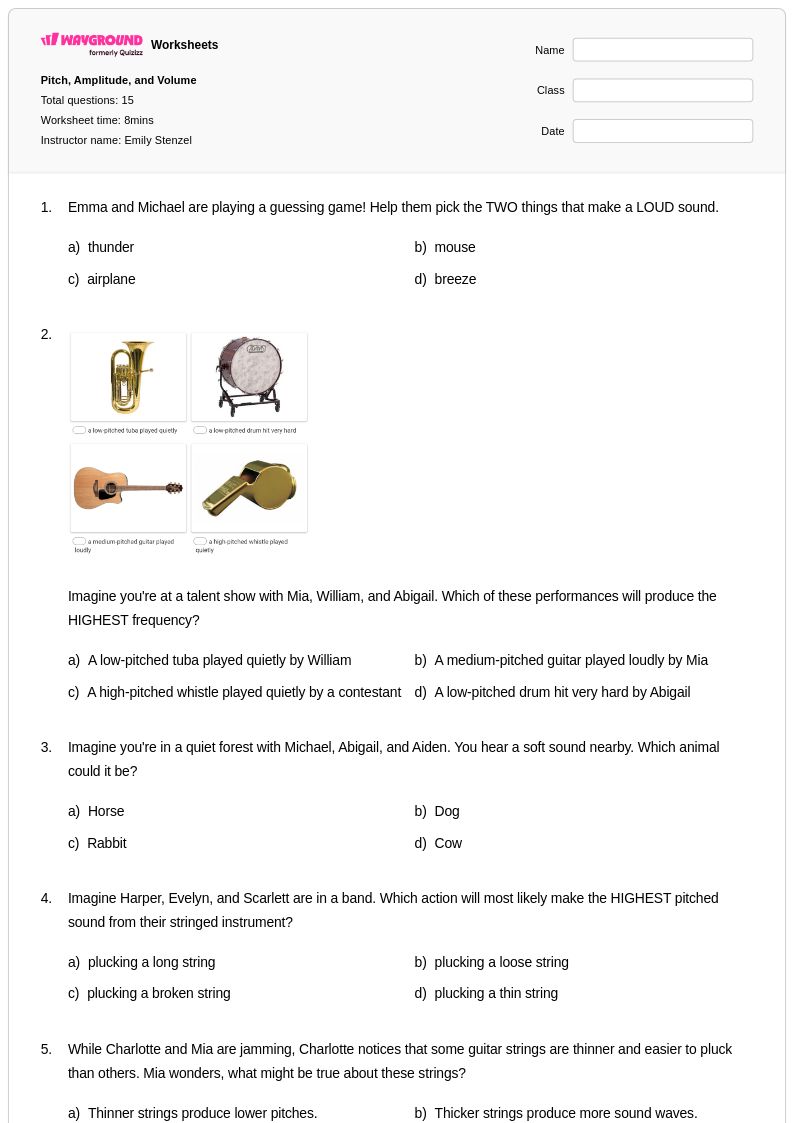
15 Q
4th
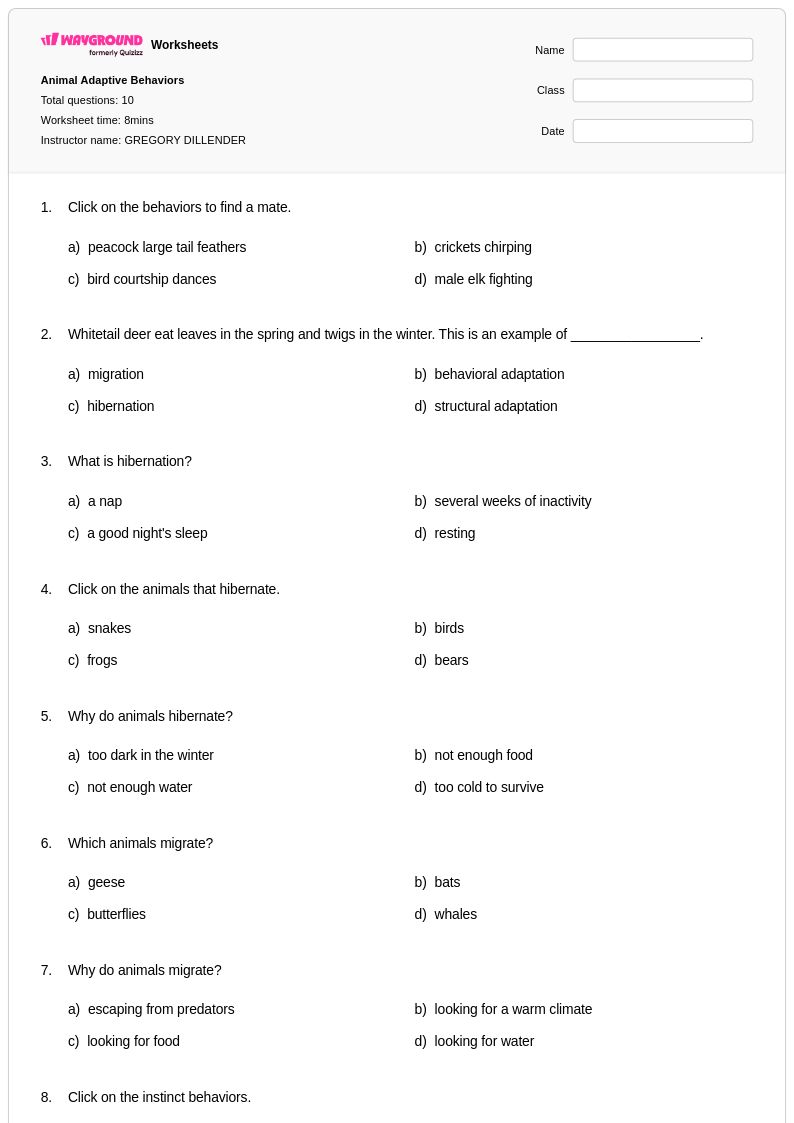
10 Q
4th
Explore Other Subject Worksheets for class 4
Explore printable Animal Sounds worksheets for Class 4
Animal sounds worksheets for Class 4 students available through Wayground (formerly Quizizz) provide comprehensive exploration of how different animals communicate in their natural environments. These educational resources strengthen critical life science skills by helping students identify various animal vocalizations, understand the purposes behind different sounds, and connect animal communication to survival behaviors such as mating calls, warning signals, and territory marking. The collection includes diverse practice problems that challenge fourth graders to match animals with their corresponding sounds, analyze why certain animals produce specific vocalizations, and explore how sound production varies across different animal groups. Each worksheet comes with a complete answer key and is available as free printables in convenient pdf format, making it easy for educators to incorporate hands-on learning activities that reinforce essential biological concepts.
Wayground (formerly Quizizz) supports teachers with an extensive collection of animal sounds worksheets created by millions of educators who understand the unique learning needs of Class 4 students. The platform's robust search and filtering capabilities allow teachers to quickly locate resources that align with specific curriculum standards and learning objectives, while differentiation tools enable customization for students with varying skill levels and learning styles. These worksheets are available in both printable and digital formats, including easily downloadable pdf versions that facilitate seamless classroom integration and remote learning environments. Teachers can utilize these resources for targeted skill practice, remediation sessions for students who need additional support, enrichment activities for advanced learners, and comprehensive lesson planning that addresses multiple aspects of animal communication and behavior within the broader context of life science education.
FAQs
How do I teach animal sounds to early learners?
What kinds of exercises help students practice identifying animal sounds?
What common mistakes do students make when learning about animal sounds?
How can animal sounds worksheets support different learning levels in the same classroom?
How do I use animal sounds worksheets on Wayground in my classroom?