
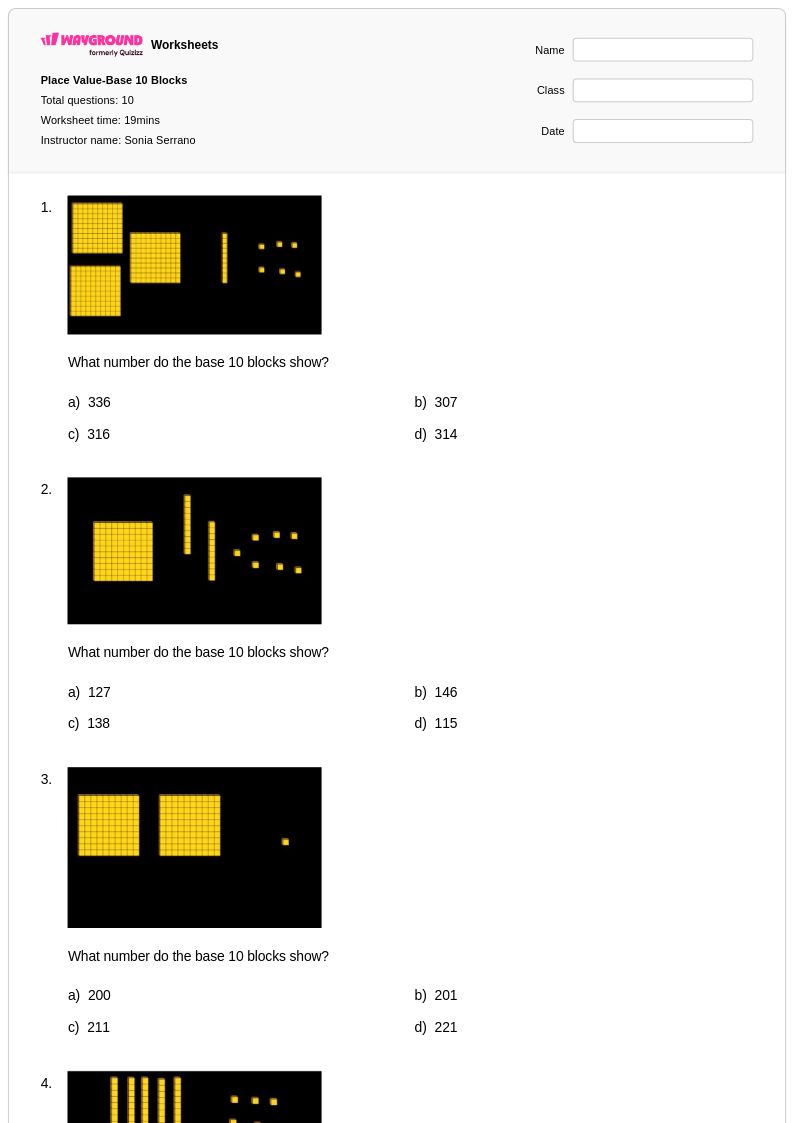
10 P
2nd
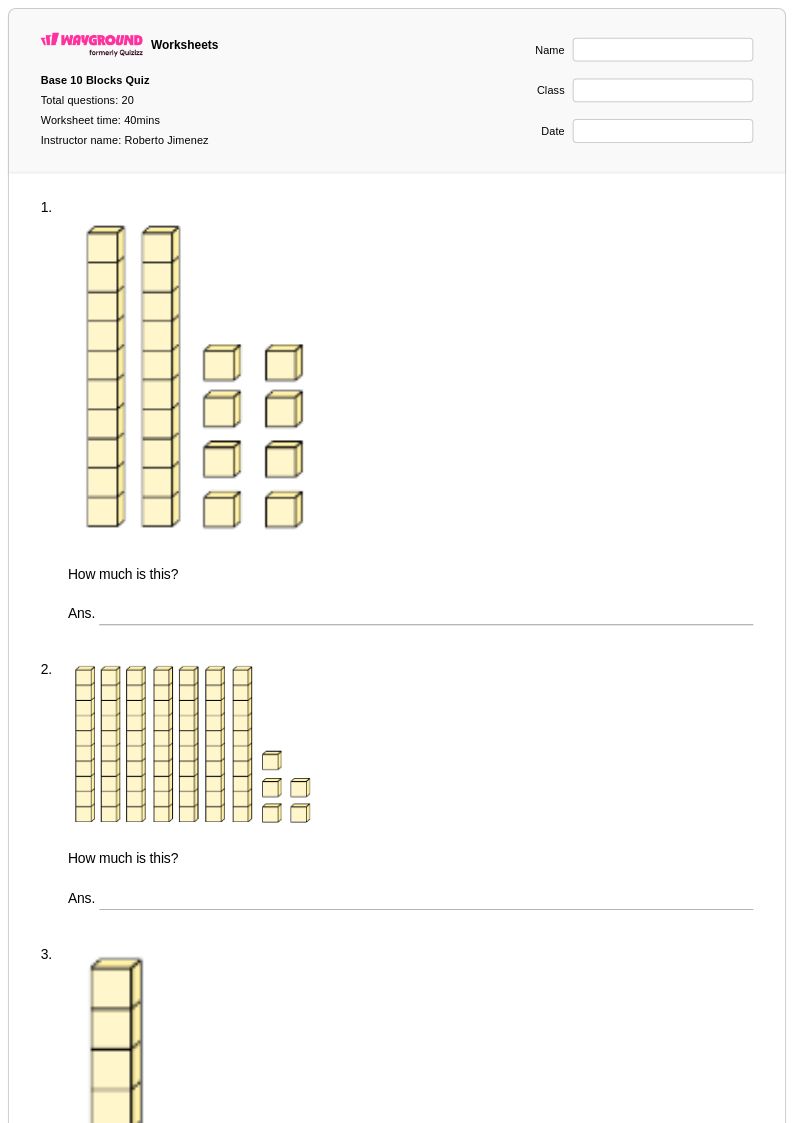
20 P
2nd
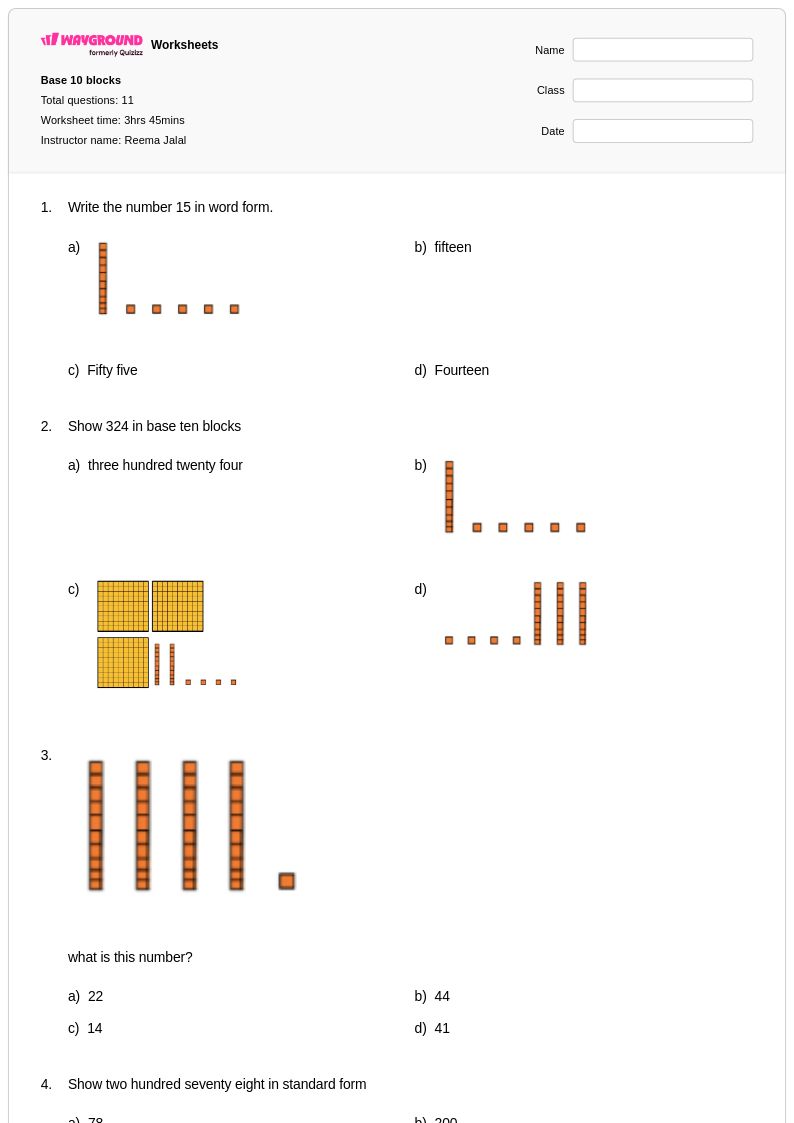
11 P
2nd
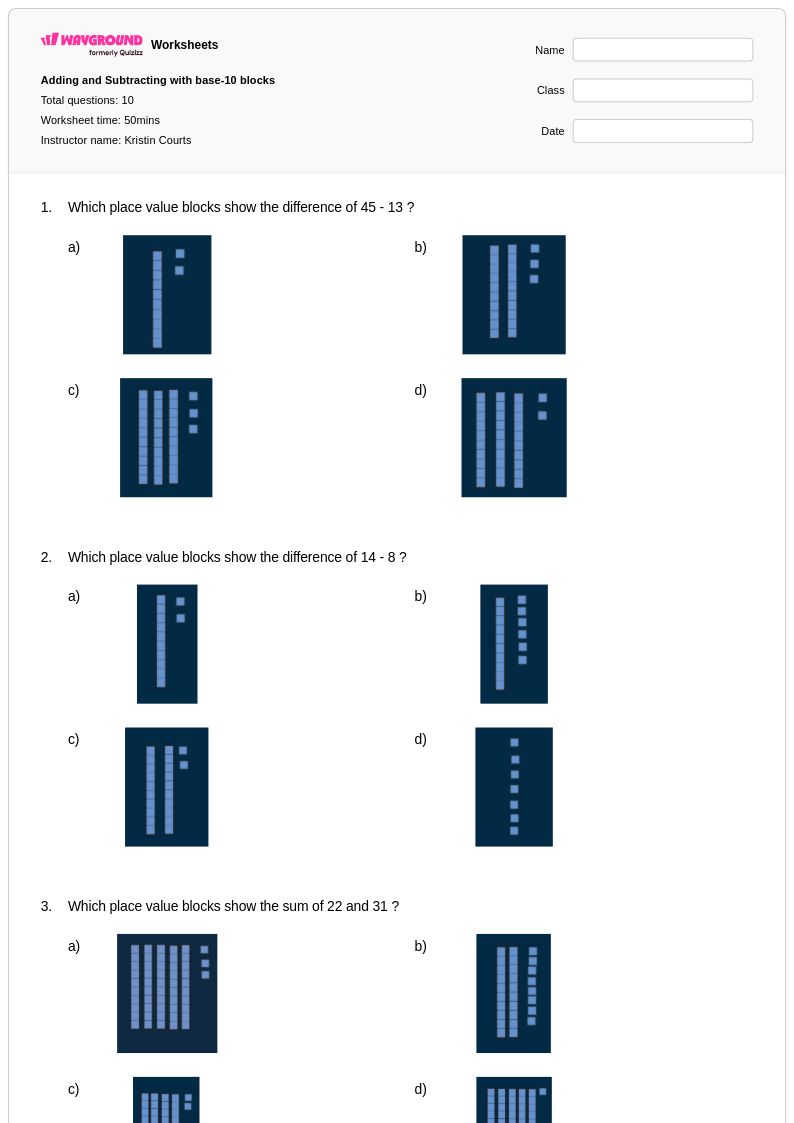
10 P
2nd
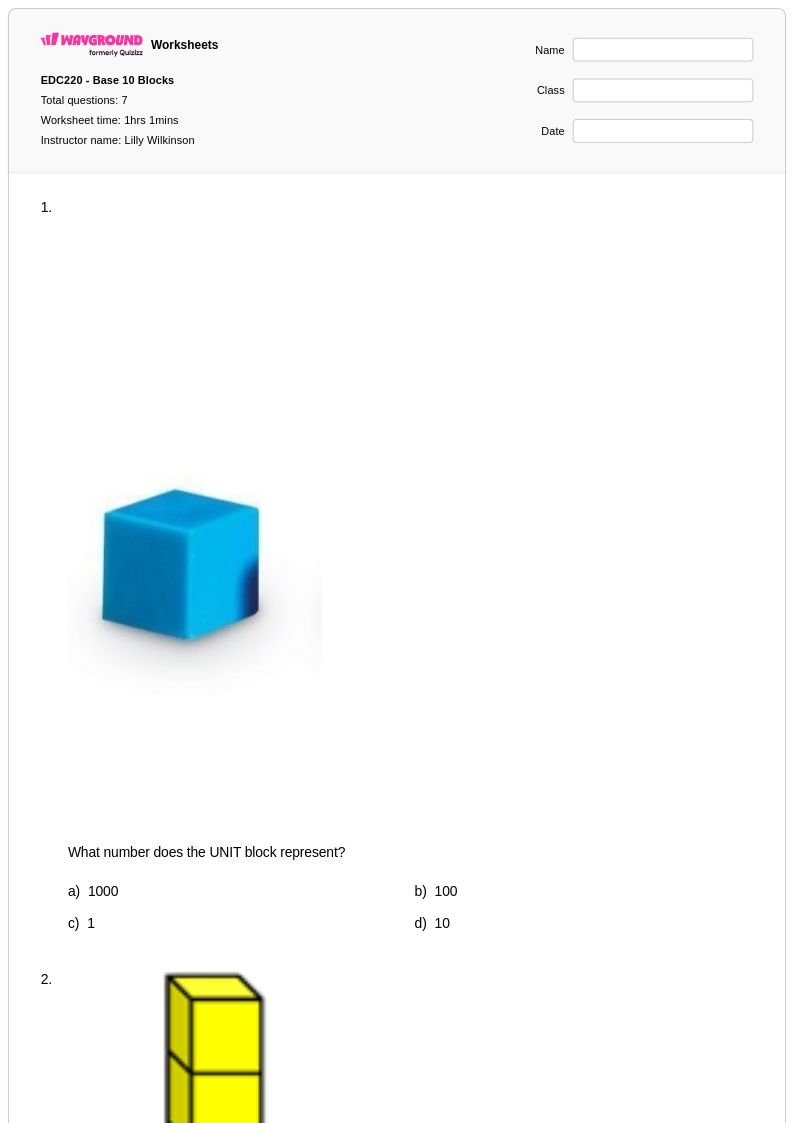
7 P
1st - 5th
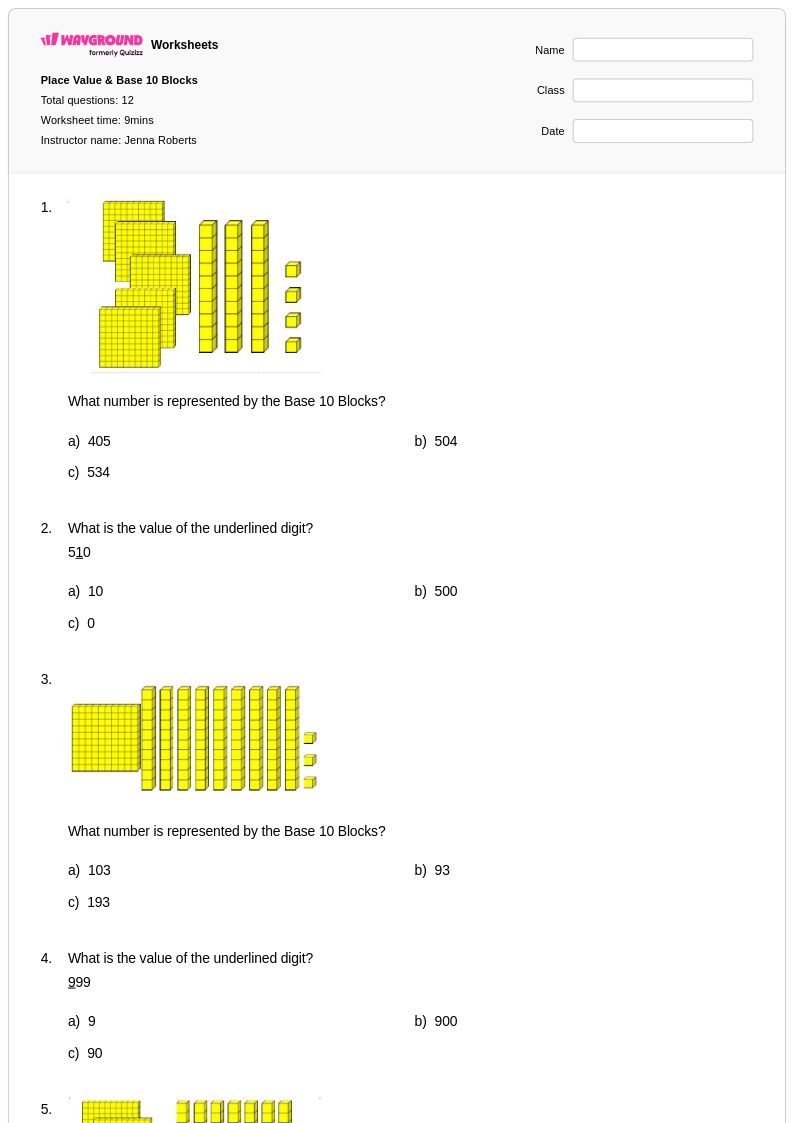
12 P
2nd
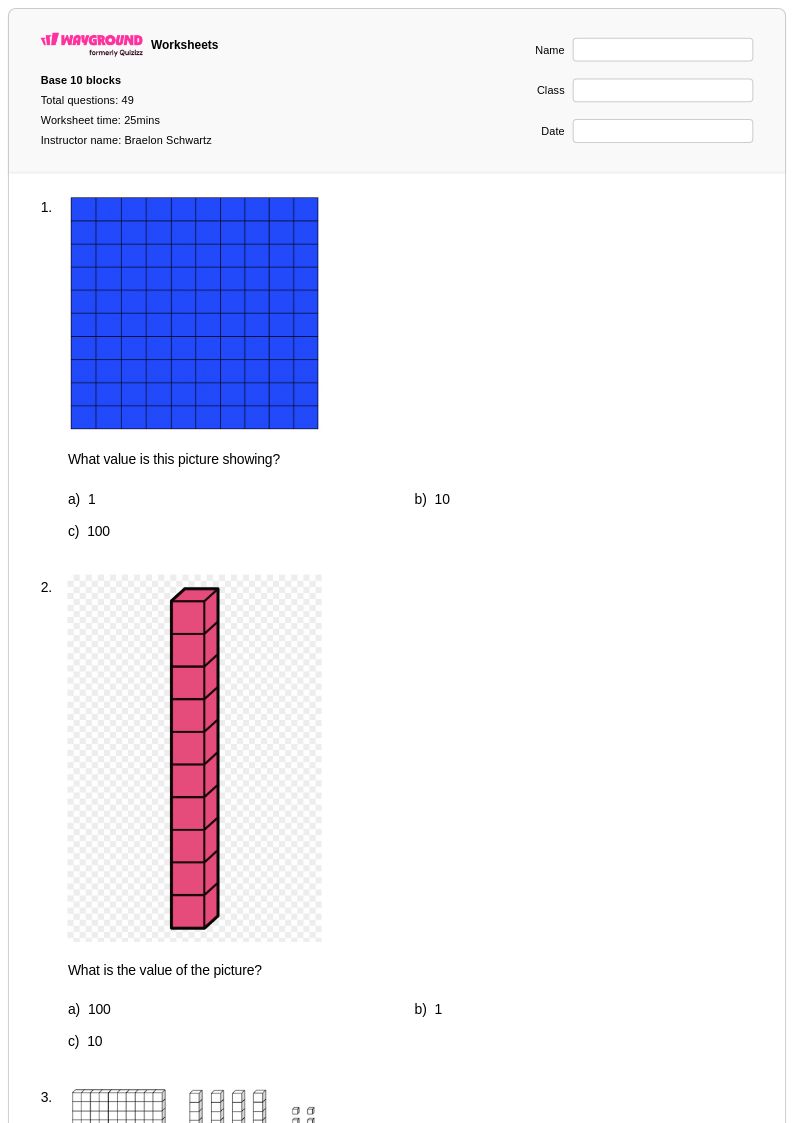
49 P
2nd
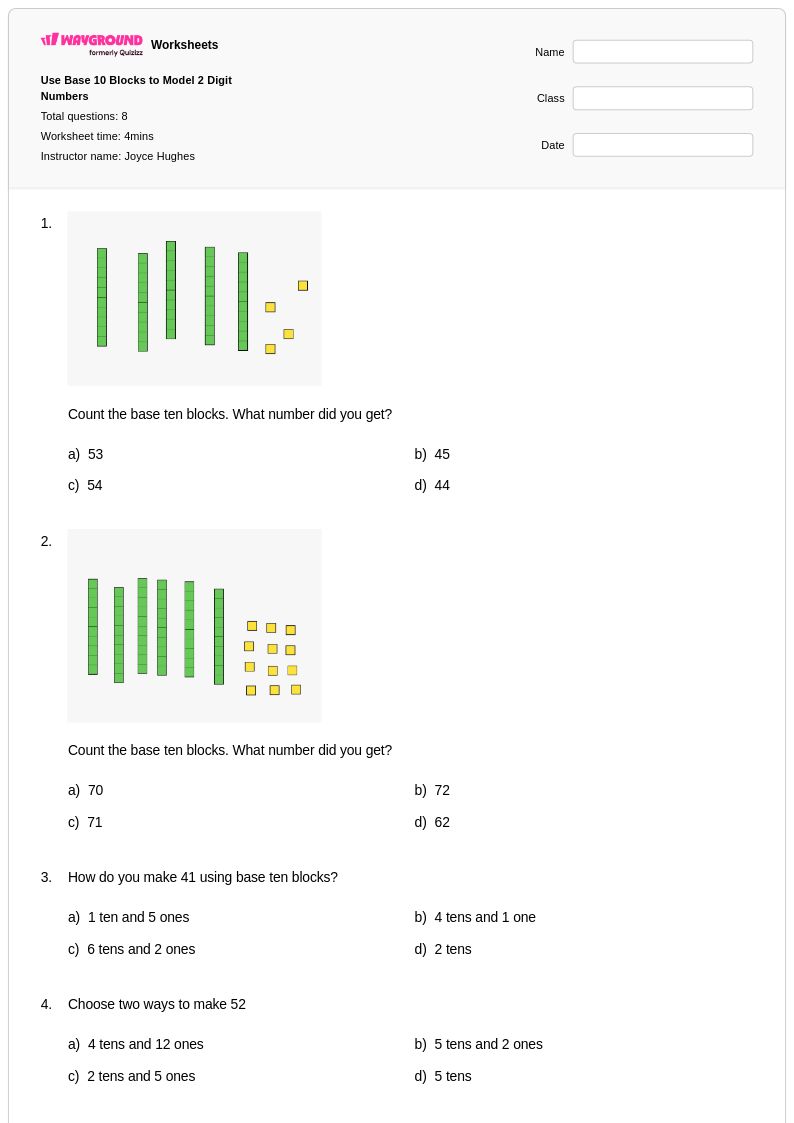
8 P
1st - 2nd
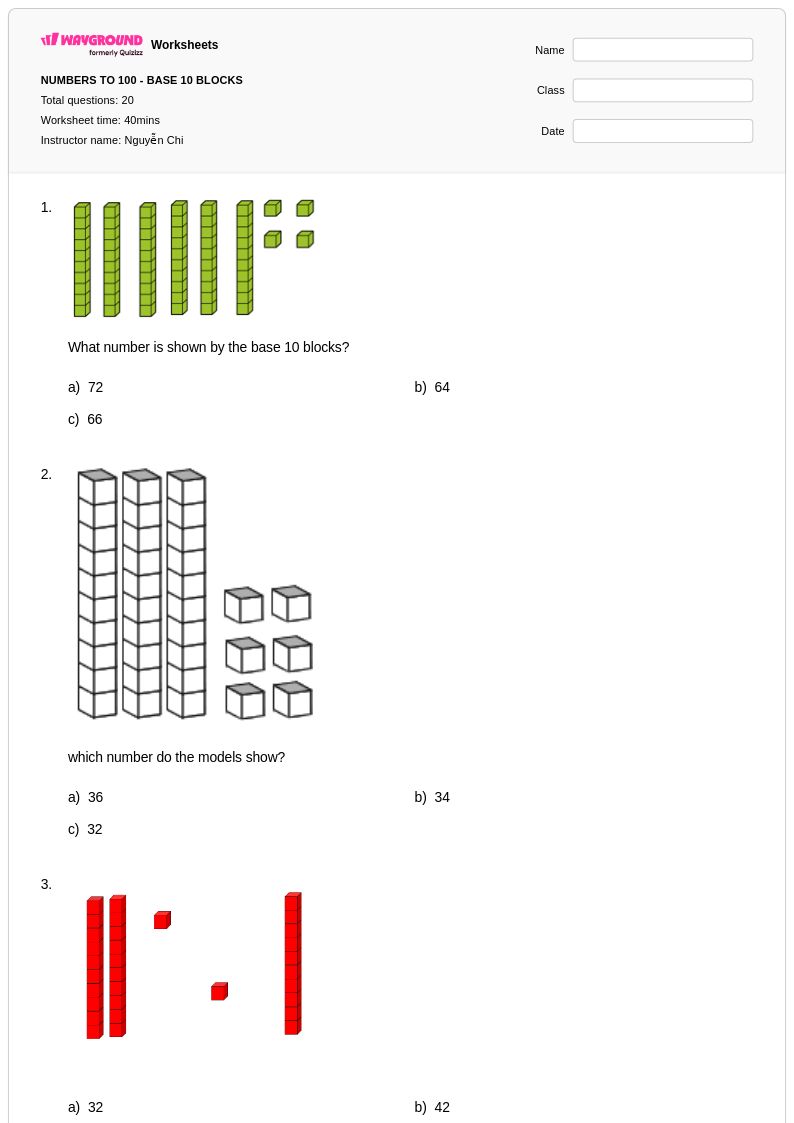
20 P
1st - 2nd
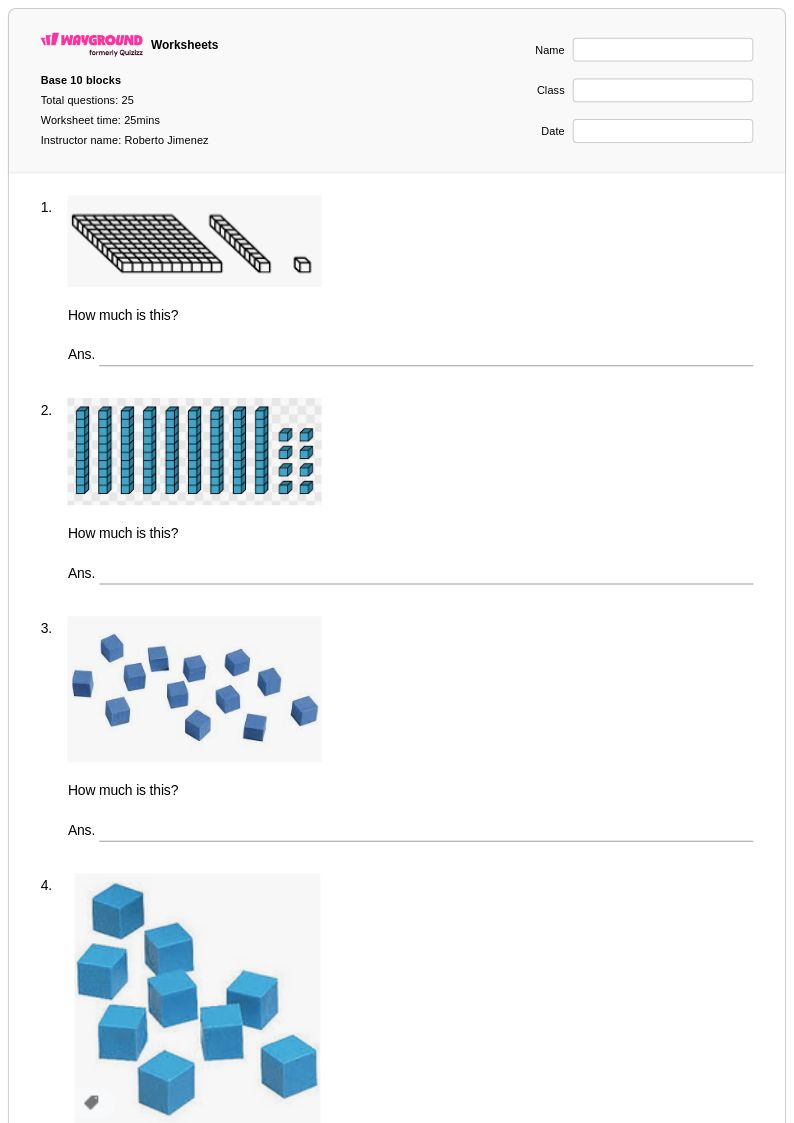
25 P
2nd
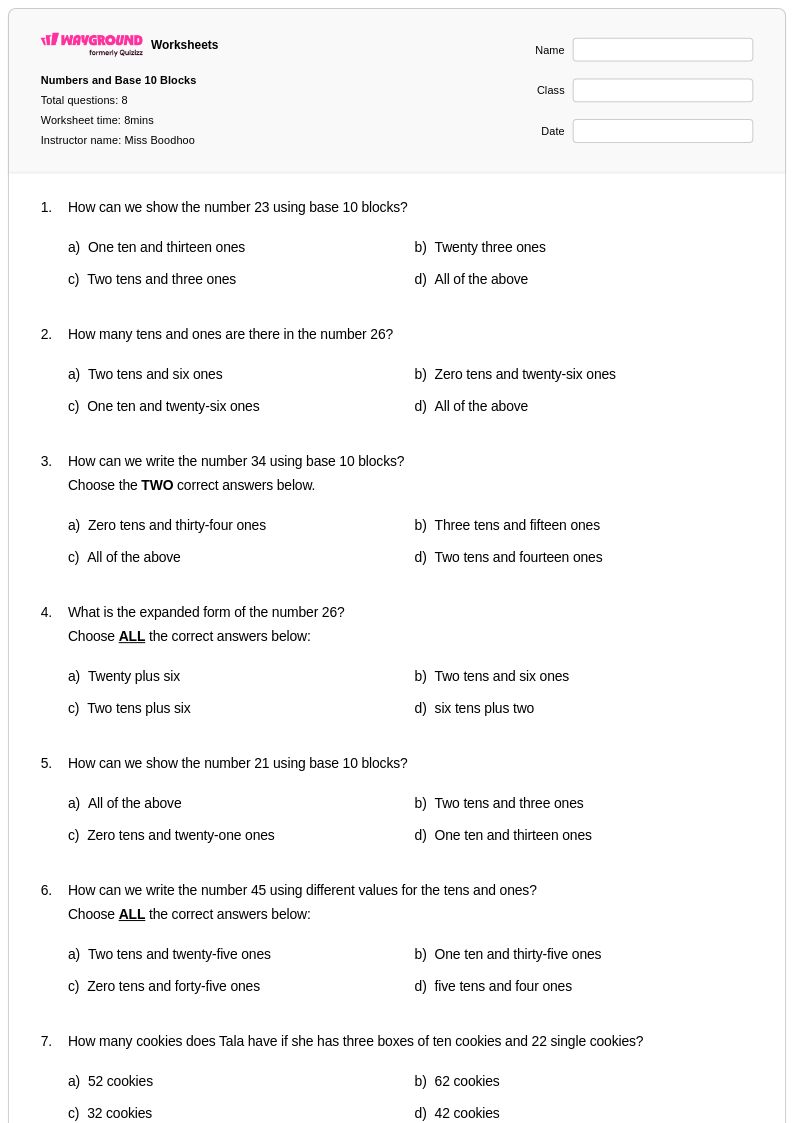
8 P
2nd
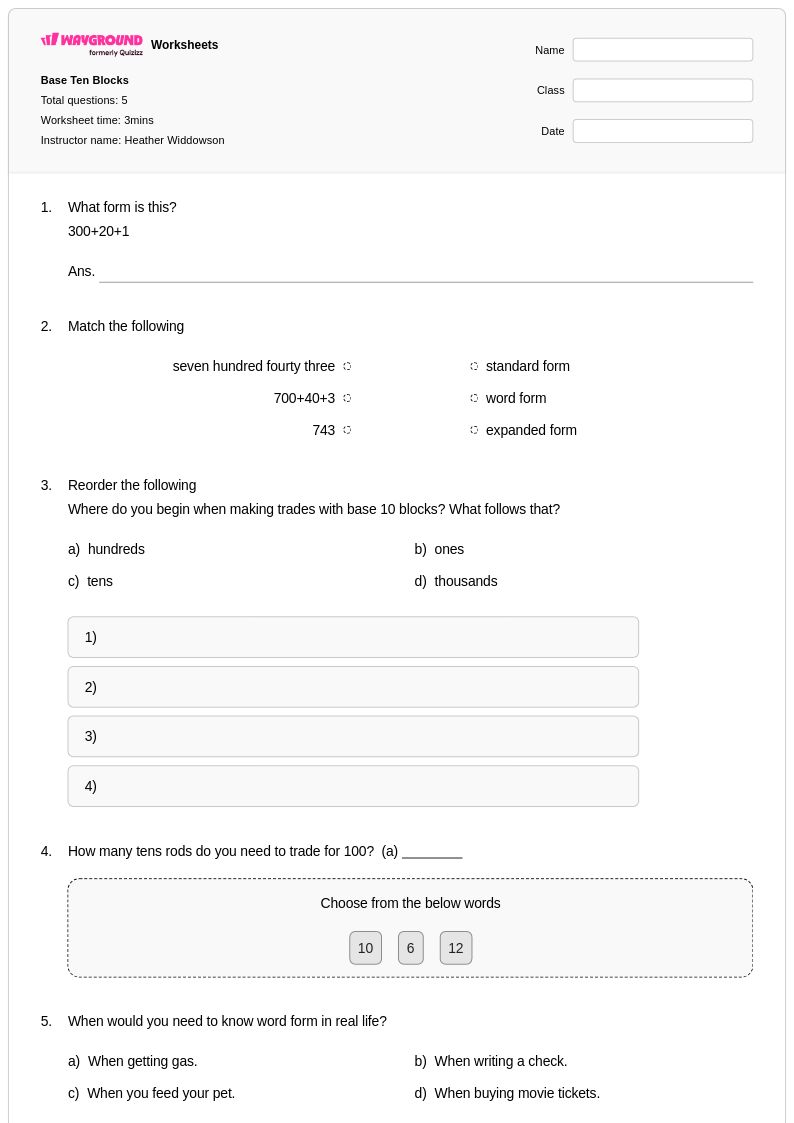
5 P
1st - 5th
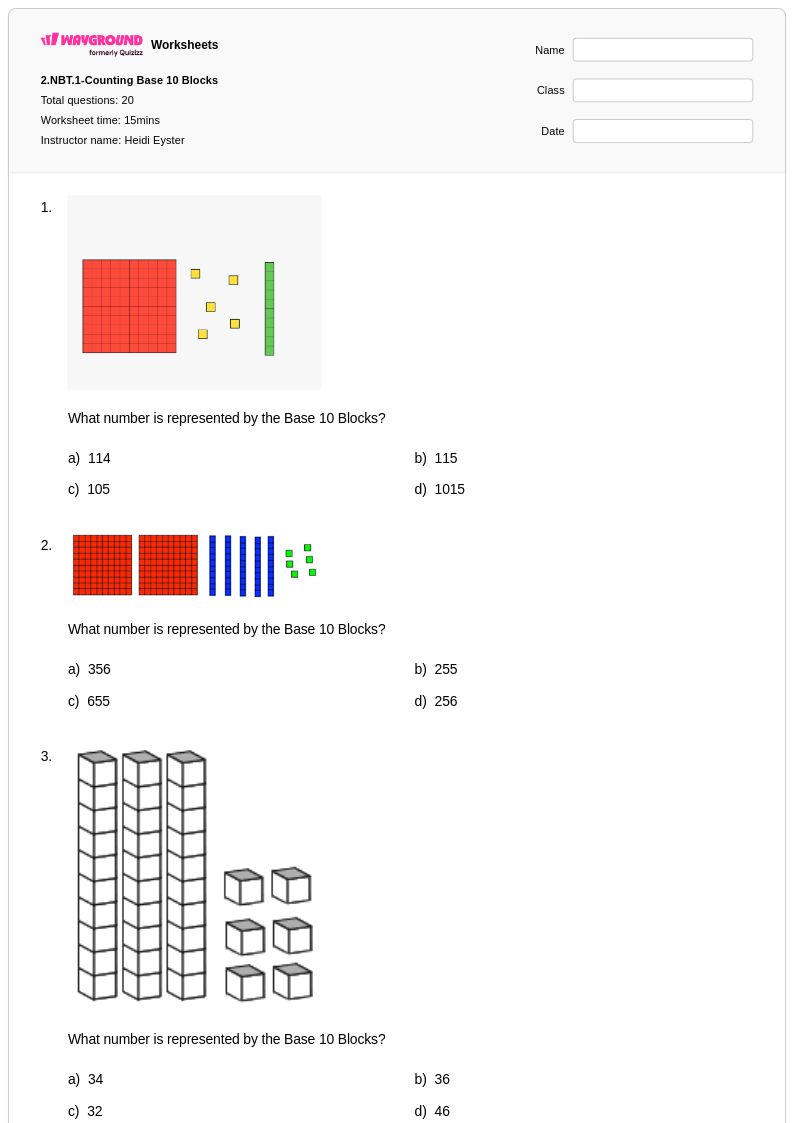
20 P
2nd
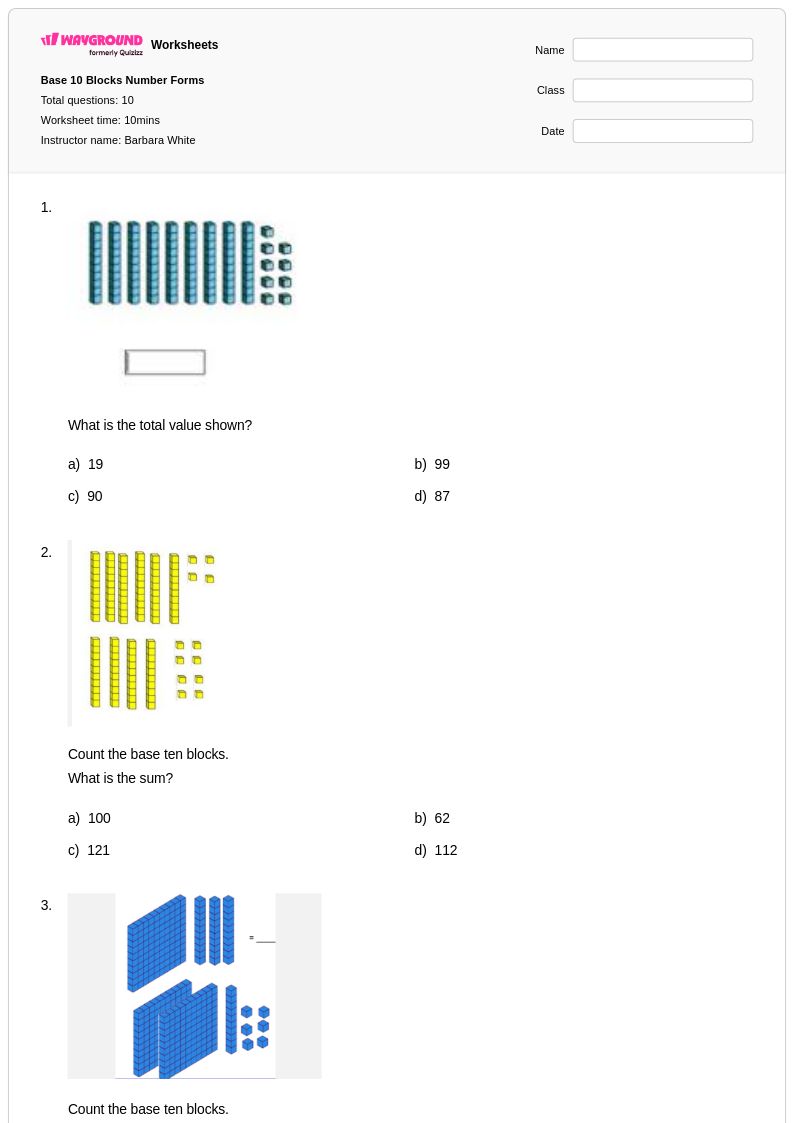
10 P
2nd
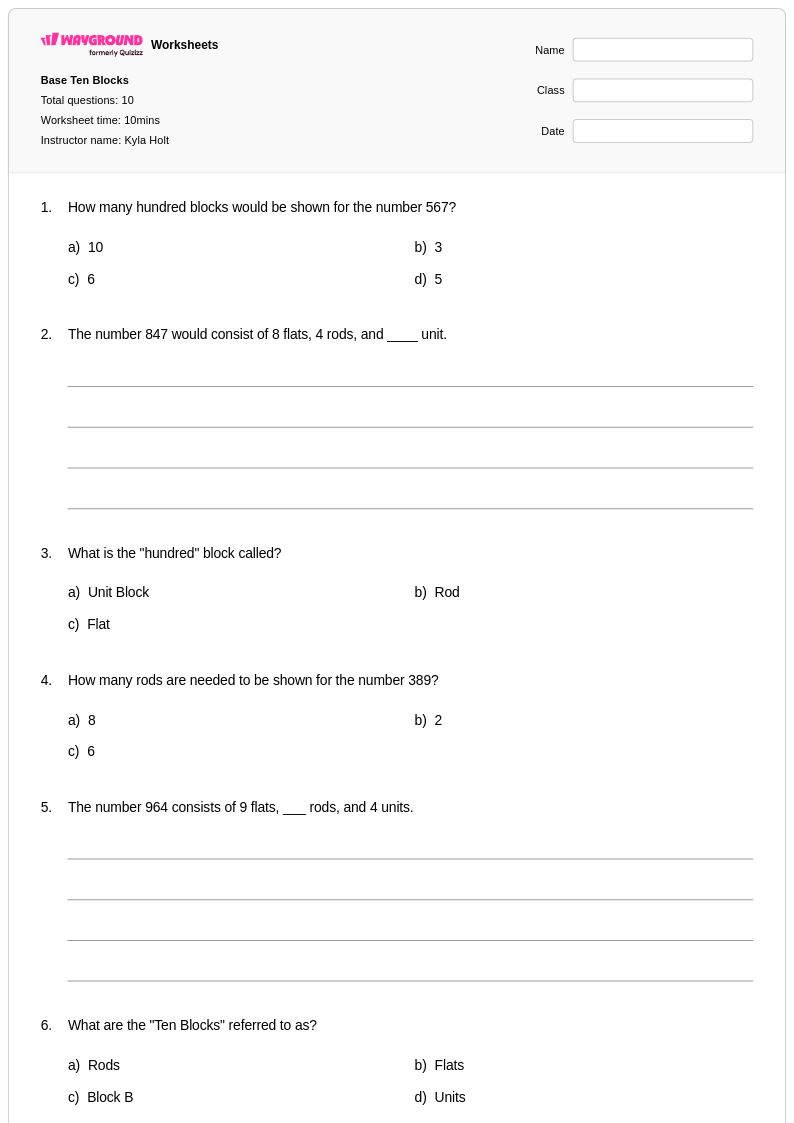
10 P
2nd - 4th
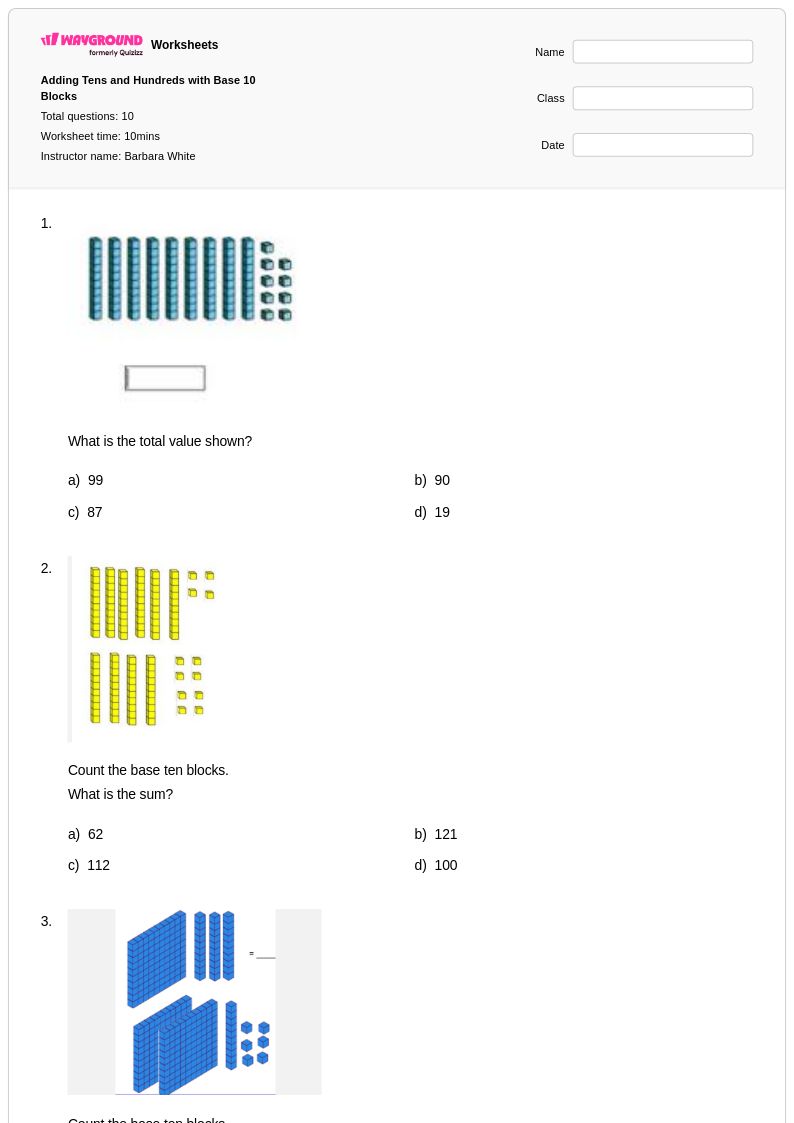
10 P
2nd
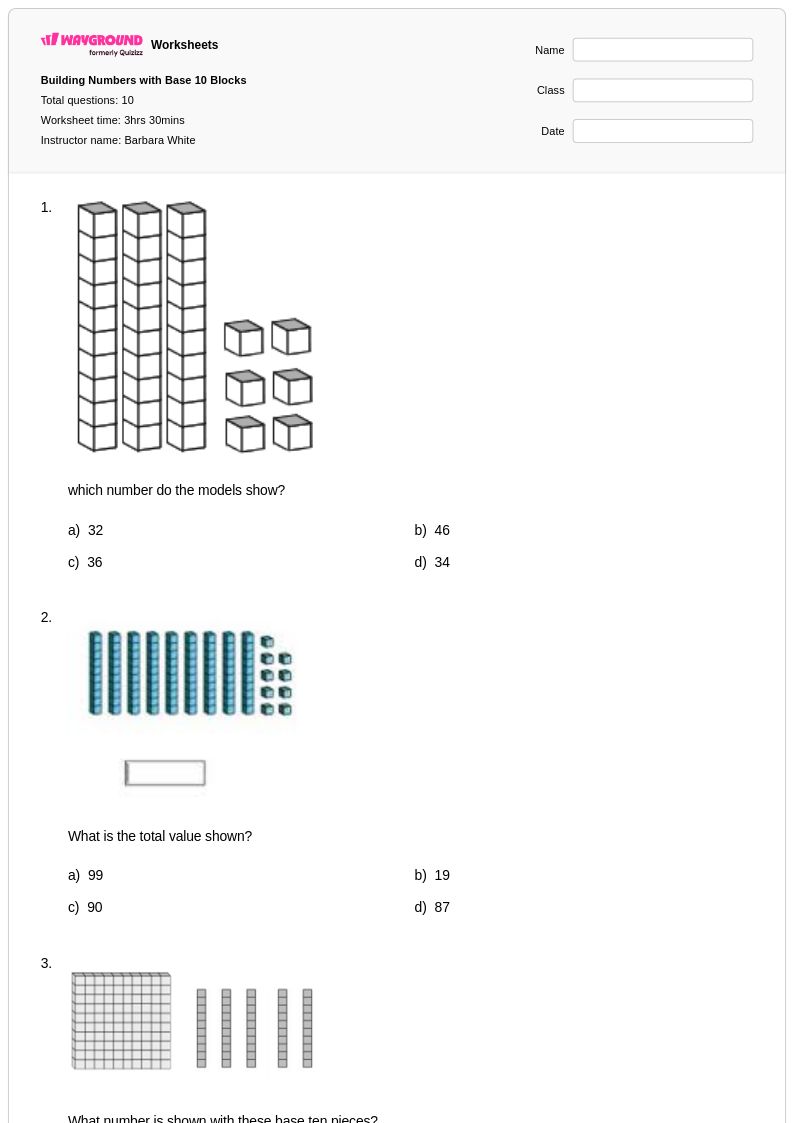
10 P
2nd
16 P
2nd
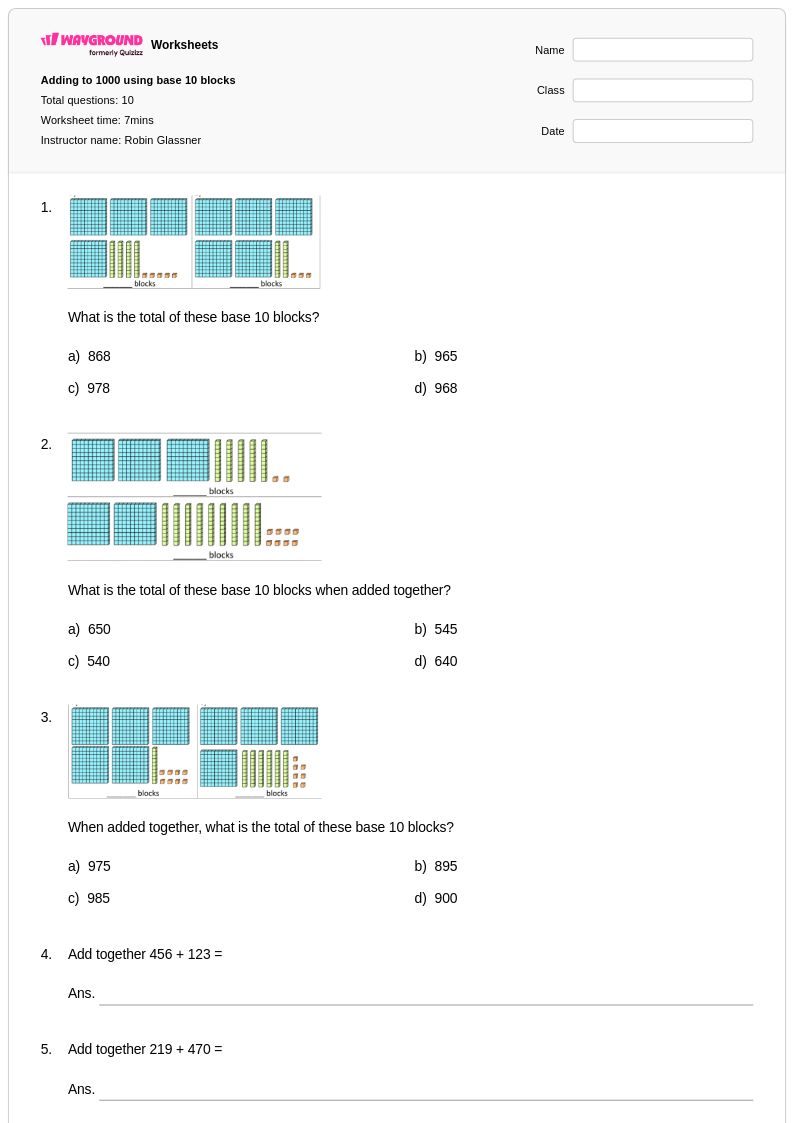
10 P
2nd
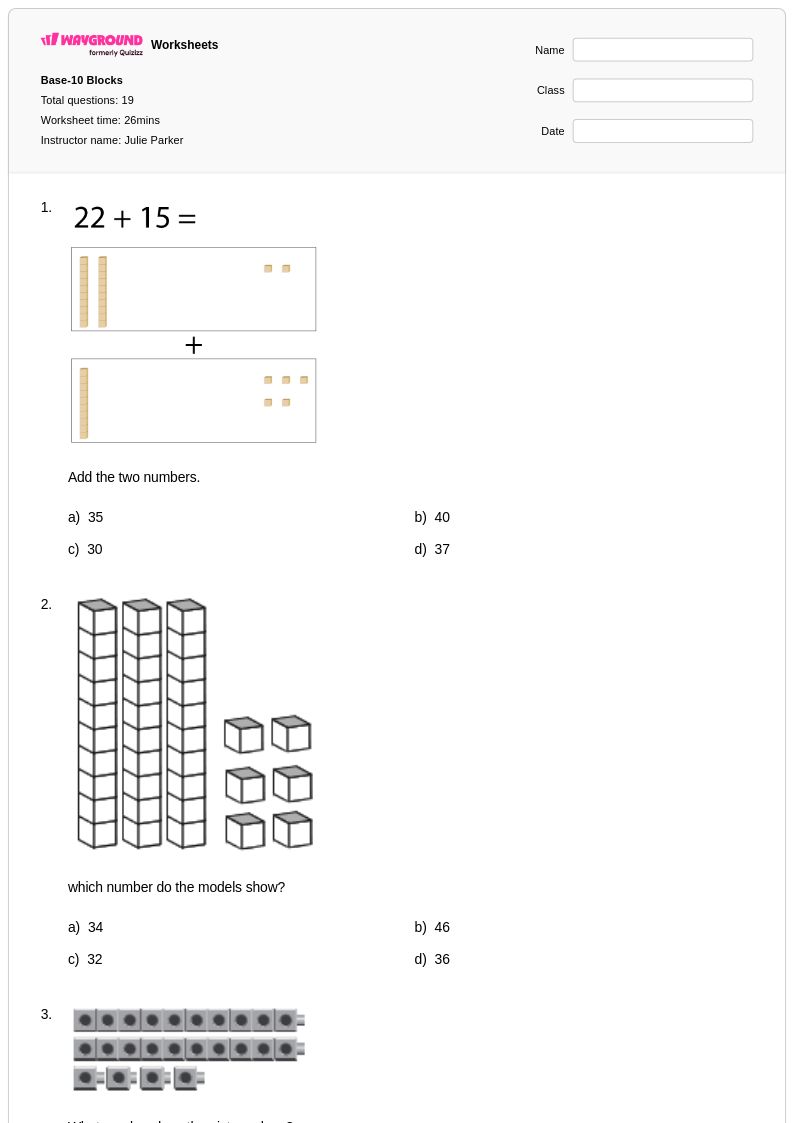
19 P
2nd
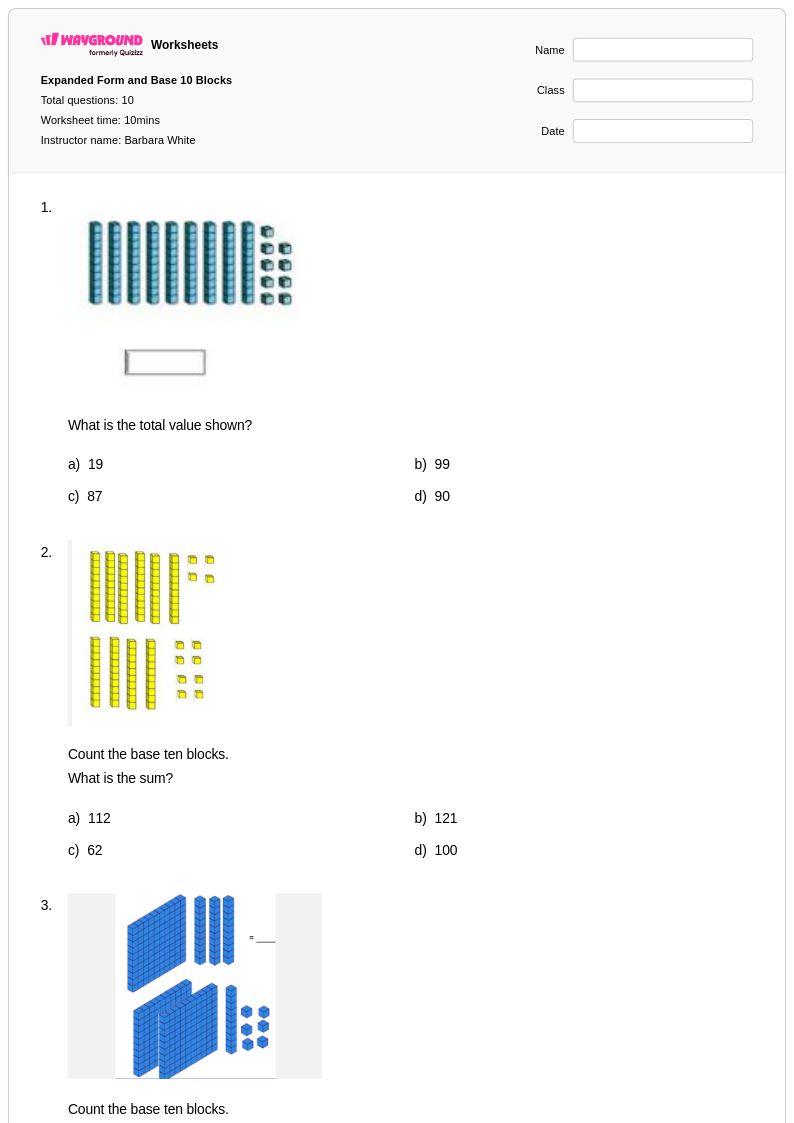
10 P
2nd
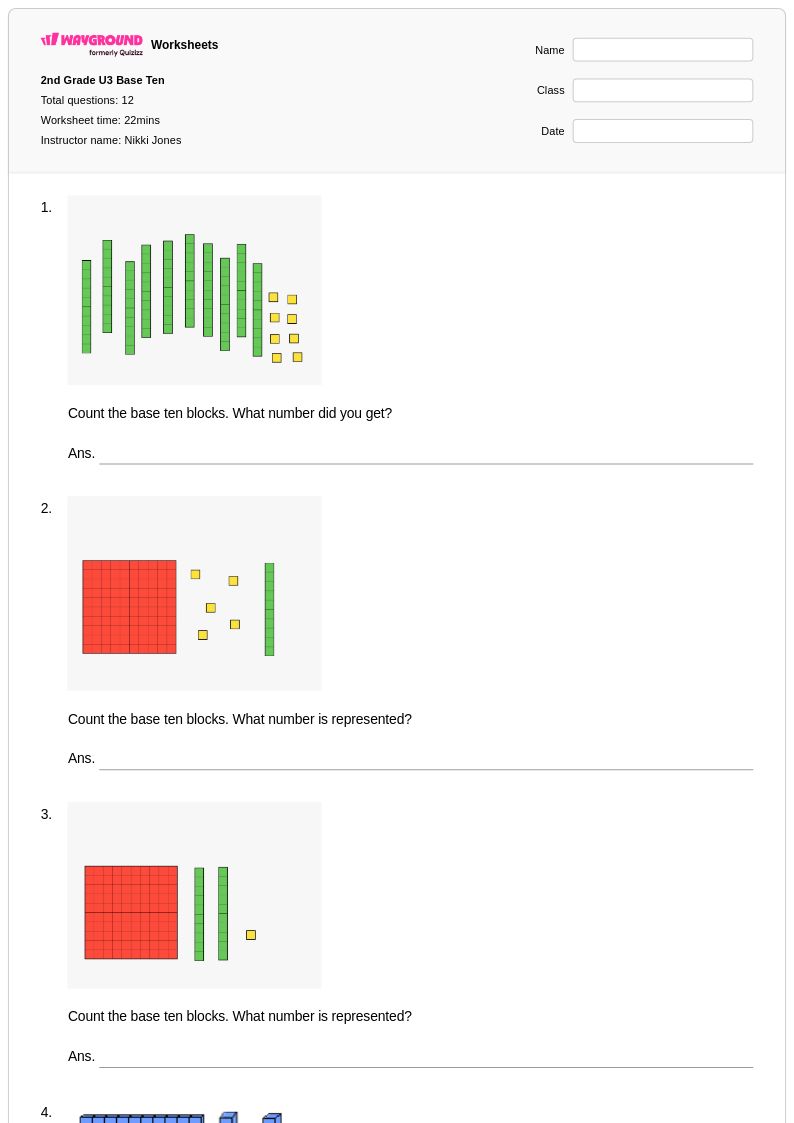
12 P
2nd
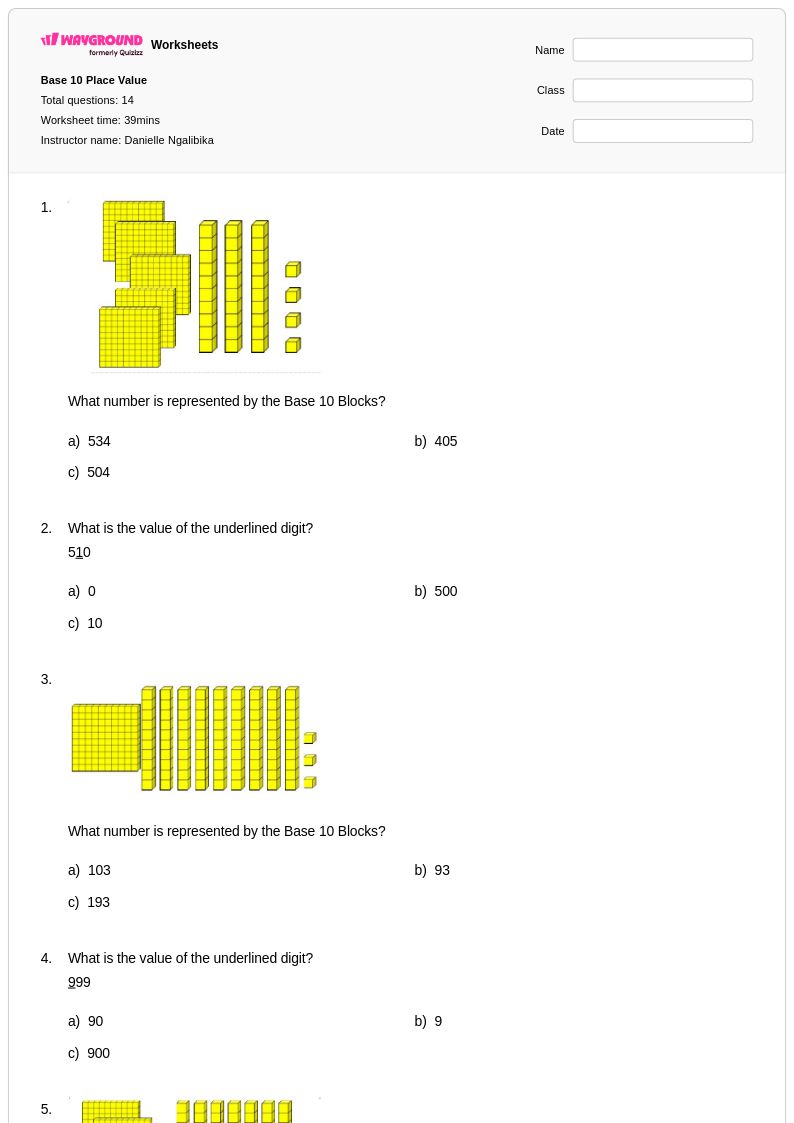
14 P
1st - 2nd
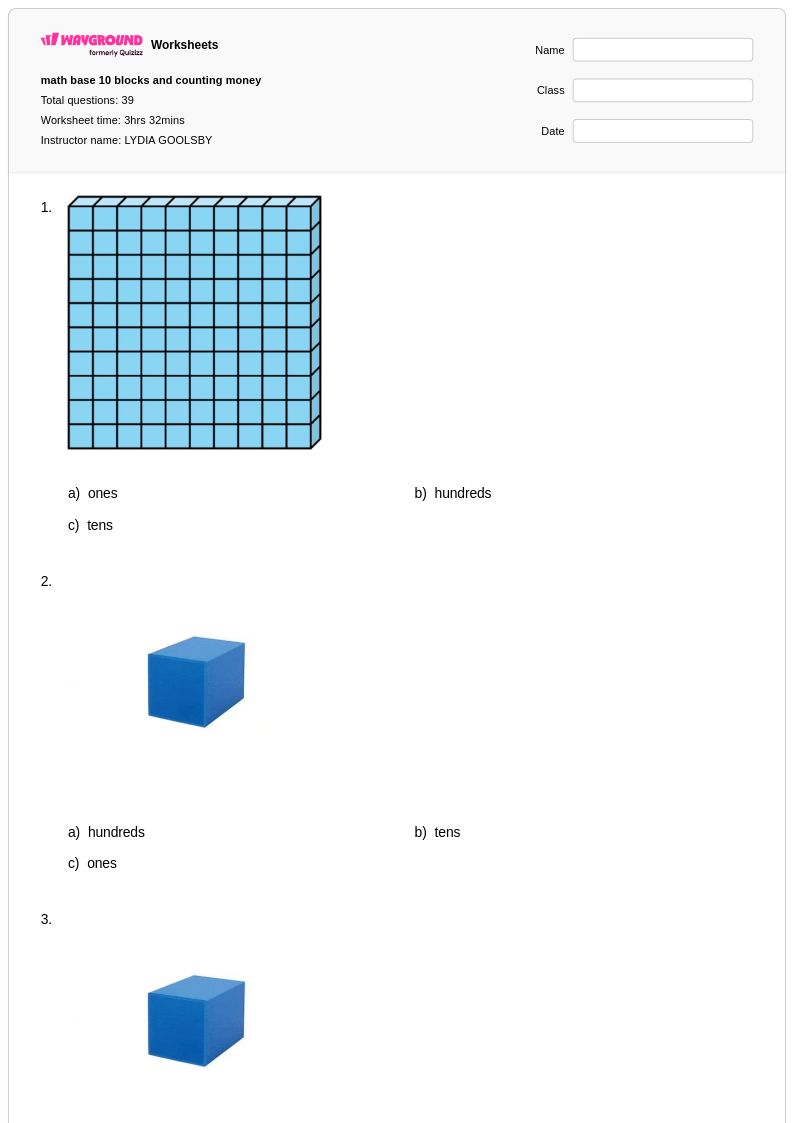
39 P
2nd - Uni
Przeglądaj Base 10 Blocks arkusze ćwiczeń według ocen
Przeglądaj inne arkusze tematyczne dla class 2
Explore printable Base 10 Blocks worksheets for Class 2
Base 10 blocks worksheets for Class 2 students available through Wayground (formerly Quizizz) provide essential foundational practice for understanding place value and number relationships. These comprehensive worksheets strengthen critical mathematical skills including representing numbers with tens and ones blocks, comparing quantities using visual models, and developing fluency with addition and subtraction through concrete manipulation. The collection features carefully designed practice problems that progress from basic block identification to more complex operations, with each worksheet including a detailed answer key for immediate feedback. Teachers can access these free printables in convenient PDF format, making it simple to distribute materials for independent practice, homework assignments, or assessment preparation.
Wayground (formerly Quizizz) empowers educators with an extensive library of millions of teacher-created base 10 blocks resources, featuring robust search and filtering capabilities that allow instructors to locate materials perfectly aligned with Class 2 mathematics standards. The platform's differentiation tools enable teachers to customize worksheets based on individual student needs, whether for remediation of struggling learners or enrichment of advanced students. These resources are available in both printable and digital formats, including downloadable PDFs, providing flexibility for classroom instruction, remote learning, or hybrid educational environments. The comprehensive collection supports effective lesson planning by offering varied practice opportunities that reinforce place value concepts, facilitate skill-building through repeated exposure to base 10 representations, and provide assessment tools that help teachers monitor student progress in number sense development.
FAQs
How do I teach base 10 blocks in second grade?
What base 10 blocks activities are useful for second graders?
What mistakes do second graders make when using base 10 blocks?
How can I assign a Grade 2 base 10 blocks worksheet on Wayground?
How do Grade 2 base 10 blocks worksheets support Common Core math?
How can I differentiate base 10 blocks practice for second graders?
What base 10 blocks skills are taught in second grade?